It Doesn't Have To Be Right…

… it just has to sound plausible


2 Comments

Breeding Always Shows

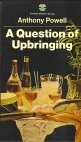
For April’s entry in my 2008 Reading Challenge to try each month a classic author I’ve never read before, I picked A Question of Upbringing by Anthony Powell. It’s actually the first book in the 12-volume series A Dance to the Music of Time, and was first published in 1951.

In his 99 Novels: The Best in English Since 1939, Anthony Burgess describes A Question of Upbringing as “a work we may not always like, but we cannot ignore it”. That’s hardly a ringing endorsement, but the fact that he’s named it as one of the ninety-nine says much. Even the most cursory of googles will throw up plenty of approving reviews. Time magazine even included it in its 100 Best English-language Novels from 1923 to 2005. A Dance to the Music of Time is clearly a highly-regarded series of novels.

A Question of Upbringing opens with its narrator, Nick Jenkins, in his final year at Eton. It is 1921. Jenkins describes several incidents which took place that year, and serve to introduce the characters who will reappear throughout the series: Charles Stringham, Peter Templer and Kenneth Widmerpool. After finishing at Eton, Jenkins visits with Stringham, and then spends a few days with Templer. He next goes to stay in France, ostensibly to improve his French, before taking a place at Oxford. There he meets up with Stringham once again, and joins Professor Sillery’s coterie of possible future movers and shakers. The novels ends with a car crash: Templer on a visit drives his car into a ditch while carrying Jenkins, Stringham and some others as passengers.

As plots go, not much happens in A Question of Upbringing. Admittedly, it’s a relatively thin novel – 223 pages in my Fontana paperback edition – and it is only the first of twelve books. It’s an introduction, chiefly to the characters. Powell’s prose, in fact, focuses on the people, often at the expense of everything else. There are no sweeping passages of landscape painting as you’d find in Lawrence Durrell, or even John Jarmain. Jenkins analyses everyone he meets, and every action or utterance they make. It’s as if you’re standing before a large painting, armed with a magnifying glass and peering through it with your face no more than inches from the canvas. There is no clue to the “big picture” in A Question of Upbringing (which seems slightly weird, when compared to modern-day blockbuster high fantasy series).

The period in which the novel is set also invites unfair comparisons with PG Wodehouse or EF Benson. But A Question of Upbringing is no comedy of manners. The cast might all be upper-class twits – as Burgess points out, “Powell cannot take the lower classes seriously” – but Powell does draw his characters with a sharp eye, and he takes them very seriously.

The writing throughout is mannered, but very good. There is some strangely old-fashioned grammar – a tendency to run on sentences using colons, for example; but it doesn’t impede reading. Burgess’ pyrotechnics might be memorable, as are Durrell’s lyrical purple passages; but Powell is not so flamboyant. There are some striking images – A Question of Upbringing opens with a description of snow falling on a workmen’s brazier, which effectively sets the motif for the entire twelve-volume sequence.

I enjoyed and appreciated A Question of Upbringing. Which makes it the first success of this year’s reading challenge. While I’ve no plans to dash out and buy the other eleven books, should I see them in some second-hand book shop or charity shop: then yes, I will buy them and read them.

Besides, I’ve a feeling A Dance to the Music of Time improves a great deal as more of the big picture is revealed…


1 Comment

Swing, clang!, shuffle, swing, clang!, shuffle, swing, ow!

Between 1993 and 2002, I was a member of a long-running sf APA called Acnestis. Each month, we’d write a couple of sides on genre-related subjects, make 30 copies, and then send those copies to the administrator. Who would then send out a parcel containing one copy of each member’s contribution to everyone. Today, I was hunting through some of my contributions to Acnestis, and stumbled across this review of George RR Martin‘s A Game of Thrones from 2001. Enjoy…

There is little in A Game of Thrones that can be counted as truly original. The setting is stock high fantasy: a mix and match of Dark Ages peasantry and Camelot-style pageantry. There are, fortunately, no elves, dwarves, gnomes or (gag) hobbits. But there are dragons (although they only appear near the end), and lots of mediaeval hack-and-slash swordsmanship.

Where A Game of Thrones may be traditional high fantasy in terms of setting, it’s not in terms of structure. Unlike the Wheel of Time, Martin does not use the “hero’s journey” template but builds up his story from a number of narrative strands, only some of which actually intersect.

First, there are the various members of the Stark family, lords of the Northern wastes. Lord Eddard Stark, head of the family, is a rigid, honourable man, traditional in his views, and a good friend of King Robert Baratheon. The king has been outmanoeuvred increasingly often by his wife, Cersei, and her family, the Lannisters. When his advisor dies, King Robert turns to Stark to take over the position and bring his reign back on track. This, of course, upsets the Lannisters. Stark moves to the capital, King’s Landing, to take up his duties. There is much politicking and corruption, and, well… any more would constitute a spoiler.

Jon Snow is Stark’s bastard son and, while he is acknowledged as fruit of Stark’s loins, he can never inherit the family title or possessions. So he joins the Night Watch, a Foreign Legion-type organisation which guards the Wall far to the north. Winter is coming (seasons appear to last several years in the world of A Song of Ice and Fire), and mysterious, probably magical in origin, creatures are attacking the Wall and threatening to invade.

The other members of Stark’s family include: Bran, who is crippled after overhearing something he shouldn’t and who looks set to develop powers of some kind which could help later in the story; Robb, the heir, who takes over when his father heads south to the capital; Sansa, the eldest daughter, betrothed to King Robert’s son (who is spoilt and cruel, and takes after his mother, Cersei); and Arya, Stark’s other daughter, who is something of a tomboy and more interested in sword-fighting than courtly intrigue and pomp and circumstance.

On another continent, Daenerys, last of the Targaryen dynasty, the previous rulers of Baratheon’s kingdom until he had overthrown them, has been married to Khal Drogo, lord of a Mongol-type horde. Her brother, who is a real nasty piece of work, is hoping the khal will provide him with an army to take back the throne “stolen” by Baratheon.

The novel alternates chapters between these (and a few more) characters, and all of them in some way affect the story-arc and the novel’s resolution. Despite the size of the cast-list (and Martin includes a sizeable dramatis personae at the back of the book; and, of course, a map at the front), it’s easy to keep track of the major characters. (I had to keep on referring to the dramatis personae for some of the minor characters, however.)

This technique of multiple viewpoint-narratives is one that’s commonly used in techno-thrillers, which is itself a best-selling genre. It’s also better-suited to the complex political nature of Martin’s story than the traditional hero’s journey structure would be. This, however, doesn’t really explain the book’s appeal.

It’s either the setting, or the story. The story owes more to dynastic historical or semi-historical fiction than it does to high fantasy. There’s no Quest, no object which can save or destroy the world, no army of darkness, nor even some vast prophesied change which must be helped or avoided. In that respect, A Game of Thrones is really quasi-historical fiction. There’s little in the way of derring-do, or real heroics, and certainly no one person upon whose shoulders the fate of the world rests…

Which means, I suppose, that high fantasy must sell more because of its setting than any other factor. The question is, is it the details of the particular world, or the mere existence of the particular world, which appeals? Will any old mediaeval land do, or is it the differences between the fantasy land and the historical model? There is, as I said earlier, little that’s all that original in A Game of Thrones. The cities, villages and castles are straight from the Dark Ages. The combat, arms and armour are straight from the Matter of Britain…

Which raises an interesting point. In many high fantasy series (and A Song of Ice and Fire is one), both hack-and-slash sword-fighting exists alongside thrust-and-parry. Historically, in the West, one developed from the other; the two techniques did not really exist alongside each other. During the Middle Ages, swords were big, heavy, often required two hands, and had cutting edges. They were, effectively, sharp-edged clubs. You swung them, as hard as you could, at your opponent. If you were strong, skilled, or lucky, you inflicted a wound. By the reign of Elizabeth I, sword-fighting had become cut-and-thrust, the mode perhaps most familiar from “swashbuckler” movies. Swords could cut, but they could also wound or kill with the pointy bit at the end. The cutting-edges gradually disappeared over time (because a blade without cutting-edges was stronger), until during the Renaissance sword-fighting focused almost exclusively on the pointy end—i.e., the rapier (a corruption, via the French, of the Spanish espada de ropera, or “town / dress sword”).

In A Game of Thrones, the noble male characters wear full-plate armour, often ornately decorated (and, judging by Martin’s descriptions, some of them probably have to be seen to be believed…). It is very difficult to kill someone in full-plate with a rapier. The blade simply isn’t up to piercing it. You’d have to find a weak spot (inside the elbow, for example), and hope you manage to hit it before you get brained with a mace or morning-star. Plus, of course, rapier sword-fighting requires you to be light on your feet—difficult when you’re weighed down with a suit made out of sheet metal. So, two knights in full-plate who want to cause damage have little choice but to swing at each other with hefty swords with cutting-edges (a great sword, bastard sword, sword-and-a-half, or something similar). Personal combat would be pretty much fixed in this mode.

And the mode used in personal combat would carry across into group combat or battles. Peasants, of course, would not have swords—swords are, after all, expensive, and certainly cost more to replace than your average peasant. No, the peasants have sharpened sticks. Put a bit of steel on the end and you have a pike (or put a short curved blade on the end, and the peasant’s weapon becomes doubly useful: he can chop up your enemies or reap the harvest with it). Alternatively, give your peasant lots of small pointed sticks, and a bow, and he becomes an archer, a “long distance” weapon.

Presumably Martin wanted to give his ersatz Dark Ages world some colour, and so threw in Arthurian pageantry. Which happened to go well with the social system he had set up. But, Arthurian pageantry demands full-plate and bastard swords; full-plate and bastard swords do not lead to exciting fight scenes—swing, clang!, shuffle, swing, clang!, shuffle, swing, ow!, shuffle, etc. The swashbuckling style of sword-fighting is exciting. So he threw that in as well…

Perhaps it’s this element of mix and match that lends high fantasy its appeal. It is, to some extent, the romance of the Middle Ages, without all the nasty stuff—squalor, rape, pillaging, disease, short lives, etc. The nearest high fantasy gets to this is in the combat, which is only one minor aspect of the period lifestyle. And so writers of high fantasy pick out all the romantic imagery of the Middle Ages, suggesting a low-maintenance lifestyle of well-earned hardship (never comfort), little responsibility and a level of self-actualisation that’s keyed to bringing in a good harvest. But you can’t have serfs without liege-lords and, it has to be said, there’s something equally attractive about the life of luxury led by the nobility: little or no fruitless work (that’s all done by the peasants), no decisions made by others, a very direct responsibility for lifestyle maintenance (everyone gets what they deserve), and all conflicts or problems are purely personal and can be resolved at the personal level (even in battle).

It’s all very well grinning with pride at a job well done, and looking forward to a hearty dinner of cheese and ale, as your sons bring in the bountiful harvest. But let’s not forget that your liege-lord could choose that very moment to come riding down onto your (clean, of course) hovel and rape your wife and daughters for a bit of sport. And there’s nothing you can do about it. In high fantasy, only villains of the darkest stripe would do such a thing, and their serfs are evil by association, so they deserve it.

It is, when you dig deep enough, American Rationalism that’s informing the various worlds of high fantasy best-sellers. Rewards are earned, never a function of position. Unless you’re a villain… in which case, you get your just desserts, anyway. One man can indeed change a world. Except, of course, he doesn’t. He leaves it exactly as he found it. The hero is there to maintain the status quo.

If there is a lesson here, it’s that a best-selling genre novel should boast: a) a world in which individuals can have a very real impact; b) said impact has to be earned through hard work and steadfastness; c) said impact is welcomed by all; d) the danger is always immediate and personal, as are the rewards; and e) there should be lots of colour.

A Game of Thrones, it goes without saying, features all of the above. As does Robert Jordan’s Wheel of Time series. The actual writing itself is immaterial. It need only be immediate. Themes and motifs only get in the way. Which might explain the merely competent writing that seems a given of high fantasy.

A Song of Ice and Fire is actually better-written than most of its ilk—although the line on page two, “A cold wind was blowing out of the North, and it made the trees rustle like living things”, initially seems to suggest otherwise (a Thoggism, if ever I saw one). Martin’s use of language may not be perfect, but his command of narrative structure is far superior to that of best-selling authors such as Robert Jordan, or David Weber. The prose is uniformly tight, without the extended introspective passages beloved of lesser writers. The dialogue is natural, and remains true to the characters uttering it. For those reasons alone, A Game of Thrones is a superior example of its type. Add in Martin’s departure from the standard template, and you have another reason for appreciating the novel in and of itself. But when you include the world he has built, the very sub-genre he is working in, well… you have a best-seller. Of course.


2 Comments

Yours is the Earth and everything that’s in it

I probably know what every Brit my age knows about Rudyard Kipling – born in India… The Jungle Book… Nobel Prize for Literature… ‘If–‘… He’s supposed to be the quintessentially British Empire writer. And yet I’ve only seen Disney’s The Jungle Book, and never read anything by him. Which is why I picked Kim as my March reading for this year’s challenge…

Kim is the orphaned son of an Irish soldier, brought up as a beggar on the streets of Lahore. One day, he meets a Tibetan lama, and becomes his chela or disciple. The two set off on a religious trek around India, searching for the River of the Arrow which will free the lama from all sin. In the past, Kim has also run errands for Mahbub Ali, a Pathan horse-trader who works for the British secret service. Through Ali, he becomes involved in the Great Game, the covert war for control of Central Asia between Russia and Britain throughout the Nineteenth Century.

During their journey, Kim stumbles across the regiment his father belonged to, and is identified as the son of a Sahib. He is sent to school, but then recruited by Mahbub Ali’s superior officer. He sends him to a top school for Sahibs in Lucknow. After several years there, Kim returns to his lama, and the two continue their religious trek, this time up into the foothills of the Himalayas. There they stumble across a pair of Russian spies and Kim does his part for Empire.

If British sf authors followed in the footsteps of HG Wells, after reading Kim I have to wonder if US sf authors took Kipling’s path. There’s something about its depiction of India during the days of British Empire which reads more like early US-style space opera than historical fiction. The mix of strange cultures, the historical info-dumping, the somewhat archaic language (all thee and thou), the nobility of purpose of the characters… It’s a rich and heady stew and every bit as exotic and adventuresome as Edgar Rice Burroughs’ Barsoom or Leigh Brackett’s Mars.

The prose is… odd. It’s not just the archaic language – you soon cease to notice that. But it almost falls into reportage in places, and Kipling frequently breaks the illusion between reader and story – at one point, for example, he even adds authorial commentary to an expression used by a character:

‘The house be unblessed!’ (It is impossible to give exactly the old lady’s word.)

A lot of the plot is carried in dialogue – as it is in a lot of early science fiction, where characters explain intentions and actions and consequences to each other. It’s never done crudely, like sf’s infamous “As you know, Bob,” info-dump. But I did wonder if such poor exposition in sf was born from a bad attempt to emulate Kipling’s style. Also, Kim‘s plot features a hurried tying-up of plot-threads and an abrupt resolution – yet another characteristic sf shares with Kim.

Despite all that, the landscapes in Kim are vividly-drawn, and the writing is at its most evocative and impressive when the story moves into the Himalayas. Perhaps some of the characters are a little over-the-top, especially Hurree Babu and Lurgan, two of Kim’s colleagues in the British secret service. And perhaps some parts of the story are glossed over a little quickly, such as Kim’s school years in Lucknow. But what is there has its compensations. It’s a fascinating world Kipling describes; but while there are enough adventurous elements to the story to keep you reading, there is also a lot of instructional dialogue.

I suspect I’ll not be reading Kim again. However, the (cheap) edition I bought also includes The Jungle Book. I think I’ll give that a go one of these days… and then stick the book up on bookmooch.com.


1 Comment

Mazel Tov

It takes a brave man in the US to criticise Israel. In The Yiddish Policemen’s Union, Michael Chabon has been even more courageous – in the world of his novel, Israel does not even exist. The Yiddish Policemen’s Union is an alternate history – or “counterfactual”, if you’re a literary snob – in which the Jews were booted out of Palestine in 1948, and so David Ben-Gurion never unilaterally declared on 14 May 1948 the establishment of the nation state of Israel. Instead, the US provides land in Alaska for temporary settlement, Sitka, on a sixty-year lease.

(There are clues in the story indicating that the world of the novel diverged further from our history than initially seems the case – a republic in Russia, mention of an atom bomb being dropped on Berlin in 1946, and references to a war with Cuba during the 1960s.)

Like Robert Harris’ Fatherland, Chabon uses his alternate history to tell a story whose resolution is dependent upon knowledge of real history. And also like Harris’s novel, The Yiddish Policemen’s Union reads like another genre entirely – in this case, a hard-boiled detective novel. Meyer Landsman is an alcoholic homicide detective living in a fleabag hotel. When a fellow tenant is murdered – executed, in fact, by a shot to the back of the head while high on heroin – Landsman investigates. Since Sitka is weeks away from “Reversion” – i.e., the end of the Jews lease on the Alaskan land, and thus the end of their “homeland” – Landsman’s superiors want him to drop his investigation. He deliberately disobeys them… and uncovers a conspiracy which reaches all the way up to the United States’ president.

The Sitka of The Yiddish Policemen’s Union is – as the title suggests – a Yiddish culture, rather than the real-world Israel’s Hebrew. Chabon does not translate the Yiddish, but the meaning of the words is clear from context. Anthony Burgess did something similar with Nadsat in A Clockwork Orange – even going so far as to say his intention was to “brainwash” the reader into understanding the borrowed Russian terms much as the protagonist Alex was himself brainwashed not to inflict violence. Given that Chabon has said in interviews that the inspiration behind The Yiddish Policemen’s Union was an article he wrote about a Yiddish phrasebook, this is perhaps not unsurprising.

The prose is very Chandleresque, although it occasionally struck me as a mite too calculatedly so. Some of the turns of phrase, the off-the-wall similes and metaphors, read a little forced. The relationship between Landsman and his partner, Berko Shemets, however, is handled beautifully – some of the best characterisation I’ve read in recent years, in fact. Interestingly, Chabon originally wrote the novel in the first person. Third-person present tense, I think, works much better. The tense gives the story an immediacy which pulls the reader along and over the hurdles created by unfamiliar Yiddish terms or Jewish practices.

Again like Fatherland, The Yiddish Policemen’s Union ends with an event which comes as little surprise to us from our knowledge of the real world. Chabon handles it at a remove, which lessens its impact. Landsman’s cynicism also acts as a barrier against the shock we should feel. But then, to have made him naive and credulous would have meant he could not follow the plot to its conclusion. As it is, the climax slips past little too quickly and easily.

Where The Yiddish Policemen’s Union really shines is in Chabon’s creation of Yiddish Sitka. It’s a fascinating alternate world, and described with a depth and level of detail uncommon in many alternate histories. Perhaps this is because the novel’s focus is very narrow – i.e., a single city and its environs, rather than an entire world. All the same, it’s an impressive invention.

Minor quibbles aside, I was much impressed by The Yiddish Policemen’s Union. Much has been made of Chabon’s sensitivity for the genre, and that attitude is very much clear in this novel. He has written a story that is quite clearly science fiction, without pandering to the snobbery of either the genre or its detractors. If only more writers would do the same…


2 Comments

Black Man / Thirteen

When I started this blog, it was not my intention to post reviews of the books I read. Well, not unless they were part of some annual “challenge” I’d set myself – and where I’d be charting my response to the challenge as much as writing about the books themselves. There are plenty of other places to find book reviews – both on and off the tinterweb. (Including my other blog, A Space About Books About Space, which is specifically about non-fiction books about the Space Race.)

However…

At some point during the Easter weekend, I’ll likely be voting on the novels shortlisted for the BSFA Awards. Unusually for me, I’d read half of the shortlist before it was announced. And I’ve now read another two from it – Black Man by Richard Morgan and The Yiddish Policemen’s Union by Michael Chabon. And here’s what I thought of them…

When a novel opens with a man on a spacecraft travelling between Mars and Earth eating the other passengers in order to survive, you know it’s not going to be an easy read. And so Black Man proves. Morgan‘s premise is that some 20,000 years ago humanity bred some sort of super alpha male out of the gene pool as the type was not suited to the newly-created mode of agrarian civilisation. But during the late Twenty-First Century, various nations genetically engineered a generation of these “variant thirteens” to be super-soldiers. In the UK, they were known as Osprey, and in the US as Project Lawman. Later the programmes which had created them were outlawed, and the surviving variant thirteens restricted to secure reservations.

But not all of them.

Some were exiled to Mars. One of them, Carl Marsalis, went to Mars but returned. He now works as an agent for the United Nations, tracking down and killing rogue variant thirteens. One such rogue has escaped from Mars – the cannibal mentioned earlier – and is now on a killing spree in the US. Marsalis is co-opted by COLIN (Colony Initiative), the pan-national agency responsible for the settlement of Mars, to find the killer.

Morgan pulls no punches. His US of the Twenty-Second Century is a grim, corrupt and selfish place. It’s two parts American history to three parts a European’s view of the country as it is now. The North and South have split, and the South is now a backward Bible-bashing regime cynically known as “Jesusland”. The Western seaboard has also seceded, and remains the economic and industrial powerhouse of the continent. From this side of the Atlantic, it seems all too frighteningly plausible a future.

Black Man is also an extremely violent novel. You have to wonder what Anthony Burgess would have thought – the forty-year-old A Clockwork Orange‘s “ultra-violence” seems tame in comparison to that in Black Man. Of course, the violence is there because the variant thirteens are sociopathic killers. I’m not quite convinced such behaviour would have been useful 20,000 years ago, never mind during the late 21st Century. And to have one as a sympathetic protagonist and another as an immoral villain is a difficult balancing act. Morgan pulls it off – just about. He perhaps uses the fact that Marsalis is a Brit a little too much as justification for his more sympathetic character. No reader, of course, would identify with a true variant thirteen – although I’ve seen blustering reviews by one or two on the Web who seem to think they’re kindred alpha male souls. It’s all bollocks, of course (no pun intended). Marsalis might as well be an alien – and as any sf writer knows, make your alien too alien for your readers… and you’ll have no readers. Morgan is a smart enough writer to know that Marsalis can’t carry the story if he hews too close to the line of his central premise.

There are other viewpoint characters – such as Sevgi Ertekin, a Muslim Turkish-American COLIN detective; her partner, Tom Norton; and even a believer from Jesusland working illegally in California, Scott Osborne, who gets caught up in the plot (and later disappears from the story, only to pop up near the end). To me, Ertkin seemed more like a stereotypical NYPD cop, and not that much different from Olivia Benson in Law & Order: Special Victims Unit. Her background struck me as one of Black Man‘s few weak notes – as well as the unfortunate inspiration for some unnecessary and over-long info-dumps when the story takes the characters to Istanbul.

World-building and premise aside, Black Man is a tautly-plotted thriller. Morgan is in control of his material throughout the story. Perhaps one or two of the clues necessary for resolution are a little too peripheral, making the scenes in which they appear seem somewhat unnecessary. But that’s a minor quibble. The writing is strong, with several nice turns of phrase. I wasn’t entirely convinced by the central premise – or rather, I wasn’t convinced that variant thirteens would ever be useful or necessary. I suppose that’s little different to believing time travel will ever be possible, but I’m not sure I can let it go enough to choose the novel above Alastair Reynold’s The Prefect or Michael Chabon’s The Yiddish Policemen’s Union.

My thoughts on The Yiddish Policemen’s Union to follow soon…


8 Comments

The Heart of Matter

NOTE: THIS POST INCLUDES SPOILERS

Matter is Iain Banks‘ first Culture novel since Look to Windward in 2000. So there was a great deal of eagerness – and not just by myself – when it was announced. Orbit clearly realised that Matter‘s publication was an event – Waterstone’s has been selling the hardback at half price since a week or so before the official publication date.

There are, it has to be said, a certain number of things you expect to find in a Culture novel. And one of those things is a Big Dumb Object. In Matter, this is the Shellworld called Sursamen, which consists of a series of vast concentric spheres, each of which is in effect a planetary surface. Shellworlds were built for reasons unknown by a race which has long since vanished.

The Sarl, a human race, live on Sursamen’s Eighth level. They are at war with the Deldeyn, another human race, from the Ninth level. Ferbin is heir to the throne of Hausk, a cod-mediaeval Sarl kingdom. He’s more of a playboy prince than a suitable candidate for ruler, however, so when Ferbin inadvertently witnesses his father’s murder after a battle, he flees for his life. He determines to seek help from Xide Hyrlis, a Culture representative who had been a friend of King Hausk many years before. He also decides to track down his sister, Djan Seriy, who left to join the Culture, and now works for Special Circumstances.

There are three main narratives in Matter, centred on the three surviving offspring of King Hausk. Ferbin and his manservant Holse escape Sursamen and track down Hyrlis. Djan Seriy returns to Sursamen to learn the truth of her father’s death. And Oramen, youngest son and now prince regent, follows the invading Sarl army to the Ninth level and the Nameless City, an ancient metropolis slowly being revealed by the great Falls of Hyeng-zhar.

King Hausk’s murder, the war against the Deldeyn of the Ninth level… these are all part of a conspiracy orchestrated by Hausk’s trusted adviser, friend and murderer, tyl Loesp. He is working for the Oct, the alien race which control part of Sursamen. Their objective is not revealed until a good three-quarters of the way into the story, and its result is certainly not the intended one.

The Oct are mentored by the Nariscene, who are in turn mentored by the Morthanveld. Whose civilisation is equivalent in technology and advancement to the Culture. This civilisational hierarchy is important to the plot of Matter.

Iain Banks is one of the most interesting writers currently working in science fiction – but only in the sense of science fiction as a branch of literature. He’s not really an ideas man. Yes, the concept of the Shellworld is pretty impressive… but it’s been done before – in Colin Kapp’s Cageworld quartet. In fact, if anything, Banks has a tendency to pick up current ideas and slot them into his fictions, whether they fit or not. Look to Windward introduced nanotechnology to the Culture; and Matter introduces cyberspace. Neither had been mentioned prior to their appearances in these novels, and yet they are treated as if they had always existed. Which does make their sudden inclusion seem a little odd.

In some respects, the hierarchy of civilisations mentioned above also has the feel of an add-on required for Matter‘s plot to function – it’s not only reminiscent of David Brin’s Uplift novels, but it all seems so much busier a universe than earlier Culture novels had suggested. But denying the possibility of such additions and changes does smack a little of the “clomping foot of nerdism”. Fictional universes are as flexible and adaptable as required by the story.

What makes Banks really interesting is that his sf novels are not just simple action-adventures in a space opera setting. There’s enough detail in there to attract those who want immersion in a made-up universe, but he’s not one to slavishly follow genre story templates. Use of Weapons features two narratives running in opposite directions chronologically; Against A Dark Background has a quest plot, in which the protagonist loses every plot coupon shortly after winning it… but still manages to finish the course (but I’m not convinced that was done knowingly).

Having said that, Banks is less adventurous with the structure of Matter. It is, for much of its length, relatively traditional – something of a picaresque travelogue, albeit juxtaposed with high fantasy wargames on Sursamen’s Eighth and Ninth Levels… However, Matter ends with an appendix – a completely unnecessary dramatis personae and glossary. And after that, an epilogue. Which changes the final shape of the story. The appendix is there to hide the epilogue. Now, that is an interesting choice.

Banks usually has something interesting to say, too. Matter is no different in this respect. And, if I’m reading the novel right, it’s about Iraq, about whether so-called “developed” nations have the right to meddle in the affairs of other nations. The parallels are clear – should the Culture interfere in Sursamen? Unfortunately, Banks’ message is muddled. Matter‘s prologue shows one such intervention by Special Circumstances, and that later proves mostly successful. But the Culture’s refusal to interfere in the situation in Hausk – especially given how it progresses; and they are watching it, after all – leads to a situation which could destroy everything. The epilogue shows the Culture changing its policy.

This, then, is the message from the writer who chopped up his passport over the invasion of Iraq. According to Matter, he’s now saying it is good to interfere – if the interference prevents slaughter and destruction. Or perhaps he means only to interfere in the interference of the Oct, which has caused slaughter and destruction? Banks has pre-built the moral high ground into his universe – the more evolved civilisations, the Involved, are more advanced and therefore more moral. That’s part of evolution, after all. So it’s okay for moral – or advanced; or, perhaps, “developed” – civilisations to interfere, Matter seems to be saying, but not for less evolved ones. That’s not a good message. Because Banks’ universal hierarchy is a cheat – morality is treated as if it were a physical law, as if a civilisation accrued some kind of wavicles of morality as it progressed and aged.

Other areas of Matter worthy of comment… It is very talky. Characters waffle a lot. They often repeat themselves. The novel also suffers from a sudden flurry of small resolutions as the end approaches. Banks’ digressions are often his best bits – and some of the digressions in Matter are among the best he’s done – but it does mean that his climaxes frequently feel rushed. It does here. And, there is throughout the novel odd verbings of nouns and nunation of adjectives. Banks in part explains this, having Djan Seriy say the Sarl sometimes use “words oddly” – “we guilt you”, “he has been jealoused”. But there are occasions where even that is no defence – the neologism is neither in dialogue, nor even in a narrative set on Sursamen or featuring a Sarl character.

Oh, and why does Matter have double quotes for dialogue throughout, when normal British practice is single quotes?

One of the reasons Banks is an excellent writer is that despite all the above I liked Matter a great deal. It’s likely to be one of the most interesting sf novels published in 2008. Whether that makes it one of the best, I don’t know. Depends what else I read, of course. Unlike The Algebraist, Matter did not disappoint.


4 Comments

Jackboots in Space

I’ve always believed that Paul Verhoeven’s response to Robert Heinlein’s Starship Troopers was the only sane one. He made a satire of it. (He also never bothered to finish reading it either, which is probably even more sane.) I saw nothing wrong in holding this opinion even though I’d never read the novel myself.

Recently, however, I decided I was being unfair, if not hypocritical. I “knew” the book was crypto-fascist, despite every mention of it on the tinterweb claiming that it isn’t.

Well, I’ve now read it. And…

Starship Troopers isn’t even a novel. It’s a lesson in military operations and Heinlein’s crypto-fascist politics wrapped in the thinnest of stories. Rico is a stand-in for the dumb reader, who is lectured in every chapter on how fair and democratic is the Federation, and how effective a military force is the Mobile Infantry. We know this because we’re told it. Repeatedly.

The plot, such as it is: Johnny Rico graduates from high school, and follows a friend into Federal Service. He is assigned to the Mobile Infantry. Earth goes to war against the Bugs. Rico fights a number of battles and rises up the ranks.

That’s it.

Military sf Starship Troopers almost certainly is. But does that make it crypto-fascist? Let’s examine the evidence (all page numbers and quotations from the 1998 NEL film tie-in paperback).

Exhibit 1:
Only veterans of the Federal Service of the Terran Federation have the vote. Heinlein apologists claim that Federal Service is not necessarily military, but this is not true. When Rico signs up, and is given a physical, the doctor says to him:

“No offense. But military service is for ants … And for what? A purely nominal political privilege that pays not one centavo and that most of them aren’t competent to use wisely anyhow.” (pp 32)

Further, the recruiting sergeant on duty when Rico signs up has no legs and only one arm. Because, he explains:

“… suppose we do make a soldier out of you. Take a look at me – this is what you may buy… If you don’t buy the whole farm and cause your folks to receive a ‘deeply regret’ telegram.” (pp 30)

Exhibit 2:
According to Heinlein, spanking produces well-mannered moral children. After a page or two discussion on the best way to raise puppies – when they make mistakes, scold them, rub their noses in it, and spank them – Rico’s “History & Moral Philosophy” teacher, Mr DuBois, explains that the same methodology should be applied to children. Because not doing this led to the lawlessness of the Twentieth Century:

“Back to these young criminals – They were probably not spanked as babies; they certainly were not flogged for their crimes … This incredible sequence could go on for years while his crimes increased in frequency and visciousness…” (pp 101)

Exhibit 3:
Heinlein directly references fascism. Once again, Rico – and thus the reader – is being lectured in “History & Moral Philosophy”. During this, the instructor explains the actual meaning of the vote:

“Force, if you will! – the franchise is force, naked and raw, the Power of the Rods and the Ax.” (pp 155)

The Rods and the Axe, of course, is the fasces, the word from which Mussolini derived the term fascism.

Exhibit 4:
Any society which is authoritarian, elitist, militarist and nationalist fits the characteristics of a fascist state. The Terran Federation as described in Starship Troopers certainly meets that description. As Mussolini himself said, “Anti-individualistic, the fascist conception of life stresses the importance of the State and accepts the individual only insofar as his interests coincide with those of the State, which stands for the conscience and the universal will of man as a historic entity.” True, Rico is in the military and at war, and so his interests are firmly aligned – by training and indoctrination – along the lines demanded by the Terran Federation. But that continues to hold true should he leave the Mobile Infantry, because only someone who has served is part of the political process.

It’s been said that just because Heinlein posits a fascist state in Starship Troopers that doesn’t necessarily mean it’s his own personal politics. For most novels and novelists, this is certainly true – Robert Harris, for example, wrote Fatherland, set in an Europe in which Germany won WWII, but that doesn’t make him a Nazi. But in Fatherland‘s case, Nazi Europe was the setting for the plot. Starship Troopers is not a story, it’s a poorly-disguised lecture. Which suggests to me that Heinlein adheres to the politics described in Starship Troopers.

I have now read Starship Troopers. My opinion on its politics remains unchanged. Paul Verhoeven’s film adaptation< is greatly superior to the book.


2 Comments

The Inaugural Post of the 2008 Reading Challenge

Bah. It seemed like a good idea. There are plenty of highly-regarded writers I’ve yet to read, so why not pick a dozen of them to try during 2008? Not contemporary authors, but a mix of classic and early Twentieth Century.

This is not as much of a break from my usual reading habits as previous entries on this blog might suggest. I’m a big fan of Lawrence Durrell (as should be obvious from this) and Anthony Burgess (and this). I also like a great deal the works of Nicholas Monsarrat, Helen Simpson and David Lodge. When I lived in the United Arab Emirates, I was a member of the Daly Community Library – in fact, I joined it during my first week there. Since the Library had only a small selection of sf novels, I was forced to widen my reading. Abu Dhabi was not well-served by book shops, either. All Prints seemed to buy in new stock only once a year. Isam Bookshop sold just remaindered books – as a result, while there were quite a few sf titles, they weren’t very good ones. And Al Mutanabbi Bookshop sold chiefly text books. Paperbacks were expensive too, typically costing amost double their Pound Sterling RRP.

Since returning to the UK, science fiction has continued to be my first choice of reading material. But I also read a lot of mainstream fiction. Unfortunately, as I now read mostly books that I purchase, I tend to stick to authors I have already read, and only really try new authors within sf. Hence this year’s challenge…

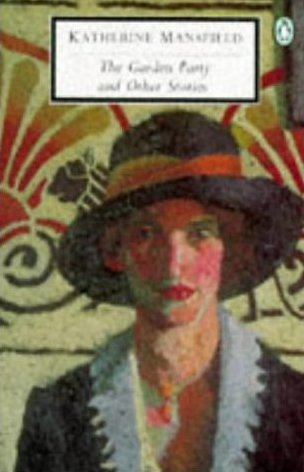
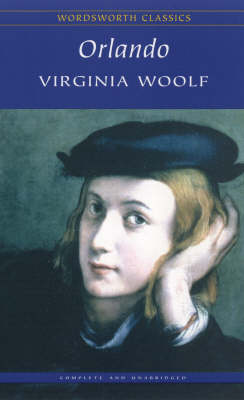
Anyway, I’ve so far picked up books by Ernest Hemingway, Joseph Conrad, Katherine Mansfield, DH Lawrence, Marcel Proust and Virginia Woolf… And the first book I chose to read for my 2008 challenge was… The Talented Mr Ripley by Patricia Highsmith.

I suppose it was a bit of a cheat, given that I’ve seen the film. My previous experiences of reading novels from which films were adapted hadn’t been entirely successful. Marnie by Winston Graham and The Commitments by Roddy Doyle spring to mind: I liked the films a great deal but didn’t enjoy the novels.

And so it was with The Talented Mr Ripley.

In fact, other than the unconventionality of having a sociopath as the protagonist, there’s little that strikes me as especially noteworthy about The Talented Mr Ripley. Highsmith seemed to want to suggest there’s an inevitability to Ripley’s murders, as if the story is a tragedy. But there was nothing I saw that’s unavoidable about them. Even Ripley’s self-justifications fail to convince on that note – he spends very little time on the reasons for the killings, and a great deal more on how he plans to profit from them.

That’s perhaps the chief weakness of The Talented Mr Ripley. The story is Ripley. It stands or falls as Ripley as a character stands or falls. Of course, he’s an unsympathetic protagonist – a sociopath and an opportunistic killer. But is it his character, or Highsmith’s skill in depicting it, which keeps you reading? I suspect it’s merely a desire to see how it all comes out in the end. You expect Ripley to be caught and to pay for his crimes… but you also have a feeling he’ll get away with it. It’s that seesawing expectation which pulls you along to the story’s climax. And as plot-engines go, it’s not a very powerful one.

In some respects, The Talented Mr Ripley is not unlike an episode of Star Trek – no matter what happens, you have to end with the principals safe and sound for next week’s installment. Ignoring the fact that Highsmith did write more Ripley books, you still get that same feeling throughout The Talented Mr Ripley. It’s as if she decided early on that he’s too good a character to throw over a waterfall.

Ah well. Perhaps I started The Talented Mr Ripley with too high an expectation. The film promised more than the book delivered. I should know better, of course. We’ll have to see what happens with February’s choice…


8 Comments

Last of the Favourites Challenge – Dhalgren, Samuel R Delany

People either love or hate Dhalgren. This is not all together surprising – it’s an experimental novel, it’s pornographic in parts, and it’s only peripherally science fiction. On its publication in 1975, some sf commentators hated and condemned it. Harlan Ellison said, “When Dhalgren came out, I thought it was awful, still do… I was supposed to review it for the L.A. Times, got 200 pages into it and threw it against a wall.” (Ellison hating it is a good reason to like the book, if you ask me.) And yet Dhalgren proved to be Delany’s biggest-selling novel, finding a huge audience outside the genre.

The plot, what little of it there is, is simple: a young man who cannot remember his name enters the city of Bellona. Some catastrophe has taken place there, and only there, reducing the city to a post-apocalyptic urban wasteland. In this wasteland live a few hundred anarchic survivors. There is a commune of do-gooders in the park, gangs of scorpions roaming the streets, and Roger Calkins, publisher of the Bellona Times freesheet, lording over it all from his walled mansion. The young man – who is quickly named Kidd, the Kid, or Kid – meets various of Bellona’s residents. He helps the Richards move apartments. They are trying to continue their lives as if everything were normal, but it’s proving very difficult. Kid enters into a relationship with harmonica-playing Lanya. Eventually, he ends up as the leader of a nest of scorpions. And he becomes a poet, and has a book of poetry published by Calkins.

The prose operates at a very detailed level, with almost every itch, breath, or passing thought documented. Occasionally, it’s clumsy. Sometimes, it’s serviceable. Mostly, it’s good, but never quite brilliant. The characters are, by their very nature, chiefly ciphers. Bellona itself is probably the best drawn character in the novel. Some of the cast are merely mouthpieces. The prize-winning poet, Ernest Newboy, for example. The name itself is a giveaway. At several points in Dhalgren, Newboy discusses poetry with Kid – both the writing of it and people’s responses to it. I haven’t read enough of Delany’s non-fiction to spot if Newboy is reiterating Delany’s own theories. I doubt it, because Newboy’s theories are pompous twaddle. For instance, he tells an anecdote about how his appreciation of two writers was changed by personally meeting them. The work of one he found bland and dull, but after interviewing the writer, revised his opinion – he could now hear the author’s voice when he read, and what was anodyne he now saw was ironic and incisive. And vice versa for another writer, whose work he had always admired, but found near unreadable after getting to know the author. It’s complete and utter rubbish, of course. You might as well expect a soap opera star to behave in real life the same as the character they play on television…

Dhalgren is only peripherally science fiction. No explanation is given for the catastrophe which has befallen Bellona. The various hints Delany gives are not rational – a second moon in the night sky, a day when a vast sun fills the sky, the way the city seems to randomly change, the unreliable nature of time within the city… I’ve seen it suggested that much of this can be explained through Kid being schizophrenic. But there are other sfnal elements in the novel. The scorpions are so called because they wear holographic “light shields”. These were initially holograms of scorpions, although by the time Kid arrives in Bellona they’re all manner of colourful and mythical creatures. This use of science fiction ideas, without the underlying process, is what angered some sf commentators – Delany was breaking the “rules”.

But it’s not just the “rules” of science fiction that are broken in Dhalgren. Many of the “rules” of fiction are also carefully broken. The voice is third person, but occasionally lapses into first person. The final section “The Anathemata: A Plague Journal”, is presented with interlinear comments, and in parts reads like an edited manuscript. Kid’s character too is very different to that presented in the rest of the novel. The novel’s opening line, “… to wound the autumnal city” is actually the latter half of the novel’s last line. The narrative’s chronology is confused and confusing – Kid loses entire days at a time, and yet the novel’s timeline never quite adds up.

One of the interesting aspects of Dhalgren is not that you find something new every time you read the book, but that you consider the book itself anew. Each reread changes how you think about the novel as a whole. This time, I found many of the characters less appealing than I’d remembered. Newboy was a pompous arse, astronaut Captain Kamp (based on Buzz Aldrin? in places, he seemed to be) was patronising, George Harrison was almost a caricature, and most of the scorpions were unlikeable yobs. And yet, on this read, I learnt something new about Dhalgren: it is filled with references to Greek and Roman myths. Such as the opening scene, in which Kid has sex with a woman and then visits a grotto and finds a strange chain of prisms and lens – a reference to Daphne. In many parts of the novel, Kid’s story references that of Apollo. Dhalgren is more myth than literature, and in some respects its construction reflects that.

I still find the novel fascinating. There’s something primal in the story which appeals to me. As post-apocalyptic novel, it’s completely different to George R Stewart’s Earth Abides. Dhalgren is never dull. It hasn’t even dated, because it’s one of those sf novels – like van Vogt’s Undercover Aliens – which carries the time it was written around with it, irrespective of, and in addition to, the time in which the story is set.

So, that’s it – I read one of my favourite science fiction novels in each month of 2007. I’m glad I did. It went something like this…

January: Undercover Aliens, AE van Vogt (1950)
This one remains a favourite. Every time I read it, it never disappoints – perhaps because it has no pretensions, so my expectations are always met. It’s a lot of fun.

February: The Ophiuchi Hotline, John Varley (1977)
Whereas this one did disappoint a little. This time, I found the characterisation thinner than I’d remembered it, and the multiple copies of Lilo a little unnecessary. There are still a lot of great ideas in the book, though – even if the best one is thrown away in the last couple of pages. All the same, it’ll stay a favourite.

March: Stations of the Tide, Michael Swanwick (1991)
The first one to get demoted. I remember being blown away when I first read Stations of the Tide back in the early 1990s. Sadly, I wasn’t this time. Refusing to name the protagonist now seemed like a gimmick, parts of the story were lifted straight from a Southern Gothic, and the sections set in the Puzzle Palace were confused and confusing. A very good book, yes; but not a favourite any more.

April: Where Time Winds Blow, Robert Holdstock (1981)
I was in two minds about this one. The central conceit – Kriakta Rift, where strange winds blow through time, depositing unknowable artefacts from past and future – is a stunning invention. The central triumvirate of characters are handled with skill and compassion. But. But. But. It’s that last section, where the time winds are “explained”. It sort of spoiled it for me. On balance, however, I think it remains a favourite – because the first three-quarters overshadow the final quarter.

May: Soldier, Ask Not, Gordon R Dickson (1967)
Another book gets relegated. I bunged this one on the list to make it up to twelve, and chose it chiefly from fond memories of the trilogy and a recollection that this was the best of the three. And so it is. Unfortunately, those fond memories were a little rosier than I’d guessed. Dickson seemed more concerned with his historical theories than he was with his story, and the end result reads like a pulp sf action-adventure tale wrapped around some oddball lecture.

June: Kairos, Gwyneth Jones (1988)
This novel was once described to me as “a beautiful book badly written, or a bad book beautifully written”. The remark impressed me at the time – I was a callow youth then. Kairos is actually neither. Like many literary sf novels, there are sparkles of beauty and brilliance in its prose. But more than that, it is tightly plotted and the characterisation is superb. The story unfolds with the same remorselessness with which the eponymous drug unravels the world of the story. A favourite it is and a favourite it shall remain.

July: Against A Dark Background, Iain M Banks (1993)
Like Undercover Aliens, this one appeals because it’s fun. And every time I read it, it’s still fun. Not content with charging headlong through space opera tropes, Banks also subverts the standard fantasy quest template. Each time Sharrow wins a new plot coupon, she goes and loses it or has it taken from her. And yet Against A Dark Background is not in the least bit a frustrating read. Still a favourite.

August: Metrophage, Richard Kadrey (1988)
I’ve maintained for many years that the publication of Metrophage locked and bolted the door on cyberpunk. There was nothing more that needed to be said. Neal Stephenson’s piss-take of cyberpunk, Snow Crash, was only a bit of fancy icing on the cake – all sugary colour and no substance. And yet, rereading Metrophage, it occurred to me that what Kadrey had actually done – as I wrote in my original post on the book – was fold cyberpunk back into science fiction. Still a great novel, still a favourite.

September: Coelestis, Paul Park (1995)
There’s no doubt in my mind about this one. Each time I read it, it impresses me more. It stays a favourite.

October: Dune, Frank Herbert (1965)
I had to add two titles to my original list to make it a year’s worth of reading. And while I’ve read Dune many times, and enjoyed it each time, I’ve never really held the book in high enough regard to consider it a favourite. For one thing, it’s the start of a series, but not the strongest book in that series. But I decided to add it to my favourites challenge and… my opinion on it remains unchanged. I read it, I enjoyed it, I’ll likely read it again. I like Frank Herbert’s writing a great deal… but he’s written better books than Dune, and has written books with better writing in them than in Dune… Unfortunately, the Duniverse overshadows all his other creations. For the time-being, Dune will remain on the list. But at the bottom, ready to be relegated should another sf novel really take my fancy.

November: Take Back Plenty, Colin Greenland (1990)
I’d forgotten how good this novel really was. I’d remembered the too-pat ending, though. But that’s minor. An engaging heroine, a clever homage to pulp sf, and some lovely prose. This books deserves to back in print. It remains a favourite.

December: Dhalgren, Samuel Delany (1975)
See above. Yes, Dhalgren remains a favourite.

So there you have it. Of the twelve books, two didn’t make the grade, and one is ripe for relegation. I still have that list of also-rans, which I may work my way through. Having said that, the few from it I did read last year weren’t good enough for promotion. But then the list was chiefly put together from nostalgia, which is never a good indicator…


5 Comments

Having Plenty – Rereading Favourites, November 2007

It’s been a fun exercise rereading a favourite sf novel each month this year, although there have been disappointments. But there have also been pleasant surprises – such as Colin Greenland‘s Take Back Plenty.

I remember the buzz when the novel was published back in 1990. It “reinvented” space opera. Arguably Iain M Banks had done that three years earlier with Consider Phlebas, but Take Back Plenty was different. Colin Greenland‘s novel was a reworking of – and homage to – pulp sf tropes. Mars was habitable and had canals. Venus was habitable and had jungles. There were aliens everywhere.

Certainly the book was successful. It won both 1990’s BSFA Award and 1991’s Arthur C Clarke Award.

In brief, Take Back Plenty is the story of Tabitha Jute, captain and sole crew of the barge Alice Liddell. While on Mars, she inadvertently causes a near-riot, and is subsequently fined by the authorities. She doesn’t have the money to pay the fine. Fortunately, she meets up with Marco Metz, leader of the cabaret act Contraband, and he contracts her to take him and his band to Titan. First, they stop off at Plenty, an alien artefact orbiting Earth. It had been built by the alien Frasque, but they’d been booted out of the Solar System by the Capellans – highly advanced aliens who’d bootstrapped humanity into space, and now kept everyone sealed within the orbit of Pluto.

Of course, Contraband isn’t really a cabaret act and Tabitha is forced to flee Plenty with the members of the band. They crash-land on Venus, are rescued by pirates, and then delivered to the Capellans. And to say anymore would give away the novel’s resolution.

I’d forgotten how good the writing is in Take Back Plenty. Here’s part of the description of Venus:

“The coral reefs of Erebus rise in great jagged spires from the sticky sea. Etched, eroded ridges spiral and veer, running for ten, twenty kilometres through smoke-black water. Where they meet they throw up frozen, warty explosions of barbed knots and clusters of mineral teeth. On these serrated edges the medusas, globs of muscular mucus as wide as tabletops, hang stranded and expiring, thrown up by tempests that rend the glutinous, tideless waves. The cliffs of the coral are thickly stained with their ichor.”

Plot-wise, perhaps, Take Back Plenty is slightly less successful. The setting – the pulp-populated Solar System – is a great deal of fun. But poor Tabitha seems to spend much of the story being chased from A to B. She has very little control over the plot. The ending too reeks of old sf serials. The cavalry arrive, there’s a sudden reveal and subsequent explanation, and it’s all over. While all the clues have been set, it does feel a little too pat.

However, there is one nice post-modern touch to the novel. Take Back Plenty is clearly a narrated fiction. There are even authorial interventions. But the identity of the narrator is kept secret until the end of the novel – and makes perfect sense within the confines of the plot. It’s not hard to figure out, but it does add an extra dimension to the narrative.

As do the conversations between Tabitha and Alice, the Alice Liddell‘s AI persona. In these, Tabitha tells stories of her past – which serve to entertain, to explain her background, and to help map her character. It’s an effective technique.

Unfortunately, in retrospect Take Back Plenty seems a bit of a one-off. Yes, there were a further two books – Seasons of Plenty and Mother of Plenty – forming a trilogy. Colin Greenland also “reinvented” the planetary romance with Harm’s Way in 2000. But during the 1990s, it seemed no one else mined pulp sf for tropes. Instead, we had Banks-style widescreen space opera, or Alastair Reynolds‘ hard sf space opera. No one leapt on Colin Greenland‘s bandwagon…

… until recently. In the last couple of years, there have been a few books by US authors which are based on and around old pulp sf tropes. A sort of return to the old sf action-adventure paradigm of the early Twentieth Century. Interestingly, while some have put a modern spin on this inasmuch as they provide a contemporary scientific rationale for their tropes, none have put a post-modern spin on it in the same fashion that Colin Greenland did. To my mind, that makes Take Back Plenty more interesting as it’s privileging story not setting. It’s probably also worth pointing out that Consider Phlebas is still in print, but Take Back Plenty is not. And given the recent interest in re-imagining pulp sf tropes, perhaps it’s time for a new edition. Or perhaps it should be included in the SF Masterworks series?

I have my copy, and I’ll be reading it again. Take Back Plenty is definitely a book that will remain a favourite.