
This is the sixth and final book in Gill’s series set in Eighteenth Dynasty Egypt featuring the scribe/detective Huy. As far as I know, the first three books – City of the Horizon (1991, UK), City of Dreams (1993, UK) and City of the Dead ( 1994, UK) – were published by Bloomsbury in the early 1990s, and Gill later revisited the character and setting for a further three books in 2015, perhaps initially self-published, but later picked up by an ebook-only publisher. Except someone on the Storygraph site thinks this book was published 1999, as does AI and a lot of online sites; and the book itself claims it was first published in 1993 by Boomsbury, which I think means they used the colophon from one of the original trilogy. So, a bit of a mess. Gill’s Wikipedia page is no help either.
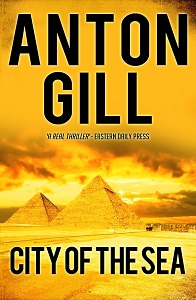
Anyway. Huy’s son by his first marriage has vanished, and Huy has been given permission, and a few side-tasks, to visit the City of the Sea in the Nile delta. His ex-wife and her new family live there, and the son, Heby, a soldier, had disappeared while en route across the Mediterranean to the northern part of the Egyptian empire (roughly where Lebanon is, or looks increasingly like it might be was, now). But all is not as it seems. The local high priest has been murdered and the governor asks Huy to investigate.
The great and good of the City of the Sea are, it transpires, all deeply corrupt. Plus ça change, and all that. Heby has deserted in order to sort them out, because he loves the daughter of one of them, and she was raped numerous times as a five- and six-yer-old by the now-dead high priest.
Huy is not a great detective. He uncovers the facts but often seems reluctant to act on them. Fatalism is not a good driver of justice. In fact, the villains only get their come-uppance because they over-played their hand, and General Horemhep, who has returned victorious from the wars in the north, and will later head south and become the last pharaoh of the Eighteenth Dynasty, is in a rush to clean things up.
Even after six books, the setting remains interesting, but Huy is also a somewhat passive protagonist for a crime novel. Gill has yet to revisit them both, which is perhaps a good thing. But I did enjoy reading them.


