2014 seems to be turning into the year of films. According to my records, I’d watched more films by the end of June 2014 than I had during all twelve months of 2013. Which is unfortunate, as I’m supposed to be a writer and a book reviewer, not a film critic. Oh well. Normal service will resume… soon, I hope.
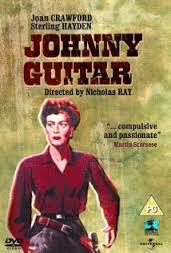 Johnny Guitar, Nicholas Ray (1954, USA) Sterling Hayden plays the title character, a gunslinger who has swapped his revolvers for a guitar. He drifts into town and poles up at a saloon owned by Joan Crawford, who proves to be an ex-lover. But it’s Crawford’s character who’s the focus of this film, not the eponymous musician. She’s banking on a planned railroad making her very rich. The town worthies aren’t happy with this – they think they should profit. So they drum up some citizen outrage on a pretext (the blatantly-wrong accusation that a regular of the saloon had held up the stagecoach), and good old Wild West “justice” subsequently ensues. This is one of those films where the plot is driven by a bunch of people behaving like complete shits for no good reason, particularly the character played by Mercedes McCambridge. An interesting twist on the Western genre, and Crawford plays a good part – but it’s still very Hollywood.
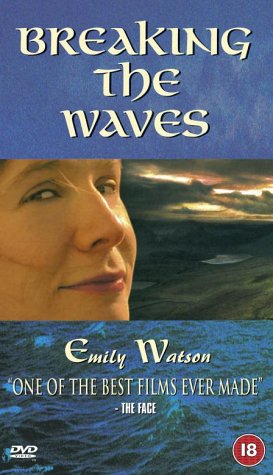 Breaking The Waves, Lars von Trier (1996, Denmark) I think this is only the second film by von Trier I’ve seen – and the first was Melancholia (2011), which looked beautiful but the climax was complete tosh. Like Melancholia, Breaking The Waves centres on a young woman, here played by Emily Watson. She marries a Norwegian oil rig worker, played by Swede Stellan Skarsgård, despite the reservations of her close-knit strictly Calvinist Highlands community. Soon after, Skarsgård is paralysed in an accident on the rig. Confined to a hospital bed, he persuades Watson to have sex with other men and then recount the details to him. Eventually, the village finds out about this… Watson is good, managing to convey a child-like simplicity and devotion to God which pretty much makes the story. The film is split into chapters, each of which opens with a well-known song from the 1970s, the decade in which the film is set… but there was something a little off about them, as if they were played by cover artists trying hard to sound like the original artists. It was slightly weird. Nonetheless, I think I’ll add some more von Trier to the rental list.
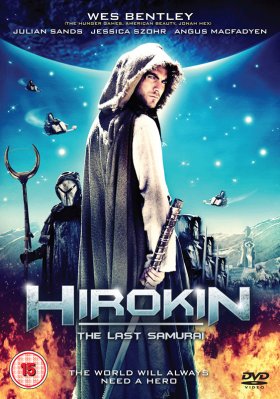 Hirokin : The Last Samurai, Alejo Mo-Sun (2012, USA) There was a trailer for this on a rental DVD I watched and it looked sort of interesting. So I checked it out, discovered it was a couple of quid on Amazon and bunged it on the end of an order. I was robbed. It really is truly dreadful. I should have guessed – it’s a sf film and it has Julian Sands in it. Though Sands has appeared in a number of good films, none of them were genre. In fact, his presence in a genre film is a good indication it will be shite. As this one was. The writer/director had obviously seen Dune and decided it needed more Star Wars in it. Sort of. On a desert world conquered by humans and ruled by evil dictator Sands, Wes Bentley plays a rogue human who takes up with one of the indigenous aliens – who look just like humans, except when they hold their hands up and you can see black veins on their palms. Anyway, Sands’ stormtroopers are searching for the aliens’ rebel leader and take Bentley’s partner prisoner. He has to fight to the death for her, but fails (she dies, not him). He sort of joins the rebels, learns how to fight samurai-style in the most ineptly-choreographed fight scenes I’ve ever seen, and then goes off to overthrow Sands. Or something, Watching this film, I could only wonder who’d been daft enough to invest it – people with far too much money… and either an appalling taste in films or a complete inability to recognise shite, obviously.
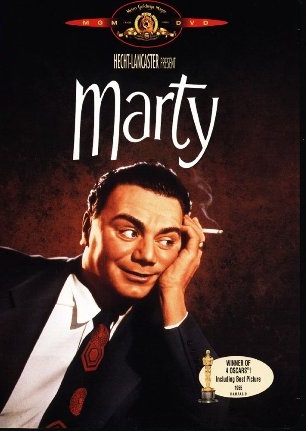 Marty, Delbert Mann (1955, USA) Ernest Borgnine plays a butcher who lives with his mother, but he’s getting on a bit and everyone tells him it’s time to get married. And I mean everyone. But he’s not had much luck with the ladies. One night at a local dance hall while on the pull, he bumps into shy schoolteacher Betsy Blair, whose date has dumped her after running into a much prettier friend. The two spend time together, and discover a mutual attraction. But afterwards, his mother tells Borgnine that Blair is not good enough and his friends tell him that Blair isn’t pretty enough. So even though he promised to call her the next day, he doesn’t. But then he changes his mind, and decides he liked her very much so it’s up to him and not his mother or friends. He calls her. (And they all lived happily ever after.) Marty won the Oscar for Best Film in 1955, and it’s a nice enough film, a well-observed drama with a good cast. Interestingly, Blair had been blacklisted for Communist sympathies, but her husband Gene Kelly lobbied for her to get the role, and he had enough clout in Hollywood to swing it.
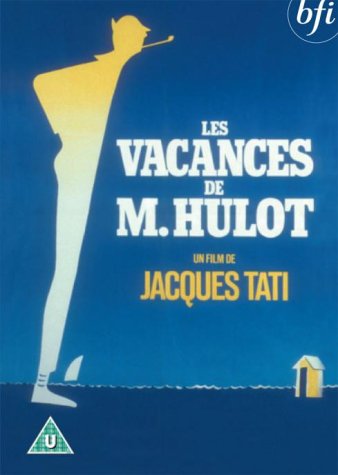 Les Vacances de M. Hulot, Jacques Tati (1953, France) My first Tati. The title character goes on, er, holiday. To the seaside. It’s sort of like Mr Bean, but the humour is more gentle and Hulot himself is a normal – if clumsy – human being. The plot is a series of set-pieces set in the town Hulot is visiting, most involving the other residents of the hotel in which he is staying. There’s an extended sequence with a horse and another with a shed full of fireworks… In fact, the more I think about the film, the more it strikes me how much of a rip-off of it that Mr Bean was. Although perhaps Mr Bean’s makers would claim it was an homage. Anyway, Tati’s is a good film and definitely worth seeing.
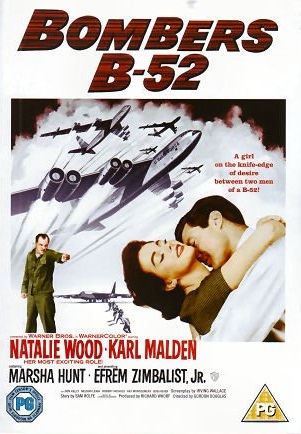 Bombers B-52, Gordon Douglas (1957, USA) I bet you can’t guess what this film is about. Go on, try. Yup, it’s about Boeing B-52 Stratofortress jet bombers. They first flew in 1955, and are still bombing the shit out of brown people even today. However, they’re complicated aircraft, and USAF clearly felt they might need more technical ground staff to keep them flying – hence Bombers B-52, starring Karl Malden, Efrem Zimbalist Jr and Natalie Wood. Zimbalist is an officer and a pilot, Malden is a tech sergeant and he hates Zimbalist. So when Zimbalist starts dating Malden’s daughter, Wood, Malden is understandably peeved. He decides to resign from USAF. But they’re getting these hot new B-52 bombers in and Zimbalist, who can’t understand why Malden hates him (neither, to be honest, do we), wants Malden to stay on. They go on a test flight, some fancy new equipment bursts into flames – bit of a design flaw there – and fills the B-52 with smoke. Everyone bales out, except Zimbalist, who’s piloting the aircraft. He brings it in to a safe landing. Meanwhile, rescue helicopters have found all of the crew except Malden. So Zimbalist steals a chopper and goes looking for him. And finds him. The two have to survive overnight in the wilds of California and become best buddies, and so Zimbalist is free to marry Wood. The end. There’s some good aerial photography in the film, though.
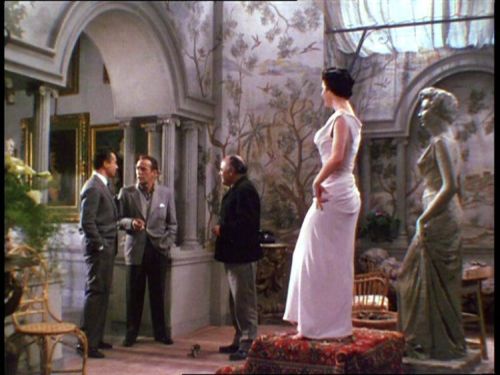
 Madame De…, Max Ophüls (1953, France) This is around the third or fourth film by Ophüls I’ve seen and, I think, the best of them. The title character, whose surname is never given, is the wife of a French general and has a busy social calendar. To fund her activities, she sells a pair of diamond earrings given to her by her husband. She pretends to have lost them, but the jeweller to whom she sold them tells the general and he buys them back… and gives them to his mistress. But the mistress then sells them to pay off some debts, and they’re bought by an Italian count, played by director Vittorio De Sica, who then meets Madame de…, enters into a relationship with her, and gives her the earrings as a token of his love… The film is set, I think, around the turn of last century, and it’s the focus on appearances which drives the plot – and leads to its resolution. Apparently, Ophüls originally planned to shoot the entire film through reflective surfaces, such as mirrors, which would have been cool but the producers nixed the idea – which is not to say the end result is a disappointment. I’ve yet to fully appreciate Ophül’s films (unlike those of other directors mentioned in this blog post), but Madame De… is the first of his films I’ve watched which persuades me it’s worth seeing more of his movies.
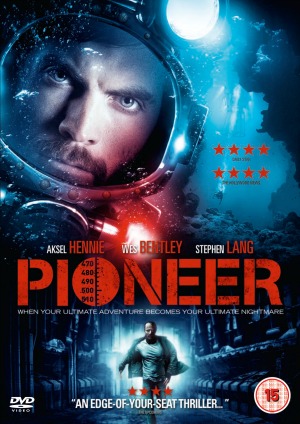 Pioneer, Erik Skjordbærg (2013, Norway) I’d been keen to see this film since first learning of it last year. But it had a stupidly limited release in the UK – my nearest showing was 8 pm on a single Friday night in Leeds, an hour away by train. The film is set in the early 1980s in Norway, just as the country is starting to develop its oil and gas resources. The Norwegians have accepted US help in putting together the saturation systems needed for divers to work at depth. But something goes wrong on a test dive, a Norwegian diver dies, and his brother, also a diver and present when the accident occurred, tries to figure out what’s going on… I was really looking forward to this movie since saturation diving is not a topic often covered in films. And the underwater photography in Pioneer is actually quite stunning… But the rest of the film felt like a routine thriller – Bentley glowers menacingly, Aksel Hennie bounces from mysterious scientist to mendacious politician to grieving sister-in-law… While the film certainly has that stark realism the Scandinavians do so well – and Hollywood does so badly – the plot does seem disappointingly ordinary. On the other hand, as far as I could tell its subject was handled accurately.
 The Palm Beach Story, Preston Sturges (1942, USA) This has to be one of the silliest films I’ve ever seen. It definitely puts the “screwball” in “screwball comedy”. The film opens with a quick montage of shots which shows a man and a woman overpowering their twin brother and sister, who are about to get married, and taking their places at the wedding. Some time later, life isn’t so rosy, so hubby Joel McCrea decides to head south to look for work and be less of a burden on wife Claudette Colbert. She goes looking for him and manages to wangle a free ride on a train with a bunch of drunken hunting lodge-members… before being rescued by eccentric millionaire Rudy Vallée, who is very taken with her. McCrea then turns up, so Colbert pretends he is her brother… prompting Vallée to propose to Colbert – and Vallée’s ex-wife Mary Astor to propose to McCrea… Happily, there are those twins from the opening montage. While there’s plenty of fast-paced wit and snappy one-liners in The Palm Beach Story, the story is so ridiculous it spoils it all.
 Gertrud, Carl Theodor Dreyer (1964, Denmark) This was a rewatch – I’d originally seen the film on rental DVD, but was later bought a copy of it and Ordet for my birthday. The film is based on a play from 1906 and Dreyer gives it a very theatrical staging. It’s his last movie, and on the strength of it I’m keen to see more. Nina Pens Rode, in the title role, is the wife of a prominent lawyer who is about to be given a position in government. But she wants a divorce – she even has a lover, composer and pianist Baard Owe. But the pianist has made another women pregnant and so cannot go with Gertrud. There’s a luminous quality to this film, one that’s emphasised by its staginess. Rode is especially good in the title role, dominating every scene she’s in with a quiet strength… as is clearly evident in the coda in which Gertrud looks back on the events of the film from thirty years later and sees no cause to regret her actions all those years earlier. A film that’s just bubbling under my top ten movies.
 Captain America: The Winter Soldier, Anthony & Joe Russo (2014, USA) I’ve no idea why I continue to watch MCU movies, perhaps it’s just foolishness – I see the hype and promotion and stupidly believe it. Or something. To be fair, I did quite enjoy Captain America: The First Avenger, with its weird Nazi science and silly spoof of the title character. But this sequel is set in the present day, and despite the massive hype and the many positive murmurings I’ve heard, is just complete bobbins. It turns out that SHIELD has been controlled by Hydra, the Red Skull’s organisation from the first film, ever since Operation Paper Clip shortly after WWII. And no one ever noticed. In fact, the only reason Cap discovers this is because SHIELD tries to kill him. Even Nick Fury doesn’t know – and he created SHIELD! The Red Skull, of course, died at the end of the first film, but his chief scientist, played by Toby Jones, survived, and he’s now the brains behind Hydra. Well, not “brains”, as he’s uploaded himself into a load of 1960s mainframe computers. Which are located in a seemingly-abandoned underground computer centre at an old SHIELD base, an underground computer-centre that appears to have no security. Not very clever that. The rest of the film is some nonsense about an unkillable assassin, there’s more explosions and fight scenes than you can shake a very large stick at, and as the movie progresses you can actually feel your brain cells dying off one by one.
 All That Heaven Allows, Douglas Sirk (1955, USA) My high opinion of this film is no secret. I love it so much, in fact, I bought the Criterion blu-ray edition, despite already owning it on DVD. So I was bit fucked off to discover that the blu-ray is region-locked. And unlocking my blu-ray player is going to involve some faffing around with firmware or something. Argh. So I watched the DVD edition packaged with the blu-ray instead. And… it really is a beautiful film. The more I watch it, the more I love it. It’s not just that it looks so good, but also that it’s a pitch-perfect satire of middle-class American society. The grown-up kids, who behave like actual kids, are spot-on – although the daughter’s beau, played by David Janssen, seems somewhat out of his depth – and the part where they buy their mother Jane Wyman a television set, as if that’s all she needs now she’s a widow, is pure genius. I’ve watched All That Heaven Allows two or three times in recent months – partly for research for Apollo Quartet 4, of course – and my appreciation remains undimmed. Even the hokey bits – the deer! – don’t turn me off. I love the film so much, I even tracked down a copy of the novel it’s based on – and it wasn’t easy to find.