It Doesn't Have To Be Right…

… it just has to sound plausible


1 Comment

The future we used to have, part 17

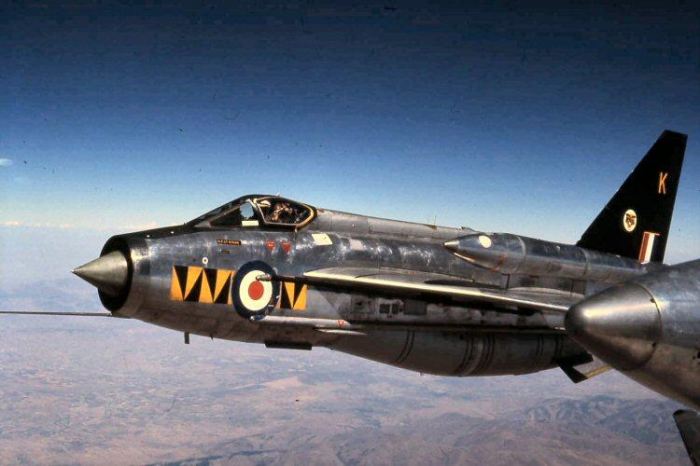
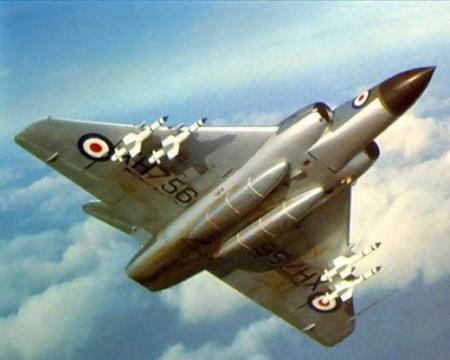
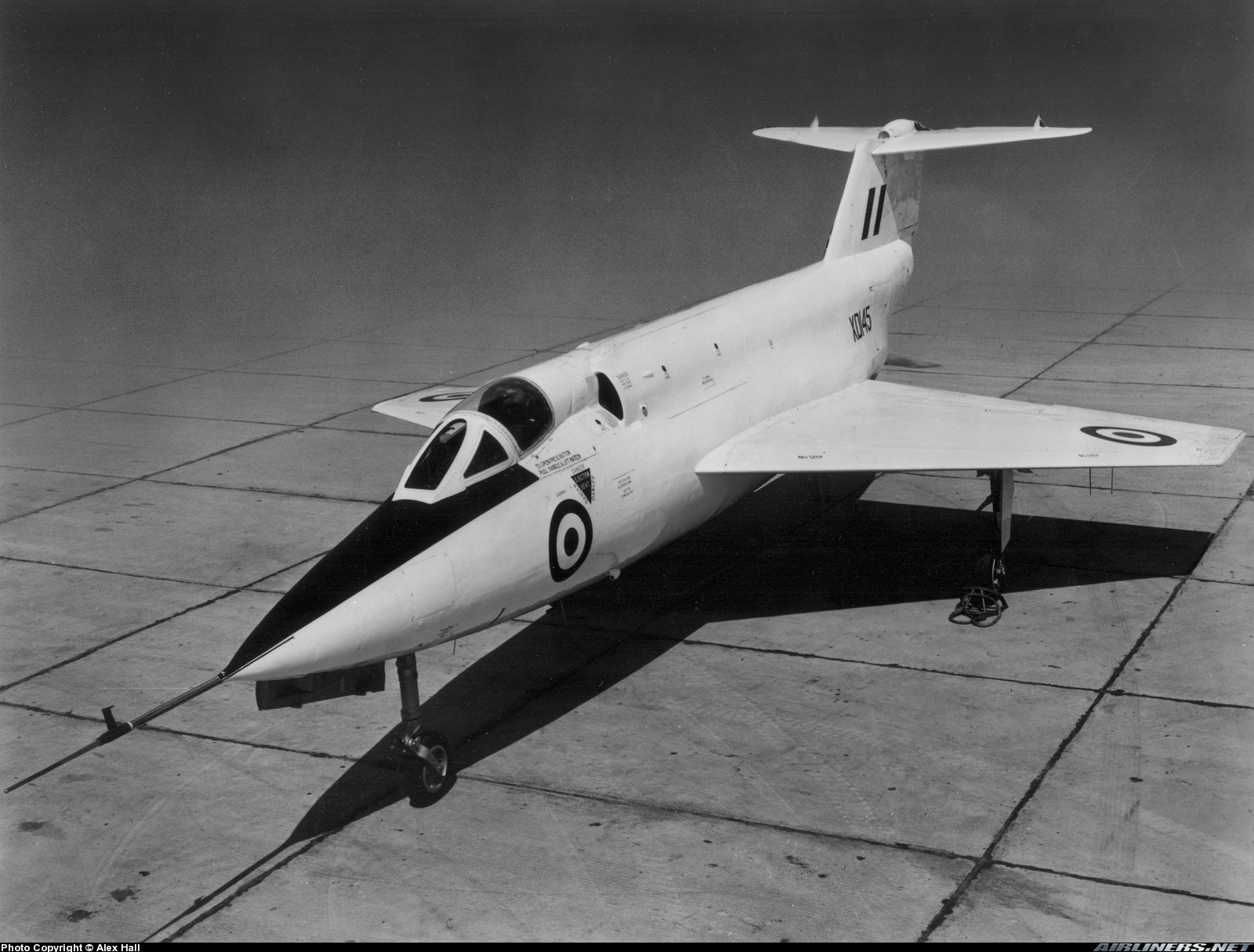
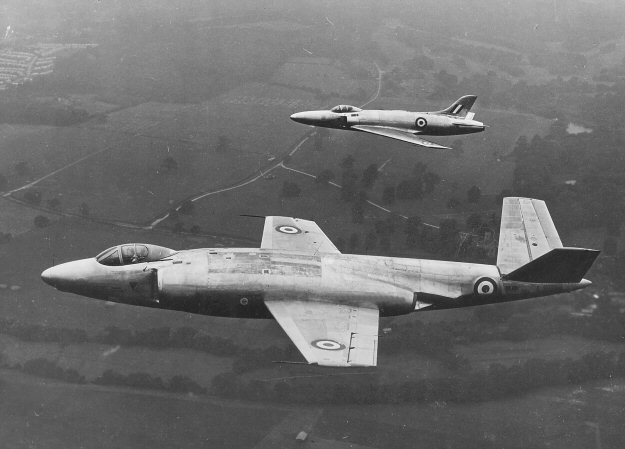
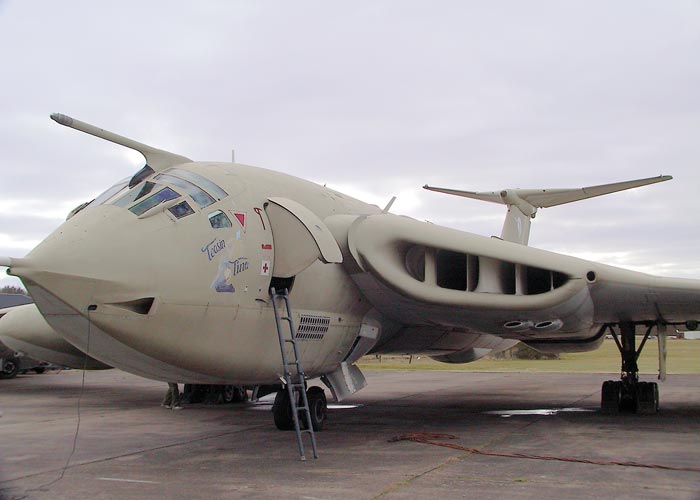
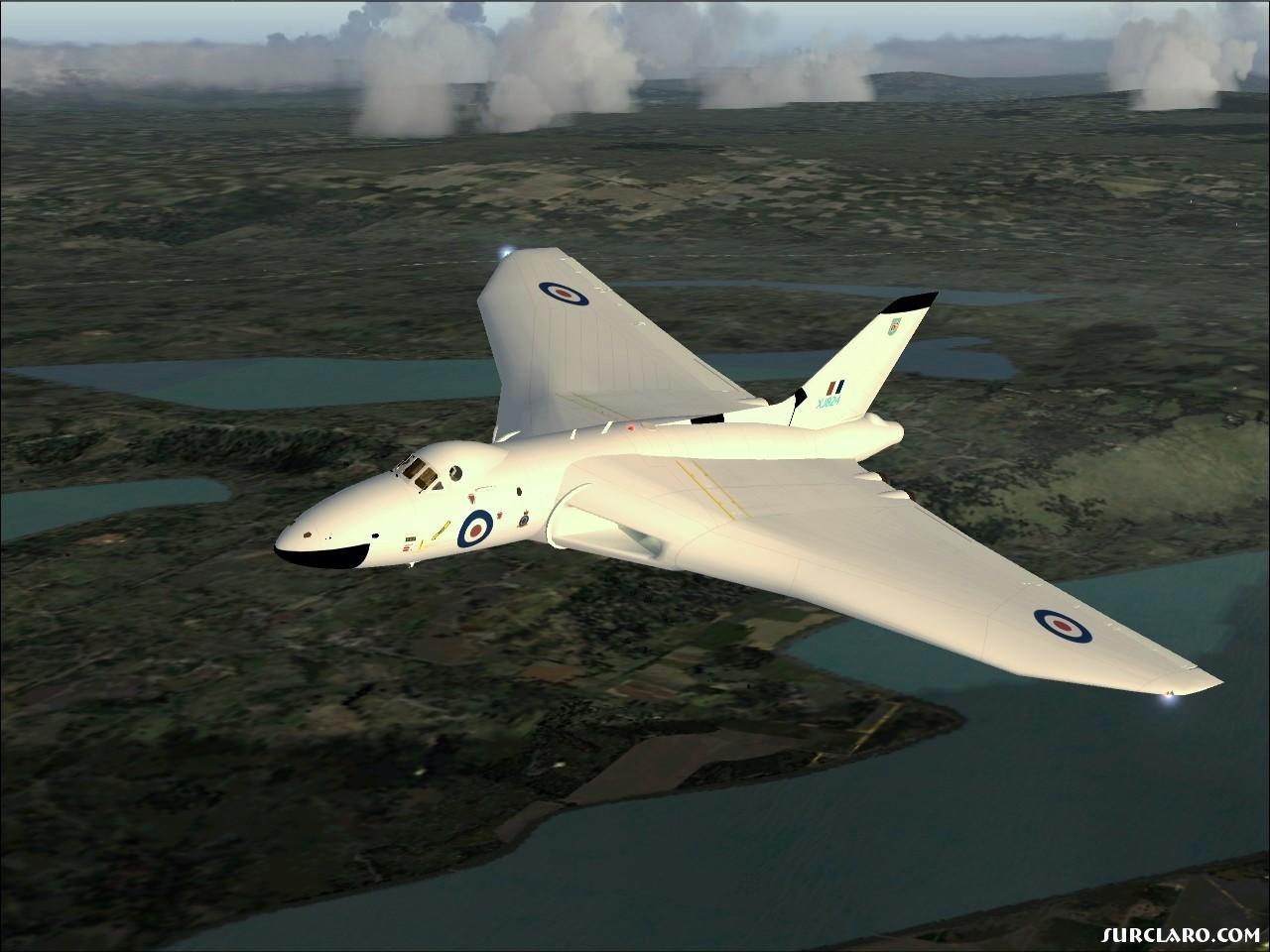
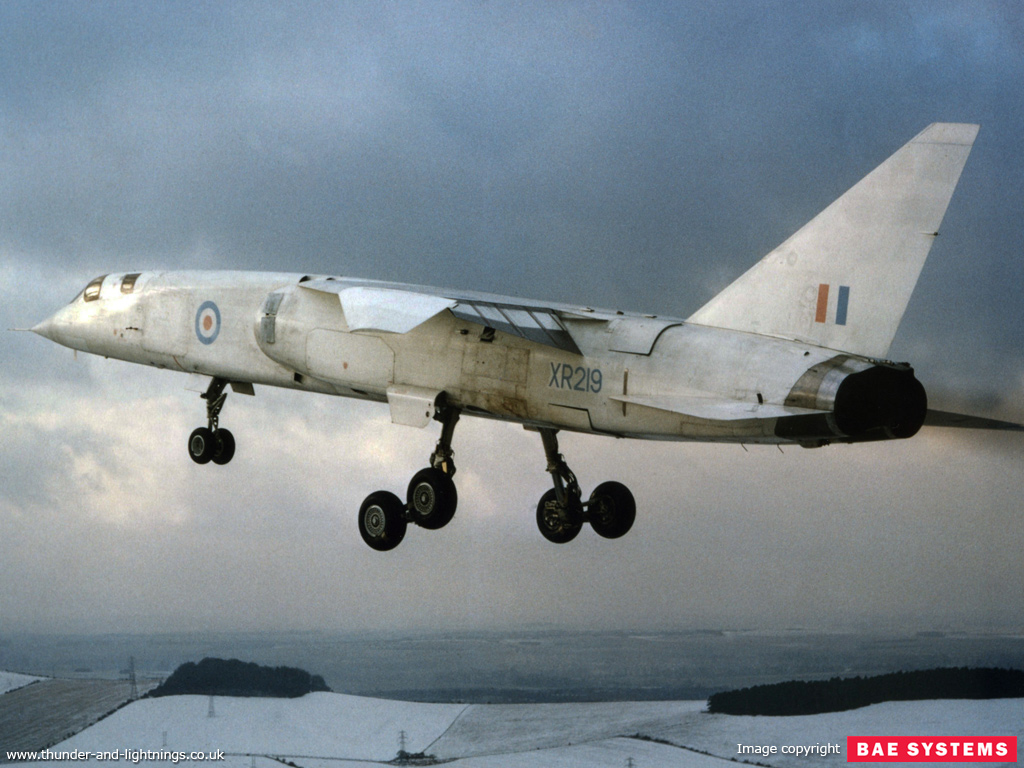
Back in the day, the UK used to have a massive aircraft industry. It was because of the Second World War, of course. We churned out huge numbers of bombers and fighters during those years, but even in the two decades following, there were dozens of aircraft manufacturers in Britain, all bidding on government contracts. Over the years, the various companies merged, amalgamated, or went under, until pretty much all we were left with was British Aerospace. But back in the 1950s and 1960s, when names like Avro, Vickers, Handley Page, de Havilland, Gloster, Supermarine, still meant something, the UK built some iconic military aircraft. Not just the V-Bombers, but also the English Electric Lightning interceptor, the sadly-cancelled TSR.2, or the Canberra – which became the B-57 under licence in the US…

fighters

17_74-sqn-bac-lightning-f6-raf-tengah

English Electric Lightning

17_Gloster_Javelin_XH756_firestreak

Gloster Javelin

17_Sea_vixen_xp924_g-cvix_kemble_arp

De Havilland Sea Vixen

17_sr53

Saunders-Roe SR.53

17_Vickers508

Supermarine Type 508

bombers

17_Victor-K2-XM715

Handley Page Victor

17_Avro_Vulcan_Bomber

Avro Vulcan

17_Canberra-4

English Electric Canberra

17_tsr2

BAC TSR.2

17_valiant-vickers

Vickers Valiant

The SR.53 was a prototype rocket- and jet-propelled interceptor; only two were built. The Type 508 was also a prototype, and a later version of it, without the butterfly tail, went on to enter service as the Supermarine Scimitar.


2 Comments

In an octopus’s garden

Back in the 1930s, Swiss scientist August Piccard held records for both the highest altitude ever reached and the deepest ocean descent. In the last couple of years I’ve found myself retracing a similar journey, and while I may have travelled higher and deeper, I’ve done it from the comfort of my armchair. In books.

I was three when Neil Armstrong set foot on the Moon, so the Space Race was a part of the world in which I grew up. I had a childish interest in it, but in my late thirties that interest was rekindled after reading Andrew Smith’s Moondust. I’ve since used my fascination with the topic in my writing – not just the Apollo Quartet, but also in published and soon-to-be-published short stories. And I plan to continue doing so.

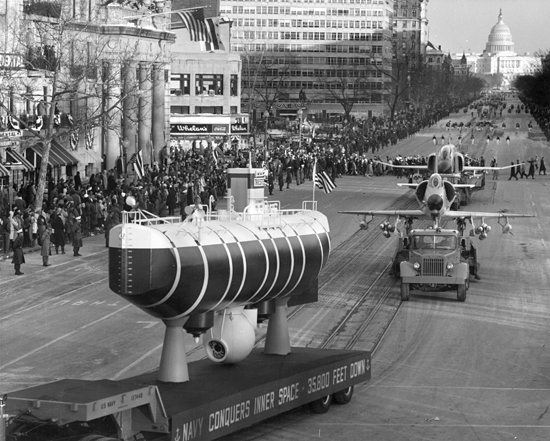
In 2010, I learnt it was the fiftieth anniversary of the first descent by human beings to Challenger Deep, the deepest part of the ocean on the planet, some 11,000 metres below the surface of the Pacific. In January 1960, Lieutenant Don Walsh, USN, and Jacques Piccard, son of Auguste Piccard, had reached the ocean-bottom in the bathyscaphe Trieste (which had also been designed and built by Auguste Piccard). I was surprised to discover that very little had been made of the two men’s achievement – in fact, I could find only a single book on the topic, Seven Miles Down, which I wrote about here. Contrast this with the huge numbers of books published in 2009 to celebrate the fortieth anniversary of the Apollo 11 Moon landing (such as these).

archives-trieste-6_62313

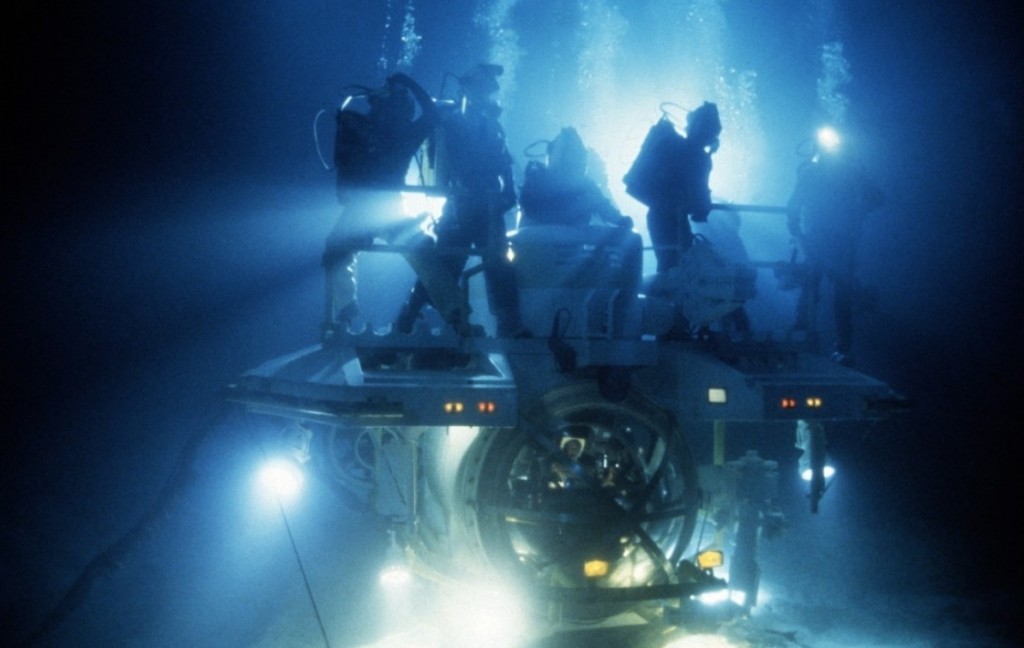
Space exploration has been in the public eye since 1957 and the launch of Sputnik. Underwater exploration – especially deep sea exploration – has not. Yet it’s actually just as fascinating a topic. While the “commute” is a great deal simpler and less expensive – you just sink – the environment at the bottom of the ocean is every bit as dangerous, if not more so, than space. It is an area in which great strides were made during the middle decades of the twentieth century, and in which all the various problems were solved by brute-force engineering… only for interest to fade away as it proved too difficult to keep human beings alive in that environment. Just like space exploration.

Recently, I’ve been reading about underwater exploration – partly as a result of my ongoing interest in the Trieste, but also because I’ve felt it’s a good subject for short fiction. Earlier this week, I finished Sealab by Ben Hellwarth, which is about the US Navy’s programme during the 1960s to build an underwater habitat. I also have a copy of Living and Working in the Sea by James W Miller and Ian G Koblick (recommended by Gavin Smith). And, of course, there’s plenty of material on the internet. Even so, underwater exploration is not as well documented as space exploration.

The idea of living at the bottom of the sea is not a new one. The best-known fictional example is likely Captain Nemo from Jules Verne’s Twenty Thousand Leagues Under the Sea, and that’s from 1870. There are, of course, plenty of difficulties to overcome – and not just the fact that human beings can’t breathe water. The deeper you go, the higher the pressure – one atmosphere for every ten metres of water. So at 610 m (2000 ft), that’s 61 atmospheres, or 61 kg per square centimetre. At such pressures, ordinary air is too dangerous to breathe. Not only is the partial pressure of oxygen increased to levels which can be toxic, but the nitrogen causes nitrogen narcosis, which presents as a form of debilitating drunkenness. Nitrogen also dissolves in the cells of the body, and returning to normal atmospheric pressure causes the gas to bubble out, often with fatal consequences – the bends. As a result, divers visiting below 60 m use a helium-oxygen mix. They must also decompress slowly to normal atmospheric pressure, a process that often takes longer than the period spent underwater.

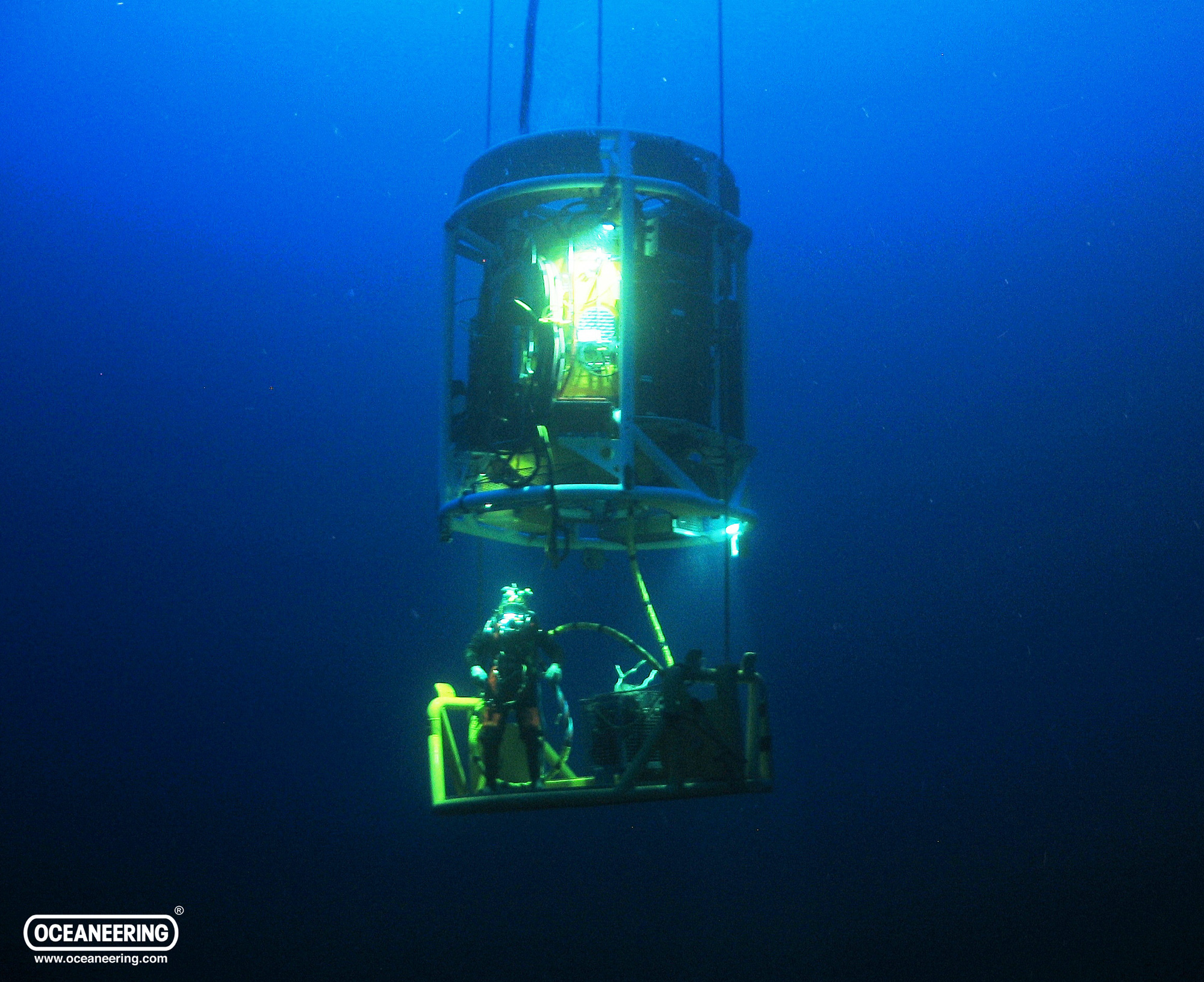
One technique that has allowed greater depths to be reached is “saturation diving”. In this, the diver spends time before the dive in a sealed chamber in which the pressure is slowly increased – often over days – to the required level. If, for example, the diver will be operating at 200 m (650 ft), by the time they’ve completed compression, they will be breathing a helium-oxygen mix at 20 atmospheres, and the cells of their body will also be at that pressure. A sudden return to normal atmospheric pressure would be quite literally explosive.

20120207-Neptunes-1st-Sat-Job-390

Saturation diving is frighteningly dangerous. In 1962, Swiss physicist and diver Hannes Keller announced he would dive to the hitherto considered impossible depth of 305 m (1000 ft) using a secret mixture of breathing gases. In a diving bell, Atlantis, he and a British journalist, Peter Small, were lowered to the seabed off the coast of Santa Catalina Island, California. The plan was for Keller to place a Swiss and US flag on the seabed. Somehow, he managed to get his umbilical tangled in the flags as he returned to the bell, and once inside he passed out as the gas mixture had gone bad. Small had already blacked out. The bell was raised, and at 60 m (200 ft) support divers were sent down to assist. One of them never returned. Once the bell was on the ship, Keller revived, followed by Small two hours later; but Small then passed out again. Several hours later, Keller noticed that Small had stopped breathing. He tried to resuscitate him, to no avail. Once the bell’s atmosphere had reached two atmospheres – eight hours after it was originally sealed – it was opened and Small rushed to hospital, where he was pronounced dead. Keller had broken the deep-diving record, but at the cost of two lives.

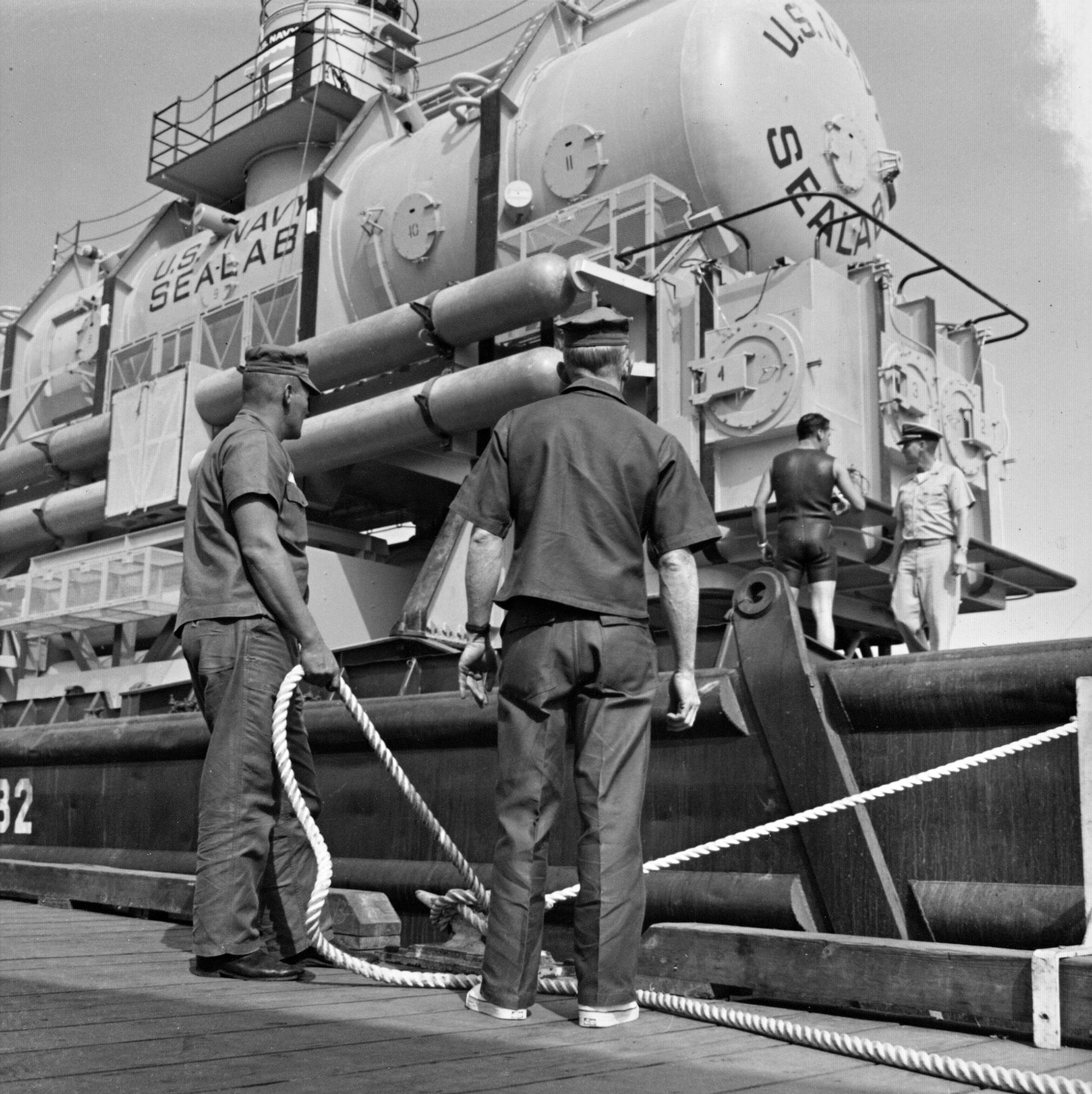
Underwater exploration, and living, has been more successful in shallower waters, typically no more than 10 or 20 metres – depths at which it’s safe for a diver to head immediately for the surface. Jacques Cousteau operated his three Conshelf habitats in the Mediterranean between 1962 and 1965, before interest waned in the idea. US industrial Edwin Link, inventor of the flight simulator, experimented with his SPID, Submersible Portable Inflatable Dwelling, in which diver Robert Sténuit set a series of records, including spending 24 hours at 62 m (200 ft) in 1962. The biggest such project, though it was initially run on a shoestring budget, was the US Navy’s Sealab, the brainchild of Commander George F Bond, who before joining the Navy had worked as a country doctor in an Appalachian village called, amazingly, Bat Cave. The Sealab programme comprised three habitats, each one larger and better-equipped than the preceding one, placed in progressively deeper water. Mercury astronaut Scott Carpenter joined the project on loan from NASA and spent thirty days in Sealab II. Sealab III, however, was plagued by technical problems, and ended in tragedy when a diver from the first team sent down to open up and then live in the habitat died of carbon dioxide poisoning on the ocean bottom at 185 m (610 ft).

sealab

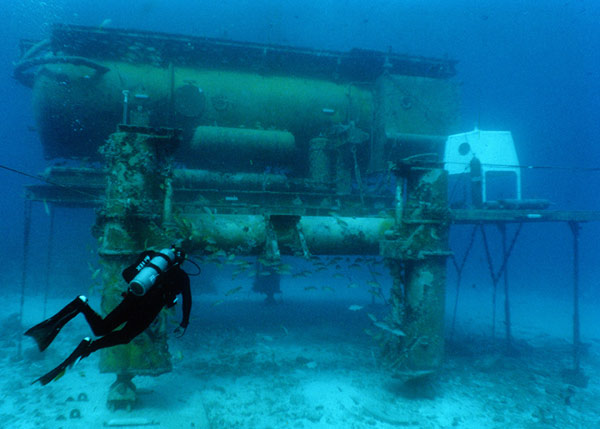
The US Navy subsequently shut down the Sealab programme, but research into saturation diving continued in the private sector as oil companies began offshore drilling at deeper depths. They needed divers for seabed maintenance and repairs. A few other attempts were made at underwater habitats, but the idea of sustained underwater living, especially at depths of 200 m or more, was soon dropped. These days there are only a handful of underwater habitats in operation, and they all sit in shallow water – such Aquarius, which is in 20 m of water in the Florida Keys National Marine Sanctuary. Even commercial divers found it more efficient to stay aboard a ship in a sealed chamber at the required pressure, and travel to the seabed in a diving bell to work. These days, of course, much of the work done by saturation divers is instead done by remotely-operated vehicles, ROVs, which can operate much deeper and don’t require decompression.

neemo9_aquarius

While the US Navy may have canned Sealab, it didn’t abandon saturation diving. Instead, it mounted a secret mission to retrieve debris from Soviet missile tests from the floor of the Sea of Okhotsk. The US Navy then realised it could use saturation divers to place taps on Soviet military submarine cables some 120 m (400 ft) down in the same region. Operation Ivy Bells provided a lot of useful intelligence throughout the 1970s, before it was compromised by a traitor within the CIA in 1980.

During the 1970s, commercial diving companies and some navies had tried to extend the depth at which saturation divers could operate. Somewhere around the 310 m mark, however, divers begin to suffer from a variety of symptoms, even when using a helium-oxygen mix: lethargy, dizziness, shakes, vomiting, delusion and hallucinations. This was dubbed High Pressure Nervous Syndrome, HPNS, and it seemed like a natural limit had finally been reached. Eventually, it was discovered that by adding hydrogen, or a small amount of nitrogen, to the gas mix, HPNS could be avoided. Commercial saturation diving to 300 m became routine, and depths of around 600 m were found to be possible – in fact, to date the deepest dive ever recorded by human beings was to 534 m (1752 ft) by a team of commercial saturation divers in 1988. The deepest simulated dive – ie, in a compression chamber on land – was to 701 m (2300 ft) as part of a scientific exercise by a commercial diving company. The diver spent three hours at 70 atmospheres, and experienced only minor HPNS symptoms, a slight tremor. At present, it is believed human beings cannot survive deeper than 750 m to 1000 m.

Much like space exploration, science fiction typically glosses over the difficulties associated with living and working underwater – especially at depth. There have been numerous novels, films and even television series featuring underwater cities, but most seemed to take as given that some element of humanity has been engineered to survive underwater – even at depth. James Blish and Norman L Knight’s A Torrent of Faces features aquatic humans, as do, more recently, Alastair Reynolds’ Blue Remembered Earth and Peter Watts’ Rifters Trilogy. Actual diving, or realistic underwater habitats, seems more the province of techno-thrillers – much like accurate space exploration has been. Michael Crichton’s Sphere, for example, has all the elements of a good story – saturation diving, underwater habitat, and a mysterious alien spacecraft on the ocean bottom… but still manages to be a bad film. The Abyss is perhaps one of the best cinematic representations of deep sea diving, but the fluid-breathing diving suit is pure invention. Given the actual achievements made last century in saturation diving and underwater habitats, it seems a shame the topic is not more commonly used in science fiction.

Abyss_2C-The-1074184-1024x648

Having said all that, depth is no obstacle when people remain in a one-atmosphere environment, as they do in a submarines, submersibles or atmospheric diving suits. Sf representations of these are far more common – from Frank Herbert’s The Dragon in the Sea to the seaQuest DSV television series. But that’s a topic for another post…


Leave a comment

Double stacked

I promised a book haul post and here it is. Unusually, this month’s haul consists chiefly of research books, and first editions for various collections. Which actually probably makes it a little more expensive than is typical… Oh well.

20130506a

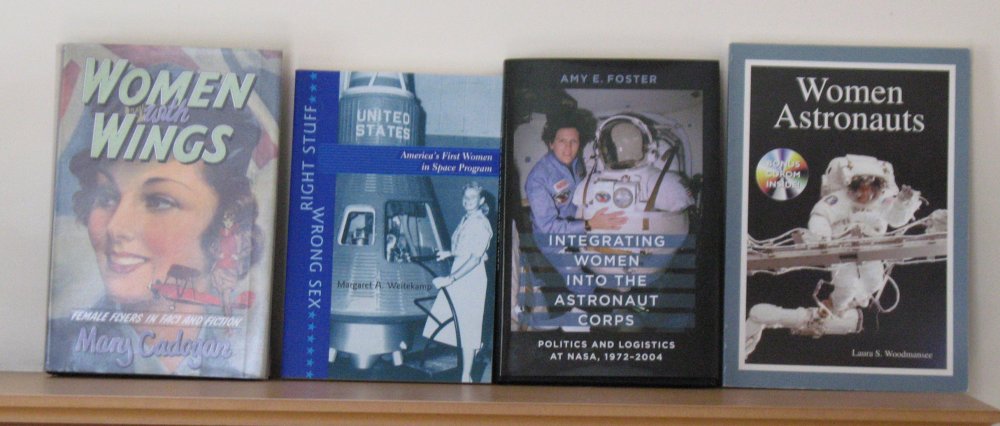
I bought these for research for Apollo Quartet books 3 and 4 – so yes, as promised, the role of women is much increased in the second half of the quartet. These four books – Women with Wings, Right Stuff, Wrong Sex, Integrating Women into the Astronaut Corps and Women Astronauts – only apply to part of the planned stories for the two novellas, however. I guess you’ll have to buy Then Will The Great Ocean Wash Deep Above and All That Outer Space Allows when they’re published to find out precisely how…

20130506b

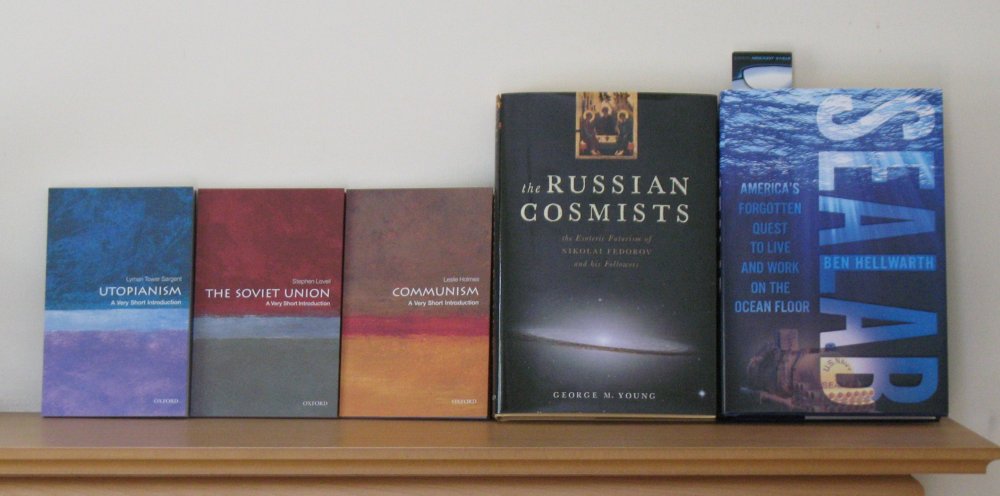
More research. Sort of. Sealab I bought just because it looked interesting. And as the bookmark indicates, I’m about a third of the way into it and it is interesting. Fascinating, even. I may well post about it later. The Very Short Introductions – Utopianism, Communism and The Soviet Union – are quite useful research tools, though they’re obviously only starting points. The Russian Cosmists is for a novel I’m working on. I started the novel the year before last when I had a bash at NaNoWriMo. I managed 15,000 words before giving up, but I recently realised that if I restructured it and took the plot in a different direction, I could end up with something quite interesting.

20130506c

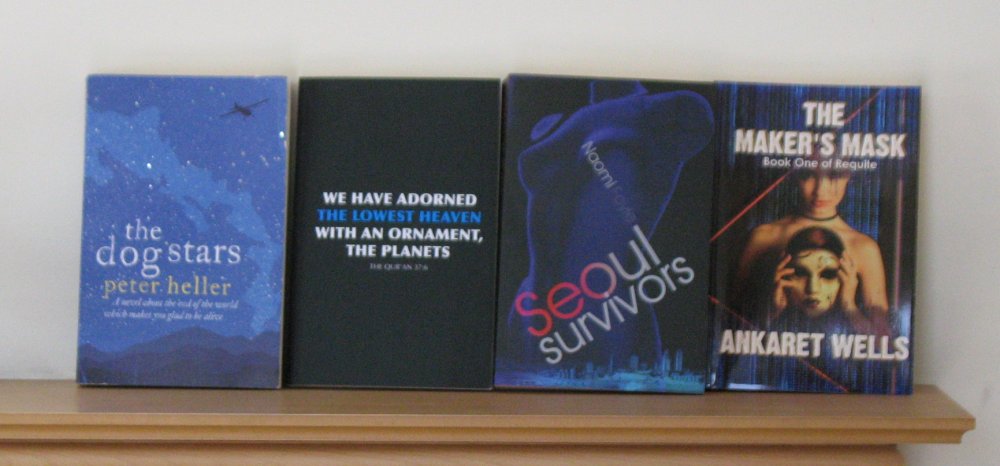
A bunch of genre works. The Dog Stars was shortlisted for the Clark Award this year. I found that copy in a charity shop. The Lowest Heaven is an ARC of the latest anthology from Anne Perry and Jared Shurin. This ARC is just the stories, but the finished product will apparently contain a number of astronomical photographs. It’s due out next month. Seoul Survivors I have to review for Interzone. And The Maker’s Mask is a self-published work I stumbled across on Amazon. From what I’ve read of it so far, it seems quite fun.

20130506d

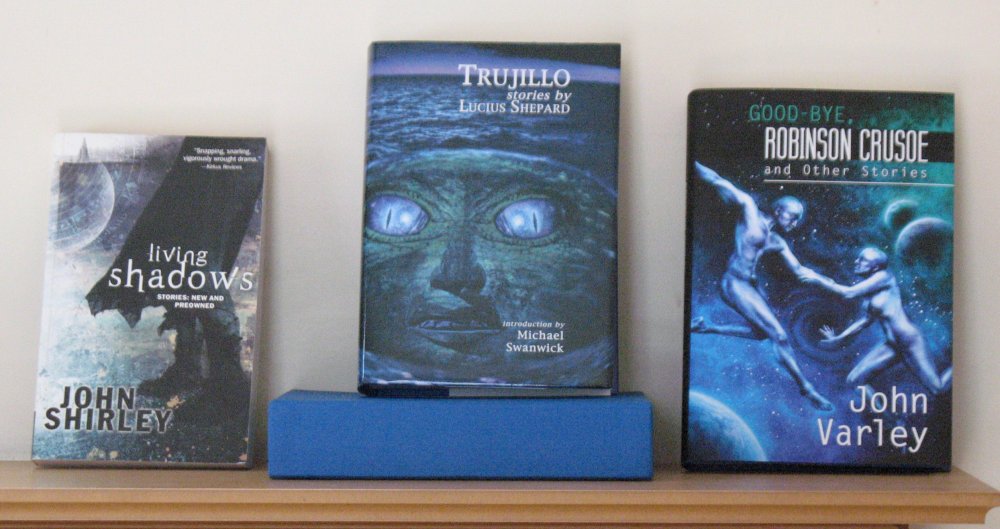
Some signed genre collections. I’ve been a fan of Varley’s fiction since the early 1980’s, so there was no way I was going to miss buying Good-Bye, Robinson Crusoe, even if I have most of its contents in other collections. Trujillo I picked up cheap on eBay. It’s out of print and difficult to find – especially the slipcased edition. I also have the Night Shade Books edition, although this PS Publishing one includes the title novel and some additional short stories. Living Shadows was another cheap eBay purchase.

20130506e

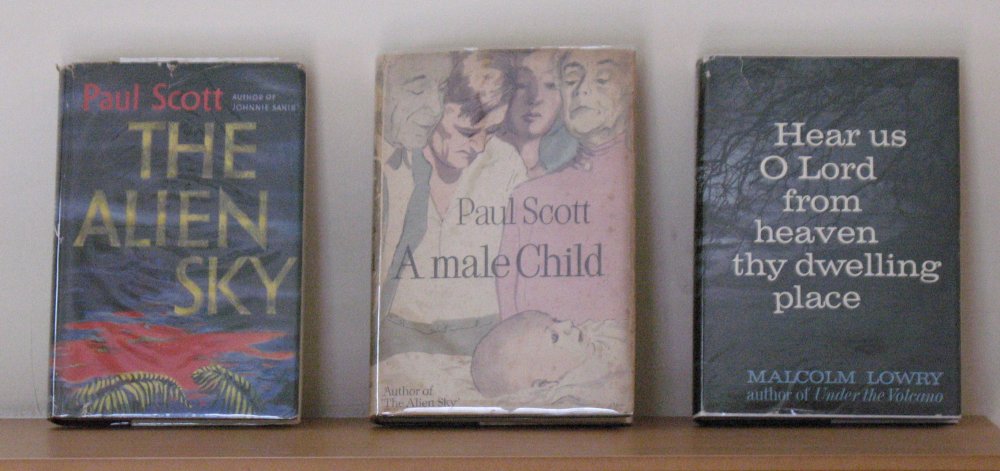
These, er, weren’t cheap. The Alien Sky and A Male Child are first editions of Scott’s first and third novel, from 1953 and 1956. Despite the enduring popularity of The Raj Quartet, Scott’s other works are really difficult to find – especially the early ones. Happily, a Cambridge-based bookshop put some of his books up on eBay recently. So I bought them. Hear Us O Lord from Heaven Thy Dwelling Place is a 1962 first edition of Lowry’s first posthumous collection. It contains ‘Through the Panama’, which is currently one of my favourite pieces of novella-length fiction. It was sold by the same shop as the Scott novels.

20130506f

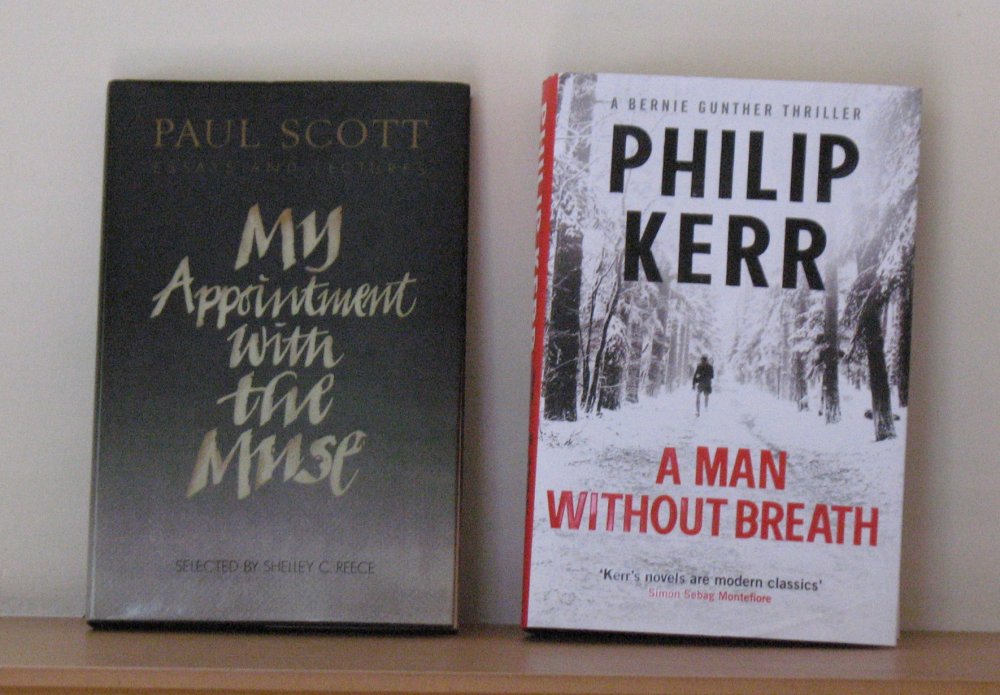
Finally, My Appointment with the Muse is a posthumous collection of Scott’s essays and talks. A Man Without Breath is the ninth and latest in Kerr’s Bernie Gunther series. I only have to read the novel prior to this one, Prague Fatale, and this one and I’m up to date.


2 Comments

The future we used to have, part 16

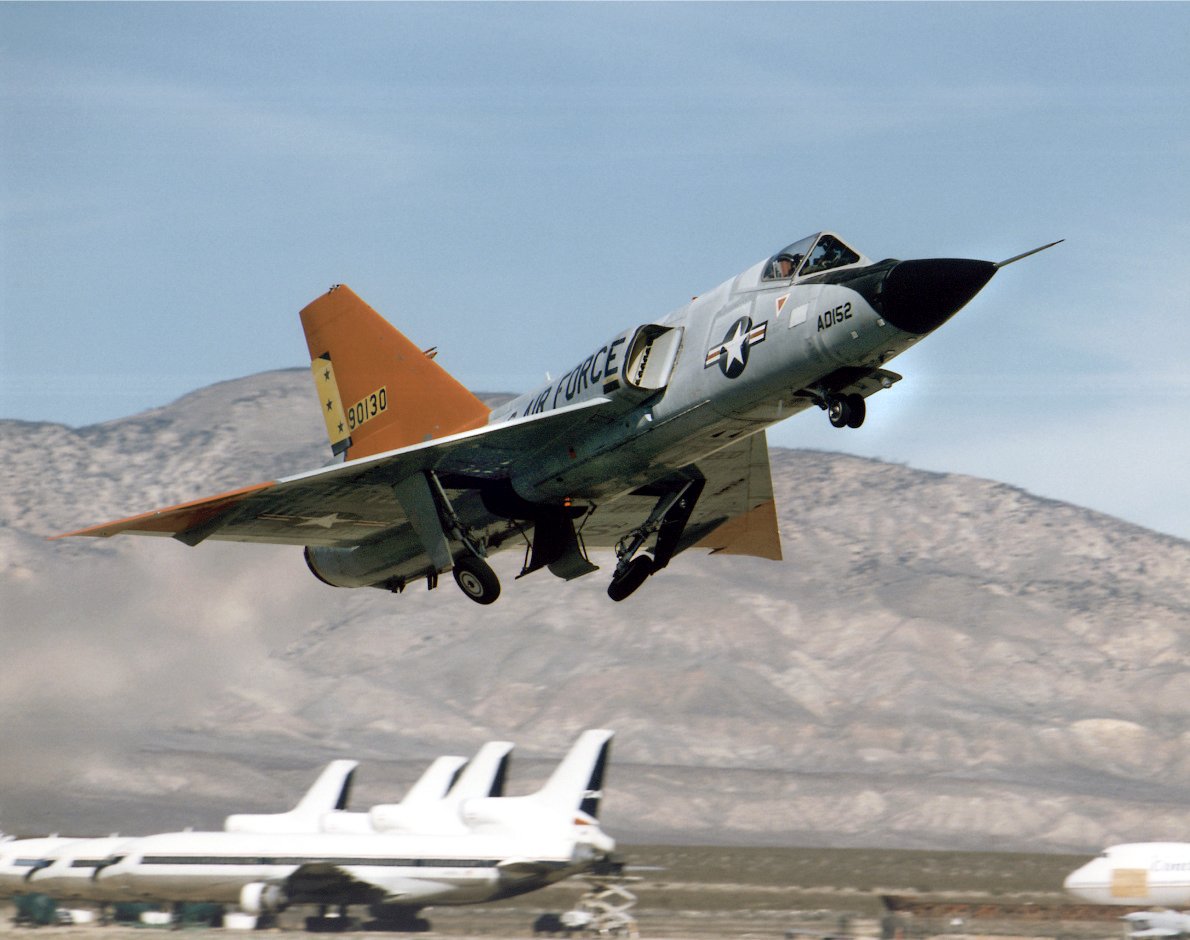
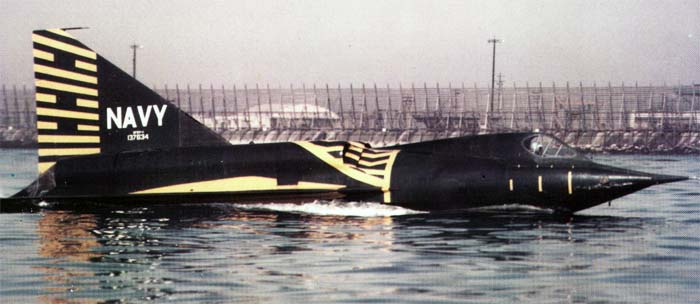
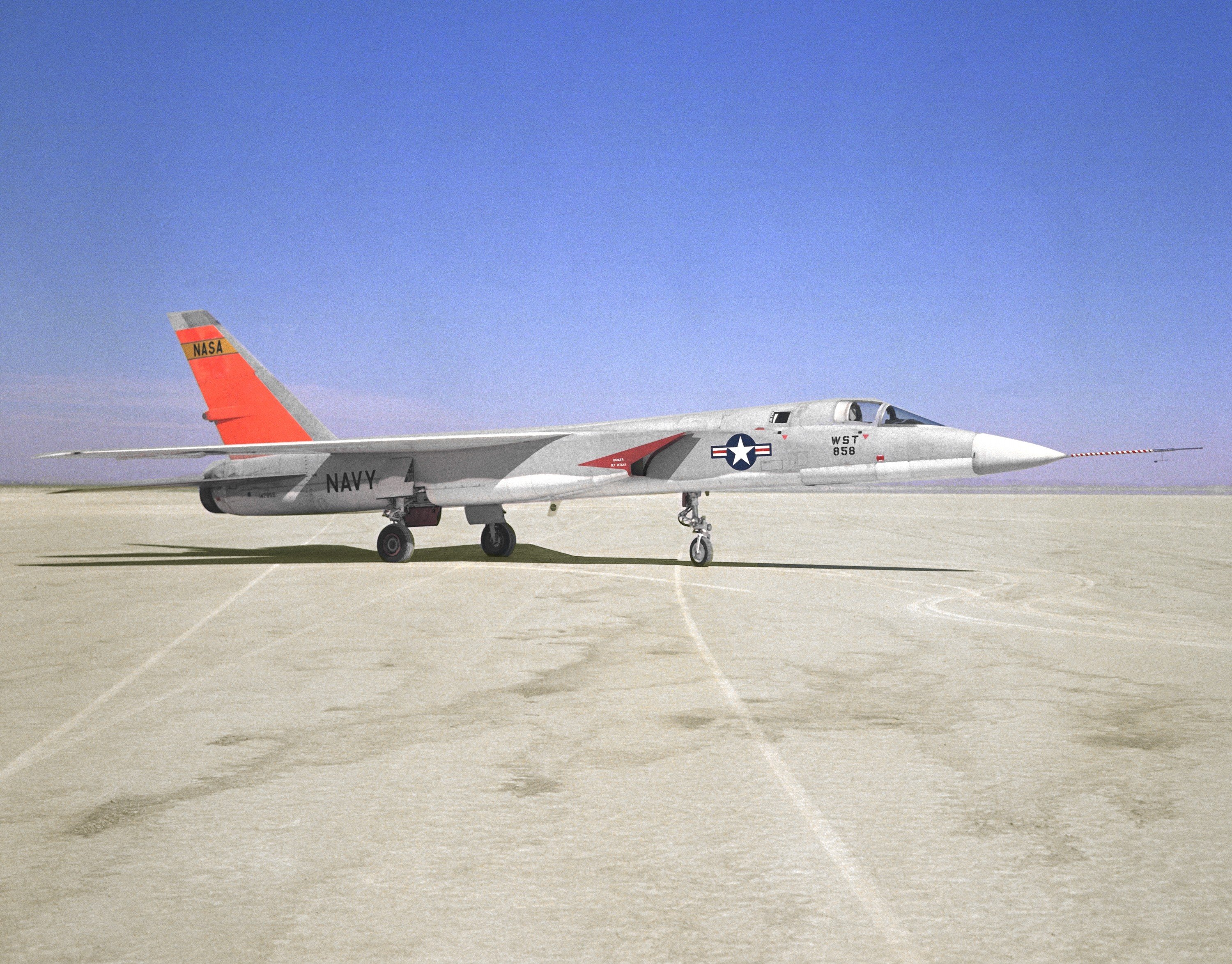
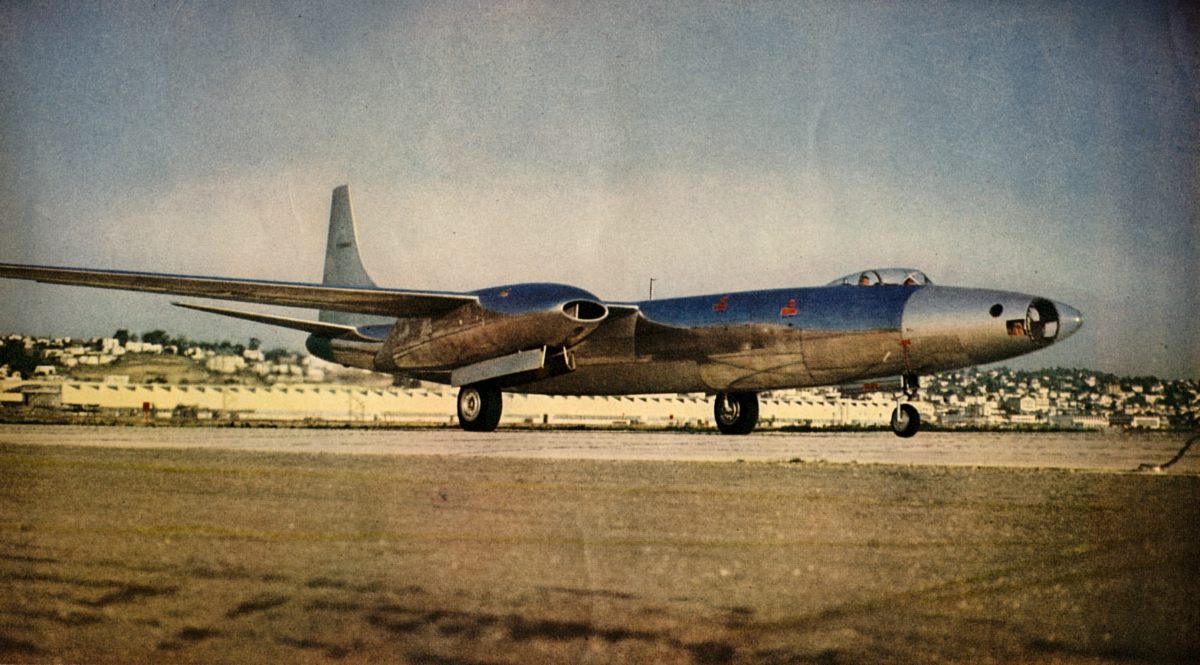
I did the USSR last week, but now it’s the USA’s turn. The amount of money spent on these aircraft is staggering – far more in total than it cost to put twelve men on the Moon. And yet few of them saw service and even fewer actually saw combat. Despite their capabilities, the technology was far from sophisticated. They pushed the science and engineering of the time as far as it would go, just so they could intercept Soviet bombers before they began dropping bombs, or drop bombs themselves on the enemy without being intercepted. And the only way to do either was to go… higher, faster…

fighters

16_F-101B_kevsaviationpics-com

McDonnell F-101 Voodoo

16_F-106 Delta Dart(4)

Convair F-106 Delta Dart

16_F-108MockupGlamourAlternate

North American XF-108 Rapier

16_f2y-1

Convair F2Y Sea Dart

16_lockheed-cl-1200-lancer

Lockheed CL-1200 Lancer

bombers

16_a-5_foto27

North American A-5 Vigilante

16_xb43_13

Douglas XB-43 Jetmaster

16_xb-46-photo

Convair XB-46

16_xb51_15

Martin XB-51

16_ConvairYB-60LOW

Convair YB-60

Of the fighters, only the F-101 and F-106 ever flew with USAF. The F-101 was also flown by the Royal Canadian Air Force. The North American A-5 Vigilante was based on the cancelled XF-108, but rather than a Mach 3 interceptor it was a carrier-based Mach 2 bomber. The Convair XB-46 was built for a medium jet bomber competition, but lost out to the Boeing B-47 Stratojet. The Martin XB-51 was built for a low-level bomber competition, but lost out to the Martin B-57, a license-built version of the English Electric Canberra. The Convair YB-60 was an attempt to extend the operational life of Convair B-36 Peacemakers by giving them swept wings and all-jet propulsion. USAF instead chose to use the Boeing B-52 Stratofortress.


Leave a comment

Come what May

A new month, a Bank Holiday weekend, and various doings of recentness in the weird and wacky world of science fiction. First up, of course, is Chris Beckett winning the Arthur C Clarke Award with Dark Eden. A win we can happy with, I think; though it was not my actual favourite on the shortlist. But congratulations to Chris, a genuinely nice guy and an excellent writer. Still, likely there will be much discussion on the win and what it means for science fiction in the UK over the next few weeks. Or perhaps not.

On the topic of not winning, right-wing nutjob Theodore Beale failed to conquer the SFWA and polled only a tenth of the votes of new SFWA president Stephen Gould. I’m not a member of the Science Fiction Writers of America, and have no desire to ever be one but, you know, it’s good to mock fascists, even if their politics are completely risible anyway. Speaking of which, a large number of plainly very stupid people in the UK gave a bunch of seats in local elections to UKIP. This is the party whose candidates believe exercise prevents homosexuality, claim the Jews were responsible for the Holocaust, think it’s funny to photoshop their head onto a photograph of Hitler and some Nazi bigwigs, and give “imitating a pot plant” as a defence for throwing a Nazi salute… One of their candidates has apparently gone to live in Thailand for six months, leaving his (Thai) wife and kids in the UK; and another was forced to resign as a police officer after being caught working as a male escort in full uniform. The clowns are taking over the circus.

Earlier this week, Nook dropped the price of its Simple Touch ereader from £79 to £29. Since I’d spent £130 on four hardback books a couple days before, I decided £29 was cheap enough to order one. Which is where it all went horribly wrong. I placed an order… and moments after getting an email acknowledgement I received a second email saying my credit card had been declined. Because I hadn’t created an account on the website, there was no way I could view or amend my order. I tried contacting Nook support, but they were completely snowed under with, it seemed, queries from other people with the same problem. So I created an account, and ordered another Simple Touch, this time using a debit card. It went through fine. The next day, I get an email saying they’ve fixed the credit card problem, so I can re-order if I want. I don’t want. I already have one heading my way – or so an email tells me. And then I get yet another email, saying it’s out of stock so my order has been cancelled. But the website still says the order’s in progress. So, Nook: big fail there. You win this week’s award for Most Useless Business on the Planet.

Meanwhile, Adam Roberts has been working his way backwards through Banks’ Culture novels. Not reading them back-to-front, obviously, just in reverse order of publication. It perhaps comes as no great surprise to learn that the later novels are not as good as those that preceded it. That is the Way of Commercial Fiction. Go read the reviews – they are insightful and amusing. And they sort of make me want to reread the Culture novels, too. If only the TBR weren’t so damn big…

Fantasy Café’s Women in SF&F month hit a bump in the road recently with a bonkers post about sexism in fantasy – or rather, the poster’s claim that it does not exist. Read the post here, then read an excellent rebuttal here. And on the same topic, here’s a piece from 1982 which demonstrates that thirty years later not a fat lot has changed. Susan Shwartz, incidentally, is the author of one of the few heartland fantasy novels I’m happy to recommend to people, The Grail of Hearts.

One author I constantly recommend people read is Gwyneth Jones. She’s offering her Escape Plans free on Kindle on Monday 6 May and Tuesday 7 May. Go buy it. Best use the link under the title, rather than search for it on Amazon, as their search engine seems to be completely fucked. Here’s my review of it on SF Mistressworks, written back in 2001.

Despite reading for SF Mistressworks, so far this year women writers only account for around 36% of my reading. Which is not to say that reading for SF Mistressworks is a hardship. While Margaret St Clair’s collection might not have been very good, Marta Randall’s novels are certainly much better than most of her contemporaries. And I’ve also had the opportunity to revisit some books I remember with great fondness, such as those by Shariann Lewitt or Susan R Matthews. Perhaps they’ve not always fared especially well on reread, but I’m glad I took the time to do it.

Speaking of books, over the last few days I’ve tweeted photos of some recent arrivals of a bookish nature. I’ll do a proper book haul post in a few days, but let’s just say I now have more research material for Apollo Quartet books three and four, and the Paul Scott and Malcolm Lowry first edition collections have expanded somewhat (which is the £130 of books mentioned earlier). So, of course, I’ve been spending my time reading about… underwater habitats and saturation diving. For another writing project. Current read is Sealab by Ben Hellwarth, which is proving fascinating. The whole idea of living and working on the sea bed appears to have been driven by one man, Captain George F Bond, USN; and who reminds me much of Colonel John Paul Stapp, USAF, of rocket sled fame, and who I wrote about in my story, ‘The Incurable Irony of the Man Who Rode the Rocket Sled’, which should be appearing on The Orphan some time soonish.


2 Comments

Musical interlude

Noumena, an excellent Finnish melodic death metal band (yes, there is such a thing as melodic death metal; it’s a known subgenre), have just released their new album, Death Walks With Me, seven years after the preceding album. I have bought it and it is very good indeed. Noumena have also decided to promote the new album with a promo video. And here it is. Enjoy.


1 Comment

The future we used to have, part 15

One of the things we used to have was the USSR, which meant we also had the Cold War. That gave us “the three-minute warning”, fallout shelters, Mutually Assured Destruction, vast military-industrial complexes, spies and defectors and assassinations, and all manner of political posturing that nowadays all looks a bit farcical but was quite scary at the time. It also gave us some very effective-looking military aircraft. On both sides. Here are some Soviet ones.

fighters

15_mig-21-fighter

Mikoyan Mig-21’Fishbed’
(source: militarywallpapers.com)

15_mig-25_militaryphotosnet

Mikoyan MiG-25PU ‘Foxbat-C’  trainer
(source:militaryphotos.net)

DN-ST-89-08430

Sukhoi Su-15 ‘Flagon’
(source: Wikipedia)

15_tu128-index

Tupolev Tu-28 ‘Fiddler’

15_yak282

Yakovlev Yak-28 ‘Maestro’

bombers

15_M-_4_valkacz

Myasishchev M-4 ‘Bison’
(source: valka.cz)

15_m50-12_testpilotru

Myasishchev M-50 ‘Bounder’
(source: testpilot.ru)

15_sukhoi_t4

Sukhoi T-4

BRIGHT STAR 90

Tupolev Tu-16 ‘Badger’
(source: Wikipedia)

15_tu-22_airlinersnet

Tupolev Tu-22 ‘Blinder’
(source: airliners.net)

The Tupolev Tu-28 was, and remains, the largest and heaviest fighter ever to see service. The Myasishchev M-50 was a prototype – only one was ever built. A second prototype, designated M-52, was built but never flew. The Sukhoi T-4 was also a prototype, and was never given a NATO reporting name.


11 Comments

Public speeching

Last week, I was invited to give a talk – along with two other speakers – to the University of Sheffield Natural History Society. The topic was “science in science fiction”. This wasn’t quite the same as my only previous other public engagement, at the National Space Centre in February. This wasn’t a reading, it wasn’t about my books. So I had to write a new speech. And presentation slideshow. I stuck to a similar topic, however: real space and space travel and how science fiction has traditionally been getting it wrong.

Despite a couple of technical problems, the talk went well. First, Pieter Kok, Senior Lecturer in Theoretical Physics at the university, spoke about time travel and showed how to solve the grandfather paradox using quantum mechanics. Then it was my turn. And finally, David Kirby, Senior Lecturer in Science Communication Studies at the University of Manchester and author of Lab Coats in Hollywood, talked about the use of science consultants in Hollywood films. We then had a short Q&A session.

It was a fun evening. I don’t think my delivery was as polished as it could have been – I’m still not used to public speaking. And I did feel really old sitting in a venue full of students. A couple of them spoke to me afterwards – I think I may have upset them with my talk. I was a little dismayed that most of the sf novels they mentioned were all a good twenty or thirty years old, though one did name Ken MacLeod’s Learning The World. The society then laid on a barbecue, but because it was raining they just bought food into the venue – a burger, corn on the cob and coleslaw. I spoke to a couple of lecturers who were present, and then caught the tram home in time to watch the +1 edition of that night’s episode of In Plain Sight.

And here is the talk I gave (I’ve inserted the slides as jpegs):

INFINITE INSPIRATION: SPACE AND SCIENCE FICTION IN LITERATURE

naturalhistorysoc01
My name is Ian Sales and I write science fiction. But you won’t find any of my books in the local Waterstone’s as I’ve yet to sell a novel to a publisher.

naturalhistorysoc02
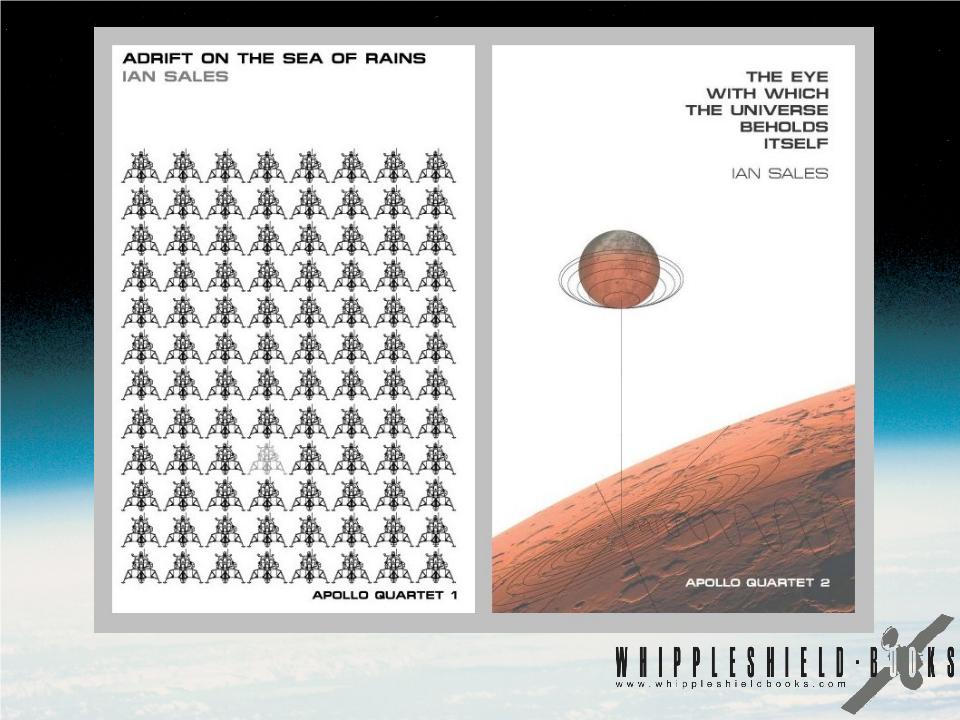
But I have written and published two parts of a quartet of novellas, called the Apollo Quartet: Adrift on the Sea of Rains and The Eye With Which The Universe Beholds Itself.

naturalhistorysoc03
Adrift on the Sea of Rains won the BSFA Award in the short fiction category earlier this year.

naturalhistorysoc04
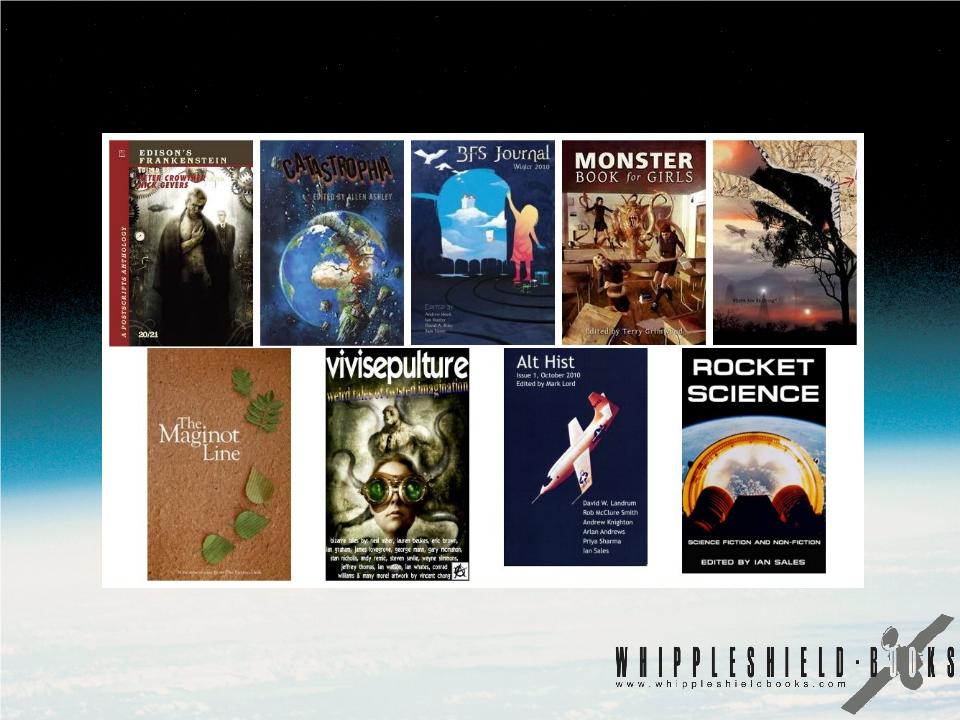
I’ve had short stories published in a number of anthologies and magazines, and last year I also edited an anthology, Rocket Science, for Mutation Press.

Tonight, I’ll be talking about space and space travel in science fiction literature.

naturalhistorysoc05
You probably all recognise this quotation – in fact, most of you, even the non-sf readers, have probably read the science fiction novel in which it appears. And yet, despite the vast, huge, mind-boggling bigness of space, Arthur Dent, Ford Prefect, Trillian and Zaphod Beeblebrox zip about the galaxy as if it were no bigger than the South Seas.

But space really is big.

naturalhistorysoc06
Last month, Voyager 1 – the most distant human-made object from Earth, some 18 billion kms away – left the Solar System. It’s not aimed at any particular star but it will pass within 15 trillion kilometers of Gliese 445, 17.6 light years away.

At its current speed of 38,000 kph, it’ll reach there in 40,000 years.

naturalhistorysoc07
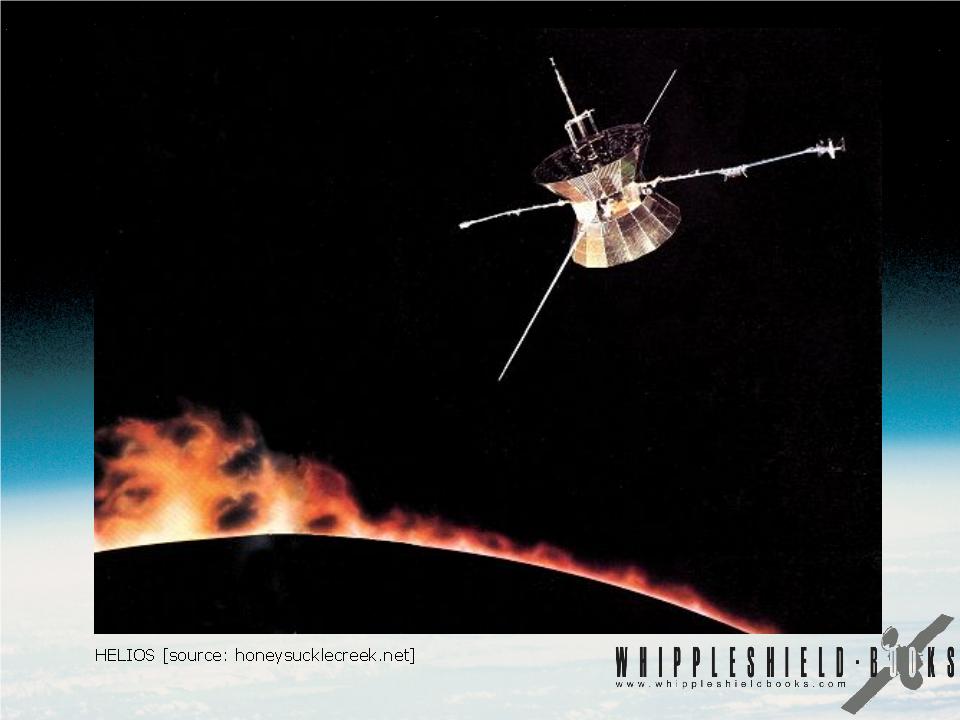
The fastest human-made objects ever built were the Helios-A and -B space probes, launched in 1974 and 1976 by West Germany and NASA. They reached a velocity of 252,792 kph. That’s London to New York in 79 seconds.

naturalhistorysoc08
The fastest human beings ever were the crew of Apollo 10, who hit 39,897 kph during their return from the Moon. That’s London to New York in 8 minutes and 20 seconds.

naturalhistorysoc09
Our nearest star is Proxima Centauri. It is 4.24 light years away, 4 years and 3 months at light-speed. But those Helios probes, the fastest objects ever built…

naturalhistorysoc10
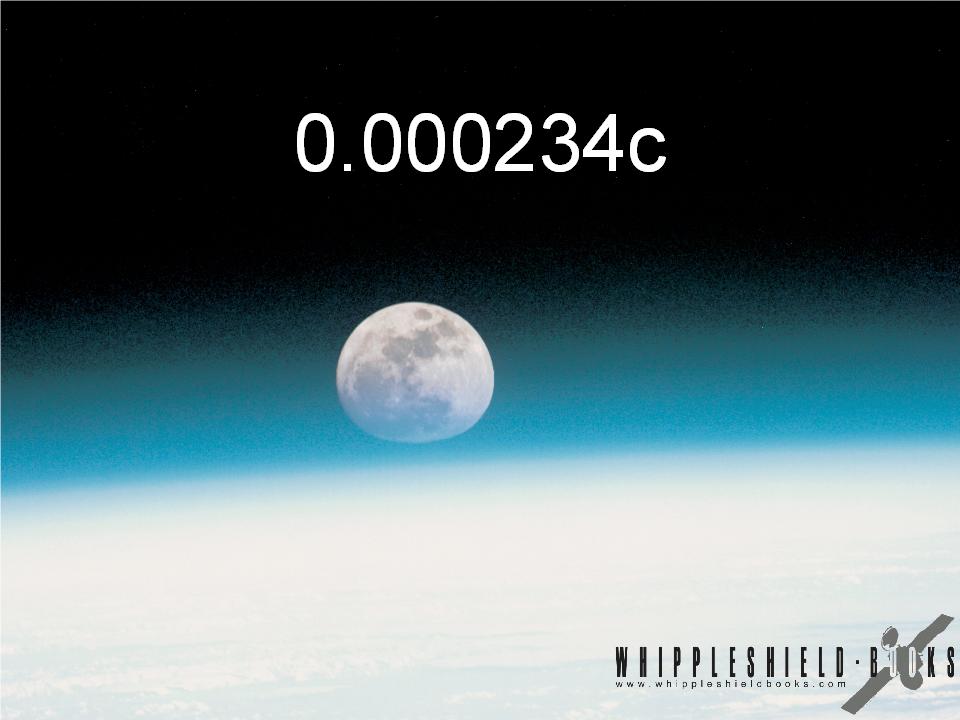
… they only reached 0.000234% of light speed. It would take them 13,000 years to get there. If Voyager 1 were heading toward Proxima Centauri it would take it nearly 74,000 years.

So, you see, space is really really really big.

But you wouldn’t know it if you read science fiction. In novels by Iain M Banks, Peter F Hamilton, Lois McMaster Bujold or Elizabeth Moon, humans or aliens flit about the galaxy in starships, travelling from planet to planet in either hours, days or weeks.

But space in science fiction plays a metaphorical role. It is a signifier of distance. And distance itself is a measure of strangeness or exoticism.

naturalhistorysoc11
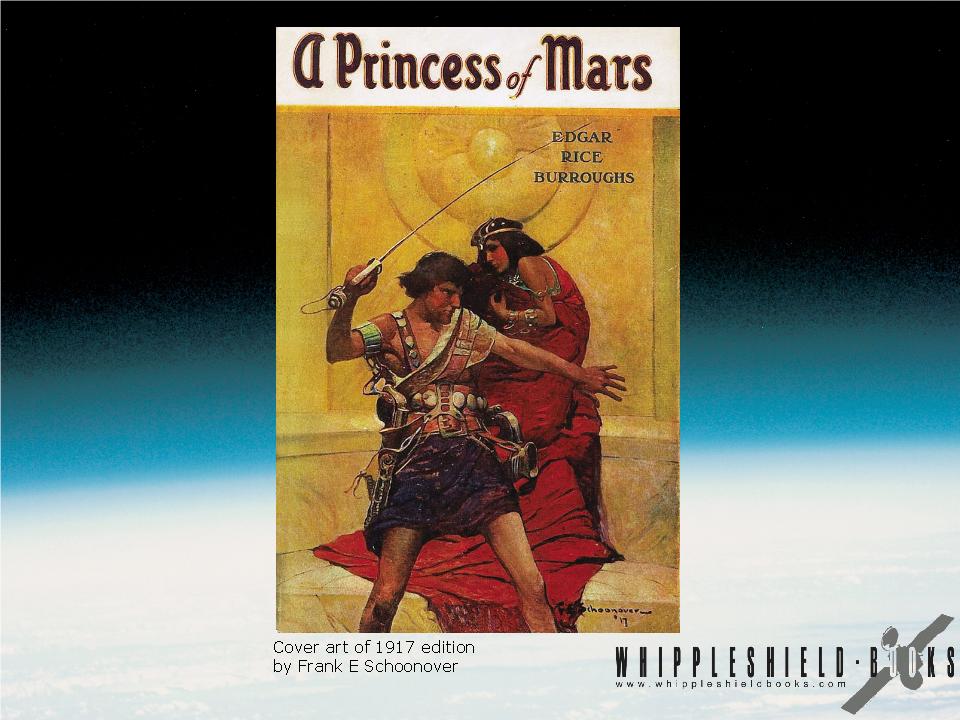
In science fiction’s early days, Mars was a common locale for stories – not just Edgar Rice Burroughs’ A Princess of Mars in 1912, but also Robinsonades like Rex Gordon’s No Man Friday from 1956.

naturalhistorysoc12
However, as scientists learned more about the Red Planet, so it became closer and less exotic. Locales in sf moved further afield. But by that point, the limits of the knowledge of the time had been reached, so imagination took over. The worlds were made-up, with no basis in reality. The universe itself became a fiction.

And that’s how science fiction continues to treat it.

Because it’s all about distance.

naturalhistorysoc13
To Westerners of yore, the South Seas were exotic. And I mean that just as much in its demeaning colonialist definition as I do its less provocative meaning. Africa, South America – they were the same. Both were a long way away – weeks or months by sea travel. Science fiction authors just substituted weeks on the open sea with weeks in a spaceship.

Which is why spaceships in science fiction pretty much resemble ocean-going ships.

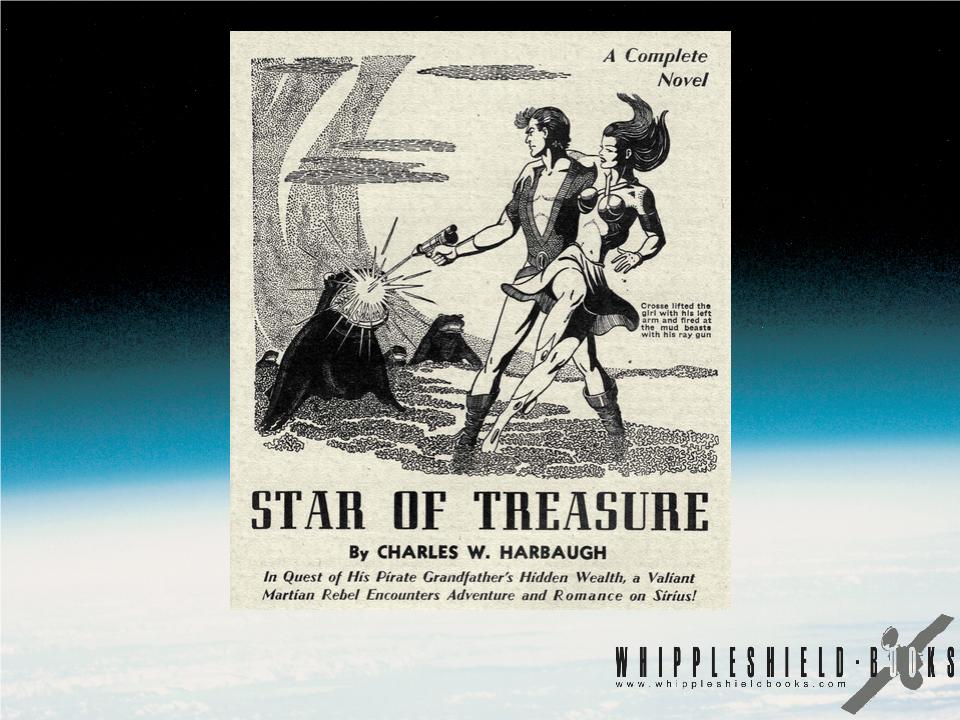
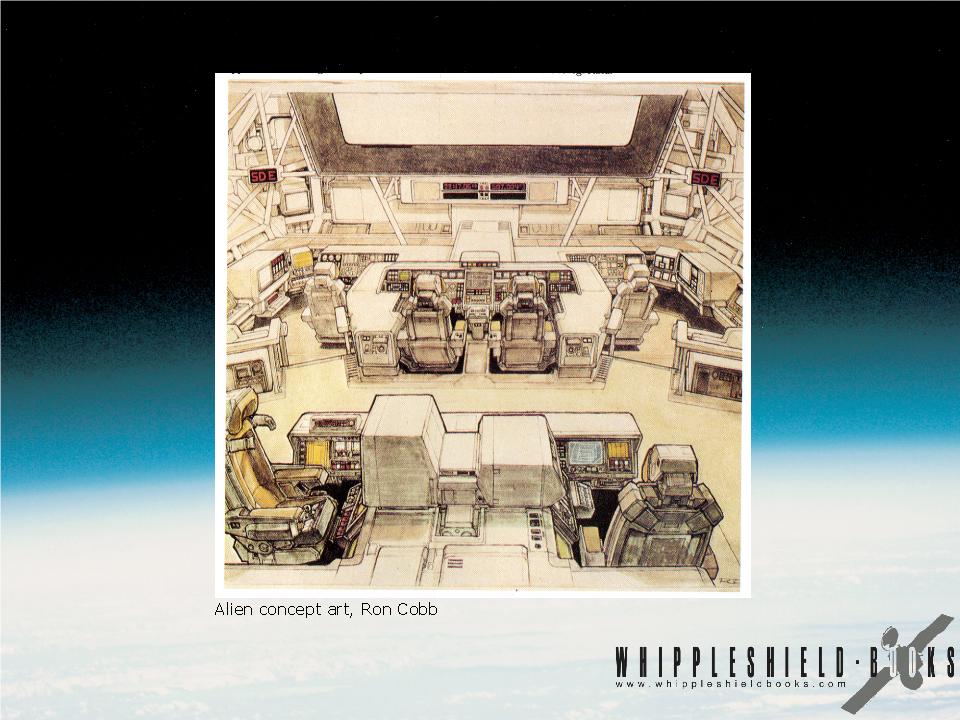
naturalhistorysoc14
They have bridges, they have crew stations for everything from communications to navigation. They have cabins and wardrooms and storerooms. They have captains and first officers and chief engineers.

Real space travel isn’t like that at all.

naturalhistorysoc15
Back in April 1961, just over fifty years ago, the human race sent someone into space for the first time. Yuri Gagarin orbited the earth in a steel ball 2.3 metres in diameter. That’s about as unlike an ocean-going ship as you can get.

naturalhistorysoc16
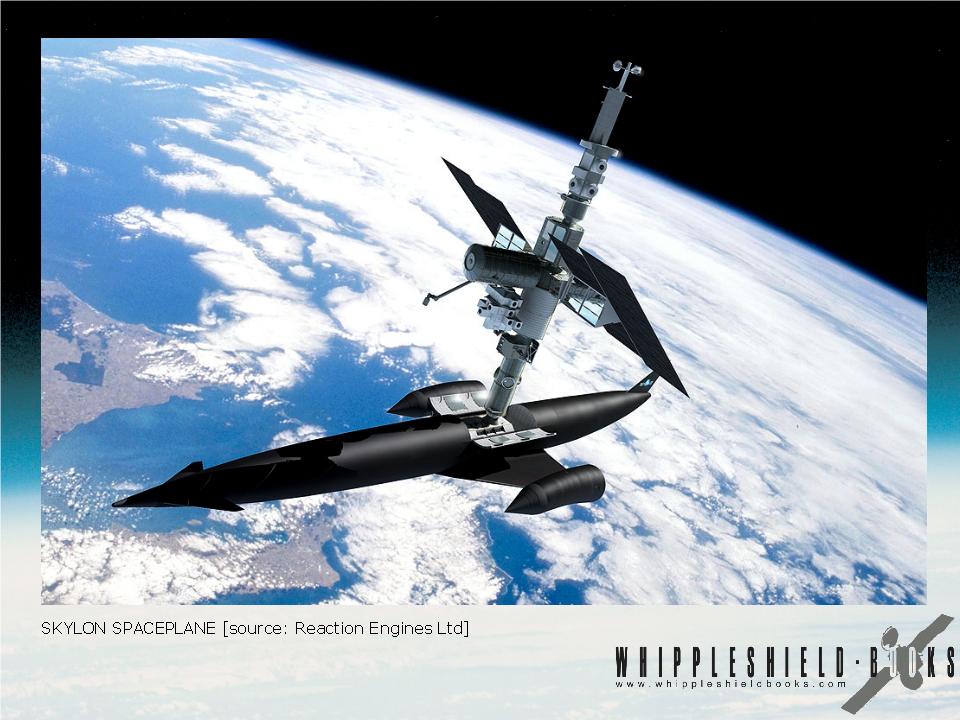
This is the Skylon, a spaceplane being developed here in the UK by Reaction Engines Ltd. It can carry passengers, but it doesn’t have any crew. It’s completely automated.

naturalhistorysoc17
The Boeing X-37B is robotic.

naturalhistorysoc18
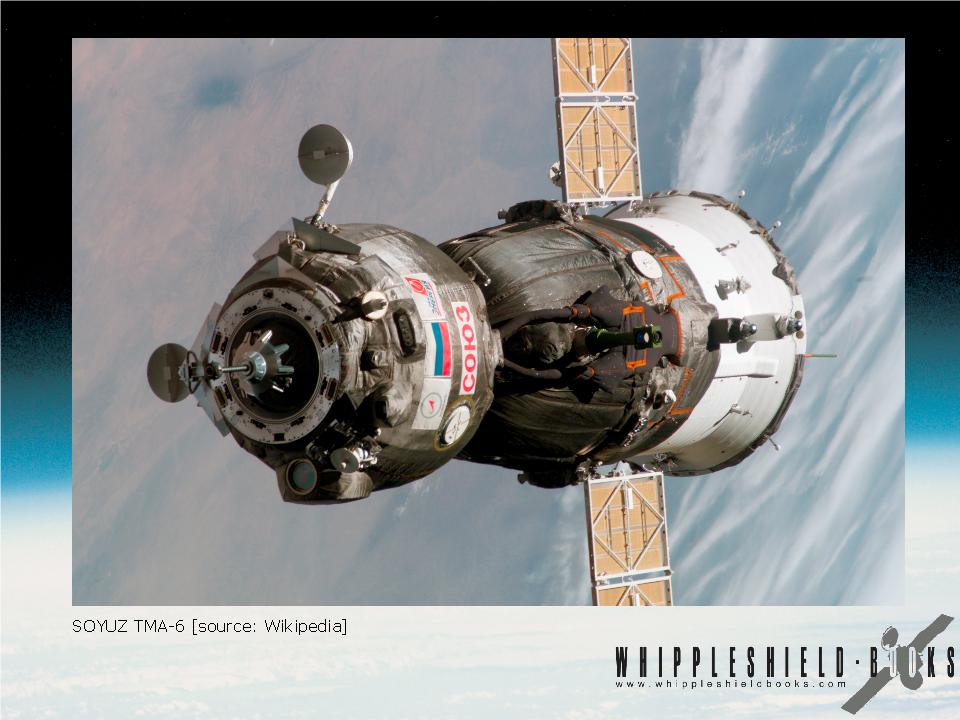
Even the Soyuz is chiefly controlled from the ground.

Real spacecraft are tiny.

naturalhistorysoc19
On each of nine Apollo missions, three men travelled to the Moon in a command module with an interior volume of 5.9 cubic metres. That’s about the same as a Ford Transit van.

naturalhistorysoc20
The Soyuz is even smaller – the re-entry module is only 2.5 cu metres. It’s so small, in fact, that in order to fit in three seats, the centre seat has to be set back from the other two – so the person sitting in it, the commander, can’t even reach the control panel. They have to use a small stick to press the buttons.

There are other issues, as well. It’s all very well travelling to other stars and planets at physics-busting speeds, but it’s no good to you if you arrive there dead.

naturalhistorysoc21

Given current technology, a fast transit journey to Mars would take about 150 days. It would be expensive, of course – vastly, hugely, mind-bogglingly expensive, in fact. But we don’t know yet how to keep those astronauts alive. We have yet to build a Closed Environment Life Support System capable of keeping human beings alive in space for any useful length of time.

naturalhistorysoc22
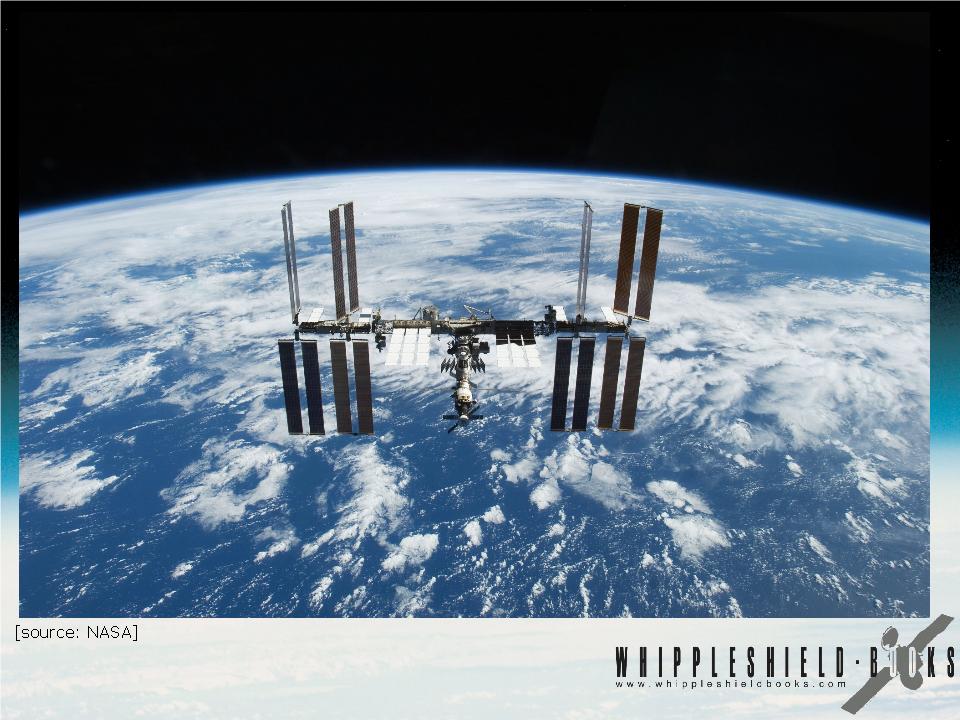
Our only beachhead on the real universe, the International Space Station, requires around eight supply missions per year. And it’s only 400 km away.

But even before we take that first step, we have an obstacle to overcome. And it’s a biggie.

naturalhistorysoc23
Our gravity well.

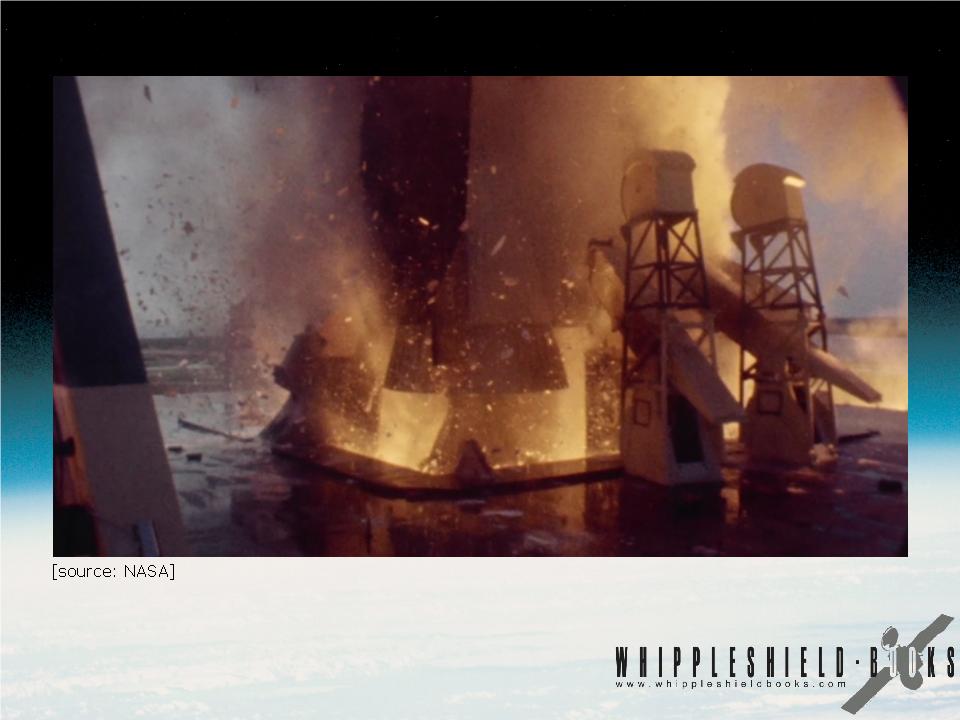
The best method we have to date for throwing things into orbit is a chemical rocket. And it’s horribly inefficient. You have to chuck away most of the rocket to get off the planet. It took 2.3 million kilos of Saturn V to send 45,000 kg to the Moon. That’s throwing away 98% of the total mass.

Worse, rockets are limited by the very science which makes them possible.

naturalhistorysoc24
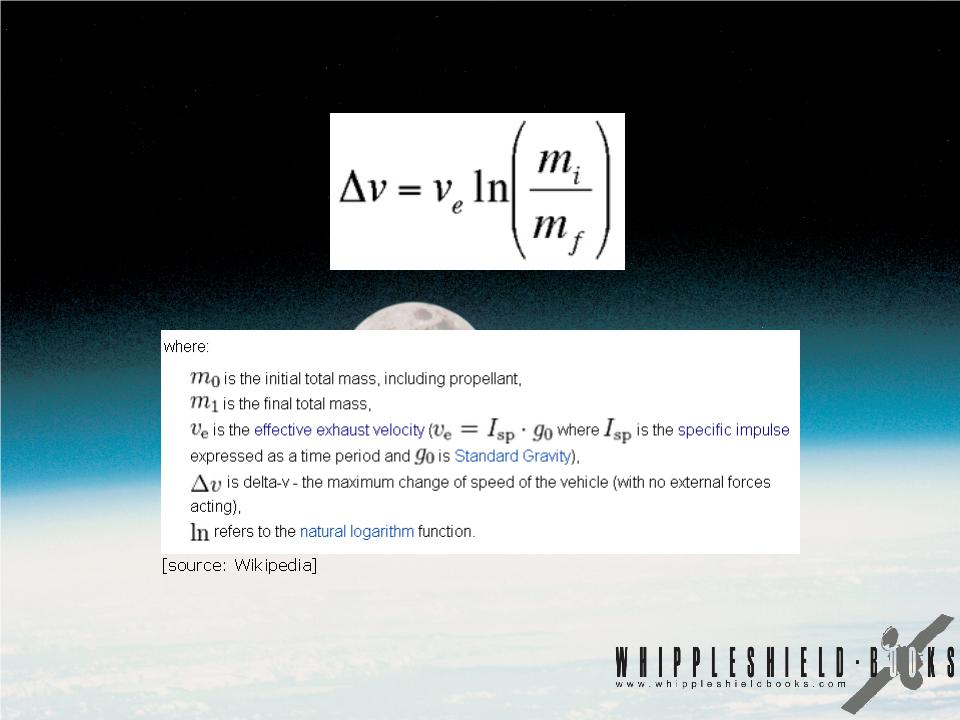
This is the rocket equation.

The important variable here is ve, the effective exhaust velocity. (It’s “effective” because, for obvious reasons, it’s lower in atmosphere than in vacuum.) The problem with exhaust velocity is that it’s determined by the propellants used in the rocket, and there’s only so much energy that can be generated from a chemical reaction involving two specific propellants. You can’t magically make dinitrogen tetroxide and a 50/50 mixture of hydrazine and unsymmetrical dimethylhydrazine generate more energy than it does. Chemistry doesn’t work like that. Those, incidentally, were the fuels used by the Saturn V to send men to the Moon.

naturalhistorysoc25
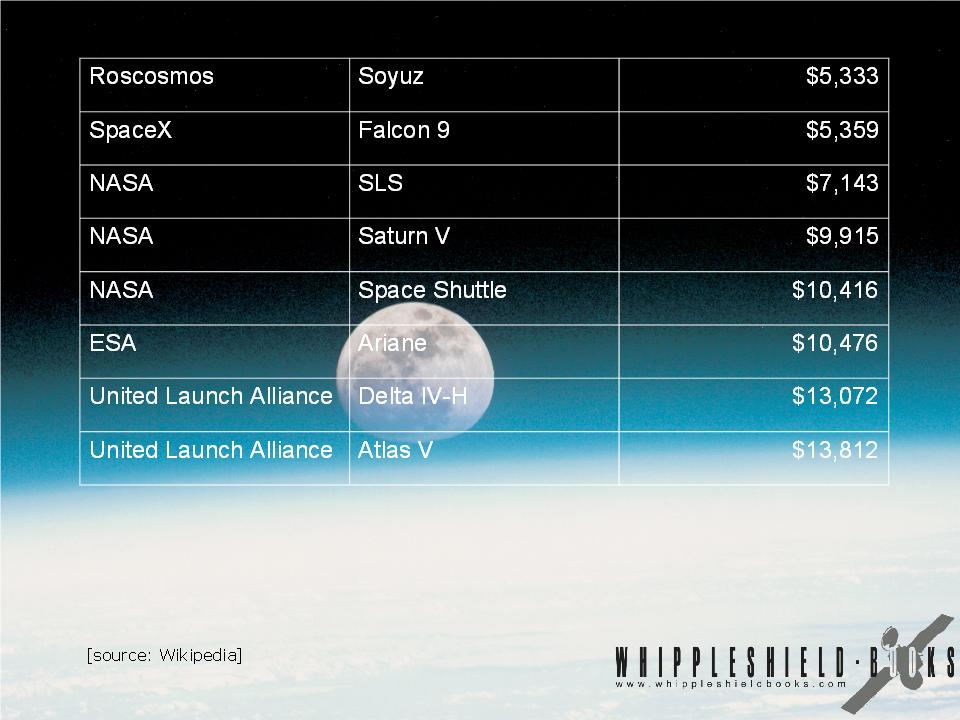
Because getting into orbit is so inefficient, it’s correspondingly expensive, between five and ten thousand dollars per kilo. Which means you need to make the most of what you can throw up there. Spacecraft are tiny because every kilo counts. You don’t want to waste valuable weight on cabins and wardrooms.

naturalhistorysoc26
Of course, if you had some magical means of propulsion that could power your spaceship to escape velocity without all that chemical inferno, then it would be a different matter. But we don’t, and science fiction has a bad tendency to gloss over that lack. Authors wave their hands and invoke the phrase “anti-gravity”, but really it’s not at all scientific.

The same is true of interstellar travel.

naturalhistorysoc27
Science fiction likes its hyperspace drives and warp drives and FTL drives and such, but they’re about as scientific as an Infinite Improbability Drive. Even theoretical ones like the Alcubierre Drive would require more energy to operate than actually exists in the universe, so that’s not going to happen any time soon.

Which begs the question – how important is the science in science fiction?

There are science fiction novels which contain bona fide science, or have premises based on real science:

naturalhistorysoc28
… like Greg Benford’s Timescape or Poul Anderson’s Tau Zero or Gwyneth Jones’ Life or anything by Greg Egan. But they’re more the exception than the rule.

naturalhistorysoc29
You can’t even say that once upon a time sf stories were all about the science, even though the inventor of the genre, Hugo Gernsback, described science fiction in 1926 as:

naturalhistorysoc30

naturalhistorysoc31

Science fiction was born in the white-hot enthusiasm for technological progress implicit in the electronics magazines of the 1920s. But few of its purveyors were trained scientists, and when the genre was repositioned at the end of that decade as yet another form of pulp adventure fiction, whatever scientific credibility it had demanded subsequently lapsed. Since then, it could be said science fiction has been little more than a  mechanism for delivering bad ideas to impressionable members of society.

In other words, science fiction is, and always has been, scientifically bankrupt.

Happily, the genre’s name comprises two words, and if the genre has long since lost the intellectual rigour demanded by one of those words, it has at least always been driven by the second. Science fiction is fiction, it is…

naturalhistorysoc32
… stories. And it is in its approach to those stories that it comes closer to science than any other mode of fiction. It posits a rationalist scientific worldview. It might fumble the details, or just make them up out of whole cloth, but it recognises that the real universe is a place where…

naturalhistorysoc33
… physics and chemistry and biology and such all hold sway. It may use magical science and technology, but it’s still science and technology, it is still assumed to work like science and technology. It doesn’t work because. It doesn’t require divine powers or chicken entrails or a magic hat.

naturalhistorysoc34
Despite the fact science fiction gets it wrong so frequently and so consistently, I still prefer to call it that and not “speculative fiction”. All modes of fiction are essentially speculative. Telling stories is a way of speculating about something. By unpacking the abbreviation “sf” as science fiction, it tells us it’s a mode of fiction which views the world with a scientific eye – even if its actual scientific record is pretty damn poor…

As I’ve outlined, we have a fifty-year tradition of real space travel, but science fiction insists on using its ocean-going ships in space.

naturalhistorysoc35
We know the universe is even more vast, huge and mind-bogglingly big than Douglas Adams could even imagine, but science fiction still pretends interstellar distances are crossable within a human lifetime.

Here’s an example of that mind-boggling bigness:

naturalhistorysoc36
… the Sculptor Wall is a superstructure of galaxies. It’s 370 million light years long, 230 million light years wide and 45 million light years deep. That’s millions of light years.

naturalhistorysoc37
In kilometres, that’s 3,500 with 18 zeroes after it. And the Sculptor Wall’s not even the largest superstructure we’ve found.

The more science tells us about the universe, the less significant we discover we are. By manipulating our sense of scale, science fiction puts us back where we want to be – at the centre. Important. Sf humanises a universe which is completely indifferent to us.

And, in order to do that, science fiction writers all too often fall back on metaphors that they, and their readers, find comfortable. The chemist’s down the road.

naturalhistorysoc38
Spaceships with a captain sitting in a big important chair on a bridge. The real world isn’t like that, real space travel isn’t like that, real interstellar distances aren’t like that.

As Korzybski might have said, “the metaphor is not the thing itself”. But use that metaphor too much and too often, and it might as well be – even if it has become completely decoupled from the thing it metaphorises.

Of course, it may well be that we’ll hit a Kuhnian paradigm shift sometime in the future and render everything I’ve said so far completely irrelevant. It may well be that all those science fiction novels of galactic adventure really are maps of the future.

But I’m not holding my breath.

naturalhistorysoc39


2 Comments

Recent readings

I’ve been reading a lot for review recently – not just SF Mistressworks, but also Interzone, Vector, and Daughters of Prometheus. But I do occasionally read for pleasure as well – although the reads don’t always turn out to be pleasurable…

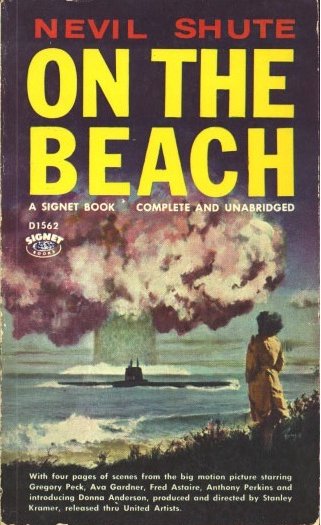
ON THE BEACH,  Nevil ShuteOn The Beach, Nevil Shute (1957), is apparently a classic and is often claimed for science fiction since it depicts a world immediately after a nuclear holocaust. The Albanians started it all off, the Egyptians then attacked NATO, and NATO thought it was the Soviets and so the nations of northern hemisphere wiped each other out in Mutually Assured Destruction. Now the last few humans, in southern Australia, pass the few months remaining to them. A lone US nuclear submarine has survived the destruction of the US and made itself available to the Royal Australian Navy. When a series of signals in Morse code – mostly unintelligible, but occasionally a clear word comes through – is detected coming from the west coast of the US, the USS Scorpion is sent to investigate. Much of the novel describes the Australians coming to terms with their impending doom – nuclear fallout is drifting south across the equator, and no one will survive when it reaches them. The USN captain pretends he still has a family back in New England, the RAN officer aboard the submarine and his wife plan for the future of their young baby, Moira, the young woman who is paired off with the USN captain, drinks and parties a lot and falls in love with the captain, and the scientist who’s tracking the drift of the fallout starts racing fast cars, culminating in a fierce race in which most of the drivers die in crashes. The prose is clunky at best, though Shute draws his characters quite well. It’s easy to see why the book is so well-regarded, though it wasn’t as smooth a read as I’d expected. Happily, it’s better than the film adaption – which starred Gregory Peck as the USN captain, Ava Gardner as Moira (as an Australian with an American accent), and Fred Astaire as the car-racing scientist. You’d think the book would adapt well, but Stanley Kramer managed to make the whole thing extremely dull.

meaulnesLe Grand Meaulnes, Alain-Fournier (1913), was one of my father’s Penguin paperbacks, and I thought it looked interesting enough to be worth a read. It’s framed as the reminiscences of François, who attended a village school in the Sologne run by his father. A new boy appears at the school, Augustin, but he runs away one day and stumbles across a wedding party at a small chateau. He is mistaken for one of the guests, and has a magical time. However, the wedding fails to take place, and Augustin leaves and returns to the school – but he cannot remember the location of the chateau, and desperately wishes to meet the sister of the bridegroom once again as he had fallen in love with her. The “lost domain” drives Augustin – le grand meaulnes of the title – but even when the MC of a travelling circus proves to be the bridegroom from the wedding, he is still no closer to finding the girl of his dreams. Eventually, François stumbles across the location of the chateau, makes friends with the young woman, and informs Augustin of his discovery. But Augustin has been on another quest, and things have changed… There’s a nicely elegiac atmosphere to Le Grand Meaulnes, though that’s hardly surprising in a story which covers both lost childhood and lost love. The writing in the translation I read was very good throughout and while the story was very slow to start, it was worth reading. A classic.

Dark Eden by Chris BeckettDark Eden, Chris Beckett (2012), was shortlisted for the BSFA Award but did not win, and has now been shortlisted for the Arthur C Clarke Award. Set on a rogue planet travelling through, I think, intergalactic space, the novel plays out Cain and Abel among the 500 descendants of a single couple who were marooned there. The story is told by several narrators, in a strangely-random debased English – some words have devolved, but others haven’t. So the various words for local flora and fauna have remained unchanged, but the annual celebration of the landing has become “Any Virsry”. The inhabitants of the planet are also suffering from severe inbreeding, with many of them having deformed feet or severe hairlips. John Redlantern, however, is perfectly normal, although he is a good deal more thoughtful than everyone else. When he realises that the valley in which they live can no longer support further growth, he tries to persuade the elders to sanction a search for more living space. They reject his proposal because they believe they’re to wait for rescuers to appear… as they have been doing for nearly 200 years. Things come to a head, John is exiled and takes with him a small group of teenagers. But then his enemy back in the main colony foments hatred against John and his followers, there’s a clash, and John is forced to take his small colony across the frozen waste which surrounds the valley in search of a new valley in which to live. There’s an almost Biblical inevitability to the story of Dark Eden, and some members of the cast do play their roles with all the thudding predictability of characters from the Old Testament. But where Dark Eden does shine is in its presentation of its old story. The setting is a small work of genius, and beautifully described, and the integration of the characters in the setting is handled with real skill. It’s no surprise Dark Eden has appeared on the shortlists of the UK’s two most-prestigious science fiction awards.

jamiliaJamilia, Chingiz Aïtmatov (1958), I bought for my 2012 world fiction reading challenge, but I never managed to complete the challenge after getting bogged down in both Orham Pamuk’s My Name is Red and Javier Marías’ Your Face Tomorrow 1: Fever and Spear. But Jamilia is a slim work, more of a novella than a novel, so I picked it up one day earlier this month and read it on my way to and from work. It’s blurbed as “the most beautiful love story in the world” and, well, if it isn’t, it comes very close. It’s set in Aïtmatov’s native Kyrgyzstan sometime during the Second world War. The men have all gone off to fight, leaving the women, old men and boys to run the village and bring in the harvest. When Daniyar returns from the fighting, but his family are no longer alive, he is tasked with assisting the narrator’s family – especially transporting the grain by cart to the nearby town, along with the narrator and the narrator’s sister-in-law, Jamilia (whose husband is away fighting). Over several trips, Jamilia and Daniyar fall in love, but their relationship is forbidden as Jamilia is still married. The writing is simple but effective, although the translator has bizarrely mixed up Islamic oaths and Christian ones, which seems a pretty fundamental mistake to me. A fascinating little novella. Worth reading.

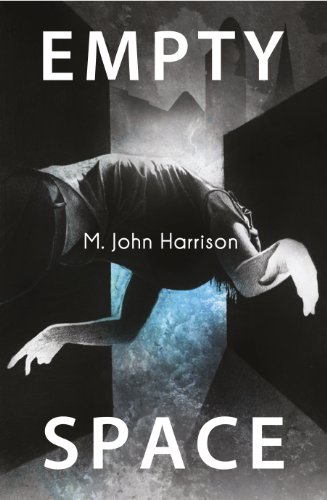
emptyEmpty Space, M John Harrison (2012), is the third and final book of Harrison’s Kefahuchi Tract trilogy, the first of which, Light, marked his return to science fiction after many years away. I’m not sure there’s any value in giving a précis of the plot, since in parts it’s wilfully opaque – as it has been throughout the entire the trilogy. Suffice it to say that some of the plot-threads from the preceding two novels do see some sort of resolution in this book. Harrison’s future is dirty and enigmatic, but it is also full of small inventive touches. The prose is like the roiling quantum foam of the strange physics it describes. Though the section set in the very near-future, featuring Anna Waterman, the widow of the physicist Michael Kearney from Light, reads more like the sort of literary fiction in which fantasy is injected sideways into the real world – much like Harrison’s earlier The Course of the Heart and Signs of Life; the narratives set on the worlds bordering the Kefahuchi Tract use the language of science fiction with a facility few genre writers can match. An alien installation, dubbed the Aleph, threads its way through the story, stitching together the various narratives as it manifests the strange physics emanating from the Tract. Strangely, though aliens are frequently mentioned in the book – and the tramp freighter Nova Swing’s cargo consists of mysterious alien “mortsafes” – they are entirely off-stage, or implied to have existed only in the deep past. Not every character is human, but the template of every character certainly is. Having finished Empty Space, but I can see the resolution and how it comes together, but I’m not entirely sure what has been resolved. It’s like the strange physics which informs the story – the effect is visible, the cause is unknowable and the process often seems to follow rules of its own. I think I shall have to reread all three books to get a real handle on it.

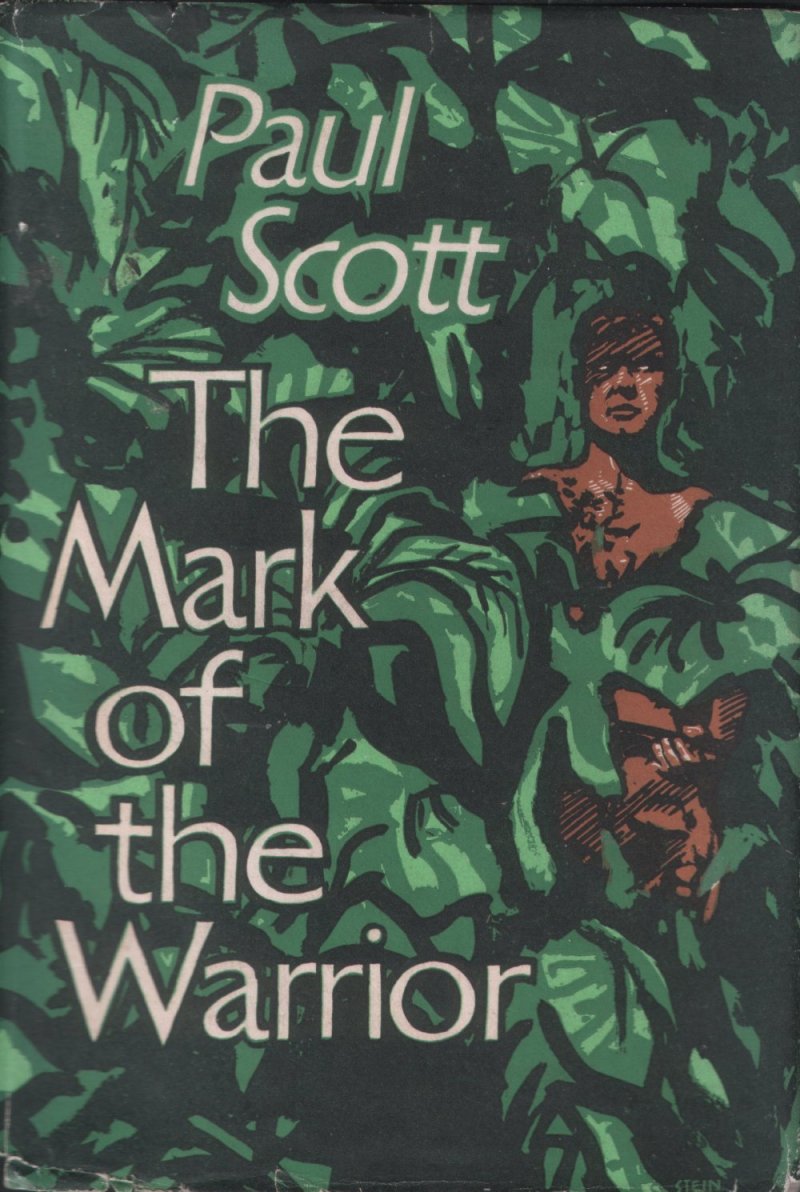
warriorThe Mark of the Warrior, Paul Scott (1958), is likely to remind genre readers of at least two books, even though it is set in India in 1942 and is about officer-cadets being trained for combat in the region. Major Craig is a veteran of the war in Burma – while he made it out of the jungle, as did most of his company, he did lose his second in command, John Ramsay. And now Craig has been assigned to an Officer’s Training School near Pune, as has Ramsay’s younger brother, Bob. Craig sees in Bob Ramsay the same thing he saw in John Ramsay – “the mark of the warrior”, a natural soldiering ability coupled with what are probably sociopathic tendencies. Certainly, young Ramsay proves to be the best cadet at the school – so much so that when the design of a final exercise is made into a cadet competition, Ramsay wins it by presenting a scheme both he and Craig know will prove the only useful one to those destined to fight in the region. Instead of previously setting up combat set-pieces on the nearby plains, Ramsay’s scheme involves an attack on a fortified position in the jungle thirty miles to the north of the school. Those who have read Gordon R Dickson’s Dorsai trilogy are going to find a lot in The Mark of the Warrior which seems familiar, and given that Scott’s novel beat Dickson’s The Genetic General into print by a year, you have to wonder… On the other hand, it’s not all that likely a US sf author would stumble across a novel by a British mid-list literary writer within a year of its publication. Nevertheless, the Dorsai seem to owe a lot to Ramsay. As does Orson Scott Homophobe’s Ender, though not having read that book, I’m not sure how close any resemblance might be. Genre comparisons aside, Scott’s novel is a minor work. It’s well-written, and the characters of Craig and Ramsay are drawn extremely well. I said of Scott’s The Bender when I read it that it would make a good British film, and the same is true of this one. It’s time for adaptation is long past, however; though perhaps the story could be updated to the present day without too much difficulty.


6 Comments

April is the cruellest month

And we’re only halfway through it…

  • The Hugo shortlists are announced and kick off the usual commentary – though this year it seems a little more critical than previously. Excellent posts on the subject from Jonathan McCalmont, Ladybusiness, Paul Kincaid and Maureen Kincaid Speller. There’s also a telling comment by a fan on Seanan McGuire’s complaint that she’s been accused of “too much self-promotion”: “If not for your self-promotion, I wouldn’t have found out about the Hugo Awards”. The Hugos have lost the plot, and while the shortlists are admirably diverse, that’s about the only positive thing to be said of them. Also, why do they still have the novelette category? Kill it.
  • The Clarke Award shortlist is announced and it’s all male. The judges are immediately blamed, but given the decreasing numbers of eligible books by women writers in recent years, such a shortlist was sadly inevitable. Happily, things are looking up, with sf novels by women published this year by Del Rey UK and Jo Fletcher Books. There appear to be problems with distribution, however; so there’s still work to be done.
  • Iain Banks announces he has terminal cancer and will likely not see out the year. Readers of science fiction and literary fiction are understandably very sad. He’s been a fixture of my reading – in both genres – since the late 1980s, so I will sorely miss him.
  • Margaret Thatcher dies and then is recast as some sort of 1980s economic and political messiah. Er, no. I lived through the 1980s, I remember what they were like. I’ve already been told she was “the best prime minster we’ve ever had”. No, that would be Clement Attlee. And he didn’t get a state funeral.
  • Damien Walter, prompted by the imminent announcement of the Granta 2013 list of Best of Young British Novelists, produces a genre-specific list of his own, although not specifically British. I’ve never really understood the purpose of the Granta list – if it’s to say, “here are some writers who are just starting out but we think will go on to have long and fruitful careers and write some important books”, then why the age cut-off? Why choose some authors more than once? Walter’s list contains some obvious choices, and some frankly bizarre ones. An author whose first novel is not due until September, and has had nothing else published to date? An author who’s had a successful 15-year career already as a novelist? Hugh Howey? I mean, Wool is a terrible book. Saladin Ahmed? Throne of the Crescent Moon promises much, but it’s also very rough. There are some notable names missing too: Lavie Tidhar, Kameron Hurley, Katie Ward, Jennifer Pelland, Ted Kosmatka, G Willow Wilson… And no doubt I’ve forgotten some excellent writers, and will probably kick myself the moment this post goes live. Of course, if you raise the age limit, then there are a lot more candidates…
  • Hugh Howey, author of the ultra-successful Wool, goes and posts an offensive screed on his blog railing against a young woman who was apparently less than flattering about self-published authors at the 2012 Worldcon. Howey fans immediately jump in to reinforce his sense of entitlement – Howey admits he enjoys playing “secret millionaire”, as if anyone would know who he is anyway – before the wider community rightly announces itself deeply offended. Howey apologises, then removes the blog post, but the backlash continues…
  • For the second year running, April is Women in SF & F month on Fantasy Café. Which is good. Some excellent posts there so far. Go look.

And there you have it, a fortnight’s worth of fun and games in the world of genre – with a bit of UK politics thrown in. I don’t normally post this sort of stuff, but I’ve not written anything here for a couple of weeks so I felt I ought to post something.

In other news, later this week I’ll be one of three speakers talking about science in science fiction to the University of Sheffield Natural History Society – my second time being an author-y type person in front of complete strangers. I’ll post my talk and slide show here afterwards.

The spike in sales of Adrift on the Sea of Rains caused by the mention in the Guardian earlier this month seems to have died down. I’ve no idea what impact winning the BSFA Award had on sales, but I suspect everyone who would have bought it because of the award already had done. Or got it free in the BSFA booklet. Don’t forget the second book of the quartet is also available (as are review copies). I’ll be starting my research for the third one soon. It will be… different.