It Doesn't Have To Be Right…

… it just has to sound plausible


24 Comments

An untapped market?

I wasn’t going to write about this as I couldn’t honestly see that it deserved a response; but apparently others though it did. Rather than add my thoughts on the matter to the comment thread of the original blog post, I’m writing my own piece here.

“This” is a blog piece here about sf magazines. According to it, current sf magazines are badly-designed, do not contain “the best writing”, and cater solely to “extended fandom”. What they need to do is appeal to all those people who consume science fiction in all its forms. Not sf readers, because sf readers are “extended fandom”. No, sf “consumers” who watch films, play games, watch television series, collect action figures, etc., but don’t actually, well, read.

To do this, the next generation sf magazine needs to drag its design into the twenty-first century and publish only the best fiction.

Rubbish.

A magazine needs to consider four areas in order to succeed:

Design
I have to wonder if the poster was referring only to the Big Three sf mags – Asimov’s, Analog and F&Sf – when he complained about appalling design. He’s right in that respect – those three magazines are indeed boringly designed. They’re intended to fit into a pocket and be convenient, but that’s no longer a design criterion these days. However, there are a number of well-designed sf magazines currently being published, such as Interzone.

There are other design considerations. Gollancz have recently rebooted their SF Masterworks series, and the new covers are less science-fictional than the old ones. Not so long ago, they issued four space operas with modern abstract covers as a promotion. Do people expect sf novels to have spaceships on the cover? Do they expect fantasy novels to feature a hooded man? Do covers without spaceships encourage non-sf fans to pick up sf novels? It’d be interesting to find out, because it would have a bearing on the cover design of this new magazine. Should it be overtly sf, or not?

Or, how about sticking a photo on the cover instead, as SFX and the like do? Of course, it’d have to be Matt Smith rather than Alastair Reynolds. No one’s going to recognise Reynolds, even if he is a million-pound author. Unless we’re going to go down the author-as-celebrity route, and I’d rather not…

Content
Our new magazine should apparently publish “the best writing”. So, does that mean award-winning? Mike Resnick, for example? Charles Stross? Kij Johnson? Paolo Bacigalupi? They’ve all won awards. But then, the Hugo Award, the genre’s biggest award, is usually given on the basis of a couple of thousand votes, which is only a small subset of the sf readership. Perhaps instead “best” means “best-selling”, as the magazine is after all intended to make money. So JK Rowling and Stephenie Meyer. Urban fantasy… Which isn’t actually sf, but never mind. I suspect that “the best writing” will actually mean the editor’s definition of “best”… which is pretty much how it works for magazines now. Of course, in order to attract the best writers, in order to have a really good selection in the slush-pile, the magazine will have to pay top dollar.

Distribution
It’s no good publishing the best magazine in the world if it can only be found in one hobby shop in Milton Keynes. It needs to be available throughout the country, on every high street. This doesn’t come cheap. For a start, distributors demand huge discounts. As do retailers. Forget that cover price, because that’s not the amount your distributors and retailers will be paying. And if you intend to make a profit after discount on each issue, then the cover price is probably going to make it too expensive for your average consumer. Who’s going to spend £10 on a magazine because it “looks interesting”? You’ll need to offset the cover price with advertising revenue. But you can’t find advertising unless you have circulation, and you can’t get circulation unless you can afford to distribute…

Readership
Putting copies of the magazine into high street shops is only half the battle. People have to buy it. It’s no good sending out 50,000 copies every month, only to received 49,900 of them back thirty days later. Which means you need a design that appeals – including cover art. And contents that appeal – familiar faces and names and topics. You need an affordable cover price – so you’ll also need advertising…

It doesn’t work. For a large readership, you need something which will appeal to as many potential readers as possible. And those who consume sf but don’t read fiction… well, that’s because they don’t read. So they’re not going to be attracted to a fiction magazine, no matter how well designed or distributed it is. Some people might buy it if they recognise its contents – some familiar names in there, some references to things they know and understand, such as films, games, television series… Not fiction, in other words.

If you have pots of money – you’ve just won EuroMillions, say – and boundless optimism, then perhaps it might be worth a punt. But the number of magazine titles has been shrinking over the years for good reason, and no amount of naive pronouncements is going to suddenly re-invigorate the sf print magazine market.

But all is not lost. Because I have an alternative idea. I call it a “nebula”, because it’s sort of like a cloud. It is not a print magazine, it is electronic. Actually, it’s not even a magazine in the traditional sense of the word. It’s more like a playlist. For sf short fiction. It works like this:

There is a web site, and available for download – in a variety of e-reader and audio formats – is a pool of carefully-categorised stories. Each story is priced low, a couple of pounds only, a micro-purchase. Readers can create their own anthologies, or magazines, or fiction playlists, by putting stories together. This is why they’re carefully categorised. If you like space opera, then you can just buy space opera stories. There’ll be facilities to subscribe to feeds letting you know when new stories have appeared in specified categories, or by particular authors.

The web site will also feature lots of non-fiction content – reviews, interviews, etc. It will be free. There will be no paywall. Publication schedules can either be monthly or ad hoc. It doesn’t actually matter. Content is only limited by the technology – so the web site could include short films as streaming video, colour comic strips, podcast interviews, etc. The micro-purchased fiction will fund the free non-fiction content; the free non-fiction content will pull in the readers and introduce them to the micro-purchase fiction content. The web site can feature celebrities, the downloadable stories can include “the best writing”. And, best of all, it’s the reader who defines “the best writing”, because they need only buy the fiction they like.

I believe a couple of flash fiction sites operate in a similar fashion to this, and Lightspeed goes partway towards the micro-purchase fiction model (but is still tied to a monthly publication schedule). Given sufficient start-up capital, the “nebula” idea might work. It meets most of the demands of that original blog post, without relying on starry-eyed optimism or outright fantasy.

Comments?


8 Comments

Double Scots

I know, it’s a terrible title. And it took me ages to come up with it. But since it’s reasonably descriptive of the contents of this post, I’m sticking with it.

The two Scots in question are Michael Cobley and Gary Gibson, both of whom have had New Space Opera novels published this year. Cobley’s The Orphaned Worlds is the second in his Humanity’s Fire trilogy, and Gibson’s Empire of Light is the final book in his Shoal Sequence.

Last year, I said of Seeds of Earth, the first book of Michael Cobley’s Humanity’s Fire trilogy (see here), that it was “a pure hit of the purest space opera”. The Orphaned Worlds is no different.

The Sendrukan and Broltruan forces occupying the lost human colony of Darien have tightened their grip, and the freedom fighters have moved into the various historical Uvovo strongholds. Meanwhile, Earthsphere ambassador Robert Horst is hunting through the many levels of hyperspace to find the Godhead, a powerful machine intelligence. Theo Karlsson has been captured by Ezgara mercenaries – who are from another lost human colony – but these are good Ezgara mercenaries, and they discover something shocking in their history. Julia Bryce and the other Enhanced have been captured by a mercenary working for the Spiral Prophecy, who have sent a vast invasion force to Darien. The Knight of the Legion of Avatars has reached Darien, and sets about taking over the warpwell so he can free the millions of Avatars imprisoned in the hyperspace Abyss. And Kao Chih learns what happened to his home world – the third lost human colony – after his grandparents left…

The Orphaned Worlds is, in fact, not an easy book to summarise. There’s a lot going on in it. Middle books of trilogies are notoriously difficult, and too often feel like extended set-ups for the grand climax in book three. Cobley manages to avoid this trap by ensuring there’s always plenty of action, and by doling out small revelations which explain more and more of the trilogy’s story-arc. The Orphaned Worlds also features an admirably diverse cast. Cobley’s protagonists are engaging characters and he handles his various nationalities with skill. He has a good eye for describing scenery, and there’s a level of detail in the prose which makes every facet of his universe clear.

Having said that, the book’s not without some faults. In Seeds of Earth, I thought Cobley had “over-egged” his universe, and so too in The Orphaned Worlds – it feels too rich for the trilogy. Sometimes, in fact, it seems it should belong to a role-playing game, and so should be explored over several years through scenarios and campaigns and sourcebooks. The profusion of alien races and planets also means there are a lot of made-up names in the book. The Orphaned Worlds walks a tight-rope over a chasm of smeerp – mostly successfully; although there’s the odd section where it feels as though it might fall. But Cobley certainly deserves a slap for using the word “youngling”.

Gary Gibson’s Empire of Light is the third book in his Shoal Sequence trilogy, and neatly wraps up its galaxy-spanning story. Like the earlier books in the trilogy, Empire of Light often reads like a long sequence of special effects shots. Admittedly, they’re pretty impressive special effects – there aren’t many books, for example, in which wars are fought by exploding the stars around which the enemy’s planets orbit…

Dakota Merrick finds the Maker, creator of the caches which gave the various races of the galaxy faster-than-light travel, and discovers what it is. She also learns of the Mos Hadroch, a weapon which could be used to defeat the Emissaries. She joins up with Lucas Corso, who’s having trouble with his political rivals on the Freehold colony on Redstone. In a stolen frigate, they, and a handful of others, travel across the galaxy to the Perseus Arm to strike a blow against the Emissaries with the Mos Hadroch. But someone aboard the frigate is not exactly what he appears to be…

The bulk of Empire of Light‘s story is taken up with that long flight to the Perseus Arm and the goings-on aboard the Mjollnir. Much of the Long War – the exploding suns – takes place off-stage. Which is a bit of a shame, as the Emissaries were very funny. Nor do the Zarbi-like aliens of Nova War, the Bandati, figure much in Empire of Light. Given the enormous canvas of the trilogy’s story-arc, it makes for a curiously claustrophobic story. As a result, the the book’s resolution feels a little anticlimactic because its impact is chiefly focused on Merrick, Corso and the others.

There’s still much to like in Empire of Light. Those special effects shots, for one. Gibson also manages a nice demolition of the politics of Robert Heinlein’s Starship Trooper. On Redstone, only veterans have the franchise, and everyone has the right to determine the outcome of a dispute using a duel. Gibson uses Corso to point out how ineffective and corrupt such a regime would be. The sheer scale of Empire of Light‘s story also impresses. Where Cobley sets his story in a galaxy-sized “world” populated with hundreds and thousands of alien civilisations, Gibson’s universe feels more like a real galaxy – with vast empty spaces, and a history stretching back billions of years. There’s a sense of great antiquity to Gibson’s universe, more so than there is to Cobley’s. Yet Gibson still manages to keep his plot firmly focused on his characters.

The two books are excellent examples of the current state of British New Space Opera. Gibson provides excellent sfx, and has a better handle on the size and age of the universe. Cobley’s prose is more detailed, and his ability to evoke place is better. Cobley also has the more diverse cast, which he handles well. On the other hand, Gibson’s aliens feel like they belong in a New Space Opera novel, whereas Cobley’s occasionally feel like they should be in a RPG. Nonetheless, both trilogies – even though Cobley’s is as yet unfinished – are definitely worth reading.


33 Comments

British SF Masterworks

Science fiction is a genre dominated by the US – which is where it was invented. The SF Masterworks series is published by a British publisher. So why not have a Masterworks series of British science fiction? This topic popped up on twitter yesterday, and inspired me to have a bash at creating my own list of fifty British science fiction masterworks.

I’ve not read all of the books listed below – so thanks to Kev McVeigh, Paul Graham Raven and Eric Brown for their input. Not all the books could really be considered “classics”, although the more obscure ones should probably be better known. The only rules I followed in putting together the list are: a) one title per author (unless it’s a trilogy in omnibus form), and b) a completely arbitrary cut-off date of 1995. Some of the books in my list are in Gollancz’s Masterworks series, but many are not. Yes, a few of my favourites have sneaked in there; not to mention a number of non-genre novels by non-genre writers which actually are science fiction.

There are no fantasy novels at all. That’s a list for another day…

1 – Frankenstein, Mary Shelly (1818)
2 – The War of the Worlds, HG Wells (1897)
3 – Last And First Men, Olaf Stapledon (1930)
4 – Brave New World, Aldous Huxley (1932)
5 – Nineteen Eighty-four, George Orwell (1949)
6 – The Day of the Triffids, John Wyndham (1951)
7 – The Death of Grass, John Christopher (1956)
8 – No Man Friday, Rex Gordon (1956)
9 – On The Beach, Nevil Shute (1957)
10 – A Clockwork Orange, Anthony Burgess (1962)
11 – The Drowned World, JG Ballard (1962)
12 – Memoirs of a Spacewoman, Naomi Mitchison (1962)
13 – A Man of Double Deed, Leonard Daventry (1965)
14 – The Time Before This, Nicholas Monsarrat (1966)
15 – A Far Sunset, Edmund Cooper (1967)
16 – The Revolt of Aphrodite [Tunc and Nunquam], Lawrence Durrell (1968 – 1970)
17 – Pavane, Keith Roberts (1968)
18 – Stand On Zanzibar, John Brunner (1968)
19 – Behold The Man, Michael Moorcock (1969)
20 – Ninety-Eight Point Four, Christopher Hodder-Williams (1969)
21 – Junk Day, Arthur Sellings (1970)
22 – The Continuous Katherine Mortenhoe, DG Compton (1973)
23 – Rendezvous With Rama, Arthur C Clarke (1973)
24 – Collision with Chronos, Barrington Bayley (1973)
25 – Inverted World, Christopher Priest (1974)
26 – The Centauri Device, M John Harrison (1974)
27 – The Memoirs of a Survivor, Doris Lessing (1974)
28 – Hello Summer, Goodbye, Michael G Coney (1975)
29 – Orbitsville [Orbitsville, Orbitsville Departure, Orbitsville Judgement], Bob Shaw (1975 – 1990)
30 – The Alteration, Kingsley Amis (1976)
31 – The White Bird of Kinship [The Road to Corlay, A Dream of Kinship, A Tapestry of Time], Richard Cowper (1978 – 1982)
32 – SS-GB, Len Deighton (1978)
33 – Where Time Winds Blow, Robert Holdstock (1981)
34 – The Silver Metal Lover, Tanith Lee (1981)
35 – Helliconia, Brian W Aldiss (1982 – 1985)
35 – Orthe, Mary Gentle (1983 – 1987)
36 – Chekhov’s Journey, Ian Watson (1983)
37 – A Maggot, John Fowles (1985)
38 – Queen of the States, Josephine Saxton (1986)
39 – Wraeththu Chronicles [The Enchantments of Flesh and Spirit, The Bewitchments of Love and Hate, The Fulfilments of Fate and Desire], Storm Constantine (1987 – 1989)
40 – Kairos, Gwyneth Jones (1988)
41 – The Empire of Fear, Brian Stableford (1988)
42 – Desolation Road, Ian McDonald (1988)
43 – Take Back Plenty, Colin Greenland (1990)
44 – Wulfsyarn, Phillip Mann (1990)
47 – Use of Weapons, Iain M Banks (1990)
48 – Vurt, Jeff Noon (1993)
49 – Ammonite, Nicola Griffith (1993)
50 – The Time Ships, Stephen Baxter (1995)

So, any I’ve missed out? Any UK authors – born, not simply resident – who belong on this list? Or are any of the books I’ve chosen actually really bad and don’t belong on it?

Perhaps this might turn into a meme – you know the sort of thing: how many have you read, how many do you own but have yet to read… For the record, I’ve read thirty-two of the books, and own a further four I’ve not read.


11 Comments

The Unreachable Frontier

Science fiction writers arguing about space exploration is a bit like fantasy writers arguing about which sword to use in a melee. The nearest the latter will have got to an edged-weapon is rolling a D20, and the former likely don’t know Max-Q from LOR. And there’s no reason why they should. Many sf writers, in fact, have no interest in the science and engineering of space exploration – by humans or by robots. It has no bearing on the stories they tell.

Some sf writers, of course, are actual working space scientists and engineers. Like Gregory Benford, who is a professor in the Department of Physics and Astronomy at the University of California, Irvine. Or Geoffrey A Landis, who works for NASA, and has presented his idea for living in dirigibles high in Venus’s atmosphere both on television and in fiction (in a recent issue of Asimov’s).

Myself, I’m no rocket scientist, but I’m interested in the subject and have read a number of books on it – see my other blog, A Space About Books About Space. Admittedly, I’m particularly interested in the hardware and engineering of the Apollo programme, which is pretty much a historical subject. Fascinating as the engineering solutions used by NASA were, progress has rendered many of them obsolete. Except for launch vehicles. The rocket engine has not substantially changed since the days of the Verein für Raumschiffahrt. Nonetheless, you can’t help pick up some of the relevant science when reading books by the likes of Tom Stafford (Gemini 6A, Gemini 9A, Apollo 10, ASTP), Harrison Schmitt (Apollo 17), or Michael Collins (Gemini 10, Apollo 11). Not to mention books about individual missions, or various aspects of human space exploration.

Sf writer Charles Stross recently posted an interesting piece about colonising space on his blog here. He argued that “space colonization is implicitly incompatible with both libertarian ideology and the myth of the American frontier”. The dream, he explained, is driven by nostalgia. And there’s an impedance mismatch between aspirations fuelled by the achievements of wild West pioneers and the reality of the inimical environment found outside the Earth’s atmosphere. In ye olde days, you could run away from what you felt was unwarranted interference in your affairs – sod society, I want to do what I want – and head out into the blue yonder. There was hardship and danger, but the environment those Randian pioneers were entering was an environment for which the human organism was adapted. That’s not true of space, or of worlds other than Earth.

S Andrew Swann, a libertarian sf writer, whose books I admit I’ve not read, took exception to this – see here. He counter-argued that the collective effort required to colonise space is not incompatible with libertarian ideology, “as long as the colony is a privately run enterprise and the inhabitants were all there by their own choice, and aren’t living off the threat of force to appropriate the resources needed for their survival”. Rubbish. In a privately-run enterprise, the inhabitants will not be there by choice, they will be there because they can afford to be there. And if they can no longer pay for the environment which keeps them alive, then… It’s a bit like health care. Can’t afford it? Whoops, sorry: you die. Unless, of course, you have a national health service.

The Apollo programme was a socialist programme, and deliberately so. James Webb spread throughout the country the money provided by the US Administration to meet Kennedy’s goal. By distributing the billions of dollars required to reach the Moon, he improved industry, education, and general standards of living in many parts of the US. Of course, there was a lot of wheeling and dealing taking place in Washington, such that some areas were chosen in preference to others.

Space is not an environment fit for human beings. You have to carry everything you need for life with you. One in ten space travellers is likely to catch cancer from cosmic radiation. If anything breaks down, you’re stuffed. The Apollo Lunar Module was one of the most reliable vehicles ever built. If it hadn’t worked, the astronauts it carried would have been stranded on the Moon; they could not be rescued.

But if libertarian politics are incompatible with the realities of space exploration and colonisation, they’re not apparently incompatible with space opera. But then most science fiction set in the Solar system, or on other planets, is essentially fantasy in that regard. It features magical drives which allow ships to travel faster than the speed of light, and magical devices to create a gravitic field inside the ship. Not to mention magical technology to create hulls which are not susceptible to meteoroids and space debris, magical closed-loop environment systems which function without any apparent maintenance or reprovisioning, magical navigation systems which can take a ship across distances measuring hundreds of light years with phenomenal accuracy… In science fiction, Clarke’s dictum would be better recast as “any sufficiently advanced technology is indistinguishable from wish fulfillment”.

There is little or no sf which engages realistically with the realities of living and working outside the sustaining envelope of Earth’s atmosphere. New Space Opera allegedly introduced some hard sf to space opera, but that chiefly seemed to be a recognition that the universe is a very big place. It’s possible technological quantum leaps in our future may make interstellar – or even interplanetary – travel a reality, but we have a fairly good understanding of the universe right now and there’s very little room to maneouvre in what we know.

There are those sf novels which describe a near-future in which humanity – well, the US – has spread out among the planets and moons of the Solar system. Even they skate over the difficulties of living and working in space; and they’re also predicated on the same sort of libertarian claptrap espoused by the likes of S Andrew Swann – “there’s gold in them thar ast’roids!”

That may well be why most sf – space opera or hard sf – uses magical wish-fulfillment technology to create an environment in which a story can be set. That environment need not be realistic – or rather, it need only create a sufficiently earth-like environment in which realistic stories can be set. The universe is, after all, the biggest canvas of all. Science and technology and engineering and politics and economics prevent us from writing on it. So we must use our imaginations. And if we must imagine away those hurdles in order to use that canvas, then why shouldn’t we?

But I’d still like to see some sf that makes a serious effort to depict humans in space realistically…


4 Comments

A Mini-haul

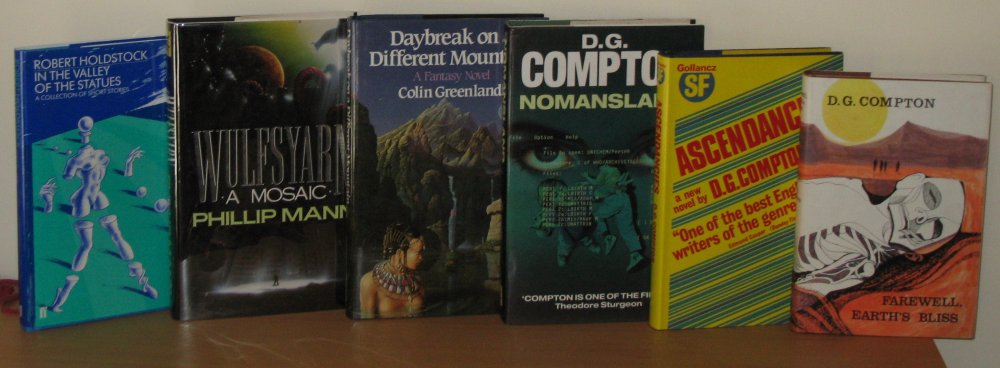
If you’re looking for first editions of out-of-print sf novels, the best place to look is Andy Richard’s Cold Tonnage Books. He also usually has a table in the dealers’ room at the Eastercon. I just ordered a bunch of books from him. and here they are:-

From left to right: In the Valley of the Statues, a collection of short stories by Robert Holdstock, who wrote chiefly science fiction before Mythago Wood was published. He will be missed. Then, Wulfsyarn by Phillip Mann, a UK-born New Zealand-based sf author, whose last published novels were the A Land Fit For Heroes quartet from 1993 to 1996. His novels are certainly worth checking out. Next, Colin Greenland’s debut novel, a fantasy, Daybreak on a Different Mountain. And finally three DG Compton novels: Nomansland, Ascendancies and Farewell, Earth’s Bliss. After reading The Continuous Katherine Mortenhoe (see here), Compton has joined my list of collectable authors.

I can feel especially good about these purchases because not only are they excellent novels, but this week I also managed to sell three George RR Martin A Song of Ice and Fire paperbacks and five Robert Jordan Wheel of Time paperbacks on eBay.


11 Comments

Meme-ing a list again

Jack Deighton posted this on his blog here a few days ago. It makes for cheap and easy content, so I’m doing similar. The list below is from the SFX Book Club list of classics. As usual, bold those you’ve read, italicise those you own but haven’t read…

1. The War Of The Worlds by HG Wells
2. The Martian Chronicles by Ray Bradbury
3. Ringworld by Larry Niven
4. A Princess of Mars by Edgar Rice Burroughs
5. A Canticle for Leibowitz by Walter M Miller
6. The Stars My Destination by Alfred Bester
7. Dragonflight by Anne McCaffrey
8. Rendezvous with Rama by Arthur C Clarke
9. The Shadow of the Torturer by Gene Wolfe
10. The Forever War by Joe Haldeman
11. The Weirdstone of Brisingamen by Alan Garner
12. Dangerous Visions edited by Harlan Ellison
13. A Wizard of Earthsea by Ursula K Le Guin
14. Do Androids Dream of Electric Sheep? by Philip K Dick
15. The Player of Games by Iain Banks
16. Pavane by Keith Roberts
17. Neuromancer by William Gibson
18. Collected Ghost Stories of MR James
19. I Am Legend by Richard Matheson
20. A Game of Thrones by George RR Martin
21. Stand on Zanzibar by John Brunner
22. Planet of the Apes by Pierre Boulle
23. The Moon is a Harsh Mistress by Robert Heinlein
24. Blood Music by Greg Bear
25. Non Stop by Brian Aldiss
26. Gulliver’s Travels by Jonathan Swift
27. Dune by Frank Herbert
28. The Left Hand of Darkness by Ursula Le Guin
29. A Case of Conscience by James Blish
30. Flowers for Algernon by Daniel Keyes
31. Star Maker by Olaf Stapledon
32. Frankenstein by Mary Shelley
33. The Einstein Intersection by Samuel R Delany
34. The Day Of The Triffids by John Wyndham
35. Titus Groan by Mervyn Peake
36. Vurt by Jeff Noon
37. Foundation by Isaac Asimov
38. The City And The Stars by Arthur C Clarke
39. Strata by Terry Pratchett
40. The Centauri Device by M John Harrison
41. Earth Abides by George R Stewart
42. Snow Crash by Neal Stephenson
43. The Death of Grass by John Christopher
44. Starship Troopers by Robert Heinlein
45. Brave New World by Aldous Huxley
46. From The Earth To The Moon by Jules Verne
47. Interview With The Vampire by Anne Rice
48. Life During Wartime by Lucius Shepard
49. Perdido Street Station by China Miéville
50. The Lion, the Witch and the Wardrobe by CS Lewis
51. Cities In Flight by James Blish

So, I’ve read thirty-six, and there’s a further five I own but have yet to read. It’s an odd list – mostly science fiction classics, with an occasional nod to popular fantasy. Some recent authors, but most from the first half of last century. It looks a bit like they started with a core of fifteen or so “classics”, and then got people to vote on the rest. I mean, why Delany’s The Einstein Intersection instead of Dahlgren, or Nova, or Babel-17? Strata and not a Discworld novel? It all seems a bit random. Two by Blish, but none by Silverberg? And, of course, remarkably few women. Three, in fact. Rubbish.

I think the list is ongoing, so perhaps it will improve as it progresses. I’ve not read the actual pieces about each Book Club novel. I’m not actually sure I want to…


Leave a comment

August updatification

First the good news: M-Brane #19 is now available here, containing my story ‘Through the Eye of a Needle’. I wrote it as a socialist story, although I’m told some readers, especially American, might interpret it as anti-socialist. You could always see for yourself…

This month’s VideoVista is also up, containing my reviews of Gentlemen Broncos (see here), by the director of Napoleon Dynamite. It’s a comedy about science fiction, and I thought it was bloody awful. And there’s my review of Homecoming (see here), a polished if predictable psycho ex-girlfriend film, starring Mischa Barton.

The bad news is that, annoyingly, I’ve not managed to get started on my summer reading project – see here. So I’ll begin the first quintet this month. It’ll be the Bold as Love Cycle first, I think.

I also have plenty of writing to get done, too. A handful of stories that have been mashing in the bottom drawer, and need a second draft. A couple more that need the first draft finishing. Then there’s the “newer” space opera novel project, which needs the first three chapters completing. And speaking of space opera, I did sort of promise myself that I’d try and write a proper space opera story this month, so let’s hope inspiration strikes there.

I have a couple of books lined up for reviews, which I need to get done. The first one, Veteran by Gavin G Smith, should go up on SFF Chronicles some time this week. I also need to get something up on my Space Books blog, as I thought I spotted a small tumbleweed over there a day or two ago…

Ah well. Looks like it’s going to be a busy month.


2 Comments

Look! A Book Haul!

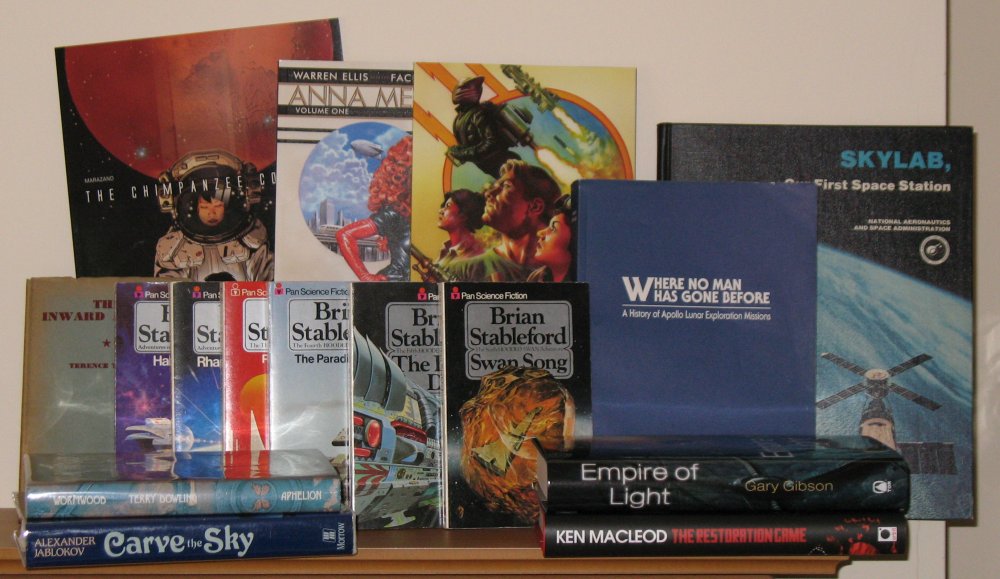
I’ve not done one of these since, well, since the last one. And I’ve received a number of interesting books since then, books worth showing off. And here they are:

At the back to the right are a couple of NASA publications: Skylab, Our First Space Station, about, er, Skylab; and Where No Man Has Gone Before, a history of the “Apollo Lunar Exploration Missions”. They’re for the Space Books collection. To the right are three graphic novels. Two are by Warren Ellis (artwork by Gianluca Pagliarani and Facundo Percio, respectively) – Ignition City Volume 1 and Anna Mercury Volume 1: The Cutter. The third graphic novel is the final part of The Chimpanzee Complex trilogy, Civilisation, and I’ve yet to decide if the story works. I think I need to reread all three, one after the other. I shall probably do that and then write something about it.

In front of these are the six books of Brian Stableford’s 1970s Hooded Swan sextet. For reasons best known to some over-worked, under-paid and under-appreciated editor of the time, the first two books – Halcyon Drift and Rhapsody in Black – are subtitled “Adventures of STAR-PILOT GRAINGER”; while the remaining four books – Promised Land, The Paradise Game, The Fenris Device and Swan Song – are all subtitled “The ___ HOODED SWAN Adventure”. To be honest, showing all six books is a bit of a cheat as I only bought three of them recently. The other three I’ve had for a while. Finally, hiding to the left of Halcyon Drift is The Inward Animal, a collection of poetry by Terence Tiller from 1943. I like Tiller’s poetry, and now have several of his collections.

At the front are four first edition hardbacks. To the right are a pair of newly-published books: The Restoration Game by Ken MacLeod; and the final book of Gary Gibson’s Giant Space Fish trilogy, Empire of Light. To the left, we have a signed edition of Carve the Sky, Alexander Jablokov’s debut novel; and a sf collection by Terry Dowling, Wormwood, which is also signed. I didn’t think Dowling’s story in the Eclipse 2 anthology, ‘Truth Window: A Tale of the Bedlam Rose’, worked especially well, but I was intrigued enough by the universe in which it was set to hunt down this collection of stories also set in that universe. It was not an easy book to find. But I have a copy now, muahaha.

Leave a comment

Giving it away

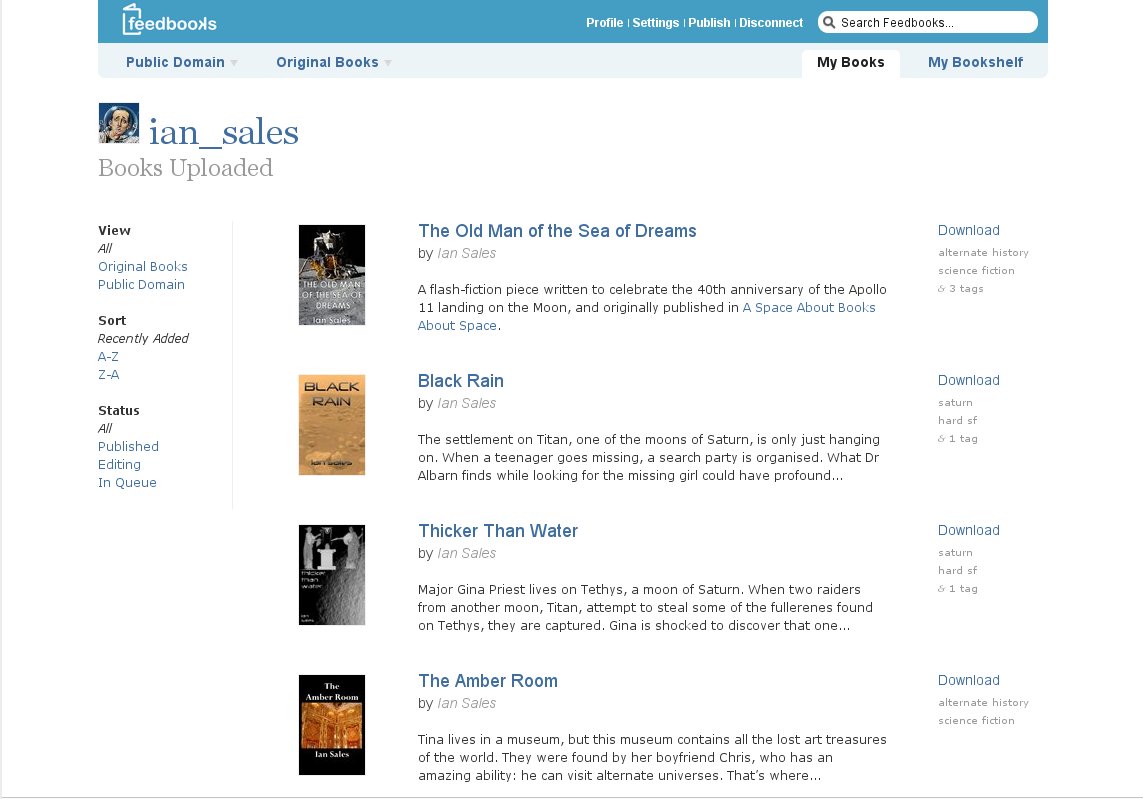
If you look at the Fiction tab on this blog, you’ll see I’ve not sold a great number of short stories. Of those published stories, I’ve made three available online as PDF files – many months after they were originally published, of course. A fourth story, a flash fiction piece, I self-published on my Space Books blog as part of my Apollo 40 celebration (albeit somewhat delayed).

At the beginning of July, I decided to put copies of those four stories up on feedbooks.com, a site for free ebooks. You know, just to see. Would anyone read them? Would I get any comments?

The first has certainly happened. But not the second. No comments, but a large number of downloads. In fact, the respective popularities of the four stories has surprised me quite a bit…

Since the first of July, the stories have had the following number of downloads:

Black Rain has been the most popular by quite a margin – more than double The Amber Room. But if I had to rate my own personal satisfaction with the stories… then Black Rain is the one I’m least satisfied with. So I’m slightly boggled by the mismatch between my own expectations of a short story and readers’ responses to it. If I did something right in Black Rain, I don’t know what it is…

While I published my stories on feedbooks.com more as an intellectual exercise than as a serious self-publishing strategy, I’m happy with the results. I’ll to continue to re-publish my fiction there – a suitable length of time after each story was initially published, naturally.


5 Comments

Vulcan Bombers in Space

Steampunk and dieselpunk have both entered mainstream culture. So they’re no longer cutting-edge, they’re now closer to blunt instrument. And that means it’s time for science fiction’s fertile minds to spunng! into creative action once again. We need a new movement, a new aesthetic, a new subgenre. And I have just the one. I call it:

Jetpunk

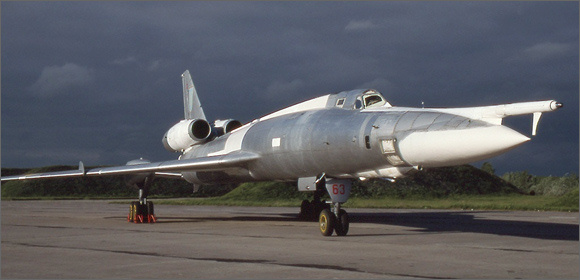
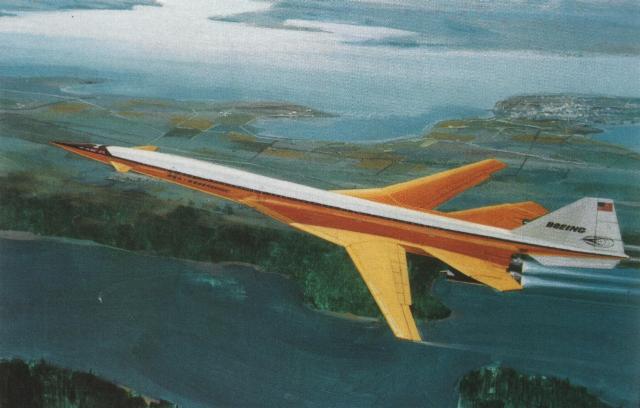
Hang on, I hear you say. Steampunk was alternate history, in which the world’s technology remained at Victorian levels. We have jets now. We have jets in the twenty-first century, we’ve had them for seventy years, in fact. What’s alternate about that? What’s sfnal about that? Well, yes, that’s true. But we don’t have all those amazing supersonic jets they had during the Cold War. Like, well, the Avro Vulcan Bomber. Or the Convair B-58 Hustler. North American XB-70 Valkyrie. TSR-2. Tupolev Tu-22. All those planned Supersonic Transports and spaceplanes.

(Source: BAe Systems, via avrovulcan.org.uk)

(Source: USAF, via wingweb.co.uk)

(Source: Carl Ehrlich, via The Space Review)

That was proper science fiction, that was. Not the pointy magic rockets they used to put in sf novels of the period. No, they were proper engineered aeroplanes made out of titanium that could fly at silly speeds like Mach 3.5. And jet-packs. Flying cars. Giant Computer Brains – er, giant mainframe computers in giant data processing centres. Jetpunk. It’s the future they were designing and building fifty years ago, when a base on the Moon by the end of the century looked like a very real prospect. It’s the future we might have had, the one where we wear silver jumpsuits and eat food-pills.

It was a time of progress and of austerity, of paranoia and of trust, of innocence and cynicism. And, let’s face, those supersonic jets and spaceplanes looked pretty damn cool. It’s not steam engine time, it’s jetpunk time.

So who’s going to write the first jetpunk sf story?