It Doesn't Have To Be Right…

… it just has to sound plausible


Leave a comment

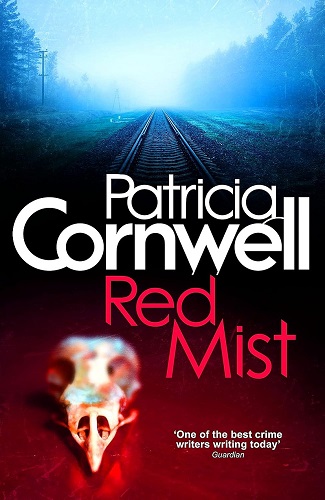
Scarpetta 19: Red Mist, Patricia Cornwell

The nineteenth book in the Kay Scarpetta series, and following straight on from the previous one, Port Mortuary (2010, USA). Scarpetta has been invited to the Georgia Prison for Women to speak to the woman who sexually abused Jack Fielding (Scarpetta’s deputy, who was murdered in Port Mortuary) when he was twelve, and whose daughter is the psycho genius responsible for his death (and several others). Scarpetta is then contacted by Jaime Berger, no longer DA responsible for sex crimes in New York, but now based in Savannah – and it turns out she manipulated Scarpetta into visiting Georgia. Because she thinks a young woman on death row who brutally murdered a respected doctor and his family ten years prior is innocent.

Scarpetta resents being manipulated, but then Berger is murdered… and the hunt is on for a poisoner, who may be linked to the prison and responsible for the deaths of several inmates who died of “natural causes” just hours before they were due to be executed. The whole gang is in Savannah – Marino, Lucy, Benton – and it seems the poisoner was actually responsible for the doctor’s murder ten years ago.

The plot is, to be honest, a bit weak. Once again, Scarpetta’s reputation is attacked (the murderer from the previous book is claiming Scarpetta tried to kill her). There’s another psycho genius hiding in the background, and whose identity is pretty easy to guess. Everyone seems particularly slow to spot things, including Scarpetta, and the killer is found more or less by accident. But there’s some good autopsy scenes and some good deductive science in identifying the poison.

Red Mist (2011, USA) seems to close off a two-book story arc, so I expect the next one, The Bone Bed (2012), will introduce yet another psycho genius who will murder a few people, then twist the facts of the case to make Scarpetta look like the villain, before being shot and killed while trying to murder Scarpetta… But we shall see.


Leave a comment

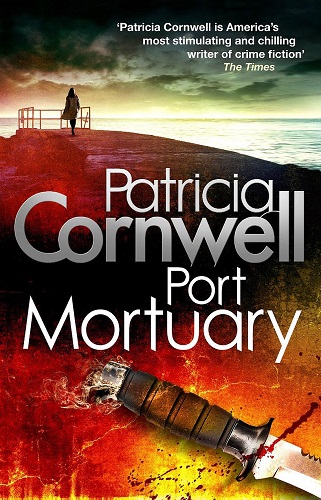
Scarpetta 18: Port Mortuary, Patricia Cornwell

I read Port Mortuary (2010, USA) while travelling back home from Copenhagen by train. These books are becoming increasingly easier to polish off in a single sitting, even if they seem to be getting longer. Mostly, I suspect, that’s because I know the character of the protagonist, Dr Kay Scarpetta, pretty well now after 18 novels, and also probably because the plots are beginning to settle into something of a rut. Again, a puzzling murder is the springboard to a conspiracy to attack Scarpetta’s profile, credibility and relationships.

Scarpetta has spent six months at Dover Air Force Base, where US casualties from the invasion of Iraq are shipped. Shortly before this, she had set up a new forensic centre in Cambridge (Massachusetts), and left it under the command of Dr Jack Fielding, a character familiar from earlier books. But when a body appears to have bled out while in the freezer in this new centre, and Fielding has gone AWOL, Scarpetta is helicoptered in to fix things.

Unfortunately, nothing looks good. The centre is falling apart, things cannot, er, hold. The dead man in the fridge was murdered using some strange weapon which left pockets of air in his chest cavity. Benton is meanwhile treating a young man on the spectrum, a near-genius working in the R&D department of  a nearby defence contractor, who has confessed to murdering a small boy by hammering nails into his head. Benton is convinced the man has been manipulated into confessing – but by whom?

Scarpetta is also having flashbacks to the autopsy of two young women she performed for the US military in South Africa, back at the beginning of her career. She knows their murders were staged, likely by government agents to foment hatred – Cornwell seems to think Afrikaaners were black South Africans, which is, well, the exact opposite – but has always regretted following the party-line.

The murder of the boy and the man who bled in the fridge turn out to be linked, and clues point back to the defence contractor’s R&D lab. Fielding is also involved somehow. It all slots together neatly – Cornwell has been doing this for a while – but it does, unfortunately, fall back on Cornwell’s favourite solution: the super-intelligent psychopath who manipulates everyone around them. And Cornwell throws in an ending she over-used in the first few books of the series, where the villain of the piece attacks Scarpetta at home and is defeated.

Port Mortuary has moved back to first person, and is far more introspective than earlier books. There are a lot of words on the process, and means, of discovering the facts surrounding the two murders. Plus, everyone seems to know what’s going on, but is deliberately keeping Scarpetta in the dark. It makes for a frustrating read at points.

I’m not sure where to rank Port Mortuary among the Scarpetta books I’ve read. Too much in it feels like retcon, and Cornwell’s changes in narrative style – we’re eighteen books into the series here! – make it hard to get a real purchase on the series arc. Lucy’s inconsistent aging notwithstanding – cf Sue Grafton’s Kinsey Millhone books, which stuck so rigorously to their internal chronology her last book, Y is for Yesterday (2017, USA), was set in 1989. I do like the Scarpetta novels, I like their focus on the science and, increasingly, technology of forensic pathology. But they’re nowhere near as rigorous – perversely – than other series in the same space I like.


Leave a comment

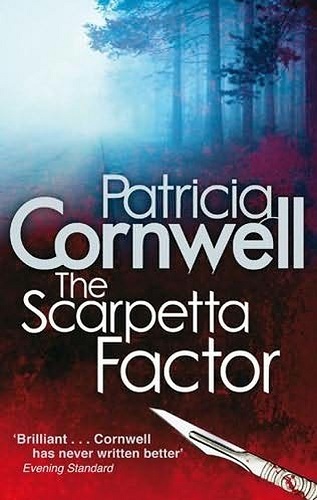
Scarpetta 17: The Scarpetta Factor, Patricia Cornwell

The last few books in this series seem to have followed a formula, although not the same formula as the first half dozen or so books in the series. I mean, they’re now third-person and present tense, a change that happened in book twelve, rather than first person-past tense, but there’s been a definite pattern since the change in narrative style. To wit, a puzzling murder occurs and Scarpetta is asked to consult, and it turns out to be about her, probably involving the French mobster family, the Chandonnes, and it’s all about destroying Scarpetta’s reputation or her relationships with her loved ones or close friends.

In The Scarpetta Factor (2009, USA), a woman is found dead in Central Park, apparently mugged and raped while jogging. But something about the body and the trace evidence doesn’t ring true to Scarpetta. Also under investigation is the disappearance a week or so earlier of a fabulously wealthy broker, the daughter of a recently deceased Wall Street mogul. There’s no apparent link between the two crimes, but…

Then there’s Dr Walter Agee, the psychologist consultant who persuaded the FBI to put Benton Wesley, Scarpetta’s lover, into the protected witness programme, so she thought he was dead for several books… But now Agee is penniless and discredited, and appearing as a resident expert on a CNN true-crime show, the same one on which Scarpetta occasionally appears.

Everything somehow or other links together, without feeling like a stretch, even if some of the characters seem to have suddenly appeared with a retconned back-history, or play not entirely convincing roles in the story. The puzzling murder which kick-starts the plot is, as usual, cleverly done; but, also as usual, there’s a lot of flailing around and then the story rushes to a neatly tied-up solution. Three pages from the end, I was wondering how Cornwell would wrap everything up… and she did it. It made sense and no plot threads were left hanging, but blink and you miss it.

It’s hardly a surprise a series of – to date – 28 books featuring the same protagonist, the same supporting cast, and the same general type of story should prove formulaic. What is surprising is that it’s becoming clear only one of the plot-threads in each novel is actually interesting. Everything wrapped around it  – the endless attacks on Scarpetta’s reputation, the familial squabbles, the Chandonne family vendetta, the US LEO inter-service rivalry – is not especially interesting and, if anything, detracts from the puzzle murder which kicks off the plot.

Having said that, I’ve another eleven books to go, so perhaps things will improve…


Leave a comment

Pay Dirt, Sara Paretsky

VI Warshawski is in Lawrence, Kansas to support a flatmate of her French-Canadian friend, who is about to break some sort of scoring record in a basketball game. One of the young women in the group visiting from Chicago vanishes after the game, and Warshawski stays on to look for her. This brings her into conflict with various town worthies, which in turn leads to her stumbling across the disappearance of a young woman who managed to offend the town’s most prominent families.

It all goes back to the American Civil War, and the influx of abolitionists into Kansas, many of whom, it transpires, were not as liberal as their descendants claimed. It’s about a derelict house from the 1800s which can’t be demolished as it’s historically important, has more recently been used for drug-fuelled parties by over-titled frat boys from the nearby university, and is where Warshawski finds the missing young woman. And, a day later, a murdered woman.

Confusing matters, or perhaps related to them, is the construction site on a hilltop near the house. The company that now owns the lands is allegedly building a tourist resort, but from what Warshawski sees of the site that doesn’t seem plausible. A nearby decommissioned coal power station is about to begin generating power again (and the manager of the power station was murdered only a few weeks before).

There are two plots in Pay Dirt (2024, USA), which intertwine. The missing woman had proof a white family had stolen ownership of the hilltop from a black family in the mid-1800s. Then there’s the purpose behind the construction work on the hilltop, and the recommissioning of the old power station, which leads back to a billionaire family – clearly inspired by the Koch brothers – and their industrial empire…

As ever, Warshawski wears her politics on her sleeve, and consequently makes more enemies than friends. There’s mention of Covid and its impact, and social media plays a role in the plot – although Paretsky misses a trick when she reveals the real purpose of the hilltop site, revealing it’s for tech that was slightly news-worthy ten years ago where as there’s one that has been definitely more news-worthy the last couple of years.

Paretsky has not lost her touch. She can still generate anger – from those who agree with her at the injustices she documents, and from those who disagree with her for casting their views in an unflattering light. If anything, she’s more incandescent now than she used to be, and now I think about it her books seem to have moved from legal injustice to include political injustice and then social injustice. 

Paretsky was one of the original “Sisters in Crime” back in the 1980s, a group of female crime authors – including Sue Grafton and Linda Barnes – who set out to write female-authored and female-led crime and mystery novels. Obviously, they succeeded – in fact, I think female crime writers now outnumber male ones (female readers certainly outnumber male). She is still worth reading.