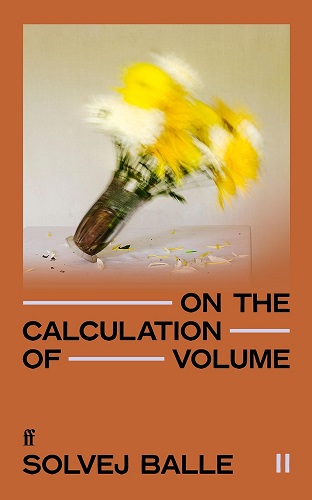
Something struck me as I read this third book in a planned series of seven: how discursive it is. Volume 3 (see what I did there?) opens with Tara Salter, who has been stuck in 19 November, Goundhog Day-like, for two books, obsessing about Romans. She stumbled across a lecture at a university in Düsseldorf, and has been researching the subject ever since. She has the time to do so. By this point, references to Groundhog Day are just stating the obvious, but this book does seem more like the movie than the earlier two books, especially where Bill Murray’s characters spends the same day over and over again learning how to become a virtuoso piano player in order to impress Andie McDowell, the woman he fancies.
Having said that, there’s no romance in On the Calculation of Volume III (2021, Denmark). Tara is happily married, although temporally separated from her husband. Her interest in the Romans leads her to Henry, who is in the same situation as her, trapped in 19 November. They spend time together, learn about each other. Henry introduces Tara to another person in the same situation, a young woman, Olga, who is searching for a young man she knows like them. Henry has also been spending a lot of time in the US, visiting his son.
Olga and her companion, Ralf, who is currently missing, have different ideas about how to make use of the fact they’re trapped in a single day. Ralf wants to use it to prevent accidents – which again reminds of a specific incident in Groundhog Day, when Murray saves a man using the Heimlich.
After finding Ralf, the four move into a house on the outskirts of Bremen. When another nine people in the same situation suddenly arrive.
It’s like there’s a sudden shift in gear two-thirds of the way through this book. Tara considers her growing occupation with the Romans, and then the differences in philosophy between Olga and Ralf, and then suddenly they’re coming up with a plan to do something useful, and then a whole bunch of people turn up out of the blue… That initial discursiveness is one of the appeals of the series: Tara’s thoughtful consideration of her situation, her careful working out of its boundaries, is one of the reasons why the books work so well. But that isn’t very dramatic – especially for a planned seven (quite short) novels. Tara has spent two books exploring the limits of her November 19, but now the story needs to explore its limits – by introducing more characters.
I’m enjoying these, and I certainly plan to continue reading them. IV is currently available, but I’m waiting for it to drop in price; V will be published later this year. And, I assumed, VI and VII next year. Worth reading.
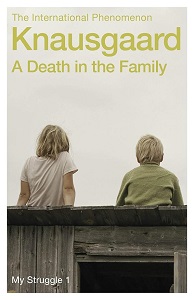
I forget why I bought A Death in the Family (2009, Norway) – and yes, I know his name his rendered as “Knausgaard” in the English translations. It was back in 2014, and I read it a couple of years later; and then picked up a copy of the second book, A Man in Love (2009, Norway). But then they went into storage when I moved north. And, also for reasons I forget, although perhaps because I’d thought A Death in the Family pretty good, five years ago I bought all seven of the “novels” which form the seven-book series, My Struggle. I write “novel” in quotes, because they’re allegedly autobiographies, but written in novel form, in much the same way popular histories are written these days (and it really annoys me when writers of popular histories report dialogue between historical figures, as if they had a time-machine and witnessed it).
My Struggle caused something of a fuss when it was first published in Norway. Partly because its Norwegian title, Min Kamp, which means my struggle, is also the title under which Hitler’s book is published in Norway. For some reason, it has always been published in English under its German title. Huh. Knausgård’s series also upset people because, being autobiographical, the “characters” in it were and are real people, such as his wife, brother, father, etc. It also made Knausgård, who’d had two novels published previously, a household name in Norway; and famous outside Scandinavia when the books were translated into English and other languages.
A Death in the Family is a book of two parts. The first covers Knausgård’s teen years in Kristiansand; the second covers his return to Kristiansand, with his brother, to bury their father. There is some slippage, as in both parts the writer is looking back at events from the time of writing (which think is the first decade of this century). The narrative is detailed, both in the descriptions of the events which take place, and the thoughts Knausgård has, both as narrator and as historical self. Clearly there’s an element of invention to this, because there’s no way Knausgård could remember some of the events he writes about:
A few months before, I had seen the TV series The Mysterious Island, based on Jules Verne’s novel. (p 17)
I looked this up. Mysterious Island was broadcast in Norway in 1974/1975 on NRK, when Knausgård, born in 1968, was six or seven. I have a distinct memory myself of seeing the film Where Eagles Dare at an open-air cinema in Doha, and I think that happened in 1971 or 1972, when I was five or six, but how much of that is confabulation? The film was released in 1968, but a six-year-old at a cinema? We left Doha in 1972, so it had to be before that, and I’ve confirmed the family did see that film in an open-air cinema in Doha. But I’ve no way of knowing if what I remember was not confabulated from later viewings of the film. And so it is with much of the narrative of A Death in the Family, particularly when describing Knausgård’s early years.
Another element of the book is one I’ve come to recognise in novels translated into English from Scandinavian languages. The translator, Don Bartlett, has lived in Denmark, and while that certainly gives him the necessary language skills (Bokmål and Danish are very similar), I’ve noticed sometimes translators with knowledge only of Denmark miss some of the cultural, or everyday, elements of life in Sweden (or Norway). The most egregious example I can think of is the translator of Stieg Larssen’s Millennium trilogy, who also only had experience of Denmark, describing Myrorna, a chain of charity shops, as a “funky boutique”. I know little about Norway (for example, they eat sandwiches for lunch, as I do; which Swedes think weird, as they considered a sandwich something you eat between meals). Even so, I spotted a few strangenesses. Personnumer, person number, a unique identifying number used by all the Scandinavian countries, and in Norway and Sweden issued by the tax agency, is translated as National Insurance number. But I suspect that’s a translation choice.
Like Sweden and Finland, but not Denmark, Norway has a state liquor monopoly, known as Vinmonopolet. (I’ve joked in the past: Sweden – we shall call our state liquor shops the system company, Systembolaget! Norway – we shall call our state liquor shops the wine monopoly, Vinmonopolet! Finland – we shall call our state liquor shops… Alko!) So seeing the phrase “the cheapest Vinmomopol vodka” (p 319) looks a bit weird, especially since the definite article is more common in place names and such in Swedish, Norwegian and Danish.
Knausgård was living in Stockholm when he began writing Min Kamp, and while things have changed a lot in Sweden in the past twenty-five years, and my experience here is only post-Brexit, several times he describes himself making a cup of coffee at home. Using instant coffee. I’ve yet to meet a Swede who drinks instant coffee; and supermarkets carry far more brands and varieties of ground coffee than they do snabbkaffe. But perhaps that’s a Norwegian thing (see: sandwiches).
The chief appeal of A Death in the Family, however, is the annotations, the apercus, with which Knausgård peppers his memoir. Everything from teen friendships to his changing relationship with his father, is food for thought and, often clinically, examined. There’s a line around two-thirds of the way through the book, when Knausgård is describing his time as a university student in Bergen, which I think sums up both the experience of reading Min Kamp and the reason why it’s so good:
…and what enriched me while reading Adorno, for example, lay in not what I read but the perception of myself while I was reading. I was someone who read Adorno!” (p 367)
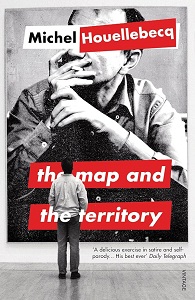
I’m a fan of Houellebecq’s fiction, and have been ever since reading Atomised (1998, France) back in 2009. He’s a miserable writer, but I like his commitment to factuality, to the extent he often includes exposition as much as in any science fiction text. But Houellebecq is not above using other literary techniques, and in The Map and the Territory (2010, France) it’s metafiction. Of a sort – Houellebecq himself appears as a character in the novel.
Jed Martin is a struggling artist in Paris. He has the idea of taking tilt-shift photographs of Michelin maps, which brings him fame and a girlfriend, the beautiful Olga, who works for Michelin. When she is transferred to Russia (her homeland), Martin turns to painting portraits of professional people, including his father, and most famously the painting ‘Bill Gates and Steve Jobs Discussing the Future of Information Technology’. Martin approaches Houellebecq and asks him to write an accompanying text for an exhibition of the paintings – a real thing which has led to published novels, Paul Park’s All Those Vanished Engines (2014, USA) and Olga Ravn’s The Employees (2018, Denmark), come to mind. This text is not The Map and the Territory, even if the novel documents Martin’s career and works as reportage.
As payment for the text, Martin paints a portrait of Houellebecq. Martin’s career skyrockets, and his professional portraits all sell for six-figure sums. Some time later, Houellebecq is found murdered in his country cottage. More: his head has been removed and placed on a sofa, and his skin cut into strips and scattered around the living-room. The remaining parts of his body are never found. The police investigation founders. The detective in charge retires. The police learn Houellebecq’s portrait is missing, and is now worth nine million euros. The crime is eventually solved by accident.
The Map and the Territory is more than the above, of course. The plot is just an excuse for Houellebecq to pontificate on a number of different subjects. I actually read this immediately after finishing Kim Stanley Robinson’s New York 2140 (2017, USA), and despite the differences in plot and setting, the two books are remarkably similar. They are both didactic, although Robinson discusses history and economics whereas Houellebecq writes about art and commerce. Robinson’s novel is annoyingly chatty, with overly excitable characters; The Map and the Territory’s characters are almost automatons, although extremely self-reflective ones, and Houellebecq has an irritating habit of randomly italicising phrases. Nonetheless, both are excellent books.
Houellebecq is one of those authors whose books I’ll happily read when I come across them, and while I keep up with his career, I don’t buy each new book as it appears – I’m reading The Map and the Territory 16 years after it was published, after all. He’s never less than thought-provoking, although often more in the sense of being deliberately provocative. But he’s always worth reading – whether you agree or not with the premise of the novel you’re reading.
(I should probably mention I welcome comments on my reviews. You don’t have to agree with me – in fact, I know many people don’t.)
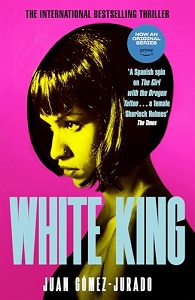
This is the third book of the Antonia Scott trilogy. I watched a TV adaptation of the first book, Red Queen (2018, Spain), and enjoyed it. So when the books popped up as cheap ebooks, I didn’t hesitate to buy them. Unfortunately, like another famous European thriller trilogy featuring a genius protagonist, the first book is way better than the sequels. In Red Queen, gay Basque detective Jon Gutiérrez is assigned to assist genius criminologist Antonia Scott while she investigates the kidnapping of a billionaire’s daughter. Scott is part of the Red Queen project, a pan-European agency which uses drugs and neural programming to enhance selected geniuses to make them super-effective solvers of crimes.
Red Queen was followed by Black Wolf (2019, Spain), which had Scott and Gutiérrez involved with Russian gangsters on the Costa del Sol. The title refers to a hired assassin. The events of both novels, however, had all been part of a plot organised by a genius psychopath known as the White King. And that’s what White King (2020, Spain) is about.
Mt White, the genius psychopath, has been hired to steal something. He needs Scott’s help, but of course she would refuse. So he set up the kidnappings in Red Queen, and the murders in Black Wolf, to manipulate her, and the Red Queen project, into a position where he has access to the thing he has been contracted to steal. None of this is especially convincing. Especially since the manipulation seems to depend on minor details from the first two books.
White King is structured as three murders, one from several years before, one that occurs that very day, and one that is about to happen. All three are linked. Scott is given only hours to solve the murders. In order to motivate Scott, White kidnaps Gutiérrez and implants a bomb against his spine. If Scott fails to solve each crime by the deadline… Gutiérrez loses his head.
I mentioned another popular European trilogy, but unlike those three books, the Red Queen trilogy pits one genius against another, and genius is always difficult to present in fiction. White’s speciality is blackmailing people into performing tasks for him, even tasks completely against their nature – such as murdering all their colleagues. It’s not credible, and like most fiction of this type, book, television or film, relies on people abandoning whatever morals they may possess at the slightest provocation for plot reasons. The other aspect of genius as presented in fiction is vast knowledge. In past works, this manifested as erudite and well-educated, often self-educated, criminal masterminds. But these days, with computers so ubiquitous and intertwined in daily life, and the internet, there’s no need for the villain to have that knowledge, only have access to it. Which means Magical Hackers. And so it is here.
White King’s denouement is cleverly done, however, and Scott is an interesting character. Goméz-Jurado’s prose is choppy, and perhaps a little journalistic, but also plainly written with film or TV adaptation in mind. And the TV series was indeed good. There’s been no mention of adapting Black Wolf or White King. Which is a shame.
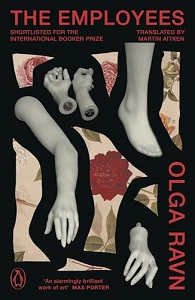
Back in 2014, Paul Park published the novel All Those Vanished Engines (2014, USA), which comprised three linked novellas. One of these, which shared the book’s title, was originally commissioned to accompany a sound installation by Stephen Vitiello at the Massachusetts Museum of Contemporary Art in 2011. The Employees (2020, Denmark) by Olga Ravn was inspired by the art of Lea Gulditte Hestelund, a Danish visual artist, after Ravn was asked to provide accompanying text for her exhibition, Consumed Future Spewed Up as Present. Knowing this in no way affects reading The Employees, although it does in part explain some parts of a novel which takes pains to obscure its story.
The novel is told in one- or two-page chapters, each of which is the testimony of a member of the crew of the Six-Thousand Ship, so called because that’s the number of people aboard it. Just like the Three Ship that went to the Moon, and indeed the One Ship that put the first human being in space. Not all of the six thousand are human, some of them are androids – the novel is vague to their exact status, only that they are human in all ways except actually being considered human. Science fiction is normally quite happy to feature chattel slavery without commentary, so why it bothered to invent a metaphor for it will forever be a mystery.
The opening testimonies describe members of the crew, or “employees”, visiting rooms containing “objects” from Hestelund’s installation. There are also visits outside the ship to a valley, although its unclear if the ship has landed on a planet or is in space. At some point, the non-human humans object to not being treated as humans, and mutiny. This is supposed to comment meaningfully on the human, or indeed non-human, condition.
The problem is, there is nothing new here. And couching everything in terms so vague, despite the manifold viewpoints, does not render the story profound or deep. I am in general in favour of science fiction written by non-genre writers. Their unfamiliarity with the tropes and conventions of science fiction can result in something interesting to say about common sf concerns – although that “common” often means their treatment is old-fashioned or adds little to the genre conversation.
And so it is here: The Employees, while poetically written, contains no new insights into the human condition, or even human resources. Some nice prose, an interesting structure, and a link to an art installation of a real-life artist are married to a story that tries hard to hide the fact it is thuddingly obvious from start to finish.
Tara Selter woke up one day, and it was the previous day. In fact, for reasons unexplained, she is reliving 18 November over and over again, much like Bill Murray in the movie Groundhog Day. In the first book – seven are planned – Tara explored the limits of her condition, spending time in Paris in a hotel, where she had slept the night before, repeatedly visiting the same friends – antiquarian booksellers like herself – again and again, even attempting to explain to them what was happening to her. She returned home, and tried the same with her husband. But she discovered the resources she used, food particularly, vanished from 18 November if she used them, and objects would disappear into 19 November if she did not keep them close to her.
In this second book, Tara decides to try and live a year on the same day. She does this by moving around Europe so that the climate matches what it would be, approximately, on each day of the year had she stayed home in her village outside Paris. It’s a neat conceit, but for it to work Balle needs to get her details absolutely spot-on and, unfortunately, in a few places they didn’t ring true.
But that’s a minor quibble. Balle commits hard to her structure, and is rigorous in working out the details of living the same day again and again, even when it comes to travelling about Europe in search of the right climate for each calendar day of the year. The travel stretches Tara’s resources and ingenuity, as she has no knowledge of the previous day wherever she ends up, and Balle considers all the pitfalls and ramifications that might result.
There is something deeply satisfying in Balle’s careful working out of her central premise, and even after only two books in of a planned seven, the series promises interesting explorations of Tara’s situation.
Very little science fiction has been translated from Arabic into English – in fact, I knew of only one other author, Emirati Noura Al Noman, and she hasn’t been published since 2014. Ahmed Khaled Tawfik wrote several sf novels, most notably Utopia (2008, Egypt), and a little hunting revealed it had been translated into English – but with his name spelt Towfik. There’s been plenty of fantasy translated from Arabic, however, from Alf Laylat wa Layla to Naguib Mahfouz, and a number of contemporary writers. Having said that, Frankenstein in Baghdad (2013, Iraq) was not published as category sf, and likely only deserves the label because its central conceit references Mary Shelley’s novel, a proto-sf novel. (The English title, incidentally, is a direct translation of the original Arabic title.) It was nominated for both the Arthur C Clarke Award and the International Booker Prize.
The central conceit of Frankenstein in Baghdad is actually not at all rigorous as science fiction. It’s a neat twist on the original – the monster (because of course Frankenstein is the doctor) in Saadawi’s novel is made from the body parts of victims of IEDs in post-invasion Iraq, and the monster’s mission is to avenge those deaths. But Saadawi seems more interested in telling a more general story about life in present-day Baghdad, as seen through the eyes of a handful of characters. Chief among these are the junk dealer Hadi, who originally creates the monster in some sort of fever dream; Mahmud, a young journalist, who takes Hadi’s tales of a monster semi-seriously, but is more interested in becoming like his rich and powerful editor; Elishva, an old Armenian woman who mistakes the monster for her long-dead son; and General Majid, who runs a secret police bureau of astrologers and magicians who predict bomb attacks in the city.
The novel bounces around between these characters, and a handful of others, mostly centred around the area of Bataween, and occasionally focusing on the monster. Who has discovered that once it avenges the death of one of the people whose parts make up its body, that body part rots and falls off. So the monster needs new parts – and it reaches the point where, with its own small army of followers, it too begins murdering people to keep itself together (so to speak).
The monster is a great invention, and there’s so much commentary that could be attached to the concept, but Frankenstein in Baghdad doesn’t seem all that interested in it. It’s more like an introduction, or a framing narrative, to the personal stories of the book’s cast. Which is a shame. It’s a good novel, don’t get me wrong, and its descriptions of life in post-invasion Baghdad are both heart-breaking and enraging.
A good novel, but one that feels like it failed to capitalise on its central idea.
The second book of the third trilogy featuring Lisbeth Salander, genius sociopath hacker. The problem with novels which centre sociopaths as the hero is the villains have to be complete psychopaths in order to present some spectrum of good to bad. So, here, for example, a bad guy who infiltrates a group of eco-activists turns out to be a paedophile, because being on the bad guy’s side is not enough on its own. And when every villain is grotesque beyond plausibility, suspension of disbelief even, then you have to wonder what point the story is trying to make.
On the other hand, this is a deckare, a thriller, so I guess making a point is not, well, the point of the book. The Girl with Ice in her Veins (2025, Sweden) is not a translation of the book’s original Swedish title, Lokattens klor, which means “the lynx’s claws”, but neither of the titles is especially relevant to the plot – although there is a a newly-introduced character nicknamed Lo, lynx. She’s a baddy, of course.
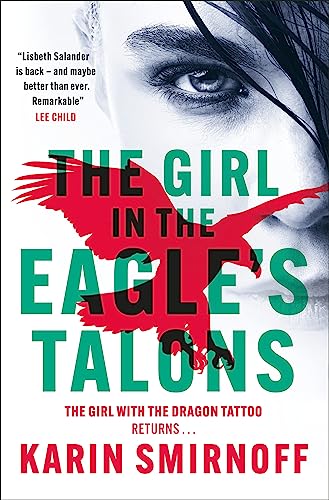
Like the preceding novel, The Girl in the Eagle’s Talons (2022, Sweden), The Girl with Ice in her Veins is set mostly in the invented north Swedish town of Gasskas. It also features the same cast – not just Salander and Blomkvist from the original trilogy, but also Blomkist’s daughter and family, Salander’s niece, and the trilogy’s main villain, disabled white supremacist millionaire Branco. The ecological theme also continues, although this time it’s opencast mining rather than windfarms.
Salander’s niece, Svala, is interning at the local newspaper and has joined a local group of eco-activists. After discovering a local abandoned sanatorium is secretly in use, Svala’s mentor at the newspaper is murdered. A bomb explodes near a disused mine, which appears to be in the process of being re-opened. There is also a consortium interested in opening a new mine in the area.
It’s all connected, of course, although the novel seems more interested in the depredations of the secondary cast, especially the villains. The Cleaner is hired to murder someone in Copenhagen, who turns out to have connections to the new mine in Gasskas, but instead he decides to help Svala. A visiting Greek/Chinese millionaire, who is interested in investing in re-opening the old mine (which is actually owned by Gaskass kommune), turns out to be the father of Blomkvist’s grandson. But because he’s a baddy, he’s also a domestic abuser and made his fortune through people trafficking. Branco pops up every now and again. He’s after the harddisk containing billions in cryptocurrency which Svala was given by her mother and which she has hidden. He’s also less interested in business and more in his white supremacist political organisation.
The Girl with Ice in her Veins resolves its main plot-threads, but Branco once again escapes. So that’s the plot of book three – as yet untitled – sorted. The prose is present-tense again, and often choppy. It mostly works, but occasionally gets perilously close to the fourth wall. I did spot a couple of weird choices in translating Swedish words/culture, but fewer than in the previous book. The Girl with Ice in her Veins is not a great book, but then the series could hardly be called a great series. The first book, The Girl with the Dragon Tattoo/Män som hatar kvinnor (2005, Sweden), was a solid serial killer hunt thriller, but it’s been downhill since then. I must admit, I do wonder how far they plan to take the series. Blomkvist is now in his sixties, Salander is slowing down too… The Girl in the Eagle’s Talons and The Girl with Ice in her Veins do feel a little like they’re moving Svala to centre-stage, so who knows…
The start of the third trilogy featuring Lisbeth Salander and Mikael Blomkvist, and a new author. As indicated by the title, I read it in English – and… a new translator too. This time it’s a professional translator from Swedish to English. The English version keeps up The Girl… book titles, which are not of course direct translations of the original Swedish titles. In this case, it’s Havsörnens skrik, The Sea Eagle’s Cry – but weirdly, it’s a boy who finds himself in the titular, er, appendages.
Blomkvist is in the invented town of Gasskas in Norrbotten, a county in the most northerly part of Sweden. He’s there for his daughter’s wedding. To the head of the Gasskas kommune (district council/municipality). Who Blomkvist doesn’t like from the moment he meets him as he seems to be a bit of a chancer. Honest – but not the most transparent of politicians. Especially when it comes to a deal to build Europe’s biggest windfarm on land in the district. There are three companies in line to take a third each of the contract, but one wants 100% of it, a shadowy Swedish company run by a disabled psychopath who lives in a refurbished military bunker near Gasskas.
Lisbet Salander is in Gasskas because her half-brother’s daughter – previously unmentioned in the series, unsurprisingly – is about to go into care, and Salander is the only surviving relative. The daughter, Svala, is a genius like Salander, and also has the same genetic condition as her father which means she doesn’t feel pain.
The two narratives are connected. Svala’s mother is missing because she’s been kidnapped by the psycho millionaire. Blomkvist’s soon-to-be son-in-law is being threatened by the same psycho to give him the entire contract. The two stories intersect when Blomkvist’s grandson is kidnapped at the wedding.
There’s little that’s new here, except perhaps the setting: the Swedish north. Blomkvist is a bit more of a fogey than in earlier novels, and Svala fills more of Salander’s typical role than Salander does. The villains are almost caricatures – they even have a secret underground lair!
The writing is better than the Lagercrantz trilogy, although that’s hardly a high bar to clear. Everything is in present tense, which gives it more urgency, and often drops into choppy sentence fragments. It works, to an extent – although I don’t think the material is really strong enough for it, given everything is so clichéd.
This is the English prose, of course, so it seems the translator is much better. There were a couple of questionable choices: Systembolaget is referred to throughout as “the off-licence”, which may well be a UK term for a shop that sells booze, but Systemet is the state liquor monopoly chain, which is not quite the same thing. The word “Lapp” is used interchangeably with “Sámi”, even though it’s considered offensive, and it’s not always in dialogue or in the POV of characters who are prejudiced. And someone orders “a pizza salad”, but “pizza salad” is the name of a side-dish in pizza restaurants here (the indefinite article looks odd – like, you order a pizza and say “and garlic bread”, not “and a garlic bread”).
So, slightly better than the preceding three books, and makes good use of the series mythology. They are at least better than Dan Brown’s “weapons-grade bollocks” – and English is his first language! – but even for a commercial thriller this is near the bottom of the barrel.
And yes, I really should try reading the books in Swedish.
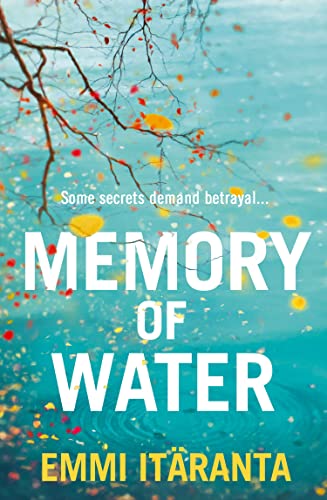
Shortlisted for the Clarke Award in 2015 – and it’s not often a translated work makes it onto the award shortlist. In fact, the only one prior to Memory of Water (2012, Finland) was Stanisław Lem’s Fiasco (1988, Poland), although there have been four since Itäranta (Frankenstein in Baghdad (2013, Iraq), The Electric State (2017, Sweden), Vagabonds (2011/2012, China) and The Anomaly (2020, France)).
Memory of Water was originally published in Finnish. There’s no mention of a translator, and Itäranta lives in the UK according to the bio, so I’m guessing she translated the novel herself. That might explain a couple of word misuses, such as “the hidden core of the profession pertains that tea masters were once…”, and “woolgathering” when context suggests it should be “digressing”. Less understandable is the use of Scandinavian Union as the name of the novel’s setting, when it seems to be set in Finland, which is not a Scandinavian country, and both Sweden and Norway are described as polluted and uninhabitable.
Several centuries from now, climate crash, and war, has drastically changed the face of the Earth. Many former nations are now underwater, and the Chinese rule pretty much everywhere. Water is so scarce it is controlled by the military. Noria is the daughter of a tea master, and his apprentice. He shows her the family secret: a hidden spring.
After Noria’s father dies, she becomes tea master, and her mother moves to the capital, Xinjing. In a nearby garbage dump, Noria and her friend find a series of CD-ROMs which contain the log of an expedition to the Lost Lands (ie, Sweden and Norway) several centuries previously. The expedition was presumed lost and the Lost Lands uninhabitable. The novel never actually reveals what’s in the logs, only that it contradicts what everyone has been told. Noria, and her best friend, to whom Noria revealed the secret of the spring, decide to retrace the route of the lost expedition. Before they can set off, the military arrest Noria.
Memory of Water is not the first sf novel to feature a Chinese-controlled future. Two examples which spring (ahem) to mind are Gwyneth Jones’s Bold as Love quintet (2001-2006, UK) and David Wingrove’s Chung Kuo series (1989-1997 and 2010-2014 and 2017-2024, UK). Nor is it the first sf novel set in a Europe mostly underwater. Despite that, Memory of Water’s setting never quite convinces. The writing is lovely, and the surroundings are described in poetic and leisurely detail (sometimes somewhat over-leisurely). But the scarcity of water doesn’t – I’m tempted to say “hold water”, but that would be cruel. Anyway, it doesn’t seem entirely credible, and if it were indeed true then I doubt the tea ceremony would still exist centuries later. The fact Sanja can fix “past-technology”, including a CD-player, is not really feasible either, but it breaks suspension of disbelief less than the water thing.
Which is a shame, as the “water thing” is what the novel is actually about.