It Doesn't Have To Be Right…

… it just has to sound plausible


7 Comments

Readings & watchings 11

It’s time for the last report of 2010 from the coalfaces down the side-tunnels of the mine that is popular culture. You know the drill (see what I did there?): these are the books wot I read, these are the films wot I watched…

Books
number9dream, David Mitchell (2001), is Mitchell’s second novel. It’s set in Japan. An orphaned young man is searching for his mysterious father, but inadvertently gets involved with the Yakuza. Like Cloud Atlas, the story doesn’t quite cohere, although about a third of the way in things do start to gel. The writing is excellent, the narrator is engaging, and the occasional over-the-top elements of the story are forgivable. Worth reading.

Intervention, Julian May (1987), sets the scene for her Galactic Milieu trilogy. I remember enjoying May’s Saga of the Exiles when I was in my teens, so I was surprised to discover that I hated this book. It’s basically about the development of super mind-powers among a group of Franco-Americans in New England. It’s supposed to be based on the memoirs of one of these, but breaks away from his narrative far too often for the conceit to stand up. The aliens are silly, the language is melodramatic, and the characters all come across as Mary Sues. Avoid.

Casino Royale, Ian Fleming (1953), is, as any fule kno, the first of Fleming’s James Bond novels. For reasons that continue to elude me, I am working my way through the 007 books. I know they’re not very good, I know they’re nothing like the films. But still I read them. Given the recent film of Casino Royale I had somewhat higher hopes of this novel. Sadly, it’s worse than the others I’ve read. The plot is thin: Bond plays Le Chiffre at cards, Bond wins, Le Chiffre kidnaps and tortures Bond, Bond is rescued. There’s loads of clumsy info-dumps. And Bond is even more offensively sexist than usual – the final line is “Besides, the bitch is dead”. Watch the movie, avoid the book.

Axiomatic, Greg Egan (1995), is Egan’s first collection. I’ve never really been a big fan of Egan’s fiction, but since he receives so much praise I though I’d better have another bash at him. I found this collection in a charity shop, bought it, read it and… I’m still not entirely convinced. He seems to take implausible ideas and stretch them to breaking point; and often beyond. There are some good stories in this collection, but there are many that are quite dull, whose single idea just isn’t worth the story around which it is built. There’s also a sameness to many of the stories. Still, the prose is quite polished.

Yellow Blue Tibia, Adam Roberts (2009), has a central conceit that couldn’t help but appeal: in the 1940s, Joseph Stalin asks a group of science fiction writers to design an alien invasion, as part of a plot to create an enemy for the Soviet people in order to justify greater hardships and more invasive state control. You know, like the War on Terror. But nothing comes of it. Then, in the 1980s, it begins to look as though an alien invasion, exactly as planned forty years ago, is actually happening. Unfortunately, Yellow Blue Tibia doesn’t quite meet the promise of the conceit. It’s a very good novel, and the first half is an excellent and very funny satire. But about halfway through it changes direction, and eventually ends up in some sort of metaphysical area that didn’t strike me as interesting as the satire was. Definitely worth reading, however.

Ulverton, Adam Thorpe (1992), is a book I first tried reading over a decade ago, but put down after getting about halfway through it. It’s been sat on my book-shelves ever since. I’d always intended a second go at it, since what I had read had impressed me. But Ulverton is not an easy read. The title refers to a fictional village in the south of England, and the novel is structured as a series of incidents in the history of the village, beginning in the 17th century right up to the present day. Each section is told in the prose style of the time, and Thorpe uses a variety of formats as well – personal reminiscences, a sermon, eyewitness accounts, journals, a script, etc. This is a book that stands or falls on its writing, so it’s good that Thorpe’s prose is excellent. He maintains voice superbly in each of the settings, and gives a very real feel for his invented village. Worth the wait.

Surface Detail, Iain M Banks (2010), is the latest Culture novel and I wrote about it here.

The Girls of Slender Means, Muriel Spark (1963), is a slender book. The eponymous girls are all residents of the May of Teck Club, a hostel for single women under the age of thirty. The book takes place in the year following the end of WWII. Spark introduces the girls of the top floor, before leading up to a “tragedy” involving an unexploded bomb. There’s also a framing narrative set in the 1960s, in which various of the girls discuss a man one of them invited a couple of the times to the club, and who since became a missionary and has just been murdered in Haiti. I liked the way Sparks characterised the girls, but didn’t like her overly repetitive prose style. Nor was I especially keen on the framing narrative – not that I could see why it even needed to be there. Don’t think I’ll be dashing out to read any more books by Sparks.

A Pale View of Hills, Kazuo Ishiguro (1982), is Ishiguro’s debut novel, and in no way compares to his later works. A Japanese woman, married to a Brit and resident in the UK, reminiscences about her previous marriage in Japan. Her daughter from that marriage has committed suicide, and her daughter from her second marriage is staying with her for a week. The events in Japan – in Nagasaki – revolve around an upper class Japanese woman fallen on hard times, who has an American boyfriend who has promised he’ll divorce his wife back home and take the Japanese woman to the US. This woman also has a wayward daughter, who was traumatised by something she witnessed during the bombing raids on Tokyo during WWII. The prose is not as sharp as Ishiguro’s later books – in fact, the dialogue is tin-eared throughout. And the plot sort of peters out, rather being resolved. Disappointing.

Ninety-eight point four, Christopher Hodder-Williams (1969), is one of my British SF Masterworks and I wrote a review of it here.

Long Time Coming, Robert Goddard (2010). One day I’ll work out why I continue to read Goddard’s novels (I say that every time, don’t I?). It’s probably because no thought is required – this one took me a day – and they’re usually diverting. Despite being formulaic. His last one was rubbish, but this one is a bit better. A man discovers that his uncle, who he’d been told was dead, had actually been in an Irish prison since 1940 for an unrevealed crime (the book is set in 1976). It’s all to do with some Picasso paintings, which were forged by an ex-IRA painter, used to replace the real paintings owned by a Belgian diamond merchant who dies when the ship in which he was travelling to the US was sunk by a German U-boat. There’s more to the plot than just that, and it does get a bit unbelievable in the middle, but it’s better than some of Goddard’s other novels.

U is for Undertow, Sue Grafton (2009). The central conceit driving this alphabetical series is starting to unravel: the novels are presented as the reports of cases investigated by PI Kinsey Millhone. This one is a case in point: two of the three narrative threads are in the third-person and by those involved in the crime Kinsey is investigating. Which is the disappearance in 1967 of a four-year old girl – she was kidnapped, but not returned by the kidnappers. Like Goddard’s, these books are easy reads – and this one only took a day too. Grafton has rounded out the last few with Kinsey’s complicated family history – she thought she was an orphan, but her dead mother was actually the estranged daughter of a well-to-do matriarch. Sometimes Kinsey’s familial woes feel a bit like padding; sometimes they give her depth. But at no time do they actually add to, or illuminate, the plot of the novel. Grafton is no Paretsky, but never mind.

The Battle of Forever, AE van Vogt (1971), is typical van Vogt. Which is to say: it’s complete and utter nonsense. On good days, van Vogt’s nonsense is pacey and entertaining nonsense. On bad days, it’s just too silly to suspend disbelief. The Battle of Forever was plainly written on a bad day. It doesn’t help that it clearly reads as though van Vogt made it up as he went along – well, much more so than his other novels. In the distant future, one thousand humans are all that remain of the race, and they live as giant heads with atrophied bodies in an idyllic enclave. As an experiment, one of them, Modyun, grows a proper human body and heads out into the outside world as an experiment. He finds an Earth inhabited by the humanoid descendants of animals and apparently ruled by an alien bureaucracy. The novel may have been published in the 1970s, making it late-period van Vogt, but the society depicted seems more 1940s than anything else. Modyun accompanies some new-found animal people friends onto a giant spaceship, has various run-ins with members of the alien race in which they try to out-think each other, learns all the other humans have been killed as part of the aliens’ final act of Earth subjugation and… It all gets a bit wearying after a while, as van Vogt nears the end of each scene and hunts desperately for a hook to continue the story… often manufacturing one out of nothing simply in order to bang out more words. The Battle of Forever is a logic-free freefall through a story which rarely makes sense, and which reads like it was written when movies were black and white. Even for a fan of van Vogt, it’s putdownable.

Films
A Tale Of Springtime, Éric Rohmer (1990), is the first of Rohmer’s Contes des quatre saisons quartet, and the second film I’ve seen by him – the first was Triple Agent, which I thought slow but strangely involving, even though it didn’t seem to reach any sort of resolution. A Tale Of Springtime is much the same. A woman, Jeanne, attends a friend’s party and meets a young woman, Natasha, who befriends her. Jeanne doesn’t want to stay in her boyfriend’s flat while he’s away, and she’s lent her own flat to a cousin, so Natasha offers her a bed for the night and Jeanne accepts. Jeanne subsequently gets drawn into Natasha’s life, especially her father’s relationship with his new girlfriend, who Natasha does not like. This involves several trips to a house they own in a country village, which needs work done in its garden. If someone who didn’t like French cinema wanted to characterise it, they’d probably use A Tale Of Springtime as an exemplar. Yes, it’s a languorously-paced relationship drama, well-played but not dramatic. It’s unfair to describe it, as a comment on imdb.com does, as “not the for the general film-going public”, which seems such a wrong phrase on so many levels. It will not, however, be everyone’s cup of tea. I liked it.

They Flew Alone, Herbert Wilcox (1942), is a biopic of Amy Johnson. I reviewed it for Videovista here.

Brooklyn’s Finest, Anthony Fuqua (2009), is yet another bad New York cop movie. I reviewed it for Videovista here.

The Blue Gardenia, Fritz Lang (1953), is a film noir from master director Lang. The title refers to a club, where Raymond Burr (best known as Perry Mason) takes Anne Baxter, who is out drowning her sorrows after being ditched by her boyfriend. Burr is found dead the next morning, his head bashed in. Baxter can’t remember anything after leaving the club. A reporter believes her to be innocent and so tries to help find the real killer. There’a lot of evidence stacked up against Baxter, but it’s all cleverly shown to be either coincidental or a mistake on the witness’s part. There’s a lot in The Blue Gardenia that’s not dissimilar to While the City Sleeps, a 1956 film also by Fritz Lang. Both feature stalwart newsmen solving murders. I guess reporters were held in higher esteem in those days…

Comédie l’innocence, Raúl Ruiz (2000), I rented because it stars Isabelle Huppert, who is, I think, one of the best actors of her generation. The title of the film belies its somewhat unsettling story. On his ninth birthday, a young boy tells his mother that he wants to return to his “real” mother. He’s not adopted, but instead seems to believe he is the reincarnation – or has been possessed by – a young boy who died several years earlier. The boy’s mother, played by Huppert, tracks down the “real” mother, and, bizarrely, the two start sharing the boy. In parts, Comédie l’innocence is not unlike Don’t Look Now – the chills lie in what is implied, in the way something which has no rational explanation pulls apart domestic routine. The ending does resolve the plot, but it’s a taut journey there. Recommended.

Threads (1984), is a BBC two-part drama, first broadcast in 1984, about the effects of a nuclear war on Britain, and specifically on the city of Sheffield. It’s effectively done. These days, they’d CGI the nuclear explosion itself, and you’d see walls of flame ripping through the city, buildings exploding and falling over, all that sort of thing: nuclear explosion as spectacle. Threads skates quickly past that and onto the aftermath, as survivors eke out a living in the ruins, and succumb to radiation sickness, disease, violence and starvation. I missed this when it was first broadcast, but I’m glad I finally got to see it. A classic piece of British television, and much better than the inferior US takes on the same subject.

This Island Earth, Joseph M Newman (1955), is one of those films which helped define the popular perception of 1950s cinema sf, along with When Worlds Collide, Forbidden Planet, Destination Moon and The Day The Earth Stood Still. This Island Earth is based on a book of the same title by Raymond F Jones. Rex Reason – actors had proper actorly names in those days – plays a scientist who is recruited by a strange think-tank of platinum blond Tefal men. They’re interested in his research on nuclear power generation and are keen to fund his research. But it’s all a plot, because the Tefal men are really aliens from the planet Metaluna – as if their appearance wasn’t much of a clue. Reason and a female scientist played by Faith Domergue are taken by the aliens to their planet, which is at war with another race. There’s a giant mutant creature in there, too. The film was sold using stills of the mutant holding up a fainted Demorgue. This Island Earth is an entertaining piece of historical sf, although the first half of the film is better than the second. Now I have the original novel, I’ll have to see how far it deviates from the source text.

It Happened One Night, Frank Capra (1934), is on one of those Top 100 Films, but I forget which one. It was the first film to win the top five Oscars: best film, director, actor, actress and screenplay. Claudette Colbert plays a rich socialite with an overbearing father. He isn’t happy that she married a fortune-hunting aviator, so she runs away. On a Greyhound bus, she meets Clark Gable, a reporter, who recognises her and smells a story. He helps her to return to New York, although she has no money and he has very little. En route, they fall in love. It Happened One Night is your classic screwball rom com. Enough said.

Shutter Island, Martin Scorsese (2010). I’ve always thought Scorsese an over-rated director. Half the time he makes forgettable crowd-pleasers, the rest of the time he remakes Mean Streets. This falls into the former category and is based on a best-selling novel by Dennis Lehane. The island of the title is the site of a hospital for the criminally insane. One of the prisoners has disappeared, so FBI agent Leonardo DiCaprio and partner are sent to investigate. The twist in the film is obvious right from the start, the Civil War fort which forms the secure wing of the hospital looks like something out of Dracula, and Max von Sydow keeps on popping up and spouting wodges of psychobabble plainly designed to confuse the viewer. Avoidable.

The Colour Of Paradise, Majid Majidi (1999), is an Iranian film, and proved much better than I’d expected it to be. Mohammed, a young boy at the Tehran Institute for the Blind, is picked up by his widowed father and taken to their home in the mountains. The father wants to remarry, but he can’t cope with a blind son. So he takes Mohammed to visit a blind carpenter and apprentices him to him. Mohammed doesn’t understand why he can’t stay at home with his father, grandmother and sisters. He may be blind, but with his Braille books he can keep up with the sighted kids in the village school. But the father is adamant. Then things start to go wrong, and the father’s plans and life unravel… I’ve seen two Iranian films before this – Secret Ballot, which made my top five of the year, and Taste Of Cherry – and they were both very good. As is The Colour Of Paradise. I didn’t expect it to be as affecting as it was, because, let’s face it, the story sounds more “worthy” than watchable. The boy who plays Mohammed is very good, the scenery is beautiful, and the slow unfolding of the story is cleverly done. I’ve already added Majidi’s other films to my rental list.


8 Comments

A new vocabulary for the critically-challenged

Over the last few days Lavie Tidhar, ubiquitous sf writer, has been putting together a tongue-in-cheek dictionary of new critical terms for science fiction. He calls it The Science Fiction Dictionary of New Criticism and you can find it here. A couple of days ago, this resulted in a few people providing him with suggested terms and definitions on Twitter. I came up with several, but they were a bit too silly to use. As you can see below…

Blogposer n, a writer who hopes to boost their book sales by regularly posting contentious articles to their blog.

Disstopia n, a pessimistic science fiction novel in which the characters show no respect to each other.

Lard sf n, a sub-genre of science fiction set in the near-future and in which the population of the earth is morbidly obese.

Slipsteam n, interstitial fiction on the border between the mainstream and steampunk genres.

Smearp v, the practice of a writer basing alien races/fauna in their book on unflattering portraits of enemies or rivals. Term derived from “calling a rabbit a smeerp”.

Spockalypse n, a type of science fiction in which the survivors of a global or galactic disaster are entirely unemotional and logical; or any global or galactic disaster brought about by people who are entirely unemotional and logical.

Fuckerization n, the practice of a writer inserting the names of enemies or rivals into a novel and having said characters meet gruesome ends. Term derived from “tuckerization“.

Pingularity n, a science fiction trope in which humans have themselves uploaded into microwave ovens.

Peckulative fiction n, a sub-genre of science fiction in which birds have taken over the earth.

Yurtual reality n, a science fiction trope describing any invented artificial environment which simulates the steppes of Central Asia.


3 Comments

You can never have too many books…

It’s been a couple of months since my last book haul post, although I must admit I did cut my spending during November and December. Which is why most of the books below are second-hand, either bought from eBay or charity shops. Now all I have to do is find the time to read them…

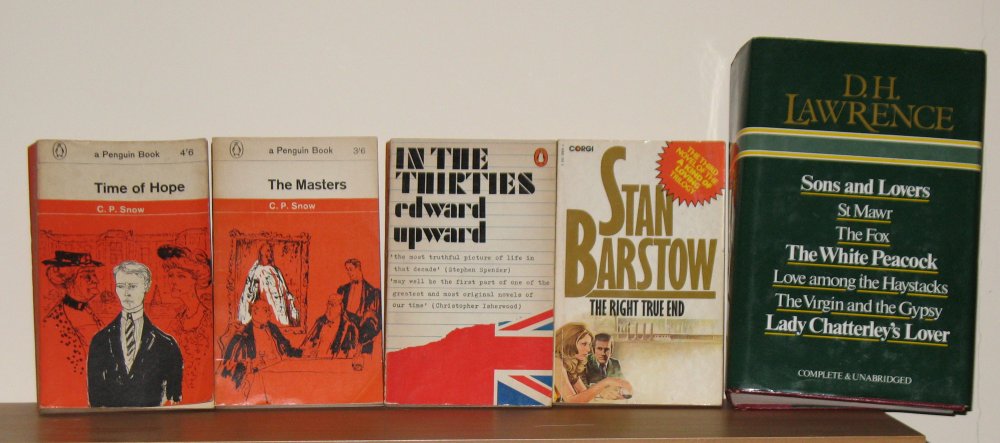
First up, it’s some British fiction, pre-war and post-war. There’s a DH Lawrence Omnibus, which contains Sons and Lovers, The White Peacock, Lady Chatterley’s Lover (which I’ve read and in fact picked as one of my top five books of 2010 here), and four novellas – ‘St Mawr’, ‘The Fox’, ‘Love Among the Haystacks’ and ‘The Virgin and the Gypsy’. To the left are the first and fifth books of CP Snow’s ten-book Strangers and Brothers series, Time of Hope and The Masters. In the middle is the first book of Edward Upward’s The Spiral Ascent trilogy, In the Thirties (you can find some lovely signed limited editions of his works at Enitharmon Press here); and the third book of Stan Barstow’s A Kind of Loving trilogy, The Right True End (now I just need to finds books one and two). I reviewed the 1982 television adaptation of A Kind of Loving for Videovista here.

From old-ish to modern: I’ve been working my way through both David Mitchell’s and Kazuo Ishiguro’s oeuvres in the last year or two, hence The Thousand Autumns of Jacob De Zoet and The Unconsoled. I’ve always enjoyed Ursula Le Guin’s fiction, and Lavinia was shortlisted for the BSFA Award last year – but lost out to China Miéville’s The City & The City… which I thought very good and so bought Kraken. Finally, Genesis by Bernard Beckett is more a novella than a novel, but various approving noises were made about it last year.

Some non-fiction: Packing for Mars by Mary Roach, which I’ve heard is very good and sounds as though it will very much appeal. I’ll be posting a review on my Space Books blog once I’ve read it. Spreading My Wings is the autobiography of Diana Barnato Walker, who during World War II was one of the pilots of the ATA and later became the first British woman to fly an aircraft at greater than the speed of sound. I bought the book as research for a story, but Walker is a remarkable woman and the book should prove a fascinating read.
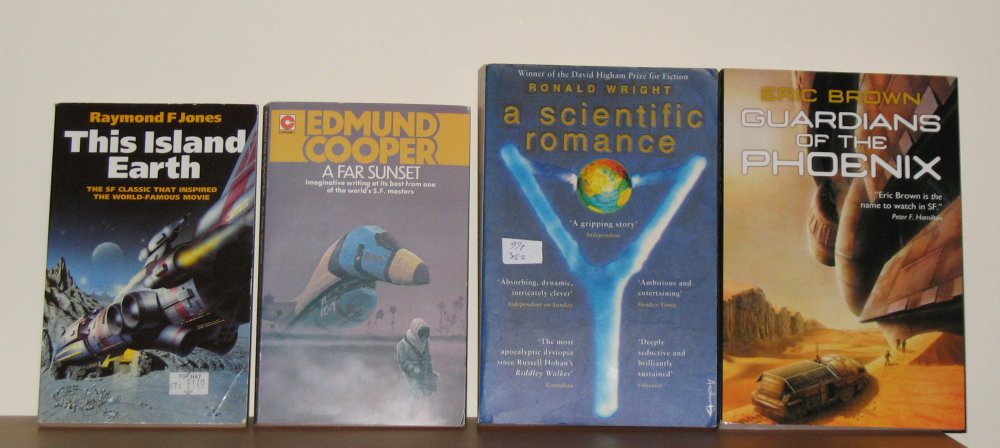
A few science fiction novels: Eric Brown’s latest, Guardians of the Phoenix; A Scientific Romance, Ronald Wright, about which I remember people talking back in the late 1990s; A Far Sunset, Edmund Cooper, which is another of my British SF Masterworks and a review will be posted here; and finally, This Island Earth by Raymond F Jones, because I wanted to know how close the 1955 film is to the source text.

These three books are by non-Anglophone writers. Death In Venice And Other Stories, a collection by Thomas Mann – I’ve seen the film, but found it a little too slow to enjoy. I’ve also seen the film adaptation of Alaa Al Aswany’s The Yacoubian Building, and thought it very good indeed. And Minaret is Leila Aboulela’s third novel; I’ve read her first, The Translator, which I thought quite good. Shame about Minaret‘s chick-lit cover, though.

Finally, some odds and sods… Regiment of Women by Thomas Berger is mainstream satire cast as science fiction, and I’ve no idea what it will be like. Gravity’s Angels is a collection by one of sf’s best short story writers, Michael Swanwick. Oasis: The Middle East Anthology of Poetry from the Forces is the first chapbook published during WWII by the Salamander Group in Cairo. It’s very hard to find in good condition. Last of all, the latest in Cinebook English translations of the adventures of Blake and Mortimer, The Voronov Plot. These are fun, but a little variable in execution. For one thing, they have a tendency to use text blocks which explain what can be seen happening in each panel. The characters were invented by Edgar P Jacobs, but the ones by other hands have proven slightly better stories.


1 Comment

The comfort of strangeness

I’m currently bogged down somewhere in the middle of Justin Cronin’s The Passage. This was one of the major genre novels of last year, with a marketing budget normally reserved only for the witless bios of A-list celebs, and subsequently praised everywhere. In The Passage, an attempt to “weaponise” human beings by infecting them with a virus from the Amazon goes horribly wrong. The twelve experimental subjects – all prisoners from various prisons’ death rows – escape, and so infect the population of the US. The virus effectively turns its victims into “vampires” – super-strong, averse to light, immortal, animalistic, and continually craving blood. That’s the victims, of course, which it does not kill. Within the space of a few decades, the US (and, by typical jingoistic extension, the world) has been reduced to a post-apocalyptic wasteland, in which “virals” run amok, and small pockets of humanity barely survive in armed camps.

The Passage is a fat book of almost 800 pages. It is also the first of a trilogy, which apparently earned a $3.75 million advance. The movie rights were also bought for $1.75 million three years before the book was published. It is also nowhere near as good as the hype would have it.

Cronin’s two previous novels were literary fiction, and The Passage certainly opens in a similar vein (no pun intended). This is the best part of the book. But the rest of the novel is a mish-mash of movie tropes. It owes almost nothing to the literary traditions of vampire fiction or apocalyptic fiction. Its aesthetic is pure Hollywood. And that, I think, explains both its success and the reason why it is not as good a novel as all that money and marketing would have you believe.

I’m all for cinematic prose. It works well in science fiction, which, in many cases, relies on visuals for its sense of wonder. But written science fiction also requires a central premise, and often privileges that at the expense of other elements of the writing. At the very least this means that the idea has to be good – it has to be thought-provoking, it has to generate wonder; it might even be unique. Some sf novels are based around a single premise; others throw out ideas on every page.

But The Passage seems to have used the cinema as a source for its genre tropes. And in that medium ideas and conceits have been so watered down by the demands of film-making, by over-exposure, by aggressive marketing, that whatever sense of wonder they may have once possessed has long since been eroded. There is nothing that is new in The Passage. True, the ideas are slickly executed. But familiarity does indeed breed contempt.

Good science fiction thrives on the new and original, on the unique angle of attack. It needs strangeness. And, by extension, so do sf readers. True, there are degrees of originality, degrees of strangeness. And readers’ thresholds for each do vary…

It occurred to me recently that genre fiction – and The Passage is perhaps a harbinger of this – is increasingly shedding strangeness. Some tropes are getting little ragged around the edges, the chrome is beginning to look a bit tarnished. For a genre which formalises conceptual inventiveness, much of it seems to prefer using recycled tropes and familiar settings – and more so now that it did in the genre’s past. Perhaps this is a consequence of science fiction colonising other media, of the genre now belonging to everyone and not just a minority community.

I’m not convinced this has resulted in a positive feedback loop. Much recent sf feels bland, and the product of a system of thought rather than of individual artists. Not all science fiction, of course. Many excellent, and very individual, novels are published each year. But maybe the genre as a whole needs more strangeness injecting into it.

As science fiction changes to be more approachable for those who consume it in other media, so it becomes less satisfying for those of us who sup direct from the well.


Leave a comment

Life slowly returns to normal…

… or something like it. It’s back to the day job after the past fortnight’s frenzied festivities. I spent Christmas in Denmark with relatives, where it was very cold and very white. Happily, Denmark is a nice country, and so much more civilised than the UK. I spent the New Year at home doing absolutely nothing. Which is the way it should be spent. I hope everyone else had an enjoyable Christmas and New Year spent in fit fashion.

But now it’s back to the day job. And, outside that, time to start thinking about writing projects for 2011 – most of which will be continuations of stuff from 2010 that I failed to finish…

It is also awards nominations time, and it is customary – apparently – to point out what a person has had published during the past year that is eligible. But I’m not going to do that. Actively touting for nominations a) makes a mockery of the award because quality becomes irrelevant, and b) is the sort of toadyish behaviour I dislike. Yes, I know: awards are just popularity contests, but quality should factor into it somewhere. My own stories from 2010? If you liked them enough to nominate them, you’ll know what they are. Myself, I shall only nominate novels and stories I’ve actually read, and that I think are worthy of nomination.

In the coming weeks I hope to finish my write-up of Gwyneth Jones’ Bold As Love Cycle, post two pieces on L Timmel Duchamp’s Marq’ssan Cycle, read and write about Doris Lessing’s Canopus in Argos Archives quintet, continue my reviews of “British SF Masterworks”, post monthly reports on my new reading project, and continue to write the sort of stuff which seems to demonstrates only that my taste in sf appears to be diverging more and more from what everyone else likes and is writing…

Let’s hope 2011 proves a good year.


5 Comments

British sf masterwork: 98.4, Christopher Hodder-Williams

For a writer of whom Radio 2 once said, “One of those writers on whom critics have already lavished almost every word of praise possible”, it’s somewhat surprising that today Christopher Hodder-Williams is pretty much forgotten. He published eleven sf novels between 1959 and 1984, and most of them are difficult to find these days.

The above Radio 2 puff comes from the back of 98.4, probably Hodder-Williams’ best-known work. It was first published in 1969, and I included it in my British SF Masterworks list here. Having said that, the book also features a quote from The Sun: “Read and be scared”…
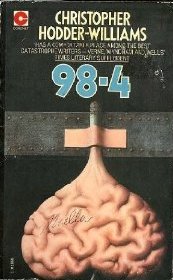
Nigel Yenn, the narrator of 98.4, handled the security at an unnamed company’s “Group Two” laboratories in Elstree. As the novel opens, he’s been fired, and dumped by his girlfriend. He is subsequently recruited by a UN agent who is suspicious of the research taking place in the company’s “Group Three”. Yenn tries quizzing his ex-colleagues at Group Two – fired employees wouldn’t be allowed back in a building these days, but apparently they were much more lax back in the 1960s – but they know nothing. Various people pop up and hand Yenn clues, including Louise, who has some connection to Group Three and its resident genius, Dr Stergen. It’s all to do with nuclear missiles guided by human brain tissue. Somehow Stergen has built an underground base near Taunton, where he can perform his vile experiments on unwilling subjects. And he has also managed to put together a small fleet of submarines to carry his “Nerve Controlled Ballistic Missiles”. Yenn does the 007-thing: first to uncover more about Stergen’s activities, and second to foil his dastardly plot to launch his NCBMs and trigger a nuclear war. The former includes boarding one of Stergen’s subs, where he discovers exactly what “Nerve Controlled” means:

Near at hand was the smallest box of all. It measured about six inches across by two inches down by four inches deep. I thought I saw something flickering on the front… the first sign of activity.

Through the rapidly thickening smoke I now saw that this box was linked by plastic strip to the other units mounted at intervals below. These were already flooded with water.

Then the fumes cleared for a second and I saw what it was that had moved on the little box.

It was a pair of human eyes. (p118)

Hodder-Williams’ prose is actually quite good. 98.4 has a breezy man-of-action tone throughout, like Ian Fleming’s but without the horrible racism and sexism. He characterises Louise, the doomed love-interest, well, although the gay villain, Michael, who helps Yenn, reads like a dated caricature. But the plot is all a bit, well, silly. It starts off plausibly enough, but then it all turns as daft as a Cubby Broccoli movie, with a secret high-tech base buried under Somerset which Yenn manages to destroy in an explosive climax. Admittedly, the central premise is quite chilling and, as the above excerpt shows, Hodder-Williams writes well enough to get that across. Unfortunately, in order to maintain suspense throughout the story, Hodder-Williams only allows Yenn to be given cryptic clues. Yenn, and hence the reader, has little idea what’s going on for much of the book, even though other characters, such as Louise and Michael, plainly do. It makes for a frustrating read in places. Still, action-man characters often require idiot plots because otherwise they’d have no deadly missions to undertake and cunning puzzles to solve…

98.4 is more like a daft techno-thriller than it is a science fiction novel. It’s a quick, fun read, and well-crafted, even if elements of the story stretch credulity somewhat. For the time-being, it’ll stay on the British SF Masterworks list… at least until I’ve read more by Hodder-Williams.


Leave a comment

The road to 2011

Although it’s the road to hell which is, they say, paved with good intentions. And I have plenty for 2011. I had a number for 2010 as well, of course – see here. And I actually managed to complete some of them.

Okay, so I failed on the reading challenge, but I did read quite a few of the authors and series I named: WG Sebald (er, no), Michel Houellebecq (yes), Kazuo Ishiguro (yes), Paul Scott (no; although I did buy several of his books); the Marq’ssan Cycle by L Timmel Duchamp (yes; well, only book 5 still to go), the Bold As Love Cycle by Gwyneth Jones (yes; see here), Destiny’s Children by Stephen Baxter (no), and Canopus in Argos: Archives by Doris Lessing (still planning to read this). Sadly, I didn’t quite manage to keep my Space Books blog up to date…

Nor did I manage to finish a story a month. I actually completed five. And a bunch of poems. On the plus-side, six of my stories saw print in 2010. And one got praised in a national newspaper, the Guardian – see here.

I made it to Fantasycon (see here and here), but not NewCon or Novacon. I didn’t quite make the gig-a-month – only 11, unfortunately. I also failed to attend either Bloodstock or Damnation, but I already have my ticket for Bloodstock 2011.

And now, for this coming year…

I have a new reading challenge – see here – so I’m hoping I to complete that. I also have a pile of books which I need to review for SFF Chronicles. And there’s my own ongoing series here of British SF Masterworks. I read Christopher Hodder-Williams’ 98.4 over Christmas, so I’ll be posting a review of that here soon. But I do have several others from the list to read and write about.

I’d like to read more classics: Lawrence, Orwell, Dickens, that sort of stuff. I also plan to finish off Ishiguro – his books, that is, as I own all but one. Likewise David Mitchell. And read more books by the following: Margaret Atwood, Michel Faber, Adam Thorpe, Toby Litt, Paul Scott, and WG Sebald. I’d like to get started on CP Snow’s Strangers and Brothers series, and I’d like to read more new science fiction as I’m usually behind the times when it comes to the new shiny. And then there’s my Space Books blog… I really do need to get back onto a regular schedule of posting stuff there. It’s not like I’m short of books, or DVDs, to review for it.

Writing a short story a month may be beyond me, but I certainly want to be more prolific. I’ll see if I can finish six in 2011. Small steps… And a novella. Oh, and poems. Not just banging up drafts and ideas on sferse, but taking some of the ones from there, polishing them and submitting them.

I don’t think I need to do anything blog-wise in 2011. I posted here frequently enough, and I’m happy with most of the content. It might have been a bit sf-heavy, but that’s not unexpected. Don’t like the template, though; I’m going to change that at some point.

Finally, I’ll continue watching the BBC adaptations of Shakespeare’s plays… which is about the nearest I can get to a resolution for films.


6 Comments

The devil is in the surface detail

Iain Banks’ latest Culture novel, Surface Detail, may be about a War in Heaven, but it is definitely not an eschatological novel.
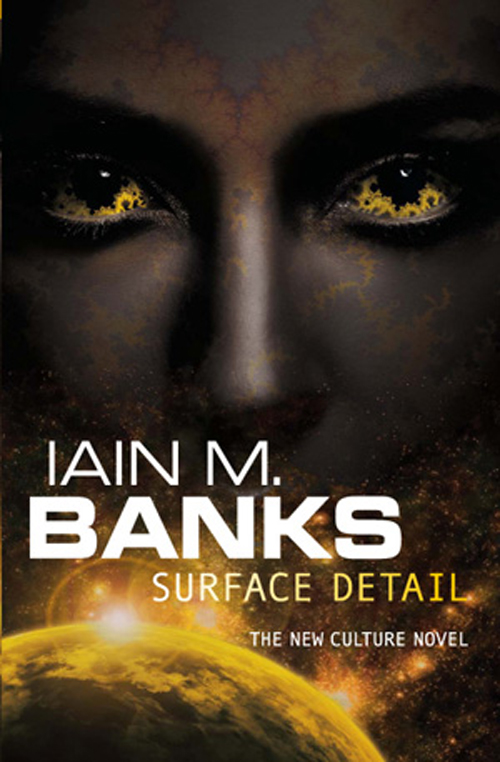
In the universe of the Culture, there are races which have transcended to a higher plane of existence, the Sublimed – via, it is assumed, technology, or great intelligence / knowledge of the secret physics of reality. There is no mention of individuals achieving a similar transformation on their deaths. In other words, there is no Heaven. And conversely, no Hell. But what doesn’t exist, or can’t be proven to exist, people will invent. And in the universe of the Culture, they invented Afterlives. These are VR worlds populated by those who have, willingly or unwillingly, ended their corporeal existence. They are heavens created by technology. And conversely, there are hells. Because not everyone deserves a reward for a life well-lived.

The War in Heaven which makes up the plot of Surface Detail is a decades-long conflict between those who believe hells are immoral and should not exist, and those who believe they are necessary. The war is being fought entirely in simulation, so there is no damage or loss of life, and both sides have agreed to abide by the result. But the anti-Hell side is losing…

Lededje Y’breq is the property of Veppers, the richest and most powerful man in the Sichultian Enablement. She is an Intagliate, which means she has been genetically engineered to display tattoos from crown to toe, and on all her internal organs, eyeballs, teeth, bones, etc. These tattoos, which indicate her status, are punishment for a family debt. Her father died owing Veppers huge amounts of money, and in Suchultian law descendants can “pay off” these debts by entering into slavery. In the first chapter, Ledeje tries to escape, but is killed in the process by Veppers. To her great surprise, she finds herself reincarnated – “revented” – on a Culture GSV. This is not a technology the Sichultians possess. Lededje determines to return to her home world to kill Veppers. She travels there aboard a Culture Picket Ship, Falling Outside The Normal Moral Constraints.

Yime Nsokyi is a member of the Culture’s Quietus, the service which deals with those inhabiting Afterlives. She is tasked with preventing Lededje. En route she detours to the Tsungarial Disk, an ancient alien artefact comprising millions of asteroid-sized factories orbiting in a ring about a gas giant. There has been a “smatter” outbreak on the Disk, a swarm of von neumann machines, and the GCU Bodhisattva aboard which she is travelling has been diverted to help meet the threat.

Vateuil is a soldier in the War in Heaven. He plays a number of parts in a number of different types of simulated wars, working his way up the chain of command. He is also a member of a conspiracy of senior officers who are intending to take the battle into the real world. A conspiracy involving Veppers and a couple of alien races plans to build millions of ships with the intention of destroying the hardware on which the hells run.

Prin is a Pavulean, an alien, who has infiltrated his race’s hell in order to blow the whistle on it. He was sent there with his fellow researcher and mate, Chay, but she failed to make it back. He presents his findings to the Pavulean government, but meets with resistance – not only are there those who don’t believe the hell exists, but there are also those who know of its existence and believe it is necessary. This last faction attempt to discredit or silence Prin.

These plot-threads all contribute to the novel’s resolution. Except… some of them don’t quite convince. Ledeje’s narrative is relatively straightforward and offers, perhaps, the most direct route from beginning to the story’s climax. Prin and Chay are there to show just how reprehensible the hells are. Vatueil is the reader’s eye on the war, and its final desperate gamble. Yime is part of the solution to preventing the attempt to bring the War in Heaven into the Real. And Veppers… Veppers knows the location of the hardware on which the hells run. But why does he wait thirty years before putting into place the plot to destroy that hardware?

But if the conspiracy which drives the plot of Surface Detail doesn’t quite convince, a more pressing problem is that the moral argument at the heart of the book is fixed. The hells in the novel are made places, and so most certainly exist. The argument then becomes over whether they should exist. But through Prin’s eyes we see just how reprehensible those hells really are. There is absolutely no ethical or moral argument which can be used to justify their existence. But Banks has a pro-Hell Pavulean senator attempt to do just that to Prin; but it’s empty blustering. Either Banks is spoofing the empty rhetoric of the right-wing when they attempt to rationalise military adventures like the invasion of Iraq. Or he is showing that there is no acceptable argument for morally repugnant acts – the pro-Hell side, in other words, comprises only lies and evasions. They have taken the moral high ground on an empty argument, and are about to win the war to cement their position. And so the anti-Hell side has to cheat, has to break a solemn agreement, because – as the Culture so often does in other novels – the right outcome justifies any means. Even, apparently, in an argument over moral and immoral activities.

If there’s one thing Banks does well in his sf novels, that’s “blow shit up”, and Surface Detail is as satisfying in that regard as the best of the Culture novels.There are also some excellent set-pieces: the Tsungarial Disk, the cavern city, and the elevator-diving spring to mind. But there also appears to be more exposition than in Surface Detail than I remember from other Culture novels.

On reflection, I think I liked Matter better. It had a more interesting structure, it had a cooler BDO, it had more interesting characters. Which is not to say that Lededje is not – she’s a typical Banksian heroine, just like the Lady Sharrow from Against a Dark Background. Veppers, unfortunately, is another pantomime villain – cf the Archimandrite Luseferous – and reads as little more than a caricature of an evil plutocrat. As for Demeisen, the avatar of Falling Outside The Normal Moral Constraints… About halfway through Surface Detail, he started to come across as Matt Smith’s Dr Who. And that just spoiled it for me.
Nor was I entirely convinced by the resolution. The treaties between the principles didn’t quite add up when scrutinised, the sudden reveal of the hells’ hardware’s location made a bit of a mockery of the decades-long conspiracy of the story, not to mention feeling like a bit of a cop-out.

And then there’s that final line… Yes, it’s a hoot. Yes, it’s going to please fans of the Culture novels. But it also feels a bit, well, unnecessary. It’s an Easter Egg, but nowhere near as substantial as the one in Matter‘s epilogue.

For a story so concerned with detail, so much so that the title uses that very word, Surface Detail seems to perversely only really succeed when focused on the big picture. Like a Mandelbrot, it makes a pretty picture; but get too close and those fractal edges start to blur and appear indistinct. It is a Banksian space opera, with all that description entails. It is a fun read. But its story also pretends to a weight it does not actually possess, and that I found disappointing.


5 Comments

That was the year that was

I said last year that 2009 was a year to remember for reasons both good and bad, but 2010 proved to be both a little better and in one respect the worst year ever. My father died of cancer in September after two months of illness. I miss him. My writing achievements mean little in the face of that. Especially since my father supported and enjoyed my writing – and yet never saw my story from Catastrophia praised in a national newspaper.

For the record, six of my stories saw print in 2010 – one each in Jupiter, Catastrophia, New Horizons, Alt Hist, and two in M-Brane SF. I also had my first poem published, also in Jupiter (it was actually a quartet of poems).

Books
During 2010 (to date), I read 170 books, 42% of which were science fiction, 18% were literary fiction, and 6% I read to review on my Space Books blog. I reviewed seven books for Interzone, one for Vector, and six for SFF Chronicles. I managed to curtail my book purchases this year, but I then decided to browse local charity shops on a regular basis… As a result, I spent less on books in 2010, but seem to have bought almost as many as I have in previous years. Oh well.

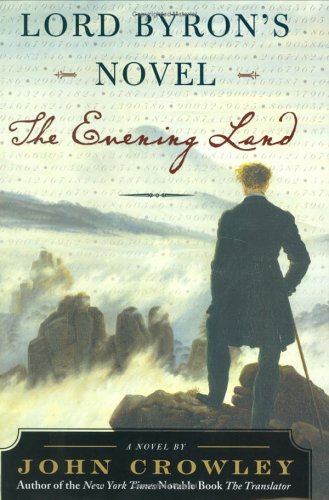
Lord Byron’s Novel: The Evening Land, John Crowley (2005), I picked as one of my top five books of the first half 2010, and wrote then that I expected it to make it onto my end of the year top five. And so it has. It is a cleverly-plotted historical detective novel, an astonishing piece of literary impersonation, and it is, as you’d expect from Crowley, beautifully written. Admittedly, I’m no expert on Byron – his poetry or his life – but Crowley certainly convinced me. After the disappointment that was The Translator, this is Crowley on top form.

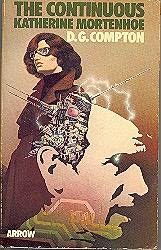
The Continuous Katherine Mortenhoe, DG Compton (1974). While I’ve read several of Compton’s novels over the years, 2010 was the year I came to really appreciate his fiction and added him to my list of “collectible” authors. The Continuous Katherine Mortenhoe is often considered the best of his novels, and it’s certainly true that it’s very, very good. It’s perhaps a little dated these days but, for me, that was part of its charm – I love its 1970s aesthetic. It’s a book that’s wonderfully sardonic, with a pair of expertly-drawn characters, and prose that’s a joy to read. I wrote about it here. I even wrote about the film adaptation of it, by Bertrand Tavernier, here.

Lady Chatterley’s Lover, DH Lawrence (1928). My father was a big fan of DH Lawrence and often tried to persuade me to read his books. But it was only this year that I picked one up… and was immediately captivated. I’ve since bought an omnibus of two novels and three novellas, a short story collection and a poetry collection (from charity shops, of course). I plan to read more. There’s little I need to say about Lady Chatterley’s Lover as most people know of the book – although, to be fair, what they think they know of it may not be what the book is actually about. The dialogue has not aged well, but some of the descriptive prose is lovely writing, and the character studies of Constance and Mellors are superbly done. Lady Chatterley’s Lover, incidentally, was another book from my top five for the first half of the year.

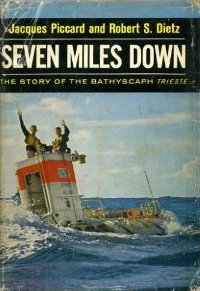
Seven Miles Down, Jacques Piccard and Robert S Dietz (1961). This year, 2010, was the fiftieth anniversary of the only manned descent to the deepest part of the ocean, Challenger Deep in the Mariana Trench. And Seven Miles Down is the only book written specifically about that descent. It makes it into my top five because it’s a fascinating subject, and because I think Jacques Piccard and Don Walsh’s achievement should be honoured. I wrote about it here.

Troy, Simon Brown (2006). This is the third book from my halfway through the year list to make it into this final top five. Which, on reflection, doesn’t say much for my choices in reading matter during the latter half of 2010. To be fair, I did read a lot of good books, but none struck me as good enough to make this list. Troy, a collection of genre and non-genre stories based on characters from the Trojan Wars, kept its place because the collection’s theme is cleverly-handled, and the stories are varied and beautifully written. I’d like to read more by Brown.

Honourable mentions: the Bold as Love Cycle, Gwyneth Jones (the first quintet of my summer reading project; see here; more to follow soon); the Marq’ssan Cycle, L Timmel Duchamp (the second quintet of my summer reading project; write-up to follow soon-ish); The City & The City, China Miéville (multi-award winner with fascinating premise; my review here); The White Bird of Kinship trilogy, Richard Cowper (thoughtful 1970s sf); The Desert King, David Howarth (a biography of ibn Saud; sort of like Dune without the worms…); One Giant Leap, Piers Bizony (the best of the books celebrating the 40th anniversary of Apollo 11; my review here); Yellow Blue Tibia, Adam Roberts (loved the first half, but not so keen on the second); Surface Detail, Iain M Banks (a new Culture novel; enough said).
Films
Each month, I receive six rental DVDs from LoveFilm and two or three to review for VideoVista, so I’ve not bought as many as I have done in past years. I still managed to watch 210 films or seasons of television series, however, some of which were re-watches. Among the TV series I watched were Fringe, Mad Men, Star Trek: The Next Generation, and Flash Gordon.

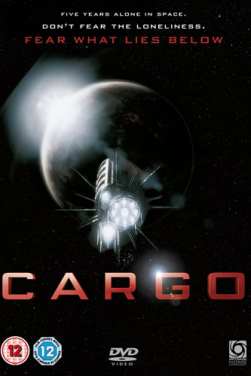
Cargo, dir. Ivan Engler & Ralph Etter (2009). I know some people weren’t as impressed with this film as I was, but I thought it the best sf film of the year. It should have been on the Hugo Award shortlist. Okay, so it borrows heavily from other well-known sf films – or, perhaps, more charitably: it deploys tropes originally used in other well-known sf films. But it uses them cleverly, and they are all germane to the plot. The special effects and production design are also notably good. I reviewed Cargo for the Zone here, and loved it so much I went and bought a proper copy of the DVD.
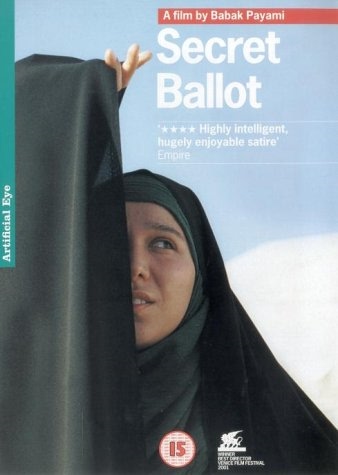
Secret Ballot, dir. Babak Payami (2001), was, I think, the first Iranian film I’d ever watched, and I thoroughly enjoyed its deadpan black humour. It’s similar in many respects to Elia Suleiman’s Divine Intervention, one of my favourite films, so perhaps I was predisposed to like it. It made my halfway through the year list, and confidently remained in place for the end of year top five. In it, a young woman travels around a remote island off the coast of Iran, trying to persuade people to vote in the upcoming election. She’s accompanied by a laconic soldier who has seen it all before. It’s a very funny film.
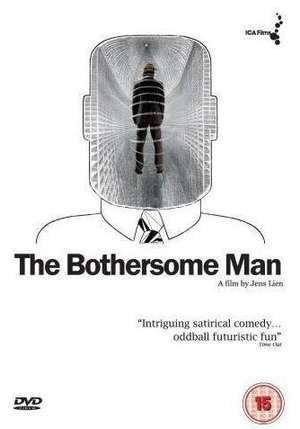
The Bothersome Man, dir. Jens Lien (2006), is another film that made the halfway through the year list. It’s also funny. A man commits suicide and finds himself in a city in which everything is bland and comfortable and washed-out. Everybody is nice to him, but no one seems to care about anything. While there may be something utopian in this, it’s also clearly hellish. Or, at the very least, purgatorial. So he tries to escape. His first attempt, a re-enactment of his suicide, is hilarious. Eventually, he thinks he may have found a route out. But, of course, films such as this can never end happily. It’s not Hollywood, after all.

For All Mankind, dir. Al Reinert (1989). I watched a number of documentaries about the Apollo programme during 2010, but For All Mankind was the best by quite a margin. And Eureka! have done it proud with their DVD release. Reinert personally chose, and had restored, the NASA footage he used, and he was careful to chose footage that had not been seen before. The end result is a documentary which gives a very real feel for the programme, for its accomplishments and for those involved in it – especially the astronauts. Some of the film taken by the Apollo astronauts while in space is, more by accident than design, quite beautiful. If you watch only one documentary about those mad years during which the US put twelve men on the Moon, make it For All Mankind.

There’s Always Tomorrow, dir. Douglas Sirk (1956). I suppose it’s no surprise to find a Sirk film on this list. He is, after all, one of my favourite directors. Unfortunately, few of his films are available on DVD – and of those, Eureka! have done an excellent job on their releases of There’s Always Tomorrow and A Time to Love and a Time to Die. But the former just pips the latter. Fred MacMurray plays a toy company owner who tries to inject some excitement into his solidly middle-class life when he is visited by ex-employee Barbara Stanwyck, now independent, successful and glamorous . MacMurray’s family has become a prison, and he is desperate for release. But it is not to be. The film’s final scene, after Stanwyck has turned him down, as he leaves for work and his kids wish him well through the banisters of the staircase… That final shot of MacMurray seen through those bars is a perfect illustration of why I rate Sirk’s films so highly.

Honourable mentions: The White Ribbon (Michael Haneke remains one of the most interesting directors currently making films), King Lear (with Michael Hordern in the title role; the best of the six BBC adaptations of Shakespeare’s plays I watched during 2010), Mad Men season one (has been praised by many; while good, I often found its heavy-handed 1960s sexism and racism hard to take); Frozen Land (grim, yet gripping and blackly humorous, film from Finland).
Albums
Several of my favourite bands released albums in 2010, and some of them even toured to UK too. I also discovered several new bands. I saw 21 bands perform live, and bought 27 CDs – 4 of them as limited edition CD/T-shirt deals.

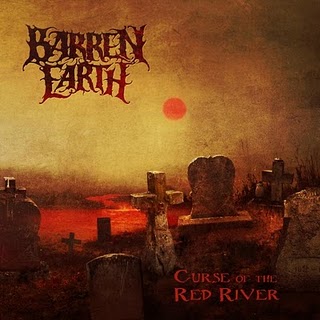
Curse of the Red River, Barren Earth (2010), is the debut album by a Finnish metal supergroup side-project, featuring members of Amorphis, Moonsorrow and Kreator. The music is heavy doom/death metal with 1970s proggy bits – sort of like Opeth, but heavier (if that’s possible), and with strange, almost hippy-ish acoustic sections (there’s a flute in there somewhere, for example). It’s also quite brilliant. This one went on the top five the first time I listened to it. It’s about time they toured the UK. (Band website).

Vine, The Man-Eating Tree (2010), is another Finnish supergroup, as it contains the drummer from Sentenced, the guitarist from Poisonblack, the bass player from Reflexion, the keyboards player from Embraze, and the vocalist from Fall of the Leafe. The latter, in fact, Tuomas Tuominen, is the reason I’d been looking forward to this debut album – Fall of the Leafe was one of my favourite bands (they disbanded a couple of years ago), and Tuominen has a very distinctive voice. Vine includes a metal cover of The Moody Blues’ ‘Nights in White Satin’, which shouldn’t work, but actually does. Amazingly well, in fact. (Band website).

We Are The Void, Dark Tranquillity (2010), is the latest album by a band that has been a favourite of mine for many years. I’d describe it as a return to form, except they’ve never been off-form. Nonetheless, I was impressed when I heard the first track they released from the album (see here), with its deliciously creepy riff, and the rest of the album is just as good. Definitely one of their best albums of recent years. (Band website).

Escaping The Abyss, Fornost Arnor (2009). I saw an ad for this in Zero Tolerance magazine, and the description intrigued me enough to buy a copy. It’s Fornost Arnor’s debut album and was released on their own label. It’s an atmospheric mixture of black and progress metal, with occasional acoustic parts. It’s exactly the sort of complex, varied and technically-proficient metal that I really like. They’re currently recording their second album. I’m looking forward to hearing it. Incidentally, this is the second year running a self-released album has made it into my top five – last year, it was DesolatioN’s Lexicon V. (Band’s MySpace page).

The Never Ending Way of Orwarrior, Orphaned Land (2010), was a long-awaited album. Orphaned Land’s last release, the excellent Mabool, appeared in 2004, and they’ve been promising this follow-up ever since. It finally arrived this year, and it was worth the wait. I saw Orphaned Land live this year for the first time too, with Amorphis and Ghost Brigade, and they were easily the best act of the night. (Band website).

Honourable mentions: Engines of Armageddon’s self-released debut album; The Light in Which We All Burn, Laethora; Persistence, Crystalic (also self-released); Encounter the Monolith, Martriden.


16 Comments

A challenge found, possibly

I received lots of suggestions to my request for a reading challenge for 2011 – both here on my blog, on LibraryThing, and on Twitter. So, ta very much all those who commented. But I think I’ve decided what I’m going to do…

Torque Control’s Women in SF Week has inspired me to read twelve science fiction novels by women writers during 2011 as my reading challenge. I’ve tentatively identified the dozen novels I’m going to read. I didn’t want to pick only those published since 2001, although many are from the last decade. Nor would I limit myself to books published in the UK. But I did want my list to be comprise only authors I’ve not read before (bar one or two slight cheats).

The twelve books go like this:

I already own some of the books on this list – Winterlong, Winterstrike, The Steerswoman, and Dark Space – and so it gives me the perfect excuse to read them. It’s also a nicely varied list, covering several different types of sf. One or two authors I might have read other works by them before. I have a vague memory of reading an Octavia Butler novel when I was at school, and I think I’ve read one by Melissa Scott many years ago too. I’ve certainly read short fiction by one or two of those on the list, but that doesn’t matter.

If anyone has any must read suggestions for the list, I’m prepared to bump one or two of my choices.