It Doesn't Have To Be Right…

… it just has to sound plausible


1 Comment

Reading diary 2018, #11

Several years ago, I came up with a cunning plan. I had so many books, I found it hard to choose what to read next. So I put together a reading plan: a list of ten books I would read each month. But ten proved a bit too optimistic, so after a couple of years I reduced it to eight a month. And then again to six… So, obviously, it’s not exactly worked out in practice. Chiefly because the book you pick up next depends as much on what you feel like reading as it does what you want to read. I mean, there are loads of books I want to read, like Remembrance of things past, but usually Swann’s Way feels like it’s going to be too much like hard work, so I never pick it up… So all five books been languishing on my bookshelves for years. Oh well.

The Buried Giant, Kazuo Ishiguro (2015, UK). Ishiguro is one of the UK’s literary treasures – and I’m not the only one who thinks so: last year he was awarded the Nobel, and this year he was knighted. Ishiguro has never been afraid to explore genre territory, indeed his best-known novel these days is probably Never Let Me Go, which has an explicitly science-fictional idea at its core. And The Buried Giant is, by any definition of the term, fantasy. It’s sort of ninth century historical fiction, but it’s also about the Matter of Britain and it makes reference to a number of fantasy tropes. I had forgotten the commentary which came out after the book first appeared three years ago, so I pretty much came to it cold (although I’m entirely familiar with Ishiguro’s oeuvre, having read all of the books prior to this one). Anyway, I’d forgotten the genre complaints against the book, but sort of know what to expect given the other Ishiguro books I’d read. And in the latter respect, it did not disappoint. Axl and Beatrice are Britons, old Britons, seeing out the last of their years in a small Briton village, when they decide to go visit their son in a nearby village. They can’t remember exactly which village, but suppose they’ll figure it out as they travel. In fact, they’ve noticed an increasing forgetfulness on everyone’s part, and they don’t like how it has changed things. Of course, it’s not just the forgetfulness brought on my old age, it’s something endemic to everyone in post-Arthurian Britain. En route, they are joined by a Saxon warrior and a Briton boy believed to have been “infected” after being abducted by ogres and who has been rejected by his village. They also bump into Sir Gawain several times. It’s all very cleverly done. The forgetfulness is real, a magic spell laid on the land by a dragon, and it’s a consequence of the last great battle between the Britons, led by Arthur, and the Saxons. Unfortunately, Ishiguro takes his time getting to the core of the novel, and the first third, in which Axl and Beatrice eventually decided to travel, and then walk several miles to the nearest Saxon village, drag badly. But once Gawain appears on the scene, and the central premise begins to be revealed in hints and clues and glimpses, then things begin to pick up. I finished The Buried Giant a great deal more than I had done halfway in. And, to be honest, I couldn’t really give a fuck about whether it was genre or not. It was beautifully-written and cleverly done, and if it felt a little old-fashioned genre-wise in places that suited the material. I wasn’t so sure on the authorial interventions – or rather, the conceit which presented the narrative as told to the reader by Ishiguro, even though I’m a fan of breaking the fourth wall, as it felt unnecessary and added nothing to the story. Everything in a novel should be part of the story. I thought The Buried Giant, despite its longeurs, a better work than Never Let Me Go.

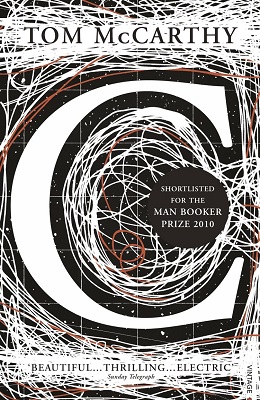
C, Tom McCarthy (2010, UK). I forget why I bought this, I think it might have been recommended by Jonathan McCalmont, but it sat on my bookshelves for several years, until I decided to take it with me to Sweden to read during Swecon. In the event, I finished The Buried Giant on the Saturday of the con, but didn’t finish C until I’d returned to the UK on the Monday. Chiefly because I found its opening section a bit hard-going. But by the time I was settled on the plane from Arlanda to Manchester, I’d got past that and remained engrossed for the entirety of the flight from Sweden to the UK. The story concerns a young man, Serge Carrefax, who is obsessed with signals. The opening section of the novel details his childhood, with his inventor father, who is working on wireless communication, and his deaf mother, and it was, to be honest, somewhat over-detailed and dull. I like detailed fiction, but the early chapters of C seemed to be sacrificing readability for detail. But then Carrefax’s brilliant sister dies – and, to be honest, I could see no reason why this needed to happen narratively – and the story begins to pick up. Carrefax spends several months at an Austrian spa. He then enlists as an observer in the Royal Flying Corps during WWI – and this section is especially good. And finally, he is sent out to Egypt to help set up a secret British wireless system. It’s when Carrefax is doing things, rather than reacting to things, that C is at its most interesting. There are some parts of the story which seem to serve no narrative purpose – not just the tragic death of Carrefax’s sister, but also his affair with a masseuse in… um, I no longer have the book and I can’t find a single review online which mentions the town, although I do remember that it was Central European and later had links to the Nazi regime. Much, incidentally, in those reviews is made of McCarthy’s cleverness in covering such a wide range of subjects in such detail. Er, that’s what research is for. I like a lot of detail myself, but the cleverness lies in making it palatable not in its presence. And if there’s one thing about C, much as I enjoyed it, that argued against cleverness, it was the lack of narrative cohesion. That is, it must be said a philosophy all its own, but C presented no evidence it adhered to it, no argument that it followed it. But then one of the advantages of not imposing a pattern is that people will find one anyway. I thought C a well-written novel on a prose level, and fascinating, but for me it failed at everything it claimed to want to do.

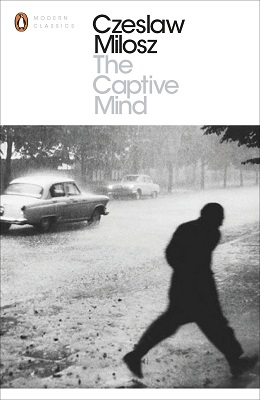
The Captive Mind, Czesław Miłosz (1952, Poland). I bought this last year in an effort to widen my reading. I hadn’t realised when I purchased it that it wasn’t fiction. It’s a political diatribe written by someone who survived both WWII and the Soviet takeover of Poland, but managed to resist the blandishments of both the Underground during WWII and the Soviet occupiers afterwards. As a writer, an intellectual, with acceptable political credentials, he ended up as cultural attaché in Washington but, disgusted by the responses of his peers to the new regime, he chose to exile himself. Miłosz first points out that intellectuals were a peculiar class of their own in Central and East European countries, and this particularly applied to writers, one that had no equivalent in Western European – or American – societies. After discussing “ketman”, which seems to be a a misunderstanding of an historical Islamic term (now known as “taqiya”), Miłosz describes four writers of his acquaintance and their response to Soviet occupation – and this is where The Captive Mind comes into its own. I’ve no idea who the writers are he describes, although it probably isn’t difficult to figure out, but his dissection of their character and ambitions in light of Polish history during and after WWII is fascinating stuff. I don’t think for an instant that The Captive Mind is a warning against “totalitarian culture” as the book is often described. It is specific to a time and place, and I suspect some of the tactics described by Miłosz are triggered more by an institutional drive for survival than by an y kind of coherent political thought. The Captive Mind was intended to make for scary reading, but its teeth have long since been pulled – first by Solidarność, then by glasnost, although both of course were the end result of long and dangerous campaigns. On the other hand, in 2018 we seem to be staring down the throat of full-blown fascism, despite everything our parents and grandparents fought against last century, despite the clear benefits to all and sundry that progressivism and regulated economies bring… The Captive Mind is an important historical document, but its remit is too narrow, its lessons are too focused, and the passage of time has rendered its general sense of alarm both moot and badly aimed. However. Worth reading, if you’re interested in the subject.

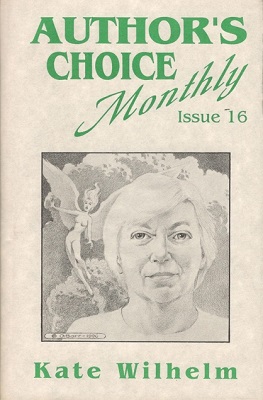
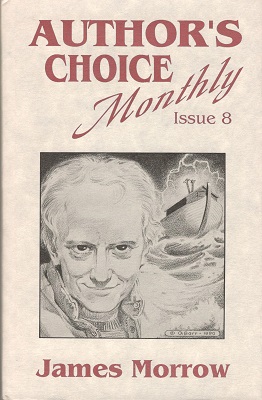
Author’s Choice Monthly 8: Swatting at the Cosmos, James Morrow (1990, USA). I think I read a novel by Morrow back in the late 1980s or early 1990s, but I can’t be sure – actually I can: I record everything I read, FFS, and have done since 1991: I read his City of Truth on 10 December 1992 and The Wine of Violence on 29 March 1995 (at least, that’s the dates I finished reading those books). He’s certainly a name I’ve been aware of, but not one I’ve made an effort to read his books. I’m not sure why. From the material in this collection, I think I’d like his fiction – most of the stories in this short collection interrogate religion in a way which I wholly approve. The opening story, ‘The Assemblage of Kristin’, is especially  good, in which the recipients of body parts from the deceased Kristin meet up once a year to indulge in Kristin’s fancies, although the so-called science in this science fiction is almost non-existent. Other stories in the collection recast Biblical stories – the Deluge, the Tower, the Covenant – with varying degrees of success (I seem to remember that least as the most successful). The whole point of the Author’s Choice Monthly series, as I understand it, is that the chosen authors selected what they felt were their best material. That’s  almost impossible; and probably changes on a daily basis. Some tried to game the choice by selecting stories to a theme. This is the best of those themed selection collections I’ve so far come across in the series. so perhaps I should read more by Morrow. A short story collection, perhaps.

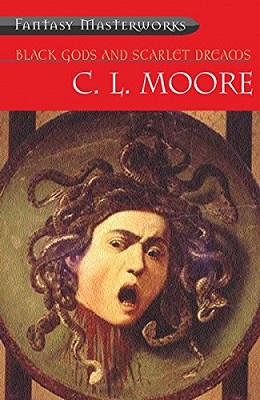
Fantasy Masterwork 31: Black Gods and Scarlet Dreams, CL Moore (2002, USA). I know more about Moore than I know of her fiction, which has to date meant only a couple of short stories and her novel Judgment Night. Now, I rate Judgment Night highly, it is a superior space opera, especially for its time. This Fantasy Masterwork, however, gathers together all the Jirel of Joiry stories and all the Northwest Smith stories… and they do not present well in such close proximity. The first Jirel story, ‘Jirel of Joiry’, and also Moore’s first professional sale, is a great piece of work, but her follow-ups are somewhat formulaic and not to Jirel’s benefit. The same is true of Northwest Smith – ‘Shambleau’ has real mythic overtones, but the other NWS stories are just the same thing over and over again. And the thing that stands out the most is that the heroes have little or no agency: they get themselves into scrapes and they have to be rescued, sometimes by men, sometimes by women, but they never win through because of their own actions. Or, at least, not entirely. There are a couple of NWS stories where his ineluctable masculine cussedness sees him overcome the evil god of the week, but there’s usually a henchman (or woman) or ally who is instrumental in his escape. Jirel needs help often as not, which is not true in the story in which she first appears. Partly this is because both characters’ antagonists are super-powerful gods from other dimensions, and there’s no way either could plausibly defeat them without some help. But when hero/heroine finds themselves in Yet Another Evil Dimension and they are Powerless, then having someone give them a close, or appear at the last minute with a flame-pistol, does tarnish their appeal. It’s not like they’re intended to be straight-up heroes. Northwest Smith is after all a villain – although he’s never presented as such, it’s told to the reader. Moore clearly found a formula that worked, and stuck to it. It’s not like there’s a huge amount of invention in the world-building either – this is the Solar System as imagined by way of Leigh Brackett and Robert Howard. It feels like a common playground. Moore was an important writer in the early days of genre, and she wrote some important historical works, but I have to wonder if she’s being remembered for the wrong things because the stories in this volume position as no better than an average pulp writer, and I know she was better that that from Judgment Night.

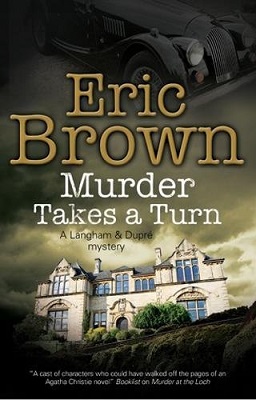
Murder Takes a Turn, Eric Brown (2018, UK). This is the fifth book in Brown’s 1950s-set crime novels featuring thriller writer/private detective Don Langham, and his fiancée now wife and literary agent Maria Dupré. Setting these novels in the 1950s was a cunning move, as it means all the modern technology that “breaks” crime fiction does not exist, like mobile phones or the internet. This is old school crime fiction, and deliberately so. And yet, Brown manages to give Langham and Dupré sensibilities that would not be out of place in twenty-first century Britain (well, the Remain part of twenty-first century Britain, that is). In this instalment, a critically-acclaimed writer invites half a dozen people he had wronged in the past to his Cornish pile with a promise of making amends. One of those is Dupré’s partner in the literary agency, Charles Elder, and he persuades Dupré and Langham to accompany him. Which is quite handy as Langham has been hired by the writer’s daughter to investigate the writer’s new business manager. Needless to say, once all are on site, the writer is murdered… but everyone apparently has an alibi… I had thought the writer, and his travel-writer brother, were based on the Durrells, but Eric tells me the writer figure was actually inspired by John Fowles. Murder Takes a Turn – and the title is a bit of a spoiler – is much like the previous books in the series, although it does have a tendency to reveal information to the reader before it’s revealed to the principles, so you wonder why they’re so slow to spot clues… But the two leads are likeable and well-drawn, and the supporting cast are equally well-drawn, and if sometimes it doesn’t always feel quite like the 1950s (which I say only having read fiction written then), it does at least avoid sensibilities which would offend in the twenty-first century. These books are quick reads, but they’re fun with it, and they’re as satisfying as murder mysteries as they are 1950s-set fiction.

1001 Books You Must Read Before You Die count: 131

Leave a comment

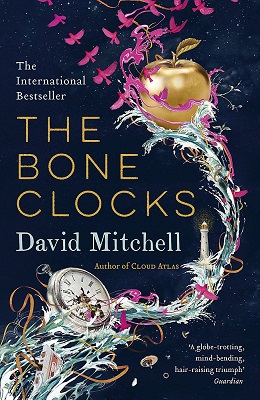
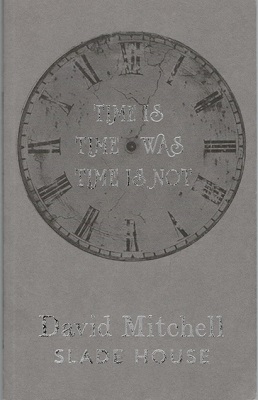
The Bone Clocks and Slade House, David Mitchell

Despite being shortlisted twice for the Booker Prize, David Mitchell’s novels are not like most other literary fiction novels for two reasons: first, characters from one book often appear in other books; and secondly, many of his novels feature genre tropes and situations. In his debut, Ghostwritten (1999), one of the narrators proves to be a disembodied spirit who can move from body. Cloud Atlas (2004), has two of its six sections set in the future: one a near-future dystopian Korea, the other a post-apocalyptic Hawaii. While it’s not unusual for literary fiction authors to visit genre shores, Mitchell has shown a greater appreciation of, and a better facility with, gene tropes than most of his peers. But then he is a fan and has publicly said as much. And in The Bone Clocks, and its pendant novel, Slade House, he has for the first time told an actual genre story, albeit in the language of literary fiction.

The Bone Clocks is structured as six novellas, most of which are told from the point of view of Holly Sykes. The novel opens in 1984, Holly is a teenager, grief-stricken at the recent death of her younger brother. She decides to run away from home, and makes it halfway across Kent before running afoul of the story’s villains. These villains harken back to earlier novels by Mitchell, particularly The Thousand Autumns of Jacob de Zoet (2010). That novel introduced the idea of secret immortals amongst us, and it is a war between two such groups which forms the backbone of The Bone Clocks. (You wait for a novel about secret immortals, and three come along at once: as well as The Bone Clocks, 2014 also saw the publication of Claire North’s The First Fifteen Lives of Harry August, while Kate Atkinson’s Life After Life appeared in 2013.) The Horologists are body-hopping serial reincarnators. Their enemies, however, the Anchorites of the Chapel of the Dusk of the Blind Cathar, “decant” souls in order to extend their lives. The process is fatal to the decanted souls. Over the course of The Bone Clocks Holly has a number of run-ins with the Anchorites, beginning with that trip across Kent as a fifteen-year-old, and finishing in a post-Crash Ireland in 2043.

Unlike Cloud Atlas, the six sections of The Bone Clocks are not nested, but follow on chronologically one from the other. Like that earlier novel, however, they also display an excellent control of voice. The Bone Clocks is Holly Sykes’s story and she’s an engaging and convincing character. Having said that, the Anchorites are a bit pantomime, enfant terrible literateur Crispin Hershey initially reads too much like a pastiche of a well-known UK author but soon rounds out, and the immortal Marinus never quite convinces. But these are minor gripes. The Bone Clocks handles its settings with impressive assurance and, more than any other of Mitchell’s novels, this is an insightful book.

Mitchell has said he intended each section of the novel to be a different genre – such as, 1980s social realism, war reportage, fantasy and dystopia, among others. It’s a given most of the really interesting genre fiction is being written in the area where genres meet, and Mitchell makes good use of the interfaces – the sudden irruption of fantasy into Holly’s adventures in Thatcherite Britain creates a shockingly effective introduction of The Bone Clocks’ underlying fantastical plot. In fact, those sections featuring this violent introduction of genre into literary fiction actually work better than those sections which are pure genre. Perhaps it’s a consequence of expectation; perhaps it’s simply the stark contrast between the two modes.

Slade House, on the other hand, makes no secret of its melding of genre and non-genre, although it tries to wrongfoot the reader by presenting its genre elements as “dream-like”. If the novel were a film or television series, it would be called a “spin-off”. Less than half the size of The Bone Clocks, Slade House echoes that novel’s multi-part structure – each set at nine-year intervals from 1979 to 2015 – but takes place entirely in and around the eponymous residence. Each section is told from the point of view of a different person. The eponymous house is home to Norah and Jonah Grayer who, while not associated with The Bone Clocks’ Anchorites, have been using a similar method to extend their lives. Slade House’s narrators are the pairs’ victims.

In each section, the narrator investigates Slade Alley (for a variety of reasons), discovers a small iron door – an interdimensional “Aperture” – which gives entry to Slade House’s grounds, is initially taken in by the illusion woven by the Grayer twins… and is then consumed by them. This act is usually presaged by the sight of a portrait of the narrator at the end of a line of portraits on the main staircase – which is, to be honest, a somewhat cheesy horror film cliché. Slade House presents enough detail to invoke the year in which each section is set, but given that Slade House itself is timeless, this makes for an odd disconnect, often making the detail feel superfluous. Nor is it helped by the last but one section – 2006 – consisting chiefly of a history lesson of Norah and Jonah Grayer, and an explanation of the workings of the house and its grounds. It comes as no surprise to learn that the final section, set in 2015, is about the defeat of the Grayer twins – after the explanation, where else could the narrative go?

Fans of Mitchell’s fiction will have fun spotting characters from other of his novels, a number of which make an appearance in Slade House (as indeed do several in The Bone Clocks). I’ve yet to be convinced this actually adds value, given that the “shared universe” in which all of Mitchell’s novels are set is not a shared universe as the term is understood in genre fiction, but a much less rigorous use of the technique. In other words, they feel more like “Easter eggs” than a structural part of each book’s universe.

Unlike some genre fans, I have no problem with literary fiction authors “dabbling” (not my choice of word) in science fiction and fantasy. On the contrary, the more the merrier – and the lack of knowledge of genre traditions and history can actually prove an advantage to a writer. True, the results often feel a little old-fashioned to veteran readers of genre fiction, and a lack of confidence in deploying genre tropes can lead to unnecessary and clumsy exposition… David Mitchell, however, is a genre fan, he knows what he’s doing. And it shows.

Mitchell also knows what he’s doing when it comes to non-genre fiction. Genre writers make few concessions to their readers – they assume they know how to parse their stories and how genre tropes operate. They also trust their readers to understand the need for exposition. But there’s a limit. Up to this point, the writer needs to explain; and no further. Literary writers usually miscalculate this point and feel a need to explain those things which genre readers either already know about or are happy to take on trust. Likely this is because such writers are not entirely confident with how genre stories and tropes work, and they’re also unsure their readers will understand.

It’s clear Mitchell trusts his readers, both non-genre and genre – evident not only from his oeuvre, but also from his level of success. We need more writers like him. Both inside and outside the genre.

This review originally appeared in Interzone #261, November-December 2015.


1 Comment

Reading diary 2018, #10

The reading has been a bit all over the place for the past few months – Clarke Award shortlist reading notwithstanding (see here) – and pretty much comes down to me grabbing whatever book looks like it won’t be too taxing. And that’s despite having half a dozen reading lists from which to choose… Oh well. And I really ought to start reading more classics.

Unlocking the Air, Ursula K Le Guin (1996, USA). This is a collection of Le Guin’s mainstream stories, and though it pains me to say it, I think her genre fiction is much better. Which is not to say her mainstream stories are bad, because they’re extremely well-crafted. And it’s not as though I only appreciate genre stories… because I find a lot of current genre short fiction unreadable, and I like the mainstream short fiction of Helen Simpson, Malcolm Lowry, Rose Tremain, Karen Blixen, and many others. But I didn’t much enjoy another of Le Guin’s mainstream collections, Orsinian Tales, which are linked stories set in an invented town. There is no such linkage in Unlocking the Air. The stories originally appeared in a variety of publications, from The New Yorker to Playboy to, er, Asimov’s, between 1982 and 1995. The one from Asimov’s, ‘Ether, OR’, is borderline genre. The title refers to a town in Oregon, which seems to change location at random intervals, on the coast some times, inland at others; and the story is told from the viewpoints of a number of the residents of the town. Another story is pure mainstream and recounts a daughter taking her mother to an abortion clinic. The stories are feminist, which comes as no surprise; most are told from a female point of view, although not all: ‘The Professor’s Houses’ is about a male professor and the doll house he works on ostensibly for his daughter. The collection all feels very… worthy – well-written stories making important points, but just a bit dull. Ah well.

Author’s Choice Monthly 9: Heroines, James Patrick Kelly (1990, USA). I don’t know if I’ve ever read any of Kelly’s fiction before. None of his novels, certainly. But didn’t he write some stories about toy dinosaurs or something – was that him? They were quite good, I seem to recall. But then, they might not have been by him. Anyway, the four stories (it also includes three poems) in this collection were deliberately chosen, Kelly explains in his introduction, because they have female protagonists. He points out that although there were many women writing genre fiction in the first half of last century, not all of whom disguised their gender, but almost all of whom wrote stories and novels with male protagonists. This isn’t actually true, of course, and though Kelly namechecks CL Moore as one who didn’t – he mentions ‘No Woman Born’ – there were plenty who used female protagonists. Anyway, Kelly presents these stories in honour of those writers. In ‘The Curlest Month’, a divorcée has an affair with her therapist, trying to recover from the death of her little daughter, and who seems to watch to contact her… In ‘Faith’, a single mother puts an ad in the paper and meets a man who can talk to plants. ‘Crow’ is set after some sort of apocalypse – an epidemic, IIRC – in which a young boy and girl meet a woman who plans to use an old ICBM to reach the Moon. She’s clearly deluded. Of the books in this series I’ve read so far, this is definitely one of the stronger ones. I’m not going to dash out and hunt down something else to read by Kelly, but neither will I go out of my way to avoid his fiction. Sometimes, that’s enough.

Summerland, Hannu Rajaniemi (2018, UK). With the disaster that is Brexit looming over the UK, some popular culture has been harkening back to those rose-tinted good old days when we all pulled together like in, er, World War II… Er, WTF? How exactly does WWII map onto Brexit? Anyway, the fact Brexit is bending UK culture, as well as the economy, out of shape is a given, but it seems to have manifested a bit oddly in genre fiction, Yes, I know Rajaniemi is Finnish, but he’s been a resident of the UK for a number of years, and his career has been chiefly with English-language publishers. And if he’s a Finnish writer, then Geoff Ryman is a Canadian writer, Lisa Tuttle and Pat Cadigan are both American writers, Tariq Ali is a Pakistani writer, Leila Aboulela is a Sudanese writer… Um, that’s starting to fall apart. But never mind. Anyway, with Summerland and Simon Ings’s The Smoke, we have two very strange, and not so very different, approaches to science fiction, a very British form of science fiction, in fact, that owes much more to HG Wells than it does to the US tradition. Explicitly so in Summerland, as the man who looms over the entire plot, Prime Minister Herbert Blanco West, is in fact a thinly-disguised HG Wells. The novel is being sold as a science fiction spy story, and it’s true that its central plot could have come from a Le Carré novel, but, as a spy novel, I don’t think it’s entirely satisfactory. Fortunately, the rest of it is very satisfactory indeed. The world-building is especially good, and Rajaniemi has cleverly worked out not just the technological ramifications of Summerland‘s central premise but also the social ones. I think this one will do much better than The Quantum Thief; it’s much more approachable, for a start.

Valerian and Laureline: Shingouzlooz Inc, Wilfrid Lupano & Matthieu Lauffray (2017, France). The creators of Valerian and Laureline, Mézière and Christin, ended the series in 2013 with the twenty-second volume, Memories from the Futures (see here). Then there was Luc Besson’s disappointing film adaptation. But now we apparently have the pair’s – that’s Valerian and Laureline, of course – further licensed adventures, which makes a point of attempting to be as much like the original as possible. And they pretty much succeed. Except, like the Edgar P Jacobs Studio picked up The Adventures of Blake & Mortimer from Jacobs himself, and actually starting to do a better job of it, with cleverly-plotted stories based on secret history instead of 1930s racist techno-fantasies, so this new Valerian and Laureline is much more twenty-first century than the later volumes by Mézière and Christin. For a start, the two are on a mission to apprehend a robot who is running multiple virtual tax havens in his main processor and so enabling rich people to break no end of Galaxity laws. But then the plot quickly complicates, with the Shingouz turning up having accidentally sold the Earth of three billion years ago to a voracious water pirate, Laureline having her likeness pirated and sold across the galaxy, and Valerian having to supply meat from an endangered species to a chef for a gangster’s banquet in order to… Lupano, the writer, manages to keep all his balls up in the air, and then deal neatly with them one by one. Lauffray’s art is a little more kinetic than Mézière’s but just as detailed. I like this a lot, and I hope it’s the first of a long series.

Passing for Human, Jody Scott (1977, USA). I was, when I started this, expecting something not unlike Josephine Saxton’s Queen of the States, a novel I like very much (see here). However, Passing for Human is a decade older, and it reads like it. If anything, the one book it reminded me of was Gore Vidal’s Myra Breckinridge – and it even explicitly references Vidal’s novel at one point. There’s a pair of sequels, I, Vampire and Devil-May-Care, only the first of which was published by The Women’s Press (but since the third book wasn’t even published until 2016, nearly a decade after Scott’s death, that’s hardly surprising). All three books are about Benaroya, an alien who uses a number of different bodies to infiltrate Earth, well, Los Angeles, in order to defeat an evil alien entity bent on destroying the planet. But Benaroya doesn’t have much idea intially on how to be human… There’ll be a review up on SF Mistressworks some time soon.

1001 Books You Must Read Before You Die count: 131

Leave a comment

Reading diary 2018, #9

I try to alternate my reading between male and female authors – or, at the very least, ensure that by the end of the year I’ll have read roughly the same numbers of each. But it doesn’t always work out 50:50 on a monthly basis, so here we have four male authors and only one female. But two of the books were short collections, squeezed in and around my Clarke Award reading (see here).

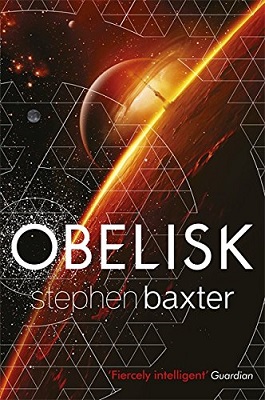
The Massacre of Mankind, Stephen Baxter (2017, UK). Baxter, of course, wrote the official sequel to Wells’s The Time Machine, The Time Ships, back in 1995, so I guess and official sequel to The War of the Worlds was always on the cards… even if shitloads of other people have had a bash at an unofficial sequel – of which the best is probably the graphic novel Scarlet Traces by Ian Edginton and D’israeli. The Massacre of Mankind is set decades after the events of the original book, and is narrated by Julie – the character played, I think, by Julie Covington in Jeff Wayne’s version. She’s a journalist and suffragette, and when she’s contacted by the narrator of Wells’s novel, now a recluse in Italy, she gets dragged into preparations for a fresh invasion from Mars, a much bigger invasion. The Martians target Britain and create a zone fifty miles across in the Home Counties, and those caught within it are left to struggle without technology… so the Martians can harvest them as and when needed (they’ve already imported two slave races from Mars). The British build a massive trench around the Martian zone, but every attack is thwarted. Then a third invasion arrives, targetted at major cities around the globe (Baxter focuses on New York so he can do a Great Gatsby type thing). This time germs are not going to do the trick. To defeat the Martians, Earth needs something else. Something, or someone, perhaps from another planet… On the one hand, Baxter took Wells’s story in a direction I had not expected and the early twentieth century ambience did not feel, er, paper-thin. On the other, the prose is functional at best, and some parts do read a bit juvenile. I’m not sure how it reads as a sequel to Wells’s novel, given I’m more familiar with Baxter’s work than I am Wells’s. It did all feel a bit in places like it wanted to have its cake and eat it too, but given it kept me reasonably entertained for a couple of days – although a part of me thinks a sequel to a Wells novel should do more – I can’t complain over much.

Author’s Choice Monthly 5: Into the Eighth Decade, Jack Williamson (1990, USA). Williamson had an enviable career – I’m not sure what that “eighth decade” refers to since he was 82 when the book was published, which would put him in his ninth decade; and his first story was published in 1928, which would put his publishing history in its seventh decade… But never mind. This collection features his most famous story, ‘With Folded Hands’, and it hasn’t aged well. It starts off reading like it’s set in the 1940s – men in fucking hats sf, in other words – before abruptly revealing there are hundreds, possibly thousands, of other worlds populated by humanity. The premise of robots so keen to help humans they effectively nanny them into uselessness could be read as a juvenile right-wing commentary on the welfare state, but only by idiots. Sadly, there are many of them about it. The remaining stories are… forgettable. ‘Jamboree’ has no plot, it’s a squib about an out-of-control AI that kills kids when they reach a certain age. More nanny state commentary. Sigh. In ‘The Mental Man’, a man interfaces with a computer and becomes god. And in ‘The Happiest Creature’, a criminal is rescued by a flying saucer, but they can’t keep him so they return him after extracting a promise not to murder again which they know all too well he has no intention of keeping. The ending comes as no real surprise. Given that Williamson was being published for pretty close on a century – well, eighty years, his last stories were published in 2008, two years after his death – I’m surprised he chose the weak ones on display here. Okay, so ‘With Folded Hands’ is perhaps his most famous – and likely his most anthologised, so why repeat it? – but the others are hardly a good testament for a career, at that time, 62 years long. Still, it’s part of a set.

Author’s Choice Monthly 11: Skyrocket Steele Conquers the Universe, Ron Goulart (1990, USA). As is this one – part of a set, I mean. I read a Goulart novel once, it was one of his Chameleon Corps ones, I think. It was shit. And the five stories in this collection are probably worse. Goulart describes himself in the introduction as a hack – he made the choice many years ago to churn out crap to make a living, and it shows in the five stories in this collection. The protagonists are mostly hack writers. One is consumed with jealousy over the success of a writer he considers less talented – and he’s been forced to write pulp to pay the bills – but then he meets a time-travelling lit student from the late twenty-first century who tells him his novels are considered classic in the future. The twist ending is easy to guess. The title story refers to a plot by the Nazis in the early 1940s to replace FDR with a robot replica when he visits Hollywood. The plot is foiled by a screenwriter. To call this fluff would be doing fluff a disservice. The others are little better. There’s a strong thread of piss-take running through the stories, but it’s spoiled by an equally powerful whiff of “my pulp fiction is as good as your high-falutin’ litrachur yah boo sucks”, which is a bad smell in any decade and a sadly prevalent one in science fiction.

The A26, Pascale Garnier (1999, France). Mention of Garnier popped up on Twitter – I don’t remember who it was who RT’d it into my TL – but the description sounded interesting and I liked the look of the Gallic Editions paperbacks (there are eight, including The A26). So I bought one. It was… not what I expected. And sort of good. An aged brother and sister live alone in a house that is a dump – the sister hoards, and refuses to leave the house, after an event during WWII. The brother has been diagnosed with a fatal illness – cancer, I think – and has months to live. He retires from his job at the local railway station. And murders some people. Sort of accidentally, certainly unpremeditated. Meanwhile, the titular road is mentioned in passing as it is being built nearby. That original tweet described Garnier’s fiction as Ballardian, and I can sort of see the resemblance, but it reminded me more of some of the French noir Jacques Tardi has adapted. I wasn’t blown away, but I might try some more.

The Exchange, Gwyneth Jones (1979, UK). I’ve had this for years, decades in fact, but only recently realised I’d never actually read it. I remember someone – Brian Ameringen of Porcupine Books, I think – tracking down copies of Jones’s three YA novels from the late 1970s for me after I mentioned them at Mexicon 4 in Harrogate in 1991. And then later that same year, I met Gwyneth Jones at Wincon 2 in, er, Winchester, and she sent me signed copies… so I have two of each. Oh well. And embarrassingly it’s taken me all this time to read this one. Debbie and Claire are sixteen years old and best friends. Except Debbie fancies Michael Grey but is too shy to admit as much, and her friendship with Claire beings to suffer. Which is badly timed as the two are going to spend the summer in Paris with a French family. At the airport – I’m not sure where the story opens; Manchester, I think, as Jones is originally from there – they miss their flight after hiding out when all their friends come to see them off – including one or two unwelcome friends. So they decide to hitchhike to the South Coast and catch the ferry across. They spend a week in Nottingham, working as chambermaids for next-to-nothing at a “hotel” that is little more than an old folks’ home, before doing a runner. When they reach Brighton, after several adventures on the road – and considerably less had they made the same trip today – they get work as cooks in a girls’ riding school for overseas students… before eventually coming clean to their parents over the phone, and finally leaving for France. The novel is told entirely from Debbie’s POV is pretty much about her friendship with Claire, the way it began to unravel at the start of the summer, how it hung together precariously as they made their way south, and the eventual confessions which healed it just before the left for France. I’m not really sure what to make of it. It’s a very late-1970s novel, and some of its sensibilities have not aged well. But Debbie is drawn with impressive detail, and nothing in the plot seems in the remotest implausible. I was, to be honest, expect it to be fantasy, as I seem to remember Jones’s other YA titles from the late 1970s are fantasies: The Influence of Ironwood, Dear Hill and Water in the Air. Although I may be misremembering the first two.

1001 Books You Must Read Before You Die count: 131

8 Comments

Reading diary 2018, Clarke Award special

Last year’s Clarke Award shortlist was a bit pants, to be honest, and I’ve yet to even read the winner, Colson Whitehead’s The Underground Railroad, a book whose reputation seems to have waned somewhat in the year since it won. I suspected this year might prove a bit more interesting as there were several novels published last year that I thought worthy of the award. Happily, one of them did make the shortlist. But a lot of expected titles did not – such as Nina Allan’s BSFA Award-winning The Rift (see here).

For the record, the shortlist is as below. I was more than happy to see Anne Charnock’s Dreams Before the Start of Time on it as I’ve been championing the book since I read it late last year (see here).

I’ve now read five of the novels. I’m not bothering with Borne – although I’ve heard good things about it – because I didn’t take to Vandermeer’s Annihilation and life’s too short and all that. The Charnock, of course, I’ve already read and rate highly. The other authors were completely new to me – and at least three of them are, I believe, debuts. Anyway, I ordered me some copies, and read them, and… Oh dear. That shortlist looked good on first impression, but it really didn’t survive scrutiny…

Gather the Daughters, Jennie Melamed (2017, USA). This has been described a post-apocalyptic dystopia but it’s nothing of the kind. A small religious community ekes out an existence on an island off the coast of the “wastelands”. The novel is told through the narrative of several girls in the community – all aged about twelve or thirteen, and yet to go through puberty. Once they have done so, they will be married off and bear children. A fair few of which may prove to be “defectives” and killed at birth, if they survive it. Melamed tries hard to suggest this is a consequence of whatever apocalypse it was, epidemic or nuclear war, which turned the rest of the world into a wasteland. But it quickly becomes apparent that the girls are being abused nightly by their fathers, and that the community was set up specifically for that end. It also becomes patently obvious that there is no “wastelands” – the world outside has not changed. If this sounds familiar, it’s because it was the premise of M Night Shyamalan’s film The Village. So, a group of religious nutjobs founded a community which would allow them to abuse their daughters and treat their wives as chattel. Oh, and euthanise their old people when they no longer proved useful – and they’re not all that old, to be honest, late thirties, perhaps. I don’t know what world Melamed lives in, but these are all illegal and hugely immoral in the real world. I know the US loves its nutjob religious communities and let’s them get away with, well, murder… but the island in Gather the Daughters is only plausible if there really had been an apocalypse. To make matters worse, Melamed completely fails to comment on the world she has built. In crime fiction, the reader witnesses a murder, but then the murderer is brought to justice. The moral consequences of murder are shown. Melamed doesn’t bother. She normalises child abuse and misogyny. She treats the monsters she writes about with total seriousness but makes zero reference to its morality. And, as if that weren’t bad enough, the writing is terrible, the worst kind of creative writing programme prose. You know the phrase, “kill your darlings” that writer instructors like to parrot? If Melamed had done that, Gather the Daughters would have been a third its size. When I saw Gather the Daughters on the shortlist, I thought it looked interesting (after I’d thought, “shouldn’t it be Gather Your Daughters?”). Having now read it, I have to wonder why it was shortlisted.

Sea of Rust, C Robert Cargill (2017, USA). Some time in the near-future, robots became commonplace, and then somehow developed sentience. But then the owner of a robot died with no heirs, so the robot, now ownerless, argued for its emancipation. And succeeded. But then it, and thousands of other robots, were destroyed by an EMP set off by a nutjob church. The robots responded by somehow overcoming their “Robotic Kill Switch” – yes, it’s really called that; and don’t get me started on the hash Cargill makes of Asimov’s Three Laws, or the stupid random number generator – and slaughtering the church members. So kicking off a genocidal war. Sea of Rust opens decades after that war, after all the humans have been slaughtered and only robots remain, and two AI “mainframes” – yes, they’re really called that; and they fill entire skyscrapers! – are fighting each other and trying to assimilate all the free robots. The narrator of Sea of Rust is Brittle, a female robot, although not really gendered at all, who scavenges for parts in the Rust Belt in order to trade for parts specific to her model so she can keep on running. I really don’t know where to start with this book. The characters are all robots yet behave like human beings, even using expressions like “I knew it by heart” or “anger left his face”. They’re gendered but there’s no reason for that given in the text. The computing seems to be based on 1990s PC technology, except for mention of a “core”, which is something they all have but the book does not bother to explain (probably because it’s made-up bollocks). And they use “wi-fi”. But not to talk to each other. For that, they use speech, you know, actual sound waves. And how the wi-fi works without routers, satellites, or even an internet, is left unexplained. The plot pretty much rips off Mad Max, with a few bits from The Matrix thrown in; and the whole thing reads like Cargill couldn’t be bothered to research any of the details of his world. Every other chapter, pretty much, for the first third of the book is a history lesson – and they’re just as unconvincing as his robot characters. I have no idea why this was shortlisted for the Clarke Award. This is a book that wouldn’t have looked out of place 35 years ago (mentions of wi-fi aside), but I refuse to believe it was the best category sf novel published last year (it’s the only book on the shortlist from a British genre imprint).

American War, Omar El Akkad ( 2017, USA). It is the late twenty-first century and three of the US’s Southern states have seceded from the Union. A low-grade war now rumbles between them and the rest of the country. Rising sea levels have already drowned most of the coastal areas, and what remains of California and Texas are now part of Mexico. Sarat Chestnut was born in Louisiana, but when a suicide bomber kills her father, she, her twin sister, older brother and mother move to a refugee camp near the border with the North. All the time I was reading American War, I had trouble getting my head round it. It paints the secessionist states as the good guys – and the invective against the North in the book is really quite nasty – and yet not once does it mention the South’s racial history. The secessionists have also committed terrorist attacks against the Northerners – and yet are still painted as the side of good. The reason for their secession is their insistence on using fossil fuels after a total ban. It seems such a feeble excuse for a war – especially given the importance of Southern character, and how it relates to the war, in the narrative. It’s like El Akkad wanted the US as it now exists to be the bad guys – incarceration without due process, extraordinary rendition, waterboarding, all of which the North uses routinely in the novel – but because it was a civil war, he had to make the South the good guys. Despite the fact the last war the South fought was to keep the right to own slaves, despite the fact they were forced to stop segregation only some two generations ago, despite the fact their racist mindset is seeing a resurgence since Trump took power… Anway, Sarat survives a massacre at the refugee camp by Northerner militia, and so is recruited into an underground southern army. She becomes a sniper, and is responsible for the death of the general leading the Northern army (it’s not an “assassination” when you’re at war, incidentally). She is later captured and incarcerated at a Guantanamo-like facility, and tortured, for seven years, although her jailers clearly don’t know what she’s done. When she is eventually released, she is desperate for revenge, so desperate she does the unthinkable… which is pretty much explained in the prologue. And yet… and yet… it works. The excess of detail in the prose is annoying at first, but soon drops away as the story picks up. Perhaps Sarat reminded me over much of Radix from AA Attanasio’s novel of that title, but El Akkad has done his homework and invented a mostly credible world for his story. And, to be honest, the novel improved as it progressed. It did feel like it wasn’t sure of its targets – and a story such as American War definitely has targets – so much so it actually rendered its commentary mostly toothless. Perhaps it was just because I read American War after Gather the Daughters and Sea of Rust, but I thought it deserving of its place on the Clarke Award shortlist. I don’t think it deserves to win, but it at least deserves a chance at winning.

Spaceman of Bohemia, Jaroslav Kalfař (2017, USA). If there’s one thing I hate it’s books which feature space exploration where the author can’t be arsed to get the details right. There is a vast amount of documentation out there, in books and on the internet, on the subject. How fucking difficult is it to get it right? It is, for example, “space” and not “Space”. FFS. A spacecraft shot into space on top of a rocket is not necessarily a “space shuttle” and, in fact, especially not if it’s not reusable. And if a comet enters the Milky Way eighteen months ago, then it actually entered it 29,998.5 years ago as the Sun is 30,000 light-years from the edge of the galaxy. And to reach Earth in 18 months, that comet would have to be travelling at 2.3 light years an hour, or 13,521,700,000,000 mph. It’s not fucking rocket science. Well, you know what I mean. In fact, the novel drops clangers throughout its space-set narrative: describing vacuum as tightening around the narrator “like bathwater”, confusing vacuum and zero gravity, seeming to think spacesuits only use pure oxygen on EVA and then to prevent decompression sickness… Fortunately, the novel’s other narrative is far better. Jakub Procházka has been selected as the first Czech astronaut. The aforementioned comet has left a cloud, named Chopra, “between Earth and Venus” – well no, between the orbits of Earth and Venus, since the distance between the two planets changes as they orbit the Sun. Anyway, the Czechs have decided to send the first crewed spacecraft to Chopra. Procházka is an astrophysicist and the person chosen for the mission – it seems stupid to send one person, especially given the size of the spacecraft, JanHus1, as it is described. En route an alien appears in the spacecraft and tells Procházka it wishes to study “humanry”. It’s not certain whether the alien is real or an hallucination, but given that so much of the space-set narrative is complete bollocks I’m inclined to go for hallucination. (At one point, Procházka sees a frozen Laika float past – which would be difficult as Sputnik 2 disintegrated on re-entry in 1958, five months after Laika’s death.) Interwoven with the JanHus1 mission are chapters on Procházka’s childhood and life and marriage. The son of a secret policeman, who died shortly after the Velvet Revolution, he and his grandparents, who raised him, were shunned by their neighbours. They moved to Prague, Procházka went to university, and became a world expert on cosmic dust – hence his selection for the mission to the cloud. These chapters are interesting and, I assume, much better researched than the other narrative. However, they do make you wonder what the point of Spaceman of Bohemia is. Why not write a novel about growing up in post-Revolution Czechia? Why all the guff about the cloud and the alien and the space mission? Which ends with Procházka being implausibly rescued by a space shuttle from a secret decades-long Russian space programme. Which he causes to crash on re-entry but he manages to survive… before returning home incognito to exorcise some ghosts from his past, which, er, had bugger-all to do with the space mission. The earth-bound narrative is good, a novel in its own right. The space mission is complete bollocks – badly-researched, pointless and dull. If it had not been for that – and given it’s so badly done, how the hell did the book make the shortlist for a science fiction award? – Spaceman of Bohemia would be a bloody good book.

It’s probably also worth noting that this year’s shortlist is one UK author and five US authors (both El Akkad and Kalfař moved to North America as teenagers and are resident in the US). This is not unusual – science fiction has been dominated by the US since the genre’s beginnings, and the Clarke Award shortlists have, since the award’s inception in 1987, mostly reflected this: it was last entirely British in 2008, and has included non-British authors in its shortlists for most years (although some non-British finalists have been resident in the UK).

I suspect I’m now going to have to read Borne, given how disappointed I was with three of the above. I think Dreams Before the Start of Time should win, as it’s a thousand times better than the Melamed, Cargill or Kalfař, and though it’s much better than American War I would not be overly disappointed if El Akkad won. I’ll reserve judgement on the Vandermeer until I’ve read it. Who do I think will actually win? I suspect the Kalfař is a good bet. It’s very literary and, despite the complete fucking hash it makes of its space mission, stylistically the best-written of the lot. But the Clarke tends to have a love-hate relationship with literary sf, lionising it one year and then giving the award to a hackneyed piece of pulp sf the next. Sadly, I don’t think Charnock will win, because I think the book is really good and I’m usually completely out of step with these things. The El Akkad would be my next guess, even if its attempts at relevance are badly mangled. The Cargill and Melamed should not stand a chance. But I’ll probably be wrong on that. Out of step, you see.


Leave a comment

Reading diary 2018, #8

I don’t seem to be reading much current science fiction these days. Well, okay, I read three of the four novels shortlisted for the BSFA Award, and I recently bought four of the six novels shortlisted for the Clarke Award (I already owned one, and am not really interested in another.) And yes, I’ve read the first two books of NK Jemisin’s Broken Earth trilogy, which has been the most lauded genre series of the last couple of years… But no current science fiction here, I’m afraid.

Pack My Bag, Henry Green (1940, UK). I stumbled across Henry Green’s writing a couple of years ago. I’d seen mention of him somewhere as a forgotten great writer in British twentieth-century literature, although at the time I saw this he had been re-discovered, not that I knew; but anyway I stumbled across an omnibus of three of his novels – Loving · Living · Party Going – and I read the first of these (actually the last published of the three) and, er, loved it. So I read more. And yes, he is indeed one of the best writers this country produced in the first half of last century. Pack My Bag is his autobiography, written in 1940 at the age of 35, after Green had volunteered for the Auxiliary Fire Service and was convinced he would not survive the war. (He actually survived, and died an alcoholic in 1973, having published only nine novels.) Pack My Bag is something Green banged out to assuage fears he might be forgotten and, quite frankly, I’m in awe of his talent. He led a privileged life, a minor member of the aristocracy, educated at Eton and Oxford – I can’t decide whether to despise him for his background, admire him for his writing, or grudgingly admit he was uncommon for his class – unpopular at school, and far too thoughtful; he left Oxford without graduating, to go work in his family’s bottling factory in Birmingham. Yet his wife was a member of his class, and a distant cousin too; and though he was clearly very intelligent, as a member of the upper classes he was the beneficiary of what is considered to be a top-notch education… and yet he admits the masters at Eton were hired for their sporting prowess and not their knowledge of their subjects, which in many cases was hugely deficient, and it would not surprise me if that has held true in the century since; and at university, he brags that his studies take up no more than six hours a week. Green is perfectly aware of what he is saying as he writes this – he is not a man afraid of burning bridges, or biting the hand that feeds him, or other such aphorisms.

The Masked Fisherman, George Mackay Brown (1989, UK). Someone on Twitter recommended Brown a couple of years ago, and so I’ve kept an eye open for his books in local charity shops ever since. Which is how I stumbled across Beside the Ocean of Time (see here), which I thought good; and why I later picked up this book when I found it in a charity shop. It’s a collection of twenty-two very short stories, some of which work very well and some of which didn’t seem to work at all. Some barely qualify as stories. They’re all set in Brown’s home ground, the Orkneys, and they take place between the eleventh and twentieth centuries. They’re not arranged chronologically, but jump about. The title story is historical, and reads more like a fable than a short story. Another, about a mean old lady who leaves a surprising bequest, feels a bit out of place. A short story about the town’s first lamp-lighter is especially good. Another about a writer researching his past also stands out. Some of the stories seemed less… lyrical than I had expected, not that Brown’s prose is ornate, it’s typically very plain but it’s also very evocative. And in a few places here, that felt slightly lacking. However, the more by Brown I read, the more by Brown I want to read. So I’ll continue to keep eye open for his books.

The Blaft Anthology of Tamil Pulp Fiction Vol 2, (2010, India). This was a reward for a kickstarter – although maybe not from that particular website – for volume three (as was volume one, but there’s no sign of it yet; I’m still not convinced “kickstarters” – crowd-funding, that is – are actually viable or sustainable, but that’s an argument for another day). Anyway, in India – and in this case, the Tamil-speaking parts of it, such as Tamil Nadu – penny dreadfuls of a sort still exist. They are printed on extremely cheap paper and sold at newsstands or by boys at traffic lights. Authors who specialise in these Tamil pulp novels have bibliographies numbering in the high double figures, and some even in the high triple figures – and one author in this anthology, Rajesh Kumar, has written around 1500! While holding down day jobs. To be fair, they’re not long novels and, if the ones in this anthology are any indication, pretty badly-written, with an over-reliance on cliché, very little description and plots that are so pacey they frequently contradict themselves. The plots are mostly thrillers with real or faked supernatural elements. The opener, and the longest in the anthology, ‘The Palace of Kottaipuram’, features a second son from a tiny princedom in which the heirs are cursed to die before they reach their thirtieth birthday. When his older brother dies, making him the heir, his girlfriend – he met her at college – is determined to find the truth behind the curse and so thwart it. It’s all very, well, pulp, and probably the best story in the book. I’m glad I read the book, and I’ll read the third one too, of course; but it’s like watching Bollywood films: they might be terrible, but they’re entertaining and fun and different to what I normally read/watch.

Dan Dare: He Who Dares, Peter Milligan & Alberto Foche (2018, UK). I’ve been a fan of Dan Dare since the early 1970s, and have kept up with him in all his re-imaginings since, most of which it must be said have been pretty shit. There was the 2000AD one (see here and here), then the re-launched Eagle with Dare’s… grandson?, also called Dare. And in the early 1990, out of Revolver, there was Dare by Grant Morrison and Rian Hughes, to date the only halfway-decent Dare since the original (and it looks like Titan are publishing a new edition later this year). And Grant Ennis and Gary Erskine had a bash at a new Dan Dare a few years and it was pretty bad. But here’s a new one. It starts off really well. Dare and co. – specifically, Hank Hogan, Peabody and Digby; although Hank pretty much disappears after the first couple of pages, Digby is far more competent and assertive than his original, and Peabody, the most modern of the characters even back in the 1950s, has been updated a little. As has the Mekon. Dan Dare: He Who Dares starts out well, with some pointed political commentary. The Mekon was captured and is now in a secure facility on the Moon. He seems to have given up his evil ways, but only Dare believes he might be rehabilitated. And then a giant Treen spaceship appears in the Solar System, and Dare seeks advice from the Mekon on how to destroy it. With the help of a female warrior from an alien world. This is where it all falls apart. Dare was always interplanetary, and his only interstellar stories – Rogue Planet and Terra Nova – saw him and his colleagues spending weeks or months travelling to an alien world. There’s certainly no suggestion the Mekon carved out an interstellar empire. In fact, the Treens who invade the Solar System feel like an entirely different race, and not the Treens of Venus. A shame, as the story started off so well.

The Art of Edena, Moebius (2018, France). So I ordered this a couple of months ago, but Amazon failed to source it and after a month cancelled my order. And then a week after that, I noticed they had copies in stock. So how does that work? I know: it’s because people are so fucking lax about data that you can no longer uniquely identify something because there might well be hundreds of identical copies under different ids in a system. Anyway, I re-ordered it and it was delivered the next day. Despite the title, it’s not a study of Moebius’s Edena series (see here). It’s more of a companion volume, explaining details that are patently obvious in the series itself, but – and it’s worth buying for this if you’re a Moebius fan – it also includes several short graphical stories featuring Stel and Atan that are not in the Edena volume. And they’re pretty good.

1001 Books You Must Read Before You Die count: 131


4 Comments

Reading diary 2018, #7

My reading has been a bit all over the place of late. On the plus-side, I seem to be better at picking books I enjoy.

The Silent Multitude, DG Compton (1966, UK). After Gwyneth Jones, I would say DG Compton was likely the second-best sf writer the UK has produced. Except… His writing was a cut above what is typical for the genre, and his best work is among the top rank of British sf – and rather than being timeless, it makes a virtue of the fact it is tied to its time of writing – but… Compton’s range was somewhat narrow. He wrote many similar novels. And there are a number of other UK sf writers of the 1970s whose prose was perhaps not as good as Compton’s but who managed to produce more varied work. Which is not to say that Compton was never good, or that mediocre Compton is not a great deal better than some other writers’ best. The Silent Multitude is Compton coming into his voice, after a handful of years of writing crime novels as Guy Compton. A mysterious organism is spreading across the UK which dissolves mortar and reduces buildings to rubble in a handful of days. The “Sickness” has now reached Gloucester, a city completely rebuilt in the 1980s, which has now been evacuated. Except for the local dean, an old man who collects newspapers and lives alone among the tens of thousands he has collected, a twentysomething hoodlum who proves to be the son of the architect who designed the new Gloucester, and a twentysomething young woman reporter who is the daughter of the editor of the newspaper for which she works. (The mentions of a redesigned Gloucester reminded me not only of Portmouth’s Tricorn Centre, which I’ve only seen in photographs, but also the various plans to rebuild the city centre of Coventry and, of course, the precinct which eventually resulted.) The Silent Multitude is essentially these four characters witnessing the death of a city – the death of its buildings and infrastructure, that is; the people have already left – and while Compton is good on the descriptive prose and the characterisation, this novel doesn’t feature any of the narrative tricks he later used. The Silent Multitude is a slim work, ideas-wise, propped up by good prose, but that’s no bad thing as science fiction in general could do with upping its game prose-wise. Compton is good – bloody good, in fact – but this is nowhere near his best work.

The Strange Case of the Alchemist’s Daughter, Theodora Goss (2017, USA). Most of Goss’s short fiction that I’ve seen has been fantasy or reworked fairy tales, which is not really the type of fiction that interests me. But a year or two ago, she wrote ‘Cimmeria: From the Journal of Imaginary Anthropology’, which was the sort of referential mash-up genre fiction that does appeal to me – and I thought it so good, I nominated it for the BSFA Award, but it did not make the shortlist – and it seems she has written more in a similar vein. Anyway, I saw mention of this, her first novel, and its premise – the daughters of various nineteenth-century fictional scientists team up to help Sherlock Holmes solve Jack the Ripper’s murders – sounded like it might be worth a go. And so it was. It is, in fact, very good. Except. Well, it feels a bit dumbed-down. I’m not sure what it is, but it doesn’t feel as clever a novel as its central conceit would suggest. It doesn’t help that Mary Jekyll – yes, the daughter of that Jekyll – is the main character but spends much of the plot tagging along behind Sherlock Holmes. On the other hand, the novel is explicitly presented as a narrative written by Catherine Moreau, often with interjections by the other women, and that works really well. It’s also quite funny. For a novel set in Victorian Britain, there are a few slips – the ground floor is continually referred to as the first floor; and some of the expletives are US English. Despite those minor quibbles, I enjoyed The Strange Case of the Alchemist’s Daughter, and plan to pick up a copy of the sequel, European Travel for the Monstrous Gentlewoman, when it’s published in July.

Author’s Choice Monthly 10: Tales from a Vanished Country, Elizabeth A Lynn (1990, USA). One day I will have all of these muahahah. Ahem. But for now, I have just over half of the series. Lynn was not an author known to me, so I came to this short collection cold. In the first story, a wizard runs a trading empire, and when his CEO, so to speak, betrays him, he imprisons him as water in the sea. Some time later, he frees him, because a rival wizard has been upsetting the balance of power. The two disguise themselves to visit the other wizard, but he sees through their disguises. Fortunately, after several months of drugged gaslighting, the CEO chap regains his senses, and the world is set right. So far, so consolatory. The second story, however, is anything but. Three sisters are noted for their beauty, intelligence and martial prowess. A mysterious woman appears and challenges them to combat. One accepts and is killed. Some time later, the mysterious challenger reappears, and this time the second sister is killed in combat. So the third sister hunts down the killer, who turns out to be an aspect of the Moon, and she becomes her lover. Years later, the sister decides to return to her family, but it seems decades have passed. But she stays and lives out her life, mourning her dead sisters and lost lover. The final story reads more like mythology than epic fantasy. A goddess entrusts command of the five winds to a reclusive astronomer who lives in a cave in the mountains. The goddess’s son decide to check this out, and becomes the woman’s lover. She has two girls, who grow faster than human girls. He leaves and steals the cloak the woman uses to command the winds. Chaos ensues. Eventually, the goddess returns. But the woman has disappeared and the two daughters are only just managing to survive. I don’t think I’ve read anything by Lynn before, and I have the impression I’ve seen her name chiefly on the covers of sharecropped novels… although checking on isfdb.org, I see that’s completely false and two of her three standalone novels are, in fact, science fiction. (The 1983 UK paperback edition of one has quite striking cover art.) The three stories in Tales from a Vanished Country are really good, which was completely unexpected. They make clever use of fantasy tropes, and are deeply feminist, even the first one which features no female characters. I think I’ll track down copies of those two science fiction novels…

Phosphorus, Liz Williams (2018, UK). This is the third novella of the third quartet of NewCon Press novellas, although the fourth book I read of the set. Not, I hasten to add, for any particular reason. It is subtitled “A Winterstrike Story’, and I have no objection to subtitles but I would like to point out that they are not titles. So when a data entry form has a field called “title”, it means title, not title and subtitle, not title and, as I have seen, “[random award] winner”. People complain about Big Data, but it would be much less of a problem if we didn’t have Shit Data. But that’s a rant for another day. I have read Winterstrike, but not the other books in the series. Neither is necessary to understand the story of Phosphorus, which, to be honest, isn’t much of a story. It’s extremely strong on setting – and Williams’s Mars is a fascinating place – but the story doesn’t really go anywhere or do much. A young woman with some mysterious quality is adopted by her mysterious aunt, who takes her from Winterstrike, which is under attack by another city, to the dead city of Tharsis. Meanwhile, the sole survivor of the Hunt – although she is dead, but animated by one of the Hunt’s starships – an alien race that saw its mission in life as “culling” other races, leaves her homeworld of Phosphorus, and eventually ends up on Mars. An event which, it transpires, happened centuries before the other narrative, and the young woman is in some way connected. And, er, that’s it. Pretty much. An interesting idea that’s not at all explored. It reads like the start of a novel. Nice writing, nice world-building, but disappointing plot.

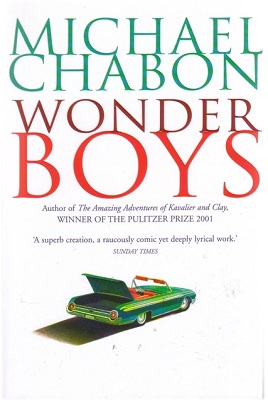
Gentlemen of the Road, Michael Chabon (2007, USA). Back in the day, The Yiddish Policeman’s Union appeared on several genre award shortlists, IIRC, and I read it and thought it quite good. So I stuck The Amazing Adventures of  Kavalier and Clay on my wishlist and some years later was given it as a birthday present. And then I read it, an embarrassing number of years after that, and was much more impressed. And shortly after that I found a copy of Gentlemen of the Road in a charity shop, so of course I bought it. And… Chabon writes in an afterword that to him the novel (a very short novel) was always titled “Jews with Swords”. Because to him Jews had never been associated with swords – at least not since Biblical times. I’ve never attached a religion to a weapon – people with swords are people with swords, and I’ve never really thought about the religious tradition from which they came, perhaps because in most cases in fiction that tradition was invented, and for those where it was not the context more than explained it. But “Jews with Swords” gives us a Frankish Jew estranged from his European family, and an Ethiopian Jew from tribe that no other Jew seems willing to accept, on a mission which involves the Khazars, a Turkic state which converted to Judaism, but vanished after three centuries. The two unwillingly accept a commission to take a young Khazar prince, the last survivor of the family of a deposed bek (martial leader, a sort of government CEO to the kagan’s chairperson). But they lose him to some mercenaries, who are taking him to the new bek. Except the prince persuades the mercenaries to rally his cause, and sort of builds up an army from the Muslim Khazar cities in the south of the region which the new bek had let the Vikings plunder with impunity. And… well, the big secret about the prince is pretty obvious from about a page after he’s been introduced, and the only suspense is in wondering how the two main characters can be so dumb as to not figure it out. Having said that, the history is fascinating, the characters are interesting, and, while I find Chabon’s prose a bit hit and miss, the mannered style he adopts here works well with the story. I should read more Chabon. Fortunately, I have Wonder Boys on the TBR, picked up from a charity shop at the same time as Gentlemen of the Road

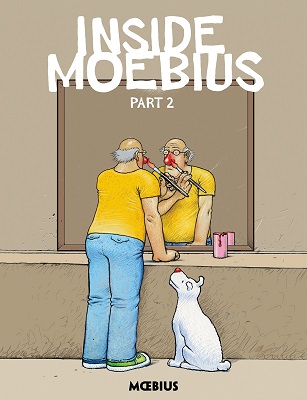
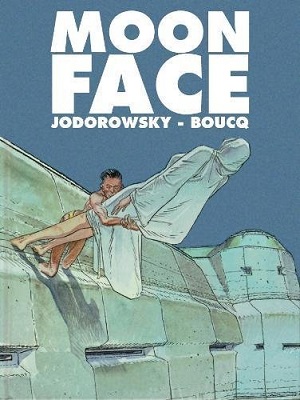
Inside Moebius, Part 1, Moebius (2004, France). I came to Moebius’s work from Jodorwosky, as Moebius – Jean Giraud – illustrated Jodorowsky’s Incal series, still one of the greatest sf bandes dessinées of all time. Although, having said that, I seem to remember seeing parts of Moebius’s Airtight Garage many. many years ago. Back in the early 1980s, I used to fly out to the Middle East for holidays via Schiphol Airport, and in the bookshop there I would often pick up a copy of Heavy Metal or Epic, and even an issue of 1984 (which I had to hide once I’d discovered what it contained). I’ve a feeling that’s where I first encountered Moebius’s work. That’s all by the bye. I’ve been a fan of Moebius for many years now, so I keep an eye open for when new stuff by him appears in English (I could, I suppose, buy the original French editions, but I have enough trouble keeping track of new stuff in one language market, never mind doing it in two). Inside Moebius, originally published in in six volumes in France but now as three volumes from Dark Horse, is a sort of autobiographical private project that blossomed. Moebius wanted to give up smoking, so he started writing a bande dessinée about it, and then sort of dragged in the books he had worked on, or was currently working on, and his thoughts on a variety of subjects. Particularly politics. Osama bin Laden makes an appearance in Inside Moebius, Part 1, as do some of Moebius’s characters – Blueberry, Arzak and the Major. The art is not as detailed as in other Moebius works, it’s almost sketches, in fact. But the way the book is designed, it’s clear the words are more important. The dialogue is full of puns, many of which have not translated but a helpful afterword explains them. (For the record, I did get the “Fumetti” one.) It’s all good stuff, although I could have wished for artwork as good as that in the aforementioned works.

1001 Books You Must Read Before You Die count: 131


3 Comments

Reading diary 2018, #6

More reading all over the place. And cheats too – a bande dessineé and two novellas. Oh well. At least I’m staying ahead of my Goodreads reading challenge target…

Fleet Insurgent, Susan R Matthews (2017, USA). I’ve been a fan of Matthews’s Under Jurisdiction books since they first appeared back in the 1990s. They were definitely among the more interesting commercial sf being published in the US back then. Although apparently not interesting enough, as Matthews moved publisher after the first three Jurisdiction books, and two unrelated novels, and then lasted two Jurisdiction novels with her new publisher before being dropped. The next book came out from small press Meisha Merlin… who promptly folded. And it was another decade before Baen picked the series up, published two omnibuses, before continuing the series with Blood Enemies (see here). Fleet Insurgent, however, is a collection, some of it previously published, much of its contents intended to fill in gaps in the published series so far, or shed new light, or a new perspective, on some of its episodes. So it’s more like a companion volume than anything else, rather than a pendant volume. Which, as a fan, doesn’t overly bother me. If anything, the stories in Fleet Insurgent provide welcome insight – as Matthews is not a writer who likes to make things easy for her readers. The writing is a deal better than I remember from recent rereads of the first two books of the Under Jurisdiction series, but that’s hardly unusual. However, it’s certainly not a good entry point for the series, as most of the stories will make zero sense without knowledge of the novels (despite an introduction to each story by Matthews). I seem to recall that Matthews had plotted out a quite a number of books in the series. I hope we won’t have to wait another ten years for the next instalment.

Valerian & Laureline 22: Memories from the Futures, Jean-Claude Mézières & Pierre Christin (2013, France). This is not the twenty-second volume in the story of Valerian and Laureline. Except it is. What I mean is, it’s not part of the story-arc which takes place over the previous twenty-one volumes, but rather pendants to the prior episodes. Most of these only occupy a double-page spread, and they don’t make much sense if you don’t know the volumes to which they refer. I’m not entirely sure why it needed to exist – they were contractually obliged to deliver a twenty-second volume? I don’t know. If you’ve read the previous twenty-one volumes – and I highly recommend them; ignore the crappy film – then you’ll know what to expect, and you’ll want the book anyway to complete the set. Now it’s all finished, I guess I’ll have to find another bande dessinée to read… perhaps in the original French? Now, where did I put my French-English dictionary…

Dreams of the Technarion, Sean McMullen (2017, Australia). I was sent this for review by Interzone. I don’t think I’ve read anything by McMullen before, a few short stories perhaps. Some of the stories in this collection appeared in Interzone, although I don’t recall them. As sf collections go, Dreams of the Technarion is strong on ideas, if not on story – one or two feel like premises in search of a plot. But what makes the book is the final story… which isn’t a story at all but an essay on the history of Australian science fiction. It’s fascinating stuff – and amusing too, albeit not always intentionally: when discussing early Australian pulp magazines, McMullen writes, “This is not the sort of thing to make the average SF reader do handstands, but it was good enough for an average Australian male caught in a toilet without a newspaper”, which I’m not entirely sure means what McMullen intended it to mean… Anyway, I almost certainly wouldn’t have read this had I not been sent it for review, but I’m glad I did. There’s certainly much worse out there, often much more acclaimed, and the essay on the history of Australian sf is fascinating stuff.

A Primer for Cadavers, Ed Atkins (2016, UK). My sister bought me this for my birthday, although not from my wishlist. I’ve no idea why she chose it – when I asked, she said it looked “interesting”. Atkins’s name means much more to me now than it did this time last year, since I saw one of his video installations, ‘Ribbons’, at Kiasma in Helsinki, when I was in Finland for the Worldcon last August. I’m a big fan of video installations, and Atkins’s was one of the two in the museum I thought really good. So I was quite pleased to have a copy of his book. It’s a collection of… I’m not entirely sure what they are. Stream-of-consciousness pieces, I suppose. Neither poetry nor prose, but having some characteristics of both. One or two, I think, maybe the scripts from his video installations – they certainly share titles, such as ‘Warm, Warm, Warm Spring Mouths’. Much of the writing is visceral, as in, er, about viscera, detailed narratives about parts of the body – one is more or less an annotated list of parts of the brain as mapped by Korbinian Brodmann (isn’t that a great first name?). Most of the pieces are peppered with cultural references – there’s a plot summary of the film Sphere in one of them. I’m not sure if I liked or enjoyed A Primer for Cadavers, as it’s not the sort of book you can like or enjoy. Bits of it are extremely well-done, and a good deal of the writing is very clever. I guess that, like video installations cross over that line between cinema and art into art, so this book crosses over a similar line between literature and art into art. I’d already planned to keep an eye open for Atkins’s work when I visit modern art museums in the future, and after reading A Primer for Cadavers I’m even more keen to do so.

The Martian Simulacra, Eric Brown (2018, UK). This is the second of the latest quartet of NewCon Press novellas, all of which are set on Mars. It’s subtitled “A Sherlock Holmes Mystery”, which is a bit of a clue to the plot. As is the cover art. It’s set after Wells’s Martian invasion. Although the invaders died, a second lot, claiming to be good Martians and the enemies of the invaders, arrived, and have pretty much taken over. Holmes is approached by a Martian ambassador, who asks for his help in solving the murder of an important Martian philosopher. On Mars. So he and Watson travel there, meeting a yuong woman en route, who appears to be involved with some sort of Martian underground. Because the good Martians aren’t so good after all. It’s exactly the sort of story you would expect from a mash-up between Sherlock Holmes and The War of the Worlds. Brown keeps it pacey, although he perhaps relies overmuch on stock tropes and imagery. A fun novella.

The Greatest Story Ever Told, Una McCormack (2018, UK). This is the fourth novella in the series – for some reason I skipped the third, not that they’re at all related in terms of story. And I think it’s set on Mars, like the other three, but it’s hard to be sure as there are no references to the Martian landscape. It’s not even as if the story needs to be set on Mars – The Martian Simulacra is a mash-up with Wells’s novel, so Mars is a given; and even The Martian Job (see here) required the Red Planet as its setting for its story, and almost certainly for its ending. The narrator of The Greatest Story Ever Told is a scullery maid in a household that trains “dance-fighters”. The society consists of masters, free people and hands. The hands are basically slaves. And they rebel. Led by the two most famous dance-fighters. After several months of freedom, by which time they’ve gathered several thousand to them, the masters send an army. You can guess the rest. Interspersed with the main narrative are short fables, framed as told by the narrator to other characters in the main narrative. Some of them have obvious morals, others I couldn’t see what point they were trying to make. Everyone in the story uses female pronouns. Of the three novellas from the quartet I’ve read so far, this was the least satisfying. The setting didn’t feel like Mars, I don’t think slavery belongs in science fiction stories, and the narrator’s voice was a little irritating. The stories-within-a-story, while hardly new, gave the novella a little more depth, but I suspect it was over-used a little. Not my favourite of the four, so far. And I still have one more to read.

1001 Books You Must Read Before You Die count: 131
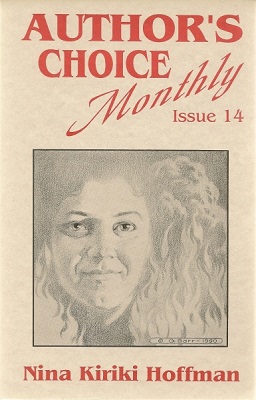

4 Comments

Reading diary 2018, #5

Bit of a cheat this one, as most of the books are either short or graphic novels – well, one graphic novel, two short collections, and a novella. One has also been shortlisted for the BSFA Award.

Author’s Choice Monthly 7: Neon Twilight, Edward Bryant (1990 USA). I had one of my semi-regular outbreaks of completist-itis, and since I owned about half of the Author’s Choice Monthly issues, I decided I needed to have the rest. A full set. Even though many of the authors in the series I’m far from a fan of. Like Mike Resnick. Ed Bryant I knew nothing about. The name rang a vague bell, but if I’ve read anything by him in the past, I don’t recall doing so. Bryant’s introduction explains he’s better known as a horror writer, although he did write heartland sf once – and it’s three of the latter stories which are collected here. All three are set in the same space opera universe – the first story he set there, a later one when he decided to use the setting for a commissioned story, and a third written specifically for this short collection. They are… okay. The stories are set in some sort of interstellar polity – it’s all a bit vague – in which disputes are settled through ceremonial wars, in which mercenaries in fighters battle each other. And those who survive, and have the highest kills, become popular heroes. The second story was written for an anthology set in Fred Saberhagen’s Berserker universe, so the mercenaries have to fight off a giant machine intelligence bent on killing everyone. And they do it using the previously unknown telekinetic powers of one settled world’s indigenes. The whole fighter/mercenary thing takes some swallowing, because there’s nothing remotely plausible about using fighters in space combat, despite their prevalence in science fiction. The whole folk hero thing doesn’t really parse either – after all, who remembers the aces from the Vietnam War? From any war? These Author’s Choice Monthly have proven to be very much of variable quality. But they’re a set, so I’m going to buy them all and read them all, damn it. Even if they’re crap.

The Obelisk Gate, NK Jemisin (2016, USA). Do I need to explain that this is the second book in Jemisin’s Broken Earth trilogy – preceded by The Fifth Season and followed by The Stone Sky – which, like The Fifth Season, won the Hugo, and I wouldn’t be at all surprised if The Stone Sky also won the Hugo this year… Making it the only trilogy to ever win the Hugo for all three instalments in consecutive years. Which says more about the Hugo Awards, to be honest, than it does the books. Social media these days is completely fucking useless for finding out what’s worth reading – and the Hugo Award never has been – as it’s all tribalism and self-promotion, but I’d heard enough rumbles about The Fifth Season to prompt me to buy it when it was £1.99, and I was pleasantly surprised enough (see here) to stick this second book on my wishlist. And so was given it as a Christmas present. It is a truth universally acknowledged, to borrow a phrase, that the second books of trilogies are generally the least satisfactory. After the tricks Jemisin had used in The Fifth Season, I had, to be honest, expected more of The Obelisk Gate. It is pretty much a straight follow-on. However, where the best part of the first book was its time-stacked narratives, that’s a not a technique that can be continued once revealed. The Obelisk Gate doesn’t even try. It’s a linear narrative covering events chronologically following on from The Fifth Season. It rings a few changes – which are to its credit – inasmuch as it introduces a separate narrative for Essun’s daughter, who was abducted by her father and proves to be an extremely powerful orogene; and it also breaks its narratives with first-person sections which directly address the reader whose narrator is not initially obvious. The worldbuilding is basically more of the same from the first book. The level of brutality remains high, although much of the invention was frontloaded in the first book. This is good solid genre fiction, a cut above the average, which can be read as both science fiction or fantasy. Are they the best two genre fiction novels published in 2015 and 2016? Of course they’re not. The Fifth Season probably deserved its Hugo – and certainly did given the shortlist – but The Obelisk Gate‘s Hugo was not so deserved (although, given the rest of the shortlist…). I’ll certainly read The Stone Sky, and I hope it picks up a bit after The Obelisk Gate – although I suspect that since the shape of trilogy is now becoming so much clearer, it won’t do. The strength of The Fifth Season was that its shape was there to be discovered. But we shall see.

Author’s Choice Monthly 29: Moonstone & Tiger-Eye, Suzy McKee Charnas (1992 USA). There are only two stories in this collection, both technically novelettes (I say “technically” because novelette is the most useless fiction category on the planet and we should really stop using it). The first, ‘Scorched Supper on New Niger’ I first read in Women of Wonder: The Contemporary Years, and I liked it enough to moan that Charnas had never revisited the setting. It was apparently her first piece of short fiction, since she’d only written, and was known for, novels prior to it. On reread, I’m less enamoured of ‘Scorched Supper on New Niger’. It’s heartland hard sf/space opera, the sort of stuff Cherryh, among countless others, is famous for, written in the first person, with an engaging narrator. But. The use of Nigerian culture feels a bit heavy-handed. It’s good to see something other than middle America as a cultural template in a science fiction story, but when you make use of someone else’s culture it has to be done very carefully. Her female narrator also has agency. In 1980, when this story first appeared, that wasn’t very common. The setting is all a bit identikit – Nigerians notwithstanding – and it’s still a shame Charnas never revisited it. The second novelette is ‘Evil Thoughts’, from 1990. A woman and her younger significant other have moved into a new house. Mushrooms keep appearing on their lawn, and the crazy lady just up the streets, with two yappy dogs, tells her they are “evil thoughts”. And the woman destroys the mushrooms, so the evil thoughts have nowhere to go… The story doesn’t make much of its conceit, and seems more concerned with the anxieties of the woman caused by other people’s thoughts on her having a younger partner. Disappointing.

Crosswind Volume 1, Gail Simone & Cat Staggs (2018, USA). Juniper is a Seattle housewife who is abused by her husband. Cason is a hitman for a mob boss in Chicago (I think), who seems somewhat more thoughtful and intelligent than is common for the breed. For reasons explained later, the two magically swap bodies. Cason finds himself in Juniper’s body; Juniper is now a male hitman. It’s hardly an original conceit – there’s a novel from 1931 which has exactly the same premise! – and it’s been used plenty of times since, both in cinema and written fiction. Simone and Stagg have bought a modern sensibility to the story, inasmuch as they were careful to consult trans readers in order to depict their characters’ experiences in an appropriately sensitive way. And yet… they marry this with a brutal mobster plot. Certainly, represent trans people as accurately and sensitively as posssible, but why do we need to have a story which features domestic violence and mobster brutality? Those earlier body swap stories? They were comedies. In Crosswind, it’s good the way the two principals adapt to their new situation… But I could have done without the clichéd violence – and using violence, by “Juniper”, to resolve the chauvinism she’d been experiencing? I’m not sure that’s a good message: woman experiencing chauvinism, can only be resolved by a man taking over the woman’s body and behaving like a man? Disappointing.

Exit West, Mohsin Hamid (2017, Pakistan). I’d not even heard of this, although I suspect it would have eventually come to my notice, when I saw it on the BSFA novel shortlist. Which was a surprise. No one I knew on social media had been talking about it. Who were the people who nominated it, enough of them for it to make the shortlist? Which, okay, might only have been half a dozen, given how poorly subscribed the BSFA is these days, and how few people bother to engage with the awards. Anyway, I picked up a copy, and pretty much read it on a train journey to and from Leeds. And… It’s good. It’s very good. In an unnamed Middle East city which is clearly modelled on Damascus, Saeed and Nadia meet. She wears an abeya from neck to toe although she is not religious; he does not believe in sex before marriage. A developing relationship in an Islamic society, in which moderates and fundamentalists coexist, is first upset by civil war, and then by the appearance of doors, existing doors, which now miraculously lead to doors in other, richer and Western, nations. And so refugees flood through them, and there’s no controlling them because they are never en route, or passing through somewhere else. Saeed and Nadia take advantage of this, and first move to Mykonos, and then to the UK, and finally to San Francisco. The premise is not thought through especially well, and the various Western nations’ responses to an unstoppable wave of refugees seems implausibly, well, accommodating – especially the UK, given the UK’s current policy of handling immigrants, as set out by Thereas May when she was Home Secretary, not to mention the whole Brexit fiasco… But Hamid focuses his story on the relationship between the two principals. On the one hand, Exit West makes an obvious point. And it’s a beautifully written novel – I really do like Hamid’s spare explicatory prose. But Exit West simply presents its premise, which doesn’t really hold up to scrutiny, and never really interrogates it. Nor does it really interrogate the West’s response to immigrants, especially unannounced or unwanted ones. If you want to read a novel which does an excellent job of commenting on that, then read Jenny Erpenbeck’s Go, Went, Gone. It is the much superior novel. But Erpenbeck wasn’t shortlisted for the BSFA Award – unsurprisingly, as her novel is not genre – amd Hamid was, and both tackle a subject important to our time. Much as I liked Exit West, I didn’t think it entirely successful. It’ll be getting the third slot on my BSFA Award ballot.

The Martian Job, Jaine Fenn (2017, UK). The title is a deliberate nod to the famous British 1960s movie, and the story even uses its own variant of Michael Caine’s famous line. But the plots don’t map precisely, nor the set pieces, and Fenn’s novella certainly ends in a completely different fashion. The famous car chase through the streets of Turin in Minis becomes a race through the tunnels of old Martian colonies in “tunnelbuggies”, and, yes, there’s a heist which kicks it all off… Lizzie Choi is a corporate administrator for one of the most powerful companies on Earth, the Moon and Mars, in a future doiminated by the Chinese. She has a criminal background, but walked away from it. Unfortunately, when her brother dies on Mars, she’s named as next of kin by her mother, currently in prison on the Moon, and so the company find out about her chequered past. Which results in her travelling to Mars to finish off the job her brother had begun: stealing the Eye of Heaven, the largest opal ever found and the property of her ex-employers. It’s all first person, and Choi is an engaging narrator and very much at the centre of the action. The Martian Job does a lot of things well, which mostly means deploys its tropes with assurance – not that any of the tropes are especially original. The references to The Italian Job are fun, but little more than easter eggs. The ending isn’t much if a surprise – it’s optimistic and well primed. This is solid feel-good sf, which might well be about a crime and feature criminals, but is not gratuitously brutal or right-wing. It’s a pleasure to read.

1001 Books You Must Read Before You Die count: 131
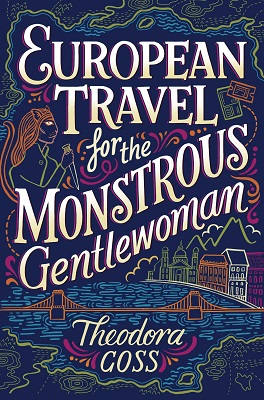

1 Comment

Reading diary 2018, #4

A mixed bag this time around, although I’ve used that excuse before. I read what interests me. If I’m swayed by fads, it’s for one book or two. I read books by friends – but I have a lot of friends who write a variety of types of fiction. Which doesn’t always mean that I automatically like it. The one thing I demand is quality of prose, and I’m happy to read books from any genre that is well-written. The only problem is that different genres seem to rate prose differently. Which is bollocks. I’ve seen reviews of YA novels rate the writing as “excellent” when it’s barely functional. If it’s not up there with the classics, then it’s hardly good. If your book is still admired for its prose 100 years later, then it might be considered excellent. Otherwise, shut the fuck up.

The Ghost from the Grand Banks, Arthur C Clarke (1990, UK). Of the Big Three sf writers of the last century, I read more Heinlein than I did Clarke or Asimov. The last I always thought a piss-poor writer, and for some reason Clarke never clicked with me. You’d have thought he would, given he tackles the sort of subjects I enjoy in my sf, and he was very much the hardest, in sf terms, of the three. So you’d also think The Ghost from the Grand Banks, which is about something that has interested me for the past few years, would go down well. It didn’t. The title refers to the wreck of the Titanic, and the novel is basically a rewrite of Cliver Cussler’s Raise the Titanic!, without the implausible thriller-type histrionics, or exclamation mark, and with a series of lectures on, er, Mandelbrot Sets instead. Clarke even has a dig at the film adaptation of Cussler’s novel. The centenary of the sinking of the Titanic is rapidly approaching, and two groups of people decide to raise the wreck to mark it. Since the wreck is in two parts, they’ll each raise one part using different methods. A British consortium plans to use glass spheres to float the forward part of the wreck, and a Japanese-American group will freeze the stern part in an iceberg, which they will then shoot to the surface using rockets. This is a book that revels in its use of future technology, and yet manages to get most of it wrong. It’s an occupational hazard of near-future sf, I admit, but most such novels are written such that they’re readable years later. Clarke didn’t appear to care. And perhaps with good reason: he’d sell boatloads, and if the book was out of print 12 months later, he had plenty of other properties pulling in the cash. It’s not that Clarke stinted on his research, more that it all feels re-used – as if he’d done it for another project and decided to get extra mileage out of it by writing this novel. Which is pretty bad. The characterisation is paper-thin, the plot is obvious, the science is mostly incidental, and the computer technology described is completely off-base… Not one of Clarke”s best. Missable.

A Calculated Life, Anne Charnock (2013, UK). This was Charnock’s debut novel, but I’ve jumped about a bit in reading her books, having read her latest most recently. However, she doesn’t stray from her shtick, so I’d a good idea what to expect. A Calculated Life provides the setting of Charnock’s novella, The Enclave, which is good, but suffers from not knowing the setting, as revealed in A Calculated Life. A flaw I have now rectified. In the near-future of A Calculated Life, which seems to be set after some sort of climate crash as Lancashire now has a Mediterranean climate, “simulated humans” are relatively common in the workplace. They’re force-grown, and genetically-engineered for certain traits. The main character of A Calculated Life is Jayna, one such simulated human. She works for a private company in Manchester, predicting economic and social trends based on seemingly unconnected events. She is very good at it – much better than “bios” and earlier models of simulants. But driving her ability is an obsession to learn as much as possible about people… and so she begins to secretly break out of her carefully prescribed life. This involves several trips to an enclave, as sort of working class suburb of Manchester which the government has pretty much abandoned – a sort of a cross between a ghetto and a barrio. Charnock paints a convincing portrait of a late-twenty-first century Britain which has responded to a drop in population due to climate change (rather than due to Brexit, although climate change will inevitably follow). The world-building is very low-key – and if only more sf writers did it so – to the extent it takes a while to figure out what is what. There’s enough that is the same, and enough that’s very different, to keep the reader comfortable as they slowly learn what’s what. The writing is good, clear and neither showy nor flashy, but this is not a long novel, only 208 pages. It does make it feel a little insubstantial. It’s good, but, happily, each new book by Charnock is better than the last. Her most recent, Dreams Before the Start of Time, will be getting the #1 slot on my ballot at the BSFA Awards (I’m especially happy it made the shortlist). Charnock is proving to be a name to watch, although I think she has something much more substantial than what  she was written so far yet to deliver. If you’ve not read her yet, why not?

The Assassinators, Philip Boast (1976, UK). Back in the late 1990s/early 2000s, I read four books by Boast that were sort of deep history occult/religious thrillers set in and around London: Resurrection, Deus, Sion and Era. I really enjoyed them. But as far as I could discover, they were the only four books like that Boast had written (and Era, published in 2000, was his last). His other novels appeared to be historical fiction, also set in and around London. But recently I stumbled across mention of his first novel, The Assassinators, described as a straight-up thriller. So I found a cheap copy on eBay, bought it, and… Um, it’s not very good. The writing is pretty poor, in fact. A self-made millionaire decides the world is over-populated and it will lead to catastrophe in a decade or two. So there needs to be a cull – in fact, the UK’s population needs to be reduced to around thirty million. So he arranges to poison the water supply in Merton Regis, a south coast town mostly populated by OAPs (I think I’ve been there, but it was called Eastbourne; horrible place). The plan, of course, does not go as, er, planned. The thugs he hired to poison the water tank screw it up. They put the poison in successfully enough, but leave clues which lead back to the industrialist. Whose wife has also learnt of the plan and is against it, straining their already-strained marriage. Meanwhile, the industrialist has vivid dreams about a post-apocalyptic wasteland caused by a nucealr war brought on by his plans to cull the world population. The Assassinator is not a great book, and in places reads like it’s set much earlier than its publication date – by at least a decade or two. I still like Boast’s last four novels – and I ought to reread them one of these days – but this was an inauspicious start.

Devices and Desires, E Arnot Robertson (1954, UK). I already have a novel by a British postwar novelist titled Devices and Desires. That’s by Susan Ertz and it was published in 1972 (see here). Robertson’s book predates it by almost two decades… but it’s also the sort of story that would have been told two decades earlier. Hebe is a thirteen-year-old girl who, with her father, helps refugees cross Europe post-WWII. The book opens in Bulgaria, where they are helping a group of four refugees cross through Macedonia into Greece – during the Greek civil war – and so onto France and Spain. But Hebe’s father is accidentally shot by andartes – Greek resistance fighters – and so she is forced to lead the group on by herself. After entering Macedonia, they stop for food at a remote farm, and end up staying for several days. In fact, it gets easier to stay than to continue on. But when a “helobowie” – a Greek expat returning to his home village to show off his new-found affluence – turns up, it attracts the attentions of the andartes, and only Hebe and one of her refugees escape. Hebe is reluctant to accept help, because any well-meaning aid agency will immediately send her to a “displaced persons” camp, and she has her own plans. I had no real idea what to expect when I bought Devices and Desires. Robertson was a name on a list of postwar British women writers I planned to work my way through – I’m already a fan of a few, such as Olivia Manning and Elzabeth Taylor – and I admit I picked Devices and Desires because it shared its title with that Ertz novel. But. I liked it. It paints a vivid portrait of the Balkans, it’s careful to set out all the various factions as objectively possible, and it shows a pragmatic, but compassionate, attitude to the problem of refugees. Though it’s set in the decade following WWII, in lands still suffering from the war’s effects, both politically and economically, there’s little in it that dioes not apply today. Refugees deserve our compassion – and ours more than anyone else’s, since we’re the ones causing the refugee crisis in the first place. It’s quite simple: if you don’t want brown people flowing across your borders, don’t bomb the shit out of their homes or keep the various factions in their wars supplied with weaponry and ammunition. It’s a problem with a very simple solution. Unfortunately, that solution means multinational companies foregoing profits. Which will never happen. Devices and Desires is at least set post WWII, and during a civil war precipitated byt the invasion of Greece, and the withdrawal of the invading forces. Robertson’s prose is very much of her time, but I like that style of prose. Hebe is a likeable and sympathetic protagonist. Devices and Desires is not the most gripping novel ever written – it can be slow in places, and the interiority occasionally overwhelms the plot – but the characterisation is assured and the setting is described well. I’m tempted to try more by Robertson. Which was the whole point of reading postwar British women writers in the first place.

Dun da de Sewolawen, Christina Scholz (21018, Austria). I was completely clueless reading this until I later discovered that it was based on the language invented by French prog rock band Magma. When I looked them up, I had a brief moment of déjà vu… and I wondered if it had all been explained to me beforehand but I’d forgotten. If so, I had, er, forgotten. But my ignorance actually enahnced the reading. I found out about it afterwards, and that was interesting. Anyway. the story is a sort of Le Guin-esque coming-of-age piece, which partly uses the world and language of Magma. It’s set on a world colonised by humans, but which had previously be inhabited by a long-dead race. And the humans are slowly integrating some of the culture ofthat long-dead race – through the artefacts they discovered – into their own culture, most noticeably words from Magma’s made-up language, Kobaïan. The writing is polished – had I not known, I’d never have guessed English was not the author’s first language – and most of the unfamiliar terms are parseable from context. It’s a simple enough story, told in first person, that uses unfamiliar vocabulary to add a gloss of strangeness… but what makes it for me is that the strangeness exists independently of the story’s world. It is googleable. It was something I used when writing the Apollo Quartet, that as much as possible “invented” in the three novellas and one novel had an independent existence outside the story. You could look them up in Wikipedia. And that’s true here of Kobaïan and its concepts. For me, it gives an added dimension to the prose. And that pushed Dun da de Sewolawen from a nicely-written Le Guin-esque sf story to something a bit more than that. It also made me want to listen to anything by Magma. Which I have yet to do.

1001 Books You Must Read Before You Die count: 131