It Doesn't Have To Be Right…

… it just has to sound plausible


1 Comment

Machine by Jennifer Pelland

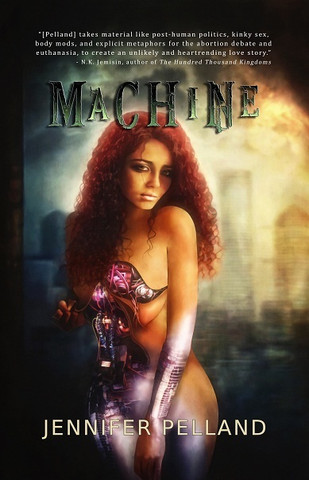
machinecover3_largeCelia Krajewski has a fatal genetic condition. Since it’s unique to her it will take some ten years before a cure is possible. Unfortunately, by that point she will have suffered irreparable brain damage. Happily, in the USA of the late twenty-first century, it’s possible to put Celia’s body into stasis until the cure is ready. And so that she does not miss out on her life during that period, her mind can be uploaded into a bioandroid body which mimics her appearance in all particulars.

This decision has unintended consequences: Celia’s wife leaves her, convinced that the bioandroid Celia is not the real Celia. There is a great deal of popular support for this position – so much so, in fact, that those in the bioandroid programme must keep their participation secret or they might be subjected to violence.

It comes as little surprise, then, that Celia begins to doubt her own humanity. She cuts herself, but beneath the skin is some sort of ceramic surface. Unwilling to accept that her identity is unchanged, Celia feels a need to explore her machine self. She visits online clubs where “bot freaks” hang out, and through one meets the Mechanic, a hacker who can give her what she wants. Through him, she meets a group of “mechanicals” who have altered their bioandroid bodies such they they no longer resemble or work like their biological originals. One in particular, called 1101, especially attracts Celia. 1101 has changed its bioandroid body to resemble an artist’s dummy. It recognises no gender, nor its previous humanity. Another, Gyne, has a body that can morph between male and female.

It is the fetishistic side of Celia’s situation which occupies much of the story of Machine. At one point, for example, she accompanies two of the mechanicals as they act as “love doll” prostitutes; and later plays the part of a love doll herself. Machine is at its best when it’s exploring this response to Celia’s machine identity. The exposition explaining the origin of the bioandroid programme is inelegant and unnecessary; and the popular reaction to bioandroids is clearly based on the US’s anti-abortion movement, but still feels a little too arbitrary to convince. In fact, the world-building throughout mostly feels a little too light to really convince. But these are minor quibbles.

There’s a disturbing prurience to the mechanicals and the changes they’ve made of, and the uses to which they put, their new bodies. Rather than explore how her new body makes her stronger, hardier, or no longer requiring food or oxygen, Celia chooses not to make herself more than human, but instead less than human. That she does so by changing her appearance to look less human, and through participation in the sex trade, seems only fitting. In Machine, Pelland has chosen an odd way to explore her theme, and though it’s skillfully done, it’s not an approach that will appeal to everyone.

Machine, Jennifer Pelland (2012, Apex Publications, $14.95, 978-1937009137)

This review originally appeared in Vector 271, Winter 2012.


2 Comments

Moving pictures, #3

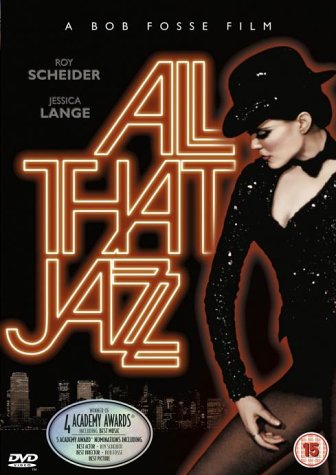
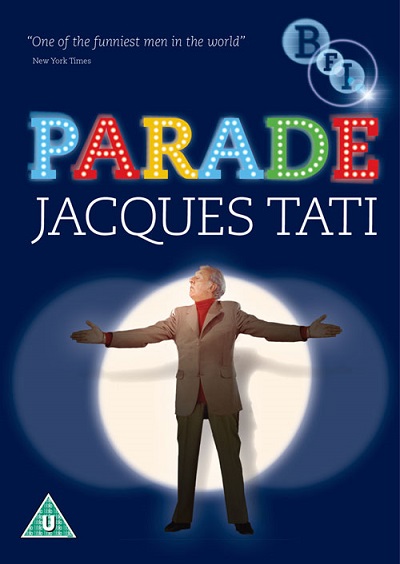
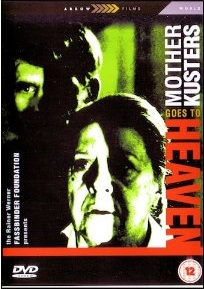
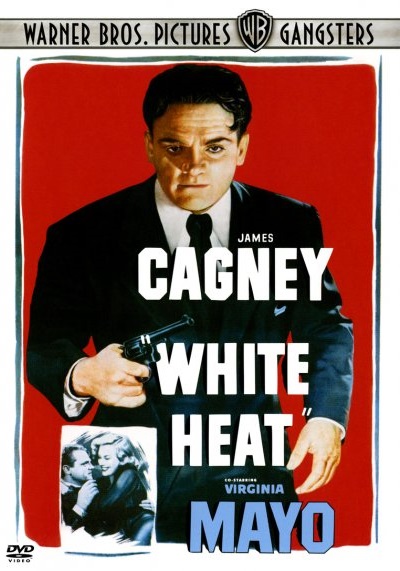
Well, my DVD-player decided to pack in. After seven and a half years of hard use. I guess I can’t complain too much. Fortunately, I also have a Blu-ray player, so there was no interruption of service. Having said that, I need to get a new Blu-ray player as the one I have is region-locked, so I can’t watch my Criterion Blu-ray of All That Heaven Allows. Bah. Stupid region-locking.

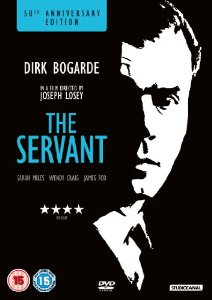
servantThe Servant*, Joseph Losey (1963, UK). James Fox is an upper crust bachelor, back in London after working abroad. He buys himself a townhouse, and advertises for a manservant. Dirk Bogarde is subsequently hired. Once the house has been decorated, the pair move in. Bogarde arranges for his sister, Sarah Miles, in Manchester to join him as a housekeeper, although the two seem suspiciously close for siblings. Fox’s girlfriend, Wendy Craig, doesn’t like Bogarde – she doesn’t think he’s appropriately servile. Miles and and Fox have sex, Fox comes increasingly under the sway of Bogarde… until their roles are pretty much reversed. Bogarde doesn’t quite convince as a Mancunian, but he plays a servant just on the edge of taking liberties perfectly. A proper creepy little film and worth seeing.

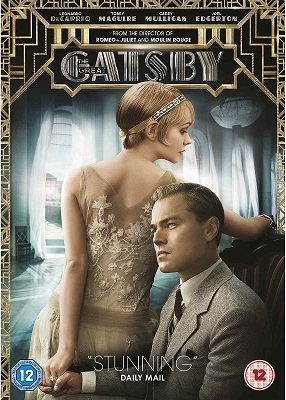
greatgatsbyThe Great Gatsby, Baz Luhrmann (2013, USA/Australia). F Scott Fitzgerald’s novel of the Roaring Twenties, when you think about it, should be pretty much ideal material for Luhrmann’s brand of spectacle. So it’s a bit of a shame that this film felt entirely pointless. Not the story – which everyone knows – but the film’s reason for existing. It didn’t help that I’ve always found both Maguire and DiCaprio a bit bland. And some of the scenery was pure CGI eye-candy, which made everything resemble a cartoon more than a classic of American literature. Nothing felt plausible, so what the story was actually about got lost in the fake world Luhrmann had created – and this is the film of a novel that comments on weighty topics like, to quote the Wikipedia page for the novel, “decadence, idealism, resistance to change, social upheaval, and success”. Disappointing.

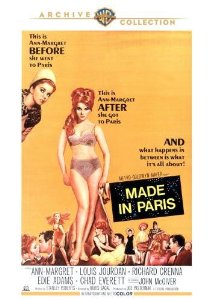
madeinparisMade in Paris, Boris Sagal (1966, USA). A silly sixties rom com starring Ann-Margret and the late Louise Jourdan. Ann-Margret plays a junior fashion buyer for a New York department store, sent for the first time to Paris to sign up fashion designer Jourdan’s latest collection. She discovers that the previous buyer and Jourdan had something of an “arrangement”. Since she has a clean-cut boyfriend back home, and she’s a nice girl, Ann-Margret’s certainly not going to continue it. So a telegram gets sent back home saying she’s falling down on the job. Boyfriend then turns up and jumps to conclusion. Jourdan oozes Gallic charm throughout, Ann-Margret makes a good ingenue… but it’s all just melodramatic froth and chock-full of French stereotypes.

dayofwrathDay Of Wrath, Carl Theodor Dreyer (1943, Denmark). Dreyer’s Gertrud is a film that almost makes my top ten, so I’ve been picking up more of his films to watch. Day Of Wrath was Dreyer’s first film after more than a decade. It was also the first feature film he made in his native Denmark, and only his second with sound. It’s set in a village in 1623. A young woman is married to a pastor a good deal older than herself. When a local old woman is accused of witchcraft, the young woman hides her in the pastor’s house. The pastor’s son returns home from abroad shortly afterwards, and he and his father’s wife begin seeing each other. The wife, whose mother had been accused of witchcraft, but spared because the pastor wanted to marry the daughter, curses her husband. He dies. She’s accused of witchcraft. This is grim stuff, shot in stark black and white, with lots of close-ups of grim-looking faces. Sort of like Bergman, but without the cheerful optimism. I especially like how Dreyer stages his films, so that the sparse sets throw the focus on what’s going on beneath the words. He’s rapidly becoming one of my favourite directors.

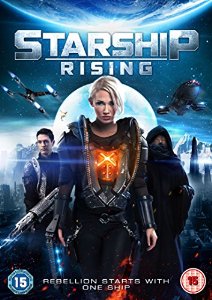
starshiprisingStarship Rising, Neil Johnson (2014, USA). I bunged this on an order because the DVD had a pretty cover and it was cheap. What I didn’t know is that Johnson is a genre feature film cottage industry all his own, and churns out low budget movies like a one-man Global Asylum. He is apparently best known for directing over 500 music videos. Huh. While the CGI in Starship Rising is actually pretty respectable, the sets just about visible underneath look cheap (and badly-lit, to hide how really cheap they are). And the acting is poor, too. So was the script. There was something about a huge warship, which is ordered to destroy Earth, but one of the officers mutinies and, er, lots of other things happened. I will admit I wasn’t concentrating as much as I should have been – maybe there was something interesting happening on Twitter, there was certainly nothing interesting in the movie. One to avoid. There is apparently a sequel due, shot back-to-back with this one, but not yet released.

Devils-DVDThe Devils*, Ken Russell (1971, UK). I’ve actually read Russell’s science fiction novel, Mike And Gaby’s Space Gospel. It was fucking awful. And only the other night, I was flicking through channels and stumbled across The Lair of the White Worm, and after watching Amanda Donohe chew everything in sight, including the scenery and some poor lad’s genitals, while bumbling posh Englishman Hugh Grant played a bumbling posh Englishman, I couldn’t help noting how much of a perv Ken Russell had been (not an original observation, by any means). Which leads me to The Devils, which is the only one of Russell’s 18 feature films (and much more television work) to make it onto the 1001 Movies You Must See Before You Die list. The Devils was very controversial when it was released, probably because it has lots of naked and semi-naked nuns having sex in it. To be honest, it was all a bit much and overwhelmed the story a bit. The sets, however, all buttresses and high walls of white tile, looked pretty cool, and Oliver Reed was on top form. Despite its relentlessness and all those scenes of writhing naked flesh, I thought The Devils pretty good. Might watch some more Russell.

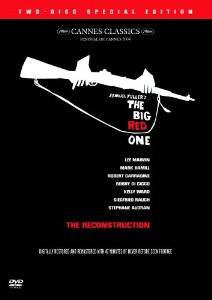
bigredoneThe Big Red One – The Reconstruction*, Samuel Fuller (1980, USA). I’ve mentioned before that I’m not a fan of war movies (and I have far less time for Vietnam War films than I do WWII ones), but there are a handful which are quite good. This, I discovered as I watched it, is one of them. Okay, so Israel makes a poor stand-in for, well, North Africa and most of Europe, and this was clearly a film done on the cheap as even the tight-focus shots couldn’t disguise the paucity of cast members. Not to mention that exactly the same type of tank – Israeli M51 HV tanks, apparently – stood in for all the tanks used during WWII. The film follows a platoon of soldiers from the US Army’s 1st Infantry Division (their badge is a, er, big red 1), led by taciturn sergeant Lee Marvin, as they fight in North Africa, Sicily, Normandy and Germany. The sergeant and four others survive each action, so much so other soldiers assigned to the platoon might as well have worn red shirts. A German Feldwebel pops up at intervals, usually trying to kill Marvin, as a sort of thematic reflection of Marvin’s character. The Big Red One is not a patch on The Thin Red Line, but I did think it better than those huge ensemble war movies they used churn out by the dozen in the 1960s and 1970s, like The Longest Day.

effiebriestEffi Briest, Rainer Werner Fassbinder (1974, Germany). Another film from the Fassbinder collection. The title character is a callow young woman who marries well, to a baron twice her age, but then has an affair with a male friend. Later, the family move to Berlin as the baron has got himself a position in government, but he finds the letters between Effi and her lover – this is many years after the affair finished – and so divorces her. Her parents won’t take her back because her reputation is in tatters. The baron meanwhile challenges the lover and kills him in a duel. Effi succumbs to illness, and her parents let her come home. She dies. There’s much more to it than that, of course, and in many respects the story bears similarities to Gertrud. It was adapted from a 1894 novel, of the same title, about which Thomas Mann apparently said that if a person’s library were reduced to six novels, Effi Briest should be one of them. This film also boasts one of the longest titles in cinema, although it wasn’t used by distributors; it is: Fontane Effi Briest oder Viele, die eine Ahnung haben von ihren Möglichkeiten und Bedürfnissen und dennoch das herrschende System in ihrem Kopf akzeptieren durch ihre Taten und es somit festigen und durchaus bestätigen.

throneofbloodThrone Of Blood*, Akira Kurosawa (1957, Japan). I will admit that Japanese cinema does not appeal to me as much as the cinema of some other countries, and while I’ve watched films by Kurosawa, Ozu and Mizoguchi, I’ve never felt the urge to watch everything in their oeuvres. But it’s no good watching the same sort of stuff all the time, so I occasionally bung a piece of classic Japanese cinema on my rental list… Throne Of Blood is, famously, Kurosawa’s take on Macbeth, and I enjoyed it a lot more than I expected to. That the final scene with the archers, as depicted on the cover of the BFI DVD, really is quite astonishing. The scenes set in the forest looked a bit stagey, but the rest of it – filmed high up on Mount Fuji – looked really effective. I think this is the Kurosawa I’ve enjoyed and appreciated the most of the ones I’ve seen, although – according to my records – the last one I saw before this was Ran in May 2009. I really should watch more of his films.

1001 Films You Must See Before You Die count: 558 (they’re the ones with the asterisked titles)


2 Comments

Reading out loud

One week tomorrow, I’ll be giving a reading at the Sheffield Fantasy & Science Fiction Social Club, along with US author Dana Fredsti. This takes place on Sunday 1 March, from 4 pm onwards, in the Old Queen’s Head (next to Sheffield bus station). There will also be a raffle, with lots of prizes (people rarely go home empty-handed), and plenty of friendly chat. This is the second event put on by SFSF Social – the first was on 24 January and was very successful.

Time permitting, I plan to read a very short excerpt from Apollo Quartet 4 All That Outer Space Allows, and then another very short excerpt from my forthcoming space opera, A Prospect of War. I’ve no idea how well it’ll go – if the Apollo Quartet has taught me not to give books long titles because typing them out all the time is a complete faff, I suspect reading from A Prospect of War will probably teach me to pick character names I can actually pronounce…

So, come along – it costs nowt and it’s an excellent way to spend a Sunday evening.

oldqueenshead


2 Comments

Reading diary, #2

Most of the reading I’ve been doing over the past month or so has been dipping into research books as I wrangle Apollo Quartet 4 into shape. (Not long now. Honest.) So there’s not been that much of yer actual reading of fiction. Except for, well, the following…

The Luck of Brin’s Five, Cherry Wilder (1977). I read this for SF Mistressworks. My review is here.

darebioDan Dare: A Biography, Daniel Tatarsky (2010). Back in the late 1970s, my parents bought me a Hamlyn anthology of Dan Dare stories one Christmas, containing ‘The Red Moon Mystery’ and ‘Safari in Space’, both of which remain my favourite Dare stories. Several years ago, I collected the full set of Hawk Publishing Dan Dare reprints (see here). So when a “biography” of Dare was published a couple of years ago, I picked up a copy. And… it’s not very good. The book tells the story of Marcus Morris and Frank Hampson, and how Eagle was begun. But the writing throughout is terrible, and I spotted several inaccuracies (on things not related to Eagle, to be fair). There are some nice colour plates, particularly of the mock-ups of the first issue, and a useful appendix giving plot summaries of all the Dan Dare stories published in Eagle. But there are better books about Hampson, and reading about Dan Dare is no substitute for reading the actual Dan Dare comic strips.

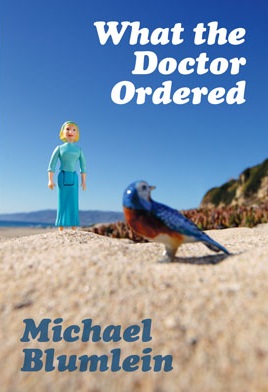
whatdoctororderedspread0What The Doctor Ordered, Michael Blumlein (2013). I’ve been a fan of Blumlein’s fiction since first reading him in Interzone back in the 1980s. Unfortunately, he has not been exactly prolific – three novels to date, and What The Doctor Ordered is only his second collection after 1990’s The Brains of Rats. Which doesn’t mean there aren’t a few stories still uncollected. What The Doctor Ordered collects fourteen stories, dating from 1997 to 2012, and originally appearing in a variety of venues, such as F&SF, Asimov’s, Flurb and a handful of original anthologies, mostly horror or dark fantasy. The one thing I’d forgotten during all the years I’d not read Blumlein was how bloody good he is. His three novels are all too different to really get a handle on him as a novel writer. But his short fiction really is very, very good. Best story in here is ‘Isostasy’, although ‘The Roberts’ is also excellent. Blumlein’s fiction is unsettling in ways that I think few authors manage to be. His prose is clinical and sharp, and he paints realistic pictures… into which he drops something fantastical that nonetheless manages to fit in. And then he twists it in ways that makes it seem all the more uncomfortable. One of the best collections I’ve read in recent years.

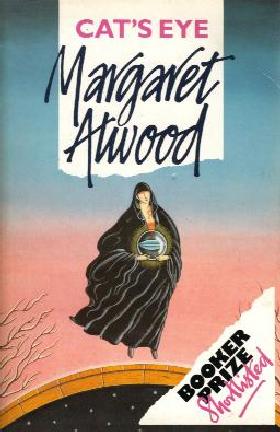
catseyeCat’s Eye, Margaret Atwood (1988). The narrator of this novel is a middle-aged artist, Elaine, who has returned to Toronto to attend a retrospective of her career. This triggers a series of long extended flashback sequences, in which she remembers her childhood in the city, particularly her friendship with three schoolfriends, one of whom was a cruel bully; but she also remembers her college years and her early years as an artist. That bullying schoolfriend, Cordelia, haunts Elaine, even in the present – although the tables did eventually turn, and while Elaine never bullied Cordelia to the extent she was bullied herself, Elaine does recount how Cordelia unravelled over the years and eventually ended up in a sanatorium. If Cordelia’s decline is signposted throughout the novel, then I missed most of it, though her fall as an ironic mirror image of Elaine’s rise to success did seem a little too obvious. Cat’s Eye was a surprisingly easy read, and if the early chapters, detailing Elaine’s childhood, were a little grim and hard to take in places, there was plenty more in the novel to balance them. Worth reading.

Cautionary Tales, Chelsea Quinn Yarbro (1978). Another book read for review on SF Mistressworks. My review is here.

raj4A Division Of The Spoils, Paul Scott (1974). The fourth book of the Raj Quartet, and the war is over in Europe, the Americans have dropped their atom bombs, but there is still Malaysia to be taken back from the Japanese. In India, demission of power from the UK is a certainty – the socialist government back home are focusing on domestic issues, and are not interested in Empire. This novel introduces Guy Perron, played by Charles Dance in the TV adaptation (and probably the character most remembered after Timothy Piggot-Smith’s Ronald Merrick), who despite his privileged background has managed to stay a sergeant throughout the war. He meets Merrick, who is now a major dealing with the Indian army deserters who joined the Germans and Japanese, and is detached to his staff. Through Merrick, he also meets Sarah Layton, whose narrative figured prominently in both The Day Of The Scorpion and The Towers Of Silence. Also prominent in the narrative is Nigel Rowan, who made a brief appearance in one of the earlier books. Rowan and Perron are old school-mates, as was Hari Kumar – whose false imprisonment as a political detenu by Merrick, who is wrongly convinced Kumar raped Daphne Manners (the events surrounding this form the core of the first book, The Jewel In The Crown). Through Rowan, Perron and the Laytons, Scott examines the route to independence and its effect on Britons living in India, weaving in and out of the plot of the preceding three books as they relate to Perron, Rowan and Sarah Layton (the TV adaptation went for a straight chronological structure, and misses a lot of the books’ arguments and subtleties). Scott is quite scathing in his critique of the Raj, and of the British who ruled India. It’s not hard to understand why these four books are considered classics, they’re certainly amongst the best post-war British literature I’ve read. I suspect I’ll be rereading them again one day.

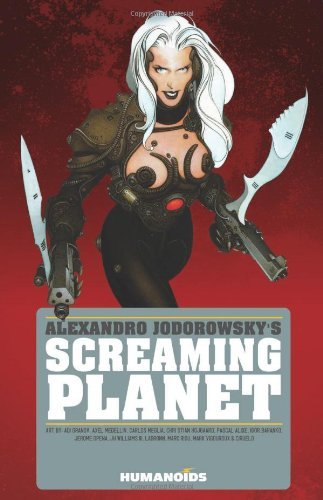
screamingplanetAlexandro Jodorowsky’s Screaming Planet, Alexandro Jodorowsky & various artists (2013). I’m a fan of Jodorowsky’s films and bandes dessinée, but I knew nothing about this title when I bought it. Still, Jodorowsky… It proved to be a linked anthology of short pieces, written by Jodorowsk but drawn by a variety of artists, which featured in the relaunched Métal Hurlant. A sentient planet is mistreated by its natives so badly it somehow makes them build an enormous metal head, into which it decants its personality, and which is then blasted into space – this is the “screaming planet”. And as it journeys through the cosmos, it passes by other worlds and its presence affects one or more people on those worlds. The story themselves are linked only by the giant head passing in the sky. Some work better than others. This is minor Jodorowsky – although he does confess in an introduction that he is used to working at longer lengths and found writing these “short stories” challenging.


2 Comments

BSFA and Kitschies – the shortlists

Two genre shortlists announced in one day, UK ones too. First, the BSFA Awards, for which I nominated works (see here), and usually vote. The four shortlists look like this:

Best novel
The Race, Nina Allan (NewCon Press)
Cuckoo Song, Frances Hardinge, (Macmillan)
Europe in Autumn, Dave Hutchinson (Solaris)
Wolves, Simon Ings (Gollancz)
Ancillary Sword, Ann Leckie (Orbit)
The First Fifteen Lives of Harry August, Claire North (Orbit)
Lagoon, Nnedi Okorafor (Hodder)
The Moon King, Neil Williamson (NewCon Press)

Well, three of my nominations made it – Hutchinson, North and Williamson. The Allan and and Leckie are no surprise – the first because it’s probably the most talked-about UK sf novel of 2014 among the people who nominate for the BSFA, and the Leckie because of Ancillary Justice‘s huge success. Also, is this the first time the BSFA Award has more women than men on the novel shortlist? I think it might well be. The large shortlist does, however, suggest that the actual number of nominations to make it through were somewhat low. Which, if true, is in one respect slightly worrying, but also heartening in that it demonstrates last year was pretty damn good for UK sf novels.

Best short fiction
‘The Honey Trap’, Ruth EJ Booth (La Femme, Newcon Press)
‘The Mussel Eater’, Octavia Cade (The Book Smugglers)
Scale Bright, Benjanun Sriduangkaew (Immersion Press)

None were nominated by myself. In fact, I’ve read none of them. An all-female list, too. The less said about Sriduangkaew’s presence, the better.

Best non-fiction
Call and Response, Paul Kincaid (Beccon Publications)
‘Deep Forests and Manicured Gardens: A Look at Two New Short Fiction Magazines’, Jonathan McCalmont (Ruthless Culture)
Science Fiction and Fantasy Writers and the First World War website, Edward James, ed.
‘The State of British SF and Fantasy: A Symposium’, Strange Horizons
Greg Egan, Karen Burnham (University of Illinois Press)

Surprisingly, two of my nominations made it through – Kincaid and Strange Horizons – and while I nominated another blog post from Ruthless Culture, it’s good to see McCalmont getting some recognition.

Best artwork
Cover of The Mirror Empire by Kameron Hurley, Richard Anderson (Angry Robot Books)
Cover of Bête by Adam Roberts, Blacksheep (Gollancz)
The Wasp Factory sculpture, Tessa Farmer
Cover of Wolves by Simon Ings, Jeffery Alan Love (Gollancz)
Cover of Mars Evacuees by Sophia McDougall, Andy Potts (Egmont)

Another surprise: two of my choices made it onto the shortlist. I didn’t attend Loncon3, so I didn’t see the Wasp Factory sculpture. Blacksheep won the BSFA in 2013, for the cover of… an Adam Roberts novel (and this is Blacksheep’s third time on the shortlist with a Roberts cover). The Mirror Empire has been much discussed since its publication, although I admit I can’t see the appeal of its cover art. And I see there’s now a hardback edition of Mars Evacuees (US, perhaps?), with much inferior cover art.

Congratulations to all the nominees, and I know who I hope will win each category.

The other UK genre award announced today is the Kitschies, a juried award, which also has four categories: Red Tentacle (novel), Golden Tentacle (debut novel), Inky Tentacle (cover art) and, new this year, Invisible Tentacle (“natively digital” fiction). The shortlists look like this:

The Red Tentacle
Lagoon, Nnedi Okorafor (Hodder & Stoughton)
Grasshopper Jungle, Andrew Smith (Egmont)
The Peripheral, William Gibson (Viking)
The Way Inn, Will Wiles (4th Estate)
The Race, Nina Allan (NewCon Press)

I’ve read only the Allan and I didn’t think it quite gelled as a novel – which was why I didn’t nominate it for the BSFA.

The Golden Tentacle
Viper Wine, Hermione Eyre (Jonathan Cape)
The Girl in the Road, Monica Byrne (Blackfriars)
Memory of Water, Emmi Itäranta (Voyager)
The Long Way to a Small, Angry Planet, Becky Chambers (self-published)
The People in the Trees, Hanya Yanagihara (Atlantic Books)

I’ve heard of the Byrne and Itäranta, but the others didn’t even ping on my radar. The Guardian is making a big thing of a self-published novel being shortlisted for the award, conveniently forgetting that a self-published novel won the Aurealis Award for Best Fantasy Novel in Australia last year and a self-published novella won the BSFA in 2013. Oh well, yesterday’s news and all that.

The Inky Tentacle
Cover of The Ghost of the Mary Celeste by Valerie Martin, X (Weidenfeld & Nicolson)
Cover of A Man Lies Dreaming by Lavie Tidhar, Ben Summers (Hodder & Stoughton)
Cover of Through the Woods by Emily Carroll, Emily Carroll and Sonja Chaghatzbanian (Faber and Faber)
Cover of The Book of Strange New Things by Michel Faber, Rafaela Romaya and Yehring Tong (Canongate)
Cover of Tigerman by Nick Harkaway, Glenn O’Neill (William Heinemann)

The only one of these I own is the Tidhar, and  didn’t really like the cover (I liked the book, though). The Faber and Harkaway I’ve seen.

The Invisible Tentacle
@echovirus12 (Twitter fiction), created/curated by Jeff Noon (@jeffnoon), Ed (@3dgriffiths), James Knight (@badbadpoet), violet sprite (@gadgetgreen), Richard Biddle (@littledeaths68), Mina Polen (@polen), Uel Aramchek (@ThePatanoiac), Graham Walsh (@t_i_s_u), Vapour Vox (@Wrong_Triangle)
Kentucky Route Zero, Act III, Cardboard Computer
80 Days, Inkle Studios
Sailor’s Dream, Simogo

Again. congratulations to all the nominees.


4 Comments

The bookcase is not enough

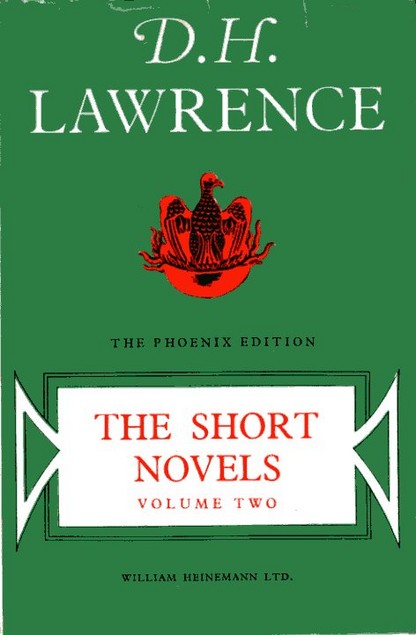
I was very good in January and purchased only three books, but then I went a little mad once February started. So while the TBR actually shrank during the first month of the year, I’m not sure it will do so this month. I was finding it increasingly difficult to track down copies in good condition of the specific paperback editions of DH Lawrence’s books that I’m collecting – which was not made easier by the big secondhand book sellers on eBay putting up photos of different editions to the ones they were actually selling… But then I discovered that during the fifties, sixties and seventies, Heinemann had published a set of, I think, twenty-six “Phoenix Edition” hardbacks of Lawrence’s books. And there just happened to be someone on eBay selling ten of them as a job lot for a reasonable price… And I bought another one too. Now I’ve got eleven of the books, of course, I’ve got no room for them. So it goes.

2015-02-09 12.38.37

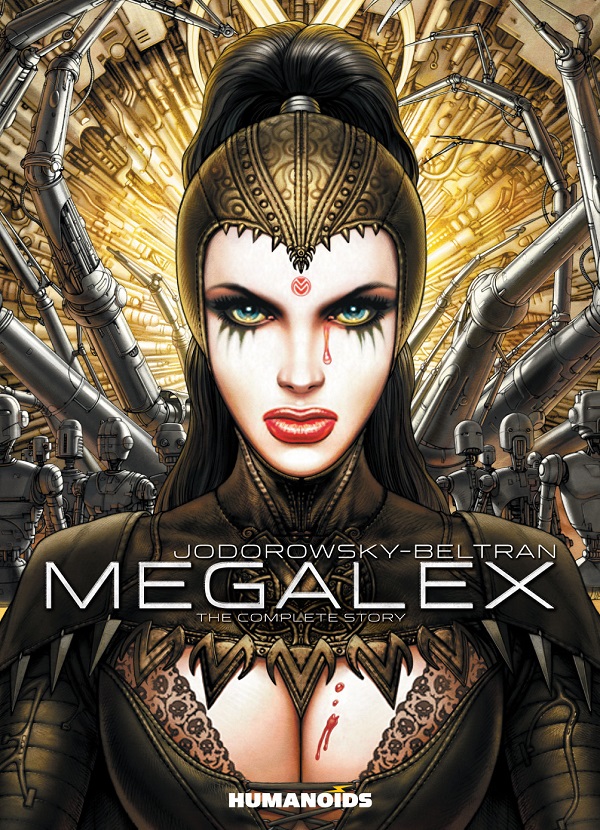
There’s a tale and a half to tell about The Adventures of Blake & Mortimer 19: The Time Trap and Amazon Logistic’s inept attempts to deliver it – suffice it to say, I ended up with three copies of the book (one of which is in Denmark). It’s an early story from the series, and not as good as later ones. I’ve been waiting a couple of years for the third volume of The Secret History, so I’m glad it’s finally available. Might have to reread the first two volumes first, though, to remind me of the story… And finally, well, Jodorowsky – what more needs to be said? Jodorowsky’s Screaming Planet is new to me. It’s apparently ten stories Jodorowsky was commissioned to write for Métal Hurlant. I have the first volume of the Megalex series, but the subsequent instalments never appeared in English. I was planning on getting the lot in French, but then Humanoids went and published an English-language omnibus,  Megalex: The Complete Story. Might still the get the French editions one day, though.

2015-02-07 13.28.29

After buying the Phantasia Press editions of The Pride of Chanur and Chanur’s Venture a few months ago after one too many glass of wine, and then discovering that several years ago I’d bought a signed first edition of Chanur’s Legacy, the final book of the quintet (published by DAW but never in a Phantasia Press edition)… Well, I just had to complete the set, didn’t I? So The Kif Strike Back and Chanur’s Homecoming; both of which will, of course, be reviewed on SF Mistressworks some time this year. I have been somewhat lax over the last year or so in keeping up with the SF Masterwork series, chiefly because many of the more recent books have either been reprints from the original series, or are of books I’ve previously read and am not bothered about owning a copy… But but but Heinlein, I hear you cry. Well, I’ve never actually read Double Star, and the last SF Masterwork I bought was the Tiptree collection, so I think it’s allowed. Edge of Dark is an ARC from Pyr, which I reviewed for Interzone. It was a bit meh – as you will no doubt learn should you subscribe to Interzone. Children of the Thunder and Around the World in 80 Days were both charity shop finds.

2015-02-07 13.29.00

I’m a fan of Terrence Tiller’s poetry and have several of his collections, so I was quite chuffed when Unarm, Eros popped up on eBay. It’s also a review copy, and includes the review slip… from 15th January 1948.

2015-02-07 13.29.46

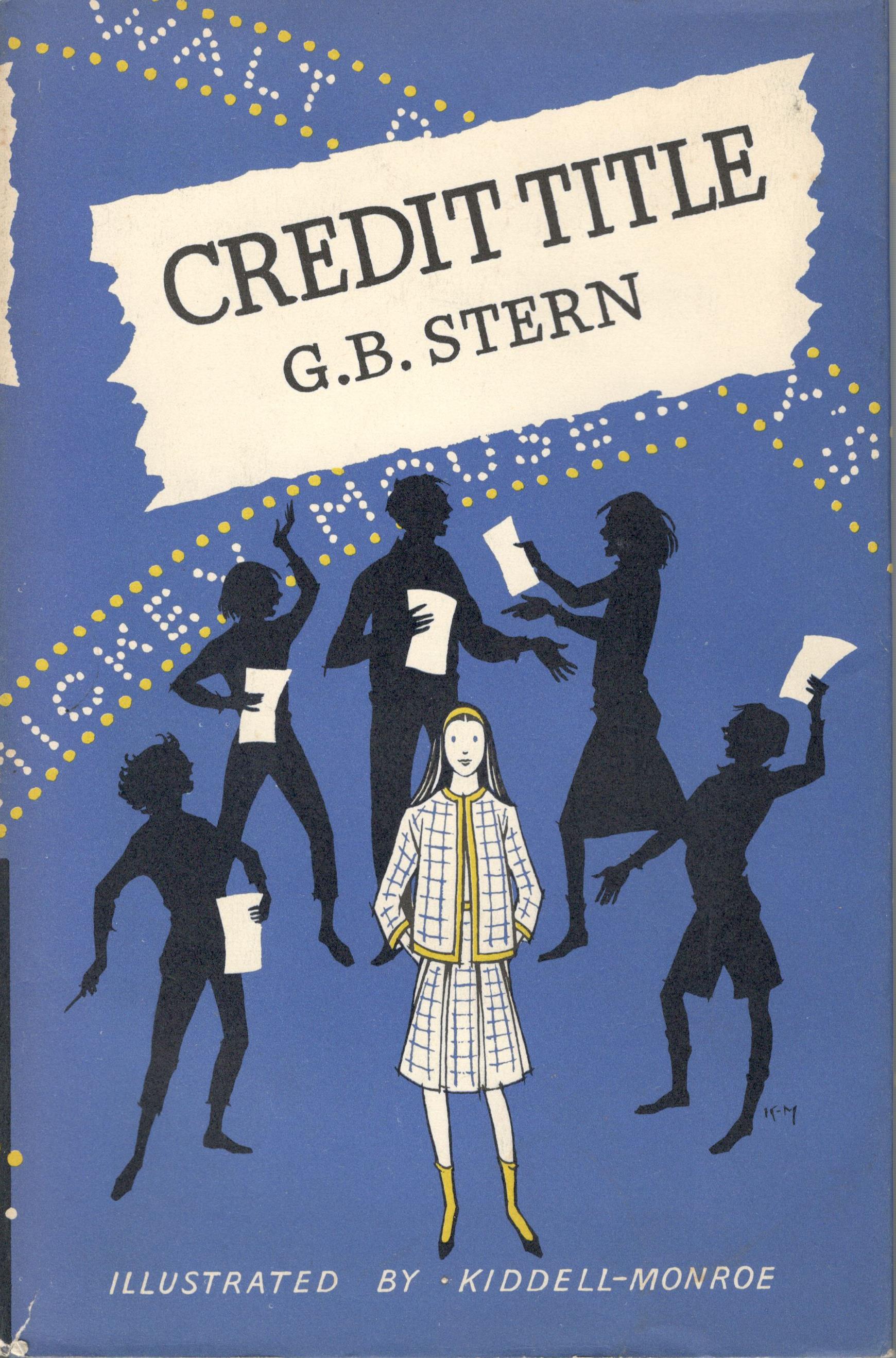
I read Farrell’s The Siege Of Krishnapur over Christmas 2013 and was much impressed, so when I spotted The Hill Station in a charity shop it was an easy decision to buy. I plan to read more Farrell. America Pacifica was, I seem to recall, one of those literary novels that borrows from science fiction and which was talked about a couple of years ago. It was also a charity shop find. A Girl Is a Half-formed Thing was a charity shop find too, and another book I remember being highly praised. Credit Title is by one of the authors from my informal project to read some postwar British fiction by women writers – GB Stern is Gladys Bronwyn Stern – and I suppose I should have guessed from the cover art, but the book cover flap describes Credit Title as a “junior novel”.

2015-02-07 13.30.23

I mentioned the DH Lawrence Phoenix Editions earlier, and here are the eleven volumes I now own, in all their green-jacketed glory. They are: 1 Women in Love, 3 Aaron’s Rod, 5 The White Peacock, 7 The Trespasser, 9 Sons and Lovers, 14 The Short Novels Volume 1, 15 The Short Novels Volume 2, 16 Twilight in Italy, 22 Lady Chatterley’s Lover, 23 Fantasia of the Unconscious & Psychoanalysis and the Unconscious, and 26 The Boy in the Bush. I will certainly be tracking down more…

2015-02-07 13.31.05

I found some illustrations from Beyond Tomorrow online on some blog, and liked them enough to hunt down a copy of the book. It took a while, as it’s quite hard to find. But I managed it. I might well write about it at some point. Postscripts 32/33 Far Voyager is the latest “issue” of the magazine that became an anthology, and I’m in it. In fact, it’s my story which provided the title for the book. The Master Mariner: Running Proud is a favourite novel. A signed first edition popped up on eBay, so I bought it… only to discover I already had a signed first edition. Ah well. At least this new copy is in much better condition. And I guess I now have a signed first edition of The Master Mariner: Running Proud for sale. The Planet on the Table is also signed, but the only edition I already owned was a paperback, so that’s all right. It could do with a new jacket, however.


2 Comments

Postscripts Far Voyager

My contributor copy of Postscripts 32/33 Far Voyager landed with a thud on my mat this weekend. I’m especially pleased about this one, because my story provided the anthology’s title. (I didn’t get named on the cover, though.) ‘Far Voyager’ is another of my alt space stories, based around the premise that one of the Voyager probes was manned. There are a few clues to the identity of the astronaut, although he’s not actually named.

ps3233

Also in the anthology are many excellent writers, including Paul Park, Ian Watson, Michael Swanwick, Alison Littlewood, Richard Calder and Angela Slatter.


8 Comments

Moving pictures, #2

More marathon movie watching. I’ll keep the notes on each film short this time, otherwise I’ll end up writing more about films in 2015 than I will books or science fiction…

deepend2dDeep End*, Jerzy Skolimowski (1970, Germany/UK). This was an odd beast. A film set in Britain, with British stars, performed in English, but actually filmed in Germany, using German actors to fill out the cast, and by a Polish director. John Moulder Brown is a bit of a blank as the schoolboy who goes to work at the baths, but Jane Asher is good as the female attendant who’s using the job as a springboard to more. Munich stands in for London quite well, although there are odd moments that seem strangely not-English. Story-wise, it’s nothing new or innovative, just the usual mix of teenage lust and prudery, all a bit Holden Caulfield-ish, although it does turn interesting toward the end. Still, a good film. Definitely belongs on the 1001 Movies You Must See Before You Die list.

night_of_silenceNight of Silence, Reis Çelik (2012, Turkey). Set in rural Turkey, a man in his sixties returns to his village after serving a prison sentence and in order to end a feud between two families, he is married to a child bride. The film takes place entirely on their wedding night. What follows is a sensitive portrayal of both parties – the old man didn’t want the wedding, and he won’t do anything his new bride won’t have of him. But he is also expected to perform. The child bride, of course, doesn’t want to be there at all, and is frightened about what she expects will happen. During the night, the man reveals why he was sent to prison, and it’s unpleasant. Despite all that, Night of Silence succeeds because it treats its topic sensitively and shows how abhorrent it is, without making monsters of its characters. Worth seeing.

herHer, Spike Jonze (2013, USA). A man installs a new OS on his computer and phone, then customises its interface so he finds it more appealing – except rather than just choosing a nice desktop wallpaper, moving a few icons around or selecting a theme, this involves selecting a nice voice and a variety of interests and personal facts, sort of like for a dating agency. And because the man has designed himself an OS personality which will appeal to him – which proves to be, somewhat implausibly, some sort of sophisticated AI – then of course he finds himself liking his OS’s personality very much. Like a girlfriend. Except for the “girl” bit, or indeed any kind of physical presence. And then he discovers that his OS, voiced by Scarlett Johansson, has instantiated herself an uncountable number of times for other users. I thought this film a bit dull – and, since I work in computing, I’m always wary of movies whose stories depend on it and usually find them wholly unconvincing.

12_angry_men12 Angry Men*, Sidney Lumet (1957, USA). Essentially, a courtroom drama that, er, doesn’t take place in a courtroom. The jury have heard the evidence and closing arguments, now they have to reach a verdict. Except before they do that Henry Fonda pretty much builds a case for the defence, which is what the defendant’s attorney should have done in the, er, courtroom. End result: reasonable doubt. And the “obviously guilty” perpetrator is found innocent. Makes you feel all warm and fuzzy about the US system of justice… until you remember what it’s really like. Also, note the lack of women on the jury.

aliceAlice*, Jan Svankmajer (1988, Czech Republic). I’ve a feeling I’ve seen something by Svankmajer before, but I’m not really sure – and given the singular nature of Svankmajer’s vision, you wouldn’t think I’d forget. Ah well. As the title suggests this is Svankmajer’s take on Alice’s Adventures in Wonderland, and it sticks pretty much to the plot of the book. But some of the visuals are really disturbing. The White Rabbit, for example, belongs on that Bad Taxidermy twitter feed, and its glass eyes haunted me for a couple of nights after I’d seen the film.

transformers4Transformers: Age of Extinction, Michael Bay (2014, USA). Every time I think Hollywood has plumbed the depths of stupid, it manages to surprise me and dig a little deeper. I’m trying to remember the actual plot of this film, but all I have is some vague memory of Optimus Prime as a junked-up truck in an old theatre – no mention of how they got a big fuck-off truck (or a big fuck-off robot, for that matter) into the theatre – and something about a bounty hunter Transformer that’s working with nasty generic national security apparatus to kill all Transformers, but of course they’re really working with the Decepticons. Or something. I do remember the terrible broad-brush racist characterisation, the casual disregard for people’s lives, the way the Transformers were “rebooted” with shiny new paintjobs, and the corporate villain (Stanley Tucci, the only watchable actor in the entire film) doing a Jubal Harshaw when he’s introduced with his blonde, brunette and black-haired personal assistants. Mostly, however, I don’t remember why I watched the bloody thing in the first place.

bowling_columbineBowling For Columbine*, Michael Moore (2002, USA). I often wonder if the USA realises that the rest of the world thinks its attitudes to guns is insane. Not the entire country, of course – as Moore demonstrates in this film. He explores US gun culture, and tries to work out why so many more Americans are killed each year by firearms than in any other nation on the planet. I’m not entirely sure I agree with his conclusion that big business and the media feeds the US populace a solid diet of fear and paranoia, and that this is chiefly responsible. While it’s true Canada may have as many guns as the US, and significantly less gun deaths, pretty much every Anglophone nation’s television is a solid wall of FUD masquerading as news and entertainment. Still, Moore asks some important questions – and, unsurprisingly, he remains unanswered.

SplendorSplendor In The Grass*, Elia Kazan (1961, USA). It’s the 1920s, Warren Beatty is a dim high school football star, the son and heir of a rich oilman. Natalie Wood is a nice girl from a much less affluent family who is going out with Beatty. Oilman wants Beatty to go to Yale and then take over the business; Beatty wants to marry Wood and run the family ranch. Beatty’s sister is a flapper and a girl with a bad reputation. Beatty feels urges but doesn’t want to Wood to be like his sister, nor does she want to be like the sister. The two go their separate ways. Then the Great Depression hits, and oilman is reduced to penury. Later, Wood goes looking for Beatty, who is now happy running the ranch, and is married and a father. This is one of those worthy historical (as in, early twentieth-century American) dramas Hollywood used to bang out during the 1950s and 1960s as Oscar bait. It was nominated for two – best actress and best screenplay, but only won the latter. Didn’t find it all that interesting. I like a bit more melo- in my mid-twentieth century drama.

lucyLucy, Luc Besson (2014, France). I’m convinced this is a comedy, played absolutely straight by its cast. Those opening shots of cheetahs hunting, the sort of ham-fisted cinematic metaphor that were considered old when they introduced sound. The central conceit: we’ve known for decades that humans using only ten percent of their “cerebral capacity” is complete bollocks. Also, amongst Lucy’s first set of powers is the ability to talk to someone in another country using their television… Which is not to say Lucy isn’t an entertaining action-sf-comedy, and some of the special effects are quite effective. Johansson is good in the title role, particularly in the first half where she’s still, well, human. And Morgan Freeman demonstrates why he should handle the exposition in every single film Hollywood ever makes – I mean, he talks complete bollocks, but he actually makes it sound plausible.

thin_red_lineThe Thin Red Line*, Terrence Malick (1998, USA). If I had to pick a favourite WWII film, and I’m not a fan of WWII films, it would have to be Das Boot. But I thought this was very good. From the opening, when a pair of deserters on a Pacific island are recaptured by their company to Nick Nolte’s idiot colonel, determined to prove himself against younger men who have been promoted above him, not to mention the company commander who believes his responsibility is to his men and not to whatever random tactical objective he is ordered to meet. WWII films traditionally present pretty straightforward moral landscapes – GIs good, Japanese bad; Allies good, Nazis bad – but The Thin Red Line shows the US soldiers just as far from the moral high ground as their enemy. Not to mention their general ineptitude. All too often, wars are presented as if everything went smoothly, casualties were, if not expected, certainly unavoidable, and the good guys won because better fighters. It’s all complete crap, of course; and it’s refreshing to see it applied to WWII (it’s pretty much a cliché in Vietnam films, of course).

unearthly_strangerUnearthly Stranger, John Krish (1963, UK). I’m not really sure why I bunged this on an Amazon order, there must have been something in the description which persuaded me it might be worth seeing. It wasn’t a bad call. It’s a melodramatic Brit sf flick, with plenty of stark lighting and Dutch angles, not to mention a healthy dose of Cold War paranoia – although, perhaps in this case, it might be “sex war paranoia”. A scientist on a secret project fears for his life after the mysterious death of his predecessor, and it turns out the scientist’s “Swiss” wife has a number of unusual characteristics – she sleeps with her eyes open, she appears to have no discernible pulse, and she can handle burning hot objects with her hands. A nicely creepy film that just about manages to stay convincing, despite its outlandish premise.

1001 Movies You Must See Before You Die count: 555


17 Comments

Welcome to An Age of Discord

What is this, I hear you cry. A space opera? But, Ian, you write hard sf, literary hard sf, the sort of hard sf that needs two pages of bibliography! How can you write a space opera?

Well, it sort of happened like this…

I first started work on A Prospect of War back when I was living in the UAE. I’d previously completed two novels, neither of which were especially good. One was a sort of Dickensian space opera, and the other a first contact novel with a time-slipped narrative. But after working my way through the first seven books of Robert Jordan’s Wheel of Time, and failing to understand why they had proven so successful, I decided to write a space opera trilogy which used the structure of an epic fantasy. It took several goes before I was happy with the universe I was building (early versions probably owed a little too much to science fiction role-playing games such as Traveller).

So, I would have a “peasant hero”, a young man of common birth who proved to have some magical ability which resulted in him leading the forces of good against an attempt by a “dark lord” to overthrow the existing ruling dynasty. But I wasn’t quite ready to throw magic into my space opera. In fact, what I wanted was a relatively low-tech civilisation that had managed to build an interstellar empire using only a limited number of pieces of handwavey technology. I didn’t want it all shiny high tech because I needed to justify the rigidly-enforced social classes. You need those class barriers in place for a peasant hero to break through (and to provide yet more jeopardy to justify his eventual victory). And I wanted an atmosphere of fading grandeur and deep history.

I invented a world which reached an early industrial level of technology, and promptly discovered three satellites in orbit. A space race led to one nation – the most socially conservative and repressive of those on the world – getting into space first… where the astronauts found three ancient wrecked starships. And from them they reverse-engineered: a Faster-Than-Light drive, a cheap energy generator, anti-gravity, a powerful directed-energy ships’ weapon, and a force-curtain. (They actually had a little surreptitious help… but that’s a story for another day.) These five things gave that nation first the planet, and then an interstellar empire.

But my story would be set millennia later, after the empire had declined and a new empire, catalysed by a successful war against another interstellar polity, had been carved out of it. The dark lord would be only the latest leader of a conspiracy which has been harbouring a grudge since the defeat of the old empire…

This was getting bloody complicated. I took some time out from writing to do some world-building… and eventually ended up with a couple of hundred MB of spreadsheets, documents and text files giving details on everything from the imperial government to its military to naming conventions to ancient history. I even built a wiki, with the eventual aim of either publishing it online or in book-form as an encyclopaedia.

A generic space opera image from a wallpaper web site

A generic space opera image from a wallpaper web site

Then it was back to writing the story… which never quite went as planned. This was partly because I’d been too clever for my own good. For reasons which now escape me, I decided that FTL travel entailed journeys measured in weeks, but in the real universe the length of time the journey took was longer, on a logarithmic scale. So a journey which for a ship’s passengers might take a week would see them arrive eight days after their departure; for two weeks, it would be seventeen days… and so on. Since I decided to use four main viewpoint characters, and I’d have them travelling about on different journeys… I had to create a giant spreadsheet in order to keep the chronology straight. It was a major headache.

And that epic fantasy template I’d planned on using… that was getting completely bent out of shape too. I had my four protagonists meeting and then separating and then meeting again, just so I could get them all into position for the end of the first novel. To make matters worse, every time I reached for a space opera or epic fantasy trope to incorporate, it would never quite fit, so I had to either rip it apart or subvert it.

Anyway, I eventually finished the first book, after many years of writing and polishing. It was good enough for John Jarrold to take me on as a client. I started work on the second book of the trilogy. This was a mistake. If you can’t sell the first book of a series, what’s the point of writing the second book? A few years passed. I wrote a few treatments for novels, but no one bit. I wrote Adrift on the Sea of Rains. It won the BSFA Award. I discovered I much preferred writing the sort of literary sf that requires lots of research. I wrote the remaining books of the Apollo Quartet (well, was working on the fourth book). Then a small press – Tickety Boo Press – asked to see my space opera. What to do? I’m not writing that sort of science fiction any more. Won’t its appearance confuse readers who have come to expect the likes of the Apollo Quartet from me?

Decision time.

Now, I still stand by A Prospect of War and A Conflict of Orders. I think they’re good work. And now actually seems like the right time for them to appear. Publishing has changed, the sf market has changed, space opera has changed. Which doesn’t mean I don’t intend to do a little wrangling before they see the light of day. At 200,000 words, A Prospect of War could do with being made a little tighter and punchier. And I changed some background details when I wrote A Conflict of Orders, so I need to retcon them in A Prospect of War. A Conflict of Orders’ 170,000 words will also receive some rewriting. And I’ll finally get around to writing A Want of Reason – which will please some friends, who have been demanding I write it for years.

Space opera is a more commercial, and commercially successful, subgenre than literary hard sf. If An Age of Discord sells well, and encourages people to buy the Apollo Quartet, then it’s all win. There are space operas currently available on Kindle – badly-written and derivative ones – which sell several thousand copies a month. In three years, I’ve sold 1,300 copies of Adrift on the Sea of Rains. Granted, novellas don’t sell as well novels, but all the same…

An Age of Discord does not mean I’ve permanently decamped to space opera. I still have a number of hard sf projects planned, both at novella and novel length. But I see no reason why I can’t write big fat space operas and literary hard sf. But we shall see how well the trilogy does. Perhaps people will hate it, perhaps no one will buy it. Perhaps its time has not come, after all…