It Doesn't Have To Be Right…

… it just has to sound plausible


3 Comments

Reading diary, #4

I need to catch up on documenting my reading, before this blog turns into a movie blog. So even though most of the books I’ve read recently have been for review elsewhere, I’m posting this. (And also, I promised the Hook Quartet to a friend and I want to get my thoughts on it written down before I mail the books to him.)

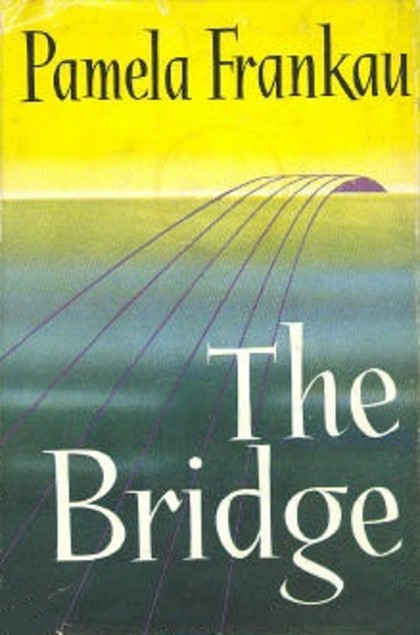
The Bridge, Pamela Frankau (1957). I read this as part of my informal project to read some postwar British women writers and I wrote about it here.

flowersFlowers in the Minefield, John Jarmain (2012). I forget where I stumbled across John Jarmain’s poetry – it was probably through his connection to the Cairo poets during WWII (Lawrence Durrell was also one, and the group are mentioned in Olivia Manning’s The Levant Trilogy). Wherever it was, I liked the samples I read enough to hunt down a copy of his posthumous collection, Poems – Jarmain was killed in 1944 – and even a copy of his one novel, Priddy Barrows, which I wrote about here. While Flowers in the Minefield claims to offer more than just Jarmain’s poetry – which is reason enough to buy it, of course – the ancillary material is not up to much. There’s a brief biography, and a few reminiscences by people who knew him. But the poems are the real content, and they’re as good now as they were in 1945 when they first saw print. Jarmain is not as well known, nor was he as prolific, as Keith Douglas, but I find his poetry better-tuned to my tastes. It was, in fact, Jarmain who led me to explore WWII poetry – where previously I had read only WWI poetry, and then mostly that by Wilfred Owen – and I now own several volumes on the topic. Recommended.

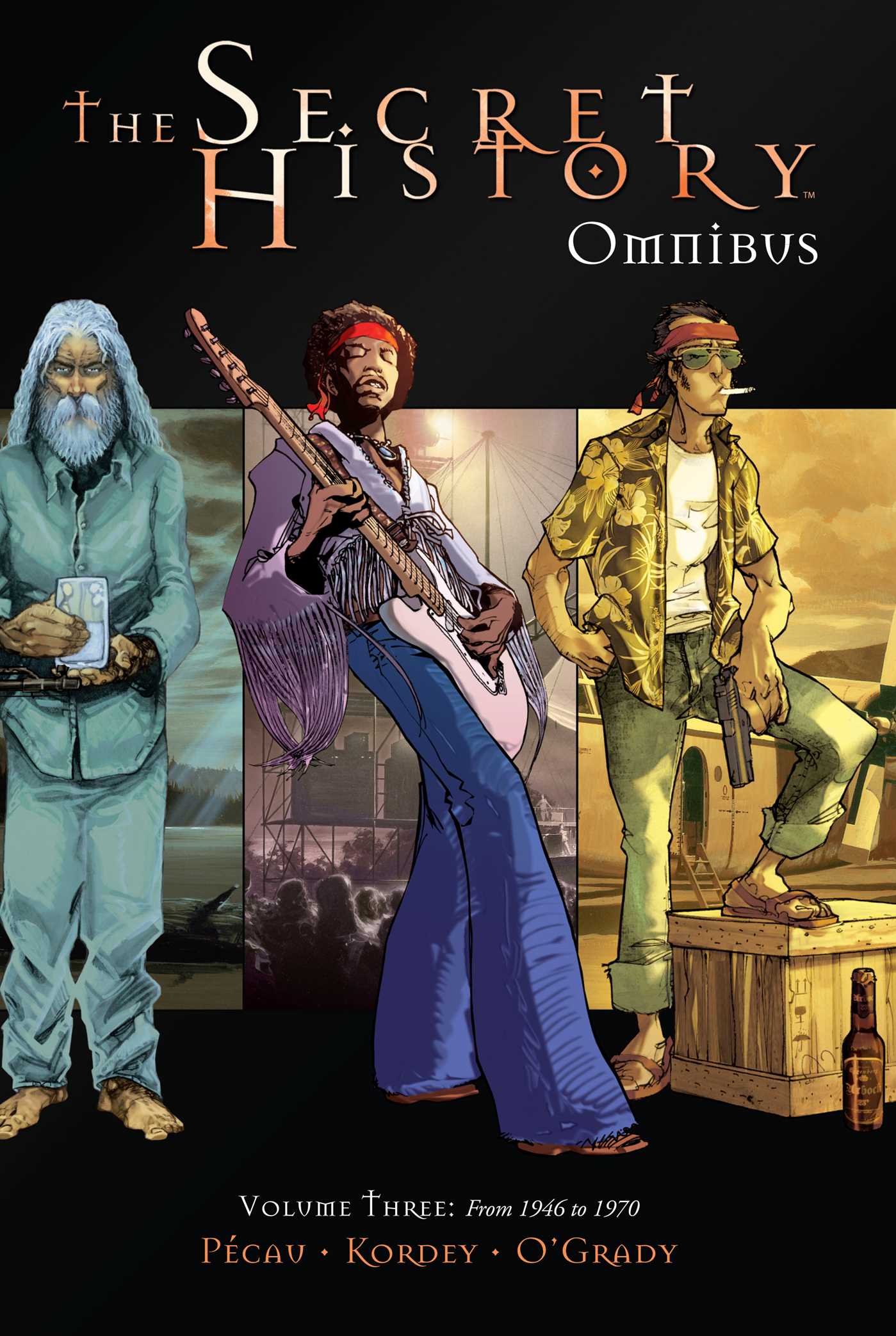
secret-history-omnibus-volume-3-9781608864423_hrThe Secret History Omnibus Volume 1, Volume 2 and Volume 3, Jean-Pierre Pécau and Igor Kordey (2005 – 2010, trans. 2010 – 2014). Back in prehistory, twin sisters Reka and Aker, and their brothers Dyo and Erlin, are each given a rune by the tribe’s shaman to safeguard the runes from an attack by a tribe of… Neanderthals? The Secret History follows the four, who are now immortal, through human history, their various struggles, between themselves and against others, and their attempts to direct human history toward their own ends. During the fourteenth century, William of Lecce is born, and proves to have similar powers… and becomes their enemy (although Dyo occasionally fights on his side). Later, the  mythical city of Kor, located either in the Empty Quarter or another dimension, begins to influence human affairs. Pécau has done an extremely clever job of tying his story of secret magical combat by immortals into real history, but unfortunately the story skips about so much it’s often hard to figure out the actual narrative. This is not helped by Archaia’s decision to only translate and publish The Secret History and not the two pendant bandes dessinées, Arcanes majeur and Arcanes. They’re also some way behind – Volume 3, published last year, covers albums 15 to 20, but the series is actually currently up to 32. (Volume 3 was a recent purchase, incidentally, but I had to reread 1 and 2 before tackling it.) I suppose if I’m going to keep on reading bandes dessinées there’s little point in doing so in English – I should get the original French editions instead. Anyway, for all its faults I like The Secret History and plan to keep on reading it.

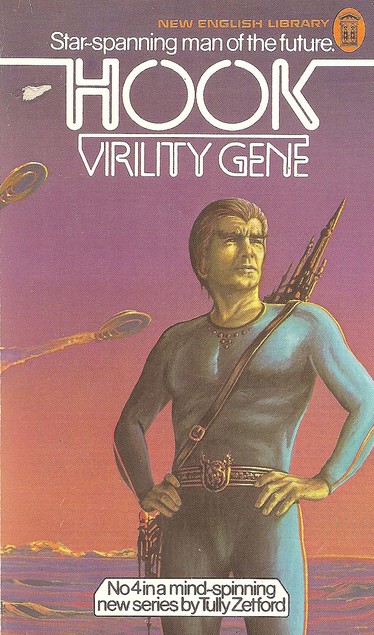
hook4Hook: Virility Gene, Tully Zetford (1975). I suspect Bulmer was hoping he’d be able to churn these out forever – the book is dedicated to Ted Tubb’s Dumarest, and that series managed 31 novels before DAW stopped buying them (and then only because Donald A Wollheim passed away). Fortunately for us, Virility Gene was the last we saw of Ryder Hook, and the novel’s open ending will remain forever open. Deciding which is the worst of the Hook quartet is a difficult call, but this one is possibly the frontrunner. Hook, and friends Shaeel and Karg, are travelling on a liner when they become embroiled in a plot to find the semi-mythical world where the Virility Gene can be found. It all goes a bit wrong, and Hook comes to in a lifepod, accompanied by Brett, an alien, and a dwindling supply of, er, supplies. Fortunately, they’re rescued in time. Hook gets a message to Shaeel – who gives “ver” destination as… Shyle, the planet where the Virility Gene is harvested (Shaeel is a Hermaphrodite, with pronouns to suit). On Shyle, there are lots of prospectors, but no one seems to know how or where the Virility Gene is harvested or manufactured or what – and the native Shylao guard the secret zealously. Zetford doesn’t even reveal what the Virility Gene actually is until around page 69 (of a 111pp novel). Apparently it’s an extremely potent aphrodisiac. Or something. Anyway, after various adventures, Hook finds himself in the secret compound where the Virility Gene is bought and sold to wealthy buyers. The point of Hook is that he’s a prototype Boosted Man, although he fell out with the programme and is now hunted by them (and the Boosted Men are a thoroughly bad lot). While Hook’s various implants (detectors, stuff to eavesdrop on comms, etc) work all the time, his super-strength and super-speed are only activated when he’s in the vicinity of an actual Boosted Man. But this time, his powers are, er, boosted to a degree he has never before experienced. He also meets a woman and it’s love at first sight between the two… And you can see where this is going, can’t you? Yup, to THE END… with Hook chasing after the love of his life, a Boosted Woman, and a story arc never to be resolved. And I almost forgot to mention the two inept thugs who set upon Hook called… Line and Synker (and from the description they promise to be regular characters); or indeed one of Synker’s lines of dialogue, which gives a pretty accurate flavour of the book’s prose – read it and weep:

“Oxymoron, Line! He’s only an eczema-sniffing spirochaete sap! You should be able to rubberise him before your first tutorial!”

The Long Way to a Small, Angry Planet, Becky Chambers (2014). I read this for review for Strange Horizons. It’s been getting quite a bit of press this, a self-published novel which has been shortlisted for the Kitschies and has also been picked up by Hodder. Of course, self-published works on genre awards shortlists are not exactly a new thing. I seem to vaguely recall one winning the BSFA Award a couple of years ago…

Chanur’s Homecoming, CJ Cherryh (1986). The final book of the original Chanur saga – the actual final book, Chanur’s Legacy, didn’t appear until 1992. I read this for SF Mistressworks. A review will appear there in a week or two.


1 Comment

The Bridge, Pamela Frankau

All too often, male authors are praised for their depiction of female characters, even though female writers often write male characters – especially in science fiction, in which it seems nearly 80% of protagonists are men. (And there are women sf authors whose most famous creations are male characters.) Yet no one praises female writers for their depiction of men. So let’s get that out of the way first – Pamela Frankau’s The Bridge (1957) is about a man called David Nielson, and he is drawn sensitively and plausibly.

thebridge

Pamela Frankau was published between 1927 and 1968. Her first novel, Marriage of Harlequin, saw print when she was only nineteen. She also seems to have led a somewhat… complicated life. She apparently had a long, and I’m assuming, public affair with a married man, the poet Humbert Wolfe, which ended with his death in 1940. She served in the ATS during World War II, where she had a lesbian affair with a fellow officer. After the war, she married an American Navy officer and decamped with him to the US. They divorced in 1951, and she returned to the UK and picked up her writing career, and proved even more successful than before. During the mid-1950s, she entered in a long relationship with theatre director Margaret Webster. Frankau died of cancer in 1967. Wikipedia lists 37 books by her, including three collections, an autobiography, and several works that appear to be non-fiction. Her best known novel is A Wreath For The Enemy (1954), which is still in print – it, The Winged Horse (1953) and The Willow Cabin (1949) are still available in Virago Modern Classics editions.

The novel opens with a man on a bridge. He doesn’t know where the bridge is, how he got there, what he’s doing there, or even who he is. It’s explained to him that he will witness a series of events, because there is something he must either learn or decide. The first such event takes place in 1913. A young boy in Cornwall is friends with the sons of a holidaying family. But when one of the sons decides the two of them should go swimming on their own – to prove they have courage after the holidaying father mocked them for not going into a rough seas- one of the boys slips on the rocks and is injured. The other boy, the one who lives in Cornwall, with his mother, Aunt Rachel, is David. And though he heard his friend scream as he fell, he ignored it.

In 1929, David is now living in London. He meets a young America woman, Linda, and invites her back to his digs. Aunt Rachel, who also lives in London, comes calling while David is trying to charm Linda. So he pretends to be out. The story skips ahead to 1939. David and Linda are now married, and live on a farm with Ricky and Madeleine. David is a reasonably successful writer and playwright (as is Ricky). After a trip into London, David stops off in the local pub to unwind, and gets into an argument with the racist barman. Then, after the war, in 1950, David and Linda, and their teenage daughter Anne, are living in southern France, in a cottage they owned before WWII. One night David wins big at roulette. A couple of days later, Anne is killed in a car crash. David and Linda move to California, where, in 1955, both teach at university. But Linda is cold and distant with David, and he has not written anything since Anne died. Linda walks out on him, and he runs away to rural New England, and begins writing again. Linda finds herself in New York, is “cured” by some sort of self-help guru and goes to work with him. She is supported by Ricky, who has divorced Madeleine, and is now a very rich and successful author.  In 1956, David and Linda begin to circle back toward each other… but it does not end well.

Interspersed between these various excerpts from David’s life (some are written from Linda’s point of view, but the story is mostly David’s) are more scenes set on the bridge. It quickly becomes clear it is a sort of limbo, and that David must do something if he is to “move on”. Although these scenes provide the novel’s title, and a framework of sorts, they actually get in the way of what is a readable, engaging and well-written story about David Nielson, his life, marriage and career. There’s some very nice writing in the book, and although a little slow to start, the story does draw the reader in. One of the novel’s strengths is that it’s never quite clear where it’s going, or what it’s actually about. If anything, the scenes on the bridge tend to obscure this aspect of the story, hinting either that some moral is waiting to be revealed or that the whole thing is just one long shaggy allegory. In point of fact, it’s neither, and the bridge scenes serve only to underscore one particular element of the story before and after – when there’s actually lots more worth noting in those sections.

Prior to embarking on this “project”, I’d never heard of Pamela Frankau. These days, she’s all but forgotten, despite having three books still in print (they’re dated 2008, so you’re unlikely to find them in your local Waterstone’s, however). But then I did embark on this project to find writers new to me. When I started The Bridge, I didn’t find it all that impressive, but it slowly won me over. David and Linda Nielson are both well-drawn characters, and if some of the details ring a little false (that self-help guru, for example), there’s still much to like in the book. I’m glad I read it and, yes, I think I’ll track down something else by Frankau to read.


4 Comments

Moving pictures, #6

I’m trying to get caught up on these, since I’ve been watching so many films recently – all that bloody sportsing on television. Damn sportsing. Have never understood its appeal.

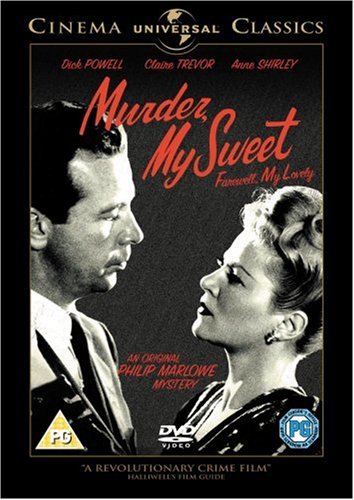
murderMurder, My Sweet*, Edward Dmytryk (1944, USA). Despite the title, this is pretty much a faithful adaptation of Raymond Chandler’s Farewell, My Lovely. Dick Powell plays Marlowe and he doesn’t look quite rumpled enough to pull it off. Apparently, the studio changed the title from that of the book because they thought audiences might otherwise think it was a musical. Um, yes. The only other adaptation stars Robert Mitchum as Marlowe, and I seem to remember that being a better version than this. Incidentally, I have a lot of time for Chandler’s fiction – and yes, I’ve read this one – but I’ve found most of the movie adaptations disappointing in some way, even the Humph ones.

largo-winchLargo Winch, Jérôme Salle (2008, France). This is what we used to call a “Euro-thriller” – ie, lots of different locations around the world, very glossy production design, plenty of action… and a plot that doesn’t make much sense. It’s adapted from a bande dessinée by Philippe Francq and Jean van Hamme (the latter, incidentally, has written several of the Blake and Mortimer bandes dessinées). The title character is an orphan secretly adopted by billionaire Nerio Winch. Some twenty-eight years later, Nerio is murdered and it triggers a fight for control of his Hong Kong-based company. Largo, meanwhile, has been bumming around the world. He’s arrested in Brazil but manages to escape, and heads to Hong Kong, where he declares himself to the board of directors. Some of them, however, don’t believe him. Handily, Nerio invested his stocks in some sort of bearer bonds, which he then hid. If Largo presents these to the board, then the company is his. Of course, the same is true if anyone else does. And the rival for Largo’s position turns out to be his adoptive brother. Plus there’s a shady rival who wants to buy the Winch corporation… and Largo makes a deal with him to secure his position. It’s all very cosmopolitan, with lots of action and exotic locales, and a plot that sort of lurches about in search of a coherent narrative. But it was also reasonably entertaining, and it didn’t take a pair of steel toe-capped boots to your intelligence, as Hollywood is wont to do.

umbrellasThe Umbrellas Of Cherbourg*, Jacques Demy (1964, France). I really liked Demy’s Lola, and despite knowing that this was a musical – even more, the dialogue is sung throughout – I sort of thought I might like this too. But I didn’t. Oh, it’s French and it’s 1960s and it looks mostly lovely and Catherine Deneuve is eminently watchable in one of the lead roles, but… Maybe it was because I’d watched Les Misérables only a week or so before, but the sung dialogue turned irritating quite quickly, and though the visuals were often quite eye-catching, I sort of lost interest. I think it deserves a rewatch, and given how much I liked Demy’s Lola, there’s a Demy DVD collection that looks quite tempting… except it’s bloody expensive. I shall stick some more Demy on the rental list, and see how I get on with them.

esisensteinAlexander Nevsky, Sergei Eisenstein (1938, USSR). I seem to have ended up with quite a few Eisenstein films, despite not being especially a fan. Several years ago, The Guardian gave away a free DVD each weekend – remember when newspapers used to do that? – and one of them was Eisenstein’s Battleship Potemkin. Which is considered a classic of cinema. And I picked up a copy of Stachka (AKA Strike) because it was on the 1001 Movies You Must See Before You Die list… and now I have a box set containing Alexander Nevsky and Ivan the Terrible parts 1 and 2. (It’s volume 2, and volume 1 appears to almost impossible to find. Argh.) Anyway, Alexander Nevsky… It’s about the eponymous prince, who led the Russians of Novgorod to victory against the Teutonic Knights at the Battle of the Ice (which takes place on a frozen lake). It’s a good solid historical epic, with a few more personal story arcs thrown in, but I couldn’t help comparing it to Tarkovsky’s Andrei Rublev, and it didn’t wear the comparison especially well. Worth seeing, but I’m a little puzzled by the extremely high regard in which it’s held.

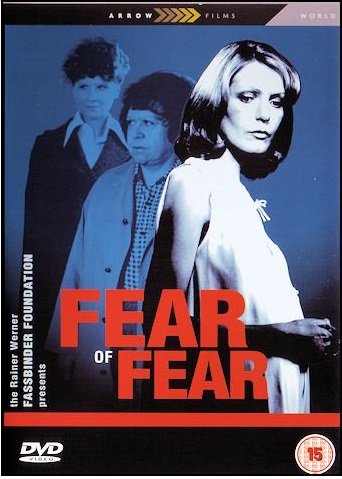
fearoffearFear Of Fear, Rainer Werner Fassbinder (1975, Germany). This was a made-for-tv film, and having now seen three or four Fassbinder films I don’t think I could have mistaken it for anything but a Fassbinder film. Fassbinder regular Margit Carstensen plays a housewife who becomes addicted to Valium and alcohol following a series of increasingly stronger anxiety attacks. Her husband’s family, who live in the same apartment block, treat her as though she’s not good enough, which only worsens her condition. Eventually, she is committed, whereupon she seemingly recovers. A good, solid family drama, without much that struck me as essentially Fassbinder; but I enjoyed it and I thought Carstensen was especially good in the lead.

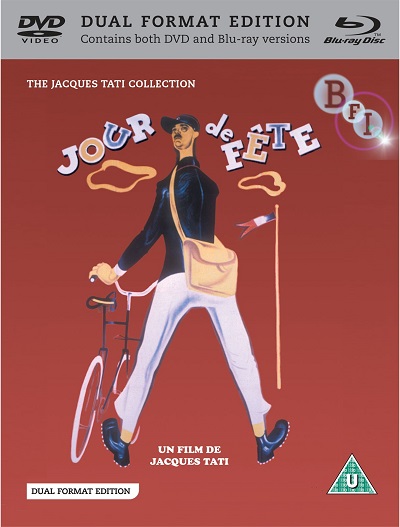
jour-de-feteJour de fête, Jacques Tati (1949, France). I have now seen all of Tati’s feature films, and of course I left his first until last. In this one he plays a postman in rural France and the film is a series of set-pieces in which first Tati does his usual round, and then, in the second half, he tries to introduce “American” methods in order to deliver letters faster. There are some excellent gags – in that respect, Jour de fête scores higher than Mon Oncle or Playtime, although it does not have the visual genius of those films – but a number of the set-pieces were recycled from the short L’école des facteurs (1947). Anyway, the Tati box set was an excellent buy, and despite never having watched any Tati before August last year, I can now happily call myself a fan.

giantGiant*, George Stevens (1956, USA). This is one of those films I always thought I’d seen but when I came to watch it very little of it actually proved familiar. It’s the sort of nonsense dynastic family saga the US – and especially Hollywood – likes to tell itself is proper art… especially when it involves oil. It’s not, of course, It’s not even melodrama. They try to throw in some social commentary – in this particular case, a Texan rancher turned oilman (Rock Hudson) discovers all his fellow whites are racist after his son marries a Latina woman. This, of course, comes as no particular surprise to, well, the rest of the planet. Hudson I could watch all night, and I do like films from the fifties, but this was long and not very inventive and all a bit thuddingly obvious from the start. James Dean was a bit rubbish in it, and not at all convincing – but then he’s another actor, like Brando, whose reputation mystifies me.

unbelievableThe Unbelievable Truth*, Hal Hartley (1989, USA). There are several Hal Hartley films in the 1001 Movies You Must See Before You Die list, and I’m not sure why. There are more interesting independent directors – such as John Waters, or John Sayles – but I guess the list-makers are fans of Hartley’s movies. I can’t say I am. I’ve seen two now, and they’ve both been pretty forgettable, certainly not something that’s worthy of the 1001 list. In this one, a man returns home after years in prison for manslaughter. He takes up with a local girl, while rumours after his “crime” grow ever wilder, but his putative girlfriend goes off to be a model in New York. There’s a family crisis, and relationship difficulties and… yawn. Not very interesting.

1001 Movies You Must See Before You Die count: 571


11 Comments

Ten space operas, not your usual suspects

Writer Gareth Powell posted a list of Top Ten Essential Space Operas earlier this week, and since I like posting me some lists of books (and I have a space opera all of my own due out in July from Tickety Boo Press), I thought I would put together a list of ten space operas myself. But not “essential” ones, or even “top ten” or “best”. Just ten space operas you won’t usually find in lists of space operas. And which, yes, I do also happen to think are pretty good.

A few notes before the list. Much as I admire books like Light, Against A Dark Background (or any Banks, but that would be my choice) and Ancillary Justice, as picks they’re just too obvious. And when it comes to the definition of space opera, I wanted to choose books that no one could argue with – so, stories that stretched across several worlds, near-magical technology, alien races, the galaxy at stake, etc, etc…

In chronological order:

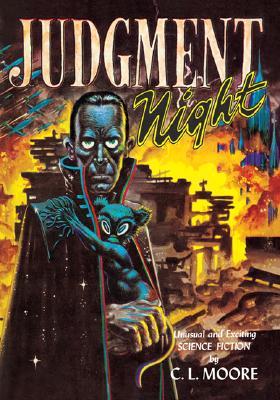
judgment_night1 Judgment Night, CL Moore (1952). Those were the days, when alien hordes descended on imperial capitals and the only thing preventing the sacking of the empire was the hawk-like princess, and she’s not going compromise with anyone, no matter if the imperial forces are out-numbered and out-gunned. I reviewed this short novel for SF Mistressworks, and though it sounds about as cheesy as space opera can possibly get, the character of Princess Juille is actually surprisingly well-drawn and interestingly played. And the Ancients are pretty neat too. My review is here.

2 Empire Star, Samuel R Delany (1966). I first read this as one half of a double with Delany’s The Ballad of Beta-2, and I’m pretty sure it was during a family holiday in Paris in the very early 1980s. I loved the Moebius Loop narrative, and the rich language. These days I think Dhalgren is Delany’s best piece of work, but this short novel runs it a close second.

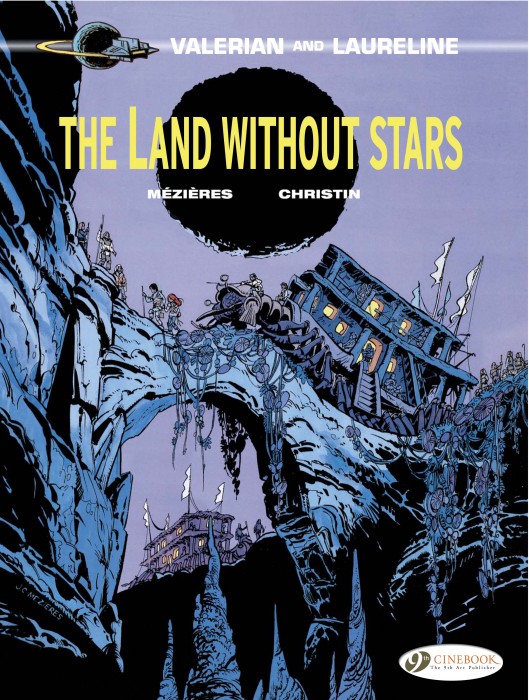
Valerian-Vol-3-Cover3 Valérian and Laureline, Pierre Christin and Jean-Claude Mézières (1967 – present). Valérian, Agent Spatio-Temporel, and his partner Laureline, have been operating as troubleshooters for the Terran Galactic Empire since their first appearance in Pilote magazine through, to date, twenty-two bandes dessinées. Four were translated into English back in the 1980s, which is how I stumbled across the galaxy- and time-hopping pair. Happily, Cinebook began publishing the series in English a few years ago – they’re now up to volume 8.

4 The Children of Anthi and Requiem for Anthi, Jay D Blakeney (1985 – 1990). I bought these in a remainder book shop in Abu Dhabi back in the mid-1990s, and I’ve always liked the strange alien world Blakeney created in Anthi. The two books are a bit wobbly in places, while in other places she does tend to dial everything up to eleven. The protagonist is also a bit of wet blanket at times, but it all hangs together quite cleverly. I reviewed both books on SF Mistressworks here and here.

5 Master of Paxwax and The Fall of the Families, Phillip Mann (1986 – 1987). I’ve been a fan of Mann’s fiction since reading his debut, The Eye of the Queen, back in the late 1980s. I really must reread his books – especially these two, The Story of the Gardener, as I remember them being a smart and literate space opera – and sadly that’s not a pair of adjectives you normally associate with space opera.

take_back_plenty6 Take Back Plenty, Colin Greenland (1990). Iain M Banks is chiefly credited with kicking off New British Space Opera, but I’ve always considered this a seminal work – even if no one else bothered to pastiche old pulp space opera in the same fashion as Greenland. I remember the buzz when the book came out, and happily it is now in the SF Masterworks series. Take Back Plenty spawned a pair of belated sequels, Seasons of Plenty (1995) and Mother of Plenty (1998). I reviewed Take Back Plenty here.

7 An Exchange of Hostages, Prisoner of Conscience and Hour of Judgement, Susan R Matthews (1997 – 1999). Matthews’ Jurisdiction novels probably bend the definition of space opera furthest from true on this list. Yes, they’re set in an interstellar polity – it’s a lexocracy, ruled by judges – and there’s plenty of drama and conflict… But Andrej Kosciusko is a torturer for the Bench, and the stories are relatively small scale. They are also very, very good. I reviewed the first of the trilogy on SF Mistressworks here.

The_Prodigal_Sun8 The Prodigal Sun, The Dying Light and A Dark Imbalance, Sean Williams & Shane Dix (1999 – 2001). In many respects, these are the dictionary definition of space opera – plots and counter-plots, a sophisticated starship piloted by a cyborg mind, aliens, galactic war, a heroine who must transport an AI across a turbulent galaxy… Williams and Dix deploy every space opera trope in the Milky Way, but they do it in service to an action-packed fun read that’s about as emblematic of space operas as you can get.

9 The Risen Empire and The Killing of Worlds, Scott Westerfeld (2003). I think I read the first of these books as an ARC, but I forget where I picked it up. I liked it so much, I bought both books in hardback. They were published in the UK as a single volume, with the same title as the first book. Unlike many of the other books on this list, the Succession duology rings a few changes on the space opera template – the aristocracy are all dead, for a start. The two books are also quite deceptive in terms of scale – they feel widescreen, but are actually quite focused.

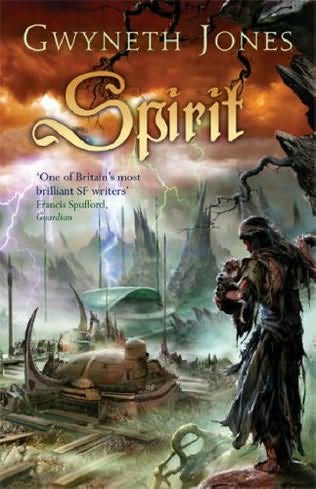
spirit10 Spirit, or the Princess of Bois Dormant, Gwyneth Jones (2008). Who knew the sequel to the Aleutian novels, a superior first contact trilogy, would be a space opera? Based roughly on the story of The Count of Monte Cristo? But given that the action in Spirit takes place on three different worlds, two of which are alien, as well as in a space station shared by all the races in the story, the book certainly qualifies as space opera. I wrote about Spirit here.

The list said ten, so I had to draw a line after that number. But there were a a few I’d liked to have included but they didn’t quite make the cut. Such as Angel At Apogee, SN Lewitt; Search for the Sun!, The Lost Worlds of Cronus, The Tyrant of Hades and Star Search, Colin Kapp; The Snow Queen, Joan D Vinge; or even the Coyote Jones series, Suzette Haden Elgin.

Some people may spot there are a couple of obvious choices not mentioned in this post – such as Peter F Hamilton or James SA Corey – and that’s because, well, I don’t think they’re very good. Nonetheless, I’ve probably missed off some space operas I ought to have mentioned… so feel free to make suggestions. However, if you find yourself about to suggest a list of ten books by male writers only, or indeed by white male US authors only, you probably need to go away and rethink your list – or maybe even reconsider the books you’re reading…

ETA: A redditor pointed out that the most recent book mentioned in my list is from 2008. Given that I wanted the list to show a reasonable spread across the decades, this is not unexpected. Nor did I want to post just another list of the shiny new. This doesn’t mean my knowledge of space opera stops at 2008, however. I can recommend both Mike Cobley’s Humanity’s Fire trilogy (2009 – 2011) and Gary Gibson’s Shoal Sequence (2007 – 2013). I tried the first book of Rachel Bach’s Paradox trilogy (2013 – 2014), but didn’t rate it. I did rate Kameron Hurley’s Bel Dame Apocrypha (2011 – 2012), but I wouldn’t classify it as space opera. I mentioned Ann Leckie in the opening paragraphs of this post. I wouldn’t use Kevin J Anderson’s books as toilet paper, never mind suggest people read them; and I don’t really consider Alistair Reynolds’ novels as space opera (no, not even House of Suns), though I do think they’re very good. As for the bazillions of space operas self-published every month on Kindle… Since almost all of them are derivative and badly-written, I see no good reason to keep up with them.

3 Comments

All That Outer Space Allows teaser

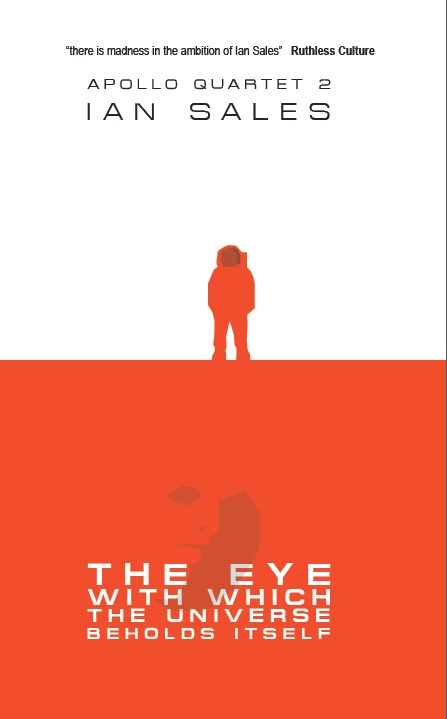
Back on the 1 March, I read out a piece of Apollo Quartet 4 All That Outer Space Allows at the second SFSF Social. It seemed to go down quite well. And since the release of the book has been a little bit, er, delayed, I thought I’d post the text from my reading as a taster. So here you are. It’s from chapter two. Enjoy.

Walden says nothing about the physical at Brooks AFB or, months later, the interviews at the Rice Hotel in Houston; but for a week after his last trip to Texas he swaggers more than usual. Ginny knows this unshakeable confidence is as much a coping mechanism as will be, should he fail, his subsequent realisation he doesn’t really want it anyway. But she hopes he succeeds, she wishes she could go into space herself. But she knows that, at this time, it’s an occupation reserved for men— no, more than that: reserved for men of Walden’s particular stripe, jet fighter pilots and test pilots. She calls him “my spaceman” one night, it just slips out she is reading the latest issue of If, there’s a good novella in it by Miriam Allen deFord, and Ginny’s head is full of spaceships and spaceship captains; but Walden turns suddenly cold and gives her his thousand-yard stare. He starts to explain the competition is fierce, he won’t know how he’s done until he hears from NASA… but he breaks off, scrambles out of bed and stalks from the room.

Ginny puts the magazine on the bedside table, but her hand is shaking. She sits silently, her hands in her lap, and waits. He does not return. Fifteen minutes later and he’s still not back, so she rearranges her pillows, makes herself comfortable beneath the sheets, and reaches out and turns off the bedside lamp. She has no idea what time it is when he eventually slides into bed beside her, waking her, and whispers, Sorry, hon. She rolls over, closes her eyes and tries to re-enter the vale of sleep, where marriages are blissful, life itself is blissful, and she is as famous as Catherine Moore or Leigh Brackett.

They wake at 0430, the shrill ring of the alarm dragging them both from sleep. While Walden goes for a shower, she wraps herself in a housecoat and heads for the kitchen. There is breakfast to prepare—coffee to roast, bread to toast, eggs to fry, bacon, beans and hash browns. She does this every day, sees off her man with a full stomach and a steady heart. Here he is now, crisp and freshly-laundered in his tan uniform, hungry for the day ahead. He takes his seat, she pours him juice and coffee, slides his plate before him, and then sits across the table and watches him eat as she sips from a cup of coffee. She should be getting up before him, making herself ready, dressed and made up, to greet him when he awakes—but countless past arguments have won her the right to make his breakfast and see him off to work without having to do so. The housecoat is enough.

They kiss goodbye at the door, and he strides off to the Chevrolet Impala Coupe in the carport. Though she wants to go back to bed, there is too much to do, there is always too much to do.

After clearing up the breakfast things, she makes herself another coffee and settles down to catch up with her magazines, she is a couple of issues behind with Fantastic, and this issue, the last of 1965, features a novella by Zenna Henderson and stories by Doris Pitkin Buck, Kate Wilhelm and Josephine Saxton.

Later, she will get dressed—and she will dress for comfort, not for appearance’s sake—and she will get out the Hermes Baby and she will work on her latest story. She made the decision years before to incorporate elements of her own life—and, suitably disguised, Walden’s—into her science fiction, so she feels no need to visit libraries or book stores for research. She has a stack of issues of Fantastic Universe, If, Amazing Stories, Galaxy, World of Tomorrow in a closet—they are all the research material she needs. Galaxy, for example, runs a science column by astronomer Cecelia Payne-Gaposchkin; Amazing Stories has featured science columns by June Lurie and Faye Beslow since the 1940s. Walden, of course, has a library of aeronautics and engineering texts in the bedroom he uses as a den, and Ginny has on occasion paged through them—not that Walden knows: his den is for him alone and she allows him the illusion of its sanctity; naturally, it never occurs to him to wonder how the room remains clean.

Ginny is feeling lazy today. She likes to think she has an excellent work ethic when it comes to her writing, but some days she finds it hard to muster the enthusiasm to bang on the keys of her typewriter. Especially when she has just read something she thinks she can never approach in quality—and that, she sadly realises, is true of the Saxton story in the magazine she is holding. Josephine Saxton is a new writer, from England, and this is her debut in print. Ginny only wishes her first published story, just four years ago in Fantastic, had been as good.

The blow to her confidence decides her: she will leave her current work in progress until tomorrow; today she will catch up on her correspondence, she owes letters to Ursula, Judith and Doris, and she really ought to fire off a missive to Cele with her thoughts on the issue she has just read…

After she has showered and dressed in slacks and shirt, she finds herself outside on the patio, gazing east across the roofs of Wherry Housing toward the Air Force Base and Rogers Dry Lake, and beyond it the high desert stretching to the horizon, where the Calico Mountains dance in the pastel haze of distance. As she watches, a jet fighter powers up from one of the runways and though it is more than a mile and a half from her, she can tell from its delta wing it is a F-102 or F-106. Its throaty roar crowds the cloisonné sky, there’s a quick flash of mirror-bright aluminum as the aircraft banks, and then the fighter seems to fade from view as it flies away from her. She wonders if it is Walden in the cockpit, she has no idea what he does from day to day once he enters the base; officially, he is a research test pilot in the Fighter Test Group, but she does not know what he researches, which fighters he test pilots. Not the North American X-15, she knows that much, an aircraft which intrigues her because it is also a spaceship—it has flown more than fifty miles above the Earth, right at the edge of space, at over 4,000 miles per hour. And it even looks like a spaceship, like a rocket, as much at home in vacuum as it is in atmosphere. She would like to know more about the X-15 but it’s a sensitive subject in the house. Walden has tried to get on the program but has been refused, and he wears the refusal badly. Perhaps that’s why he was so keen to apply to become an astronaut.

Ginny is a California girl, a real one, born and bred in San Diego in Southern California, not one of those “dolls by a palm tree in the sand” from that song on the radio. She has history in this landscape of deserts and canyons and mesas, though she grew up beside the limitless plain of the Pacific. Here in the Mojave she is hemmed in by mountains, they encircle her world, her flat and arid world, where the small towns are so far apart they might as well belong to their own individual Earths. Standing here, gazing in the direction of Arizona, she finds it easy to believe Edwards is the only human place in the world, a lonely oasis of civilisation—and she knows her husband thinks of it as a technological haven in a world held back from the best science and engineering can offer by the short-sightedness of others. To some degree, she thinks he may be right. But she is also a housewife, and she lives in a world in which bed linen must be changed, clothes laundered, meals cooked and checkbooks balanced. She envies Walden his freedom to ignore all that—he can have his “life in the woods”, but only because she manages his world.
And now she really must get on with her letter-writing… although the lawn looks like it needs mowing and the end of the yard is beginning to look a little untidy…

And here’s the cover art…

Screen Shot 2014-10-08 at 3.46.35 PM


1 Comment

Moving pictures, #5

And now it seems the Blu-ray player is starting to act up. Bugger. Annoyingly, I recently discovered it’s also region-locked for DVDs, although I was sure it was region-free when I bought it. I definitely need to get myself a new one – region-free for both formats. Sigh.

allthatjazzAll That Jazz*, Bob Fosse (1979, USA). There are some movies I’d never have come to watch if they hadn’t been on the 1001 Movies You Must See Before You Die list, and not just because I’d otherwise never have known about them. On first pass, All That Jazz doesn’t really seem to be my sort of film. It’s a semi-autobiographical musical, based on Fosse’s own experiences staging a big Broadway musical and editing a feature film, a work-load which led to health problems and hospitalisation. I am not much of a musicals-type person – in fact, there’s only one I actually rate, High Society – and if I were I think I’d prefer ones from the 1950s… But All That Jazz is also one of those films in which an unexpected dance sequence makes something very interesting of it. And “unexpected” is not a word associated with dance sequences you’d think would apply to All That Jazz. But there it is. As Roy Scheider lies in his hospital death, he hallucinates a big dance production number featuring the Angel of Death, and it’s cleverly and affectingly done. I found myself really liking All That Jazz, and I hadn’t expected to.

onthewaterfrontOn the Waterfront*, Elia Kazan (1954, USA). Marlon Brando is apparently one of the great actors, but I’ve seen him now in two of his most famous roles – in A Streetcar Named Desire and this one – and, well, he’s just annoying. That stupid voice. I guess that must be Method Acting. Brando plays a dim-witted ex-boxer whom circumstances force into going up against his chapter of the longshoremen union and its corrupt chief. It’s the sort of story which is, I guess, meant to celebrate a good man, but all it does to me is demonstrate that the capitalist model is corrupt, open to abuse and a piss-poor end-result after ten thousand years of civilisation. Seriously, we’re meant to just accept the injustice and violent coercion which was apparently standard operating procedure on the docks of New York some sixty years ago? We shouldn’t be cheering on Terry Malloy as he battles the union, we should be asking why the US government is apparently so inept, corrupt or just plain evil to have allowed the situation to arise in the first place. Either way, this doesn’t really meet my criteria for a good movie.

paradeParade, Jacques Tati (1974, France). I’ve almost finished the Tati box set, and it was definitely one of my better purchases – even if this isn’t one of Tati’s better films. It’s a made-for-TV piece, set in a circus, in which Tati himself occasionally appears as a clown. It is also a film chock-a-block with dungarees. I’ve never seen so many pairs in a single movie before. There are some amusing set-pieces, but if this weren’t Tati it would be just another fly-on-the-ringside documentary, albeit a very 1970s one. Worth seeing, but buy the Tati box set for the other films.

motherkustersMother Küsters Goes To Heaven, Rainer Werner Fassbinder (1975, Germany). And I’m about halfway through the Fassbinder box set. I like box sets. (I received a Bergman one for my birthday, only a week or so ago, incidentally). One thing I’m coming to realise from watching these Fassbinder films is that he definitely made use of a stable of actors. Brigitte Mira, who played the female lead in Fear Eats the Soul, plays the title character, a working-class widow who loses everything when her husband kills his supervisor and commits suicide at the factory. She and her family are interviewed by the press, who then libellously paint the dead man as a drunk who was violent toward his wife and a bully to his children. A pair of middle-class communists offer to help Mother Küsters clear her husband’s name, although her family are suspicious of the communists’ motives. But they prove too slow for Mother Küsters and she falls in instead with some anarchists… who invade the local office of the newspaper which published the libellous article. This isn’t exactly the most subtle Fassbinder film I’ve watched so far – he sets out to show the perfidy of the press and the way they monster people, and does precisely that. Interestingly, the film has two endings. One is represented by stills, while a voice-over reads the script, but the other was actually filmed. The latter apparently was written especially for the US market (it’s the happier ending), but I do wonder why the first ending was never actually put on film.

White_HeatWhite Heat*, Raoul Walsh (1949, USA). “Look at me, ma! I’m on top of the world!” Yup, this is where that line comes from. It’s a classic gangster film, in which Cagney plays a complete psychopath – albeit a somewhat tame one by today’s standards, in fact superheroes in twenty-first century films show about as much remorse as Cagney’s character does after killing someone. That’s progress for you. Anyway, Cagney gives himself up for a crime he didn’t commit because it provides an alibi for one he did, a particularly brutal train robbery. A cop goes undercover in the prison, breaks out with Cagney and joins his gang. The film ends with an attempt to rob the payroll from a refinery, and Cagney ends up stuck on the top of a storage tank, starts of a gun battle… which causes the storage tank to blow. KABOOM. A good bit of classic noir.

lesmisLes Misérables*, Tom Hooper (2012, USA/UK). Here’s another film that I’d have otherwise assiduously avoided if it hadn’t been for the 1001 Movies You Must See Before You Die list, but unlike All That Jazz I can’t really say I’m glad I watched it. I knew going in it wasn’t going to be the sort of film I like and, lo and behold, I really didn’t like it. The singing was terrible, the songs were awful – even that brain-burning one popularised by Susan Boyle – the characters were unredeemable, and the CGI was so over the top it might as well have taken place in some fantasy world. Rubbish.

labelleLa Belle et la Bête*, Jean Cocteau (1946, France). I thought Cocteau’s Orphée really good, but this retelling of ‘The Beauty and the Beast’ fairy tale was a bit dull. While the staging was cleverly done, particularly for the time, the production design did resemble some amateur dramatic pantomime production (although the Beast’s make-up was good). Perhaps it deserves a second watch – but it was a rental disc and it’s gone back. On the other hand, I’m only just over halfway through the 1001 Movies You Must See Before You Die list… although I would like to see more films by Cocteau.

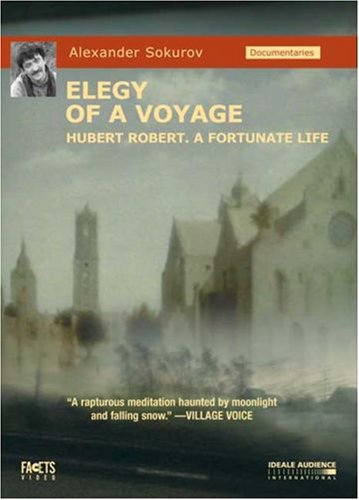
mother-and-sonMother And Son, Aleksandr Sokurov (1997, Russia). I’ve watched this a couple of times now, and I continue to find it completely mesmerising. A young man cares for his mother as she lies on her death-bed. He reads to her, he carries her outside and shows her the surrounding countryside, he feeds her and nurses her. There is a dream-like quality to the visuals, so much so that some of the landscape shots actually resemble oil paintings. This is a beautiful film, one of the most beautiful I’ve ever watched. I’d place it a close second after The Second Circle as my favourite Sokurov, and while it doesn’t quite make my top ten it certainly makes my top twenty. But I also suspect that more often I watch it, the more my opinion of it will rise. I’ve been watching a lot of Sokurov recently, and have even tracked down copies of some of his hard-to-find DVDs. I think he’s one of the most interesting directors currently making films. There’s something very… literary about his movies. Watching them is like reading a beautifully-written short story.

1001 Movies You Must See Before You Die count: 567


3 Comments

Starship Seasons, Eric Brown

starship-seasonsThe four novellas which make up Starship Seasons, titled ‘Starship Summer’, ‘Starship Fall’, ‘Starship Winter’ and ‘Starship Spring’, were originally published individually by PS Publishing (of which Drugstore Indian Press is an imprint) and NewCon Press between 2007 and 2012. All four are set on Chalcedony, Delta Pavonis IV, in a future in which starship travel has been superseded by Telemass, interstellar teleportation. The novellas feature David Conway and the circle of close friends he makes when he moves to Magenta Bay on Chalcedony. While the stories share locale and cast, and each novella references events in the preceding stories, they can be read as standalones.

Conway has retired to Chalcedony, a move partly driven by the death of his daughter and the subsequent breakup of his marriage. While hunting for a suitable property on the shore of the idyllic Magenta Bay, he stumbles across a junkyard of starships, run by an ex-pilot called Hawk. Conway decides to use an old ship as a home, but the one he chooses is of mysterious provenance. He settles into a life of indolence – with a great deal of drinking – and makes friends with several of the locals, including Hawk, famous artist Matt, telempath Maddie, and Hawk’s alien lover, Kee (a native of Chalcedony). Conway soon discovers his starship home is “haunted”… by an avatar of the Yall, an advanced alien race who have long since vanished. The Yall admits his race built Chalcedony’s great marvel, the Golden Column, an impenetrable pillar one kilometre in diameter and thirty kilometres high, and of unknown purpose. Conway and his friends, with the help of the Yall ghost, make Conway’s starship operable and fly to the Column… and so discover the mysterious object’s true purpose.

‘Starship Fall’ is set five years later. The fuss over Conway’s discovery of the Golden Column’s purpose – it is, in fact, part of an instantaneous interstellar transport network – has died down. The appearance in Magenta Bay of holo superstar Carlotta Chakravorti-Luna, however, threatens to upset Conway’s life of indolence and drinking. And then Hawk’s alien companion, Kee, vanishes into the jungle to “smoke the bones”, an alien ritual which allows the smoker to snatch glimpses of the future but has a seventy percent fatality rate. Conway, Maddie and Hawk head off into the interior to “rescue” Kee, but unfortunately are too late to prevent her undergoing the ritual. What Kee sees of the future involves Chakravorti-Luna and also Hawk’s possible death. The holo superstar admits she is on Chalcedony to find an ex-husband who crashed on the planet decades before, and this has something to do with the smoking the bones ritual.

The plot of ‘Starship Winter’ is driven by Matt, the artist, who puts on an exhibition of works which use “empathy stones” from the world of Acrab IV. Visiting Magenta Bay is Darius Dortmund, an empath, who is not only unduly interested in Matt’s showing, but is also accompanied by an alien from Acrab IV. Dortmund is arrogant, secretive and a nasty sort. He annoys and upsets Conway and his friends, spoils the grand opening of Matt’s art show, but at a big party in his rented property later is found murdered. Suspicion immediately falls on Conway and his circle, who had stayed over at Dortmund’s house for the night. In this novella, Conway’s circle expands by one: Lieutenant Hannah van Harben of the local police, who becomes Conway’s love-interest.

The final book of the quartet is ‘Starship Spring’. It is six years later. Conway and van Harben are now living together in and have a young daughter, Ella. Their friends are busy off-planet – Matt and Maddie touring Matt’s latest art show, and Hawk and Kee flying rich tourists to some galactic wonder. But soon they will be returning, so all six arrange for a fortnight away at an expensive Chalcedony holiday spot called Tamara Falls. Part of the charm of the place is that it’s apparently haunted… and the ghost makes a number of appearances in front of the six friends and Ella. It also seems to be trying to tell them something. Matt admits that the holiday is being paid for by Dr Petronius, a famous art patron, who insisted on it as a condition of his offer to tour Matt’s art show. Millennia ago, the Yall fought and defeated an evil alien race, the Skeath, who managed to hide a vast army beneath Tamara Falls, ready to be awoken one day to conquer the galaxy. Petronius wants this to happen, and needs Conway and friends and family to be on-hand to trigger it…

There’s something very… comfortable about the stories in Starship Seasons. There’s nothing edgy or outrageous about the world described, nor about the concepts deployed in the stories. That the characters are well-drawn is a given – Brown has been writing sf since the mid-1980s, and he’s very good at it. But each of the central quintet has a secret, and that five damaged people should become such close friends occasionally feels somewhat banal. Except that feels like too harsh a judgement – these are four polished novellas, firmly located in genre heartland, thoughtful and considered in tone, and very much character-centred. They will not disappoint a dedicated science fiction reader even if, in these days of immersion and jump-cuts and “blowing shit up”, these four novellas do feel a little old-fashioned in affect. Entertaining, thoughtful and put-together well, certainly, but… The fate of the galaxy is several times put at risk, the lives of the central and supporting cast are frequently in danger; and yet once the dust has settled, Conway’s life returns to normal. There is progression – the Golden Column supersedes Telemass, Conway and Hannah have a child, the characters grow and heal over the years – yet the victories won in each of the novellas still feel small scale and personal. Sometimes, that’s all science fiction needs.

Starship Seasons, Eric Brown (2013, Drugstore Indian Press, £7.99, 978-1-848636-02-6)

This review originally appeared in Vector, No. 274, Winter 2013/2014.


3 Comments

Reading diary, #3

It’s been a bit of an odd month, reading-wise. Mostly science fiction, both new and old – three for review, one for Vector and two for SF Mistressworks.

MegalexCoverMegalex, Alejandro Jodorowsky & Fred Beltran (2014). I picked up a copy of the first volume of this several years ago, but parts two and three never seem to have appeared in English. I thought about getting the original French editions – and might well have done so, had this omnibus edition not been published last year. The original bandes dessinées – L’anomalie, L’ange Bossu and Le cœur de Kavatah – appeared in 1999, 2002 and 2008, respectively. Beltran’s art apparently tends to the pneumatic, and two of the lead female characters are implausibly buxom. The plot borrows a number of devices Jodorowsky has used before – in fact, even the setting feels a little second-hand too. A world has been turned into one giant city, except for a small area of forest. A glitch in the clone factory results in a dimwitted giant of a clone, who manages to escape and join the rebels living underground, who are led by a hunchback. The king’s daughter is searching for love, but her touch kills. The rebels attack the palace and kidnap the princess – but the hunchback is not killed by her touch. And his hunch turns out to conceal a pair of wings. The princess and winged man conjoin and become a winged hermaphrodite, which leads the rebels to victory over the evil king and queen. It’s not Jodorowsky’s best work by any means. It all feels a bit recycled, and though Beltran’s art is gorgeous, it’s a far too much objectifying. Despite a career in bandes desinées stretching back to 1966, Jodorowsky hasn’t really done anything science-fictional that beats The Incal.

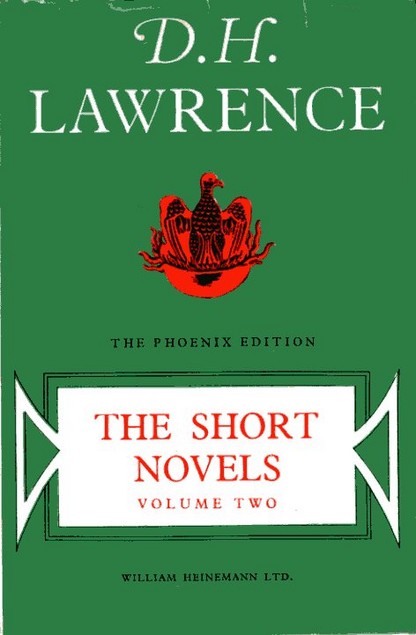
shortnovels2The Virgin and The Gipsy, DH Lawrence (1930). I decided to read this “short novel” before watching the 1970 film adaptation sent to me by Amazon rental. It was apparently written around 1926, but discovered among DH Lawrence’s papers after his death in 1930 (the novel, that is, not the film adaptation), and published later that same year. It… actually reads like a parody. Flighty virginal young woman is attracted by animal charm of handsome gipsy, but then a local dam bursts and floods the area and the gipsy saves the young woman from the waters. So that’s 1930’s prize for Most Obvious Sexual Metaphor Ever to David Herbert, and this is a man who never let a metaphor for sex or sexuality go unmolested. There’s also some anti-semitism on display – the virgin makes friends with a Jewish divorcee (who is not actually divorced) and her laid-back boyfriend, and there are over-frequent references to the woman’s ethnicity. Lawrence was always very good about writing about landscape, although that’s not so much in evidence in this short novel. But he was also really good at interiority and there’s plenty of that on display here. It’s not Lawrence’s best work of those I’ve read – although it seems to have been critically well-received.

The Kif Strike Back, CJ Cherryh (1985). I reviewed this on SF Mistressworks here.

The Grasshopper’s Child, Gwyneth Jones (2014). A new novel from Jones. W00t. It’s a YA novel set in the world of the Bold as Love series. I reviewed it for Vector.

ultimaUltima, Stephen Baxter (2014). The sequel to Proxima – did you see what he did there? Proxima: nearest; Ultima: furthest. Where the first was near-future sf, this one drags in Baxter’s other great interest, alternate history. It seems that the Hatches which allow for easy travel over interstellar distances (instantaneous for the traveller, but light-speed is not violated), also trigger “resets” of history – or shift the protagonists into alternate histories. In the first, the Roman Empire makes it into space but despite making use of “kernels” (magic energy wormhole-y type things) as a power source, it doesn’t appear to have progressed much beyond the first century CE. And then it’s an interstellar Aztec Empire, which also uses kernels and has built a giant fuck-off O’Neill cylinder but still runs pretty much along the same lines as it did when Cortés stumbled across Tenochtitlan. It’s quite an impressive sustained act of imagination, but not in the least bit plausible. The book also suffers from juvenile characterisation – a running joke involving a lead character, a grizzled Roman legionary – wears thin soon after the third mention but Baxter keeps it going right to the bitter end. There’s lots of clumsy exposition, and a central premise that doesn’t really convince. Baxter has done much better than this, and it all feels a bit by-the-numbers and banged out over a quick weekend. Disappointing.

credit_titleCredit Title, GB Stern (1961). GB Stern is Gladys Bronwen Stern, a British writer who published some forty novels between 1914 and 1964. I should have guessed from the cover art, but I didn’t realise Credit Title was a “junior novel” when I bought it on eBay. Oh well. It’s set in 1933. Sharon’s father is a director in Hollywood, but they move back to England when he marries Meryll Armstrong, who already has six children. Sharon has been dreaming of being part of a large family – inspired by a series of books about the “Rectory Family” – but the reality proves disappointing. They expect her to be stuck-up because she’s lived in Hollywood, and this colours the way they treat her. It’s all very terribly-terribly and breathless and patronising, a bit like the Narnia books – and I should have picked another Stern book to see what she’s like.

The Power of Time, Josephine Saxton (1985). Review to appear on SF Mistressworks soon.

murder-at-the-chase-2Murder at the Chase, Eric Brown (2014). This is the second of Brown’s 1950s-set murder mysteries featuring thriller writer Donald Langham and his fiancée literary agent Maria Dupré. In this book, they’re invited to unravel a locked-room disappearance of another mystery writer, and it turns out it’s all to do with a satanist who may or may not have been born over one hundred years earlier. Brown evokes his period well, and his two protagonists are eminently likeable. He even manages a nicely liberal view of humanity that wasn’t common in 1955 – two of the secondary characters are gay, and despite it being illegal at the time, pretty much everyone seems surprisingly tolerant when confronted with it. The locked-room puzzle is disposed of disappointingly quickly, but then there’s a murder and what looks like a suicide… And it all gets wrapped a little quickly and tidily for comfort. I suspect these are not written to be cosy mysteries, but they’re beginning to resemble them. They need to be a bit edgier – Brown is capable of it, he handles his period with aplomb and his characters with assuredness. But the plot is all a bit rushed, and the ending is far too tidy.

hook3Hook 3: Star City, Tully Zetford (1974). This is the third book in the quartet featuring Hook of the funny eyebrows. Zetford was a pseudonym of Ken Bulmer, and it’s even more hacky than the stuff he put out under his own name. In this one Hook has teamed up with four others to steal a collection of cultural artefacts (weighing 50 kg), but the other four intend to cut him out of the deal. But Hook turns the tables on them, loses his payment for the haul at the titular star city, and then loses the money he steals to make good on his losses… before he ends up saving the unsophisticated natives of the planet the star city orbits who are being hunted for sport. This is disposable stuff, a couple of hours’ reading you’ve forgotten ten minutes after chucking the book onto the pile of books that are going to the charity shop. Best forgotten, and I suspect the author felt that way too.


5 Comments

Moving pictures, #4

Yet more movies. What I have watched. I’ve been averaging two a night, due to the fact there’s been nothing worth watching on the terrestrial channels or cable television.

sierramadreThe Treasure of the Sierra Madre*, John Huston (1948, USA). Humph is stuck in Mexico, too poor to leave and look elsewhere for work. He’s offered a job, which he accepts, but when the job finishes, his employer doesn’t pay. Apparently, he’s known for doing this. That’s capitalism for you, folks. One man gets rich while others do the work; and all the better if he can get away without actually paying for it. Humph and a friend from the job hook up with an old prospector – played by the director’s father – and go looking for gold in them thar titular mountains. Which they find. But the prospect of great riches turns Humph all paranoid. And then bandidos turn up, bandidos with no stinking badges. Things go from bad to worse, Humph totally loses it, and it all ends badly. Not bad, although I thought Humph’s paranoia was a bit overdone. Huston senior was a complete star, however.

the_wind_risesThe Wind Rises, Hayao Miyazaki (2013, Japan). This is the Studio Ghibli one based on the life of Jiro Horikoshi, the designer of the Mitsubishi Zero, Japan’s most successful fighter plane of WWII. It apparently caused a bit of a fuss when it was released on the grounds it celebrated the life of a man who had designed a highly efficient killing machine. Despite all that, the film is well, a bit dull. Miyazaki livens things up a little by throwing in some weird dream sequences, featuring Italian aircraft designer Giovanni Batista Caproni. He also chucks in a doomed romance – the woman Horikoshi loves has tuberculosis, and dies shortly after they’re married. Horikoshi’s real wife was perfectly healthy. This element of the story was apparently adapted from a completely unrelated novel (and to which the film’s title is a reference). Incidentally, Werner Herzog provides the voice for a German character (in the English-language version), and it’s really quite strange hearing him in a Ghibli movie.

mononcleMon Oncle*, Jacques Tati (1958, France). This is how karma bites you on the ass. My rental agreement with Amazon involves them sending me 3 DVDs at a time, I watch them, return them, they send me 3 more. Except the copy of The Great Gatsby (see here) they sent me wouldn’t play. I reported it as faulty and returned it. They said they’d send me a replacement and it wouldn’t affect my agreement. Except they sent the replacement as one of my next lot of 3 DVDs. I complained, they apologised, and sent me an immediate fourth disc (The Virgin And The Gypsy, in fact). Situation resolved. And then they send Mon Oncle in my next 3, even though I’d bought the Jacques Tati box set only a week before – I’d forgotten to take it off my rental list. Argh. Anyway, this is definitely the next best Tati after Playtime, and it riffs off a similar conceit – but rather than city life being impersonal and oppressive, here it’s a single gadget-filled house, in which live Hulot’s sister and brother-in-law. There’s more of an actual plot than in Playtime, but again the film is built around a series of well-observed and cleverly executed set-pieces. More, please.

arriettyArrietty, Hiromasa Yonebayashi (2010, Japan). And this is the Studio Ghibli film based on The Borrowers, about a group of tiny little people who live behind the skirtingboard in a house. And, er, that’s it. Boy spots Borrower protagonist, who then reveals existence of Borrowers to him. Boy is ill and due to go into hospital for a risky operation. Parents discover evidence of Borrowers, and rings up a pest removal company. Boy helps Borrowers escape from pest removal experts. If I thought The Wind Rises was dull, this one has it beat. It didn’t even seem much like a Ghibli film.

moscowMoscow does not Believe in Tears, Vladimir Menshov (1980, USSR). An odd film, this. It won the Best Foreign Film Oscar in 1980, the third Soviet film to do so (the others were War and Peace in 1968 and, er, Akira Kurosawa’s Dersu Uzala in 1975). It opens in the 1950s, with three young women from the country now living in Moscow. One works as a mechanic, but wants to go to university to train as an engineer. Another works in a bakery, but believes in having fun and finding a rich husband. The third has a boyfriend who’s a farmer and they intend to marry. The baker and mechanic are asked to house-sit a rich relative’s apartment. They pretend the place is theirs and throw a party for eligible men (it’s the baker’s plan, the mechanic goes along with it reluctantly). The mechanic’s university plans are then scuppered when she falls for a television engineer, who makes her pregnant but refuses to marry her. The baker meanwhile marries a rich and famous hockey player. The film then jumps ahead to the 1970s. The mechanic is now the director of a successful manufacturing plant and a single mother, the baker’s marriage ended badly when the hockey player became an alcoholic, and the third one has been happily married to her farmer for two decades. And then a tool and die maker at a scientific lab picks up the director woman, not realising she occupies such an important position, and the rest of the film is their romance. While the movie carefully ignores many of the hardships of living under the Soviet system, and presents the USSR as a relatively affluent society, there are a number of details which are peculiar to its setting – in the 1950s, the three women live in a women’s dormitory, for example; or the mechanic is interviewed on television at one point because she is a female mechanic. It’s a well-handled drama, and despite a tendency to soap opera melodramatics in places, gives an interesting glimpse of a society that no longer exists. Worth seeing.

virginThe Virgin And The Gypsy, Christopher Miles (1970, UK). I decided to read the DH Lawrence novella from which this film was adapted before watching it, which was probably a mistake. (The novella is also the source of “inexcusable puddings”, although the expression is not used in the movie.) Two daughters return from their French finishing school to their father’s East Midlands vicarage. Yvette, the virgin of the title, is flighty, but Lucille is made of more sensible stuff. Yvette’s character is blamed upon, and often alluded to, the vicar’s absconded wife (although she was Lucille’s mother too). While out motoring about with some local friends, the sisters come across a gipsy, and Yvette is taken with his macho charm. Even for Lawrence, this is all about as subtle as a black pudding in the face. The film ends with a dam burst which floods the area – and Yvette’s life is saved by the gipsy. The film didn’t quite portray the characters as they were written, if anything it seemed to tone them down a little (it also toned down the 1920s racism, thankfully). And it didn’t look like a very expensive production – although it did actually look like it was filmed on location (which it was; it’s more or less the part of the country I’m from).

michaelMichael, Carl Theodor Dreyer (1924, Germany). I think I’ve come to Dreyer’s films backwards, starting with his Danish (sound) movies and then watching his earlier silent films. I’ve still yet to see Vampyr and The Passion of Joan of Arc, two of his most famous movies. But, Michael. This apparently didn’t do very well on release, likely because it’s centred around a gay relationship between a famous painter and his model. A bankrupt countess approaches the painter for a portrait, but actually plans to seduce him and then take all his money. But the model instead falls for her, and they go off together. The model steals from the painter, which then inspires the painter to paint his masterpiece. Soon after the picture is unveiled, the painter takes ill and dies, without being reconciled with his lost love. This is not much like the Danish films, neither in subject nor presentation. There are similarities, of course – Dreyer’s use of close-up, for example; but the sets more resemble German Expressionism than they do the Scandinavian starkness of Ordet or Day Of Wrath. There are also a lot of intertitles.

gagarinGagarin: First In Space, Pavel Parkhomenko (2013, Russia). The title is probably a bit of a clue to this film’s story. It’s a fairly straightforward biopic of the first man in space. I didn’t spot any glaring inaccuracies, although I’m no great expert on Gagarin’s life. There was quite a bit of emphasis on the camaraderie of the cosmonauts and Titov’s jealousy, but it also really pushed the idea that everyone thought Gagarin should be first right from the start – which I suspect is casting a somewhat rosier glow on history than was the case. Gagarin’s Vostok 1 spacecraft looked surprisingly roomy on the inside, and the film handled its spaceflight well. I enjoyed the film, but then I’m interested in its subject matter.

bride-of-frankenstein-dvd-001Bride Of Frankenstein*, James Whale (1935, USA). A classic piece of horror that tries to link back to Shelley’s novel with an opening scene set in the Villa Diodati (in which a peculiarly stiff Elsa Lanchester plays Mary Shelley). Other than that, the plot can be pretty much inferred from the title. Karloff’s Monster actually learns to speak in this movie, and it’s really quite silly. “Good … gooood! Bad! Bad!” And so on. Despite a couple of neat set-pieces, this is a film that shows its origins and its age far too plainly. And suffers for it.

traficTrafic, Jacques Tati (1971, France). Apparently, Tati was only meant to co-direct this, but he fell out with his collaborator and ended up going it alone. He plays a car designer who works for a small French company, and is responsible a gadget-filled saloon car-derived caravanette. The company plans to display this at an automobile show in Amsterdam, and so transport it to the Netherlands in the back of a truck. But the journey doesn’t quite go as planned, as the truck keeps on breaking down. Like Playtime, the plot is carried as much by sound effects as it is by dialogue, and there are a number of impressively choreographed set-pieces. The car company’s PR agent, played by American model Maria Kimberley, is impressively high-handed and incompetent. One of the biggest “gags”, a multi-car pile-up, is spoiled a little by a few elements that are a little too intrusively faked. Not as good as Mon Oncle or Playtime, but still bloody good.

1001 Movies You Must See Before You Die count: 562


2 Comments

Seoul Survivors, Naomi Foyle

seoul_survivorsSome time in the near-future, an asteroid is detected on a collision course with Earth. Its existence is denied by media and governments, but hackers find evidence of the “truth” in military and governmental computer systems. Damien is a slacker who believes in the asteroid. His plan is to find the safest place on the planet and then move there, but to do that he needs money. So he agrees to smuggle drugs into Korea for a friend; and then he stays on in Seoul to earn more cash by illegally teaching English to the kids of rich Koreans.

Sydney is a Canadian prostitute who has been taken to Korea by her boyfriend, Johnny Sandman, and is now working as a model. Johnny, an ex-gangbanger, works for ConGlam, which is some sort of shadowy transnational. One of the projects he is overseeing in Korea is VirtuWorld. This is the brainchild of genetics genius, Dr Kim Da Mi, who also plans to build a faux-European mediaeval theme-park village in the mountains north of Seoul, where her genetically-engineered “children” will survive the impending catastrophe.

Lee Mee Hee is a North Korean villager who has had herself smuggled out of the country. By ConGlam. She is taken to China, where she meets a number of other women from North Korea. After they have recovered from their ordeal, they are taken to the purpose-built village in South Korea, where they are to become surrogate mothers for Da Mi’s “children”. Sydney will be the egg donor and Johnny the father. But Johnny proves to have some genetic abnormalities which rule him out. Damien, who resembles Hugh Grant, is a much better candidate. When he learns of this, Johnny is not happy; he’s also losing Sydney, first to a Korean artist and then to Damien, and he’s not happy about that either.

Seoul Survivors is a readable pacey near-future thriller but it seems a little confused as to what it is actually about. Mee Hee’s narrative is wholly about the village of soon-to-be genetically-engineered children, but Sydney’s story chiefly concerns her love-life. Damien is living the life of an illegal immigrant, saving up for a false passport and an airline ticket to Canada. When Da Mi recruits Sydney to the VirtuWorld project and Sydney persuades Damien to donate sperm, he’s not told the true reason. And the objective of the Virtuworld technology is initially presented as the ProxyBod – real-life avatars put together from corpses and various electronic systems. (Only one ProxyBod appears in Seoul Survivors, and it is used by Da Mi.)

Despite having been published by a genre imprint, Seoul Survivors doesn’t read much like science fiction. The near-future it describes so closely resembles the present, it’s hard to determine exactly what are meant to be genre tropes and what are simply setting. There is a vague move in the direction of one or two science fiction ideas – Da Mi introduces Sydney to a therapeutic VR tool; there’s the ProxyBod; and then there’s the asteroid itself lurking somewhere in the background (or not). The world-building is almost wholly reliant on depictions of present-day Seoul, although there are one or two mentions of climate-crash elsewhere and there’s a terrorist attack offstage in London two-thirds of the way through the story.

Foyle has chosen to present many of her Korean characters as speaking pidgin English throughout – in fact, the first line of the novel is: “‘Ni-suh, Sy-duh-nee – Omhada – look at camera – thank you – better – pro-fesh-ional – Now, play with Hot-Cold, plea-suh!” Though this may give the narrative some verisimilitude, these days it’s a difficult trick to pull off without causing offence. And, annoyingly, Foyle refers to the mobile phone throughout as a MoPho rather than mobile or cell or the actual term the Koreans use (which translates “handy phone”, apparently).

None of this, in and of itself, prevents the book from being readable and entertaining, but the cast are something of an obstacle. Sandman is racist, sexist and violent, thoroughly unpleasant, and responsible for several incidents of sexual violence which leave a sour taste. Damien is passive and not very interesting. Sydney is none too bright, while Mee Hee Lee is unworldly and naive. Even Da Mi is self-centred and arrogant and far from likeable. It’s not a particularly edifying group of characters on which to hang a story.

There’s a feeling throughout Seoul Survivors that it’s a book whose whole is not greater than the sum of its parts. While there are some well-handled set-pieces, the story-arc is sign-posted far too blatantly, and the violent climax comes across as somewhat cartoonish because it tries to resolve all of the narratives at once. The advance publicity calls Seoul Survivors a “cyber thriller”, and it certainly feels more like a thriller than science fiction. Whether this is a strength or a weakness… is hard to say.

Seoul Survivors, Naomi Foyle (2013, Jo Fletcher Books, £16.99, 978-1780875989)

This review originally appeared in Interzone #247, July-August 2013.