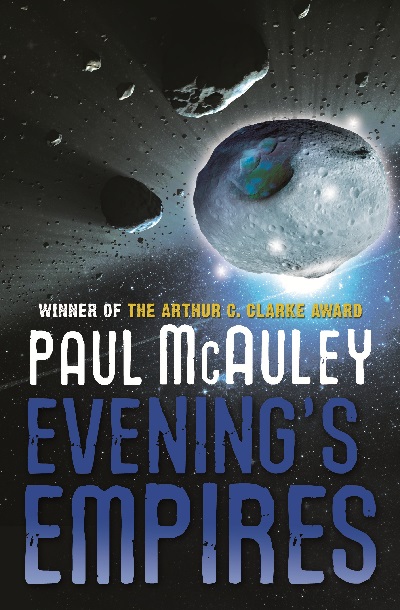
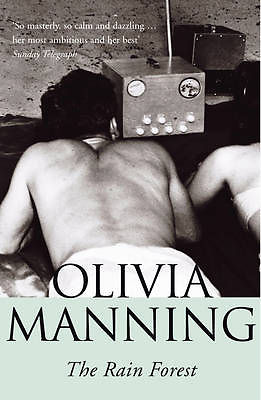
… Although I think it’s been longer than a month since my last book haul post. Which may explain why so many books appear in this one. Except my book haul posts always seem to feature a large number of books… I really must cut back on the number I buy. I managed to read nine books in one weekend during February, which took less of a chunk out of the TBR than I’d have liked since I’d bought so many damn books that month. Ah well. The following are the usual mix of subjects and genres and stuff.
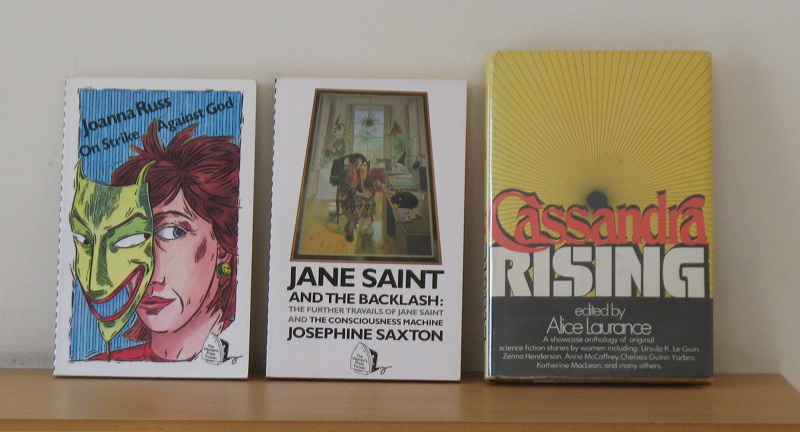
Some books for SF Mistressworks. Cassandra Rising is a SFBC women-only sf anthology, and the only copy of it I could find happens to be signed by half the contributors. Oh well. Jane Saint and the Backlash is the sequel collection to Saxton’s The Travails of Jane Saint, which was also published by The Women’s Press. On Strike Against God isn’t, as far as I’m aware, genre, but I’ll decide whether it’s suitable for SF Mistressworks once I’ve read it. All three books were bought on eBay.
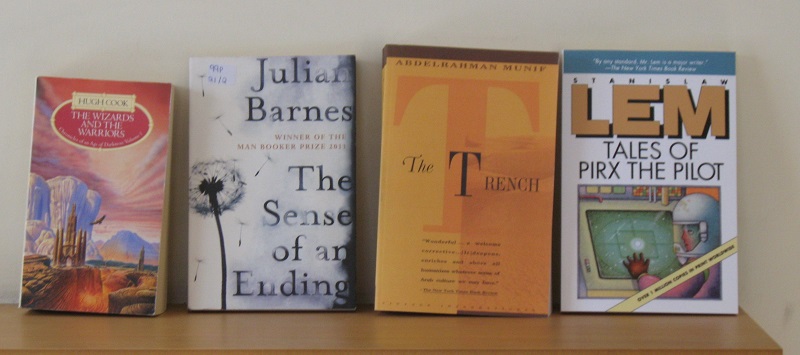
An assortment of paperback fiction. I want to read more Lem, hence Tales of Pirx the Pilot. Which reminds me, I must get a copy of the film adaptation – I found a website the other day that sells Russian DVDs (many of which have English subtitles). The Trench is the sequel to Cities of Salt, a novelisation of the US exploitation of the Saudi oil reserves, which I enjoyed (see here). The Sense of an Ending was a charity shop find; it was shortlisted for the Man Booker Prize. The Wizards and the Warriors is the first book of the Chronicles of the Age of Darkness, which I’ve heard isn’t too bad – now I have the first three books I’ll see what they’re like.
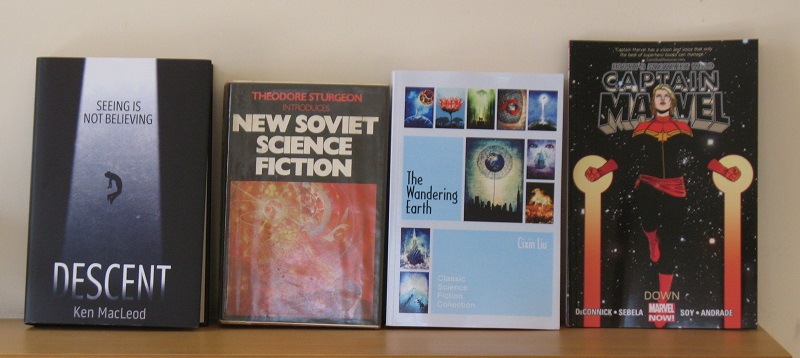
An assortment of hardback fiction. And a graphic novel. The stories of Captain Marvel 1: In Pursuit of Flight (see here) and this second volume, Captain Marvel 2: Down, have pretty much the same inspirations as Apollo Quartet 3, Then Will The Great Ocean Wash Deep Above. It’s as if Kelly Sue DeConnick took the two narratives of my novella and wrote her own versions of them – except, of course, the timing makes that impossible. Both feature a character called Helen Cobb, clearly based on Jerrie Cobb. The first Captain Marvel graphic novel is about the Mercury 13, and the second partly takes place at the bottom of the sea in a ship and plane graveyard. A very weird coincidence. Sadly, the story is mostly typical superhero fisticuffs, and the art is pretty poor. Cixin Liu’s fiction has been recommended to me many times, so I decided to pick up a copy of The Wandering Earth, a collection of his novellas translated into English for the first time. Browsing on eBay one day, I discovered that Macmillan had published a series of Soviet sf books back in the 1970s. New Soviet Science Fiction is an anthology, but the series also featured several novels. I smell a collection coming on. Finally, Descent is Ken MacLeod’s latest novel.
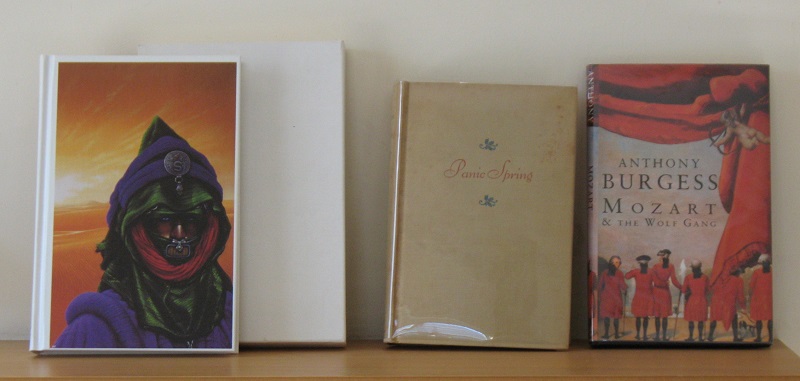
Some collectibles. Mozart & the Wolf Gang is a signed first edition. The other two books are among the most expensive I’ve ever bought – I won’t say how much each cost, it’s a little embarrassing. Panic Spring is Lawrence Durrell’s second novel, which was published under the name Charles Norden as his first did so badly. This is the US first edition, sadly, not the UK. Eye is a collection by Frank Herbert and copiously illustrated by Jim Burns. There were 175 slipcased, signed and numbered editions published, and now I have one of them.
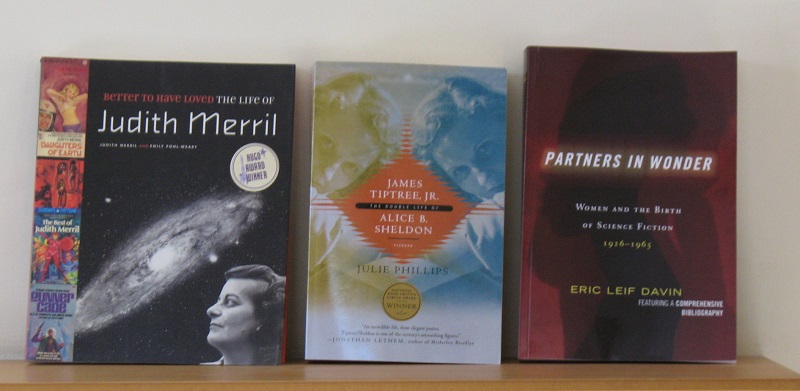
Research material for Apollo Quartet 4, All That Outer Space Allows. The final novella of the quartet will be about Apollo astronauts, of course it will… sort of. But it’ll chiefly be about an astronaut’s wife, and women science fiction writers – hence a pair of biographies of the latter: Judith Merril’s, Better to Have Loved; and James Tiptree Jr’s, The Double Life of Alice B. Sheldon. Partners in Wonder is about early women sf writers – I might write about it for SF Mistressworks after I’ve read it…
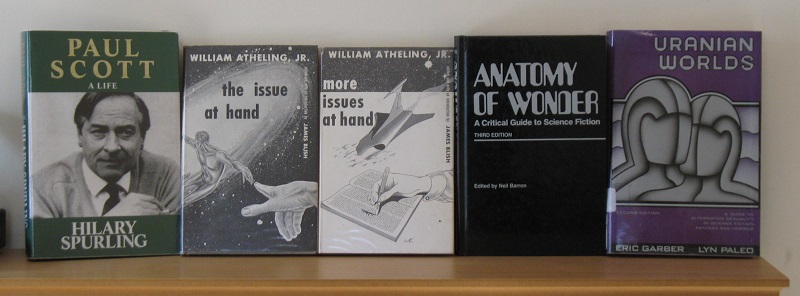
Some reference books, genre and otherwise. The Issue at Hand, More Issues at Hand and Anatomy of Wonder were all bargain purchases from Cold Tonnage. Uranian Worlds I decided to buy when I was trying to look something up online with very little success. I bought it from an Amazon marketplace seller; the book proved to be an ex-library copy, but the seller cheerfully refunded me half the selling-price. Paul Scott: A Life is a biography of, er, Paul Scott.
I spent much of February catching up with 2013 novels for my Hugo ballot. While this included a number of books by authors I usually read and enjoy, I also chose a number of edge cases that had looked interesting. I also didn’t have a computer at home during two weeks of February, which is why I was uncharacteristically quiet during the latter half of the month… It also meant I got a lot of reading done – nine books in four days at one point – so I’ll keep my comments on each book short as there’s more than the usual number of them. Incidentally, I’m still sticking to alternating genders in my fiction reading.
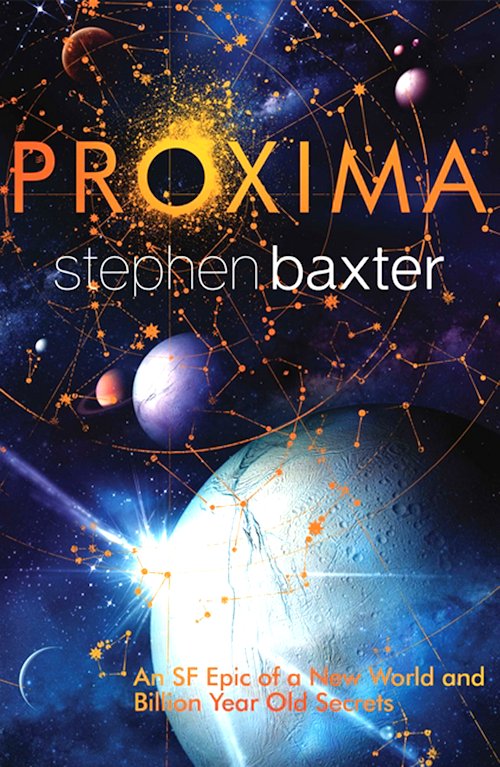
Proxima, Stephen Baxter (2013). Not sure what I was expecting this to be like – the publicity suggested I might like it… but I found it more like Exultant (see here) than Coalescent (see here). In other words, I thought it juvenile and thick with indigestible lumps of exposition; and while there was plenty of invention on display, no single idea was neat enough to make the book stand out. Criminals are transported to an inhabitable exoplanet in the titular star system, and what a surprise they prove completely unsuitable as pioneer colonist material. We’ve got rape and violence and warlordism in a century that has settlements throughout the Solar System and can even send spacecraft to another planetary system. But those criminal types do stumble across an enigmatic alien device which links the exoplanet with Mercury. This novel won’t be going on my Hugo ballot.
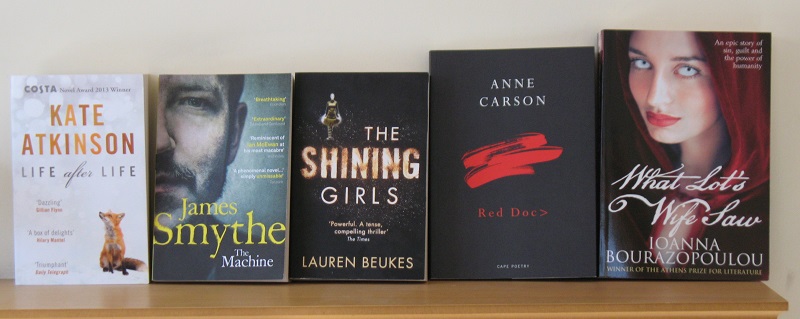
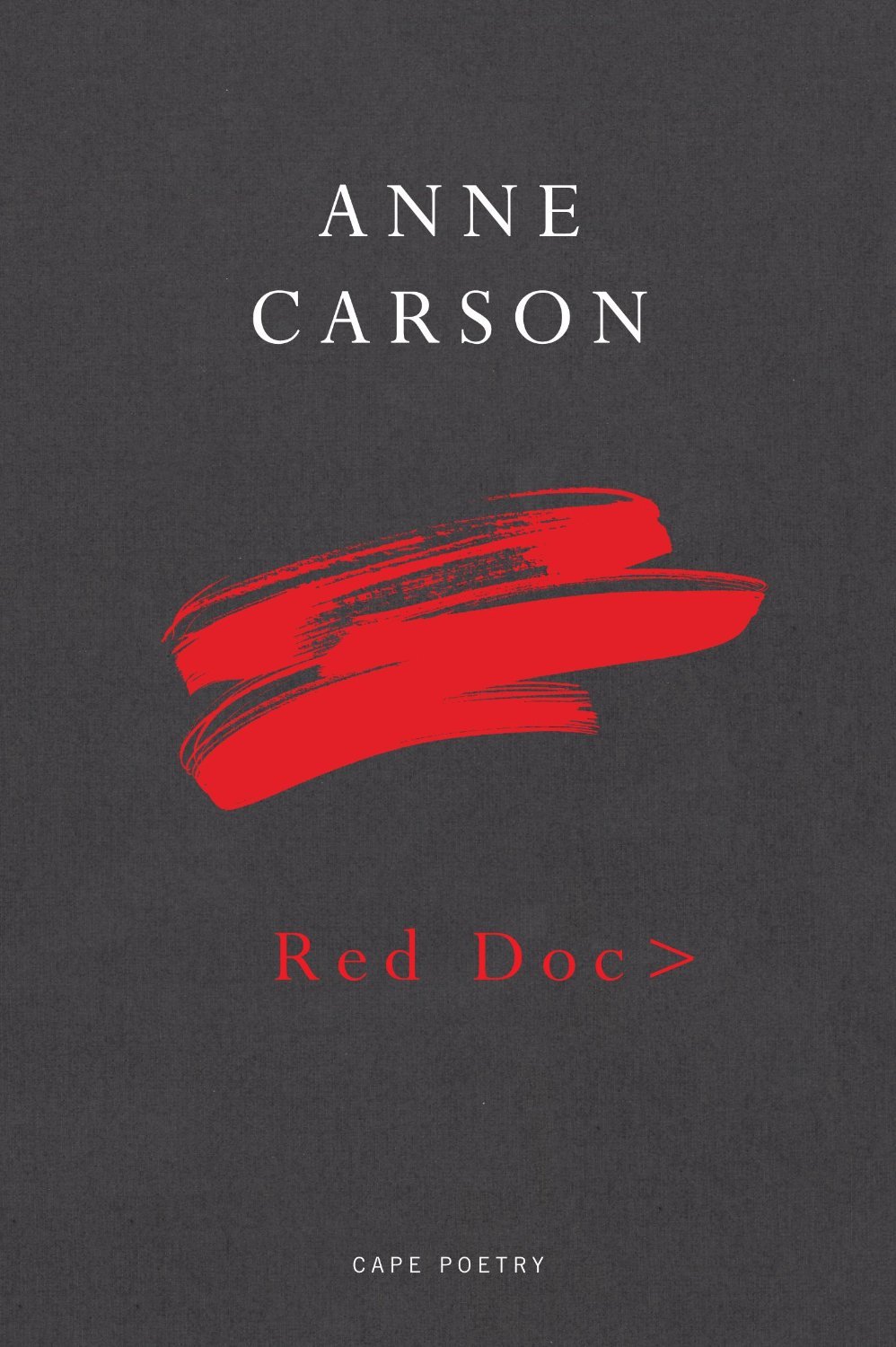
Red Doc>, Anne Carson (2013). This was shortlisted for the Kitschies earlier this year, which is why I bought a copy and read it. It’s a poem, told in a mix of styles, and I’m still not entirely sure what to make of it. While I find its genre aspects all a bit wishy-washy, there are moments of great beauty in it, and the dialogue in the told sections reads truer than anything you might find in a category genre novel. Since it’s not a novel, novella or short story, but a poem, I’m going to put it on my Hugo ballot as a related work. As far as I know, there’s nothing in the rules which says a related work has to be non-fiction.
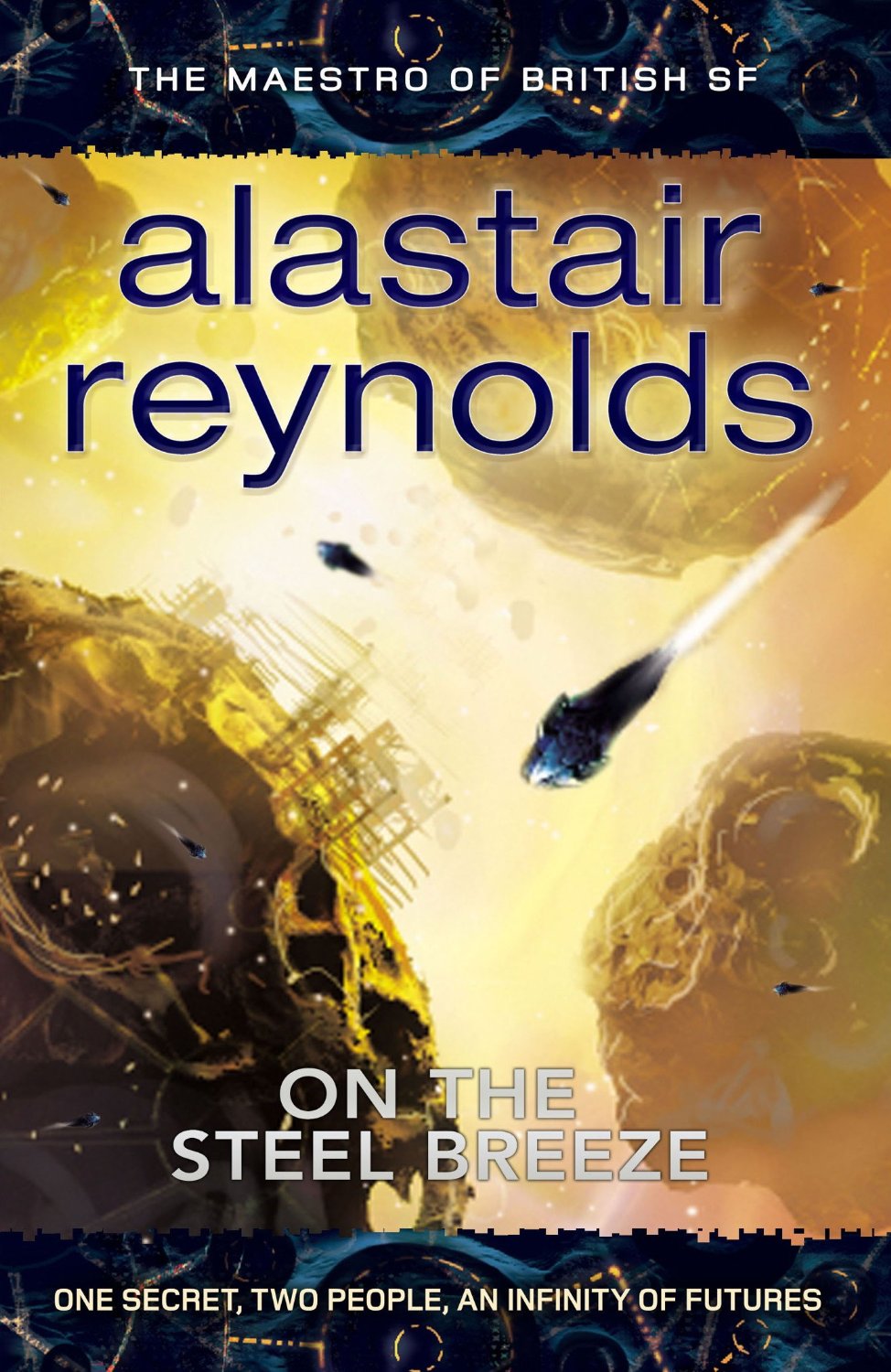
On the Steel Breeze, Alastair Reynolds (2013). This is the sequel to Blue Remembered Earth and the middle book of the Poseidon’s Children trilogy. Much of it concerns a covert war prosecuted by Arachne, an AI built to monitor a huge space-based telescopic array, because of course all machine intelligences are completely fixated on destroying non-machine life. There’s also a convoy of “holoships” – hollowed-out asteroids – en route to an exoplanet, on whose surface is an enormous enigmatic alien feature, the Mandala. The story focuses on three “clones” of Chiku Akinya, labelled Red, Yellow and Green – it’s a bit more complicated than cloning, something called “Quorum Binding”, which allows them to update each other’s memories, as is helpfully explained to one of the Chikus early in the novel by another character, even though, of course, she already knows how it works. One of the Chikus stayed on Earth; one set off in pursuit of Eunice Akinya’s space craft, Winter Queen (from Blue Remembered Earth); and one joined the fleet of holoships heading for the exoplanet Crucible. There are some nice set-pieces – I liked, for example, the one set on the surface of Venus, even if it didn’t seem to add much to the plot. The societies in the holoships turn totalitarian because, of course, totalitarianism is the default setting of any society in a science fiction novel – much as I disagree that hard sf is inherently right wing, the preponderance of right-wing societies in it is tiresome. There are also some uplifted elephants, a genius scientist who has a set of pronouns all of “vir” own, more about the mer people from the first book, and even some giant enigmatic alien machines orbiting Crucible, the presence of which had been hidden from humanity by Arachne. It’s certainly a polished novel,and what Reynolds does he does well, but it doesn’t quite meet the promise suggested by the first book of the trilogy. Of course, there’s still a final book to come, so perhaps that will do the trick. This book is not going on my Hugo ballot.
Life After Life, Kate Atkinson (2013). I’d never heard of Atkinson until her Jackson Brody books were adapted for television – even though her debut novel won the Whitbread Book of the Year in 1995 and she’s a pretty big-selling author in the UK. However, it was hard not to be aware of Life After Life, her latest book, as it’s already won the Costa Novel Award, is arguably genre, and has been talked about by a number of my online friends and acquaintances. A young woman born in 1910 dies at various times during her life, each time being reborn back in 1910 and somehow – sometimes only through some subconscious prompting – each time managing to avoid her fate from the previous time around. I thoroughly enjoyed this book – a pleasantly engaging protagonist, nicely witty prose, and a very smooth read without being as bland as commercial fiction. Recommended. I’ll be putting this one on my Hugo ballot.
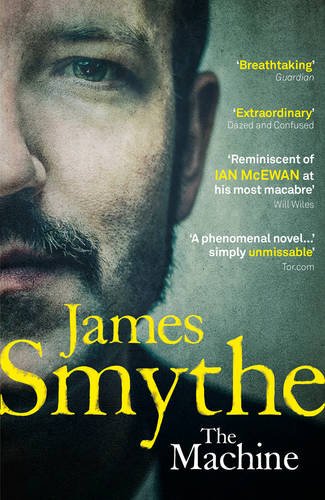
The Machine, James Smythe (2013). Smythe is banging out books like they’re an endangered species, but if the two I’ve read are any indication he’s no hack. The machine of the title of this novel is used to remove troublesome memories, but it’s later discovered that prolonged use puts the patients into a persistent vegetative state. Like Vic, Beth’s husband, a soldier who returned from the war with severe PTSD, turned increasingly violent and so opted for treatment with the Machine, but is now in a nursing hostel, oblivious to everything. So Beth buys a black market Machine, “kidnaps” her husband, and uses her Machine to restore his memories and so restore him. The name “Ballard” has been thrown around a lot in reference to The Machine, and certainly the setting – a sink estate on a post-global-warming Isle of Wight – feels very Ballardian, although the story itself doesn’t feel much like a Ballardian commentary on society. The prose is good, written in present tense with no quotation marks – which, obviously, is a style I’m all for… but why does it feel like everyone is doing it these days, eh? The ending may not come as much of a surprise, although perhaps reading Smythe’s The Explorer I’d been primed to expect a twist. Good stuff – and I have one spot left on my Hugo novel ballot and this is the current front-runner for it.
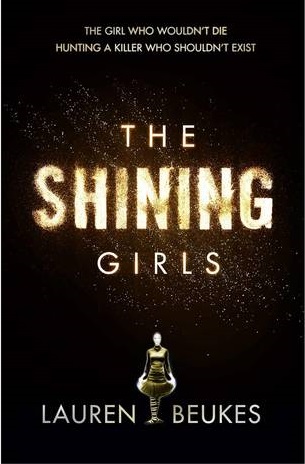
The Shining Girls, Lauren Beukes (2013). After Beukes’ Clarke Award-winning Zoo City, we have a high-concept commercial thriller, though the concept is enough to make it genre: a time-travelling serial killer. There’s a house in Chicago, and the killer can use it to access any time from the 1930s, when he discovers the house, to the 1990s. He jumps back and forth through the decades, stalking and killing young women, often ones he has previously visited while they were kids. They are the “shining girls”, so called by him because they have some quality which would have led them to live remarkable lives had he not murdered them. The Shining Girls is a fast, pacey read with a good sense of time and place, but the plot feels a bit too choppy to gel in places and the whole never feels quite complete somehow. This one will not be going on my Hugo ballot.
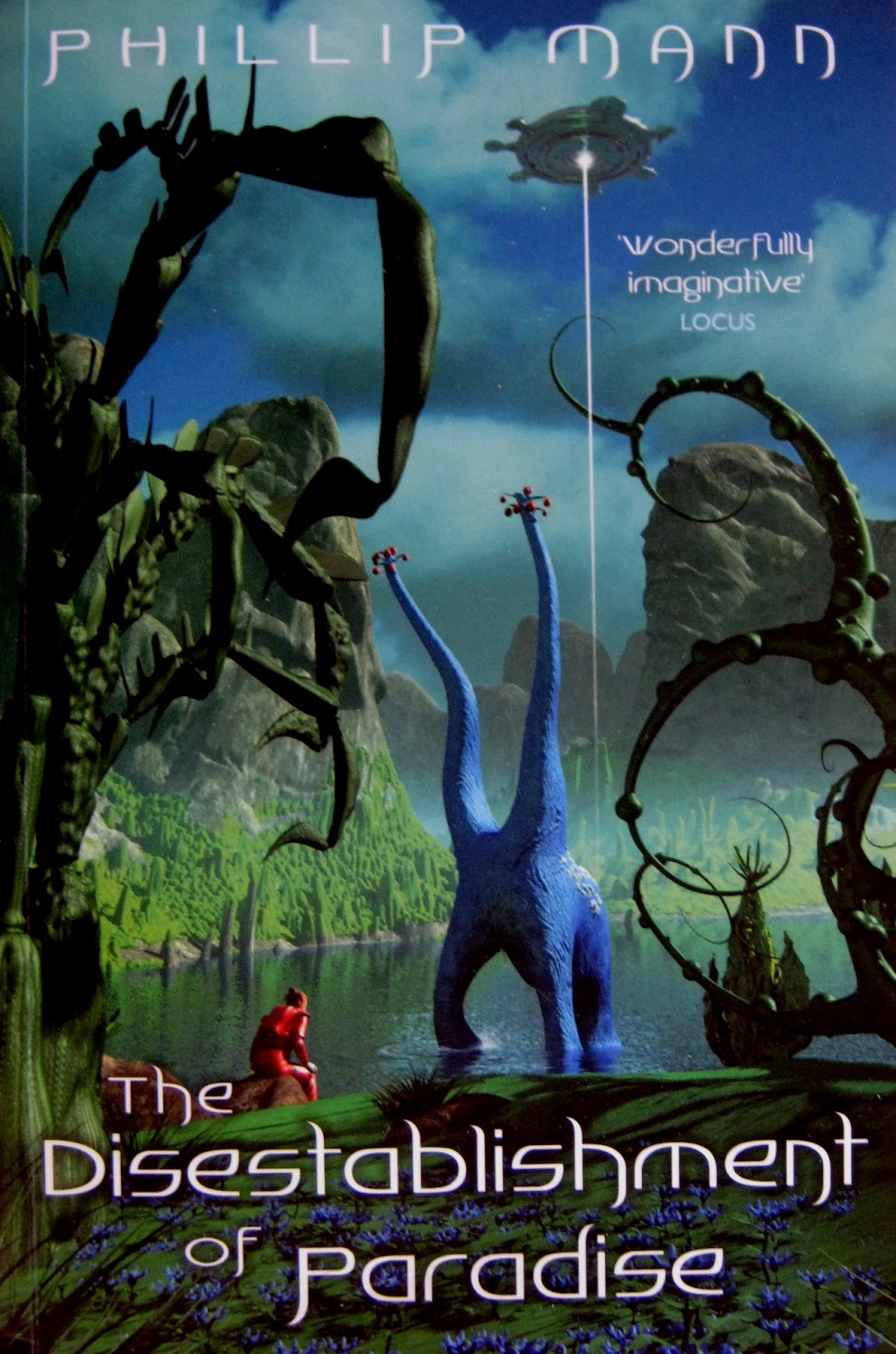
The Disestablishment of Paradise, Phillip Mann (2013). I’m a fan of Mann’s science fiction – I have all of his novels in hardback. So I was particularly happy to discover he had something new out, seventeen years after his last novel, 1996’s The Burning Forest. But, oh dear. The Disestablishment of Paradise refers to the final months of the Earth colony on the exoplanet called Paradise – this is what disestablishment is, the removal of a colony from a world – and the scientist, and her “assistant”, who remain behind and learn something more about the planet and its flora (it has no fauna). Particularly the Peripatetic Dendron, which is a sort of giant animated three-legged tree, and the Michelangelo-Reaper, which is a plant with psychic powers of some sort. There’s no denying that Paradise is a fascinating place, and that Mann draws a beguiling picture of it; but the human dynamics in The Disestablishment of Paradise are woefully old-fashioned (especially in regard to the female characters) and the dialogue is stilted at best. The story is framed as the novelisation of the reminiscences of the scientist, as told to a writer best-known for dark and edgy children’s books; and I’m not entirely sure what that conceit adds. There are occasional asides to the reader – and several appendices of supplementary material, which are referenced in the narrative – but it’s not enough to jolly along the somewhat plodding pace. One of the longest set-pieces is the “saving of the Dendron”, which seems to go on and on and on, with an excess of detail into Dendron physiology. After reading The Disestablishment of Paradise, I’m going to have to reread Mann’s earlier novels, as I don’t remember them being as dull or stodgy as this one. The Disestablishment of Paradise will not be appearing on my Hugo ballot.
The Children of Anthi, Jay D Blakeney (1985) I read this for review on SF Mistressworks.
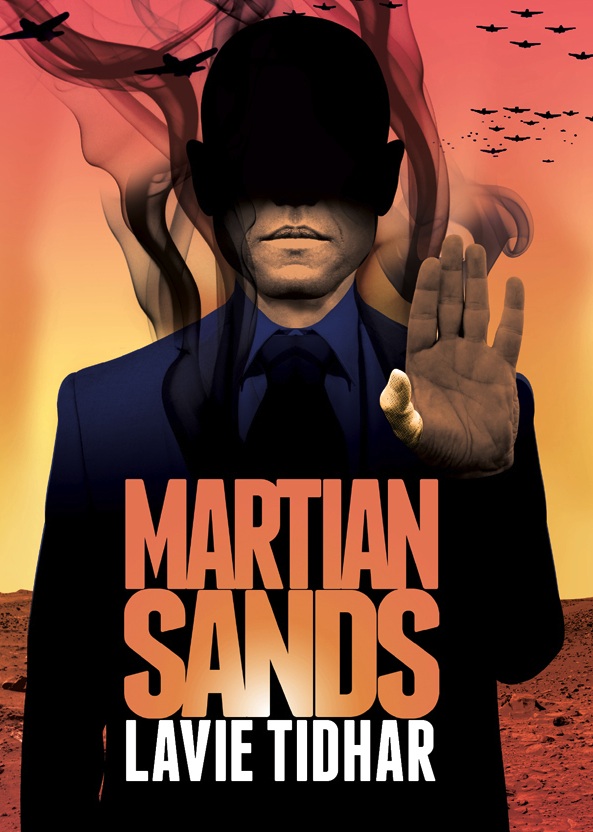
Martian Sands, Lavie Tidhar (2013). Or Tidhar does Dick. Again. I am not much of a fan of Philip K Dick’s work – there are a couple I like, but the only reason I own so many of his damn books is because almost half of the SF Masterworks series consisted of works by him. Martian Sands reads like a pastiche of Dick – and for me, that’s its biggest problem. It’s as if the plots and settings of a dozen of PKD’s novels were glommed together, and then roughly stitched into a single narrative using a magic chest full of sf references and in-jokes. I know some preferred this to The Violent Century, but I thought the other book much the better of the two. I won’t be putting Martian Sands on my Hugo ballot
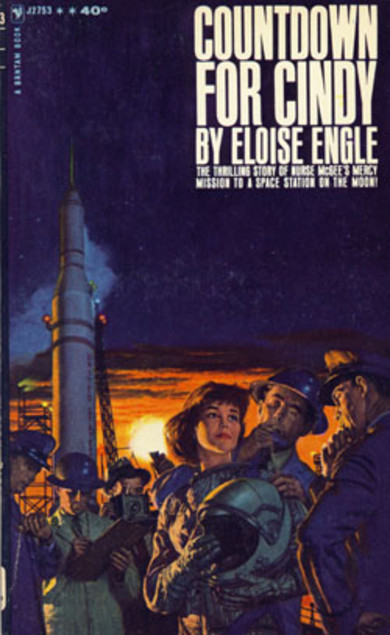
Countdown For Cindy, Eloise Engle (1962). I couldn’t resist this when I saw it on eBay, chiefly because it offered a 1960s take on women in space – which is something I’d covered in Apollo Quartet 3, Then Will The Great Ocean Wash Deep Above. The “MOON NURSE!” on the back was just a bonus. Interestingly, according to a foreword the author interviewed both Jackie Cochran and Jerrie Cobb, both of whom appear in Then Will The Great Ocean Wash Deep Above (actually, Cobb is one of my novella’s two protagonists). I’m working on a full review of Countdown For Cindy, to be posted here soon-ish.
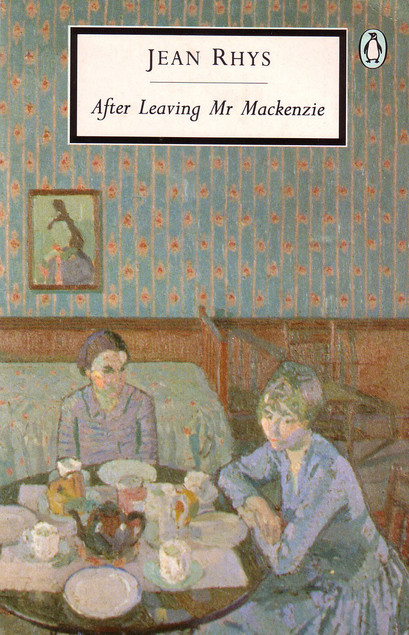
After Leaving Mr Mackenzie, Jean Rhys (1930). It was M John Harrison who recommended Jean Rhys on Twitter – some time last year, I seem to recall – during a conversation about women writers. Shortly afterwards, I stumbled across this book in a charity shop, and decided to give it a go. Julia has left her husband after the death of their baby, and is now living hand-to-mouth in a Parisian fleapit hotel. Desperate for money, she returns to London, hoping to sponge off relatives and/or past lovers. There’s a distant tone to this short novel, a weird lack of affect, as if Julia didn’t quite fully inhabit her life or the story – and, as a consequence, it’s hard to really care if Julia is successful or not. There’s an admirable clarity to the prose, and some nice turns of phrases in the descriptions – like “Behind the curtains was a green and optimistic sun-blind, faintly irritating, like a stupid joke” – and it all adds up to a curiously timeless prose-style. The sensibilities and lifestyles being described might be from the Thirties, but the language feels like it could belong to any decade of the Twentieth Century. That’s pretty impressive. If I see any more books by Rhys in charity shops, I’ll probably take a punt on them, but this one feels a little too languid for my tastes so I’ll not be in any rush to track down her work.
The Man from Charisma, Ted Mark (1970). I’ve no idea what possessed me to buy this book, or one of its sequels, Rip It Off, Relevant!. Perhaps I read something somewhere that suggested it might be amusing. It wasn’t. Jonathan Relevant is discovered naked on an iceberg after test missiles launched by a US and a Soviet nuclear submarine accidentally collide and explode above it. Relevant appears different to different people – to Soviet scientist Dr Ludmilla Skivar, he’s a studly Gagarin; to US Paper Clipped scientist Professor Von Schweindrek, he’s a model of Aryan masculinity; to African-American student activist G-for-George Pullman Porter, he’s Black Panther Eldridge Cleaver… The Soviets lay claim to Relevant, but the CIA steals him from them, and hides him in a CIA-sponsored research institute at Hartnell University… whose admin building has just been occupied by radical students protesting a number of different things. Relevant gets dropped into the middle of this, and tries to resolve it – which shouldn’t be that difficult given how everyone sees him as what they want to see. But this is the late 1960s, so… “Every man sees him as his hero. Every woman sees him as her lustful dream.” Sigh. We’re strictly in right-on “comedy” territory from the Swinging Sixties, with all the bad and borderline offensive jokes that entails – not to mention some outright offensive characterisations of various groups of people. I’ve no idea what possessed me to buy this book, and now I’ve read it I wished I hadn’t bought it. We’ll have to see if the sequel is any better – but I’m not holding my breath….
Once again, there has been some discussion online about self-publishing versus traditional publishing, prompted by a deeply-flawed report by Hugh Howey posted here. Others have already taken apart Howey’s argument, so I won’t bother – although I will point out that equating the quality of a work of fiction with its level of commercial success is a fallacy and not at all useful.
However, on reading Howey’s piece it occurred to me that my own experiences self-publishing my Apollo Quartet over the past two years might prove a more useful example. Especially since I can provide actual numbers – ie, real data. I am an award-winning self-published science fiction author, but my level of commercial success has been very modest. I’m happy with this – I didn’t self-publish in the hope of earning £millions, and I put much greater personal stock in critical acclaim than I do units sold.
The first book of the Apollo Quartet, Adrift on the Sea of Rains, was published on 9 April 2012, and launched at that year’s Eastercon, Olympus 2012 at the Radisson Edwardian Hotel, Heathrow. I priced the signed hardback at £5.99 and the paperback at £3.99, price points I felt were about right for its length, although during the convention it was sold for £5 and £3 respectively. The second book, The Eye With Which The Universe Beholds Itself, was published on 17 January 2013. Since the cover prices for the first book had barely covered the costs of printing the book – and actually resulted in a loss on each sale through Amazon, thanks to its non-negotiable 60% discount – I increased the hardback and paperback cover prices to £6.99 and £4.99. At that year’s Eastercon on the weekend of 29 March 213 to 1 April 2013, EightSquaredCon at the Cedar Court Hotel in Bradford, I sold copies of The Eye With Which The Universe Beholds Itself at £6 and £4. The third book of the Apollo Quartet, Then Will The Great Ocean Wash Deep Above, was published on 30 November 2013, and had the same pricing as the preceding book.
HBK
PBK
EBOOK
AQ1
09 Apr 2012
£5.99
£3.99
£2.99
AQ2
17 Jan 2013
£6.99
£4.99
£2.99
AQ3
30 Nov 2013
£6.99
£4.99
£2.99
On 30 August 2013, I dropped the price of the paperback of The Eye With Which The Universe Beholds Itself to £3.99 and the ebook edition to £1.99. Initially, the new lower price was only intended to last for the month of September 2013, but I’ve kept them in place ever since. The new paperback price only applies on copies bought through the Whippleshield Books online store. Amazon currently offers the paperbacks for each book at £3.99, £4.84 and £4.97.
When I decided to self-publish Adrift on the Sea of Rains, I was certain that I wanted to do it “properly” – ie, as a small press would do, with a signed limited hardback edition, a paperback edition, and ebook editions in the most popular formats. I did not pay myself as the writer, nor as the cover artist; and I asked a friend to act as editor, with the promise of payment once my small press was in the black. So the only costs associated with Adrift on the Sea of Rains were the actual costs of getting the hardbacks and paperbacks printed up. I used MPG Biddles, a printing firm used by a number of small presses in the UK, and ordered 100 copies of both the hardback and paperback – but only 75 copies of the hardback would be available for sale, the remaining un-numbered copies were for beta readers, family, friends and my agent, etc. I used Biddles again for The Eye With Which The Universe Beholds Itself. Unfortunately, the company went into administration in July 2013, so I was forced to look elsewhere for my hardbacks and paperbacks of Then Will The Great Ocean Wash Deep Above. I chose Lightning Source for the hardbacks, and Amazon’s CreateSpace for the paperbacks. Both are print-on-demand, which meant there was no financial advantage to ordering the full print-run up-front. So for the hardbacks, I have so far had 65 copies printed, and while the paperback has been available for sale through Amazon since 31 November 2013, I’ve only ordered 20 copies to date to hold in stock for Whippleshield Books’ online store. As a result, my unit costs for the books were:
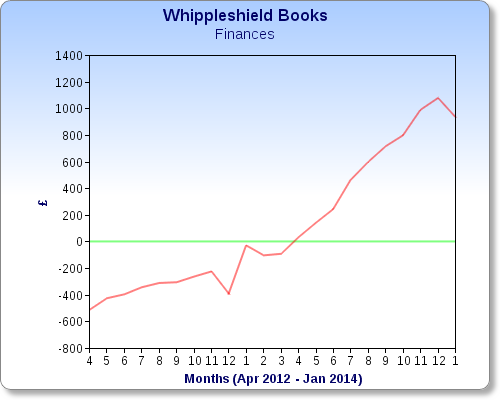
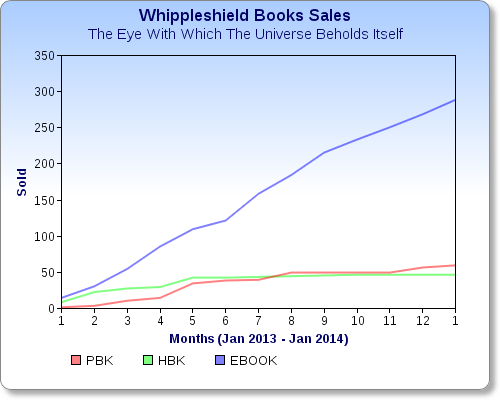
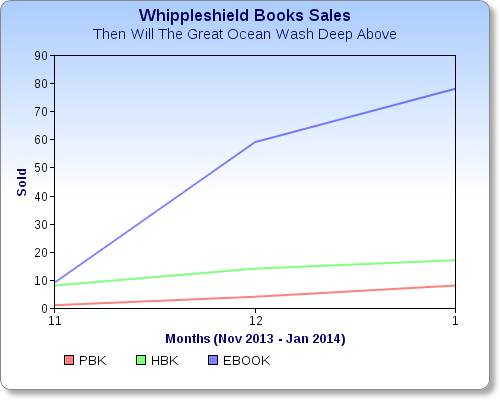
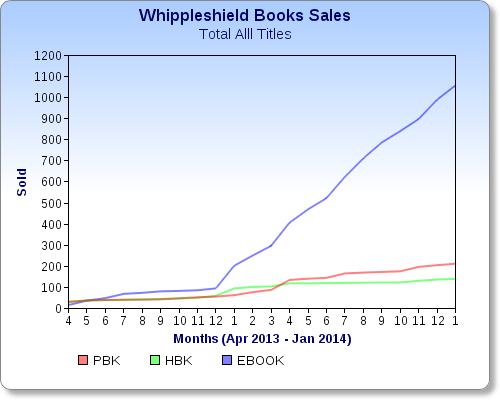
So, while it’s possible to make a profit assuming the only costs are printing costs, there’s not enough in it to make it worth the time and effort. However, each book is also available in an ebook edition, priced at £2.99. And that’s where the money lies. The hardbacks and paperback editions of the Apollo Quartet have been, to put it bluntly, subsidised by the Kindle editions of the books. As of 14 February 2014, Whippleshield Books is £939.14 in the black, and I’m pretty sure it’d still be in the red if I’d only published the Apollo Quartet in hardback and paperback.
The two dips at the end of 2012 were a result of the invoices from the printers for The Eye With Which The Universe Beholds Itself. Ebook sales were robust throughout 2013 and the dip at the end of the year is the printing costs for Then Will The Great Ocean Wash Deep Above. (The only fixed costs for Whippleshield Books are the annual fee of £143.86 for the ecommerce website and the purchase of ISBNs at £118.68 for ten (each title uses three, one for each edition).)
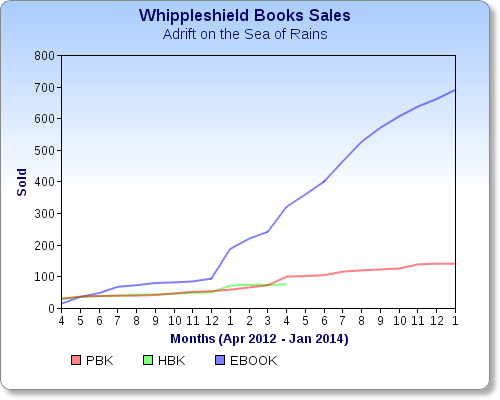
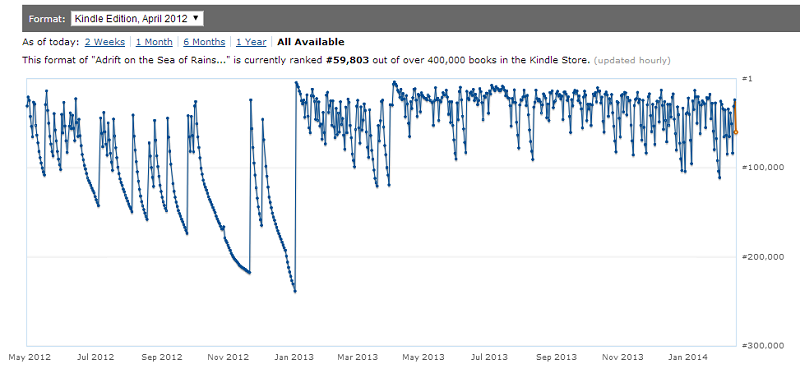
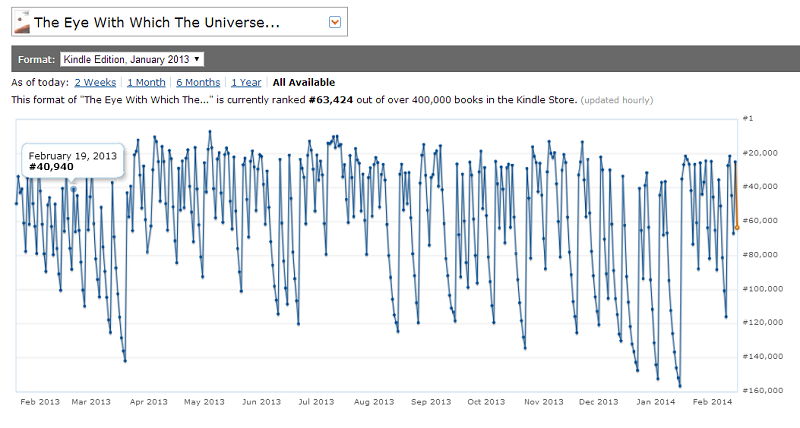
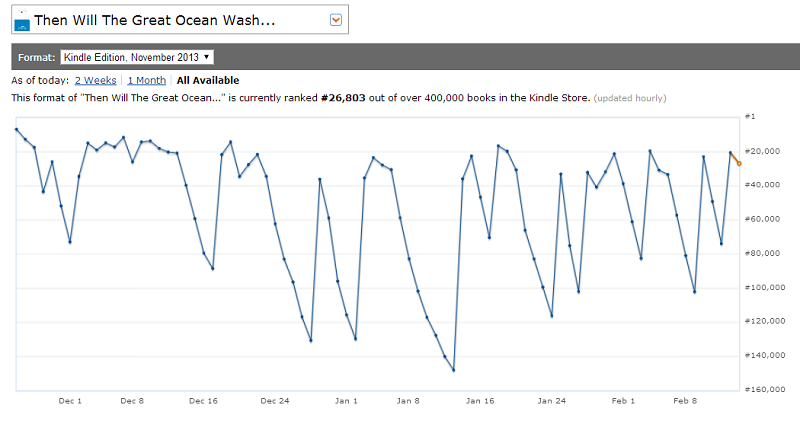
And speaking of Amazon, I can see no relationship between the Kindle rankings and actual sales:
And I’ve yet to be convinced the rankings are in any way useful to the author or publisher.
So, what have I learned publishing the first three books of the Apollo Quartet?
The most obvious lesson is that ebooks are crucial. They subsidise the hardbacks and paperbacks. And of all the ebook platforms, the Kindle is by far the most successful. I never bothered releasing the Apollo Quartet on Smashwords or the iTunes store, but I’m told by other small presses that it’s actually not worth the bother of doing so – over 90% of ebook sales will be from Amazon. I have made the Apollo Quartet available on Kobo, and both epub and mobi editions have been there for purchase from the Whippleshield Books online store from publication dates of each novella. But I’ve sold only single figures of each book from either of those venues.
Secondly, it’s all about eyeballs. If 1,000 people are aware of your book and 1% actually purchase it… that’s 10 copies sold. However, if 100,000 people see it and 1% buy it, that’s 1,000 sales. As a self-published author, it’s up to me to ensure that as many eyeballs see the books of the Apollo Quartet as possible. It’s not just self-promotion. If you’ve built up social capital, you can spend it to spread the word. It is, fortunately, a renewable resource, but it’s also hard work to spend. I put much more effort into getting word out about Adrift on the Sea of Rains, and the sales figures reflect that. (There’s also the possibility that Adrift on the Sea of Rains was a) sufficiently unlike anything else being published in science fiction to stand out, and b) I wasn’t chiefly known as a writer at the time so a little bit of novelty value attached.)
Having said that, timing also plays a part. The Eye With Which The Universe Beholds Itself was published in January, leading many to mistakenly believe it was published in the previous year and so ineligible to be nominated for that year’s award. I published Then Will The Great Ocean Wash Deep Above at the end of November, giving only two months – and over Christmas too – for word to spread before nominations for the BSFA Award closed. The best time to launch a book is between April and August, which gives sufficient time for sales to grow and word-of-mouth to spread. It’s even better if you can launch the book at a convention, as you’ll have a captive audience of your core readership for an entire weekend.
Although everyone says “don’t judge a book by its cover”, I’m pretty sure people do. Several friends and acquaintances have complimented me on the cover art for Adrift on the Sea of Rains but I’ve no way of knowing how much of a factor it was in generating sales. I’ll be releasing a new edition of The Eye With Which The Universe Beholds Itself with new cover art soon, so hopefully that should give some indication of the role played by cover art. I also deliberately chose titles – long titles, which have subsequently proven a bit of an arse to type out all the time – which sounded literary and so signalled the Apollo Quartet was literary science fiction. This may be why the one group of people I thought might buy the novellas have so far failed to do so: space enthusiasts. I sent copies to a couple of space-related websites, but none have so far run reviews. But then I’m not known in that group and have zero social capital there. I still think the Apollo Quartet would greatly appeal to space enthusiasts, but I’ve yet to find a way to get that message to them. Having audiences in two readership blocs can only help sales.
Finally, I could have just published the Apollo Quartet as ebooks and left it at that. That’s all some self-published authors do, and they make a very nice living at it thank you very much. But I felt I needed a small press of my own, and hardback and paperback editions, in order for my novellas to be taken seriously. And that’s precisely what happened. I don’t think Adrift on the Sea of Rains would have been shortlisted for the BSFA Award, and then gone on to win it, if it had only been published on Kindle. But, as I mentioned earlier, I value critical acclaim above units sold, so that dictated how I approached self-publishing.
It’s still my ambition to be published by a major publishing house. I plan to start soon on a novel, and I will not be self-publishing it. When I wrote Adrift on the Sea of Rains I was pretty sure no magazine or small press would publish it – which is why I did it myself. Its success came as a very pleasant surprise; but it has also demonstrated that I can write award-winning science fiction and, just as importantly, helped me find the space in which I want to write, the sort of science fiction I enjoy writing. I’m not a space opera writer, though I enjoy reading it; I don’t want to write cyberpunk or post-cyberpunk, though I admire some sf which is classified as that. I now know the type of science fiction I want to explore in my writing, and that’s what the Apollo Quartet has shown me.
And I also won an award and made around £1000 while doing it.
The Hugo Award is a world award – it says so on its website: “The Hugos are World awards”. They’re not, of course, they’re US awards. The electorate is overwhelmingly American, and the rules are set up to maximise visibility of eligible works to Americans. It is voted on by members of the annual Worldcon, but that too is American. In fact, since the first Worldcon in 1939, it has taken place in the following countries:
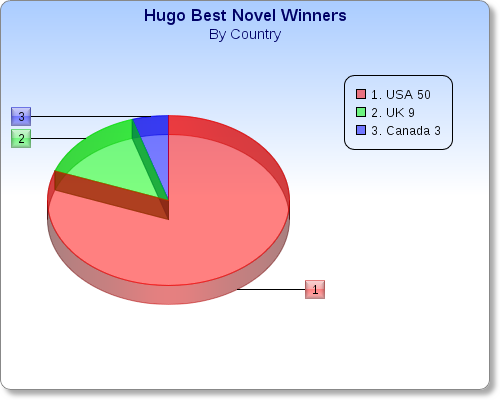
So it comes as no real surprise to find that the Hugo Award for Best Novel has been overwhelmingly won by US authors:
In fact, during the six years when the Worldcon took place in the UK – 1957, 1965, 1979, 1987, 1995 and 2005 – a UK author won the Hugo Award for Best Novel only in 2005. This year, of course, the Worldcon is back in the UK: Loncon3. And the likelihood of a local author winning best novel is much the same as it has been in previous years.
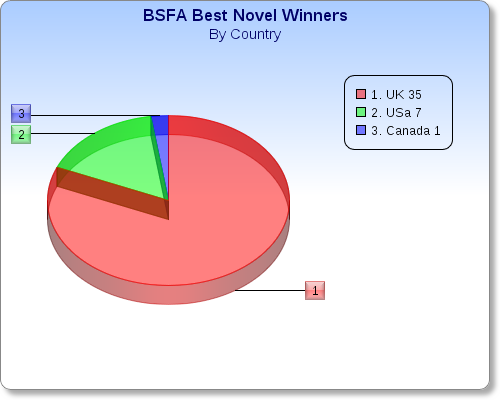
The British Science Fiction Association Award, on the other hand, is a British award and makes no pretence of being otherwise. It is awarded by members of the BSFA and the annual British Eastercon. Books published in the UK during the preceding year are eligible. So the nationalities of the winners are not much of a surprise – although, to be fair, 16% US winners of the BSFA is only marginally more than 15% UK winners of the Hugo:
(I’ve counted Michael G Coney as Canadian, because even though he was born in the UK he was resident in Canada; and I’ve counted Geoff Ryman as British, because he even though he is a Canadian he has been resident in the UK throughout his career.)
Because the Hugo Award is structured to give maximimum visiblity to US voters, books published outside the US are eligible a second time when first published in the US. Which leads to the farcical situation this year where last year’s winner of the BSFA Award, Adam Roberts’ Jack Glass, is eligible for this year’s Hugo because it was first published in the US in April 2013; but one of the books on this year’s BSFA Award shortlist, God’s War by Kameron Hurley, which was first published in the UK last year by Del Rey, is not eligible because it was first published in the US in 2011 by Night Shade Books. Perhaps this would make sense if the 2014 Worldcon were taking place in the US and not in the UK, perhaps this would make sense if the Hugos did not claim to be “World awards”.
On the other hand, perhaps it will never make sense…
This is in the nature of a first pass through my ballots for the 2014 Hugo Awards, a work in progress. My reading is not yet complete for the various fiction categories, so I hope to have five choices for each of them by the end of March. As for the other categories, read on…
It has been brought to my attention that I’m allowed to nominate my own fiction – which is not allowed for the BSFA Award – so I thought, why the hell not? Both of my novellas were published in 2013 (January and November, respectively), and it’s not like hundreds of other people will nominate them. Plus, I’m also the publisher of said novellas, which arguably makes it all a bit blurry anyway. The reason the same old names always appear in this category is not because they write the best novellas every year but because most Hugo voters can’t be arsed to read around. If putting my novellas on my ballot encourages them to look beyond Asimov’s, Analog and F&SF, then all to the good. Meanwhile, I shall be reading around, checking out novellas such as this one (ta to Abigail Nussbaum for pointing me at it).
novelette 1 no award
I think the category needs to be dropped, so I’m not going to nominate anything in it.
I’ll probably drop my own story from this ballot – I mean, I think it’s good, of course I do; but maybe that’s pushing it a bit. Although, again, if it prompts Hugo voters to read around a little… I’m still looking for a story to fill one, possibly two, slots.
It occurred to me that Red Doc> is a poem not a novel, and so would better suit this category. I’m still thinking about other – perhaps non-fiction – works I might nominate.
graphic story 1 no award
I have no idea what to nominate and no real interest in finding out.
dramatic presentation (short) 1 no award
I think the category should be dropped. But if I were going to nominate something, it would probably be ‘The Five-ish Doctors Reboot’ (BBC).
dramatic presentation (long) 1 no award
Another category I think should be dropped. But if I were going to nominate something, it would probably be season one of Orphan Black.
editor (long form) 1 no award
Awards should go to works, not people.
editor (short form) 1 no award
Awards should go to works, not people.
professional artist 1 no award
Awards should go to works, not people.
semiprozine 1 Interzone 2 Strange Horizons 3 Vector 4 no award
The category definition is farcical, but these are the genre magazines I read regularly.
I’ve no real interest in fanzines per se, but I’m nominating five blogs/web sites here in order to point out that no one gives a shit about paper fanzines anymore and it’s long past time the Hugo Awards realised that.
fancast
1 no award
I don’t listen to podcasts.
fan writer 1 Liz Bourke 2 Jonathan McCalmont 3 Abigail Nussbaum
4 Jared Shurin 5 Nina Allan
Awards should go to works, not people – but I’m nominating five people here as a political act.
fan artist 1 no award
Awards should go to works, not people.
So there you have it. My thoughts on my ballot so far. I shall continue reading, and nearer the date I’ll post what my actual final ballot will be.
This year, I’m going to try and be a little more disciplined about writing up what I’ve read. So I’ve decided to title the series of posts a “reading diary” and I hope to put one up every month or so. As usual, however, the choice of books will be somewhat eclectic – a mix of genre and literary fiction and, er, other stuff – and I’ll also mention any non-fiction I’ve read for research. You’ll notice that the fiction alternates between male and female writers. That was one of my New Year’s Resolutions, and so far I’ve managed to stick to it.
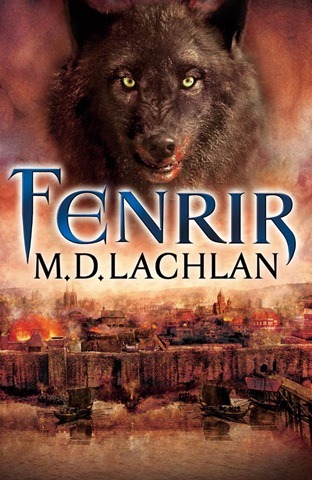
Fenrir, MD Lachlan (2011). I really liked Lachlan’s debut, Wolfsangel, to which Fenrir is a sequel, so I had pretty high hopes for this. Unfortunately, it didn’t quite meet them. The plot – deliberately – echoes that of Wolfsangel, but this time takes place in the late ninth century, and in France. Three characters unknowingly act out the romantic triangle from the earlier book, which apparently echoes some Norse god romantic triangle and will bring about Odin’s return to Earth. Fenrir opens with the Siege of Paris (885 – 886), and ends 532 pages later in Aldeigjuborg, a Viking-ruled Russian kingdom near what is now St Petersburg. The first member of the triangle is Aelis, the sister of the ruler of Paris, who manages to escape the siege and then has to evade capture by the marauding Vikings. The other two members are male – Jehan, a crippled monk, and Raven, a Viking shaman. The ruler of Aldeigjuborg wants Aelis for his wife, and has sent a trader, Leshii, and a wolfman, Chakhlyk, to fetch her. She doesn’t want to go, of course. And Raven is after her for his own – and his sister’s – nefarious purposes. And when the wolf is awakened in Jehan, by Norse magic, then he becomes fit and able, and he gets involved too. I said when I read Wolfsangel that werewolves and Vikings were not really my thing, but that novel did something very interesting with them – and Fenrir continues in that vein, but unfortunately it’s a bit too long for its story. The first half dragged badly in parts. It also didn’t help that “dirham” was incorrectly spelled as “dihram” throughout, or that one character’s name went from Swava to Suava and back again. Having said that, some of the set-pieces are really good, and I’ve every intention of continuing with the series.
Minaret, Leila Aboulela (2005). The narrator is the daughter of a well-to-do Sudanese businessman – or rather, he was well-to-do. He prospered under the country’s old regime, and he and his family were almost aristocracy. But when that government was overthrown, he was arrested and executed as a symbol of its corruption. So now the narrator, Najwa, is in London, and working as a nanny since all the family’s riches (justly earned or not) have been seized. The woman she works for is a young Arab who grew up in the Gulf states, is married to an Egyptian currently working in Oman, and is studying for a PhD at a London university. She’s not especially religious. Her younger brother, also a student, however, is religious. And Najwa, who has discovered religion since coming to London, is drawn to him. But it’s not a match the family condone. Minaret is more about Najwa, how she became the woman she is, than it is about her burgeoning relationship with her employer’s brother. The writing is very good throughout – Aboulela writes in English – and Najwa is a beautfully-drawn character. I thought this a much better book than Aboulela’s earlier The Translator.
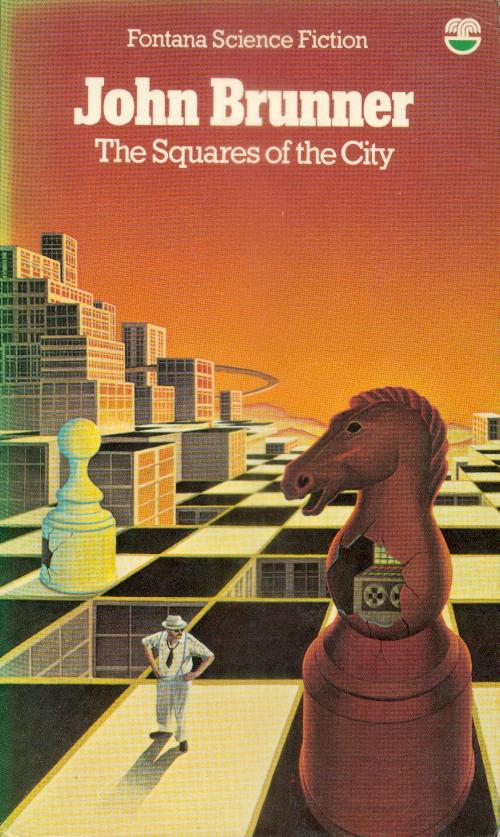
The Squares of the City, John Brunner (1965). An Australian traffic analyst is invited to a South American model city clearly patterned on Brasilia (although the invented country in which it is located is Spanish-speaking) because the visionary president of the nation believes traffic analysis will cure his lovely city of its unsightly slums. From the moment of his arrival, the narrator is in over his head, as it turns out there are two main political factions in the city and he’s being used as a tool by one of them. Though he repeatedly says he can provide short-term solutions to the slums, but in the long term proper housing and education is the only way to really fix the problem, the city authorities want a quick result. And then people start to get killed. I liked that Brunner had based his invented city of Vados on Brasilia, and it seemed to me he sort of captured a similar architectural flavour. The characters also seemed to suit the setting, although the narrator drifted a little too close to Overcompetent Man at times. However, The Squares of the City is apparently notable because the plot is based on a famous chess match, with each of the characters representing various pieces. To be honest, not knowing this in no way changes how you read the story, nor does knowing it actually help you parse the plot. It’s a gimmick that means nothing to the reader, and I’m surprised Brunner even bothered mentioning it. Yes, it turns out the two chief movers and shakers in Vados – the president and the leader of the opposition – have been playing a chess game with people, and that’s why there have been deaths, but it seems too abstracted to make any real difference. I think that makes the novel more of a curiosity than anything else.
Journey, Marta Randall (1978). See my review on SF Mistressworks here.
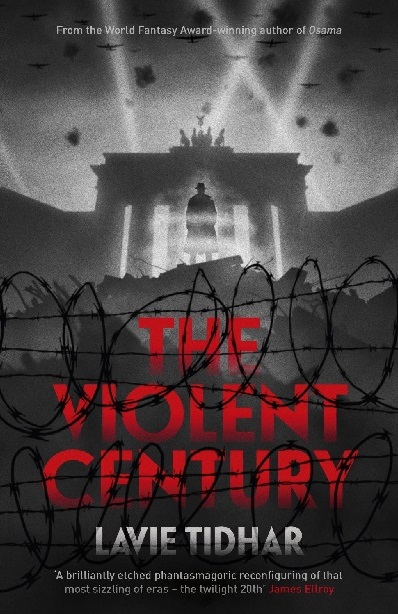
The Violent Century, Lavie Tidhar (2013). This novel landed in October last year with quite a thud. In fact, only last weekend a friend mentioned he was thinking of reading the book because it had received so many positive notices. Which is, I suppose, as good a reason to read a book as any. The Violent Century covers, well, not even a century really – it opens in the 1920s, but the present of the story is labelled only “the present”, although clues suggest it is near the turn of the millennium, if not just after. Back in the early part of the twentieth century, Dr Vomacht inadvertently released a probability wave which changed a small proportion of the world’s population, effectively giving them superpowers. In Britain, these superpowered people were recruited as spies and undercover agents, and spent much of WWII trying to track down Vomacht, or eliminate Germany “Übermenschen”. The book’s two protagonist are Fogg and Oblivion, a pair of British agents, and the novel covers their escapades during WWII and the Cold War, as told in flashback from the present-day. Fogg has been brought out of retirement because something has happened, and the flashbacks lead up to the explanation of that. The structure works well, although there’s a niggling sense at times that some information is left unsaid when it needn’t be because the requisite flashback has yet to take place. And speaking of niggling, The Violent Century reminded me of something else but I could never quite put my finger on it. It borrows heavily from comicbook mythologies, of course; and there’s a pulpish flavour to its alternate history… but there was something in the mix that was quite heavily reminiscent of… something. I also thought the ending was a bit weak. A strong novel, yes; but not, I think, one I’ll be putting on my Hugo ballot.
Fireflood and Other Stories, Vonda N McIntyre (1979). A review of this will be posted up on SF Mistressworks in a couple of weeks.
Europe in Autumn, Dave Hutchinson (2014). I reviewed this for Vector.
Breakdown, Sara Paretsky (2012). I’ve been a fan of Paretsky’s VI Warshawski novels since first stumbling across them in the UAE in the early 1990s. In recent years, the politics have been much more in your face – not necessarily a bad thing, though it does sometimes over-balance the story. Breakdown is a case in point. It opens with Warshawski stumbling across a recently-murdered man in a cemetery while trying to track down a group of missing teenage girls who have gone there to practice a ritual tied into their love of an urban fantasy series of books (plainly based on Twilight). The plot spirals out from there to feature the right-wing media, particularly the sort of moronic far right television pundit who presently seems bafflingly popular in the US at the moment. There’s also an ultra-rich Jewish industrialist, possibly with a shady past, who is the chief target of the TV pundit’s attacks, and even a pair of senators battling for the local seat – a liberal, backed by the industrialist; and a Tea Party-type loon, backed by the right-wing media. If Paretsky’s novels are overly target-rich from a liberal perspective, Warshawski is turning increasingly quixotic with each subsequent book. Parestsky chooses big themes, but gives Warshawski small victories; it’s a strategy guaranteed to leave you angry when you finish the book. And no matter how righteous that anger, Warshawski’s – and by extension, the reader’s – inability to change things makes you wonder what the point of it all is. But I like Warshawski as a character, I like that Paretsky wears her politics on her sleeve (and I mostly agree with them), and so I’ll continue to read these books.
Evening’s Empires, Paul McAuley (2013). I read this because it has been shortlisted for the BSFA Award this year, even though it’s the fourth book in a loose series – preceded by The Quiet War, Gardens of the Sun and In the Mouth of the Whale, and only the first of which I’ve read (and I didn’t really like it; see here). Evening’s Empires can be read as a standalone, but it also makes numerous references to the events in those earlier novels. All the same, I didn’t find that an obstacle, though it did leave me curious about the earlier two books. But. I’d not really taken to The Quiet War, and I suppose I’d not really expected to take to Evening’s Empires, although something about its blurb did suggest I might be mistaken. Perversely, I found myself underwhelmed by the novel thanks to something I’d not even considered… Evening’s Empires opens with Gajananvihari Pilot marooned on a tiny asteroid on the outer edges of the Belt. The asteroid had once been inhabited – most recently by an ascetic – so there is enough infrastructure present for Hari to survive. He’s been marooned because dacoits captured his father’s ship but he managed to escape. The hijackers were after the fruits of Dr Gagarian’s research into the Bright Moment, a single vision granted to every member of humanity at precisely the same moment when Sri Hong-Owen “vastened” and melded with the alien intelligence present in Fomalhaut’s gas giant (which is apparently what happened during In the Mouth of the Whale). When a pair of dacoits come to capture Hari – and Dr Gagarian’s head, with which he has absconded – he kills them and uses their scooter to escape… and promptly follows a series of clues around the Asteroid Belt, and out to Saturn, in order to have his revenge on the hijackers and discover why Dr Gagarian’s research was so important to them. McAuley describes a Solar System in decline – the places Hari visits are long past their glory days. There have been system-wide wars, empires have risen and fallen, and in many cases, those that are left are just living in, or have re-purposed, the ruins of earlier centuries. Which means that while Evening’s Empires is very much hard sf, it mostly reads like space opera. McAuley has also filled his story with in-jokes. Each of the sections, for example, is named for a sf classic of the past. And part of the plot’s climax takes place at the Memory Whole, an Earth-orbiting asteroid which hosts a virtual environment for avatars of early uploaded post-humans. One of these avatars is quite cutting to Hari about humanity’s predilection for living in the fantasies of earlier ages. Given that the Memory Hole is a real-life UK-based fanzine collection, I can’t decide if McAuley is taking the piss or writing a savage indictment of science fiction…
The Rain Forest, Olivia Manning (1974). I loved Manning’s The Balkan Trilogy and The Levant Trilogy when I read them several years ago, so I always keep an eye open for books by her when I visit charity shops. Which is where I found this copy of The Rain Forest. It’s her last novel, and set on the invented Indian Ocean island of Al-Bustan (clearly based on Mauritius; there are several mentions of the dodo). Hugh and Kristy Foster have moved temporarily to Al-Bustan so Hugh can take up a position in the local British administration of the island. He’s actually a screenwriter – and Kristy is a successful novelist – but the industry has collapsed in the UK and left him out of work and out of cash. The couple are put up in the Daisy Pension, a boarding-house populated by a cast of minor grotesques. They make friends with the owner’s profligate son, who is shunned by the pension’s guests, and through him meet some of the island’s colourful inhabitants. Although published in the early 1970s, and clearly meant to be set around that time – there’s mention of fashion designers Pucci and Gamba; a helicopter is the chief means of reaching the island – everything felt like it was a couple of decades older. There’s a feel of 1940s Raj to it all – I mean, I was an expat in the Gulf states in the 1970s, and while I was only a child then, I don’t remember it being how Manning describes it on Al-Bustan. Having said that, Al-Bustan is a small island with a native population descended from waves of earlier immigrants from Africa and the Arabian peninsula, so the situation hardly maps onto that, say, of the Trucial States as was. The plot of The Rain Forest bumbles along, there’s a feeling that in the hands of a male writer the story would have been more comic, played for laughs, though to be honest I prefer Manning’s approach. It’s not entirely clear what role the titular woodland plays, and certainly some of the events described in the novel don’t quite gel with it – the Fosters’ treatment by the other residents of the pension, the small war they fight with the new owner after the original owner dies, Kristy’s pregnancy, even the trip Hugh takes to the rain forest in the final section. The cast are mostly unlikeable, except for the Fosters, and what little pathos is present seemed to fall flat more often than not. The Rain Forest is nowhere near as good as those two earlier trilogies – though I do have to wonder if it’s as autobiographical as they were (after all, Kristy is a successful novelist) – but all the same, I’ll continue to keep an eye out for Manning’s novels.
I was reading a blog post recently which described YA fiction containing spaceships and other overt science fiction tropes as “hardcore” – as a means to distinguish it from other science fiction YA. Of course, in YA “dystopian” is a genre rather than a description of a setting; and now it seems “science fiction” is a setting rather than a genre…
And it occurred to me – not so much that this was not what science fiction is, but more that it was a different way of looking at science fiction.
It’s an established fact that science fiction fandom is greying. Where once enough people joined each year for sf fandom to grow, that’s no longer true. And yet science fiction as a genre has become ubiquitous. Obviously a proportion of consumers of sf probably think of themselves as fans – but they’re not in fandom. Either because they’re not invested enough in science fiction to do more than passively consume it, or… they have their own fandom. After all, “sf fandom” as we commonly use the phrase refers to a specific group of people, it’s not just a generic term for all active consumers of the genre. It’s a community which traces its beginnings back to the early part of the twentieth century, when groups of like-minded people met up in various cities around the globe to celebrate a specific mode of literature. Over the years and decades, the community and its activities have formalised – resulting in conventions, fanzines, jargon, an entire support infrastructure for the category sf publishing industry, but also support for those who offer first-line support to the publishing industry…
But there are other sf-related fandoms now. And some of them are doing very well indeed – as Worldcon attendances have declined, so Dragon*Con attendances have risen. Which is why that blog post about “hardcore” YA sf put me in mind of China Miéville’s novel about two cities which occupy the same space but refuse to acknowledge that relationship.
This is not to say there are no crossover points – NineWorlds is a good example of one. (I’ve never been, it clashes with a music festival I’d sooner attend; and yes, I’d rather camp in a field and listen to lots of metal bands than spend a night in that awful hotel in Heathrow.) There are also a number of blogs which transit freely through various forms of genre fandom. But if there are those who do not restrict themselves, there are also those who police the border. The fandom & the fandom has its very own Breach: the Hugo Awards. To be fair, the Hugos were created as a celebratory tool by those original sf fans, but now it seems the awards do little more than help provide a structure badly needed by a decaying community which refuses to acknowledge its time is past. The Hugo rules have fossilised practices which haven’t been true for decades, but no one wants to change those rules. Or rather, those in the best position to effect change are too busy fighting against change.
It seems foolish in the extreme for sf fandom to ignore YA genre fiction. The biggest-selling genre authors of the past couple of decades are YA authors – JK Rowling, Stephenie Meyer and Suzanne Collins. And each of their series has gone on to become highly-successful film franchises. It’s not as if YA sf is some strange new never-seen-before creature. Back in the day, they called the books “juveniles” and both Heinlein and Asimov, much-lauded writers in traditional sf fandom, openly wrote them. But past attempts to create a Best YA Novel Hugo have all foundered. Some say YA fiction should be treated like other fiction – if it’s good enough, it’ll be nominated for best novel; and JK Rowling did win the Hugo in 2001. But that doesn’t hold water. YA, as noted above, looks at science fiction differently; it is shelved in its own separate section in book shops; it has its own separate fandom… And it’s that latter point where the problem lies. YA sf fandom cannot be subsumed into traditional sf fandom. That’s never going to happen. Nor do fans get “promoted” from YA sf fandom to sf fandom – that’s not how it works. Plus, there are plenty of career sf authors currently writing YA fiction, so to continue to ignore it just looks like sheer spite.
Personally, I’ve no interest in reading or writing YA sf. But that doesn’t mean I think sf fandom should exclude it. I’d say sf fandom, and the Hugo Awards, are in danger of making themselves irrelevant, but that horse has long since bolted. This year’s Hugos have prompted a conversation online about change, about what needs to be done in order to halt their decline. The sort of major changes that are needed will never happen – the system is designed to prevent it – but two indicators of the need for a change I do expect to be reflected in the 2014 shortlists…
If the best fan writer and best fanzine shortlists are comprised entirely of candidates from paper fanzines, then the old guard have won and the Hugos are dead. If they comprise only bloggers and blogs, then that’s a step forward and there’s a possibility the Hugos can save themselves. But I think I’d go a little further: if a YA novel makes it onto the best novel shortlist, then there may be real change in the air…
Hot off the tinterweb’s ones and zeros, a pair of interviews of me have appeared today. Actually, it’s the same interview – in English and in Spanish. The Spanish version is on Leticia Lara’s Fantástica Ficción here, and the English version is on Odo’s Sense of Wonder here. It was fun doing the interview, and they asked some tricky questions.
… Although, strictly speaking, this isn’t the first book haul of the year as it includes a few books I received for Christmas. But it’s certainly the first book haul post of 2014. I also seem to have gone a little mad in the past three weeks, and bought more books than usual – and some of which, I must admit, I’ve no idea why I purchased… Still, so it goes.
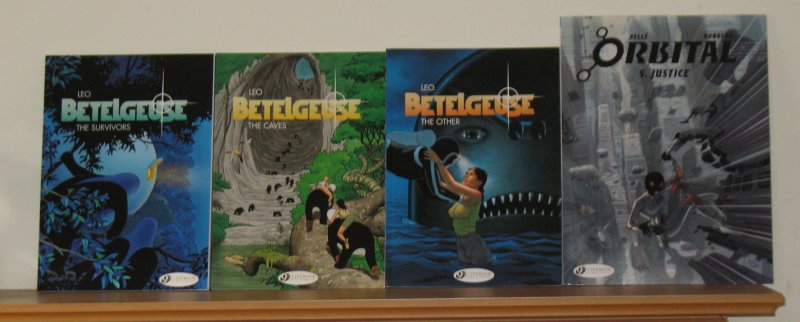
Some graphic novels to start: I liked Léo’s Aldebaran series so much (see here), I bought the follow on series, Betelgeuse: The Survivors, The Caves and The Other (and I’ve already written about them here). I’ll be picking up the next series, Antares, soon, although it’s not yet complete in the original French. Apparently, the English versions have also been censored, with underwear added onto nude characters. Orbital: Justice is the fifth in the space opera bande dessinée series, and while it looks great and has an impressively twisty plot, it does owe a little too much to big media sf.
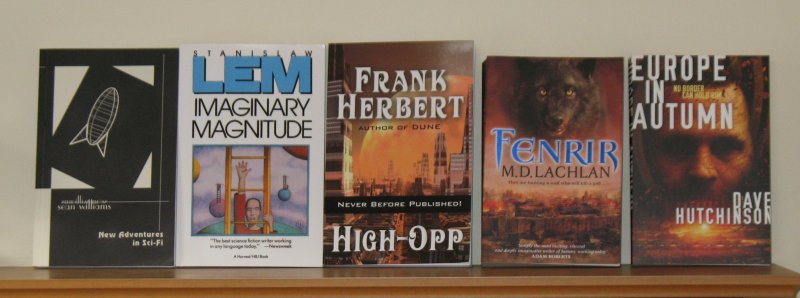
Imaginary Magnitude, Fenrir and High-Opp were all Christmas presents. I’ve already read Fenrir – while I really liked Wolfsangel, I found this one a little too long for its story, and it didn’t really pick up until two-thirds of the way through. High-Opp is a previously-unpublished Frank Herbert novel; should be interesting. Europe in Autumn I have to review for Vector; and New Adventures in Sci-Fi is an early collection by one of my favourite sf writers, Sean Williams (it was also incredibly hard to find a copy).
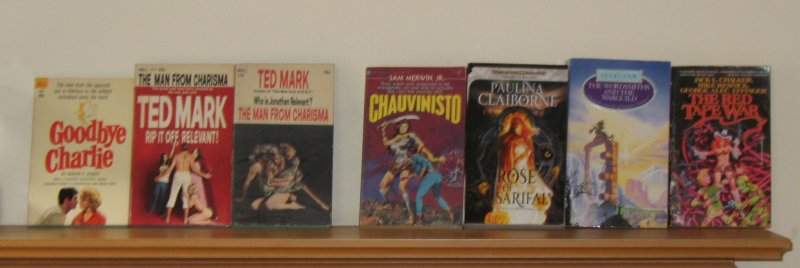
These are the “wtf was I thinking?” books. Mostly. The Rose of Sarifal is a Forgotten Realms novel, which I normally wouldn’t touch with a bargepole a good kilometre or so in length, but Paulina Claiborne is, I am reliably informed, a pseudonym of Paul Park. Chauvinisto I spotted on eBay and it sounded so awful I couldn’t resist it. I’ve been picking up the Hugh Cook fantasies when I see them, as I’ve heard they’re quite interesting. The Wordsmiths and the Warguild is the third in the ten-book series, and also the third book I now own. The Red Tape War is definitely a wtf purchase; it was very cheap. The two Ted Mark novels, The Man from Charisma and Rip It Off, Relevant!, are 1960s 007 pastiches with added rumpy-pumpy. Or so I believe. Goodbye Charlie is the novelisation of a quite silly film from 1964 starring Debbie Reynolds and Tony Curtis.
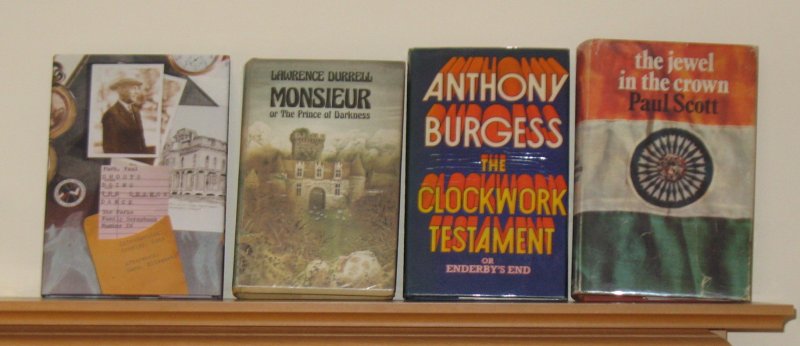
Four hardbacks for the collection. I already have a first edition of Monsieur of course, but this one is signed. The first edition of The Jewel In The Crown was a bargain (first editions are normally not cheap at ll), as was the first edition of The Clockwork Testament, the third of Burgess’s Enderby novels. (I suspect the first, Inside Mr Enderby, will continue to elude me as it was originally published under the name Joseph Kell and first editions are hugely expensive.) Ghosts Doing the Orange Dance is a new novella in signed limited hardback by one of my favourite genre authors and published by PS Publishing.
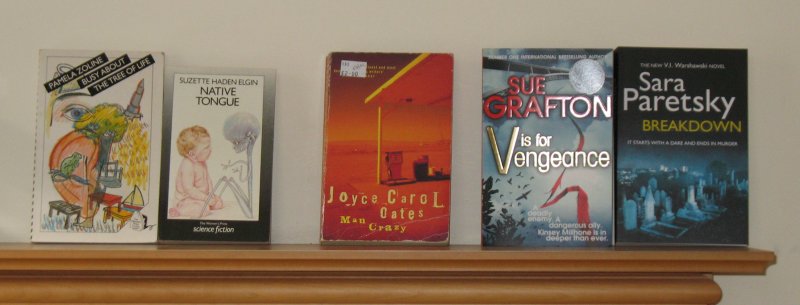
I had a Women’s Press SF copy of Native Tongue but it was really tatty, so I gave it to a charity shop. But now I have a copy in really good condition. Zoline’s collection, Busy About the Tree of Life, I will be reviewing for SF Mistressworks (that has to be one of the worst Women’s Press covers, though). Having heard so much about Joyce Carol Oates, I decided to give something by her a go, and Man Crazy was the first book by her I stumbled across. I’ve been a fan of Paretsky’s fiction for many, many years – Breakdown is not her latest, there was one published last year, but it is the one before that. I’ve also been reading Grafton’s Kinsey Milhone series for a long time. I’m up to V is for Vengeance, but W is for Wasted was published last year. Only three more letters to go. What will Grafton do after that?
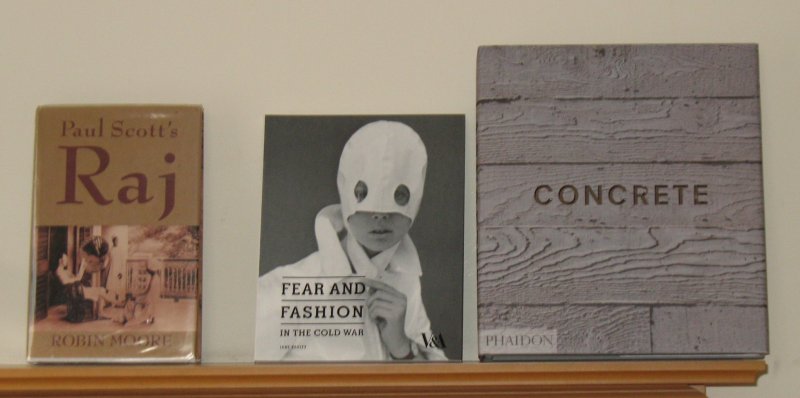
Three things that interest me: Brutalist architecture, and there’s lots of lovely photos of it in Concrete (I actually bought a copy for my brother-in-law for his birthday, and over Christmas I had a look in the book and liked it so much… I bought myself one); the Cold War, and Fear and Fashion in the Cold War, covers, er, fashion inspired by the promises of bases on the Moon and the threat of nuclear armageddon (see my The future we used to have posts for more); and finally, the works of Paul Scott, in this case his most famous work, the Raj Quartet, as the title Paul Scott’s Raj, er, indicates.
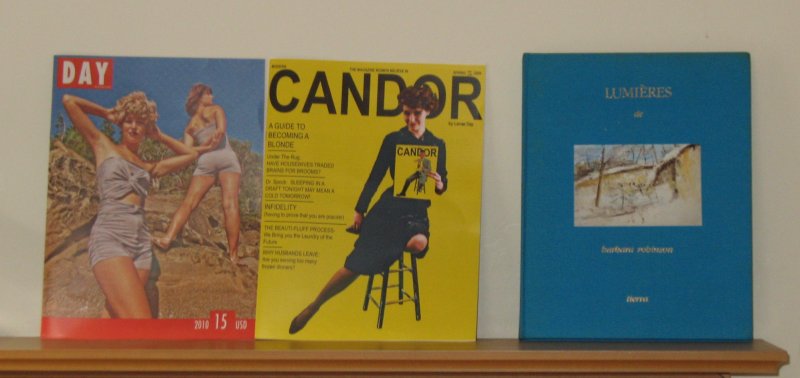
Lumières I bought on eBay for not very much because its introduction was written by Lawrence Durrell. The art in it is also very good. Lenae Day I stumbled across while researching Then Will The Great Ocean Wash Deep Above. She restages photographs from 1960s magazines with herself as the model, and accompanies them with autobiographical text. One of her shows was ‘Space Cadette’ and in it she restaged a photograph from Time Magazine of Mercury 13 candidate Rhea Hurrle preparing to enter an isolation tank (Day’s version here). So far, Day’s work has only been published as Day Magazine and Modern Candor, but she recently ran a kickstarter for her next project, based on invented 1930s movie studio Prescott Pictures – see here.
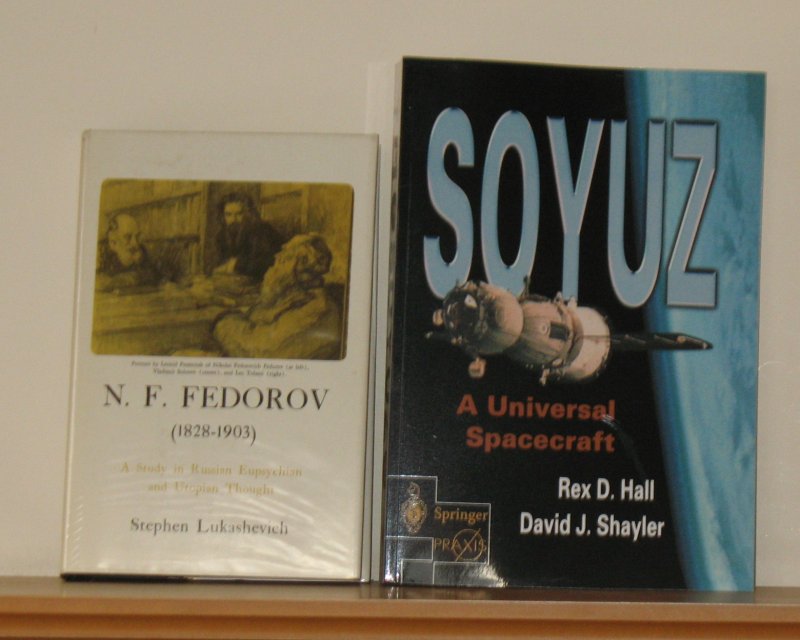
Soyuz: A Universal Spacecraft I bought specifically for research for my Gagarin on Mars story, but it’ll also go in the Space Books collection. N.F.Fedorov is research for a novel I’m working on, but it’s not going to be about what you think it might be about. Or something.
Yesterday, I decided to have a bash at a draft ballot for the Hugo Awards. This will be the first time I’ve ever voted in them – although I attended the 2005 Worldcon in Glasgow, it was all a bit last-minute and I didn’t join the convention until a couple of months before. I am not a big fan of the Hugos – as I’ve said several times before on this blog. It’s a popularity contest dominated by a bunch of people whose tastes I do not share – nor even their opinions on what genre is or should be. I also think the awards reflect a situation in science fiction and science fiction fandom that has not pertained for over thirty years, and it’s long past time some swift and brutal changes were made. But I can’t make those changes, and it’s all set up in such a way that changes are near-impossible to implement… However, I can use my ballot to make my position clear…
There are at present sixteen categories of award: novel, novella, novelette, short story, related work, graphic story, dramatic presentation (short), dramatic presentation (long), editor (long form), editor (short form), professional artist, semiprozine, fanzine, fancast, fan writer and fan artist.
First, I don’t think any award should go to a person. It should go to a work. So my ballot for both editor categories and both artist categories will read “no award”. I would do the same for fan writer, but I have my reasons for nominating people for that – on which more later.
Second, the novelette category is a completely fucking stupid waste of time. It’s a hangover from the days when magazines offered different pay rates for different word-lengths. The only venues where novelette is still used are the Big Three genre magazines: Asimov’s, Analog and F&SF. Once upon a time, they dominated the short fiction categories, but their day is long past and they’ve become increasingly irrelevant. Kill the novelette, kill it dead. Anything longer than a short story and shorter than a novel, I will be nominating as a novella.
I have never seen the point of the dramatic presentation categories. The film industry has enough awards of its own, and it really couldn’t give a shit about an award handed out by a tiny bunch of sf fans who meet up in a hotel once a year. Kill both categories, no one will miss them.
The semiprozine category is a joke. Q: when is a magazine not a magazine? A: when the Hugo Award, with Tory-like mendacity, keeps on redefining what is eligible for semiprozine and what is not. You can count the number of genre magazines with salaried staff in existence now on one hand. If it publishes genre fiction to a schedule, it’s a magazine – no matter what medium. And let’s not forget that a lot of original fiction also appears in anthologies. We really should have a category for them too: Best Original Anthology.
If the semiprozine category is risible, then the fanzine one is a living fossil. Recent years have seen a small handful of websites nominated in this category – which, it could be argued, are the twenty-first century equivalent. Except most genre websites are single-author, so their content would also make them eligible for fan writer. Yes, there are collaborative websites, such as past winner SF Signal, but as far as I’m aware there is no distinction made in the rules regarding the number of contributors. And really, isn’t a fanzine – ie, a voice in the genre conversation – just as much a related work as a non-fiction book from a reputable publishing house? (Assuming, of course, it’s about genre and not just some old farts whinging about the “good old days in fannish fandom”.)
The one people award in which I will be nominating is fan writer. As a political act. It’s a people award, it should be killed. But it’s also time the Hugo Awards ditched the whole fanzine thing and took serious note of where the genre conversation now takes place. Fanzines – paper fanzines – are completely fucking irrelevant and have been for decades. I will be nominating five bloggers, because I think the Hugo needs to get its arse in gear and recognise that fandom has moved online.
The two artist categories… They should award it for a piece of art, like the BSFA Award does. Does it matter if it was done by a pro or a fan? With people sourcing cover art from deviantart.com and so on, any kind of distinction between filthy pros who do it for the money and grubby fans who doodle for the boo has long since evaporated.
The nominations for the 2014 Hugo Awards close on 31 March. I still have plenty to read if I want to make reasonably informed choices for the categories in which I plan to participate. I’ll post my draft ballot in a few weeks. But don’t be surprised if “no award” appears rather a lot on it…
ETA
I know, comments on reddit… But when I saw the comment here by JW_BM, I couldn’t let the stupidity go unchallenged. They write of my “utter ignorance to the boom in novelette self-publishing”. What boom? And it’s “ignorance of” not “ignorance to”. Could they possibly mean all those novellas that people have self-published? Perhaps they don’t know the difference between a novella and a novelette. Perhaps they spectacularly missed the point I was making. Actually, there’s no perhaps about it. Sigh. I know, comments on reddit… I won’t even bother addressing the stupid remarks about the dramatic presentation awards. Rabid Dr Who fans? At a worldcon? I think they’ll find most Dr Who fans don’t even know what a worldcon is, never mind a Hugo Award. Bugger. Looks like I did reply, after all.