It Doesn't Have To Be Right…

… it just has to sound plausible


Leave a comment

Film challenge, reloaded

Several years ago, Shaun Duke and myself challenged each other to produce a short series of themed movie lists, which we posted on our blogs. I bumped into Shaun at the Worldcon in Dublin last month, and during our conversation I suggested we resurrect our film challenges. Shaun agreed. And then, a week or so ago, someone tweeted a link to Screen Rant’s “10 Most Underrated Sci-Fi/Fantasy Films Of The Last 20 Years” [sic, sic and sic], and it’s the usual suspects plus a couple of “they must be fucking joking” choices… But it occurred to me it was a perfect theme for mine and Shaun’s first film challenge.

For the record, here’s Screen Rant’s list, in reverse order:

10 Attack the Block, Joe Cornish (2011, UK)
9 Prometheus, Ridley Scott (2012, UK)
8 Snowpiercer, Bong Joon-ho (2013, South Korea)
7 Predestination, Michael and Peter Spierig (2014, Australia)
6 District 9, Neill Blomkamp (2009, South Africa)
5 Super 8, JJ Abrams (2011, USA)
4 Children of Men, Alfonso Cuarón (2006, UK)
3 The Cell, Tarsem Singh (2000, USA)
2 Annihilation, Alex Garland (2018, UK)
1 Ex Machina, Alex Garland (2014, UK)

I’m not going to bother dissecting the list, other than to say I disagree with most of it and strongly disagree with a couple of the movies on it. The list is also boringly Anglophone and surprisingly Anglophilic (even though Snowpiercer to have never had a UK sell-through release).

Twenty years, however, it a bit too long a period to pick ten under-rated genre movies, so for this challenge, Shaun, I’ve decided to limit it to ten years. Also, science fiction and fantasy only – no horror or superhero movies or supernatural thrillers. And, obviously, they can’t be on Screen Rant’s list…

This actually proved harder than I expected. Chiefly, I think, because I’ve watched so many films over the past few years. Some were obvious picks – for me – but selecting others, and making the list well-rounded, was a, er, challenge. Anyway, here they are, in reverse order as above:

10 Sound of My Voice, Zal Batmanglij (2011, USA). I’ve been a fan of Brit Marling’s work since seeing her first movie, Another Earth (also 2011), and while Sound of My Voice‘s genre credentials are slim they are certainly integral to the story. A pair of documentary film-makers attempt to infiltrate a cult whose leader claims to be from the future. It’s brilliantly under-stated stuff. And the ending manages to keep the viewer guessing.

9 Evangelion 3.33: You Can (Not) Redo, Hideaki Anno (2012, Japan). I’m not a huge fan of anime but no list of science fiction films would be complete without at least one title (er, I have two). Evangelion 3.33: You Can (Not) Redo is the third of four films adapted from Anno’s own television series Neon Genesis Evangelion (which I would really like to see but which is really hard to find on DVD). The final film is due next year. It’s all giant mecha and giant weird aliens, but it looks great and it delves deeper into the psychology of its cast than is usual for the genre. True, it probably makes little sense without having seen the first two films in the series – but why not watch them as well?

8 Norwegian Ninja, Thomas Cappelan Malling (2010, Norway). This could be considered alternate history, although it’s cleverly structured such that its alternate history is actually a secret history. In the real world, Norwegian minister Arne Treholt was convicted of treason in 1984 for selling secrets to the USSR. In the world of the movie, he was actually the head of a secret ninja force which reported directly to the King of Norway and was at war with a CIA-created stay-behind group that sought to trigger a war with the USSR. The film is a pitch-perfect spoof of 1970s exploitation action movies, with an amazing level of care taken over the production design.

7 Cargo, Ivan Engler & Ralph Etter (2009, Switzerland). Switzerland is not a country that springs to mind when discussing science fiction cinema – well, other than HR Giger – but even more surprisingly Cargo is an accomplished piece of science fiction film-making that manages to encompass a whole raft of genre tropes and yet still spin something new out of them. The CGI is not perfect in places, and one or two of the tropes drop into cliché as the story progresses… but this is a good solid piece of space-based science fiction, with an interesting premise and a well-handled climax.

6 Your Name, Makoto Shinkai (2016, Japan). Shinkai’s animated films are absolutely gorgeous. I swear, you can see the individual raindrops in them. I also have a soft spot for Japanese high school genre anime stories. And body-swap stories. Your Name does both. A female high school student in a provincial town finds herself randomly swapping bodies with a male high school student in Tokyo. As they learn about each other, so they discover there is a much more at stake. It’s not an easy plot to describe because too much detail would constitute a spoiler. But Shinkai’s animation is simply stunning, so it’s worth seeing any of his films. But this is his best yet.

5 Dredd, Pete Travis (2012, UK). I grew up reading the comic 2000 AD and Judge Dredd was its flagship strip (UK comics are generally anthology comics, unlike US ones). He also appeared in a national newspaper. And in a pretty bad movie adaptation starring Sylvester Stallone. That a new film adaptation might actually be any good was not something I’d have thought possible. But Dredd succeeded. Its plot is simple: Dredd and new recruit Judge Anderson are sent to a tower block to investigate three murders by the local drug lord, Ma-Ma. The block goes into lock-down, and Dredd and Anderson fight to survive against Ma-Ma’s heavily-armed troops. Dredd is basically an ultra-violent arthouse movie, and it works astonishingly well. There have been rumours of a sequel. Yes, please.

4 Pojkarna, Alexandra-Therese Keining (2015, Sweden). Speaking of body-swap movies… Although the title of this movie translates as “the boys”, the film was released with the English title of Girls Lost. Both fit. Three teenage girls who are being bullied at school order a mysterious plant from an online supplier. They drink its nectar and awake to find themselves changed into teenage boys. And so begin to explore their new, and temporary, existence. There’s a sort of understated acceptance to the central premise that allows the girls to explore their new identities without losing sight of who they are or what they gain from their transformation. And while story drifts a tad toward cliché as it nears its climax, the final scene is one of those which turns a good film into a great one.

3 The Untamed, Amat Escalante (2016, Mexico). The Untamed opens with a young woman in a barn having sex with a tentacled alien. Meanwhile another woman is at odds with her homophobic husband, who happens to be having an affair with one of her gay work colleagues. When the first woman introduces the second to the alien, things start to go wrong. The Untamed has a documentary feel, which I find greatly appealing, but more than that it is an excellent example of how a science-fictional conceit can be used to illuminate the quotidian. There are not many examples of good sf slow cinema, but this is one of them.

2 John Carter, Andrew Stanton (2012, USA). This is probably the most contentious entry on this list. Although plainly the first in a planned franchise, the movie flopped at the box office – thanks to a sabotaged marketing campaign, rumour has it, rather than poor audience response – despite being one of the most narratively sophisticated genre films for quite a while. Having said that, its source material is over 100 years old, which means a lot of the ideas have been re-used so extensively in the century since they’re just not fresh anymore. But the film looks stunning, the plotting is extremely clever and, the odd longeur aside, it’s a crying shame a sequel was never made.

1 Under the Skin, Jonathan Glazer (2013, UK). I read the Michel Faber novel of the same title from which this was adapted nearly twenty years ago, and absolutely hated it. So I was somewhat ambivalent about a movie made of the book. To be fair, the adaptation is not particularly faithful, and whatever plot the novel possessed has been stretched so thin in the film it’s pretty much non-existent. Scarlett Johansson is convincingly blank as an alien woman harvesting men in Glasgow for meat, and the guerrilla film-making gives the film a surprising verisimilitude. I’m not convinced the film makes a point as meaningful as it think it does, but at least it tries to say something.

There are another dozen or so films that could have made the above list. Perhaps I’ll save them for a challenge for another day…


2 Comments

Reading diary 2019, #9

My trip to Dublin for Worldcon entailed a few hours strapped to a chair, which meant I got some reading done. This may be a mixed blessing. I should probably rename my “book reviews” as “book rants” since, to be honest, I tend to use the books under discussion chiefly as jumping off points for commentary on fiction in general – if not genre in general (which sounds a bit weird but there you go). After all, my reviews have caused me a few problems with writers who have disagreed with my assessment. Repeat after me: REVIEWS ARE NOT FOR THE WRITER.

Brush Back, Sara Paretsky (2015, USA). I’ve been a fan of Paretsky’s novels since being introduced to them by my mother back in the mid-1990s. Not only are they well put-together crime novels with a likeable protagonist, but Warshawski – and Paretsky, by extension – wears her politics on her sleeve. And they’re politics I pretty much agree with. It’s not entirely political, however. Given that these books are set in the US, and moreover in Chicago, corruption plays an important role and Warshawski continually battles against it. It features in Brush Back, of course, but the novel opens with a completely unrelated incident, one which, it transpires, was indirectly caused by corruption. A woman from Warshawski’s old neighbourhood is released from prison after serving twenty-five years for the murder of her daughter. She now claims she is innocent, more so she claims the actual killer was Boom-Boom, Warshawski’s cousin and much-loved ice hockey star who was murdered in the second Warshawski novel, Deadlock, published back in 1984. Warshawski is rightly affronted, but she is involved in another case, also centred on the same neighbourhood. Of course, the two are linked, and it’s all to do with a local councillor who’s as bent as they come and another man, an old protege, who looks like he’s got a shot at power. When you start a Warshawski you pretty much know what you’re going to get, and Brush Back delivers that as effectively as any of Paretsky’s novels. It’s a good addition to an excellent series, and more people should be reading them.

New Suns, Nisi Shawl, ed. (2019, USA). I have never really been a fan of anthologies. If they’re themed, and the theme interests me, then sometimes they work for me. But anthologies, not just genre ones, and pretty much since they were invented, have a fatal flaw: cronyism. Editors invite their friends to contribute, or people they hope will draw in readers, or people who tick certain boxes. Some people say tables of contents have to be built, which means going out and finding the writers whose presence in the anthology are not going to cause a stink on social media. The alternative is open submissions. Anyone and everyone sends in a story, and the editor picks the best, or most suitable, stories. This too has its problems. A lot of crap gets submitted; not everyone seems to understand the concept of a brief – the editor wants hard sf and someone submits urban fantasy, the editor asks for stories between 3,000 and 5,000 words and there’s a 10,000 word story or two sitting in the queue… Also, many well-known writers won’t submit unless asked (why should they invest time and effort in something with no guarantee of a sale? On the other hand, if invited why should they assume their submission will be accepted?). So, anthologies: by definition a mixed bag, irrespective of how they’re put together. New Suns is sort of themed, in as much as its contributers are all people of colour. The stories themselves cover a wide range, from Tobias S Buckell’s relatively straightforward sf to the almost mythical fantasy of Minsoo Kang’s ‘The Virtue of Unfaithful Translations’. Some stories work better than those, but overall this is a pretty strong anthology. And I suspect part of the reason for that is its variety – okay, I mean I realise that sort of contradicts what I wrote earlier, but the contributors’ backgrounds certainly inform their stories (mostly) and that works in the anthology’s favour. As indeed it was no doubt intended to. I still have mixed feelings about the usefulness of anthologies (that is, to anyone except their contributors), but I do recognise that some serve a useful purpose as showcases, and New Suns sits firmly in that category, and does it well. Worth reading.

Europe at Dawn, Dave Hutchinson (2018, UK). So the trilogy becomes a  quartet, and it’s an odd book that rounds off the three-book story. It’s sort of an extension, but it’s also a recapitulation of the previous three books. It tells their story – or rather, the story actually begun in the second novel, Europe at Midnight – but from perspectives, and featuring some characters, that weren’t in the preceding novels, but in a way that sort of weaves its narrative in and around their narratives. Rudi, who is perhaps the chief protagonist of the series, is definitely front and centre in Europe at Dawn, although he takes a while to appear, something that’s seems to be a stylistic tic of the quartet. Initially, Europe at Dawn is about a flunky in the Scottish Embassy in Tallinn, who finds herself on the run thanks to events of which she understands nothing. And it all sort of goes round in circles, although perhaps more like a Slinky than just a plain circle, and it takes a while before the novel’s direction truly becomes apparent. Essentially, there is someone else out there, not just the fractured EU and the Community, or indeed the Line, which may not be as simple as presented in earlier novels. There’s always been something of the spy novel to this series, the way the stories are constructed: firmly bedded on a science-fictional conceit, but the various misdirections of the plot are not from the genre kicked into life in 1926 by Amazing Stories. It makes of the central conceit something more than is usual, something more than just near-future science fiction. These books are masterful at narrative sleight of hand, and Europe at Dawn does this more than the others – it’s not until the final chapter that the purpose of the various narratives is revealed. That Hutchinson manages to do this by keeping the individual narrative tense but not the underlying story-arc is perhaps what’s most impressive. The end comes into shape, and it’s neither expected nor completely out of left field. These are excellent books. I suspect Europe at Dawn may not be the actual end, but you won’t hear me complaining if it itn’t…

The Underground Railroad, Colson Whitehead (2016, USA). Only one novel has won both the Pulitzer Prize and the Arthur C Clarke Award. This one. The Pulitzer Prize is not known for giving out gongs to genre works, so it comes as little surprise on reading The Underground Railroad to discover that it’s not actually a genre novel. It’s not even borderline. Its one conceit is related to the title – that the underground railroad, a network of people who smuggled escaped slaves north, was an actual railway. Underground. A very forgiving genre reader might consider that alternate history, except, well, it doesn’t actually change history. Cora’s story would be exactly the same without the book’s conceit. Which doesn’t make sense anyway. The first underground railway was in London and it opened in 1863. The Underground Railroad takes place before the American Civil War, which began in 1861. However, not only is the underground railroad of the book historically unlikely, it’s also technologically unlikely. How would it be built? And run? But then, it doesn’t actually feature that much in the novel. Cora rides on it twice. She spends a third of the story hiding in an attic. As a dramatised history of slavery in mid-nineteenth century US, The Underground Railroad does an admirable job of demonstrating how vile and reprehensible an institution it was, although to be fair if you need that demonstrating to you then there’s something wrong with you. There is no moral justification for slavery. Of any sort. Whitehead structures his narrative weirdly and I’m not convinced it works. He skips back and forth in time, from character to character, promising stories that take nearly half the book to appear, or reporting on the death of a character before jumping to a point just before his death (and, to be honest, the scene serves no real purpose). I’m not convinced The Underground Railroad is an especially good novel. On a sentence by sentence level, the prose is good, and often excellent. But the structure is all over the place and the central conceit is a paper-thin gimmick. It’s certainly not genre. However, it tackles an important topic, and does so in a way that gives it a wide audience – and that’s something that shouldn’t be trivialised.

Longer, Michael Blumlein (2019, USA). I’ve been a fan of Blumlein’s work since reading a short story by him in Interzone back in the late 1980s. At novel length, his work has been… variable. Only his one horror novel, X, Y, seemed to match his short fiction in style and tone. A few years ago, he was diagnosed with lung cancer, but after a short hiatus he seems to have become productive than before, with two novels and three collections published in the last ten years. Longer is marketed as  a novel, but it’s published by Tor.com, who chiefly publish novellas, and it’s pretty thin, at only 227 pages. It’s also written in a very stripped-down style, with lots of dialogue and very little descriptive prose. Gunjita and Cav are the sole occupants of an orbiting laboratory, one of many owned by Gleem Pharmaceutical. Gunjita has rejuved, her second and last, but Cav has not, and it becomes increasingly obvious he has no plans to do so. Not only is his decision affecting their work, it’s also affecting their relationship – they’ve been happily married for a very long time. And then they discover something strange on a passing comet, a smear of material which may be organic but is certainly not terrestrial… In other hands, this could turn into, well, something not unlike a shitty sf film such as Life. But Blumlein is not interested in alien monsters, or even in the nature of the alien on the comet. It’s the relationship between Gunjita and Cav, and the way it fractures due to Cav’s choice, that drives the story of Longer. The alien is merely a crutch to bolster Cav’s decision; much as Gunjita is presented with one herself when the head of Gleem Pharmaceuticals, who has uniquely survived three rejuves, reveals to her the consequences of that third rejuve. The busyness of the story, and the depth of the themes it covers, with the bare-bones prose, unfortunately makes Longer read more like an outline or an excerpt than a full novel. Blumlein sets his scenes, and lays out his world, with enviable brevity, and the interiority of the main characters never feels lacking… but the plot seems to be mostly carried in discussion between Cav and Gunjita and it sometimes leaves you wanting more from the narrative. Blumlein is very good, but Longer is more like a charcoal sketch than an oil painting – it tells a story, and the artistry is plain to see, but there’s no colour.

Y is for Yesterday, Sue Grafton (2017, USA). So, that’s it. The Alphabet series is over, and Grafton unfortunately died before starting work on a book for the letter Z. Still, the books were bestsellers so some publisher somewhere is probably already trying to get permission for an official sequel by some ghost writer or desperate Big Name Author. I have no real feelings either way. It’s sad when a much-loved series ends, and you can understand the creator’s decision to let it die with them. On the other hand, some series and worlds you want to continue to explore, and the authors chosen to continue the works have produced work as good, and sometimes even better, than the creator’s. So, Tintin died with Hergé, but the Edgar P Jacobs Studio, set up after Jacobs’s death, has produced better instalments in The Adventures of Blake and Mortimer series than Jacobs ever did. And then there are the sequels to the Dune books, written by Kevin J Anderson & Brian Herbert, which are unutterably shit. But I digress. Y is for Yesterday both follows on from the preceding volume, X (see here), and is centred around a new mystery. Ned Lowe, the serial killer from X, is still on the loose, and now hiding out somewhere in Santa Teresa and bent on revenging himself on Kinsey Millhone. Meanwhile, Millhone has been hired by the family of a recently-released con who served eight years for shooting and killing a classmate at a party. A videocassette of the guy and two friends raping a drunken classmate has surfaced, and the parents want Millhone to identify the blackmailer. Ten years previously, two students were caught cheating on a SAT, and another student blamed for dobbing them in. Some weeks later, that student is shot and killed when an attempt at intimidation goes badly wrong. The instigator – not the shooter – promptly disappears and has been on the run ever since. Much as I’ve enjoyed reading these books over the years, this last one… well, the central mystery feels a bit insubstantial. I’d noticed in recent books that Grafton had taken to at times moving the narrative away from Millhone’s first-person account, something I don’t remember happening in the earlier books (although I may be misremembering). In Y is for Yesterday, one narrative is set ten years in the past and, to be honest, it doesn’t really add much to the story. Millhone’s investigation should be enough to explain events. But that’s a minor quibble. These are fun, readable books, less political than Paretsky’s but very similar in tone and style. I’m sorry there will be no more of them.

1001 Book You Must Read Before You Die count: 135


1 Comment

Moving pictures 2019, #24

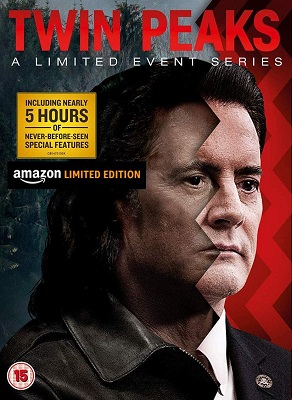
I’ve been deliberately hanging back on watching movies of late, and mostly bingeing on box sets. This was mainly to catch up on these posts, because the box sets have been pretty, well, bad. On the other hand, I do have Twin Peaks on Blu-ray to watch, well, rewatch, and I still rate the series as one of the best television programmes ever made.

Alice in Wonderland, Clyde Geronimi, Wilfred Jackson & Hamilton Luske (1951, USA). My plan – although that may be too strong a word – to watch all of Disney’s films, but most especially the classic animated ones, continues in a somewhat erratic and haphazard manner. Disney has, of course, churned out a shitload of films in the last century or so, many of which have been forgotten for good reason. But there are a significant number, both animated and live-action, that have not only weathered the test of time but are still seen as important cinematic works. I don’t know that Alice in Wonderland is considered in the top rank of mid-twentieth-century Disney animated movies, and its story has been adapted numerous times, and is of course famous in its own right… but I thought it one of Disney’s better productions from that period. Disney relies on charm but it doesn’t always work, and with a story as well-known as Alice in Wonderland – the original book was first published in 1865, after all. But there is a noticeable look and feel to Disney animated movies, and for all their adherence to a formula, some films just seem to work better than others. I don’t know if it’s down to the source material. I doubt it. Although Alice in Wonderland certainly has a head start in that department. A lot of the movie has entered popular culture, so it’s slightly odd to watch it from start to finish. But it is definitely more than the sum of its parts. It’s a good Disney movie, one of the better classic animated ones I’ve seen. And much as is the case with the ones I didn’t take to, I’m not entirely sure why I liked this one. But I’d recommend watching it.

Space Pirate Captain Harlock, Shinji Aramaki (2013, Japan). I wrote in a Moving pictures post a couple of weeks ago that I’m not a big fan of anime – a point driven home to me when I saw a friend, who is into anime quite heavily, post on Facebook that he thought Alita: Battle Angel was one of the best films he had seen so far this year. I thought it was terrible. And yet, I actually liked Space Pirate Captain Harlock (even though I keep on wanting to call it Space Pirate Captain Haddock, which would be an entirely different film) and I have to wonder if it’s just that the movie reminded me a little of Star Fleet, a Japanese puppet series from the early 1980s I loved as a teenager. Perhaps I’m over-analysing. Like that’s a trap I never fall into… Space Pirate Captain Harlock is CGI but it’s Uncanny Valley CGI, with the characters presented as if they were live-action actors. Well, except for the alien character. Who is apparently often cosplayed, so not that far from the human template. (Pointy ears, a long wig, floaty clothes and contacts.) The plot is the usual anime tosh, in which a giant alien ship attacks some random polity based on Earth and it turns out Earth created its own enemy through some past act of thoughtlessness. Sigh. But the CGI here is quite beautiful, and if the characters and setting are straight out of Central Anime Casting, the film does look quite gorgeous. Even if it does feature smoke in space. I mean, WTF. Smoke? In space? Which, in hindsight, is slightly weird as it didn’t throw me out of the film but I’ve been thrown out of movies, live-action and anime, by less. It could be just that the production design appealed to me, which it did, but I suspect not. I think it may simply have been that that world-building displayed some rigour. It’s astonishing how rare that is. True, Space Pirate Captain Harlock is based on a long-running property, so it’s had plenty of time to get things right. Perhaps that’s all it takes. Perhaps the shiny new – unpopular opinion! – just isn’t that good.

Shadowlands, Richard Attenborough (1993, UK). I have read the Narnia books, CS Lewis’s most famous creations, although not of course all he wrote, but based on those if I had to cast an actor to play Lewis in a movie adaptation of part of his life… I don’t think I would have cast Anthony Hopkins. He just doesn’t seem to fit the character. I imagine Lewis as, well smaller, and more saturnine, and perhaps even a bit spiv-ish.  But certainly not the meaty and fruity Anthony Hopkins. Apparently, Lewis had an affair, or rather a relationship, with an American woman who visited him at his college in Oxford. She was a poet, although you wouldn’t know it from this film, which presents her as a just a woman. Nor was Lewis married. If Wikipedia is any indication the film seems to represent their relationship, although it was doubtlessly  more complicated than either suggests. Shadowlands is a solid drama, with a top-drawer cast, about a bunch of people I could not honestly give a shit about, and the fact one of them is the author of the Chronicles of Narnia seems almost incidental. If you like Richard Attenborough films, you will like this one. Because that’s all it is: a Richard Attenborough movie.

The Asphyx, Peter Newbrook (1972, UK). The Hammer House of Horror series from 1980 is a touchstone television programme for me because I remember those few episodes I saw back then quite vividly. In part, those episodes define the television of the time for me. It wasn’t until four or so years ago, when I bought the DVD box set and watched them all, that I got to catch up with that memory. And it seemed I hadn’t misremembered it – they were as good as I recalled. I’ve also seen the odd Hammer horror film over the years, albeit mostly the 1970s ones, and enjoyed them enough, in a sort of mildly ironic way, to want to see more. So it’s fortunate several of them have appeared on Amazon Prime. Not just the ones from the 1950s documented in previous Moving pictures posts, but also The Asphyx, which is from the period that interests me the most. And it proved to be exactly what I’d expected. In a good way. Sort of. In other words: complete nonsense, made on the cheap, with a British cast way better than their material, and a premise so off the wall it actually sort of worked. Except, it seems, The Asphyx isn’t actually a Hammer film. But if the Hammer films were sui generis, then The Asphyx certainly belongs to that genre. The title refers to some sort of aetheric creature which appears at the moment of death and steals people’s souls. A Victorian scientist finds a way to imprison this creature and thus render himself immortal. His son-in-law is keen to be involved in the experiment, but an attempt to apply the same to the scientist’s daughter goes horribly wrong – in a way that is more comic than horrible (although it should not be) – and, well, you can pretty much plot out the rest of the story for yourself. If you like 1970s British horror films, then this is a hit of the pure stuff. I happen to like them. Actual fans of actual horror films, especially twenty-first century horror films, may not be so impressed. Their loss.

Avengers: Endgame, Anthony Russo & Joe Russo (2019, USA). I had to watch this twice, and the preceding film, Avengers: Infinity War, in order to figure out what was going on, or indeed why I even cared what was going on, because this was just complete bollocks from start to finish. And not even well-made bollocks. So super-baddy Thanos, he of the mighty chin, collected these magical stones and effectively controls the universe, and the Avengers are sucking their wounds back on earth, when Antman reappears from the Quantum Zone and kickstarts a plan to undo Thanos’s victory and save the earth. Which involves some sort of time travel, explained in dialogue in what has to be the biggest load of consecutive bollocks spoken by half a dozen actors in any motion picture since Hollywoodland became Hollywood. There is also a giant battle scene which features some really bad CGI, and a horrible fan-service moment in which all the female heroes line up behind Captain Marvel to kick some ass and are basically trashed in under ten seconds and that’s it. And then the whole thing turns into a Robert Downey Jr vanity project, and you start to wonder why you just wasted the last 90 or 120 or 1 million minutes watching this crap. I mean, Thor, an actual god, is not powerful to wear the gauntlet with the infinity stones, Hulk is not strong enough to wear the gauntlet with the infinity stones… but in the heat of battle, Tony Stark can slip it on and snap his fingers and rewrite the entire universe. FUCK OFF. That’s the sort of shit a twelve year old would write. Marvel – and DC too, to be fair – has always had a problem with characters with wildly different levels of power that seem to change from one scene to the next. The films have not addressed this at all. When you think how the movie adaptations of Star Trek, from The Wrath of Khan onwards, actually nailed down the universe of the franchise, MCU’s failure to do so feels more like marketing cynicism than failure. I mean, Captain Marvel, the movie, demonstrates that Captain Marvel, the character, is more powerful than a god. But even she can’t prevail in Avengers: Endgame. Because plot reasons. It’s total bollocks. A failure of writing. Avengers: Endgame may have been one of the highest grossing films of all time, if not the highest grossing… but it’s an appalling piece of cinema, with little or no rigour, bad CGI, and a plot that confuses more than it explains. We don’t need, or want, the unholy tapestry MCU seem determined to stitch all the films into. We want good solid entertainment for 120 minutes. This is not it.

High Life, Claire Denis (2018, France). Denis’s Beau Travail is a great film and one that definitely belongs in my Top 100. And I seriously wanted  to like High Life, her first English-language movie, and not just because it was science fiction. But. I tried. I really did try. It opens with Robert Pattinson alone on a spacecraft, but for a baby. Flashbacks explain how convicts on death row were co-opted for a project to send spacecraft to other planets and colonise them. No explanation is given to how these journeys do not take centuries, although there is a line which explains they experience gravity due to constant acceleration (a bizarrely accurate statement in a film that has few nods to scientific accuracy). Anyway, the first hour of the film is Pattinson wandering around an empty spacecraft interspersed with grainy footage of his past. Which reminded me chiefly of video installations. If you want to see good video installations, check out Ed Atkins, Ben Rivers or Cécile B Evans. Anyway, High Life felt a lot like a non-genre person exploring genre, which is not in and of itself a bad thing and has in the past actually added to genre. But sometimes the smallest details can throw you, and in this case it was the fact the spacesuits were clearly not airtight and did not inflate in vacuum. It felt like such a trivial detail to not bother getting right. If the film-maker is going to throw in that line about constant acceleration, why fail so badly with the spacesuits? None of which meant that much, it must be said, when High Life dropped the video installation look and feel and went for “criminals in space do criminal things which mostly is rape”, and rape is not a fit subject for science fiction and certainly not a trope or plot point. Someone tell Denis this. My opinion of her took a beating after watching this film.

1001 Movies You Must See Before You Die count: 941


Leave a comment

Moving pictures 2019, #23

It’s been an odd summer – my first here in Uppsala – but things are starting to settle down and the year has, so to speak, begun again. I expect I’ll be watching more movies as the Scandinavian winter nights close in, so I need to get up to date with the films I have watched over the past couple of months.

Men in Black: International, F Gary Gray (2019, USA). It’s obvious that what the world really needed was an addition to the Men in Black series, the last instalment of which was released seven years ago. Anyway, that’s what the world got. And, to be honest, it’s an innocuous, if unnecessary, addition to the series. Tessa Thompson plays a young woman who witnessed the Men in Black in action as a child and has been determined to join them ever since. She tries the FBI, the CIA… but no joy. Eventually, she stumbles across a MiB incident and follows the agents back to their secret headquarters. Which she infiltrates. And is caught. But is given a chance to join the organisation. She’s teamed up with Chris Hemsworth, who’s considered a bit useless, a favourite of the boss, Liam Neeson, and forever coasting on past glory (several years ago, he and Neeson closed a wormhole to another world and prevented an invasion of Earth). It’s all very formulaic, very twenty-first century action movie, with exotic locations, decorative sidekicks, a few gender-flipped stereotypes, a couple of racial stereotypes masquerading as aliens, and a plot that’s nowhere near as complex as it likes to think it is. It’s as memorable as the last Men in Black movie, which was, er, three? four? A Saturday movie to enjoy with pizza and beer and brain disengaged.

Miss Montigny, Miel Van Hoogenbemt (2005, Belgium). Small town girl desperate to break out into the wider world is hardly the most original story ever, and using a beauty pageant to do so is a tried and tested story in movieland, perhaps even in real life. It’s also a bit, well, old-fashioned, as no one really makes films featuring pageants anymore, not unless they’re mockumentaries or sarcastic documentaries. Which is not to say that beauty pageants no longer take place. They do, all over the world. Even in Belgium. As evidenced by Miss Montigny, which is about a young woman who tries to break out of her restrictive small village life by entering a local beauty contest. But she has to cheat in order to qualify and later is kicked out when that cheating is spotted. (She lied about her bra size, as the minimum chest measurement is larger than her own.) The film is more about the young woman and her life than it is the pageant, although the latter certainly features quite a bit. As small town dramas go, particularly Belgian ones, Miss Montigny was enjoyable, if low-key. Despite its story, it didn’t feel at all dated. Worth seeing.

2.0, S Shankar (2018, India). This is actually a sequel – well, that should be blindingly obvious from the title. I’ve not seen the preceding movie, Enthiran, from 2010, but happily 2.0 stood perfectly well on its own. Perhaps “well” is not the right word. This film was absolutely bonkers in a definitely WTF?! sort of way. It opens with everyone’s mobile phones in Chennai flying out of their hands and into the sky. Replacement phones suffer the same fate. The desperate city calls on a discredited scientist, who de-mothballs Chitti, the android he built in the earlier film. Chitti discovers that the mobile phones have been possessed by the ghost of an ornithologist who was at war with the mobile telephone company because their towers were killing birds (as they do). All the phones join up into a giant monster, and terrorise Chennai. The scientist builds an army of Chittis – oh, and there’s a bit where Chitti goes bad or something – and then the Chittis form a giant Chitti, which goes into battle with the phone monster, at a football match. 2.0 is one of those movies that convinces you you’re drunk, despite not having had a drop. It was, in other words, great fun. Definitely worth seeing. Preferable with alcohol.

Burlesque, Tereza Kopáčová (2019, Czechia). Yes, yes, there’s a terrible US film with the same title; and yes, I’ve seen it – many years ago. And it was shit. But this is a new Czech film and it’s actually pretty good. A young teacher is fat-shamed by her pupils, is persuaded to sign up for a burlesque class, and so comes to accept her size. And, er, that’s it. A Czech social drama about a teacher who is curvier than her peers. The two main characters – the teacher and her dance tutor – are well-drawn and sympathetic, and one or two of the routines are titillating in, well, exactly the way burlesque is intended to be. This is a likeable film but it’s not a memorable one. It’s not because of the subject – it’s easy to identify with the lead character. I enjoyed it, it felt like a real drama of a sort Hollywood doesn’t make any more (the same is also true of Miss Montigny). On the other hand, when did Hollywood ever really document the human condition? I mean, I love me some 1950s Hollywood melodramas but they were as close to reality as Lord of the Rings. That’s part of their charm. Burlesque – this version certainly, the Hollywood one certainly not – is most definitely close to reality. And it’s also another film that isn’t in imdb.com or Wikipedia because it’s not Anglophone and the internet is apparently only for the use of English-speakers. Well, bollocks to that.

Lifechanger, Justin McConnell (2013, Canada). One type of genre story that has fascinated me for many years has been that of the body-hopper. There have been several notable genre novels based on the conceit; and Jack L Chalker, who never actually managed to write a decent novel, made his entire career out of it… But in movies, it’s been less used, and when it is, it’s seen more as a horror trope. As it is in Lifechanger. The title refers to a consciousness which takes over people’s bodies, but as soon as it takes possession the bodies start to deteriorate, so it must move on. But now the process is accelerating. So you have a “character” which hops from body to body, and I think there was a plot in there somewhere but for the life of me (see what I did there?) I can’t remember what it was. I’ve seen other films with a similar conceit and they treated it better. Lifechanger felt more like an attempt at a high concept horror film… and it’s always amused me that “high concept”, which sounds like it should mean something clever, just basically means a premise you can describe in two or three words. And that’s Lifechanger in a nutshell.

Peterloo, Mike Leigh (2018, UK). The event this film depicts has been a footnote in the history books for many years but recent events have given it added poignancy. And importance. It’s all too easy to forget at times, especially during the twentieth century when the middle classes were essentially in charge, that the English upper class is populated entirely by sociopathic shits. Of course, things worsen year on year because they all interbreed like royalty. In 1819, a group of reformists held a rally in St Peter’s Field in Manchester and some 60,000 to 80,000 working class people turned up to hear orator Henry Hunt talk about universal suffrage. The local magistrates sent in the troops, and eighteen people were killed. The thing the people at the meeting wanted? A Member of Parliament for Manchester. They wanted representation in the government of the land. And the upper class sent in armed troops. Against women and children. True, the history of England, and the UK too, is filled with incidents that are reprehensible to any semi-intelligent person. Peterloo takes a didactic approach to its material, carefully laying the political groundwork for the meeting that turned into a massacre. In fact, while watching it you’d be forgiven for thinking it was a Ken Loach film and not a Mike Leigh one. Except Leigh seems to be able to command higher budgets. (And if you haven’t seen any films by Loach, why not? He has an excellent and extensive filmography.) The evocation of the period is extremely well, and it’s refreshing to watch a film set in Manchester that features actors with actual Lancashire accents and not just generic Northern ones. Peterloo is a very good film about an event in English history that should be better known than it is. Go see it.

1001 Movies You Must see Before You Die count: 940


Leave a comment

Moving pictures 2019, #22

Well, that’s five seasons of Elementary binge-watched. I liked the set-up, and the series had its moments, but it also had a tendency to jump the shark every now and again. And the fifth season was basically a serial with  a not particularly interesting story arc. But here are some films…

Padosan, Jyoti Swaroop (1968, India). Given how many films Bollywood has made, and given that pretty much all of them follow the pattern boy meets girl, boy loses girl, boy gets girl back, sooner or later one of the ones I watched was going to “borrow” the plot from Cyrano de Bergerac. The difference here is that the suitor uses song to charm his beloved – or rather, he lipsynchs to a friend singing out of sight of his beloved (who loves in the house next-door, and they’re conducting their love affair from the window of one house to a window of the other. There’s an unintended irony here, given that the vast majority of Bollywood stars don’t sing their own songs but mime to playback singers, and some of the playback singers are as famous as the Bollywood stars whose singing voices they provide. This, of course, is only the first part of the formula. The girl discovers the fakery and retaliates by agreeing to a marriage proposal from the boy’s uncle (although they’re not “boy” and “girl” as he’s in his late thirties and she’s in her mid-twenties). In an effort to win back his love, the boy goes all Romeo & Juliet and fakes his suicide. This is not a good idea, in fact it’s a really bad idea. But it appears to work, and the two are finally reunited. Despite some dodgy bits, this is a fun film, chiefly because its cast looks like they’re having fun. It’s considered “one of the best comedy films made in Hindi film history”, according to Wikipedia, and it’s not hard to see why.

Stockholm, Robert Budreau (2018, USA). When I saw this film, it was titled Stockholm, after Stockholm Syndrome, which was named for the bank robbery depicted in this film. But apparently the UK DVD distributors are preparing for Brexit by removing the name of an EU capital from the cover. Because The Captor is a really dumb title, and pretty much ignores the whole point of the film. Although it is, to be fair, not a great movie. Its cast is predominantly British or American, but they all put on bad Swedish accents. Except they pronounce all the Swedish names incorrectly. Anyway, habitual criminal and his accomplices rob bank, end up in hostage situation, and it all escalates quickly, with the prime minister involved and all sorts of demands and promises made. Oh, and one of the hostages started to identify with the bank robbers. Dodgy Swedish accents aside, Stockholm fails dismally because it makes a bank robbery boring. I mean, hostage situations should be tense and dramatic, even if nothing is actually happening, but Stockholm is just Ethan Hawke stomping about the place like a television cowboy. Avoid.

The Last of England, Derek Jarman (1988, UK). If you had asked me twenty years ago what I thought of Derek Jarman’s films, I might have mentioned being impressed in my teens by Caravaggio but otherwise thinking his work pretentious tosh. But a few years I watched Wittgenstein and thought it really good, and then the BFI released the Derek Jarman Volume 1: 1972 – 1986 Blu-ray collection, and I bought it on a whim… and now I’m a bit of a fan of his movies and I have Volume 2: 1987 – 1994. Part of the reason I’ve become a fan is because Jarman was an experimental film-maker, and while I’ve re-evaluated those of his movies I’d seen before, it’s his experimental films I find myself liking the most. Such as The Last of England. It’s almost impossible to describe, a series of images and scenes set in a post-apocalyptic UK, inspired by Thatcher’s Britain (we didn’t know when we were well off, not that we were: but compared to now? If Thatcher was still alive, this Brexshit would probably see even her rehabilitated. Ugh. What a horrible thought), a painting by Ford Madox Brown, whose title the film takes, and a number of poems. It’s surprisingly effective, both chilling and elegiac. More so, I think, because I remember the late 1980s, and I remember Thatcher’s Britain and Clause 28 and all the things that fed into The Last of England. Good stuff.

The Aristocats, Wolfgang Reitherman (1970, USA). One of many informal film projects I’ve been running – if that’s not too, well, organised a way to describe it – is working my way through all the Disney films. The classic animated films, of course; but even the obscure live action ones, if I can find them. Some of the animated films I obviously saw as a kid (many of them are older than me; yes, hard to believe); but my memories of them are spotty at best. I think I saw The Aristocats back then. I’ve certainly been aware of the movie since I was a child. But then we had a LP of songs from Disney films when I was young and perhaps it was appearing about the film from listening to that… Stereotypical rich old cat woman plans to leave her riches to her cat, but greedy butler overhears and kidnaps the felines – it should be “catnap”, shouldn’t it, but that means something different… Anyway, he dumps the cats in the country (this is early twentieth century France), but they are rescued by a streetwise alley cat, who helps them return home. For some reason, I remembered the characters from this film, but not the story, nor quite how, well, charming it is. It’s been a mixed bag watching these classic Disney animated films, and I’ve been surprised by which ones I’ve really liked and which I’ve found disappointing.The Aristocats definitely goes in the first group.

Alita: Battle Angel, Robert Rodriguez (2019,USA). So where my childhood was Disney cartoons and surreal British kids’ TV series and bad US TV shows like The Incredible Hulk, people much younger than myself grew up with Japanese properties mangled for the US market. And this film is a US adaptation of an early 1990s Japanese manga/anime series that is apparently quite well-known among a certain age-group. Which si not me. So I knew nothing about it when I sat down to watch the film… and I know just as little having watched it. Christophe Waltz plays a scientist who runs a sort of street clinic for robots and cyborgs, and who discovers a cyborg head on a rubbish heap. He builds a body for the head, a teenage girl’s body, of course, because he lost his daughter years before. And the cyborg turns out to be some sort of super-soldier or something and there’s a powerplay between various people in a floating city of ultra-rich people and I really couldn’t give a toss abut an hour into the movie… and those eyes. They were… offputting. Yes, there is a style of anime which features over-sized eyes, and in the original manga on which Alita: Battle Angel Alita’s eyes were indeed larger than normal, if not as large as in other manga… But it looks weird in a live-action film, sort of like it’s gone through the uncanny valley and come out the other side. I didn’t like this film, and I’m really tired of cyberpunk dystopian futures (although I recognise the original property on which this film is based is thirty years old). Meh.

Singh is Kinng, Anees Bazmee (2008, India). Amazon Prime is proving really good for Indian films. Not just Bollywood, but also Tollywood and Kollywood. And classic movies as well as more recent fare. Singh is Kinng opens with a remarkable comedy sequence in which the title character, Happy Singh, attempts to catch a chicken and manages to demolish his village. Actually, it opens with a piece of OTT gangster violence in Australia. But the chicken sequence is really good. Anyway, the gangster, Lucky Singh, is Happy’s cousin and someone is out to kill him, and the village wants to get rid of Happy… so they send him to Australia to help out his cousin. After a detour via Egypt, where Happy meets the love of his life, he ends up in Australia, where he inadvertently puts Lucky into a coma. And everyone persuades themselves that Happy is the perfect person to run Lucky’s huge criminal empire while Lucky is indisposed. This was a lot of fun. The humour’s broad, and the characters a bit stereotypical, but the set-pieces are good and the film is genuinely funny in places. Worth seeing.

1001 Movies You Must See Before You Die count: 940


2 Comments

A Tale of three cons

In the past four months I’ve attended three science fiction conventions in three different countries. Three con reports in one post would be a bit much, however, so I’ll keep these short.

The first was Åcon, in Mariehamn in the Åland Islands, a part of Finland. I hadn’t initially planned to attend a con so soon after my move north, but was persuaded to go by members of Uppsala fandom – well, one member: Johan Anglemark. And I’m glad I bowed to the pressure. The trip to Mariehamn was ridiculously easy – and the first time I’ve travelled to another country with liquids for many years. A group of fans from Malmö and Copenhagen came up to Uppsala by train the night before, and the following morning we all caught a coach to Grisslehamn on the coast. It takes about 45 minutes. Then it’s two hours on a ferry to Eckerö in the Åland Islands, followed by another 45-minutes coach-ride. It’s been many many years since I was last on a ferry, but they don’t appear to have changed much: a bar with a band murdering hits of the late twentieth century, a huge duty-free store (and, in fact, the chief reason why people take the ferry), and gently shifting motion that had me thinking I was a fraction of a degree away from falling over most of the time.

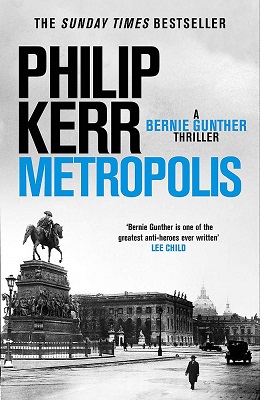
Åcon takes place in the Hotel Adlon, which may share its name with the Berlin hotel which appears in Philip Kerr’s excellent Bernie Gunther novels set in Nazi Germany, but is entirely the opposite. Sort of. It’s perhaps a bit tired these days, but it’s only a year or two past needing refurbishment and, to be honest, being a little behind the times seems entirely fitting in Mariehamn. While I was there, I actually saw someone delivering newspapers to people’s doors. I didn’t see a milk float, although I don’t think they’re a Finnish or Swedish thing, but if they were, they’d be still be using them in Mariehamn. It’s a bit like time travel. Which is, of course, entirely fitting for a science fiction convention.

Åcon is characterised as a relaxacon, with a single Guest of Honour. This year, the GoH was Amal El-Mohtar, a Canadian writer of Lebanese extraction who used to live in Glasgow, and who I last met in 2013 when she had a quite pronounced Scottish accent. To be honest, I’d thought then she was a Scottish writer. The Åcon way is to schedule 60-minute programme items 90 minutes apart. Everything is in English.

On the first night, I accompanied the GoH and several others to Dino’s, an upmarket burger/steak place. I like eating in Finland. Finns suffer from lactose intolerance, as I do, to such an extent that pretty much all eateries cater to both lactose- and gluten-intolerant diners to a massively better degree than any other country on the planet. The sports bar attached to the Hotel Adlon, for example, served only pizzas, but they were all made with lactose-free cheese… because it’s easier to do that than cater for those tolerant to it and those who aren’t. I love Finland for that.

I was put on two programme items at Åcon, one on how the genre treats the six senses, which I moderated. Yes, six. Because proprioreception is generally considered a sense now. That went so well, it overran its spot and I had trouble bringing it to a close. My second panel was about fairytales and I was probably the least-qualified person on the panel to discuss the topic. Oh well. I attended a couple of items I was not on. I do that at Nordic cons. I find their programmes more interesting because they scratch more itches as a science fiction fan. I was also chosen as a team captain for Jukka’s infamous quiz, but we lost by a single point.

On the Saturday, myself and a Finnish fan called Orjo visited the nearby Sjöfart Museum (Maritime Museum), which includes one of the last sailing ships used in trade by the Åland Islands. That was interesting. In the afternoon was a con-arranged trip to a craft brewery, Open Water Brewery on Lemland, one of the other Åland Islands. There we were given a quick lecture on brewing, and tried several of the breweries beers. Including its cider, new that year. And, I think, the first ever made in the Åland Islands (which actually provides 80% of Finland’s apples).

The final programme item – other than the “gripe session” – was a William Shatner karaoke. This turned out to be performing songs in the style of William Shatner. So, no actual singing. Which I cannot do. I have often said I could not carry a tune even if it came in a bucket. William Shatner karaoke sounds like something worth running from. In fact, it’s the exact opposite. It was definitely one of the funniest things I’ve seen at a con for years. Shout out to Regina from Shanghai, who not only travelled all the way from China to Åcon but also performed a jaw-dropping Mandarin song in William Shatner style.

My second convention was Replicon, the annual Swedish national con, Swecon, this year held in Västerås. Which is west of Stockholm and 80 minutes by coach from Uppsala. The con took place in the CuLTUREN, an old copper foundry (hence “Cu”) converted into function space. Replicon occupied the central foyer and made use of three function rooms – two for the programme, and one for the Fantikvariat, a charity that sells secondhand genre books, mostly UK or US. There were a couple of smaller rooms used for other programme items. The venue boasted a small coffee shop and a restaurant – which normally serves Lebanese food but for some bizarre reason decided for the con to become a pizzeria. I’d jokingly said the year before that eating Lebanese on the first night of Swecon had almost become a tradition (we did it in both 2017 and 2018). And this year, while I didn’t have Lebanese food on the Friday evening, I ate in what is normally a Lebanese restaurant. So I think that counts.

Anyway, I arrived at CuLTUREN and immediately bumped into the Anders. Who I’d not seen for over a year, and who was unaware I was now living in Uppsala. He took me to the Bishops Arms for a few beers. The Västerås Bishop Arms is the original one. There are now over 40 scattered around Sweden. After a couple of beers, we headed back to the venue for the Opening Ceremony. Which introduced the two Guests of Honour, Annalee Newitz and Charlie Jane Anders, both names known to me but I’ve not read anything by either. I didn’t attend that many programme items – there seemed to be more Swedish-language ones than in previous years; hopefully, by next year’s Swecon, that will make no difference to me. I spent both Friday and Saturday evenings in BierKeller with some Swedish and Finnish fans. This did entail the drinking of a couple of beers that cost 199 crowns each (in 500 ml bottles), although myself and Anders split both the cost and the beers.

While I may not have attended every programme item – although the ones I saw were good, particularly Anna Bark Persson’s talk on “Female masculinity in SF” – I did better in the Fantikvariat than I’ve done recently in dealers’ room: I bought eight books, two were in Swedish and four were books I already owned (but in storage in the UK). For the past couple of years, I’ve bought more second-hand books at Nordic cons than I have at UK cons. Go figure.

Replicon was a smaller affair than other Swecons I’ve attended, but it was well-organised, the venue worked, and Västerås is a pleasant town. In Swedish terms, I think Västerås fandom well and truly put themselves on the map in terms of con-running. Should they ever plan to run another Swecon, they’ll likely get more attendees.

The big con this year was, of course, the Worldcon, which took place at the Convention Centre in Dublin. I last visited the city when I was two years old so I remember nothing of the trip. And it’s undoubtedly changed a great deal since then. (I mentioned this to the cab driver taking me to the airport after the con. The area where my hotel was sited has been extensively redeveloped, and for all of the buildings we passed he pointed out what had been there before.) I’d booked rooms in the Grand Canal Hotel, a ten-minute walk from the Convention Centre, which no doubt contributed to my 10-km a day average for walking (when I normally average 8 km a day). But then there were a lot of floors in the Convention Centre and a lot of walking required between the various rooms. There were not, in fact, many chairs. Seriously, given the greying of fandom, cons need to provide more areas where people can sit down and relax.

The other notable aspect of this particular Worldcon was the queuing. I didn’t actually attend any programme items other than those I was on (more on them below), but I was told it was almost impossible to leave one panel and then get into the next because of the queues. Several people told me during the weekend that high levels of attendance for the programme seemed to be a new thing. Dublin2019 was only my third Worldcon, and while I remember lots of queues at Worldcon75 in Helsinki, I don’t remember any at Interaction in Glasgow in 2005. Fandom really has changed over the past decade; and for the better. There seems to be far more engagement, and it’s less of a private club.

But. My panels. The first was Apollo at 50, first thing on the Friday, with Dr Jeanette Epps, Mary Robinette Kowal, Dr David Stephens and Geoff Landis. When we arrived in the room – the 600-seat room – only two of the microphones were working, those in front of Epps and Kowal. So they suggested they talk while tech fixed the other mikes. And the subject they chose was… going to the toilet in space. It became a bit of theme during the panel. I thought the discussion went really well. The panellists were excellent, especially Dr Epps. Later that same day, I was on Artemis: Apollo’s Big Sister, again with Dr Epps and Geoff Landis, but also Becky Chambers and moderator Alan Smale. The panel went reasonably well, but I would have enjoyed it more if Becky Chambers had not sat with her back to me for its entire length.

My next panel was early afternoon on the Saturday. It was about Alternate Apollos. It came very close to becoming the Panel from Hell. It is my practice when moderating panels at cons to contact the panellists by email a week or so before. So we can introduce ourselves to each other and get some discussion going, and no one is ambushed during the actual panel. One member of the panel managed to offend another. The day before the panel. I demanded the person send out an apology. They objected, but sent the apology (which was, to be honest, pretty much a non-apology apology, you know the sort). The next morning I get an email asking me to visit Programme Ops. I’m told one member of the panel has dropped out (the offeendee, so to speak), and the offender has been removed from the panel. They’re looking for replacements, but not having much success. I spend half an hour running around the con, trying to find replacements of my own, before making my way up to the green room to break the news to the remaining panellist. Except, it turns out her partner is just as qualified for the panel and is downstairs queuing for it. “Get him up here,” I tell her. He joins us. And when we get to the room, it transpires Programme Ops has managed to get one of their alternates to volunteer – and my preferred choice, too. After all that, the panel went pretty well. I hadn’t wanted to get too space-geeky, but we had an audience of space geeks, and they seemed to enjoy the panel. But I didn’t enjoy running around trying to rescue the panel in the hour before it started.

Happily, my final panel, on the Monday morning, went reasonably smoothly. Admittedly, after four days of Worldcon, my ability to brain was badly impaired. The topic was lunar depictions in science fiction and fantasy, and I didn’t want it to turn into fifty minutes of recommendations of books, films or TV set on the Moon from popular and genre culture. Panellists Joey Yu, Hester J Rook, Jeffrey Reynolds and GoH Ian McDonald, however, managed to get some intelligent discussion going about depictions of the Moon in historical and mythological texts around the globe… and then we ended up recommending books, films or TV set on the Moon from popular and genre culture. Ah well.

The highlight of the con for me was being approached by Dr Jeanette Epps on the Sunday evening as I was heading out for a meal. she told me I was her favourite moderator. It’s not every day an actual astronaut says something like that to you. (To be fair, the  Apollo at 50 panel was good. It was informative and entertaining, and it stayed on topic. But I had excellent panellists and, even if I say so myself, it was probably one of the best jobs at moderation I’ve done in twenty years of appearing on panels at cons.)

I suppose I should mention the dealers room. It was big. But, unfortunately, the only books available were either brand new or self-published. No second-hand book dealers. I returned home with a single book purchased at the con:

My next convention this year will be held in a fourth country: Fantasticon in Copenhagen, Denmark. Maybe I’ll see you there.


Leave a comment

Moving pictures 2019, #21

Slowly getting up to date with these. Chiefly by bingeing on box sets.

Vault, Tom DeNucci (2019, USA). Hollywood has been glamourising crime – more than that, violent crime – since its beginnings, and while there’s no causal link between violence on the screen and violence in the real world, it doesn’t take a genius to spot that a constant diet of violent entertainment both normalises it and helps desensitise the audience. People will happily consume crime drama, and perhaps even admire the criminals it depicts… up until the moment they’re mugged or burgled. Vault is another film in that long line of gangster dramas Hollywood has churned out. A pair of small-time crooks decide to hold up two banks on the same day, but it goes awry and they end up in prison. Where they come into the orbit of Don Johnson, who has a bone to pick with a mafia don also incarcerated in the same prison. Once Johnson and the two crooks are released, they put together a plan to rob a mafia vault hidden in a fur storage facility. This is all based on a true story. Vault is one of those 1970s-set films, and it’s not the first like it I’ve seen, that makes its depiction of the decade seem more like a parody than a realistic depiction. I was around in the 1970s and although my memories of that time may not be all that sharp – I was a kid during the decade – I remember it as a lot more, well, ordinary than Hollywood has depicted it in movies this century. Which is only one of many things about Vault that doesn’t work. The characters are too dim to be sympathetic, the whole escapade is clearly doomed to failure, and the direction is flat at best. Vault can’t decide if it’s a “smart” thriller or just an action thriller, and fails at both. Not worth it.

The Abominable Snowman, Val Guest (1957, UK). I’m not a horror fan – too squeamish. I don’t find it entertaining to see people chopped up into bits, especially in modern films with realistic-looking CGI. I don’t mind films with monsters, providing the movies are old enough that it all looks fake. Like Hammer films. Amazon Prime has added a bunch of 1950s horror movies – not all Hammer, but mostly British – so I’ve watched a few of them. The Abominable Snowman is about, well, the Abominable Snowman. Like other Hammer films, such as the Quatermass ones, it was written by Nigel Kneale, based on a television play broadcast by the BBC in 1955 and also written by Neale. Rather than present the Yeti as a mindless creature, or even a primitive subspecies of human, The Abominable Snowman shows them to be advanced beings living hidden in the Himalayas. Peter Cushing is in Tibet to search for botanical specimens but joins an expedition to capture a Yeti led by an American, Forrest Tucker (most Hammer films feature US actors in lead roles to help sell them to the parochial US market). The expedition meets with a degree of success, but there are consequences. The film doesn’t do a very good job of presenting its setting – obviously it wasn’t filmed on location, but the sets are pretty unconvincing. It’s all very, well, British. Particularly British of the 1950s. The accents are all cut-glass, except the American, and the acting is that sort of stiff, stage-like acting you see in many UK films of the period. But it’s all kind of hokey fun, and Kneale’s take on the Yeti is notable.

Almost Saw the Sunshine, Leon Lopez (2016, UK). This is a thirty-minute drama starring Munroe Bergdorf, a transgender model and activist probably best-known for being dropped by L’Oréal after pointing out on social media, quite rightly, that white people are racist. Bergdorf is outspoken, which has made her a target for certain groups, and most of the British media, and that’s meant she’s lost a number of positions on trumped-up excuses. Almost Saw the Sunshine is a relatively straightforward drama short, filmed on the cheap in London, in which girl meets boy, girl decides to drop boy for reasons, and things happen. Bergdorf has real screen presence. The acting is perhaps a bit rough and ready in places, but Bergdorf seems assured in front of the camera, so much so she casts the rest of the cast into the shade. Worth seeking out.

Girl, Lukas Dhont (2018, Belgium). Another film based on a true story, although it has received heavy criticism from the community to which its protagonist belongs. The title refers to a teenage transgender girl who has joined a ballet school but is suffering because of the demands the dancing is having on her body and the changes her body is undergoing as part of her treatment. It’s all very low-key, and well, Belgian. Lara is fifteen years old and transgender. She also wants to be a ballet dancer and has been accepted by a good school. But her gender reassignment is not progressing fast enough for her, and the punishing regime she puts herself through in order to qualify for the school has consequences. The damage she does to her body results in her surgery being delayed, and while she secures a place at the school she is too ill to dance in a class performance. The rest of her class treat her as just another member of the class… until at a pyjama party one of the girls eggs the others on to demand Lara show them her genitals. The next day, Lara takes matters into her own hand… I’m in no position to validate Girl‘s presentation of its subject, but it is based on a true story, and the person who inspired the film has said it’s a fairly true depiction of what happened to her. But, again, I don’t have the background to praise or criticise that aspect of the film. I enjoyed it, and I thought it well acted and well shot. But it may also be problematical.

The Mummy, Terence Fisher (1959, UK). another Hammer film, also starring Peter Cushing. And this time, also Christopher Lee. In the title role. I don’t know if this film originated many of the tropes now associated with mummies – there are plenty of earlier appearances by mummies, in film, on stage, and in serial magazines – but it follows the template we all know and love. Archaeologists break into new tomb, find sarcophogus. They come down with mysterious ailment. Years pass. They come out of their coma, and reveal that an evil high priest had been mummified for trying to bring the princess in the tomb back to life, and he’s now a mummy and bent on killing everyone who desecrated the princess’s tomb. It’s all pure hokum, but the cast are far too professional – and British – to reveal they’re having fun, or actually despise the material. Some Hammer films are better than others. This was definitely one of the cheesiest ones.

Chiriakhana, Satyajit Ray (1967, India). Ray is probably the best known of India’s “parallel cinema” directors, a movement chiefly based in Kolkata which made realist films in opposition to the song and dance extravaganzas of Bollywood. Ritwik Ghatak, a favourite director, and Mrinal Sen were also parallel cinema, but the ready availability of Ray’s films in the Anglophone world is likely a result of his championing by Ismail Merchant, who he had helped early in his career. Which is not to say that Ray’s films are not good – but I’d like to see Ghatak get the same treatment. (And as for his Sen, his films are only available from Indian DVD labels, and few of them at that.) Chiriakhana was not well received on release as it’s a complex thriller, almost a pulp story in fact. A retired judge has opened his nursery to a group of misfits, criminals and social outcasts. He hires a detective to search among them for an actress who disappeared years before. The detective, disguised as a Japanese horticulturalist (not every convincingly, it must be said), is given a guided tour of the nursery. Soon after, the judge is murdered… Unfortunately, on the copy of this I watched the subtitles ran about 10 seconds ahead of the dialogue. To male matters worse, the cast occasionally code-switched into English. So it made things a bit difficult to follow. The convoluted plot didn’t help either. I’ve watched a  number of Ray’s films, and some I found more engrossing than others. Chiriakhana is one of the better ones, and manages to be especially atmospheric in places. If Indian noir were a thing, this would be the exemplar. Worth seeing.

1001 Movies You Must See Before You Die count: 940


Leave a comment

Reading diary 2019, #8

After cracking through a bunch of novels, I hit the last book of the half-dozen below and ground almost to a halt. Possibly a result of its size as much as its extremely poor writing. Not to mention that the main characters are annoying as hell. Why on earth did I decide to reread the series?

Permafrost, Alastair Reynolds (2019, UK). I picked up a copy of this at the SF-Bokhandeln in Stockholm while meeting up with family over on a visit to Sweden. It’s not Reynold’s usual fare, but a near-future time travel story. The human race is pretty much over, killed off by its appalling lack of husbandry of its environment (that’s pollution, Global Warming, germ warfare, hunting to extinction, etc, etc), but a group in Russia have perfected time travel and send someone back into the past to make enough of a change to allow humanity a small chance at survival. It’s not actual physical time travel – which means it’s at least free of the risible technobollocks in Avengers: Endgame – but the consciousness of the tempunaut is sent back to occupy the mind of a person of the target period. (A similar conceit, I believe to Michael Bishop’s No Enemy But Time.) Of course, as is ever the way, nothing goes as planned, and protagonist Valentina must race across Russia to deliver the maguffin, only to learn how the future has changed when she returns to it. I thought Permafrost pretty good, but I wasn’t entirely sure why it was set in Russia, or what the setting brought to the story, other than, well, the title. Reynolds has never had much luck with the Hugos, but given that Permafrost was published by Hugo darlings Tor.com then perhaps he stands a chance next year.

Big Cat and Other Stories, Gwyneth Jones (2019, UK). A new book by Gwyneth Jones, whether a novel, novella or collection, is cause for celebration in this house. She’s been my favourite sf writer since reading Kairos in the early 1990s, and I’d even go so far as to say sheäs the best science fiction writer who is still writing the UK has produced. Big Cat and Other Stories collects eleven stories originally published between 2007 and 2016 (and one original to this volume), only two of which I’d  previously read. Three of the stories are set in worlds from Jones’s novels, although one of those novels was published under Jones’s YA pseudonym, Ann Halam. This does mean for those three that you get more out of them if you know the original novels, more so for the story which lends the collection its title as it’s set in the universe of the Bold As Love quintet and features its central triumvirate of characters. The stories are chiefly science fiction but spread  widely across the genre, from the slightly off-kilter pulp adventure on Venus of ‘A Planet Called Desire’ and the Leigh Brackett/Lovecraft mashup of ‘The Vicar of Mars’ to the near-future of ‘Stella and the Adventurous Roots’, ‘Emergence’ and ‘Bricks, Stick, Straws’, although they depict worlds not quite the same as our own. All of the stories are a hit of the pure Jones, and if you appreciate her science fiction then Big Cat and Other Stories is as good a selection as any other. Recommended.

Red Clocks, Leni Zumas (2018, USA). I’m not sure why I bought this. I guess the blurb must have caught my fancy or something. Although that doesn’t seem right, because, well, “near-future dystopia”. I mean, who reads them anymore? With the actual shit that’s going down in Trump’s US and Brexit Britain, literary dystopias are starting to look like weak sauce. In Red Clocks, the Republican Christian nutjobs are firmly in charge, abortion is illegal, and only families of one father and one mother can adopt kids. Which is unfortunate for a couple of the characters in Red Clocks, a pregnant schoolgirl and a single teacher desperate for a child (and whose numerous tries at IVF have all been unsuccessful). Zumi chooses to tell her story from the viewpoints of each of her characters, but in their viewpoint chapters they’re not identified by name, only by their role in the story – so “the biographer”, “the wife”, and so on. It doesn’t work. It’s an unnecessary hurdle – although it does successfully disguise for at least the first quarter of the book quite how ordinary its story is. I was also annoyed by the attempt at found documents pertaining to the historical figure who is the subject of the biographer’s unfinished, er, biography, a female polar explorer from the turn of the twentieth century. She’s named Eivør Minurvasdottír – and  the first time I saw it I thought, there’s no ø in Icelandic. But there is in Faroese. Which is where she’s from. But the accent on the surname is in the wrong place. It should be -dóttir. The name is misspelt throughout the novel. Didn’t the author check? Didn’t the editor? The publisher? It’s not like it’s hard to find out. It’s a minor complaint – and from someone who chiefly reads science fiction! But for all that Red Clocks was shortlisted for the Orwell Prize for Political Fiction, the first time an Orwell Prize has been offered for fiction, there didn’t seem much to me that stood out. (The Orwell Prize is probably best remembered for giving an award to Johann Hari, only to demand it back when it transpired Hari had plagiarised and misrepresented facts in his articles. He returned the prize but has never returned the prize money.) But Red Clocks. Dull and unoriginal. Not worth reading.

Breakwater, Simon Bestwick (2018, UK). A Facebook friend has been working his way through the works shortlisted for the British Fantasy Award, and I saw this novella in my timeline and since it’s set in an underwater base, something I find fascinating, and was extremely cheap on Kindle, I decided to give it a go. And… oh dear. The title refers to an underwater complex just off the the coast of the UK. Originally built for research, it has been taken over by the military as a first line of defence against a mysterious underwater race who, we are told in an infodump, are now at war with humanity because of humanity’s history of polluting the oceans. The widow of the man with whom she co-designed Breakwater still works there. With the Royal Navy. And, wouldn’t you know it, the underwater people decide to attack a couple of pages into the novella, and this time it’s the biggest attack ever. The woman manages to escape, with the help of a female petty officer. They run through an empty complex, staying just ahead being drowned. But then the petty officer lets slip she’s one of the underwater people – or rather, one engineered to look human – and she belongs to a faction that wants to open dialogue with humanity… And, well, that’s it. The author doesn’t seem to understand how depth works – there’s a few mentions of airlocks and ears popping; oh, and the woman’s husband died of the bends – otherwise, changes in pressure are blithely skated over. There’s a bit of authorial prurience over the two female leads, which reads a bit old-fashioned. And something I’ve not seen in a book for years: a detailed description of the protagonist’s appearance. Who still does that? The British Fantasy Awards are, like the Hugos and Nebulas, prone to logrolling, and it’s not unusual for people well-known and well-liked among the voters to have their works find their way onto the shortlist irrespective of the quality of the work. The voting pool for the BFA is very small, probably even smaller than the average attendance of the annual Fantasycon (ie, a couple of hundred).

The Calculating Stars, Mary Robinette Kowal (2018, USA). I had sort of avoided reading this as I’d covered similar material myself, although with a considerably lower profile and less commercial success. But then it was nominated for the Hugo, and so was made available in the Hugo Voter Pack, and a quick look persuaded me that there’s actual very little overlap between The Calculating Stars and Then Will The Great Ocean Wash Deep Above. In Kowal’s novel, a large meteorite strikes the earth in the early 1950s, crashing down somewhere in the north Atlantic and so kicking off an accelerated greenhouse effect. Elma York is a gifted mathematician and a pilot. She and her husband, a rocket engineer at NACA, survive the meteorite and are instrumental in the creation of an international space agency to lead the quest to settle another world so humanity survives once the earth as become uninhabitable. So this is the very early days of the Space Race, more Hidden Figures than The Right Stuff. But Elma also wants to be an astronaut, so there’s also a lot of the Mercury 13 in the story (and several names familiar to me from my research; but, strangely, not Jerrie Cobb). There’s much to like in the novel: the swing about halfway through to a Mercury 13 narrative (although Kowal characterises Jackie Cochran as a much nicer person than she was – it was Cochran who famously said that women shouldn’t be taking jobs from men but should “follow after and pick up the slack”). I liked Kowal’s stand-in for Al Shepard, Stetson Parker, although the narrative seemed curiously ambivalent about him, feeling like at times it was trying to make him sympathetic. I thought the anxiety aspect overdone, but I’ve been told by sufferers they thought it accurate and found it welcome. On the other hand, I’ve heard there has been grumbling about the presentation of Judaism in the novel (York and her husband are Jews). In hindsight, The Calculating Stars is a novel that wants to tell a story about a space programme created in response to an extinction-level meteorite strike, but it also wants to be Hidden Figures and feature women computers… Which gives it a slightly anachronistic feel despite the very good period detail. In the real world, women went on to become programmers, too, but were then supplanted by men – in many cases, the female programmers were moved to assistant positions despite being better qualified and more experienced. That, I think, might have made for a more interesting story, and would not have meant pulling the start of the space programme back to the early 1950s. (On the other hand, having it when Kowal set it meant there were lots of ex-WASP female pilots around, as well as the women computers.) The Calculating Stars won the Hugo last weekend. Should it have done? I’m told Naomi Novik’s Spinning Silver is the better novel, although I’ve not read it yet, but The Calculating Stars was certainly my choice to take the award.

The Great Hunt, Robert Jordan (1990, USA). I’ve been told the Wheel of Time was originally pitched as a trilogy but then cut down to a single novel, but proved so successful the trilogy was reinstated, before mutating into the bloated fourteen-volume beast it eventually became. Certainly the pacing in The Eye of the World is so bad it’s entirely plausible its story was intended to stretch over several books. You have ten percent introduction to the world and characters, then 80% travelogue, and everything gets wrapped up in the last ten percent. The Great Hunt has slightly better pacing, and a great deal more happens in it, but there’s still a lot of travelogue. And padding. Reams and reams of padding. There’s even three or four pages where Rand experiences the same thing over and over again. It makes for a dull read. The one thing I’m noticing about these books during my rereads – other than the derision of friends when I tell them I’m rereading the Wheel of Time – is that the world-building is a strange mix of identikit sword-and-sorcery and weird but interesting original touches. It also feels strangely “lived-in”, with its various parts slotting together in a way that doesn’t feel entirely the result of authorial fiat. Having said that… the characters are still as annoying as shit. Rand al’Thor reads like a thirteen year old and his friends are no better. An important minor character turns out to be a Darkfriend (ie, agents of the the Dark Lord) but it comes totally out of left-field. The actual Darkfriend the protagonists spend the entire book chasing is far too pantomime. And another character do be talking like this all the time and it do be fucking irritating. The Great Hunt is a great improvement on The Eye of the World, but that’s not exactly a high bar to clear. There are some enjoyable set-pieces and some good hooks set for later in the series. But the praise this series received back in the 1990s still astonishes me. It’s a poor piece of work – and that in genre not known for the high quality of its prose or plotting.

1001 Books You Must Read Before You Die count: 135


Leave a comment

Moving pictures 2019, #20

Some more movies…

Seat 25, Nicholas Agnew (2017, UK). There’s an international mission to Mars, but it’s one-way. Twenty-four trained astronauts will be sent to settle the Red Planet, But there is room for one more, and that position will be taken by the winner of a lottery. A young woman in the UK wins the ticket, but is given time to break the news to her family – assuming, that is, she accepts – before it is announced publicly. It’s a neat idea and a good hook from which to hang a low-key drama. The world-building is very light, and mostly concerned with infomercials about the mission to Mars. The story stays entirely focused on the young woman who has won the seat: her life, her husband, her friends, her parents and in-laws, her colleagues… She keeps her win secret from them all, but kicks off a few “hypothetical” discussions to see how they would react if she told them she was going on a one-way trip to Mars. If this were all there were to the film, then it would be a neat little drama. Unfortunately, whoever wrote the script doesn’t seem to have advanced socially since the 1970s. Not only is the young woman brow-beaten by her husband, but the dynamics between the couple are a good thirty years old. And her in-laws crack jokes about people in Africa living in mud huts. Who does that? I heard shit like that when I was at school. And that was many decades ago. It wasn’t funny then either. Seat 25 could have been a good indie film, but it was ruined by gender politics and race relations from the 1970s.

M. Butterfly, David Cronenberg (1993, USA). This is based on a true story. A French accountant at the French embassy in Beijing was seduced by, and entered into long a relationship with, a Chinese opera singer who specialised in playing female roles. The accountant believed the singer was female and never learnt his true gender, even believing an adopted son presented by the singer was his natural son. Even though the Frenchman didn’t realise he was actually in a relationship with a man, and it was never revealed to him, the fact he was in a relationship with a Chinese national was enough leverage to “persuade” him to pass secrets to the Chinese authorities. This went on for two decades. And the Frenchman only learned the true gender of his lover when they were both arrested for spying in 1983. Cronenberg’s film is adapted from a 1988 play by David Henry Hwang, which takes some liberties with the actual story – mostly by compacting the chronology, as far as I could tell. When Cronenberg makes mainstream movies, I can’t honestly tell the difference between his work and any other director’s. The body horror stuff is obviously so signature that any film that doesn’t feature it doesn’t seem like a Cronenberg film. Which is a shame, as he’s an excellent director, and M. Butterfly tells its story entirely convincingly, more so, I think, because Jeremy Irons is perfect as the Frenchman. It works as a slightly off-kilter drama, but it’s off-kilter, I think, more because of the story than because of anything Cronenberg brings to it. Nonetheless, worth seeing.

Nefertiti, Queen of the Nile, Fernando Cerchio (1961, Italy). I wonder how many people don’t realise Italy had a huge film industry and churned out movies by the metre. It wasn’t all Antonioni, Fellini, Rossellini, De Sica or Visconti. There was a long series of Hercules films, for example. Not to mention all those “spaghetti westerns”, the sf movies, giallo films, and loads of international thrillers. Some had US stars in lead roles (usually ones whose careers were on the slide). Nefertiti, Queen of the Nile is, of course, an historical film, a swords-and-sandals movie, starring Jeanne Crain (who plays Nefertiti), Edmund Purdom and… Vincent Price. Purdom and Crain are in love, but high priest Price marries Crain off to the new pharaoh. Who happens to be best mates with Purdom. The romantic triangle is tangled up with the overthrow of the state religion, and the institution of a new monotheistic religion. But this is all standard fare: a mid-sixties mangling of history presented as melodrama. It just happens to be from Italy instead of Hollywood. The film also features several really fake-looking fights between Purdom and a lion. Avoid.

Madadayo, Akira Kurosawa (1993, Japan). This was Kurosawa’s last film and while not one of his signature samurai historical films it was definitely an historical film. It’s set in the late nineteenth century and concerns a retired teacher and those of his pupils he stayed in touch with. It’s immediately obvious from the first five minutes of this movie that Japanese teachers and pupils have a different relationship to those in the West. I mean, most of what I know about pupil-teacher relations has been gleaned from films; as indeed for UK schools, since I went to a public school (not a prestigious one) and it wasn’t unusual for pupils of that school to stay in touch with teachers on an irregular basis for a few years after they’d graduated. But in Madadayo, the “pupils” are young men starting their careers, and yet they visit their old professor, throw a party for him, and ensure his retirement is as intellectually rich as his career was. And they did this every year, for decades. Which unfortunately means Madadayo is not exactly heavy on plot. It’s an elegiac piece, the handing over from one generation to the next, embodied in a teacher and his pupils, which feels like the most obvious of metaphors, but… Madadayo is a nice film. It’s well-played, extremely well-filmed… but ultimately its story is so slight it’s a wonder it lasts 134 minutes. One for fans of Kurosawa, I suspect, although I did enjoy it.

Dumbo, Tim Burton (2019, USA). Disney seems to be on a mission to rebuild its brand in the twenty-first century, and it’s chosen to do so by creating “live-action” versions of its classic films, so kids can enjoy cutting-edge versions of old school animations their parents loved as children. As a strategy, it makes sense… but it’s resulted in some odd films. I can’t really see how a piece of Tim Burton whimsy is intended to appeal to the same market as the original Dumbo back in the 1940s. Sure, tastes have changed considerably since then, as have sensibilities. But this new Dumbo is a great deal darker than the original. For a start, it opens with a  soldier returning home from WWI, minus an arm. His home is a travelling circus, owned by Danny DeVito, and he left his two children there while he was away fighting. The story more or less follows the original – as far as I know, as it’s been decades since I saw it – but all with that Tim Burton heightened reality look and feel. DeVito’s circus is failing financially and a successful rival wants to buy him out. But then his single elephant gives birth to a new calf, initially considered a freak because of his over-sized ears. Turns out the baby elephant can fly. And he’s a big draw. The circus’s fortunes begin to improve. But then millionaire Michael Keaton turns up and proposes a partnership between the circus and his New York amusement park. But all is not well at the amusement park, which does bear some resemblance to some sort of twisted Disney World, but the good guys triumph, there’s a a nice environmentally-friendly message, and even a somewhat perverse dig at corporatised entertainment. I’ve never been a Tim Burton fan, but this is the second one by him I’ve seen recently that stars Eva Green and, well, I sort of quite enjoyed it too.

Kursk, Thomas Vinterberg (2018, France). Back in the day, disasters such as the sinking of the Kursk, a Russian nuclear-powered Oscar Class submarine, would have been the a natural subject for a made-for-television movie, with a cast of nobodies all speaking English with bad Russian accents. Instead, we get a French film with a Belgian star and a Danish director who co-founded the Dogme 95 movement with Lars von Trier. Needless to say, the Dogme 95 rules were not in force in Kursk. The story is well-known – submarine sinks after unexplained interior explosion, men are trapped, no rescue is made in time – but the film is very good on the Russian authorities’ poor response to the incident. Initially, they denied the sinking, then they delayed releasing details… The Royal Navy had already offered help but was rebuffed. Perhaps they could have saved some of the crew if given permission early enough, but it seems like pointless speculation. The rich and powerful will always protect their own interests first, whether they’re oligarchs or admirals. Kursk does an excellent job of presenting the  interior of the submarine, both before and after the disaster, but it does all feel a bit like a CGI-fest. We have perhaps became too used to disasters from disaster movies, or just straight-up thrillers, such that we no longer feel compassion, or fear, for those in real peril. Kursk is a good film and worth seeing, for all that it’s framed as a disaster movie and they’re generally best avoided.

1001 Movies You Must See Before They Die count: 940


1 Comment

Reading diary 2019, #7

I was never much of a fan of ebooks, but circumstances forced me to use them. Because of my move, I got a Kindle and, since it took a while for me to find somewhere reasonably permanent to live, I was reluctant to buy hardbacks or paperbacks due to the hassle of shifting them from one address to another. So the Kindle has proved extremely useful. In the last three months, my reading has been around 80% ebook. There are some books I would like to keep as physical copies, which means I’m not going to buy them as ebooks. I have some catching up to do there, however.

Meanwhile, below are: a paperback I brought with me to Sweden, and five ebooks I bought once I was here, two of which I actually have as physical copies, but in storage back in the UK.

Lord of the Flies*, William Golding (1954, UK). This was Golding’s debut novel, and probably the only book for which he is known by most people. Which must have rankled. I have a feeling I read this at school, perhaps when I was eleven or twelve, although the only novels I remember reading at that time as part of my schooling are Cider with Rosie and The Cruel Sea. But I did read a lot then. In fact, it was around that time I was introduced to science fiction when a lad in my class lent me a copy of Starman Jones. Another boy in the year below me then lent me some EE ‘Doc’ Smith Lensman novels… and the rest, as they say, is history. Lord of the Flies has sort of entered British culture and its central conceit is part of the country’s popular consciousness. That conceit is, of course, schoolboys marooned on a desert island who start behaving like, well, children. Everyone remembers Piggy and his glasses, but he’s not the focus of the story. (I’ve not seen the film adaptation, from 1963 or 1990, so I don’t know if either made changes.) There is Ralph, mysterious and charismatic (and reads like Golding recalling a school boycrush), who is more or less dragooned into leadership. And there is Jack, leader of a choir, who fancies himself a leader (so is the Boris Johnson of the group). Ralph rightly insists on a signal fire to attract the attention of any passing ship. But Jack is more interested in hunting wild pigs. The conflict splits the group of schoolboys, and Piggy is accidentally killed. It has been said that Lord of the Flies is not as universal as it’s proclaimed to be, because its cast consists entirely of white British schoolboys (mostly) from the middle classes and above. This is only a problem if you think Lord of the Flies was intended to be, well, universal. I don’t think it is. It’s about public schoolboys (well, mostly; I think a few are not). If Golding was making a point that might be applicable to a much wider group then he wouldn’t have been so careful about the make-up of the marooned boys and their group dynamics. I know very little, I admit, about Golding’s life, or his thoughts on writing, so I may be projecting. But Lord of the Flies strikes me as too carefully staged and cast to be chiefly allegorical – an assumption based on a reading of only third of his oeuvre, I admit. But careful writers are careful writers, and careful writing is a good indicator of a habit of carefulness, much as a history of stupid decisions is a good indicator of stupidity (hello, Boris Johnson). I finished Lord of the Flies surprised it was Golding’s best-known work as it felt too slight. And this after reading The Pyramid (see here) and The Paper Men (see here). Perversely, though they felt too much like what they were, they also felt more… considered than Lord of the Flies. This is not to say it’s a bad book, but it is more of an historical document than its reputation would suggest. Read it by all means, but Golding wrote more interesting novels and they would be better reads.

Time Was, Ian McDonald (2018, UK). I’d heard a number of good things about this novella, and while I’m usually sceptical about recommendations, and, to be honest, I’ve bounced out of McDonald’s novels on a number of occasions, but… it’s a novella, and it was on offer on Kindle. So I went for it. And I’m glad I did. The purported Nazi invasion of Shingle Street, Suffolk, has pretty much entered WWII mythology. McDonald posits it as a Project Rainbow-like experiment (AKA The Philadelphia Experiment), which actually results in sending two men careering independently through time. Unfortunately, they happen to be in a relationship. Fortunately – and this provides the entry to the story – they communicate using a collection by an obscure poet, left in antiquarian bookshops scattered throughout Europe. (Reading this novella, I was reminded of the Italian publisher who published a pirate edition of DH Lawrence’s Lady Chatterley’s Lover, banned in the UK at the time, and was so embarrassed at how it successful it was he sent royalties to Lawrence.) So Time Was is sort of a literary detective novel because the obscure collection is really obscure. But it also hints at a relationship between two men that leaves evidence scattered throughout the twentieth century. It’s cleverly done. And, I must admit, it did remind me of something, or perhaps several somethings – but I couldn’t think what. Which is not presented as a criticism. If anything, those echoes of other half-remembered stories added to Time Was. I liked this novella a lot, and I’m surprised it didn’t make more award shortlists. It won the BSFA Award, and was shortlisted for the Campbell and Dick, but didn’t even warrant mention for the Hugo or Nebula. A shame. This is an excellent novella.

Dune Messiah, Frank Herbert (1969, USA). The Dune series reread continues, although perhaps not as quickly as I’d hoped. It’s all down to me, of course; there’s nothing stopping me reading the books one after the other. Except I have a habit choosing something different to my last read for my next one. Probably not a great strategy when reading a series – but given this year I also decided to have a go at rereading the Wheel of Time series, and I’m pretty sure I wouldn’t survive reading those books in quick succession… Anyway, Dune Messiah. Popular wisdom would have it that Dune Messiah is the best of the original Dune trilogy – or, as some would day it, the best of the Dune sequels. Which tells you how wrong popular wisdom is. Dune Messiah is not a sequel – Herbert conceived of the trilogy as a whole, although perhaps not in detail. It’s also not the best of the three. Neither, to be honest, is the first book, Dune. Which means it must be the third one… but I’ve yet to reread it. Dune Messiah is set some years after the end of Dune. Paul Atreides is now emperor and has become increasingly disenchanted with the institution he has created. Meanwhile, there is a plot to kill him, led by some Fremen who fought with him and are unhappy with the changes to Arrakis. There are also a series of sub-plots. Princess Irulan, Paul’s wife, is angling for an heir, and has joined a conspiracy with a Guild navigator, a Tleilaxu Face-Dancer and a Bene Gesserit. It’s clear they all have different objectives, and it’s a marriage of convenience, so to speak (marriages of convenience pop up a lot in the Dune books). Meanwhile, Chani is pregnant and Paul knows she will die in childbirth. Which she does. She has twins, which Paul had not foreseen. And it turns out the Tleilaxu are more interested in finding a trigger for the ghola Hayt, a clone of Duncan Idaho, to recover Idaho’s memories. While rooting out the plot to kill him, Paul was permanently blinded by a “stoneburner”, a type of nuclear weapon. It’s Fremen tradition to abandon blind people in the desert, and eventually that’s what Paul does: walks out into the desert. Some years later, a blind Fremen called the Preacher appears in Arrakeen, the capital city of Arrakis, and rants against the regency that has taken over from Paul. Is Dune Messiah better than Dune? Yes. The prose is much better-written. But then it improves as the series progresses, so that’s no surprise. But where Dune had the fifteen-year-old Paul Atriedes as its focus, a character readers, especially male teen ones, can glom onto, Dune Messiah has no one. Which means it reads as a more distanced narrative. Paul is presented as a tragic figure – in fact, no one in the book is all that sympathetic, except perhaps, perversely, Princess Irulan. (Since first reading the book in my teens, I’ve always been fascinated the most by Skytale, the Tleilaxu Face-Dancer.) Dune was definitely a book of two halves: ‘Dune World’ and ‘The Prophet of Dune’. But Dune Messiah also feels like a book of parts, perhaps because its sub-plots don’t gel especially well. To some extent, that’s down to Herbert’s decision to have a cabal of four plotters all pursuing different aims, and a plot to kill Paul on top of that. It makes for a busy narrative, and yet Dune Messiah is only 256 pages. So the plot jumps around and Herbert skimps on some of the detail. Dune Messiah reads like Herbert stringing together his favourite scenes from the story he had planned. It works – better than Dune does, to be honest – but it does feel more like a best-of than a coherent narrative. The Dune series is a science fiction institution, and is likely to be even more so in the future. After decades of trying to raise the profile of the Dune series, leading to the questionable decision to publish a series of shit novels by Kevin J Anderson, Herbert Limited Partnership have finally got their wish, with a two-movie adaptation of the Dune directed by Denis Villeneuve and a supporting TV series. Dune is going to be up there with Lord of the Rings and Game of Thrones. The good news is the books are just as capable of supporting the cross-platform media giant Dune will become as Tolkien and GRRM. This is not necessarily a compliment. However, the Dune series reread continues and perhaps I will surprise myself with my re-evaluation of the following books…

Lethal White, Robert Galbraith (2018, UK). Speaking of series, my mother lent me the first Cormoran Strike novel, The Cuckoo’s Calling, and, while I wasn’t overly impressed, it did strike me as interesting enough to continue with the series. Not because Galbraith was really JK Rowling (to be honest, I’ve only read Harry Potter and the Philosopher’s Stone) but because The Cuckoo’s Calling sort of fell between the stools of crime fiction and literary fiction without actually being good examples of either, and yet still managed to present a pair of sympathetic characters more than capable of carrying a number of novels. And so I read The Silkworm and Career of Evil… and now Lethal White. The continuity between novels is good, even if the individual novels continue to suffer from that unfortunate fall between two stools. However, Galbraith does at least choose interesting subjects around which to base her novels (okay, so yes, Career of Evil was structured around the songs of Blue Oyster Cult, and I’ve been a fan of the band since my schooldays). Lethal White is, to be honest, more of the same. A politician somewhere between Boris Johnson and Jacob Rees-Mogg (AKA between arsehole and scumbag; or vice versa), is murdered. He had been the subject of a Strike investigation, which proves embarrassing. And so Cormoran and sidekick Robin Ellacott (Robin, get it?) have to solve the murder – initially thought to be suicide under weird circumstances (a time-honoured Tory tradition) – and clear the wife and estranged son of blame. But everyone seems to have an alibi. As mentioned previously, Lethal White does well as a follow-on from the previous book, and its central crime is sufficiently puzzling to drive the plot. But there’s a strange whiff of approval for the central Tory character, and I’m not sure if I misread the novel because this is JK Rowling and even vast riches wouldn’t turn her into a fan of Boris Johnson. Although, to be fair, Michael Heseltine might be a better model, and the extremism of the current Conservative Party has helped rehabilitate him and he’s now seen as almost moderate. I’m not saying the Galbraith novels are good – either as novels qua novels or as crime novels. But they’re certainly very readable and they do seem to have a somewhat sideways approach to crime… and this is in a genre which doesn’t necessarily prize originality.

Araminta Station, Jack Vance (1987, USA). I first read this many years ago, probably soon after it was published in 1989 (the edition pictured, the NEL A-format paperback, is the one I own), which was a few years before I started recording the books I read. For some reason, I never got around to picking up copies of the two sequels, Ecce and Old Earth and Throy, until many, many years later… Then I never got around to actually reading them. And now, of course, they’re in storage. Happily, all three books of the trilogy are available as ebooks from the SF Gateway, so I picked up the first as a reread. The planet of Cadwal has been declared off-limits to development and is ostensibly policed by a group based at the eponymous station. Which has existed so long its workings have come to define its society. Glawen Clattuc is a teenager likely to take a middling position in the Araminta bureaucracy. But enemies of his father arrange for him to be given a much lower ranking than he deserves. He goes to work for the station’s police force. At a festival, Glawen’s girlfriend disappears, believed murdered and her body shipped off-world in a wine cask. There’s a suspect, but no evidence to charge him. There’s also a plot brewing in Yipton, an offshore community composed entirely of Yips, a human subspecies used as temporary labour at Araminta Station. All of which results in Glawen being sent on a mission to another world, where he ends up imprisoned in a monastery. And that, and the plot in Yipton, seems to link into mutterings about opening up Cadwal for development… I remember reading Vance’s last couple of sf novels in the late 1990s and early 2000s, and being disappointed by them. And the Cadwal Chronicles trilogy were the novels published prior to those. So my expectations weren’t especially high. Happily, Araminta Station proved to be Vance on fine form. It’s busier than most of his other novels, but it’s also better plotted. The characterisation also seemed less arbitrary than I recalled in other novels. And the comic lines were good too.

The Battle to the Weak, Hilda Vaughan (1925, UK). A few years ago, I put together a list of postwar British women writers. Some of them were already known to me – Olivia Manning, Naomi Mitchison, Elizabeth Taylor – and not all of them began their careers after WWII, but there were undoubtedly some particularly big names from the period I chose to ignore… Not, I hasten to add, that I considered my list in any way complete. It was a selection. And I did indeed track down books by some of the names on the list – Katherine Burdekin, Susan Ertz, Pamela Frankau, Storm Jameson, E Arnot Robertson, GB Stern… and Hilda Vaughan. Who, it turns out, probably didn’t really fit on the list, although her last novel was published in 1954, as she was chiefly active between the wars and is probably better considered a contemporary of DH Lawrence than a postwar writer. And, in fact, The Battle to the Weak, her first novel, has much in common with Lawrence’s novels. A young woman from a poor farming family in mid-Wales is sent to stay with an aunt at a seaside town. There she meets a young man, and the two fall in love. Unfortunately, it turns out he’s the son of her father’s mortal enemy, a neighbouring farmer he’s been violently clashing with for years. The son was given to his aunt at a very young age and more or less adopted, so he’s not at all involved in the feud. When the young woman’s father learns the identity of her fiancé, he forbids the wedding. As does the fiancé’s father. So the fiancé goes off to Canada to make his fortune. The young woman prepares to join him, but her father fights with her sister, who falls down the stairs and is paralysed from the waist down. The woman puts her plans on hold to look after her sister. Years pass. The sister dies. The young woman prepares to move to Canada. Then the father dies, so the young woman stays on to help her mother. The man in Canada writes and tells the young woman he couldn’t wait and has married. Years pass. The man returns to Wales, and the two eventually reconnect. In its depiction of rural life in the 1920s, The Battle to the Weak is very Lawrentian. There’s also a cross-generational aspect. But Vaughan’s novel is much more grim than anything Lawrence wrote. The lives she documents are hard, and the men – bar a couple of exceptions, one of which is the fiancé – are monsters. Especially the father. The prose is typical of the period, but it’s good. If you like fiction from the early part of the twentieth century, then Vaughan is definitely worth a go.

1001 Books You Must Read Before You Die count: 135