Interstellar polities without Faster-Than-Light travel are not especially common in science fiction. Four examples spring to mind: Ursula K LeGuin’s Ekumen novels and stories, William Barton’s Dark Sky Legion, Chris Moriarty’s Spin State and sequels, and Alastair Reynolds’s Revelation Space series. And now Carolyn Ives Gilman’s Twenty Planets, in which people and materials are sent as beams of light from world to world and so experience time dilation from travelling at lightspeed. Scientists and explorers who regularly do this form “a strange sodality out of time”, and are known as “Wasters”.
Saraswati Callicot is one such Waster, an exoethnologist. Returning to Capella at the end of a five-year mission – but twenty-three years have passed on Capella – she is promptly recruited by an old mentor to join a team studying a newly-discovered planet fifty-eight light years away. The world is crystalline, so unlikely to be habitable; but it is also in a region of space containing “an odd concentration of dark matter”. Ostensibly a part of the team to research its new management techniques, Sara will actually be keeping an eye on a relative of her mentor, a woman called Thora who has only recently recovered from traumatic events on another world.
A handful of days after Sara’s arrival, one of the security guards aboard the scientists’ ship is murdered, and then Thora disappears during a trip to the planet’s surface. She has been taken by humans who live underground in lightless caves and are entirely blind. They also perceive their world – including the waves of dark matter which frequently pass through it – in a unique way. The natives speak a slightly archaic form of English, evidence they have been cut off from the mainstream of human history for a considerable time. Unfortunately, the presentation of this argot is not entirely successful, and makes it somewhat hard to take them seriously. However, life in the cave, and the solutions its inhabitants have put in place to in response to the absence of light, are ingenious and well-described. Gilman captures the claustrophobia of Thora’s stay there very effectively.
As Thora explores Torobe, the cavern village in which she is staying, she realises the villagers possess strange abilities which seem to contradict known science. The Torobians talk of visiting other settlements, yet their talk suggests they travel to other worlds and meet other races. It is through Thora’s friendship with Moth, a teenage girl from Torobe, that the central conceit of Dark Orbit is eventually revealed. In part, Thora’s ability to understand this premise is a consequence of the trauma she had experienced previously. This we learn from Thora’s journal, which forms a second narrative interwoven with Sara’s.
Thora’s discovery that the universe and its laws are a consequence of perception – albeit not a solipsistic universe per se – and that the Torobians’ blindness allows them to “manipulate” their reality, initially seems a bit wobbly for suspension of disbelief. But while attempting to duplicate the Torobians’ ability to “wend”, or travel instantaneously, even across interstellar distances, Thora realises, “Maybe it can’t be observed, because if you observe, you prevent it”. The Observer Effect, in other words. In quantum mechanics, the act of observation causes a wave function to collapse – so it seems plausible an absence of observation would suggest the laws of physics are a consequence of perception.
The scientists are obviously sceptical of Thora’s report on the Torobians’ abilities. She in turn is scared what use Capella’s corporations would make of the knowledge. But when a dark matter event damages a vital component in the lightbeam equipment aboard the scientists’ ship, Thora successfully wends to Capella to fetch a replacement.
One other aspect of Dark Orbit deserves mention: the Twenty Planets are multi-racial and multi-cultural, and relations between these are handled with sensitivity and nuance. There is none of the white monolithic universes of last century’s science fiction.
Dark Orbit is a fast read, but a substantial one. The central conceit may at times feel like borderline nonsense, but Gilman manages to keep suspension of disbelief in place for the length of the novel. This is a novel that would not look out of place on an award shortlist or two next this year.
This review originally appeared in Interzone #259, July-August 2015.
Some fast reads and short books have helped me catch up on my Goodreads reading challenge, which is perhaps not the best way to choose books to read, but never mind.
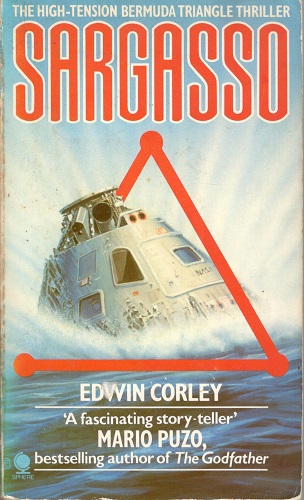
Sargasso, Edwin Corley (1977). A 1970s technothriller is not my normal reading, but since this one features both an Apollo space mission and underwater exploration… The initial set-up is intriguing: the command module for Apollo 19 splashes down in the Atlantic after its crew have spent time aboard a Soviet spacestation in an ASTP detente-in-orbit type exercise… but when the CM is opened, it’s empty. No astronauts. And yet Mission Control was communicating with them as they left orbit and fell to Earth. After much guff about the Bermuda Triangle – as that’s where the splashdown occurs – and an ocean survey ship with a submersible which experiences a total power failure seconds before the splashdown… Not to mention a re-enactment of Flight 19, and a man who has been alive for more than a hundred years… It all turns out to be payback for a dastardly plot by those evil communistic Soviets. A back-cover quote praises the book’s research, but I thought it pretty slipshod. Not that the book made much of an effort at detail anyway. The prose barely rose to workmanlike, the cast were the usual stereotypes, and sometimes I wonder why I bother reading some books…
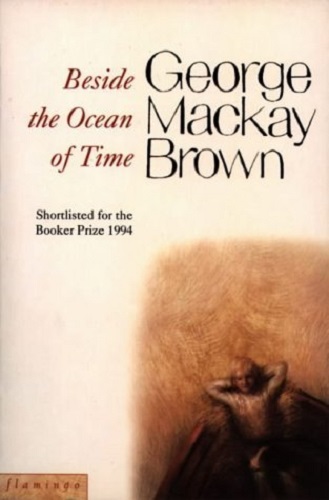
Beside the Ocean of Time, George Mackay Brown (1994). Thorfinn Ragnarson is an idle dreamer, the schoolboy son of a subsistence farmer on the invented Orcadian island of Norday, and considered mostly useless by all who know him. Various incidents set off daydreams, in which Thorfinn imagines himself in assorted historical roles – aboard a Viking ship which makes for Byzantium, the squire of a knight on his way to Bannockburn, a member of the people who built the brochs, press-ganged into the English fleet to fight the French republicans… But there is also a section which describes life on Norday at the time the novel is set, the 1930s, and centres around the mysterious young woman who comes to stay with the local reverend. This was my first experience of reading Mackay Brown, and I’m sure it’s my thing. I found the prose very simple and declarative, and while there were occasional moments of lovely imagery, much of it struck me as quite sketchy. The setting, of course, had its own fascination, and I actually spent an hour or so looking up brochs after reading about them in Beside the Ocean of Time (and even considered buying a book on the topic). There are some authors, you only need to read one novel or novella, and you want to explore their oeuvre further. While I liked Beside the Ocean of Time, and may well pick up copies of Mackay Brown’s books if I see them in charity shops, I’m not minded to actively seek out his other works.
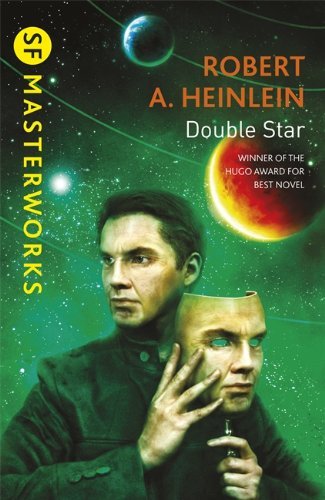
Double Star, Robert Heinlein (1956). As far as I was aware, this was one of the less objectionable novels in Heinlein’s oeuvre, and I’ve seen much praise for it which was careful to make that point. And yet I have to wonder if those people had actually bothered reading it recently. I can understand a thirteen-year-old lapping it up, and nostalgia putting even more of a shine on the book many decades later… but there’s no way Double Star stands up to scrutiny for anyone with a modicum of intelligence, taste or sensitivity. What else to think of a novel that contains the line “a woman will forgive any action, up to and including assault with violence, but is easily insulted by language”? And there is only one female named character in the entire book. And she’s the hero’s personal assistant. The world-building is also piss-poor, something at which Heinlein is normally quite good. It’s not just the idea of a Solar System-wide empire ruled by a member of the House of Orange, or Mars, Venus and Jupiter having native intelligent life, or the really clunky technology (much of which is behind the state of the art for 1955)… Everything just feels weirdly anachronistic and old-fashioned, even for sf of the 1950s – no, especially for sf of the 1950s. Then there’s the lectures on free trade, all of which are patent bollocks. (Free trade does not generate wealth, it concentrates wealth. In the hands of those who already possess wealth. History has been telling us this for centuries.) An actor is asked to impersonate an important politican who has been kidnapped, but is desperately needed at a ceremony which will result in a treaty with the Martians. The actor does so, the politician is rescued but proves too ill to return to his job, and so the impersonation continues… As far as I know, Double Star was never published as a juvenile, but it’s hard to believe it was aimed at an adult audience.
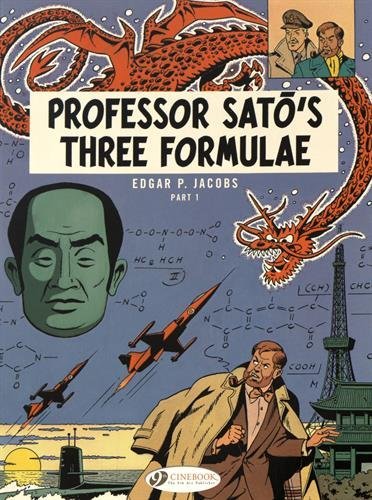
The Adventures of Blake & Mortimer 22: Professor Satō’s Three Formulae, Part 1, Edgar P Jacobs (1971). I first stumbled across Blake & Mortimer back in the 1990s when I lived in Abu Dhabi. If I remember correctly, it was upstairs in Card Zone, where the shop sold books – and some of their stock went back a decade or more. I found a bunch of English-language editions of some bandes dessinée from the late 1980s, one of which was Atlantis Mystery, the seventh in the Blake & Mortimer series. For whatever reason, only half a dozen of the Blake & Mortimer books where published in English… until 2007, when Cinebook began publishing the entire series in English, both Jacobs’s originals and those produced after his death by the Edgar P Jacobs Studio. However, they’ve not been following the original publication order, which is why Professor Satō’s Three Formulae, books 11 and 12 in French, has been published as books 22 and 23 in English (the latter due in May this year). I have to admit I prefer the ones written after Jacobs’s death. While Jacobs was careful to get his details right – in this one, for example, set in the early 1970s, the aircraft and cars are all shown accurately – but the science-fictional aspects are often quite silly. Those written by other hands seem to me to be more careful at making their stories plausible – even going so far as to integrate them into real history. In Professor Satō’s Three Formulae, Part 1, the eponymous scientist has invented a type of robot, which he has built in the form of a ryū. But it somehow escapes his secret laboratory and destroys two fighter jets from the Japanese Air Defence Force. Convinced there is a conspiracy afoot to steal his ideas for nefarious pruposes (there is, of course), Satō calls for his old friend Mortimer for help. Satō has also distilled his research into three formulae, which he plans to give to Mortimer for safe-keeping. Of course, it all goes wrong. Not one of the better books in the series, although I admit I’ve enjoyed reading them and have no plans to stop.
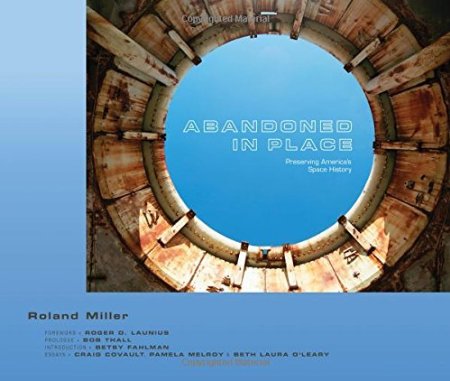
Abandoned in Place, Roland Miller (2016). Rockets, of course, need somewhere to launch from, and such structures need to be pretty damn sturdy given the beating they will take. So fifty years later, it’s no surprise to discover there are relics and ruins still scattered about the US: block houses, test stands, launch complexes… Some have been demolished since Miller photographed them, some have been repurposed, but many are simply too difficult to destroy. There’s something sadly emblematic about the photos in this book, the fact that the structures they document are all that’s left of the optimism which put twelve men on the surface of the Moon. And they’re in a state of abandonment. It has been argued that NASA’s space programme was the nearest to a socialist economic policy the USA has ever implemented, and I can see how the argument has merit – by spreading the bounty throughout the country in order to win political support, it uplifted towns and states both financially and technologically. There’s a certain level of irony in that. And yet, like the USSR, the only evidence of its existence are ruins – and the world was a better place when both were thriving.
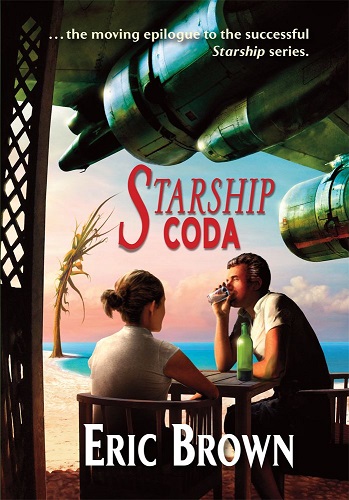
Starship Coda, Eric Brown (2016). Ten years after the events of the Starship Quartet, narrator David Conway is mysteriously contacted by his ex-wife, whom he left before the events of the first novella in the sequence, Starship Spring. She wants to know how he managed to get past the death of their daughter in a drowning accident – the event which drove them apart, and drove Conway from Earth to Chalcedony. The answer, of course, lies in the events of the preceding four novellas. But Conway’s ex-wife duly appears, and it seems she has undergone a drastic procedure in search of closure: Age Reversal Therapy. Which is exactly what the name says. Starship Coda successfully matches the tone of the earlier novellas, although at less than 40 pages it’s a thin book. There’s a sort of comfortable languidness to the world and story, although the focus of the prose is very much on the narrator’s emotional landscape. In fact, there’s something very relaxing about the story – it’s sort of affirming, without being cosy. And while the road to the conclusion may not be smooth, you know there’s happiness at the end of it. And I’m not embarrassed to admit I’d sooner read books like that than I would dystopias, post-apocalypses or anything which professes to be “grimdark”.
1001 Books You Must Read Before You Die count: 122
I suppose you could say I’ve recently become disenchanted with modern genre fiction. I haven’t really, it’s been an ongoing thing. I suspect this comes to us all at some time. It’s not so much “putting away childish things” because I don’t consider genre a childish thing (not all of it, anyway). My tastes have changed, and most genre no longer meets those tastes. So I have to look harder to find stuff that does – I have to look harder anyway because the genre is now so much bigger, and I have access to so much more of it; but you know what I mean. I still have my favourite genre writers, of course, and I continue to read, and enjoy, their output; but unless something new really is out of the ordinary I usually find myself blithely uninterested in it.
Fortunately, there is more to literature than just genre fiction. And I’ve found that some mainstream/literary fiction does offer me what I look for in my reading. Plus, there is tons of it to explore – an entire history, in fact. I’ve learnt I really like, for example, DH Lawrence’s writing, so there’s an extensive oeuvre to work through right there. And Malcolm Lowry. And the works of recent discoveries Karen Blixen and Jenny Erpenbeck I want explore. I also have a bad habit of jotting down the titles of books that sound interesting when I come across mention of them, particularly twentieth-century ones that are hard to find… which is how I ended up with a copy of Johannes V Jensen’s The Long Journey (originally published in Danish in six volumes between 1908 and 1922; first published in English in three volumes in 1924), and I’m still looking for a copy of Nordahl Grieg’s The Ship Sails On (1924)… oh, and I’d like to read Jerzy Żuławski’s Lunar Trilogy but I don’t think it’s ever been translated into English…
Despite all that, there’s still a lot of twentieth-century science fiction I’ve not read, and I’m not about to write off the genre completely. It may well be projection on my part, but there seemed to be more of a distinction between science fiction and fantasy last century and I like that. I also like that there are a lot of well-written science fiction novels from the twentieth-century which have been pretty much ignored – mostly written by women, yes – and discovering them for SF Mistressworks does add an extra dimension to reading them.
So, anyway, reading… I did some. It is here. See below.
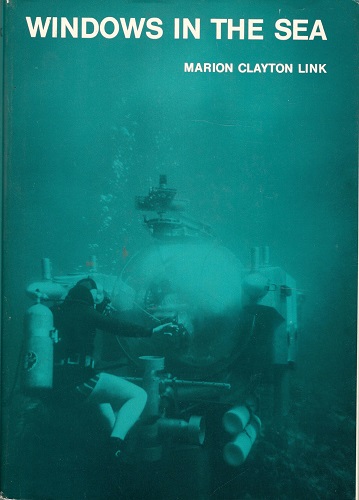
Windows in the Sea, Marion Clayton Link (1973). Ed Link made his fortune inventing the aircraft simulator, but he put a lot of time, effort and money into underwater exploration. He invented the SPID (Submersible Portable Inflatable Dwelling), which set a record when two divers stayed in it for 49 hours at a depth of 432 feet. He also invented a submersible with a lock-out chamber for divers, so they could be carried to their working depth, compressed en route, and begin their decompression while returning to the surface. And he invented the Johnson Sea Link submersible, in which the pilot and passenger sit inside a transparent acrylic sphere. Perhaps he didn’t advertise his adventures to the extent Jacques Cousteau did – in fact, this is the only book specifically about Link’s underwater exploits; other books are about people who worked for him – but he pioneered a number of important underwater technologies. Windows in the Sea thankfully sticks to more of a reportage style, rather than being hagiographic, and it’s fascinating stuff. Of course, not everything went according to plan – in an early test of the SDC (Submersible Decompression Chamber), it was catapulted out of the water with Link inside. Later, Link’s son died in a tragic accident in the Johnson Sea Link. But in a topic poorly served by non-fiction works, this book deserves to be better known.
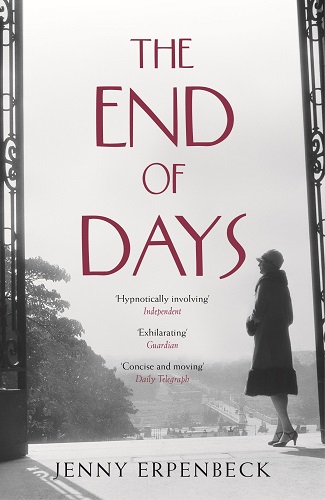
The End of Days, Jenny Erpenbeck (2014). I think it was David Hebblethwaite who recommended this novel – and while people recommend books pretty much all the time, something about this one sounded like it might appeal. So I bunged it on my Amazon wishlist, and was subsequently given it as a Christmas present. The back-cover blurb makes explicit comparisons to Kate Atkinson’s Life After Life (a book I very much liked, and, in fact, nominated for a Hugo, during my one and only attempt at nominating for the Hugo), but the novel The End of Days reminds me of the most is Katie Ward’s Girl Reading, another book unknown to me until someone recommended it… and which turned out to the best book I read that year. Plotwise, Atkinson’s novel is certainly a closer match, given that The End of Days describes the life of a woman born in Galicia in the latter days of the Austro-Hungarian Empire, and her life throughout the twentieth century as she survives WWI, joins the Communist Party in Vienna, moves to Moscow, and then Berlin, and becomes a famous East German writer. As in, that’s it in the final section in which she lives a long and eventful life. Earlier sections cut it short at various junctures. The writing throughout is stunningly good, the structure is very carefully built up, and this is one of the most impressive books I’ve read so far this year. I fully expect it to make my best five of the half-year, if not the year. I also want to read more by Erpenbeck.
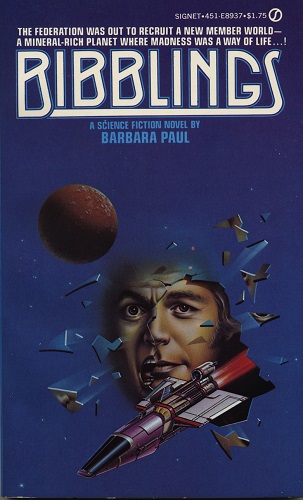
Bibblings, Barbara Paul (1979). I consider myself reasonably well-informed on women sf writers of last century, particularly novelists, but Barbara Paul was one that had completely slipped by me. She had five novels published between 1978 and 1980, and one Star Trek novelisation in 1988. Only her first novel, An Exercise for Madmen, and this one, Bibblings, were published in the UK – and the first was in hardcover only by Robert Hale (whose books are notoriously hard to find). Paul also wrote crime novels; the last was published in 1997. She has an extensive website here. My review of Bibblings is on SF Mistressworks here.
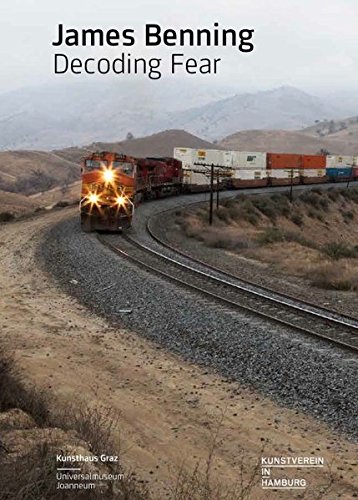
James Benning: Decoding Fear, Peter Pakesch & Bettina Steinbrügge, eds. (2014). I Love Benning’s films, at least those I’ve seen so far, which is only a small portion of his oeuvre as that is all that’s to date been released on DVD (happily, he donated his archives to the Östereichisches Filmmuseum, so hopefully they will release more). James Benning: Decoding Fear was produced to accompany an exhibition of Benning’s work, and comprises a series of essays in German and English, photographs of the exhibits, and an interview, in both German and English, about one element of the exhibition – his Two Cabins, the cabins in question being those by Henry David Thoreau (of Walden fame) and Ted Kaczynski (the Unabomber). It’s an interesting insight into an artist whose work I much admire, although to be honest I had expected something a little more analytical than what is essentially a companion-piece to an exhibition.
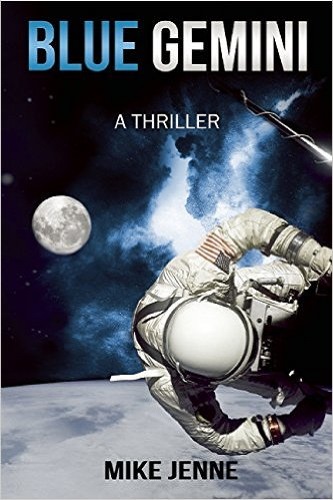
Blue Gemini, Mike Jenne (2015). How could I resist this? A thriller about a secret militarised Gemini programme – that’s right up my street. True, it was published by an independent publisher, and it’s not being sold as genre fiction… but I thought it worth a go. And, unsurprisingly, the book’s prose has all the style and grace of, well, a technothriller. The topic is indeed something that interests me – a Soviet plan to orbit nuclear warheads persuades the US to develop a secret USAF programme of satellite killer Gemini spacecraft, something that was actually considered in the real world. A group of sterotypically technothrillerish characters become involved in said programme and, er, well, that’s it. The research is good, and Jenne writes the technical aspect of his story with authority. But the characters are pretty much what you’d expect, the prose rarely rises above clunky, and there are a lot of pages here for the story. There are some nice set pieces – particularly those involving a black USAF airman and the racism he encounters – but there’s also a lot of ignorance shown about the rest of the world, and it’s not always clear if Jenne is trying portray the ignorance of Americans of the 1960s or if it’s twenty-first century ignorance. There are two sequels to this book – Blue Darker Than Black, published earlier this year, and Pale Blue, due in June this year. To be honest, I don’t think I’ll be bothering with them.
1001 Books You Must Read Before you Die count: 122
I wish I could read as many books a year as films I watch. I did manage to complete the 150 book challenge on Goodreads last year – although I am apparently 6 books behind schedule for 2016 – but that’s not even close to 570, the number of movies I watched last year… I did try reading for 30 to 60 minutes when I got home from work, and managed to keep that up for at least a week. I really need to make it part of my daily routine. I also need to get into the habit of reading on the weekend again, too. Back when I lived in the UAE, I used to spend most of Thursday and Friday reading – in fact, it wasn’t unusual for me to catch a taxi to the Daly Community Library on a Thursday morning, take out four books… and have read two of them by that evening. Admittedly, I read quite a lot of crime and thriller novels – the library didn’t have many science fiction books – and they’re fast reads. But I also read a lot of literary fiction as well. Maybe I’m just slowing down in my old age…
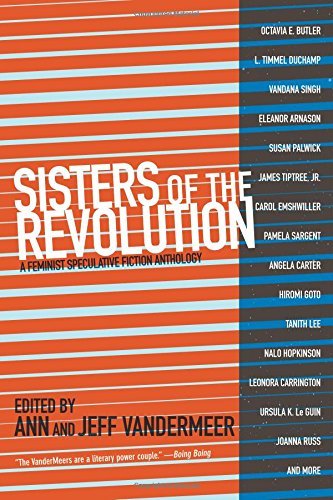
Sisters of the Revolution, Ann & Jeff VanderMeer (2015). I supported the kickstarter for this as it sounded like a project worth supporting and, after a period that was longer than expected, it finally arrived. And… it was worth the wait. It’s a strong and varied selection, its contents mostly new to me – around ten of the twenty-nine stories in the anthology I’d read previously. I’m amused by the back-cover blurb’s description of thr anthology as a “highly curated selection”, as if the VanderMeers put MOAR EFFORT into it than every other anthology editor. Having said that, I don’t know how many stories they read in order to make their choices. but judging by comments on Twitter, Facebook, etc, it was a hell of a lot. I don’t think every story they chose works, although that’s more a matter of personal taste – I’m not a fan of genre fiction that plays fast and loose with rigour, or indeed any mode of fiction that does, nor stories that are too allegorical or too consciously presented as fables. Which is not to say there are not some bloody good stories in Sisters of the Revolution – in fact, the opener, ‘The Forbidden Words of Margaret A.’ by L Timmel Duchamp, is one of the best stories I’ve read in a long time. And Ursula LeGuin’s ‘Sur’ was not only new to me but also one of the best by her I’ve ever read. James Tiptree Jr’s ‘The Screwfly Solution’ remains as scarily effective as it was the day I first read it. Octavia Butler’s ‘The Evening and the Morning and the Night’, Kelly Barnhill’s ‘The Men Who Live in Trees’, Angela Carter’s ‘The Fall River Axe Murders’, Joanna Russ’s ‘When It Changed’ and Eileen Gunn’s ‘Stable Strategies for Middle Management’ are all worth the price of admission. I’d definitely say Sisters of the Revolution is one of the strongest anthologies I’ve seen for quite a while.
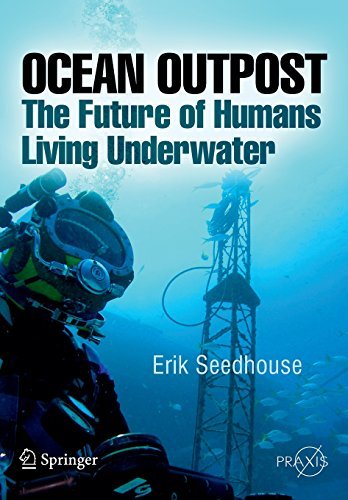
Ocean Outpost, Erik Seedhouse (2011). I picked up a copy of this cheap on eBay, which is good as Springer-Praxis books are not cheap. But they are interesting. The subtitle of this one reads “The future of humans living underwater”, and it covers a variety of different methods of doing so. The first section covers diving – free-diving, technical diving and saturation diving – but while the studies on free divers is interesting, the section on rebreathers reads like a technical sales brochure. The second section is about submersibles, but covers only Mir, Alvin and Shinkai before turning into an advertisement for hydrobatic submersibles (ie, ones that “fly” underwater). Section III deals with the reasons for colonising the ocean bottom, such as mineral exploitation, and the final section is about medical intervention to allow survival underwater. It’s fascinating stuff, despite the book’s tendency to read at times like it’s quoting verbatim from technical sales material; and while it’s good on the science and engineering of the current state of the art, it’s not so good on the history – the chapters on submersibles, for example, make no mention of the Trieste or Ben Franklin. But then it is a relatively slim book, only 187 pages, including appendix, epilogue and index. Nonetheless, pleasingly detailed.
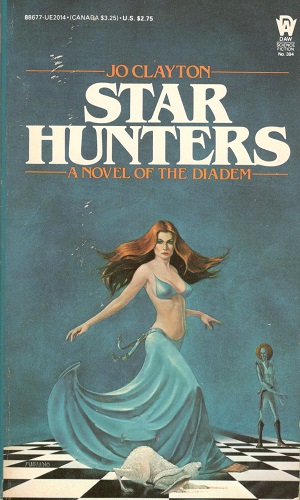
Star Hunters, Jo Clayton (1980). This is the fifth of the seven books from the nine-book Diadem series that I bought at Fantastika in Stockholm back in 2013. I’ve been slowly working my way through them for SF Mistressworks. The first couple were a bit hard to take – the series heroine is a super-special snowflake who is subjected to an almost-constant barrage of sexual violence, but there’s an abrupt swerve in tone in the fourth book and Aleytys is presented as a much more typical competent space opera protagonist with agency. Her wardrobe, if the cover art is anything to go by, doesn’t improve, however. My review of Star Hunters is here.
Louisiana Breakdown, Lucius Shepard (2003). I went through a phase several years ago of buying Lucius Shepard books. And he produced quite a few, including many short novels and novellas from small presses. Such as Louisiana Breakdown, which was originally published by Golden Gryphon. There’s is not much, to be honest, in this short novel which makes it stand out, other than Shepard’s writing. The story feels like a well-used cliché, a story that’s been told far too often about Louisiana. A musician en route from California to Florida, well, breaks down in Louisiana, just outside some small backwards town. The local cop tries to strong-arm but is stopped by the timely arrival of the town’s Big Man, descendant of the town’s founder and rich playboy. There’s also a woman who is in magic thrall to another man – although he’s not in the town itself – and she decides that the musician is the man to break her free. It’s a story that almost writes itself, and if it weren’t by Shepard I’d not have bothered going past by the first couple of pages. Even so, it’s not one of his best.
In Ballast to the White Sea, Malcolm Lowry (2014). The story goes that, after Lowry’s first novel, Ultramarine, was published, he submitted In Ballast to the White Sea, but his publisher decided not to take it. So Lowry continued to work on it. He was a notorious fiddler, forever editing and polishing his work, so it’s no real surprise he published so little. But before he could finish the next version of In Ballast to the White Sea, the wooden shack in which he and his second wife, Margerie Bonner, lived in Vancouver caught fire. The ms of In Ballast to the White Sea was almost entirely destroyed. However, a couple of years earlier, Lowry had left a copy with his mother-in-law (a copy of the earlier, rejected version, that is), but Lowry had either forgotten about it or chose not to remember its existence. In any event, he gave up on In Ballast to the White Sea and moved onto something else – and Lowry’s second novel was considered “lost”… But the ms put away for safe-keeping turned up in the 1970s and Lowry’s first wife, Jan Gabrial, set about editing it for publication (as she had done in the 1960s with Lowry’s forever-being-worked-on novella, Lunar Caustic). But In Ballast to the White Sea never saw print – until now, in this “scholarly edition” from the University of Ottawa Press. And… it’s plain it needed more work. Some chapters are entirely dialogue. The character of the captain, the father of the protagonist, Sigbjørn, doesn’t feel quite settled; and Nina, Sigbjørn’s ex-girlfriend, swoops in from nowhere, takes up a couple of intense chapters, and then vanishes. Like Ultramarine, In Ballast to the White Sea is partly autobiographical, and is based both on Lowry’s time at Cambridge and at sea – in fact, the suicide of Sigbjørn’s brother, which occurs off-stage between chapters II and IV, was based on the suicide of a friend and fellow student. And Sigbjørn’s fascination with the author of a Norwegian novel which, in broad shape, is similiar to the novel Sigbjørn is planning to write echoes Lowry’s own fascination with Skibet gaar videre (The Ship Sails On) by Nordahl Grieg, a novel he felt had “written” his life up to that point. The “A Scholarly Edition” on the cover of In Ballast to the White Sea refers to the fact the novel is copiously annotated – not just the references and allusions with which Lowry larded his prose, but also some aspects of British life and geography which may not be familiar to non-Brit readers. There’s also a couple of essays on the provenance and history of the manuscript, and on the editing undertaken by Lowry scholar Chris Ackerly. If you’re a fan of Lowry’s fiction, it’s a fascinating, perhaps even necessary, read.
Invaders, Jacob Weisman, ed. (2016). You know when lit fic writers try their hand at genre, although of course their story appears in a lit fic venue not a genre one, and everyone goes on how astonishlingly inventive it is but genre fans just shake their heads sadly because they’ve seen it all before… Well, if that ever happened, and I suspect it hasn’t done for a number of decades, there’s enough proof in Invaders to demonstrate that science fiction and fantasy are now so prevalent that an author doesn’t need to be steeped in genre from the age of thirteen in order to write good genre. Which is not say every story in Invaders works, either as lit fic or as genre fic. But the anthology sets out to prove a point, and it does that pretty well. I read the book to review for Interzone.
1001 Books You Must Read Before You Die count: 122
It’s really not difficult to maintain gender parity in your reading. After you’ve read a book written by a man, you read one written by a woman; and vice versa. Or, as it seems is the case in this Reading diary post, two books by women followed by two books by men. And then, when you have to write about science fiction or science fiction books, or indeed any branch of literature, you’ll have as many female authors you can cite as examples as you have male authors.
Having said all that, the books below are a bit of a cheat… I’ve been a fan of Helen Simpson’s short stories for many years and have all her collections (she has never written a novel). The Emshwiller I read for SF Mistressworks. David Tallerman is a friend. So the only book I actually chose to read unaffected by non-textual factors was the Tregillis… and well, you can see below what I made of it.
Cockfosters, Helen Simpson (2015). As far as I remember, I first came across Helen Simpson in an anthology of “best short stories” of some sort – I do know, however, that it was her story ‘Heavy Weather’, and I fell in love with it. This was in Abu Dhabi. So on a later visit to the library, I checked out one of her collections – her second, in fact, Dear George & Other Stories. And I’ve been a fan ever since. And yet, the only place I’ve read her fiction has been in her collections – the stories in Cockfosters, for example, originally appeared in Granta, New Statesman and daily newspapers, none of which I read. But hey, that’s what collections are for. There are nine stories in Cockfosters, one of which is genre. In ‘Erewhon’, a husband lies awake at night, worrying about the day ahead, while his wife sleeps oblivious beside him. It’s only as the story progresses, and the hours tick away, that you realise the gender roles are reversed in the world of the story. ‘Kentish Town’, a discussion amongst the members of a book group, is a particularly scathing criticque of Tory Britain. The longest piece, ‘Berlin’, is about a party of middle-aged tourists visiting Germany to see various of Wagner’s Ring Cycle, and how the narrator and her husband slowly come to an appreciation of the operas. Those are the stand-outs, but the others are still highly-polished pieces of prose. Simpson is very, very good at what she does, and Cockfosters amply demonstrates it.
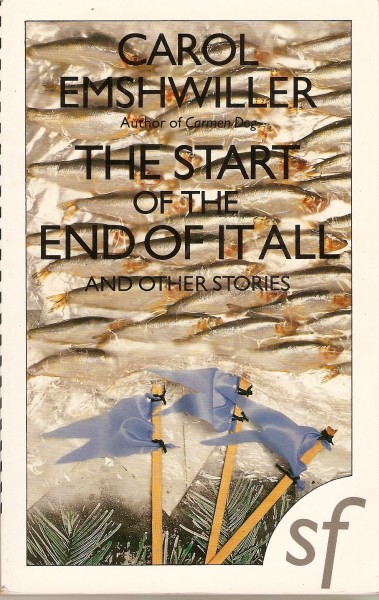
The Start of the End of it All, Carol Emshwiller (1990). I’d read a few of Emshwiller’s stories before in various anthologies, and had always found them the sort of science fiction not to my taste. While there was no denying their quality, they didn’t offer me the things I looked for in genre fiction. And while this collection certainly shows that Emshwiller is a good writer, I found it something of a mixed bag in terms of what I enjoy reading. I’ve been working on a review of it for SF Mistressworks, but it’s been taking a bit longer than expected.
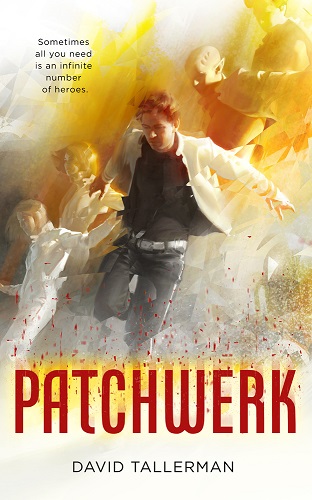
Patchwerk, David Tallerman (2016). Dran Florrian has invented a machine he calls Palimpsest and, afraid it might be used as a weapon, he decides to do a runner with it. But his arch rival, Harlan Dorric, tracks him down and tries to take Palimpsest for himself. Oh, and Florian’s ex-wife, Karen is now with Doric too. Palimpsest apparently provides a means of viewing, and even manipulating, alternate realities – as is revealed when Doric and his goons attack Florrian, and Florrian and Karen find themselves in a completely different world (a steampunkish one, in fact). And so it goes. As the chase continued across alternate realities, it occurred to me this was a very cunning way to expand a short story to novella-length. Because the resolution of the story is not dependent on the realities Florrian and Karen visit – in fact, all they do is delay, or perhaps even obstruct, the resolution. But this is hardly a problem as the story is fast-paced, very readable and manages a more-than-sufficient level of invention. Perhaps the various backgrounds are a little sketchy, and Florrian has a tendency to over-analyse at times; but at short-story length this would probably have been too light on detail to be satisfying, and there really isn’t enough plot to justify novel length. But it works just fine as a novella.
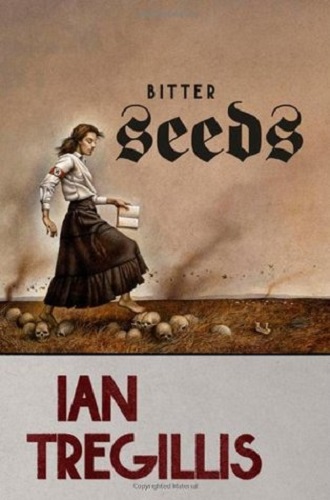
Bitter Seeds, Ian Tregillis (2010). I “won” this book on Twitter – a friend did a giveaway and… I can now understand why he gave it away. Bitter Seeds is a reworking of World War II – although it opens during the Spanish Civil War – in which the Germans have half a dozen super-powered teenagers, who need electricity wired directly into their brains to manifest their powers. The British are forced to make deals with the Eidolons, enigmatic and omnipotent demon-like creatures, who exact a blood price each time they deign to help. It’s an interesting idea, a mishmash of Nazi occult science mythology and the sort of potboilers Dennis Wheatley used to churn out. Unfortunately, it reads like a novel that’s been through far too many writing workshops, where the writer has tried to follow every “rule” and address every critique levelled at the manuscript. So when it’s not overwritten, it’s trying too hard do everything it thinks prose should do. And then there’s the research… Although much of the story is set in Britain, it’s not in the least bit convincing. Everyone carries billfolds. The book’s hero marries his wife in the garden of his boss’s house. The second son of a duke wears a bowler all the time (and the ducal estate is in Bestwood, which is actually a colliery village but never mind). There’s a pub which resembles no British pub ever. And the dialogue sounds like it was based on that spoken in 1970s and 1980s UK television series. There are apparently two sequels to this book. I won’t be reading them. But I might well be doing a giveaway on Twitter for Bitter Seeds…
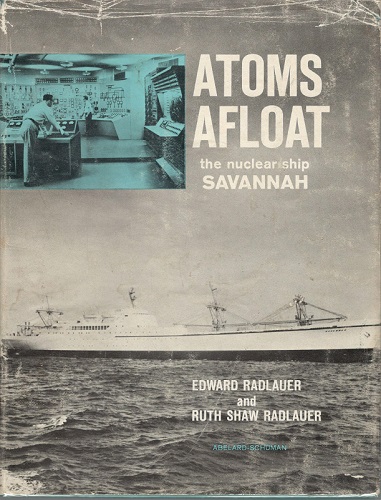
Atoms Afloat, Edward Radlauer & Ruth Shaw Radlauer (1963). The NS Savannah, the world’s first nuclear-powered merchant ship, was one of only four ever built. She was launched in 1962 and served as a passenger and cargo ship until 1965, and then as cargo-only until 1972. She was designed as a demonstration model for nuclear power and a show case for Eisenhower’s “Atoms for Peace” project. And she was quite a stunning-looking vessel. The interior was also designed to be in keeping with ship’s “atom age” styling, and looked fantastic. Atoms Afloat is the only book I’ve been able to find on the NS Savannah – and it’s aimed at middle-grade readers. It’s also more about the construction of the ship, and how her nuclear reactor works, than it is her design. But there are some nice photos in the book. I also have a copy of a brochure, published in the late sixties by the shipping line which operated her, and that contains some nice colour photos of Savannah’s passengers spaces. The NS Svannah was a design icon of her age, and someone really should do a proper book on her, filled with lots of colour photographs.
1001 Books You Must Read Before You Die count: 122
Yes, I know it’s confusing that I’m continuing the numbering scheme from, er, when I started it. But never mind. It would be a bit weird to change it a handful of weeks into the year, so I seem to be stuck with it. Anyway, a mix of books this time round…
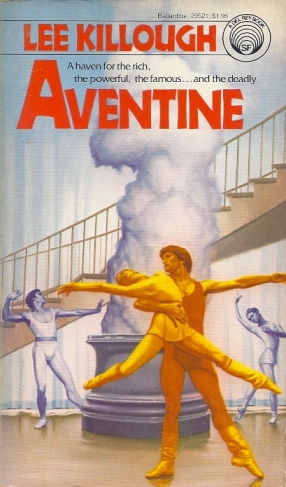
Aventine, Lee Killough (1981). I reviewed this collection of short stories for SF Mistressworks – see here. I like Killough’s fiction, it’s very readable and likeable, even – dare I say it – undemanding. This collection’s premise may well have been more original, for science fiction, in 1981 than it is now, but it’s stood the test of time reasonably well. It remains memorable, which is more than can be said of the works of many of Killough’s peers in genre. I shall continue to hunt down copies of her books.
Roman Bezjak: Socialist Modernism, Inka Schube (2011). Bezjak, a lecturer at a German university, often travelled around East Europe, and he took photographs of socialist architecture – or rather, architecture that seemed designed to foster socialist ideals. The result is a series of photographs from a number of cities of exactly the sort of architecture I find hugely appealing… because I too believe there’s a utopian dimension to architecture – and that’s despite living in a city in which one of the great such experiments failed and sits prominently on a hill above the city centre…
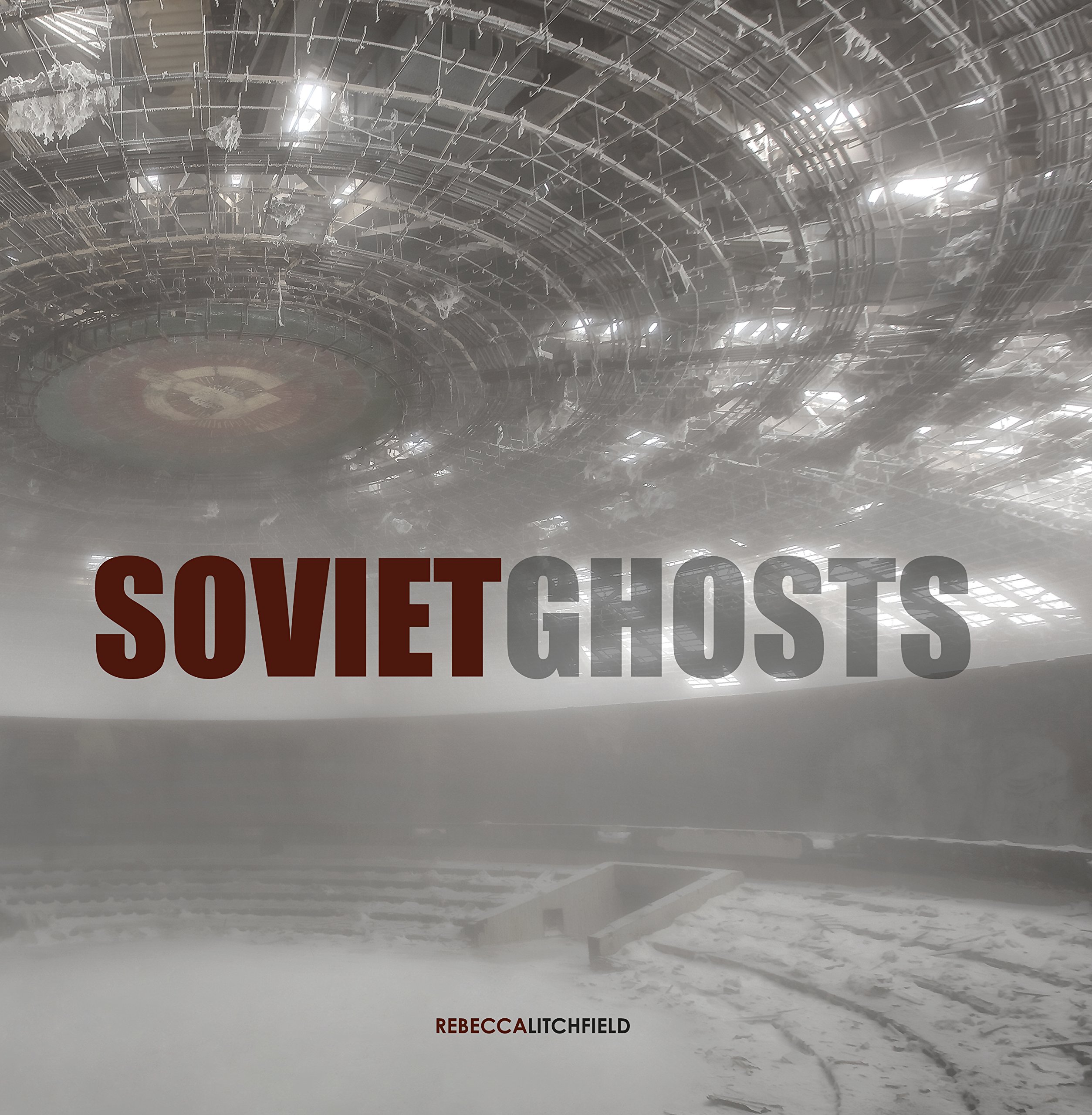
Soviet Ghosts, Rebecca Litchfield (2014). And this book makes makes real the dreams of the former book… We’re all too quick to judge one group of people for their failures and yet admire others for their aspirations. For all its manifold faults and endemic corruption, the Soviet Union had many admirable ideals – and a great many of those are embodied in the buildings, now ruined, which appear in Soviet Ghosts. Perhaps most emblematic is the Buzludzha Monument in Bulgaria, intended as a celebration of a secret assembly of socialists in 1890, opened in 1981, but since fallen into extensive disrepair. Other photographs feature abandoned sheds of locomotives, military bases, hospitals, even entire towns which have been left to rot. As the previous book no doubt demonstrates, I find socialist architecture interesting, and it’s just as interesting in decay as it is in rude life – perhaps even more so, because it embodies a dream that died rather than one corrupted by compromise, greed and corruption.
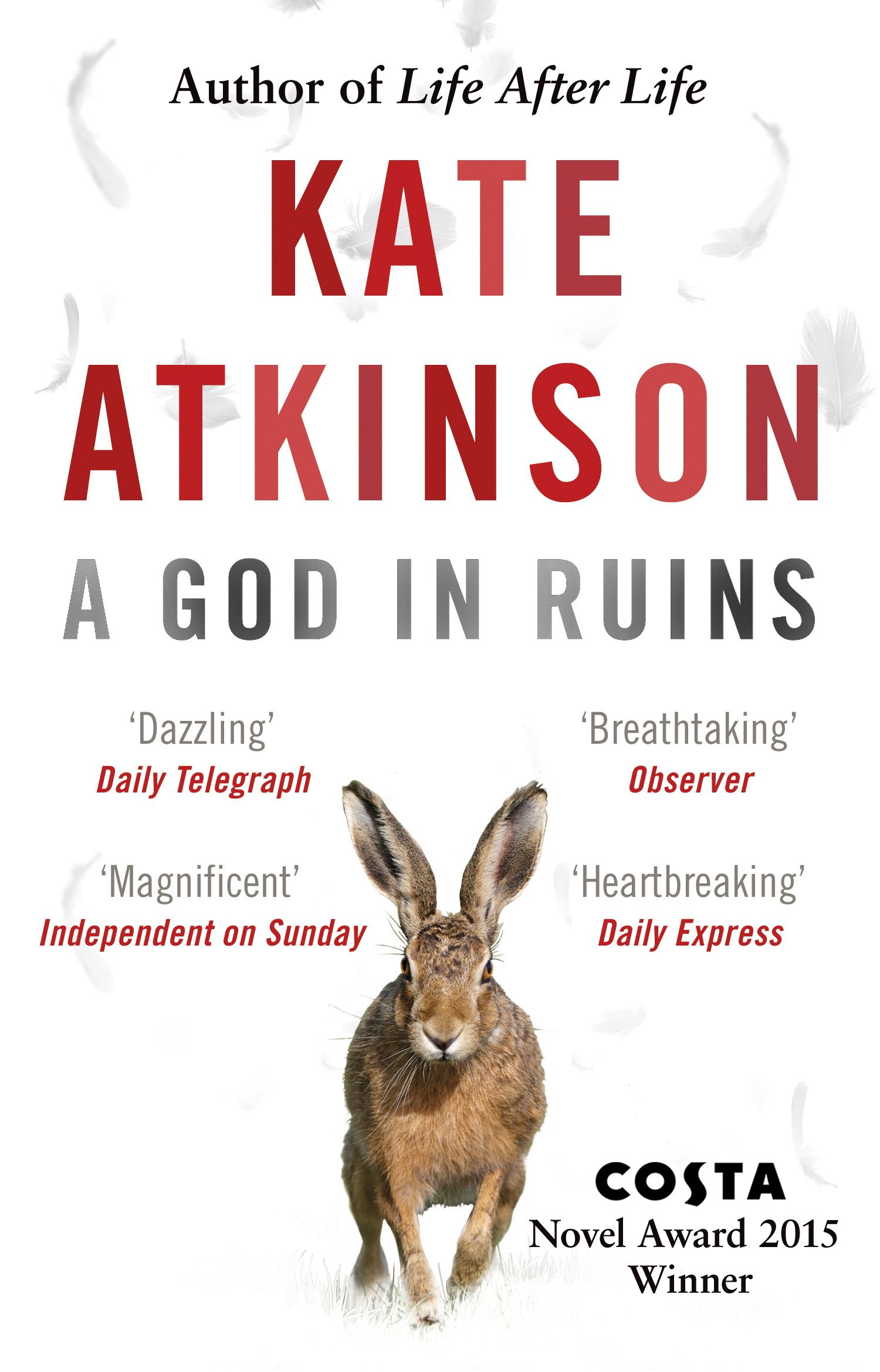
A God in Ruins, Kate Atkinson (2015). I’d heard good things about this semi-demi-hemi-sequel to Life After Life, which was a book I’d enjoyed a great deal and thought good enough to nominate for the Hugo (as I was a Worldcon member, briefly, that year). In that earlier novel, Ursula Todd repeatedly died and was reborn, and so got to live out alternate versions of her life, of history itself since much of the story took place during World War 2. Teddy is Ursula’s younger brother. He enlists in the RAF, becomes the pilot of a Handley Page Halifax heavy bomber, flies three tours (ie, ninety missions), before being downed and captured. After the war, he marries his childhood sweetheart, Nancy, who worked as a decoder at Bletchley Park, the two become teachers, have a daughter Viola, who bounces around UK counter-culture, and has two children of her own, Sunny and Bertie. A God in Ruins is Teddy’s life, told in non-chronological order. He is an ordinary man in extraordinary times, who promises himself that if he survives the war he will strive to always be kind – and so he does. It’s a lovely piece of writing, deeply affecting, with an impressive control of the story’s emotional landscape. I suspect it will prove one of the best books I read this year. The big question, however, is: is A God in Ruins genre? For ninety-five percent of its length, most certainly not – it is a well-researched piece of historical fiction (Connie Willis should take notes). But the ending casts an entirely different light on what has gone before. It’s either genre or metafiction, although I tend to the former, given its link to Life After Life and the way the ending is actually handled. But read it for yourself and make up your own mind. Because you really should read it.
After the Funeral, Paul Scott (1979). The only edition of this short story available is a chapbook published shortly after Scott’s death, illustrated by his daughter and with a preface by his friend and collaborator Roland Gant. Copies are hard to find and expensive, but I found a reasonably-priced one on eBay. The story is typical Scott – a retelling of Cinderella which turns the entire tale on its head without losing sight of the original or sacrificing detail. The illustrations are lovely and appropriate. It is, in all, a very nice limited edition slipcased hardcover chapbook, and a fitting tribute to its author.
Vertigo*, WG Sebald (1990). If you want to confuse someone, ask them to explain the plot of a Sebald novel. Better yet, ask them if his novels actually are novels. Because I’m not entirely sure they are – and yet I’m pretty sure they’re fictional. Vertigo describes the arrival in Italy of Stendahl in the early 1800s as part of Napoleon’s army, and then covers his life somewhat swiftly. The next section recounts two visits by the narrator to Venice, and other towns in Italy, as in 1987 he retraces some of his travels of 1980. The third section describes an incident during Franz Kafka’s life, when he was supposed to give a talk in an Italian town in his professional capacity. In the final section, the narrator returns to his childhood village and notes the changes since he left decades before. It’s clear the narrator is Sebald himself, but not clear how much of what he recounts is invention. Certainly Venice, which he visits, is a real place, and the places he mentions in the city are real and the histories he gives them are real; but is the village of W., where the narrator spent his childhood, an actual place? Does it matter? I am, as should be clear from my own writing, interested in that liminal area between true fact and invented fiction – that is, essentially, what the glossary to Adrift on the Sea of Rainsis. (And I admit it, Sebald’s Austerlitz was one of the inspirations behind my novella.) Reading Sebald is unlike reading any other author, and it’s for that reason – and the sheer quality of his prose – that I treasure his books. I plan to work my way through his entire oeuvre.
1001 Books You Must Read Before you Die count: 122
The first batch of 2016’s reading, which, er, seems to be entirely works from last year. I don’t normally read a great deal of recent fiction, and especially books that are less than twelve months old – although, to be fair, I need to get my choices in for the BSFA Award before the end of the month… And some of them feature below. It’ll be interesting to see if the longlist approach has made much of a difference to the shortlist. (I note that ‘Gypsy’, the title novella of the PM Press collection, see below, was actually eligible but no one appears to have nominated it for the long list. Which is a shame.)
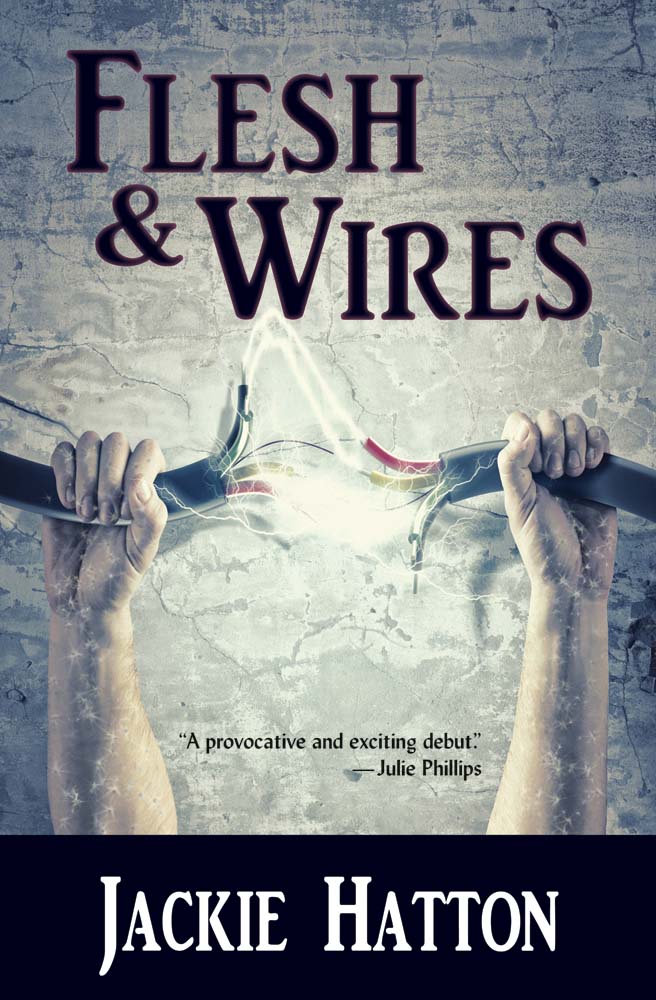
Flesh & Wires, Jackie Hatton (2015). So I went on the Aqueduct Press website with the intention of buying both Elysium and Necessary Ill, both books I’d been planning to pick up for a while… and I saw mention of Flesh & Wires, as well as a pair of novellas, A Day in the Deep Freeze (which I’ve nominated for the BSFA Award) and The XY Conspiracy, bunged them into my basket and bought them… And the first of the three novels I read was Flesh & Wires. To be honest, the blurb made the novel sound more interesting than it proved to be. Which is not to say it wasn’t good. The set-up worked, the plot worked, the characters were well-drawn, there were just some elements of the background which read as confused and a little, well, clichéd. The Earth was invaded by aliens, who killed off most of the population, but kept some women, and turned them into sort of cyborgs by means of “wires”. But then the aliens died of an Earthly disease, and a new set of aliens, Orbiters, turned up, and sort of helped the surviving women – and handful of men – to rebuild. The novel is set in a small town just south of New York, and told chiefly from the point-of-view of a powerful “wired” woman who is the de facto leader of the town. When her brother, long thought dead, turns up and proves to be representing the Orbiters – and is not not at all honest about his intentions; and then a group of Orbiters exiled to Earth also appear, casting doubt on what the protagonist had believed of the current state of affairs… The end result is a solidly feminist sf novel that perhaps relies over much on somewhat dodgy tropes but manages to put a fresh spin on its plot. I’d also like to go on record as stating that Aqueduct Press publish some bloody good sf, and it’s always a pleasure to place orders with them.
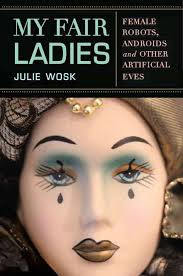
My Fair Ladies, Julie Wosk (2015). Subtitled “Female robots, androids and other artifical eves”, which pretty much describes its topic to a tee. The author was inspired by the discovery of a mannequin’s head in a street fair, and from that starting point goes on to cover historical representations of artificial women in Greek mythology, by Shaw and other late nineteenth-century/early twentieth-century writers, before moving into films, television, robots occupying the uncanny valley, and finally artists, such as Cindy Sherman (although no mention of Gillian Wearing or Lenae Day), who explore the concept of “perfect manmade” women through their art. While the book goes into detail on early literary artificial women, later literature – particularly science fiction – is mentioned only in relation to film or television adaptations. So, no Susan Calvin, Asimov’s robot psychologist who behaved like a robot herself; nor the women of EE ‘Doc’ Smith’s Masters of Space, who are all too eager to be uploaded into replacement robot bodies because it means “their tits won’t sag”; nor even Helen O’Loy. The list of fictional female robots and cyborgs on Wikipedia gives remarkably few examples from sf stories or novels, so perhaps it’s a topic written sf hasn’t tackled that much… although it feels like it has done; too prudish, perhaps, or maybe it required more self-examination than male writers of two-fisted space adventures were capable of; and female writers had more than enough material writing about real women. Anyway, fascinating stuff. One for the non-fiction BSFA Award.
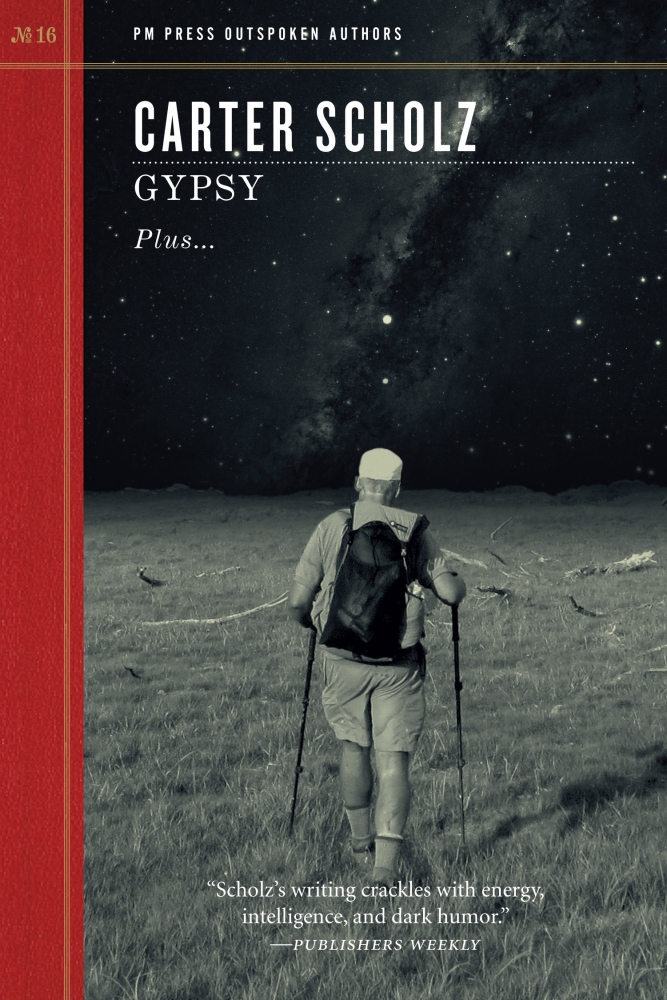
Gypsy, Carter Scholz (2015). I’d never heard of Scholz, although apparently he is held in high regard. Looking at some of the comments on this book, it’s clear he has plenty of genre friends in San Francisco/Oakland, where he lives – including Kim Stanley Robinson – and where PM Press is based. None of which is a reflection on Scholz’s ability, more on the requirement of connections and patronage in genre in order for good fiction to get noticed. And ‘Gypsy’, the title novella of this collection, is very good indeed. It’s 2015’s third generation starship story, and probably the best of the three as a generation starship story. Tchaikovsky’s Children of Time scores well because of its spider civilisation, Kim Stanley Robinson’s Aurora has some good bits about narratology… but Scholz’s ‘Gypsy’ goes for real science and engineering and paints a bleak picture – one not helped by the driving force behind the flight being the immanent collapse of Earth’s biosphere. Not that the flight itself provides any answers. The remainder of the collection comprises a somewhat tired epistolary short story, an essay about US economic shenanigans, a story presented as house committee testimony, and an interview with Scholz. I have a lot of time for Scholz’s approach to genre, as given in his interview, but only the title novella seems a good expression of it.
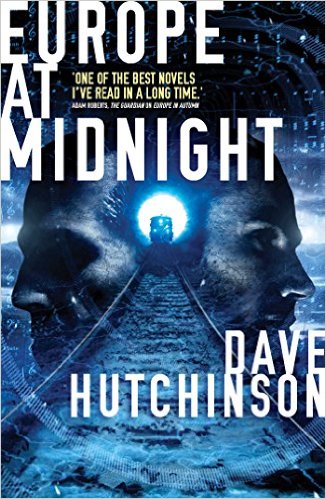
Europe at Midnight, Dave Hutchinson (2015). I thought Europe in Autumn a very good, if a little confused, novel – a superior near-future spy novel, it took an unexpected swerve around two-thirds in, which unsettled the plot but managed not to upset it. And now the sequel, Europe at Midnight, follows that swerve further around the curve and results in a very different novel of a type of science fiction that likely occupies a small place all its own in the genre’s corpus. In the nineteenth century, a wealthy family invented a new English county, which somehow came into being in a reality sideways from ours, and then subsequently expanded into Europe to form a Little England writ large: the Community. Which, it seems, has teeth. The novel opens in the Campus, a pocket universe 200 miles across which comprises one huge university, now having difficulty recovering after a bloody coup. The new Professor of Intelligence is suspicious of the Faculty of Science, but his investigations result in the termination of his position and a take-over by the Science people, who have suspiciously modern weapons. Fortunately, he escapes to our Europe… where he comes under the control of the UK intelligence services. Despite that disconcerting start, we’re now back in future spy novel territory… but even then, Europe at Midnight seems to slip across hidden borders into parallel fictions – much as some of its cast do – as it tells a story about Europe, the Campus and the Community which is only actually revealed in the final chapter. This is good stuff – a novel that cleverly runs our future alongside our memories of our past, and sets the scene for a war between the two. I’ll be nominating this for the BSFA Award.
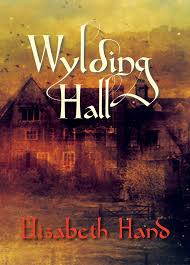
Wylding Hall, Elizabeth Hand (2015). This appeared on the BSFA Award short fiction longlist, and was recommended by several people whose opinions I trust – and, it had to be said, the précis did sound interesting… so I bought it, read it, and I’m giving it one of my four slots on my BSFA Award ballot. An acid folk group in the very early seventies hires the eponymous country manor to rehearse and record their second album (following the suicide of the group’s original singer; she was also the girlfriend of the band’s main creative force). Wylding Hall is a strange place, but this novella doesn’t go for in-your-face ghosts and apparitions but a much more effective general atmosphere of uncertainty. Windhollow Faire come across as a believable band, and the links to the darker side of English folklore are well-handled. The story is told as the decades-later reminiscences of the band members, a technique which is especially effective as it gives it the authority of a Sky Arts documentary. I have only a couple of minor niggles – back then, a grammar school would have been more posh than a comprehensive, and Radio 3 – not BBC 3 – was always more into classical and jazz, not folk; and John Peel was on Radio 1, which was the station mostly likely to play electric folk at that time.
1001 Books You Must Read Before You Die count: 121
A new year, more books read (some of which are actually from the Christmas holiday, but never mind).
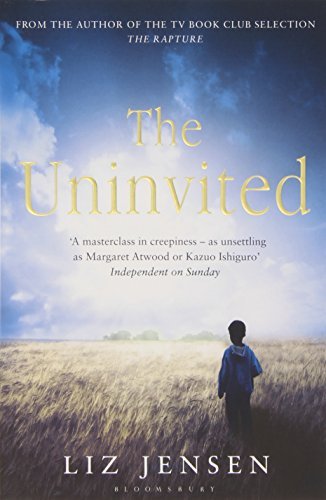
The Uninvited, Liz Jensen (2012). I am a Liz Jensen fan, although I don’t make as much of an effort to read her books as I should do. True, whenever I see one in a charity shop, I buy it. But, seriously, I should be buying her books new from a retailer – online or otherwise – because they are that good. Consider it a personal failing. In The Uninvited, the narrator, who suffers from Asperger’s, finds himself drawn into an investigation into children who have murdered their parents. And there seems to be an epidemic of such murders. In all cases, the children have no idea why they committed murder, and seem completely unaffected by their actions. Jensen never gives you quite what you expect – and that’s as true of this novel as it is of any of her others. The narrator’s condition is handled expertly, the circumstances of the deaths he investigates are presented convincingly, and the actual plot of the novel actually seems almost plausible. I’m not the only one with a failing here – we should all be reading Liz Jensen. And The Uninvited is as good a place to start as any.
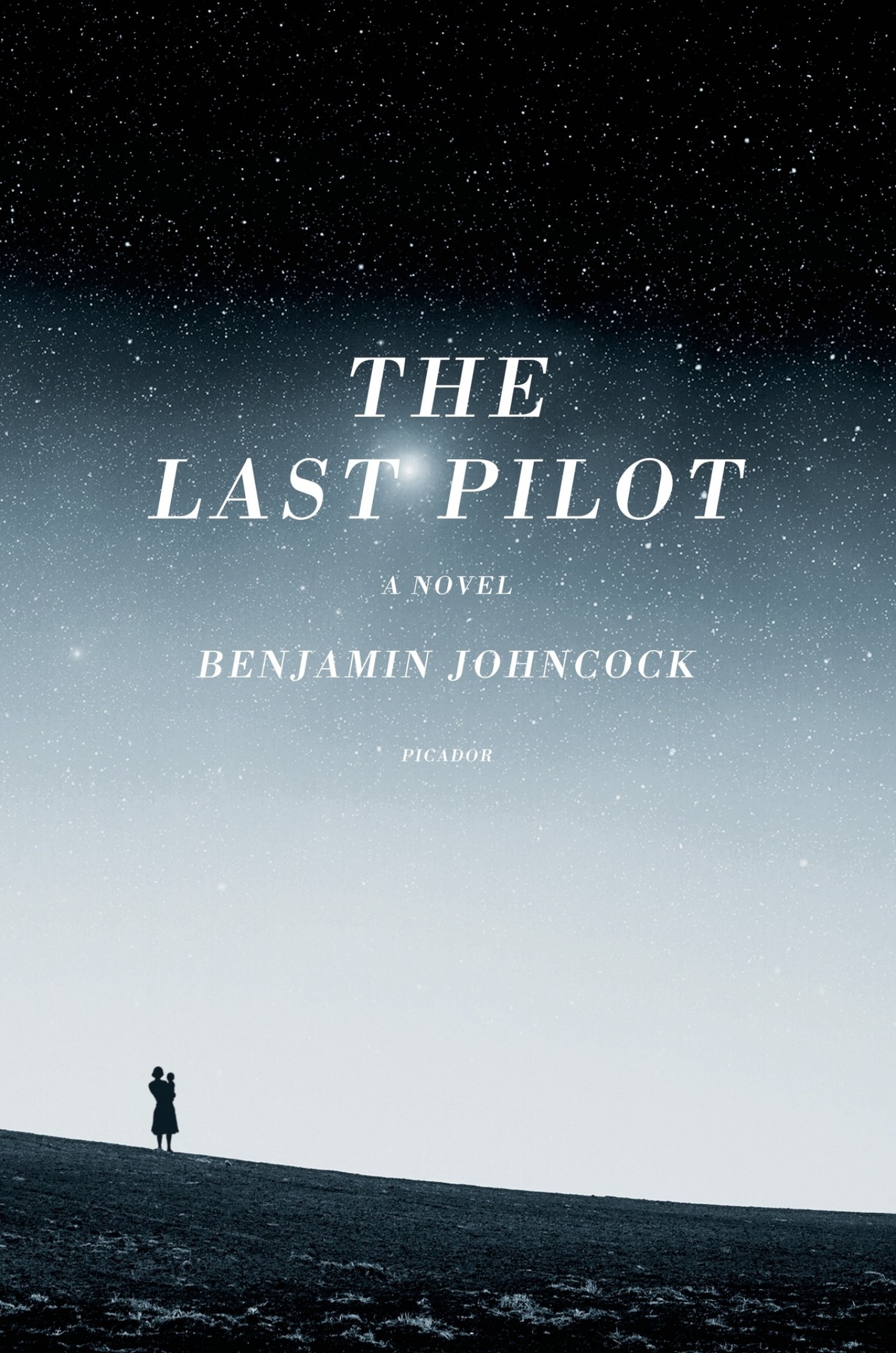
The Last Pilot, Benjamin Johncock (2015). How could I not read this? A test pilot at Muroc Air Force Base (later renamed Edwards) in the late 1940s becomes an astronaut in the Apollo programme. This is exactly the same ground I covered in All That Outer Space Allows, although I did it from the wife’s point of view. And my take is a lot more technical. As far as I can determine, Johncock’s Jim Harrison takes the place of Dave Scott (Apollo 15 commander), although Scott does actually appear toward the end of the book. Also, while many aspects of Harrison’s persona life are invented, many incidents assigned to Harrison actually happened to others. Harrison is there when Yeager breaks the Sound Barrier in 1947, he gets assigned to the X-15 program and then to the X-20 program, before eventually joining NASA and becoming an Apollo astronaut. Also like All That Outer Space Allows, The Last Pilot focuses on its protagonist’s marriage. Although Harrison and his wife try for children for years, they’re not successful – but then, against all odds, as is usually the case in fiction, they have a girl. But she sickens and dies of cancer at the age of ten, and her death slowly tears the marriage apart from within. If lit fic is unfairly characterised as fiction about middle-class marriages disintegrating, then The Last Pilot is lit fic – albeit with a test pilot/astronaut as its protagonist. It is well-researched, well-written, and Johncock cleverly covers plenty of ground by assigning so many documented incidents to his protagonist. But – and I can actually say this: it’s not the book I would have written. And my own novel coloured my reading of Johncock’s – almost certainly unfairly. It’s a good piece of work, certainly – but I would have preferred something a little more interesting as the plot’s engine… And lots more technical detail.
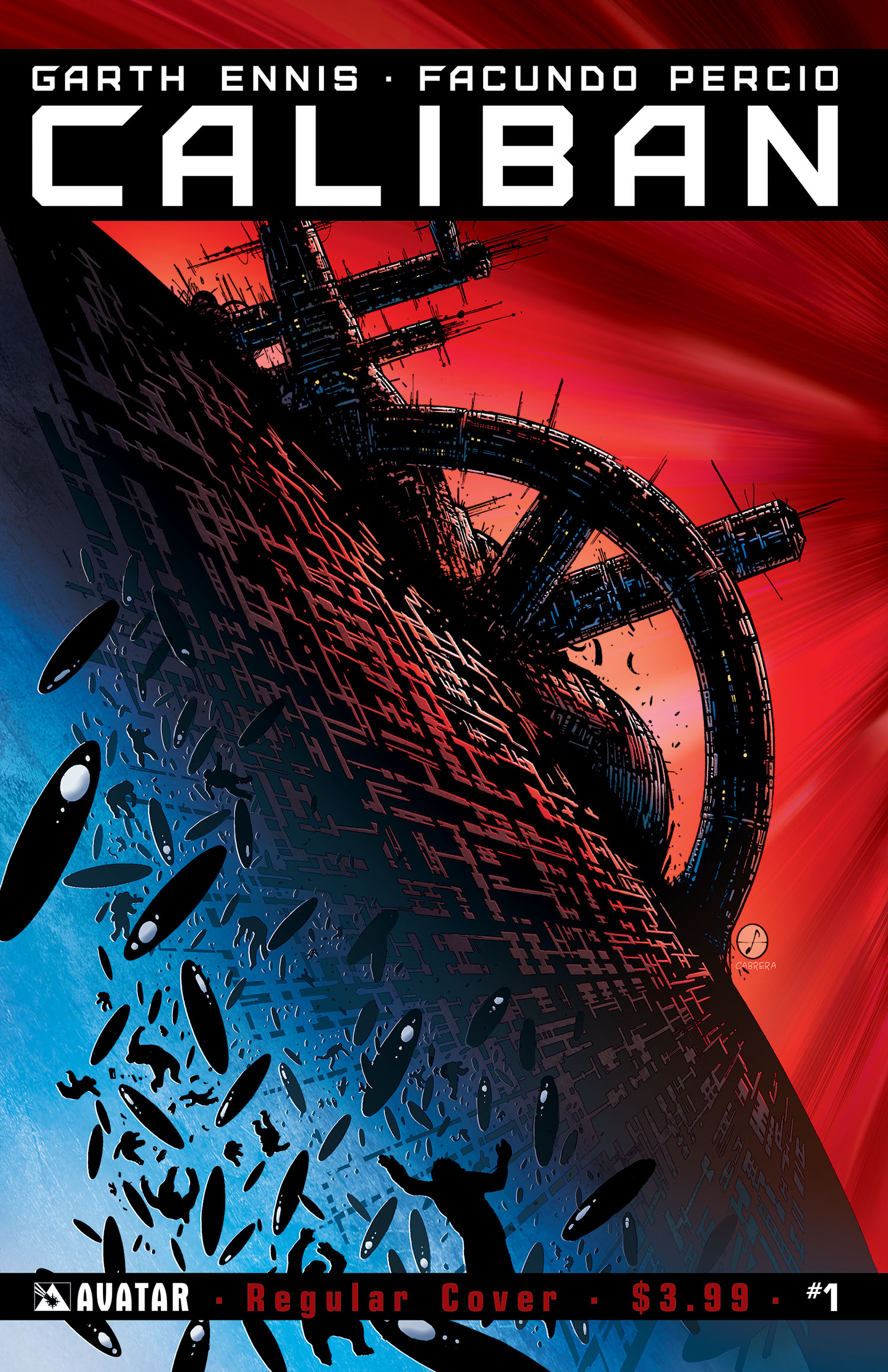
Caliban, Garth Ennis & Facundo Percio (2015). This was the first of two graphic novels I bought in Faraos Cigarers in order to make up my numbers on my 150 book reading challenge. To be honest, the shop also had an impressive number of Moebius collections, and I would have bought them like a shot – but they were all in Danish. Sigh. Instead, I had to make do with substandard US/UK sf graphic novels like this one. A spaceship collides with a mysterious alien spaceship in hyperspace and the crew of the former decide to explore the latter. Guess what – this proves to be a bad move. There’s like some alien virus thing which takes over one of the crew and leads it to slaughter all the others. This is pretty much Event Horizon meets Alien. A thoroughly unimpressive and derivative piece of science fiction in graphic form. Seriously, given the stuff produced by France, Anglophone graphic sf needs to step up its game big time.
Lady Killer, Joëlle Jones & Jamie S Rich (2015). And this was the second graphic novel from Faraos Cigarer. It was the also the more appealing of the two. Nineteen-fifties housewife secretly works as an assassin on the side. Sadly, the plot is almost pure cliché from start to finish – after several successful, and very bloody, jobs, there’s one which proves she’s not a totally heartless killing machine. Meanwhile her boss has decided she’s going to become a liability – because she’s a woman. Perhaps there could have been more housewife stuff (probably not of interest to your average comics fan) to provide a better contrast with the killing and gore, but despite that the art is really very nice indeed. It’s just a shame the story couldn’t think beyond its boundaries – I mean, there’s plenty of room for commentary on fifties society, something a little more subtle than the blunt instrument that is a housewife-assassin (who actually masquerades as a Bunnygirl at one point!). But this is hardly Moebius, or any bande dessinéee, so I guess I should take what I can get.
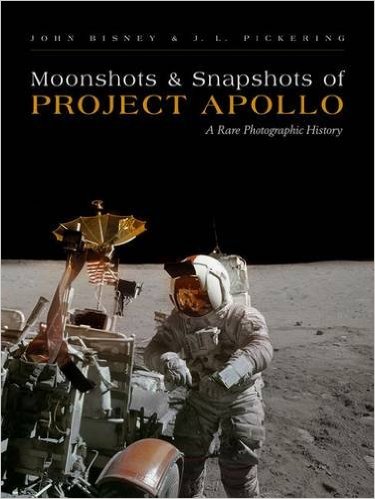
Moonshots & Snapshots of Project Apollo, John Bisney & JL Pickering (2015). The second of two books by the authors about – well, the title pretty much gives it away. Like Spaceshots & Snapshots of Projects Mercury & Gemini, the authors have selected photographs not normally seen in these sorts of books. There are, of course, a huge number of books about the US space programme (not so many about the Soviet one, obviously), which does make you wonder how some people didn’t know who Neil Armstrong was – even if Project Apollo ended forty years ago with ASTP and that’s pretty much ancient history to some. But Mercury, Gemini and Apollo – not to mention Vostok, Voskhod and the many versions of Soyuz – were an astonishing achievement, and sadly seem nowadays to be little more than fuel for a lucrative nostalgia industry rather than an actual stepping stone to further achievements in the human exploration of space. It’s tempting to think that two hundred years from now all this might be indistinguishable from some sort of science fiction documentation project, like one of those mockumentaries about invented rock bands – but what a project! So much documentation! And all the cross-referencing! (All of which, of course, means people who think the Moon landings are a hoax are complete idiots.) Anyway, there’s a huge number of books on twentieth-century space exploration, and it’s almost impossible to keep up with them. But these two by Bisney and Pickering would look good in any space books collection.
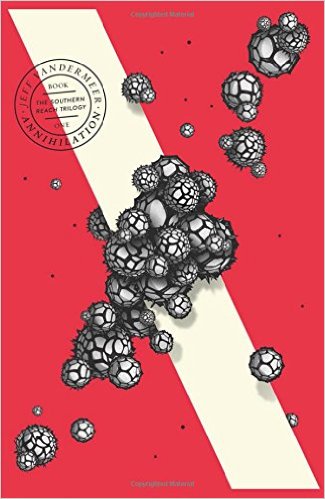
Annihilation, Jeff VanderMeer (2014). This is a good book, one of the better ones genre fiction produced in 2014. Let’s get that out of the way. It is also completely not my thing. If I had to vote for it on a shortlist, it would be because of its recognisable quality not because I liked it. I’ve already decided I won’t be bothering with parts two and three. Four women are sent into Area X, a wilderness area which manifests strange behaviours, as the latest in a number of expeditions, of which all the previous were unsuccessful. The women are never named – the narrator, whose journal forms the narrative, explains that the expeditions do not use names since referring to each other by profession is considered safer within Area X. A day or two after their arrival, they find a structure which the narrator calls the Tower but the others refer to as a tunnel. It is a staircase circling down into the earth to an unknown depth. Along the wall of the staircase is a line of glowing script, possibly fungal in nature, written by a creature several levels lower. None of this is explained. And deliberately not so. As I commented in a Twitter conversation with Jonathan McCalmont a few days ago, prompted by John Clute’s review of David G Hartwell & Patrick Neilsen Hayden’s 21st Century Science Fiction in The New York Review of Science Fiction (see here)… Clute’s point that science fiction colonises the universe – “to make the future in our own image” – resonated with some of my own thoughts on the genre. To me, the universe is explainable but not necessarily knowable, and I prefer science fictions which reflect that. Area X in Annihilation is plainly neither knowable nor explainable, and is clearly not meant to be. It’s an artistic choice, but it’s one that doesn’t interest me.
1001 Books You Must Read Before You Die count: 121
One more of these and that’ll see my entire 2015 reading documented. After I’ve posted that, I’ll do a summary “year in reading” post, you know, with pie charts and shit. I’ve already done my best of the year post (see here), even though the year had yet to finish then but everyone does it early so never mind. And I can always carry over any candidates I missed to next year’s best of, anyway…
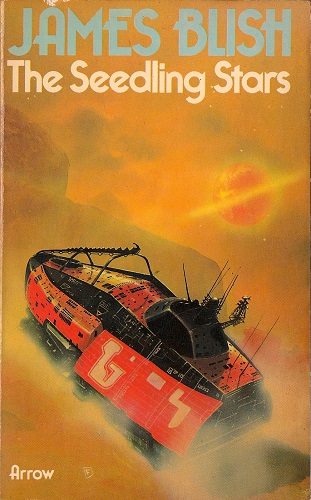
The Seedling Stars, James Blish (1957). Back in the early 1980s, I was a big fan of Blish’s fiction – possibly because Arrow had repackaged them with Chris Foss covers – and bought and read a dozen or so. I still have them. But one I’d missed was The Seedling Stars, so I tracked down a copy on eBay a few years ago – with, of course, the Foss cover art – and stuck it on the TBR. I had a feeling I might have read it before – certainly, ‘Surface Tension’, the penultimate story in the collection wasn’t new to me, although I’m not sure where I’d previously read it. But the other two novellas and one short story didn’t ring any bells. All four are about “pantropy”, which is genetically engineering humanity for environments rather than terraforming worlds. In ‘Seeding Program’, Earth has sent an agent to infiltrate a colony on Ganymede created by the leader of the pantropy movement and whose inhabitants have all been engineered before birth to survive on the Jovian moon’s frozen surface. It’s not in the slightest bit convincing, and the plot could just have easily been translated to any random Earth location. In ‘The Thing in the Attic’, the theocratic society of the gibbon-like humans of Tellura is causing them to stagnate, but when one freethinker is exiled he and his companions trek over the mountains and discover a starship of humans who have come to see how the colony is doing. Solid nineteen-fifties science fiction, perhaps a little preachy in places, and not especially memorable. ‘Surface Tension’, however, is memorable. In this novella, tiny humans have been seeded in a series of ponds on the one small piece of land on a water world. Again, a freethinker (male, of course) persuades his fellows to build a special vehicle to explore the world “above the sky”. The sentient amoebas are a little hard to swallow (so to speak), but it’s a fun setting and Blish makes good use of it. The final story, ‘Watershed’, is very short and takes place on a starship heading for Earth. The crew are baseline humans and the passenger is an engineered human from another world. The crew are also hugely racist toward their passenger. Who points out that baseline humans are now the minority among the colonised worlds. I suspect I would have enjoyed this collection a whole lot more if I’d read it back in the early nineteen-eighties when I read all those other Blish books…
Slow Bullets, Alastair Reynolds (2015). I decided to hang on for the signed, numbered WSFA Press edition of this novella, rather than buy the original Tachyon Publications edition. And it’s a smart little hardback they’ve produced – except… they’ve got the ISBN wrong, and re-used one from one of their previous novellas. Argh. You would not believe how many things that screws up. The title of the novella refers to devices implanted in people which store their memories, allowing their actions during a vast war between worlds to be recorded. They’re called “slow bullets” because they’re implanted in the leg and then slowly work their way up to lodge in the chest. But the actual plot of Slow Bullets concerns Scur, who is captured and tortured by a war criminal from the other side, left for dead, but then wakes up aboard a transport carrying war criminals and other prisoners. Except something has gone wrong and it looks like everyone aboard had been left in hibernation for thousands of years… This is typical Reynolds – a universe which he perhaps might not have visited before but nonetheless feels like one of his, and a plot predicated on horrible violence which still manages to slingshot off an optimistic and redemptive ending. It is, in fact, pretty much about as Reynolds as you can get and, as a result, your mileage may vary. I enjoyed it, some bits more than others.
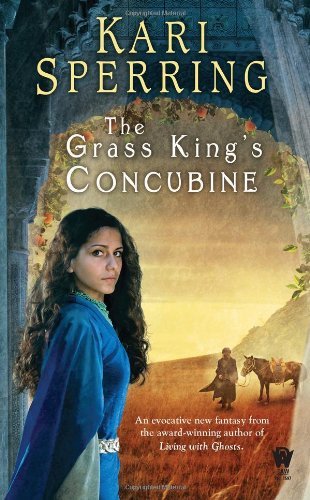
The Grass King’s Concubine, Kari Sperring (2012). I bought this after it was pointed out that I don’t read enough by fantasy by women writers by the author herself (it was a general admonishment on Twitter, not one personally directed at me, but I felt it was a fair comment). And I’m glad I did. I am not a huge fan of epic fantasies – I’ve read a fair number of them, and no longer find their tropes or stories interesting. Happily, The Grass King’s Concubine is nothing like an epic fantasy. Fantasy, yes; and a very cleverly done one. But not epic. And that’s meant as a compliment. Aude is the daughter of a rich land-owner, not old money but rich enough to be accepted into high society, but she is curious as to the source of her family’s wealth and determined not to marry and become just another trophy wife. After a couple of visits to the Brass City, the Dickensian industrial part of the city where she lives, she ends up running away with provincial officer Jehan. Aude’s search ends up with her being forcibly taken to the WorldBelow, ruled by the Grass King; and Jehan is taken there by a pair of ferrets who can take human form and act as guardians to the gate. Aude is a refreshingly forthright and active female protagonist, and there’s a welcome line of social commentary running throughout The Grass King’s Concubine. The fantasy elements are also interesting, original and well thought-out – Aude’s explorations of the Grass King’s palace are particularly well-drawn. If I had to recommend a modern fantasy novel I’d be more than happy to recommend this one. Go and get yourself a copy.
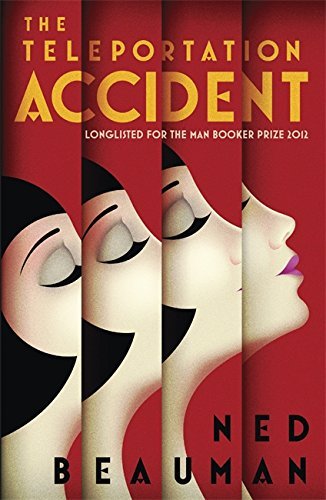
The Teleportation Accident, Ned Beauman (2012). Having read this, I now understand why Lavie Tidhar is such a fan of the book. It addresses some of his favourite subjects. Myself… I enjoyed it, thought it amusing in parts and cleverly done overall, but I wasn’t taken with the engine which drives the plot. The title refers to a piece of stage machinery, first invented in the late eighteenth-century, which allows for the rapid, and apparently instantaneous, changing of scenery. In Weimar Berlin, Egon Loesser is trying to build a new version of that machine, but one that moves the cast around rather than the scenery. But during a test it goes wrong and dislocates both arms of the actor wearing it. Loesser is one of those horrible comic protagonists you find yourself inadvertently rooting for – he’s self-centred, fixated on his sex life (or lack thereof), and nasty to pretty much everyone he meets. It is Loesser’s lack of a girlfriend, and desire for the nubile Adele Hitler, which drives the plot, as Loesser chases her to Paris and then onto Los Angeles, at each place bumping into friends and acquaintances (some Jewish, some not) from Berlin. It all ends up with Loesser getting involved in a WWII project at a LA university to build an actual teleportation machine, which may or may not work and which may or may not have something to do with the strange murders which have been occurring on the campus. A fun read, even outright funny in places, although not particularly pleasant and often only saved by its cleverness.
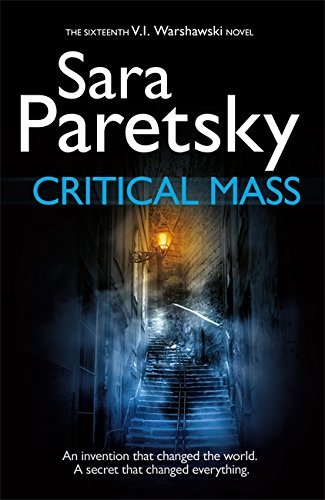
Critical Mass, Sara Paretsky (2013). I’ve been a fan of Paretsky’s novels since reading Guardian Angel back in the early 1990s. I’d borrowed it from my mother, and liked it so much I made an effort to read more of the VI Warshawski series… and have done ever since. Earlier this year, my mother took me to see Sara Paretsky speak (with Val McDiarmid) at the Harrogate Crime Festival. The plot of Critical Mass is a little more convoluted than most Warshawski novels, but the villains of the piece are, as usual, the rich. Vic’s friend Lotte receives a panicked phone call from the junkie daughter of a friend from Lotte’s childhood back in Vienna just before the Anschluss. Vic investigates, but the bird has flown, and all that remains is a shot-up meth lab and a dead body (male) in a nearby field. It turns out the woman’s younger brother, who is a physics whiz and works as a software engineer at a big computing firm, has also gone missing. The CEO of the company, whose father invented ferromagnetic memory, is worried he has taken one of their secret projects to a rival firm, but the clues suggest to Vic he disappeared for other reasons. There are also flashbacks to Lotte’s childhood, focusing on a young Jewish woman who is a gifted physicist but finds it hard to be taken seriously and eventually ends up as slave labour on one of the Nazis’ atom bomb projects. The story bounces around between two seemingly unrelated crimes before the two eventually, and cleverly, interlock. The only sour note is a pair of DHS agents who behave like mindless thugs rather than professional federal agents and a CEO who thinks it’s worth murdering people to safeguard the reputation of his company. But otherwise, this is a good Warshawki and worth reading – and it also sheds light on a little-known aspect of early twentieth-science and World War Two.
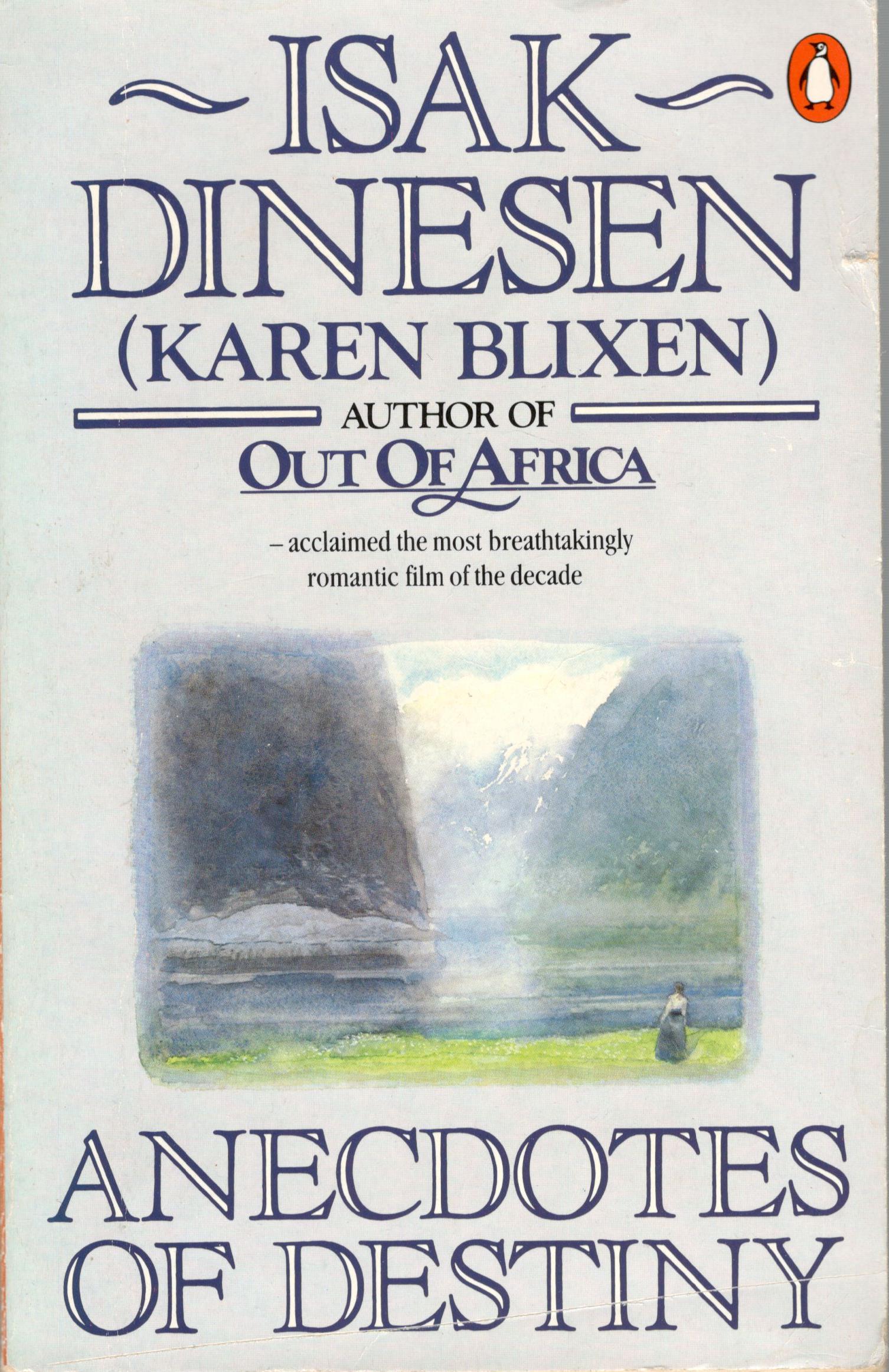
Anecdotes of Destiny, Karen Blixen (1958). After watching Out of Africa, I fancied reading something by Blixen, so when I spotted this collection in a charity shop, I bought it. And since I was spending Christmas in Denmark, I thought it appropriate to take it with me and read it there. Anecdotes of Destiny has apparently been republished under the title of the most famous story in it, as Babette’s Feast and Other Stories, which I’m glad I spotted now as it’d likely confuse me later if I stumbled across the latter book. As it is, the original title does the collection a disservice as its contents are far from “anecdotes”. True, the opening story story pastiches a tale from 1001 Nights, and my heart sank a little when I read it. But ‘Babette’s Feast’ is wholly different and a great deal better. Best in the collection, however, is ‘Tempests’, about a young woman in Norway who joins a travelling theatre and then saves a ship from foundering during a storm, and it quickly became a favourite novella – and would make an excellent film too. A very good collection, overall, and I plan to read more by Blixen.
1001 Books You Must Read Before You Die count: 121
On balance, 2015 wasn’t a bad year for me. Things improved in $dayjob, goodish things happened in my little corner of genre, and I read a number of excellent books and watched lots of excellent films. Music-wise, it was both successful and not so successful: I discovered some more new bands on Bandcamp, and this year we went VIP for Bloodstock and it really was worth the extra money; but I saw fewer bands live than in previous years, and none of my favourite ones toured the UK – and if they did, it was only in the big cities, like London, Birmingham or Glasgow. But, like I said, some excellent books and films – so much so, I had trouble picking my top five in each. But I did finally manage it.
Oh, and I got a new cat. Oscar. He’s two years old, and I’d forgotten how much of a pain young cats can be.
books
A strange year of reading, on reflection, and I’m not entirely sure why. I read some books as research for All That Outer Space Allows (which was published this year), I read some other non-fiction books (on space and aircraft and submersibles, mostly), I read some sf novels for SF Mistressworks and some more recent genre works… And I decided to widen my reading to include more classic literature. While I like to think of myself primarily as a science fiction fan, of late I’ve found it hard to generate much enthusiasm for recent sf. In part, that’s due to the way fandom is changing as a result of social media and online promotion, but also because a lot of current sf seems to me more interested in style rather than content. I like sf ideas and sense of wonder, but I also like good writing, sophisticated themes and a willingness to experiment with form and structure. While some works which meet those criteria were indeed published in 2015, those I came across didn’t feel especially progressive. Which is why you’ll notice a few notable titles missing from my top five below (and I have only one, in fact, that was actually published in 2015).
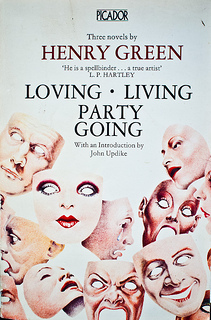
1Loving, Henry Green (1945).
An author new to me in 2015, and despite being about a subject – life belowstairs in the Irish country house of an English nob during WWII – that doesn’t interest me in the slightest, Green’s writing was wonderful and his narrative technique amazing. I will be reading more by him – hell, I plan to read everything he ever wrote.
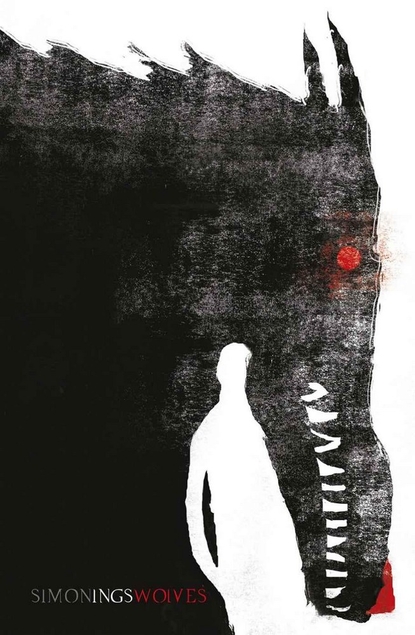
2Wolves, Simon Ings (2014).
There was some small fuss when this appeared in early 2014, but by the time awards came around it had been forgotten. Which was a shame. And I wished I’d read it in time to nominate it last year – because this is plainly one of the best sf novels of 2014. The focus of his novel tends to drift a little as the story progresses, but Ings has still managed to produce one of the smartest works of sf – if not the smartest work of sf – of the last few years.
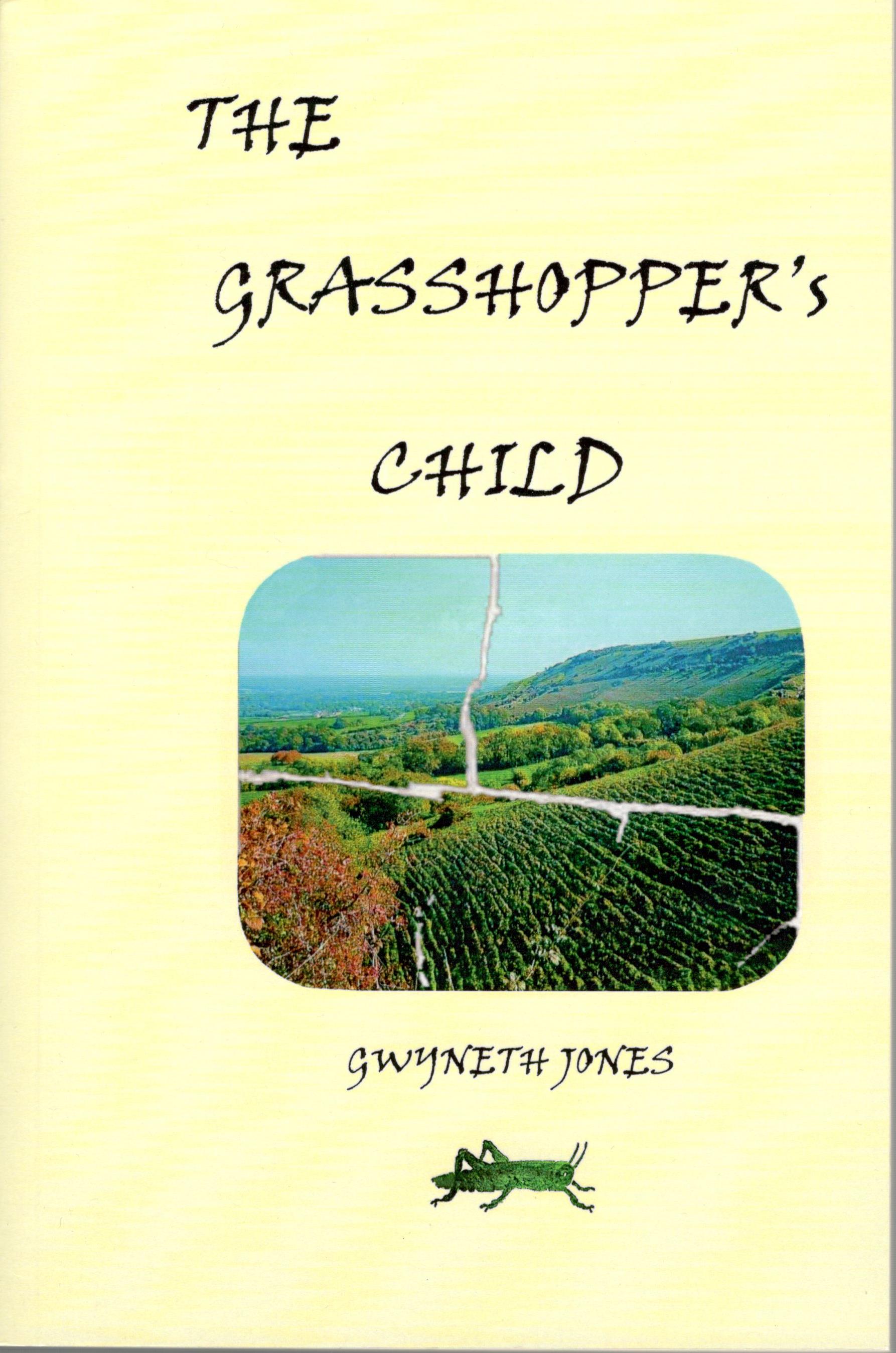
3The Grasshopper’s Child, Gwyneth Jones (2014).
A new Gwyneth Jones novel is cause for celebration, even if it’s a YA addendum to the non-YA Bold as Love quintet. But there’s a reason Jones is my favourite science fiction writer, and they’re all evident in this short novel. On the one hand, this is a smart YA novel and I’m no fan of YA fiction; on the other, it’s Gwyneth Jones and her Bold as Love world. But it’s also self-published, so it needs to be on as many best-of lists as possible so that Jones keeps on writing. (And why was it self-published? Do the major UK genre imprints not want to publish new work by the country’s best sf writer?)
4Dark Orbit, Carolyn Ives Gilman (2015).
I’ve been saying for years that Gilman is a name to watch, and she has at last been given the opportunity to demonstrate it to a wider audience. (She amply demonstrated it with her fantasy diptych from ChiZine Publications back in 2011/2012, but genre commentators can only apparently see what appears from major imprints – which is, if you’ll forgive me, fucking short-sighted). Anyway, Dark Orbit deservedly received a lot of positive reviews, and though to me it didn’t quite feel like Gilman firing on all cylinders, it showed great promise. More from her, please.
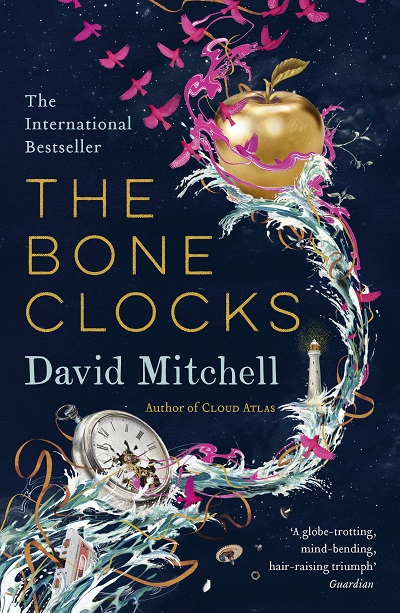
5The Bone Clocks, David Mitchell (2014).
Friends have been singing the praises of Mitchell for years, but I’ve never really understood why. I mean, I enjoyed Cloud Atlas, and I thought it was clever… but it did seem a little over-praised. But The Bone Clocks is the novel that all the praise had led me to believe Cloud Atlas was. It’s his most insightful yet – and also his most genre.
Honourable mentions: a few titles got bumped from best of the half-year top five, although they were excellent books and probably didn’t deserve to be demoted – namely, The Leopard, Giuseppe Tomasi di Lampedusa (1958), a classic of Italian twentieth-century literature (a bloody good film too); A Division Of The Spoils, Paul Scott (1975), the final book of the Raj Quartet and as beautifully written as the other three; and What the Doctor Ordered, Michael Blumlein (2013), wich showcases why he remains one of my favourite genre short story writers. Also read and noteworthy were: Strange Bodies, Marcel Theroux (2013), a literate mystery based on an interestingly odd premise; Pale Fire, Vladimir Nabokov (1962), my first by him and, though perhaps overly prissy, excellent; One Thousand and One Nights, Hanan Al-Shaykh (2011), a bawdy, and multiply-nested retelling of some of its title’s stories; Housekeeping, Marilynne Robinson (1981), her beautifully-written debut novel; and Galactic Suburbia, Lisa Yaszek (2008), used for research and a fascinating read.
films
I went all-out on the 1001 Movies you Must See Before You Die list in 2015. So much so, in fact, that I signed up with a second DVD rental service, Cinema Paradiso, because they had some films from the list that weren’t available on Amazon’s Lovefilm by Post. And I bought an Amazon Fire TV Stick too, which gave me access to even more movies. Meanwhile, I purged my DVD collection of all the superhero films (why did I buy them in the first place?) and the shit sf movies (why did I buy them in the first place?), not to mention lots of other films I’d bought over the years. My collection is now looking very different, much more of cineaste’s collection (even though I say so myself), with lots of works by Sokurov, Dreyer, Murnau and Benning – and from earlier years, Bergman, Tarkovsky, Kieslowski and Haneke, among many others.
The 1001 Movies You Must See Before You Die challenge has been… interesting. It introduced me to the works of James Benning. I’ve also seen a lot of not very good films that really didn’t belong on the list (mostly from Hollywood, it has to be said). And I’ve seen a lot of early cinema, most of which proved quite interesting. Only one of the five films in my top five was not a “discovery” from the 1001 Movies You Must See Before You Die list.
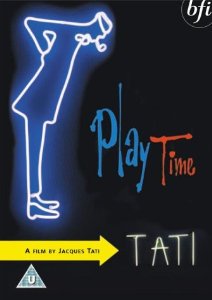
1Playtime, Jacques Tati (1967)
How could this not be my number one choice? It certainly was halfway back in June, and it remains so now at the end of the year. I loved its Brutalist production design, its situational humour, its wit… it is a work of cinematic genius. I’d watched a rental DVD but I loved it so much I bought a Blu-ray copy for myself… and then bought a boxed set of Blu-rays of Tati’s entire oeuvre. A film that went straight into my personal top ten best films of all time.
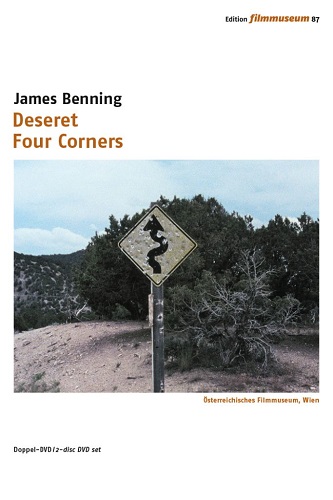
2Deseret, James Benning (1995)
Ever loved a film so much you went out and bought every DVD you could find by that director? Oh wait, I did that for Tati. But I also did it for Benning. Fortunately, Östereichesichen Filmmuseum have been releasing Benning’s films on DVDs the last couple of years, so there were a few for me to get. And yet… Deseret is static shots of Utah landscape, and later cityscape, while a voice reads out stories from the New York Times from 1895 to the present day. It is cinema as art installation. And I loved it. I am now a huge Benning fan. And I have all of the DVDs that Östereichesichen Filmmuseum have released. And am eagerly awaiting more.
3Wings, Larisa Shepitko (1966)
Shepitko’s Ascent is on 1001 Movies You Must See Before You Die list, but the only copy of it I could find was a Criterion double with Wings. I bought it. I watched Ascent. It was good. But then I watched Wings. And it was so much better. A female fighter pilot of the Great Patriotic War, and Hero of the Soviet Union, is now the principal of a school. It’s an artful juxtaposition, more so because the protagonist is female. And it was Shepitko’s debut film. War films, like Ascent, strike me as too easy as choices for assorted lists, but the social drama versus war of Wings is much more interesting. This film should have been on the 1001 Movies You Must See Before You Die list. I’d also like to see more by Shepitko.
4Elegy of a Voyage, Aleksandr Sokurov (2001)
Come on, you didn’t expect me not to have a Sokurov film on this list, did you? I’m being nice by not putting five on it. Well, okay, five maybe could have made it, but one was a rewatch from previous years and so didn’t count. But four could have done. (Yes, the other three are in my honourable mentions below.) Elegy of a Voyage is one of Sokurov’s documentaries, but it’s more of a meditation than an informational film, in which Sokurov muses on journeys and art, particularly ‘The Tower of Babel’ by Bruegel.
5Cleo from 5 to 7, Agnès Varda (1962). I have found the Nouvelle Vague to be something of a mixed bag – in fact, I’ve found the oeuvres of Nouvelle Vague directors to be something of a mixed bag. But the only Varda I’d seen prior to Cleo from 5 to 7 was a documentary from 2000. Cleo from 5 to 7 may have covered similar ground to some of Godard’s 1960s films, but it does it so much better. Loved it.
Honourable mentions: two films were dropped from my best of the half year list, one a Sokurov, one a documentary: Jodorowskys Dune (2013) is a fascinating look at a major sf film that never happened, but still left its fingerprints all over sf cinema; Stone (1992) is a typically enigmatic drama from Sokurov… but I could just as easily mention Whispering Pages (1994; which he knocked together after his financing fell apart, but it still manages to hit all those Sokurovian notes), or Spiritual Voices (1995; a documentary about Russian soldiers on the Afghanistan border whose first 40 minutes are a static shot of a Siberian wood). But there’s also Tati’s Mon oncle (1958), nearly as good as Playtime; James Cameron’s Deepsea Challenge (2014), an excellent documentary on his visit to Challenger Deep, only the third person to do so; American Dreams (lost and found) (1984), another Benning piece with an unconventional narrative; Salt of the Earth, Herbert J Biberman (1954), an astonishing piece of social realism drama that deserves to be better known; Sleeping Beauty, Clyde Geronimi (1959), easily the best of the Disney feature films. Day Of Wrath (1943) was another excellent film from Dreyer, Effi Briest (1974) was I thought the best of the Rainer Werner Fassbinder box set I watched, and 2 or 3 Things I Know About Her (1967) was a Jean-Luc Godard that I was surprised to find I liked very much.
albums
I spent much of the year further exploring Bandcamp, and so stumbled across yet more excellent music. I did not, however, see much music live this year – Sólstafir were excellent back in February, Voices and Winterfylleth were very good in September, and highlights of this year’s Bloodstock included Ne Obliviscaris, Sumer, Opeth and Agalloch.
1Sidereus Nuncius, Apocynthion (2013)
Spanish progressive death metal, not unlike NahemaH (also Spanish, and a favourite band… although they disbanded last year). It seems a little unfair to describe a group’s sound by how much like another band’s it is, but metal these days is such a wide and diverse genre labels are often next to useless. Apocynthion play prgressive metal with clean and growl vocals, some death metal song structures, sound effects and samples, a heavy post-metal influence and a great deal of technical ability.
2Autumn Eternal, Panopticon (2015)
Panopticon’s Kentucky from 2013, with its mix of black metal and bluegrass, is an astonishing album… but I picked it for my best of last year. Their new album (I say “their” but it’s a one-man show) mixes folky acoustic parts with intense black metal, and it works really well.
3Ghostwood, Navigator (2013)
This is polished progressive rock with a little bit of djent thrown into the mix, with solid riffs and some catchy hooks. They described themselves as “for fans of Porcupine Tree”, although I think this album is better than most of that band’s albums.
4Anthill, Grorr (2012)
A relatively recent discovery this one, Grorr play progressive death metal, but more like Gojira than, say, Opeth. There’s all sorts in here – bagpipes, sitar, various types of drums. It’s a wonderfully varied album, but still coherent.
5An Act of Name Giving, Butterfly Trajectory (2015)
Anothe rrecent discovery. Butterfly Trajectory also play progressive death metal – there seems to be a common theme to this top five… They’re from Poland, and while their sound is quite Opeth-ish, they’re a good deal better than fellow countrymen Gwynbleidd who play similar material. Butterfly Trajectory seem to like their progressive bits a tad more than their death metal bits, which works really well.
Honourable mentions:Worst Case Scenario, Synesthesia (2015), French progessive death metal with plenty of other musical styles thrown in, excellent stuff; Kyrr, Kontinuum (2015), Icelandic post-metal, a little more commercial than fellow countrymen Sólstafir… whose Ótta (2015) and Svartir Sandar (2011) are excellent heavy post-metal albums; Cold and the Silence, Martriden (2015), yet more shredding from excellent medlodic death metal group, who seem to have gone a bit funkily progressive with this new album, and it works really well; and finally, RAMA, RAMA (2015), which is a weird mix of doom, stoner, psychedelic and desert rock all in a three-song EP.

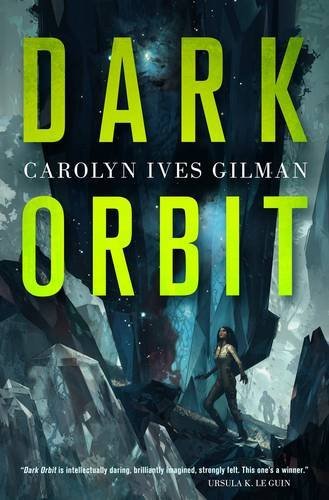 Interstellar polities without Faster-Than-Light travel are not especially common in science fiction. Four examples spring to mind: Ursula K LeGuin’s Ekumen novels and stories, William Barton’s Dark Sky Legion, Chris Moriarty’s Spin State and sequels, and Alastair Reynolds’s Revelation Space series. And now Carolyn Ives Gilman’s Twenty Planets, in which people and materials are sent as beams of light from world to world and so experience time dilation from travelling at lightspeed. Scientists and explorers who regularly do this form “a strange sodality out of time”, and are known as “Wasters”.