It Doesn't Have To Be Right…

… it just has to sound plausible


36 Comments

Summer reading #1: The Moon is Harsh Mistress

I’m starting to wonder what I’ve done that you should all hate me so much you’d make me read Robert Heinlein’s The Moon is a Harsh Mistress. Because surely you knew it was going to be worse than I expected. I had reasonable expectations for it – after all, it’s in the SF Masterworks series (that’s the edition I own – that’s the old, numbered SF Masterworks; it’s number 72). I’d also read a bunch of Heinlein back in the dim and distant past and remembered enjoying them… Also, the first true sf novel I ever read, aged ten or eleven, was Heinlein’s Starman Jones, Anyway, I’d expected to not like The Moon is a Harsh Mistress, much as I’d not liked Stranger in a Strange Land a few years ago when I reread it…

the-moon-is-a-harsh-mistress

But it’s worse than I imagined. It really is. Given the size of Heinlein’s oeuvre, am I supposed to seriously believe The Moon is a Harsh Mistress is the best of his books SF Masterworks could get the rights to? Because it is shit, so shit that I am revising my opinion of all the people I know who insist it is a good book… Perhaps that’s a bit harsh, but I can see no good reason why it is so well-regarded. In fact, I suspect its reputation is symptomatic of everything that is wrong with the genre and fandom.

The Moon is a Harsh Mistress is a first person narrative by Manuel Garcia O’Kelly who speaks in some sort of pidgin English throughout. It’s supposed to be a creole, the sort of English spoken by people who came from several different language groups but settled on English as a lingua franca. A lot of those people were apparently Russian speakers. You can tell this because sometimes Manuel, or Mannie, forgets to use the indefinite article and sometimes he forgets to use the definite article and sometimes he even forgets to use the first person pronoun. Oh, and his dialogue is liberally peppered with da, nyet and spasebo – because of course the last words you learn in any new language are “yes”, “no” and “thank you”. Mannie, or Man, is a “computerman” in Luna City, which is the sort of computer-related job someone who knows nothing about hardware, software, databases or systems administration might imagine an IT professional would do. It takes Mannie a while to realise, for instance, that a vocoder doesn’t need to actually generate sound in order to use the telephone. To be fair, The Moon is a Harsh Mistress was first published in 1966 (so it’s as old as me but, to be honest, I think I’ve aged better – and I’m no oil painting), but even back then computing was a deal more sophisticated than represented by Heinlein’s invented late twenty-first century (the DEC PDP-10, for example, was introduced in 1966).

Mannie spends a lot of time working on Luna City’s High-Optional, Logical, Multi-Evaluating Supervisor, Mark IV – HOLMES IV – which is what’s known in the IT industry as a “bollocks backronym”. The HOLMES IV is Luna City’s master computer – it runs everything. Because in the future, we will have a Giant Computer Brain in charge of everything, just like we had in the past– no, wait. Anyway, the HOLMES IV is so sophisticated it has developed sentience. But only Mannie knows this. The computer – nicknamed Mike for Mycroft Holmes by Mannie – has not made any effort to hide the fact it is an AI, but everyone else is so stupid they haven’t noticed. Except Mannie.

One day, Mannie decides to attend a political meeting. There he meets Wyoming Knott, a beautiful blonde political agitator. The “beautiful” bit is important, because every male that meets her has to look her up and down and whistle appreciatively. This is common practice when meeting an attractive female on the Moon. All women exist to be ogled by men, but it’s okay because they like it and they’re really in control. We know this from, well, from every book Heinlein has written, pretty much. There is in fact a nice long speech in Stranger in a Strange Land by one of the female characters explaining why it is a Good Thing for her to show off her naked body to dirty old men (p 280 in my NEL edition).

Luna City is an ex-penal colony and is administered by the Lunar Authority, headed by a Warden, and is just as draconian as it was back when everyone was a convict or transportee. Those at the meeting want to change that. The Warden gets wind of the meeting and sends along some goons. They try to arrest everyone present but instead the attendees kill them. Have a problem with someone on the Moon? Kill them. Disagree with someone on the Moon? Kill them. Don’t like someone’s politics on the Moon? Kill them. This is how Luna City with its “no laws” works. They kill each other. As a result, they’ve learned to be polite and courteous to each other. So that’s all right then. They might kill a person for the slightest of infractions, but at least they say “please” and “thank you” – well, they say spasebo.

A case in point: an Earth tourist who is supposed to be some sort of French/Scottish aristocrat, but is a “dinkum cobber” nonetheless – did I mention the really annoying Comedy Australian used in the novel? Anyway, said tourist is on the receiving end of some flirting by a fourteen-year-old girl in a bar, so he moves in for “a kiss and a cuddle”… only to be hauled away by a bunch of male teenagers. Rather than just kill him, their first inclination, they uncharacteristically decide to look for a judge, and come across Mannie, who stands in for the absent judge. Cue lecture on Luna City mores, and everyone gets fined. The tourist had no intention of having sex with the girl, that would be statutory rape. Except there’s no such thing on the Moon. If she wanted sex, then it’s fine. Except… kissing and cuddling a fourteen-year-old girl is still skeevy as fuck:

Had wandered into a taproom which lets stilyagi hang out, a sort of clubroom. This simple female had flirted with him. Boys had let matter be, as of course they had to as long as she invited it. But at some point she had laughed and let him have a fist in the ribs. He had taken it as casually as any Loonie would… but had answered in distinctly earthworm manner; slipped arm around waist and pulled her to him, apparently tried to kiss her.

LaJoie shivered. “At her age? It scares me to think of it. She’s below the age of consent. Statutory rape.”

“Oh, bloody! No such thing. Women her age are married or ought to be. Stu, is no rape in Luna. None. Men won’t permit it…” (p 164)

This is a fourteen-year-old girl, remember. Note that the situation is still her fault, that girls of her age are expected to be married, and that men get to decide what is and what isn’t rape.

The whole idea of a society succeeding because its members are free to kill each other without consequence – other than becoming a target for another murdering citizen – is just so stupidly dumb, I’m amazed Heinlein ever thought it workable. No, it wouldn’t lead to polite people, it would lead to dead people. And the survivors would be those more willing to kill than anyone else. This is not a village in some foreign land, either. It is on the Moon, where people cannot survive without technological assistance. So what happens if you kill the person who runs the air-plant? Everyone dies.

Heinlein is fond of pointing out that air is free on Earth but not on the Moon. Except, well, it is. You can crack it out of the regolith. And how else would the Moon be able to support a population of several million if it didn’t use such a method to generate air? The power for the process is also free – solar power. And, rather than measure living space in area, Heinlein uses the term “cubic”. Not volume, which is to three dimensions what area is to two dimensions. Cubic. Stupid.

Heinlein has been celebrated within science fiction as some sort of proto-feminist because of his “strong female characters”. While he certainly gives them voices in his narratives, and even occasionally some agency, they are still usually wives and mothers. Which is what all of the women in The Moon is a Harsh Mistress are – even Wyoh, the beautiful blonde political agitator all the men whistle at, who effectively disappears a quarter of the way into the story, and is only wheeled out whenever Mannie needs a hero’s welcome. (She marries into Manny’s extended family and becomes a hairdresser – I kid you not.) Mannie needs several hero’s welcomes because he’s an important figure in Lunar city’s fight for revolution. Not because he is political, not because he is smart, not because he is a charismatic leader. No, because he is the only person who knows the Giant Computer Brain is actually sentient, and he is friends with it. Bernado de la Paz is the brains behind the revolution – and he’s another Heinlein mouthpiece, full of shit which he spouts with as much authority as Heinlein can muster in his narrative.

The revolutionaries form a secret terrorist organisation, and the Giant Computer Brain impersonates their invented human leader, Adam Selene. Things start to get a bit hairy, so the Warden calls in the troops. But, of course, these trained military professionals are no match for spree-killing Loonies with no moral compass, and are readily vanquished. When Earth tries to get even heavier, the revolutionaries threaten to bomb cities using rocks fired from the mass-driver they normally use to send grain. Mannie and the Prof travel to Earth in order to argue their case before the various nations of Earth, but the perfidious politicians of Earth stab them in the back. Of course, what Mannie and the Prof are doing isn’t politics – that would make them just as bad as the nasty earthworms. There is another attack on Lunar City by Earth forces, and again it fails. As does a second attack. The Loonies bomb Earth, the Earth accepts Luna’s independence. The Prof is elected leader but dies, so Mannie and Wyoh take over. But they don’t like what the revolutionary party has become, so they resign.

The Moon is a Harsh Mistress irritated me from the first page, and as the story progressed, and Heinlein spouted his bullshit through his various characters and manipulated situations to make points with all the subtlety of Arnold Schwarzenegger, so I grew to really dislike the book. I’d throw it, but it’s number 72 in the SF Masterwork series and that would make my collection incomplete. But I shall certainly never read it again. And I will cheerfully mock anyone who claims it as a classic of the genre. It is didactic in the worst possible sense, its politics are risible, its moral landscape is hopelessly confused, and it reads like the wet dream of the dirty old uncle everyone ignores at the family barbecue.


2 Comments

Recent readings since the last recent readings

Books, huh, what’re they good for? No, wait, that’s something else. Books are good for reading, which by some amazing coincidence is just what I’ve been doing recently with some of them. To wit…

praguefatalePrague Fatale, Philip Kerr (2011) This is the eighth book in Kerr’s Bernie Gunther series, which nearly brings me up to date – there’s one more, A Man without Breath (2013), currently available; although Kerr has not said how many books the series will eventually comprise. Prague Fatale is set during Gunther’s war years. While not a Nazi, and clearly has trouble dealing with them, he’s respected enough by his superiors to be asked to Prague to solve the locked-room murder of an aide to Reinhard Heydrich. The crime itself is plainly an homage to the golden age of crime fiction, and Gunther has little trouble working out what happened. But there’s much more going on in the novel than just a puzzling murder. Early on, Gunther rescues a young woman from an attempted sexual assault, and then helps her out a little with food and money before eventually entering into a relationship with her. He takes her with him to Prague – when all the senior officers have mistresses, and even a select brothel for their use only, why should he not take his girlfriend? As Gunther makes a nuisance of himself at Heydrich’s chateau, asking impertinent questions (not all of which are related to his investigation) and making plain his contempt of the Nazis – so he gradually works out who killed Heydrich’s aide… and how his death ties in with earlier events in Berlin. More than any other of the recent Gunther books, Prague Fatale feels like a crime novel. But it also feels like Kerr is taking the piss a little by presenting the central murder as a locked-room mystery. The solution proves to be relatively straightforward, and delivered almost in passing – but having it as the core of the story turns the book into a warped country house mystery rather than an historical police procedural. It makes for a pleasant change after the complex spy-fiction plot of the preceding novel, Field Grey (2010). Good stuff.

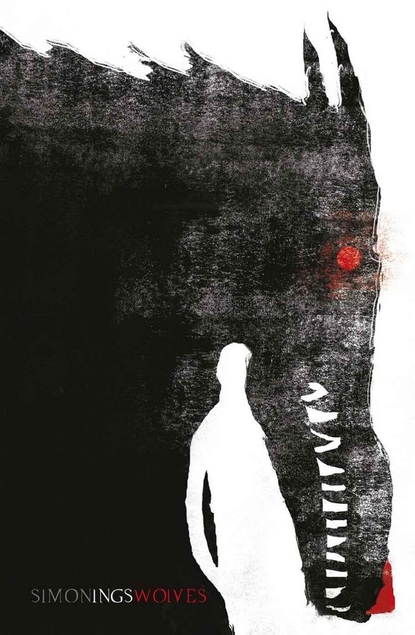
wolf viz 2:Layout 1Wolfsangel, MD Lachlan (2010) Much praise has been heaped on this, the first in a series, and at an Edge-Lit the author begged me to buy a copy despite it not being my thing at all (actually, he didn’t; it looked interesting, so I bought it; but Mark did sign it for me). On finally getting around to reading it, I was surprised by two things: it was more commercial than I’d expected, and it was a lot more interesting than I’d thought it would be. The story opens strikingly, with a loyal warrior of a Viking king stepping from a longship to drown in mid-sea. He and the king were the sole survivors of a raid on an Anglo-Saxon monastery, the object of which was to steal a pair of twin baby boys. The king’s wife cannot give him a son, so a witch told the king where to find one – her part of the bargain was the other twin. But no one must know the true origin of the king’s “son”, so no warriors must make it back alive from the raid. Initially Wolfsangel reads like an historical novel as it describes Prince Vali’s life as a ward of a rival king – there’s a vague feeling that some of the more fantastical elements are the results of worldview rather than actual magic – but as those fantastical elements slowly begin to intrude more and more into the story so the magical side of the story begins to take over. The giant wolf’s head on the cover, not to mention the title, is a clue as to which supernatural creature is central to the book, and Lachlan’s put an interesting spin on the trope. He’s integrated the werewolf into his take on Norse mythology, and it works really well. He pulls a fast one initially, presenting one of the twins as the werewolf, only for the truth to later reveal itself. After finishing the book, I could understand why it had been so highly praised, and I’m keen to read the next on the series, Fenrir (2011). So that’s a shock – I actually thought a fantasy novel was good.

songsofbandgjpgSongs of Blue and Gold, Deborah Lawrenson (2008) I put this one on the wishlist after learning that its story was based on Lawrence Durrell and his time in Corfu, and some time later I was lucky enough to stumble across a copy in a charity shop. When Melissa’s mother passes away, she finds among her possessions a signed and dedicated poetry collection by famous author Julian Adie. Melissa knew that her mother had spent time in Corfu during the 1960s, and is surprised to discover she knew Adie, who lived there at the time. So Melissa heads for the Greek island to learn as much as she can about her mother’s time there. Adie, of course, is Durrell, and Lawrenson does a good job of fictionalising his life and stitching Melissa’s mother into it. There’s a slight mystery attached, which is neither hard to figure out, and resolved offhandedly, and the writing throughout is of a type you’d sort of expect from a novel boasting such cover art if you did have any expectations regarding prose style from the book’s presentation… I enjoyed it, but I suspect I wouldn’t have done so as much if I hadn’t been familiar with Durrell and his life and oeuvre.

murder-by-the-book-vis-1aMurder by the Book, Eric Brown (2013) This is the first crime novel by Brown, and the first in the “Langham and Dupree Mysteries”. Set in the 1950s, the book’s protagonist is Donald Langham, a crime writer who has churned out a dozen well-received novels. Dupree is Maria Dupree, the well-heeled daughter of an upper-class French emigré, and the personal assistant of Langham’s agent. When a series of people involved in the world of 1950s crime writing die under mysterious circumstances, and Langham’s agent is framed for one of the deaths, Langham turns reluctant detective with Dupree’s help. The template, of course, dictates that as the two spend more time together so they are drawn to each other. The murders are a succession of “book murders”, ie, the sort of tricksy killings you only really find in crime novels, especially crime novels of the genre’s golden age. But then Murder by the Book is not trying to do something different genre-wise, but is as centrally-placed in crime as Brown’s sf novels are in science fiction. The period is handled well, without an excess of detail and nothing that jumps out as anachronistic. Langham is a solid hero, likeable but not too firmly wedded to 1950s sensibilities that he’s not sympathetic to a modern reader. Dupree might be a little too good to be true, if not teetering on the edge of cliché, but she’s just as engaging as Langham and the growing relationship between them works. Not being a crime fan per se, though I’ll read the books and am certainly a fan of the oeuvres of a couple of crime writers, I have to wonder if the mechanics of the central murders occupy a similar place in the genre as “ideas” do in science fictions. The complex murders in Murder by the Book seem to operate much like “nova” do in sf, but I suspect that may be a modus operandi (so to speak) more suited to the story’s setting than the modern crime genre marketplace.

hook1Whirlpool of Stars, Tully Zetford (1974) This is the first book in the Hook quartet, and it’s pretty much hackwork. But then Tully Zetford was really Kenneth Bulmer, who was a complete hack – as Alan Burt Akers, he wrote over fifty books in the Dray Prescott series between 1972 and 1997. Whirlpool of Stars opens with a starship breaking down – something in the engineroom blows up as a result of shoddy maintenance. The passengers and crew are forced to flee in lifeboats, though this is no orderly evacuation. Hook is aboard, and he manages to get a seat aboard one of the lifeboats. The nearest planet, however, is run by a rival corporation to that which had operated the starship, and everyone who lands would be subject high fees… which they can pay off by indentured labour… Hook evades the authorities and, with a woman in tow, runs about the planet, trying to avoid slavery and also the Boosted Men, who are after him. You can tell this is complete hackwork because it panders to the worst prejudices of the sf audience. Hook is an alpha-male protagonist, but one with a weakness – he is a Boosted Man himself, but an early iteration and his powers only operate when he is close proximity to a real Boosted Man. The women in the story exist only as set-dressing, trophies, or damsels in distress. The villains are aliens. The background is a typical right-wing corporatist future, with slavery, success oriented purely on wealth and the power it brings, a blithe disregard for the value of human life, ineffective government and murderous and overly-powerful police forces. Whirlpool of Stars is tosh, distasteful badly-written tosh, and while Bulmer was clearly doing it for the money, you have to wonder what excuse present-day writers of similar science fictions have. Oh, and I have another three of these books to read. Sigh.

cleftThe Cleft, Doris Lessing (2007) There is a phrase in Brian W Aldiss’s story ‘Confluence’, a “dictionary” of alien terms, that goes: “YUP PA: A book in which everything is understandable except the author’s purpose in writing it; an afternoon sleigh-ride”. That pretty much describes The Cleft. A Roman historian has been handed a bunch of writings, normally kept hidden, and which he plans to turn into a treatise of his own. The documents are purportedly the written-down oral history of the earliest human civilisation, long before agriculture, nations, cities, kings or government. Apparently, humanity was originally female-only, and they lived in caves beside a sea. They reproduced parthogenically, and would occasionally sacrifice their offspring in a nearby rock chimney they called the Cleft. Every so often, mutant children called “squirts” – ie, not “clefts” – were born and left out for giant eagles to take – presumably to feed their chicks. But when one is left to grow to adulthood, he – because, of course, the squirts are men – leaves the women to found a community of his own over Eagle Mountain. More squirts are born, the squirts and clefts discover sex, the two communities begin to interact, one squirt leader leads an expedition away from the two communities along the coast… and I really have no idea what Lessing hoped to achieve with this novel. The Roman historian interjects at various points of the oral history he is supposedly working on – this was denoted using different font sizes, but as the book progressed this seemed to go wrong somewhere until the font size was completely random. There’s very little that’s Edenic about the society in the book and the gender politics once the “squirts” appear runs along somewhat clichéd lines. This has a tendency to reduce all of those early people to one-note characters, and while Lessing throws in some interesting speculation on their physiology, their society doesn’t feel like that much thought has gone into it. Disappointing.

Matthew Farrell_2001_Thunder RiftThunder Rift, Matthew Farrell (2001) Matthew Farrell is really Stephen Leigh, and I suspect this book was published as by Farrell because by 2000 Leigh had become a category killer. In fact, since 2003 he’s been writing fantasy under the pen-name SL Farrell. In all other respects, Thunder Rift reads like a Stephen Leigh sf novel, and fans of Leigh’s earlier Dark Water’s Embrace and Speaking Stones will probably enjoy it. Unfortunately, familiarity with Leigh’s oeuvre does make Thunder Rift a somewhat predictable read. The titular wormhole has mysteriously appeared in the Solar System, out by the orbit of Jupiter, and the EMP generated by its sudden arrival pretty much wipes out all the technology on Earth, resulting in the deaths of hundreds of thousands of people. Yet thirty years later, the nations have not only recovered, they’ve even managed to build a huge military spacecraft to send through the wormhole to see if they can find the wormhole’s creators. On this spacecraft is maverick exo-anthropologist Taria Spears, who is obsessive, uncompromising and all-together difficult. On the other side of the wormhole, the humans find an inhabited world, but its alien civilisation does not appear advanced enough to have created the wormhole. Nonetheless, they send down a contact team… but it doesn’t go very well, and the alien ambassador/chief priestess-type person will only allow Taria to remain on the world. While she tries to learn more about the strange alien culture – their eyesight is so poor, they pretty much use sonar to perceive their surroundings; and they sing a lot – the military aboard the spacecraft set about trying to explore the planet. And then the wormhole vanishes. But something doesn’t want the humans to colonise the alien world. And Taria discovers the secret of the aliens and… This is heartland sf, written with competence if not style or vigour, reliant on far too many familiar tropes and used furniture, but given just enough spin not to generate déjà vu from start to finish. There are lots of sf novels about like Thunder Rift, and they’re all pretty much of a muchness. Fans of this type of sf will likely not to be able to tell it from other books of its ilk, and so enjoy it for that reason.

StonesFallStone’s Fall, Iain Pears (2009) Pears started out writing crime novels about a detective art historian, the few of which I’ve read I found quite ordinary; but he also writes complicated historical novels which are several levels of magnitude better. The last of his Jonathan Argyll series was published in 2000, so it would seem he now writes only the historical novels. Of which Stone’s Fall is the most recent – it was preceded by An Instance of the Fingerpost (1998), The Dream of Scipio (2002) and The Portrait (2005), all of which I have read. Stone is an Edwardian industrialist, the wealthiest and most powerful in Britain, and one night in 1909 he falls from the window of his third-floor study and is killed. But was he pushed? His will makes reference to a child he had not previously known about, so Stone’s widow, Elizabeth, hires a freelance reporter, Braddock, to track down the missing heir. The first third of the book – framed as the reminiscences of Braddock, who has just attended Elizabeth’s funeral in Paris in 1953 – attempts to explain Stone’s success in business. The second third is set in Paris in 1890, and is the reminiscences of a British spy whose career began around that time, and who knew Elizabeth, a Parisian socialite at the time, and witnessed her meeting, and growing relationship, with Stone. The final section is set in Venice in 1867 and is written as an apologia by Stone himself, attempting to explain the event which led to him becoming so powerful and also documenting an affair he had at the time which… There’s a mystery at the heart if Stone’s Fall, and it’s not hard to figure out what it is, but it’s only as the Venetian section progresses that the solution slowly starts to reveal itself. Stone’s Fall is not as complex as Pears’ earlier historical novels, but it is very readable and handles its historical detail impressively. Bizarrely, someone has used Wikipedia to give historical notes for the book, most of which are blindingly obvious, rather than summarise the plot or book’s reception…

4 Comments

The voters have spoken

Back on 22 June, I posted a poll to see which six allegedly classic science fiction novels you would like me to read as my summer reading project. I promised to read the books and then write a blog post on each one. In hindsight, it was clearly a foolish thing to promise, although perhaps there were one or two books in the seventeen I chose for the poll that I sort of wanted to read/reread. Sadly, only one of those made it to the final six. Which are, for the record:

rah_themooni The Moon is a Harsh Mistress, Robert A Heinlein 35 votes
childhoodsend Childhood’s End, Arthur C Clarke 32 votes
city City, Clifford D Simak 23 votes
TauZero Tau Zero, Poul Anderson 22 votes
Panther-1080-n Asimov Foundation Foundation, Isaac Asimov 22 votes
timeofchanges A Time of Changes, Robert Silverberg 20 votes

You lot must really hate me – The Moon is a Harsh Mistress and Foundation. Still, a promise is a promise. Foundation is one of three rereads of the six books. I last reread it in 2006, thugh for some reason I don’t appear to have written about it then. Childhood’s End I read some time back in the early to mid-1980s, I think. I’ve not reread it since. A Time of Changes I’ll have read around the time my Gollancz Classic SF edition was published, which was 1986. The remaining three books I’ve never read before. They’re also in the SF Masterworks series, and those are the editions I own – in fact, Foundation and A Time of Changes are the only books in the six that aren’t SF Masterworks.

Anyway, some time in July I will start my summer project, and after I have finished each book I will write a review here on the blog. I am not expecting my reviews to be positive, but you never know, I might be pleasantly surprised…


6 Comments

Recent Readings

Considering I think of myself as a science fiction fan and the stories I write I classify as science fiction, I don’t seem to read that much of it – only two sf novels since my last reading round-up post. (Actually, it’s four as I read a further two for SF Mistressworks (here and here), so I’ve not mentioned them in this post.) I suspect by the end of the year, however, genre will still form more than half of my reading. [Checks spreadsheet of books read] Ah, so far this year, 57% of the books I’ve read were science fiction. Well, there you go: this last lot of books must have been an aberration. No matter.

untitledField Grey, Philip Kerr (2010) Bernie Gunther seems to have settled in Cuba after the events of If the Dead Rise Not, except things take a turn for the worse when he finds himself having to say no to either the Cuban secret police or his gangster boss. So he skips town in a boat; but is pulled over by a US Navy cutter out of Guantanamo, and once (they think) they’ve identified him, they summarily imprison him for a bit and then send him back to Germany to stand trial for war crimes. Only it transpires that what the Amis really want is his help in identifying a French war criminal who is being repatriated from the USSR, where he was a POW. Except that’s not what they really want… And this has to be the most confusingly-plotted of Kerr’s novels I’ve read, with its plots-within-plots-within-plots, er, plot. It’s excellent on detail, as usual – when Bernie spends time in a Soviet gulag, for example, it’s clear Kerr has done his research. With nine books now in the series, Kerr is building up quite a back-story for Bernie – like some of the others, Field Grey spends as much time on Bernie’s war-time exploits as it does in the 1950s when the story opens. Good stuff.

fatalThe Fatal Englishman, Sebastian Faulks (1996) I’ve now read all of Faulks’ books, except his first, A Trick of the Light, which is impossible to find, and his latest, A Possible Life (which I bought in Waterstones only this last weekend). Birdsong is obviously his best, though I did like Human Traces a lot as well. The Fatal Englishman, however, is non-fiction, and about three men who all died at a relatively young age, though their lives to that point had promised much. The first is Christopher Wood, a talented painter in the 1920s, who fell foul of opium just as he was beginning to produce his best work. Richard Hilary was a Spitfire pilot during the Battle of Britain and was horribly burned in a crash. He underwent pioneering plastic surgery, and then wrote a book on his experiences, The Last Enemy, which made him famous. He desperately wanted to return to flying fighters, but his injuries made it difficult. He did manage to wangle a posting flying night fighters, but died in a mysterious crash some weeks later. The last of the three is Jeremy Wolfenden, son of Jack Wolfenden of the Wolfenden Report. Extremely clever, a bit of a rebel, homosexual and a heavy drinker, Wolfenden was expected to go far but got himself mixed up with the intelligence services while serving in Moscow as a journalist in the 1950s. He fled the USSR for the USA, got married and seemed to be dealing with his drinking. But it killed him at the age of 31. He never even got to see the Wolfenden Report published, which would have legalised his sexuality.

MoonstarOdysseyMoonstar Odyssey, David Gerrold (1977) This has been on my wishlist so long, I’ve forgotten why I put it there; and having now read it I’m even more mystified. The world of Satlik has been terraformed and shallow seas now cover its lunar-like landscape. The climate is maintained by a number of orbital mirrors, which also provide day and night. The inhabitants are not ordinary humans, however, but remain genderless until puberty, or “blush”, when they choose which sex they will be as an adult. Moonstar Odyssey is allegedly about Jobe, who is “different”, and while the stories and accounts which make up the novel repeatedly say as much, there’s little in there to suggest it. For a start, the plot doesn’t actually start until three-quarters of the way in, and when it does Jobe doesn’t actually do that much – she doesn’t save the planet, her family, a group of strangers, or anything. While Gerrold has built an interesting world in Satlik, he hasn’t written a story anywhere near as interesting in Moonstar Odyssey. Rather than working in its favour, its palimpsest nature leaves you waiting for much of the book for something to actually happen.

sonsSons and Lovers, DH Lawrence (1913) I’m slowly working my way through Lawrence’s oeuvre and am continually surprised I’d not read him years ago. Perhaps knowing of him and his work from a young age – my father was a huge fan of his books, so much so he dragged my mother to see Lawrence’s shrine in Taos on a visit to the US – I heard enough about him to think his works would hold no interest for me. After all, they’re around a century old, and it’s proper literature which, like most kids, I’d only read if I was told to. I finally read Lady Chatterley’s Lover a few years ago, and loved it. So now I’m reading all of his books. Opinions are divided as to which is his best: Lady Chatterley’s Lover, Women in Love or this, his third novel, Sons and Lovers. I’ve only read two of the three, so I’m unable to judge the matter; but certainly Sons and Lovers seems a more human story than Lady Chatterley’s Lover – perhaps because it isn’t simply focused on a central love triangle, but is more of a family saga (albeit focusing a lot on Paul Morrel and his relationships, especially his relationship with his mother). If The White Peacock felt a bit arbitrary and haphazard in places, Sons and Lovers is a remarkably controlled novel. While the story skips forward in uneven chunks at times, and the change in focus from eldest son William to second son Paul is a little disconcerting at first, the handling of the characters is beautifully done and the Nottingham of the time feels like a real, historical place. After finishing the book, I watched the 2003 ITV adaptation starring Sarah Lancaster as Mrs Morrel, but it was more Barbara Taylor Bradford than DH Lawrence and seemed to miss the point of the book. It also changed the story’s chronology, so that it ended on the even of World War I. I initially read Lady Chatterley’s Lover because it’s a classic of English literature, and was surprised to find I really liked it. I decided to read more of Lawrence’s works because my father was a fan and I wanted to read them for him. Having now read Sons and Lovers, I’m turning into something of a fan of Lawrence’s fiction.

UnderTheVolcanoUnder the Volcano, Malcolm Lowry (1947) I’m glad I read some of Lowry’s short fiction and Ultramarine before I read Under the Volcano. Lowry is a very autobiographical writer, and part of the fun in reading him is spotting those parts of his life he’s used before in stories. In this book, for example, some of the background of the brother, Hugh – specifically his time at sea – echoes both Lowry’s own time as a seaman and the events in Ultramarine. The plot, as is true for much of Lowry’s fiction, is relatively simple: Geoffrey Firmin used to be the British Consul in the Mexican town of Quauhnahuac, but has been let go because of his excessive drinking. He is, in fact, killing himself with booze. The Consul’s wife, Yvonne, had left him but she has now returned. Also visiting is Hugh, the Consul’s step-brother. It is the Day of the Dead in 1938, and the three visit the nearby town of Tomalin by bus to view the local celebrations. And then things sort of happen. Lowry is another author I discovered via my father’s book collection, and who has since become a favourite – although I admire his prose more than I do Lawrence’s. I love its discursive nature, its occasional bouts of postmodernism, the way Lowry immerses you in the character of the narrator, no matter who that narrator is. And like both DH Lawrence and Lawrence Durrell (another favourite writer), Lowry’s descriptive prose is often very beautiful, especially when describing the landscape.  Under the Volcano is considered an important book in English literature – in fact, Modern Library ranked it number 11 in their list of 100 best English-language novels of the 20th century (ignore the Readers’ List, which has clearly been poisoned by moronic right-wingers and Scientologists).

quetThe Quiet War, Paul McAuley (2008) I’d been looking forward to finally reading this and so about a quarter of the way in was somewhat surprised to discover that I really didn’t like it. It’s not that it’s a bad book – on the contrary, it’s very well done, and paints a convincing portrait of life on the Jovian and Saturnian moons. But, for me, The Quiet War fares badly in comparison to Kim Stanley Robinson’s 2312, probably because it’s a far more traditional sf novel, and that’s not something I especially value in my reading at this time. I didn’t like the future McAuley was writing about, with its technological feudalism ruled by families of (pretty much) gangsters; I didn’t like that McAuley had his characters justifying that political set-up; I didn’t like that the political systems on Callisto and Ganymede and the other moons were often characterised as foolish or immoral. Having said that, I did like the technological side of McAuley’s future and thought it quite inventive. But still, it’s a novel about a war, and a war for the thinnest and most repugnant of reasons, and no amount of eyeball kicks can hide the bad taste that leaves. That the end of the story somewhat redeems it is in the book’s favour, and leaves me more likely to consider the sequel, Gardens of the Sun, than I would had The Quiet War ended a chapter or two earlier. All the same, I’d much prefer to read near-ish future novels which don’t rely on stupid wars for their narrative impetus, and which seem to recognise that people are products of their environments and that such future environments would be greatly different to the present day – and so the people living in them would be too. I don’t much see the point in extrapolating sociologically from the nineteenth century and pretending the twentieth century never happened, even if some days the last one hundred years do feel a bit like a great social experiment that has now ended…

rise_coverRise, L Annette Binder (2012) I received this as a birthday present from my sister and was a little puzzled why she’d bought it until I remembered it was on my wishlist. Then I wondered why it was on my wishlist. A small press collection of literary/fantasy stories – not my usual choice of reading material. I eventually worked out – with help – that I’d seen a review of it on Larry Nolen’s blog and it must have taken my fancy enough for me to wishlist it. And yes, it was a pretty good call. The fourteen stories in this collection hover on the edge of the fantastic. Some are slipstream, some are explicitly fantasy, and some contain no fantastic element at all. They are also very domestic. All of them are beautiful written, although Binder does have a tendency to cut things short and several of the stories seem to end somewhat abruptly. The level of observation and sharpness of detail is especially impressive. The opening story, ‘Nephilim’ is among the more fantastical and very good. ‘Shelter’ is heart-breaking, as is ‘Mourning the Departed’. Also very good is ‘Dead Languages’. Definitely worth reading.

calvinoInvisible Cities, Italo Calvino (1972) A book I’d wanted to read for a long time, although I knew nothing about it. But it appears on lots of 101 Book You Must Read Before You Die and 100 Best Books of the 20th Century lists, so clearly it’s thought to be very good indeed by very many people. I eventually scored a copy on readitswapit.co.uk, bunged it on the TBR… and finally got around to reading it. It took me a day. It’s a thin book, only 148 pages and many of the pages aren’t even full. Marco Polo is at the court of Genghis Khan, and he tells him of the various cities he has visited. A framing narrative in italics comments on the interaction between the two, and the effect on Khan of Polo’s tales. The remainder of the book is organised in short chapters, often no more than half a page, in which Polo gives allusive descriptions of the cities he claims he has been to. And they really are wonderful. None of the cities are real, but they could be – and yet this is not a travelogue of an invented place(s), like Jan Morris’ Hav. Having said that, as I was reading it, I kept on thinking, this is what The City & The City should have been if only Miéville had not stuck on that silly mystery plot. I’ve no idea if Invisible Cities was an inspiration for The City & The City, but I suspect it might have been. This is a book everyone should read. Go out and buy yourself a copy.


4 Comments

The Age of Zeus, James Lovegrove

50zeusThe Age of Zeus
(2010, Solaris, 678pp, £7.99 pbk)

If any sufficiently advanced technology is indistinguishable from magic, then it follows that any sufficiently advanced technology is equally indistinguishable from divine powers. Zelazny used such a premise in his Lord Of Light back in 1968, and won a Hugo Award for it. James Lovegrove’s Pantheon trilogy, of which The Age of Zeus is the second book, is based on a similar conceit, but it’s unlikely to win any awards. That’s not because The Age of Zeus is a bad book. It’s written by someone who knows their craft, and can spin an entertaining yarn. But that’s all The Age of Zeus feels like: a yarn.

The Greek pantheon has returned, and rules once again from its ancestral home on Mount Olympus. It was not an easy or painless transfer of power, and even now, a decade after their coup, Zeus et al continue to commit random acts of divine violence. But Regis Landesman, arms manufacturer, has had enough, and so secretly puts together a team of a dozen soldiers, armed and armoured with cutting-edge technology, to do battle with the gods. Of course, he calls them the Titans. Sam Akehurst, an ex-detective sergeant from the Metropolitan Police, is Tethys, the leader of the Titans. Like the others, she has personal reasons for hating the Olympians. As, so it seems, does Landesman. Given that he takes the Titan call-sign Cronus, it shouldn’t be hard to guess what that reason is.

Some might say a novel should have no greater ambition than to entertain. I disagree. No artform should be merely bread and circuses. It needs to engage with the real world. Good fiction has something to say, whether or not you concur with what is being said. The Age of Zeus is not short of words, and many of them do indeed reflect on the real world. The Greek gods seized power in a violent coup, but a decade later they are the acknowledged rulers of the Earth. Which makes the Titans terrorists – but is “one man’s freedom fighter is another man’s terrorist” a strong enough skeleton for a story? The four-centimetre-thick spine of The Age of Zeus suggests it is. This is a fat book. It is also fast-paced. It opens with a combat scene – a prologue, which is actually a flash-forward to chapter 35 – clearly intended to yank the reader into the story. In fact, there are a lot of combat scenes. The Age of Zeus is a resolutely modern sf novel: its prose lingers lovingly on its military hardware and technology, each character has a carefully-plotted back-story, much of the dialogue displays a ready wit, and the story is structured as a series of obstacles to be overcome before the grand finale.

But, for all The Age of Zeus‘s techno-porn, there’s a god-sized hole at the heart of the novel, and it’s caused by Lovegrove’s authorial sleight of hand. He explains his Titans’ technology with some well-documented sfnal devices, but the Olympians’ powers are the result of… Well, all you can see is a blur as the author waves his hands in front of your face. As a result, the final big reveal is robbed of much of its divine power.

Despite having almost seven hundred pages, The Age of Zeus is not a heavy read. Its heroine is engaging – even if her competence as a Titan is a little implausible – and she’s ably supported by a cast of secondary characters who play their parts well. Lovegrove has fun with his premise, and he’s not afraid to get in a few digs at the real world. The Age of Zeus is indeed an entertaining novel. It’s a book for a dull journey or to read on a beach. I suspect that was its intent.

This review originally appeared in Interzone #228, May-June 2010.


3 Comments

Songs of the Dying Earth

sdelgSongs of the Dying Earth, edited by George RR Martin and Gardner Dozois
(Harper Voyager, 660pp, £8.99 pbk)

Few of us would disagree that Jack Vance is a man whose career deserves respect; and since imitation is the sincerest form of flattery, then an anthology of stories which ape one of his creations must seem like a fine and commercial tribute. And yet… The Dying Earth first appeared in 1950. It is over sixty years old. The average age of the contributors to Songs of the Dying Earth is no younger. This anthology, then, is an exercise in nostalgia. Though its cover proclaims it contains “stories in honour of Jack Vance”, it is not a homage: its contents are not inspired by Vance’s creation, they pastiche it. Each of the twenty-two stories uses places and characters invented by Vance. Further, while some directly reference stories written by Vance; one, by Liz Williams, bases its plot directly on one by Vance.

The original The Dying Earth was a short story collection of 176 pages. Songs of the Dying Earth is nearly four times larger. This means those factors which lent the original its charm soon overstay their welcome: the ornate, archaic language; the amusing names of people, places and spells; the science-fictional tone in service to fantastical magic; the constant references to the dying sun. Over 660 pages, these conceits lend every story a similar affect, making each of the stories blend and merge into the one following. Songs of the Dying Earth reads like a novel without a plot and an interchangeable cast. It is, then, a book to be dipped into, not to be read from cover to cover.

While the anthology may provide a varied read only in small doses, the quality – and flavour – of the contents is equally variable. A handful stand out. Kage Baker, who appears to be the only contributor who remembered that many of Vance’s Dying Earth stories were very funny. Lucius Shepard, who shows more invention than most (with footnotes), though a thorny moral discussion in the middle jars somewhat. Elizabeth Hand, whose story is the only one to feature female protagonists (she should also be rewarded for the invention of “Punctilious Trousers”). And Jeff Vandermeer, who brings a foreign, but welcome, note of the surreal; his is perhaps the least accurate imitation, but it is better for it.

However, John C Wright’s and Elizabeth Moon’s stories are completely tone-deaf; unlike Terry Dowling and Walter Jon Williams, who both manage to catch the flavour of Vance’s originals. Neil Gaiman’s story bizarrely opens in present-day Florida. Matthew Hughes, given his career to date, provides an oddly disappointing tale. Robert Silverberg’s opening story is dull, as is Mike Resnick’s. Liz William’s is memorable chiefly for being so miserable. Dan Simmons provides a novella, the longest story in Songs of the Dying Earth. The remainder – Paula Volsky, Phyllis Eisenstein, Tad Williams, Glen Cook, Byron Tetrick, Tanith Lee, Howard Waldrop and co-editor George RR Martin – are somewhere in between.

Each story features an afterword in which the writer explains how they first discovered Vance’s The Dying Earth, and what it now means to them. In almost all cases, they discovered the book at an impressionable age during the 1960s or early 1970s. These afterwords suggest that Songs of the Dying Earth is indeed a celebration of Vance’s creation. Certainly, it seems poorly-designed to introduce a new generation of readers to Vance’s oeuvre – most of which is out of print, anyway. And purely as an anthology, the sameness of its contents works against it.

Overall, it’s hard to not suspect the writers had more fun writing the stories in Songs of the Dying Earth than readers will have reading them.

This review originally appeared in Interzone, #238, January-February 2012.


2 Comments

Recent readings

I’ve been reading a lot for review recently – not just SF Mistressworks, but also Interzone, Vector, and Daughters of Prometheus. But I do occasionally read for pleasure as well – although the reads don’t always turn out to be pleasurable…

ON THE BEACH,  Nevil ShuteOn The Beach, Nevil Shute (1957), is apparently a classic and is often claimed for science fiction since it depicts a world immediately after a nuclear holocaust. The Albanians started it all off, the Egyptians then attacked NATO, and NATO thought it was the Soviets and so the nations of northern hemisphere wiped each other out in Mutually Assured Destruction. Now the last few humans, in southern Australia, pass the few months remaining to them. A lone US nuclear submarine has survived the destruction of the US and made itself available to the Royal Australian Navy. When a series of signals in Morse code – mostly unintelligible, but occasionally a clear word comes through – is detected coming from the west coast of the US, the USS Scorpion is sent to investigate. Much of the novel describes the Australians coming to terms with their impending doom – nuclear fallout is drifting south across the equator, and no one will survive when it reaches them. The USN captain pretends he still has a family back in New England, the RAN officer aboard the submarine and his wife plan for the future of their young baby, Moira, the young woman who is paired off with the USN captain, drinks and parties a lot and falls in love with the captain, and the scientist who’s tracking the drift of the fallout starts racing fast cars, culminating in a fierce race in which most of the drivers die in crashes. The prose is clunky at best, though Shute draws his characters quite well. It’s easy to see why the book is so well-regarded, though it wasn’t as smooth a read as I’d expected. Happily, it’s better than the film adaption – which starred Gregory Peck as the USN captain, Ava Gardner as Moira (as an Australian with an American accent), and Fred Astaire as the car-racing scientist. You’d think the book would adapt well, but Stanley Kramer managed to make the whole thing extremely dull.

meaulnesLe Grand Meaulnes, Alain-Fournier (1913), was one of my father’s Penguin paperbacks, and I thought it looked interesting enough to be worth a read. It’s framed as the reminiscences of François, who attended a village school in the Sologne run by his father. A new boy appears at the school, Augustin, but he runs away one day and stumbles across a wedding party at a small chateau. He is mistaken for one of the guests, and has a magical time. However, the wedding fails to take place, and Augustin leaves and returns to the school – but he cannot remember the location of the chateau, and desperately wishes to meet the sister of the bridegroom once again as he had fallen in love with her. The “lost domain” drives Augustin – le grand meaulnes of the title – but even when the MC of a travelling circus proves to be the bridegroom from the wedding, he is still no closer to finding the girl of his dreams. Eventually, François stumbles across the location of the chateau, makes friends with the young woman, and informs Augustin of his discovery. But Augustin has been on another quest, and things have changed… There’s a nicely elegiac atmosphere to Le Grand Meaulnes, though that’s hardly surprising in a story which covers both lost childhood and lost love. The writing in the translation I read was very good throughout and while the story was very slow to start, it was worth reading. A classic.

Dark Eden by Chris BeckettDark Eden, Chris Beckett (2012), was shortlisted for the BSFA Award but did not win, and has now been shortlisted for the Arthur C Clarke Award. Set on a rogue planet travelling through, I think, intergalactic space, the novel plays out Cain and Abel among the 500 descendants of a single couple who were marooned there. The story is told by several narrators, in a strangely-random debased English – some words have devolved, but others haven’t. So the various words for local flora and fauna have remained unchanged, but the annual celebration of the landing has become “Any Virsry”. The inhabitants of the planet are also suffering from severe inbreeding, with many of them having deformed feet or severe hairlips. John Redlantern, however, is perfectly normal, although he is a good deal more thoughtful than everyone else. When he realises that the valley in which they live can no longer support further growth, he tries to persuade the elders to sanction a search for more living space. They reject his proposal because they believe they’re to wait for rescuers to appear… as they have been doing for nearly 200 years. Things come to a head, John is exiled and takes with him a small group of teenagers. But then his enemy back in the main colony foments hatred against John and his followers, there’s a clash, and John is forced to take his small colony across the frozen waste which surrounds the valley in search of a new valley in which to live. There’s an almost Biblical inevitability to the story of Dark Eden, and some members of the cast do play their roles with all the thudding predictability of characters from the Old Testament. But where Dark Eden does shine is in its presentation of its old story. The setting is a small work of genius, and beautifully described, and the integration of the characters in the setting is handled with real skill. It’s no surprise Dark Eden has appeared on the shortlists of the UK’s two most-prestigious science fiction awards.

jamiliaJamilia, Chingiz Aïtmatov (1958), I bought for my 2012 world fiction reading challenge, but I never managed to complete the challenge after getting bogged down in both Orham Pamuk’s My Name is Red and Javier Marías’ Your Face Tomorrow 1: Fever and Spear. But Jamilia is a slim work, more of a novella than a novel, so I picked it up one day earlier this month and read it on my way to and from work. It’s blurbed as “the most beautiful love story in the world” and, well, if it isn’t, it comes very close. It’s set in Aïtmatov’s native Kyrgyzstan sometime during the Second world War. The men have all gone off to fight, leaving the women, old men and boys to run the village and bring in the harvest. When Daniyar returns from the fighting, but his family are no longer alive, he is tasked with assisting the narrator’s family – especially transporting the grain by cart to the nearby town, along with the narrator and the narrator’s sister-in-law, Jamilia (whose husband is away fighting). Over several trips, Jamilia and Daniyar fall in love, but their relationship is forbidden as Jamilia is still married. The writing is simple but effective, although the translator has bizarrely mixed up Islamic oaths and Christian ones, which seems a pretty fundamental mistake to me. A fascinating little novella. Worth reading.

emptyEmpty Space, M John Harrison (2012), is the third and final book of Harrison’s Kefahuchi Tract trilogy, the first of which, Light, marked his return to science fiction after many years away. I’m not sure there’s any value in giving a précis of the plot, since in parts it’s wilfully opaque – as it has been throughout the entire the trilogy. Suffice it to say that some of the plot-threads from the preceding two novels do see some sort of resolution in this book. Harrison’s future is dirty and enigmatic, but it is also full of small inventive touches. The prose is like the roiling quantum foam of the strange physics it describes. Though the section set in the very near-future, featuring Anna Waterman, the widow of the physicist Michael Kearney from Light, reads more like the sort of literary fiction in which fantasy is injected sideways into the real world – much like Harrison’s earlier The Course of the Heart and Signs of Life; the narratives set on the worlds bordering the Kefahuchi Tract use the language of science fiction with a facility few genre writers can match. An alien installation, dubbed the Aleph, threads its way through the story, stitching together the various narratives as it manifests the strange physics emanating from the Tract. Strangely, though aliens are frequently mentioned in the book – and the tramp freighter Nova Swing’s cargo consists of mysterious alien “mortsafes” – they are entirely off-stage, or implied to have existed only in the deep past. Not every character is human, but the template of every character certainly is. Having finished Empty Space, but I can see the resolution and how it comes together, but I’m not entirely sure what has been resolved. It’s like the strange physics which informs the story – the effect is visible, the cause is unknowable and the process often seems to follow rules of its own. I think I shall have to reread all three books to get a real handle on it.

warriorThe Mark of the Warrior, Paul Scott (1958), is likely to remind genre readers of at least two books, even though it is set in India in 1942 and is about officer-cadets being trained for combat in the region. Major Craig is a veteran of the war in Burma – while he made it out of the jungle, as did most of his company, he did lose his second in command, John Ramsay. And now Craig has been assigned to an Officer’s Training School near Pune, as has Ramsay’s younger brother, Bob. Craig sees in Bob Ramsay the same thing he saw in John Ramsay – “the mark of the warrior”, a natural soldiering ability coupled with what are probably sociopathic tendencies. Certainly, young Ramsay proves to be the best cadet at the school – so much so that when the design of a final exercise is made into a cadet competition, Ramsay wins it by presenting a scheme both he and Craig know will prove the only useful one to those destined to fight in the region. Instead of previously setting up combat set-pieces on the nearby plains, Ramsay’s scheme involves an attack on a fortified position in the jungle thirty miles to the north of the school. Those who have read Gordon R Dickson’s Dorsai trilogy are going to find a lot in The Mark of the Warrior which seems familiar, and given that Scott’s novel beat Dickson’s The Genetic General into print by a year, you have to wonder… On the other hand, it’s not all that likely a US sf author would stumble across a novel by a British mid-list literary writer within a year of its publication. Nevertheless, the Dorsai seem to owe a lot to Ramsay. As does Orson Scott Homophobe’s Ender, though not having read that book, I’m not sure how close any resemblance might be. Genre comparisons aside, Scott’s novel is a minor work. It’s well-written, and the characters of Craig and Ramsay are drawn extremely well. I said of Scott’s The Bender when I read it that it would make a good British film, and the same is true of this one. It’s time for adaptation is long past, however; though perhaps the story could be updated to the present day without too much difficulty.


5 Comments

Notable recent reads

I have been a bit rubbish at posting here over the past month or so, and I’m not entirely sure why. I could claim it’s because I’ve been busy writing short stories, novellas and novels, but that wouldn’t be entirely true. I have been busy – but it’s been other stuff: writing reviews, family stuff. And I’ve only managed to squeeze in a bit of fiction writing in here and there. I have been reading, however. Though not as many books as I’d have liked. Here are some of them – chiefly the ones I’ve not already reviewed, or plan to review, for SF Mistressworks or Daughters of Prometheus

wintersboneWinter’s Bone, Daniel Woodrell (2006)
I was interested in reading this after seeing, and being much impressed by, the film adaptation. I was expecting a genre crime novel with a plot much like that of the movie. What I wasn’t expecting was a well-written literary novel, which actually has less plot than the film. Sixteen-year-old Ree’s father has gone missing, and he put up the house and land as collateral for bail. Which means if he doesn’t turn up in court, they lose the house. So Ree goes looking for him. The story is set in the Ozarks, where everyone is related to everyone else and most of the men are involved in brewing up or distributing drugs. Ree’s questions are not welcome – and it takes much of this short novel before she discovers why. If the film is brutal and the people in it scary, then the book is more so. The film adds a scene set at a cattle auction, but loses one where Ree and her best friend help to catch a pig loose on a bridge. There’s some lovely writing in this, Ree is extremely well-drawn, and the setting is, well, just plain frightening. I’m going to read more Woodrell. Recommended.

tyranopolisTyranopolis, AE van Vogt (1973)
AE van Vogt really was a shit writer. He built his career on advice taken from a how-to-write book. And it shows. I still have a soft spot for his fiction because, every now and again, purely by accident, he manages to create something that’s almost mythic. But vast swathes of his oeuvre are unreadable meretricious tosh. He makes stuff up out of whole cloth, and it possesses neither plausibility nor rigour. Tyranopolis is a case in point. At some point in the future, a mysterious dictator rules the entire Earth with an iron fist. But an inventor, er, invents some sort of ray that allows him to see everywhere and be seen everywhere. Knowing the tyrant’s forces are closing in, he gifts the secret to his unborn son moments after the act of conception, by, er, putting it in his DNA or something. I don’t know. It makes no sense whatsoever. Whatever drugs van Vogt was on when he wrote, they were clearly more powerful than those used by Philip K Dick. The writing in Tyranopolis hovers on the cusp of sense, the plotting reads like he made it up as he went along, the central premise is complete nonsense, and yet… and yet… No, there is no “and yet”. Not for this one. It’s a rubbish book. Avoid it.

the-spy-who-loved-me-novelThe Spy Who Loved Me, Ian Fleming (1960)
Fleming was a real pioneer, you know. The Spy Who Loved Me is ground-breaking, you know. Because it’s a Bond novel, but Bond isn’t the protagonist! He doesn’t even appear until about a third of the way in! And, get this, the entire novel is narrated by a woman! I know, shocking. So the title doesn’t refer to some KGB temptress who falls for 007’s manly charms, as it does in the film. Bond is actually the spy of the title. But he doesn’t really fall in love with the narrator. And she knows it – indeed, she says as much. She’s making her way through the US from Canada on a moped and stops off at a remote motel. She stays on to work there, and is made responsible for closing the place down for the winter. Two employees of the owner turn up and it transpires they’re there to torch the place for insurance purposes. Fortunately, Bond suffers a flat tyre nearby, so he’s around to foil their plot and save the girl… You know when an author falls in love with their own creation, and this persuades them that writing a story about said creation from the point of view of a lovestruck young woman is a good idea? That. And they say this is the best of the Bond novels… Pfft.

citiesofsaltCities of Salt, Abdelrahman Munif (1984, trans. 1987)
The lives of the Bedouin of Wadi al-Uyoun are disrupted by the discovery of oil. Eventually, they are moved and rehoused, but some instead move to the coastal village of Harran. Which then becomes the point of entry into the country for American oilworkers, and so the site of their camp and offices. The novel then charts the growth of Harran through the lives of some of its more notable inhabitants. The nation is meant to be an invented Gulf state, but Harran is clearly modelled on Dhahran. Munif is especially critical of the Americans and their interference and ignorance of Bedouin life, but he’s also critical of those Arabs who accepted US largesse and grew fat on the proceeds. I suspect Munif was not especially well served by his translator as some of the prose in Cities of Salt is clunky in places, but Munif certainly shows a sharp eye for characterisation. As far as I can determine, this book, and its two sequels, were never published in the UK – my copy is a US paperback – which is a shame as it’s definitely worth reading. I’ll have to get hold of the rest of the– Um, it’s apparently a quintet, but only the first three books were published in English. I guess I’ll have to start practicing my Arabic again, then…

theexplorer-e1356978432870The Explorer, James Smythe (2013)
A handful of days into the first mission to send human beings as far from Earth as possible, and all of the crew have died except for the journalist, Cormac Easton. The first third of The Explorer explains how these deaths came about – and they’re senseless, mostly preventable deaths – and you start to wonder what the remaining two-thirds will be about… And then the second part starts, and the story kicks into a higher gear. James sent me a copy of this novel (a swap for a copy of Adrift on the Sea of Rains), and he did warn me I’d have to accept a certain lack of… scientific rigour in the set-up. And that’s certainly the case. In truth, the spacecraft seems more like something from a Hollywood film than genuine space fiction, with its mysterious engines, store rooms, and even room inside the walls in which Cormac hides like a rat. When the engines are running, there is no gravity. But when they stop, then there is gravity. Which is not something I can quite get my head round. Though I only saw a couple of episodes of it (but I was given the complete series on DVD for my birthday recently), I was reminded more of Defying Gravity than the Apollo programme, International Space Station or even one of my favourite fictional space television series, Space Odyssey: Voyage to the Planets. Happily, despite its creative use of space engineering, The Explorer very much worth reading. Cormac is well-drawn, and his descent in to madness is skilfully handled. Perhaps the rest of the crew tread a little close to stereotype, but that’s the nature of space fiction – astronauts are by definition stereotypes. Apparently, there will be a sequel, though I’m not entirely sure how that’s going to work…

The_Warlord_of_the_Air-Michael_MoorcockThe Warlord of the Air, Michael Moorcock (1971)
If you’re a fan of all things steampunk, if you write steampunk, and you’ve not read this book, then you are doing it wrong. Though it starts inauspiciously, with a dirigible dropping ballast to descend, Moorcock’s airship opera is a clever commentary on imperialism framed in the language of pulp fiction. In 1902, Oswald Bastable visits the Shangri-la-like lair of an evil Indian high priest. An earthquake strikes, destroying the lair, and somehow throwing Bastable forward in time to 1973. He is rescued by an airship, and discovers that the Balance of Powers still holds good across the world, with most nations part of one or the other empire, all of which are ruled by means of vast fleets of airships. Bastable ends up inadvertently assisting Socialist terrorist Count Guevera escape the authorities, before being captured by Chinese warlord OT Shaw, who plans a future free of imperialism. This results in Shaw dropping a nuclear bomb, invented and built by his refugee scientists, on the airship yards of Hiroshima. Which throws Bastable back to 1903. The whole story is framed twice – once by Moorcock’s grandfather, who met Bastable and recorded his story, and by Moorcock himself, who found the manuscript in the attic. Bastable appears in another two novels – The Land Leviathan and The Steel Tsar. I’ll have to get hold of copies. Seems the trilogy is being reprinted this year, with nice new cover art.

underworldUnderworld, Don DeLillo (1997)
Many many people had told me this is an excellent novel, so I was quite chuffed to find a copy in a charity shop last year. But its daunting size – 827 pages! – made me somewhat reluctant to give it a go. But at the beginning of this month, I found myself reaching for it and… Well, no one told me it opened at a baseball game. I hate baseball. And I hate fiction about baseball even more. Actually, I hate sport, and I hate fiction about sport. But. Underworld opens at the 1951 game between the New York Giants and the Brooklyn Dodgers, and describes the winning home-run apparently known as “the shot heard round the world”, which is a bit rich as only Americans actually give a shit about baseball. Underworld then introduces a number of characters, each of whom shares some link with the baseball from that winning home-run. The chronology bounces all over the place, describing events in various decades in no particular order. Some real world people make appearances – Frank Sinatra, J Edgar Hoover, Lenny Bruce, among others. The writing throughout is mostly lovely and sharp, and the dialogue is especially good – though its particular rhythm does have a tendency to blur some of the characters together. The Lenny Bruce sections I thought the least successful – they didn’t seem a sharp enough commentary on the zeitgeist to warrant inclusion. And it’s long novel, a very long novel. It’s a novel which will merit rereading. But it’s also a novel that’s too big and a bit too flabby to leap into my top ten novels of all time. Oh, and the premiere of the lost Eisenstein movie which gives the novel its title reminded me too much of Burroughs’ Casablanca Film Club and I found it hard to take that section seriously…


5 Comments

Recent notable reading

In other words, we’ll not bother mentioning the crap ones, or the ones that are meh – though I did include one that was so bad, people should be warned off it. I’ve also excluded those I’ve read for review elsewhere – on SF Mistressworks or Daughters of Prometheus (for which I have a backlog of reviews to finish and post).

JACK-GLASS-by-adam-robertsJack Glass, Adam Roberts (2012)
Which I read too late in the year to consider for my best of the year post. Adam Roberts’ novels in précis always sound interesting and appealing, and yet I still need to find the right way to read them. This one I think I’ve come closest. It is, as Adam himself describes it, an attempt to “collide together some of the conventions of Golden Age science fiction and Golden Age detective fiction”. It opens with an impossible escape, told from the point of view of the escapee. Next is a murder-mystery. Finally, there is a locked-room mystery. All three involve the mysterious figure Jack Glass. This is a gruesome and quite Dickensian novel. The Solar System is filled with disenfranchised poor, living in fragile space habitats, while a hierarchy of the ultra-rich and privileged live a life of luxury. But the possibility of FTL – even though against the laws of physics – threatens this situation by providing an escape to the stars. And that’s the maguffin driving the three sections of the novel. The characters are a bit annoying, especially their speech patterns, and perhaps there’s a little too much authorial sleight of hand used in places to delay the solution, but it all hangs together very entertainingly and readably. Though I’ve only read about four or five of Adam’s novels, this one was the most enjoyable – perhaps because it felt the most authorial, despite managing to capture the tone and verve of Golden Age sf.

asonoftherockA Son of the Rock, Jack Deighton (1997)
A somewhat old-fashioned sf novel – it wouldn’t have looked out of place among British sf of the 1970s; and I hold British sf of the 1970s in high regard – and well-written, but with a mostly unlikable narrator. It’s set in a sort of future galactic human co-prosperity sphere, in which primitive worlds are exploited for raw resources. The population also undergoes an anti-ageing treatment, which is so endemic that signs of ageing, and old people themselves, are viewed with fear and hatred. The narrator works for a mining company, but before taking up his post he goes on a Grand Galactic Tour. On the world of Copper, he meets the titular character, an old man, who both repels and fascinates him. It also seems the old man sees a kindred spirit in the narrator. Later, after he joins the mining company, the narrator chooses not to take the anti-ageing drug – his grandmother reacted badly to it, and the condition is genetic so he could also suffer from it – and over time becomes a freak in society. There’s some very nice description in the book, and the premise is handled well, but it feels a little old-fashioned in places, and the supporting cast are nicer than the narrator is. Definitely worth reading, however.

David-Mitchell-The-Thousand-Autumns-of-Jacob-de-ZoetThe Thousand Autumns of Jacob De Zoet, David Mitchell (2010)
I took this with me to Denmark to read over Christmas, as it had been sitting on my TBR since November 2010. And I’m glad I did. It is the late 1790s and the title character has arrived at the Dutch East-Indies Company’s trading post in Japan, Dejima in Nagasaki’s harbour, to assist a new manager root out corruption. But the novel is only sort of about de Zoet. It’s also about the Japanese midwife he falls in love with, and the bizarre shrine where she becomes a prisoner when her father dies, and how de Zoet beats the British attempt to muscle in on the Japanese market. It reads like straight historical fiction – although that shrine holds a horrible secret, which seems to have given its monks immortality. The period detail rings true and it’s clear Mitchell did plenty of research. They were a horrible venal, nasty, brutal and racist lot in those days, and Mitchell pulls no punches. It doesn’t make for sympathetic characters, so it’s impressive Mitchell manages to carry the story with such an ugly cast. I think this is the best of Mitchell’s novels – yes, even better than Cloud Atlas.

the-godless-boys-978033051336401The Godless Boys, Naomi Wood (2011)
This one got a lot of positive word of mouth last year, so I thought it would be worth a go. In 1951, a Secular Movement opposed the increasing hold the churches had on British society. This prompted a government backlash. The secularists were rounded up and exiled to an island off the north-east coast of England. In 1977, there was another wave of church burnings, and yet more people were sent to the Island. And on the Island, a decade or so later, a group of youths, led by Nathaniel, see themselves as guardians of the inhabitants’ godlessness. That is until a young woman arrives, looking for her mother, who disappeared in 1977 and was implicated in the burning of a church. I wanted to like this book, but it was trying so hard to be A Clockwork Orange, and failing, that it annoyed me. The Island came across as some parody of “grim Up North”, the neologisms felt horribly forced, and I never really got a good handle on the age of the protagonists. It comes as no surprise to discover that Wood has a MA in Creative Writing.

ultramarineUltramarine, Malcolm Lowry (1933)
So I read ‘Through the Panama’ in Lowry’s only collection, Hear Us O Lord from Heaven Thy Dwelling Place, and was blown away. Perhaps the rest of the collection wasn’t as impressive, but I wanted to read more. Happily, I’d grabbed the aforementioned collection, Ultramarine, Lowry’s first novel, and Under the Volcano from my father’s Penguin paperback collection. But I also went further and picked up some first editions of his other books. And, er, Ultramarine, his first novel. Again. The edition I have, in both paperback and hardback, is the 1962 revised edition of the 1993 original – revised, obviously, not by Lowry, who died in 1957, but very much based on his part-written revisions for the novel (which he had done in order to bring it in line with a planned seven-novel sequence titled The Voyage That Never Ends (actually used for a collection of Lowry’s “fictions, poems, fragments, letters”)). The narrator of Ultramarine – who is loosely based on Lowry himself, as indeed are most of his protagonists – joins the crew of a tramp freighter as a mess-boy, but is not liked by the rest of the crew. The book takes place in the Far East, while the ship is moored at Tsjang-Tsjang. This is a book you should read for the writing, which is excellent. There’s not much in the way of plot. The characters are superbly drawn, often just through dialogue. It’s easy to see why Lowry was such an important writer.

ninthlifeThe Ninth Life of Louis Drax, Liz Jensen (2004)
Whenever I see a Liz Jensen book I’ve not read in a charity shop, I buy it. But I think I shall start buying them new because I’ve yet to be disappointed with any of her books I’ve read. And that’s not something I can say for many of the authors I read regularly. The Ninth Life of Louis Drax is set in France in the present day, and the eponymous character is an accident-prone ten-year-old boy currently lying in a coma after falling down a cliff at a family picnic. His father is also missing and, according to the mother, responsible for pushing the boy off the cliff. Louis has just been moved to a new hospital for coma patients in Provence, and the doctor in charge – who alternates the narrative with Louis himself (apparently speaking from within his coma) – finds himself unprofessionally drawn to the boy’s mother. Essentially, The Ninth Life of Louis Drax is a murder-mystery, but one eyewitness is lying and the other is comatose – but is speaking to the reader via a worldview which obfuscates their meaning. It’s all very cleverly-done, and if the ending comes as no great real surprise, the journey to that point was not wasted. Definitely must read more of Jensen’s books.

OsamaOsama, Lavie Tidhar (2011)
Originally published by PS Publishing – the edition I have – then brought out in massmarket paperback by Solaris. Winner of the World Fantasy Award last year, and a surprising omission from several other shortlists (though it made the BSFA Award shortlist). It would be unfair to say I did not come to this book with high expectations. Happily, they were met. A private detective based in Ventiane is tasked with tracking down Mike Longshott, the mysterious author of a series of pulp novels which feature Osama bin Laden as a vigilante hero. This is not, of course, the world we know. Though there are echoes of it there, and as the PI draws closer to Longshott so those echoes begin to ring louder and louder. Interspersed between the chapters are short pieces of reportage on terrorist attacks from our world. It’s not hard to figure out what’s going on, and the prose sometimes stumble – trying to pastiche pulp prose at one point, then not at another. There’s also an odd substitution of “dawdle” for “doddle”, and Lavie reveals his secret love for the music of Eva Cassidy. But it’s certainly a worthy award winner and fully lives up to its audacious title.

farnorthFar North, Marcel Theroux (2009)
This was shortlisted for the Arthur C Clarke Award in 2010, but lost out to Miéville’s The City & The City. It is yet another US post-apocalypse novel. The writer is British, but the son of US author Paul Theroux; and the novel is actually set in Siberia. The central premise is that Siberia was opened to American settlers, but then some sort of catastrophe did for the rest of the world, and those remaining in the “Far North” gradually succumbed to the usual violence, rape and warlordism. Theroux can’t decide if his settlers adopted Russian culture, or simply transplanted their own – he makes reference to both situations. The narrator of the story is a young woman who acts as constable for a town in which she is the only survivor. She encounters a group of slavers, and later witnesses a plane crash. That crash persuades her that somewhere there is a settlement with technology – albeit primitive technology. She sets off to find it, and is captured by those slavers… I’m a little puzzled how this made the Clarke shortlist. True, it’s literary fiction that’s science fiction in all but name, which means the quality of writing is generally much better than genre fiction displays. It also means the genre tropes are presented as if they’ve never been used before. Except post-apocalypse has been done before – in literary fiction. The first third of Far North, in fact, was trying hard to be The Road. And failing. The fact it later abandoned that template – and introduced some magic glowing substance, for no good reason – couldn’t prevent it from being as banal as most post-apocalypse novels are.

before-the-incalBefore The Incal, Alejandro Jodorowsky & Zoran Janjetov (2012)
It’s not that The Incal required a prequel, but Jodorowsky has done a clever job here of explaining stuff you were perfectly happy to swallow unexplained in that book, as well as set things up beautifully for the later story. Janjetov’s art nicely emulates Moebius’ style – in fact, according to the introduction it was Jodorowsky’s observation that Janjetov’s style was similar to early Moebius that prompted him to write Before The Incal in the first place. All the characters from The Incal are here, and the story cleverly sets them up for the roles they will later play. The whole thing is not quite as bonkers as The Incal (though it is still quite insane), but it’s beautifully drawn, and this is a handsomely-produced volume on a par with Self Made Hero’s lovely edition of The Incal.

regimentRegiment of Women, Thomas Berger (1973)
A 1970s sexual satire. Oh dear. I haven’t read a book as bad as this for quite a while, and I’ve seen more biting satire on gender roles in a Two Ronnies sketch. A century or so from now, in what amounts to the ruins of the twentieth century, the women are in charge. But they dress and behave just like men – in fact, “effeminate” means behaviour currently associated with dumb macho males. Men, of course, wear pretty dresses, make-up, high heels and pantyhose, and behave like the sort of women a dumb 1970s sexist imagines women behave. Men also have breast implants. Yes, that’s right: the women are in charge, but the men conform to male gaze. Georgie is a secretary at a publishing house, but after getting unintentionally drunk at a friend’s, he is caught in public dressed as a woman – ie, in trousers, shirt and tie. He is arrested. Transvestism is illegal, but the police are convinced he is some sort of dangerous subversive. Georgie manages to break out of prison, and meets the Male Underground. They persuade him to infiltrate a Sperm Camp, where men are milked for their sperm for ex-utero procreation. (Women’s sex with men consists solely of anal penetration with a dildo, usually without the women undressing; and, most often, it’s rape.) In prison and in the Sperm Camp, Georgie encounters Harriet. She’s a woman but she just wants to dress and behave like a man – ie, wear pretty dresses, make-up, high heels and pantyhose… It’s a monumentally stupid set-up. Berger has to go through so many contortions to overcome the obvious flaws in his world, and none of his “explanations” are even remotely plausible. And that’s not to mention the deeply offensive views on gender roles on which the entire plot is based. Mystifyingly, this book has a 3.46 average on Goodreads, with quite a few 5-star reviews. Incidentally, I don’t recall any POC characters in it.


8 Comments

From the Sublime to the ridiculous

The Gzilt are unusual among all galactic civilisations in that the holy book of their religion has proven to be demonstrably true. It predicted scientific advances long before they were made. There was other stuff in the Book of Truth, of course – the typical moralistic posturing, the usual self-serving self-importance around which religions accrete, all that sort of stuff. But people took it seriously because parts of it actually became true.

Now, the Gzilt are about to Sublime. This means they are about to leave this universe en masse for another where everyone lives in– Well, no one really knows because those few who have returned have been mysterious and enigmatic to the point of uselessness. But Subliming is good. And the universe to which races Sublime is apparently infinitely large and infinitely wonderful and everyone there feels infinitely uplifted.

Subliming calls for celebration, so various other races are descending on the Gzilt worlds to wish the Gzilt well and to, hopefully, if given permission, loot what’s left for themselves. A representative of the remnants of the Zihdren, the Gzilt’s original mentors, who Sublimed thousands years before, turns up with some unwelcome news. But before it can be revealed the Zihdren-Remnanter ship is callously destroyed by a Gzilt battleship. This could upset things. As could the news the destroyed ship was carrying.

Also, the Gzilt were one of the original races – they’re humanoid; very much so, in fact – who agreed to band together to form the Culture ten thousand years earlier. But, for whatever reason, they chose to go their own way. There is a person in the Culture who was there at those original negotiations, and he’s still alive and it seems he might know something about the news the destroyed Zihdren-Remnanter ship was carrying. So the Culture ships hanging around to see the Gzilt Sublime are keen to find out what it was…

It doesn’t take long – less than a third of the way into the book, in fact – before Banks reveals the secret carried by the destroyed ship. The Book of Truth, it transpires, was a put-up job. By a group of Zihdren academics. For reasons of their own – which are alien, no doubt – they decided to plant a holy text which could be proven true on the primitive Gzilt. And for more than ten thousand years, that the Book of Truth might not be precisely what it claims to be has never occurred to those who take it as their creed. Even though they are allegedly civilised enough to Sublime.

But, well, they’re not really civilised at all. And Subliming doesn’t appear to be a reward for being a good bunch of highly civilised people either. Because the Gzilt response to news of the Book of Truth’s, er, true origin becoming known is to go on a berserk murdering spree. The politician in charge during the last days of the Gzilt sends one of the Gzilt Regiments to massacre another who had got wind of the destruction of Zihdren-Remnanter ship. Said politician had also promised scavenger rights to one alien race, the Liseiden, but when the Ronte win the rights instead, he causes a situation in which the Liseiden destroy the Ronte fleet.

And the final action-piece of the novel is an all-out high-bodycount attack on a blimp full of partygoers by a single-minded special forces colonel and his band of lethal attack robots.

Somewhere threading her way amongst all this is Vyr Cossont. Who has four arms. Which she needs to play a piece of music on a preposterous instrument called an Antagonistic Undecagonstring. The piece of music, which was written thousands of years before and is allegedly unplayable, is called…

The Hydrogen Sonata‘.

This is the tenth Culture novel and even before it appeared The Hydrogen Sonata was being heralded as a “return to form” (which is quite a good trick) after the disappointing Matter and Surface Detail. Unfortunately, I don’t think it is. In fact, I think Matter was a much more interesting novel.

The Hydrogen Sonata is pacey, Vyr Cossont is an engaging protagonist (though she’s somewhat at the beck and call of events), there are one or two nice bits of invention, and there are a number of conversations between Ship Minds which are fun. But. The secret of the Book of Truth is revealed early, which robs the rest of the novel of all tension. You keep on reading expecting the other shoe to drop – but there is no other shoe. The way the violence mounts is stupidly cartoonish, particularly for a people who are days away from Subliming. In fact, the second half of The Hydrogen Sonata reads more like an Arnold Schwarzenegger film adaption of a Culture novel than an actual Culture novel.

And that title? What relevance exactly does that have to the story? I know Banks’ Culture novels usually boast titles peripheral to the point of irrelevance, but Cossont’s attempt to play a piece of unplayable music has no impact on the plot whatsoever. Perhaps the title is a joke, perhaps it needs to be decoded… and since hydrogen’s symbol is H and a sonata is a word for a type of musical piece, it could read as…

The H(ot) Air.

Because as Culture novels go, The Hydrogen Sonata contains far more bluster than the other books in the series.

(Sorry, could not resist the title to this piece.)