It Doesn't Have To Be Right…

… it just has to sound plausible


4 Comments

Readings of recentness

And there’s me thinking I’d given up commenting on the books I’d read here on my blog…

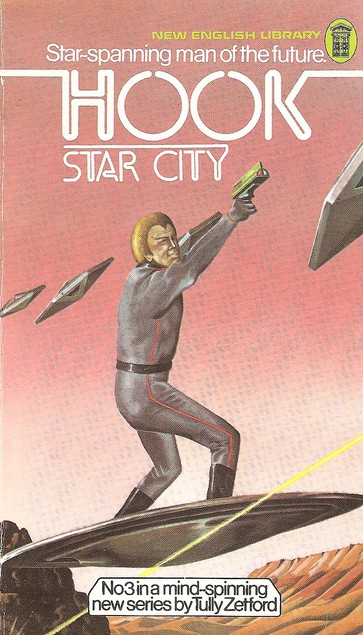
Sunburst, Phyllis Gotlieb (1964). A review of this will be going up on SF Mistressworks this week (need MOAR REVIEWS, btw. Volunteer. Please.) Garish cover art, a strapline that reads, “A fiendish race of demonic children is spawned in the genetic chaos of a runaway nuclear explosion”, a thirteen-year-old girl as a protagonist, and a prose style that feels two decades earlier that its publication date… It’s actually not bad.

Shine Shine Shine, Lydia Netzer (2012). About which I wrote some words here.

The Maltese Falcon, Dashiell Hammett (1930). This is allegedly the best crime noir novel ever written, which doesn’t say much for the genre. I knew the story from the Bogart film, and was surprised at how faithful an adaptation it proved to be. There’s a feeling throughout the story that Hammett was blithely making shit up… and then there’s this section on the history of the eponymous bird which names various mediaeval texts and it all seems very convincing. I liked Gutman, and Hammett did a good job with his dialogue. Spade was a cypher, and I was soon sick to death of reading about his “wooden features”. Couldn’t get a handle on the femme fatale or Joe Cairo. The functional prose was, at best, functional. The film is better.

Lunar Caustic, Malcolm Lowry (1968). Which is perhaps chiefly interesting because of its publishing history. An early version of this novella was accepted for publication in Story magazine in the 1930s, but Lowry called it back. And continued to work on it. I can sort of understand the impulse. When Lowry died in 1957, he left behind several manuscript versions, and his wife and Earle Birney, a neighbour and university professor of English, spliced together this 1968 edition out of them. It’s set in a psychiatric hospital in New York and is, like much of Lowry’s fiction, partly autobiographical. There are moments of genius in it, though it does feel somewhat slight compared to some of his other novella-length fiction, especially ‘Through the Panama’. Also, its publication history has disguised the fact that it’s set in 1936, when Lowry checked himself into Bellevue Psychiatric Hospital (though he started work on it in 1934, on his arrival in New York). As a result, it feels weirdly old-fashioned for its time – given its publication year it’s tempting, for example, to read it as a contemporary of One Flew Over the Cuckoo’s Nest, which suggests that psychiatric hospitals changed very little in the intervening three decades. Lunar Caustic was intended to be a part of a seven-novel sequence, The Voyage That Never Ends, which would I suspect have been a major work of English literature. As it is, we can only treasure what little we have.

The Watcher, Jane Palmer (1986). And this one I did review for SF Mistressworks and you can see my review here.

Girl Reading, Katie Ward (2011). A very impressive debut, and almost certain to end up on my top five books of the year. I wrote about it here.

Sion, Philip Boast (1999). Boast’s weird alternate secret biblical histories are something of a guilty pleasure, but I think this one pushed the weirdness factor a bit too far. It’s set in Biblical Judea, and told from the point of view of Mary Magdalene. Except she’s not really Mary Magdalene. Whoever she is, she has lived before, and remembers historical events dating back to Moses and Abraham, and even much, much earlier. In Sion, Joseph and Mary belong to a sect, but Jesus also has brothers and sisters. And it was Jesus’ brother James who is considered the messiah of prophecy. But Jesus truly is the Son of God, although his message of love is anathema to the sect and to their conception of a messiah. Jesus marries Mary Magdalene, and after the crucifixion, Mary and child escape to France. The story is then narrated by their son, Jude, who travels and eventually discovers the Ark of the covenant and its secret. He dies and then becomes a disembodied intelligence who leaps from body to body, occasionally meeting up with his mother, who is apparently doing the same. The final section explains that Mary was a passenger aboard an asteroid starship crossing through this universe, but which crashed and stranded a group of them on prehistoric Earth. Or something. It’s not entirely clear. It’s a shame the book is so unbalanced, with far too much of the narrative spent on too detailed a description of Mary’s time in Judea. It’s only when Jude appears that it picks up pace, but even then it throws away the entire point of the plot in a hurried final section. Disappointing.

Vapour Trails, Mike Lithgow, ed. (1958). Funniest book I’ve read all year. It’s a series of essays about test piloting by British pilots of the day. You get the impression that a number of the anecdotes they recount have seen plentiful use in after-dinner speeches. The more astonishing incidents are those set during the really early days of aviation, where anyone with sufficient money could buy a plane and learn to fly it themselves. One test pilot, for example, tells of an incident in the 1920s at an airfield where he worked. A wealthy German had bought himself a Blériot plane and was learning how to fly it. Blériots, apparently, could manage an altitude of 200 feet on warms days, but only 20 feet on cold days. The German set off across the airfield in his plane, and eventually took off. Just as he was about to clear the hangars, he turned off his engine… and the plane promptly crashed. When asked why he’d turned off the engine, he explained he’d picked up a tail wind and thought that was enough to keep him flying… Recommended, even if you’re not an aviation buff.

The Ascendant Stars, Michael Cobley (2011). Is the third and final book of Cobley’s Humanity’s Fire space opera trilogy, and notable among such types of books in that it actually resolves the plot and leaves pretty much everything neat and tidy. In the previous two books – Seeds Of Earth and The Orphaned Worlds – Cobley went slightly berserk and set so many balls spinning, it was hard to keep track of them all. There was the invasion of Darien by an imperialistic alien race, there were the cyborg Legion of Avatars imprisoned in hyperspace and about to break free, the lost human colony who have been operating as mercenaries for the bad guys but have now schismed, the planned terrorist attack which turns out to be much more than it seems, and I forget what else. And it appears it’s all a feint or something because the Godhead, a vast machine intelligence resident in hyperspace, wants to transcend and needs to blow up fifty suns to do so. Cobley handles his large cast with deftness, there are some nicely-written set pieces, and his universe contains plenty of variety and diversity. However, and perhaps it’s just me, but it all feels a bit tired. The Humanity’s Fire trilogy is an accomplished space opera trilogy, but I’ve lost faith in the subgenre, in its “anything goes” ethos, its “chuck everything in” world-building… I think we’re seeing the end of new space opera, British or otherwise. It’ll either settle into a rut, much as high fantasy has done for the past twenty years, or it will slowly fade away. It already feels a bit like the twentieth century, ie a progressive experiment that people are inexplicably turning their back on – cf Leviathan Wakes. Regression is not the next step. We need something new to come along, and I think, and hope, we may be seeing New Hard Science Fiction poised to take its place…


3 Comments

Wanting to be normal – Lydia Netzer’s Shine Shine Shine

I forget where I saw mention of Lydia Netzer’s Shine Shine Shine. I’m pretty sure it wasn’t on one of the many blogs I read, nor by one of the people I follow on Twitter. It certainly wasn’t recommended to me by Amazon – I forget the last time I bought a book by an author unknown to me because it was recommended by Amazon. Wherever it was, the précis of the plot was enough to pique my interest, as the blurb says: “This is the story of an astronaut lost in space, and the wife he left behind”. Since the fourth book of my Apollo Quartet, All That Outer Space Allows, will be about the wife of an Apollo astronaut, I was both intrigued by Shine Shine Shine as well as having a “professional interest” in it.

Happily, it was on half-price promotion in Waterstone’s, so I bought a copy. The cover is,um, very pink, and it doesn’t look anything like a novel featuring an astronaut. Nor did I recognise any of the names who have blurbed the book. But never mind, the story still sounded like it might appeal.

UK cover

But, oh dear. The novel opens:

Deep in darkness, there was a tiny light. Inside the light, he floated in a spaceship. It felt cold to him, floating there. Inside his body, he felt the cold of space. He could still look out the round windows of the spaceship and see the Earth.

This doesn’t bode well. The novel is set in the very near-ish future, though it’s depicted as the present day for all but the fact of mission to the Moon, but that’s language straight from the science fiction of yore. In fact, everything in the novel about the Moon mission is, well, wrong. Plainly Netzer has done no research on it – her prose has zero authority when discussing the astronaut husband. She gets the physics wrong, she gets other details wrong. One of the crew, for example, is a lieutenant commander in the US Air Force. Except lieutenant commander is a naval rank. The USAF equivalent is major. That’s shoddy craft.

And yet, there are things to like about Shine Shine Shine. It’s very “creative writing class” in places, but Netzer has created an interesting protagonist in Sunny, a young pregnant Virginia housewife with alopecia and a son with Asperger’s, whose decision to not hide her alopecia kicks off the story. Her early childhood is not especially convincing, but the sections set in the foothills of the Appalachians in western Pennsylvania, where Sunny and Maxon, her husband, meet as children are good. Maxon, the roboticist turned astronaut, also has Asperger’s, and is depicted throughout as very close to a robot himself. He’s also a genius, a Nobel prize laureate, and a millionaire. While Maxon is handled quite well, all this is just over-egging his character.

US cover

In fact, the entire story is a little over-egged. It opens with Sunny involved in a minor car accident. Her wig flies from her head. So she decides to no longer wear it. Her Virginia housewives circle, of course, did not know she was bald. Sunny has tried so long to be “normal” – hiding the fact of her baldness, using her husband’s genius to excuse his inability to interact with people, organising her neighbours and becoming a pillar of the local community.

Meanwhile, she is heavily pregnant, her husband is on his way to the Moon to oversee the creation of the first robotic colony there, their son, Bubber, has severe Asperger’s but is likely a savant of some kind, and her mother is on life support in hospital, her body riddled with cancer. A meteor strikes the spacecraft Maxon is aboard, stranding the crew in cislunar space (I think – the astrographics is nonsense throughout). Back on Earth, Sunny tries to hold her family together in the face of these threats, and attempts to find the person she was before she subsumed herself in the role of Virginia housewife. Her story is interspersed with flashbacks, describing her birth and early childhood in Burma (her father was a missionary), and her life as a child in Pennsylvania, living next door to Maxon and his hillbilly family of – I think – meth-makers.

Shine Shine Shine could have been an excellent novel, but it’s let down by a lack of research and a consequent lack of verisimilitude. True, not every reader is going to be as critical of the spacecraft-set parts of the novel as myself, but writers should always strive for verisimilitude. Research, research and then research some more. They say “write what you know”, but that’s complete rubbish. If everyone did that, literature would be very dull indeed. But that doesn’t mean you can make shit up when it’s easily checkable. Doing that only makes you look a fool – cf Dan Brown. If Maxon’s career had been in any way convincing, Shine Shine Shine would have been greatly improved. As it is, the novel reads like a thesis for a Creative Writing MA. Disappointing.


2 Comments

Man reading Girl Reading

I forget where I saw mention of Katie Ward’s Girl Reading – I’ve a feeling it was on one of David Hebblethwaite‘s lists of novels by non-genre imprints that might eligible for the 2011 Clark Award. The blurb sounded interesting, so I stuck it on my list of books to keep an eye open for… And a few months ago, I saw it at my mother’s so I borrowed it. (She doesn’t remember the book, and certainly hasn’t read it, so one of my sisters may have left it there.)

Annunciation, Simone Martini (1333)

Girl Reading is not one of those novels which defy summary, but a description of its plot – or plots – does not really give the true flavour of the book. It is constructed from seven sections, set in, respectively, Siena in 1333, Amsterdam in 1668, an English country house in 1775, London in 1864, another English country house in 1916, London in 2008, and an unnamed European city in 2060. The sections are not linked, except by mention of the previous section’s subject – ie, a picture of a girl reading. (The exact pictures which inspired the novel are given in ‘A Note’ at the end of the book; some are reproduced in this post).

Woman Reading, Peter Janssens Elinga (1668-1670)

Comparisons with Cloud Atlas are inevitable, and while Ward’s control of voice may not be as accomplished as David Mitchell’s, Girl Reading trumps Cloud Atlas because it relies less on hoary clichés for its plot and because its structure makes sense within the context of the story. It’s there in the final section, ‘Sincerity Yabuki – Sibil, 2060’:

“Sibil makes you experience, in mesh, real or fictionalised aspects of what is already there embedded within a real-world object. The artwork is the starting point; from that, it weaves an extended portrait of sorts, showing us this art piece in a new way.” (p 302)

Isn’t that we all we do? When we see the cover-art of a novel, we imagine the story it represents. When we witness an event in real life, we try to make a story of it as if that somehow makes it more understandable, helps makes sense of the narratives of our own lives. For a fixed number of objects – paintings and photographs – Girl Reading not only makes this process overt, it presents the results of the process for us.

Portrait of a Lady, Angelica Kauffman (1775)

It’s a science-fictional conceit – so, yes, the book was perhaps suitable for consideration for the Clarke Award – but because the narrative works forward from the past to the future, it’s unlikely Girl Reading will ever be read as science fiction. True, it doesn’t reveal its genre underpinnings until that final section, and the links between the sections are subtle, but that last section does make sense of it all. It often seems that literary fiction novels lack a final payoff – or rather, it sometimes feels as though much of the story didn’t actually contribute toward the ending. Not a twist ending, not something that makes you drastically reconsider all that has gone before – although the ending of Girl Reading does do something like that. But when it does happen, it’s good. Of course, that’s not to say it’s necessary – I can think of several such novels where much of the book’s appeal lies in the journey toward the ending.

Giulia Grisi, Horatio Nelson King (1860s)

Girl Reading is written throughout in the present tense, without the use of speech marks for dialogue. Obviously, this is a style which appeals to me, but Ward’s prose is also good. It is, perhaps, a little precious in places, but not so much it obstructs the narrative or draws attention to itself. She has a fine eye for what gives surroundings character, and though the language is not particularly complex she succeeds in evoking sense of place:

Haunted by sadness. It is a grand building, but Angelica has been in grander, and it is the absence of society, of comings and goings, that makes it feel enormous like a cavern, serious like a church. (p 109)

The female subjects of each section are also well-drawn, interesting characters – the young woman of fourteenth-century Siena, the deaf-mute Dutch maid, even the ambitious but conflicted young Parliamentary assistant in 2008. Their concerns are personal – yes, relationships – but they work in context. Above all, the historical detail is convincing, and the characters fit their historical milieu. That’s a difficult trick to pull off for a story set in one historical period, and harder still to do for multiple periods.

Vanessa Bell (née Stephen), Duncan Grant (circa 1916-1917)

There have been sadly few books I’ve read this year which I’ve classified as “impressive”, that I finished knowing I had just read something special. Girl Reading was one of them. On the strength of it, I’ll be keeping an eye open for future books by Katie Ward. And I very much suspect her debut novel will be appearing in my top five at the end of the year.


8 Comments

Some recent readings

It’s been a while since I last documented what I’ve been reading, other than the occasional book I’ve reviewed here – such as those for my reading challenge. Not every book I’ve read not previously written about recently is worth mentioning, but here are a few that are:

Roadside Picnic, Arkady & Boris Strugatsky (1972)
The edition I read was the SF Masterworks edition – that is, the original SF Masterworks edition, No 68 when they were numbered, which I think uses the 1977 translation. Gollancz are about to publish a new edition, using a new translation. This is doubly annoying because the new translation is apparently greatly superior to the old one, but since the edition I own is part of a numbered series I’m reluctant to replace it… Because while I love the central premise of Roadside Picnic, and I’m a huge fan of Tarkovsky’s film adaptation of it, I’m not sure why a Russian novel had to read like bad US pulp fiction. The story is set in an invented Commonwealth country, but reads like it’s set in the US, and a somewhat backwards area of the country at that. It is also rife with continuity errors and, I see from the Wikipedia page, that the internal chronology has also been completely garbled. I’d like to read the new translation to see how much of an improvement it really is, but for now I’ll stick to the film.

The Martians, Kim Stanley Robinson (1999)
This has been sat on my bookshelves since it was originally published in 1999, and I’ve been meaning to read it for years. But with one thing then another, and other books, it seemed to get shuffled further down the TBR. But since I needed to read up on Mars for Apollo Quartet 2, I took the opportunity of finally reading it. And I’m glad I did. The centre of the book is the novella, ‘Green Mars’, which was originally published in Asimov’s in 1985 but which I’d read in the early 1990s as one half of a Tor double (with Clarke’s ‘A Meeting with Medusa’). ‘Green Mars’ is about an expedition to climb the 22,000 ft escarpment which surrounds Mons Olympus (the diagram prefacing the novella, incidentally, has the distances all wrong: Mons Olympus is not 226 kms high, that would be stupidly huge). It’s basically a climbing story, and while Robinson succeeds in getting across the strangeness of the environment he curiously fails to mention the low gravity except in passing. Other stories in The Martians describe encounters between the two main characters of ‘Green Mars’. Some stories are alternate takes on the Mars trilogy – including one, in fact, in which the First Hundred were never sent. Some pieces read like deleted scenes from the Mars trilogy; others read like a working-out of scenes which did appear. As a companion volume to Red Mars, Green Mars and Blue Mars, The Martians does the job interestingly and well, without reading like some sort of horrible RPG supplement.

The Sheltering Sky, Paul Bowles (1949)
I watched the Bernardo Bertolucci movie adaptation of this book, loved it, then read the book, and then watched the film again… and hated it. So much had been missed out, and the Lyalls had been reduced to comic caricatures. The film seemed to rely more on its scenery than its characters’ situation. In direct contrast to the book. The Moresbys have arrived in North Africa in the late 1940s to go “travelling”. As they journey deeper into the sub-Saharan interior, so they come further adrift from the world they have left behind. This eventually results in Port Moresby dying and his wife, Kit, falling in with some Tuaregs and being taken as a wife by one. The Sheltering Sky is neither a positive nor an especially active book. The Moresbys are jaded and languid, and even their African surroundings fail to generate any enthusiasm in them. There’s a good reason why this book is a classic. Incidentally, the book’s Arabic followed French spelling rules, which meant I had to translate each word twice – ksar, for example, is usually Romanised in English as qasr – ﻗﺼﺮ: it means “palace”.

A Usual Lunacy, DG Compton (1978)
Published by The Borgo Press in the US, although a massmarket paperback was later published by Ace. For some reason, a few of Compton’s books were never published in the UK, even though he was a British writer. But he’s not the only UK sf writer that has happened to. A Usual Lunacy is pretty much pure Compton – near-future, satirical, two-handed narrative (one male and one female viewpoint character), and based around a single idea. In this case, the idea, alluded to in the title, is a viral form of l’amour fou. The existence of which is then used in an insurrectionist plot in a somewhat totalitarian near-future UK. The story is initially presented as a court case, and only through the testimony of experts and witnesses, and then flashbacks, does it reveal that it’s all to do with an aeroplane hijacking, done in order to release a rebel leader from prison. It’s not one of Compton’s best works – the background is thin, the plot is rushed, and the central conceit seems a little arbitrary. But the characterisation is spot-on, the writing is as good as ever, and it’s still a great deal better than anything Compton’s more popular contemporaries ever produced.

August, Gerard Woodward (2001)
Woodward is a poet who has to date written four novels and a collection of short stories. August is his first novel. I forget where I saw mention of Woodward, but wherever it was it persuaded me his fiction might appeal so I kept a weather eye open for copies in charity shops… and one afternoon scored three – August, I’ll Go To Bed At Noon and A Curious Earth – for 99p each in the same shop. Having now read the first book, I’ll definitely be reading the other two. I thought at first that August was trying a bit too hard, there were a few too many adjectives, a few too many instances of precious prose… but it soon settled down and turned good. From the 1950s through to the 1970s, each summer a family from London spend three weeks camping in a field belong to a particular farm in Wales. August is the story of those holidays, and of the family, and of what happens to it, both in Wales and London. There’s some lovely writing in it and the cast are handled especially well.

Body Work, Sara Paretsky (2010)
I’ve been a big fan of Paretsky’s novels for years. The last few, however, have felt a little disappointing. This one made a desperate effort to sound relevant, with its mentions of Twitter, Facebook and other social media, but was still based around a form of performance art that felt more 1990s than twenty-first century. Admittedly, the underlying plot – US security firms in Iraq, corporations which cheat and lie to maintain profits – is very much of this century. Warshawski’s support staff continues to grow, which makes her feel more grounded a character than before, but she doesn’t quite have that sense of belonging that Grafton gives Kinsey Milnhone. Paretsky’s books are always worth reading, but Body Work didn’t quite manage the levels of anger of the preceding Fire Sale, which is a pity.

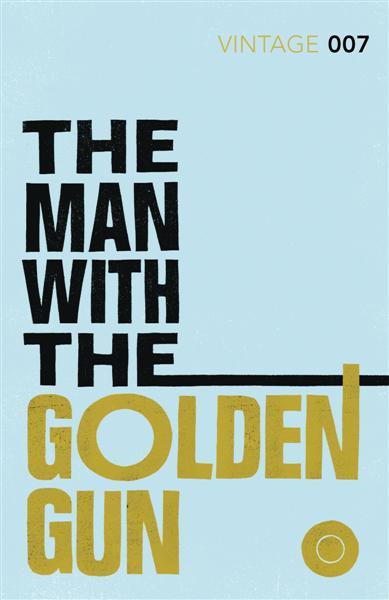
It doesn’t look like much does it? And I suppose the number of notable books I’ve read is not especially high. But along with the above, I’ve also read Blue Remembered Earth, which I plan to write about in more depth; some research for Apollo Quartet 2 – Mission to Mars, The Mars One Crew Manual, The Fallacy of Fine-Tuning (that last one made my brain hurt); several books reviewed for SF Mistressworks; a terrible Bond collection by Fleming, For Your Eyes Only; The Piano Teacher for my reading challenge (see here); and a possible British sf masterwork, DF Jones, Implosion (it’s no masterwork, see here); some Sebastian Faulks, Human Traces (see here) and A Week in December; Kim Stanley Robinson’s 2312, see here, and Ken MacLeod’s Intrusion, reviewed on SFF Chronicles; two reviews books for Interzone; and a so-so Raymond Chandler. Of course, I’ve also been busy working on the aforementioned Apollo Quartet 2, and every time I finish a section and mark it finished, I think of something that needs layering into the prose…


3 Comments

World fiction reading challenge #6: The Piano Teacher, Elfriede Jelinek

Yes, I know; this is neither the sixth month of the year, nor the sixth book I’ve read for this year’s reading challenge. In fact, the challenge has not been going very well. I got bogged down in Orhan Pamuk’s My Name is Red back in March, so gave up on it and moved onto Mariama Bâ’s So Long a Letter, which I read a month late (see here). Then I got bogged down again, but this time in Javier Marías’ Fever and Spear… And that threw me off my schedule completely – so much so that I’ve only just read June’s book, The Piano Teacher by Elfriede Jelinek, in September…

I know the story from Michael Haneke’s excellent 2001 film adaptation, and reading the novel on which a great film is based is always a hostage to fortune. Typically, books are better than the films made of them, but when the film itself is so good… Happily, the novel proved to be noticeably different to the film; unhappily, it proved a less satisfying read than the film is a viewing experience.

Erika Kohut is a piano teacher at the Vienna Conservatory. She lives with her mother, a controlling, shrewish woman. But Erika’s prim and proper demeanour hides a secret – in the evenings, she sneaks about the city, visiting peep shows and spying on prostitutes going about their business. She buys expensive clothing, which makes her mother furious as they’re supposed to be saving for a bigger and more modern apartment, but never wears it.

And then one of Erika’s students, Walter Klemmer, finds himself attracted to his teacher, and sets about seducing her. But she responds by telling him exactly how he is to woo her – it involves bondage and humiliation – but he’s not so sure he can cope with her demands. He wants to be in control, he must be in control.

The Piano Teacher was first published in 1986 in Austria, as Die Klavierspielerin, and first published in English in 1988. The edition I read, published in 2010 by Serpent’s Tail, appears to use the original Weidenfeld & Nicolson translation from 1988, which means a lot of it has been translated into idiomatic American English. It doesn’t feel right. I’ve come across this before, when a novel translated into English uses American vernacular when it’s quite clearly not set in the US nor has American characters. There must be other ways to signal that the original was written in the demotic without resorting to clichés that only apply in the US and which often date quickly.

None of this is helped by Jelinek’s propensity to jump from metaphor to metaphor within a single paragraph. It feels like a lack of control over her material, yet in all other respects Jelinek’s prose is so tightly-written and brusque that it’s plain control is one of her chief strengths. Other elements of her style I found less problematic – dialogue, for example, is not always indicated by speech marks, and is sometimes only reported. The narrative remains tightly-focused on its three main characters – Erika, her mother, and Walter – and makes for a claustrophobic read. None of the central trio are at all sympathetic. The mother is quite horrible, Walter is the embodiment of youthful male arrogance, and even Erika herself feels damaged.

The Piano Teacher is not a comfortable read, just as Haneke’s film is not comfortable viewing. It’s a book that’s easier to admire than to like. I didn’t take to it as I did to Szabó’s The Door (see here), but I do think I’d like to read more Jelinek.


Leave a comment

Empress of Eternity, LE Modesitt, Jr

Empress of Eternity, LE Modesitt, Jr
(2010 Tor, $25.99, 352pp)

LE Modesitt, Jr is a bulwark of genre fiction in the US. He stands, legs apart, one hand against the wall of fantasy, the other hand pressed against science fiction. Like the man, his novels, which are often the size of small buildings, straddle both genres. It’s an appropriate conceit, since Modesitt’s latest, Empress of Eternity, has an architectural feature at its core. The Canal straddles an unnamed continent on a world the blurb calls “Earth” but the story itself does not. This Canal is made of some indestructible material. No one knows what it’s for, who built it, or why. Three narratives describe the events surrounding three groups of people from three different eras, each of which is researching the mysterious Canal. According to the blurb, these narratives are set hundreds of thousands of years apart, but there is no indication of this in the text as each uses a different calendar.

Lord Maertyn is a scientist and minor ministerial functionary in the Unity of Caelaarn. He and his wife Maarlyna, who is recovering from a near-fatal illness, are researching the Canal. But there is a power struggle occurring back in the capital, and Maertyn becomes embroiled in it when his minister asks him to fill in for an absent assistant minister. Faelyna and Eltyn are also researching the Canal, but they are doing so for the Ruche. However, a coup among the rulers of the Ruche – the Fifty becomes the Twenty – is followed by a brutal campaign of brainwashing. Faelyna and Eltyn resist. Duhlye and Helkyria are researching the Canal for the Vaniran Hegemony. But the Vanir are under attack by the Aesyr, also of the Hegemony, but racially different and possessing their own armed forces. The Aesyr have a weapon, the Hammer, which they threaten to use unless the Vanirans reveal what secrets they have discovered in their research on the Canal.

These three stories seem to follow the same plot, before they abruptly, and solely due to authorial handwaving, become linked. Maarlyna transforms into the title character; the Aesyr provide a direct threat to the universe of the book… But the Ruche narrative is entirely superfluous. It neither impacts the resolution, nor assists in explaining it. In fact, very little of any of the three worlds is explained – the reader, for example, has to guess the relationship between the Vanir and Aesyr. It makes for a frustrating read. Further, characters lecture each other on assorted subjects, none of which sound remotely plausible. The description of the Hammer’s workings are the worst kind of technobabble; as indeed are the workings of the Canal. Which is, in fact, a “bridge” through time and apparently “anchored” at “discrete event-points”. Modesitt’s explanation badly confuses a philosophy of time with physics. He also presents events or situations to illustrate points… only to have a character then explain what has just been illustrated. The prose, too, is peculiar, and padded out with stylistic ticks which render sentences clumsy: “he smoothed his hair, short as it was”, “he carried but a bag”… That “as it was” is appended unnecessarily to sentences throughout the story; that inserted “but” appears on almost every page. Not to mention the Ruche characters’ “bio-orbs” and “calcjections”…

Empress of Eternity is a novel light on sense. This may well be because somewhere within its 352 pages a short story has been forcibly fed a pottage of words in an effort to bulk it up to novel-length. This is a novel remarkable for the number of scenes which neither advance the plot nor explain the world. The end result is some sort of van Vogtian tosh put in service of a plot which has neither beginning nor middle, but crashes to an unsatisfactory end. Van Vogt’s 800-word cliff-hangers, however, made his novels pacey reads. The same cannot be said of Empress of Eternity.

This review originally appeared in Interzone, #231 November-December 2010.


2 Comments

Lexicon Urthus, Michael Andre-Druissi

Lexicon Urthus, second edition, Michael Andre-Druissi
(2008, Sirius Fiction, $19.95, 419pp)

Lexicon Urthus – a compendium and dictionary of words and concepts from Gene Wolfe’s The Book of the New Sun – The Shadow of the Torturer, The Claw of the Conciliator, The Sword of the Lictor, The Citadel of the Autarch, The Urth of the New Sun, and ancillary and additional short fiction and essays. Lexicon Urthus contains definitions/explanations, a note on origin, and often a commentary, on all the unfamiliar words and terms, the characters and places, in the five books, from ABACINATION to ZOETIC.

History: A “lexicon” is “the vocabulary used by or known to an individual” (Wiktionary); “Urthus” is a bogus Latin genitive form derived from “Urth” – which is actually a Norse word, and the name of the eldest of the Norns (see Skuld and Verthandi), and not a corruption of “Earth”.

Commentary: the reputation of The Book of the New Sun rests in part on the word-games – the obscure and obscuring vocabulary – used by Wolfe in telling his story. Hidden beneath and within these unfamiliar terms are additional elements of the story. They also add to the flavour of Wolfe’s world-building. Using invented or unfamiliar terms is not a unique achievement, but Wolfe does not provide a glossary – unlike, say, Frank Herbert in Dune. Lexicon Urthus in part fills that role – it is subtitled “A dictionary for the Urth Cycle” – but it is also much more. Words are not simply glossed, but characters’ names are also explained – their origins and any connection between a historical person bearing that name and the character in the book, and a further commentary on each term. There is also a synopsis of all five books, and several maps of varying usefulness.

Some of the terms glossed are not so obscure:

dhow – a native vessel used on the Arabian Sea, generally with a single mast, and of 150 to 200 tons burden; a kind of lateen-rigged trading boat (I chap. 12, 114).

Others certainly are:

Murene – the name of the village on the shore of Lake Diuturna (III, chap. 32, 258).

History: (variant of “muraena”) in early use applied vaguely as the name of a kind of eel mentioned by ancient writers.

Lexicon Urthus‘s usefulness is specific. As is its appeal. It is for those interested in learning more about, and understanding more of, The Book of the New Sun. It is not an analysis of the story – as is, say, Robert Borski’s Solar Labyrinth – but it is a tool to aid in solving the Urth Cycle’s riddles. Its scholarship is impressive – as, one must assume, was Wolfe’s when he wrote The Book of the New Sun. This second edition corrects many of the errors and omissions discovered in the first edition and subsequently published in Errata & Corrigenda chapbooks.

This review originally appeared in Interzone, #219 December 2008.


1 Comment

Sylvow, Douglas Thompson

Sylvow, Douglas Thompson
(2010, Eibonvale Press, £6.99, 304pp)

Back in the day, fix-up novels were relatively common in science fiction. Authors would cobble together a bunch of stories, sellotape a framing narrative in place, and pass off the finished product as a novel. In most such books, the joins were sadly obvious. If there’s a term for the reverse – a novel which comprises standalone excerpts that have been published as short stories – I’m not aware of it. Nonetheless, it’s a fair description of Douglas Thompson’s second novel, Sylvow. Eight of the book’s seventeen chapters have previously seen print: in Ambit Magazine, Dream Catcher, and the British Fantasy Society’s New Horizons and Dark Horizons. While those chapters read perfectly well as short stories, they are also very much of the novel.

Sylvow is a story in many parts about a small group of people who all live in the invented city of Sylvow. However, the city, and the lives of its inhabitants, are slowly being invaded by Nature run rampant. Leo disappeared into the deep woods which ring Sylvow years before, and sends irregular letters commenting on, among other things, Nature’s campaign of conquest. His estranged wife Vivienne takes up with Anton, who had a nervous breakdown but was cured by Franco, and now works as a forest ranger. Franco’s wife Claudia is a vet, and she sees at first hand how the animal and insect kingdoms are responding to Nature’s war on humanity and civilisation. Franco meanwhile is having an affair with Veronika, a young Goth patient.

According to the background notes at the rear of the book, the city of Sylvow is a fusion of Glasgow, Osnabrück and Novogrudek. Certainly it seems at times to have a Middle European air, and the novel’s cast all possess names more common in continental Europe than in the British Isles: Franco, Veronika, Claudia, Vittorio, Nikolaus… Yet there are references to very British institutions and cultural artefacts. It gives Sylvow a somewhat unsettled feel – further exacerbated by Thompson’s prose style, which at times reads Ballardian and at others like the work of an East European fantasist. There are a variety of voices in Sylvow, but not all feel entirely suitable. Yet this too seems in keeping with the story Sylvow tells. Its narrative is episodic, and nominally linear, but not everything in the novel makes sense, or is capable of being understood.

Thompson aims high, but does not always hit his target. He is better when focussing on the surreal than he is at the quotidian. When read as a novel of disconnect, of humanity’s failed attempts to understand, or come to an accommodation with, Nature and her needs, Sylvow works very well indeed. Many of the passages set in the forest showcase some lovely writing indeed. As a novel of the relationships between people, Sylvow is perhaps less successful. The easy familiarity between family members, and between friends, often feels forced, as if Thompson were trying for the mannered tone of Mittel-Europa fiction but instead found himself writing the banal dialogue of a transatlantic mainstream novel. Nonetheless, despite the uneven read, despite its occasionally patchy nature, Sylvow is an intriguing blend of genres. With this novel, and his debut Ultrameta, Thompson has certainly shown he is a name to watch. Once he manages to write mainstream with the same facility he writes surrealism and genre, he’s sure to produce something special.

This review originally appeared in Interzone #233, March-April 2011.


15 Comments

300 years from now is 2312

I’ve been saying for a while now that science fiction doesn’t need improbable spaceships and magic technology in order to generate sense of wonder. There’s plenty of wonder in the universe as we know it, once you accept its vast size and implacable hostility. So the prologue of Kim Stanley Robinson’s 2312 comes as a real pleasure to read. It is set on Mercury, and describes a sunrise as seen from the terminator. The world is in fact inhabited, and most of its inhabitants live in a city, called Terminator, which travels around the world on rails, forever staying within the twilight zone.

Mercury is not the only planet in the Solar System that has been settled. Mars not only has a thriving colony but has also seceded from Earth control. As indeed have the many moons and asteroids which have been colonised – and which now form the Mondragon, named for the Mondragon Corporation, a federation of workers cooperatives in Spain founded in 1956. Venus too has also been settled, and it is the fate of the human settlement of Venus which partly drives the plot of 2312.

Such a near-ish future scenario, with its strict adherence to realistic science, and plausible and clever extrapolation of technology and society, seems guaranteed to appeal to me. So it feels a little churlish to complain that 2312 falls a smidgen short of being a truly great science fiction novel.

Alex, one of the Mondragon movers and shakers, has died (of old age) and it is up to her friends to see that her plan continues. These friends include Swan Er Hong, Fitz Wahram, Inspector Genette, and others. The nature of Alex’s plan is only gradually revealed to Swan, though she is happy to involve herself. This initially requires travelling to Titan with Wahram. As they travel about the Solar System, the two fall in love, despite not seeming to suit each other particularly well. As they travel, Swan learns that Alex’s plan is a response to a secret conspiracy with unknown aims.

2312 is a novel comprising episodes spaced along a timeline in which a mostly-hidden conspiracy gradually reveals itself and its objectives. There is, for example, the destruction of Terminator. There is the discovery of qubes (quantum computers) in human form – rather than surgically-embedded qubes in humans, such as Swan’s companion Pauline. (Qubes are not artificial intelligence per se, though something like it emerges from their complexity.) There is the destruction of a travelling asteroid terrarium (a common means of transport about the Solar System) and the deaths of all those travelling within it. There is the reseeding of Earth with the fauna which had populated the terraria. There is a covert civil war on Venus.

In truth, the conspiracy is the weakest element of 2312, and not every event seems linked to the story it powers. The reseeding of Earth, for example, is clever and exciting, but doesn’t feel like part of the same narrative which sends Swan and Wahram gallivanting about the Solar System. And the resolution of the conspiracy, when it’s revealed in a disappointingly offhand fashion, feels like an after-thought rather than the resolution of a dramatic narrative.

Yet the Solar System of 2312 is a fascinating place. It feels like a valid extrapolation in ways that many nearish-future science fictions – such as James SA Corey’s poor Leviathan Wakes – do not. To some extent, this emphasis on world rather than plot does make the novel feel somewhat like a travelogue. But 2312 is not a plot-driven novel. It is dramatic in discrete moments, and it is sense of wonder, the continuity of the characters’ perceptions and the deepening relationship between Swan and Wahram, which chains those moments into a linear narrative. 2312 is like its terraria, it is a small world put together from elements of the real world, and in which a life unlike those we can experience ourselves can be lived. It’s no surprise then that the conspiracy which opens with the destruction of Terminator feels like a feeble counterpoint to the journey on which Robinson takes the reader.

As a genre novel – ie, a narrative reliant on plot for its backbone – 2312 is somewhat unsuccessful. As a science fiction in a more general sense, a personalised exploration of an invented universe, with its Dos Passos-seque “extracts” and “lists”, 2312 is superb. It may well be Robinson’s strongest work since the Mars trilogy. I wouldn’t be surprised to see it on a few shortlists next year; and I’d be disappointed if it wasn’t nominated.


3 Comments

Starcombing, David Langford

Starcombing, David Langford
(2009, Cosmos Books, $14.95, 223pp)

David Langford is a British institution. I picture him as resembling a faculty building in a concrete-and-glass university campus of the 1950s, possessing neither Gothic grandeur, nor the ivy-clad and leather-elbowed academic elitism of a red-brick. And certainly not the imposing belligerence of a Brutalist edifice. Rather, an unassuming but welcoming façade, one which would not look out of place in a city-centre precinct, one which speaks of learning that is open and available to all. Within the building, with its foyer lined with twenty-eight Hugo Awards, is a labyrinth of passages. Small signposts indicate the ways of “science fiction”, “literature”, “nuclear physics”, “Thog’s Masterclass”, “Harry Potter” and other areas of knowledge. The corridors are quiet, and those who pad their lengths do so silently. Every so often, a door can be heard softly closing. There is an atmosphere of erudition and wit – the halls are thick with it. And it is said, in hushed tones of course, that in the labyrinth can be found a vast library, containing many legendary arcane tomes. The library is searchable too, by means of an elegant user interface programmed by the man himself.

At semi-irregular intervals, Langford issues prospectuses. Starcombing is the most recent. It contains eighty-five articles, drawn from a variety of sources – Foundation, SFX, The New York Review of Science Fiction, Nature and Nature Physics, assorted fanzines, and even some previously unpublished pieces. The earliest is from 2000, and the latest from earlier this year. They are arranged chronologically. An author’s note describes Starcombing as a sequel to both Up Through an Empty House of Stars (2003) and The Sex Column (2005), both previous collections of Langford’s writings.

Starcombing is a book in which one should wander around; a plan is not necessary. Nor, in this labyrinth a thread, narrative or otherwise. Alternatively, there is the index, which signposts the route directly to whatever is sought. Some might consider that cheating… because this is a book in which aimlessness is an advantage, in which dipping in and out is a valid use of it. The articles Starcombing contains are short, often no more than a page or two. They can be read as and when desired. Not that Langford’s writing needs to be taken in small doses. On the contrary, his writing has always made it appear as if his learning and humour came easily to him.

Highlights of Starcombing include ‘Maps of Minnesota: Stalking John Sladek’, a piece from The New York Review of Science Fiction in 2001 about tracking down Sladek’s unpublished stories and poems for a posthumous collection; three previously unpublished essays from 2004 on James Branch Cabell, John Myers Myers and Thorne Smith for a project which was abandoned by its editor; an essay on HG Wells from Fortean Times; and four short-short stories from Nature and Nature Physics. I suspect I am not alone in wishing Langford would write more, and longer, fiction. Much of Starcombing comprises Langford’s column from SFX and, while they are entertaining, their nature, intended audience and shortness weighs against them. If I have one complaint, it’s that the contents page does not give the origin of the various articles; it is only given as bulleted note after each piece.

Those familiar with Langford’s writing will know what to expect from Starcombing, and probably already have their copies on order. Those who have yet to read Langford should begin immediately, and Starcombing provides as good as introduction as any of his non-fiction collections.

This review originally appeared in Interzone #224 September-October 2009.