It Doesn't Have To Be Right…

… it just has to sound plausible


8 Comments

A British sf masterwork? Implosion, DF Jones

The SF Encyclopedia makes no real comment on the works of Dennis Feltham Jones, preferring instead to précis his novels. He is perhaps best known for his first novel, Colossus, which was filmed as Colossus – The Forbin Project. Implosion, from 1967, is his second novel.

An unnamed Eastern Bloc country develops a substance which renders women sterile. Because the nation’s premier is the illegitimate son of a British diplomat, he chooses to use this powder on the UK. Two years later, fully eighty percent of British females can no longer ovulate. The country’s population begins to fall, and is calculated to hit around five million by the mid-1980s. A government with far-reaching powers and a mandate to fix the problem is voted into power. All the fertile women are put into camps to become baby machines. Children are put in National Schools, where they are kept safe from harm and educated to as high a level as possible. Villages are demolished, and towns abandoned, when their populations fall below sustainable levels.

In charge of all this is John Bart, the Minister for Health and Regeneration. His wife Julia proves to be one of the rare fertile women, and is packed off to a camp. Meanwhile, the government tightens its grip on the country. After a raid on the lab which developed the powder, the Brits reverse-engineer it but can find no cure. They publish the formula, so that now everyone has it. Naturally, other countries soon find themselves in the same situation.

Meanwhile, Julia has come to realise that the regime in the fertile women’s camps has turned nasty. Women are whipped for the slightest infraction, such as smoking (even when not pregnant). She escapes… and discovers that the world outside is very different to what she had been told. She finds her husband, who is still the number two man in the government, and likely soon to be the number one, and learns that he is now shacked up with her twin sister. The twins turn on one another, Julia gets sent back to the camp, and that’s that. Except Nature has one final trick up her sleeve…

There’s a very 1960s British po-faced earnestness to Implosion. The characters are exemplary – Bart himself is young and noble and brilliant at organisation and making decisions. His wife is beautiful and loving and a true soulmate. Or at least, she starts out like that. Even their lady who does is a treasure. The prime minister is a hearty man of the people, straight-talking and more than willing to do the necessary. The Britain of the story appears pretty much the same as the Britain of 1967. Even though it begins in the early 1970s, the currency is still pounds, shilling and pence.

Implosion reads like a novel in which the author had a good idea and then set out to show clever he was in solving it. Its politics are simplistic, as is its view of the British people. The Barts are very much the “right sort”, and what few working class people do make an appearance are viewed with all the patronising indulgence of the privileged. Implosion is not a cosy catastrophe – there’s more brandy drunk than tea, for one thing – but it is peculiarly English. Perhaps it could be called a “Mayfair catastrophe”. That’s what it feels like, a black and white 1960s television Play for Today with a cast speaking in cut-glass accents, while around them the world they don’t much care for slowly falls apart…

So, not a British sf masterwork, then.

(And no, I’ve no idea what that blobby thing on the cover of the book is supposed to represent.)


Leave a comment

Robopocalypse, Daniel H Wilson

Robopocalypse, Daniel H Wilson
(2011, Doubleday, $25.00, 347pp)

Daniel H Wilson has a PhD in Robotics. He is also the author of How to Survive a Robot Uprising, among other books. He’s the go-to guy when American television needs an expert on robots. Almost every book he has written has been optioned – including this one, Robopocalypse, his first novel for adults. In fact, the film rights were sold before the book was even published.

This is a well-worn narrative, and it’s the story of the book rather than the story in the book which often generates more interest. When six-figure sums are bandied about for a genre novel, its quality is beside the point. Such books cannot depend on genre readers to recoup their outlay. They have to break out – and an author with celebrity status is needed provide the slingshot required. Robopocalypse will be a successful book, but not from any quality intrinsic to it as a novel qua novel.

So it should come as little surprise that, as a novel qua novel, Robopocalypse is not a satisfactory read. Sometime in the near-future, a scientist accidentally unleashes an Artificial Intelligence. Over a period of a couple of years, this AI, Archos, reprograms all the world’s robots to turn on human beings, and so a war begins. Robopocalypse opens with a human combat team finding a device, built by the robots, which appears to contain eyewitness accounts to various incidents which took place during the Robot War. These incidents become the chapters of Robopocalypse, and each one is introduced with a blurb from the device’s discoverer.

This novel, then, is not a narrative but a collection of vignettes which, together, create a story-arc of sorts. Some of these vignettes are more successful than others. When the story is set in the US, Wilson handles his voices well, though there is a tendency to lionise his protagonists. However, one series of chapters is set in London, and it appears Wilson learnt his British accent from watching Guy Ritchie films. Another features a mild-mannered technician in Tokyo who later proves to be a genius. These are not ordinary people, though the structure of Robopocalypse would have you believe they are representative of the human race.

Given the author’s credentials, the one area in which you’d expect Robopocalypse to shine would be its science and technology. But even these elements were so clearly written with an eye toward cinematic visuals they often appear implausible. Automated cars in New York, for instance, go on a killing spree. But this makes little or no sense – the computing power necessary to turn a car into a weapon which can target moving pedestrians simply wouldn’t be built in. Wilson also has a tendency to project emotions onto the robots, as if anthropomorphisation would make them a more implacable enemy. Being a roboticist, he should know better.

Robopocalypse is a novel powered by two things, both external to the text. It reads as though it has been written to facilitate its transformation to another medium, the cinema. Hence the soundbites and pithy blurbs which open each chapter. Likewise the framing narrative, which implies a level of rigour the novel too often exceeds: the claimed sources for each chapter – CCTV footage, recorded interview, etc. – do not possess the level of detail or insight the writing displays. However, it is not all bad. Some parts of Robopocalypse are quite effective, and Wilson does a good job of describing the collapse of US society and the destruction of the nation’s infrastructure. Having said that, there’s little point, to be honest, in reading the book. Spielberg is all ready working on the film adaptation. You might as well wait for that: the visuals are likely to remain unchanged, but at least the story-arc will have been distilled down into something much more potent and satisfying.

This review originally appeared in Interzone #236, September-October 2011.

Note: the film mentioned in the review is due to be released in 2014, but as yet no cast members have been attached.


Leave a comment

The New Space Opera 2, Gardner Dozois and Jonathan Strahan

The New Space Opera 2, Gardner Dozois and Jonathan Strahan, eds.
(2009 Eos, $15.99, 544pp)

When Wilson Tucker coined the term “space opera” in 1941 to refer to “the hacky, grinding, stinking, outworn space-ship yarn”, he can’t have imagined the sub-genre would still be going strong sixty-nine years later. Or indeed that it would be considered one of the more successful forms of science fiction. That’s not to say that the “outworn space-ship yarn” no longer exists. There are plenty of examples of it being published in the twenty-first century. Some of them are even space opera.

According David G Hartwell and Kathryn Cramer in The Space Opera Renaissance (2006), space opera never went away and merely evolved over the decades into the form we now call New Space Opera. Which is, of course, to completely ignore the British re-invigoration of the sub-genre in the 1980s and 1990s. Before there was New Space Opera, there was New British Space Opera. Of the nineteen authors in The New Space Opera 2, only three are British. Since this anthology is a successor volume and its publisher is American, this is not unexpected. Likewise the fact that eleven of the authors are from the US, with only three Canadians and two Australians. Science fiction is a US-dominated genre.

But is space opera?

It is, if you extend its definition to include some of the stories in The New Space Opera 2. Because from this anthology, the only possible conclusion is that the new space opera has not only morphed back into the old space opera, but it has also expanded to include a great deal more of science fiction. How else to explain the stories by Kristine Kathryn Rusch or Elizabeth Moon in The New Space Opera 2? Both are the sort of sf CJ Cherryh was churning out by the yard in the 1980s. Or Mike Resnick’s spoof tale, which may riff off Tucker’s original definition, but seems to miss the point of new space opera. While John Scalzi’s ‘The Tale of the Wicked’ may be space opera, inasmuch as it features spaceships, AIs and humanity at war with an alien race, it has neither the vigour, scale, nor inventiveness of new space opera. And Bill Willingham’s ‘Fearless Space Pirates of the Outer Rings’ is pure pulp sf, although its ending does drag it into the twenty-first century.

Perhaps this is the way of things. A new movement injects vigour into a moribund genre, and is then subsumed by it. Which is not to say that science fiction was entirely moribund, nor that it has been wholly re-invigorated. There is still a whiff of corruption from some areas of sf.

Happily, The New Space Opera 2 is mostly a good read. With contents provided by, as the back-cover blurb has it, “some of the most beloved names in science fiction”, the stories are readable and mostly entertaining. But naming any anthology after a movement – however arguable its definition – is a hostage to fortune. There are some good stories in The New Space Opera 2. There is some new space opera in The New Space Opera 2. There is even a small overlap between those two groups. But there are a number of pages which do not belong in either group.

The New Space Opera 2 scores best at presenting a snapshot of science fiction in 2009. It is not an all-inclusive snapshot – for that, one of the many “best of the year” anthologies is needed. The New Space Opera 2‘s contents lean in a specific direction. But the good stories in it show what’s been good in sf during the past couple of years – those stories, for example, by Robert Charles Wilson, John Barnes, John Kessel, John Meaney, Justina Robson, Sean Williams and Bruce Sterling. No anthology will ever be perfect, no matter how “beloved” its contributors. The New Space Opera 2 improves its chances with its titular theme. For most readers it will have a higher than average hit-rate. But as part two of a manifesto for new space opera, its title does it few favours.

This review originally appeared in Interzone #226, January-February 2010.


Leave a comment

Brain Thief, Alexander Jablokov

Brain Thief, Alexander Jablokov
(2010 Tor, $24.99, 383pp)

In recent years, a number of literary authors have dipped their toes in the waters of science fiction. However, their lack of confidence, or inexperience, in deploying sf tropes often gives such attempts an air of diffidence, which in turn gives the novels an old-fashioned feel. This is because sf is a mode of storytelling, it is not just the garden in which its stories play. The reverse, science fiction authors writing mainstream fiction, is less common. But when science fiction authors write non-sf, it is never really not science fiction. Brain Thief, Alexander Jablokov’s new novel, is a case in point. It is science fiction lite; it presents its mystery credentials with greater authority than it does its science fiction credentials. But it is still at heart a story told in science fiction mode.

Brain Thief is Jablokov’s first novel after a ten-year hiatus. When a pop singer or rock star disappears for a decade, they’re retrenching, or “charging their creative batteries”, and there’s an expectation their new material will be a significant improvement over their last. When a writer – especially a genre writer – vanishes for ten years, it’s usually because real life has intervened. And so it was with Alexander Jablokov, whose previous novel, Deepdrive, was published in 1998. Jablokov has made no secret of that fact that he stopped writing novels “to raise a family and make a living”.

If there’s a fear attached to the return to writing of novelists after a lengthy period, it’s that they’ve failed to keep progress with their chosen genre and their new book reads like one that could have been written before they dropped from sight. Admittedly, Jablokov had shown a wide facility within the genre, from knowing interplanetary adventure to cyberpunk to new space opera. Happily, Brain Thief is very much a late noughties sf novel and – if this doesn’t sound too much like jacket copy – is almost the novel Bruce Sterling might have written if he hadn’t written The Caryatids.

While there are clear likenesses to Sterling’s fiction, Jablokov does not spin off ideas with the same frequency or outrageousness. Nor does he need to – Brain Thief is, after all, not a science fictional novel, but a mystery novel told in science fiction mode. Initially, this collision of modes makes for an annoying read – in science fiction, there is a world to be laid out before the reader; in a mystery novel, much has to be withheld. So while Jablokov happily explains the world of his story, he’s less open about the plot which drives it.

Bernal Haydon-Rumi is personal assistant to Muriel Inglis, a wealthy widow who finances oddball projects. One of these projects is Hesketh, an AI-controlled interplanetary probe under development by lone researcher Madeline Ungaro. On his return from a business trip, Bernal discovers that both Muriel and Hesketh have disappeared. And their disappearances are linked. He finds himself following a trail of clues – some generated by Muriel herself, some discovered on his own. Both disappearances, of course, have a single solution – not only the nature of the Artificial Intelligence which drives Hesketh, but also the one thread which binds all the characters into a single narrative.

Brain Thief is populated with a well-drawn, entertaining cast of characters. Bernal himself might be a tabula rasa, as is required by the story, but the rest might well populate an oddball comedy-drama set somewhere in one the USA’s more oddball corners. This is not a criticism – Brain Thief‘s characters are one of its strengths. Another is its writing. Its biggest strength is perhaps the fact that it isn’t trying to be a science fiction novel and a mystery novel. The sf permeates the mystery story, it’s not continually fighting it for dominance. Which means the resolution satisifies because it doesn’t need to do more than resolve the story. Jablokov has judged his plot, and integrated his world, to a nicety.

I wouldn’t surprised to see Brain Thief on a few shortlists in 2011.

This review originally appeared in Interzone #226, January – February 2010.

(Yet more evidence that sf awards are completely out of touch, irrelevant and no longer serve a useful purpose – Brain Thief, an excellent novel, appeared on only the Locus SF Novel list (as 16th of 18 titles). The big winner in 2011 was the bloated monstrosity that is Connie Willis’ Blackout/All Clear. Why bother, eh?)

Leave a comment

The Flying Saucer, Bernard Newman

The Flying Saucer, Bernard Newman
(2010 Westholme Publishing, $14.95, 250pp)

America Reads is a series of books which are “rediscovered fiction and nonfiction from key periods in American history”. The Flying Saucer by Bernard Newman is the first of three books in the series subtitled “1950s: Visions of the Future”. Strange then, that America apparently reads a novel by a British writer as a vision of its future. Further strangeness lies in the title. This novel was apparently the first to use the phrase “flying saucer” as a title, and yet no flying saucer actually appears in the story. They are, like the novel’s central conceit, smoke and mirrors. Project Blue Book is just as much a work of fiction as The Flying Saucer, but the author is not the United States Air Force.

The author is, in fact, Bernard Newman, who, as Bernard Newman the author, narrates the story of The Flying Saucer. Such postmodern narrative games sit oddly in what is essentially postwar pulp fiction – especially given the book’s overt nods towards HG Wells and prewar scientific romances. Newman, riffing off The Shape of Things to Come, looks to a scientific elite to save the world from itself, despite only five years having passed since World War Two ended with its frenetic technological progress resulting in V-2s and jet-fighters and radar. The opening chapter of The Flying Saucer recounts a conversation between Newman, eminent polymath scientist Drummond, and ex-spy and comedy Frenchman Pontivy. Together, they hatch a cunning plot, based on the canard that Earth’s nations will unite against a common foe. They chose Mars to be the home of Earth’s enemy. Drummond invents a rocket, made of some indestructible substance, and powered by mysterious means. It lands in Leicestershire, but unlike in Wells’ The War of the Worlds, contains only a message in a strange “alien” alphabet.
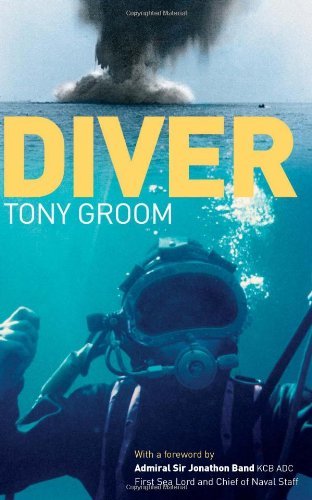
As the story progresses, as more rockets land in various parts of the world, the central trio recruit more scientists to their cabal. The messages, for example, were written by the world’s leading linguist. Who is subsequently asked by the UN to translate it. Newman, the author, adds to the global tension by placing stories of UFO encounters in various newspapers and magazines. A British film about aliens invading the Earth becomes a worldwide blockbuster after it is hyped by Newman’s contacts in the media. Meanwhile, Pontivy’s plan to extort more money for the plot from a French criminal backfires badly when the criminal tries to take over the self-created scientific elite. It all comes to a head when a Martian lands in Africa. It carefully manages to escape before the deception can be unmasked. By this point, the nations of the Earth have put away their atomic toys, are in thrall to Drummond’s League of Scientists, and eventually line up to vote in a world leader who proves to be Winston Churchhill in all but name.

It’s all wildly improbable and implausible. There’s no science in this science fiction, only vague handwaving by the narrating author. The central conceit is as old as Tsun Tsu, the book owes many of its ideas to the oeuvres of Verne and Wells, and Pontivy is an offensive racial stereotype. The end result is a potboiler which fails to convince on almost every level, yet remains mostly entertaining. It’s certainly not a definitive or seminal work, by any means. Likely it owes its alleged importance only to an accident of titling. Newman can’t have known a handful of years after the term “flying saucer” was coined that the term, that ufology itself, would prove so popular, or indeed that it would still be going strong sixty years later.
It is good to hear that America Reads. But it’s a shame, if The Flying Saucer is any indication, that it has such poor taste in books.

This review originally appeared in Interzone 232, January – February 2011.


1 Comment

Template, Matthew Hughes

Template, Matthew Hughes
(2008, PS Publishing, £20, 253pp)

Comparisons between Matthew Hughes and Jack Vance are inevitable, because if any writer is a template for Hughes’ fiction then it is Vance. Hughes’ Archonate novels are set on an Earth not unlike the Dying Earth, or on the worlds of a formless galactic polity called The Spray which resembles the Alastor Cluster (in fact, hussade, from Vance’s Trullion: Alastor 2262, is mentioned in Template).

Like many of Vance’s novels, Template is a bildungsroman, and one in which the protagonist is involuntarily pitched into a quest for his true identity. Said protagonist is Conn Labro, a highly-skilled and indentured duellist on the world of Thrais. Despite his abilities, Labro is a naïf and Thrais, with its culture based on contracts and transactions, has given him poor social skills. So when a regular customer is murdered, leaves him a fortune and an encrypted bearer deed to a planet, and an attempt is made on his own life, Labro has no idea how to respond. Happily, there is a young woman at hand to help him. Labro buys out his indenture and determines to discover his origin and the location of the planet he apparently now owns. The young woman, Jenore Mordene, he “hires” as a guide.

It’s in the nature of such a story’s template that the naïf’s voyage of discovery is as much literal as it is metaphorical. Labro’s bearer deed has determined his destination, Earth, and so he must travel there. En route, he learns something of The Spray – which gives Hughes opportunity to discourse on various cultural templates for societies. For example, one character posits a theory of societies each built upon one of the seven deadly sins. Thrais, with its “transactionalism”, is of course Greed. Unfortunately, Hughes makes little of this idea, using it merely as the topic of conversation.

On Earth, Labro sees all social interactions as a form of transaction. Mordene, however, is from a region of Earth which eschews money, and sees something different. This provides some interesting repartee, but does not advance the plot as such. But it certainly sets the template for their relationship.

It’s only when Labro learns what he has inherited that the villain of the piece steps in to the story. Now the template is Gothic. Not only does the villain remain masked but, as is often the case in such fictions, there is a greater enemy hiding behind him. And this greater villain must be defeated if Labro is to win and keep knowledge of his origin, his legacy, and the girl. And yes, the book’s climax does reveal Labro’s origin. It also explains the story’s title – there is indeed a very real template in the story.

At some point reading Template, everyone is sure to ask why we need Hughes when we have Vance. And the answer is: because we can never have too much Vance. And providing it’s done with invention and wit, then it’s as enjoyable as the real thing. Happily, Hughes matches the wit and invention of Vance. He also brings slightly off-kilter philosophical musings to his stories, and they provide a depth Vance sometimes lacks. Having said that, the writing in Template is a little stilted. While clearly intentional, it’s not entirely successful. Further, Labro is somewhat stiff a character, and Mordene is under-written. Neither characteristic is unexpected – at that intersection of bildungsroman and travelogue, where both protagonist and world are mapped, there’s little room for immersion.

This review originally appeared in Interzone 218, October 2008.


2 Comments

World fiction reading challenge #4: So Long A Letter, Mariama Bâ

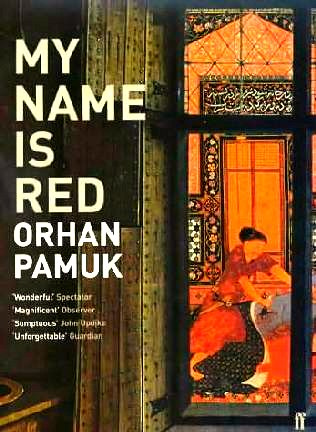
The more observant among you will have noticed there’s no third installment in this year’s reading challenge. That’s because March’s book was My Name is Red by Orham Pamuk and I got stuck about halfway into it. At some point I plan to return to it, but for now I’m giving it a rest. I can’t really say why I lost interest so comprehensively in the book, especially since its topic is something that normally interests me: Islamic history (albeit Turkish rather than Arabic). After reading Magda Szabó’s The Door in February, I wrote, “Two books in and already this year’s reading challenge is shaping up to be one of the best I’ve done.” Clearly, I spoke too soon…

Anyway, April’s book, which I read late, is So Long A Letter by Mariama Bâ, a Sengalese writer. In fact, So Long a Letter won the first Noma Award for Publishing in Africa in 1980, and was later called one of Africa’s Best 100 Books of the 20th Century by the Zimbabwe International Book Fair. So Long A Letter was originally published in French as Une Si Longue Lettre, and was Bâ’s first novel. It was also the only one she saw in print. She died in 1981, five years before her second novel, Scarlet Song, was published.

So Long A Letter is a short book of 95 pages. Ramatoulaye is a schoolteacher and the wife of Modou. He has just died and she is now in mourning. During this period, she writes to her closest friend, Aissatou, and recounts her life – much of which involves episodes involving Aissatou. The epistolary structure allows for greater intimacy, but the fact that Ramataoulaye is telling Aissatou of events which her friend herself directly experienced does seem to spoil the effect somewhat.

Though Ramatoulaye is an educated woman – Bâ herself had to fight her parents to be educated – I’m guessing much of her life is not atypical for a Sengalese wife and mother. Such as, for instance, her husband taking up with a younger woman and marrying her – in fact, not a “woman”, but a school friend of Ramatoulaye’s oldest daughter. Also, the declaration after the funeral by Modou’s brother that he will marry Ramatoulaye – ie, “inherit” her. She turns him down. Which is not typical. In fact, Ramatoulaye is adamant she will remain single now that she is widowed. When Daouda Dieng,a past suitor from before she married Modou, asks for her hand in marriage, she also turns him down. Neither the brother-in-law nor Daouda take their rejections well.

A lot of the novel concerns the family connections of the cast. Aissatou’s marriage was considered controversial because she came from a less affluent family than her husband. Likewise, when Ramatoulaye’s oldest daughter wants to marry an impoverished student, friends of the family try to persuade Ramatoulaye to prevent it. Ramatoulaye, however, knows that her daughter loves the man, and that’s good enough for her.

There are one or two moments of outright racism:

Right from Form One, he had been top of his class in this subject; but this year for every capital letter forgotten, for a few commas omitted, for a misspelt word, his teacher knocks off one or two marks. Because of this, Jean-Claude, a white boy who has always come second, has moved up to first position. The teacher cannot tolerate a black coming first in philosophy. (p 76)

The story is filled with details of life among the Sengalese, both as Muslims and as Sengalese. At one point, Daouda delivers a lecture on the importance of true democracy in a newly-formed nation (Senegal gained independence in 1960), and though he rues the male dominance of the Assembly and admits they need more women in government, his suit to Ramatoulaye seems to expect a much more traditional “partnership”. There is also much about polygamy and its effect on women involved; not to mention their huge families – Ramatoulaye herself has twelve children.

So Long A Letter is, unsurprisingly, a very reflective novel, and it is likely it is partly auto-biographical. Though only a slim book, it does an excellent job of painting Ramatoulaye, her life and the society in which she lives. It’s a classic for good reason. I’m not so sure the story quite leads to the final paragraph – various incidents recounted in So Long A Letter demonstrate that Ramatoulaye has both witnessed the happiness of others, actively worked towards it for yet more, and even experienced it herself during the early days of her marriage:

The word ‘happiness’ does indeed have meaning, doesn’t it? I shall go out in search of it. Too bad for me if once again I have to write you so long a letter… (p 95)

So Long A Letter was a good choice for my reading challenge. I’m glad I read it. I might even one day have a go at Bâ’s other novel, Scarlet Song.


4 Comments

The Caryatids, Bruce Sterling

The Caryatids, Bruce Sterling
(2009, Del Rey, $25.00, 297pp)

In 1930, Hugo Gernsback wrote, “Not only is science fiction an idea of tremendous import, but it is to be an important factor in making the world a better place to live in, through educating the public to the possibilities of science and the influence of science on life which, even today, are not appreciated by the man on the street.” And yet in the decades since then, the genre has ceased to be either didactic or predictive. A science fiction may have something to say – and most certainly do – but any such conversation will most likely be about the present.

Bruce Sterling, however, is not just a science fiction writer. He has also been a “Visionary in Residence”, at both the Art Center College of Design in Pasadena, California, and the Sandberg Instituut in Amsterdam. He has eleven science fiction novels to his name, and five collections of short stories. He has also written non-fiction, such as Tomorrow Now and Shaping Things. His last three novels could be described as conversations with the future: in Zeitgeist, it was the commodification of entertainment product and the feral capitalism of the ex-Soviet client states; in The Zenith Angle, it was the War on Terror and ubiquitous surveillance; and now, in The Caryatids, it is the collapse of the earth’s climate, of the global economy, and of nation-states.

The Caryatids of the book’s title are the four surviving clone sisters of a group of seven created by a female Croatian warlord (what is the female equivalent of warlord? warlady? bellatrix?). Vera is a member of a recovery team on the Adriatic island of Mljet (known to the Ancient Greeks as Melita), which has suffered toxic pollution. Radmila has married into a powerful Hollywood family and is now a media star. Sonja is a medic, living and working for the Chinese in a space city in the Gobi Desert. And then there’s Biserka, who is insane.

I suspect it’s no accident there are seven clone sisters – that’s one for each continent. It’s equally telling that only four have survived. Vera is Europe – technological, non-authoritarian, looking for new ways to live. Radmila is the US – technology-backed spectacle, a self-imposed role as the guardian of the planet, and wielding capitalism as a weapon with the clinical precision of a scalpel. Sonja is Asia – undefeatable, strong, and finding a way to live that neither Europe nor the US would ever contemplate. And poor Biserka is Africa – the dark continent, forever at war with itself.

There is also an eighth clone, a man. His name is Djordje – AKA George – and he is a Viennese businessman. He has a nice Viennese hausfrau wife and dalring children. He is successful, and makes more than enough money to keep his family safe and secure. He’s not above bending laws, or ethics, when making deals. He has just started using the latest business tools and he thinks they’re wonderful. George is perhaps the world as it used to be.

And the “mother”? She is the climate disaster which created the world of The Caryatids. Once she’s done her bit, she’s hustled off to a space station in orbit, out of the way of story and history.

Each clone has her story – and The Caryatids is a story. And shown to be a story about a story in the afterword “interview” with Radmila’s daughter, Mary Montalban. There are three sections to the novel: Vera, Radmila and Sonja. An epilogue sees all four meet for the funeral of their mother. They are burying the world’s past as much as they burying their own.

The world as it is in The Caryatids is not the world we know. The climate has crashed, billions have died, and most nation-states have failed. The world is now dominated by two supra-national societies – the Dispensation and the Acquis. The Dispensation is Californian and supremely capitalist. Its members talk like the flakiest of Hollywood “business” people. The Acquis are European.

As a writer or a visionary, Sterling has never been short of ideas, and there are plenty in The Caryatids. Most of them seem extrapolated from his arguments in Tomorrow Now and Shaping Things – ubiquitous computing, and complex devices created from simple components using unsophisticated techniques. This is a “spime”-dominated future.

Conversations can change minds. They can alter opinions. When conversing about the future, wiggle-room for such changes is built-in. The Caryatids is not going to be “educating the public to the possibilities of science and the influence of science on life”, but it may well prove a catalyst for conversations which will do that. Gernsback might not recognise the 21st century version of his “scientification”, but for those of us living in the 21st Century and gazing into the abyss of the future, The Caryatids provides a thought-provoking, entertaining and perhaps important roadmap for the decades ahead.

This review originally appeared, with an interview with Bruce Sterling, in Interzone 221, March-April 2009.


1 Comment

30 words on 30 books

I shamelessly stole this idea from Pornokitsch, who did the same yesterday. Since I’m not doing my readings & watching posts this year, I thought thirty words on the last thirty novels I’ve read might be a good way of mentioning my recent reading. But 30 words is actually harder to do than it looks…

Final Days, Gary Gibson (2011)
Discovery on planet orbiting distant star reached by wormhole suggests future is fixed and immutable. World starts to fall apart. Nice Apollo re-enactment but otherwise not that much stands out.

The Member of the Wedding, Carson McCullers (1946)
Tom Sawyer-ish Frankie daydreams of brother’s wedding. A GI mistakes her age, wants to get frisky. Lovely writing, though it’s hard not to suspect Frankie is wrong in the head.

Like A Sniper Lining Up His Shot, Jacques Tardi (2010)
Graphic novel adaption of French thriller set in the UK. Assassin like father like son. With guns. And gore. Not much more to be said. Tardi is definitely worth reading.

Bodies, Jed Mercurio (2002)
Incompetent doctors get away with murder on the NHS. New houseman is horrified. He learns to work with the system. A favourite writer but it will scare you off hospitals.

City of Pearl, Karen Traviss (2004)
First human colony disappears, rescue mission discovers aliens protecting them. Mix of hard sf and space opera. Nice heroine, not so interesting aliens. Oozes competence without suggesting more. Review here.

The Bender, Paul Scott (1963)
Should have been a film with Dirk Bogarde. 1960s wastrel goes begging for cash and sparks family crisis. Great wit, great writing, and an astonishing postmodern interlude. Recommended. Review here.

Leviathan’s Deep, Jayge Carr (1979)
Freak alien resembles humans. They want to conquer her planet and fall in love with her. She scuppers their plans. Somewhat old-fashioned sf, though protagonist well-drawn. Review on SF Mistressworks.

The Bookman, Lavie Tidhar (2010)
Literary and pulp potage which stripmines steampunk tropes. Orphan adventures, starts cleverly in Victorian Lizard London but loses steam about halfway through before Bond-esque Vernian finish. The first of three.

Omega, Christopher Evans (2008)
Man recovering from terrorist bomb explosion dreams himself into alternate self in a world where WWII never ended. Very cleverly done, alternate world very real, great writing. Recommended. Review here.

Angel At Apogee, SN Lewitt (1987)
Princess pilot, a hot-shot of course, proves to be catalyst which rejoins three sundered races on three separate planets. Interesting debut, though perhaps a little over-egged. Review on SF Mistressworks.

The Fat Years, Chan Koonchung (2009)
China prospers while rest of world in financial crisis. Interesting window on Chinese society, though unsatisfactory as a novel – the plot is explained in a final chapter info-dump. Review here.

The Fall, Albert Camus (1957)
Pompous ex-lawyer monologues at stranger in Amsterdam bar and over several days tells him of his somewhat boring fall from grace. Mercifully short, though there’s some insightful writing in it.

Selected Poems, Lawrence Durrell (1956)
It’s a book of poems. And they were selected. By Lawrence Durrell. He did this several times. Except when he wasn’t collecting his poems for his Collected Poems. More here.

Betrayals, Charles Palliser (1994)
A story told through several stories – including a superb pisstake of Taggart, and a righteous skewering of Jeffrey Archer. Superbly done, though perhaps needed the stories tying together more. Recommended.

Leviathan Wakes, James SA Corey (2011)
Solar system shenanigans as alien virus wreaks havoc for corporate profit. Who needs New Space Opera? Regressive: no diversity, old school sexism, implausible villainy. Mostly right physics. Avoid. Review here.

Native Tongue, Suzette Haden Elgin (1984)
Men repeal rights of women, so they secretly develop women’s language. Interesting linguistics, good female characters, though characterisation of men not so convincing and world-building weak. Review on SF Mistressworks.

This Island Earth, Raymond F Jones (1952)
Manly engineer saves the galaxy by demonstrating good old US engineering know-how. Womanly PhD does his ironing and cooking. Happily they don’t write them like this any more. More here.

The Lady in the Lake, Raymond Chandler (1944)
Mixed-up femme fatales don’t fool Marlowe in hunt for rich man’s missing wife. Not the cunningest murder-mystery plot and Marlowe often gets away with murder. Strong on place and time.

The Door, Magda Szabó (1987)
In Hungary, writer hires housekeeper, who proves to be old school peasant and a right character. Fascinating portrait of housekeeper, thoroughly enjoyed it. Soon to be major film. Review here.

The Unorthodox Engineers, Colin Kapp (1979)
Collection of sf shorts in which lateral thinking engineers solve seemingly intractable problems. Dated, problems not especially unsolvable, nor especially original. Entirely forgettable, in fact. Hard book to find, though.

Journey to the Centre of the Earth, Jules Verne (1864)
Story not as good as Nemo’s though text is more pleasingly detailed. Science horribly dated, of course, and often wrong. Characters bizarrely emphatic – except for phlegmatic Icelandic guide. Historical document.

Arkfall, Carolyn Ives Gilman (2008)
Novella set on human-colonised Europa-like planet with interesting socialist society. Woman and male tourist find themselves on unintended journey after seaquake. Promises more than it delivers but still worth reading.

Kamikaze l’Amour, Richard Kadrey (1995)
Kadrey channels Ballard and Shepard in rock star epiphany in California overrun by Amazonian jungle. Not sure how original was 17 years ago but is not now. After Metrophage, disappointing.

Smart-Aleck Kill, Raymond Chandler (1958)
Collection of four shorts. Simple direct prose, strong on place and time, though plotting something of a direct line and characterisation sketchy. More for noir fans than normal readers, possibly.

Embassytown, China Miéville (2011)
Truthful aliens get hooked on impossible Ambassador’s speech. World falls apart. Narrator teaches aliens to lie and saves planet. Interesting ideas but old-fashioned science fiction. Likely award-winner. Sigh. Review here.

Dr No, Ian Fleming (1958)
Bond in Jamica. Again. Racial stereotype has evil plan to do evil. Bond foils, with help of trusty local. He nearly dies in the process, but he gets girl. Again.

The Incal, Alejandro Jodorowsky & Moebius (1981)
Seminal bande dessinée allegedly cobbled together from failed Dune film project. Light and dark Incal combine to save galaxy from evil Darkness. Completely bonkers. Lovely art. Everyone should own copy.

Alias Grace, Margaret Atwood (1997)
Character study of true life murderess from 1840s. Clevery done – never quite determines innocence or guilt, though very detailed on life and crime. Lovely writing. Possibly Atwood’s best novel. Recommended.

The Planet Dweller, Jane Palmer (1985)
Hot flushes and giant aliens that live inside planets. Cartoon aliens that want to conquer galaxy. Hit and miss comedy, but too fantastical for sf. Review soon on SF Mistressworks.

The Ginger Star, Leigh Brackett (1974)
By-the-numbers swords and planets. Manly hero brought up by animals battles way across barbarian planet to save mentor. Been there, done that. Yawn. Review soon on SF Mistressworks.


3 Comments

World fiction reading challenge #2: The Door, Magda Szabó

Two books in and already this year’s reading challenge is shaping up to be one of the best I’ve done. The Fat Years (see here) may have been an unsatisfactory novel but it was a fascinating read. The Door by Magda Szabó is from Hungary, and is similar to last month’s read in that its story is intertwined with the history of its native country. It is also a fascinating read and an excellent novel.

The unnamed narrator of The Door is a thinly-veiled portrait of Szabó herself, but The Door is about the old woman, Emerence, who the “lady writer” takes on as a housecleaner. The novel follows this relationship during the years of the Kádár regime, or “Goulash Communism”, from 1956 to 1989. There is a state funeral mentioned at the end of the novel, but the deceased is never named. I did wonder if was Kádár himself, but some of the details mentioned in the novel don’t quite add up, and the chronology is not exact. I know almost nothing about Hungarian history – although I have now read the Wikipedia articles on the topic – but I suspect the identity of the person would be plain to a Hungarian reader.

But all this is by the by. The Door is about Emerence. She is a fascinating character. One newspaper review of the book described her as the sort of person which communism saw as its ideal citizen. She is uneducated but possesses a sharp natural intelligence. She’s unafraid of speaking her mind, and indeed fearless in her relations with the authorities. She is fixed on living her life according to her own rules. She is generous and open-hearted to a fault, but unforgiving of fools or those who disappoint her. The door of the title is the front door of the flat in which she lives and through which only a handful of people have ever passed. Emerence guards her household and privacy with fierceness.

During the twenty years over which the novel is set, the lady writer’s career takes off, though her life-style does not change. She is awarded prizes, appears on television, and is even invited to a writer’s conference in Greece as the Hungarian representative. Throughout all this, her husband – who remains unnamed – also writes but no mention is made of his career. In fact, it is his ill-health which drives part of the plot of the novel.

Emerence and the lady writer argue a lot, and often fly into rages. These sudden attacks of anger were quite strange initially, as the characters felt far too volatile to be entirely credible. Perhaps it is Hungarian character – I’m not familiar with it. But then we British are known for our reserve, so it’s likely just my perspective. Whatever the explanation, as the story progressed the less remarkable it became. As Emerence and the narrator grow closer, so Emerence reveals snippets from her life. Some of this goes toward her explaining her character. It is the lady writer’s betrayal of Emerence which brings the story to a close – and I had to wonder if the relationship is perhaps a symbol of something wider, something a Hungarian reader would recognise.

Emerence is one of those great characters you often find in literature. She is as mysterious as she is carefully drawn, and it is the slow revealing of the pieces which go to make up her personality that are the real strength of The Door. The remaining cast, many of which are not named, are also well-drawn, but The Door is about Emerence and is Emerence. I really liked this book.

Magda Szabó is one of Hungary’s most popular and lauded writers, but Imre Kertész is the only Hungarian to have been awarded the Nobel Prize, in 2002. The British translation by Len Rix of The Door won the Oxford-Weidenfeld Translation Prize in 2006, and the book was also short-listed for the Independent Foreign Fiction Prize. A film of the book, directed by István Szabó (no relation), will be released this year, with Helen Mirren in the role of Emerence. Here’s the sales reel: