It Doesn't Have To Be Right…

… it just has to sound plausible


8 Comments

More Catching Up With The Challenge

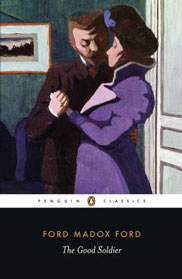
October’s book for my 2008 Reading Challenge was Ford Madox Ford’s The Good Soldier. Like many of the books I chose for my challenge, I knew almost nothing about it. I knew it existed; I’d probably seen mention of it in various places, not to mention catching sight of it on the “classics” shelves in my local Waterstone’s. But I knew nothing about Ford – who he was, what part he played in English literature, or even what was the general reputation of The Good Soldier. And that’s one reason why I chose it. The other reason is that it’s a slim novel – I’d have liked to try a James Joyce novel, and I have a copy of Ulysses… but it’s huge (I also own Anthony Burgess’ Here Comes Everybody, his study of, although there’s little point in reading about, unless I’ve read Joyce, Joyce, Joyce*).

However, The Good Soldier…

The novel is set just prior to World War I and is narrated by John Dowell, a wealthy American mostly resident in Europe. He and his wife, Florence, spend several months each year at Nauheim, a spa in Germany. While there they’re chiefly in the company of another couple, Edward and Leonora Ashburnham, who are English. Edward is the good soldier of the title. Dowell’s narrative skips about in time, describing incidents in no particular order from the decade or so during which the Dowells and Ashburnhams are friends. What Dowell does not initially reveal – although it’s later clear that he knows it at the time he is recounting the story – is that Edward is a philanderer and having an affair with Florence. And she has also had a succession of lovers – beginning with a blue-collar thing, Jimmy, whom she was sleeping with when she married Dowell.

As The Good Soldier progresses, Dowell reveals more and more of the peculiar dynamics between the two couples. When Florence learns that Edward has fallen in love with Nancy Rufford, the ward of Edward and Leonora, she commits suicide. Edward also commits suicide later, when Leonora sabotages Nancy’s burgeoning love for him.

Ford originally titled the novel The Saddest Story, and Dowell repeatedly describes the story as the saddest he knows. Perhaps too often. I can understand how a chronologically non-linear narrative might have been seen as something new and astonishing in 1915, when the book was first published, but it’s an unremarkable technique nowadays. The same is also true of using an unreliable narrator (if you’ve read anything by Gene Wolfe, you’ll be only too familiar with unreliable narrators). Which means that much of what’s interesting about The Good Soldier is no longer the case. The book does, however, give a good indication of what life was like for wealthy Edwardians – for example, Edward is almost sent to prison for kissing a maid on a train. That “consorting with the lower classes” was a crime then seems completely bizarre.

Ford’s maintenance of Dowell’s voice throughout The Good Soldier is impressive. Not once does he let his character slip. Unfortunately, far too much is told rather than shown. I suppose in part that’s the nature of a recounted narrative. It’s also perhaps the fashion of the time. But it reads somewhat distant to a modern reader.

In all, I find it hard to consider The Good Soldier as good as its reputation. I enjoyed reading it, and it’s a clever evocation of Edwardian England. But its two innovations – a non-linear narrative and an unreliable narrator – are neither as remarkable as they were in 1915. It’s by no means a difficult read, although it is difficult to care about the characters – which is hardly unsurprising, given that they’re hardly pleasant people. “Good people”, perhaps, but not pleasant. Having said that, I think I rate The Good Soldier higher than some of the books I’ve read during my challenge. But The Jewel in the Crown remains the highwater mark, and A Question of Upbringing a distant second.

* to spoof Burgess’ infamous: “He breathed baffingly on him, for no banquet would serve, because of the known redolence of onions, onions, onions” in Enderby Outside.


Leave a comment

I’d Just Like to Thank…

… the person who threw seafood all over my yard last night.

I left the house this morning to be confronted by a carpet of prawns, cockles, mussles and calamari. I suppose they could have been deposited by a storm, or a tsunami, but I very much doubt either would have shelled the prawns. Or the cockles and mussels. Not to mention cutting the squid into rings.

Um, perhaps there’s a story in there somewhere…


3 Comments

Truth from teh interwebs

You can find the strangest (SFW) things out there. Some of them even approach the truth…

Ian Sales’s Dewey Decimal Section:

885 Classical Greek speeches

Ian Sales = 91491259 = 914+912+59 = 1885

Class:
800 Literature

Contains:
Literature, criticism, analysis of classic writing and mythology.

What it says about you:
You’re a global, worldly person who wants to make a big impact with your actions. You have a lot to tell people and you’re good at making unique observations about everyday experiences. You can notice and remember details that other people think aren’t important.

Find your Dewey Decimal Section at Spacefem.com


1 Comment

More Music

Saw Anathema live last night. I first saw them two years ago in Glasgow, but this time it was local. Not a big gig. Intimate, almost. But very loud. And excellent. Definitely one of the contenders for the best gig I’ve attended this year.

Here they are playing their “hit single”, ‘Fragile Dreams’. It’s from their Were You There? live DVD.

I can’t wait for the new album.


1 Comment

Walking the Same Road?

One of the things which really annoys science fiction fans is non-sf authors writing science fiction novels but refusing to admit they have done exactly that. There have been plenty of examples – PD James’ The Children of Men, Maggie Gee’s The Ice People (of which Jeremy Paxman said it couldn’t be science fiction because it was good), and pretty much anything by Margaret Atwood which doesn’t feature “squids in space”…

Of course, the reverse is also true to some extent. We fans of science fiction are happy to claim for the genre works which we feel fit the genre’s remit, even though they were not written by sf writers, or even identified as sf by their authors. Such as George Orwell’s Nineteen Eighty-Four or Anthony Burgess’ A Clockwork Orange. Admittedly, Burgess was not unfriendly to sf – albeit not as friendly as Kingsley Amis or Michael Chabon – but he preferred to think of it as “futfic”.

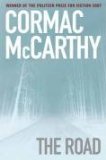
Which brings us to Cormac McCarthy’s The Road.

It’s a mainstream novel by a mainstream author. Literary fiction, if you will. It won the Pulitzer Prize for Fiction, and the James Tait Black Memorial Prize. And yet comparisons with sf novels are inevitable – George R Stewart’s Earth Abides and Walter M Miller’s A Canticle for Leibowitz, especially.

Incidentally, I dislike the term “literary fiction”. It’s mis-used too often as a genre tag, a handy way to label fiction some people don’t like. So rather than being descriptive, or perhaps even aspirational, it becomes a barrier, a shorthand for “I won’t read this book because I read a book once that wasn’t a simple escapist tale and I didn’t like it, so all books like it must be rubbish”.

I prefer to think of fiction as occupying a scale similar to food. At one end you have fast food – junk reading, intended to entertain but doesn’t require much thought. At the other end, you have gourmet reading – prose to savour, books to think about after you’ve finished them, products of great talent and skill. And, of course, there’s everything between those two extremes.

But The Road… Comparisons to sf are inevitable because of The Road‘s subject. It is a post-apocalypse novel. Something destroyed civilisation, and most of the life on Earth, years before. A man and his son walk from somewhere in the north of the United States towards warmer climes at the coast. En route they encounter other survivors – some have turned to cannibalism, others to violent tribalism. But there is no hardy community of back-to-nature survivors.

Few sf novels, even ones about the end of the world, are as bleak as The Road. Perhaps that’s because science fiction – despite much discussion of late claiming the contrary – is an inherently optimistic genre. It takes as axiomatic that problems can be solved, that phenomena are open to explanation. It’s pure optimism to assume – to operate on the assumption – that the universe is explicable. And malleable. And part of the bleakness of The Road stems from its refusal to explain the cause of the apocalypse.

In fact, there’s very little in the way of explanation in The Road. The man and the boy are not even named. The man also displays knowledge from a variety of fields – medicine, engineering, woodcraft – but his background is never described.

And then there’s the prose. Which is a great deal better than that you’d expect to find in a sf novel. There are indeed well-written (gourmet, so to speak) sf novels, but the genre is not known for the quality of its writing for good reason. McCarthy’s prose is spare, often stark – frequently forgoing even verbs – and is as responsible for the novel’s sense of bleakness as its dour premise. Some of it works really well:

The soft black talc blew through the streets like squid ink uncoiling along a sea floor and the cold crept down and the dark came early and the scavengers passing down the steep canyons with their torches trod silky holes in the drifted ash that closed behind them silently as eyes.

Some is less successful: the occasional odd verb, such as “… glassed the valley below them with the binoculars” or bizarre terms like “the snow lay in skifts all through the woods” and “the snow stood in razor kerfs atop the fencewires”. Skifts? Kerfs?

McCarthy’s punctuation is also… odd. Paragraphs are formatted as they would be on-line, with no indents and a line or two of space between them. But dialogue in a single paragraph is indented, and does not use inverted commas. This lack of quotation marks does somewhat distance the speech, which may have been the intent. McCarthy clearly doesn’t want the reader to get too close to the man or the boy. Or he would have named them.

I can think of no good reason, however, why he chose not to use apostrophes for certain constructions. The apostrophe is there in “there’s” and “they’re”; but not in “wont” or “cant” or “wouldnt”. I don’t understand the logic in not using it only for the elided “o” in “not”.

The Road is a very good novel indeed. But, despite its prizes, despite its acclaim, despite the film being made of it, The Road is not an important novel. It will not alter the way we think of post-apocalypse novels, it will not affect the relationship between sf and mainstream literature. At least, it will certainly not do that within the genre. Perhaps non-sf readers might think differently, but I suspect not.


7 Comments

2008 Reading Challenge: The One That Made It All Worthwhile

I’m still a bit behind with this year’s reading challenge, but I’m slowly catching up. For September’s book, which I didn’t actually start until this month, I picked The Jewel in the Crown by Paul Scott. Like most Brits my age, I have vague memories of the ITV adaptation from 1984. Other than that, I knew little about the book, or its author. And it’s unlikely that would have changed… if I hadn’t found all four books of The Raj Quartet going for £1.38 for the lot in a local charity shop, and thought they might be worth a go.

I should have come to Scott sooner. My favourite non-genre writers are Lawrence Durrell, John Fowles and Anthony Burgess, all British post-modern literary writers who came to prominence in the first two decades of the latter half of last century. As did Scott. There are other similarities – all four spent time abroad and later set fiction there: Burgess in Malaysia (The Long Day Wanes); Fowles in Greece (The Magus); Durrell… well, take your pick: he was a professional expat and set novels pretty much everywhere he lived; and Scott, of course, in India. Further, all four are known chiefly by the general public for only one of their works – The Raj Quartet for Scott, A Clockwork Orange for Burgess, The French Lieutenant’s Woman for Fowles, and The Alexandria Quartet for Durrell.


But on to the book itself.

Not having read anything by Scott before, I’d expected a relatively traditional narrative, something like EM Forster’s A Passage to India, perhaps. But the first page proved me wrong. Rather than pull the reader into the story of The Jewel in the Crown, Scott explains it: “This is a story of a rape, of the events that led up to it and followed it and of the place in which it happened.” The next forty pages then relate the life of Miss Crane, who moved to India as a governess in 1907 but stayed on when her employers were posted back to Britain. She became a teacher in the mission schools and, by the time the rape occurs in 1942, she is Superintendent of Schools in Mayapore, where The Jewel in the Crown is set. But she doesn’t actually have anything to do with the rape.

But then neither does Lady Lili Chatterjee. Or Sister Ludmilla. Or Mr Srinivasan. Or Brigadier Reid. Or Duleep Kumar. Yet these are all viewpoint characters in The Jewel in the Crown, and it is through them, and their stories, that Scott builds up a picture of the events sparked off by the rape of Daphne Manners by a group of Indian men. These viewpoints are written in a variety of narrative styles. Some are third person, some are first person. Some are presented as the spoken recollections of a character – and Scott’s handling of each character’s voice is impressive – to an unnamed listener. There are some lovely bits of prose, such as :

With all the chicks lowered the house is dark and cool even at midday. The ceilings are very high. In such rooms human thought is in the same danger as an escaped canary would be, wheeling up and up, round and round, fluttering in areas of shadow and crevices you can imagine untouched by a human hand since the house was rebuilt by MacGregor.

The Jewel in the Crown is by no means an easy read. Scott maintains voice so rigorously that the narrative rarely sticks to the story, and often detours into areas – such as the backgrounds and characters of his cast – which do not actually advance the plot. Duleep Kumar, for example, is Hari Kumar’s father, and Hari is one of the men accused of Daphne’s rape. Duleep’s story explains Hari – the Indian who is more English than the English – but it’s peripheral to the story.

Of course, India is as much a character in the book as Hari, Daphne and the others. It is represented by the invented city of Mayapore. Scott has not stinted on the details, nor on the thoughts and feelings of each of the various characters to the town and the country. The most damning is Hari, an Indian brought up in England and educated at the best schools, who does not feel Indian, but is treated as such. He thinks of himself as invisible: too Indian for the English, too English for the Indians. He’s the pivot about which the plot of The Jewel in the Crown revolves.

The Raj Quartet has been criticised for perpetuating prejudices and racial stereotypes. In a 1984 essay ‘Out of the Whale’, Rushdie pointed out that if Daphne Manners’ rape was a metaphor for the British exploitation of India, it should have been the rape of an Indian girl by white men. Which completely misses the point. The Jewel in the Crown is not about the exploitation of India. Scott is not writing about the Indian experience, about being Indian under the Brits. He is writing about two societies crashing together, each driven by an imposed agenda. The rape is merely the trigger for the reactions of the characters in the book, and those reactions are specific to those involved.

Nor is it surprising that The Jewel in the Crown perpetuates racial stereotypes. The story is told through its characters, and it is their sensibilities which are on display. Miss Crane, Brigadier Reid, Sister Ludmila, and Daphne Manners are all white. Brigadier Reid, for example, is offensively patronising because he epitomises the attitude of his generation of India hands. A reader who doesn’t understand that is missing the point. If Scott wanted to depict a balanced viewpoint, he would not have used Reid.

Now, obviously, my perspective on The Jewel in the Crown is going to differ from Rushdie’s. But I’m not reading it as a Brit, I’m reading it as a British expat – or rather, an ex-expat – who grew up in the Middle East as a “privileged white”. Of course, the parallels are not exact; the Gulf was not the Raj. Also, by the late 1960s / early 1970s, attitudes and sensibilities had changed a great deal. But I went to English speaking schools (I’m a founding pupil of two English speaking schools in the Gulf), I mixed with other European kids, and I rarely if ever socialised with Arabs or people from the Indian subcontinent. When I returned to the Gulf to work in the early 1990s, things were different. At one point, I was the only Brit in my employer’s Systems Development department (and I was also the only male). And yet in many respects, things had not changed: when I asked an Indian colleague why she was filling in a membership form for a bar, she told me it was so she wouldn’t be turned away at the door. I replied that I’d never been refused entry. “You’re white,” she said.

There is a particular British expat experience which The Jewel in the Crown (and Durrell’s The Alexandria Quartet) both make use of. Neither mirrors precisely my own experiences growing up in the Gulf, but there’s a… shape in the text, in the life and interaction of the characters which comes close to emulating it. It’s not as arrogant as:

In his heart he also shares with that old ruling-class of English he affects to despise a desire to be looked-up to abroad, and shares with them also the sense of deprivation because he has not been able to inherit the Empire he always saw as a purely ruling-class institution.

… But there is certainly a shadow of Empire colouring the experience, as well as an understanding of Britain which is filtered through the perceptions of those who were once ruled by it. It’s Britishness informed by the culture of its surroundings, a microcosm of Britishness – almost a siege-mentality in some respects – but one which has subsumed some aspects of its environs. It no longer maps directly onto the culture of Britain. It’s an experience I suspect is slowly vanishing as the world grows “smaller”. Since the alternative appears to be McDonald’s, Cocoa-Cola and Hollywood, then I’m not convinced its disappearance is a good thing.

Of the books I’ve read so far this year for my reading challenge, The Jewel in the Crown has easily been the best. I certainly plan to read the remaining books in The Raj Quartet – The Day of the Scorpion, The Towers of Silence and A Division of the Spoils. And I shall be adding Paul Scott’s other novels to my wants list. Oh, and I want to watch the television adaptation again.


2 Comments

Me & My Magic Man

I’ve not had a musical interlude for a while. So let’s have one.

It’s not all death metal round here, you know. Every now and again I like to wig out to a bit of 1970s prog rock. Check this one out. Uriah Heep, performing their classic ‘The Wizard’ on some television show.

Bad lipsynching! Flowery jeans! Dancers in hotpants! Mick Box giving it some axe attack! An audience that looks like it doesn’t know what it’s doing there! Ah, those were the days…


1 Comment

Yet Another Meme…

… but it’s book related, so that’s all right. I saw this on Omphalos’ blog.

Hardback or trade paperback or mass market paperback?
Depends. Hardback for my favourite authors, paperback for others. Not too keen on trade paperbacks, but if that’s the first edition of a book by a favourite author then that’s what I’ll buy.

Bookmark or dog-ear?
Bookmark. If dog-earring books isn’t a sin, it damn well should be.

Alphabetize by author or alphabetize by title or random?
Alphabetical by author, and titles by year of first publication within each author. I’ve never been entirely sure what to do with anthologies edited by authors – should they be placed chronologically, even though they probably contain no fiction by the author, or should they be shelved separately?

Keep, throw away or sell?
I never throw books away. Books I don’t want I either sell on eBay, give away on BookMooch, give to friends or donate to charity shops.

Keep dust jacket or toss it?
Who throws dust jackets away? That’s just plain stupid.

Last book you bought?
The last book to arrive since this lot is The Twist in the Plotting: Twenty-Five Poems by Bernard Spencer, a chapbook published by the University of Reading Arts Department in 1960. The last book I actually bought, but it has yet to arrive, is a signed edition of Louisiana Breakdown by Lucius Shepard.

Last book someone bought for you?
Would probably be one I received for my birthday. On the one hand, it’s easy to buy presents for me: just get a book. On the other hand, I tend to buy the books I want myself, so there’s a danger I might already have it. Wishlists, FTW.

What are some of the books on your to-buy list?
My wants list is huge. Let’s see… there are a few new books I want, like Chris Beckett’s The Turing Test or Paul McAuley’s The Quiet War; some books which will be published in the next six to nine months, such as Gwyneth Jones’ Spirit or Bruce Sterling’s The Carytids or Gary Gibson’s Nova War; various titles I need to complete an author’s oeuvre; and the odd book that looks interesting, both fiction – for example, Élisabeth Vonarburg’s Dreams of the Sea – and non-fiction – Personal Landscapes by John Bolton (about the Cairo poets of WWII).

Collection (short stories, same author) or anthology (short stories, different authors)?
Both. But not all anthologies. It depends on the theme. The New Space Opera and The Space Opera Renaissance are both good. But I’m not into steampunk so steampunk anthologies are not going to appeal to me. Year’s best anthologies are a good way of keeping up with what’s been published in short fiction, but it’s difficult to find the right one to buy. It’s unlikely you’ll agree that all the contents are the “best”, but each of the different ones usually have some overlap so there’s not much point in getting all of them…

Harry Potter, Lemony Snicket, or the velvety embrace of Death?
Death, definitely.

Morning reading, afternoon reading, or nighttime reading?
Usually night-time, although on the weekends I’ll also read in the afternoon.

The books you need to go with other books on your shelves?
I still have one or two series missing installments, but I’m slowly completing them. But not at any cost. I wait until I see a copy going cheap.

Do you read anywhere and anytime you can or do you have a set reading time and/or place?
I read on the tram to and from work. Like a lot of people, I also read on the loo. Sometimes I read while I’m watching telly – but not foreign films: it’s impossible to read and watch subtitled films. And I read just before I go to sleep.

Do you have seasonal reading habits?
No.

Do you read one book at a time or do you have two or more books going at once?
Uusually one at a time, but on occasion I’ve read two or more concurrently. Depends. Usually it only works if the second book is one you can dip into at intervals.

What are your pet peeves about the way people treat books?
Not looking after them – breaking spines, putting creases in the cover, scribbling in them, etc. Well, except for author’s signatures, of course. Some of the paperbacks I’ve sold on eBay are twenty-five years old but looked brand new. Admittedly, they were in storage for fifteen of those twenty-five years…

Name one book you surprised yourself by liking.
The Jewel in the Crown by Paul Scott. I’m currently reading it as part of my 2008 Reading Challenge. There’ll be a blog post going up about it in a few days. Given that I’ve not really enjoyed most of the classic novels I’ve picked to read this year for my challenge, I was delighted to discover that Scott’s writing is the sort I enjoy most, with the added bonus that The Jewel in the Crown is about expat Brits (a topic which always resonates with me). I fully intend to read more Scott – after I’ve finished the Raj Quartet.

How often do you read a book and not review it on your blog? What are your reasons for not blogging about a book?
Other way round: I blog about a book for a reason. Because of all the reviews of Neal Stephenson’s Anathem, I posted a review of Andrew M Stephenson’s Nightwatch. A discussion on various blogs about optimism in sf prompted me to post a review of the most miserable – but still excellent – sf novel I could find, DG Compton’s Chronicules. Niall Harrison reviewed Gwyneth Jones’ Kairos on Torque Control, so I reviewed her earlier Escape Plans. I worked my way through some, but not all, of the novels shortlisted for the 2008 BSFA Award. The publication of a new Culture novel is an event, so I had to review Matter. And, of course, there’s my annual reading challenge…

EDIT: and I should thank John at SF Signal for coming up with the meme in the first place. Although his original questions have altered somewhat as they’ve propagated through the blogosphere…


2 Comments

Books Overload!

I normally buy one or two books a week, usually from eBay or ABEBooks. This morning at the post office, I was handed eleven. It was a good job I’d taken a big carrier-bag. Since there were so many, I’d thought I’d do a “books received” type blog post. Only one of the books was actually published this year, by the way.


It’s quite an odd selection, even for me.

At the back, there’s one of the big Dan Dare reprint collections – The Man From Nowhere. Titan Books have been reprinting the Dare strips over the last couple of years, but I prefer the bigger Hawk Books collections. Which are hard to find, and often expensive.

Also at the back is Naval Fighters 29, a book on two models of Martin flying boat – the largest flying boats to fly in active service, in fact. I like books on planes. But only certain planes.

The large dark green book is Down the Styx by Lawrence Durrell, a signed and numbered small press novella. The interior looks absolutely gorgeous. One for the collection.

Speaking of collections, Expatria Incorporated completes my Keith Brooke collection (with the exception of the soon-to-be-published The Accord, of course), and The Sirian Experiments now means I have all five of the Canopus in Argos books. Signed first editions. I bought the other four cheap on eBay a while ago, but since Lessing was awarded the Nobel the price has shot up. If I’d waited much longer, completing the set could have proven really expensive. The other two sf books are a Stephen Baxter collection, The Hunters of Pangaea, and Stretto, the fifth and final installment in L Timmel Duchamp’s excellent Marq’ssan Cycle.

Finally, there’s a few poetry collections – Terence Tiller’s Poems, his first collection from 1941; another Salamander collection of WWII poetry, From Oasis into Italy (I also have Return to Oasis); and a pair of anthologies compiled by Geoffrey Grigson from 1939 and 1949. New Verse: An Anthology features photographs of the contributing poets at the back – it looks a bit like a casting call for an episode of Jeeves & Wooster. And Poetry of the Present still has a reviewing slip in it – “Publication Date 28th April 1949, Price 10/6 net”.