It Doesn't Have To Be Right…

… it just has to sound plausible


1 Comment

Moving pictures, #18

More of a geographic spread this time around, with only two of the six from Hollywood – and both of those I only watched because they’re on the 1001 Movies You Must See Before You Die list. Some of you may have noticed that I had a go at putting together my own version of the list, but so far only managed about 300 films. It’s a work in progress, of course; and will undoubtedly change as I watch more films, or change my minds about films I’ve already listed. It has so far proven difficult not to put too many films on my list by directors I rate highly – such as Dreyer below – but even then I seem to have included half a dozen by one favourite director but only two by another. So it’s not like I’ve been all that consistent. Ah well. We’ll see how it goes. Meanwhile, more films from the actual 1001 Movies You Must See Before You Die list, and a few others, what I have viewed recently…

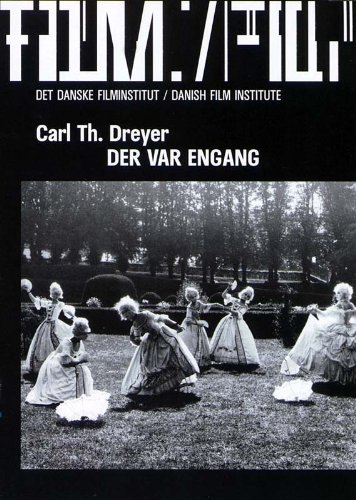
once_uponOnce Upon a Time, Carl Theodor Dreyer (1922, Denmark). As is no doubt obvious from the title, this is a fairy tale. It’s adapted from a play of the same title by Holger Drachmann, first performed in 1885. The film isn’t complete, however, as about half has been lost – but the Danske Filminstitut have managed to salvage a narrative using still photos and new intertitles based on original sources. It’s a less engaging film than Dreyer’s The Bride of Glomdal, although the staging is often impressive – as can be seen from the still on the DVD cover. I seem to recall the story dragging somewhat – and that there were a lot of intertitles, although whether that was a result of the fact half the footage has been lost, I’m not sure. I seem to recall other films by Dreyer from the same period featuring more intertitles than I’d expected. On the other hand, you’d expect a silent movie adaptation of a stage play to be quite talky… I do like Dreyer’s films – I’d certainly put him in my top ten directors list… (For the record, they would be, at this particular time, in no particular order, Sokurov, Tarkovsky, Suleiman, Antonioni, Haneke, Hitchcock, Dreyer, Benning, Kieślowski and Kaurismäki.)

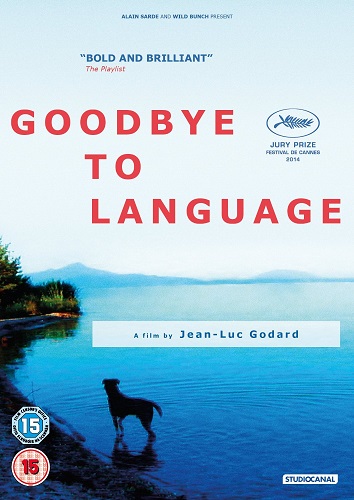
goodbyeGoodbye to Language, Jean-Luc Godard (2014, France). Some things I like the idea of more than I like the actual thing. One of those things is experimental cinema. I like that some film-makers explore how the medium can be used to tell stories, film-makers like James Benning, for example. But not every experiment film works for me. I remember watching and not liking Lukas Moodysson’s Container, although I do like Moodysson’s other movies. Godard was a director who certainly experimented, and one or two of his experiments I do indeed like – such as Two or Three Things I Know About Her or Weekend. Goodbye to Language experiments with both 3D filming techniques – entirely lost on me as I watched a 2D version – and cinematic narrative… and it’s not an easy film to watch. There are scenes which look and feel more like documentary footage, there are scenes in which characters lecture at each other (not unusual in a Godard film), there are strange camera tricks and photographic effects. The story has to be puzzled out from what’s shown on the screen, and it’s not at all obvious. Watching Goodbye to Language was a bit of a chore, but, as mentioned earlier, I like the idea of the movie – and might well give it another go sometime. Sometimes it happens you don’t take to something immediately, but leave it a while, return to it, give it another go… and it becomes a favourite. I suspect that won’t happen here, but perhaps I might decide I do actually like it…

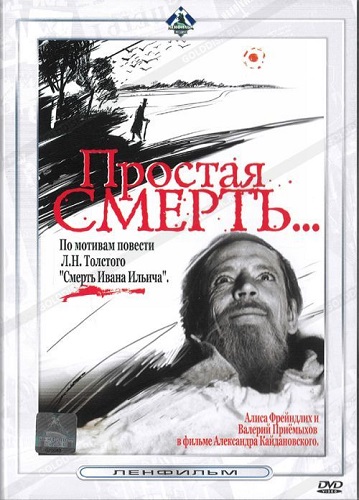
A_Simple_DeathA Simple Death, Aleksandr Kaidanovsky (1985, Russia). Kaidanovsky is perhaps better known as an actor – he played the lead in Tarkovsky’s Stalker, and one of Pirx’s crew in Test Pilota Pirxa – but he also directed three feature films: Гость (an adaptation of a Jorge Luis Borges story), Жена Керосинщика, and Простая смерть. The last, A Simple Death, is an adaptation of Tolstoy’s novella, ‘The Death of Ivan Ilyich’, and pretty faithfully follows its plot: a magistrate who has led a mostly good and successful life falls while hanging curtains one day and hurts his side, the pain grows each day until he is bedridden and his codition is terminal, where he reflects on his mortality, his life and the injustice of his current predicament. Although made in 1985, A Simple Death is black and white, and parts of the film reminded me strongly of Sokurov’s Stone, in which Chekhov returns to the present day and surprises the young man who is caretaker of his house. There’s a similar aesthetic at work, although Kaidanovsky’s film and camera work is not as experimental as Sokurov’s. Good stuff.

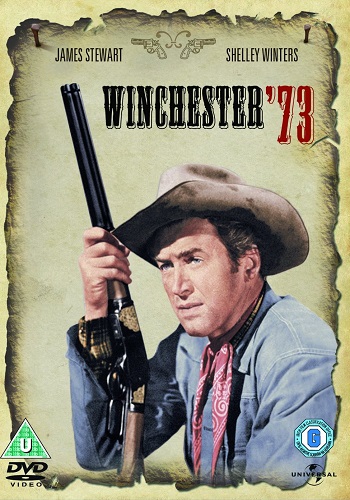
winchesterWinchester ’73*, Anthony Mann (1950, USA). The title refers to a model of rifle, the Winchester 1873, which was a superior repeating rifle and much prized. Even more prized, however, was the “one in a thousand”, which was is a particular instance of the Winchester ’73 which was so well-made – more by accident than by design – that it shot so much truer than the other 999 rifles made in that batch. Winchester ’73 opens with a crowd gathering in Dodge City to either witness or take part in a shooting competition, the prize for which is a “one in a thousand”. The contestants are whittled down to two: Jimmy Stewart and Stephen McNally. And there’s plainly bad blood between the two. Stewart wins, but McNally later ambushes him, steals the prize rifle, and gets the hell out of Dodge. Stewart and buddy chase after him. Meanwhile McNally has lost the rifle in card game with a gunrunner, who then sells it to a Native American chief (Rock Hudson) on the warpath. Who then attacks a cavalry detachment, but Stewart and buddy turn up and help them cavalry win the day. Hudson is killed and a young Tony Curtis finds the prize rifle. The sergeant gives it Charkes Drake, as Stewart has already left. Drake, and fiancée Shelley Winters (who had met Stewart back in Dodge), continue with their journey, but come a cropper with a member of McNally’s gang, and so the rifle ends up back in McNally’s hands. At which point Stewart turns up and the two shoot at each other for the gun. Throughout the film, they’ve been depicted as superlative shots, but this last scene has them repeatedly missing each other. Guess they weren’t so good, after all. As mid-centiury Westerns go, Winchester ’73 isn’t a bad one – and it’s certainly refreshing to see Stewart acting tougher than he usually does. But I’m not really sure why it needs to be on the 1001 Movies You Must See Before You Die list.

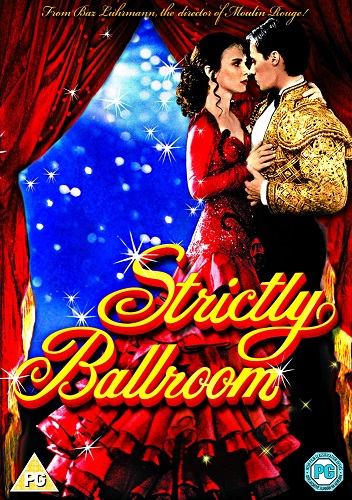
strictlyStrictly Ballroom*, Baz Luhrmann (1992, Australia). I should think most of the populations of Australia and the UK, amd a goodly-sized proportion of the US, have already seen this film, but somehow or other I’d never managed to do so. Of course, I only watched it because it was on the 1001 Movies You Must See Before You Die list. And now I have. It was… okay. It’s a spoof set around a regional ballroom dancing championship in Australia. The son of a dancing school instructor is the local star, and tipped to do well in the competition. But his partner leaves him for another dancer since he has a tendency to stray from “proper dance steps” – and, against his parents wishes, and with some persuasion, he decides to take as his partner a young woman who hangs around the dancing school but is not a dancer. They practice secretly, she develops into an excellent dancer, and he even learns some useful life lessons – and how to dance the pasodoble correctly – from her immigrant parents. Apparently, the film was adapted from an earlier play written by Luhrmann when he was  a student. It’s also one of the most successful Australian films of all time. It has now been made into a stage musical, which I guess means it’s now as mainstream as you could possibly get.

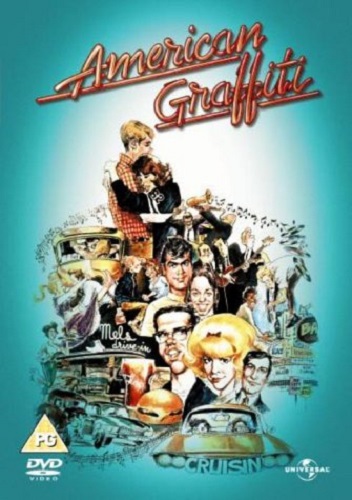
grafittiAmerican Graffiti*, George Lucas (1973, USA). After THX-1138, Lucas decided to make something more commercial, and so chose a story based on his own memories of growing up in Modesto, California. Although audience response to the film was good, and he had a number of big names batting for him, the studio first wanted their own re-edit of it and then to release it as a TV movie. However, saner heads prevailed, and the film was given a theatrical release, and went on to make a pretty good profit. All of which may be interesting, but is of no consequence when considering American Graffiti as a film. And it’s a Californian coming-of-age movie, a duller subject I can’t imagine. Obnoxious teenagers with over-inflated senses of self-worth driving around small town USA and getting up to drunken antics. Richard Dreyfus spends much of the movie chasing after a young woman he saw fleetingly in a car. Paul Le Mat cruises around with a teenybopper, before ending up in a road race against Harrison Ford. Charles Martin Smith chats up a young woman, mostly by telling lies, and then cruises around with her. And so on… Yawn. I have no idea why this film is on the 1001 Movies You Must See Before You Die list.

1001 Movies You Must See Before you Die count: 753


7 Comments

1001 movies…

Having worked my way through a substantial portion of the 1001 Movies You Must See Before You Die list, it’s only natural I might want to create a similar list myself. After all, not every film I’ve seen from the list to my mind belongs on it; and there are a number of movies I think should have been on it but weren’t. So…

Unfortunately, picking 1001 films for such a list is easier said than done. I’ve watched a lot of films over the years, and a number of them were, I thought, excellent. But a thousand of them? And, of course, I’d want my list to have a good spread – across the decades, and across countries (and not have over half from the US, like the 1001 Movies You Must See Before You Die list).

I’ve so far managed to put together around a third of my list:

1 Nosferatu, FW Murnau (1922, Germany)
2 La roue, Abel Gance (1923, France)
3 Our Hospitality, Buster Keaton (1923, USA)
4 Aelita, Yakov Protazanov (1924, Russia)
5 Strike, Sergei Eisenstein (1924, Russia)
6 The Great White Silence, Herbert G Ponting (1924, UK)
7 Battleship Potemkin, Sergei Eisenstein (1925, Russia)
8 Metropolis, Fritz Lang (1927, Germany)
9 The Passion of Joan of Arc, Carl Theodor Dreyer (1928, Denmark)
10 A Throw of the Dice, Franz Osten (1929, India)
11 Frau im Mond, Fritz Lang (1929, Germany)
12 Man with a Movie Camera, Dziga Vertov (1929, Russia)
13 Pandora’s Box, GW Pabst (1929, Germany)
14 Zemyla, Aleksandr Dovzhenko (1930, Russia)
15 City Lights, Charlie Chaplin (1931, USA)
16 Tabu, FW Murnau (1931, USA)
17 42nd Street, Lloyd Bacon (1933, USA)
18 Footlight Parade, Lloyd Bacon (1933, USA)
19 Gold Diggers of 1933, Mervyn LeRoy (1933, USA)
20 L’atalante, Jean Vigo (1934, France)
21 Tag der Freiheit, Leni Riefenstahl (1935, Germany)
22 Swing Time, George Stevens (1936, USA)
23 Things to Come, William Cameron Menzies (1936, UK)
24 La grande illusion, Jean Renoir (1937, France)
25 The Adventures of Robin Hood, Michael Curtiz (1938, USA)
26 La règle de jeu, Jean Renoir (1939, France)
27 Citizen Kane, Orson Welles (1941, USA)
28 Sullivan’s Travels, Preston Sturges (1941, USA)
29 The Maltese Falcon, John Huston (1941, USA)
30 Went the Day Well?, Cavalcanti (1942, UK)
31 Day of Wrath, Carl Theodor Dreyer (1943, Denmark)
32 Henry V, Laurence Olivier (1944, UK)
33 Ivan the Terrible Part 1, Sergei Eisenstein (1944, Russia)
34 Leave Her to Heaven, John M Stahl (1945, USA)
35 Mildred Pierce, Michael Curtiz (1945, USA)
36 Black Narcissus, Powell & Pressburger (1946, UK)
37 It’s a Wonderful Life, Frank Capra (1946, USA)
38 The Best Years of Our Lives, William Wyler (1946, USA)
39 Gentleman’s Agreement, Elia Kazan (1947, USA)
40 Spring in a Small Town, Mu Fei (1948, China)
41 The Third Man, Carol Reed (1949, UK)
42 Whirlpool, Otto Preminger (1949, USA)
43 Cinderella, Clyde Geronimi (1950, USA)
44 Orphée, Jean Cocteau (1950, France)
45 The Day the Earth Stood Still, Robert Wise (1951, USA)
46 Monkey Business, Howard Hawks (1952, USA)
47 Gentlemen Prefer Blondes, Howard Hawks (1953, USA)
48 Gion Bayashi, Kenji Mizoguchi (1953, Japan)
49 Madame de…, Max Ophüls (1953, France)
50 Shane, George Stevens (1953, USA)
51 The Cruel Sea, Charles Frend (1953, UK)
52 Les Diaboliques, Henri-George Clouzot (1954, France)
53 Magnificent Obsession, Douglas Sirk (1954, USA)
54 Rear Window, Alfred Hitchcock (1954, USA)
55 All That Heaven Allows, Douglas Sirk (1955, USA)
56 Violent Saturday, Richard Flesicher (1955, USA)
57 Forbidden Planet, Fred M Wilcox (1956, USA)
58 High Society, Charles Walters (1956, USA)
59 The Burmese Harp, Kon Ichikawa (1956, Japan)
60 The Searchers, John Ford (1956, USA)
61 Les Girls, George Cukor (1957, USA)
62 Ivan the Terrible Part 2, Sergei Eisenstein (1958, Russia)
63 Mon oncle, Jacques Tati (1958, France)
64 Some Came Running, Vincent Minelli (1958, USA)
65 Vertigo, Alfred Hitchcock (1958, USA)
66 Der Tiger von Eschnapur, Fritz Lang (1959, Germany)
67 Floating Weeds, Yasujiro Ozo (1959, Japan)
68 Imitation of Life, Douglas Sirk (1959, USA)
69 Nebo Zovyot, Valery Fokin (1959, Russia)
70 Rio Bravo, Howard Hawks (1959, USA)
71 Sleeping Beauty, Clyde Geronimi (1959, USA)
72 Some Like It Hot, Billy Wilder (1959, USA)
73 The Best of Everything, Jean Negulesco (1959, USA)
74 The World of Apu, Satyajit Ray (1959, India)
75 A Cloud-Capped Star, Ritwik Ghatak (1960, India)
76 Knights of the Teutonic Order, Aleksandr Ford (1960, Poland)
77 L’avventura, Michelangelo Antonioni (1960, Italy)
78 Le testament d’Orphée, Jean Cocteau (1960, France)
79 Peeping Tom, Michael Powell (1960, UK)
80 Psycho, Alfred Hitchcock (1960, USA)
81 Last Year at Marienbad, Alain Resnais (1961, France)
82 Lola, Jacques Demy (1961, France)
83 The Exiles, Kent Mackenzie (1961, USA)
84 8½, Frederico Fellini (1962, Italy)
85 Cleo from 5 to 7, Agnès Varda (1962, France)
86 Lawrence of Arabia, David Lean (1962, UK)
87 The Exterminating Angel, Luis Buñuel (1962, Mexico)
88 Ikarie XB-1, Jindřich Polák (1963, Czech Republic)
89 Le mépris, Jean-Luc Godard (1963, France)
90 Passenger, Andrzej Munk (1963, Poland)
91 Shock Corridor, Samuel Fuller (1963, USA)
92 The Haunting, Robert Wise (1963, USA)
93 The Leopard, Luchino Visconti (1963, Italy)
94 Culloden, Peter Watkins (1964, GB)
95 Gertrud, Carl Theodor Dreyer (1964, Denmark)
96 Red Desert, Michelangelo Antonioni (1964, Italy)
97 Woman of the Dunes, Hiroshi Teshigahara (1964, Japan)
98 Doctor Zhivago, David Lean (1965, UK)
99 Shadows of Forgotten Ancestors, Sergei Parajanov (1965, Russia)
100 The Ipcress File, Sidney J Furie (1965, UK)
101 The War Game, Peter Watkins (1965, UK)
102 Blow-up, Michelangelo Antonioni (1966, UK)
103 Fahrenheit 451, François Truffaut (1966, USA)
104 Falstaff – Chimes at Midnight, Orson Welles (1966, Spain)
105 Queen of Blood, Curtis Harrington (1966, USA)
106 The Battle of Algiers, Gillo Pontecorvo (1966, Italy)
107 Wings, Larisa Shepitko (1966, Russia)
108 2 or 3 Things I Know About Her, Jean-Luc Godard (1967, France)
109 Les demoiselles de Rochefort, Jacques Demy (1967, France)
110 Playtime, Jacques Tati (1967, France)
111 The Firemen’s Ball, Miloš Forman (1967, Czech Republic)
112 Weekend, Jean-Luc Godard (1967, France)
113 2001: A Space Odyssey, Stanley Kubrick (1968, USA)
114 Shame, Ingmar Bergman (1968, Sweden)
115 The Colour of Pomegranates, Sergei Parajanov (1968, Russia)
116 The Valley of the Bees, Frantisek Vlácil (1968, Czech Republic)
117 Easy Rider, Dennis Hopper (1969, USA)
118 Fellini Satyricon, Frederico Fellini (1969, Italy)
119 The Confrontation, Miklós Jancso (1969, Hungary)
120 The Wild Bunch, Sam Peckinpah (1969, USA)
121 El Topo, Alejandro Jodorowsky (1970, Mexico)
122 Moonwalk One, Theo Kamecke (1970, USA)
123 Secrets of Sex, Antony Balch (1970, UK)
124 The Conformist, Bernardo Bertolucci (1970, Italy)
125 Zabriskie Point, Michelangelo Antonioni (1970, USA)
126 Get Carter, Mike Hodges (1971, UK)
127 Out 1, Jacques Rivette (1971, France)
128 Punishment Park, Peter Watkins (1971, USA)
129 Szindbád, Zoltán Huszárik (1971, Hungary)
130 The Third Part of the Night, Andrzej Żuławski (1971, Poland)
131 Wake in Fright, Ted Kotcheff (1971, Australia)
132 Aguirre: The Wrath of God, Werner Herzog (1972, Germany)
133 Cries and Whispers, Ingmar Bergman (1972, Sweden)
134 Eolomea, Hermann Zschoche (1972, Germany)
135 Love in the Afternoon, Éric Rohmer (1972, France)
136 Red Psalm, Miklós Jancso (1972, Hungary)
137 F for Fake, Orson Welles (1973, USA)
138 La Planète Sauvage, René Laloux (1973, France)
139 The Holy Mountain, Alejandro Jodorowsky (1973, Chile)
140 The Scarlet Letter, Wim Wenders (1973, Germany)
141 Effi Briest, Rainer Werner Fassbinder (1974, Germany)
142 Dersu Uzala, Akira Kurosawa (1975, Russia)
143 Jeanne Dielmann, 23 Quaie de Commerce, 1080 Bruxelles, Chantal Akerman (1975, France)
144 Mirror, Andrei Tarkovsky (1975, Russia)
145 Man of Marble, Andrzej Wajda (1976, Poland)
146 The Man Who Fell to Earth, Nicolas Roeg (1976, UK)
147 Star Wars: A New Hope, George Lucas (1977, USA)
148 Autumn Sonata, Ingmar Bergman (1978, Sweden)
149 Alien, Ridley Scott (1979, UK)
150 All That Jazz, Bob Fosse (1979, USA)
151 Apocalypse Now, Francis Ford Coppola (1979, USA)
152 Christ Stopped at Eboli, Francesco Rosi (1979, Italy)
153 Stalker, Andrei Tarkovsky (1979, Russia)
154 Star Trek: The Motion Picture, Robert Wise (1979, USA)
155 The Black Hole, Gary Nelson (1979, USA)
156 The Marriage of Maria Braun, Rainer Werner Fassbinder (1979, Germany)
157 La naissance du jour, Jacques Demy (1980, France)
158 Moscow Does Not Believe in Tears, Vladimir Menshov (1980, Russia)
159 The Big Red One, Samuel Fuller (1980, USA)
160 Man of Iron, Andrzej Wajda (1981, Poland)
161 The French Lieutenant’s Woman, Karel Resiz (1981, UK)
162 Time Bandits, Terry Gilliam (1981, UK)
163 Blade Runner, Ridley Scott (1982, USA)
164 Fitzcarraldo, Werner Herzog (1982, Germany)
165 Koyaanisqatsi, Godfrey Reggio (1982, USA)
166 Crime and Punishment, Aki Kaurismäki (1983, Finland)
167 Krull, Peter Yates (1983, UK)
168 The Fourth Man, Paul Verhoeven (1983, Netherlands)
169 American Dreams (lost + found), James Benning (1984, USA)
170 Nineteen Eighty-four, Michael Radford (1984, UK)
171 No End, Krzysztof Kieślowski (1984, Poland)
172 A Simple Death, Aleksandr Kajdanovsky (1985, Russia)
173 Brazil, Terry Gilliam (1985, UK)
174 Calamari Union, Aki Kaurismäki (1985, Finland)
175 Come and See, Elem Klimov (1985, Russia)
176 Das Boot, Wolfgang Petersen (1985, Germany)
177 O-Bi, O-Ba. Koniec Cywilizacji, Piotr Szulkin (1985, Poland)
178 Ran, Akira Kurosawa (1985, Japan)
179 Blue Velvet, David Lynch (1986, USA)
180 The Fly, David Cronenberg (1986, USA)
181 Babette’s Feast, Gabriel Axel (1987, Denmark)
182 Royal Space Force: Wings of Honnemâise, Hiroyuki Yamaga (1987, Japan)
183 Wings of Desire, Wim Wenders (1987, Germany)
184 Yeelen, Souleymane Cissé (1987, Mali)
185 Distant Voices, Still Lives, Terence Davies (1988, UK)
186 On the Silver Globe, Andrzej Żuławski (1988, Poland)
187 Story of Women, Claude Chabrol (1988, France)
188 Women on the Verge of a Nervous Breakdown, Pedro Almodóvar (1988, Spain)
189 For All Mankind, Al Reinert (1989, USA)
190 Leningrad Cowboys Go America, Aki Kaurismäki (1989, Finland)
191 The Abyss, James Cameron (1989, USA)
192 The Seventh Continent, Michael Haneke (1989, Austria)
193 Close-up, Abbas Kiarostami (1990, Iran)
194 The Second Circle, Aleksandr Sokurov (1990, Russia)
195 The Sheltering Sky, Bernardo Bertolucci (1990, UK)
196 Delicatessen, Jean-Pierre Jeunet & Marc Caro (1991, France)
197 Hearts of Darkness: A Filmmaker’s Apocalypse, Fax Bahr & George Hickenlooper (1991, USA)
198 La belle noiseuse, Jacques Rivette (1991, France)
199 Only Yesterday, Isao Takahata (1991, Japan)
200 The Double Life of Veronique, Krzysztof Kieślowski (1991, France)
201 Man Bites Dog, Belvoir, Bonzel & Poelvoorde (1992, Belgium)
202 Mięso (Ironica), Piotr Szulkin (1993, Poland)
203 Ocean Waves, Tomomi Mochizuki (1993, Japan)
204 Caro diario, Nanni Moretti (1994, Italy)
205 London, Patrick Keiller (1994, UK)
206 The KIngdom, Lars von Trier (1994, Denmark)
207 Apollo 13, Ron Howard (1995, USA)
208 Dead Man, Jim Jarmusch (1995, USA)
209 Deseret, James Benning (1995, USA)
210 Dilwale Dulhania Le Jayenge, Adtiya Chopra (1995, India)
211 Safe, Todd Haynes (1995, USA)
212 Underground, Emir Kusturica (1995, Serbia)
213 Lone Star, John Sayles (1996, USA)
214 Insomnia, Erik Skjoldbærg (1997, Norway)
215 Mother and Son, Aleksandr Sokurov (1997, Russia)
216 Starship Troopers, Paul Verhoeven (1997, USA)
217 The Fifth Element, Luc Besson (1997, France)
218 Festen, Tomas Vinterberg (1998, Denmark)
219 Kuch Kuch Hota Hai, Karan Johar (1998, India)
220 Run Lola Run, Tom Tykwer (1998, Germany)
221 Saving Private Ryan, Steven Spielberg (1998, USA)
222 Sliding Doors, Peter Howitt (1998, UK)
223 The  Thin Red Line, Terence Malick (1998, USA)
224 X-Files: Fight the Future, Rob Bowman (1998, USA)
225 Beau travail, Claire Denis (1999, France)
226 In the Mood for Love, Wong Kar-Wai (1999, China)
227 The Matrix, Wachowskis (1999, USA)
228 The Wind Will Carry Us, Abbas Kiarostami (1999, Iran)
229 Amores Perros, Alejandro González Iñárritu (2000, Mexico)
230 Kippur, Amos Gitai (2000, Israel)
231 Le goût des autre, Agnès Jaoui (2000, France)
232 Memento, Christopher Nolan (2000, USA)
233 Nine Queens, Fábian Bielinsky (2000, Argentina)
234 The Circle, Jafar Panahi (2000, Iran)
235 Water Drops on Burning Rocks, François Ozon (2000, France)
236 Werckmeister Harmonies, Béla Tarr (2000, Hungary)
237 X-Men, Bryan Singer (2000, USA)
238 A Day in the Life of Andrei Arsenevich, Chris Marker (2001, France)
239 Atanarjuat the Fast Runner, Zacharias Kunuk (2001, Canada)
240 Avalon, Mamoru Oshii (2001, Japan)
241 Mulholland Drive, David Lynch (2001, USA)
242 No Man’s Land, Danis Tanović (2001, Bosnia)
243 Secret Ballot, Babak Payami (2001, Iran)
244 Spirited Away, Hayao Miyazaki (2001, Japan)
245 The Discovery of Heaven, Jeroen Krabbé (2001, Netherlands)
246 The Lord of the Rings: The Fellowship of the Ring, Peter Jackson (2001, USA)
247 8 femmes, François Ozon (2002, France)
248 City of God, Fernando Meireilles & Kátia Lund (2002, Brazil)
249 Divine Intervention, Elia Suleiman (2002, Palestine)
250 Hero, Zhang Yimou (2002, China)
251 Lilya 4-ever, Lukas Moodysson (2002, Sweden)
252 Russian Ark, Aleksandr Sokurov (2002, Russia)
253 Osama, Siddiq Barmak (2003, Afghanistan)
254 Zatoichi, Beat Takeshi (2003, Japan)
255 Atash, Tawfik Abu Wael (2004, Palestine)
256 Downfall, Oliver Hirschbiegel (2004, Germany)
257 Head-on, Fatih Akin (2004, Germany)
258 Moolaadé, Ousmane Sembène (2004, Senegal)
259 Primer, Shane Carruther (2004, USA)
260 Sky Captain & the World of Tomorrow, Kerry Conran (2004, USA)
261 The Consequences of Love, Paolo Sorrentino (2004, Italy)
262 The Incredibles, Brad Bird (2004, USA)
263 Free Zone, Amos Gitai (2005, Israel)
264 Frozen Land, Aku Louhimies (2005, Finland)
265 Tsotsi, Gavin Hood (2005, South Africa)
266 Atomised, Oskar Roehler (2006, Germany)
267 Children of Men, Alfonso Cuarón (2006, UK)
268 Daratt, Mahamat-Saleh Haroun (2006, Chad)
269 Jar City, Baltasar Kormákur (2006, Iceland)
270 Lady Chatterley, Pascale Ferran (2006, France)
271 Ostrov, Pavel Lungin (2006, Russia)
272 Red Road, Andrea Arnold (2006, UK)
273 The Bothersome Man, Jens Lien (2006, Norway)
274 The Lives of Others, Florian Henckel von Donnersmarck (2006, Germany)
275 The Yacoubian Building, Hamed Marwan (2006, Egypt)
276 In the Shadow of the Moon, David Sington (2007, UK)
277 La Antena, Esteban Sapir (2007, Argentina)
278 Paranormal Activity, Oran Peli (2007, USA)
279 The Band’s Visit, Eran Kolirin (2007, Israel)
280 Timecrimes, Nacho Vigalondo (2007, Spain)
281 XXY, Lucia Penzo (2007, Argentina)
282 Gomorra, Matteo Garrone (2008, Italy)
283 Let the Right One In, Tomas Alfredson (2008, Sweden)
284 She Should Have Gone to the Moon, Ulrike Kubatta (2008, UK)
285 Tears for Sale, Uros Stajonavic (2008, Serbia)
286 The Wedding Song, Karin Albou (2008, Tunisia)
287 About Elly, Asghar Farhadi (2009, Iran)
288 Ajami, Scandar Copti & Yaron Shani (2009, Israel)
289 Antichrist, Lars von Trier (2009, Denmark)
290 Cargo, Ivan Engler & Ralph Etter (2009, Switzerland)
291 Fish Tank, Andrea Arnold (2009, UK)
292 Hierro, Gabe Ibáñez (2009, Spain)
293 No One Knows About Persian Cats, Bahman Ghobadi (2009, Iran)
294 The Secret in their Eyes, Juan José Campanella (2009, Argentina)
295 The Time that Remains, Elia Suleiman (2009, Palestine)
296 The White Ribbon, Michael Haneke (2009, Germany)
297 Villa Amalia, Benoît Jacquot (2009, France)
298 Watchmen, Zack Snyder (2009, USA)
299 Women without Men, Shirin Neshat & Shoja Azari (2009, Iran)
300 Four Lions, Chris Morris (2010, UK)
301 Norwegian Ninja, Thomas Capellan Malling (2010, Norway)
302 Of Gods and Men, Xavier Beauvois (2010, France)
303 Troll Hunter, André Øvredal (2010, Norway)
304 Winter’s Bone, Debra Granik (2010, USA)
305 Apollo 18, Gonzalo Lopéz-Gallego (2011, USA)
306 Hanna, Joe Wright (2011, USA)
307 Sound of My Voice, Zal Batmanglij (2011, USA)
308 The Girl with the Dragon Tattoo, David Fincher (2011, USA)
309 The Skin I Live In, Pedro Almodóvar (2011, Spain)
310 Call Girl, Mikael Marcimain (2012, Sweden)
311 Dredd, Pete Travis (2012, UK)
312 John Carter, Andrew Stanton (2012, USA)
313 The Act of Killing, Joshua Oppenheimer (2012, UK)
314 Wadjda, Haifaa al-Mansour (2012, Saudi Arabia)
315 Europa Report, Sebastián Cordero (2013, USA)
316 Gravity, Alfonso Cuarón (2013, USA)
317 Nympho()maniac, Lars von Trier (2013, Denmark)
318 The Great Beauty, Paolo Sorrentino (2013, Italy)
319 Upstream Colour, Shane Carruther (2013, USA)
320 Predestination, Michael & Peter Spierig (2014, Australia)
321 Under the Skin, Jonathan Glazer (2014, UK)

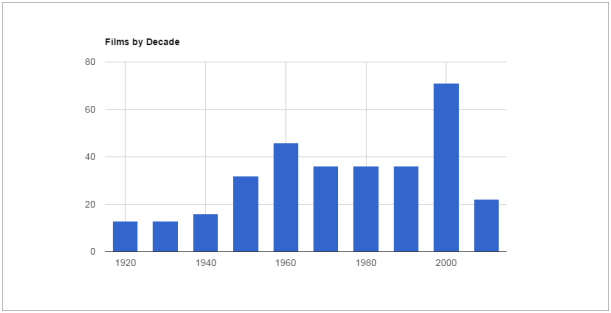
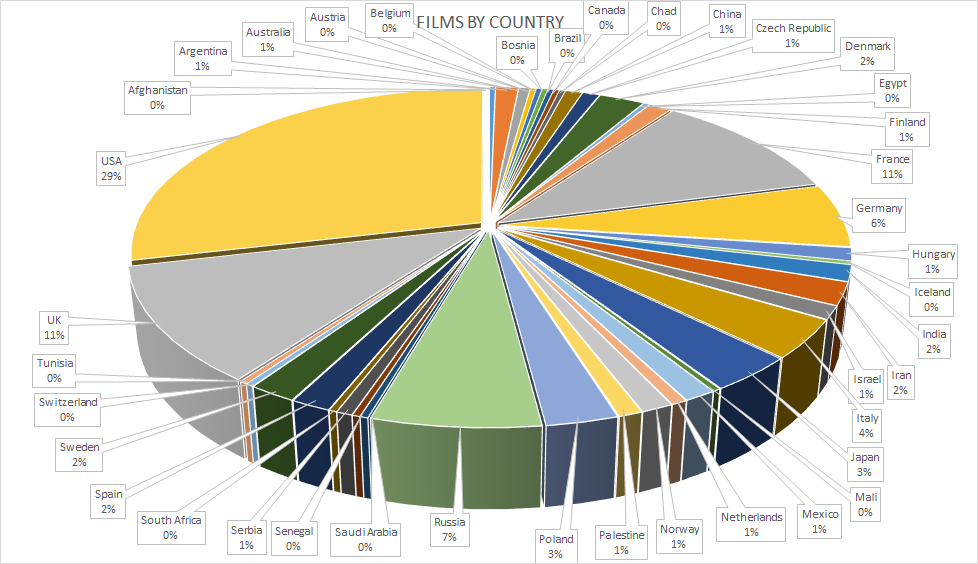
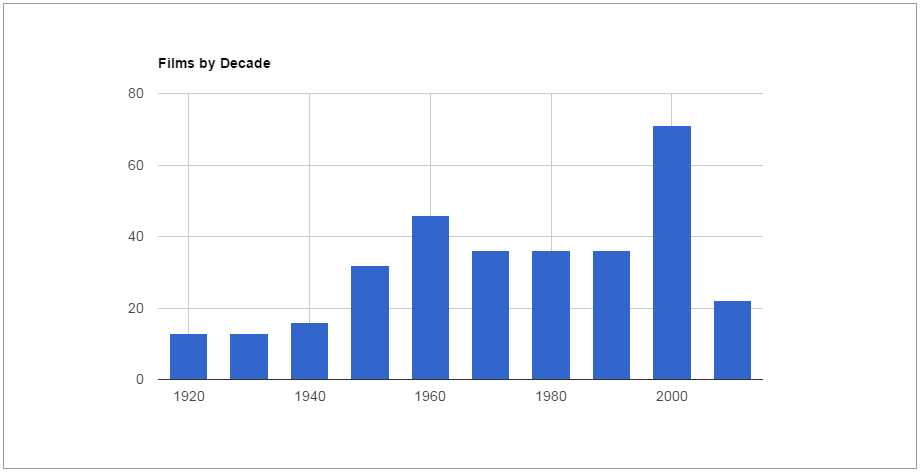
At present, it breaks down as follows by country and decade.
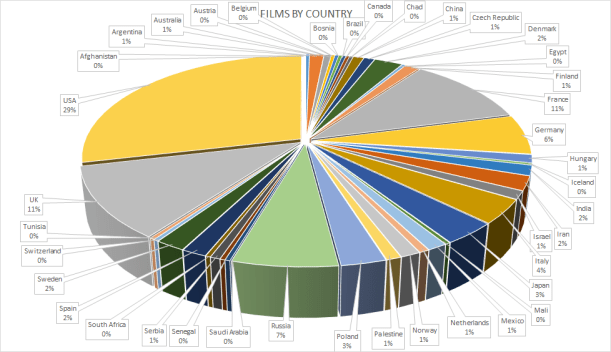
1001FILMSBYCOUNTRY

1001filmsbydecade

There are still too many US films (29%) and too many from the first decade of this century (22%). There are some directors I’d like to include at least one work by, such as Otto Preminger, but I have yet to pick one. One or two of my choices may not make the final list, especially some of the science fiction films. But most choices I’m prepared to defend (although one or two – Queen Of Blood, for example – is just me being a bit perverse for the sake of it, although I do love the film…). One or two films I chose because of their influence on cinema, rather than because they are good films per se; but there are still a number of cinematic movements without representatives. Many of the films listed are personal favourites – that undoubtedly swayed my vote, but hey I have good taste in movies anyway…

There are also one or two directors who certainly belong on the list but I may not have chosen their best, or most obvious, films. Sometimes it’s because I much prefer the film I picked, sometimes it’s because I wasn’t sure which one to choose. I also need to watch more Bollywood films to see if more of those should make my list…. And more cinema from assorted African and South American countries… Not to mention exploring more of the oeuvres of world-class directors like Akira Kurosawa and Satyajit Ray…

Of course, if there other movies which belong on this list that I’ve not listed, then feel free to name them in a comment. But please, don’t go suggesting loads of shitty Hollywood films. Yes, I’m going to need help to reach 1001 films, but I’m looking for good films…

Oh, and the first person to suggest The Force Awakens will be roundly chastised…


24 Comments

The inaugural Sputnik Award

A few days ago, Lavie Tidhar tweeted a sarcastic comment, as he is wont to do, about libertarians having a science fiction award, the Prometheus, but there being no corresponding award for socialists. And while he likely didn’t mean it seriously, it did occur to me that perhaps there should be an antidote to science fiction’s notorious right-wingness (and by that I’m referring to the texts, not the authors). Where are the science fiction works which posit socialist, or communist, futures? Where are the sf books which celebrate left-wing political thought? And isn’t it about time we showed those right-wingers that: no, they don’t speak for all of us. In fact, they probably only speak for a minority.

Back in 2009, Mark Boulds and China Miéville published a  book of essays on “Marxism and Science Fiction” titled Red Planets. And Miéville has proffered a reading list of left-wing genre works. But this should be something which is ongoing, which grows each year, which is in conversation with both itself and the wider genre (yes, including its more fascistic elements).

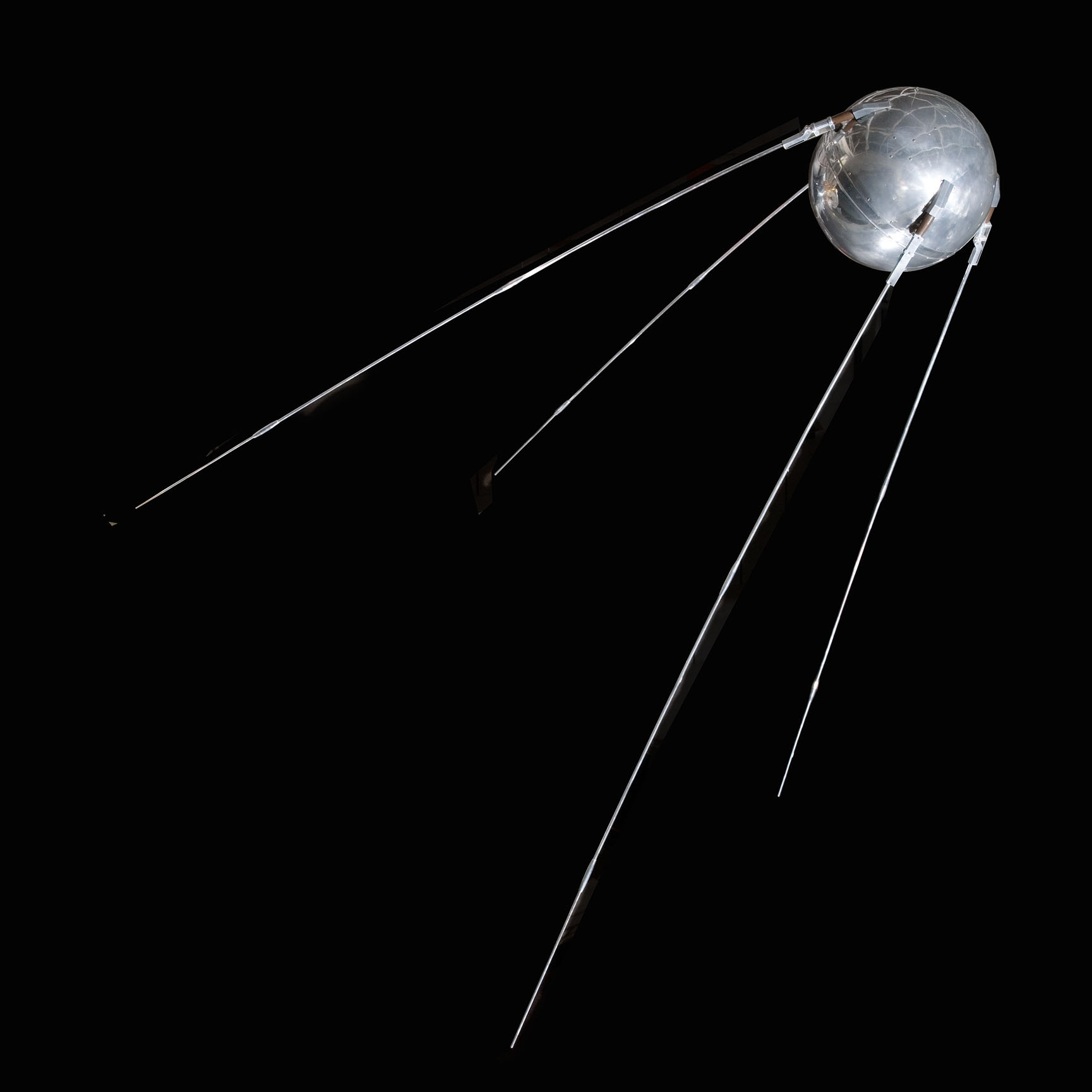
So, somewhat tongue-in-cheek, I thought it might be a good idea to, well, take Lavie’s idea and punt it out into public for discussion. And I decided to call this imaginary socialist sf award the Sputnik Award because it was the most obvious name for it – celebrating both the first artificial satellite to orbit the Earth (you can’t get MOAR SPACE than that), the Russian for “fellow traveller” (used as code for “communist”), and named for a thing rather than a person (who might later prove divisive or contentious).

Sputnik, hanging in Milestones of Flight, National Air and Space Museum

Sputnik, hanging in Milestones of Flight, National Air and Space Museum

However… awards need shortlists. From which they can choose a winner. Who will then receive a trophy or something. But, well, socialist science fiction… Such a thing exists, it must exist, but where is it? Can anyone suggest any science fiction novel, novella, short story or graphic novel, published in 2015, which is both science fiction and socialist? There’s Kim Stanley Robinson’s Aurora, although that posits a form of Athenian democracy (a political system much beloved in sf) rather than outright socialism; Carolyn Ives Gilman’s Dark Orbit certainly embodies the spirit of socialism, although the only political systems mentioned are anything but; and there’s Carter Scholz’s ‘The United States of Impunity’ which is only just sf and only just fiction and more of a critique of the current economic and politic climate in the US than anything else…

There must be examples out there. Any suggestions? Or is sf just too right-wing? Are we going to have to accept that science fiction exists only as a right wing genre? That even its left-wing writers end up writing right-wing stories? I hope not.

Because that would be really sad.


6 Comments

Moving pictures, #17

Seems to be mostly US films this time, including a few populist ones. I don’t know what came over me.

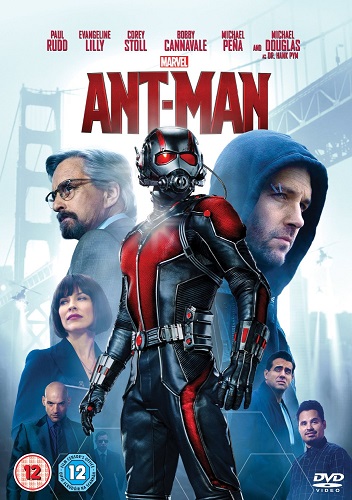
ant_menAnt-Man, Peyton Reed (2015, USA). Superhero films are monumentally stupid and pretty much awful. Putting comics up on screen and investing billions of dollars in state-of-the-art CGI has not made them any cleverer or less juvenile. And yet Ant-Man is one of the few which, we’re told, transcends the genre. Which, when you think about it, is a backhand way of saying, “yes, we know superhero films are dumb and low art”. Of course, it does no such thing. Its hero is a bit grey, inasmuch as he’s no boy scout in tights; but neither is he a villain. As for the plot: nasty executive takes over noble inventor’s company, exploits’magical maguffin invention for typically capitalist reasons, or at least tries to… Yawn. We’ve seen it a zillion times before. The only difference is that in SuperheroWorld, said executive gets his comeuppance; in the real world, he gets a seven-figure bonus. Paul Rudd makes a good fist of the title role, although Michael Douglas these days feels more like a caricature of an actor than an actor. But the story was the usual superhero bobbins, and figuring out whether a superhero film is a good film per se is a bit like counting angels on the head of a pin – ie, you have to believe in angels in the first place. Best just walk away.

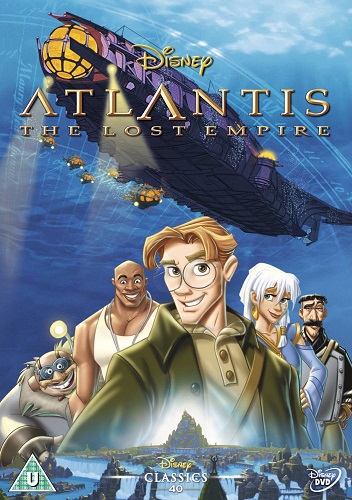
atlantisAtlantis – The Lost Empire, Gary Trousdale & Kirk Wise (2001, USA). And if superhero movies are for people who haven’t grown-up, then Hollywood animated movies are for people who have yet to grow up. (When I wrote that sentence it seemed to make perfect sense to me, but coming back to it a couple of days later, I’m having trouble figuring out what I meant. Ah well.) There’s no reason why such films have to be like that, of course – just look at Japan’s anime industry; or indeed animated films from Europe, such as René Laloux’s La Planète Sauvage, or anything by Jan Svankmajer. (We’ll ignore Heavy Metal for the time-being, if you don’t mind.) Atlantis – The Lost Empire is a kids’ film, but the design is quite effective and the story is sufficiently oddball to appeal to me. Its performance at the box office was apparently “lacklustre”, so much so that Disney cancelled a planned television series and an underwater attraction at Disneyland. It’s by no means a great film, although it has become something of a “cult favourite”. There’s a sequel, Atlantis: Milo’s Return, which was cobbled together from three episodes of the cancelled television series, and it’s pretty damn poor. Atlantis – The Lost Empire doesn’t hold a candle to either Sleeping Beauty or Cinderella, but it’s still better than about half of Disney’s feature film output.

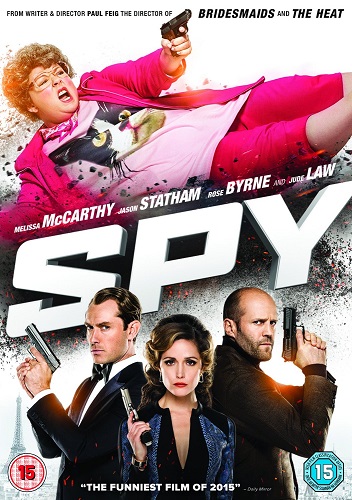
spySpy, Paul Feig (2015, USA). Every now and again I throw a Hollywood blockbuster onto my rental list (er, okay, perhaps more than one, given the above), so I can spend at least one night with my brain turned off (shut up at the back); and while I never have especially high hopes of such films I’m prepared to be pleasantly surprised. I wasn’t for Ant-Man, but Spy was a comedy and… Oh dear. Tonally, it was all over the place. Humour one minute, over-the-top violence the next. And the improv… Seriously, whoever decided that improv was a good way to make comedy movies “better” was clearly a fucking idiot. Remember those films with sharpy witty dialogue? They were written like that. Now we have witless burblings spontaneously vomited up by comedians who think that not filtering their verbiage is the way to generate laughter. It’s not. Spy had its moment, not least the set-up, in which a field agent’s support officer takes his place in the, er, field… but they just had to over-egg the cake and make her some sort of combat expert despite the fact her career had been spent behind a desk. And the dialogue bounced from the inane to the embarrassing, without doing much to advance the plot. Spy could have been a good film, but giving the cast free rein was a big mistake – this is a movie that needed to be tightly controlled to work. In its present incarnation, it doesn’t.

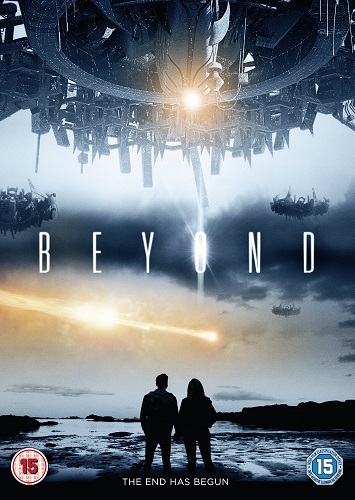
beyondBeyond, Joseph Baker & Tom Large (2014, UK). This was a charity shop find, and I’m not entirely what it was I actually found. Earth has been attacked by aliens, who have pretty much defeated humanity. There’s a couple, they meet at a fancy dress party. They get together, I think they marry, they have a baby. They argue about the baby. The film jumps back and forth chronologically. And I have to admit that after a while I started to lose interest. Beyond is one of those independent films in which pretty much everything is implied and all that remains on the screen is the bickering between the two leads. In and of itself, this is not necessarily bad, but Beyond does feel more like it should be a short film, rather than a 84-minute feature film. I’ll give the movie a rewatch, because I feel it ought to be more interesting than it proved – but we’ll, er, see…

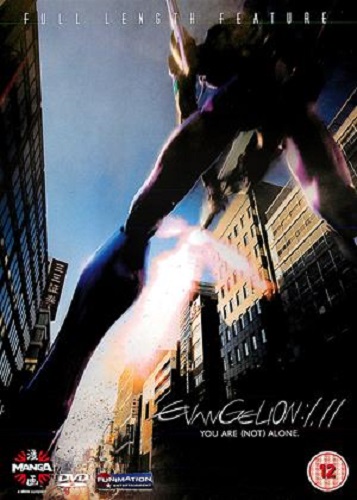
evangelion_111Evangelion 1.11: You Are (Not) Alone, Hideaki Anno (2007, Japan). I am not a big fan of anime, although people continue to recommend various anime films and/or OAV to me. But it’s worth doing so, because sometimes it sticks. Usually it takes a while after I’ve watched it, however. (I am, incidentally, defining “big fan” based on those anime fans I know, who have watched absolute tons of the stuff.) For example, I watched and enjoyed Royal Space Force: The Wings of Honnêamise, and then later decided to pick up a copy of it for myself. And I’m sort of feeling the same for Evangelion 1.11, except… Well, this film, and its sequels, is a reworking of the OAV Neon Genesis Evangelion, and I’m wondering if I might be better off watching the OAV. Especially since, according to Wikipedia, the OAV goes into more detail on the background – Evangelion 1.11 more or less throws you right into the middle of the story, and it’s only some way into the film that some background needed to follow the story is revealed. And yet, the art is of a high quality, the story is certainly intriguing, and I actually find the refusal to explain makes me like the film more. It’s set in, er, 2015, after aliens – called Angels – have wiped out much of the Earth’s population. Secret scientific organisation NERV has invented giant cyborg mecha to fight the Angels, and this film is about the first of those to go into combat, and its pilot’s relationship with the wounded pilot of the prototype mecha. I can’t get excited about men and women in giant robot suits – I really didn’t like Pacific Rim – but there’s enough going on in the story of Evangelion 1.11: You Are (Not) Alone, for me, to offset the fact it’s about men and women in giant robot suits. Incidentally, Neon Genesis Evangelion comprised twenty-six, but there are only four feature-film reboots – this one, Evangelion: 2.22 You Can (Not) Advance, Evangelion 3.33 You Can (Not) Redo, and an unmade final film.

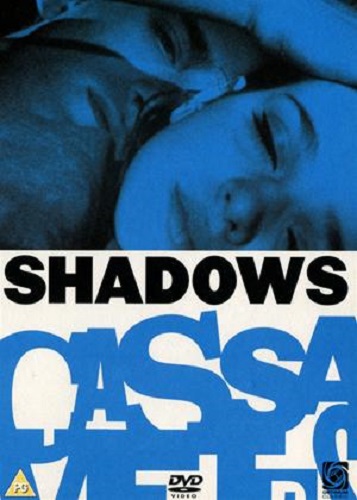
shadowsShadows*, John Cassavetes (1959, USA). Cassvetes appears four times on the 1001 Movies You Must See Before You Die list, and he was certainly an important figure in US independent cinema, but, in terms of cinema as a whole, was he more important than, say, Varda, Wajda, Mizoguchi, Ozu, Sturges, Resnais, Kiarostami, Haneke, or Ophüls… to name a few? I can understand why Shadows is on 1001 Movies You Must See Before You Die list, not just because if its importance in terms of indie cinema, but also because of its subject matter. But according to Wikipedia, its genesis was a bit fraught. Originally shot with improvised dialogue, Cassavetes ended up remaking great chunks of it using a script. As documentation of a particular time and place – New York, the late 1950s – and a particular sector of society, Shadows works well; but the improvisational nature of the story tells against it, and it often seems a little too chaotic – but that’s something all of Cassavetes’s films have in common, and probably explains why I’m not a fan of his work. Yes, Shadows belongs on 1001 Movies You Must See Before You Die list, moreso perhaps than some of Cassavetes’s other movies; and at least I can now cross it off.

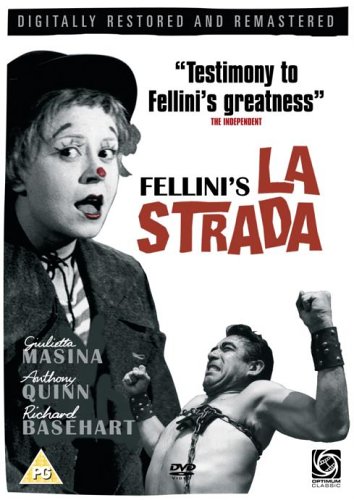
stradaLa strada*, Federico Fellini (1954, Italy). Fellini is a popular director in the 1001 Movies You Must See Before You Die list, with seven films – one of which is La strada. I have to date seen all but one of those films, and I liked 8½ pretty much straightaway, and grew to love Fellini Satyricon as I watched it. The rest were a bit meh. To be fair, I like Italian Neo-realism as an idea more than I’ve liked those films which are labelled as such – not that all, or indeed many, of Fellini’s movies have been classified as Italian Neo-realist. La strada has Giuletta Masina as a naïf who is sold to an abusive Anthony Quinn to perform as assistant (and clown) to his travelling strong man act. She runs away, he finds her, there’s a rivalry with trapeze artist Richard Basehart. The rivalry intensifies, partly driven by the two men’s relationships with Masina… and it all ends badly, in a sort of all-too-predictable-but-gently-ironic way, not that Fellini is a director who does irony especially well. I would rate some of Fellini’s films highly, but not this one. I’m glad I saw it, and I can cross it off the list, but that’s about it.

1001 Movies You Must See Before You Die count: 750


6 Comments

Reading diary, #26

Some fast reads and short books have helped me catch up on my Goodreads reading challenge, which is perhaps not the best way to choose books to read, but never mind.

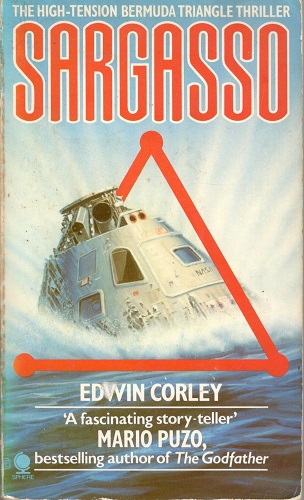
sargasso_smSargasso, Edwin Corley (1977). A 1970s technothriller is not my normal reading, but since this one features both an Apollo space mission and underwater exploration… The initial set-up is intriguing: the command module for Apollo 19 splashes down in the Atlantic after its crew have spent time aboard a Soviet spacestation in an ASTP detente-in-orbit type exercise… but when the CM is opened, it’s empty. No astronauts. And yet Mission Control was communicating with them as they left orbit and fell to Earth. After much guff about the Bermuda Triangle – as that’s where the splashdown occurs – and an ocean survey ship with a submersible which experiences a total power failure seconds before the splashdown… Not to mention a re-enactment of Flight 19, and a man who has been alive for more than a hundred years… It all turns out to be payback for a dastardly plot by those evil communistic Soviets. A back-cover quote praises the book’s research, but I thought it pretty slipshod. Not that the book made much of an effort at detail anyway. The prose barely rose to workmanlike, the cast were the usual stereotypes, and sometimes I wonder why I bother reading some books…

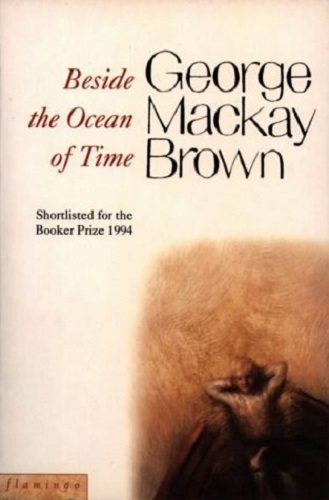
beside_oceanBeside the Ocean of Time, George Mackay Brown (1994). Thorfinn Ragnarson is an idle dreamer, the schoolboy son of a subsistence farmer on the invented Orcadian island of Norday, and considered mostly useless by all who know him. Various incidents set off daydreams, in which Thorfinn imagines himself in assorted historical roles – aboard a Viking ship which makes for Byzantium, the squire of a knight on his way to Bannockburn, a member of the people who built the brochs, press-ganged into the English fleet to fight the French republicans… But there is also a section which describes life on Norday at the time the novel is set, the 1930s, and centres around the mysterious young woman who comes to stay with the local reverend. This was my first experience of reading Mackay Brown, and I’m sure it’s my thing. I found the prose very simple and declarative, and while there were occasional  moments of lovely imagery, much of it struck me as quite sketchy. The setting, of course, had its own fascination, and I actually spent an hour or so looking up brochs after reading about them in Beside the Ocean of Time (and even considered buying a book on the topic). There are some authors, you only need to read one novel or novella, and you want to explore their oeuvre further. While I liked Beside the Ocean of Time, and may well pick up copies of Mackay Brown’s books if I see them in charity shops, I’m not minded to actively seek out his other works.

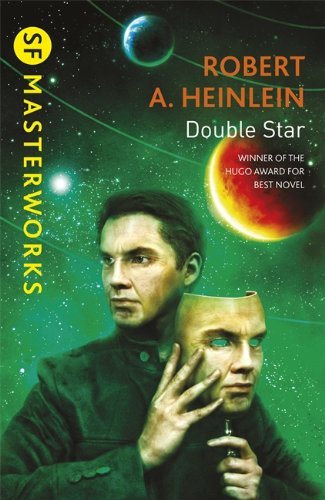
double_starDouble Star, Robert Heinlein (1956). As far as I was aware, this was one of the less objectionable novels in Heinlein’s oeuvre, and I’ve seen much praise for it which was careful to make that point. And yet I have to wonder if those people had actually bothered reading it recently. I can understand a thirteen-year-old lapping it up, and nostalgia putting even more of a shine on the book many decades later… but there’s no way Double Star stands up to scrutiny for anyone with a modicum of intelligence, taste or sensitivity. What else to think of a novel that contains the line “a woman will forgive any action, up to and including assault with violence, but is easily insulted by language”? And there is only one female named character in the entire book. And she’s the hero’s personal assistant. The world-building is also piss-poor, something at which Heinlein is normally quite good. It’s not just the idea of a Solar System-wide empire ruled by a member of the House of Orange, or Mars, Venus and Jupiter having native intelligent life, or the really clunky technology (much of which is behind the state of the art for 1955)… Everything just feels weirdly anachronistic and old-fashioned, even for sf of the 1950s – no, especially for sf of the 1950s. Then there’s the lectures on free trade, all of which are patent bollocks. (Free trade does not generate wealth, it concentrates wealth. In the hands of those who already possess wealth. History has been telling us this for centuries.) An actor is asked to impersonate an important politican who has been kidnapped, but is desperately needed at a ceremony which will result in a treaty with the Martians. The actor does so, the politician is rescued but proves too ill to return to his job, and so the impersonation continues… As far as I know, Double Star was never published as a juvenile, but it’s hard to believe it was aimed at an adult audience.

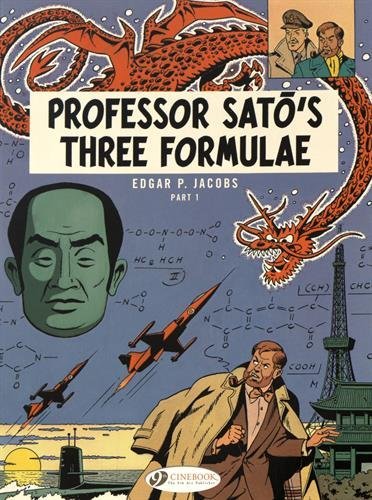
prof_satoThe Adventures of Blake & Mortimer 22: Professor Satō’s Three Formulae, Part 1, Edgar P Jacobs (1971). I first stumbled across Blake & Mortimer back in the 1990s when I lived in Abu Dhabi. If I remember correctly, it was upstairs in Card Zone, where the shop sold books – and some of their stock went back a decade or more. I found a bunch of English-language editions of some bandes dessinée from the late 1980s, one of which was Atlantis Mystery, the seventh in the Blake & Mortimer series. For whatever reason, only half a dozen of the Blake & Mortimer books where published in English… until 2007, when Cinebook began publishing the entire series in English, both Jacobs’s originals and those produced after his death by the Edgar P Jacobs Studio. However, they’ve not been following the original publication order, which is why Professor Satō’s Three Formulae, books 11 and 12 in French, has been published as books 22 and 23 in English (the latter due in May this year). I have to admit I prefer the ones written after Jacobs’s death. While Jacobs was careful to get his details right – in this one, for example, set in the early 1970s, the aircraft and cars are all shown accurately – but the science-fictional aspects are often quite silly. Those written by other hands seem to me to be more careful at making their stories plausible – even going so far as to integrate them into real history. In Professor Satō’s Three Formulae, Part 1, the eponymous scientist has invented a type of robot, which he has built in the form of a ryū. But it somehow escapes his secret laboratory and destroys two fighter jets from the Japanese Air Defence Force. Convinced there is a conspiracy afoot to steal his ideas for nefarious pruposes (there is, of course), Satō calls for his old friend Mortimer for help. Satō has also distilled his research into three formulae, which he plans to give to Mortimer for safe-keeping. Of course, it all goes wrong. Not one of the better books in the series, although I admit I’ve enjoyed reading them and have no plans to stop.

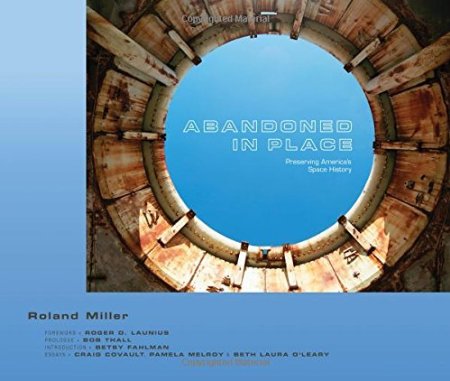
abandonedAbandoned in Place, Roland Miller (2016). Rockets, of course, need somewhere to launch from, and such structures need to be pretty damn sturdy given the beating they will take. So fifty years later, it’s no surprise to discover there are relics and ruins still scattered about the US: block houses, test stands, launch complexes… Some have been demolished since Miller photographed them, some have been repurposed, but many are simply too difficult to destroy. There’s something sadly emblematic about the photos in this book, the fact that the structures they document are all that’s left of the optimism which put twelve men on the surface of the Moon. And they’re in a state of abandonment. It has been argued that NASA’s space programme was the nearest to a socialist economic policy the USA has ever implemented, and I can see how the argument has merit – by spreading the bounty throughout the country in order to win political support, it uplifted towns and states both financially and technologically. There’s a certain level of irony in that. And yet, like the USSR, the only evidence of its existence are ruins – and the world was a better place when both were thriving.

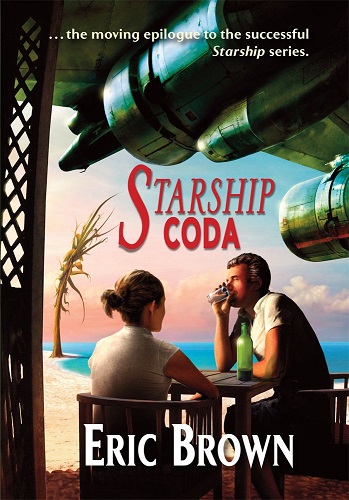
starship-coda-hc-by-eric-brown_smStarship Coda, Eric Brown (2016). Ten years after the events of the Starship Quartet, narrator David Conway is mysteriously contacted by his ex-wife, whom he left before the events of the first novella in the sequence, Starship Spring. She wants to know how he managed to get past the death of their daughter in a drowning accident – the event which drove them apart, and drove Conway from Earth to Chalcedony. The answer, of course, lies in the events of the preceding four novellas. But Conway’s ex-wife duly appears, and it seems she has undergone a drastic procedure in search of closure: Age Reversal Therapy. Which is exactly what the name says. Starship Coda successfully matches the tone of the earlier novellas, although at less than 40 pages it’s a thin book. There’s a sort of comfortable languidness to the world and story, although the focus of the prose is very much on the narrator’s emotional landscape. In fact, there’s something very relaxing about the story – it’s sort of affirming, without being cosy. And while the road to the conclusion may not be smooth, you know there’s happiness at the end of it. And I’m not embarrassed to admit I’d sooner read books like that than I would dystopias, post-apocalypses or anything which professes to be “grimdark”.

1001 Books You Must Read Before You Die count: 122


1 Comment

Moving pictures, #16

If I was an organised sort of person, I’d write these as I watch the movies, and then all I’d have to do is gather them together after, say, half a dozen films to make a post. But while my book shelves are all organised alphabetically by author, and chronologically within author, and I, er, pile my DVDs by director, and I have lists of pretty much everything, including lists of lists… I’m a bit crap at organising work. Because it’s work. Well, yes, it’s writing – reviews, fiction, blog posts, etc, but that’s still work, even if it’s not for money. At least it feels like work. That’s my excuse and I’m sticking to it. So there.

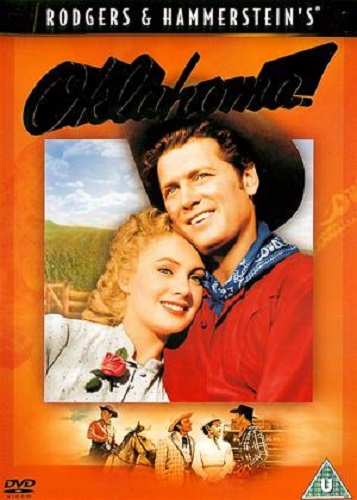
oklahomaOklahoma!*, Fred Zinneman (1955, USA). Since I’ve been working my way through the 1001 Movies You Must See Before You Die list I have watched films I would never have even thought of bothering to watch… and enjoyed them and found them very good. But there are also those that were no more than ticking off an item on a list. Musicals are not films I normally bother to watch, although there are a few I really like. And yes, they’re from the 1950s (except for All That Jazz, from 1979, which I also like a lot; and Les demoiselles de Rochefort, from 1966 and, er, French). But Oklahoma! – a musical from the 1950s. It is also a Western. Although, to be honest, it didn’t really need to be, it could have been set in an inner city, given that it’s the old love triangle plot. With songs. The leads were likeable enough, the songs were mostly memorable, and Rod Steiger was impressively villainous. But it all felt a bit artificial (and I don’t mean the fact it was filmed in Arizona and not Oklahoma), and contrived. As the only film adaptation of the first musical written by Rodgers and Hammerstein, I understand the need to put it on the 1001 Movies You Must See Before You Die list, but I wouldn’t call it an especially notable example of the Hollywood musical.

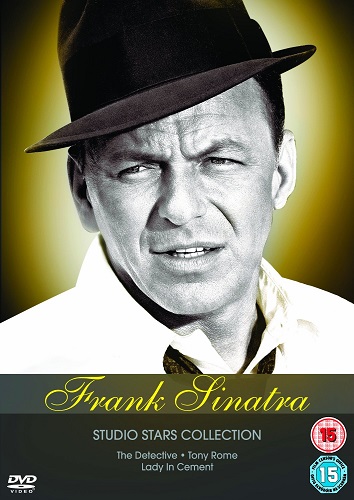
sinatraTony Rome, Gordon Douglas (1967, USA). Sinatra and Douglas made three neo-noir films in the late 1960s, in two of which Sinatra played the title character of this movie. Not that Sinatra was ever much of a character actor. And in the three films his hair always seems a step or two behind him in the script (if it was a hair-piece, it was not a good one). In this movie, Rome is asked to take home a young woman who has passed out from drink in a hotel room, in order to prevent the hotel from any accusation of impropriety. When the young woman – who’s from a wealthy family, of course – wakes, she discovers a diamond pin is missing, and hires Rome to find it. Cue the sort of convoluted plot you only ever found in noir books and films. The movie scores well on ambience – it’s hard to imagine a more late-sixties USA film – although Sinatra plays his role with all the depth of a petri dish and the plot seems to think an overly-complex story counts for depth. Good for a lazy Sunday afternoon, but that’s about it.

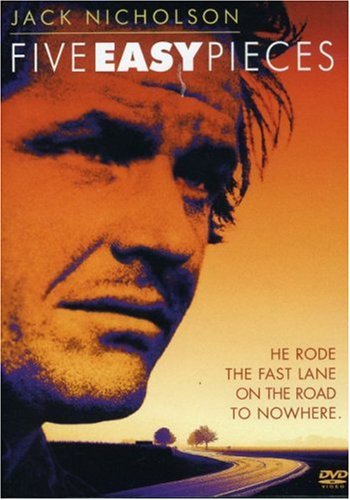
five_easy_piecesFive Easy Pieces*, Bob Rafelson (1970, USA). All this time and I’d thought Five Easy Pieces was some counter-culture film like Easy Rider, and I’ve no idea where I got that idea from (I hope it isn’t something as dumb as the fact they both have the word “easy” in their titles)… because, well, it isn’t. Not at all. Jack Nicholson plays a middle-class classical pianist slumming it as a wildcat oil worker after a falling out with his family. He even puts on the accent. He also has a girlfriend, a waitress, played by Karen Black. And a friend, who introduced him to wildcatting. But when said friend is arrested for a petrol station hold-up a year earlier, and Nicholson learns his father has suffered a stroke, he heads home, taking Black with him. The title refers to five pieces of music played by classical pianists, and which are heard during the film. Nicholson chews the scenery, as per usual, and the only real notable thing about the movie is the swap from working class to affluent middle class, and the all-too-obvious deduction that Nicholson’s character is play-acting in his working class life, which is hardly something to be celebrated. I’ve yet to actually work out the numbers but I’d guess that at least two or three out of every five films from the 1001 Movies You Must See Before You Die list have, to me, felt like they didn’t belong – and this is another of them. Meh.

sinatraThe Detective, Gordon Douglas (1968, USA). Unlike the other two films in this box set, this film is not a Tony Rome movie. But Sinatra does play, well, a detective. But not a private one, a police force one. In New York, not Miami. A man is found murdered in his apartment and his body mutilated. Various leads point to New York’s underground gay scene. Then a man commits suicide by jumping from the roof of a racetrack pavilion. And this somehow links back to the first murder, through some convoluted plot involving land sales by corrupt councillors. Sinatra’s investigation is enlivened by help from Jacqueline Bisset, wife of the suicide, who appears completely out-of-place. Compared to the two Tony Rome movies, this one is a bit grim and cheerless. The plot is just as daft as those, however, and Sinatra plays, well, Sinatra (with hair-piece); but this is more of a wet and miserable Sunday afternoon film. Apparently, a sequel was made many years later, and the makers were contractually obligated to offer the role to Sinatra. However, he was seventy years old, so he passed on it… and it went to Bruce Willis. The sequel was released under the title… Die Hard.

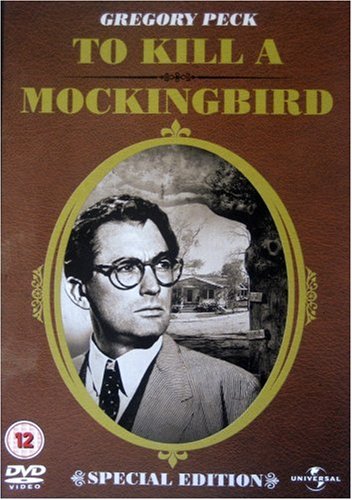
mocckingbirdTo Kill a Mockingbird*, Robert Mulligan (1962, USA). It’s been hard to avoid mention over the past year or so of the novel from which this film was adapted – first because of the “prequel” and the controversy surrounding its publication, and then because of the death of the author. I have actually somehow not managed to read the book for fifty years, or indeed see the movie. And I have now rectified the latter. And… really? Precocious kids, homespun philosophy, simple living a product of poverty not choice, and paternalism as a response to racism? Not to mention a muddled plot that can’t decide if its focus lies with the court case or with Boo Radley. True, this is a movie, not the novel, and perhaps the latter doesn’t seem so confused given that novels typically cover more ground. I’d always been under the impression To Kill a Mockingbird was about race relations in the US south, and that the court case formed the centre-piece of the story. But it isn’t. And it doesn’t. It’s just part of Scout’s childhood, and like many of the incidents, seems structured to teach her a life lesson. I wasn’t really sure what to expect from this film, but it was certainly something a lot more critical and insightful than this. Disappointing.

love+one+another+coverThe Bride of Glomdal, Carl Theodor Dreyer (1926, Norway). Dreyer started his movie career as a writer of intertitles for Nordisk Films. Six years later, he directed his first film, Præsidenten, a convoluted adaptation of an 1884 Austrian novel of the same title. Glomsdalbruden (The Bride of Glomdal) was Dreyer’s eighth film, and the last he made before leaving Denmark for France, where he made The Passion of Joan of Arc. Despite the dour-sounding title, The Bride of Glomdal is a love story – poor man loves rich woman, woman’s father is against the match, etc. It was filmed in Norway, mostly outdoors, and the clarity of the picture is really quite astonishing given its age. There’s also an impressive sequence in which the hero is swept downriver and through some rapids. The plot is based on a pair of stories by Norwegian author Jacob Breda Bull – as far as I can determine, he has never been translated into English. Dreyer’s films are never less than fascinating, and if this one can’t compete with The Passion of Joan of Arc for emotional power, it still remains a superior silent movie.

1001 Movies you Must See Before You Die count: 748


1 Comment

Easter bounty

Surprisingly, I only bought three books at this year’s Eastercon. Admittedly, the dealers’ room was was a bit lightweight compared to previous years. I also picked up four free books… Even so, that still makes it a considerably smaller book haul than I usually manage at cons. I blame online retailers… several of which I have visited in the past few weeks and made purchases…

2016-04-03 11.14.11

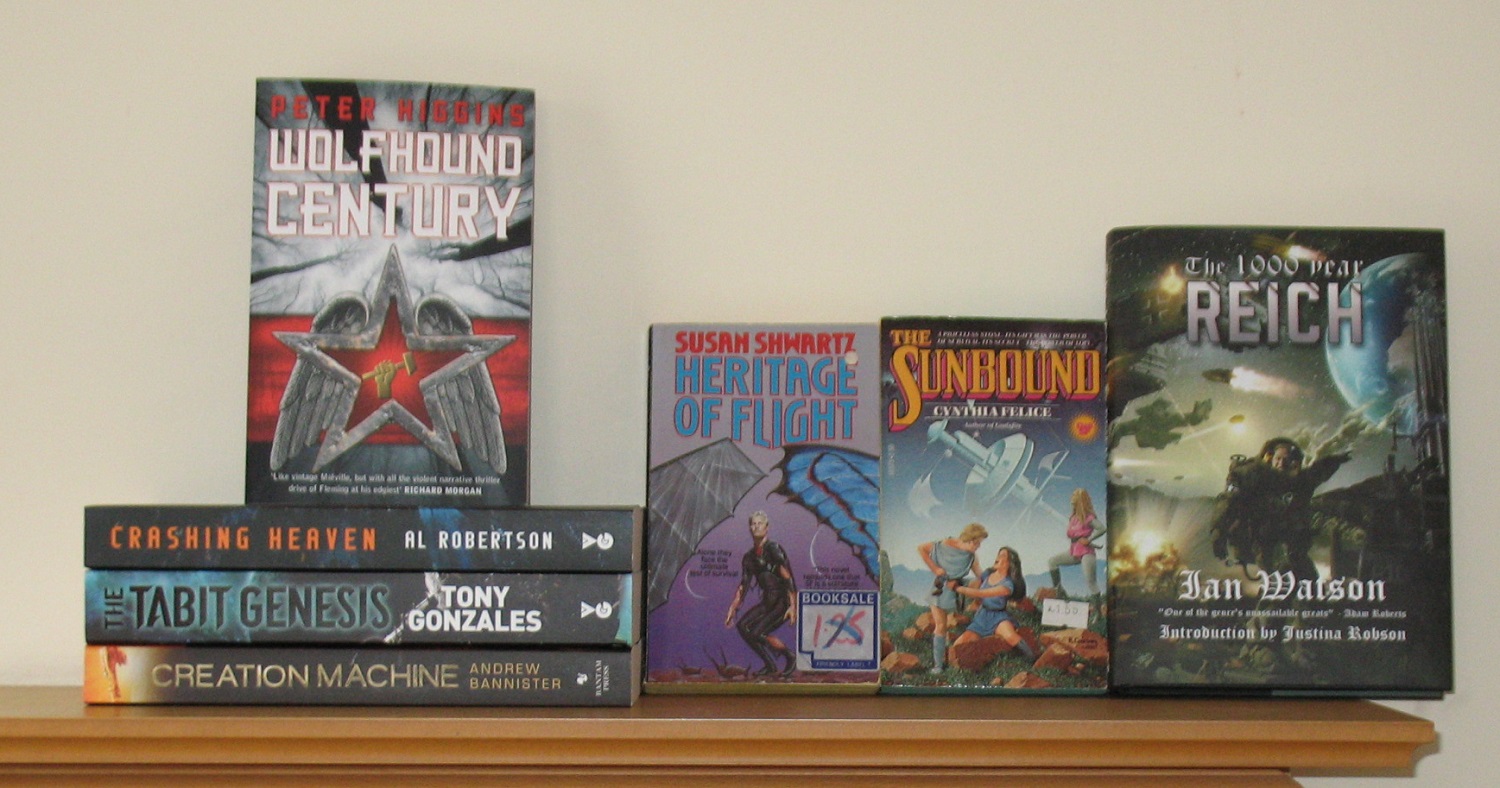
First, the Mancunicon haul: I was at the NewCon Press launch in the Presidential Suite on the twenty-second floor of the Hilton Deansgate, but I didn’t buy a copy of The 1000 Year Reich until the following day. Both The Sunbound and Heritage of Flight I bought to read for SF Mistressworks – I’ve been after a copy of the latter for a while, as I very much like the only other book by Shwartz I’ve read, The Grail of Hearts. There was also a table of giveaways from various major imprints, which is where I picked up copies of Creation Machine, The Tabit Genesis, Crashing Heaven and Wolfhound Century.

2016-04-03 11.15.31

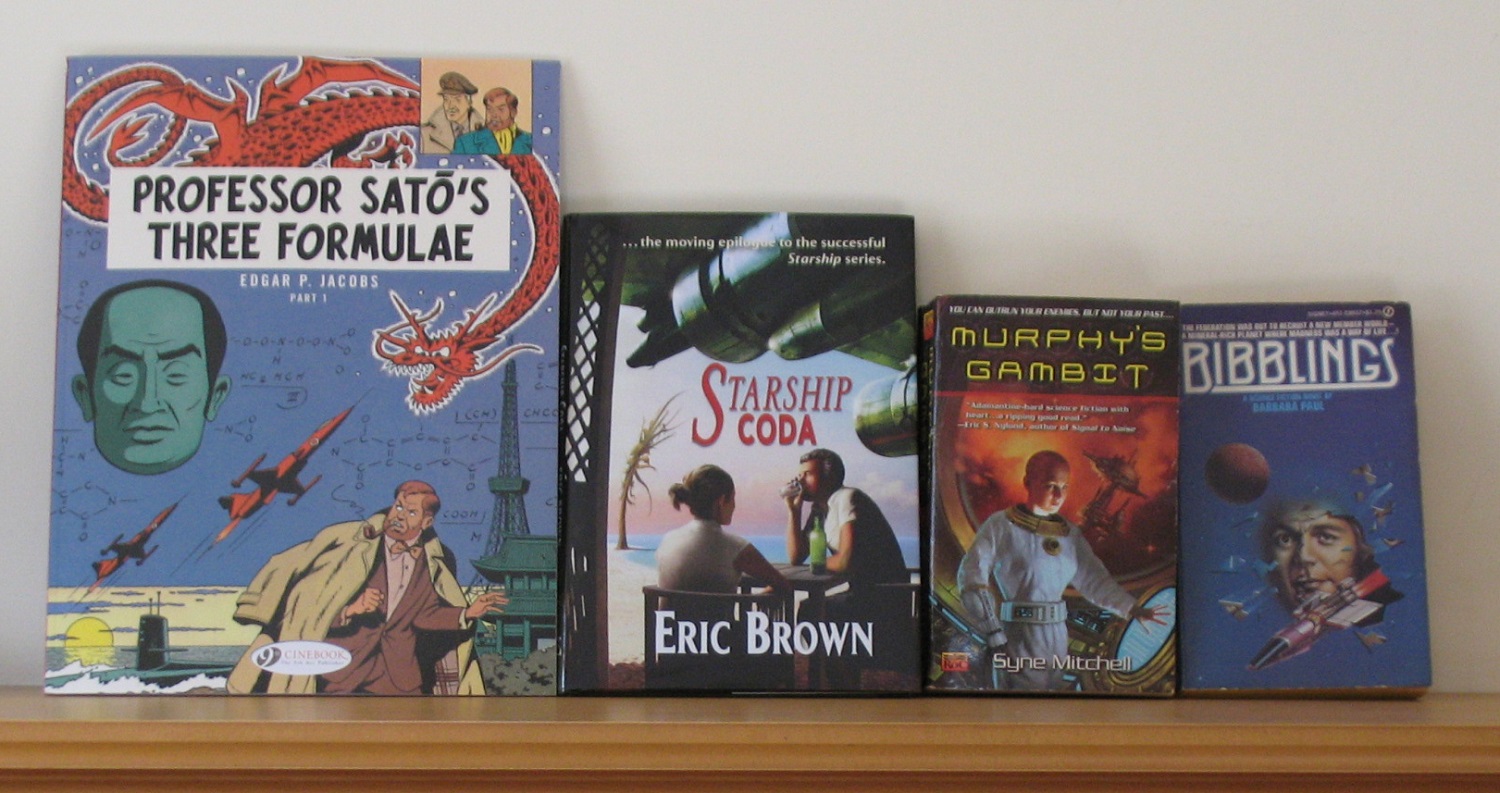
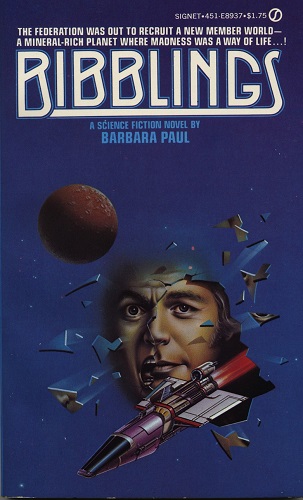
Speaking of SF Mistressworks, both Bibblings and Murphy’s Gambit were bought on eBay to review there – in fact, I’ve already Bibblings, see here. Eric sent me a copy of Starship Coda (although it was launched at Mancunicon), after I gave him a copy of Dreams of the Space Age. Professor Satō’s Three Formulae, Part 1 is the twenty-second volume in Cinebook’s English-language reprints of the Adventures of Blake and Mortimer, purchased from a large online retailer…

2016-04-03 11.17.46

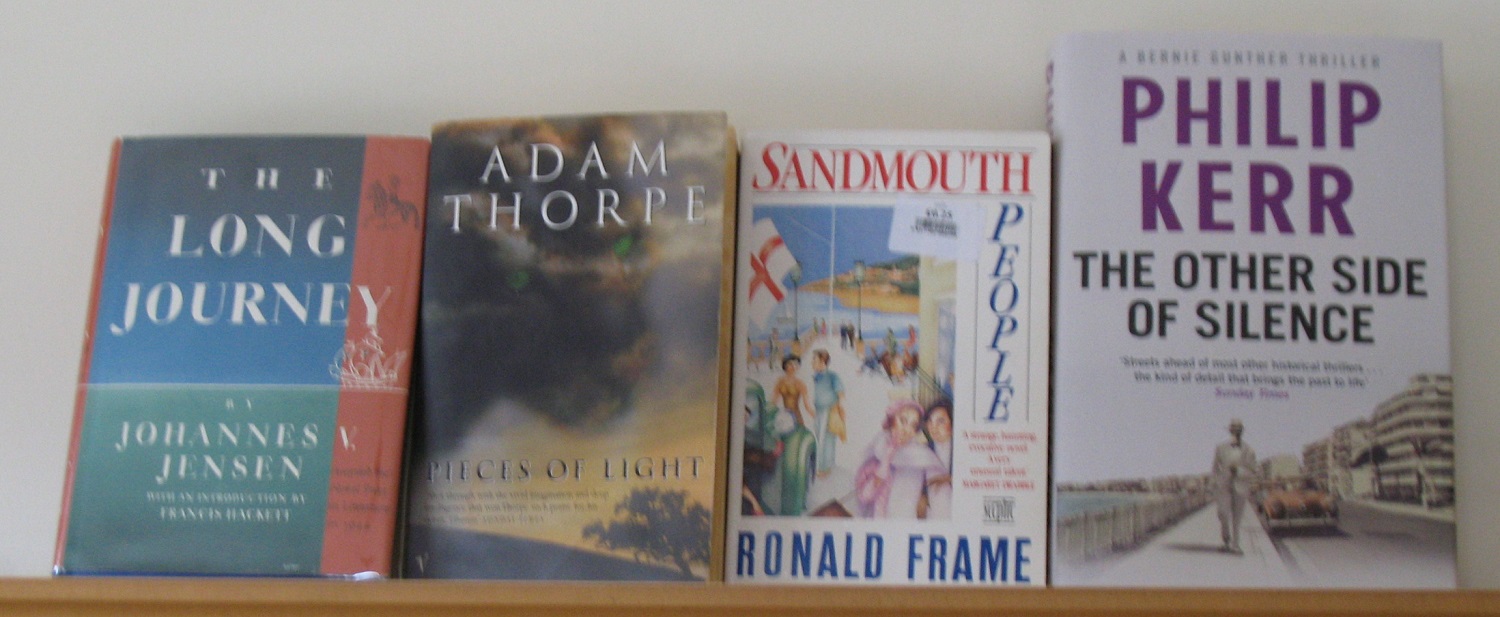
… which is also where I bought The Other Side of Silence, the eleventh book of Kerr’s Bernie Gunther series. Sandmouth People and Pieces Of Light were both charity shop finds. The Long Journey I bought from a seller on ABEbooks after reading about it, I seem to recall, in Malcolm Lowry’s In Ballast to the White Sea, and deciding it sounded really interesting. Jensen, incidentally was awarded the Nobel Prize for Literature in 1944.

2016-04-03 11.19.32

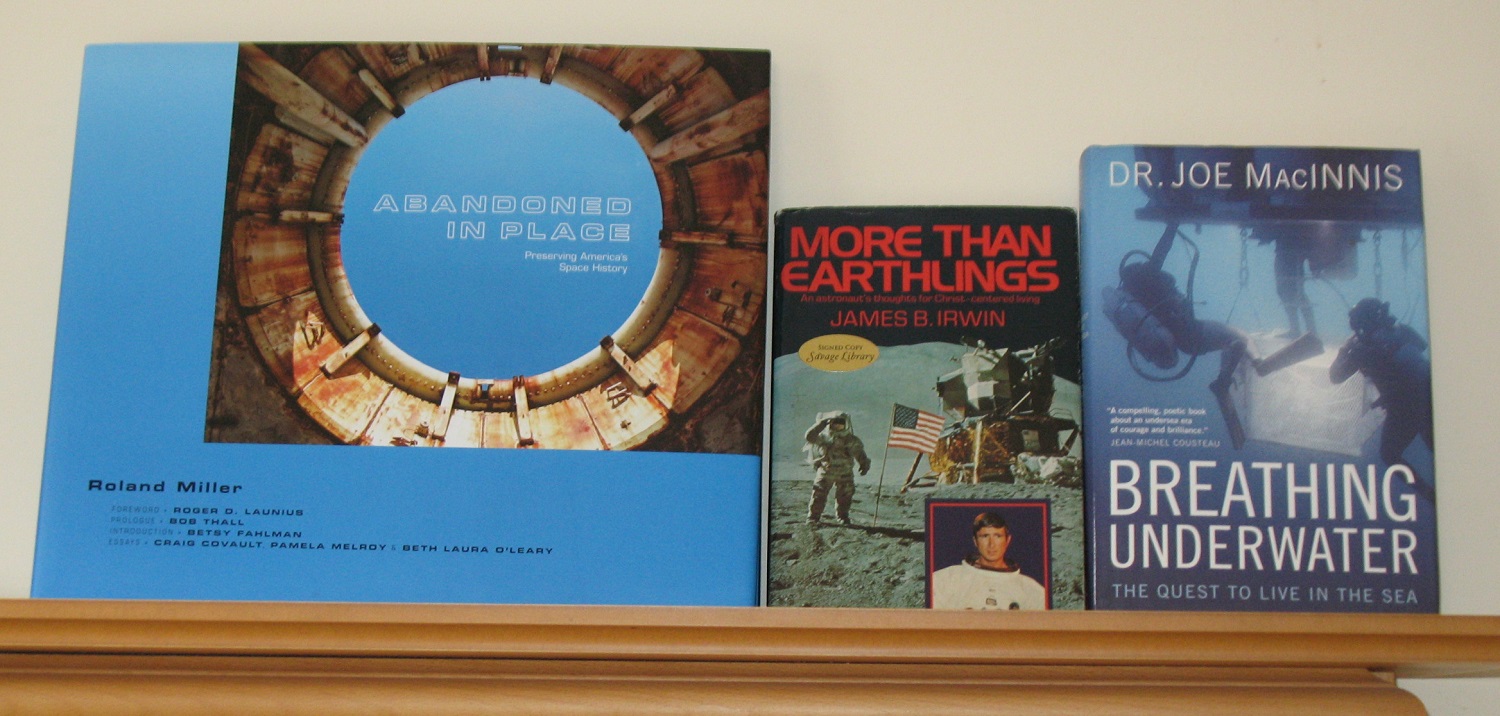
Breathing Underwater by Joe MacInnis I also bought on ABEbooks. MacInnis has been at the forefront of underwater research for several decades, ever since being taken on as doctor on Ed Link’s Sea Diver back in the 1960s. More Than Earthlings, Jim Irwin’s second book about his Moon flight, I found on eBay; it is signed. And Abandoned in Place is a photo essay on the support hardware used by the space programme, much of which has been left to rot as it’s no longer in use.


1 Comment

Moving pictures, #15

For the forseeable future, this blog will likely contain more posts about films than books – if only because I watch more films than I read books (it being a time thing, and a bad-organisation-of-time thing – although I remain committed to books as my favourite transport vector for culture). Anyway, I’ve got behind on these Moving pictures posts so I need to catch up a bit. So there might be a few of these in quick succession, beginning with…

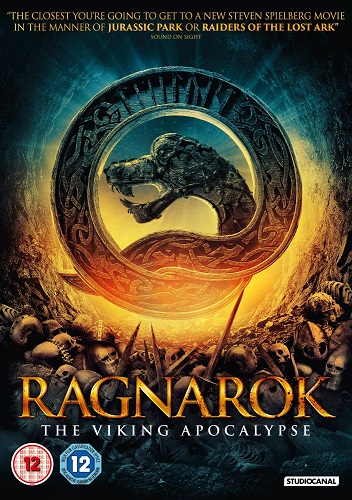
ragnatokGåten Ragnarok, Mikael Brænne Sandemose (2013, Norway). On Amazon Prime, this looked like some terrible Viking-themed action movie, so I’ve know idea why I bothered watching it (particularly given its English retitling… Ragnarok – The Viking Apocalypse). Happily, it proved to be anything but. Maybe it was just the fact it was Scandinavian. Anyway, an archaeologist in Norway believes a tribe of Vikings travelled to the far north of the country and the legend of Ragnarok was a consequence of their trip. But he has no real proof. But then an assistant, sent north to Finnmark, returns with a piece of stone on which some runes have been carved… and despite having no museum backing, the archaeologist sets off to find more evidence for his pet theory, taking his two kids along with him (he’s widowed, and his late wife did much of the work toward the theory). They find a remote lake, and centred in it a small island which contains Viking artefacts… because a bunch of them went there and were slaughtered by… a monster. This was actually pretty good – perhaps not up there with Troll Hunter, but nonetheless and interesting mix of Norse mythology and modern monster movie. Worth seeing.

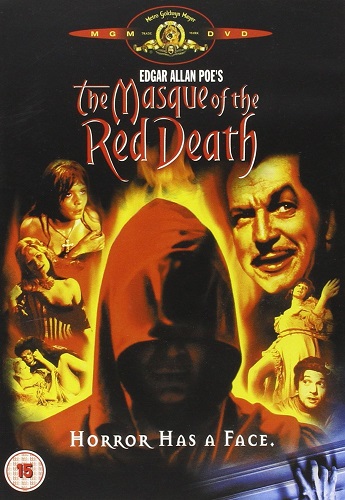
masqueThe Masque Of The Red Death*, Roger Corman (1964, USA). I admit it, one or two of the films produced by Corman’s New World Pictures are among my favourites. This is not one of them, It is, in fact, precisely the sort of film you’d expect Corman and American International Pictures to churn out. Based on the Edgar Allen Poe story of the same name, it’s little more than a US version of a Hammer Horror film, right down to the kitschy lead, the over-colourful production design, and the terrible over-acting. And perhaps it’s weirdly parochial of me, but I’ve always preferred it when Brits do it. Vincent Price plays your typical evil lordling, who discovers evidence of the titular plague on his land, and so offers his castle as a sanctuary to neighbouring nobility, who duly turn up, behave like everyone’s favourite cliché of decadent aristocracy, before themselves succumbing to the “red death”. It tries for the colour of The Adventures Of Robin Hood, but falls well short; I suspect that’s the only area in which it tried for anything. The louring mediaeval feudalism was done better, and earlier, by Mario Bava in 1960’s Black Sunday, and the effete nobles partying away the end days has been done better in several Hammer films. I have no idea with this film is on the 1001 Movies You Must See Before You Die list, but if they had to absolutely pick one from American International Pictures’ catalogue, then why not Queen Of Blood from 1966, or, from Corman’s own New World Pictures, 1981’s Galaxy of Terror?

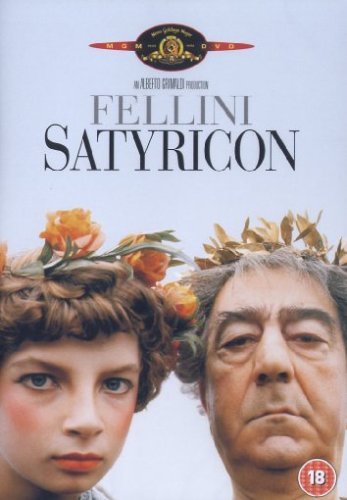
satyriconFellini Satyricon*, Federico Fellini (1969, Italy). I have a somewhat conflicted view of many of the great directors whose films I have watched – and there’s no denying Fellini is one of them – inasmuch as I love some of their films but can see little of note in their others. I do love Fellini’s 8½ but a lot of his others films have felt all a bit meh. And Fellini Satyricon seemed to be going the same way when I first started watching it – it felt like a weird cross between Derek Jarman’s Caravaggio and the sword-and-sandal epic Hercules and the Tyrants of Babylon (which are apparently also called “peplum fantasies”, as I learned from Aliette de Bodard; a phrase new to me). Anyway, so the film initially looked like Caravaggio… and then it put to sea in the most bizarre ships ever designed and I decided, for no good reason, that I actually really loved this film. And that, I suspect, is the mark of a movie that belongs on the 1001 Movies You Must See Before You Die list. The more I watched it, the more I wanted my own copy of Fellini Satyricon, preferably a nice high-rez Blu-ray version with lots of features. I still have no idea why I went from not liking it to thinking it was a work of genius, but the only way to discover that is to own and rewatch it. It was self-indulgent and over-the-top, but it was also, as it progressed, increasingly beautifully shot and weirdly fascinating.
sorrowThe Sorrow and the Pity*, Marcel Ophüls (1969, France). Some films, it’s easy to see why they made the 1001 Movies You Must See Before You Die list, even if they don’t seem of sufficient quality, or historical importance, to be there. But The Sorrow and the Pity is historically important, and its presence on the list is pretty much incontestable… even if I found it somewhat dull and uninteresting. It covers the Occupation of France during WWII, first from the point of view of those who fought against the Nazis, and then from those who fought with the Nazis. So it essentially consists of series of talking heads. It was banned from TV broadcast in France, and wasn’t shown until 1981. I can understand how defeat and collaboration are seen as nationally shameful, but I’d have thought it more shameful for  politicians, and the press, to be spouting the same rhetoric as the Nazis, as they seem to be doing in the twenty-first century. And with films like this one around you’d think they’d know better. But, as they say, those who don’t know their history are doomed to repeat it – and those who do are doomed to suffer as the others repeat it.

chariotsChariots of Fire*, Hugh Hudson (1981, UK). Everyone knows the theme tune, right? By Vangelis? I mean, it doesn’t sound at all appropriate for the 1920s, which is when this film is set, but it’s pretty damn memorable. Unlike the actual movie. Which purports to tell the story of the rivalry between Bible-bashing Calivinist Eric Liddle and upper-crust Jew Harold Abrahams, both runners who competed in the 1924 Olympic Games. It takes a few liberties, apparently, in pursuit of drama, as the silver screen is wont to do – particularly in regard to Liddell’s refusal to run at the Olympics on a Sunday. In the film, he learns on his way to Paris that the race is scheduled for a Sunday, but in reality he knew months beforehand and the British Olympic Committee had made plain their unhappiness about it. Having said all that, my overriding memory of the film is of a bunch of over-entitled toffs at Oxford or Cambridge (they’re interchangeable, after all) – as if that were in any way representative of the UK at that time (but hey, our current lords and masters are working hard to return us to those days of an over-privileged elite living off the backs of a working class trapped below the poverty line in slums). A boring film, and if the makers of the 1001 Movies you Must See Before You Die list were determined to include some British movies, they could have picked far better than this.

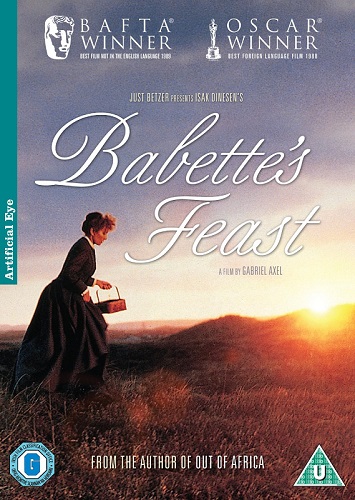
babetteBabette’s Feast*, Gabriel Axel (1987, Denmark). Three pieces of fiction by Karen Blixen (AKA Isak Dinesen) have been made into films, which is not a bad record. Out Of Africa, of course, everyone knows. The Immortal Story by Orson Welles is perhaps less well-known (and Blixen’s novella is superior to Welles’s movie). But Babette’s Feast is reasonably well-known, as is the fact it’s based on something by Blixen. At least, I think it’s reasonably well-known. And while it’s not the best novella from the collection in which it appears – that would be, for me, ‘The Tempest’ – it’s a good story and worth filming. I suspect I may have in the past avoided the film under the mistaken impression it involves a feast much like that in The Cook, The Thief, His Wife And Her Lover. It doesn’t. Amusingly, the story is set in Norway but was filmed in Denmark, because the Norwegian village in the story didn’t look dour and miserable enough. An excellent film.

1001 Movies You Must See Before You Die count: 744


1 Comment

The wrong side of the Pennines

Eastercon this year took place in Manchester, on the other side of the Pennines. I very much prefer Eastercons when they’re outside London, and even more so when they’re relatively close – and Mancunicon was only 55 minutes away by train. Having said all that…

Every Eastercon begins with travel woes, and Mancunicon was no exception. I’d booked a taxi in plenty of time to take me to the station, giving me 40 minutes before my train left. But at the time the minicab was supposed to arrive, it didn’t. And continued not to arrive… until eventually appearing 15 minutes before my train was due. This was because the current minicab operating model has a central dispatching office put out jobs for drivers to bid on. And if they don’t receive any bids, or don’t accept any of those they do receive, then you don’t get a taxi. And they don’t bother to tell you. This is not helpful. The cab driver who eventually turned up told me he’d bid on the job earlier but his bid had been rejected – otherwise he’d have arrived much sooner.

As it was, I managed to make train, although it was close. The trip was uneventful, and I then had a ten-minute walk to my hotel. Not normally a bad thing. But it was a warm day, I was wearing a coat and carrying a box of Whippleshield Books to sell. So I was knackered and soaking wet by the time I made it to my hotel room. I then met up with Tobias, who’d flown over from Stockholm, and we headed across to the Hilton Deansgate, the con venue. I sort of liked the hotel, but I’m not convinced it was an especially good con hotel. Most of the programme rooms were far too small, meaning you had to get to them really early to get a seat. The dealers were split across two rooms, which didn’t work. The hotel had only three lifts, which meant there was a queue when people wanted to head up to the twenty-second floor for book launches in the Presidential suite (which was itself too small). There was no place to sit down and relax – one  bar was pretty much standing-only, the other was laid out like a coffee-shop. And the snack food provided during the con was disgusting.

On the plus-side, the location was excellent – lots of shops and eateries within easy walking distance. And even a museum of science and technology… which I didn’t visit. And a cinema. Given better use of the Hilton Deansgate’s conference facilities – and some comfy chairs in the mezzanine bar – it would make a really good venue. Having said that, Mancunicon was a victim of its own success. I was told they’d expected 700 to 800 attendees, but actually had 950 people over the weekend. It was certainly busy a lot of the time.

I made, as is my usual practice, less than a handful of programme items. I was on one – on space opera, ‘The Stars Are Your Canvas’, with Mike Cobley, Tom Toner, Alison Sinclair, Jo Zebedee and Gavin Smith. I think the panel went well enough, although in hindsight we didn’t actually interrogate our subject much, and by the end it had turned into a bit of a nostalgia fest for certain space opera properties… Ah well. Then there were the BSFA Awards (congrats to the winners)… Oh, and I made the NewCon Press book launch in the Presidential suite too. But the highlights of the weekend were, as ever, meeting up with friends, and those free-wheeling conversations you have in the afternoons while you’re sat round a table – including one discussion on neurology, theology and Game Theory with Simon Morden and Alex Lamb; another on the various media adaptations of Dune with Adrian Tchaikovsky; not to mention all those “catch-up conversations” you have with friends that aren’t really catching-up because you know pretty much what they’ve been up to since you last saw them thanks to Twitter and Facebook status updates… Of course, there’s also meeting new people. Which I did. And seeing many people I’d not seen for many years…

Oh, and for the record, the Traveller identity card I mentioned during the space opera panel? Here it is:

patent

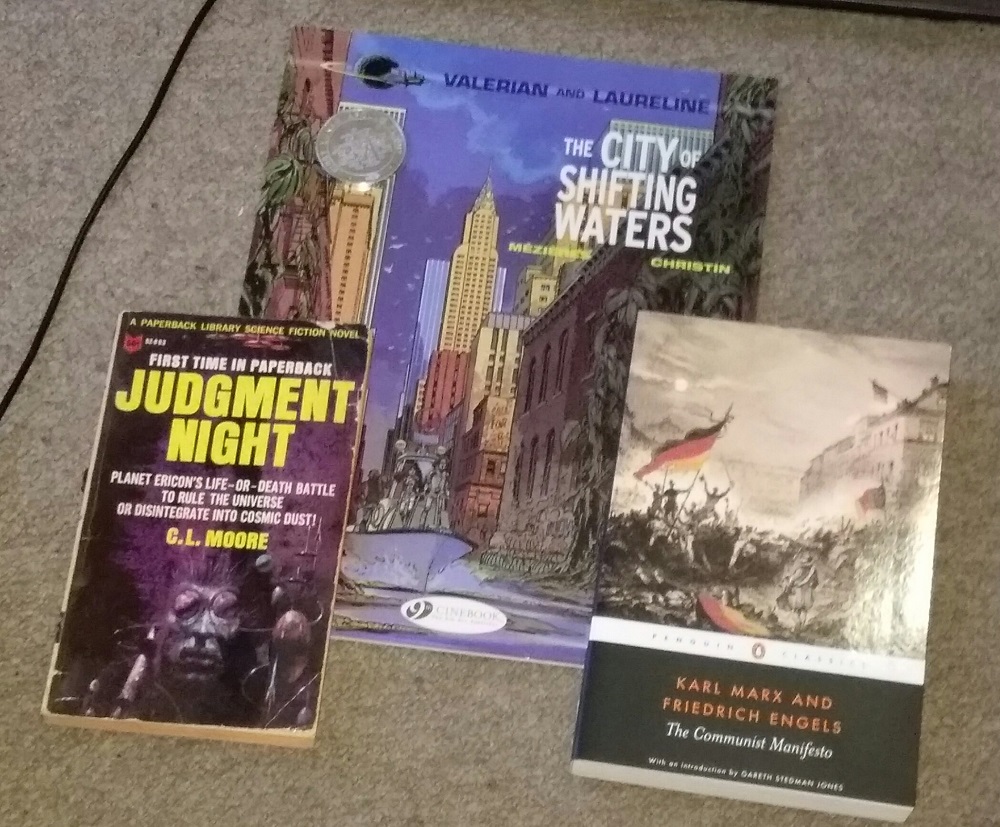
I also mentioned Judgment Night, the Valerian and Laureline series, The Communist Manifesto and a coin that’s flown around the Moon:

IMAG0010_1

I didn’t do so well on the social front, and went to be early on all three nights. I’d developed a bad back about a month ago, and all that standing around wasn’t do it any good. As usual, I also ate badly during the day, thanks to the poor choices available (such as the aforementioned disgusting con food). On the Sunday, I nipped to a nearby Sainsbury’s and bought lunch there. I wish I’d done it on the previous two days. Twice, I had dinner in the hotel restaurant. The food was pretty good. On the Saturday night, a group of us went to a nearby Indian restaurant. The food was good, but it was a bit too loud in there (a birthday party on the mezzanine, apparently).

I want to like Mancunicon more than I did. I think the two things that spoiled it for me were pain from my back and the somewhat feeble dealers’ room. I bought three books at the con; I usually come back with a carrier-bag full. In the past, I’ve spent hours browsing the books in the dealers’ room, but that took all of five minutes at Mancunicon. I suspect I was also hoping it would be more of a relaxacon, with places to chill out; and while many of the programme items looked interesting, the faff in actually getting a seat in the rooms put me off even trying. None of which is to say Mancunicon was a badly-organised Eastercon. On the contrary, it did extremely well – especially when you consider it was a rescue bid.

(Speaking of which, 2017’s Eastercon in Cardiff collapsed, but a rescue bid in Birmingham was announced at Mancunicon: Innominate at the Hilton Metropole at the NEC, GoHs Pat Cadigan, Judith Clute and Colin Harris. And 2018’s Eastercon will be Follycon in Harrogate, with GoHs Kieron Gillen, Kim Stanley Robinson, Nnedi Okorafor and Christina Lake.)

Oh well, perhaps I’ve been spoiled. Archipelacon is going to take a lot of beating. I did quite well with my own books (and I’m eternally grateful to Roy Gray for having them on the TTA table). It always surprises me – in a good way, of course – when people come up to me and say nice things about them I was hoping I wouldn’t have to carry a box full of Whippleshield Books back home, and happily I sold just over half of those I took with me. (The books are, of course, still available from the Whippleshield Books website here.)

In summary, a middling-to-good Eastercon for me. Mostly my fault – but also partly because the venue didn’t quite work as a con hotel. I wish I could say I came home fizzing with ideas and enthusiasm for writing projects… but I didn’t. I left at lunch-time on the Monday – it was absolutely hammering it down and I didn’t fancy walking to the station but a friend planned to order a cab… The journey home went without a hitch, and the cat at least was happy to see me and spent a good five minutes telling me off for disappearing on him. I did tell him but… Anyway, Birmingham next year – and I remember the hotel from the 2011 Eastercon… A good venue, but expensive and miles from anywhere, I seem to recall. But that’s twelve months away…


1 Comment

Reading diary, #25

I suppose you could say I’ve recently become disenchanted with modern genre fiction. I haven’t really, it’s been an ongoing thing. I suspect this comes to us all at some time. It’s not so much “putting away childish things” because I don’t consider genre a childish thing (not all of it, anyway). My tastes have changed, and most genre no longer meets those tastes. So I have to look harder to find stuff that does – I have to look harder anyway because the genre is now so much bigger, and I have access to so much more of it; but you know what I mean. I still have my favourite genre writers, of course, and I continue to read, and enjoy, their output; but unless something new really is out of the ordinary I usually find myself blithely uninterested in it.

Fortunately, there is more to literature than just genre fiction. And I’ve found that some mainstream/literary fiction does offer me what I look for in my reading. Plus, there is tons of it to explore – an entire history, in fact. I’ve learnt I really like, for example, DH Lawrence’s writing, so there’s an extensive oeuvre to work through right there. And Malcolm Lowry. And the works of recent discoveries Karen Blixen and Jenny Erpenbeck I want explore. I also have a bad habit of jotting down the titles of books that sound interesting when I come across mention of them, particularly twentieth-century ones that are hard to find… which is how I ended up with a copy of Johannes V Jensen’s The Long Journey (originally published in Danish in six volumes between 1908 and 1922; first published in English in three volumes in 1924), and I’m still looking for a copy of Nordahl Grieg’s The Ship Sails On (1924)… oh, and I’d like to read Jerzy Żuławski’s Lunar Trilogy but I don’t think it’s ever been translated into English…

Despite all that, there’s still a lot of twentieth-century science fiction I’ve not read, and I’m not about to write off the genre completely. It may well be projection on my part, but there seemed to be more of a distinction between science fiction and fantasy last century and I like that. I also like that there are a lot of well-written science fiction novels from the twentieth-century which have been pretty much ignored – mostly written by women, yes – and discovering them for SF Mistressworks does add an extra dimension to reading them.

So, anyway, reading… I did some. It is here. See below.

windows_sea_smallWindows in the Sea, Marion Clayton Link (1973). Ed Link made his fortune inventing the aircraft simulator, but he put a lot of time, effort and money into underwater exploration. He invented the SPID (Submersible Portable Inflatable Dwelling), which set a record when two divers stayed in it for 49 hours at a depth of 432 feet. He also invented a submersible with a lock-out chamber for divers, so they could be carried to their working depth, compressed en route, and begin their decompression while returning to the surface. And he invented the Johnson Sea Link submersible, in which the pilot and passenger sit inside a transparent acrylic sphere. Perhaps he didn’t advertise his adventures to the extent Jacques Cousteau did – in fact, this is the only book specifically about Link’s underwater exploits; other books are about people who worked for him – but he pioneered a number of important underwater technologies. Windows in the Sea thankfully sticks to more of a reportage style, rather than being hagiographic, and it’s fascinating stuff. Of course, not everything went according to plan – in an early test of the SDC (Submersible Decompression Chamber), it was catapulted out of the water with Link inside. Later, Link’s son died in a tragic accident in the Johnson Sea Link. But in a topic poorly served by non-fiction works, this book deserves to be better known.

end_daysThe End of Days, Jenny Erpenbeck (2014). I think it was David Hebblethwaite who recommended this novel – and while people recommend books pretty much all the time, something about this one sounded like it might appeal. So I bunged it on my Amazon wishlist, and was subsequently given it as a Christmas present. The back-cover blurb makes explicit comparisons to Kate Atkinson’s Life After Life (a book I very much liked, and, in fact, nominated for a Hugo, during my one and only attempt at nominating for the Hugo), but the novel The End of Days reminds me of the most is Katie Ward’s Girl Reading, another book unknown to me until someone recommended it… and which turned out to the best book I read that year. Plotwise, Atkinson’s novel is certainly a closer match, given that The End of Days describes the life of a woman born in Galicia in the latter days of the Austro-Hungarian Empire, and her life throughout the twentieth century as she survives WWI, joins the Communist Party in Vienna, moves to Moscow, and then Berlin, and becomes a famous East German writer. As in, that’s it in the final section in which she lives a long and eventful life. Earlier sections cut it short at various junctures. The writing throughout is stunningly good, the structure is very carefully built up, and this is one of the most impressive books I’ve read so far this year. I fully expect it to make my best five of the half-year, if not the year. I also want to read more by Erpenbeck.

bibblingsBibblings, Barbara Paul (1979). I consider myself reasonably well-informed on women sf writers of last century, particularly novelists, but Barbara Paul was one that had completely slipped by me. She had five novels published between 1978 and 1980, and one Star Trek novelisation in 1988. Only her first novel, An Exercise for Madmen, and this one, Bibblings, were published in the UK – and the first was in hardcover only by Robert Hale (whose books are notoriously hard to find). Paul also wrote crime novels; the last was published in 1997. She has an extensive website here. My review of Bibblings is on SF Mistressworks here.

decoding_fearJames Benning: Decoding Fear, Peter Pakesch & Bettina Steinbrügge, eds. (2014). I Love Benning’s films, at least those I’ve seen so far, which is only a small portion of his oeuvre as that is all that’s to date been released on DVD (happily, he donated his archives to the Östereichisches Filmmuseum, so hopefully they will release more). James Benning: Decoding Fear was produced to accompany an exhibition of Benning’s work, and comprises a series of essays in German and English, photographs of the exhibits, and an interview, in both German and English, about one element of the exhibition – his Two Cabins, the cabins in question being those by Henry David Thoreau (of Walden fame) and Ted Kaczynski (the Unabomber). It’s an interesting insight into an artist whose work I much admire, although to be honest I had expected something a little more analytical than what is essentially a companion-piece to an exhibition.

blue_geminiBlue Gemini, Mike Jenne (2015). How could I resist this? A thriller about a secret militarised Gemini programme – that’s right up my street. True, it was published by an independent publisher, and it’s not being sold as genre fiction… but I thought it worth a go. And, unsurprisingly, the book’s prose has all the style and grace of, well, a technothriller. The topic is indeed something that interests me – a Soviet plan to orbit nuclear warheads persuades the US to develop a secret USAF programme of satellite killer Gemini spacecraft, something that was actually considered in the real world. A group of sterotypically technothrillerish characters become involved in said programme and, er, well, that’s it. The research is good, and Jenne writes the technical aspect of his story with authority. But the characters are pretty much what you’d expect, the prose rarely rises above clunky, and there are a lot of pages here for the story. There are some nice set pieces – particularly those involving a black USAF airman and the racism he encounters – but there’s also a lot of ignorance shown about the rest of the world, and it’s not always clear if Jenne is trying portray the ignorance of Americans of the 1960s or if it’s twenty-first century ignorance. There are two sequels to this book – Blue Darker Than Black, published earlier this year, and Pale Blue, due in June this year. To be honest, I don’t think I’ll be bothering with them.

1001 Books You Must Read Before you Die count: 122