Time to look in the bucket once again after another shift at the coalface of culture. You know how this works…
Books
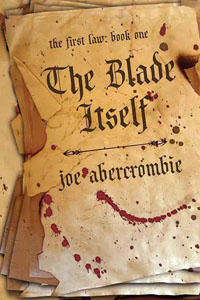
The Blade Itself, Joe Abercrombie (2006), was March’s book for my 2010 Reading Challenge. I reviewed it here.
A White Bird of Kinship trilogy, Richard Cowper, which comprises The Road to Corlay (1978), A Dream of Kinship (1981) and A Tapestry of Time (1982). These are set at the turn of the fourth millennium, a thousand years after global warming resulted in great floods, and the UK is an archipelago of seven kingdoms. Technology has fallen back to roughly mediaeval level, and a militant church runs much of the UK. Peter, a travelling story-teller, takes Tom, a young piper, to York to enroll him in the Minster school, but Tom is not all he seems. If he’s not the prophesied White Bird, then he is its prophet… Some years later, Tom’s death has resulted in a new religion, Kinship. A man is found floating in the sea off the island of Quantock (what were the Quantock Hills near Taunton), and put in the care of Jane, a potter’s daughter, who is huesh (she can see the future). Meanwhile, one thousand years earlier, Dr Mike Carver is in a coma following an experiment. Somehow he’s trapped in the mind of Thomas of Norwich, the man being cared for by Jane. The Road to Corlay, as the title suggests, covers the origin of the Kinship religion. By the second book, A Dream of Kinship, it’s reasonably well-established, albeit still a minority religion and considered heretical by Christianity. It’s also morphing into Christianity – accreting the creed and ceremony of the church it’s replacing. The story is told through Tom, son of Jane and Thomas of Norwich, as he grows up and studies at the religion’s centre, Corlay on the Isle of Brittany. The Christian Church plans to safeguard its stranglehold on the Seven Kingdoms by seizing control, but Tom manages to prevent this happening in the First Kingdom. In the final book, A Tapestry of Time, the parallels between Kinship’s history and Christianity’s history have become more marked. Tom travels about Europe with his girlfriend Witchet as an itinerant musician. There’s nasty incident in the French Alps, and Tom gives up on Kinship. But events lead him back to it – but in opposition to Brother Francis, who is Kinship’s St Paul. The final section of the book is set 800 years later, as two Oxford dons in a faux-Victorian/Edwardian English society, are “helped” to uncover the original Kinship, and not the church that has grown up around it. Again, Cowper’s clearly riffing off Pauline Christianity. They’re good books these three – well-written and interesting science fiction. Perhaps it’s a little implausible that British society would culturally repeat itself after the Drowning when the icecaps melted – mediaeval in 3000 AD, Victorian 800 years later. But that’s a minor quibble – Cowper makes it work.
The Lemur, Benjamin Black (2008). Black is better known as John Banville. This is the pseudonym he uses when he’s writing thrillers. Although, to be honest, The Lemur was not exactly a thrilling read. John Glass is an ex-reporter who married into a rich family. His father-in-law asks him to write a biography, so he hires a researcher, who Glass dubs “The Lemur” as he thinks he resembles one. A couple of days later, the researcher tries to blackmail Glass, and is subsequently murdered. Glass is worried that the murderer was his father-in-law, an ex-CIA telecoms billionaire, whose riches he resents (even while being kept by them). The Lemur isn’t a murder-mystery, it’s more of a character portrait of Glass. A quick read, but not a bad one.
The Magus, John Fowles (1977), I wasn’t expecting to finish so quickly – it’s a fat book: 656 pages in my Vintage paperback edition. But Fowles is an amazingly readable writer, which is one reason why I like his fiction so much. In The Magus, Nicholas Urfe accepts a position as teacher at a boarding school on the invented Greek island of Phraxos. There, he meets Maurice Conchis, a millionaire who owns a villa on the island. Conchis involves Urfe in a series of psychological games – few of which appear to make much sense. And that’s part of the appeal of The Magus: the promise that Conchis’s “experiments” on Urfe, the situations he devises, will be explained. And yet what little explanation does eventually come – when the motive is finally revealed – it stretches credulity. Urfe is also an unsympathetic narrator: he’s crass and arrogant. Conchis is little better, full of aphorisms that don’t submit to scrutiny. If Fowles’ Mantissa was a dirty old man’s book, then The Magus is definitely a young man’s book. Fowles himself describes it in the introduction to this 1977 revised edition as a “novel of adolescence written by a retarded adolescent”. Which is a bit harsh. It’s not as amazing a novel as The French Lieutenant’s Woman, or as good as A Maggot, and it’s probably a book best read when young; but neither is it not a very good book.
Lady Chatterley’s Lover, DH Lawrence (1928), surprised me. Obviously, I’m aware of Lawrence’s reputation but, given that my read of another highly-regarded author from the 1920s hadn’t been entirely successful (see here), I’d expected Lady Chatterley’s Lover to be a bit of a slog. Early indications were not good. The narrative opened very much as a story told to the reader, with no effort made to disguise its nature as a work of fiction – no attempt at immersion, in other words. The dialogue didn’t help either – too! many! exclamation marks! But then – and weirdly this echoed an identical moment in Pascale Ferran’s film adaptation of the book (see here) – the story seemed to settle down, and Lawrence pulled out some lovely writing about the countryside around Wragby, the Chatterley ancestral home in Derbyshire. Then the characters of Constance and Mellors began to gain depth, proving far more complex and rounded than I’d expected from the film adaptations I’d seen. In fact, they were very much unlike their cinematic counterparts. I was also amused to see my birth town of Mansfield described as “that once-romantic, now utterly disheartening colliery town” since I can’t imagine it ever having been romantic. I was going to put this book up on readitswapit.co.uk once I’d read it, but I’m going to hang on to it instead. It’s definitely worth a reread. And I think I’ll read me some more Lawrence as well at some point.
Majestrum, Matthew Hughes (2006), is another Vanceian tale from an author who has built a career out of writing Vanceian tales. This is no bad thing. Jack Vance is a singular talent, but Hughes has come the closest of anyone to emulating him – and, on occasion, even doing better perhaps. I’ve enjoyed other Hughes novels – I reviewed one, Template, for Interzone – but I wasn’t as keen on Majestrum. Like those others of his I’ve read, it’s set in Hughes’ Archonate universe, but it focuses on Henghis Hapthorn, a “discriminator” (sort of a private investigator). He’s recruited by Lord Arfe to uncover the background of the man wooing the aristocrat’s daughter. This then proves linked to a conspiracy directed at the Archon. And it’s all to do with a past age of magic trying to subvert the current age of reason. There are some really nice touches in Majestrum, and Hughes’s prose is very much like Vance’s… but I was put off a little by the mix of sf and magic.
Films
For All Mankind , dir. Al Reinert (1989). I should really do a proper review of this for my Space Books blog (and the same for In The Shadow Of The Moon
 too, which I also own). In fact, I think I will. So keep an eye open there for it.
The Curious Case Of Benjamin Button , dir. David Fincher (2008), was one of those films remarked on more on for a technical achievement than for anything else. Mind you, it was enough to see it nominated at the 2009 Oscars for Best Picture, Best Director, Best Actor, Best Supporting Actress, Best Adapted Screenplay, Best Original Score, Best Sound Mixing, Best Art Direction, Best Cinematography, Best Makeup, Best Costume, Best Film Editing and Best Visual Effects. It won Best Art Direction, Best Makeup and Best Visual Effects. Because, well, that’s all that’s really remarkable about The Curious Case Of Benjamin Button. In it, Brad Pitt plays the title character, who ages backwards. He’s born an old man (but baby-sized), and grows younger as he, er, ages. It’s based on a story by F Scott Fitzgerald. It’s also a “homily film”, sort of like Forrest Gump
 – you know, a life story in which someone learns a series of life lessons of the type which are found in fortune cookies or self-help books with asinine titles. The film looked really good, and the getting-younger-while-getting-older effect was cleverly done. Which is no doubt why it took the Oscars it did.
Harry Potter And The Philosopher’s Stone , and The Chamber Of Secrets
 , and The Prisoner Of Azkaban
 , and The Goblet Of Fire
 , dir. various hands (2001 – 2005). I read the first book many years ago and thought it remarkably ordinary. But I’d never seen the films. Despite the fact they’ve been on telly zillions of times. So I bagged cheap copies off eBay, and sat and watched them and… they’re not very good, are they? In those first two, the acting is definitely poor. The game of Quidditch makes no sense; nor does it feel like the sort of game that would be played at a public school. Things gets introduced into the world, with no back-story, just when they appear in the plot, which itself is nothing wildly original. Yes, the third film, Harry Potter and The Prisoner Of Azkaban, is better than the preceding two, but that’s no great achievement. The fourth film isn’t bad either, and is probably the best-plotted of the four. Mind you, its plot is a straightforward quest: win the competition! Anyway, I’ve seen them now. And the DVDs will be going back onto eBay.
Summer Hours , dir. Oliver Assayas (2008), is the fifth film by Assayas I’ve seen and, I think, the best one so far. It’s a French family drama. Two brothers and a sister – one brother lives in Paris, the other in Shanghai, and the sister in New York – meet up each summer. But then their mother dies, and circumstances preclude any future annual get-togethers, so they must pack up their mother’s house and the childhood memories they have of the place. A well-acted, well-scripted ensemble piece. Recommended.
Alien Hunter , dir. Ron Krauss (2003). James spader must be a science fiction fan. How else to explain all the crap sf films he appears in? He can’t be that desperate for work. In this one, an alien object is found under the ice in Antarctica, and taken to a corporate research facility on the continent. Spader, a cryptologist who used to work for SETI, is sent to investigate. But there’s an alien creature inside the object, and it breaks out and infects everyone with an alien virus which causes death in a matter of seconds. They should have titled the film Alien Rip-Off as there’s nothing original about the story. Best avoided.
X-Men Origins: Wolverine , dir. Gavin Hood (2009). So, after watching the three X-Men films, you thought you knew how Wolverine became like he is? Wrong. The title sequence to X-Men Origins: Wolverine is pretty good, showing Wolverine and his brother, Sabretooth, fighting in various wars. After an incident during the Vietnam War, the two are recruited by Colonel Stryker for his mutant task force, Team X. But Wolverine falls out with Stryker, and walks away. Some time later, his brother tracks him down, and kills his fiancée. Wolverine subsequently submits to have his skeleton coated with adamantium by Stryker, as only then will he be strong enough to kill Sabretooth. But it was all a cunning plot by Stryker in the first place… I thought the film was supposed to take place during the late 1960s / early 1970s, but you’d never have known from the production design. The film’s all a bit meh, possibly because Wolverine just isn’t an interesting enough character to carry a film on his own, and the supporting cast are pretty dull.
Top Hat , dir. Mark Sandrich (1936), is another one from one of those Top 100 Films lists – although I forget which list. Fred Astaire really was an odd-looking bloke. His head is a peculiar shape. And he had a horribly insipid singing voice. But, as was famously said, he “can dance a little”. This is arguably his best film which, to be honest, doesn’t say a great deal for his other films (and he made thirty-one). In Top Hat, Fred fancies Ginger, a friend of the wife of his producer. So he stalks her. Then she gets confused and thinks that Fred is his producer – i.e., married to her friend. The wife is not surprised that her husband is pursuing Ginger, and so the two plot to teach him a lesson. Except, of course, it’s not the producer, but Fred. The situation is well-handled and amusing, but the clomping wit leaves something to be desired. The musical numbers are everything you’d expect. Entertaining, but definitely rough around the edges.
Maroc 7 , dir. Gerry O’Hara (1967), I watched for a review for VideoVista.
The Magus , dir. Guy Green (1968), I watched again after finishing the book (see above). Michael Caine has described the film as the worst he ever worked on because no one knew what it was about. Fowles wrote the screenplay himself, and he made changes to the story. Changing Alison, an Australian, into Anne, who is French, was, I imagine, necessary after Anna Karina was cast in the part. Other alterations were more substantial. The twins June and Judy (AKA Rose and Lily) have become a single person (played by Candice Bergen). Many of the games Conchis plays on Urfe have been cut – there simply wasn’t room for them, I assume – although the main ones are there. But the entire final section of the book, in which Urfe returns to the UK and tries to discover Conchis’ true identity has been completely cut. Having read the book, the film is an unsatisfactory adaptation, but it’s hard to imagine how Fowles could have adapted it anyway. Fowles appears in the film, incidentally – during the opening credits, he’s the deckhand who says, “Phraxos” to Michael Caine.
Ma Mère , dir. Christophe Honoré (2004), is another Isabelle Huppert film and is based on a 1966 novel by Georges Bataille of the same title. A young man, fresh out of Catholic school, visits his parents on Gran Canaria. His father, who he hates, dies in an accident shortly afterwards, and the young man is introduced to a life of sex and depravity – the Canary Islands night-life, in other words – by his mother. I really didn’t like this film. Thoroughly unlikeable characters doing unlikeable things, with a narcissistic self-regard which in no way makes their antics entertaining. It might make for a good novel, but it doesn’t make for a good film. Mind you, I wouldn’t have thought anyone could make an entertaining film out of Houellebecq’s Atomised, but Oskar Roehler did (see here).


 , although Lem apparently hated it. Steven Soderbergh’s more recent adaptation I found somewhat dull. And the book, now that I’ve finally read it… is surprisingly dull too. The writing is clunky – although I’m reliably informed that’s because it’s a bad translation (from the French, which was translated from the original Polish). Lem also goes off on these long info-dumps in which he references lots of made-up scientific papers, which have a tendency to make your eyes glaze. I’m glad I read


 , dir. Werner Herzog (2006), is based on a true story – a US naval aviator who was shot down over Laos in 1965, was taken prisoner by the Pathet Lao, tortured and then imprisoned at a camp somewhere in the jungle. But he managed to escape, becoming the first American to do so. His fellow prisoners – five in the film, six in real life – didn’t make it. Like many Herzog films,
  (1988), or, as Adam Roberts told me he calls it, Star Trek: The Next Generation: The Nadir. And it is pretty dismal stuff. Having watched five seasons of Deep Space Nine, these early seasons of Next Generation seem crude sf telly by comparison – and Deep Space Nine is hardly the height of media sf sophistication. Some of the episodes in this season were embarrassingly bad. Like “The Outrageous Okona”, in which the Enterprise encounters a lovable interstellar rogue – Okona, O’Connor, geddit? – who proves to be secretly a Good Sort. Or “Up the Long Ladder”, with its lost colony of lovable Oirish rogues. Or “Pen Pals”, when Picard disobeys the Prime Directive yet again. Or “The Measure of a Man”, in which a hearing is convened to determine whether Data is a person or property, and in which the prosecution’s “killer” argument is that he has an off switch… These episodes are more than twenty years old now and they’ve not withstood the years well. I remember the excitement when they first came out – proper serious sf telly, not like Dr Who with its wobbly sets and wobbly scripts. In fact, it was a bit like the excitement new Who generated a few years ago. But watching season 2 and you can see how much anticipation made you overlook the episodes’ flaws, and how nostalgia had you remembering them as better than they actually are. Star Trek: The Next Generation did manage some good television sf drama during its seven seasons, but none of it is in season 2.
 , ITV (2009), I reviewed for Videovista – see
  , dir. Stephen Spielberg (1993), I’d never actually seen before. Which is why I rented it. I’m not a fan of Spielberg’s films, and I can’t think of one less likely to appeal to me than his take on the Holocaust. In the event, I thought he handled the subject well. Ralph Fiennes came across as a bit like a comedy Nazi, Liam Neeson wasn’t too bad in the title role, and the supporting cast played their parts well. The decision to film in black and white worked, although the girl in red felt like a gimmick. Anyway, I’ve now seen it, so I can cross it off the list. But if you want to watch a film about the Holocaust, then Andrzej Munk’s
  is better.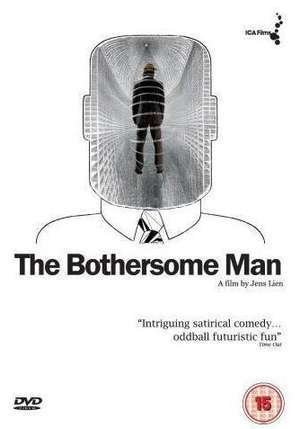
 , dir. Jens Lien (2006), I rented, but when it arrived I couldn’t remember why I’d stuck it on my rental list. I don’t normally seek out Norwegian films, and the director and cast were unknown to me. Perhaps it was
 , dir. Abbas Kiarostami (1997), is an Iranian black comedy like the excellent
  . Mr Badi needs someone to do a job for him, and drives round Tehran and its environs looking for someone willing to do it. But no one will. The job is to bury Badi, in a grave he has already dug, after he commits suicide. Eventually, he finds someone who agrees to do the deed if he finds Badi dead in the grave the following morning. Badi lies down in the grave that night. A thunderstorm starts… And the film cuts to camcorder footage of Kiarostami filming
  , dir. Patrice Chéreau (2005), is an adaptation of a Joseph Conrad short story, ‘The Return’, which I have not read. I watched the film because it stars Isabelle Huppert. It’s set in late nineteenth-century Paris. A respected publisher’s wife leaves him for her lover, and then returns several hours later having been rejected. The film then dissects their life together.
  is the best of the Star Trek films… So don’t forget to come back often and read my posts… just in case I ever do get around to writing the articles.
