It Doesn't Have To Be Right…

… it just has to sound plausible


2 Comments

Best of the year 2011

I was going to leave this until January, but everyone else is doing them now. And, let’s face it, there’s only a handful of days left until the end of the year and they’ll be filled with various consumerist festivities. So…

Books
As of 15 December, I had read 156 books in 2011, which I suspect will mean a total on 31 December of slightly less than last year’s 178 books. But then I probably wrote more this year than I did in 2010. Of my reading, 4% were anthologies, and 12% non-fiction… which means of the remainder that 28% were books by women writers and 56% by male writers. I still need to work on that. Genre-wise, 44% was science fiction, 16% was mainstream, 8% was fantasy, and 16% were graphic novels.

Of those 156 books, I have picked six which were, for me, the best I read during the twelve months. They are:
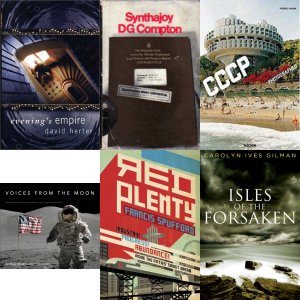

Evening’s Empire, David Herter (2002), should come as little surprise as I raved about when I read it back in April. Initially a Crowlesque fantasy, it takes a peculiar turn halfway through which makes it something weird and wonderful all of its own.

Synthajoy, DG Compton (1968), is another work by an author who continues to astonish me with each novel of his I read. This one has the most beautifully-handled non-linear narrative I’ve come across in fiction, not to mention one of the best-drawn female protagonists in science fiction. I honestly don’t know if this book is better than The Continuous Katherine Mortenhoe or merely just as excellent. I wrote about it here.

CCCP: Cosmic Communist Constructions Photographed, Frédéric Chaubin (2011), suffers under a somewhat forced title, but who cares. Because it contains loads of photographs of amazing Modernist buildings from the former Soviet Union and its satellites. Not all of the buildings still exist, and many of them have weathered the years badly. But there they are, captured in all their glory in this book.

Voices from the Moon, Andrew Chaikin (2009), was published to celebrate the fortieth anniversary of the Apollo 11 Moon Landing, and of all the books published at that time this one is perhaps the best-looking. Chaikin went through the many thousands of photographs take by, and of, the Apollo astronauts, and picked out ones that had rarely been seen before. And then he married those photographs with the words of the astronauts themselves – taken from interviews, transcriptions, etc.

Red Plenty, Francis Spufford (2010), was a book I read under a misapprehension. Though it was shortlisted for the BSFA Award for Non-Fiction, many complained it was partly fictional – inasmuch as it told its story using a cast of real and invented people in a threaded narrative. However, I’d mistakenly understood that Red Plenty not only covered the years of the Soviet Union’s existence but also extrapolated it into an alternate present in which the Soviet system had succeeded. That would the be the “sf” part of the BSFA Award, you see. Not so. But never mind, I still loved it.

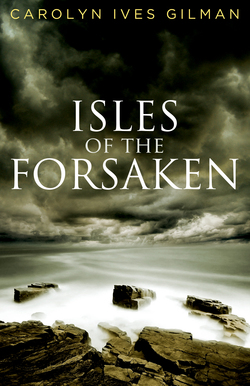
Isles of the Forsaken, Carolyn Ives Gilman (2011), I pre-ordered because I’d thought Gilman’s 1998 novel, Halfway Human, very good, and because a write-up of the plot sounded as though it would appeal. And so it did. A fantasy, but not in the traditional epic/heroic mould. I wrote about it here.

Honorable Mentions:
There are a number of these this year, more so than usual. First, Kameron Hurley’s God’s War and Infidel, a very strong debut with some very interesting elements, and some that didn’t quite work for me (see here and here). Eric Brown’s Wellsian The Kings of Eternity is his strongest work for a number of years, and he deserves to be read more than he is. Women of Wonder: The Contemporary Years is an excellent anthology that does exactly what it says on the tin and introduced me to several authors I’m determined to read more (see here and here). Solitaire by Kelley Eskridge (see here) and Zoo City by Lauren Beukes (see here) were the best two novels from my challenge to read twelve books during the year by female science fiction writers. Stretto was an excellent end to L Timmel Duchamp’s Marq’ssan Cycle, and Jed Mercurio’s American Adulterer managed to make fascinating a topic in which I have zero interest, John F Kennedy’s presidency. Finally, a pair of rereads are worthy of mentions: The Female Man by Joanna Russ and Icehenge by Kim Stanley Robinson.

Films
By 15 December, I had watched 183 films. That’s including seasons of television series watched on DVD. Twenty-seven of them I reviewed for VideoVista.net and The Zone. Only one I saw at the cinema: Apollo 18. I’m not a huge fan of science fiction film or television, though I will happily watch them. This may well explain my choices for my top six of the year:


Moolaadé, Ousmane Sembène (2004), is Senegalese director Sembène’s ninth feature-length film, and the first one by him I’ve seen. It is set in a small village in Burkina Faso, and revolves around the refusal of three girls to undergo the traditional female genital mutilation. They are protected by the wife of one of the village’s important men, who herself refused to let her own daughter undergo the same disgusting procedure. This leads to a revolt by the village’s womenfolk, but it ends badly.

Mammoth, Lukas Moodysson (2009). I very much liked Moodysson’s earlier films Show Me Love (Fucking Åmål), Together (Tillsammans) and Lilya 4-Ever, but thought the experimental Container was pretty much unwatchable. Mammoth, however, is not only a welcome return to form, it is a superb indictment of the West’s exploitation of the East. Judging by some of the comments the film has generated, I may the only person to see it in that light. Ah well. Gael Garciá Bernal is astonishingly good in the male lead role – and that’s in a cast that is uniformly excellent.

Norwegian Ninja, Thomas Cappelan Malling (2010), is a Norwegian spoof. The title may have been a bit of a giveaway there. It posits an alternate 1980s in which Norwegian traitor Arne Treholt was not a spy for the Soviets but the head of a secret royal force of ninjas. As a spoof of late 1970s / early 1980s action films, Norwegian Ninja is pitch-perfect, but it is its use of real-life footage, and the way it neatly twists real history, that turns it in to a work of genius. I reviewed it for VideoVista here.

Winter’s Bone, Debra Granik (2010), was not a film I expected to appeal to me: a noir-ish thriller set among the hillbillies of the Ozarks. I not only enjoyed it, I thought it very very good indeed. It takes place in a world peopled by some of the scariest people I’ve seen depicted on celluloid. And they’re not scary because they’re psychopaths or sociopaths, they’re scary because they need to be to survive in that culture.

Underground, Emir Kusturica (1995), was recommended to me, and it was a good call. A black comedy following the fortunes of a pair of rogues during WWII in Belgrade and the years after under Tito. One rises high in the post-war government, while the other remains hidden in his cellar, convinced the war is still going.

The Time That Remains, Elia Suleiman (2009), is the most recent film by a favourite director, so its appearance here should not be a surprise. It’s perhaps less comic than Divine Intervention, but neither does go all bizarre and surreal towards the end. A series of autobiographical vignettes, it builds a narrative of the Israeli occupation of Palestine, and the lives of the Palestinians under Israeli rule. Some parts of it are a delight.

Honorable Mentions:
No science fiction films, I’m afraid. Instead: Israeli thriller, Ajami, set in the titular district of Jaffa; The Wedding Song, which is set during the Nazi occupation of Tunisia in World War II and follows the friendship of two female friends, one Jewish and one Arabic; the BBC’s adaptation of Much Ado About Nothing from 1984, starring Cherie Lunghi and Robert Lindsay, and the best of the Bard’s plays I watched during the year; The Secret in their Eyes, a clever thriller from Argentina, which beat Ajami to the Oscar for Best Foreign Film in 2010; and finally, Michael Haneke’s The Seventh Continent, which is one of the most unsettling films I’ve ever watched.

Albums
I didn’t think 2011 was shaping up to be a good year for music, but that all changed during the second half of the year. I think that might have happened in previous years too. I bought a reasonable number of new albums and old albums. The best of those are:

Harvest, The Man-Eating Tree (2011), is the band’s second album, and it’s a more commercial and slightly heavier-sounding offering. And Tuomas Tuominen still has one of the best and most distinctive voices in metal. I suspect The Man-Eating Tree are going to be the new Sentenced. Certainly when you think of Finnish metal, it’s The Man-Eating Tree you should be thinking of,  and not Lordi.

The Death of a Rose, Fornost Arnor (2011), is this UK band’s second album and, like their first, was also self-released. Some have said it’s the album Opeth should have made this year. Certainly it borrows the Swedes’ trademark mix of crunching yet intricate death metal and accomplished acoustic parts. It’s very much an album to lose yourself in, and I’m already looking forward to the band’s next offering.

Weaver of Forgotten, Dark Lunacy (2010), was annoyingly expensive as it was also self-released. But in Italy. (And I see now it’s much cheaper. Gah.) It is… epic. There’s no other word for it. It’s melodic death metal, but of a sort to fill vast spaces. I thought Dark Lunacy’s previous album, The Diarist, was excellent, but Weaver of Forgotten is an order of magnitude better.

Brahmavidya : Immortal I, Rudra (2011), is the third of a trilogy of albums, including Brahmavidya : Primordial I and Brahmavidya : Trascendental I. The band are from Singapore, but sing in – I believe – Sanskrit as well as English. It’s three blokes making death metal, but singing about their mythology. Rudra were one of this year’s discoveries, and I now have the T-shirt.

One for Sorrow, Insomnium (2011). Apparently, the only people who don’t like Insomnium are those who’ve never heard them. Each album finds them more polished and technically accomplished than the last, and it continues to astonish me they’re not better known. Insomnium are the dictionary definition of Finnish death/doom metal.

The Human Connection, Chaos Divine (2011), is one of those albums that blows you away with the first track… but then can never quite scale those heights again. Opener ‘One Door’ is a blinding song, and if the rest can’t compare, that doesn’t mean they’re not good. This is a proggier effort than the band’s first album, and it’s the better for it. Chaos Divine is a band you can tell will improve with each new album.

Honorable Mentions:
I’m sorry, I have to do it: Heritage. I’m giving Opeth’s latest album an honourable mention because, though it took numerous listens before it grew on me, it does contains flashes of brilliance. It’s totally prog, of course, with nary a growl to be heard, and that has to be disappointing… but as a warped vision of old school prog, Heritage is worth its mention. However, Of Death by Byfrost, The Light In Which We All Burn by Laethora and Psychogenocide by Nervecell all get mentions because they’re good albums which are very much in keeping with their bands’ sounds. Byfrost I first heard at Bloodstock, and I enjoyed their set so much I wanted the album. Nervecell are from Dubai and, while I was aware of them before, I saw them this year supporting Morbid Angel and they were excellent. Laethora is just Laethora. Finally, Sowberry Hagan by Ultraphallus deserves a special honourable mention for being a fraction away from sheer noise, yet still remaining powerful and heavy and an excellent listen.


Leave a comment

Christmas come early: Vivisepulture

This plopped into my inbox this morning:

Vivisepulture
edited by Andy Remic & Wayne Simmons

Welcome to our anthology, a collection of weird and bizarre tales of twisted imagination by Neal Asher, Tony Ballantyne, Eric Brown, Richard Ford, Ian Graham, Lee Harris, Colin Harvey, Vincent Holland-Keen, James Lovegrove, Gary McMahon, Stan Nicholls, Andy Remic, Jordan Reyne, Ian Sales, Steven Savile, Wayne Simmons, Guy N. Smith, Adrian Tchaikovsky, Jeffrey Thomas, Danie Ware, Ian Watson and Ian Whates. Artwork by Vincent Chong.

The anthology is dedicated to the late Colin Harvey, with great affection.

In the tradition of Poe, Kafka, Borges and HG Wells, this collection of weird stories are written with the primary drive of presenting twisted deviations of normality. Whether it’s the deviant factory workers of Neal Asher’s Plastipak™ Limited, the pus-oozing anti-cherub of Ian Graham’s Rotten Cupid, the acid-snot disgorging freak of Andy Remic’s SNOT, or Ian Watson’s alternate zombie-crucifixion, each story will drag your organs up through your oesophagus and give your brain a chilli-fired beating.

FOCUS ON –
• WEIRD TALES
• DISTURBING CONCEPTS
• DEVIATED BLACK HUMOUR
• NO GENRE LEFT UNGOUGED

IF YOU LIKE VIVISEPULTURE, TRY –
Metamorphosis by Franz Kafka
Complete Tales and Poems of Edgar Allan Poe
Perfume by Patrick Süskind
Labyrinths by Jorge Luis Borges

Vivisepulture is an EBOOK original anthology edited by Andy Remic and Wayne Simmons. Vivisepulture can be purchased from www.anarchy-books.com in PDF, EBOOK and MOBI formats.

I have seen Vivisepulture and it is good. Get your copy now while it’s hot. And if appearing in an anthology alongside Guy N Smith wasn’t a boyhood ambition, it certainly should have been…


8 Comments

2012: a challenge

I have decided on my challenge for 2012. It will be world fiction. Each month, I will read a book written by an author who is a native of a country whose literature I’ve not read before. Unfortunately, these will have to be books published in English. While I might be able to puzzle my way through novels written in some languages, that would a) take me more than a month per book, and b) limit my choices to fiction from countries many of whom I’ve already read…

To date, I’ve read fiction from the following countries:

  • Australia
  • Canada
  • Chile
  • Czech Republic
  • Denmark
  • Egypt
  • Finland
  • France
  • Germany
  • India
  • Ireland
  • Italy
  • Japan
  • Lebanon
  • Netherlands
  • New Zealand
  • Norway
  • Palestine
  • Poland
  • Russia
  • South Africa
  • Sudan
  • Sweden
  • UAE
  • UK
  • US
  • Yemen

I’m now looking for suggestions for novels from authors from countries not listed above. Any genre. But not books that are too huge. Fortunately, I’ve already at least one Chilean author, so while I do own a copy of Robert Bolaño’s 2666, I can read it at my leisure and not for this challenge.

So, get suggesting away. It would be nice if the books were readily available in the UK – either new or second-hand. And I’d probably sooner they weren’t from Anglophone countries. I’d also like a diverse list, covering as much of the globe as possible.


4 Comments

The shiny new

Every now and again, a news story pops up about cameras in public – or even private – places. The latest is Aldwych Tube Station, which has been opened to the public as a museum. The owners of the museum have banned the use of DSLRs inside. They claim this is due to the cameras’ “combination of high quality sensor and high resolution”, which is patently stupid.

But then it doesn’t matter what is the reason for the ban.

It’s the same as concerts refusing entry to people with “professional” cameras or video-cameras. The owners of the event are trying to preserve their revenue stream. If someone with a camera is going to make money from the sale of photographs or video, then they want a slice of it. Or they want to make money from the sale of photographs they’ve taken themselves.

Unfortunately, that’s a horse that has long since bolted.

The technology now exists to take high-quality photographs using compact cameras, or even mobile phones. The distinction between “professional” and “own use” no longer exists, and hasn’t done for many years. Money-makers, of course, refuse to recognise this. Their inability to understand the technology, or how it is changing, and how it is changing the way people use it, is making them look increasingly dumb.

So how long before someone somewhere decides to roll back that technology?

Yes, there’s money to be made in the new shiny tech toys. But when those same toys impact on the revenue-generating ability of intellectual property – as they currently do – then someone somewhere is going to realise they were better off without them. I am not, I hasten to add, a photographer, not even as a hobby. I prefer words to pictures. But the same argument also applies to book piracy and music piracy. DRM is plainly ineffective. Each year new tools appear which make the ability of intellectual property to generate revenue more problematical.

The world this will create is already an established fact. I’m not especially interested in extrapolating how the world will change as that technology becomes more pervasive, more sophisticated and more ubiquitous. But imagine a world where the plutocrats and oligarchs introduced technological regression, a world where each new generation of a gadget had less functionality than the preceding one.

Even now, it’s easier to write stories set in earlier decades simply because some plots fail if set at the present time. Many crime stories, for example, don’t work when everyone has mobile phones, or when DNA profiling can identify a perpetrator from the tiniest amount of trace evidence. But a story about a world in which the functionality of technology, rather than technology itself, was tightly constrained… That might make for an interesting read. I mean, it’s not enough that plutocrats are gradually reducing our financial stability and purchasing power, but what if they also did the same to the uses to which we could put things? It’s not entirely implausible. While the technology can’t be un-invented, it does require expensive and sophisticated manufacturing facilities, and closing those down would do the job quite effectively.

Fortunately, it’s an arms race. Everyone is too afraid to give the advantage to a competitor. But if you believed in all those conspiracies theories – not so much the Gnomes of Zürich as the Bilderberg Group – then you could quite happily believe a technological rollback might be agreed upon.

Assuming, of course, the rate of technological progress has not been cleverly controlled for centuries…


10 Comments

A fine fantasy

I remember reading Carolyn Ives Gilman’s Halfway Human back in 1998, thinking it very good, and then being somewhat disappointed when no further novels appeared from her. I later discovered she’d had a number of short stories published – chiefly in F&SF – and even a novella, ‘Arkfall’ (now available from Phoenix Pick here). There are also a pair of chapbooks from Aqueduct Press.

Last year, I learnt Gilman would have a new fantasy novel published by ChiZine Publications. I am not, it has to be said, a huge fan of fantasy. Too many strike me as too similar. Ripping off a different culture for the background, or implementing a new magic system, is not enough. But the description of Isles of the Forsaken seemed to me it might appeal. So I pre-ordered a copy.

I have now read it. And I was not disappointed.

The Inning Empire has just won a years-long war, and has decided to turn its attention to its colonial possessions, the Forsaken Isles. The empire is a lexarchy, which means it is ruled entirely by its Courts and legal system. Despite this, it’s not especially enlightened – in fact, the Innings as a race are arrogant and racist, and their colonial policies reflect this.

Harg Ismol is an Adaina, the lesser of the two races which inhabit the Forsaken Isles. The others, the Torna, are the dominant race and administer the islands in the name of the Innings. Also relevant are the Lashnura, or Grey Folk, semi-magical healers who can take away the pain and injuries of the islanders. The Innings do not understand this relationship, imagining the voluntary empathic bondage the Grey Folk undergo is little more than slavery. Harg had a good war, and rose to the rank of captain, the only Adaina to do so. Though he is offered the command of the Native Navy by Admiral Corbin Talley, head of the Inning Navy, he turns it down and returns home to Yora, an island in the South Chain of the Forsakens.

At which point, things start to go horribly wrong.

Isles of the Forsaken moves smoothly from a story about a disaffected hero returning home from war into a story about an archipelago-wide rebellion. This is driven by veterans having seen the rest of the empire, and by the Innings’ desire to finally “sort out” the islands. Harg is, of course, caught up in this, if not partly instrumental. Also important is Nathaway Talley, the youngest son of the Inning Chief Justice (and brother of Corbin), who is on Yora because he wants to introduce the Adaina to the benefits of Inning law. And there is also Spaeth, who was created as a companion by Yora’s lone Lashnura, but has yet to take on her healing responsibilites.

There are, however, one or two set-pieces in the book which feel a little contrived. Harg’s first run-in with the Tornan authorities, for example, seems a bit too well-designed to put him on the path the plot demands. Which is not to say Harg is not a well-rounded character. He’s a reluctant hero – while acknowledging that he’s best-placed, and has the necessary skills, to lead the islanders’ fight, he doesn’t want the responsibility of leading them into a war they would probably lose. And which would doubtless result in bloody reprisals. Further, there is an island myth about a leader, the Ison, who appears in times of need to lead the islanders to victory. Harg doesn’t believe he is the Ison, nor does he want to be him – part of the myth involves a “cleansing” by one of the Lashnura, which Harg refuses to undergo.

Nathaway’s transformation from idealistic naïf is better-handled, though it takes a while to get going. The Grey Folk, and the mythology which they represent, provide an interesting backdrop to the story, one which becomes increasingly important and relevant as the plot progresses. In parts, this mythology reminded me a little of Le Guin’s Earthsea books, particularly when Spaeth takes Nathaway to the “circles”, where the opposing balances which “rule” the islands manifest. The character of Tiarch, the Tornan governer of the Forsaken Islands, struck me as the sort of character Gwyneth Jones would write.

One section of the story which stands out takes place when Spaeth and Nathaway escape from Admiral Talley’s custody. They flee into the sewers beneath the city, but soon get lost and, somehow, cross over into another “circle”. This is one not even Spaeth recognises. It manifests as a series of mezzanine floors about a great well many many levels deep. Each level contains vast rooms in which are stored books and scrolls and other forms of document. The section is genuinely creepy, and the writing – which is good throughout the novel – is especially effective at getting this across.

Isles of the Forsaken is a post-colonial fantasy. Though the Inning Empire won its war, and is governed by what we would consider a fair and impartial system, the story’s sympathies plainly lie with the Forsaken Islanders. Of course, the Innings are far from the noble people their technology and political system would suggest. Nor are they the only ones who are racist – the Torna consider the Adaina to be nothing more than feckless and ignorant peasants. There are different ways of life on display in Isles of the Forsaken, and its ignorance about these among and between each group which is partly the fuel which drives the plot. The Innings’ lexarchy also comes under scrutiny. Theoretically an impartial and impersonal system with no real leadership, it is in practice dominated by the Talley family, and Corbin’s campaign in the Forsaken Islands is partly phrased as a launchpad for a bid for power by him back in the Inning homeland.

I read Isles of the Forsaken pretty much in two sittings. It may only be 312 pages long – definitely a point in its favour, given that it is a fantasy – but even so, I’ve not read many books in recent years which have dragged me into their story and kept me there quite so effectively. I’ve already pre-ordered the sequel, Ison of the Isles.


Leave a comment

Alt review

Yesterday, Locus posted Lois Tilton’s early December short fiction reviews, and among the magazines she covers is Alt Hist 3 – see here. Which includes my story, ‘A Light in the Darkness’. She writes that, “The author successfully captures the eccentric genius of Tesla, and his scenes on the front in WWI France are effective, using Wilfred Owen as the focal character.” But she doesn’t like the third narrative thread, in which a nameless prisoner reflects on the book he was writing before his arrest, a book about WWI poets.

To be honest, I couldn’t guarantee that readers would know enough about Wilfred Owen to understand that the story kills him off before he wrote the poetry for which he is famous. An afterword explaining as much would have been a far less satisfactory method of getting this information across. I could have, I supposed, included some found text on the history of WWI poetry (suitably edited, of course). But even that felt too clumsy. A commentator within the story was a compromise, and sometimes that’s what you have to do. Either that, or bin the story. And doing the latter can really hurt…


3 Comments

Creatively bankrupt

I learnt today that Hollywood is planning to remake Paul Verhoeven’s Starship Troopers. And, in fact, there’s a remake of his Total Recall due next year (starring Kate Beckinsale and Colin Farrell). We all know of Hollywood’s recent penchant for remakes and reboots. It’s allegedly financially safer to trade on a known name than to try something new. The only person losing out in this strategy, of course, is us. Because we’ll see well-loved films completely ruined. Starship Troopers was a pitch-perfect satire of Heinlein’s right-wing novel, but who wants to bet the new version will keep the book’s odious politics intact? I will not go and see such a film; I will stay at home and watch my DVD of Verhoeven’s version again.

It might well be that the Starship Troopers remake isn’t so bad. But the odds are against it. Not only is there the online vocal hatred of Verhoeven’s film by conservative and libertarian sf fans (they’re totally wrong, of course), there’s also the US’s slow drift to the right over the past three decades, and… well, and there’s 2009’s Star Trek, a monumentally dumb sf film. And there was 2008’s The Day The Earth Stood Still. And this year’s The Thing. And… need I go on? This is what reboots do: they put the boot into well-loved and well-regarded films.

To be honest, I gave up on Hollywood’s output years ago. The best films these days are made elsewhere. And that’s not just genre films. But then, Hollywood chases that 15 – 25 male demographic and, let’s face it, focusing on the stupidest sector of society is not going to be good for your creativity. The superhero tentpole blockbuster is a case in point. Such films are all spectacle – they are like their titular heroes, all pumped-up muscles and no brains.

The best sf film I have seen in recent years, Cargo, was made in Switzerland. The only time I visited the cinema this year was to see Apollo 18, an independent Russo-American production. The bulk of my DVD viewing in 2011 has been foreign-language films, and 1950s and 1960s Hollywood films (made long before the rot set in). I’m planning to see John Carter next year, which has been produced by Disney, but I suspect that will be the last Hollywood film I go to the cinema to see. Given that the success of films is judged by their cinema takings, that seems a sensible way to express my disappointment and displeasure at Hollywood’s output.


6 Comments

The agency model of genre

The Ancient Greeks attempted to explain the world about them by applying human agency to it. Why does the sun cross the sky? Because some bloke in a chariot is pulling it. And since such feats required abilities above and beyond those normally attributable to humans, so those who performed them were deemed gods. Over time, the use of these gods as explanations became a narrative and so accreted history, politics, romance, symbolism, etc. But they still didn’t really explain what caused the sun to rise and set.

And so for fantasy. It does not seek to explain, it applies agency to something which does not, in the real world, possess it. Sometimes that agency cannot be wielded by humans – the supernatural, demons, gods and demi-gods. Or it gives humans agency over things not normally open to their use, via magic systems or supernatural talents. And those magic systems may be as structured and fractal as the laws of physics.

Science fiction, however, assumes the real world is explainable. The sun crosses the sky because the earth is turning, and the earth turns due to the action of its core. The universe operates according to a structure of interlocking principles and rules, which are not only parsable but fractal.

The worlds in science fiction stories are implicitly reachable, either by traversing time or space or both. This is not true for fantasy worlds. Yes, there are those where people from our world find themselves in the world of the story – The Chronicles of Narnia, The Fionavar Tapestry, or The Chronicles of Thomas Covenant, for example – but those are not journeys, they are magic portals. To some extent, it might be argued that similar travel to alternate dimensions, worlds or histories in science fiction might well treat such methods as magic portals, but the possibility of an explanation still underlies it. More than that, it is driven by an element of a rule-set which underlies the entire universe. The same cannot be said of fantasy.

That, I think, is the fundamental difference between science fiction and fantasy. That is why they are different modes of fiction, for all that they may share similar trappings or often use a shared toolkit. In sf, the universe is a rational and impersonal place, which operates independently of, and with no regard for, those who inhabit it (though they may engineer it for their own uses). In fantasy, everything has motivation because everything has some degree of agency, and the world exists for the benefit of its inhabitants. Their existence is part of the same act of creation which created the world. Without inhabitants, there would be no world. And everything in it is open to use by at least some of the inhabitants.

By the same token, neither genre is a subset of the other. Though they may be lumped together for marketing purposes and because the fanbases have traditionally overlapped, they have entirely different histories. The first science fiction came from electronics magazines in the 1920s; the first fantasies are a great deal older, perhaps even as old as civilisation itself. The current situation is an accident of the creative and production process for fantasy and science fiction. This doesn’t mean, of course, that they two should be sundered. Each benefits from its supposed relationship to the other. But there is a distinction, and to discuss either, or both, without recognising that benefits neither.


Leave a comment

Monster Book for Girls due soon

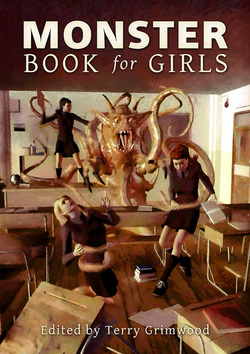
The Exaggerated Press’s The Monster Book for Girls in only a matter of weeks away from publication, and the cover art has now been posted on their website here. Pretty cool, eh?

I’m looking forward to this one, and not just because it contains my story about the ATA pilot. There looks to be some good names on the TOC, so it should be an excellent anthology.