It Doesn't Have To Be Right…

… it just has to sound plausible


Leave a comment

I am a doughnut

Just a quick note to explain my silence last weekend – I was in Berlin. While I’ve visited Germany a number of times, and even lived for three months in Aachen, it was my first trip to that city. My sister and her family were spending the weekend there, so I flew across and met them. It was stinking hot, Unter den Linden was being dug up for a new U-Bahn line and stunk of sewage, the Brandenburger Tor is touristy and disappointing, the Holocaust Memorial is impressive, the Deutsches Technikmuseum is cool (if you like boats and aeroplanes and trains, which I do), the Kurfürstendamm is consumption so conspicuous you can’t see it happen because they won’t let you in the shops unless you’re wearing a gold Rolex or something (the shops even have bouncers!), the Käthe-Kollwitz Museum is worth a look (I especially liked her two graphic cycles, ‘The Weavers’ Revolt’ (1898) and ‘The Peasant War’ (1902 – 1908)), Checkpoint Charlie is a bit rubbish, the stretch of Berlin Wall remaining on Nederkirchnerstraße is worth seeing, as is the Topography of Terror exhibition on the same site…

Far too many capital cities are nice places to visit but you wouldn’t want to live there, but I think I’d happily move to Berlin. We met up with a friend of my brother-in-law, and he lives in Prenzlauer Berg, which used to be East Berlin, and is a very nice area. Plus, of course, the public transport in Berlin is excellent – S-Bahn, U-Bahn, trams and buses. And cheap too. The express train from from Schönefeld airport to Alexanderplatz in the centre of Berlin takes twenty minutes on a large, modern electric train. And costs €3.10. The Heathrow Express costs £20. An all-day zone 1 ticket on the U-Bahn is €6. The worst part about visiting any European city is returning to the UK and realising how comprehensively our robber governments have fucked up our public transport infrastructure. I mean, is there anyone who seriously thinks privatising the railways has improved it? If yes, I have a statue on a very tall plinth in Trafalgar Square for sale…

Despite only being careful and not quizzing every eaterie on the ingredients in their meals, I managed to avoid making myself ill. One café we visited labelled some of its sandwiches “laktosefrei”, but that was the only place I saw doing so. I ate Italian twice, Arabic, and on our last night in Berlin – typically – we discovered Nikolaiviertel just down the road from our hotel, which contains a number of restaurants/bars serving German food. One thing worth noting, however: when in Berlin, don’t wear a black collared shirt with epaulettes. I did, and some bloke wandered past me muttering something about “Totenkopf”.

In all, definitely a place worth visiting, in spite of the weather, and I’d certainly go again. When I was in Aachen in 1992, we considered spending a weekend in Berlin, but discovered we were closer to London and that it would take about nine hours by train. (Even now, it’s still seven hours by ICE from Aachen to Berlin.) It’s a pity we never made the effort, but at least I’ve rectified that now.


Leave a comment

More on 100 great sf stories by women

SF Signal have taken my idea of a list of 100 Great SF Stories by Women and run with it… and today they’ve posted one of their Mind Melds on that very subject. They extended the criteria to include fantasy and horror as well as novel-length fiction. And they’ve invited a host of interesting people to contribute (including, er, me). There’s lots of excellent suggestions for reading material, so go check it out.


Leave a comment

The fastest man on earth

No, not me. Though I suppose if you strapped enough rocket bottles to me, I could probably qualify. Which is what happens – to someone else, I hasten to add – in my story ‘The Incurable Irony of the Man who Rode the Rocket Sled’. It was published yesterday in the The Orphan #5. You can find my story here.

sonicwind

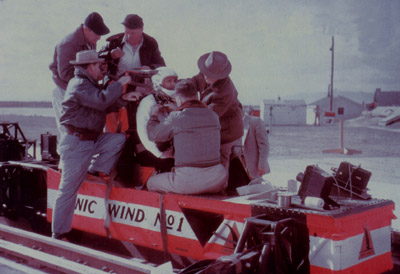
‘The Incurable Irony of the Man who Rode the Rocket Sled’ was inspired by some of the research I did for the Apollo Quartet. I’d come across mention of the rocket sleds that were used in the 1950s to test how many Gs a human body could safely withstand, and I thought it would be pretty cool to write about that. So I did. The end result, however, isn’t exactly typical – as science fiction, my fiction, or even fiction per se: The Orphan itself describes it as possessing “footnotes, no plot, and genre content visible, yet near microscopic”. So, no launching rocket sleds into space to fight aliens or anything. Just a man, the rocket sleds, and the world around him.

They were bonkers, the volunteers on the rocket sled programme – especially the man who created it, John Paul Stapp. But what they achieved did prove useful and ultimately saved many lives. Here’s a USAF information film about rocket sleds, which gives you some idea of what it was all about.

Enjoy.


2 Comments

Analysis: 100 Great sf stories by women

I have to admit the list of 100 Great science fiction stories by women has done considerably better than I expected, and seems to have gone a little bit viral. Loads of people tweeted a link to it, someone posted it on reddit (where a typically clueless number of discussions subsequently took place), it’s been linked from several blogs and sites (including tor.com and SF Signal), and has even appeared on several tumblrs. The hits here have gone through the roof – it is officially my most popular post, with even more hits than the one in which I wrote that Asimov was a shit writer. I was expecting people to turn the list into a meme, but that doesn’t seem to have happened. But it’s not like I’m complaining…

Anyway, I thought it might be interesting to stick up a few charts about the list.

storiesbydecade
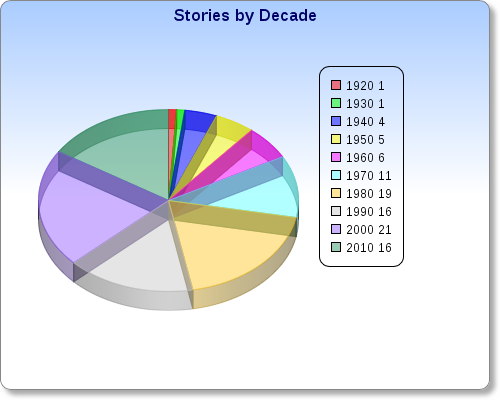
The list is slanted a little toward the twenty-first century, but there are more women writing sf now than there were in the first half of last century.

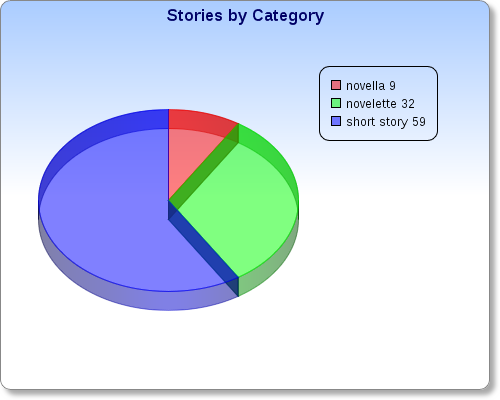
storiesbycategory
Unsurprisingly, more than half of the list are short stories – ie, 7,500 words or less.

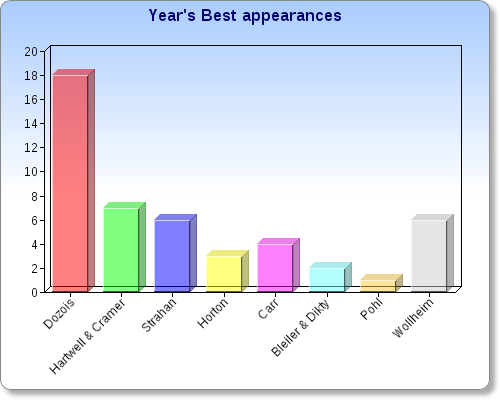
yearsbestappearances
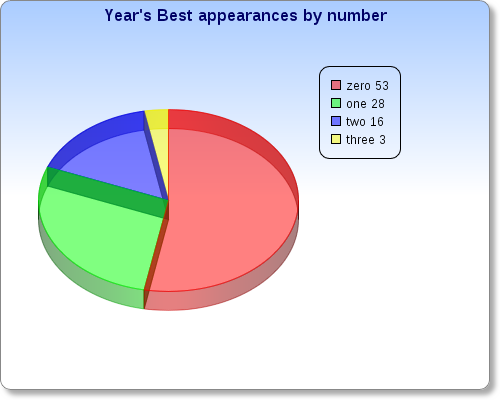
yearsbestbynumber
I used the tables of contents of several year’s best to find titles for the list, so these numbers come as no real surprise – but I was surprised to discover that some of the earlier stories had appeared in year’s bests of the 1950s and 1960s.

noms

wins

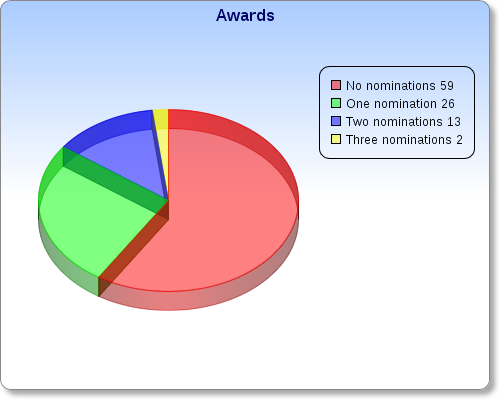
byaward
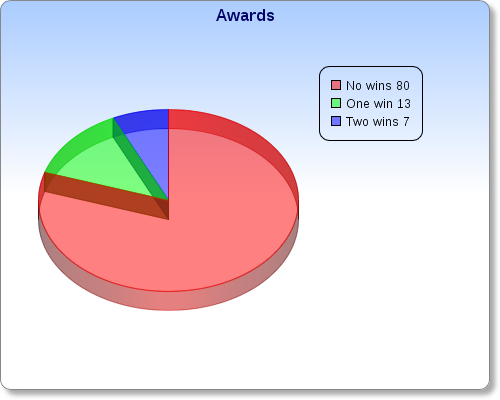
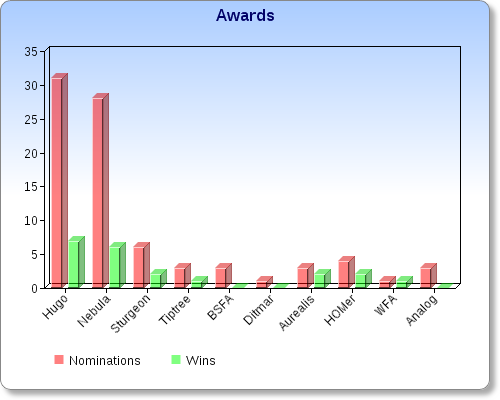
Again, I looked at award shortlists for titles, so the high number of nominees and winners is not unexpected.

locuspoll
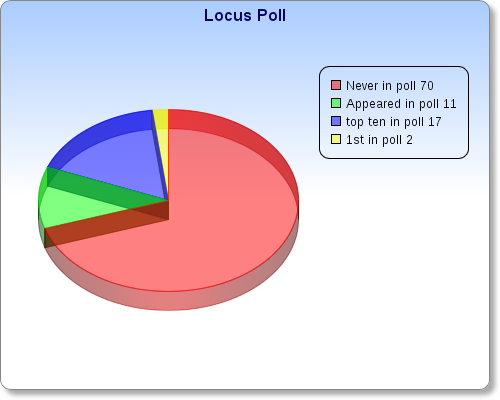
I didn’t use the Locus poll at all, so the number of stories which appeared on it – nearly a third of the list – came as a surprise.

reprints
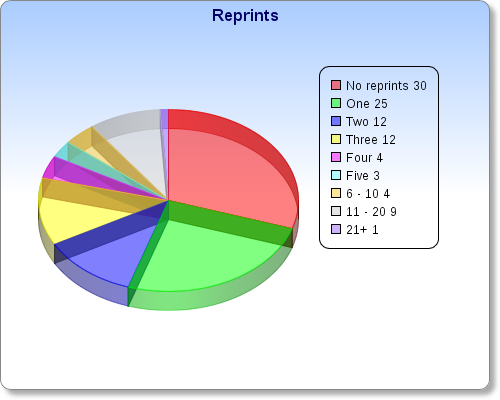
Quite a few of the older stories have been reprinted a huge number of times. The most-reprinted story is Judth Merril’s ‘That Only A Mother’, with 24 reprints, including Women of Wonder – and in my review of that anthology here, I called it “a bona fide classic of the genre”. It seems I’m not the only person who thinks so…


167 Comments

The list: 100 Great Science Fiction Stories by Women

Now let the arguing begin…

The list below contains 100 pieces of short fiction – short stories, novelettes and novellas – by women writers, published between 1927 and 2012. Each author appears only once. The stories are by no means the best by each writer. In most cases, I’m simply not familiar enough with an oeuvre to choose the best; in other cases, I’ve picked a story I’ve read and thought good, and yes, there are a few of my favourite stories in the list too. I’ve not read them all – some came from suggestions on Twitter or on an earlier post on this blog (many thanks to all who contributed), others I took from various award lists or Year’s Best TOCs. One or two fantasy stories might have sneaked through the net, because I couldn’t find copies to read and check. However, the list should all be science fiction – and it should also demonstrate a good spread of styles and themes and approaches across the genre.

The point of the exercise was to demonstrate that women have been writing good science fiction since the beginnings of the genre – a point signally ignored by the table of contents of the 1978 anthology 100 Great Science Fiction Short Short Stories, which contained only five stories by women. The first story on this list, for example, came third in a competition in Amazing Stories during the magazine’s second year of publication.

1 ‘The Fate of the Poseidonia’, Clare Winger Harris (1927, short story) online here
2 ‘The Conquest of Gola,’ Leslie F Stone (1931, short story) available in
3 ‘Water Pirate’, Leigh Brackett (1941, short story) available in
4 ‘Space Episode’, Leslie Perri (1941, short story) available in
5 ‘No Woman Born’, CL Moore (1944, novelette) available in
6 ‘That Only a Mother’, Judith Merril (1948, short story) available in
7 ‘Contagion’, Katherine Maclean (1950, novelette) available in
8 ‘Brightness Falls from the Air’, Margaret St Clair [as Idris Seabright] (1951, short story) available in
9 ‘All Cats are Gray’, Andre Norton (1953, short story) available in
10 ‘The Last Day’, Helen Clarkson (1958, short story) available in
11 ‘Captivity’, Zenna Henderson (1958, novella) available in
12 ‘The New You’, Kit Reed (1962, short story) online here
13 ‘The Putnam Tradition’, Sonya Dorman (1963, short story) online here
14 ‘Lord Moon’, MJ Engh [as Jane Beauclerk] (1965, short story) available in
15 ‘Weyr Search’, Anne McCaffrey (1967, novella) available in
16 ‘The Heat Death of the Universe’, Pamela Zoline (1967, short story) online here
17 ‘The Steiger Effect’, Betsy Curtis (1968, short story) available in
18 ‘The Power of Time’, Josephine Saxton (1971, novelette) available in
19 ‘And I Awoke and Found Me Here on the Cold Hill’s Side’, James Tiptree Jr (1972, short story) available in
20 ‘When It Changed’, Joanna Russ (1972, short story) online here
21 ‘Sheltering Dream’, Doris Piserchia (1972, short story) available in
22 ‘Of Mist, and Grass, and Sand’, Vonda N McIntyre (1973, novelette) available in
23 ‘Clone Sister’, Pamela Sargent (1973, novelette) available in
24 ‘The Violet’s Embryo’, Angélica Gorodischer (1973, novelette) online here (excerpt)
25 ‘Stone Circle’, Lisa Tuttle (1976, short story) available in
26 ‘Eyes of Amber’, Joan D Vinge (1977, novelette) available in
27 ‘Cassandra, CJ Cherryh (1978, short story) available in
28 ‘The View from Endless Scarp’, Marta Randall (1978, short story) online here
29 ‘Scorched Supper on New Niger’, Suzy McKee Charnas (1980, novelette) available in
30 ‘Abominable’, Carol Emshwiller (1980, short story) available in
31 ‘Sea Changeling’, Mildred Downey Broxon (1981, novelette) available in
32 ‘In the Western Tradition’, Phyllis Eisenstein (1981, novella) available in
33 ‘Her Furry Face’, Leigh Kennedy (1983, short story) available in
34 ‘Bloodchild’ Octavia E Butler (1984, novelette) available in
35 ‘Symphony for a Lost Traveller’, Lee Killough (1984, short story) available in
36 ‘All My Darling Daughters’, Connie Willis (1985, novelette) available in
37 ‘Webrider’, Jayge Carr (1985, short story) available in
38 ‘Out of All Them Bright Stars’, Nancy Kress (1985, short story) available in
39 ‘The View from Venus: A Case Study’, Karen Joy Fowler (1986, novelette) available in
40 ‘Reichs-Peace’, Sheila Finch (1986, novelette) available in
41 ‘Daily Voices’, Lisa Goldstein (1986, short story) available in
42 ‘Rachel in Love’, Pat Murphy (1987, novelette) available in
43 ‘Forever Yours, Anna’, Kate Wilhelm (1987, short story) available in
44 ‘Stable Strategies for Middle Management’, Eileen Gunn (1988, short story) available in
45 ‘War and Rumours of War’, Candas Jane Dorsey (1988, short story) available in
46 ‘The Mountains of Mourning’, Lois McMaster Bujold (1989, novella) available in
47 ‘Tiny Tango’, Judith Moffett (1989, novella) available in
48 ‘Identifying the Object’, Gwyneth Jones (1990, novelette) available in
49 ‘Loose Cannon’, Susan Shwartz (1990, novelette) available in
50 ‘Dispatches from the Revolution’, Pat Cadigan (1991, novelette) available here
51 ‘The Road to Jerusalem’, Mary Gentle (1991, short story) online here
52 ‘The Missionary’s Child’, Maureen F McHugh (1992, novelette) available in
53 ‘The Story So Far’, Martha Soukup (1993, short story) available in
54 ‘The Good Pup’, Bridget McKenna (1993, short story) available in
55 ‘California Dreamer’, Mary Rosenblum (1994, short story) available in
56 ‘Last Summer at Mars Hill’, Elizabeth Hand (1994, novella) available in
57 ‘Coming of Age in Karhide’, Ursula K Le Guin (1995, novelette) available in
58 ‘De Secretis Mulierum’, L Timmel Duchamp (1995, novella) available in
59 ‘Merlusine’, Lucy Sussex (1997, novelette) available in
60 ‘Noble Mold’, Kage Baker (1997, short story) available in
61 ‘All the Birds of Hell’, Tanith Lee (1998, novelette) available in
62 ‘Rain Season’, Leanne Frahm (1998, short story) available in
63 ‘Echea’, Kristine Kathryn Rusch (1998, novelette) available in
64 ‘Patient Zero’, Tananarive Due (2000, short story) online here
65 ‘Knapsack Poems’, Eleanor Arnason (2002, short story) available in
66 ‘State of Oblivion’, Kaaron Warren (2003, short story) available in
67 ‘Inside Out’, Michaela Roessner (2004, short story) online here
68 ‘Griots of the Galaxy’, Andrea Hairston (2004, novelette) available in
69 ‘Riding the White Bull’, Caitlín R Kiernan (2004, novelette) available in
70 ‘The Avatar of Background Noise’, Toiya Kristen Finley (2006, short story) available in
71 ‘Captive Girl’, Jennifer Pelland (2006, short story) online here
72 ‘The Bride Price’, Cat Sparks (2007, short story) available in
73 ‘Tideline’, Elizabeth Bear (2007, short story) online here
74 ‘Arkfall’, Carolyn Ives Gilman (2008, novella) available in
75 ‘Legolas does the Dishes’, Justina Robson (2008, short story) available in
76 ‘The Ecologist and the Avon Lady’, Tricia Sullivan (2008, novelette) available in
77 ‘Infinities’, Vandana Singh (2008, novelette) available in
78 ‘Chica, Let Me Tell You a Story’, Alex Dally MacFarlane (2008, short story) available in
79 ‘Spider the Artist’, Nnedi Okrafor (2008, short story) online here
80 ‘Cold Words’, Juliette Wade (2009, novelette) available in
81 ‘Eros, Philia, Agape’, Rachel Swirsky (2009, novelette) onine here
82 ‘Non-Zero Probabilities’, NK Jemisin (2009, short story) online here
83 ‘Sinner, Baker, Fabulist, Priest; Red Mask, Black Mask, Gentleman, Beast’, Eugie Foster (2009, short story) available in
84 ‘It Takes Two’, Nicola Griffith (2009, novelette) available in
85 ‘Blood, Blood’, Abbey Mei Otis (2010, short story) online here and here
86 ‘The Other Graces’, Alice Sola Kim (2010, short story) available in
87 ‘Agents of Repair’, Rosie Oliver (2010, short story) available in
88 ‘Amaryllis’, Carrie Vaughn (2010, short story) online here
89 ‘I’m Alive, I Love You, I’ll See You in Reno’, Vylar Kaftan (2010, short story) online here
90 ‘Flying in the Face of God’, Nina Allan (2010, short story) available in
91 ‘Six Months, Three Days’, Charlie Jane Anders (2011, short story) online here
92 ‘Nahiku West’, Linda Nagata (2011, novelette) available in
93 ‘The Cartographer Bees and the Anarchist Wasps’, E Lily Yu (2011, short story) online here
94 ‘Silently and Very Fast’, Catherynne M Valente (2011, novella) online here, here and here
95 ‘Jagannath’, Karin Tidbeck (2011, short story) available in
96 ‘A Vector Alphabet of Interstellar Travel’, Yoon Ha Lee (2011, short story) online here
97 ‘Immersion’, Aliette de Bodard (2012, short story) online here
98 ‘The Lady Astronaut of Mars’, Mary Robinette Kowal (2012, novelette) online here
99 ‘The Green’, Lauren Beukes (2012, short story) available in
100 ‘Significant Dust’, Margo Lanagan (2012, novelette) available in

No doubt there are stories and authors I’ve missed off the list, and which/who you feel strongly should be on it. Tell me so in a comment. Also, feel free to disseminate the list as a meme – you know, bold those you’ve read, italicise those on the TBR; or something like that.

For the record, I’ve read: 1, 2, 3, 4, 5, 6, 7 8, 9, 10, 12, 13, 16, 18, 19, 20, 22, 23, 24, 26, 27, 28, 29, 30, 34, 35, 36, 37, 38, 39, 40, 41, 42, 43, 44, 45, 47, 48, 53, 55, 57, 58, 64, 65, 70, 73, 74, 75, 79, 81, 82, 83, 84, 85, 87, 89, 90, 91, 93, 94, 96, 97, 98. Which I make to be sixty-three in total. Not too bad a showing…

ETA
This is a list of short fiction – short stories, novelettes and novels. If you’re interested in novels by women sf writers, then check out SF Mistressworks.

ETA #2: NOTES FOR REDDITORS
This is the easy summary for those on reddit who seem to have trouble understanding the purpose of this list:

  1. It is not novels, it is short stories, novelettes and novellas.
  2. Each writer appears only once.
  3. It is not a list of “best” or “top” sf stories by women. It is “great” because it was inspired by the anthology 100 Great Science Fiction Short Short Stories.
  4. The list demonstrates that women have been writing good science fiction since the genre was created in 1926.
  5. There are many more than 100 excellent women sf writers, but I chose 100 because of the anthology named in point 3.
  6. The gender of the author is not irrelevant. Find me a list of great or top or best sf stories where at least half were written by women. You will fail.
  7. The stories were chosen from a) my own favourites, b) suggestions by other people, c) award shortlists, and d) the tables of contents of Year’s Best anthologies.
  8. I have read 63 of the stories on the list.
  9. There are several authors on the list who have yet to have novels published – ie, new authors.
  10. If there’s someone missing you feel should be on the list, tell me in a comment.
  11. I’m happy to defend all my choices – leave a comment.
  12. Finally, why not click on the links in the list and read those stories which are available online?


56 Comments

Toward 100 Great SF Short Stories by Women

In my review of Women of Wonder, a women-only sf anthology edited by Pamela Sargent, on SF Mistressworks here, I mentioned the anthology 100 Great Science Fiction Short Stories, edited by Isaac Asimov, Joseph D Olander and Martin H Greenberg. It occurred to me it would be a good idea to put together a list, of meme-like properties, of 100 great sf stories by women writers. I can’t do this on my own – I’ve simply not read enough short fiction to pick out enough good stories. So I’m asking for suggestions. There was a bit of a conversation of Twitter today, using the hashtag #100WomenSF. Feel free to suggest there too.

The rules are simple – written by a woman, science fiction only, published in any year up to and including 2012, any length (ie, novelettes and novellas allowed). The list will feature only one piece of fiction per author but don’t let that stop you. Some authors are going to be easier than others, but may well present different problems – everyone can probably name a suitable story by Ursula K Le Guin off the top of their head, but which is her best one?

I had a quick go and managed just over fifty – including some authors appearing more than once (such as Le Guin) because I’ve yet to decide which story belongs in the final list…

Stories I’ve read that I think belong on the list
‘The Conquest of Gola’, Leslie F Stone (1931, short story)
‘No Woman Born’, CL Moore (1944, novelette)
‘That Only a Mother’, Judith Merril (1948, short story)
‘Brightness Falls from the Air’, Margaret St Clair (as Idris Seabright) (1951, short story)
‘The Last Day’, Helen Clarkson (1958, short story)
‘The Heat Death of the Universe’, Pamela Zoline (1967, short story)
‘And I Awoke and Found Me Here on the Cold Hill’s Side’, James Tiptree Jr (1972, short story)
‘When It Changed’, Joanna Russ (1972, short story)
‘Of Mist, and Grass, and Sand’, Vonda N Mcintyre (1973, novelette)
‘Scorched Supper on New Niger’, Suzy McKee Charnas (1980, novelette)
‘Bloodchild’, Octavia E Butler (1984, novelette)
‘All My Darling Daughters’, Connie Willis (1985, novelette)
‘Webrider’, Jayge Carr (1985, short story)
‘Out of All Them Bright Stars’, Nancy Kress (1985, short story)
‘The View from Venus: A Case Study’, Karen Joy Fowler (1986, novelette)
‘Reichs-Peace’, Sheila Finch (1986, novelette)
‘Rachel in Love’, Pat Murphy (1987, novelette)
‘Tiny Tango’, Judith Moffett (1989, novella)
‘Identifying the Object’, Gwyneth Jones (1990, novelette)
‘The Road to Jerusalem’, Mary Gentle (1991, short story)
‘Coming of Age in Karhide’, Ursula K Le Guin (1995, novelette)
‘The Avatar of Background Noise’, Toiya Kristen Finley (2006, short story)
‘Arkfall’, Carolyn Ives Gilman (2008, novella)
‘Legolas Does the Dishes’, Justina Robson (2008, short story)
‘Immersion’, Aliette de Bodard (2012, short story)

Stories I’ve read that maybe should be on the list
‘Cassandra’, CJ Cherryh (1978, short story)
‘Abominable’, Carol Emshwiller (1980, short story)
‘Symphony for a Lost Traveller’, Lee Killough (1984, short story)
‘Forever Yours, Anna’, Kate Wilhelm (1987, short story)
‘Stable Strategies for Middle Management’, Eileen Gunn (1988, short story)
‘California Dreamer’, Mary Rosenblum (1994, short story)
‘The Lady Astronaut of Mars’, Mary Robinette Kowal (2012, novelette)

Stories I’ve not read
‘Captivity’, Zenna Henderson (1958, novella)
‘Lord Moon’, MJ Engh (as Jane Beauclerk) (1965, short story)
‘Weyr Search’, Anne McCaffrey (1967, novella)
‘The Steiger Effect’, Betsy Curtis (1968, short story)
‘Nightlife’, Phyllis Eisenstein (1982, novelette)
‘Her Furry Face’, Leigh Kennedy (1983, short story)
‘The Mountains of Mourning’, Lois McMaster Bujold (1989, novella)
‘The Power and the Passion’, Pat Cadigan (1990, short story)
‘Suppose They Gave a Peace…’, Susan Shwartz (1991, novelette)
‘Protection’, Maureen F McHugh (1992, novella)
‘Danny Goes to Mars’, Pamela Sargent (1992, novelette)

Duplicate stories
‘Souls’, Joanna Russ (1982, novella)
‘Over the Long Haul’, Martha Soukup (1990, novelette)
‘Nekropolis’, Maureen F McHugh (1994, novelette)

Are these sf? I don’t know
‘The Warlords Of Saturn’s Moons’, Eleanor Arnason (1975, novelette)
‘Stone Circle’, Lisa Tuttle (1976, short story)
‘Red as Blood’, Tanith Lee (1979, short story)
‘Spidersong’, Susan C Petrey (1980, short story)
‘Sea Changeling’, Mildred Downey Broxon (1981, novelette)
‘Dog’s Life’, Martha Soukup (1991, short story)
‘The Nutcracker Coup’, Janet Kagan (1992, novelette)
‘All Vows’, Esther M Friesner (1992, short story)
‘Alfred’, Lisa Goldstein (1992, short story)
‘The Good Pup’, Bridget McKenna (1993, short story)

New additions
‘The Fate of the Poseidonia’, Clare Winger Harris (1927, short story)
‘Space Episode’, Leslie Perri (1941, short story)
‘The Putnam Tradition’, Sonya Dorman (1963, short story)
‘Automatic Tiger’, Kit Reed (1964, short story)
‘The View from Endless Scarp’, Marta Randall (1978, short story)
‘War and Rumours of War’, Candas Jane Dorsey (1988, short story)
‘Patient Zero’, Tananarive Due (2000, short story)
‘Knapsack Poems’, Eleanor Arnason (2002, short story)
‘State of Oblivion’, Kaaron Warren (2003, short story)
‘Inside Out,’ Michaela Roessner (2004, short story)
‘Griots of the Galaxy’, Andrea Hairston (2004, novelette)
‘The Bride Price’, Cat Sparks (2007, short story)
‘Tideline’, Elizabeth Bear (2007, short story)
‘Infinities’, Vandana Singh (2008, novelette)
‘Spider the Artist’, Nnedi Okorafor (2008, short story)
‘Chica, Let Me Tell You a Story’, Alex Dally MacFarlane (2008, short story)
‘Cold Words’, Juliette Wade (2009, novelette)
‘Eros, Philia, Agape’, Rachel Swirsky (2009, novelette)
‘Non-Zero Probabilities’, NK Jemisin (2009, short story)
‘Blood, Blood’, Abbey Mei Otis (2010, short story)
‘The Other Graces’, Alice Sola Kim (2010, short story)
‘Agents of Repair’, Rosie Oliver (2010, short story)
‘Amaryllis’, Carrie Vaughn (2010, short story)
‘I’m Alive, I love You, I’ll See You in Reno’, Vylar Kaftan (2010, short story)
‘Six Months, Three Days’, Charlie Jane Anders (2011, short story)
‘Nahiku West’, Linda Nagata (2011, novelette)
‘The Cartographer Bees and the Anarchist Wasps’, E Lily Yu (2011, short story)
‘Silently and Very Fast’, Catherynne M Valente (2011, novella)
‘Jagannath’, Karin Tidbeck (2011, short story)
‘The Green’, Lauren Beukes (2012, short story)
‘Significant Dust’, Margo Lanagan (2012, novelette)
‘Black Box’, Jennifer Egan (2012, short story)

More new additions
‘Water Pirate’, Leigh Brackett (1941, short story)
‘Fireship’, Joan D Vinge (1978, novella)
‘The Missionary’s Child’, Maureen F McHugh (1992, novelette)
‘All the Birds of Hell’, Tanith Lee (1998, novelette)
‘Riding the White Bull’, Caitlín R Kiernan (2004, novelette)
‘Sinner, Baker, Fabulist, Priest; Red Mask, Black Mask, Gentleman, Beast’, Eugie Foster (2009, short story)
‘Flying in the Face of God’, Nina Allan (2010, short story)
‘A Vector Alphabet of Interstellar Travel’, Yoon Ha Lee (2011, short story)

So, more suggestions needed, please. Especially of twenty-first century sf, but also by authors who are not represented here – what is Margaret St Clair’s best story, for example? And tell me about the stories I’ve not read – how good are they? The stories in the last section, are they sf or fantasy? I can’t tell from the title. I picked them from the shortlists of the Hugo and Nebula awards, neither of which actually differentiates between the genres.

Let’s see if we can do a good representative meme-list of 100 pieces of sf short fiction by women writers. I’ll post the final list here and on both SF Mistressworks and Daughters of Prometheus.

ETA
Have added Leslie F Stone and Margaret St Clair to the first list. Have also settled on ‘Out of All Them Stars’ for Nancy Kress and ‘Coming of Age in Karhide’ for Le Guin. Likewise, ‘And I Awoke And Found Me Here On The Cold Hill’s Side’ has always been a favourite story of mine so I’m going to choose that as Tiptree’s contribution.

ETA #2
Added New additions section, from comments here and on Twitter. Some of them I’ve read. Of the ones I’ve not read, some might not be sf – I need to check that. Also moved a couple of stories to Stories I’ve read that maybe should be on the list since I found copies and read them.

ETA #3
More new additions added. I don’t want the list to be too twenty-first-century heavy, but it is sort of leaning that way. At present, it breaks down by decade as 1920: 1; 1930: 1; 1940: 4; 1950: 3; 1960: 6; 1970: 8; 1980: 20; 1990: 15; 2000: 19; 2010: 17, which adds up to 94 (and still includes more than one entry by a couple of authors). I think the list needs a few more suggestions for the 1950s, 1960s and 1970s. And it would be helpful if anyone can confirm if all of the stories actually are science fiction and not fantasy. Nonetheless, a list is starting to come together…

Leave a comment

Groupthink at SF Signal

Yesterday, SF signal posted one of its regular Mind Melds – see here – this time on the subject of Orwell’s Nineteen Eighty-Four, totalitarianism and total war. And I contributed to it. I sort of riffed about dystopias, which wasn’t entirely on topic but never mind.

I mentioned several relevant sf novels, including Anthony Burgess’s 1985, Alastair Reynolds’s The Prefect, Frank Herbert’s Hellstrom’s Hive, Francis Spufford’s Red Plenty and Margaret Atwood’s The Handmaid’s Tale. But I wish I’d remember to mention Adam Roberts’ multi-award-winning Jack Glass, which pretty much demonstrates one of the points I was trying to make. The second and third parts of the novel feature the daughters of one of the super-rich families which effectively run the Solar System, a situation not that far removed from our current situation. Everyone else, of course, gets to live in abject misery and poverty in order to fund the super-rich’s lifestyles. I’ve said before that our current lords and masters appear to be taking Dickens as a model rather than Orwell, and Jack Glass is a good illustration of that.

And in the comments to the Mind Meld, I also sort of got accused of being a Nazi. Apparently pointing out that Nineteen Eighty-Four doesn’t really map onto the current political climate is a form of Godwinism. Er, no. It’s not a way to stifle argument, it’s simply pointing that if you believe Orwell’s book is relevant to the twenty-first century then your argument is wrong. Which, of course, has nothing to do with Nazis.


Leave a comment

Affiliatification

According to a piece on the Bookseller website here, authors should not link to Amazon because by supporting the tax-evading giant they are contributing to the slow death of independent booksellers. The article names a number of authors, and the books they are linking to are their own – which is something that doesn’t apply to me since I’m both the publisher and author of the Apollo Quartet, so of course I link to my own Whippleshield Books online store. Except for the edition I published on Kindle, that is.

However, I do write about books, films and music here on this blog, and I link the titles through to Amazon. I’m a member of their affiliate scheme, and each sale from a link nets me about 2% of the purchase price. It’s not, in the grand scheme of things, a massive earner – typically about £50 a year, but that’s £50 I can spend on MOAR BOOKS. I initially joined Amazon’s scheme for a number of reasons – they stock books, DVDs and CDs on the one site, it costs nothing to join, and it’s very very simple to use (you just cut and paste a link into your blog). I did at one point swap over to using Book Depository’s affiliate scheme, which was more complex; but when Amazon bought Book Depository the whole point of changing over was lost.

The thing is, I don’t actually want to support Amazon. I don’t like their business practices, I don’t like their tax evasion, and I don’t like their routinely poor treatment of their employees. On the other hand, they are often the only people who have particular items in stock, their customer service is excellent (Nook take note), and they are usually the first port of call for online shoppers. I have sold more copies of Adrift on the Sea of Rains through Amazon than I have through my own online shop, even though the prices are identical. (Which is especially annoying as Amazon gouge a 60% discount from me on the books they sell, so I make a loss on every sale.)

There are plenty of online sellers I could use instead of Amazon: Waterstones, HMV, The Hive, ABEBooks, Foyles, even specialist booksellers such as Cold Tonnage, Porcupine Books, etc. (Having said that, it has always been my policy on this blog to link small press titles directly to the small presses themselves.) If I’m going to drive traffic to an online seller such as Waterstones, then I would like some reward for doing so. But no online seller that I’ve found so far operates an affiliate scheme as simple to use as Amazon’s. Foyles and Waterstones use a scheme run by Zanox, The Hive uses one from Japanese internet giant Rakuten, and both of those demand a £5 sign-up fee. And they have to approve you (which takes 10 working days). AbeBooks runs a scheme based in the US – yes, even the UK site – which means your earnings will be taxed by the US government unless you jump through a bunch of stupid bureaucratic hoops to prove that, like most of the fucking planet, you’re not actually a citizen of the USA…

I could, perhaps, link to my local independent book shop. But my local book shop is unlikely to be the local book shop for a reader of my blog. So that’s not going to work either. If there were a central site listing independent booksellers which I could link to, and which would determine a reader’s local book shop from their IP address… that would be pretty cool. But that doesn’t exist. And we’ve only had the World Wide Web for twenty years… Perhaps publishers could run some sort of affiliate scheme, then I could link in-print titles directly to their online catalogues. Except publishers’ website often contain incorrect details, not all them actually sell the books they publish, and such a scheme wouldn’t cover out-of-print titles.

Nonetheless I’m going to try a couple of affiliate schemes run by other booksellers, just to see how easy they are to use. And I’ll blog about what happens. On Saturday, I signed up for Foyles’ scheme, but I can’t use it until my application is approved. I’m going to limit my trials to UK-based schemes because I’ve no desire to be fucked about by the American IRS.

If I don’t find a suitable alternative, then I’m pretty much stuck with Amazon.


4 Comments

The voters have spoken

Back on 22 June, I posted a poll to see which six allegedly classic science fiction novels you would like me to read as my summer reading project. I promised to read the books and then write a blog post on each one. In hindsight, it was clearly a foolish thing to promise, although perhaps there were one or two books in the seventeen I chose for the poll that I sort of wanted to read/reread. Sadly, only one of those made it to the final six. Which are, for the record:

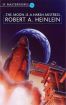
rah_themooni The Moon is a Harsh Mistress, Robert A Heinlein 35 votes
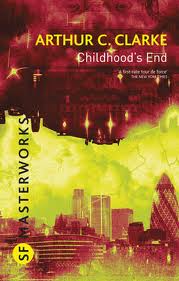
childhoodsend Childhood’s End, Arthur C Clarke 32 votes
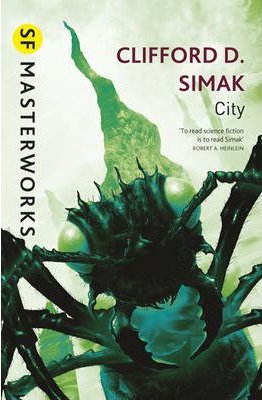
city City, Clifford D Simak 23 votes
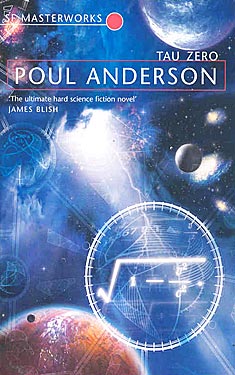
TauZero Tau Zero, Poul Anderson 22 votes
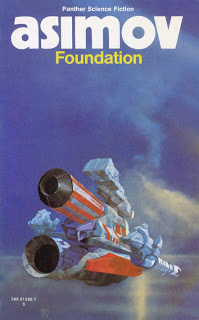
Panther-1080-n Asimov Foundation Foundation, Isaac Asimov 22 votes
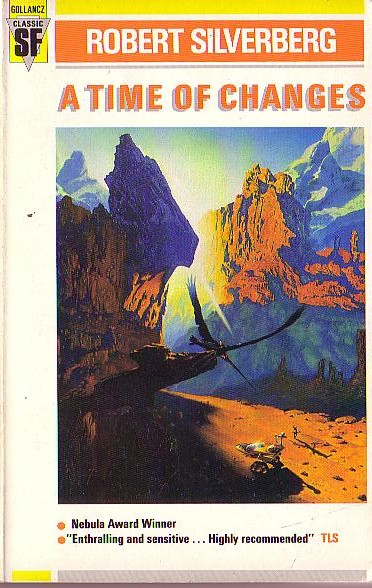
timeofchanges A Time of Changes, Robert Silverberg 20 votes

You lot must really hate me – The Moon is a Harsh Mistress and Foundation. Still, a promise is a promise. Foundation is one of three rereads of the six books. I last reread it in 2006, thugh for some reason I don’t appear to have written about it then. Childhood’s End I read some time back in the early to mid-1980s, I think. I’ve not reread it since. A Time of Changes I’ll have read around the time my Gollancz Classic SF edition was published, which was 1986. The remaining three books I’ve never read before. They’re also in the SF Masterworks series, and those are the editions I own – in fact, Foundation and A Time of Changes are the only books in the six that aren’t SF Masterworks.

Anyway, some time in July I will start my summer project, and after I have finished each book I will write a review here on the blog. I am not expecting my reviews to be positive, but you never know, I might be pleasantly surprised…


5 Comments

Best of the half-year

It’s halfway through 2013, and it’s proven quite a year so far in ways both good and bad. This post is to celebrate some of the good stuff – namely the best of the books I’ve read, the films I’ve seen, and the albums I first heard during the previous six months.

Books
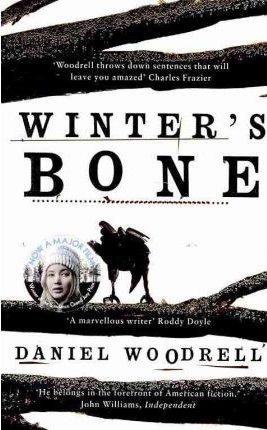
wintersboneWinter’s Bone, Daniel Woodrell (2006) I read this after seeing and liking the film and I was much surprised to discover it was not some piece of cheap commercial fiction with an unusual setting, but instead a beautifully-written literary novel which happened to use a genre plot. The film is pretty damn good too. I plan to read more by Woodrell. I wrote about this book here.

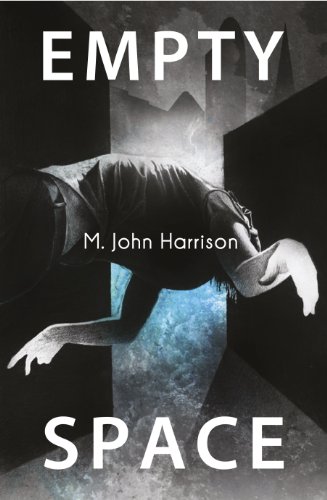
emptyEmpty Space, M John Harrison (2012) is the third book in the Kefahuchi Tract trilogy and I really must reread Light and Nova Swing one of these days. If at first I thought Empty Space felt a little undisciplined in its spraying of tropes across its narrative threads, the more of it I read the more I realised how very carefully engineered it was. I wrote about this book here.

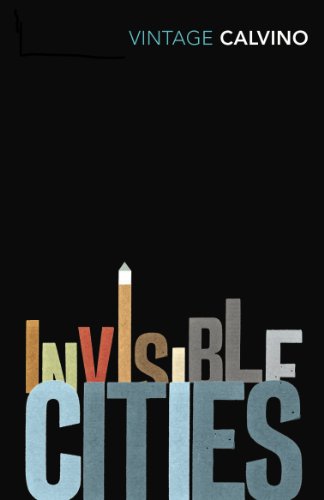
calvinoInvisible Cities, Italo Calvino (1972) is the most recently-read book to appear in this list. I had no real idea what to expect when I picked it up, but its lyrical and oblique descriptions of the cities (allegedly) visited by Marco Polo immediately captivated me. I wrote about this book here.

wallaroundedenThe Wall Around Eden, Joan Slonczewski (1989) is one of those books I read and enjoyed, but only realised how well-crafted it was when I came to write a review of it for SF Mistressworks. It reads like a masterclass in science fiction. This book really needs to be back in print. See my review here.

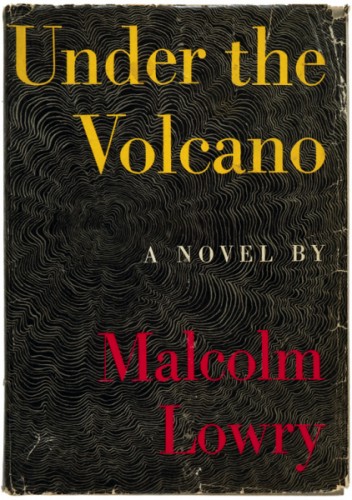
UnderTheVolcanoUnder the Volcano, Malcolm Lowry (1947) Some books just leave you speechless at the quality of the prose, and while I’d already fallen in love with Lowry’s writing when I read his novella ‘Through the Panama’, there was always a chance this, his most famous and most lauded novel, would not appeal as much. Happily, it did. Even more so, perhaps. A bona fide classic of English-language literature. I wrote about it here.

Honourable mentions go to Osama, Lavie Tidhar (2011), whose grasp may not quite match its reach but it comes damn close; Before The Incal, Alejandro Jodorowsky & Zoran Janjetov (2012), which matches The Incal for bonkersness and sheer bande dessinée goodness; Underworld, Don DeLillo (1997), which is a bit of a bloated monstrosity, and contains too much baseball, but also features moments of genius; The Steerswoman’s Road, Rosemary Kirstein (2003), which is actually a cheat as its an omnibus of The Steerswoman (1992) and The Outskirter’s Secret (1993) and I only read the latter this year, but it’s an excellent series and deserves praise; Jamilia, Chingiz Aïtmatov (1958), which proved to be a lovely little novella set in the author’s native Kyrgyzstan; and Sons and Lovers, DH Lawrence (1913), which shows with beautiful prose how psychology should be used in fiction.

Um, not that much science fiction there. I seem to be failing at this science fiction fan business…

Films
Le Mépris, Jean-Luc Godard (1963) I am not a huge fan of Godard, so I was somewhat surprised how much I liked this film. Perhaps it’s because it feels a little like Fellini’s 8½ (both are about film-making), which is also a favourite film, and looks a bit like something by Antonioni.

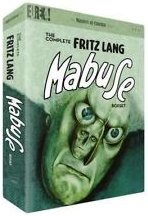
mabuseThe Dr Mabuse trilogy, Fritz Lang: Dr Mabuse The Gambler (1922), The Testament of Dr Mabuse (1933), The 1000 Eyes of Dr Mabuse (1960) A bit of a cheat as I watched Dr Mabuse The Gambler in 2012, but never mind. If the first film is a commentary on corruption in the Weimar Republic, the second extends the metaphor to comment on Nazism, and the third further completes it with an off-kilter noir film commenting on the legacy of the Nazis. Classic cinema.

Only Yesterday, Isao Takahata (1991) I’ve been working my way through Studio Ghibli’s output, though I find most of it either twee, cloyingly sentimental or a little juvenile. But not this one. I wrote about it here.

About Elly, Asghar Farhadi (2009) For much of its length, this film feels like an art house mystery, but then it takes a turn into something completely different and wholly Iranian. I wrote about it here.

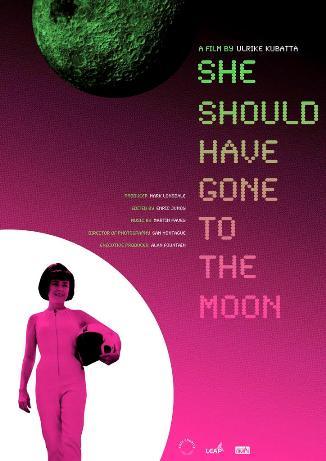
she-should-have-gone-to-the-moon-film-posterShe Should Have Gone to the Moon, Ulrike Kubatta (2008) I bought this as research for the Apollo Quartet, and was surprised to discover it was a beautifully-shot documentary and meditation on the thirteen women who successfully passed the same medical tests as the Mercury astronauts.

Honourable mentions go to Gertrud, Carl Theodor Dreyer (1964), grim and Danish and beautifully subtle; Man With A Movie Camera, Dziga Vertov (1929), an astonishing and meta-cinematic document of 1920s Russia; Black Cat, White Cat, Emir Kusturica (1998), broad comedy but also very funny; Le Havre, Aki Kaurismäki (2011), typically deadpan but somewhat cheerier than usual; and The Sun, Aleksandr Sokurov (2005), a human portrait of Emperor Hirohito at the end of WWII.

Well, will you look at that, not a single Hollywood film in the entire lot. Instead, we have films from France, Germany, Japan, Iran, Denmark, Russia, the former Yugoslavia, Finland and a documentary from the UK.

Music
Construct, Dark Tranquillity (2013) A new album from one of my favourite bands, and with each new album they just get better and better. Can’t wait to see them live.

Death Walks With Me, Noumena (2013) A new album from Finnish melodic death metal masters after far too long a wait. Trumpet!

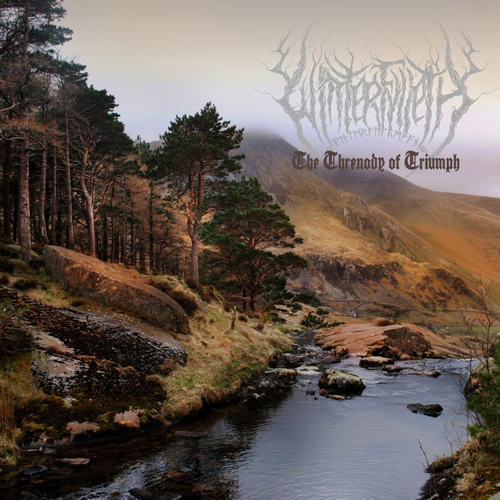
threnodyThe Threnody Of Triumph, Winterfylleth (2012) They call it English heritage black metal, though I’m not entirely sure what that means – a wall of guitars, with howling vocals layered over the top, some lovely acoustic interludes, and they’re bloody good live too.

Dustwalker, Fen (2013) More English heritage black metal but also very atmospheric, perhaps even a bit shoegazer-y in places; a formula that works extremely well.

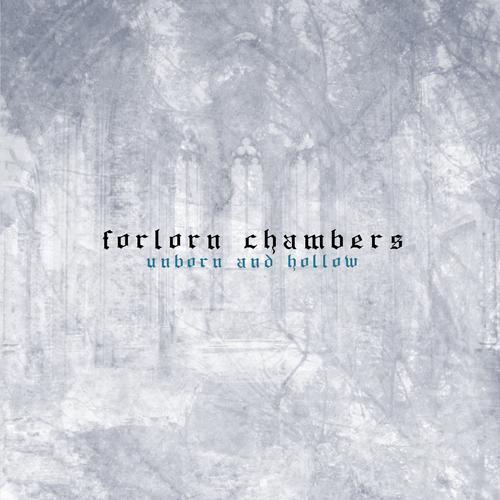
Forlorn+Chambers+++Unborn+and+HUnborn and Hollow, Forlorn Chambers (2013) A demo EP from a new Finnish band, which mixes and matches a couple of extreme metal genres to excellent effect. Very heavy, very doomy, with a lot of death in it too. I’m looking forward to seeing an album from them.

Honourable mentions: Conflict, Sparagmos (1999), classic Polish death metal; Of Breath and Bone, Bel’akor (2012), Australian melodic death metal; Deathlike, Ancient VVisdom (2013), strange acoustic doom from Texas; Where the End Begins, Mentally Blind (2013), accomplished demo from a Polish death metal band.