It Doesn't Have To Be Right…

… it just has to sound plausible


Leave a comment

8-question meme from SF Signal

John DeNardo posts these regularly on SF Signal and I usually have a go at them. This week it’s the following eight questions:

1. The first science fiction, fantasy or horror book I ever read was:
Technically, it would be Doctor Who and the Zarbi by Bill Strutton, a novelisation of the TV series, which my parents gave me as a Christmas present in, I think, 1974. But the first category sf novel I read was Starman Jones by Robert Heinlein, which was lent to me by a classmate in my first year at prep school – so that would be either late 1976 or early 1977.

Doctor_Who_and_the_Zarbi

2. The last science fiction, fantasy or horror book I read that I’d put in my “Top 20″ list is:
I guard my Top 20 jealously and, sadly, it’s mostly not sf, fantasy or horror. No genre book has made it into the list during the last couple of years. However, if I were to run a category genre-only Top 20, then the last book I read which might make the grade would probably be… Extra(Ordinary) People, a 1984 collection by Joanna Russ, if only because it contains a story, ‘The Mystery of the Young Gentleman’, which immediately became a new favourite. I reviewed it on SF Mistressworks here. If I were to restrict myself to novels, the last three genre reads with the most stars from me on GoodReads were, in no particular order: Europe in Autumn, The Violent Century, Rapture and Ancillary Justice.

3. The last science fiction, fantasy or horror book I couldn’t finish was:
That would be Palimpsest by Cathrynne M Valente. I’d heard a lot of positive things about it, and was quite chuffed to stumble across a copy in a charity shop. But the reading didn’t go very well at all. I baled around page 100, unable to put up any longer with the over-writing. I think it was something about a character being able to taste a snail’s foot in his mouth or something.

4. A science fiction, fantasy or horror author whose work I cannot get enough of is:
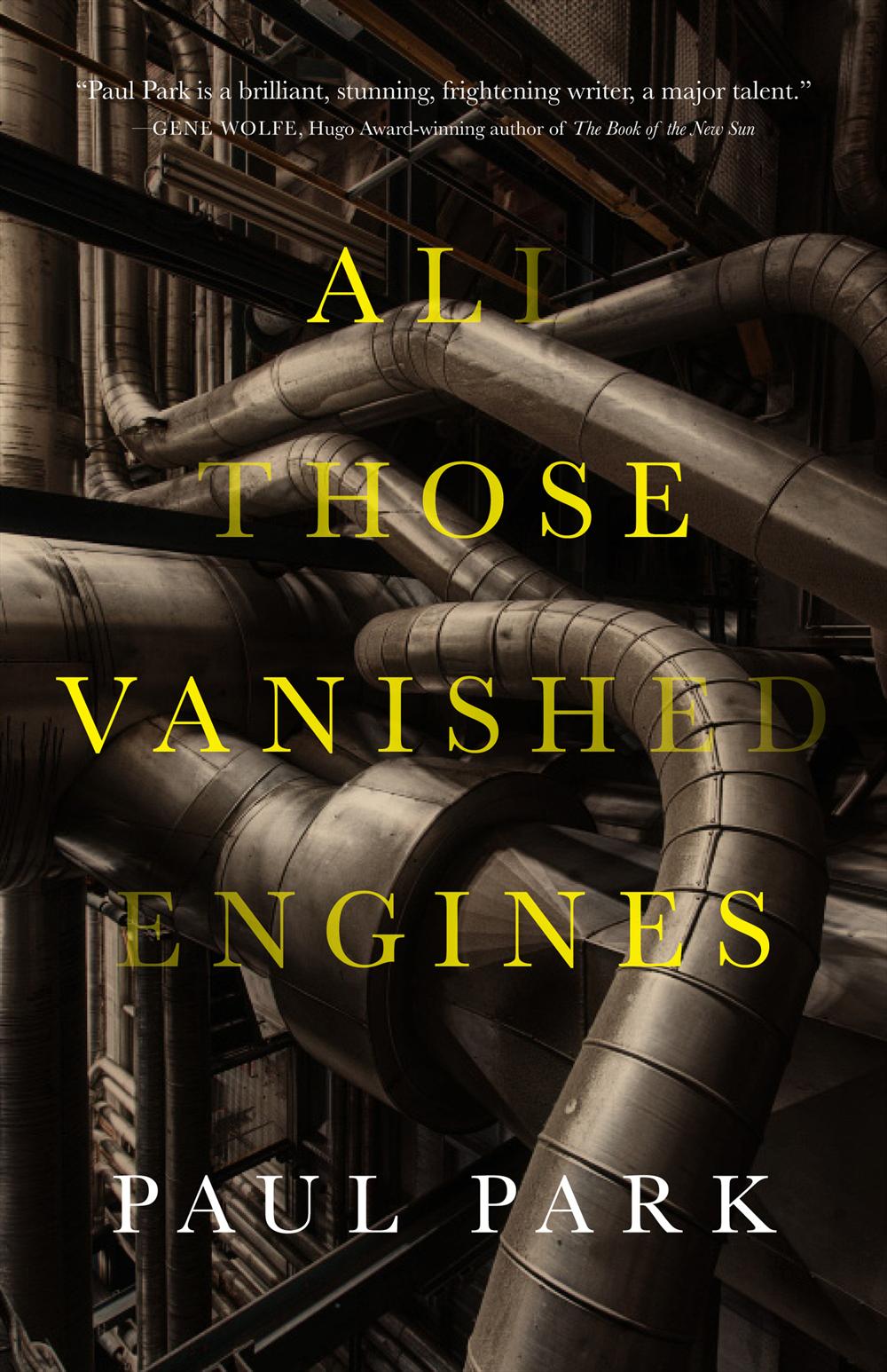
I have my favourites – who doesn’t? Paul Park has a new novel and a collection coming out this year, which has made me very happy – doubly so, in fact. Sadly, Gwyneth Jones doesn’t seem to have anything due out in the foreseeable future. A couple of years ago, I’d heard a US publisher had contracted for a sequel to Dr Franklin’s Island (as by Ann Halam), but I’ve yet to see it mentioned anywhere online. I’m also eagerly awaiting David Herter’s new sf novels/novellas from PS Publishing.
all-those-vanished-engines-paul-park-base-art-co

5. A science fiction, fantasy or horror author I’m ashamed to admit I haven’t read yet is:
But I’ve read everyone! Ahem. Of course, I haven’t really, just rather a lot of them – but many of those I’ve not read have been a matter of choice. I don’t think there’s anyone I’m ashamed I’ve not read – because if I was, I’d have read them; or at the very least I’d have one of their books on my humungous TBR pile. PC Hodgell, for example; or Michael Cisco… I own books by both but have yet to read them. Which reminds me, I really must get around to purchasing a copy of Laurie J Marks’ Fire Logic, as I really want to read it. Um, in fact, now I think about it, there’s a whole bunch of authors I want to read but have yet to buy anything by…

6. A science fiction, fantasy or horror book I would recommend to someone who hasn’t read sf/f/h is:
Easy. The Wall Around Eden by Joan Slonczewski. I reviewed it on SF Mistressworks here, and have been singing its praises ever since. Sadly, it’s currently out of print; but it really needs to be introduced to a new audience.

7. A science fiction, fantasy or horror book that’s terribly underrated is:
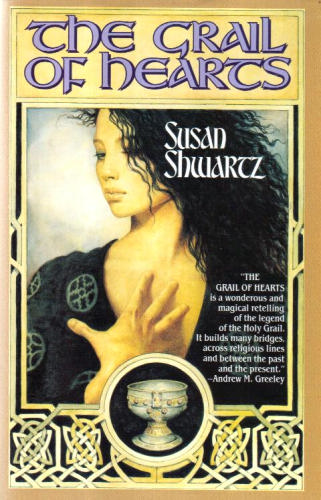
Where do I start? Many of my favourite genre novels were highly regarded when they were published, but they’ve never been reprinted since. One or two are now in the SF Masterworks series… so I can hardly claim they’re still under-rated. Instead, I will chose something completely out of my comfort zone – a fantasy novel: The Grail of Hearts by Susan Shwartz (1991). It was never published in the UK, had two reviews on publication (in Locus and amazing Stories), has zero reviews on GoodReads and two on Amazon (including a 5-star one by Katherine Kerr!), Kirkus called it a “formless hodgepodge of a book”, and the first five pages of Google are links to places to buy the book rather than online reviews… I think it qualifies as under-rated.
grailfohearts

8. A science fiction, fantasy or horror book that’s terribly overrated is:
There’s a lot of recent sf I think is horribly over-rated – just look at the Hugo Award and Nebula Award shortlists for the past few years. But many of those books I’ve not actually read myself, so my opinion is chiefly the result of other stuff written by those authors. However, I have read Leviathan Wakes by James SA Corey, and it was shortlisted for the Hugo Award for 2012, and made it into the top 5 on the Locus Poll for that year. I thought it was terrible, and I refused to read its sequels. I now hear it’s been optioned for television. Sigh.

8 Comments

The apples and oranges of genre

Apples and oranges are fruit, and you’ll find them in fruit bowls and packed lunches around the world. They’re sold in supermarkets and greengrocers, but not in fishmongers and betting shops. Some people prefer apples to oranges. They like the appleness of apples more than the orangeness of oranges. Or vice versa. Some people like both equally. But the fact you can find apples and oranges in a fruit bowl doesn’t make an apple an orange or an orange an apple.

Comparing_Apples_to_Oranges

Just like science fiction and fantasy.

Everyone knows what apples and oranges are, and they could give any number of reasons why one is not the other. Yet when it comes to science fiction and fantasy, most people can only say, “they’re fruit”. As if that’s all that matters. Of course it isn’t. Otherwise everyone would like the two genres equally – and fantasy wouldn’t outsell sf by five or seven to one.

But because sf and fantasy stories both take place in invented worlds, people lump them together. But not every sf/fantasy story has an invented setting; and not every story which takes place in an invented world is sf or fantasy. So that’s a piss-poor definition. And where do we stop with the invented elements? Robots. Dragons. FTL. Magic. What about an invented organisation? Like… SPECTRE? Are Fleming’s Bond books science fiction? Maybe it’s the degree of invention in the story, then. Like that’s not a movable bar…

The point is, when you start looking at what science fiction and fantasy have in common you soon find yourself tied in knots. However, when you consider why they’re different… then things begin to make sense. Which, logically, implies they must be different things.

So they share a “fruit bowl”, and have done since fruit bowls were invented – but they still exhibit more readily-definable differences than they do similarities. Please stop trying to insist apples are oranges, and vice versa. Accept that they are each their own thing, no matter how many fruit salads you make.


19 Comments

The SF Mistresswork list, revised

Who remembers the SF Mistressworks meme, a list of science fiction by women writers from the twentieth century (and earlier)? I originally posted it in March 2011 (see here), and it then inspired me to create the SF Mistressworks website. Which is still going strong.

But that original list had a few problems. A couple of the titles I’d proposed turned out to be fantasy and not science fiction… The list also contained only 91 books, as I’d not managed to think of 100 suitable titles.

But three years later, I’ve read a lot more sf by women writers, and I’ve done more research on the topic. So I felt it was time for a new version of the list. Also, many more of the books are now available once again – either published by small presses, or made available on Kindle by the SF Gateway or the authors themselves self-publishing their back-catalogue.

The list below mostly unchanged from the original – I’ve simply expanded it to 100, removed the fantasy novels, made a few alternative selections for a couple of writers, and added some more writers I’d unfairly missed off first time around. It now looks like this:

  1. Frankenstein*, Mary Shelley (1818)
  2. Herland†, Charlotte Perkins Gilman (1915)
  3. Orlando, Virginia Woolf (1928)
  4. Lest Ye Die, Cicely Hamilton (1928)
  5. Swastika Night, Katharine Burdekin (1937)
  6. Shadow on the Hearth, Judith Merril (1950)
  7. Judgment Night, CL Moore (1952)
  8. The Sword of Rhiannon, Leigh Brackett (1953)
  9. Agent of the Unknown, Margaret St Clair (1956)
  10. Pilgrimage: The Book of the People, Zenna Henderson (1961)
  11. Catseye, Andre Norton (1961)
  12. Memoirs of a Spacewoman†, Naomi Mitchison (1962)
  13. Sunburst, Phyllis Gotlieb (1964)
  14. Heroes and Villains, Angela Carter (1969)
  15. Armed Camps, Kit Reed (1969)
  16. Darkover Landfall, Marion Zimmer Bradley (1972)
  17. Ten Thousand Light-years from Home, James Tiptree Jr (1973)
  18. The Dispossessed*, Ursula K LeGuin (1974)
  19. Walk to the End of the World†, Suzy McKee Charnas (1974)
  20. Star Rider†, Doris Piserchia (1974)
  21. The Female Man*†, Joanna Russ (1975
  22. Missing Man, Katherine MacLean (1975)
  23. Arslan*, MJ Engh (1976)
  24. Don’t Bite the Sun, Tanith Lee (1976)
  25. Floating Worlds*, Cecelia Holland (1976)
  26. Where Late The Sweet Birds Sang*, Kate Wilhelm (1976)
  27. Islands, Marta Randall (1976)
  28. Dreamsnake, Vonda N McIntyre (1978)
  29. False Dawn, Chelsea Quinn Yarbro (1978)
  30. Shikasta, Doris Lessing (1979)
  31. Kindred†, Octavia Butler (1979)
  32. Benefits, Zoe Fairbairns (1979)
  33. Leviathan’s Deep, Jayge Carr (1979)
  34. A Voice Out of Ramah, Lee Killough (1979)
  35. The Snow Queen, Joan D Vinge (1980)
  36. The Silent City†, Élisabeth Vonarburg (1981)
  37. The Many-Coloured Land, Julian May (1981)
  38. Darkchild, Sydney J Van Scyoc (1982)
  39. The Crystal Singer, Anne McCaffery (1982)
  40. Native Tongue†, Suzette Haden Elgin (1984)
  41. The Handmaid’s Tale, Margaret Atwood (1985)
  42. Jerusalem Fire, RM Meluch (1985)
  43. The Children of Anthi, Jay D Blakeney (1985)
  44. The Dream Years, Lisa Goldstein (1985)
  45. Last Letters from Hav, Jan Morris (1985)
  46. Queen of the States†, Josephine Saxton (1986)
  47. The Wave and the Flame, Marjorie Bradley Kellogg (1986)
  48. The Journal of Nicholas the American, Leigh Kennedy (1986)
  49. A Door into Ocean†, Joan Slonczewski (1986)
  50. Angel At Apogee, SN Lewitt (1987)
  51. In Conquest Born, CS Friedman (1987)
  52. Pennterra, Judith Moffett (1987)
  53. Kairos, Gwyneth Jones (1988)
  54. Cyteen, CJ Cherryh (1988)
  55. Unquenchable Fire*, Rachel Pollack (1988)
  56. The City, Not Long After, Pat Murphy (1988)
  57. Carmen Dog†, Carol Emshwiller (1988)
  58. The Steerswoman, Rosemary Kirstein (1989)
  59. The Third Eagle, RA MacAvoy (1989)
  60. Grass*, Sheri S Tepper (1989)
  61. Heritage of Flight, Susan Shwartz (1989)
  62. Falcon, Emma Bull (1989)
  63. The Archivist, Gill Alderman (1989)
  64. Winterlong, Elizabeth Hand (1990)
  65. A Gift Upon the Shore, MK Wren (1990)
  66. Red Spider, White Web, Misha (1990)
  67. Polar City Blues, Katherine Kerr (1990)
  68. He, She and It (AKA Body of Glass), Marge Piercy (1991)
  69. Sarah Canary*, Karen Joy Fowler (1991)
  70. Beggars in Spain, Nancy Kress (1991)
  71. A Woman of the Iron People, Eleanor Arnason (1991)
  72. Hermetech, Storm Constantine (1991)
  73. Synners, Pat Cadigan (1991)
  74. China Mountain Zhang, Maureen F McHugh (1992)
  75. Correspondence†, Sue Thomas (1992)
  76. Lost Futures, Lisa Tuttle (1992)
  77. Doomsday Book*, Connie Willis (1992)
  78. Ammonite*, Nicola Griffith (1993)
  79. The Holder of the World†, Bharati Mukherjee (1993)
  80. Dancing on the Volcano, Anne Gay (1993)
  81. Queen City Jazz, Kathleen Ann Goonan (1994)
  82. Happy Policeman, Patricia Anthony (1994)
  83. Shadow Man, Melissa Scott (1995)
  84. Legacies, Alison Sinclair (1995)
  85. Primary Inversion, Catherine Asaro (1995)
  86. Alien Influences, Kristine Kathryn Rusch (1995)
  87. The Sparrow, Mary Doria Russell (1996)
  88. Memory, Lois McMaster Bujold (1996)
  89. Remnant Population, Elizabeth Moon (1996)
  90. Looking For The Mahdi, N Lee Wood (1996)
  91. An Exchange of Hostages, Susan R Matthews (1997)
  92. Fool’s War, Sarah Zettel (1997)
  93. Black Wine, Candas Jane Dorsey (1997)
  94. A Thousand Words for Stranger, Julie E Czernada (1997)
  95. Halfway Human, Carolyn Ives Gilman (1998)
  96. Vast, Linda Nagata (1998)
  97. Hand of Prophecy, Severna Park (1998)
  98. Brown Girl In The Ring, Nalo Hopkinson (1998)
  99. Dreaming In Smoke, Tricia Sullivan (1999)
  100. Ash: A Secret History, Mary Gentle (2000)

Although there were around sixty women actively writing science fiction or fantasy in the 1940s, I can’t find a sf novel written by any of them which was published in that decade. Several of the writers on the list are better known as writers of fantasy, but they have written science fiction and that’s what I’ve listed. Books in Gollancz’s SF Masterworks series I’ve marked with an asterisk (*) – many of these were added to the series after I posted the original list three years ago. Books that were published by The Women’s Press back in the 1980s/1990s I’ve marked with a dagger (†).

Myself, I’ve read 49 of the books, and have a further eight on the TBR. Forty-eight of the books have also been reviewed on SF Mistressworks, some of them several times.

Finally, are there any writers I’ve missed who really belong on the list? Don’t forget it’s books published up until 2000. Perhaps some of the books on the list are not the author’s best work, perhaps another title would better. One or two were, I admit, judgement calls – for example, Marge Piercy’s He, She and It (as Body of Glass) won the Clarke Award in 1992 but is no longer in print; her Woman on the Edge of Time, however, is (but it was also first published in 1976, and I felt I had more than enough books from that year). There are, as far as I’m aware, only two cheats on the list – Tiptree is represented by a collection rather than a novel; and Despatches from the Frontiers of the Female Mind is an anthology  – and, to be honest, there are a good number of women-only sf anthologies which might be better choices.

ETA: removed Despatches from the Frontiers of the Female Mind as it’s an anthology, and added Joachim Boaz’s suggestion of Kit Reed’s Armed Camps. I’ll be posting a list of women-only sf anthologies shortly.


1 Comment

Title story

PS Publishing have released details of the next Postscripts anthology, Far Voyager Postscripts #32/33. The TOC looks like this:

  • ‘Far Voyager’ — Ian Sales
  • ‘3 A.M. in the Mesozoic Bar’ — Michael Swanwick
  • ‘Dear Miss Monroe’ — Andrew Jury
  • ‘The Case of the Barking Man’ — Mel Waldman
  • ‘One Hundred Thousand Demons and the Cherub of Desire’ — Andrew Drummond
  • ‘An American Story’ — Darrell Schweitzer
  • ‘Irezumi’ — John Langan
  • ‘Sister Free’ — Rio Youers
  • ‘A Little Off the Top’ — Tom Alexander
  • ‘Sweetheart, I Love You’ — Mel Waldman
  • ‘Winter Children’ — Angela Slatter
  • ‘A Girl of Feather and Music’ — Lisa L. Hannett
  • ‘Thirty Three Tears to a Teaspoon’ — Alan Baxter
  • ‘The Rusalka Salon for Girls Who Like to Get Their Hair Wet’ — Angie Rega
  • ‘The Psychometrist’ — Suzanne J. Willis
  • ‘Sea Angels’ — Quentin S. Crisp
  • ‘Plink’ — Kurt Dinan
  • ‘Xaro’ — Darren Speegle
  • ‘We Are Not Alone’ — Richard Calder
  • ‘The Curtain’ — Thana Niveau
  • ‘Playground’ — Gio Clairval
  • ‘What Once Was Bone’ — Gary A. Braunbeck
  • ‘Darkscapes: Three Journeys to the Night Side’ — Mel Waldman
  • ‘Services Rendered’ — Bruce Golden
  • ‘GW in the Afterlife’ — Robert Reed
  • ‘Eskimo’ — Andrew Hook
  • ‘With Friends Like These’ — Gary Fry
  • ‘An Inspector Calls’ — Ian Watson
  • ‘Confessions’ — Mel Waldman
  • ‘A Legion of Echoes’ — Alison Littlewood
  • ‘Talk in Riddles’ — Mark Reece
  • ‘The Mermaid and the Fisherman’ — Paul Park

Yup. My story is the title story. Cool, or what? There’s some good stuff in that TOC too, including a few favourite authors. No publication date as yet, but it’ll be sometime this year, I imagine.


2 Comments

The Apollo Quartet that never was

The Apollo Quartet is hard sf, but it’s also alternate history. And the books of the quartet themselves have their own alternate history too. They say a plan never survives contact with the enemy and, in pretty much the same way, a synopsis never survives unscathed once you actually get into writing a novel, novella or story.

I can’t remember at what point in the writing of Adrift on the Sea of Rains I decided it would be the first of the quartet… but once I’d made the decision I obviously needed to come up with three more stories. I had one sitting in my “ideas book” (actually, it’s just a Google doc) that I thought would be suitable. It was only when I started writing the second book of the quartet that I realised it didn’t quite fit. So I kept one narrative thread, left the other as implied, added a new narrative about the mission to Mars, set the story decades earlier… and changed the title to The Eye With Which The Universe Beholds Itself.

The original Apollo Quartet 3 and 4 bear no resemblance to the ones that have been/will be published. The original synopsis for Apollo Quartet 3 just simply didn’t fit in with how the quartet was shaping up. And I’d decided I really wanted to write about the Mercury 13 and the bathyscaphe Trieste. So I did.

With the Mercury 13 as the subject of Then Will The Great Ocean Wash Deep Above, another theme was rising to the forefront of the four novellas… and so I needed a new story for the final book. I’d already “borrowed” the title of my favourite film, but the link to Sirk’s masterpiece was too thin. That wasn’t going to work. But with a little sleight of hand, I had myself a new plot which provided a suitable end to the quartet, and then the title – with a little tweaking – would suit it perfectly. Instead of an Avro engineer, my protagonist would be an astronaut’s wife. And rather than just a fan of science fiction, she’d be a writer…

So here, for your delight and delectation, are the original synopses for Apollo Quartets 2 to 4, which I recently discovered in a Google doc created back in September 2011.

2. Wave Fronts The Earth has a single interstellar colony – administered by NASA, ESA and JASA – on SuperEarth2 at Gleise 581, twenty light years from Earth, and which has been in existence for twenty years. By now radio waves from the colony should have reached Earth, but there has been nothing. So Shepard has been sent to find out what’s happened. He travels to Gleise 581 by bubble-ship, and when he arrives at SuperEarth2, he discovers that the colony has completely vanished. Using one of the bubble-ship’s re-entry capsules, he lands on the surface and treks across the land to the settlement’s location. But it is as if it had never existed. And now he stuck there as there is no way for him to get into orbit. A second narrative depicts the dismantling of a colony and its preparations to leave its world before the light front reaches Earth. The colonists move onto another planetary system… where they meet an alien race, engaged in the same method of colonisation as themselves.

3. The Shores of Earth Earth is now home only to the empress of the Healing Empire, her family and staff, who all live in a vast palace. The rest of humanity lives off-Earth, scattered throughout the Solar System. The protagonist travels to Earth and lands in capsule which can reconfigure itself into lifting-body/glider. He is immediately arrested by the empress’s personal guard, and subsequently interrogated by a captain of the guard. The protagonist has come to report the arrival of a vessel from an interstellar colony populated centuries before by a generation ship, but its arrival is too soon – there’s not been enough time to get to the exoplanet, and then build the necessary infrastructure to send the ship back. Perhaps the visiting ship is alien? Except no evidence of aliens has ever been found…

4. All That The Stars Allow It is the late 1950s, and a British electronics engineer is offered a job in Houston with NASA, which entails moving from his current job in Canada where he works for Avro. (A lot of Mission Control was designed and built by British engineers, many of which had previously worked for Avro in Canada.) He packs up and drives south, anticipating the future of manned spaceflight given what he knows of NASA’s plans. The engineer is an avid reader of science fiction, and the second narrative is the text of a story of the period of an engineer in a future in which humanity has colonised the Solar System.

Perhaps one day these stories may appear, no doubt in somewhat changed form. But when all’s said and done, I think the Apollo Quartet as it now exists is a much better piece of work than it would have been had I used the above plots.


Leave a comment

In which I gaze into a crystal ball

… although I’ve no idea why because it still hasn’t given me a winning number for the lottery. But now that the Hugo nomination period is closed, and everyone who was going to nominate has done so, what can we expect to see when the shortlists are announced over the Easter weekend?

There’s been quite an interesting discussion over the last month or so among (mostly) British fans, prompted by the fact the Worldcon is in London this year. We plan to attend, so for the first time (for many of us, anyway) we’ve made a serious effort to nominate works for the Hugo Award. And one point that has come out of this discussion, and the various draft ballots posted on blogs, etc, is quite how stupid many of the Hugo categories are. I mean, seriously, what bunch of idiots thought up “semiprozine”? What type of bulbhead defines dramatic presentations long form and short form with such specific language that long form is open to both tentpole summer blockbuster movies and the entire 26-episode season of a television series? As for the novelette… I accept that the term once had historical significance, but it’s now an anachronism and needs to be summarily dispatched. And let’s not talk about awards going to people rather than works… Or the fan categories…

Whatever. I saw a whole bunch of varied draft ballots covering a widespread of fiction and non-fiction in each of the categories. And the really sad thing is… I think the eventual shortlists will be full of the same old shit. The novel shortlist will be Gaiman and McGuire and Corey… and the novellas will be all Valente and Swirsky and Chiang… and the short stories will be all Liu. Though Leckie might well make it onto the novel shortlist, and Samatar to the short story shortlist.

In other words, it’s going to be fascinating seeing how much of an impact hosting the Worldcon in the UK will have, how much of a blip in the old guard’s voting us vocal online Brit-based (and other non-US-based) fans will have on the final shortlists. Having said that, in 2005 the Worldcon was in Glasgow and the Hugo best novel shortlist was entirely British – and only two of the books were published in the US during the preceding year. (The other fiction categories, however, were overwhelmingly American.) But that was nine years ago, and the online sf community is so much bigger and more vocal now. And more balkanised too.

Which may well be part of the problem. I’ve only seen draft ballots from those within my circle of friends and acquaintances, so I’ve no real idea of what the wider Hugo voting public has been nominating. The fan categories will be a good indicator of this. Do the old farts and their paper fanzines outnumber those from the online community? Will the fan categories join the twenty-first century or remain stuck back in the 1950s? Will a blog make it onto the best fanzine shortlist?

Like I said, I’m not holding my breath. The Hugo Awards, for all their claim they’re “world awards”, are resolutely American, with rules designed to maximise the visibility of works to US voters. The Worldcon, despite its name, is a US con. Even for Loncon 3, there are more US members than UK – although, to be fair, more UK-based members will be attending; but more US-based members have bought supporting memberships. Don’t forget, however, that members of last year’s Worldcon, which was in San Antonio, Texas, also get to nominate in this year’s Hugo Awards. As does anyone who’s bought membership for next year’s Worldcon in Spokane, Washington…

So that conversation we’ve been having online about the Hugos over the past couple of months? I suspect we might as well have not had it for all the good it will do. But I sincerely hope to be pleasantly surprised.


3 Comments

2014 reading diary, #3

I took a break from my Hugo reading to get up to date with some SF Mistressworks reading and then, for some reason, when it came to choosing books by male authors I picked old sf ones (because I’m still alternating my reading between women and men writers). Still, at least now I’ve read those crappy old sf novels and they can go to the charity shop…

Extra(Ordinary) People, Joanna Russ (1984). I read this to review for SF Mistressworks – see here.

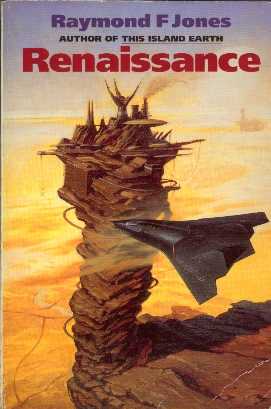
renaissanceRenaissance, Raymond F Jones (1951). Many years ago I had an idea for a story inspired by the plot of the film This Island Earth, so I decided to read the novel as research. It was years before I tracked down a copy and a few years more I finally got around to reading it – see here. Meanwhile, I’d decided to read more Raymond F Jones – even though I had yet to read This Island Earth at the time. I’d already bought Jones’ Beacon novel The Deviates (because Beacon novel; see here) and a copy of The Alien (I loved the cover art; see here). So I picked up a copy of his first novel, Renaissance, and recently pulled it from the shelf to read. To be honest, I wasn’t entirely sure what to expect – I hadn’t been impressed by This Island Earth and that is Jones’ best-known novel. Well, Renaissance is very much a novel of its time, and it makes very little sense. It opens with a giant computer, which seems to run a small colony of scientifically-minded people, but it’s all sort of B-movie weird with a giant curtain of nothingness bordering the colony on one side and a DESERT OF FIRE on the other, and everyone wears togas or something and no one appears to have sex as babies magically appear at some sort of temple… The hero gets into trouble with the authorities for daring to research a taboo subject, biology. He uncovers a conspiracy, so he infiltrates the temple… which requires him to disguise himself as a woman – but given that they wear little in the way of clothing, he uses some sort of plastic material to effect his disguise. No one sees through it, although you wouldn’t know from the text that he was pretending to be a woman for much of the story. Anyway, it turns out the colony is in an alternate universe and was an experiment by Earth, which is now ruled by some sort of secretive cabal, and there’s a historical repository of knowledge safeguarded an AI which wants to overthrow the cabal… And it’s all complete tosh, about as rigorous as blancmange and as plausible as a unicorn pasty. I’ve still got those two other Jones’ books to read – well, three if you include The Secret People, the book on which The Deviates is based – but I doubt I’ll be going any further into his oeuvre.

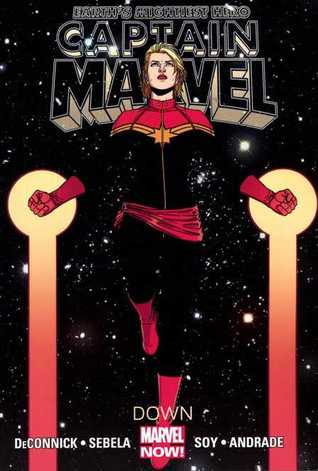
marvel2Captain Marvel 2: Down, Kelly Sue DeConnick, Dexter Soy & Filipe Andrade (2013). I was never really a big comics fan, and I went off superhero comics completely a number of years ago. And even when I did read comics, Captain Marvel was not a title I bothered following. But when I discovered that the first half of this miniseries by Kelly Sue DeConnick featured the Mercury 13, I decided to give it a go (see here). I wasn’t that impressed so wasn’t going to bother with the second volume… until I learnt it took place at the bottom of the sea. It was just too close to Then Will The Great Ocean Wash Deep Above. And now I’ve read it, er, it isn’t. At all. Captain Marvel – Carol Danvers – helps a friend recover something from the sea bottom off the coast of New Orleans. Down there it’s a ship and plane graveyard… and then some alien energy leaks into the wrecks and creates a giant monster out of them which Danvers and her friend must battle. The story then moves to New York and Danver’s private life, trouble with her neighbours, a possible medical condition preventing her from flying, and random attacks by an old nemesis… Like the first book, there’s a smart script there, so it’s a shame the art is routinely awful. You’d think, given that comics are a visual medium, they’d put more effort into it.

Requiem for Anthi, Jay D Blakeney (1990). This is the sequel to The Children of Anthi; I reviewed it for SF Mistressworks – see here.

charismaCharisma, Michael G Coney (1975). During the 1970s, there were a number of male British sf writers all working (mostly) down the same line in the genre. They’d come out of the New Wave – although some had been around prior to that – and, in direct contrast to the big-selling US sf authors, they kept their visions low-key and their focus more literary. Writers such as Richard Cowper, DG Compton, Michael G Coney, Keith Roberts, Robert Holdstock, perhaps even JG Ballard. Their novels were often set in a near-future UK, with light extrapolation, and only a small number of “ideas” – which were there solely to drive the plot. There was no “movement” as such, and several of the writers went on to write completely different genre fiction – Holdstock and his Mythago Wood, Ballard left the genre all together, Coney moved into pure heartland territory with his Hello Summer, Goodbye… Coney’s Charisma, however, very much fits the pattern. It could almost have been written by Compton, in fact. The narrator, John Maine, is the manager of a hotel in the small Cornwall fishing port of Falcombe. He’s also involved with a local boatyard which sells “houseyachts” (hovercraft houseboats, as far as I can make out). Near Falcombe is a Research Station which has been experimenting with a device that gives access to parallel worlds. And Maine discovers by accident that he can travel to these parallel worlds – because the John Maine in those worlds has died, so there aren’t two of them existing in the same world at the same time. And then the owner of the hotel, a lying and cheating businessman, a Tory in other words, is murdered… and Maine travels back and forth to various parallel worlds trying to change events, solve the murder and track down the woman he loves, Susanna. The plotting in Charisma is quite clever, with its multiple parallel takes on the same group of people and their  actions. The world-building is light – it’s pretty much 1975, but with hovercars and 3D television. Unfortunately, Maine, the narrator, is… I hate to say “a product of his time”, but you’d be hard-pressed to find a more male-gazey novel than this – in fact, Maine is an unreconstructed sexist pig. And it leaves a nasty taste in what would otherwise be an interesting and accomplished 1970s British sf novel.

lotswifeWhat Lot’s Wife Saw, Ioanna Bourazopoulou (2013). The last of my Hugo reading. I do have at least one more novel on the book-shelves that qualifies – Kim Stanley Robinson’s Shaman – and I did have time to buy and read a couple more, but I decided to call it a day after What Lot’s Wife Saw. Possibly because I’d heard so much praise for it that I thought it likely to take the final slot on my ballot. Except, well, I didn’t really like it at all. It’s the near-future and the Dead Sea has somehow inundated much of Southern Europe, and coincidentally revealed a rift which contains “salt”, a powerful drug to which much of the world is now addicted. Phileas Book lives in Paris and compiles “Epistlewords” for The Times. These are three-dimensional crosswords whose clues depend on extracts from letters published alongside. Despite numerous descriptions of the Epistleword, and its “meandros” shape, nothing in the novel indicates the Epistleword is either plausible or solvable. The salt mentioned earlier is mined at the Colony, a small company town on the shore of the Dead Sea – which is now completely gelid. How the Dead Sea has a shore after flooding the surrounding area for thousands of square kilometres  is not explained, but the shore is an inhospitable desert populated by “Suez Mamelukes”.  Recently, the governor of the Colony died in mysterious circumstances, and within a fortnight riots tore the town apart. His six closest advisers have all written letters explaining what happened. The mysterious Seventy-Five, the company which mines the salt, asks Book to analyse the letters – because of his Epistleword special talent thing – to discover the truth of the events they relate… A lot of people praised  What Lot’s Wife Saw so I think it’s fair to say my expectations were pretty high. But. It just didn’t work for me. The sections in the Colony felt like they were set in the eighteenth or nineteenth century, which made a nonsense of it being near-future – assuming you swallowed the whole Flood thing, which made no sense anyway. The letter structure was interesting, but the voices of the six were so similar it was often hard to tell them apart. And they were really unlikeable. The writing was mostly good but often drifted into over-writing. And the ending, the solution to the mystery Book is asked to unravel, is… well, it’s banal. I’d been expecting something with much more impact, and not just a quick Scooby Doo scene which explained clues that were so obscure no reader would have spotted them – I mean, EREMOI? Disappointing.

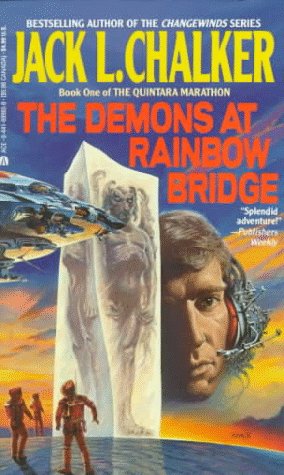
demonsThe Demons at Rainbow Bridge, Jack L Chalker (1989). This is the first book of a trilogy, the Quintara Marathon. Chalker used to bang out trilogies and series as if science fiction were on the brink of extinction. And it showed. In this one, the writing barely reaches competent, the setting is cobbled together from used furniture, and the text is riddled with continuity errors. In this series, the galaxy is split into three mutually antagonistic power blocs, the Exchange, the religious nutters of the Mizlaplanian Empire, and the evil dog-eat-dog empire of the Mycohlians. Humanity went out into the stars and found itself just another alien race among the many claimed by these three polities. The Exchange is ruled by the mysterious never-seen Guardians, and is pure Rand-like capitalism from top to bottom. The Mizlaplanians have hugely powerful mental powers and have convinced everyone they’re gods and those of their subject races with “normal” mental powers are angels and saints. The Mycohlians are parasites and they pretty much leave their anarchic empire to run itself, assuming that the cream – the most ruthless and violent cream, that is – will rise to the top and keep everything together. An Exchange scout ship finds a pair of the eponymous demons on a remote world, and sends out a mayday before being slaughtered. The novel then spends a third of its pages describing the formation of an Exchange team to investigate, then a third on a Mizlaplanian team to do the same, and the final third on the Mycohlian team. All three head for the remote world, where they find a butchered research team, the demons have escaped and… continued in the next book of the trilogy. Chalker was a crap writer and this is far from his best work.

Ark Baby, Liz Jensen (1997). Every time I start a Liz Jensen novel, I tell myself I should read more of her books. I’ll be reviewing this on SF Mistressworks, since it qualifies as science fiction.


14 Comments

Five genre books that should be back in print

A couple of times while reading books to review on SF Mistressworks, I’ve wondered why a book is no longer in print, especially given that many inferior ones still are. A recent such review – it will appear tomorrow – had me thinking about which out-of-print books I’d like to see available once again, books that only saw one or two editions a decade or more ago. It proved a harder list – even limited to five – than I expected. For one thing, the SF Gateway has been doing an admirable job in bringing a number of books back into “print” as ebooks; some of my favourite sf novels have appeared over the last few years in the SF Masterworks series; and many authors have made their back list available as print-on-demand books or on Kindle, such as Marta Randall or Gwyneth Jones. But there are still some books that I think should be re-introduced to a twenty-first century audience:

The Wall Around Eden, Joan Sloczewski (1989). I reviewed this for SF Mistressworks (see here) and thought the book a masterclass in science fiction writing. The last edition in print was from The Women’s Press in 1991. It really deserves to be made available once more.

The Complete Short Stories of Joanna Russ, Joanna Russ. This is a cheat – there’s no such book. But if assorted male authors have had their collected short fiction published, then why not Russ? Her last collection was in 1988, and by my count she had almost seventy pieces of short fiction published. It’s long past time for a collected works.

Coelestis, Paul Park (1993). Okay, so it’s one of my favourite sf novels and I also happen to think it’s one of the best sf novels ever written… But it saw only a single hardback and paperback release in the UK and US and has been out of print ever since.

The Steerswoman’s Road, Rosemary Kirstein (2003). This was an omnibus of two earlier novels, published in 1989 and 1992 (neither of which were then reprinted), but the omnibus appeared only in a single edition and has never been reprinted since. It should be – the books are excellent. See my reviews on SF Mistressworks here and here.

The Grail of Hearts, Susan Shwartz (1992). This is a superior fantasy which has apparently never been reprinted since its paperback edition in 1993.

Anyone else have any genre books they’d like to see back in print?

ETA: By my count Russ had 56 stories published, plus six Alyx stories and two set in the Cthulhu mythos. All but fourteen have been collected.


5 Comments

A quarter of top fives

Like every blogger, I watch my stats but I’ve nearly really taken note of which are my most popular posts, or where I get most of my visitors from. But other bloggers do it regularly, and since I hadn’t finished the reading diary post I was planning to post today, I decided to generate some quick and easy blog content by posting a few 2014 stats about It Doesn’t Have to be Right… It Just Has to Sound Plausible. The following are for the current quarter, January to March 2014.

Most popular posts

  1. The list: 100 Great Science Fiction Stories by Women
  2. 2014 Hugo thoughts
  3. The future we used to have, part 22
  4. Dune Mania
  5. 20 British sf films


I’m pleased 100 Great Science Fiction Stories by Women continues to be popular. It’s perhaps my most reblogged and linked-to post ever. It’s currently Hugo season, so the popularity of a post on that topic is no real surprise. I’m not sure why part 22 of my The future we used to have posts has proven so much more popular than the others – perhaps it’s because it features Giant Computer Brains. Dune is, obviously, a very popular novel, and I suspect most of the visitors to that page have come from image searches. I’ve no idea why British sf films is getting so many hits three and a half years after I posted it.

Most referrals from

  1. Search Engines
  2. Twitter
  3. Facebook
  4. Reddit
  5. semalt.com


I suspect a lot of the search engines results are image searches, and probably for the aircraft and cars and stuff I’ve posted in my The future we used to have series. I get around four times as many visits from Twitter than I do from Facebook, even though notifications of new blog posts appear on both platforms. I’ve been linked to from Reddit on a number of occasions, usually because someone has taken issue with something I’ve written. New visitors still filter through in dribs and drabs. I’ve no idea what semalt.com is, it looks like some sort of analytical website.

Most popular search terms

  1. avro vulcan
  2. ian sales
  3. future houses
  4. sncaso trident
  5. водолазный скафандр
  6. ancillary justice


This is just weird. I’m apparently not as popular on my own blog as the Avro Vulcan, a Cold War V-Bomber. The SNCASO Trident was a French prototype interceptor from the 1950. I think I posted a photograph of it on my blog once. The Russian means “diving suit”, and no, I’ve no idea. I posted a review of Ancillary Justice on my blog here, and since the book has been much spoken about, and is on so many award shortlists, it’s no surprise that the review generates traffic.


7 Comments

A moving picture’s worth a thousand words

… But I can’t be arsed to write so much, so here’s a couple of lines each on some of the films I’ve watched recently. I’ve been a bit slack in documenting here what I’ve seen this year, and not just because some of it has been rubbish. But with being computer-less for several weeks, and then a reading binge for the Hugo, things around here have been left to slide a bit and I’m still trying to get back into the swing of blogging. Anyway, the movies – this is only some of those I’ve watched in the past couple of months, the notably good and the notably bad…

Oblivion, Joseph Kosinski (USA, 2013)
Looks pretty, set-up doesn’t make sense, smells of Cruise’s ego, and owes a little too much to Mad Max 2, Independence Day and assorted other sf blockbusters of the past couple of decades. Cruise trying to recapitulate the history of sf cinema since 1980. And failing.

Man of Iron, Andrzej Wajda (Poland, 1981)
Sequel to Wajda’s Man of Marble, which I’ve not seen but really must. A dramatisation of events at the Gdańsk shipyard, with a protagonist stand-in for Wałęsa (who actually appears in the film – in documentary footage, and as a character played by an actor). Excellent stuff.

Zero Dark Thirty, Kathryn Bigelow (USA, 2012)
Completely not what I was expecting. I knew going in it was about US torture and human rights abuses, and had expected an “ends justifies the means” message. But Bigelow chose to present it all as value-neutral, and torture is not something that should ever be value-neutral.

Man of Steel, Zack Snyder (USA, 2013)
In which Snyder gets confused between a superhero film and an alien invasion film. America’s First Boy Scout is given a make-over better suited to something by Michael Bay. Rubbish.

Upstream Colour, Shane Carruth (USA, 2013)
Carruth returns with another film that forces the viewer to work hard, but it’s worth it. We need more films like this.

Riddick, David N Twohy (USA, 2013)
In which Twohy tries to remake 300 with a cast of one. Admittedly, that one is Vin Diesel. Such testosterone very CGI so yawn.

Desk Set, Walter Lang (USA, 1957)
Spencer Tracy is absent-minded computer genius determining whether his Giant Computer Brain can replace Katherine Hepburns’ research department at a New York television network offices. Not the best film either have made, together or separately.

Call Girl, Mikael Marcimain (Sweden, 2012)
Tense political thriller set in the 1970s about corruption in the Swedish government, especially in regard to call girls. Similar atmosphere to Tomas Alfredson’s Tinker Tailor Soldier Spy. Excellent.

Toward the Unknown, Mervyn LeRoy (USA, 1956)
William Holden is tortured USAF officer, back in the US after being brainwashed by Koreans. He wants to be a test pilot at Edwards, but the general in charge is reluctant to take him on. But he does anyway. Holden gets to fly the X-2 (and a XB-51 masquerading as the “XF-120”). Cold War aircraft, excellent aerial photography, 1950s melodrama… what more could you want?

Gilbert_XF-120

The Burmese Harp, Kon Ichikawa (Japan, 1956)
The end of WWII, a Japanese soldier remains in Burma as a monk, determined to bury all the Japanese soldiers whose bodies lie rotting about the country. The film focuses mostly on the company he leaves behind, who all enjoy choral singing. A piece of stone-cold classic cinema.

Queen Of Outer Space, Edward Bernds (USA, 1958)
Typical B-movie sf of the period which, bizarrely, makes a nod in the general direction of actual science – by remarking that the Venus the heroes have crash-landed on bears no resemblance to the one science had led them to expect. In other words: jungle! And, er, a women-only civilisation. Starring Zsa Zsa Gabor. Enough said.

Riverworld, Kari Skogland (Canada, 2003)
I reread the book a few years ago and only vaguely recognised it from this television movie. Don’t remember quite so much Randian bullshit in the novel.

Pacific Rim, Guillermo del Toro (USA, 2013)
Big dumb tentpole sf from last summer. Emphasis on big. Emphasis on dumb. Mecha versus kaiju. Best watched after numbing brain with copious amounts of alcohol. Or with the sound off, so you don’t have to hear the monumentally stupid dialogue. This is Hollywood sf by numbers.

Leave Her To Heaven, John M Stahl (USA, 1945)
Gene Tierney as pathologically jealous wife. Classic 1940s melodrama which loses it in the last third as it turns into a silly courtroom drama with Vincent Price bellowing “But did you love her?” at husband Cornel Wilde. Worth seeing, though.

Daisies, Vera Chytilová (Czech Republic, 1966)
Bonkers Czech film in which two young women set out to do exactly what they want – which involves, among other things getting drunk in a night-club, and trashing a buffet. Lots of weird cinematic effects. Love the line in the plot summary on Wikipedia: “There is significant action here, with Marie I looking through the window at a parade and Marie II eating.” Um, yes. Good film.

Europa Report, Sebastián Cordero (USA, 2013)
Disappointing. Hard sf monster-in-space movie done better in Apollo 18. Interesting non-linear narrative – although you do spend half the film wondering where one of the characters has disappeared to. The spacecraft is typical movie overdone, though not as bad as some. And Europa apparently has a surface gravity of 1G and not 0.134G.

The East, Zal Batmanglij (USA, 2013)
Brit Marling proves she’s still one to watch with a thriller about a corporate undercover agent who infiltrates a cell of eco-terrorists. So the terrorists are all privileged scions, biting the silver spoon that fed them, but the corporate intelligence angle puts an interesting spin on it all.

Free Zone, Amos Gitai (Israel, 2005)
An American, an Israeli and a Palestinian meet up in Jordan’s free zone to conduct business (well, the American is only along for the ride). Somewhat heavy-handed use of them as stand-ins for their countries, but the three – Natalie Portman, Hanna Laslo and Hiam Abbass – play their parts extremely well. Good film.