It Doesn't Have To Be Right…

… it just has to sound plausible


6 Comments

Forgotten Classic… or Just Forgotten?

After reading some poems by John Jarmain in Return to Oasis: War Poems and Recollections from the Middle East 1940 – 1946 (see here), I wanted to read more. I hunted down a copy of his book of poems – titled, of course, Poems – on Advanced Book Exchange, and purchased it. I also learnt he had written a novel, Priddy Barrows, published the year before his death. This proved even rarer than Poems, with only two copies available on Advanced Book Exchange… and all the other hits on the Web leading back to one or the other of those two.

Anyway, I bought one of the copies.

And now I’ve read it.

The title, Priddy Barrows, refers to a school for handicapped boys located on the edge of the Mendips and run by a Napoleonesque headmaster called Captain Nelson Hayes. The novel recounts the events of a year in the lives of the people connected with, or living near, the school. Gerald Trested is one such. He sold his bookshop in London to come and teach at Priddy Barrows is set in the late 1930s – Nelson Hayes fought in the Great War – but there is something about the story which makes it feel as though it were set earlier. The novel is not a typical beginning – middle – end sort of story. Trested’s arrival at the school is not the start, nor is his eventual breaking of his engagement with Linda Ysaye the end. Having said that, nearly every character in the novel does undergo some form of story-arc, each of which intersects as the characters’ lives intersect. (The exceptions are the Turls, who end the book pretty much as they began it.)

I wanted to read Priddy Barrows after reading Jarmain’s poetry. So it was Jarmain’s use of language which had attracted me – was his prose as good as his poetry? And the answer is… yes and no. In parts, Priddy Barrows prose is very good indeed. Unfortunately, the whole book has been presented in a weirdly old-fashioned style, with paragraphs comprising single sentences, punctuated by semicolons and colons rather than full stops. It makes for an odd reading experience. Here’s a good example of the prose – it shows both the odd punctuation, and Jarmain’s strength as a descriptive writer:

They were the skaters who came up from Wells and the vale to this frozen pond in the old mine working: they played the headlights of their cars on the ice, white upon the black, and waltzed and laughed and cut patterns in their little ring in the saucer of the black frozen abandoned hills. Their lights cross-crossed closely over the circle of ice, and spreading beyond it were swallowed in the huge blackness which they could not penetrate; their cries and their gliding movement were to Luke, looking down on them from the distant barrow, like the brief hectic activity of human life as a god might see it: their fixed swift motion within the little lit compass of the ice was perfectly self-centred; nothing existed for them of the grave-strewn dark immensity of the hills beyond the beam of their lights.

Another aspect of the novel which impresses is the handling of the central relationship between Gerald Trested and Linda Ysaye. Linda dominates the relationship inasmuch as she is certain of what she wants. But the tentativeness Trested initially displays is later revealed to be apathy. He is handled sympathetically, although his story leaves him in an unsympathetic position of his own making. I suspect the journeys taken by the characters in Priddy Barrows may in themselves be classical allusions, but if so they were beyond me. The novel’s dénouement, however, throws all that has gone before on its head. Which sort of reminds me of Lawrence Durrell’s The Avignon Quintet.

Coincidentally, Durrell is a writer I very much admire for his descriptive prose and use of language. For example, the two images described below I find very striking:

A white sailing boat lay like a breathing butterfly against the white mole.
(from The Dark Labyrinth, Lawrence Durrell)

and

In that clear hard enamel air the human voice carried so far that it was possible to call and wave to her from the top while she walked the Plaka streets below.

(from Tunc, Lawrence Durrell)

So, is Priddy Barrows a forgotten classic? Sadly, no.

Even for its time, it’s written in a strangely old-fashioned style. And the plot, comprising as it does a knot of character stories – each of which seems to flit between Brontë, Austen and Dickens – only makes the novel feel more old-fashioned still. Jarmain has a fine eye for landscape, he draws his characters with skill and economy (although rendering Vowles’ Somerset accent phonetically is a bit annoying), and at times his prose displays a wonderful turn of phrase. But Priddy Barrows is a debut novel, and it promises more than, sadly, Jarmain ever had the chance to deliver.

Yes, I will read the book again one day. And I wouldn’t be surprised to discover that I like and appreciate it more after that reread.


1 Comment

They went with songs to the battle…

Today is Remembrance Day, so it seems entirely appropriate that I post a poem by John Jarmain.

Tel-el-Eisa
Tel-el-Eisa is Jesus’ hill,
Or so they say:
There the bitter guns were never still,
Throwing up yellow plumes of sand by day
And piercing the night across.
There the desert telephone’s long lonely line expires,
Ends with a tangle of looping wires
And one last leaning cross.

Jarmain, a World War II poet, was killed by a mortar round in Normandy in 1944. His collection, Poems, was published posthumously in 1945. I now have a copy – bought from a seller on abebooks.com. The collection’s back cover blurb describes Jarmain as having “an original vision and a lyric voice”, and I’d very much agree with that. There are some wonderful poems in the book and they deserve to be much better known.


1 Comment

Ten Years Later…

Novacon is an annual convention run by the Birmingham SF Group, which takes place over the first weekend of November. The last one I attended was Novacon 27 in 1997. Ten years ago. Back in those days I would go to two or more cons a year - typically the Eastercon and Novacon. When I moved to the Middle East, I could only return to the UK for a single con each year - and chose the Eastercon, on the entirely sensible grounds that more of my friends would be at it. After returning to live in the UK, I didn't bother with any conventions for a couple of years... until the 2005 Worldcon in Glasgow. And since then, I've been happy with just one convention a year, the Eastercon.

But, for some reason, I decided this year to also attend Novacon. Which this year took place in Willenhall.

Travel problems soured my visit to Fantasycon, and that was only a 40-mile train journey. This time I was travelling around 100 miles - and I'd have to change trains at Birmingham New Street. Foolishly, I'd thought that earlier screwed-up trip was just a one-off. But it seems the British rail network imploded some time during the past couple of months. My train to Walsall was delayed by thirty minutes - in fact, only local trains were actually running on time. As it was, I still managed to arrive in Walsall at the correct time. Fortuitous connections at Birmingham New Street, I think.

The hotel where Novacon 37 was taking place proved to be one of those low flat modern ones, situated just off a motorway junction. The rooms were laid out along a corridor which mapped out a square. The entrance to this square was at one corner. Naturally, I was given the room furthest away, on the corner diagonally opposite. After dumping my bag, I headed for the bar...

If this year's Eastercon in Chester felt like a two-day convention stretched out over three days, then Novacon felt as though it were exactly the right length. I chatted with various people on the first night - including Guest of Honour Charles Stross - before attending the Opening Ceremony. Later that evening, they brought out the free wine, free books and free food for some book launches and signings. I don't actually recall what was being launched, or who was signing. I do vaguely remember deciding I'd had enough and staggering off to my room around midnight. The next day I was told I'd actually left at ten o'clock.

As usual, I was up early the next morning. Unsurprisingly, I had a bit of a hangover. Breakfast wasn't bad - although the Quality Hotel keeps their plates dangerously hot. You can't hold one unless you wrap a dozen paper napkins around your hand. I spent the day in the bar, but I no longer recall the topics of conversation. At four o'clock, Andy Remic gave a reading from his new novel, War Machine, published by Solaris. He stood with his back to a window, and through the window I could see an expanse of grass and at its far edge some twenty metres way a line of trees. Every now and again, a pair of squirrels would leap across a gap in the trees - and only just make it. One squirrel, in fact, missed completely, and only saved itself from plummetting to the ground by grabbing the other squirrel's tail. It was a little distracting. Andy's book, incidentally, is militaristic sf, and if the excerpt he read is any indication it should be a good read.

Around half past seven, a gang of eleven of us went out for a curry. This entailed a ten-minute drive in two taxis. The food wasn't bad - although a couple of those present disagreed. Back at the hotel, we sat around, drank a bit more and generally complained about how knackered we were. I lasted until midnight before going to bed.

On the Sunday, I attended my second programme item of the con. Which makes Novacon 37 something of a record-breaker for me. I typically spend cons in the bar, only attending book launches, author readings, or awards ceremonies. But this time, I actually sat through a full sixty-minute panel discussion. The topic was 'The New Optimism in British Science Fiction'. The panel comprised Eric Brown, Ian Watson, moderator Catherine Pickersgill, GoH Charles Stross and Andy Remic. An interesting discussion, although I don't recall any real conclusion being reached.

Throughout the weekend, I went for occasional wanders about the dealers' room. Which was surprisingly big for such a small con. Among the 17 books I bought were Outpost Mars by Cyril Judd, and its "spiced up" Beacon Books version, Sin in Space (see here for my comments on the Beacon Books version of AE van Vogt's Undercover Aliens; I plan to do the same for Sin in Space). Most of the others were obscure paperbacks, bought for a couple of quid, by the likes of Colin Kapp, David J Lake, Rudy Rucker, Lin Carter, and Barry N Malzberg. I also picked up copies of Time Pieces and disLocations, short story collections edited by Ian Whates. And Andy Remic's Quake and Warhead, both of which he signed for me.

Since Eric Brown and myself were both heading north, we decided to travel together. Tony Ballantyne dropped us off at Walsall station at 3 o'clock (thanks for the copy of Divergence, Tony). I didn't arrive back home until 7:30. The train from New Street was packed solid, and forced to take two diversions because of work being done on the lines. In the old days, you could blame a single company - British Rail - for screwing up your journey. Now it's the fault of half a dozen. Privatising British Rail was a stupid thing to do.

On the whole, an enjoyable con. I got to meet up with friends, and meet new people. I didn't spend as much in the dealers' room as I'd expected or feared. Which is good. I did spot a couple of first editions I wanted, but I managed to resist temptation. I don't remember every thing that happened during the weekend, but I do recall - chatting with Ian Whates about prog rock (and letting Tony Ballantyne listen to some Tinariwen on my Yeep; he liked it more than the death metal...); discussing the current craze for zombies with Mark Newton and Christian Dunn; watching someone hand Charles Stross all twelve of his novels to sign, and his earlier book on Web architecture; talking about writing with Andy Remic; listening to Ian Watson's many funny anecdotes; being very surprised to see Liam Proven up and about before noon... Anyway, here are a few photos I took during the weekend.

It was a fun convention. I might even go again next year. I'll certainly not wait ten years before my next Novacon...


9 Comments

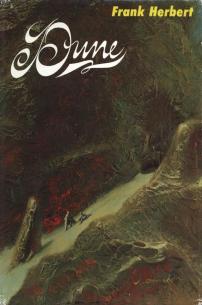
As Good As I Remember It? – Frank Herbert’s Dune

Some people have The Lord of the Rings, some people have Dune. They reread one of the two books on a regular basis. While I don’t read Dune every year, it’s the sf novel I’ve probably read the most times (and I haven’t reread The Lord of the Rings since I was about nineteen). This year I read Dune once again as it’s one of the titles on my list of favourite sf novels.

dune_first

Frank Herbert’s Dune is generally considered a classic science fiction novel. It’s certainly a best-selling sf novel – and there aren’t that many of them. In fact, it’s still in print now, more than 40 years after its debut. Common wisdom has it that the Dune series falls in quality as it progresses, although there are those who consider the sequel to Dune, Dune Messiah, the best of the lot. Since Frank Herbert himself conceived of the original trilogy – Dune, Dune Messiah and Children of Dune – as a whole, it’s unfair to consider them sequels. The trilogy is a thematic whole – as FH himself wrote: “I conceived of a long novel, the whole trilogy as one book about the messianic convulsions that periodically overtake us … This grows from my theory that superheroes are disastrous for mankind, that even if we find a real hero (whatever that may be), eventually fallible mortals take over the power structure that comes into being around such a leader.”

As for the later Dune books – yes, God Emperor of Dune is less a novel than it is a manifesto, but once you accept that the book becomes a more interesting read. Both Heretics of Dune and Chapterhouse Dune are, I think, technically better-written than the original three. Admittedly, Miles Teg’s development of superhuman speed always struck me as pushing plausibility just a little too far out of the suspension of disbelief envelope. And back-fitting an underground Judaic society into the universe felt a bit like pandering and unnecessary.

The less said about the Brian Herbert and Kevin J Anderson prequels and sequels, the better.

For those few who’ve not read the book, Dune is the story of Paul Atreides. It is set some twenty thousand years in the future, in a feudal interstellar empire in which computers , “thinking machines”, have been banned for millennia. Interstellar travel is controlled by the Spacing Guild, who use the spice melange to see into the near-future and so safely pilot their starships via foldspace. Melange is only found on a single world, Arrakis, AKA Dune. Paul’s father, Duke Leto Atreides, is charged by the Emperor with taking over Arrakis from his mortal enemy, Baron Harkonnen. But this is just a ploy by Harkonnen, who intends to destroy House Atreides. He attacks, but Paul and his mother, Lady Jessica, escape into the vast deserts of Arrakis and join the native Fremen. These are a hard people, and superlative fighters. Paul proves to be prescient and the messiah their religion foretold, and he leads them in battle against the Harkonnens and the Emperor. And wins.

Dune, for all its popularity and success, is not a very well-written novel. Here’s a sample passage:

His mother had undergone this test. There must be terrible purpose in it… the pain and fear had been terrible. He understood terrible purposes. They drove against all odds. They were their own necessity. Paul felt he had been infected with terrible purpose. He did not know yet what the terrible purpose was.

FH’s prose rarely rises above serviceable. It often drops below it. His poetry – presented as the lyrics of Gurney Halleck’s ballads – is bad. It’s no better in his collection of poetry, Songs of Muad’Dib. But then he did write a lot of haiku, and I hate haiku. Further, the continuous “head-hopping” is often confusing. That’s not to say FH was a bad writer, just that Dune doesn’t showcase his best. His writing in The Green Brain is, I feel, much, much sharper; and he draws his setting and characters much more effectively and skilfully in The Santaroga Barrier.

What FH was, however, was perhaps the deepest-thinking sf writer of his generation. Even if his prose often got in the way of the story, his fiction always left the impression it was never based on, or built around, trivia. He didn’t write escapist adventure-stories. Even a fix-up such as The Godmakers, in which the joins are painfully obvious, had something intelligent to say about government and religion.

FH spent a lot of time on the background of Dune, and it shows a depth and richness matched by few novels in the genre. Its feudal, somewhat old-fashioned, nature has also meant it has stood the test of time well. Dune reads pretty much the same now as it did when I first read it thirty years ago. The protagonist, Paul, is a young man whose words and actions continually seem to chime with prophecy, suggesting he is heir to greatness. And so it proves. There’s plenty there for young male adolescents to identify with, especially those who read science fiction. I no longer identify with Paul to the extent I did as a callow youth. And Baron Harkonnen now seems more of a pantomime villain than a real antagonist. All he lacks is a moustache to twirl. However, the setting remains as fascinating as ever – it’s easy to feel that the background is the real achievement of Dune. Both it and The Lord of the Rings were notable first and foremost for their deep and detailed settings, and both of them perhaps led to the current privileging of immersion over everything else in genre novels and novel series.

Each time I reread Dune, I find its narrative message harder to swallow – i.e., the human race is slowly stagnating, and a jihad is needed to mix up the genes and inject some vitality back into it. Paul tries to prevent this – or rather, he tries to find a less violent solution. But he fails. For me, jihad is the wrong word. It means “struggle” – and what exactly is the jihad in Dune struggling against? Second, Herbert equates a stagnating civilisation with genetic stagnation, which is not necessarily true. And, finally, going out and killing lots of humans is a pretty peculiar way of injecting some vitality back into the gene pool.

Speaking of killing, Dune is full of it. I hadn’t realised until this reading quite how many people are slaughtered throughout the story. And often for the most trivial of reasons. In one scene, two guards are a little quick to obey Feyd-Rautha in the presence of Baron Harkonnen. Since those guards are clearly more loyal to Feyd-Rautha than the baron, Harkonnen has them killed. Feyd-Rautha’s harem is also murdered as punishment for something he did wrong. It’s not just the villains of the piece. Perhaps it’s not unexpected that the Harkonnens would place little value on life, but the Fremen view it equally as cheap. Duke Leto is the only character who values the lives of his men. On joining the Fremen, Paul adopts their view. It all makes for a somewhat callous read. And, of course, it’s stated that the jihad will slaughter billions more after Dune‘s story has finished…

Unfortunately, David Lynch’s 1985 film of Dune has also slightly spoiled the book for me. For much of the novel, Stilgar remains as described in the novel. But when Paul and Jessica join the Fremen and Paul chooses his Fremen name… I kept on hearing Stilgar’s dialogue in Everett McGill’s voice. After seeing the movie, it’s almost impossible to hear, “We call that one muad’dib,” any other way.

Even though I’ve read Dune at least half a dozen times in the last 30 years, I don’t doubt I’ll read it again. For years I’ve been promising myself I’ll read all six of the FH-penned Dune books in succession. Maybe I’ll set myself that as a challenge one year, and blog the results. If I can bring myself to do so, I might even continue onto the two “Dune 7” novels written by Brian Herbert and Kevin J Anderson… Which would sort of be the opposite of going from dreadful sf B-movies to Ingmar Bergman… but with just as explosive results (see below).

Yes, Dune remains a favourite – although for reasons I’m not sure I fully understand. It’s not FH’s best-written novel. It’s not even the best-written of the Dune series. It is also a somewhat heartless novel – its core ideas have never really convinced me. But its setting remains a work of genius, and – let’s be honest – every male sf reader secretly wants to be Paul Atreides…


2 Comments

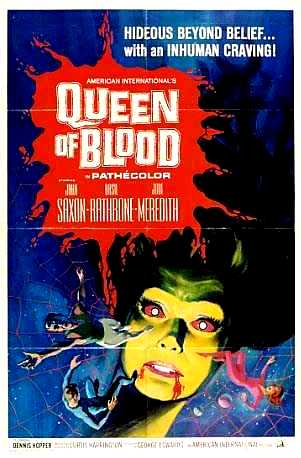
Hideous Beyond Belief!

Back in February of this year, I wrote about a film that had really impressed me, Divine Intervention by Palestinian director Elia Suleiman. In my post, I mentioned that I prefer foreign “art house” films to Hollywood blockbusters – I’d much sooner watch the sort of stuff directed by the likes of Aki Kaurismäki, Ingmar Bergman, Andrei Tarkovsky, Werner Herzog…

However, I also have a small cinematic guilty secret: I enjoy really bad sf films. You know, those dreadfully earnest B-movie sf films from the 1950s and 1960s, with rubbish effects, lots of stock footage, and alien invaders that are quite clearly men in rubber suits. And those straight-to-video Star Wars rip- offs from the late 1970s and early 1980s, especially the Italian ones…

Like Starcrash. This was released in 1979, directed by Luigi Cozzi, and starred Caroline Munro, Christopher Plummer and David Hasselhof. Its plot is very nearly incoherent (unlike Cosmos: War of the Planets, whose plot is incoherent). The Hof is best thing in the film, which probably tells you all you need to know. Classic lines in Starcrash include: “Look! Amazons on horseback! I hope they’re friendly.” and “Imperial Battleship, halt the flow of time!” and “A floating spaceship is about to crash into us!”

Not all of these films are so dreadful, however. Some are much better than appearances would suggest. Galaxy of Terror has been a favourite since I first saw it on VHS back in the mid-1980s. And only a few nights ago, I watched another Roger Corman-produced film from 1966 which is bizarrely good…

Queen of Blood is one of those 1960s American sf films created by overdubbing English dialogue over a pirated Russian sf film and adding additional scenes featuring US actors. It stars Basil Rathbone, John Saxon, and a very young Dennis Hopper. All of the special effects shots, Martian exteriors, and alien spaceship interiors are from Niebo Zowiet, “The Heavens Call”. Queen of Blood‘s plot also clearly inspired Ridley Scott’s Alien – there are obvious resemblances.

Aliens send a message to Earth requesting a meeting, but the spaceship carrying their ambassador crashes on Mars. The International Institute of Space Technology puts together a rescue mission. However, they find only a single alien body in the wreck. The aliens’ rescue ship must be somewhere else on the Red Planet. A second IIST rocket makes its way to Mars in order to place observation satellites in Martian orbit to aid the search. This rocket lands on Phobos… and discovers the alien rescue ship. Which contains a single survivor, a green-skinned woman. During the return journey to Earth, the alien woman kills off the IIST crew one by one and drinks their blood…

It’s not the most profound plot in the history of sf cinema. And Queen of Blood‘s half-Soviet origins hardly bode well. But somehow the film manages to be more than the sum of its disparate parts. The footage from Niebo Zowiet is… weirdly compelling: lots of long shots of huge colourful sets, which seem strangely other-worldly. The film also features some Russian crowd scenes, intercut with close-ups of the American cast. The sudden changes from long to short are a little disconcerting. The title role is played by Florence Marly who, despite green make-up and a very peculiar beehive hairdo, manages to convince without actually speaking a word.

Interestingly, one member of the crew of the first IIST rocket is Judi Meredith. Her character is chosen for the mission because she’s best qualified. And her boyfriend, John Saxon, happily acknowledges as much. For a film made in 1966, that’s quite remarkable. In other areas, perhaps Queen of Blood isn’t quite so forward-thinking – or even scientifically accurate (green-skinned blood-drinking alien queens notwithstanding). There’s no evidence of one-sixth gravity in the scenes set on the Moon, or micro-gravity when the second rocket “lands on” Phobos. But that’s not unusual in science fiction films of the time. Even in the good ones.

Films like Queen of Blood – i.e., not exactly “good”, but very much interesting – are not entirely common. The vast majority of sf films available on cheap B-movie DVD collections are truly dreadful, and often near unwatchable. And sitting through them one after the other over a period of several weeks is probably not a very clever thing to do. I’m a little bit afraid that if I now watch anything directed by Ingmar Bergman, my head is likely to explode. But, joking aside, I’d very much like to see Niebo Zowiet, the Russian film from which Queen of Blood so freely stole. Sadly, no copy with English subtitles appears to exist. Ah well. I’ll just have to keep on watching sf B-movies and hope I stumble across another gem…


3 Comments

War, and the Pity of War…

At the beginning of this year, I bought an anthology of World War II poetry on eBay, Return to Oasis: War Poems and Recollections from the Middle East 1940 – 1946, edited by Victor Selwyn, Erik de Mauny, Ian Fletcher, GS Fraser and John Waller, and published in 1980. Unfortunately, I’d misread the description of the book on eBay and thought it contained poetry by Lawrence Durrell, but in fact he only provided the introduction. Return to Oasis was based on Oasis, an anthology published in Cairo during World War II, and used the same criteria for inclusion: “the poet must have served in the Forces in the Middle East theatre of war in the 1940s and have written his or her poems at that time.”

So I received the book, flicked through it, realised I’d made a mistake, and stuck it up on my book-shelves. Where it languished unread until today.

There is a poetry forum moderated by Marion Arnott on Interaction, the T3A Publications board. One of its threads is about war poetry and, being an admirer of Wilfred Owen‘s poetry, I’ve posted to the thread. But everyone knows Owen’s poems, so today I decided to contribute something a little different to the discussion. Remembering the copy of Return to Oasis on my book-shelves, I got it down, opened it at random… and discovered John Jarmain.

Like Wilfred Owen, Jarmain did not survive the war which formed the subject of his poetry. Unlike Owen, he seems to have been completely, and criminally, forgotten – a single collection published posthumously in 1945, and a single small press reissue of that collection in 1998. On the strength of the four poems by John Jarmain published in Return to Oasis, he certainly deserves to be remembered. Here is one of those poems:

At a War Grave
No grave is rich, the dust that herein lies
Beneath this white cross mixing with the sand
Was vital once, with skill of eye and hand
And speed of brain. These will not re-arise
These riches, nor will they be replaced;
They are lost and nothing now, and here is left
Only a worthless corpse of sense bereft,
Symbol of death, and sacrifice and waste.

So there you go. I’m now glad I “accidentally” bought Return to Oasis. And I think I might try and find myself a copy of Jarmain’s Poems from 1945. He also wrote a novel, Priddy Barrows, described as “with a Brontë-like atmosphere and a cast of vivid characters”. That sounds like it might be an interesting read, too…


Leave a comment

The Stars Look Very Different Today

For the last couple of days, I’ve been watching the latest Space Shuttle mission on the Nasa TV webfeed (via the Flame Trench). It’s not the most exciting television in the world – well, it’s in orbit about the world, but you know what I mean. But it is fascinating in a minor mind-boggling sort of way. I mean, that’s space. It’s not on Earth. It’s 240 miles straight up. When you think what’s needed merely to survive there… Then you start to realise quite how amazing an achievement were the Apollo missions to the Moon.

The US says it is going back to the Moon, although I wonder how long the enthusiasm will last. Given that China, Japan and India have also expressed similar intentions, perhaps the spirit of competitiveness will keep it on the political agenda. I think they should go. It’s a great idea. And yes, after Nasa has done that, of course they should go to Mars.

But why stop there? How about Ceres next? The moons of Saturn?

It doesn’t matter that we don’t have any real reason for going. We should do it because we can, because whatever challenges it presents are solvable. It’s something to aspire to, something achievable to aspire to. It’s not a waste of money, it’s not money that would be better spent on solving earthly problems. Because, let’s face it, if that money were made available, it wouldn’t be spent on earthly problems anyway. It’d go towards another “liberation” or “police action”. Or be used to further prop up an unwieldy government apparatus. Spending billions of dollars on sending four men to the Moon is a tangible, and very visible, objective. And no one has to die, either.

There might even be some spin-off technology that will prove useful or lucrative. But that’s just gravy. And the merchandising should make a bob or two. With a bit of help, a Nasa programme could even bootstrap commercial enterprises into space. It’ll never be routine or economical – or rather, the amount of up-front investment required to make it routine is politically and economically unfeasible. Local authorities in the UK won’t even invest in trams, so I don’t consider it likely that even a nation with a GDP of nearly $14,000,000,000,000,000 will invest in an orbital elevator. So it’s either spaceplanes or “Spam in a can“.

There is some scientific benefit to going back to the Moon, and then onwards to Mars. But that’s not important. Robots could do the job just as well. But sending robots is boring. We’ve been doing that for decades, and no one really cares. Send astronauts (or cosmonauts, or taikonauts), not robots.

Project Constellation is an excellent idea. Do it.


4 Comments

August and September Favourites

I’ve still been reading a favourite book each month. But I was a bit too busy in August to write up something on that month’s book, Metrophage by Richard Kadrey. So I decided to roll it into the write-up of September’s book, Paul Park’s Coelestis. And here they both are…

Richard Kadrey’s Metrophage has been described as “one of the quintessential 1980s cyberpunk novels”, and yet it seems to have slipped below the radar of most sf readers. It has neither the profile of William Gibson’s Neuromancer, nor Neal Stephenson’s Snow Crash, and yet I believe it is better than both. Neuromancer was the seminal cyberpunk novel, and that can’t be taken away from it. But I’d argue that Metrophage did something just as important.

Jonny Qabbala is a drug pusher in Los Angeles. He is also an ex-member of the Committee for Public Safety. When Jonny’s connection, Raquin, is murdered, Jonny heads off to confront the killer, Easy Money… and promptly finds himself caught in the middle of a battle for Los Angeles – between the Committee for Public Safety, drug lord Conover, and the anarchist Croakers. In this future, the US went bankrupt and was bought up by the Japanese. Who are now at war with the New Palestine Federation (shades of The Centauri Device).

Jonny spends time with each of the three factions – not always by choice – but is entirely powerless to prevent events from unfolding. There are puzzles embedded in the plot – the mysterious leprosy-like disease raging through the city, the Alpha Rats on the Moon… Metrophage resolves these by putting Jonny in position to have the truth explained to him. It helps that he has contacts in each of the three factions – and even more so that he is seen as important to the plans of at least two of the factions. Kadrey takes the reader on a wild ride through his Los Angeles – alternately wasteland and near-future neon-soaked wonderland. Clues dropped here and there help explain the resolution. There are a couple of points I couldn’t quite figure out – the game Conover plays with Jonny using a copy (or original) of Gainsborough’s Blue Boy, for example. But plenty of other elements of the novel have been subsequently become well-known tropes in the language of science fiction.

Despite that, Metrophage reads as fresh today as it did twenty years ago. Few books – even cyberpunk ones – can claim to have avoided dating over two decades. But then, Metrophage is more than just a cyberpunk novel. If Neuromancer folded noir into science fiction, then Metrophage folded cyberpunk back into science fiction. I’ve always maintained that cyberpunk effectively ended with the publication of Metrophage, and after my recent reread I see no reason to change my mind. Metrophage is cyberpunk – although it features no cyberspace or hackers. Metrophage is science fiction.

I didn’t expect Metrophage to lose its place on my list of favourites, and my reread not only proved that but reminded me why it was a favourite. It’s a great book.

And after Kadrey, another book I didn’t expect to be dislodged from the list. However, its appeal is, perhaps, more personal. Paul Park first appeared with the Starbridge Chronicles – Soldiers of Paradise, Sugar Rain and The Cult of Loving Kindness – an ambitious science fiction trilogy set on a world with seasons which last centuries, much like Brian Aldiss’ Helliconia trilogy. From the first page of that trilogy, it was clear that Park was a distinctive voice. And his follow-up, Coelestis, more than proved it. In some respects, Coelestis remains unique in the genre. And that’s not an easy accomplishment.

Simon Mayaram is attached to the British Consulate on the only colony world on which an alien race was discovered, homo coelestis. These aliens were actually two races – Demons, and the Aboriginals, who the Demons had telepathically enslaved. The humans hunted the Demons to extinction, and freed the Aboriginals. Who now ape humanity – the rich members of the race undergo comprehensive surgery, and require a strict regimen of drugs, in order to appear and behave human. Katharine Styreme is one such Aboriginal. To all intents and appearances, she is a beautiful young human woman.

Simon is invited to a party given by a prominent member of the human community. Katharine – whom he has admired from afar – is also there, with her father Junius, a wealthy merchant. During the party, Aboriginal rebels attack, kill almost everyone and kidnap Simon and Katharine. Without her drugs, Katharine begins to revert to her alien nature – a process that is exacerbated by the presence among the rebels of the last surviving Demon. When human vigilantes attack the rebels, Simon and Katharine are forced to flee… and Katharine’s meagre grip on humanity begins to erode even further.

Coelestis is one of those science fiction novels which follows a logic all its own. It is, in a sense, post-rational. Although the story is set an indeterminate time in the future, the community to which Simon belongs bears an uncanny, and deliberate, resemblance to early Twentieth Century colonial British and American. Even the Aboriginals themselves – particularly the Styremes, who are made to appear human, and show no alien side – are hardly convincing in any scientific sense. Earth is described as a dying planet, and the colony planet has been cut off from its nearest neighbour. If there is an interstellar federation or empire, then it bears no resemblance to any other in the genre.

John Clute described Coelestis as a “Third World SF novel”. It’s sheer hubris on my part, but I think this is wrong. Coelestis is a post-colonial sf novel. It is clearly inspired by Park’s own years in India. And to call India a member of the Third World is to ignore its long and deep cultural heritage – and the Aboriginals (or rather, the Demons) are implied to have an equally long cultural heritage in Coelestis. The novel is not about living in a Third World analogue, it is about the gentle wind-down from colonialism and its often bloody consequences. Park makes as much clear in events described in the book. Mayaram is of Indian extraction (although born in the UK), and during his abduction by the Aboriginals, he rapes Katharine. It’s perhaps a somewhat  blunt metaphor for John Company and the Raj, but it makes the point. Even the Aboriginals’ attempt to ape human ways is a reflection of the Indian adoption of some elements of British culture – and especially the English language. The Aboriginals’ ersatz humanity is little more than surface – Katharine may resemble a young human woman, but whatever gender she possesses is what’s attached to her mimicry (the Aboriginals are actually one-sexed). She is not a viewpoint on the alien – Coelestis is a description of her fall from humanity, not of her imitation of it.

Having grown up in the Middle East, I find a particular appeal in novels such as Lawrence Durrell’s The Alexandria Quartet and Park’s Coelestis. To some extent, they remind me of my childhood. Both also have the added advantage of being novels which can be read many times – and there is always something new to find, or to think about, in them. I certainly plan to reread Coelestis again some time. Its place on my list of favourites is secure.


Leave a comment

The "Beep" heard ’round the World

Today – October 4 – is the fiftieth anniversary of the launch of Sputnik, this planet’s first artificial satellite. And it seems all the promise of the early years of the “Space Age” hasn’t, well, hasn’t really been met. The last man on the Moon, Gene Cernan, climbed back into his Apollo 17 LM almost 35 years ago (on December 14, 1972). What happened? Why didn’t we go to Mars? We’re going to have to wait until 2020 before the US returns to the Moon. And it’s likely to get a little crowded up there – the Chinese, Japanese and Indians have all said they plan to send someone to the Moon around that time.