It Doesn't Have To Be Right…

… it just has to sound plausible


5 Comments

British sf masterwork: 98.4, Christopher Hodder-Williams

For a writer of whom Radio 2 once said, “One of those writers on whom critics have already lavished almost every word of praise possible”, it’s somewhat surprising that today Christopher Hodder-Williams is pretty much forgotten. He published eleven sf novels between 1959 and 1984, and most of them are difficult to find these days.

The above Radio 2 puff comes from the back of 98.4, probably Hodder-Williams’ best-known work. It was first published in 1969, and I included it in my British SF Masterworks list here. Having said that, the book also features a quote from The Sun: “Read and be scared”

Nigel Yenn, the narrator of 98.4, handled the security at an unnamed company’s “Group Two” laboratories in Elstree. As the novel opens, he’s been fired, and dumped by his girlfriend. He is subsequently recruited by a UN agent who is suspicious of the research taking place in the company’s “Group Three”. Yenn tries quizzing his ex-colleagues at Group Two – fired employees wouldn’t be allowed back in a building these days, but apparently they were much more lax back in the 1960s – but they know nothing. Various people pop up and hand Yenn clues, including Louise, who has some connection to Group Three and its resident genius, Dr Stergen. It’s all to do with nuclear missiles guided by human brain tissue. Somehow Stergen has built an underground base near Taunton, where he can perform his vile experiments on unwilling subjects. And he has also managed to put together a small fleet of submarines to carry his “Nerve Controlled Ballistic Missiles”. Yenn does the 007-thing: first to uncover more about Stergen’s activities, and second to foil his dastardly plot to launch his NCBMs and trigger a nuclear war. The former includes boarding one of Stergen’s subs, where he discovers exactly what “Nerve Controlled” means:

Near at hand was the smallest box of all. It measured about six inches across by two inches down by four inches deep. I thought I saw something flickering on the front… the first sign of activity.

Through the rapidly thickening smoke I now saw that this box was linked by plastic strip to the other units mounted at intervals below. These were already flooded with water.

Then the fumes cleared for a second and I saw what it was that had moved on the little box.

It was a pair of human eyes. (p118)

Hodder-Williams’ prose is actually quite good. 98.4 has a breezy man-of-action tone throughout, like Ian Fleming’s but without the horrible racism and sexism. He characterises Louise, the doomed love-interest, well, although the gay villain, Michael, who helps Yenn, reads like a dated caricature. But the plot is all a bit, well, silly. It starts off plausibly enough, but then it all turns as daft as a Cubby Broccoli movie, with a secret high-tech base buried under Somerset which Yenn manages to destroy in an explosive climax. Admittedly, the central premise is quite chilling and, as the above excerpt shows, Hodder-Williams writes well enough to get that across. Unfortunately, in order to maintain suspense throughout the story, Hodder-Williams only allows Yenn to be given cryptic clues. Yenn, and hence the reader, has little idea what’s going on for much of the book, even though other characters, such as Louise and Michael, plainly do. It makes for a frustrating read in places. Still, action-man characters often require idiot plots because otherwise they’d have no deadly missions to undertake and cunning puzzles to solve…

98.4 is more like a daft techno-thriller than it is a science fiction novel. It’s a quick, fun read, and well-crafted, even if elements of the story stretch credulity somewhat. For the time-being, it’ll stay on the British SF Masterworks list… at least until I’ve read more by Hodder-Williams.


6 Comments

The devil is in the surface detail

Iain Banks’ latest Culture novel, Surface Detail, may be about a War in Heaven, but it is definitely not an eschatological novel.

In the universe of the Culture, there are races which have transcended to a higher plane of existence, the Sublimed – via, it is assumed, technology, or great intelligence / knowledge of the secret physics of reality. There is no mention of individuals achieving a similar transformation on their deaths. In other words, there is no Heaven. And conversely, no Hell. But what doesn’t exist, or can’t be proven to exist, people will invent. And in the universe of the Culture, they invented Afterlives. These are VR worlds populated by those who have, willingly or unwillingly, ended their corporeal existence. They are heavens created by technology. And conversely, there are hells. Because not everyone deserves a reward for a life well-lived.

The War in Heaven which makes up the plot of Surface Detail is a decades-long conflict between those who believe hells are immoral and should not exist, and those who believe they are necessary. The war is being fought entirely in simulation, so there is no damage or loss of life, and both sides have agreed to abide by the result. But the anti-Hell side is losing…

Lededje Y’breq is the property of Veppers, the richest and most powerful man in the Sichultian Enablement. She is an Intagliate, which means she has been genetically engineered to display tattoos from crown to toe, and on all her internal organs, eyeballs, teeth, bones, etc. These tattoos, which indicate her status, are punishment for a family debt. Her father died owing Veppers huge amounts of money, and in Suchultian law descendants can “pay off” these debts by entering into slavery. In the first chapter, Ledeje tries to escape, but is killed in the process by Veppers. To her great surprise, she finds herself reincarnated – “revented” – on a Culture GSV. This is not a technology the Sichultians possess. Lededje determines to return to her home world to kill Veppers. She travels there aboard a Culture Picket Ship, Falling Outside The Normal Moral Constraints.

Yime Nsokyi is a member of the Culture’s Quietus, the service which deals with those inhabiting Afterlives. She is tasked with preventing Lededje. En route she detours to the Tsungarial Disk, an ancient alien artefact comprising millions of asteroid-sized factories orbiting in a ring about a gas giant. There has been a “smatter” outbreak on the Disk, a swarm of von neumann machines, and the GCU Bodhisattva aboard which she is travelling has been diverted to help meet the threat.

Vateuil is a soldier in the War in Heaven. He plays a number of parts in a number of different types of simulated wars, working his way up the chain of command. He is also a member of a conspiracy of senior officers who are intending to take the battle into the real world. A conspiracy involving Veppers and a couple of alien races plans to build millions of ships with the intention of destroying the hardware on which the hells run.

Prin is a Pavulean, an alien, who has infiltrated his race’s hell in order to blow the whistle on it. He was sent there with his fellow researcher and mate, Chay, but she failed to make it back. He presents his findings to the Pavulean government, but meets with resistance – not only are there those who don’t believe the hell exists, but there are also those who know of its existence and believe it is necessary. This last faction attempt to discredit or silence Prin.

These plot-threads all contribute to the novel’s resolution. Except… some of them don’t quite convince. Ledeje’s narrative is relatively straightforward and offers, perhaps, the most direct route from beginning to the story’s climax. Prin and Chay are there to show just how reprehensible the hells are. Vatueil is the reader’s eye on the war, and its final desperate gamble. Yime is part of the solution to preventing the attempt to bring the War in Heaven into the Real. And Veppers… Veppers knows the location of the hardware on which the hells run. But why does he wait thirty years before putting into place the plot to destroy that hardware?

But if the conspiracy which drives the plot of Surface Detail doesn’t quite convince, a more pressing problem is that the moral argument at the heart of the book is fixed. The hells in the novel are made places, and so most certainly exist. The argument then becomes over whether they should exist. But through Prin’s eyes we see just how reprehensible those hells really are. There is absolutely no ethical or moral argument which can be used to justify their existence. But Banks has a pro-Hell Pavulean senator attempt to do just that to Prin; but it’s empty blustering. Either Banks is spoofing the empty rhetoric of the right-wing when they attempt to rationalise military adventures like the invasion of Iraq. Or he is showing that there is no acceptable argument for morally repugnant acts – the pro-Hell side, in other words, comprises only lies and evasions. They have taken the moral high ground on an empty argument, and are about to win the war to cement their position. And so the anti-Hell side has to cheat, has to break a solemn agreement, because – as the Culture so often does in other novels – the right outcome justifies any means. Even, apparently, in an argument over moral and immoral activities.

If there’s one thing Banks does well in his sf novels, that’s “blow shit up”, and Surface Detail is as satisfying in that regard as the best of the Culture novels.There are also some excellent set-pieces: the Tsungarial Disk, the cavern city, and the elevator-diving spring to mind. But there also appears to be more exposition than in Surface Detail than I remember from other Culture novels.

On reflection, I think I liked Matter better. It had a more interesting structure, it had a cooler BDO, it had more interesting characters. Which is not to say that Lededje is not – she’s a typical Banksian heroine, just like the Lady Sharrow from Against a Dark Background. Veppers, unfortunately, is another pantomime villain – cf the Archimandrite Luseferous – and reads as little more than a caricature of an evil plutocrat. As for Demeisen, the avatar of Falling Outside The Normal Moral Constraints… About halfway through Surface Detail, he started to come across as Matt Smith’s Dr Who. And that just spoiled it for me.

Nor was I entirely convinced by the resolution. The treaties between the principles didn’t quite add up when scrutinised, the sudden reveal of the hells’ hardware’s location made a bit of a mockery of the decades-long conspiracy of the story, not to mention feeling like a bit of a cop-out.

And then there’s that final line… Yes, it’s a hoot. Yes, it’s going to please fans of the Culture novels. But it also feels a bit, well, unnecessary. It’s an Easter Egg, but nowhere near as substantial as the one in Matter‘s epilogue.

For a story so concerned with detail, so much so that the title uses that very word, Surface Detail seems to perversely only really succeed when focused on the big picture. Like a Mandelbrot, it makes a pretty picture; but get too close and those fractal edges start to blur and appear indistinct. It is a Banksian space opera, with all that description entails. It is a fun read. But its story also pretends to a weight it does not actually possess, and that I found disappointing.


3 Comments

Smelling of roses

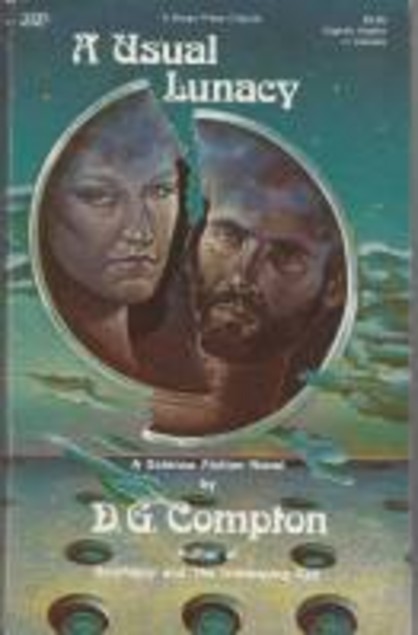
If DG Compton’s other novels are as good as Ascendancies, I shall continue to track them down and read them. Of course, I’m not saying this from a sample of one. Ascendancies is the sixth book by Compton I’ve read (see here and here for two of them) . But it is the most confounding. It is an odd book. Beautifully written, well observed, tightly plotted, but… odd. Its central conceit remains a mystery, and its title seems like an afterthought. Nonetheless…

Ascendancies is, like The Continuous Katherine Mortenhoe and The Electric Crocodile, a two-hander. The two in Ascendancies are Caroline Trenchard and Richard Wallingford. Caroline’s husband has recently passed away, and Wallingford is the insurance agent tasked with ensuring the death is as reported. Because in the 1986 of the novel (which was published in 1980), the UK is experiencing a number of unexplained phenomena. One of these is “Disappearances”. First there is “Singing”, a sound as of heavenly choirs, seemingly coming from all directions. This is accompanied by a cloying smell of synthetic roses. And after every Singing, people are found to have vanished. No one knows what happens to them, or where they go.

The other phenomenon is “Moondrift”, which falls from… somewhere, at irregular but frequent intervals. It can be burnt as fuel, or used as plant food. As a result, the UK is prospering – so much so that people now legally work only three days a week.

Wallingford is employed by the Accident and General Insurance Company, who have insured the life of Caroline’s husband, Havelock. But they won’t pay out if Havelock has simply Disappeared. Hence Wallingford’s visit to Caroline’s house… where he discovers that a body has been substituted for the allegedly deceased. However, instead of reporting the matter, he agrees to defraud the AGIC, taking forty percent of the £100,000 policy. Which act draws the stolidly lower middle-class Wallingford and the bohemian upper middle-class Caroline together in a relationship that is not quite a relationship, and which is never entirely suitable (as Compton is fond of telling us).

Ascendancies charts the progress of the two’s affair, and that is all. When the story is over, neither Moondrift nor the Disappearances have been explained. All we’ve done is watch Wallingford and Caroline overcome their prejudices and draw close together, and then split apart as the final hurdle proves insurmountable. And “watch” seems an apposite verb as there’s much in Ascendancies which smacks of a BBC drama. Without consciously doing so, the story becomes for the reader an early 1980s Play for Today on BBC1, not unlike The Flipside Of Dominick Hide.

Partly this is because Compton’s dialogue is amazingly sharp. But it’s also there in the way he draws his characters, which is chiefly through that sharp dialogue. And also, some of his characters feel dated – especially Havelock’s circle of bohemian friends and hangers-on. As a result, the story itself seems far more 1980 than 1986. But it is beautifully-written, and those two central characters are drawn with superlative skill.

And the title? It is referenced twice in the novel. It apparently refers to a game of oneupmanship which two of the characters admit to playing. Caroline admits to playing it, although it’s hard to know exactly how it is played. Nor what playing it actually achieves. It is, like the Disappearances and Moondrift, just another part of the world of Ascendancies that Compton refuses to explain.


13 Comments

In the deepest water

At 8:15 on the morning of 23 January 1960, Jacques Piccard and Lieutenant Don Walsh, US Navy, climbed into the pressure sphere of the bathyscaphe Trieste, and sealed the hatch. Less than ten minutes later, they were descending towards the floor of the Pacific Ocean, towards the floor of the deepest part of the Pacific Ocean: Challenger Deep.

Challenger Deep is 35,994 feet (10,971 metres) deep. If you put Mount Everest in it, there would still be a mile of water above the mountain’s peak. It is a slot-shaped depression, about one mile wide by four miles long, in the floor of the Mariana Trench. There have been only three descents to Challenger Deep. The Trieste‘s was the first, and the only one to carry human beings. Two remotely operated vehicles have also been there: Kaikō in 1995 and Nereus in 2009. Given conditions on the floor of the Mariana Trench, this is hardly surprising. Down there in the hadal zone, the pressure is close to seven tons per square inch, the temperature is around two degrees Centigrade, and light itself cannot reach. Yet there are creatures living there.

Seven Miles Down by Jacques Piccard and Robert S Dietz is the only book written specifically about the Trieste and its descent into Challenger Deep. The Trieste was invented by Piccard’s father, Swiss professor Auguste Piccard, who was apparently the inspiration for Hergé’s Professor Calculus. Piccard senior was one of those scientist-inventors who no longer seem to exist. In the 1930s, he built a balloon with a pressurised gondola, and ascended into the stratosphere, the first person to ever do so. A decade later, he turned his attention in the opposite direction, and invented the bathyscaphe, or “deep boat”, in order to study the depths of the ocean. It operates much as a balloon does, although using gasoline, which is lighter than water, rather than air. His first such vessel was the FNRS-2, named for the Belgian Fonds National de la Recherche Scientifique, which financed its construction and early operations. It was later sold to the French Navy, who upgraded it to the FNRS-3. The Trieste, however, was privately funded.

I forget where I stumbled across mention of the Trieste‘s descent to Challenger Deep. I was aware of it, of course; but knew little beyond the fact that it had happened. I certainly didn’t know that this year was its fiftieth anniversary. I remember watching the BBC submersible drama series The Deep, which featured a drilling rig on the floor of an ocean trench some 20,000 feet below the sea-surface. While The Deep wasn’t very good (nuclear reactors do not explode), I thought a crewed facility on the floor of the deepest part of the ocean might make a good location for a short story. So it might well have been that which inspired me to look up the Trieste

… at which point I discovered that there’d been very little written about the descent. Last year was the fortieth anniversary of the Apollo 11 Moon landings and a number of books were published to celebrate it. This year was the fiftieth anniversary of the Trieste‘s descent and there’s been… nothing. In fact, the only things I could find proved to be contemporary with it: an article from Life magazine written by Walsh (see here), and Seven Miles Down by Jacques Piccard and Robert S Dietz. And the latter has apparently never been reprinted since.

source: Wikipedia

The book is actually more a history of the Trieste, and Piccard’s involvement with it, than it is a blow-by-blow account of the descent to Challenger Deep. The opening chapters cover the FNRS-2 and -3, the difficult time Piccard senior making his dream of a bathyscaphe reality, and the early dives. There is mention of Otis Barton and William Beebe, who invented the bathysphere and pioneered direct study of the deep ocean using a submersible. About halfway through the book, Dietz joins the story. An oceanographer attached to the US Navy’s Office of Navy Research and based in London, he helped persuade the US Navy to buy the Trieste and put Jacques Piccard under contract. During the second half of the 1950s, the Trieste made some thirty-five descents, piloted by Piccard and carrying scientists as observers. These were initially in the Mediterranean, and later off the coast of California. It was not until 1959 that a request was made of the Chief of Naval Operations to authorise “bathyscaphe (Trieste) operations (Project NEKTON) in the Mariana Trench, between November 1959 and February 1960”. Permission was given, a new and stronger pressure sphere was ordered from Krupps of Germany, and once that was fitted the Trieste was shipped from her base of operations in San Diego to Guam. She made six descents to various depths in the South Pacific before Piccard and Walsh made their record-breaking dive to Challenger Deep.

source: US Navy

Much of Seven Miles Down is written from Jacques Piccard’s point of view, although he does hand over the narrative at various points to Dietz. The prose is workmanlike but readable. Piccard maintains a nice balance between technical detail and his own impressions and experiences. It makes for an interesting read, although the prose doesn’t really come alive until the chapter on the descent to Challenger Deep. The technology involved is perhaps not as fascinating, and nowhere near as complex, as that in the Apollo programme, but the descents were every bit as dangerous – in Challenger Deep, there were 200,000 tons of water pressing on the Trieste‘s pressure sphere, for example. If Piccard had miscalculated the amount of gasoline needed in the float, or iron shot used as ballast, the bathyscaphe might never have returned to the surface. In fact, they were very lucky: during the descent, Piccard and Walsh heard something explode but could not work out what it was (on previous dives lights, a camera, and stanchions had all imploded). It was only during the ascent that Walsh spotted that the window at the rear of the antechamber had cracked. If it gave way, they could not clear the water from the antechamber and entrance tunnel and so would be unable to exit the sphere. They’d have to remain inside it for the five-day journey back to Guam and dry dock. Fortunately, the window didn’t break.

An appendix gives the technical specifications of the Trieste, and lists all sixty-five dives made by the bathyscaphe between 1953 and 1960. After the descent to Challenger Deep, the Trieste returned to San Diego but did not dive again. In 1963, she was modified and then used to search for the missing submarine, USS Thresher. She underwent numerous modifications and upgrades over the years before eventually being retired in 1980. She now resides at the National Museum of the US Navy in Washington DC.

Here’s an excellent video by Rolex about the Challenger Deep dive:

Finally, this year the X Prize Foundation announced a $10 million prize for the first privately-funded submersible to make two crewed descents to Challenger Deep. And yes, I did write a science fiction story set in a crewed base in Challenger Deep. It just needs a little more work before I start submitting it…


8 Comments

Another obscure British sf masterwork

Among the books recommended to me by others for inclusion on my list of British sf masterworks (see here) was A Man of Double Deed, Leonard Daventry’s debut novel, and the first book of the Keyman trilogy. Daventry is forgotten now. He wrote seven science fiction novels between 1965 and 1980 – the last one somewhat ironically titled You Must Remember Us…? – but his books are neither in print nor especially easy to find. Which is a shame, as there are worse authors from that period still in print, whose deathless prose continues to clog the bookshelves of Waterstone’s and other book shops.

The title character of A Man of Double Deed is Claus Coman. He is a keyman. This means he is a telepath, and one of a handful of such people, who operate something like secret agents and something like Special Branch, on an Earth a century after an all-out nuclear war, the “Atomic Disaster of 1990”. Coman is something of a throwback – he lives in a house in Old Peckham, not in a giant apartment block, and he smokes like a chimney, even though the habit is illegal. He is also, we are told on the first page, “old-fashioned in other ways also, being content with two women only”. These two women are Jonl and Sein, and Coman is bonded to them – again, something considered old-fashioned and slightly dubious.

Coman returns to Earth after adventures on Venus – several of his previous escapades are mentioned in the novel – to find something strange going on. The youth of 2090 have taken to murder and suicide. It’s almost an epidemic. The only solution the World Council can conceive is a “War Section”. This is an area, preferably on another planet, in which the murderous teenagers and young adults can be left to their own violent devices. The Council is meeting shortly to consider implementing such a War Section, but the leader of the Council, Marst, is being influenced to vote against the proposal by a conspiracy. Coman’s boss, Karns, asks him to travel to the Fifteenth City, a holiday destination built above a line of islands in the Pacific, to persuade Marst to change his vote. Marst is apparently under the influence of a pair of “jokers”, telepaths who oppose the keymen but fortunately possess much weaker abilities. Coman and his two wives travel from the Twelfth City (London) to the Fifteenth City. Shortly after their arrival, while at a swimming-pool, Coman identifies one of the jokers, a woman called Linnel. He seduces her – Jonl and Sein are not happy about it, but they trust him. With Linnel’s help, Coman manages to prevent the conspiracy.

The plot summary above probably doesn’t quite illustrate how odd this novel is. Superficially, it resembles an ordinary piece of science fiction tosh from the 1950s or 1960s, with a superman hero, a supporting bevy of beautiful subservient women, and a future Earth which in no way resembles the Earth of the time of writing but still feels horribly dated. But that would be doing A Man of Double Deed a disservice. It’s a much better book than that.

Coman is such a strange hero, for one thing. He is a dour intellectual, but not a misanthrope. He is not a man of action, but is often called upon to behave like one. There’s something of the World War II RAF officer in him, a combination of education, arrogance, pragmatism, and a grudging respect for others. He is his own biggest critic, but extremely private with his criticisms. He is very British.

Nor are the women of the story, Jonl, Sein and Linnel, characterless females. On the contrary, Jonl could become a keyman herself, but does not wish to do so on principle. Sein is more stereotypical a female character. She loves Coman, and longs for a baby. She gets her wish in the end, and it’s a result all are happy with. Linnel is a femme fatale, but an insecure one who falls for Coman’s singular charms, but refuses to bend entirely to his will. These three are not, I hasten to add, brilliantly-drawn female characters, or even especially realistically-drawn ones, but they are a good deal better-realised than is common for genre fiction of the time.

A Man of Double Deed is a novel in which principles play a large part. At several points in the story, Coman, Karns, Marst, or Coman’s cyborg friend Deenan talk about moral and legal principles, and these are well-written and well-argued pieces of dialogue. They are not the usual political or moralistic crap you’d find in most genre novels, and which doesn’t stand up to scrutiny, this is solid, well-presented, intelligent argument. It makes for a refreshing change.

Perhaps the invention on display in the novel is not especially high, but the writing is solid, and even occasionally good, the characters are drawn well, and the plot comes to a satisfactory end… even if not everything is explained. What, for example, was the conspiracy which had hired the two jokers? Why did they not want a War Section? Nevertheless, A Man of Double Deed is an interesting sf novel and doesn’t deserve to be forgotten. In fact, I think I’ll hunt down the other two books in the trilogy, Reflections in a Mirage and The Ticking is in Your Head, and read them.


6 Comments

An obscure British sf masterwork?

Several of the authors I included in my fifty British SF Masterworks list (see here), I’d not actually read. And with good reason – they’re more or less forgotten. One such author was Rex Gordon, the pen-name of Stanley Bennett Hough, born in 1917, who wrote nine science fiction novels between 1953 and 1969. Of those novels, the best-known is perhaps No Man Friday (or so I was reliably informed). Second-hand copies of the book are relatively easy to find – both under that title and under its US title, First on Mars – so I bought one. And read it. (Incidentally, Gordon’s The Worlds of Eclos was published in the US as First to the Stars, and his The Time Factor as First Through Time; there seems to be a pattern there…)

Gordon Holder is the narrator of No Man Friday. He is an engineer at Woomera, Australia, where Britain carried out its rocket and missile programme during the 1950s and 1960s. Determined to beat the Americans into space, the British engineers secretly build a rocket to take them to Mars. They sneak orders for the parts they need onto the account lines of officially-approved projects, and build the rocket inside a disused water tower. It’s a peculiarly British way to do it, working within the system, hiding in the bureaucracy – rather than fighting against it, one man versus the overbearing government, as would happen in an American novel.

No Man Friday is not an especially scientifically accurate novel, although Gordon is careful to maintain a plausible tone. The rocket, for example, carries a crew of seven, and clearly owes more to the pointy rockets of the science fiction of the period than it does to the contemporary Redstone launch vehicle of NASA (one of which would put the first American, Alan Shepard, into space six years later).

En route to Mars, Holder has to leave the confines of the rocket to fix a deflector-plate which is causing the craft to spin. On his return, something goes wrong and the outer and inner airlock doors are both opened. Everyone inside dies. Only Holder survives, because he’s still wearing his spacesuit. Gordon has clearly thought about what it would be like to wear an inflated spacesuit in a vacuum, and describes the difficulty of performing tasks in such a suit – although he didn’t anticipate the damage to fingernails that modern-day astronauts apparently experience on EVA (see here).

The rocket crashes on Mars, but again Holder survives. Given that Gordon had no knowledge of the surface conditions of Mars – the first Mars lander would not be until 1971, when the Soviet Mars 3 managed to transmit data and pictures for 22 seconds; and the first successful landers were the US’s Viking 1 and Viking 2 in 1976 – nonetheless, he manages a reasonably believable Martian surface, not unlike, say, the Atacama Desert.

Holder manages to use the wreckage of the rocket, and its surviving equipment, to manufacture both water and oxygen. He builds himself a sand scooter, and goes exploring. But wherever he goes, it’s all the same: an endless red desert, populated only by strange Martian cacti and the over-sized termites which feed on them. He even experiments with the plants, trying to find some method of preparation which will make them edible and nutritious.

Then he discovers evidence of some larger animal – he has already guessed that the low gravity and air pressure would result in creatures larger in size than earthly ones. This creature proves to be humanoid in shape, but its behaviour demonstrates it is clearly not intelligent. But the giant centipede creatures, the size of buses, which feed on the corpses of the humanoids and communicate via biological light-organs, definitely appear to be.

Holder sets out to follow the giant centipedes, and eventually discovers their nesting area. He attempts to communicate with them…

Fifteen years later, a US rocket lands on Mars, and its crew are astonished to see a human approaching their craft on foot. Holder has survived as a favoured pet of the giant centipedes. He explains this to the Americans, telling them that the Martians will only allow one rocket per year to land on the Red Planet. The Americans reply that the system is unworkable, not least because the Soviets are planning their own mission. Holder tries to return to the Martians, but is unable to do so – some strange barrier prevents him.

No Man Friday clearly owes a lot to Daniel Defoe’s Robinson Crusoe and, in fact, references that book a number of times. Not having read Defoe, I can’t say how close the parallels are. No Man Friday is also a very explanatory book, as Holder takes an interest in his strange surroundings and in discovering how to survive in them. He explains what he does, and why. The prose is strong throughout, and Holder is an engaging and thoughtful narrator. The flora and fauna on Mars Gordon invents sounds mostly believable, and the giant centipede Martians are otherworldly enough to feel alien – especially given the hands-on engineering tone of the rest of the novel.

No Man Friday is quick, fun and interesting, without being glib or ridiculously fanciful. It’s very much a “hard” science fiction novel of its time, but also very characteristically British. There’s no mistaking No Man Friday for an American sf novel. That’s where much of its charm lies. And, yes, it does belong on the British SF Masterwork list.


Leave a comment

I am not a book blogger…

… but I am a book lover, and I have on occasion reviewed books on this here blog over the past four years. So I thought it might be a useful exercise to list those book reviews which can be found here. Alphabetically by author. And then chronologically by title within author. Of course. Because that’s how book collections should always be organised.

Since the books I’ve written about are a somewhat varied collection – no fascination for the shiny new here, you know – I’ve included the original year of publication of the books in brackets after the title.

Click on the titles to see the reviews.

Abercrombie, Joe: The Blade Itself (2006)
Attanasio, AA: Radix (1981)

Banks, Iain (M): Against A Dark Background (1993)
Banks, Iain (M): Matter (2008)
Banks, Iain (M): Transition (2009)
Blish, James: Jack of Eagles (1952)

Chabon, Michael: The Yiddish Policemen’s Union (2007)
Clarke, Arthur C: Rendezvous with Rama (1972)
Cobley, Michael: Humanity’s Fire 1: The Seeds of Earth (2009)
Cobley, Michael: Humanity’s Fire 2: The Orphaned Worlds (2010)
Compton, DG: Chronocules (1970)
Compton, DG: The Continuous Katherine Mortenhoe (1974)

Delany, Samuel R: Dhalgren (1975)
Dickson, Gordon R: the Dorsai trilogy (1959 – 1971)
Durrell, Gerald: My Family and Other Animals (1956)
Durrell, Lawrence: Pied Piper of Lovers (1935)

Eddings, David: Belgariad 1: Pawn of Prophecy (1982)
Ellis, Warren & Gianluca Pagliarani: Aetheric Mechanics (2008)

Farmer, Philip José: To Your Scattered Bodies Go (1971)
Ford, Ford Madox: The Good Soldier (1915)
Foster, Alan Dean: The Tar-Aiym Krang (1972)

Gibson, Gary: Shoal Sequence 3: Empire of Light (2010)
Greenland, Colin: Take Back Plenty (1990)

Harrison, Harry: The Stainless Steel Rat (1961)
Heinlein, Robert: Starship Troopers (1959)
Heinlein, Robert: Stranger in a Strange Land (1961)
Herbert, Frank: Dune (1965)
Highsmith, Patricia: The Talented Mr Ripley (1955)
Hobb, Robin: The Assassin’s Apprentice (1995)
Holdstock, Robert: Where Time Winds Blow (1981)

Jarmain, John: Priddy Barrows (1944)
Jones, Gwyneth: Escape Plans (1986)
Jones, Gwyneth: Kairos (1988)
Jones, Gwyneth: Spirit (2008)

Kadrey, Richard: Metrophage (1988)
Kerouac, Jack: On the Road (1957)
Kipling, Rudyard: Kim (1901)

Le Guin, Ursula K: The Left Hand of Darkness (1969)

MacLeod, Ken: The Night Sessions (2008)
McCarthy, Cormac: The Road (2006)
Martin, George RR: A Song of Ice and Fire 1: A Game of Thrones (1996)
Mercurio, Jed: Ascent (2007)
Morgan, Richard: Black Man (2007)

Niven, Larry: Ringworld (1970)

Park, Paul: Coelestis (1993)
Parker, KJ: Fencer trilogy 1: Colours in the Steel (1998)
Powell, Anthony: A Dance to the Music of Time 1: A Question of Upbringing (1951)

Rand, Ayn: The Fountainhead (1943)
Russell, Sean: Swans’ War 1: The One Kingdom (2001)

Scott, Paul: Raj Quartet 1: The Jewel in the Crown (1966)
Silverberg, Robert: Lord Valentine’s Castle (1980)
Simak, Clifford D: Time and Again (1951)
Smith, EE ‘Doc’: Second Stage Lensman (1941 – 1942)
Stephenson, Andrew M: Nightwatch (1977)
Swanwick, Michael: Stations of the Tide (1991)

van Vogt, AE: The Mating Cry (1950, AKA The Undercover Aliens / The House That Stood Still)
Vance, Jack: Demon Princes 1: Star King (1964)
Varley, John: The Ophiuchi Hotline (1977)

Wolfe, Gene: The Book of the New Sun (1980 – 1983)
Woolf, Virginia: Orlando (1928)

I also review books for Interzone – but you’ll have to buy the magazine to see those; and for the last few months I’ve been posting book reviews to the reviews section of SFF Chronicles here.

I have a few books lined up about which I intend to write on this blog over the next few weeks – a trio of old British sf novels; Gwyneth Jones’ Bold as Love Cycle and the rest of my summer reading project; and – well, why not? after all, it’s not really suitable for my Space Books blog – I might even write about Seven Miles Down, the book about the Trieste’s descent into Challenger Deep… And I really must write more about my favourite authors, too.


8 Comments

Double Scots

I know, it’s a terrible title. And it took me ages to come up with it. But since it’s reasonably descriptive of the contents of this post, I’m sticking with it.

The two Scots in question are Michael Cobley and Gary Gibson, both of whom have had New Space Opera novels published this year. Cobley’s The Orphaned Worlds is the second in his Humanity’s Fire trilogy, and Gibson’s Empire of Light is the final book in his Shoal Sequence.

Last year, I said of Seeds of Earth, the first book of Michael Cobley’s Humanity’s Fire trilogy (see here), that it was “a pure hit of the purest space opera”. The Orphaned Worlds is no different.

The Sendrukan and Broltruan forces occupying the lost human colony of Darien have tightened their grip, and the freedom fighters have moved into the various historical Uvovo strongholds. Meanwhile, Earthsphere ambassador Robert Horst is hunting through the many levels of hyperspace to find the Godhead, a powerful machine intelligence. Theo Karlsson has been captured by Ezgara mercenaries – who are from another lost human colony – but these are good Ezgara mercenaries, and they discover something shocking in their history. Julia Bryce and the other Enhanced have been captured by a mercenary working for the Spiral Prophecy, who have sent a vast invasion force to Darien. The Knight of the Legion of Avatars has reached Darien, and sets about taking over the warpwell so he can free the millions of Avatars imprisoned in the hyperspace Abyss. And Kao Chih learns what happened to his home world – the third lost human colony – after his grandparents left…

The Orphaned Worlds is, in fact, not an easy book to summarise. There’s a lot going on in it. Middle books of trilogies are notoriously difficult, and too often feel like extended set-ups for the grand climax in book three. Cobley manages to avoid this trap by ensuring there’s always plenty of action, and by doling out small revelations which explain more and more of the trilogy’s story-arc. The Orphaned Worlds also features an admirably diverse cast. Cobley’s protagonists are engaging characters and he handles his various nationalities with skill. He has a good eye for describing scenery, and there’s a level of detail in the prose which makes every facet of his universe clear.

Having said that, the book’s not without some faults. In Seeds of Earth, I thought Cobley had “over-egged” his universe, and so too in The Orphaned Worlds – it feels too rich for the trilogy. Sometimes, in fact, it seems it should belong to a role-playing game, and so should be explored over several years through scenarios and campaigns and sourcebooks. The profusion of alien races and planets also means there are a lot of made-up names in the book. The Orphaned Worlds walks a tight-rope over a chasm of smeerp – mostly successfully; although there’s the odd section where it feels as though it might fall. But Cobley certainly deserves a slap for using the word “youngling”.

Gary Gibson’s Empire of Light is the third book in his Shoal Sequence trilogy, and neatly wraps up its galaxy-spanning story. Like the earlier books in the trilogy, Empire of Light often reads like a long sequence of special effects shots. Admittedly, they’re pretty impressive special effects – there aren’t many books, for example, in which wars are fought by exploding the stars around which the enemy’s planets orbit…

Dakota Merrick finds the Maker, creator of the caches which gave the various races of the galaxy faster-than-light travel, and discovers what it is. She also learns of the Mos Hadroch, a weapon which could be used to defeat the Emissaries. She joins up with Lucas Corso, who’s having trouble with his political rivals on the Freehold colony on Redstone. In a stolen frigate, they, and a handful of others, travel across the galaxy to the Perseus Arm to strike a blow against the Emissaries with the Mos Hadroch. But someone aboard the frigate is not exactly what he appears to be…

The bulk of Empire of Light‘s story is taken up with that long flight to the Perseus Arm and the goings-on aboard the Mjollnir. Much of the Long War – the exploding suns – takes place off-stage. Which is a bit of a shame, as the Emissaries were very funny. Nor do the Zarbi-like aliens of Nova War, the Bandati, figure much in Empire of Light. Given the enormous canvas of the trilogy’s story-arc, it makes for a curiously claustrophobic story. As a result, the the book’s resolution feels a little anticlimactic because its impact is chiefly focused on Merrick, Corso and the others.

There’s still much to like in Empire of Light. Those special effects shots, for one. Gibson also manages a nice demolition of the politics of Robert Heinlein’s Starship Trooper. On Redstone, only veterans have the franchise, and everyone has the right to determine the outcome of a dispute using a duel. Gibson uses Corso to point out how ineffective and corrupt such a regime would be. The sheer scale of Empire of Light‘s story also impresses. Where Cobley sets his story in a galaxy-sized “world” populated with hundreds and thousands of alien civilisations, Gibson’s universe feels more like a real galaxy – with vast empty spaces, and a history stretching back billions of years. There’s a sense of great antiquity to Gibson’s universe, more so than there is to Cobley’s. Yet Gibson still manages to keep his plot firmly focused on his characters.

The two books are excellent examples of the current state of British New Space Opera. Gibson provides excellent sfx, and has a better handle on the size and age of the universe. Cobley’s prose is more detailed, and his ability to evoke place is better. Cobley also has the more diverse cast, which he handles well. On the other hand, Gibson’s aliens feel like they belong in a New Space Opera novel, whereas Cobley’s occasionally feel like they should be in a RPG. Nonetheless, both trilogies – even though Cobley’s is as yet unfinished – are definitely worth reading.


18 Comments

The Continuous DG Compton

The first book by David Guy Compton I read was Justice City back in 1996. I picked it as one of my ten best books that year, and described it then as “excellently written, believable characters, and a crime plot that depends on its political dimension as much as it does on the psychology of its cast”. It wasn’t until six years later that I read another Compton, Chronicules. While not a comforting book to read, I did review it (see here), and noted that the prose was “a joy to read”. Last year I read Scudder’s Game, and only last month The Electric Crocodile. The more of Compton’s novels I read, the more I appreciate his writing. Yes, they are grim and misanthropic, and most have a very 1970s atmosphere – but that, I suppose, is part of their appeal.

The Continuous Katherine Mortenhoe – also known as Death Watch and The Unsleeping Eye – is perhaps Compton’s best-known sf novel. It was originally published in 1974, and adapted into a film titled Death Watch by Bertrand Tavernier in 1980. I’ve not seen the film, although I certainly plan to find a copy. In the novel, the title character is diagnosed with “Gordon’s Syndrome” and told she has four weeks left to live. A successful television programme, Human Destiny, has found success broadcasting the final weeks of terminal patients, and they want Katherine to be a subject – for a large sum, of course. But she refuses. The producers of Human Destiny had been planning to try out some new technology on her: one of their reporters, Rod, has had his eyes replaced with television cameras. (His eyes still look the same, so Katherine would never know she was being filmed every moment.)

The novel is set in the future, and it’s a very 1970s future. I remarked on this in my capsule review of The Electric Crocodile and, I have to admit, it’s an aesthetic I find appealing – all that Brutalist architecture, the huge antiseptic data processing centres, the clunky technology… The society of Compton’s future is also a product of the book’s time of writing. It’s a future not much different from then, but not much like now. People live in huge blocks of flats, and die only of old age… except for notable exceptions, such as those who feature on Human Destiny. Mortenhoe works as an editor for a publisher – or rather, she manages a computer system which writes romance novels. Yet this old school Labour future also has its rich and privileged – everyone is provided for, but there’s still the fabulously wealthy. And from Compton’s characterisation of one such rich character in The Continuous Katherine Mortenhoe, it’s plain where his sympathies lay.

In fact, if there’s one thing that stands out in Compton’s novels it’s his sympathies. The technology or technological innovation around which Compton bases his stories – in The Continuous Katherine Mortenhoe, it’s Rod’s camera-eyes; in The Electric Crocodile, it was the supercomputer which allowed a self-proclaimed scientific “elite” to dictate the direction of human progress… It’s the misuse or abuse of this technology which is the plot-engine of the novels; and the fuel on which that engine runs is outrage. Rod’s camera-eyes represent an infringement of Katherine’s privacy of unthinkable levels. Every aspect of her life will be held up to public scrutiny and, possibly, probably, ridicule. She will have no secrets. Technology has robbed everyone of their secrets.

Much like the other Compton novels I’ve read, The Continuous Katherine Mortenhoe is a character study of its protagonists – the eponymous “heroine”, of course; and Rod the cameraman. The sections told from Rod’s viewpoint, however, are in the first person. As in The Electric Crocodile, Compton often repeats scenes from each character’s viewpoint, although the disconnect between what they experience is not so marked as it is in that earlier novel. While Rod is a bit of an everyman – he has a failed marriage in his back-history, and his ex-wife makes several appearances – Katherine is extremely well-drawn. She loves her current husband, but their marriage is perhaps best described as “comfortable”. She is not adventurous – but in order to escape the Human Destiny production team, she disguises herself as an indigent. And her decision to do so fits in wholly with her character. She is wholly ordinary, but extraordinary in small ways.

The writing, as in other Compton novels, is excellent. Of those British sf writers who were popular during the 1970s, Compton is perhaps the best prose stylist. Some may have been more popular, Bob Shaw, for example. Some of them may have had a steady career writing books for US publishers, such as EC Tubb or A Betram Chandler. But Compton was, I think, the best writer of the lot. Having said that, his books are very British, and very miserable. So it’s no surprise his novels have been mostly forgotten. Which is a shame. But I certainly plan to read more by him.