It Doesn't Have To Be Right…

… it just has to sound plausible


7 Comments

Women in sf reading challenge #7: Zoo City, Lauren Beukes

I had originally picked Beukes’ Moxyland as one of my twelve books for this year’s reading challenge, but then I met the author at the Eastercon back in April, and Zoo City won the Arthur C Clarke Award… So I swapped one out for the other, even though the latter says on the back, “File Under URBAN FANTASY”. Although, of course, there was that Clarke Award win, which meant the jury at least felt Zoo City could be read as science fiction. Besides, last month’s book for my reading challenge was Steph Swainston’s The Year of Our War (see here), and I failed to find a way to read that as sf…

Which is all pretty much beside the point, as I’ve now read Zoo City, and I’m happy to count it as one of the twelve books of my reading challenge – and also one of the twelve books by women writers I read during July, my women-only month.

While Zoo City may display the trappings of urban fantasy, it reads chiefly like a cyberpunk novel, a near-future dystopia told from the point of view of a have-not. Who, in this case, is Zinzi December, a recovering addict and ex-journalist who caused her brother’s death, served her sentence, and was “animalled”. In the world of Zoo City, those who have committed crimes find themselves lumbered with animal familiars as manifestations of their guilt. For Zinzi, it is a sloth. In the world of Zoo City, magic also exists – though it’s not the magic of Dungeons & Dragons or your standard identi-kit heroic fantasy. Mashavi feels more like some sort of extra-sensory talent than it does spell-casting or thaumaturgy (although African styles of magic do make several appearances in the book). Zinzi’s mashavi is finding lost things, and it’s what she now does for a living – because the animalled are the dregs of society, and forced to live in derelict buildings in slum areas of the city. The city in this instance is Johannesburg, and there is a very obvious South African flavour to the novel (Beukes is South African).

After her last client is murdered, Zinzi is forced into accepting a type of job she normally avoids: finding a lost person. The missing person is teenager Songweza Radebe, one half, with her brother S’busiso, of pop twins iJusi . The Spector/Cowley-like figure who controls iJusi, Odi Huron, wants Song back without anyone learning of her disappearance. Zinzi may be reluctant to take on the case, but it soon proves to be even more complicated and darker than she had imagined. The climax of the novel, however, is not Song’s re-appearance but the discovery of a heinous plot to which the disappearance was peripherally linked. While the clues were there, that final twist does come as a bit of a surprise. The plot which drives the story for much of its length ends on a positive note, only to kick off another related, and darker, end-game. This, or its reverse,  is a technique I’ve noticed in other crime novels of recent years.

Zoo City reads like noir. It’s a crime novel which happens to be set in an alternate South Africa in which felons have animal familiars and magical talents. Beukes does throw in the odd “found document” which attempts to put a science-fictional gloss on these aspects of her world, but their success is immaterial. The book doesn’t need to be read as sf, and can enjoyed for exactly what it is. Zinzi’s voice dominates the story and, despite Zinzi’s background and some of her more unsavoury activities, Beukes does an excellent job of making her sympathetic. Zoo City is a fast read, but it’s by no means fluffy. I enjoyed it a lot more than I expected to (I would normally run a mile, very quickly, from anything labelled “urban fantasy”).

On the front of the paperback edition of Zoo City I bought is a quote from William Gibson: “it feels effortless, utterly accomplished”. He’s right. Zoo City is a polished piece of fiction. For a second novel, it is astonishingly good. I can’t say whether it is better than the books it beat for the Clarke Award, as I’ve not read any of the others. (They were: Monsters of Men, Patrick Ness; The Dervish House, Ian McDonald; Generosity, Richard Powers; Declare, Tim Powers; and Lightborn, Tricia Sullivan.) But certainly Zoo City is a very good book, and not at all an embarrassing winner – which is more than the Nebula Award can say this year…


16 Comments

Boxing, bugs, bounty hunters and bismillah: God’s War

When Kameron Hurley’s God’s War was published earlier this year, I took note of it, as I generally do of sf novels which feature Arabs or Arab-inspired backgrounds. I checked out the book’s website, and even read the first chapter, which was posted online. But I didn’t see anything there that made me want to buy and read the book immediately. At some point, yes, I’d probably pick up a copy, but nothing I saw encouraged me to do so there and then.

A few weeks later, Niall Harrison tweeted that God’s War was one of the best books published this year he’d read so far. He described it as “Gwyneth Jones meets Richard Morgan” – or words to that effect. And so, after a bit more conversation on Twitter, a group of people all bought copies at his urging. I was one of them.

I have now read God’s War.

Nyxnissa is a “bel dame” on the world of Umayma, which means she is a government assassin charged with killing deserters from the army. Because Nasheen has been at war with neighbouring state Chenja for generations – so long, in fact, that no one is really sure what they are fighting over. All Nasheenian men must fight at the front, and many women also volunteer. The end result of this is a female-dominated society at home, much like Britain during World War II.

But Nasheen is also an Islamic state – or rather, its state religion is one which appears to be descended from Islam. The Nasheenians have mosques and a holy book called the Kitab (which is Arabic for “book”; and, in Islam, members of the Abrahamic religions are known as “People of the Book”). There are further clues in the names of people and places – although a reference to the Kitab being written in a “the ancient language of prayer” (p 91) suggests that the Nasheenian language is not true Arabic. This may explain why some of the female characters have male names, such as Bashir, Husayn or Zubair. Or indeed why some of the place-names don’t entirely convince as Arabic – Chenja, for example: Arabic has no “ch” phoneme. And also Ras Tieg, another nation on Umayma: Arabic has a “j”, though it is pronounced as “g” in Egypt. (None of the nations’ name are entirely parsable either – ﻧﺶﺀ (nash) means “youth”, and -een could be the dual ending; Ras Tieg – ﺭﺍﺱ (ras) is “head” or “headland” but I can’t find anything close to “tieg”. But perhaps the names are not intended to mean anything.)

As muslims, the Nasheenians are moderates – possibly unsurprising, given that the society is matriarchal. Many of the teachings seem to be ignored, if not flouted – such as those prohibiting the consumption alcohol (Nyx drinks a lot of whisky during the story). Chenja, however, is far more orthodox. It practices polygamy, and its women wear the veil. One of the other characters, Rhys, is Chenjan, and while Nyx may be lapsed he certainly is not. He speaks a translation of bismillah ar-rahman ar-raheem (p 91), and also recites the ninety-nine names of God (p 80). Nyx further mocks him for “pounding [his] head on the pavement six times a day” (p 78). It is also implied that the Chenjans venerate saints, suggesting perhaps they are Shi’ites to the Nasheenian Sunni muslims. Though, according to Rhys, this cannot be the case as the two nations comprise “… believers from different moons, united in their belief of God and the Prophet and the promise of Umayma. For a thousand years, they had carved out some kind of tentative peace, maneuvered around a hundred holy wars … Chenjans would submit only to God, not his Prophet, let alone any monarch who wanted to sever God and government.” (p 78)

There are other nations on Umayma. The Mhorians, for example, are racially different to the Nasheenians, and are descended from refugees who were given permission to settle on the world hundreds of years earlier. Clues in the text – a reference to Saint Mhari, for example – suggest they may be Christian.

Hurley does an excellent job with her society-building, painting a picture of two nations with different approaches to a shared religion. The way she integrates the religion and its practice into the daily lives of the characters certainly resembles Islam in a way that Christianity does not. It is not, happily, just the mention of mullahs, burqas or the other trappings of Islam or the Arabic world. Having said that, the easy prevalence of acts and attitudes considered haram does render the end result a little less convincing.

Then there’s the technology in God’s War, which is almost entirely insect-based. Vehicles, called bakkies, are powered by a fuel generated by a sealed hive of cockroaches. People called magicians have some sort of unexplainable power over these insects – pheromonal, perhaps? – which allows them to control them. They even use them as, er, bugs – i.e., surveillance devices. Magicians are masters of biotechnology (I think they are all male), and so of advanced medicine too. Not everyone returns from the front in one piece – but the magicians patch them up, often using body parts from those who didn’t make it. Umayma’s sun is also stronger than ours – or the world’s atmosphere is thinner – and skin cancers are prevalent. Biological and chemical weaponry is used extensively in the war between Chenja and Nasheen, which in turn has its effect on the world’s population.

But perhaps the strangest element of God’s War‘s world, and the least convincing to me, is the presence of “shifters”. These are people who can “shift” into other forms – an animal, and each person is, I think, limited to one other form. One character can transform into a dog, another into a dove, and yet another into a raven. How? Where does all that mass go? There’s a hand-wavey mention of “quantum effects”, and it is stated that shifters didn’t start to appear until the various peoples had colonised Umaymi… But. It just feels a bit unnecessary, a bit over-the-top.

Likewise the magicians’ gyms. For reasons not entirely clear, the magicians are fans of boxing. The sport may be a signifier for emancipation in God’s War, given that it is acceptable in Nasheen but underground in Chenja, and popular in both. The gyms are all interconnected, irrespective of the distance between them – as if the magicians had a secret, and instantaneous, travel network. I couldn’t quite work out the reason for this – it only seemed to impact the story peripherally.

The plot of God’s War is complex but also relatively straightforward. Nyx does something she shouldn’t have done, is booted out of the Sisterhood of bel dames and sentenced to prison. When she is released seven years later, she becomes a licenced bounty hunter. She hires a team – magician Rhys (who is a Chenjan deserter), Mhorian shifter Khos, gun-nut Anneke and comms expert Taite. When Queen Zainab hires Nyx and her team to recover an offworlder, Nikodem, who has gone missing, things get complicated very fast. The Sisterhood don’t want her to succeed. She tracks Nikodem to Chenja, which means infiltrating an enemy country. Meanwhile, Nyx’s sister, a biotech scientist, is murdered, and her work somehow seems linked to Nikodem’s disappearance…

God’s War is a brutal book. Nyx is a brutal protagonist. A lot of people are killed or maimed in the story. A lot of people who have been maimed appear in the story. The magicians’ medicine is sufficiently advanced that even the most severe injuries are survivable, although why this should result in such a low value being put on life is beyond me. There is a lot of violence, and it is graphically described. Umayma is dirty, primitive in many respects, and populated by physically and psychologically broken people. God’s War is a bleak novel, with a cast that are not far from being monsters. I think it was this, more than anything else, that made it hard for me to love God’s War. The world-building is superb, Nyx is a well-drawn protagonist, and the plot is pleasingly complex, but I still found it a little too bloodthirsty for my tastes.

I couldn’t quite see the Gwyneth Jones in God’s War, although there are some small similarities with Richard Morgan’s Black Man. I don’t think it’s the best book I’ve read so far this year, though it may prove to be the best book published in 2011 I read this year. I would not be unhappy if it appeared on a few shortlists next year. I will certainly be buying the sequel, Infidel, due to be published in October.

EDIT: I forgot to mention the mention of Deep Blue Something – is Hurley a fan of the group, perhaps? “Nyx pulled her burnous up and followed the dimly lit signs to room tres-bleu-chose.” (p 224)


4 Comments

Women in sf reading challenge #6: The Year of Our War, Steph Swainston

This post is a bit late because I had to reschedule my reading. I decided several weeks ago to make July a month of reading only women writers. But then I was sent three novels by men for review, with a deadline of the end of July. So I moved them to the top of the reading pile so I could finish them in June and not break my promise for July. Anyway, I managed to finish them in time, and so the first book of July was…

When I picked The Year of Our War for my reading challenge at the beginning of this year, I’d heard it argued that the book could be read as sf even though it was marketed as fantasy. I’d also heard it described as “New Weird”, although quite what that means no one seems really sure. But never mind: I wanted to read it, so I bent the rules a little. And, now that I have read it, I have to be honest and say that to me The Year of Our War seems very much a fantasy novel.

Jant Shira is half-Rhydanne and half-Awian. The Rhydanne live high in the mountainous region of Fourlands, are very much used to the cold, and are extremely quick. Awians are very much like normal humans except they possess small wings on their back. Because Jant has the Rhydanne speed and build, and the Awian wings, he can fly. He is the only person who can do this.

He is also immortal.

Two thousand years before, god left Fourlands. He put San, the Emperor, in charge and made him immortal. And in the years since then San has gifted fifty exceptional people with immortality. They form the Circle, and all have superhero-like names – Jant, for example, is Comet. Another member of the Circle is Lightning, a superlative archer, and one of the first people to be made immortal.

Around the same time god left, the Insects invaded Fourlands. These are pony-size ant-like creatures, and they have overwhelmed the northern quarter of the continent. But, after centuries of stalemate, more and more of them are now appearing and encroaching on human-inhabited lands.

The Year of Our War is, I believe, the first book in a series. Certainly, the novel does not resolve the bigger questions its plot asks. A possible source for the Insects is mooted, but not confirmed – and no explanation of that source is offered. Why god left is certainly never revealed. In fact, much of the story of The Year of Our War revolves around a fight for supremacy between a pair of immortals: Mist, the Sailor, and his wife.

There’s much to like in The Year of Our War. The story is narrated by Jant, who is a junkie, and he gives an interesting perspective on the plot. In fact, the entire cast are extremely well-handled. The prose is polished and very readable, although there’s a tendency in the first half of the book to describe everything everyone is wearing, often using unfamiliar and archaic terms. There’s a feeling of depth to the world of the story, as if the author has spent a great many years building it.

But.

Swainston names M John Harrison as an inspiration, and there’s certainly a little of Viriconium in Fourlands. There’s also that same refusal to be ruled by the “clomping foot of nerdism”. Which unfortunately manifests as gaps in rigour. Towards the end of the novel, for example, a famous sword appears and is described as a “katana”. But there’s a lot of cultural baggage that goes with such a weapon, and none of that is present in The Year of Our War. There’s a sense that Fourlands is built from magpie-like borrowings from the real world, but without the history and culture which underpins those borrowings.

The Year of Our War is a not a novel which makes immersion easy – there are too many details which throw the reader out of the world. Sometimes the characters respond in ways which rely on knowledge of the real world, not on knowledge of the world of Fourlands – in other words, they don’t always react like characters in a fantasy novel.The names of people and places seem… odd, as if there are no languages behind them, they’re just random conglomerations of letters. Also not helping is the story’s refusal to provide neat answers – or indeed, provide neat puzzles requiring answers. The concept of god leaving Fourlands, for example, and putting an immortal in charge is extremely cool – there’s an entire novel series just in that – but here it’s merely background. The presentation of the immortals as a sort of superhero team also feels slightly out-of-place in a fantasy world.

As I read The Year of Our War, I concluded I’d be unlikely to ever try its sequels. But as I drew nearer to the end I started to change my mind. And not simply because I wanted to find out what happens. The lack of rigour which had annoyed me no longer seemed to matter. Thing is, I’m not a big fan of fantasy. I’ve read my fair share, but I’ve found little to admire in much of that I’ve read. When reading KJ Parker’s Colours in the Steel last year (see here), I had a similar response to that I was having with Swainston’s novel. That book was a great shambolic monster of a story, which seemed to spend more time on world-building than it did plot. But the engine of its story was driven by such an innovative power-source (and I’m mixing metaphors here, but never mind) that I found myself liking the book more and more as I drew closer to the end. The Year of Our War is less inventive plot-wise than Colours in the Steel, but it does present an interesting – and perhaps even opposed – approach to its world-building. And that, I think, is enough to warrant further exploration.


5 Comments

SF Mistressworks: one week on

On the 1st June, in response to a call for action by Nicola Griffith, I set up the SF Mistressworks blog, a site devoted to reviews of science fiction books by women writers. I had no desire, nor did I think it was fair, to provide the content entirely by myself, so I put out a call for volunteers. And lots of people responded – over a dozen, at the last count. I also said I was happy to take previously-published reviews, and a number of people subsequently donated old reviews they had written. As a result, in the past seven days I’ve posted fourteen reviews by various hands to the site, and have several days’ worth scheduled. The blog has also been averaging 300 hits a day.

So the response has been very good – better, in fact, than I expected. But there’s a danger interest might fade away as the year progresses. And I don’t want that; I don’t think anyone wants that. So I’m always on the look-out for new reviews and reviewers, and happy to take either (there’s an FAQ on the blog, explaining the sort of thing I’m after). It’s also good if other people promote the blog – link to it, mention it in passing, encourage discussion regarding it, whatever you think is appropriate.

For the record, the following books have been reviewed on SF Mistressworks (each title links to the review):

China Mountain Zhang, Maureen F McHugh
Grass, Sheri S Tepper
Ammonite, Nicola Griffith
The Journal of Nicholas the American, Leigh Kennedy
The Left Hand of Darkness, Ursula K Le Guin
The Female Man, Joanna Russ
Where Late the Sweet Birds Sang, Kate Wilhelm
The Steerswoman, Rosemary Kirstein
The Dispossessed, Ursula K Le Guin
Pennterra, Judith Moffett
The Handmaid’s Tale, Margaret Atwood
Rebel Sutra, Shariann Lewitt
Escape Plans, Gwyneth Jones
Halfway Human, Carolyn Ives Gilman

Still to come, reviews of:

And Chaos Died, Joanna Russ
Hermetech, Storm Constantine
Doomtime, Doris Piserchia
Black Wine, Candas Jane Dorsey
Winterlong, Elizabeth Hand
Starmother, Sydney J Van Scyoc
The Sword of Rhiannon, Leigh Brackett
Queen City Jazz, Kathleen Ann Goonan
The City Long After, Pat Murphy

… plus several more. I also intend to link to the website of as many woman sf writers as I can find, and list those sf books by women writers which have won prizes.

So, keep watching the site.


3 Comments

Women in sf reading challenge #5: China Mountain Zhang, Maureen F McHugh

China Mountain Zhang has been on my radar for a number of years – it’s one of those books I’ve heard many good things about, but have never really got around to buying or reading. Until now. And, in one of those moments of serendipity that confirm you’ve chosen the right time to do something, no sooner had I picked the book for my reading challenge then I found a copy in a local charity shop. It could simply be, of course, that I’d not been looking for it before, but since I’d been wanting to read it for many years I don’t think that’s the case.

Whatever. I’ve now read China Mountain Zhang. And I’m very glad I have done so. It is a very good novel. Zhang Zhong Shan is an ABC, American Born Chinese – except he is not really: his father is Chinese, but mother is Latino and he was genetically-engineered to appear pure Chinese. He is also gay. He works as a construction technician in New York in a United States dominated culturally, economically and politically by communist China. Zhong Shan translate roughly as “China Mountain” and is also the Mandarin equivalent of the Cantonese Sun Yat-sen. It is considered a name worth remarking on: as Zhang himself says, “To be named Zhang Zhong Shen is like being named George Washington Jones” (26).

China Mountain Zhang is the story of Zhang, opening in New York on a construction site, and finishing in New York with Zhang working as a freelance organic engineer. In between, he spends time on Baffin Island and at university in Nanjing. The narrative also breaks away from Zhang on several occasions to tell the stories of Angel, a kite-flyer in New York, and Martine, a settler on Mars. Though both narrative threads seem unrelated, by the end of the novel they have touched, or have been touched by, Zhang.

Not one of the characters changes the world though their lives do so. But neither is this a novel of accommodation – no one changes to in order to fit better. In fact, Zhang finds himself less employable, having qualified as a construction engineer, than he had been as a construction tech. And despite homosexuality being illegal in both the socialist USA and China, Zhang never questions his sexuality.

And yet he questions his racial identity repeatedly. He is not really Chinese, though he appears to be. His mother named him Rafael, and he still uses the name among some of his friends. As China Mountain Zhang opens he has been invited to the home of his foreman Qian to meet his daughter. Qian is Chinese but has fallen from grace and been exiled to the US. He does not know that Zhang is not wholly-Chinese, nor that he is gay. Trapped in the identity he presents to Qian, Zhang reluctantly meets Qian’s daughter, San-xiang, and takes her out. They become friends, of a sort – she imagines more to the relationship than is ever going to be the case.

In a later break-away narrative, Xan-siang, who is not attractive – “She is astonishingly ugly. More than ugly, there is something wrong with the bones of her face” (p12) – has cosmetic surgery to correct her appearance… only to fall victim to a predatory man. Her ugliness had protected her, and now she is pretty she does not have the social skills to cope with the attention her looks now cause. Her story is the one unhappy one in China Mountain Zhang.

But before that, Xan-siang runs away from her parents and goes to stay with Zhang. Her father tries use to this to force them into marriage, so Zhang reveals he is half-Hispanic. Qian fires him. Which is how Zhang ends up working on Baffin Island. There, Zhang’s identity – racial or otherwise – is mostly irrelevant. The scientists of the station are more interested in their jobs. However, Zhang’s six-month stint there does qualify him for special entry into a university in China. Which is where he qualifies as an organic engineer. The sections set in Nanjing don’t seem to quite gel as effectively as those set in New York or even on Mars. Zhang is a foreigner, though he does not look like one, and his personal interactions appear mostly limited to his tutor, also gay and with whom he has a relationship. Admittedly, China Mountain Zhang is Zhang’s story, told from his point of view, so perhaps that’s unfair. Perhaps too it’s because Nanjing follows Baffin Island, and Baffin is a very limited environment.

Martine’s narrative, set mostly in her holding on Mars, initially seems to belong to a different novel. A link with Zhang eventually appears, but it is peripheral. Martine is an ex-soldier, now land-owner, on a collectivist Mars. A chance encounter with a new settler and his young daughter – both are living in dorms and have no credit and so cannot afford a parcel of land – brings Martine out of her self-imposed seclusion. There’s actually little in the narrative thread which demands it be set on Mars, other than a need for a society on which China has little or no direct influence.

There is a strand of utopianism to China Mountain Zhang. The world McHugh has built is by no means perfect – homosexuality is illegal, for example – but neither is it as unfair or unequal as the real world. It is, however, mostly prosperous and advanced – I think the story is set somewhere near the middle of this century, though I don’t recall an exact decade being named – but the world of the book has settlers on Mars, and people can “jack” into tools and computer systems. Inasmuch as it carries the story,  I found it convincing; but then I’m not wedded to capitalist ideals so I will happily accept a world built on alternative principles.

China Mountain Zhang was very well regarded when it first appeared. It was short-listed for the Hugo and Nebula, and went onto win the James Tiptree Jr Award and Lambda Award. Not bad for a first novel (in fact, it came top in the Locus Poll that year for Best First Novel too). On the strength of China Mountain Zhang, I certainly plan to seek out and read more of McHugh’s fiction.

(This review has been cross-posted on the SF Mistressworks blog.)


2 Comments

Women in sf reading challenge #4: Winterlong, Elizabeth Hand

You’d have thought that with two four-day weekends in April, I’d have had plenty of time to read that month’s book from my reading challenge. Unfortunately not. However, during April I did manage to pick up copies of China Mountain Zhang, Maureen F McHugh; The Year of Our War, Steph Swainston; and Zoo City, Lauren Beukes (which I’m going to read instead of the planned Moxyland) – so I’m all set for the next three months at least.

Which is just as well, as April’s book was the last from my list I could just pick off my shelves: Winterlong by Elizabeth Hand. I’ve no idea how long I’ve had the book – but the “£2.00” scribbled in pencil inside the cover suggests I bought it at a convention, probably during the early 1990s. This can’t have been all that long after it was published – Winterlong, Hand’s debut novel, first appeared as a Spectra Special Edition paperback in late 1990, and as a paperback original in the UK a year later. It’s the latter edition I own. I also own the sequel, Æstival Tide, but not the third book of the trilogy, Icarus Descending – which apparently was never actually published in the UK (don’t you hate that? when UK publishers only publish the first two books of a US trilogy, but not the third?).

This year’s reading challenge has given me a welcome excuse to finally read Winterlong (and perhaps its sequel), something I’d been meaning to do for a while. It has always been my impression that I would enjoy Hand’s writing. I’ve read some of her short stories, and around this time last year I read her novella Illyria, and I’ve always thought her writing very good. She writes with a very literary style, closer perhaps to fantasy than science fiction, low on rigour, but with lovely prose – much like a writer I admire very much, Paul Park. So I had expected to like Winterlong

Sadly, I didn’t. There is lush prose – and I like lush prose; I’m a fan of Lawrence Durrell’s writing, after all. But often it seems to tip into florid prose, and, unfortunately, in Winterlong it’s florid prose which dominates. As I read the novel, I couldn’t help thinking that if Hand had applied the writer’s phrase “kill your darlings”, the book would have been half its 440 pages in length. I mean, a sentence like “The black domino of a Persian malefeants with her whip pied the pastel train of a score of moth-winged children trying very hard to perform the steps of a salacious maxixe” (p 171) shouldn’t have made it through the editing process. Which is not say that Winterlong is a bad book or doesn’t have anything interesting to say. It simply reads like a first novel written by someone whose reach exceeded their grasp, who had yet to gain control over their style, whose focus lay too much on the individual word-choices and not enough on the cumulative effect of those choices.

Wendy Wanders is a subject at the Human Engineering Laboratory, a “neurologically augmented empath approved for emotive engram therapy”. She can “tap” patients’ memories and emotional states, ostensibly for therapeutic reasons. But she was autistic as a child, and though her neurological augmentations have “fixed” her – as well as making her empathic – she is still not entirely cured. The HEL is located just outside the City of Trees, which was destroyed hundreds of years in the past, left for nature to run riot over, and is now inhabited by remnant peoples unrelated to the mainstream Ascendant population of the country. From hints and clues in the text, I’m guessing the City is Washington DC.

Things go horribly wrong at the HEL and, during an attack by those for whom the HEL scientists were working, Wendy escapes with the help of a lab assistant, Justice Saint-Alaban, an inhabitant of the City. Once in the City, she disguises herself as a man and joins a troupe of actors. This troupe mostly performs Shakespeare’s plays and Wendy, as Aidan Arent, takes the female roles – yes, that’s a woman pretending to be a man who plays women on stage who, in many of Shakespeare’s plays, disguise themselves as men… (Hand studied drama and anthropology at university.)

Meanwhile, Raphael Miramar, a male prostitute, and one of the most beautiful and desired in the City, has chosen to go and live with his lover, leader of the Natural Historians, hoping to trade commitment for an education. The City is run by the Curators, descendants of various museum staff – the Natural Historians, the Botanists, the Zoologists, etc. There are also Houses of prostitutes, both male and female, who cater to the Curators, and seem to do little else except arrange sumptuous balls.

Raphael’s lover, however, is not so committed to the relationship,  now that Raphael no longer lives the pampered lifestyle of his House, and so is losing his looks. Raphael makes friends with a junior Natural Historian, but inadvertently kills her, and is forced to flee. He falls in with a group of lazars, children infected with diseases spread by viral rains dropped during “air raids” by Ascendant airships, is identified as their god, the Gaping One, and taken to meet their leader, the man who attacked the HEL – who has been resurrected after being tortured to death by the aardmen, genetically-engineered dog-humans, and is now quite mad.

Winterlong is structured as a series of nine parts, each written in the first-person from either Wendy’s or Raphael’s point of view. The opening part, ‘The Boy in the Tree’, was also published separately as a novella in Full Spectrum 2 a year before Winterlong‘s publication. Neither Wendy nor Raphael, it has to be admitted, are especially sympathetic characters. The novel hints at a greater world, with its references to “Ascensions” and a war with the “Balkhash Commonwealth”. However, the story is focused tightly on events within the City of Trees, which has something of the flavour of Delany’s Bellona, something of New Orleans, and something of a Shakespearean Venice or Forest of Arden.

In fact, it’s all very fin de siècle and decadent, perhaps even Gothic; which perhaps explains the prose style. It’s also strangely reluctant to engage too much with the world it describes. Everywhere is dirty, there is sex and death, but it all feels a little sanitised and innocent, perhaps because the prose focuses so much on the appearance and odours of things. It gives the environs of many of the scenes the feel of a set-dressing, rather than a vital, living place within which a story is occurring. When, for instance, Raphael rapes the assistant Curator he has just inadvertently murdered, it’s over and done with in a bland sentence: “Then I ravished her.”

Yet the City is unnatural. It’s not simply the life-style of those in the Houses. Much of the flora and fauna has also been altered – and are known by the term “geneslaves”. There are the aforementioned aardmen, but also willow trees which kill, and an intelligent talking chimpanzee (one of the Players in the troupe Wendy joins). It’s the sort of world which appeared quite often in science fiction during the late 1980s and early 1990s – I’m thinking of Geoff Ryman’s The Child Garden (1989), or Michael Swanwick’s Stations of the Tide (1991) – although Hand’s version is more dystopian and post-apocalyptic than most. The City is an interesting place, but the prose often works against the story, confusing what shouldn’t be difficult to parse.

In her review of the full trilogy in SF Eye #13 (reprinted in Deconstructing the Starships), Gwyneth Jones writes that Hand is “a writer who embraces gender difference – whether or not she notices where this embrace is leading her”. Certainly it’s true that there’s much that’s traditional in the gender roles played by the characters in Winterlong. Wendy becomes Aidan and discovers empowerment; Raphael stops being a sex toy and learns evil. The Shakespearean confusions and mistaken identities only work if you accept traditional gender roles. Given the world of Winterlong, it would not be unreasonable to expect some fluidity in this area – Wendy’s masquerade at least hints at the intent – but Hand fails to question the underlying assumptions with which she writes. And the opportunity is lost.

This review almost sounds as if I’m characterising Winterlong as a complete failure. Which is not the case. I thought it interesting, but overwritten. I have the sequel, but Winterlong has not really inspired me to read it, as Rosemary Kirstein’s The Steerswoman made me keen to seek out its sequels. But perhaps one day I will get round to reading Æstival Tide and, perhaps also, if I spot a paperback copy of Icarus Descending in a dealers’ room at a convention I might well buy it.


5 Comments

Women in sf reading challenge #2: Winterstrike, Liz Williams

Liz Williams is one of those British sf writers who was first published in the US. Her debut novel, The Ghost Sister, was shortlisted for the Philip K Dick Award in 2001, but has never received a UK edition. It wasn’t until her second novel, Empire of Bones, that she had a novel published in the UK. And yet, despite writing more than a novel a year since then, and even being shortlisted for the Arthur C Clarke Award in 2006 for Banner of Souls, she’s not a writer who seems to have impinged much on my map of the genre. I’m not entirely sure why. As far as I could tell, her science fiction was of a variety that would appeal to me. Yet I never bought or read one of her books. Perhaps it was because she seemed focused on her Detective Inspector Chen series of Chinese fantasy novels, which don’t interest me in the slightest.

Whatever the reason, it’s a lack I’ve now rectified. Winterstrike is the first book in a planned trilogy. It was first published in 2008, although no sequels have yet to appear. It is set on a far-future Mars which bears very little resemblance to the Mars of science fact. Parts of the story take place on Earth, which is also greatly changed.

There’s a lot of praise for Winterstrike and Liz Williams reproduced on the covers of the paperback edition I read. So it would not have been unrealistic to have high expectations of the book. Perhaps they were too high. While I enjoyed Winterstrike, and thought parts of it very good, it left me overall feeling a little underwhelmed. It may well be that the misleading back-cover blurb didn’t help. It claims the novel is about Hestia Mar who has been sent to Caud, an enemy city-state, “to recover details of an ancient weapon”. Which she finds and passes to her home city of Winterstrike, an act which “has virtually guaranteed the use of the weapon”. Her cousin Essegui, meanwhile, “discovers a plot by creatures who hold the secrets of the Martian past, and its future”. Which all sounds very exciting and science-fictional, but is no real preparation for what the story actually describes.

Hestia is indeed a spy for Winterstrike, looking for data on an ancient weapon in Caud. But when she finds it and passes the data back to her handler, the effects of the weapon’s use are not described until near the end of the novel; and even then it’s peripheral to the main plot. Hestia’s story meanwhile goes off on an entirely different path: while returning to Winterstrike from Caud, she finds herself in the ghostly city of the Noumenon, and stumbles across the army of Mantis, a clone of an ancient despot. Essegui, on the other hand, is searching for her sister, Shorn, who has escaped after being imprisoned in her room for consorting with a man-remnant. But Shorn is not really Eseegui’s sister, nor in fact is she really human. Also important is Earth’s Centipede Queen, who has come to Mars to find Shorn, for reasons not fully disclosed, but which result in Hestia travelling to Earth to tell them their queen has gone missing…

The two main narratives of Winterstrike, Hestia’s and Essegui’s, frequently come close to touching but never quite meet. But they do overlap, often taking place in the same parts of Mars. Such a carefully-braided plot is not especially unusual, but the voices of the two characters are so similar it is sometimes hard to distinguish between them. It’s only when Hestia reaches Earth that the locales differentiate the two threads sufficiently to keep them separate in the mind of the reader. Even then, the novel never quite reveals what’s going on. When Shorn is revealed as a bio-engineered experiment, it comes as a surprise because there’d been no foreshadowing in her character, nor had the existence of the technology to do it been mentioned earlier. Admittedly, this does remain true to the points of view of the narrators, but the revelation still feels abrupt.

As indeed do many of the book’s other revelations. It’s difficult to sense the shape of the story because Hestia and Essegui are in thrall to forces they don’t understand, and their narratives do not allow for an omniscient viewpoint to give the reader greater knowledge. This is not as claustrophobic as it might suggest, but it does mean much of the story has to be read on faith.

Throughout Winterstrike, Williams uses an invented vocabulary to describe many elements of the world,  her word-choices often giving the novel a flavour similar to Gene Wolfe’s The Book Of The New Sun. Unlike Wolfe, Williams has not used real obsolete or antique terms. For example, the Changed, the bio-engineered races of humanity on Mars and Earth, include vulpen, kappa and demothea. I googled the last word, wondering if it had any mythological meaning… and discovered that  it’s apparently a boy’s name from the Wild West and means “one who talks while walking”. Which, I suspect, was not the intended meaning in Winterstrike. None of Williams’ invented terms are glossed, or entirely clear from context; and it often takes a while for their precise meaning to come clear.

I wanted to like Winterstrike more than I did. The Mars Williams has created is bizarre and fascinating, but, while described as a matriarchy, there didn’t seem much that was, well, especially female about it. In fact, for much of the story, Mars might well have been an alien world and its inhabitants entirely unrelated to humanity. I’d like to read the next two books in the trilogy, but I shall not be waiting with bated breath for them. This is not to say Winterstrike is a bad book, just that I didn’t take to it as much as I had expected. But I may very well try Williams’ other sf novels should I come across them.


20 Comments

British sf masterwork: A Far Sunset, Edmund Cooper

Between 1954 and 1980, Edmund Cooper published thirty novels and collections. None of his books remain in print, none have been considered for Gollancz’s SF Masterworks series. The Encyclopedia of Science Fiction says of him, Edmund Cooper “died with his reputation at a low ebb; but he was a competent and prolific writer”, which is hardly fulsome praise. In the decades since his death in 1982, Cooper has been almost forgotten. Secondhand copies of his novels are not hard to find, although it seems nothing of his was ever reprinted after 1980. Unlike many of his contemporaries, he wasn’t published much in the US (during the 1960s and 1970s, DAW had lots of UK sf writers on its list). Of Cooper’s novels, the one which is perhaps mentioned most often approvingly is A Far Sunset. This was first published in 1967, but stayed in print throughout the 1970s.

In 2032 AD, the Americans, Russians, and “United States of Europe” each built an interstellar spacecraft. The American ship was the biggest, the Russian the fastest, and the European the cheapest. This last was named the Gloria Mundi, and her destination was Altair. After twenty years of travel, spent chiefly in hibernation, the crew of twelve arrived in the Altair system… and discovered an inhabitable and inhabited world. They landed. Six went out to explore, but never returned. Three went looking for them, and also disappeared. The remaining trio had no choice but to follow… and were promptly captured by the humanoid Bayani. Only one of the three survived captivity, Paul Marlowe, the ship’s psychiatrist. As Poul Mer Lo, he went native.

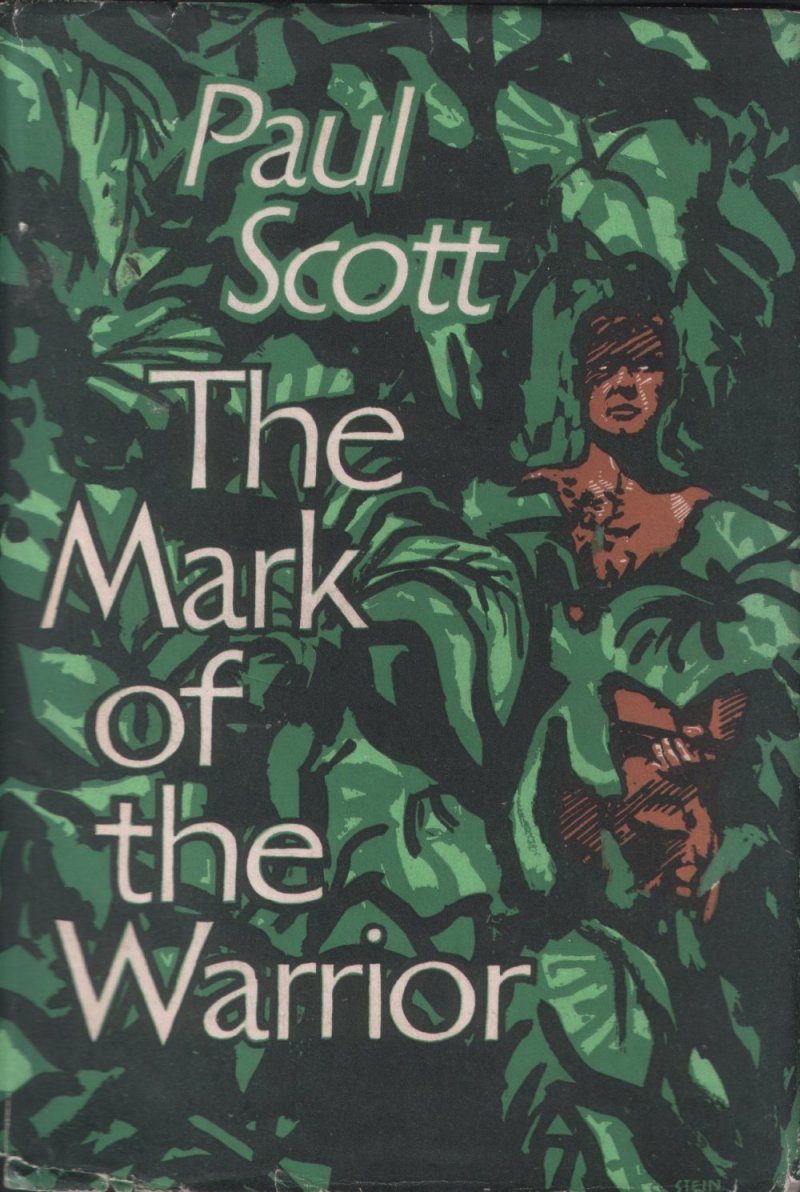
The Bayani are described throughout A Far Sunset as possessing a “mediaeval” society, but it seems much more ancient than that. From the description of Baya Nor, the Bayani city, Angkor Wat was plainly an inspiration. As was early Polynesia. The Bayani are ruled by a god-king, always called Enka Ne, who rules with absolute power for one year. He is then sacrificed, and a new Enka Ne is chosen.

The current Enka Ne is intrigued by Marlowe, and visits him in disguise as Shah Shan. He asks to learn English, and Marlowe is astonished by Shah Shan’s fierce intelligence and the speed with which he learns what Marlowe has to teach. Emboldened by this, Marlowe tries to introduce the wheel to the Bayani. The priestly order are immediately against it, but only accept it reluctantly after Enka Ne kills over a hundred of them. Change, then, is not going to be easy. And the current Enka Ne’s reign is not long.

Sure enough, after a new Enka Ne becomes god-king, the school Marlowe has set up is destroyed. Determined not to give in, Marlowe decides to travel a distant mountain which may hold the secret to the Bayani’s origin. This he does, and, yes, he does find the secret of the Bayani. But it’s not enough to effect change.

But on Marlowe’s return to Baya Nor, he learns that Enka Ne has died. And the Bayani oracle has chosen Marlowe to be the new god-king…

Cooper evokes his invented world with skill, and Marlowe is a well-drawn character. A Far Sunset has not aged gracefully, but neither is it as embarrassing as many other books of its time. Some of the science and technology feels a bit 1960s, and the gender politics are definitely from that decade; but the Bayani and Baya Nor are mostly timeless. The writing throughout is solid, and occasionally good without being flashy. While the secret of the Bayani is not obvious – so the reveal does come as a surprise – the existence of a secret is perhaps introduced too late in the story to have much dramatic impact.

Having said all that, there’s not much in A Far Sunset that is actually science fiction. It could be the story of a European explorer cast adrift on a Pacific island whose inhabitants who have lived the same way for centuries. Even the secret behind the origin of the Bayani, and their god Oruri, doesn’t really need to be sf. And that makes A Far Sunset ultimately a disappointing read. It’s by no means a bad book. It’s well-written, with a well-drawn world and protagonist, but it could just have easily been a “European marooned in the South Seas” story. I suspect I shall have to find another novel by Cooper to take its place on my British SF Masterworks list.

ETA: comments have been closed, and the exchange between members of Cooper’s family and literary trust removed. This is not the venue for such a discussion, and I’ve no desire to be held responsible for what might or might not be said by either party. Please air your differences elsewhere.


8 Comments

Women in sf reading challenge #1: The Steerswoman, Rosemary Kirstein

I forget where I first came across mention of The Steerswoman by Rosemary Kirstein. It was in the last year or so, although the book was originally published in 1989. I do know that it’s not well known in the UK. But whenever, and whatever, I read about it, I decided it might appeal, and so determined to keep my eyes open for a copy. Which I found several months later in a local charity shop.

It is not a book , if I had known nothing of it, that I think I would have looked at twice. Had I not known of it when I found it in that charity shop, I would not have bought it. I’d heard it was quite good – but how often do you hear that about books, which promptly disappoint? I’d heard it read as fantasy but was really science fiction – but there’s so much room for manoeuvre in that statement, it’s hard to take it as any kind of useful description. Something brought The Steerswoman to my notice, something persuaded me it was worth reading…

And I’m glad I did. The Steerswoman is a gem. It’s by no means great literature, but it is most definitely appealing.

Rowan is the steerswoman of the title. Quite what these are, or how they came about, is never fully explained. They travel the land, observing, gathering facts, drawing and redrawing maps. Any one can ask them questions, and they must answer to the best of their ability. Should, however, they ask a question and are refused, then they can ban that person from ever being answered by a steerswoman again. There are, incidentally, steersmen, but they are greatly outnumbered. (In fact, The Steerswoman states there are three during the period the story takes place, and that it’s the largest number they’ve had in the organisation’s history.)

While investigating the origin of a strange blue jewel she has found, Rowan comes to the notice of the wizards. She is attacked by one of their soldiers but, with the help of new-found companion, Bel, a barbarian warrior woman from the Outskirts, she fights off the attacker. This only makes her more determined to solve the puzzle presented by the jewel. She returns to the steerswomen’s Archive to discuss her problem with her colleagues.

Bel has told her of a large bed of such jewels in the Outskirts. Rowan and Bel head for that bed, in disguise since the wizards are still after Rowan. En route, they are joined by William, a fourteen-year-old boy who has run away from home with the intention of being taken on as an apprentice by a wizard. He has magic of his own – charms which can do everything from crack stone to make things disappear noisily. En route, they are attacked by more soldiers, but win the fight. They trail the surviving soldier to the wizards’ keep and infiltrate it. But Rowan is captured, and subsequently learns some of the secrets behind the wizards’ powers…

The world The Steerswoman presents is a standard Dark Ages fantasy. People fight with swords, use candles to light their homes, and ride on horses when travelling great distances. There’s nothing especially original or distinctive about it. The wizards are not the rulers of the world, but they are an elite who appear to control everything. They are also split into two factions, Red and Blue, who periodically fight each other.

The Steerswoman is cleverly revealed as science fiction as the story progresses (unlike the cover art to the US paperback). There is nothing overt about this. William’s “charms”, for example, from their description are clearly chemical explosives. The magic lighting in the towns is plainly powered by electricity. The wizards, then, are a technological elite, presenting their science and technology as magic (rather than as, say, divine powers, as in Roger Zelazny’s Lord Of Light).

This slow evolution to science fiction is more subtle and immediate than in Jim Grimsley’s Kirith Kirin, which opens up its story’s universe in a series of appendices and so becomes almost a space opera; or even the hints dropped regarding the Age of Legends in Robert Jordan’s bloated Wheel of Time series.

The Steerswoman is not a novel whose prose shines; but neither does it put a foot wrong. It may resembled some sort of McCaffery sf lite/romance, but it is not in the slightest bit mushy – it features several graphically-described swordfights and a torture scene, for one thing. The protagonists are engaging and the mystery is enticing. I thoroughly enjoyed it.

Kirstein went on to write three sequels to The Steerswoman: The Outskirter’s Secret, The Lost Steersman and The Language of Power. All four are available in an omnibus volume, The Steerswoman’s Road. I shall have get me that omnibus volume. (Edit: apparently the omnibus only contains the first two books. Ah well. I shall try to find all three books, then…)

A good start to 2011’s reading challenge.