You know when someone on-line puts together a list – especially for films – and not only do you disagree with the choices they’ve made, but whether or not their choices actually qualify for the list in the first place? Well, someone did that recently with a “top ten space opera movies” list, and half the films on it weren’t even space opera. So here is a proper list of ten space opera films.
Of course, first of all you must define what you mean by “space opera”. According to Wikipedia, it is science fiction “that emphasizes romantic, often melodramatic adventure, set mainly or entirely in outer space, generally involving conflict between opponents possessing advanced technologies and abilities”. For the purposes of my list, I will be even more specific. A space opera must feature interstellar starships, at least one polity that rules tens or hundreds or thousands of star systems (preferably an empire), does not feature projectile weapons, and has some alien races. The exemplar would, of course, be the Star Wars series.
There are a great number of sf films which fit the above definition. Unfortunately, many of them are dreadful. Such as The Humanoid (Aldo Lado, 1979), an Italian rip-off of Star Wars which features Richard Kiel in the title role. Or Starcrash (Luigi Cozzi, 1978), also Italian, which contains the immortal line, “Imperial battleship, stop the flow of time!” There are other films whose focus only implies the existence of space opera characteristics somewhere off-stage, like Stargate (Roland Emmerich, 1994), Barbarella (Roger Vadim, 1968) or even Forbidden Planet (Fred M Wilcox, 1956).
I have not, it must be admitted, seen every film ever made which might qualify as space opera. I have, however, seen a large number of them – both good and appalling. The following ten, I think, are films which clearly meet all of the defined criteria, although perhaps not always in an obvious way. Not all of them, however, were marketed as space opera movies.
Battle Beyond the Stars (Jimmy T Murikami, 1980), makes no effort to hide its inspirations – it’s ripping off Star Wars and The Magnificent SevenSeven Samurai. Nonetheless, there’s much to be enjoyed in it, although none of it can really be taken seriously: the bra-shaped spaceship flown by Richard Thomas, Sybil Danning’s constant double entendres, George Peppard being quite plainly pissed throughout, and Robert Vaughn simply reprising his role from The Magnificent Seven. The ending, it has to be said, does look pretty cheap, but there are plenty of fun moments during the hour and a half leading up to that point.
The Chronicles Of Riddick (David N Twohy, 2004) was ostensibly the sequel to Pitch Black, though the only thing they actually have in common is the title character. It’s more Warhammer 40k than your actual space opera, but still close enough to pass. There’s an over-the-top gothic grandeur to the film’s universe – cathedrals in spaaaace! – but the story is little more than a squirming bucket of space opera clichés. Nonetheless, it manages to entertain throughout its length – even if it’s often inadvertently. You have to wonder, however, how much Judi Dench was paid for her walk-on part…
The Empire Strikes Back (Irvin Kershner, 1980) is generally reckoned to be the best of the six Star Wars films. That’s probably because George Lucas left the direction and script in the hands of people who were actually good at them. I’m not a fan of the Star Wars franchise – the original films or the Expanded Universe media juggernaut – although I have fond memories of the first time I saw the original movie. But still, Star Wars and its sequels are the very definition of cinematic space opera. And we know this because they’ve been ripped off so many times.
The Fifth Element (Luc Besson, 1997) was apparently a childhood project of Besson’s on which he worked for decades before finally actually making. And it shows: much of it probably only makes sense inside Besson’s head. It is gloriously stupid – indeed it often revels in its stupidity – and camp, in as much as camp is not something the French do very well (for proper sf camp, see Flash Gordon (Mike Hodges, 1980)). The one thing The Fifth Element does well – and it’s not a quality normally associated with space operas – is leave you with a big grin on your face when it finishes.
Galaxy of Terror (Bruce Clark, 1981). Well, there had to be at least one obscure film in this list. Like Battle Beyond the Stars, this was a New Worlds film and so designed to cash in on the popularity of a film made by a major Hollywood studio – and in this movie’s case, it was Alien. However, Ridley Scott’s Alien is not space opera per se. And for much of its length, Galaxy of Terror doesn’t appear to be. But its ending drags it firmly into space opera territory, given that it’s all to do with some sort of interstellar polity and the quest for a new leader. The special effects are somewhat dated, and the monsters look very rubbery, but the film still has plenty of, well, charm.
Space Truckers (Stuart Gordon, 1996) is a film it’s difficult to say anything nice about as it’s pretty crap. It’s certainly space opera – it has lots of aliens in it, and Dennis Hopper and Stephen Dorff play the crew of an independent tramp space freighter. Nevertheless, treasure the film for Charles Dance’s performance as the villain – he chews the scenery with a insouciant gusto only British thesps are capable of, and also loses body-parts at an embarrassing rate.
Spacehunter: Adventures in Forbidden Zone (Lamont Johnson, 1983) is perhaps best described as Mad Max 2 meets Barbarella, which doesn’t initially suggest much in the way of space opera qualifying characteristics. And given that the story takes place on a single planet, it doesn’t much feel like a space opera film either. But it’s close enough. Ernie Hudson embarrasses as sidekick to Peter Strauss’ title role, but it is Michael Ironside as Overdog, one of the few US actors capable of taking great bites from scenery, who stands out.
Star Trek 5: The Final Frontier (William Shatner, 1989) may well be the most contentious choice on this list. But of all the Trek films it’s the most obviously space operatic – from its opening on a planet where alien scum and villainy congregate to its final confrontation with, er, god. There are those who foolishly think The Wrath of Khan is the best Trek film, but they’re quite clearly wrong. It’s just a submarines in space film, and quite frankly those sorts of movies are much, much better when they feature actual submarines. The Final Frontier is never more than a snigger away from collapsing into farce, and the fact that it never quite does only proves it is proper space opera.
Starship Troopers 1 – 3 (Paul Verhoeven, 1997; Phil Tippett, 2004; Edward Neumeier, 2008). The first is a superb spoof of Heinlein’s execrable novel. The second, subtitled ‘Hero of the Federation’, is not very good and has a plot a little too close to The Thing (John Carpenter, 1982) for comfort. The third – ‘Marauder’ – completely transcends its badness with its gleefully camp fascism, Casper Van Dien reprising his role from the first film with a cheesy knowing grin throughout, and Jolene Blalock playing the best Sigourney Weaver since Alien: Resurrection.
Space opera as a cinematic genre is never going to produce truly excellent films – or even good ones – as should be obvious from the above list. In fact, it is more likely to produce embarrassingly bad ones – such as the incoherent Cosmos: War of the Planets, dull Soldier or confusing Supernova. There are some movies which might have sneaked in, had I been a little more flexible in my definition, such as Dune (though it’s really stretching a point to call it space opera), Serenity (which takes place in a single planetary system), In the Dust of the Stars (AKA Im Staub der Sterne: excellent but bonkers East German sf, but not quite space opera enough), or Humanoid Woman (AKA Cherez ternii k zvyozdam: absolutely mad Russian sf film – or so I assume from the badly-butchered English-language edit I’ve seen, though I am told the original Russian version is actually very good).
No doubt I have missed off some obvious films, but at least I think the ten I’ve chosen actually are space opera. Sort of.
Time for another journey through the cultural landscape as navigated by Your Somewhat Whimsical Cartographer. Bit of a marathon journey, I’m afraid – other projects have meant this has been delayed a week or two, and so grown a little larger than usual.
Books The Arctic Marauder, Jacques Tardi (1974), I bought because Warren Ellis had raved about these on his blog. Tardi is a famous bande desinée writer/artist in France but isn’t well-known in English. Fantagraphics are translating all of his best-known works , and publishing them as handsome hardback volumes. I admit, it was the cover art which caused me to pick this one – and it was a good choice. The story is like Jules Verne on, well, on drugs. A young man survives a mysterious attack which sinks the ship he is travelling on in the Arctic. Later, he returns to solve the mystery, and discovers a pair of mad scientists in a floating fort disguised as an iceberg. Tardi’s style is very distinctive, but the story is very quick. I’m glad I bought it, though. I think I’ll buy some of the other volumes…
A Confederacy of Dunces, John Kennedy Toole (1980), is apparently one of the great American comic novels of the twentieth century. Or so I was told. By many people. Perhaps they over-sold it. Because I didn’t like it all that much. I’m a firm believer in the Confucian maxim that “the funniest sight on the whole world is watching an old friend fall off a high roof”. In other words, slapstick makes me laugh. A great fat over-educated arrogant and self-deluded idiot like Ignatius J Reilly doesn’t. There is some wit in A Confederacy of Dunces, notably in the dialogue of the black characters, but too often the story is asking the reader to laugh at Reilly and not with him. Disappointing.
The Female Man, Joanna Russ (1975), I read to honour Russ after her recent death, and I was surprised at how well the book has aged. It’s set chiefly in 1969, although it was published in 1975, and reads very much like a book set in the late 1960s – so it didn’t feel at all dated. But even the overtly sfnal sections have aged quite well. I’d remembered the book as an angry one, but I’d forgotten that as the story progresses, so does the book’s anger. Towards the end, it reaches quite astonishing levels. One chapter seemed more familiar to me than the rest of the book – which I’ve read only the once before during the 1980s. It didn’t take me long to figure out why – I’d read it as a short story titled ‘An Old Fashioned Girl’ in the anthology Final Stage: The Ultimate Science Fiction Anthology when I was about twelve years old. That anthology was one of the first sf books I ever read, and its stories have stuck with me over the decades (yes, even the Harlan Ellison one). I still have that original copy on my book-shelves. But The Female Man: I have the SF Masterworks edition, and it’s a worthy addition to the series – it’s one of those remarkably few sf novels which can change the way you view the world. This is a book I think I will be reading again. Regularly.
The Secret History Omnibus Vol 2, Jean-Pierre Pécau (2005), is, as the, er, title suggests, the second collected volume in English of a bande desinée. In prehistoric times, four “archons” were each gifted with immortality and a rune of power. In the centuries since, they have fought each other, independently and in temporary alliances. During the early years of the Holy Roman Empire, an experiment went awry, resulting in the birth of William of Lecce, a monstrous boy who is committed to bending the world to his evil ends. Three of the four archons have battled William ever since. Volume 2 takes the story from 1918 to 1945, opening with St John Philby in the Empty Quarter hunting for the fabled city from which the Queen of Sheba ruled, and continuing on through both world wars to Hitler’s defeat. The Secret History cleverly stitches real historical events into its plot, and it’s especially obvious in this second volume. The Tarot as the story’s inspiration is also clearer. The story is not yet complete, and I believe it continues in another series under a different title. I’ll be buying them, then.
Blood Meridian, Cormac McCarthy (1985), got an honourable mention in my Best of the Half-Year post recently. It should probably have made the top five (especially since I only actually picked four), but, well, it’s such a bleak and monstrous story, and its cast behave like animals, that I can’t really love or admire it that much. I guess I’m just a big softy at heart. True, Blood Meridian is beautifully written, and McCarthy’s descriptive prose is often as breathtaking as the scenery he describes. A troop of Indian hunters in Mexico during the 1850s ride around the area, attacking both innocent and guilty Indians and Mexicans and collecting their scalps for a bounty. The characters have no redeeming qualities whatsoever and you can only wonder why they were permitted their depredations for so long. Turning cowboys into monsters may have been a novel approach to the western, but I can’t see that it adds much to the genre.
China Mountain Zhang, Maureen F McHugh (1992), was May’s book for this year’s reading challenge, and I wrote about it here. I also cross-posted the review on the SF Mistressworks blog here.
The Styx Complex, Russell Rhodes (1977). Dear me, I’d forgotten how badly written most airport-bestseller books are. This one was published in the mid-1970s but I suspect there’s been very little increase in quality in the decades since. It’s probably got worse. Ava Bardoff is the mysterious, and beautiful, head of a global cosmetics empire which seems to have discovered the secret of eternal youth, and which appears to control a great many important people around the world. Philanthropist billionaire Hugo Montcrief has been trying to break Bardoff’s conspiracy for years but never succeeded. Along comes Bardoff’s god-daughter, Sarah, a trust-fund babe, who has decided to settle down. The billionaire recruits playboy athlete Michael, whose estranged father is a senior executive in Bardoff’s cosmetics company, to use Sarah to infiltrate and investigate Bardoff’s chateau headquarters near Cannes. The prose is eye-stabbingly bad, the plot is ludicrous, the characters are wildly implausible, and I can only wonder why I bothered to read it. Ah well.
The Horse and His Boy, CS Lewis (1954), is the fifth book by publication of the Chronicles of Narnia. And Lewis is at his most hectoring so far in this one. It doesn’t help that it’s not set in Narnia but in Calormen, which is full of nasty foreigners of a 1001 Nights persuasion. They even smell a bit too. Not to mention practicing slavery. One such young slave is rescued by a horse which reveals it can talk – because it’s a Narnian horse. So the two try to escape across the desert to Narnia, with the help of a young princess fleeing an arranged marriage and her talking horse, and en route they foil a fiendish plot by the Calormen to attack and conquer Narnia’s nearest neighbour. Even more so than the other Narnia books, The Horse and His Boy suffers from outdated sensibilities that really shouldn’t be taught to children in the twenty-first century. There isn’t enough charm in this book to offset that.
The Legend of False Dreaming, Toiya Kristen Finley (2011). Finley had one of the more inventive stories in the anthology Text: Ur (an anthology I recommend reading), and I liked it enough to track down some of her other fiction online. Her stories are strange and elliptical, and not always told in a straightforward fashion. Unfortunately, The Legend of False Dreaming is much more conventional narrative-wise. A young woman, fleeing her family, arrives in a town in which the inhabitants refuse to acknowledge the presence of the town’s transient population, who are themselves trapped by a strange magical fog which won’t permit them to leave. Not a bad story, but not as good as other ones by Finley I’ve read.
The Fifth Child, Doris Lessing (1988), is about a young middle-class liberal couple who buy a big house they can’t really afford because they want to fill it with children and live like bohemians. They get a bit of help from well-off parents and out plop a succession of kids. The relatives all come and stay for the holidays and a jolly good time is had by all. But then another little sperm slips through and the titular sprog appears. Only this one is different. Physically, he resembles a Neanderthal. Temperamentally, he resembles… well, some sort of cunning animal. As a result, the happy home is no longer a happy home. Though a light read, this book packs quite a punch. Lessing’s deceptively simple prose style lets the story slip down, though it’s an unpleasant one. Perversely, I couldn’t help feeling sorry for the fifth child, and I wondered if that was Lessing’s intent – clues in the story sort of suggested it was the mother’s moral strength which was the point of the story.
Heat of Fusion & Other Stories, John M Ford (2004), is a collection of short stories and poems from a much under-rated sf author. These are cleverly done, though some are more involving than others. ‘Erase/Record/Play: A Drama for Print’ is especially good – a powerful story that refuses to tackle its subject head-on but works all the better for not doing so. Can’t say I was overly fond of the epic poems, which often felt more like clever word-play than actual poems. All the same, it’s worth tracking down a copy of this and reading it, if you can.
The Unconsoled, Kazuo Ishiguro (1995). I like Ishiguro’s novels, though I find them a bit variable and often insipid. And now that I’ve read The Unconsoled, I’ve read all of them – but I wish I hadn’t bothered. Ryder is a world-famous concert pianist, come to an unnamed East European city to perform. But there’s something strange about the city, about the people who live there, and about what he is supposed to do. Everything is dream-like: he is driven for miles out into the country to visit someone, then steps through a door in their house and is back in his hotel. The city constantly changes, Ryder finds himself rushing around from one errand to another, suddenly recognising the people he meets and remembering things about them… And the people, when they speak to him: they waffle, they repeat themselves, they go on and on and on… I was expecting all this to be explained when I reached the end of the novel – it’s clearly fabulist, but in service to what? Not Ryder’s role, because that’s never explained – it’s repeatedly hinted that it involves more than simply playing the piano. I expected answers. There are none. The Unconsoled just finishes. Bah. Rubbish book.
Metropolis, Thea von Harbou (1927), I reviewed on the SF Mistressworks blog here.
The Noise Within (2010) and The Noise Revealed (2011), Ian Whates, I read for review for Vector, the critical journal of the British Science Fiction Association. I know a lot of people like these books, but I found them a little too old-fashioned and slapdash for my taste.
God’s War, Kameron Hurley (2011), was the novel Niall Harrison persuaded a whole bunch of us on Twitter to buy. It was all ready on my radar – as any sf novel which makes use of Arab culture would be – and I’d read the first chapter online, but that hadn’t been enough to persuade me to actually order a copy. But when Niall raved about it – describing it as a cross between Gwyneth Jones and Richard Morgan – I thought it worth a go, and… I’m currently working on a piece about it which I’ll post up here when it’s done.
The Third Eagle, RA MacAvoy (1989), I reviewed on the SF Mistressworks blog here.
Robopocalypse, Daniel H Wilson (2011), I read for review for Interzone. It appears to be this year’s mega-hyped genre title from the US. Wilson has a PhD in Robotics, and is television’s go-to guy on the subject. He’s previously written other books about robots, some of which, like Robopocalypse, have been optioned for movies. So there’s plenty of money behind him. But, like all such books, there’s not much in the way of substance. The story is presented as a series of vignettes from a future war with robots. Some are better than others. The structure is actually quite annoying, and I’m not very convinced by some of the robotics used in the book either.
Films Summertime, David Lean (1955). I’m not a major fan of Lean’s work, although Lawrence of Arabia is a favourite film. Summertime surprised me in two ways: I actually really liked it, and star Katherine Hepburn didn’t annoy me. Hepburn plays a spinster who is visiting Venice. It’s her first time abroad, and this holiday has been a lifetime dream. She meets a smooth Italian lothario who runs an “antique” shop, and the two enter into a relationship. The photography of Venice is excellent, which is perhaps the film’s chief attraction. The story is not especially ground-breaking, although Hepburn’s strength of will – she walks away from her lover at the end of the film – is surprising for a film of the period.
Millennium season 3 (1998), was the last of the series, although a final cross-over episode with The X-Files was used to tie up the last few loose ends. For a series that promised so much in its first series, Millennium did go out with a bit of a wet fart. Most of the episodes in this season were mythology-related, and over the previous two seasons that mythology had gone from vague protestations of biblical millennial doom! doom! doom! to some weird underground apocalyptic cult which began back in the Crusades and was now planning on bringing about the end of the world itself. Naturally, this pisses off FBI profiler Frank Black – who is now back in the fold of the Bureau – and he maintains a consistent petulance on the topic throughout this season’s twenty-two episodes. And speaking of which, a couple of the episodes in season three were good – the one set at Los Alamos in the 1940s was especially good. The one featuring KISS, however, was embarrassingly bad.
High Noon, Fred Zinnemann (1952), is a classic Western, though I will confess I watched it chiefly because it stars Grace Kelly. But then I’m not a big fan of Westerns, and have found only a handful over the years that I actually like – and only one, Howard Hawks’ Rio Bravo, that comes close to being a favourite film. But, after all that, Kelly was a bit insipid as the marshal’s wife, though Cooper as the marshal projected an impressively steely competence. Parts of High Noon felt like a checklist of genre clichés, but it picked up towards the end. Not a bad film, then; but I doubt I’ll be returning to it.
You Can’t Take It with You, Frank Capra (1938). Every Capra film I watch I find appealing is a sort of happy, fluffy way – and this one is no exception. An anarchic bohemian family become embroiled in capitalist shenanigans when their refusal to sell their house prevents a nasty industrialist from buying up an entire city block for a project. This is not helped by the industrialist’s son being affianced to the daughter of the bohemians. It’s all very jolly and overtly liberal in an unchallenging way. The characters are appealingly eccentric, the dialogue has wit, and the story romps along with all the charm and geniality of a favourite uncle – the nice one, not the creepy one. I still intend to work my way through Capra’s oeuvre – I don’t think he’s as consistently entertaining, or as technically innovative, as Hitchcock, but I do enjoy his films.
Dark and Stormy Night, Larry Blamire (2009), I reviewed for VideoVista and you can see my review here.
The Bed Sitting Room, Richard Lester (1969), felt mostly like a play that had escaped from some 1960’s Brit comedian’s bottom drawer. It seemed to chiefly comprise a bunch of British comedy stalwarts wandering around a disused quarry in search of a plot. Some bits were good. I liked Ralph Richardson as Lord Fortnum, who was convinced he was going to turn into the titular chamber. And, in fact. did. The sections involving Harry Secombe in his fallout shelter I also liked. The Bed Sitting Room felt a bit like a very English “nice” version of a film by Alejandro Jodorowsky – although unlike one of Jodorowsky’s films, it wouldn’t need several beers to make sense of. Just a cup of tea; or a small sherry.
Journey to Promethea, Dan Garcia (2009), was another VideoVista review – see here – and also quite possibly the worst film ever made.
Container, Lukas Moodysson (2006). I have the Lukas Moodysson Presents box set (which contains Show Me Love, Together, Lilya 4-Ever and A Hole in My Heart), and I like the films in it. So I expected to like Container. Except, well, I’m not that big a fan of experimental cinema. Some of it I like and admire. But not this one. It’s seventy-two black-and-white minutes set in a shipping container, showing things sort of happening, with a stream-of-conscious narrative track. No amount of wine could improve it. And I tried.
Night And The City, Jules Dassin (1950), was one of the oddest noir films I’ve seen because, while it met the forms of the genre pretty much spot on, it was a) set in London, and b) had US stars. Richard Widmark runs around a night-time London, sweating profusely, playing a Yank wide-boy on the make who gets himself on the wrong side of a gangster who has the local wrestling scene tied up. I like noir, but I couldn’t get excited about this one – maybe because, to me, it has to be set in the US because part of it is the perversion of the American Dream. After World War 2, the US was prosperous and optimistic, and it’s the conflict with that which makes gives noir its sting. The UK, on the other hand, was grim, struggling to recover from the war, and still in rationing. It doesn’t make for much of a contrast with the typical noir worldview.
Star Trek (The Original Series) season 1 (1966), I borrowed from a friend because, while I remember watching these back in the 1970s when I was a kid, and I’d never been that big a fan of the original series, I thought it might be interesting to see what I’d think to them now. And the answer is… not much. Even Harlan Ellison’s much-celebrated episode ‘The City on the Edge of the Forever’ failed to impress – chiefly because it has a logical flaw in the plot: McCoy travels back in time and creates a paradox, except the original situation only occurs because they went back to fix the paradox… Despite the occasional mildly entertaining episode, there’s much to moan about. For all its vaunted sexual equality, all the women are pretty, have roles defined by their relationships to the male cast, and are always filmed in soft focus. The captain’s log voice-over is inconsistent throughout, being either a real-time commentary or an after-the-fact summation, and often both in the same episode. But then that’s on a par with the nonsense dating system used. This may be ground-breaking sf telly, but that’s not all that much to brag about really, is it?
They Met In The Dark, Carl Lamac (1943), is a quota quickie I reviewed for VideoVista, and a review of it should be up there soon.
The A-Team, Joe Carnahan (2010). Discussing books with Justina Robson at alt.fiction, I remarked that when I read a novel I like to come away with the impression the author is cleverer than me. Which means I certainly don’t enjoy watching films which make me feel like I’ve lost IQ points. Even if I do have several beers inside me at the time. And that’s what The A-Team is like. It’s like having a conversation with someone who thinks some really dumb stuff, which wouldn’t stand up to a nanosecond’s scrutiny, is totally cool. In other words, The A-Team is monumentally stupid. Even worse, it thinks being monumentally stupid is cool. The television series was risible, but this movie takes that to an entirely new level. The stunt with the helicopter was jaw-droppingly implausible, and you had to wonder why the film-makers didn’t at least be honest about it all and put the cast in skin-tight spandex. And then there was the set-piece with the tank in the transport aeroplane… After that, I was using more neurons drinking my beer than I was watching the film.
The Apple, Samira Makhmalbaf (1998), is perhaps the least successful of the Iranian films I’ve seen this year. A near-blind old man and his blind wife have kept their two young daughters locked up indoors for years – though not like that bloke in Austria. The neighbours complain to the authorities, who send round a social worker. The social worker persuades the old man to let his daughters out of the house, which he does. With the help of a neighbouring boy, they discover something of the world around them. It’s filmed like a documentary, is quite poignant in places, but I kept on waiting for something approaching a plot to kick off. But it never did.
Don’t Ever Leave Me, Arthur Crabtree (1949), I reviewed for VideoVista, and a review of it should be up there soon.
Iron Man 2, Jon Favreau (2010), I can actually remember very little about even though it’s not that long since I watched it. There’s this bloke in a metal suit. No, two blokes. And lots of robots. And Mickey Rourke, who looks like he’s been chewed up and spat out by a Great White. Although apparently he normally looks like that. And Robert Downey Jr wisecracks his way through a plot that’s even thinner than the first Iron Man film without actually making much of an impression on the viewer. I like superhero films, and I think they’re ideal material for blockbuster movies – but I’m beginning to wonder if the genre has reached the point of diminishing returns. No one really gives a shit about any multi-film story-arc, so why bother with sequels? A fresh new hero will pull in the punters, so all the director has to do is throw two hours’ worth of flash-bang-wallop at them, and everyone goes home happy. Anything else is like putting Smarties on a cheesecake.
The Warrior’s Way, Sngmoo Lee (2010), I reviewed for VideoVista, and a review of it should be up there soon. I was quite impressed with this – it’s the best attempt at using comicbook story-telling I’ve seen in a film.
Red, Robert Schwentke (2010), I rented because it’s based on a graphic novel written by Warren Ellis. The title is actually an acronym – RED: Retired, Extremely Dangerous. Which refers to ex-CIA hitman Bruce Willis, who has been chatting up on the telephone a woman who works at the federal office which issues his pension checks. Then one day, assassins come to call on him. Convinced the woman will be their next target, he sort of abducts her… and then introduces her to his old buddies – Morgan Freeman, John Malkovich and Helen Mirren, all of whom are also retired. The first half of the film is fun, with some entertaining stunts and mayhem. But then it all turns drearily predictable in the second half, and whatever charm the film had built up soon dissipates. Worth seeing, though.
The Reckless Moment, Max Ophüls (1949), is almost proper noir. It’s set in California, it’s black and white, and it has the American middle class being rudely accosted by society’s criminal underbelly. Unfortunately, said underbelly is in the person of James Mason who, despite an Irish brogue, is far too urbane to convince as a gangster loan shark / blackmailer. Joan Bennett plays the mum of a teenage daughter at art school who has taken up with a sleazy art dealer twice her age. When the art dealer tries to extort money from the daughter, she hits him and runs away, not realising he has subsequently stumbled and fallen onto an anchor, and died. Mum discovers this next morning (it happened at the family’s boathouse), panics, and hides the body in a nearby swamp. Mason then turns up with love letters from the daughter to the “murdered” art dealer, demanding money or he’ll send them to the police. Except Mason isn’t really cut out to be a blackmailer, and begins to fall for Bennett. Nicely played throughout, and nicely shot, but it didn’t quite have the edge real noir demands.
Micmacs, Jean-Pierre Jeunet (2009). Delicatessen is one of my favourite films, and I like The City of Lost Children a great deal. but since splitting up, Jeunet and Caro have never quite individually managed to produce films as good as those two. Caro’s single solo effort, Dante 01, had its moments but seemed to fumble its way to a derivative ending. Jeunet’s career has been much more successful, though the overwhelming treacly whimsicality of his films has meant I’ve not greatly enjoyed them. Micmacs is perhaps not as cloyingly sweet as Amélie, or as twee as A Very Long Engagement, but is for much of its length surprisingly dull. A video-store clerk, Bazil, is an accidental victim of a drive-by shooting, and the bullet lodges in his brain. The surgeon decides to leave it in there, though there’s the possibility it may result in a sudden fatal aneurism. Bazil leaves hospital to discover he has been thrown out of his apartment and has lost his job. After living on the street for a couple of months, Bazil is adopted by a clan of lovable eccentrics who live underneath a rubbish heap. Meanwhile, Bazil has decided to have his revenge on two arms dealers – one who made the bullet which currently resides in his brain, the other who made the mine which killed his army bomb-disposal father thirty years before. So Bazil uses the peculiar talents of his friends to set up a con to bring both arms manufacturers down. There are a couple of clever set-pieces, but they’re not enough to carry the story over its 105 minutes. Disappointing.
We’re halfway through the year, and it’s time to pick out the top five books, films and albums consumed over the previous six months. Not eaten, obviously – but read, watched and listened to, for the first time.
Books
Last year, three out of the five books I picked at the halfway-mark made it through to the end of year top five. It’ll be interesting to see if that happens again this year.
Evening’s Empire, David Herter (2002). I read Herter’s debut, Ceres Storm, shortly after it was published and thought it very good. So as soon as his second book, Evening’s Empire, appeared on Amazon, I bought it. But, unlike his debut, it was fantasy, not sf, and so it sat on my book-shelves for close on a decade until I finally got around to reading it this year. I’ve no idea why it took me so long, but I’m deeply sorry I didn’t read it earlier. Because I loved it. Evening’s Empire starts out as a Crowley-esque fantasy set in a US north-west coastal town, but around halfway through it takes an odd left-hand turn and becomes something quite different. As a side-effect of reading Evening’s Empire, I dug out my copy of Verne’s Twenty Thousand Leagues Under the Sea and read it – the main character in Herter’s novel is writing an opera based on Verne’s book – but my edition is from 1966 and I’m told it’s an inferior translation, which probably explains why I didn’t enjoy it very much.
China Mountain Zhang, Maureen F McHugh (1992), was May’s book for my reading challenge and, while I enjoyed January’s book, Rosemary Kirstein’s The Steerswoman, more, I think this is the better of the two books. I wrote about it here.
CCCP: Cosmic Communist Constructions Photographed, Frédéric Chaubin (2011), may boast a somewhat forced title, but don’t let that put you off. Over a period of some ten or so years, Chaubin photographed modernist buildings throughout the USSR and East Europe, buildings he describes as part of a fourth age of Soviet architecture. The results are strange and quite beautiful.
Voices from the Moon, Andrew Chaikin (2009), may have been yet another book celebrating the fortieth anniversary of the Apollo 11 Moon landings, but it’s better than most of those published that year. I wrote about it on my Space Books blog here.
And that’s it. But there are a lot of honourable mentions – books which didn’t quite make the cut into the top five four: Blood Meridian, Cormac McCarthy (1985), though it contained some beautiful prose, was a bit too bleak, and its cast too monstrous, to make the list; Time of Hope, CP Snow (1949), the first book by internal chronology of Snow’s Strangers and Brothers series was an excellent well-observed read; The Best of Kim Stanley Robinson (2010), was a good showcase though I’d not have described every story as “best”, and Icehenge (1984), Kim Stanley Robinson, would have made the top five but for the fact it was a reread; Stretto, L Timmel Duchamp (2008), brought the Marq’ssan Cycle to an excellent end, and I really must finish that piece on the series I have planned; American Adulterer, Jed Mercurio (2009), maintains Mercurio’s status as a writer I watch, though the subject matter was not as appealing as his Ascent; God’s War, Kameron Hurley (2011), is a very strong debut, with a strong female protagonist and some excellent world-building, but its bleakness just stops it from making the list (I’ll be buying the sequel, though); and The Steerswoman, Rosemary Kirstein (1989), was a book I thoroughly enjoyed, and I plan to read the entire series.
Films
Pretty much all the films I watch are on DVD – either rentals, sent for review by Videovista, borrowed, or my own purchases. Most of them have been merely okay, and those that stood out did so by quite a margin. A bit of a cheat this time, as I’m going to include an entire season of a television series.
Norwegian Ninja, Thomas Cappelan Malling (2010), is, well, is hard to describe. It’s a spoof 1980s action film based on an alternate take on the real life of Norwegian spy and traitor Arne Trehold. I loved it. I reviewed it for VideoVista here.
Ajami, dir. Scandar Copti and Yaron Shani (2009), is an Iraeli thriller, and a bloody excellent one too. I reviewed it for VideoVista here.
Much Ado About Nothing, dir. Stuart Burge (1984), was one of the BBC adaptations of Shakespeare’s plays which I’ve been renting and watching. It’s been an interesting exercise, though so far the tragedies have proven superior to the comedies. Except for this one. I don’t know why it worked so well. Cherie Lunghi and Robert Lindsay were good in their roles as Beatrice and Benedick, but that’s hardly unexpected. It just seemed in this play Shakespeare’s wit really sparkled, his characters were appealing, and even Michael Elphick’s strangely sweaty Dogberry with his ponderous malapropisms couldn’t spoil things. The best of the Bard’s so far.
Fringe season 2 (2009). Fringe may just be a 21st century X-Files, but since I was a fan of the X-Files… Except that’s unfair on Fringe which, though it shares some similarities with the X-Files, is also very good television in its own right. I like the series mythology with its war with an alternate universe, and I like the weird science that Walter seems to have spent most of his life researching – and which he has now forgotten. Some episodes were better than others, but overall the quality was high. And the move in this season more toward the mythology made for some good and interesting drama.
Honourable mentions? Tales Of The Four Seasons, Éric Rohmer (1990 – 1998), of which I liked A Summer’s Tale a great deal; The Secret In Their Eyes, Juan José Campanella (2009), was an extremely well-plotted thriller from Argentina; Water Drops On Burning Rocks, François Ozon (2000), is Ozon’s film of a Rainer Werner Fassbinder script and is worth watching for the dancing scene alone; Summertime, David Lean (1955), is beautifully-shot and, for once, I didn’t find Katherine Hepburn annoying in a film.
Music
It has not been an especially good year for music so far. I’ve bought very few CDs, and seen only eleven bands perform live – although, admittedly, two of them were favourites: Anathema and Pallas. Mind you, there’s Bloodstock in a couple of months…
XXV, Pallas (2011), is the band’s sixth studio album, and the first with new vocalist Paul Mackie. I heard it live before I heard the CD, and a very good performance it was too. The band were celebrating twenty-five years together and it showed. XXV feels a little heavier than earlier albums, though it still contains much proggy goodness and even – dare I say it? – a little radio-friendliness in places.
The Human Connection, Chaos Divine (2011), is the second album by an Australian death metal / prog band, and it’s a little more prog than death than their debut. It’s also a much better album. Opening track ‘One Door’ is superb. Each of the songs lulls you into a false sense of security before hammering you with some excellent riffs. A fine piece of work.
Návaz, Silent Stream of Godless Elegy (2011). I’ve been a fan of SSOGE’s mix of doom metal and Moravian folk music since stumbling across some of their songs five or six years ago. Návaz is more folk-oriented than earlier albums, though there’s plenty of chugging guitars and doomy growls to satisfy. The vocal layering at the end of ‘Skryj Hlavu Do Dlaní’ (‘Hide Your Head In His Hands’, according to Google Translate) will make the hairs on the back of your neck stand up.
BBC Radio 1 Live in Concert, Lone Star (1994). Welsh 1970s heavy rockers Lone Star have been a favourite band since I was at school. They only released two albums before splitting (a third was recorded, but an inferior copy of it was only released on CD in 2000). Between those two albums, the band swapped vocalists, from Kenny Driscoll to John Sloman, and BBC Radio 1 Live in Concert, recorded in 1976 and 1977, showcases some of their songs with each of the two singers. Strangely, the best tracks live are not the best ones on the studio albums – the version of ‘Lonely Soldier’ on BBC Radio 1 Live in Concert, for example, is absolutely superb and a classic piece of 1970s rock. Given that this album is only a sample of three radio sessions, I’d happily pay for a CD of all three sets.
Honourable mentions: In Live Concert at The Royal Albert Hall, Opeth (2010), a comprehensive live set recorded at the titular venue with the band’s usual expertise, and accompanied by Åkerfeld’s usual wit; Edge Of The Earth, Sylosis (2011), a good solid death metal concept album with some excellent riffs; Semper Fidelis, Sanctorum (2011), the third album by a young British death metal band – ambitious and mature; Communication Lost, Wolverine (2011), not as immediately likeable as previous albums but definitely a grower.
… containing, among many excellent reviews, my reviews of brilliant Norwegian actioner pastiche Norwegian Ninja (review here), a true story based on the life of Norway’s very own quisling, Arne Treholt; terrible spoof country-house murder-mystery Dark and Stormy Night (review here), about which the less said the better; and low-budget fantasy film Journey to Promethea (review here), which is a possible candidate for the worst film ever made…
Here we go again – we know a song about that – it’s time for more scrapings from the petri-dish of popular and unpopular culture, as studied under the microscope by Your Scientifically-Minded Correspondent.
Books Satan Wants Me, Robert Irwin (1999). Irwin’s The Arabian Nightmare is one of the best fantasies of the 1980s, and his Night and Horses and the Desert (re-issued as The Penguin Anthology of Classical Arabic Literature) is a highly-entertaining and informative study of, well, classical Arabic literature. Satan Wants Me – god knows what people thought when they saw me reading this on the tram during my commute to work – is presented as the journal of a hippie sociology doctoral student in early 1970s London. He has recently joined an occult group spun off from Aleister Crowley’s Order of the Golden Dawn. He’s also taking a lot of drugs. And he has some very weird friends. There are some very funny laugh-out-loud bits in this novel – which probably got me even stranger looks on the tram – and it’s sharply-observed throughout. Then it goes completely batshit weird towards the end. While not the classic The Arabian Nightmare is, it certainly confirms my belief that Irwin is a writer very much worth reading.
Cinco de Mayo, Michael Martineck (2010), I reviewed for SFF Chronicles here. I’ve known Michael for a long time, though we’ve never actually met in person. We’re both members of an informal critting group, with a couple of other people – i.e., we email each other stories, novel extracts, etc., for comments. So I saw bits of Cinco de Mayo several years ago. But I’d never seen the finished product. I have now, and I enjoyed it very much. And thought it a happily diverse and intelligently put-together story. Definitely worth a read.
Twenty Thousand Leagues Under the Sea, Jules Verne (1870). This 1973 edition of Verne’s classic has my name and old school number written on the ffep, which means I’ve owned this book for just over thirty years. So I must have read it at some point. I know the story – everyone does – but is that from actually reading the book, or just from some form of cultural osmosis? This (re)read did demonstrate that there’s much about the story I’d forgotten / not known. It’s very dull, for one thing. There are endless pages listing ocean flora and fauna. Very little actually happens. Aronnax et al go hunting a mysterious sea monster which has been sinking ships. In an encounter with it, they are swept overboard and then rescued by the monster… which proves to be a submarine: Captain Nemo’s Nautilus. The Nautilus sails around the world, and they do things every now and again. Eventually, Aronnax and his two companions manage to escape, and witness the Nautilus being sucked into a giant maelstrom. That’s pretty much it. Some of the science is impressively detailed; in other places it is impressively wrong – the quoted ocean depths, for instance, are out by quite a margin, claiming the deepest part of the Pacific is something like 15,000 fathoms deep – that’s 90,000 feet! Challenger Deep is actually almost 36,000 feet deep – I know this because of this. Still, despite Twenty Thousand Leagues Under the Sea being a bit of a slog to read, I actually fancy trying a bit more Verne. Perhaps I’ve been unduly influenced by David Herter’s Evening’s Empire…
Phase Space, Stephen Baxter (2002), is a collection of short stories, many of which are off-cuts from Baxter’s Manifold trilogy. I read those three books back in 1999, 2000 and 2001 – when they were published, in other words. But not Phase Space. I have a lot of time for Baxter’s fiction, both short and long; but this collection was a bit of a disappointment. There’s some good stuff in it – ‘War Birds’, for example, which won the BSFA Award for Best Short Story in 1998 (and unfortunately resembles something I’ve been working on myself; damn); ‘Tracks’, based on an interview Baxter conducted with Apollo 16 astronaut Charlie Duke; ‘Moon-Calf’, about a retired astronaut on holiday in south-west England; ‘Barrier’, which is the sort of sf I’d be happy to have in Rocket Science. Unfortunately, many of the other stories follow a similar pattern – the narrative is interspersed with italicised first-person infodumps – and so they tend to blur together. And one or two, well, I was surprised to see they’d originally been published by Asimov’s and Interzone… Phase Space is not Baxter’s strongest collection by any means, but there’s some good stuff in it.
High Vacuum, Charles Eric Maine (1957). I’m currently working on a two-hander review of this and Jeff Sutton’s First on the Moon for my Space Books blog. I thought it might be an interesting exercise to contrast two novels about Moon landings written before the Apollo programme with the real world lunar landings. While I would have said there was plenty of drama in actually trying to get to the Moon, both Sutton and Maine clearly felt what was need for real drama was… a crash-landing.
Icehenge, Kim Stanley Robinson (1984). I have planned a “cage-fight” – which I will write up on this blog – between this book and Robert Heinlein’s The Moon is a Harsh Mistress (which I will have to read first; sigh). Because Icehenge is a much better candidate for the SF Masterwork series. Some of the world-building is a little quaint now – USA vs USSR – but I’ll be completely unsurprised if I find that Icehenge shits all over the Heinlein.
Winterlong, Elizabeth Hand (1990), was April’s book for my reading challenge and I wrote about it here.
The Silver Chair, CS Lewis (1953), is the fourth book of the Chronicles of Narnia by publication date, but the sixth book by internal chronology. Useless Eustace and new-found friend Jill Pole escape from bullies at “modern” school Experiment House (dear god, but Lewis shows his reactionary side with his description of the school), because Aslan wants them to find Prince Rilian of Narnia, who was abducted ten years before. Aslan gives Jill four clues, which she manages to screw up, but it all works out in the end. And everyone gets lashings of buttered scones and hot chocolate at the end, or something. These books are a bit like your old Daily Mail-reading grandad telling a bedtime story – the only bits missing are rants against immigration and falling house prices…
Orbital Vol 3: Nomads, Sylvain Runberg & Serge Pellé (2011), is the third book of a bande desinée series published in English by Cinebook. It’s heartland sf, but far more adult than you’d expect of a science fiction “comic.” Earth is a reluctant new member of a galactic federation, after a war with the alien Sandjarr. A pair of special agents, one human and one Sandjarr, must ensure the celebrations in Kuala Lumpur to mark the end of the war, to which a Sandjarr delegation has been invited, goes without a hitch. But a nomadic alien race has settled nearby, and something is killing all the fish and the fisherman are not happy about it… Good stuff.
The Ship That Died of Shame, Basil Deardon (1955), is an adaptation of a Nicholas Monsarrat short story of the same title. The crew of a wartime MGB are re-united when they find their old boat – stripped of her weapons, of course – for sale. So they buy her, make her seaworthy, and use her to run contraband across the Channel into post-war austerity Britain. But it all goes horribly wrong when they accept a job to smuggle a murderer to France. Good solid British film-making from the Fifties.
Tin Man (2007), is a mini-series “re-imagining” of The Wizard of Oz, in which Oz becomes the Outer Zone or “Oh Zee”. DG, not Dorothy Gale, finds herself embroiled in a plot by her evil sister to bring endless darkness to the OZ. DG hadn’t known she had a sister, or that the OZ even existed. But when the Midwest farmhouse where she lives with her parents is attacked by strange men in black uniforms, she escapes through a tornado – discovering as she does so that her parents are actually robots. Because she’s really a princess from the OZ. With the help of a heartless ex-law officer (i.e., a “tin man”), the queen’s old advisor who has had his brain removed, and a cowardly lion-like humanoid – oh, and her old tutor, who can transform into a small terrier – DG must find the Emerald of the Eclipse in order to defeat her sister. An interesting spin on a children’s classic which, to be honest, has never appealed to me; but it all felt a bit meh in places. Though it reminded me a lot of the Sci Fi Channel Flash Gordon telly series – which was cheap and a bit silly, but which I quite liked – it didn’t have that programme’s charm.
Rio Grande, John Ford (1950). I am not, I admit, a big fan of Westerns. In fact, the only one in my DVD collection is Howard Hawk’s Rio Bravo – which is actually an alternative name for the Rio Grande, the river forming part of the border between the US and Mexico. Rio Grande the film is the third in Ford’s cavalry trilogy, following on from Fort Apache and She Wore a Yellow Ribbon, neither of which I’ve seen. It’s John Wayne doing manly men stuff in the Wild West as injuns run rampant and hide out in Mexico where Wayne’s cavalry can’t follow them. Except he does, even though it might provoke a diplomatic incident. Then he learns that the injuns have captured a wagonload of white kids, which only makes the mission more righteous. The US Cavalry must have been the biggest bunch of war criminals in uniform until the formation of the SS, and their portrayal in films such as Rio Grande has only romanticised their crimes. It’s unlikely a John Wayne film would be “warts and all”, given that there’s always been a strong element of fantasy to the depiction of the Wild West in Hollywood cinema. Wayne’s character may be a racist, but he’s still the hero…
The Spy Who Came In From The Cold, Martin Ritt (1965), is a curiously flat adaptation of Le Carré’s novel of the same name. Richard Burton, who always sounds as though he’s declaiming rather than acting, plays the head of the Berlin office who comes under a cloud when a defection from East Berlin is bungled. He is demoted to a lowly position in London, eventually leaves the “Circus”, and turns to drink and a succession of low-paid jobs. At which point he is approached by East German agents, and reluctantly defects to them. But, of course, it’s all a cunning plot. They’re a bit bloody convoluted these Le Carré films. I have the novel on the TBR; I shall have to read it.
An Autumn Tale, Éric Rohmer (1998). That’s it, all four of Rohmer’s Contes des quatre saisons now watched. In this one, a forty-something woman attempts to matchmake for a winemaker friend of the same age. As does the winemaker’s son’s ex-girlfriend, who has just split up with her university professor lover and who she thinks is an ideal candidate. Unfortunately, most of the characters in An Autumn Tale aren’t especially likable. They prattle and pontificate too much. The ex-girlfriend is particularly annoying – she spouts off lots of arrogant drivel about love and people, but doesn’t actually display much insight. Some poor bloke who gets dragged in as a prospective suitor is horribly mistreated but still hangs in there, though he and the winemaker don’t appear all that well-suited to each other… I first came to Rohmer’s films after watching Triple Agent, and enjoyed its slow-burning drama very much. These Four Seasons films have been… mixed. A Summer’s Tale was easily the best one, with A Winter’s Tale a middling second. A Tale Of Springtime and An Autumn Tale both suffered from unlikable casts. All the same, I’ll be bunging Rohmer’s six Comédies et Proverbes films on the Lovefilm rental list.
Frau im Mond, Fritz Lang (1929), I will be reviewing in more depth on my Space Books blog. For the time-being, I’ll just say that it’s badly-paced, with far too much silliness up-front and not enough screen-time devoted to the mission to the Moon.
The Objective, Daniel Myrick (2008), is advertised as being by the director of The Blair Witch Project, which I’ve never actually seen. A Special Forces team of walking clichés, led by a tight-lipped CIA agent, infiltrate the mountains of Afghanistan where satellites have spotted something very strange indeed. If you like films in which US military stereotypes spout manly men bullshit, and then shoot at things, you might find The Objective interesting inasmuch as it’s not wholly a war film: the eponymous, er, objective, is – keep this to yourselves – not of this world. The film felt a bit amateur in places, and probably would have benefitted from a couple of beers inside the viewer.
The Small Back Room, The Archers (1949). Those back room boys… Without them, we’d never have won the war, you know. Though they don’t actually appear to do much in this film. Sammy Rice is one such back room boy. He has an artificial foot, which pains him; and a dependency on pills and alcohol. He’s also in a strange relationship with his boss’s secretary. When a new type of booby-trapped explosive device, dropped by Jerry planes, starts killing children, Rice is brought in to puzzle out how it works. Meanwhile, he’s crawling further into a bottle, politics at the office is causing major problems, and his increasing bitterness is jeopardising his relationship with his girlfriend. Despite some clever photography, the tension and drama in The Small Back Room never quite works, but as a study of a man succumbing to despair during wartime – including a bizarre drunken dream sequence – the film is very effective. The Archers – Powell and Pressburger – were bloody clever filmmakers, and it certainly shows in this. In lesser hands, The Small Back Room could have been just another anodyne WWII home-front melodrama. We need directors like the Archers in the twenty-first century.
Le Refuge, François Ozon (2009), was surprisingly ordinary and a bit dull for an Ozon film. Could it really have been directed by the same person who made 8 Women, Angel or Water Drops On Burning Rocks? Two junkies score some smack, but one dies of an overdose. The other, the dead man’s girlfriend, only just survives. And then discovers that she’s pregnant. The dead junkie’s family, who are wealthy, don’t want her to keep the baby. But she chooses to have it, so runs away to a friend’s house on the coast. A few months later, the dead junkie’s gay brother comes to visit, and ends up staying a week or so. And, er, that’s about it. There are a number of scenes filmed on a beach, in which the woman’s pregnant belly is plainly visible. I was quite impressed by the prostheses and make-up used for this effect, only to learn in a featurette on the DVD that the actress, Isabelle Carré, really was pregnant during the making of the film. You have to wonder if she was cast because she was pregnant; or did Ozon completely rewrite the script on learning she was pregnant? Le Refuge is a likable drama, but Ozon has made much more interesting films.
Norwegian Ninja, Thomas Cappelan Malling (2010), I will be reviewing for VideoVista, but I decided to give it an early mention because it’s a pitch-perfect spoof of low-budget action/spy movies, and might well end up on my Best of the Year top five films.
Yet more culture – or its complete opposite – devoured by Yours Truly in the past four weeks or so. Someone, incidentally, needs to invent a way to upload books directly to the brain. Reading them is too low-bandwidth. I’m never going to be able to get the TBR down to manageable levels if it takes me two to three days to take in a book by scanning and parsing each page serially.
Books Wormwood, Terry Dowling (1992). I was intrigued by the story Dowling contributed to The New Space Opera 2. While I found it a little too dependent on familiarity with the setting, I did think that setting worthy of further reading. But all I could find reference to was a single collection, Wormwood, published by Australian small press Aphelion, in 1992. It contained seven stories set in the same universe, most of which appeared in Australian sf magazines. After some searching, I tracked down a copy of the book – the signed hardback, as I couldn’t find any copies of the paperback – bought it, and read it. And… The future Earth Dowling has created is indeed fascinating. A mysterious alien race, the Nobodoi, has remade the planet, chopping it up into regions with different environments (some of which are lethal to humans). Several other alien races have also settled Earth, and humanity has found itself no longer ruler of its planet. The stories set in this world are not entirely successful. ‘Housecall’ is quite good, a haunted house story, in which two thieves must break into an alien’s booby-trapped house. ‘A Deadly Edge Their Red Beaks Pass Along’ is similar, and quite effective. Not a bad collection, and I’d certainly read more if Dowling revisited the setting.
Easy Meat, John Harvey (1996). I used to rattle through Harvey’s novels when I was living in the UAE. I’d get them out of the subscription library to which I belonged, and read them the same day. Their chief attraction was that they were set in Nottingham, a city I used to know well. The main character, Charlie Resnick, is a police detective, a lover of jazz and exotic sandwiches, and has ties to the local Polish community. He’s a bit of a glum sort too. In this one, a young offender dies in custody. Resnick is worried the investigation will result in a whitewash, but is taken off the case to investigate a fatal mugging. Then the near-retirement officer who replaces Resnick on the first case is murdered – and it looks like it was by the same people who committed the mugging… They sort of keep you entertained books like this, but only while you’re reading them. As soon as you finish them, they’re gone, forgotten. Resnick doesn’t especially stand out as a character, and the crimes are usually the sort of every day stuff you can read about in the Daily Fail. I think I’ll call it a day on this particular series.
Midnight Fugue, Reginald Hill (2009), is by another crime author whose books I used to read for light relief when I was in the Gulf. I also enjoyed the Dalziel & Pascoe television adaptations when I was back in the UK on leave. But the quality of the books has sadly declined over the years – this one reads as though Hill knocked it out between cappuccinos – so I’d not bothered keeping up with the series. But then my mother lent me Midnight Fugue, so I decided to give it a go. I read it in a single day. It all feels a bit perfunctory. Dalziel, who was always more of a caricature than a character, is a shadow of his former self. The invented town of Wetherton (allegedly based on Wetherby, although I know Wetherby well and have never been able to spot the similarities) could be anywhere in the UK, and the crime which drives the plot comes across more like an intellectual exercise than something involving human beings and death. So, another series I’m going to have give up on. Again.
CCCP: Cosmic Communist Constructions Photographed, Frédéric Chaubin (2011), may have a somewhat forced title, and is a pretty huge coffee-table book – 26 x 34 cm – but it’s also full of amazing and wonderful photographs. Over the course of more than a decade, Chaubin travelled around East Europe, and photographed modernist buildings. Not all of them still stand today. Many of them are very strange, but also quite beautiful. You can page through it here. I’m pretty sure CCCP: Cosmic Communist Constructions Photographed is going to make my Best of the Year list.
Dark Space, Marianne de Pierres (2007), the first book of the Sentients of Orion tetraology, was March’s book for my 2011 reading challenge. I wrote about it here.
Spomenik, Jan Kempenaers (2010), is the book of Kempenaers’ photography exhibit about the eponymous objects. Spomenik is Serbo-Croat for “monument”, and that’s what the exhibit was about. Monuments to those lost in World War II built built during the 1960s and 1970s throughout the former Yugoslavia. Many were destroyed when Yugoslavia collapsed, many have been allowed to fall into disrepair, but some still remain in good condition. Spomenik contains photographs of twenty-two of them. They are weird, modernist sculptures, many on a huge scale, baffling and weirdly beautiful.
Pig Tales, Marie Darrieussecq (1996), I scored from bookmooch.com because it was on that list of 1001 books you should read published by the Guardian a couple of years ago. I’ve no idea why, because it’s complete rubbish. The narrator of the story is a dim-witted young woman in Paris who slowly turns into a pig, and back again, several times. The whole thing read like it was made up by a kid. None of the details convinced – I don’t mean the narrator’s transformation, obviously that wasn’t intended to be “convincing” – but the details of her life, first as a shop assistant, then as a prostitute. None of it was even remotely realistic. Then about halfway through the novel some plutocrat seizes control of the French government and ushers in a collapse of French civilisation. The language throughout Pig Tales was no better, and I’m not sure it can be entirely blamed on the translator. The narrator is clearly meant to be unsophisticated, but that doesn’t explain all the horrible clichés Darrieussecq uses. Complete and utter, well, tripe. Avoid.
Engineering Infinity, edited by Jonathan Strahan (2011), I’m working on a review of this SFF Chronicles.
Blindsight, Peter Watts (2003). I’d been told many times by many people that this was a novel I would like. Earlier this year, I finally got round to picking up a copy. And now that I’ve read it… Good, but it may have been oversold to me. Sometime toward the end of this century, the Earth learns it is not alone – but quite what the “Fireflies” were, or what they were for, is anybody’s guess. When an artificial signal is detected from near the edge of the Solar system, a ship is sent to investigate. It finds a Jovian planet, and in close orbit about it, an alien ship. But Blindsight is not your typical first contact novel. The aliens are really very alien. Blindsight is filled with interesting ideas, but as I read it something about it kept on bothering me. It was a while before I figured it out. It read like a sf novel from the mid-1990s. It was the little things – a character who smokes like a chimney, the use of the word “spam” as a euphemism for human beings plugged into machinery, the tone of the story… It also reminded me a little of Williams & Dix’s Heirs of Earth.
Gilead, Marilynne Robinson (2004), is only Robinson’s second novel, twenty-four years after her first, Housekeeping. It also won the Pulitzer Prize. Gilead is framed as an extended letter from a dying reverend in 1950s Iowa to his young son (although he is not intended to be given it until he’s much older). There are some lovely anecdotes, and some interesting – and very personal – history. But. I was never really convinced by the narrator. He’s meant to be a pastor in his sixties or seventies, and yet he seemed a bit too, well, maternal in places. He seemed too sensitive, too considerate, to actually be a man, especially a religious man of the 1950s. Having said that, the writing throughout is beautiful. I might try Robinson’s other two novels.
Ghostwritten, David Mitchell (1999), is Mitchell’s debut and, like his other novels I’ve read, isn’t quite the sum of its parts. It opens in Okinawa, with the first-person narrative of a terrorist hiding out after a gas attack on the Tokyo subway. The terrorist is quite bonkers – completely in the thrall of a cult leader. The next section is set in Tokyo, and the narrator is a young slacker who works in a jazz record shop, and falls in love with a half-Chinese half-Japanese young women visiting relatives. She lives in Hong Hong. Which is where the following section is set. The narrator this time is a bent broker, like Nick Leeson, who comes a cropper when he loses the money he’s laundering for a Russian mobster. And so on… The book is structured as these short, mostly independent sections. There are links between some – and occasional events and characters do cross over. About halfway through, we’re suddenly introduced to an “incorporal”, a bodiless person who inhabits the mind of one of the characters, and can transfer from person to person. The final section features what is obviously an AI, tasked with preventing wars from ever recurring, but having trouble meeting this objective. Those two genre elements are just too odd and disconnected to sit comfortably in what had initially seemed a series of linked stories with an implied story-arc. There is, it has to be said, some really nice writing in Ghostwritten, and it’s a very readable novel. But it just feels like it doesn’t quite add up.
Evening’s Empire, David Herter (2002), was Herter’s second novel, and I bought it when it was published. Why it’s sat on my book-shelves unread since then, I’ve no idea. I thought Herter’s debut, Ceres Storm, excellent. Perhaps it was because it was fantasy, rather than the sf of his debut. Whatever the reason, I shouldn’t have left it so long. Because Evening’s Empire really is very good indeed. Russell Kent is a composer, working on an opera inspired by Jules Verne’s 20,000 Leagues Under The Sea. Needing somewhere quiet and inspiring to work, he returns to the small out-of-the-way Oregon town of Evening. During his last visit there several years before, his wife slipped and fell to her death from a bluff overlooking the sea. Evening’s Empire begins in a very Crowley-esque vein, but somewhere in the middle it takes a strange left-hand turn – strange in a good way. It is not the novel I expected it to be when I started it. It is also beautifully written. A definite contender for my top five best of the year.
Say Goodbye, Lewis Shiner (1999). I’m a big fan of Shiner’s writing, and own all his books. Say Goodbye, subtitled The Laurie Moss Story, is not genre. It is, like Glimpses, a mainstream novel about music. In this case, Laurie Moss, a young hopeful who moves to LA to make it big. Opening in the form of reminiscences by a journalist about his writing the Laurie Moss story, it soon moves into a more traditional narrative. Moss hooks up with some important people, and her career gets an impressive kick-start. But she doesn’t, as the first half of the book implies, make it big. Her band suffers while on tour, and then the record company shafts her. Say Goodbye is a good novel, but it does feel a bit lightweight.
The Quantum Thief, Hannu Rajaniemi (2010). I hadn’t intended to do a full-on review of this, but after thinking about it decided it was worth one. You can find my review on SFF Chronicles here. It’s a book which can probably be studied in more depth than I did, but never mind.
Films Millennium season 2 (1998). Frank Black is an ex-FBI profiler with a psychic gift: when in the presence of a victim, he can see in his mind what the killer saw. In season one of Millennium, he had returned to Seattle with his wife and young daughter, and begun working for the Millennium Group, consultants who help the police solve crimes. The seasons was basically crime-of-the-week, with a slow-burning story-arc based on the Millennium Group. In season two, the Millennium Group’s history – and the series mythology – begins to dominate. The Millennium are not just a bunch of ex-law enforcement professionals with weird apocalyptic ideas, they’re actually a bizarre cult, descended from the knights templar or something, and charged with protecting an important holy relic (which they had actually lost). I still like Millennium, and Lance Hendrickson successfully carries the series as Frank Black, but all the historical conspiracy stuff, and the schism within the Millennium Group, did start feel a bit silly and over-the-top. We’ll see if the third and final season can rescue it.
Sans Soleil, dir. Chris Marker (1983), is a very strange film. Which is not unexpected. Marker, after all, directed Le Jetée, a film entirely comprised of black-and-white stills with a voice-over (but likely best known these days as the inspiration for Terry Gilliam’s Twelve Monkeys). Sans Soleil also stretches the definition of a “film” inasmuch as it is presented as a series of short linked filmed vignettes from around the world, over which a woman reads a series of letters to the cameraman. Some of the footage is very good, but the lack of narrative, or even drama, makes it a difficult movie to watch to remain focussed on. It’s probably going to need a second sitting before I have it entirely clear in my head. Unfortunately, it was a rental.
Much Ado About Nothing, dir. Stuart Burge (1984), was a surprise. I knew of the play, of course, but nothing of the story. It turned out to be typical Shakespearean fare: star-crossed lovers, mistaken identities, Elizabethan banter, sword-fights… But it was so much better than some of the other Shakespearean plays I’ve seen. The wit was, as usual, a bit heavy-handed in some scenes. But in others, it was very nicely done. Benedick (Robert Lindsay) doesn’t believe in love; neither does the shrewish Beatrice (Cherie Lunghi). So their friends tell each one that the other is madly in love with them, and so trick them into actually being so. Meanwhile, Claudio and Hero are madly in love, but evil Don John (he even has a goatee) plots to scupper it. Wandering around the play are the watch, led by Dogberry (Michael Elphick), who talks in really obvious and heavy-handed malapropisms. Elphick was not especially good in the role either, and seemed perpetually covered in sweat. Happily, Lindsay and Lunghi were excellent, and the banter between the two was done well. I was surprised at how much I enjoyed Much Ado About Nothing. I’ve found the other Shakespearean comedies I’ve seen to be a bit obvious and blunt-witted, but this one was a real charmer.
Trafficked, dir. Ciarán O’Connor (2004), I reviewed for VideoVista here.
The Runaways, dir. Floria Sigismondi (2010), is based on a real-life group of the same name, the first successful all-female rock group. It’s where Joan Jett’s career began. As did Lita Ford’s. I saw Lita Ford live back in the late 1980s at Coventry Polytechnic. I don’t remember the gig being especially good. But The Runaways… The cast played their parts well, bit it never really felt like it was based on a true story. Perhaps that was because the story Sigismondi wanted to tell wasn’t the actual story of the band. It was an entertaining film, and the music was quite good. I was actually surprised at how good the Runaways had been as musicians – you usually expect garage bands of that sort to be pretty bad to begin with. The film did wander off on some weird dream-like sequences on occasion, which added very little to the story. But a film worth seeing.
Against All Flags, dir. George Sherman (1952). They don’t make films like this anymore. Which is probably just as well. It’s about as historically accurate as the Pirates of the Caribbean films, but, well, silly. Hollywood heartthrob Errol Flynn plays an officer aboard a British merchant ship en route to India, who goes undercover on pirate haven Madagascar. His task is to spike the island’s guns, as these have prevented the Royal Navy’s previous attempts to clean out the hive of scum and villainy found there. When Flynn and a pair of fellow seamen turn up at the pirate base of Diego-Suarez, not everyone welcomes him with open arms. Anthony Quinn, for one, believes him to be a spy. But Maureen O’Hara, who is a Captain of the Coast, but not a pirate per se – she owns a ship, but mainly looks after her gun and sword shop – believes Flynn to be on the level. And he fancies her. And from there it’s all Hollywood pirate shenanigans, with everywhere proving remarkably clean and the violence unsurprisingly sanitised. Flynn’s Australian accent is quite noticeable, but he acted better than I’d expected. Quinn just chews the scenery, and the rigging, and the everything else in sight. O’Hara’s character is called “Spitfire”, which tells you all you need to know about her characterisation. Even for a Sunday afternoon movie, this is risible stuff.
Ink, dir. Jamin Winans (2009), I reviewed for VideoVista here.
Our Man in Havana, dir. Carol Reed (1959), is based on the Graham Greene novel of the same name, and was adapted by him for the screen. Alec Guinness plays the title character, Wormold, a vacuum salesman in the Cuban capital. Desperate for money to keep his nubile teenage daughter (who looks suspiciously adult) in the style to which he is accustomed, Wormold agrees to act as a paid spy for HMG. Not actually having access to any useful intelligence, he makes stuff up. And one such “coup”, drawings of a secret project hidden in the hills outside Cuba, which he actually made up by sketching vacuum cleaner parts, gets the British secret services in a tizzy. It all comes to a head, of course, and Wormold has to come clean. But not before a few friends and acquaintances have died. As a comedy, it’s a bit grim. Guinness is great as Wormold, a proper thesp, with a lightness of touch that steals the film. Maureen O’Hara plays his no-nonsense assistant, sent out from London to help him manage his (non-existent) ring of agents. A sharp script, some excellent acting, and directed by Carol Reed: a film certainly worth watching.
Lady Godiva, dir. Arthur Lubin (1955), is yet more proof they made crap films as well as good ones fifty years ago. Hollywood has always had a creative approach to history, especially other countries’. Well, they don’t have any of their own to garble, I suppose. In Lady Godiva, Maureen O’Hara plays the title character, a Saxon noble lady who marries Lord Leofric of Coventry (George Nader, who seems to have plasticised hair). He has been imprisoned in her father’s jail – he’s a sheriff somewhere in Lincolnshire – after refusing to marry a Norman woman when told to by King Edward the Confessor. Happily, the king soon comes to appreciate Lady Godiva’s good qualities. Unhappily, neither Leofric, nor his rival Lord Godwin, are especially big fans of the king, who they can plainly see is overly influenced by his Norman advisors. Eventually, a cunning plot is hatched which sees Edward reconciled to his Saxon barons, the Normans out of favour, and Godwin’s son, Harold (played by Rex Reason of This Island Earth fame), as the heir to the throne. Harold, of course, gets in the eye a few years later, and the Normans end up in charge anyway, but never mind. Historically, Godiva’s famous ride was in protest against punitive levels of taxation (I can’t quite imagine Kate Middleton doing the same today in response to Tory policies), but in the film she rides naked through the streets to show Saxon support for King Edward. Or perhaps the opposite. I went to uni in Coventry, incidentally. Not much of the city from the eleventh century has survived, but even so there wasn’t much that looked mediaeval about the Coventry of the film. These days, Lady Godiva is chiefly notable for an uncredited early appearance by Clint Eastwood as “First Saxon”.
Mr Smith Goes to Washington, dir. Frank Capra (1939). I’ve yet to get a handle on Capra’s politics. He seems at times like the archetypal Hollywood liberal, and yet an occasional streak of Randism often seems to surface in his films. Perhaps that’s simply US politics, which is, naturally, foreign to me. Mr Smith Goes to Washington is a case in point. It’s clearly a paean to the venerable tradition of democracy as practiced in the USA, yet it goes about praising the institution in a peculiar way. A senator dies in office, and the state governor must appoint one for the interim. A local plutocrat, who controls the governor, doesn’t mind who providing the candidate rubber-stamps a scheme he has cooked up for a hydro-electric dam (which will profit him, and the state’s other senator, Claude Rains, greatly). They chose James Stewart (the Smith of the title), a popular and woefully naive scout master, as their new senator. Unfortunately, once in Washington Smith stumbles across their scheme and tries to prevent it. But Rains and the plutocrat drum up support against him, and fabricate evidence showing he is corrupt, in an attempt to have him removed from office. Smith responds by “filibustering” – keeping the floor of the Senate as long as he can talk, while his friends hunt for evidence to exonerate him. Which, of course, they do. Smith is clearly an everyman – committed to the ideals which founded the US, firmly against corruption, and yet willing to bend the system to ensure justice prevails – and in this case, justice aligns precisely with his own wishes. Stewart comes across as a little too desperate to right wrongs, but it’s hard to imagine anyone else in the role. Rains is good as the urbane, experienced senator who is both party to the scam and yet reluctantly involved. I’m not entirely sure why Mr Smith Goes to Washington is considered a classic, and these days it’s more of an historical curiosity than a meaningful melodrama. Nevertheless, my soft spot for Capra’s films remains untarnished.
A Summer’s Tale, dir. Éric Rohmer (1996), is the third of Rohmer’s quartet of films named for the seasons. It is also the best of the ones I’ve seen so far. Gaspard arrives in Breton seaside resort Dinard expecting his girlfriend Lena to arrive a few days later. Unfortunately, she’s not very reliable – or indeed entirely his girlfriend as she doesn’t want to commit fully. Shortly after arriving in Dinard, Gaspard meets Margot, a doctoral student who is working as a waitress in her family’s restaurant over the holiday. The two spend their days together, but merely as friends. As Lena’s arrival is further and further delayed, Gaspard and Margot discuss relationships. Margot introduces Gaspard to Solene, a friend of hers. Solene wants to go out with Gaspard, and, since Lena doesn’t seem to be coming any time soon, Gaspard agrees. And then Lena does appear – and she’s decided she wants to commit to a relationship with Gaspard. Unfortunately, he’s made plans with Solene to visit a nearby island, assuming Lena would not arrive on time. And he’s promised to take Margot if Solene doesn’t want to go… A Summer’s Tale is one of those stories the French do so well, a beautifully judged romantic triangle, played with an astonishingly light touch.
The Space Race (2007) is a compilation of newsreel footage from the 1940s to the 1960s covering assorted events related to space exploration. There’s the two failed Vanguard launches, of course; Telstar; Yuri Gagarin; Alan Shepard meeting JFK; and John Glenn being recovered after splashdown. Some of the footage about the Soviets uses a V-2 launch instead as they, unsurprisingly, had no footage of a Vostok rocket. Also included, to give the flavour of the times, I suppose, are some unrelated news items, such as a bad railway accident in London, which I think was the Lewisham rail crash of 1957.
The Rare Breed, dir. Andrew V McLaglen (1966), is an odd film. I’m not a big fan of Westerns (with the notable exception of Howard Hawk’s Rio Bravo), but I do find James Stewart and Maureen O’Hara very watchable actors. But I had to wonder why either was cast in this film. Notto mention Brian Keith’s presence. Stewart plays ‘Bulldog’ Burnett, so called for his talent at ‘bulldogging’ or bringing down a steer by wrestling its horns. O’Hara is Mrs Price, a recently widowed English lady, who has brought her daughter and a prize Hereford bull to the US. She is convinced the US Longhorn cattle would benefit greatly from being crossbred with her Hereford. She sells the bull to a broker who is more interested in forming an attachment with her. To escape his advances, she agrees to accompany the bull to its new owner in Texas, Brian Keith. Meanwhile, the broker has hired Stewart to take the bull to Texas, but Stewart also agrees to rustle it for another rancher. There are some impressive landscapes on display in The Rare Breed, but little else that can be said about it. Stewart is plainly too old for his role. O’Hara plays an English lady with a marked Irish accent (not implausible, but it does undermine the character a little). And Brian Keith, who plays a rancher who looks like Yosemite Sam, puts on one of the worst Scottish accents I’ve ever heard. The two romantic subplots are also about as convincing as Keith’s accent, as are those scenes filmed on a soundstage. Watch it for the Texan countryside, ignore everything else.
Oops. Been a while since the last one of these, so this is going to be a bit of a marathon listing. You know how it goes…
Books American Adulterer, Jed Mercurio (2009). I thought Mercurio’s Ascent was excellent when I read it several years ago, and was much impressed by his intense, meticulously-researched prose. Admittedly, I was initially drawn to Ascent because of its subject – Russian fighter pilot becomes cosmonaut on secret mission – but even so I resolved to keep an eye open for anything else by Mercurio… And so I did. His third novel (his first, Bodies, is on the TBR) couldn’t be more different in subject. It’s a retelling of John F Kennedy’s presidency, couched as a medical report and focusing on his addiction to sex. JFK is often referred to throughout as “the subject”, and the prose dwells a great deal on his poor health. As in Ascent, Mercurio writes with impressive authority – I’m no expert on JFK, but I believed every word in American Adulterer. Mercurio is definitely a writer I’m watching.
People of the Book, Geraldine Brooks (2008), was lent to me by my mother. The book of the title is a haggadah, a Jewish religious text used during Passover. In this somewhat melodramatic novel, a haggadah from the fourteenth century is uncovered in Sarajevo just after the collapse of Yugoslavia (the haggadah is apparently a real one). This particular one is unusual because it is illustrated, something which was previously unknown for such documents in Moorish Spain. An Australian manuscript restorer who specialises in haggadah travels to Sarajevo to verify and restore the document. She finds various bits of, well, stuff, in its binding. These spark off chapters describing, in reverse chronological order, the history of the book – the Balkans during WWII, Vienna, and so on back to Spain. Meanwhile, the restorer is having mother issues. An interesting novel for what it said about the haggadah, but the story wrapped around it was too much of a soap opera.
A Far Sunset, Edmund Cooper (1967), I read for my ongoing series on British SF Masterworks, and I wrote about it here.
Empress Of Outer Space, A Bertram Chandler (1965), is the first in the “Empress Irene” series by Chandler. It’s also a very short novel, one half of an Ace double. Oh, and it’s crap. Empress Irene has just put down a rebellion by a Navy captain who has set himself up as a demigod on a primitive world, when her yacht is stolen. So she commandeers a cruiser and hares off after it with a crew of seven. The narrator is her captain. They track the ship to a world, land, and captain and empress become trapped in a carpet of moss which emits an hallucinogen. They undergo a series of dream-like “adventures” conflated from 007, Shakespeare and ERB’s Barsoom, before eventually escaping. There’s much room here for commentary, but Chandler’s clanking prose treads all over it with a leaden foot. Eminently avoidable. Which is what I should have done…
To Open the Sky, Robert Silverberg (1967), has not aged especially gracefully, though it has a neat idea at its core. A new religion, Vorsterism, which seems pretty secular despite its creed, promises its followers real biological immortality (courtesy of a well-funded research programme which has yet to bear fruit). A glossed-over schism creates the Harmonists, who become not-so-friendly rivals and whose focus instead is human ESP. Because Noel Vorst, founder of Vorsterism, believes that the only way for humanity to survive is to settle the stars. And that can only be done using teleportation by immortal humans. The Vorsters control Earth, but the Harmonists control Venus, and there’s a bit of cunning plottery to heal the rift and so “open the sky”. Not one of Silverberg’s best, but not one of his worst either.
The League of Extraordinary Gentlemen: Black Dossier, Alan Moore & Kevin O’Neill (2007). There’s an interesting process at work in Moore’s comics and graphic novels in which he slowly disappears up his own backside. He’s always been a very referential writer, but this one takes it to an extreme. The series conceit, understandably, references all manner of other writers’ works – well, the characters are all well-known fictional characters. And there are even more references in The League of Extraordinary Gentlemen: Black Dossier. Plus, who else but Moore would print a section of a book in 3D, and include a pair of cardboard-cutout 3D glasses for the reader? Not to mention a Jeeves & Wooster / Lovecraft pastiche. The League of Extraordinary Gentlemen: Black Dossier is great fun. It’s a sort of reference module/interim work in the League of Extraordinary Gentlemen universe, partly explaining the strange change in the story universe which resulted in The League of Extraordinary Gentlemen – Century: 1910 from The League of Extraordinary Gentlemen Book 2. Good, if sometimes baffling, stuff.
Oasis: The Middle East Anthology of Poetry from the Forces, edited by Almendro, Victor Selwyn & David Burk (1943), is the first of the Salamander anthologies of, well, poetry from those serving in the forces during World War 2. Good condition copies of this 64-page chapbook are hard to find, but I managed it (and yes, I have Return to Oasis and From Oasis into Italy, the other two Salamander anthologies). Oasis: The Middle East Anthology of Poetry from the Forces is, unsurprisingly, a mixed bag. Some known names provide some good stuff, but there are less successful poems by others. Given that the Salamander people were stationed in Cairo, many of the poems feature the desert, Egypt, or Cairo itself. Not all of the poems are war poems – in fact, there’s a quite a spread of subjects.
Winterstrike, Liz Williams (2008), was the second book of this year’s women in sf reading challenge. I wrote about it here.
Science Fiction: The 100 Best Novels, David Pringle (1985), does exactly what it says on the tin. Except for that “best”, of course. Pringle explains his choices in a lengthy introduction, and freely admits that some of his picks are not actually very good, nor does he like them very much. But he considered them important so he included them. He also points out that sf as a whole is not an especially well-written genre. I would guess about 70% of the books mentioned I’d classify as rubbish, and their stature within the genre is, to me, no good reason to hold them up as “best”. Um, there’s an idea for a project: my own choice of 100 best novels, posted here one a day…
Stretto, L Timmel Duchamp (2008), is the fifth and final in Duchamp’s Marq’ssan Cycle. I plan to write about the entire quintet in more detail at some point. Certainly they are amongst the most political science fiction novels I have ever read. They are also very good.
Nocturnes, Kazuo Ishiguro (2009), is a collection of five stories featuring Ishiguro’s trademark self-deluded, and never entirely likeable, narrators. The five stories all feature music in some fashion, and are set variously in Venice, London, Malvern Hills and Los Angeles. Like most of his fiction, the story-arc seems to dribble and die rather than actually concluding, but the writing is very good throughout. I suppose if you wanted an introduction to Ishiguro’s writing, this collection would be a good place to start.
An Artist of the Floating World, Kazuo Ishiguro (1986), was Ishiguro’s second novel and an improvement on his first, A Pale View of Hills. The book is set in Japan in 1948 and 1949, and the titular artist, about to marry off his twenty-six-year-old daughter, reflects over the events in his life before and during the war. Something he did may cause the marriage negotiations to fail (as they had done once before), but as usual Ishiguro doesn’t say what and only circles around the topic. In fact, An Artist of the Floating World is even more discursive than other books by Ishiguro I’ve read. The narrator is, typically, self-deluded – and, in this case, hugely self-important too. The book would have been much improved by a resolution.
Voices from the Moon, Andrew Chaikin (2009), is a glossy coffee-table book published during Apollo 11’s fortieth anniversary. I reviewed it on my Space Books blog here.
Son of Heaven, David Wingrove (2011), is the first book, and a prequel of sorts, to the newly-relaunched, re-written and revamped Chung Kuo series. What was eight volumes is now twenty. And by the looks of it Corvus are doing an impressive job on these new editions. I read the book, and interviewed the author, for Interzone.
The Voyage of the Dawn Treader, CS Lewis (1952), is the third book of the Chronicles of Narnia. The third book as written, that is; but the fifth following internal chronology. I’m way too old for these books, which is probably why I find them so annoyingly patronising; but I’d like to think I’d have felt the same if I’d read them when I was eight or nine. This one is at least better then the previous two, and has a bit more of a plot. Lucy and Edmund, plus horrible cousin Eustace, fall into a painting and find themselves aboard the titular ship with Prince Caspian. He’s heading east for the edge of the world to find seven missing lords and, perhaps, Aslan’s Land. They have adventures en route, and Eustace learns how to be a nice chap. What little charm these books possess has aged badly, but Lewis certainly proves he can stick the knife into his “muggles” so much more effectively than Rowling ever managed: “They were very up-to-date and advanced people. They were vegetarian, non-smokers and teetotallers and wore a special kind of underclothes.” Best line in the entire book, and it’s in the opening paragraph…
The Adventures of Blake & Mortimer: The Sarcophagi of the Sixth Continent, Part 1, Yves Sente & André Juillard (2011). I don’t normally include graphic novels in these lists because they’re such quick reads. But this one is worth mentioning: the characters of Blake and Mortimer were invented by Belgian Edgar P Jacobs in the 1946 and first appeared in Hergé’s Tintin magazine. Blake is a captain in MI5 and Mortimer is a nuclear physicist, and together they’ve had numerous semi-science-fictional adventures. Sente and Juillard have, since the millennium, been adding to Jacobs’ series, and they’re doing an excellent job. Sente’s scripts are very much grounded in the period in which the stories take place – the 1950s – and real-world events are cleverly used. In this one, it’s India’s struggle for independence which drives the plot. The books still have a tendency to fill the frames with dialogue, and often use text boxes to describe what’s obvious from the art; but I much prefer these new stories to Jacobs’ originals.
The Best of Kim Stanley Robinson (2010) does exactly what it says on the cover. The stories were selected, and the collection edited, by Jonathan Strahan, but KSR himself provides an afterword giving brief notes on each of the included pieces. The first three – ‘Venice Drowned’, ‘Ridge Running’ and ‘Before I Wake’ – are not especially strong, but ‘Black Air’ and ‘The Lucky Strike’ then demonstrate only too well why KSR is such a bloody good writer. There’s a sf baseball story, and I’ll never understand the appeal of the game or of writing about it. The remaining contents are strong, with some better than others. The final story, ‘The Timpanist of the Berlin Philharmonic, 1942’, is original to the collection. I wasn’t entirely sure why it was genre… which is, I suppose, one of the reasons KSR’s fiction appeals so much. Definitely a collection which belongs on the book-shelves of any self-respecting sf fan.
Time of Hope, CP Snow (1949), is the first book, internal chronology-wise, in Snow’s 11-volume Strangers and Brothers series. Lewis Elliott is the son of a bankrupt in an unnamed provincial Midlands town during the early 1920s. After leaving school with good exam results, he becomes a local government clerk in the education department. But he dreams of better things. After making friends with George Passant, a qualified lawyer working as a legal assistant in one of the town’s practices, Eliot decides that the law is the career for him – but not as a solicitor, as a barrister. He crams for the Bar examinations, passes them, uses contacts to get himself into an Inn, and so progresses his career. Meanwhile, he’s fallen in love with – and eventually marries – the neurotic but beautiful Sheila Knight. He also develops “pernicious anaemia” and is very ill for a while. But when this is re-diagnosed as “secondary anaemia”, he seems to miraculously recover – probably the only false note in the novel. Snow draws deep psychological portraits of his characters – it’s all told from Elliott’s point of view, but he’s a deeply analytical person. I enjoyed this a lot more than I expected. I certainly plan to track down the remaining ten volumes and read them.
Films Tell No-One, Guillaume Canet (2006), is a French adaptation of a novel by US writer Harlan Coben. Which pretty much explains why this film didn’t work. It’s not a French film. It feels like a US film played by a French-speaking cast. As a thriller, it’s not bad, but that dissonance between expectation and implementation made for an unsatisfactory viewing experience.
Fringe season 2 (2009), continues the 21st century “X-Files” as, in this season, the mythology is deepened as Olivia visits the alternate world at war with our world, and more of her background – and Walter’s experiments – are revealed. Walter’s ex-partner and semi-nemesis, Bell (played by creaking Leonard Nimoy), also features prominently, popping up in several episodes to explain what it is that’s actually going on. Fringe remains gripping telly, and I’ll be picking up season 3 when it hits DVD.
Julius Caesar, dir. Herbert Wise (1979), is the seventh of Shakespeare’s plays I’ve now seen. After watching it, I jokingly posted to a forum that it was a rip-off as Caesar dies halfway through. But then, of course, it’s not so much about Caesar himself as it is the plot which removes him and the power vacuum he leaves behind. Charles Gray played a somewhat effete title role, but the supporting cast were uniformly good. It’s a very manly men type of play – you’d expect the theatre to reek of sweat and blood if you saw it live. I must admit, from the ones I’ve seen so far, Shakespeare’s tragedies have been better than his comedies. Perhaps the comedy simply hasn’t travelled across the centuries, but tragedy is timeless. Still, Julius Caesar is a strong play and worth seeing.
The Racket, dir. John Cromwell (1951), is a somewhat preachy near-noir film I reviewed for VideoVista here.
Splice, dir. Vincenzo Natali (2009), is a remake of any one of the numerous Frankenstein movies that have been made over the decades. Sort of. Two research scientists create an artificial lifeform – they’re trying to create an artificial lifeform that can manufacture pharmaceuticals – but this latest one they’ve added some human DNA to the mix. It grows up – very quickly – into a strange-looking young woman (she certainly wouldn’t pass unnoticed on a busy street). But it all goes horribly wrong when male scientist cannot resist the monster’s charms, but is unfortunately caught in the act of boinking her by his wife, the other scientist. The monster then goes berserk. A cleverly-done film, but it never really struck me as quite as clever as it thought it was. It’s more like Frankenstein as if no one had ever written it before and it had been newly-thought-up in the twenty-first century. But since Mary Shelley got there first in 1818, the commentary all feels a bit obvious and old-hat. Worth watching, nonetheless.
Water Drops On Burning Rocks, dir. François Ozon (2000), is actually based on an unfilmed script by Rainer Werner Fassbinder (I really must watch some of his films some day). It’s not an easy film to describe… A middle-aged man arrives home with a twenty-year-old man, who becomes his live-in lover. Everything goes swimmingly for a while, but then the relationship begins to pall. When the older man is away on business, the younger man’s ex-fiancée turns up. This causes ructions, which are further exacerbated when the transsexual ex-girlfriend of the older man arrives. There’s a scene in the film, remarked on by all the critics, in which the four characters dance to a horrible piece of German pop. It is… astonishing. And while it may not sound like much, it’s worth the price of admission alone. Water Drops On Burning Rocks is one of those odd films that pulls you in and refuses to let go.
Love’s Labour’s Lost, dir. Elijah Moshinsky (1985), makes it eight. I’m sorely tempted to buy myself a copy of The BBC TV Shakespeare Collection boxed set, so I’ll have all of the plays on DVD. Except if I did that I’d probably never get around to watching them. But because I rent them, I feel obligated not to send them back unwatched (and it’d be a waste of money too). So perhaps for the time-being I’ll keep on doing that. Anyway, Love’s Labour’s Lost is a comedy, and not an especially good one. although set in the Kingdom of Navarre, which existed from 824 to 1620, but the cast all wear eighteenth-century dress. The king and his men friends have decided to swear off all pleasures and devote themselves to scholarly study for seven years. This means no women. Which does not go down well. Unfortunately, along comes a princess of France on a diplomatic mission, and she’s unhappy at being told she cannot stay in the palace but must camp in a field outside it. So, of course, the men fall in love with the women, there’s some mistaken-identity comedy, a very strange play-within-a-play, and, strangely, an ending which defers the real ending for “a year and a day”. An odd play, and not the most enjoyable of those I’ve watched. According to Wikipedia, it’s often assumed that the play was written for student lawyers, which probably explains it.
Choose, dir. Marcus Graves (2010), is a low-budget thriller I reviewed for VideoVista here.
Millennium season 1 (1997), was Chris Carter’s new project after The X-Files. Frank Black (Lance Henriksen) is an ex-FBI profiler with a gift: he can see what the killer saw. Unfortunately, this led him into a nervous breakdown and early retirement. So he moves back to his hometown of Seattle, and is recruited by the Millennium Group, who consult with the police on difficult murder cases. The series is as much about the mysterious agenda of the Millennium Group as it is about Black and his gift, or his relationship with his wife and young daughter (who may also have the same talent). While the IT in the series dates it, Millennium actually holds up really well. Except for those dial-up modems and CRTs, it could have been made last year. Despite being high-quality television, the programme only lasted three seasons. Happily, I have the Seasons 1-3 boxed set. (Bizarrely, search for “Millennium” on Amazon, and it doesn’t return the Seasons 1-3 boxed set. But search for “Millenium” and it does – despite the title clearly have two “n”s. Stupid search engine.)
The Innocents, dir. Jack Clayton (1961), is an adaptation of Henry James’ The Turn of the Screw, starring Deborah Kerr as the governess who is terrorised by her two strange charges. This is on a list of Top 100 British Films I found somewhere online but, to be honest, I found it a bit dull. Kerr may have been good in her role, but any film in which the lead character spends most of her time running around with a look of horror on her face – with no apparent agency, in other words – is not going to keep my interest. Perhaps I’d have enjoyed it more if I’d read the book.
Star Trek The Next Generation season 3 (1989), was actually the last full season on ST: TNG I’d seen. When I lived in the UAE, Star TV, Murdoch’s satellite channel for India, and the middle and Far Easts, bought the programme. They broadcast season one. The following year, they broadcast season one followed by season two. And the year after… You can probably guess. Star TV’s English-language channel then turned Hindi (and Baywatch in Hindi is actually better), and the new English-language channel was subscription only. So, as a result I’ve only seen scattered episodes of ST: TNG season 4 to 7. To be honest, I’d forgotten most of the episodes from season 3, although the few stand-outs I remembered were from this season. Especially ‘Yesterday’s Enterprise’, which is still a good piece of science fiction telly. Other episodes are less successful, but at least the season is a damn sight better than season two was.
Ajami, dir. Scandar Copti and Yaron Shani (2009), is an excellent Israeli film I review for VideoVista here.
If…., dir. Lindsay Anderson (1968), is another film from the Top 100 British Films list. I thought I’d actually seen this before, but on watching it discovered I never had. I’d just lived it. Sort of. I went to a public school not unlike the one in the film – but more than a decade later so many things had changed. Certainly the whole way of life was familiar to me, and I thought Anderson captured it well. The ending… well, perhaps it was shocking in 1968, but it all seems a bit meh these days. Perhaps it’s been copied so many times, it’s lost its power. A good film, with some very strange bits in it, and worth watching.
Bad Lieutenant – Port Of Call New Orleans, dir. Werner Herzog (2009), is one of those films that almost defies criticism. Certainly Nicolas Cage in the title role defies any kind of commentary. He plays his character as a bucket of twitches and tics topped by a bad toupee. And yet it bizarrely seems to suit the film. The plot is a bog-standard thriller, with little to recommend it. But there is one scene that’s worth the price of admission alone, where Cage’s character says of a man he has just shot dead, “His soul’s still dancing”, while a doppelgänger of the dead man breakdances behind the corpse. Genius. I knew going in that a Herzog thriller was not going to be an ordinary thriller, but even then Herzog confounded my expectations and made it a Herzog film in ways I had not considered. Which was pretty foolish of me in the first place – this is, after all, the director who made a film with a cast who were all under hypnosis…
A month into the year, more or less, and so time for some more filler in lieu of proper content. Here are the books I’ve read and the films I’ve seen…
Books The Passage, Justin Cronin (2010). Dear me, how much did they spend on this? Nearly $4 million for the trilogy? No wonder it’s been hyped to buggery. Was it worth the money? Sadly, no. The first third is very good indeed, but then the book bogs down badly, and never quite recovers. Further, everything in it is just far too familiar, there’s almost nothing that’s new. And those borrowings are entirely from films – in no way does The Passage build on earlier vampire or post-apocalyptic written works. It’s like watching a “That’s Showbusiness” compilation, one that’s been extended to last most of the day. I can understand the book selling well – it would be strange if it hadn’t, given all the money spent on marketing it – but I’m puzzled by its inclusion on so many best of the year lists. Did I miss the memo? Was I not concentrating when we all decided as a genre that recycling tired old clichés from movies was preferable to new, innovative ideas? I wrote a bit about The Passagehere.
Genesis, Bernard Beckett (2006), I recall hearing good things about a couple of years ago. But at the time the book proved somewhat elusive. Recently, it re-appeared in a very cheap edition, so I bought a copy. It’s a not a novella, it’s a YA novel. And a thin one at that. I hated it. It’s framed as the oral examination of a candidate for the Academy, the ruling elite of an island nation which is all that remains after a plague has devastated the Earth. The first few questions of this exam are effectively, “explain the world of this story to the reader so they can follow what little plot the book possesses”. We then get pages of badly-disguised info-dumps, in which the character speaks not in dialogue but in descriptive prose. There’s an interesting twist at the end, the writing is mostly very good, the book presents complex ideas in an easily-digestible fashion, but it’s all been done before and it’s so clumsily-structured it’s almost embarrassing to read.
0.4, Mike Lancaster (2011), I actually read for review for Interzone, but it proved unsuitable as it’s aimed at eleven-year-olds. It’s another sf novel which references film and television, but not the written form. So nothing in it seems especially original. Still, I wasn’t the target audience, so it’s no surprise I found it unsatisfactory.
The Steerswoman, Rosemary Kirstein (1989), was the first book of this year’s reading challenge, and I wrote about it here.
Spreading My Wings, Diana Barnato Walker (2003), I read for research for a story I was writing. Barnato Walker was an early British aviatrix – she learnt to fly between the wars, and joined the Air Transport Auxiliary when it was formed during World War II. Later, she flew a BAC Lightning and became the first British woman to pilot an aircraft through the Sound Barrier. Spreading My Wings, despite the somewhat naff title, is a fascinating read. Barnato Walker’s voice is engaging, she has a remarkable memory for details, and she led an interesting life.
The Sodom and Gomorrah Business, Barry N Mazlberg (1974), in which Malzberg attempts to channel JG Ballard and fails. I know Malzberg was a mainstay of the US New Wave (take note: not the New Wave, which was British, but the US movement of the same name it inspired; the US New Wave needs that qualifying “US” to distinguish it from the original (British) New Wave). The Sodom and Gomorrah Business would happily have fitted into either movement on each side of the Atlantic, although I suspect it’s closer to the UK side in tone and implementation. At some indefinite point in the near-ish future, two young men from an institute which produces mercenaries play hooky and visit the nearby post-apocalyptic city. They’re captured by “savages”, who prove to be not quite as uncivilised as advertised, and one is forced into leading them in an attack on the institution. Which is run entirely by robots, who are themselves running down. It’s all very hip and nihilistic, but the prose can’t quite carry it.
Spacesuits, Amanda Young (2009), is about, well, spacesuits – specifically the Smithsonian National Air and Space Museum’s collection. I reviewed it on my Space Books blog here.
Sylvow, Douglas Thompson (2010), I reviewed for Interzone instead of 0.4. Thompson could be a name to watch, if this is any indication. Weirdly, the name of the publisher of Sylvow, Eibonvale Press, appears nowhere on this book, not even on the spine.
First on the Moon, Jeff Sutton (1958), is Sutton’s debut novel and its title pretty much tells you the plot. It’s all manly men of America and dastardly Russkies, pure pulp from start to finish, and not especially scientifically accurate, despite the author being an aviation journalist. I plan to review it on my Space Books blog.
Reflections from Earth Orbit, Winston E Scott (2005), is the short, copiously-illustrated autobiography of an astronaut who flew on two Shuttle missions. A review of it will appear on my Space Books blog soon.
Films Star Trek: Deep Space Nine – Series 6 (1997). So only one season left and I’ll have seen the lot. I’ve heard it said by many, and I was starting to believe it myself, that Deep Space Nine is the best of the Trek franchises. But, oh dear, they plumbed the depths in this season. The war with the Dominion was getting interesting, although the Vorta Weyoun is really irritating. But they resolved the war – at least as it pertains to Deep Space Nine itself – by retaking the station in one of the crappiest-looking and unconvincing space battles in Trek history. Other episodes tried hard for interesting themes, but only proved embarrassingly bad. The student crew of a battleship behind enemy lines, for example. The writers aimed for pathos, missed, and hit bathos. The episode where Quark changes sex in order to help Grand Nagus Zek back into power was cringe-inducing. The Ferengi are cringe-inducing, anyway. Who thought comedy Shylocks was a good idea? Even the better episodes in this season can’t compare with earlier seasons – O’Brian makes an unconvincing undercover cop, and the reason why he was recruited is never satisfactorily explained; the super-secret Section 31 seems completely antithetical to the philosophy of Trek; and the episodes set in the Vegas show-lounge on the holodeck just seemed really cheap. Let’s hope the final season is better.
State Of The Union, dir. Frank Capra (1948). I don’t know why Capra gets so much stick. I really enjoyed It’s A Wonderful Life, and Lost Horizon is a pretty good film. I suppose Capra was one of your original “Hollywood liberals”, and so it’s become the fashion to sneer at his output. And it’s true that State Of The Union doesn’t map onto modern US politics – and probably didn’t map onto US politics of 1948, either. Spencer Tracy plays a self-made millionaire – an aircraft manufacturer, of course – who is persuaded to run for high office. He’s estranged from his wife, played by Katherine Hepburn, but in order to secure the Republican nomination, they need to pretend to be happily wed. Cue much rapid-fire screwball rom com banter, and an eventual happy ending. By all accounts, Capra’s film stripped out much of the wit in the original play, written by Russell Crouse and Howard Lindsay. Perhaps it’s true that Capra’s films can be a little anodyne – even the politics espoused in State Of The Union is a combination of common-sense and light Hollywood liberalism. As a satire on American politics, the film has little bite. But then, I suspect it was never intended to. The title may reference the president’s annual speech, but it’s the union between Tracy and Hepburn which has precedence in the film. Capra’s reputation may have tarnished somewhat over the years, but he still made entertaining, enjoyable films… which was not always true of his contemporaries.
A Winter’s Tale, dir. Éric Rohmer (1992), is the second of Rohmer’s Contes quatre saison. Félicie fell in love with Charles while on holiday, but stupidly gave him the wrong address by mistake when the holiday ended. As he was heading off to the US, she had no way of contacting him… or of telling him that he was now the father of a daughter. Five years pass. Félicie is a hairdresser in Paris, sleeping with both Maxence, owner of the salon where she works, and librarian Loïc. But she still loves Charles. Maxence persuades her to move with him Nevers, to live with him and work in the salon he is opening there. She agrees. But she’s unable to settle down with Maxence – she can’t love him the way she loves Charles – so she returns to Paris… and entirely coincidentally bumps into Charles on a bus. So they get back together. Like the first film of the quartet, A Tale Of Springtime (see here), this is a quiet, slow but deep study of its characters – especially Félicie. She’s not especially likable – Loïc loves her, but she’s clearly not his intellectual equal and it’s hard to determine what she gets from her relationship with him. Maxence, at least, makes for a more understandable partner for her, but even then she fails to understand his expectations. Félicie comes across as a spoilt dreamer… but then Rohmer allows her dream to come true. As a result, the film lacks any real resolution.
Percy Jackson & The Lightning Thief, dir. Chris Columbus (2010), is based on a popular YA fantasy series, just like the Harry Potter films. And just like the Harry Potter films, it’s about a teenager who discovers he is not an ordinary person, but has special powers. Even more so, just like Harry Potter, Percy Jackson’s powers are more special than those of the other kids with special powers. This because he is a son of Poseidon. When someone steals Zeus’ lightning bolt, everyone suspects Percy Jackson, although he has been happily living the life of a mundane, unaware of his special Harry-Potter-like powers. This abrupt eruption of Greek godly adventure into his life, he takes with aplomb, a readiness to learn how to use his special powers, and a beady eye for a feisty young woman. The Greek pantheon is cleverly integrated into this Harry Potter clone – it is, at least, a bit more original than Jennings Goes to Wizard School – but it still feels like by-the-numbers for a target audience. Good special effects, though.
From Here To Eternity, dir. Fred Zinnemann (1953), is one of those classic 1950s films everyone knows of. Well, there’s that iconic scene with Deborah Kerr and Burt Lancaster rolling about and snogging in the surf. In fact, that was pretty much all I knew about the film. That, and Frank Sinatra was in it and won an Oscar for best supporting actor. So I was somewhat surprised to discover that it’s not really about Lancaster’s character, but about the one played by Montgomery Clift. And it’s about boxing – or rather, not boxing – in the US Army. It’s also set in Hawaii, in the year leading up to Pearl Harbour. Clift plays a bugler who has transferred to a rifle company on Oahu. He used to be a boxer, and was very good at it, but gave up when he blinded a friend during a sparring bout. The rifle company’s CO, however, won’t take no for an answer, and instructs his NCOs to begin a campaign of harassment and bullying until Clift agrees to box. Lancaster, the first sergeant, a man’s man and a soldier’s soldier, disagrees with his CO, and does his best to make sure Clift comes to no real harm. Meanwhile, Lancaster has also fallen in love with his CO’s wife, Kerr, which is a definite no-no in the armed forces. Sinatra plays Clift’s buddy in the barracks, who’s a bit of a chancer and introduces Clift to the Oahu night-life. To be honest, Lancaster should have got the Oscar – he’s the best thing in the entire film. It’s also bizarre that the film never mentions the war taking place elsewhere on the planet… until it abruptly intrudes in the final quarter of the film. I suspect there was a better film to be made of From Here To Eternity‘s script, because this one feels too ordinary for much of its length to justify the eight Oscars it won. A classic, then, but not a great classic.
The Seventh Continent, dir. Michael Haneke (1989), was Haneke’s debut film, and is apparently inspired by a true story. A young Austrian couple, solidly middle-class, with a young daughter; she works and co-owns an opthalmic practice, he’s an engineer at a chemical plant. Haneke shows us a day in their life – troubles at work, dull routine, a voice-over reading out a letter from the wife to her mother-in-law. We then see another similar day a year later. Some things have changed for the better, some for the worse. But their life together is still mostly comfortable. In the final part of the film, the couple tell all their friends and relatives they are emigrating to Australia. They empty their bank accounts, sell their half of the opthalmic practice, and spend all their money on a massive feast. They then smash everything in their house. Finally, they commit suicide. No reason is given for them taking their lives, and nothing is presented in the first two parts of the film which might explain it. So, right from the start Haneke was making films which defied easy explanation, which did not adhere to the usual rules of film narrative. Last year, I bought the Michael Haneke Collection DVD set, which contains Code Unknown, The Piano Teacher, Time Of The Wolf and Hidden. Annoyingly, Artificial Eye have now brought out the Michael Haneke Anthology DVD set, which contains ten of his films – all but The White Ribbon, in fact. And including the four I already own. Bah.
Laputa – Castle In The Sky, dir. Hayao Miyazaki (1986), is the second of Studio Ghibli’s film, which I am slowly working my way through (though I’ve seen several of the later ones). There’s lots in here that’s common to Miyazaki’s films – the feisty young girl, the bizarre steampunk-ish aesthetic, the teenage boy sidekick, a world recovering from a past unexplained catastrophe, a focus on a simple life-style, and a villain with a moustache… In the world of Laputa – Castle In The Sky, there used to be flying cities, but most have gone – all except Laputa, which is now considered near-mythical. Sheeta escapes from Colonel Muska when pirates, led by their mother Dola, attack the airship carrying her. She is found by Puza, who agrees to help her. The chase is on – both Muska and Dola after Sheeta and Puza. But it turns out Dola and her piratical sons are actually the good guys, and with their help Sheeta and Puza find the lost flying city of Laputa. Which is what Muska was after – or rather, its fabulous technology. But only Sheeta and Puza hold the secret to the city. Entertaining, with some lovely visuals, but the plot is a little too familiar and doesn’t quite hang together in a couple of places.
Certified Copy, dir. Abbas Kiarostami (2010), I reviewed for VideoVista here.
Time for a list. Lists are good. People like lists, even – or especially – contentious ones. This does not make me a blogposer (see here).
I could have titled this list Ten Favourite Film Directors, because that’s sort of what it is. Except they’re not just favourites, they’re also directors whose skill and artistry I greatly admire. Just because something is a favourite, that doesn’t necessarily mean I think it’s good. Like Frank Herbert’s Dune – it’s probably the one novel I’ve reread more than any other, but I don’t think it’s an especially well-written book.
Anyway, here is a list of film directors whose films I both like a great deal and admire a great deal; in no particular order:
Alfred Hitchcock – the master of the thriller, whose films are the most consistently entertaining of all time. He has several absolute classics to his name, which is more than most directors can say: Psycho, Vertigo, Rear Window, North By Northwest, The Birds…
Douglas Sirk – was to the melodrama what Hitchcock was to the thriller. All That Heaven Allows is one of the great films of the 1950s. His films were melodramatic, but also deeply subversive. And very, very cleverly made.
Krzysztof Kieślowski – created some of the most exquisitely-made films, photography and script, in the history of cinema.
Andrei Tarkovsky – his films were unlike any other film-maker’s. Beautifully-shot, for a start. And resolutely challenging, in a medium which privileges accessibility.
Michael Haneke – because, of all the directors currently making films, he has the most interesting body of work – in the sense of his approach to telling stories using the medium.
Ingmar Bergman – if most cinema can be equated to popular written fiction, then Bergman was an accomplished writer of prize-winning literary fiction.
Terry Gilliam – because he has one of the most singular imaginations in the film-making world.
Michangelo Antonioni – another director who experimented with the narrative techniques of the form, with great success. L’Avventura remains a classic piece of cinema.
Aki Kaurismäki – Finnish cinema may be unfairly characterised as grim and depressing, but even the grimmest of Kaurismäki’s films display a sly and absurd sense of humour. He remade Hamlet, recasting the title character as the heir to an international rubber duck manufacturing concern, for example.
It’s time for the last report of 2010 from the coalfaces down the side-tunnels of the mine that is popular culture. You know the drill (see what I did there?): these are the books wot I read, these are the films wot I watched…
Books number9dream, David Mitchell (2001), is Mitchell’s second novel. It’s set in Japan. An orphaned young man is searching for his mysterious father, but inadvertently gets involved with the Yakuza. Like Cloud Atlas, the story doesn’t quite cohere, although about a third of the way in things do start to gel. The writing is excellent, the narrator is engaging, and the occasional over-the-top elements of the story are forgivable. Worth reading.
Intervention, Julian May (1987), sets the scene for her Galactic Milieu trilogy. I remember enjoying May’s Saga of the Exiles when I was in my teens, so I was surprised to discover that I hated this book. It’s basically about the development of super mind-powers among a group of Franco-Americans in New England. It’s supposed to be based on the memoirs of one of these, but breaks away from his narrative far too often for the conceit to stand up. The aliens are silly, the language is melodramatic, and the characters all come across as Mary Sues. Avoid.
Casino Royale, Ian Fleming (1953), is, as any fule kno, the first of Fleming’s James Bond novels. For reasons that continue to elude me, I am working my way through the 007 books. I know they’re not very good, I know they’re nothing like the films. But still I read them. Given the recent film of Casino Royale I had somewhat higher hopes of this novel. Sadly, it’s worse than the others I’ve read. The plot is thin: Bond plays Le Chiffre at cards, Bond wins, Le Chiffre kidnaps and tortures Bond, Bond is rescued. There’s loads of clumsy info-dumps. And Bond is even more offensively sexist than usual – the final line is “Besides, the bitch is dead”. Watch the movie, avoid the book.
Axiomatic, Greg Egan (1995), is Egan’s first collection. I’ve never really been a big fan of Egan’s fiction, but since he receives so much praise I though I’d better have another bash at him. I found this collection in a charity shop, bought it, read it and… I’m still not entirely convinced. He seems to take implausible ideas and stretch them to breaking point; and often beyond. There are some good stories in this collection, but there are many that are quite dull, whose single idea just isn’t worth the story around which it is built. There’s also a sameness to many of the stories. Still, the prose is quite polished.
Yellow Blue Tibia, Adam Roberts (2009), has a central conceit that couldn’t help but appeal: in the 1940s, Joseph Stalin asks a group of science fiction writers to design an alien invasion, as part of a plot to create an enemy for the Soviet people in order to justify greater hardships and more invasive state control. You know, like the War on Terror. But nothing comes of it. Then, in the 1980s, it begins to look as though an alien invasion, exactly as planned forty years ago, is actually happening. Unfortunately, Yellow Blue Tibia doesn’t quite meet the promise of the conceit. It’s a very good novel, and the first half is an excellent and very funny satire. But about halfway through it changes direction, and eventually ends up in some sort of metaphysical area that didn’t strike me as interesting as the satire was. Definitely worth reading, however.
Ulverton, Adam Thorpe (1992), is a book I first tried reading over a decade ago, but put down after getting about halfway through it. It’s been sat on my book-shelves ever since. I’d always intended a second go at it, since what I had read had impressed me. But Ulverton is not an easy read. The title refers to a fictional village in the south of England, and the novel is structured as a series of incidents in the history of the village, beginning in the 17th century right up to the present day. Each section is told in the prose style of the time, and Thorpe uses a variety of formats as well – personal reminiscences, a sermon, eyewitness accounts, journals, a script, etc. This is a book that stands or falls on its writing, so it’s good that Thorpe’s prose is excellent. He maintains voice superbly in each of the settings, and gives a very real feel for his invented village. Worth the wait.
Surface Detail, Iain M Banks (2010), is the latest Culture novel and I wrote about it here.
The Girls of Slender Means, Muriel Spark (1963), is a slender book. The eponymous girls are all residents of the May of Teck Club, a hostel for single women under the age of thirty. The book takes place in the year following the end of WWII. Spark introduces the girls of the top floor, before leading up to a “tragedy” involving an unexploded bomb. There’s also a framing narrative set in the 1960s, in which various of the girls discuss a man one of them invited a couple of the times to the club, and who since became a missionary and has just been murdered in Haiti. I liked the way Sparks characterised the girls, but didn’t like her overly repetitive prose style. Nor was I especially keen on the framing narrative – not that I could see why it even needed to be there. Don’t think I’ll be dashing out to read any more books by Sparks.
A Pale View of Hills, Kazuo Ishiguro (1982), is Ishiguro’s debut novel, and in no way compares to his later works. A Japanese woman, married to a Brit and resident in the UK, reminiscences about her previous marriage in Japan. Her daughter from that marriage has committed suicide, and her daughter from her second marriage is staying with her for a week. The events in Japan – in Nagasaki – revolve around an upper class Japanese woman fallen on hard times, who has an American boyfriend who has promised he’ll divorce his wife back home and take the Japanese woman to the US. This woman also has a wayward daughter, who was traumatised by something she witnessed during the bombing raids on Tokyo during WWII. The prose is not as sharp as Ishiguro’s later books – in fact, the dialogue is tin-eared throughout. And the plot sort of peters out, rather being resolved. Disappointing.
Ninety-eight point four, Christopher Hodder-Williams (1969), is one of my British SF Masterworks and I wrote a review of it here.
Long Time Coming, Robert Goddard (2010). One day I’ll work out why I continue to read Goddard’s novels (I say that every time, don’t I?). It’s probably because no thought is required – this one took me a day – and they’re usually diverting. Despite being formulaic. His last one was rubbish, but this one is a bit better. A man discovers that his uncle, who he’d been told was dead, had actually been in an Irish prison since 1940 for an unrevealed crime (the book is set in 1976). It’s all to do with some Picasso paintings, which were forged by an ex-IRA painter, used to replace the real paintings owned by a Belgian diamond merchant who dies when the ship in which he was travelling to the US was sunk by a German U-boat. There’s more to the plot than just that, and it does get a bit unbelievable in the middle, but it’s better than some of Goddard’s other novels.
U is for Undertow, Sue Grafton (2009). The central conceit driving this alphabetical series is starting to unravel: the novels are presented as the reports of cases investigated by PI Kinsey Millhone. This one is a case in point: two of the three narrative threads are in the third-person and by those involved in the crime Kinsey is investigating. Which is the disappearance in 1967 of a four-year old girl – she was kidnapped, but not returned by the kidnappers. Like Goddard’s, these books are easy reads – and this one only took a day too. Grafton has rounded out the last few with Kinsey’s complicated family history – she thought she was an orphan, but her dead mother was actually the estranged daughter of a well-to-do matriarch. Sometimes Kinsey’s familial woes feel a bit like padding; sometimes they give her depth. But at no time do they actually add to, or illuminate, the plot of the novel. Grafton is no Paretsky, but never mind.
The Battle of Forever, AE van Vogt (1971), is typical van Vogt. Which is to say: it’s complete and utter nonsense. On good days, van Vogt’s nonsense is pacey and entertaining nonsense. On bad days, it’s just too silly to suspend disbelief. The Battle of Forever was plainly written on a bad day. It doesn’t help that it clearly reads as though van Vogt made it up as he went along – well, much more so than his other novels. In the distant future, one thousand humans are all that remain of the race, and they live as giant heads with atrophied bodies in an idyllic enclave. As an experiment, one of them, Modyun, grows a proper human body and heads out into the outside world as an experiment. He finds an Earth inhabited by the humanoid descendants of animals and apparently ruled by an alien bureaucracy. The novel may have been published in the 1970s, making it late-period van Vogt, but the society depicted seems more 1940s than anything else. Modyun accompanies some new-found animal people friends onto a giant spaceship, has various run-ins with members of the alien race in which they try to out-think each other, learns all the other humans have been killed as part of the aliens’ final act of Earth subjugation and… It all gets a bit wearying after a while, as van Vogt nears the end of each scene and hunts desperately for a hook to continue the story… often manufacturing one out of nothing simply in order to bang out more words. The Battle of Forever is a logic-free freefall through a story which rarely makes sense, and which reads like it was written when movies were black and white. Even for a fan of van Vogt, it’s putdownable.
Films A Tale Of Springtime, Éric Rohmer (1990), is the first of Rohmer’s Contes des quatre saisons quartet, and the second film I’ve seen by him – the first was Triple Agent, which I thought slow but strangely involving, even though it didn’t seem to reach any sort of resolution. A Tale Of Springtime is much the same. A woman, Jeanne, attends a friend’s party and meets a young woman, Natasha, who befriends her. Jeanne doesn’t want to stay in her boyfriend’s flat while he’s away, and she’s lent her own flat to a cousin, so Natasha offers her a bed for the night and Jeanne accepts. Jeanne subsequently gets drawn into Natasha’s life, especially her father’s relationship with his new girlfriend, who Natasha does not like. This involves several trips to a house they own in a country village, which needs work done in its garden. If someone who didn’t like French cinema wanted to characterise it, they’d probably use A Tale Of Springtime as an exemplar. Yes, it’s a languorously-paced relationship drama, well-played but not dramatic. It’s unfair to describe it, as a comment on imdb.com does, as “not the for the general film-going public”, which seems such a wrong phrase on so many levels. It will not, however, be everyone’s cup of tea. I liked it.
They Flew Alone, Herbert Wilcox (1942), is a biopic of Amy Johnson. I reviewed it for Videovista here.
Brooklyn’s Finest, Anthony Fuqua (2009), is yet another bad New York cop movie. I reviewed it for Videovista here.
The Blue Gardenia, Fritz Lang (1953), is a film noir from master director Lang. The title refers to a club, where Raymond Burr (best known as Perry Mason) takes Anne Baxter, who is out drowning her sorrows after being ditched by her boyfriend. Burr is found dead the next morning, his head bashed in. Baxter can’t remember anything after leaving the club. A reporter believes her to be innocent and so tries to help find the real killer. There’a lot of evidence stacked up against Baxter, but it’s all cleverly shown to be either coincidental or a mistake on the witness’s part. There’s a lot in The Blue Gardenia that’s not dissimilar to While the City Sleeps, a 1956 film also by Fritz Lang. Both feature stalwart newsmen solving murders. I guess reporters were held in higher esteem in those days…
Comédie l’innocence, Raúl Ruiz (2000), I rented because it stars Isabelle Huppert, who is, I think, one of the best actors of her generation. The title of the film belies its somewhat unsettling story. On his ninth birthday, a young boy tells his mother that he wants to return to his “real” mother. He’s not adopted, but instead seems to believe he is the reincarnation – or has been possessed by – a young boy who died several years earlier. The boy’s mother, played by Huppert, tracks down the “real” mother, and, bizarrely, the two start sharing the boy. In parts, Comédie l’innocence is not unlike Don’t Look Now – the chills lie in what is implied, in the way something which has no rational explanation pulls apart domestic routine. The ending does resolve the plot, but it’s a taut journey there. Recommended.
Threads (1984), is a BBC two-part drama, first broadcast in 1984, about the effects of a nuclear war on Britain, and specifically on the city of Sheffield. It’s effectively done. These days, they’d CGI the nuclear explosion itself, and you’d see walls of flame ripping through the city, buildings exploding and falling over, all that sort of thing: nuclear explosion as spectacle. Threads skates quickly past that and onto the aftermath, as survivors eke out a living in the ruins, and succumb to radiation sickness, disease, violence and starvation. I missed this when it was first broadcast, but I’m glad I finally got to see it. A classic piece of British television, and much better than the inferior US takes on the same subject.
This Island Earth, Joseph M Newman (1955), is one of those films which helped define the popular perception of 1950s cinema sf, along with When Worlds Collide, Forbidden Planet, Destination Moon and The Day The Earth Stood Still. This Island Earth is based on a book of the same title by Raymond F Jones. Rex Reason – actors had proper actorly names in those days – plays a scientist who is recruited by a strange think-tank of platinum blond Tefal men. They’re interested in his research on nuclear power generation and are keen to fund his research. But it’s all a plot, because the Tefal men are really aliens from the planet Metaluna – as if their appearance wasn’t much of a clue. Reason and a female scientist played by Faith Domergue are taken by the aliens to their planet, which is at war with another race. There’s a giant mutant creature in there, too. The film was sold using stills of the mutant holding up a fainted Demorgue. This Island Earth is an entertaining piece of historical sf, although the first half of the film is better than the second. Now I have the original novel, I’ll have to see how far it deviates from the source text.
It Happened One Night, Frank Capra (1934), is on one of those Top 100 Films, but I forget which one. It was the first film to win the top five Oscars: best film, director, actor, actress and screenplay. Claudette Colbert plays a rich socialite with an overbearing father. He isn’t happy that she married a fortune-hunting aviator, so she runs away. On a Greyhound bus, she meets Clark Gable, a reporter, who recognises her and smells a story. He helps her to return to New York, although she has no money and he has very little. En route, they fall in love. It Happened One Night is your classic screwball rom com. Enough said.
Shutter Island, Martin Scorsese (2010). I’ve always thought Scorsese an over-rated director. Half the time he makes forgettable crowd-pleasers, the rest of the time he remakes Mean Streets. This falls into the former category and is based on a best-selling novel by Dennis Lehane. The island of the title is the site of a hospital for the criminally insane. One of the prisoners has disappeared, so FBI agent Leonardo DiCaprio and partner are sent to investigate. The twist in the film is obvious right from the start, the Civil War fort which forms the secure wing of the hospital looks like something out of Dracula, and Max von Sydow keeps on popping up and spouting wodges of psychobabble plainly designed to confuse the viewer. Avoidable.
The Colour Of Paradise, Majid Majidi (1999), is an Iranian film, and proved much better than I’d expected it to be. Mohammed, a young boy at the Tehran Institute for the Blind, is picked up by his widowed father and taken to their home in the mountains. The father wants to remarry, but he can’t cope with a blind son. So he takes Mohammed to visit a blind carpenter and apprentices him to him. Mohammed doesn’t understand why he can’t stay at home with his father, grandmother and sisters. He may be blind, but with his Braille books he can keep up with the sighted kids in the village school. But the father is adamant. Then things start to go wrong, and the father’s plans and life unravel… I’ve seen two Iranian films before this – Secret Ballot, which made my top five of the year, and Taste Of Cherry – and they were both very good. As is The Colour Of Paradise. I didn’t expect it to be as affecting as it was, because, let’s face it, the story sounds more “worthy” than watchable. The boy who plays Mohammed is very good, the scenery is beautiful, and the slow unfolding of the story is cleverly done. I’ve already added Majidi’s other films to my rental list.





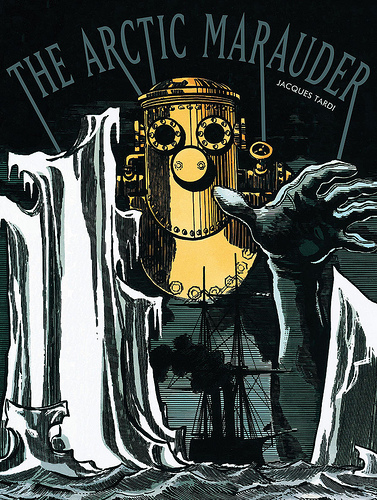
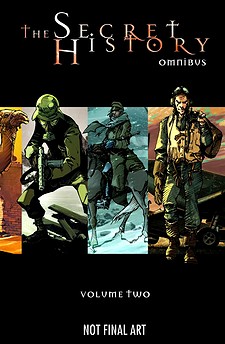
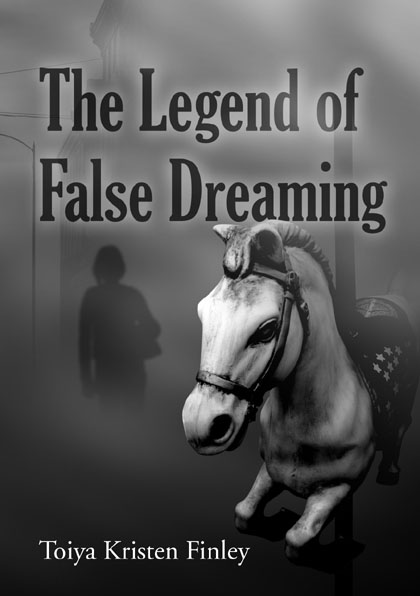
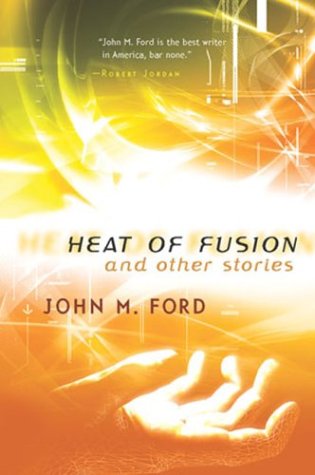
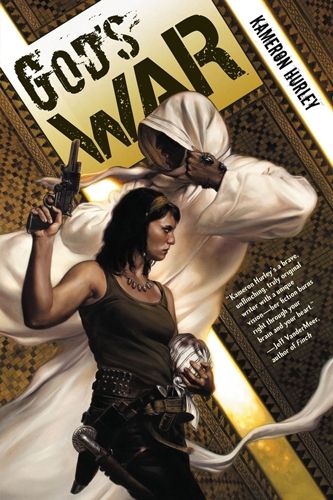
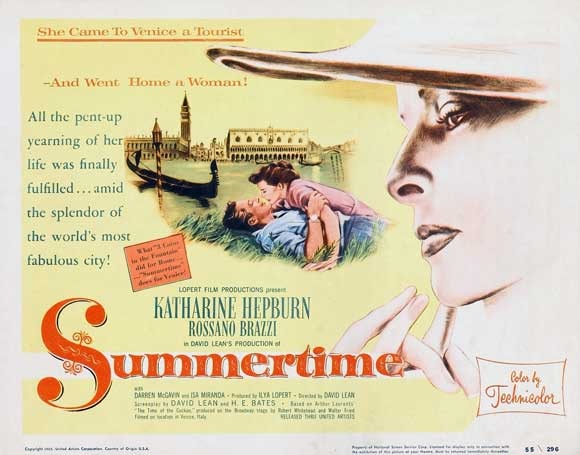
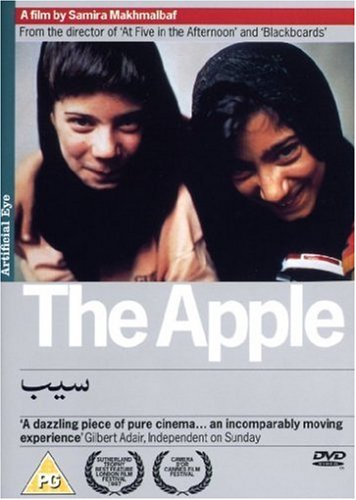
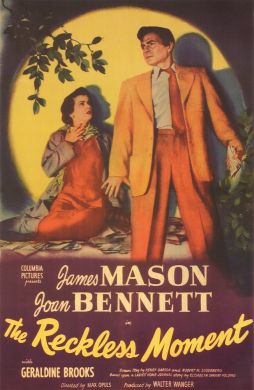
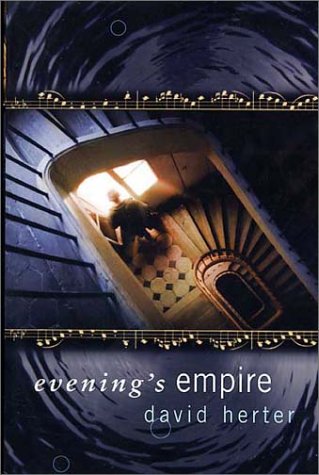
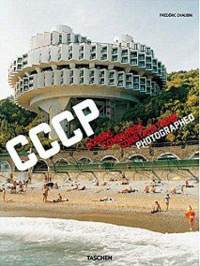
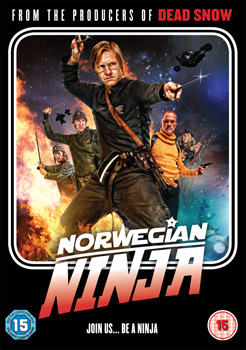
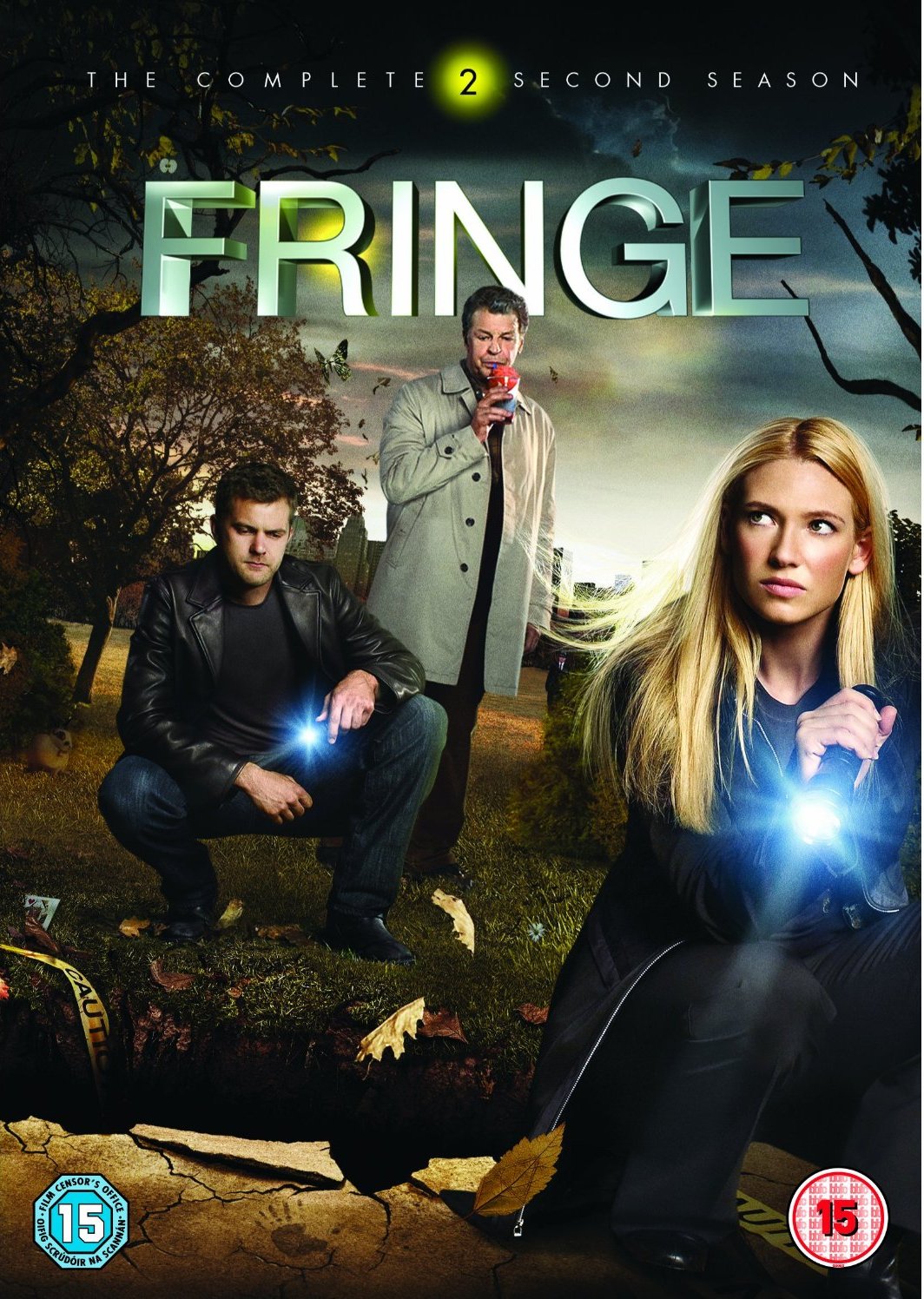


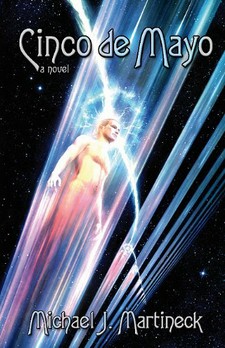
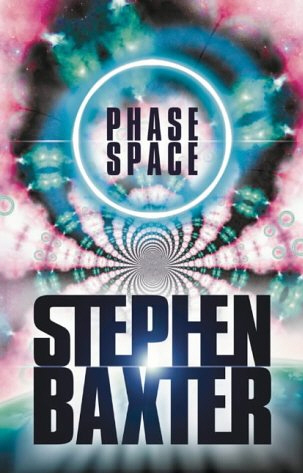
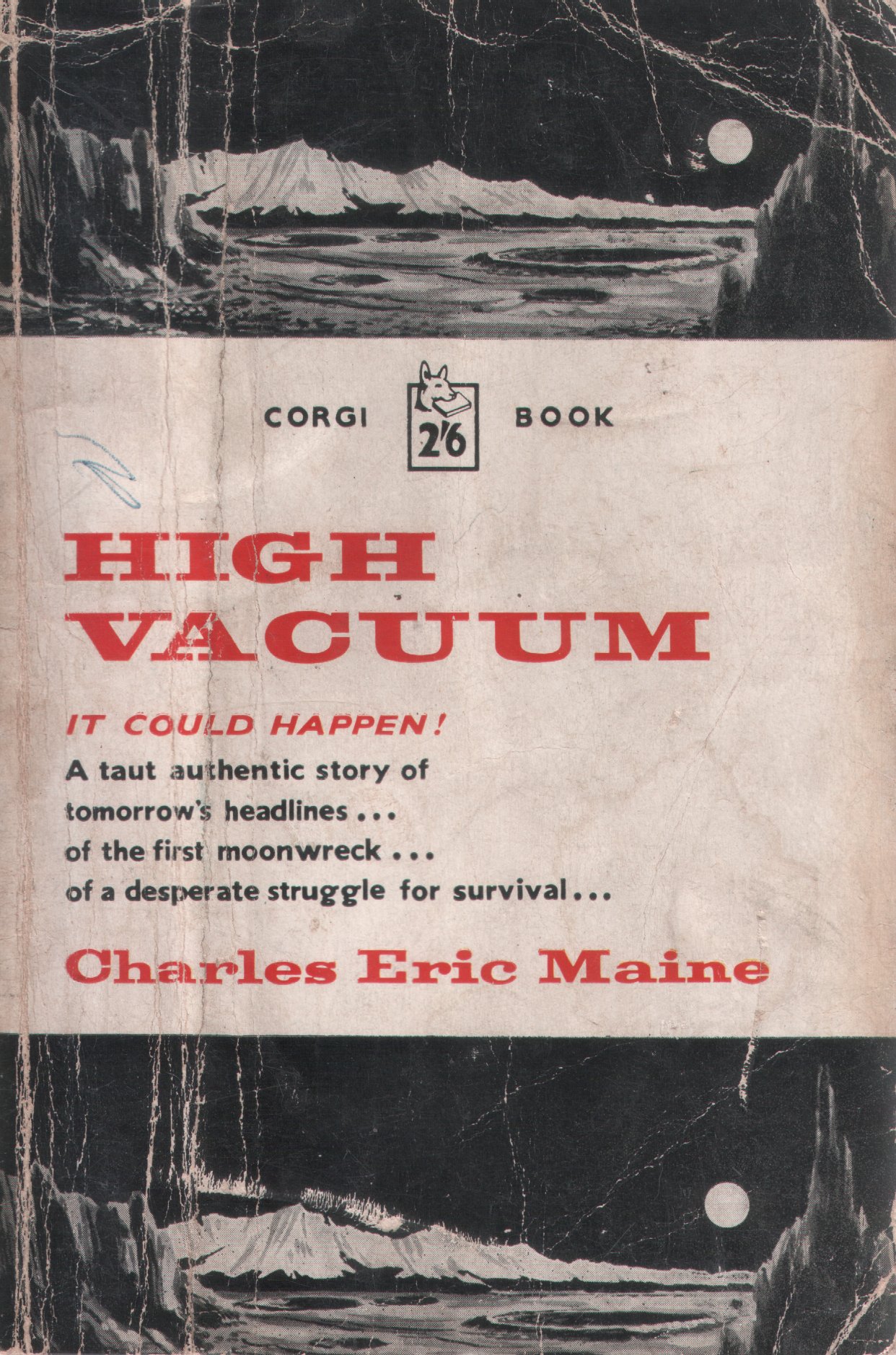
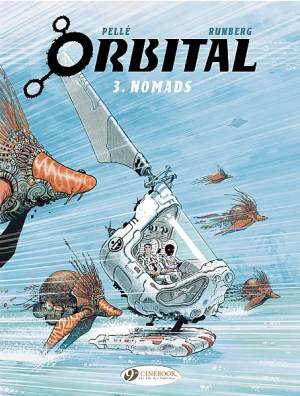
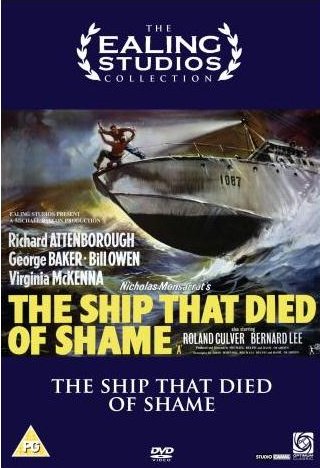
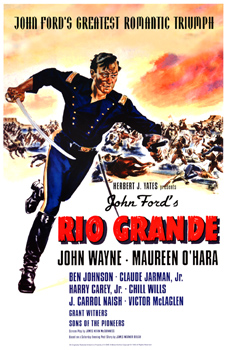
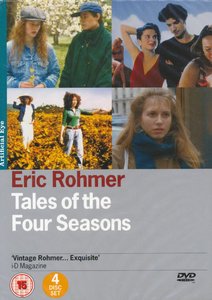


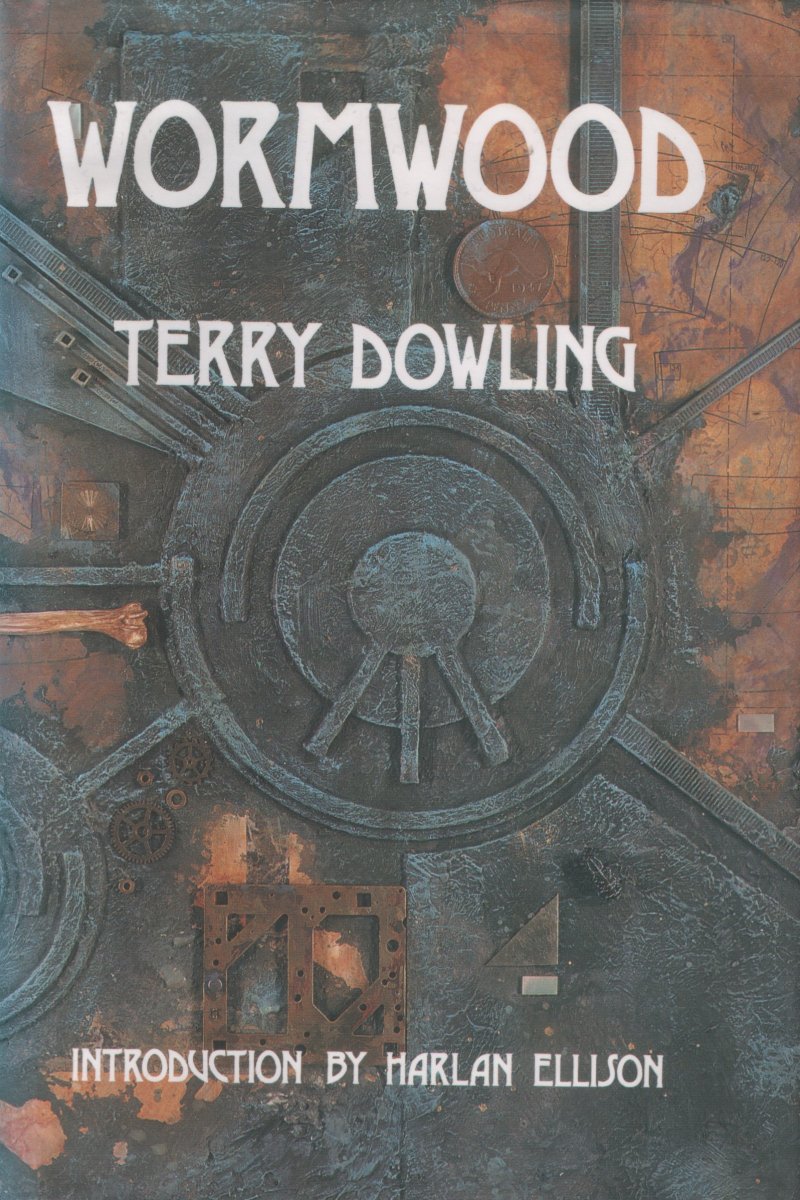
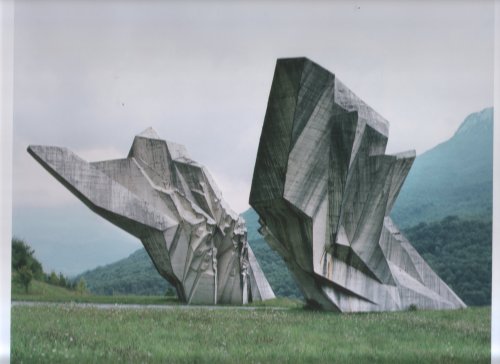
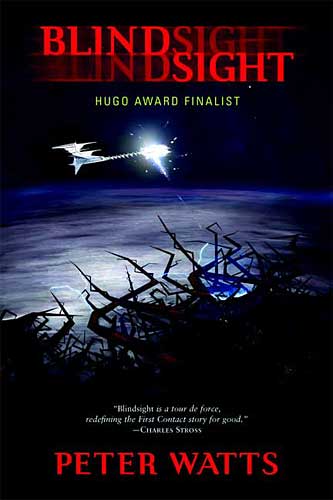
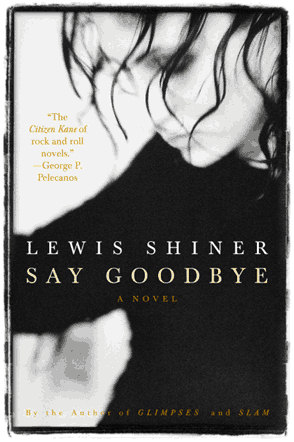
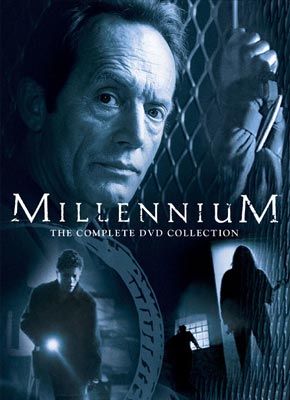
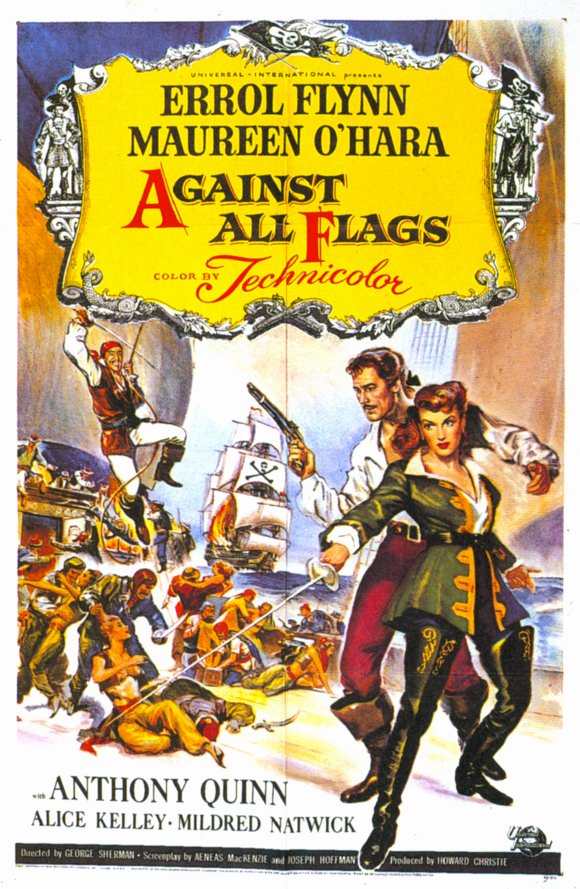
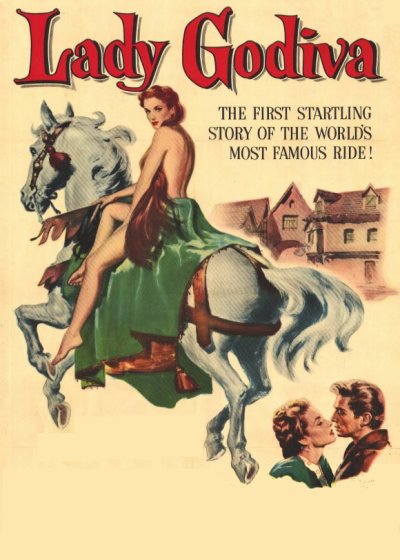
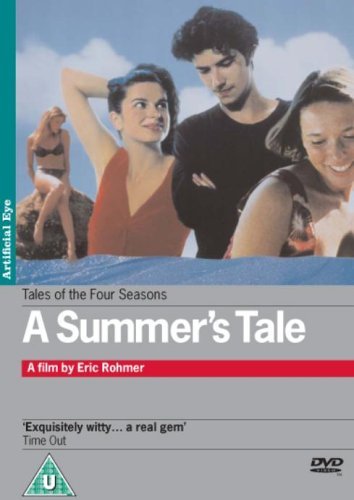
 , Bernard Beckett (2006), I recall hearing good things about a couple of years ago. But at the time the book proved somewhat elusive. Recently, it re-appeared in a very cheap edition, so I bought a copy. It’s a not a novella, it’s a YA novel. And a thin one at that. I hated it. It’s framed as the oral examination of a candidate for the Academy, the ruling elite of an island nation which is all that remains after a plague has devastated the Earth. The first few questions of this exam are effectively, “explain the world of this story to the reader so they can follow what little plot the book possesses”. We then get pages of badly-disguised info-dumps, in which the character speaks not in dialogue but in descriptive prose. There’s an interesting twist at the end, the writing is mostly very good, the book presents complex ideas in an easily-digestible fashion, but it’s all been done before and it’s so clumsily-structured it’s almost embarrassing to read.
 , Rosemary Kirstein (1989), was the first book of this year’s reading challenge, and I wrote about it
  , Barry N Mazlberg (1974), in which Malzberg attempts to channel JG Ballard and fails. I know Malzberg was a mainstay of the US New Wave (take note: not the New Wave, which was British, but the US movement of the same name it inspired; the US New Wave needs that qualifying “US” to distinguish it from the original (British) New Wave).
  , Amanda Young (2009), is about, well, spacesuits – specifically the Smithsonian National Air and Space Museum’s collection. I reviewed it on my Space Books blog
  , Jeff Sutton (1958), is Sutton’s debut novel and its title pretty much tells you the plot. It’s all manly men of America and dastardly Russkies, pure pulp from start to finish, and not especially scientifically accurate, despite the author being an aviation journalist. I plan to review it on my
  , Winston E Scott (2005), is the short, copiously-illustrated autobiography of an astronaut who flew on two Shuttle missions. A review of it will appear on my
  (1997). So only one season left and I’ll have seen the lot. I’ve heard it said by many, and I was starting to believe it myself, that Deep Space Nine is the best of the Trek franchises. But, oh dear, they plumbed the depths in this season. The war with the Dominion was getting interesting, although the Vorta Weyoun is really irritating. But they resolved the war – at least as it pertains to Deep Space Nine itself – by retaking the station in one of the crappiest-looking and unconvincing space battles in Trek history. Other episodes tried hard for interesting themes, but only proved embarrassingly bad. The student crew of a battleship behind enemy lines, for example. The writers aimed for pathos, missed, and hit bathos. The episode where Quark changes sex in order to help Grand Nagus Zek back into power was cringe-inducing. The Ferengi are cringe-inducing, anyway. Who thought comedy Shylocks was a good idea? Even the better episodes in this season can’t compare with earlier seasons – O’Brian makes an unconvincing undercover cop, and the reason why he was recruited is never satisfactorily explained; the super-secret Section 31 seems completely antithetical to the philosophy of Trek; and the episodes set in the Vegas show-lounge on the holodeck just seemed really cheap. Let’s hope the final season is better.
 , dir. Frank Capra (1948). I don’t know why Capra gets so much stick. I really enjoyed
  , and
, and  is a pretty good film. I suppose Capra was one of your original “Hollywood liberals”, and so it’s become the fashion to sneer at his output. And it’s true that
  , dir. Éric Rohmer (1992), is the second of Rohmer’s Contes quatre saison. Félicie fell in love with Charles while on holiday, but stupidly gave him the wrong address by mistake when the holiday ended. As he was heading off to the US, she had no way of contacting him… or of telling him that he was now the father of a daughter. Five years pass. Félicie is a hairdresser in Paris, sleeping with both Maxence, owner of the salon where she works, and librarian Loïc. But she still loves Charles. Maxence persuades her to move with him Nevers, to live with him and work in the salon he is opening there. She agrees. But she’s unable to settle down with Maxence – she can’t love him the way she loves Charles – so she returns to Paris… and entirely coincidentally bumps into Charles on a bus. So they get back together. Like the first film of the quartet,
  (see
(see  , dir. Chris Columbus (2010), is based on a popular YA fantasy series, just like the Harry Potter films. And just like the Harry Potter films, it’s about a teenager who discovers he is not an ordinary person, but has special powers. Even more so, just like Harry Potter, Percy Jackson’s powers are more special than those of the other kids with special powers. This because he is a son of Poseidon. When someone steals Zeus’ lightning bolt, everyone suspects Percy Jackson, although he has been happily living the life of a mundane, unaware of his special Harry-Potter-like powers. This abrupt eruption of Greek godly adventure into his life, he takes with aplomb, a readiness to learn how to use his special powers, and a beady eye for a feisty young woman. The Greek pantheon is cleverly integrated into this Harry Potter clone – it is, at least, a bit more original than Jennings Goes to Wizard School – but it still feels like by-the-numbers for a target audience. Good special effects, though.
 , dir. Fred Zinnemann (1953), is one of those classic 1950s films everyone knows of. Well, there’s that iconic scene with Deborah Kerr and Burt Lancaster rolling about and snogging in the surf. In fact, that was pretty much all I knew about the film. That, and Frank Sinatra was in it and won an Oscar for best supporting actor. So I was somewhat surprised to discover that it’s not really about Lancaster’s character, but about the one played by Montgomery Clift. And it’s about boxing – or rather, not boxing – in the US Army. It’s also set in Hawaii, in the year leading up to Pearl Harbour. Clift plays a bugler who has transferred to a rifle company on Oahu. He used to be a boxer, and was very good at it, but gave up when he blinded a friend during a sparring bout. The rifle company’s CO, however, won’t take no for an answer, and instructs his NCOs to begin a campaign of harassment and bullying until Clift agrees to box. Lancaster, the first sergeant, a man’s man and a soldier’s soldier, disagrees with his CO, and does his best to make sure Clift comes to no real harm. Meanwhile, Lancaster has also fallen in love with his CO’s wife, Kerr, which is a definite no-no in the armed forces. Sinatra plays Clift’s buddy in the barracks, who’s a bit of a chancer and introduces Clift to the Oahu night-life. To be honest, Lancaster should have got the Oscar – he’s the best thing in the entire film. It’s also bizarre that the film never mentions the war taking place elsewhere on the planet… until it abruptly intrudes in the final quarter of the film. I suspect there was a better film to be made of
  , dir. Tom Reeve (2004), I reviewed for the Zone
  , dir. Juan José Campanella (2009), I reviewed for VideoVista
  , dir. Michael Haneke (1989), was Haneke’s debut film, and is apparently inspired by a true story. A young Austrian couple, solidly middle-class, with a young daughter; she works and co-owns an opthalmic practice, he’s an engineer at a chemical plant. Haneke shows us a day in their life – troubles at work, dull routine, a voice-over reading out a letter from the wife to her mother-in-law. We then see another similar day a year later. Some things have changed for the better, some for the worse. But their life together is still mostly comfortable. In the final part of the film, the couple tell all their friends and relatives they are emigrating to Australia. They empty their bank accounts, sell their half of the opthalmic practice, and spend all their money on a massive feast. They then smash everything in their house. Finally, they commit suicide. No reason is given for them taking their lives, and nothing is presented in the first two parts of the film which might explain it. So, right from the start Haneke was making films which defied easy explanation, which did not adhere to the usual rules of film narrative. Last year, I bought the
  DVD set, which contains
  ,
,  ,
,  and
and  . Annoyingly, Artificial Eye have now brought out the
  DVD set, which contains ten of his films – all but
  , in fact. And including the four I already own. Bah.
 , dir. Hayao Miyazaki (1986), is the second of Studio Ghibli’s film, which I am slowly working my way through (though I’ve seen several of the later ones). There’s lots in here that’s common to Miyazaki’s films – the feisty young girl, the bizarre steampunk-ish aesthetic, the teenage boy sidekick, a world recovering from a past unexplained catastrophe, a focus on a simple life-style, and a villain with a moustache… In the world of
  , dir. Abbas Kiarostami (2010), I reviewed for VideoVista
  – it’s probably the one novel I’ve reread more than any other, but I don’t think it’s an especially well-written book.
 ,
,  ,
,  ,
,  ,
,  …
… is one of the great films of the 1950s. His films were melodramatic, but also deeply subversive. And very, very cleverly made.
 remains a classic piece of cinema.
 ,
,  , and
, and  . And there are plenty more in their oeuvre.
 I had somewhat higher hopes of this novel. Sadly, it’s worse than the others I’ve read. The plot is thin: Bond plays Le Chiffre at cards, Bond wins, Le Chiffre kidnaps and tortures Bond, Bond is rescued. There’s loads of clumsy info-dumps. And Bond is even more offensively sexist than usual – the final line is “Besides, the bitch is dead”. Watch the movie, avoid the book.
 , which I thought slow but strangely involving, even though it didn’t seem to reach any sort of resolution.
  , Herbert Wilcox (1942), is a biopic of Amy Johnson. I reviewed it for Videovista
  , Anthony Fuqua (2009), is yet another bad New York cop movie. I reviewed it for Videovista
  , Fritz Lang (1953), is a film noir from master director Lang. The title refers to a club, where Raymond Burr (best known as Perry Mason) takes Anne Baxter, who is out drowning her sorrows after being ditched by her boyfriend. Burr is found dead the next morning, his head bashed in. Baxter can’t remember anything after leaving the club. A reporter believes her to be innocent and so tries to help find the real killer. There’a lot of evidence stacked up against Baxter, but it’s all cleverly shown to be either coincidental or a mistake on the witness’s part. There’s a lot in
  , a 1956 film also by Fritz Lang. Both feature stalwart newsmen solving murders. I guess reporters were held in higher esteem in those days…
 , Raúl Ruiz (2000), I rented because it stars Isabelle Huppert, who is, I think, one of the best actors of her generation. The title of the film belies its somewhat unsettling story. On his ninth birthday, a young boy tells his mother that he wants to return to his “real” mother. He’s not adopted, but instead seems to believe he is the reincarnation – or has been possessed by – a young boy who died several years earlier. The boy’s mother, played by Huppert, tracks down the “real” mother, and, bizarrely, the two start sharing the boy. In parts,
  – the chills lie in what is implied, in the way something which has no rational explanation pulls apart domestic routine. The ending does resolve the plot, but it’s a taut journey there. Recommended.
 (1984), is a BBC two-part drama, first broadcast in 1984, about the effects of a nuclear war on Britain, and specifically on the city of Sheffield. It’s effectively done. These days, they’d CGI the nuclear explosion itself, and you’d see walls of flame ripping through the city, buildings exploding and falling over, all that sort of thing: nuclear explosion as spectacle.
  , Joseph M Newman (1955), is one of those films which helped define the popular perception of 1950s cinema sf, along with
  ,
,  ,
,  and
and  .
.  , Frank Capra (1934), is on one of those Top 100 Films, but I forget which one. It was the first film to win the top five Oscars: best film, director, actor, actress and screenplay. Claudette Colbert plays a rich socialite with an overbearing father. He isn’t happy that she married a fortune-hunting aviator, so she runs away. On a Greyhound bus, she meets Clark Gable, a reporter, who recognises her and smells a story. He helps her to return to New York, although she has no money and he has very little. En route, they fall in love.
  , Martin Scorsese (2010). I’ve always thought Scorsese an over-rated director. Half the time he makes forgettable crowd-pleasers, the rest of the time he remakes
  . This falls into the former category and is based on a best-selling novel by Dennis Lehane. The island of the title is the site of a hospital for the criminally insane. One of the prisoners has disappeared, so FBI agent Leonardo DiCaprio and partner are sent to investigate. The twist in the film is obvious right from the start, the Civil War fort which forms the secure wing of the hospital looks like something out of Dracula, and Max von Sydow keeps on popping up and spouting wodges of psychobabble plainly designed to confuse the viewer. Avoidable.
 , Majid Majidi (1999), is an Iranian film, and proved much better than I’d expected it to be. Mohammed, a young boy at the Tehran Institute for the Blind, is picked up by his widowed father and taken to their home in the mountains. The father wants to remarry, but he can’t cope with a blind son. So he takes Mohammed to visit a blind carpenter and apprentices him to him. Mohammed doesn’t understand why he can’t stay at home with his father, grandmother and sisters. He may be blind, but with his Braille books he can keep up with the sighted kids in the village school. But the father is adamant. Then things start to go wrong, and the father’s plans and life unravel… I’ve seen two Iranian films before this –
  , which made my top five of the year, and
  – and they were both very good. As is
