Although it’s the road to hell which is, they say, paved with good intentions. And I have plenty for 2011. I had a number for 2010 as well, of course – see here. And I actually managed to complete some of them.
Okay, so I failed on the reading challenge, but I did read quite a few of the authors and series I named: WG Sebald (er, no), Michel Houellebecq (yes), Kazuo Ishiguro (yes), Paul Scott (no; although I did buy several of his books); the Marq’ssan Cycle by L Timmel Duchamp (yes; well, only book 5 still to go), the Bold As Love Cycle by Gwyneth Jones (yes; see here), Destiny’s Children by Stephen Baxter (no), and Canopus in Argos: Archives by Doris Lessing (still planning to read this). Sadly, I didn’t quite manage to keep my Space Books blog up to date…
Nor did I manage to finish a story a month. I actually completed five. And a bunch of poems. On the plus-side, six of my stories saw print in 2010. And one got praised in a national newspaper, the Guardian – see here.
I made it to Fantasycon (see here and here), but not NewCon or Novacon. I didn’t quite make the gig-a-month – only 11, unfortunately. I also failed to attend either Bloodstock or Damnation, but I already have my ticket for Bloodstock 2011.
And now, for this coming year…
I have a new reading challenge – see here – so I’m hoping I to complete that. I also have a pile of books which I need to review for SFF Chronicles. And there’s my own ongoing series here of British SF Masterworks. I read Christopher Hodder-Williams’ 98.4 over Christmas, so I’ll be posting a review of that here soon. But I do have several others from the list to read and write about.
I’d like to read more classics: Lawrence, Orwell, Dickens, that sort of stuff. I also plan to finish off Ishiguro – his books, that is, as I own all but one. Likewise David Mitchell. And read more books by the following: Margaret Atwood, Michel Faber, Adam Thorpe, Toby Litt, Paul Scott, and WG Sebald. I’d like to get started on CP Snow’s Strangers and Brothers series, and I’d like to read more new science fiction as I’m usually behind the times when it comes to the new shiny. And then there’s my Space Books blog… I really do need to get back onto a regular schedule of posting stuff there. It’s not like I’m short of books, or DVDs, to review for it.
Writing a short story a month may be beyond me, but I certainly want to be more prolific. I’ll see if I can finish six in 2011. Small steps… And a novella. Oh, and poems. Not just banging up drafts and ideas on sferse, but taking some of the ones from there, polishing them and submitting them.
I don’t think I need to do anything blog-wise in 2011. I posted here frequently enough, and I’m happy with most of the content. It might have been a bit sf-heavy, but that’s not unexpected. Don’t like the template, though; I’m going to change that at some point.
Finally, I’ll continue watching the BBC adaptations of Shakespeare’s plays… which is about the nearest I can get to a resolution for films.
I said last year that 2009 was a year to remember for reasons both good and bad, but 2010 proved to be both a little better and in one respect the worst year ever. My father died of cancer in September after two months of illness. I miss him. My writing achievements mean little in the face of that. Especially since my father supported and enjoyed my writing – and yet never saw my story from Catastrophia praised in a national newspaper.
For the record, six of my stories saw print in 2010 – one each in Jupiter, Catastrophia, New Horizons, Alt Hist, and two in M-Brane SF. I also had my first poem published, also in Jupiter (it was actually a quartet of poems).
Books
During 2010 (to date), I read 170 books, 42% of which were science fiction, 18% were literary fiction, and 6% I read to review on my Space Books blog. I reviewed seven books for Interzone, one for Vector, and six for SFF Chronicles. I managed to curtail my book purchases this year, but I then decided to browse local charity shops on a regular basis… As a result, I spent less on books in 2010, but seem to have bought almost as many as I have in previous years. Oh well.
Lord Byron’s Novel: The Evening Land, John Crowley (2005), I picked as one of my top five books of the first half 2010, and wrote then that I expected it to make it onto my end of the year top five. And so it has. It is a cleverly-plotted historical detective novel, an astonishing piece of literary impersonation, and it is, as you’d expect from Crowley, beautifully written. Admittedly, I’m no expert on Byron – his poetry or his life – but Crowley certainly convinced me. After the disappointment that was The Translator, this is Crowley on top form.
The Continuous Katherine Mortenhoe, DG Compton (1974). While I’ve read several of Compton’s novels over the years, 2010 was the year I came to really appreciate his fiction and added him to my list of “collectible” authors. The Continuous Katherine Mortenhoe is often considered the best of his novels, and it’s certainly true that it’s very, very good. It’s perhaps a little dated these days but, for me, that was part of its charm – I love its 1970s aesthetic. It’s a book that’s wonderfully sardonic, with a pair of expertly-drawn characters, and prose that’s a joy to read. I wrote about it here. I even wrote about the film adaptation of it, by Bertrand Tavernier, here.
Lady Chatterley’s Lover, DH Lawrence (1928). My father was a big fan of DH Lawrence and often tried to persuade me to read his books. But it was only this year that I picked one up… and was immediately captivated. I’ve since bought an omnibus of two novels and three novellas, a short story collection and a poetry collection (from charity shops, of course). I plan to read more. There’s little I need to say about Lady Chatterley’s Lover as most people know of the book – although, to be fair, what they think they know of it may not be what the book is actually about. The dialogue has not aged well, but some of the descriptive prose is lovely writing, and the character studies of Constance and Mellors are superbly done. Lady Chatterley’s Lover, incidentally, was another book from my top five for the first half of the year.
Seven Miles Down, Jacques Piccard and Robert S Dietz (1961). This year, 2010, was the fiftieth anniversary of the only manned descent to the deepest part of the ocean, Challenger Deep in the Mariana Trench. And Seven Miles Down is the only book written specifically about that descent. It makes it into my top five because it’s a fascinating subject, and because I think Jacques Piccard and Don Walsh’s achievement should be honoured. I wrote about it here.
Troy, Simon Brown (2006). This is the third book from my halfway through the year list to make it into this final top five. Which, on reflection, doesn’t say much for my choices in reading matter during the latter half of 2010. To be fair, I did read a lot of good books, but none struck me as good enough to make this list. Troy, a collection of genre and non-genre stories based on characters from the Trojan Wars, kept its place because the collection’s theme is cleverly-handled, and the stories are varied and beautifully written. I’d like to read more by Brown.
Honourable mentions: the Bold as Love Cycle, Gwyneth Jones (the first quintet of my summer reading project; see here; more to follow soon); the Marq’ssan Cycle, L Timmel Duchamp (the second quintet of my summer reading project; write-up to follow soon-ish); The City & The City, China Miéville (multi-award winner with fascinating premise; my review here); The White Bird of Kinship trilogy, Richard Cowper (thoughtful 1970s sf); The Desert King, David Howarth (a biography of ibn Saud; sort of like Dune without the worms…); One Giant Leap, Piers Bizony (the best of the books celebrating the 40th anniversary of Apollo 11; my review here); Yellow Blue Tibia, Adam Roberts (loved the first half, but not so keen on the second); Surface Detail, Iain M Banks (a new Culture novel; enough said).
Films
Each month, I receive six rental DVDs from LoveFilm and two or three to review for VideoVista, so I’ve not bought as many as I have done in past years. I still managed to watch 210 films or seasons of television series, however, some of which were re-watches. Among the TV series I watched were Fringe, Mad Men, Star Trek: The Next Generation, and Flash Gordon.
Cargo, dir. Ivan Engler & Ralph Etter (2009). I know some people weren’t as impressed with this film as I was, but I thought it the best sf film of the year. It should have been on the Hugo Award shortlist. Okay, so it borrows heavily from other well-known sf films – or, perhaps, more charitably: it deploys tropes originally used in other well-known sf films. But it uses them cleverly, and they are all germane to the plot. The special effects and production design are also notably good. I reviewed Cargo for the Zone here, and loved it so much I went and bought a proper copy of the DVD.
Secret Ballot, dir. Babak Payami (2001), was, I think, the first Iranian film I’d ever watched, and I thoroughly enjoyed its deadpan black humour. It’s similar in many respects to Elia Suleiman’s Divine Intervention, one of my favourite films, so perhaps I was predisposed to like it. It made my halfway through the year list, and confidently remained in place for the end of year top five. In it, a young woman travels around a remote island off the coast of Iran, trying to persuade people to vote in the upcoming election. She’s accompanied by a laconic soldier who has seen it all before. It’s a very funny film.
The Bothersome Man, dir. Jens Lien (2006), is another film that made the halfway through the year list. It’s also funny. A man commits suicide and finds himself in a city in which everything is bland and comfortable and washed-out. Everybody is nice to him, but no one seems to care about anything. While there may be something utopian in this, it’s also clearly hellish. Or, at the very least, purgatorial. So he tries to escape. His first attempt, a re-enactment of his suicide, is hilarious. Eventually, he thinks he may have found a route out. But, of course, films such as this can never end happily. It’s not Hollywood, after all.
For All Mankind, dir. Al Reinert (1989). I watched a number of documentaries about the Apollo programme during 2010, but For All Mankind was the best by quite a margin. And Eureka! have done it proud with their DVD release. Reinert personally chose, and had restored, the NASA footage he used, and he was careful to chose footage that had not been seen before. The end result is a documentary which gives a very real feel for the programme, for its accomplishments and for those involved in it – especially the astronauts. Some of the film taken by the Apollo astronauts while in space is, more by accident than design, quite beautiful. If you watch only one documentary about those mad years during which the US put twelve men on the Moon, make it For All Mankind.
There’s Always Tomorrow, dir. Douglas Sirk (1956). I suppose it’s no surprise to find a Sirk film on this list. He is, after all, one of my favourite directors. Unfortunately, few of his films are available on DVD – and of those, Eureka! have done an excellent job on their releases of There’s Always Tomorrow and A Time to Love and a Time to Die. But the former just pips the latter. Fred MacMurray plays a toy company owner who tries to inject some excitement into his solidly middle-class life when he is visited by ex-employee Barbara Stanwyck, now independent, successful and glamorous . MacMurray’s family has become a prison, and he is desperate for release. But it is not to be. The film’s final scene, after Stanwyck has turned him down, as he leaves for work and his kids wish him well through the banisters of the staircase… That final shot of MacMurray seen through those bars is a perfect illustration of why I rate Sirk’s films so highly.
Honourable mentions:The White Ribbon (Michael Haneke remains one of the most interesting directors currently making films), King Lear (with Michael Hordern in the title role; the best of the six BBC adaptations of Shakespeare’s plays I watched during 2010), Mad Men season one (has been praised by many; while good, I often found its heavy-handed 1960s sexism and racism hard to take); Frozen Land (grim, yet gripping and blackly humorous, film from Finland).
Albums
Several of my favourite bands released albums in 2010, and some of them even toured to UK too. I also discovered several new bands. I saw 21 bands perform live, and bought 27 CDs – 4 of them as limited edition CD/T-shirt deals.
Curse of the Red River, Barren Earth (2010), is the debut album by a Finnish metal supergroup side-project, featuring members of Amorphis, Moonsorrow and Kreator. The music is heavy doom/death metal with 1970s proggy bits – sort of like Opeth, but heavier (if that’s possible), and with strange, almost hippy-ish acoustic sections (there’s a flute in there somewhere, for example). It’s also quite brilliant. This one went on the top five the first time I listened to it. It’s about time they toured the UK. (Band website).
Vine, The Man-Eating Tree (2010), is another Finnish supergroup, as it contains the drummer from Sentenced, the guitarist from Poisonblack, the bass player from Reflexion, the keyboards player from Embraze, and the vocalist from Fall of the Leafe. The latter, in fact, Tuomas Tuominen, is the reason I’d been looking forward to this debut album – Fall of the Leafe was one of my favourite bands (they disbanded a couple of years ago), and Tuominen has a very distinctive voice. Vine includes a metal cover of The Moody Blues’ ‘Nights in White Satin’, which shouldn’t work, but actually does. Amazingly well, in fact. (Band website).
We Are The Void, Dark Tranquillity (2010), is the latest album by a band that has been a favourite of mine for many years. I’d describe it as a return to form, except they’ve never been off-form. Nonetheless, I was impressed when I heard the first track they released from the album (see here), with its deliciously creepy riff, and the rest of the album is just as good. Definitely one of their best albums of recent years. (Band website).
Escaping The Abyss, Fornost Arnor (2009). I saw an ad for this in Zero Tolerance magazine, and the description intrigued me enough to buy a copy. It’s Fornost Arnor’s debut album and was released on their own label. It’s an atmospheric mixture of black and progress metal, with occasional acoustic parts. It’s exactly the sort of complex, varied and technically-proficient metal that I really like. They’re currently recording their second album. I’m looking forward to hearing it. Incidentally, this is the second year running a self-released album has made it into my top five – last year, it was DesolatioN’s Lexicon V. (Band’s MySpace page).
The Never Ending Way of Orwarrior, Orphaned Land (2010), was a long-awaited album. Orphaned Land’s last release, the excellent Mabool, appeared in 2004, and they’ve been promising this follow-up ever since. It finally arrived this year, and it was worth the wait. I saw Orphaned Land live this year for the first time too, with Amorphis and Ghost Brigade, and they were easily the best act of the night. (Band website).
It’s been a month since the last one, so here goes:
Books Interstellar Empire, John Brunner (1976), is a fix-up of three novellas from 1953, 1958 and 1965. They’re juvenilia and it shows. For a start, it’s “enslaved”, not “slavered”. Gah. And despite being set in a post-collapse galactic empire, everyone talks like comedy barbarians. Brunner admits in an included essay that the novellas were partly inspired by a desire to invent a workable swords & spaceships universe – ie, interstellar travel but each world possessing no more than Dark Ages tech (although a helicopter does make an appearance). The mention of mutants and telepathic powers, however, in no way explains the magic powers which feature in one of the novellas. Aldiss did it much better in Starswarm and Galaxies Like Grains of Sand.
Planet of the Apes, Pierre Boulle (1963), was terrible. The film is a great deal better. Although originally published in France in 1963, this book reads like it was written forty years earlier. And, annoyingly, the author (or perhaps the translator of the Penguin edition I read) refers to chimpanzees, gorillas and orangutans throughout as “monkeys”. That’s in spite the book’s title. Gah. The story opens with a couple in a spaceship finding a message in a bottle floating in space – which is too dumb a concept to be taken seriously, as paper simply wouldn’t survive in space. The message is the story of Ulysse Mérou, who lands on an inhabitable planet in the Betelgeuse system and is captured by intelligent apes. He’s an unpleasant narrator, the swapping of humans for apes and vice versa is painfully obvious a conceit, and the details of the apes’ world don’t really add up. Avoid.
Alanya to Alanya (2005), Renegade (2006) and Tsunami (2007), L Timmel Duchamp, are the first three books of the Marq’ssan Cycle. I’m currently reading the fourth book, and I plan to write about all five once I’m done. Just like I planned to write about the five books of Gwyneth Jones’s Bold as Love Cycle – the piece on those is almost done, and should be going up here soon-ish. So far, however, the Marq’ssan Cycle is proving an excellent thought-provoking read, and I’d certainly recommend it.
The Collector, John Fowles (1963). Perhaps when reading an author’s oeuvre, you should start with their debut novel. I didn’t. The first novel I read by Fowles was A Maggot, and I thought it was excellent. When I later read The French Lieutenant’s Woman, I was even more impressed. The Collector can’t match either of those. Fowles’ maintenance of his two characters’ voices is good throughout The Collector, and the novel is cleverly-structured. But it all seems a bit, well, tame. The eponymous entomologist kidnaps Miranda, locks her in his cellar, and then treats her like an imprisoned princess. When you compare that to similar situations from television shows such as CSI, or even from the real world, it all seems a bit too comfortable and home counties. Disappointing.
The Girl At The Lion d’Or, Sebastian Faulks (1989), is Faulks’ second novel. The eponymous character is a young woman of mysterious background who takes a waitress job at the titular hotel in France during the early 1930s. She immediately falls in love with wealthy lawyer Charles Hartmann. The two have an affair, and she tells him her secret. This changes his view of her, and so he breaks off the relationship… The Girl At The Lion d’Or has a good sense of time and place – and the heroine’s secret is very much a product of the time – but the writing is a little too flowery in places. But then it is only Faulks’ second novel…
The Secret History Omnibus Volume 1, Jean-Pierre Pécau (2010), is a graphic novel. Back in the Stone Age, four youths were each gifted with a powerful magic rune – the shield, sword, chalice and lance. These four Archons were immortal, and have battled throughout human history for supremacy. When one’s plan backfired during the early years of the Holy Roman Empire, it created William of Lecce, an evil immortal, who has subsequently been responsible for all the wars and tribulations since. There’s a good idea at the heart of this graphic novel, and the historical periods are handled well. But a lot seems unexplained, and it’s easy to get confused. This first volume covers from the Stone Age to the First World War, with episodes set in Ancient Egypt, the reign of Frederick I, the Great Fire of London, and Napoleonic France. I’ll be picking up Volume 2 when that becomes available.
The Flying Saucer, Bernard Newman (1950), I read to review for Interzone.
Films Déjà Vu, dir. Tony Scott (2006), is one of those high-concept thrillers Hollywood likes to rip bleeding from the oeuvre of Philip K Dick. Except this one isn’t based on anything by PKD. A bomb explodes on a ferry in New Orleans, killing everyone aboard. Denzel Washington investigates, and is seconded to a super-secret taskforce which has access to… a time portal. They can see back in time, to the very moment of the explosion. There’s some guff about wormholes and Einstein-Rosen Bridges, but this is Hollywood so it’s not very plausible. It all ends up with Washington getting sent back in time to rescue a woman who might hold a clue to the bomber’s identity. Entertaining, but it’s best not to think about it too hard.
The Men Who Stare At Goats, dir. Grant Heslov (2009), surprised me. I was expecting some stupid gung-ho thriller related to the title, but it turned out to be a funny and slightly offbeat comedy. The book on which it was based is actually non-fiction. Yes, the US military really did train soldiers in telepathy and telekinesis. Not to mention lots of other weird hippy-type crap. Not that they were successful. At least, not in the real world. In this movie, it’s left open. George Clooney is good, Spacey plays a nasty piece of work convincingly, but Ewan McGregor seems a bit out of place. A fun film.
Lured, dir. Douglas Sirk (1947), is an early thriller by the master of melodrama. It’s set in London, but made in the US with a US cast. Which makes for an odd viewing experience as the accents are variable. Lucille Ball plays an American, however. She gets embroiled in the hunt for a serial killer when Scotland Yard ask her to act as bait. There are several Sirk touches in the film, but it’s not a patch on his later stuff. It’s too light-hearted to really pass as noir, and a bit too bizarre in places as well; and some of the faux Hitchcockian staging sits at odds with the more conventionally-filmed interior scenes. One for fans.
Fanboys, dir. Kyle Newman (2008), I reviewed for VideoVista here.
The Time Traveler’s Wife, dir. Robert Schwentke (2009), I watched because I’ll probably never get around to reading the book. And, to be honest, I couldn’t see what all the fuss was about. Man stalks woman through time, right from when she was really young. It struck me as a bit unhealthy. Meh.
Black Lightning, dir. Dimitriy Kiselev & Aleksandr Voytinskiy (2009), I reviewed for VideoVista here.
Sherlock Holmes, dir. Guy Ritchie (2009), entertained me more than I expected. I don’t have much time for Ritchie’s films, but a few people had told me Sherlock Holmes was actually quite good. And so it proved. Nothing to do with Conan Doyle’s Sherlock Holmes, though. Well, it was about a detective and his sidekick; and they happened to be named Sherlock Holmes and Dr Watson. But that’s about as far as it went. Entertaining, if supremely silly. It’s been a couple of weeks since I watched the film, and I find I can’t remember any of the plot. Which pretty much sums it up.
La Reine Margot, dir. Patrice Chéreau (1994). They were a nasty lot those French royals in the 16th century. We might piss and moan about our current government dumping on the population from a great height, but at least they haven’t manufactured a massacre just to keep themselves in power. That’s what the mother of King Charles IX did in France in 1572. Since he was Catholic, and she didn’t want the Protestants to gain the throne, she had a bunch of them killed, which in turn sparked off a wave of mob violence. As many as 30,000 might have died (estimates vary). The title character is the sister of King Charles IX, who is married off to Henri, King of Navarre (a separate kingdom in the Pyrenees), who is Protestant. This is allegedly to placate the French Protestants, but it doesn’t go very well. Henri is imprisoned, and forced to convert to Catholicism. He eventually escapes, with the help of his wife. But not before King Charles IX’s mother tries to poison him, but inadvertently poisons her son, the king. When he dies, his brother takes the throne. But then he dies too, and Henri ends up as King of France. So he got the last laugh, after all. You couldn’t make this sort of stuff up. If you put it in a fantasy novel, readers would say it was too implausible. This film adaptation is noted for its excellence, and it’s easy to see why. Although sixteenth century France seems a bit minimalist and flat, and there are lots of meaningful glances between members of the cast. And it’s a long film. But it’s definitely worth seeing.
Edge of Darkness (1985), is the original BBC television series, not the inferior Hollywood remake. I thought I’d seen this before, perhaps when it was originally broadcast. But apparently not. Bob Peck plays a Yorkshire policeman, whose activist daughter is shot by an assassin on his doorstep. It turns out it’s all to do with Northmoor, a nearby nuclear waste facility based in an old mine. Peck’s character was a bit odd, even kissing one suspect in order to get him to confess, and later trying a similar trick on the assassin. Also bonkers was Joe Don Baker’s CIA agent, who helps Peck to crack the case because it’s in the interest of the US to blow the lid on the secret British plutonium project and the sale of Northmoor to a US billionaire. I can see why the series has become a cult favourite – it’s not the straightforward thriller a summary of its plot might suggest. It’s a little odd, but compelling viewing nonetheless. And the ending is completely mad.
The Last Mimzy, dir. Robert Shaye (2007), is a genre film which seems to have slipped beneath a lot of people’s radars. It’s based on a short story by Lewis Padgett (AKA husband and wife Henry Kuttner and CL Moore). Basically, the future is in trouble, so they send kids’ toys back into the distant past in the hope of educating a child to send them what they need. A brother and sister, aged six and twelve, who live in Seattle in the present day find the toys. And they make the kids smarter. And also provide some good sfx. While this is a family film, I think it’s concept is a little too high for its target audience. It’s done well, but it tries too hard to get its central conceit across and comes close to losing its viewers in parts. Entertaining, but, well, perhaps the filmmakers shouldn’t have thought about it too hard.
Death Watch, dir. Bertrand Tavernier (1980), I wrote about here.
I had this really good idea for a post, a sort of companion piece to my British sf Masterworks. Films… Science fiction films… British science fiction films. How about a list of the best twenty-five sf films from the UK? Everyone likes lists.
Except… I couldn’t find twenty-five good British sf films – either that I’d seen or that I’d would be willing to hold up as good cinema. So I picked twenty. And, to be honest, there are a few on the list that stretch the definition of “good” somewhat. There are also a few that do the same with “British”… Kubrick was American, as are Gilliam and Hyams; and Truffaut is French. And some of the films were made with US money, requiring US actors in the starring roles – but they were British productions, so they count for this list.
No doubt I’ve forgotten lots of really good sf films from the UK, so feel free to leave a comment and suggest some. But here is my list, in order of year of release:
1 – Things To Come, dir. William Cameron Menzies (1936) – there’s not much you can say about this. It’s an astonishing piece of cinema, especially given when it was made.
2 – The Quatermass Xperiment, dir. Val Guest (1955) – Quatermass had a powerful impact on British sf, so one of the three films featuring him deserves to make this list.
3 – The Day The Earth Caught Fire, dir. Val Guest (1961) – not only a disaster film, caused by testing nuclear weapons, but also a post-apocalypse film. The shots of empty cities remain creepy even today.
4 – First Men In The Moon, dir. Nathan H Juran (1964) – the recent Gatiss adaptation on BBC4 was entertaining, but there’s a bonkers charm to Lionel Jeffries’ portrayal of Professor Cavor.
5 – Daleks Invasion Earth 2150AD, dir. Gordon Flemyng (1966) – back when Daleks were cool, they drilled a hole to the centre of the Earth so they could replace it with an engine and turn the whole planet into a spaceship. And they did it in Britain. Until Bernard Cribbins stopped them. With a bit of help from Dr Who.
6 – Fahrenheit 451, dir. François Truffaut (1966). The book is rubbish, but the film is excellent. Casting Julie Christie in two roles was inspired. And the monorail is really cool too.
7 – Frozen Alive, dir. Bernard Knowles (1966) – an Anglo-German production, set in Germany, in which a scientist, well, he freezes himself. But his wife is murdered while he is frozen, and he’s the chief suspect. It sounds daft, but it works.
8 – They Came From Beyond Space, dir. Freddie Francis (1967) – and the plot of this one seems even dafter: meteorites land throughout the UK and take over people, who subsequently build an armed camp in southern England. This is so they can send rockets to the Moon, launched from underneath a lake, to help repair the alien spaceship marooned there.
9 – A Clockwork Orange, dir. Stanley Kubrick (1968) – Kubrick may have been an American but this film was as British as you can get – from Anthony Burgess’s source novel through to the cast and crew.
10 – Journey To The Far Side Of The Sun, dir. Robert Parrish (1969) – Gerry Anderson’s only live-action feature film, although some of the cast were as wooden as his puppets. The central conceit – a copy of the Earth on the other side of the Sun, where everything is reversed – is complete nonsense, but all those Meddings model shots make up for it.
11 – 2001: A Space Odyssey, dir. Stanley Kubrick (1971) – Kubrick gets two films on this list because A Clockwork Orange is too British to leave off, and 2001: A Space Odyssey is too damn good to ignore.
12 – The Man Who Fell To Earth, dir. Nicolas Roeg (1976) – Bowie was perfectly cast. Any film that can say that deserves to be on this list.
13 – Flash Gordon, dir. Mike Hodges (1980) – it’s like a panto. In space. With Brian Blessed. Three reasons why it belongs on this list.
14 – Outland, dir. Peter Hyams (1981) – there’s not much that’s British about High Noon set on a moon of Jupiter (although without Grace Kelly). This was actually a British production, however.
15 – 1984, dir. Michael Radford (1984) – qualifies in the same way A Clockwork Orange does. It’s also an excellent adaptation of Orwell’s novel.
16 – Brazil, dir. Terry Gilliam (1985) – could be 1984 from an alternate Britain. It’s as British as Orwell’s novel, but… funny. Absurd, in fact. Which is the only other sane response to Nineteen Eighty-four.
17 – Sliding Doors, dir. Peter Hewitt (1997) – it’s about the Many Worlds Hypothesis… Well, sort of. It’s a romance, a fluffy version of Kieslowski’s Blind Chance, in which catching a train or not causes the story to split into two separate narratives.
18 – 28 Days Later, dir. Danny Boyle (2002) – zombies that can run. Enough said.
19 – Code 46, dir. Michael Winterbottom (2003) – is one of those films which seems to inhabit a near-future which already exists. It also asks some difficult questions about biotechnology.
20 – Moon, dir. Duncan Jones (2009) – I wrote about this here.
Apologies for the delay since the last one of these. I’ve posted a number of reviews of individual books to this blog over the past few weeks, but they haven’t been all I’ve read during that time. Here’s all of them – with the links to the aforementioned reviews where appropriate, of course. And there’s also all those DVDs I’ve watched since my last readings & watchings post…
Books Terminal World, Alastair Reynolds (2010). I’m working on a review of this for SFF Chronicles. I promise to post it up there soon. Suffice it to say, my feelings about this novel probably echo those of most of Reynolds’ fans.
Corpsing, Toby Litt (2000), is, as you can no doubt tell from the title, Litt’s third book. (Each of his books is titled alphabetically, although they are not a series or linked in any way.) I first came across Litt’s name when his tenth book, Journey into Space, a science fiction novel set aboard a generation starship, was reviewed in Interzone. I found a copy of that book (see here), enjoyed it, and so decided to read more by the author. Corpsing is a mystery novel, of sorts. The first-person narrator, Conrad, meets his ex-girlfriend, an up-and-coming actress, for a meal in a posh restaurant. During the main course, a hitman enters, kills the ex-girlfriend and mortally wounds Conrad. When he comes out of the resulting coma, he determines to discover who ordered the hit on his ex-girlfriend, and why. The solution to the mystery is not entirely what he expected. While the resolution is a little disappointing, the journey to it is very good. Conrad is an engaging narrator, there’s some perceptive writing in the book, and it’s also funny in parts and clever in others. I shall certainly be reading more by Litt.
Thousandth Night / Minla’s Flowers, Alastair Reynolds (2009), is a signed limited back-to-back double of a pair of Reynolds’ novellas from Subterranean Press. I’d read ‘Minla’s Flowers’ in The New Space Opera, but ‘Thousandth Night’ was new to me as it first appeared in a SF Book Club anthology One Million A.D. I have, however, read House of Suns, which is a novel-length sequel-of-sorts to ‘Thousandth Night’. The title refers to a year-long reunion of the Gentian Line, immortal clones descended from a single woman, albeit engineered to be individual, who travel the galaxy alone for 10,000 years doing touristy-type things. At the reunion, each member of the line creates a dream of what they have experienced during their travels, each of which is played to the clones each night. The narrator, Campion, however, notices some discrepancies in the dream, or “threading”, of one the other clones. With the help of Purslane, a female clone, he investigates… and uncovers a dastardly plot which could impact both the Gentian Line and the entire galaxy. The central conceit is pretty cool, and there is some impressive sf imagery in the story – the flying whales surely could have been inspired by the album art from Gojiro’s From Mars to Sirius (but then Reynolds has written a story name-checking Elton John, so perhaps not…). The characters in ‘Thousandth Night’ are better differentiated than they are in House of Suns, where they did tend to blur together. However, I was amused by the line: “It’s like trying to play chequers on a chess board” (p 33). For a start, we call it “draughts” in the UK; it’s called “checkers”, and spelled that way, in the US. And you do play it on a chessboard. I couldn’t actually work out if Reynolds was having a joke, or a brainfart.
Bold as Love (2001), Castles Made of Sand (2002), Midnight Lamp (2003), Band of Gypsys (2005) and Rainbow Bridge (2006), Gwyneth Jones. The Bold as Love Cycle was the first quintet of my summer reading project (see here). I’m working on a piece about the five books, which I’ll post here when it’s finished. I hope to have it done before the end of the month.
The Stainless Steel Rat, Kelvin Gosnell and Carols Ezquerra (1979 – 1985). This is an omnibus edition of the comic adaptation of Harry Harrison’s Stainless Steel Rat novels which first appeared in 2000AD. I may no longer be a big fan of the books (see here), but I do have fond memories of the comic strip and didn’t think it could be any worse than the novels. And, well, I’m not so sure… Ezquerra’s art is always distinctive, and mostly very good; although it does seem a bit slapdash in some of the later stories. However, important chunks of the plots seem to be missing. In the first strip, an adaptation of The Stainless Steel Rat, Jim DiGriz refers to the villain as Pepe Nero, despite him never having been named previously. The same thing happens in ‘The Stainless Steel Rat Saves the World’ – there’s a leap from “someone messing about with the distant past” to “plot by Him to destroy the universe”. We know DiGriz and family, but the villains need to be introduced too. As does the plot. Ah well. Now, if 2000AD will only publish an omnibus of their take on Dan Dare…
No Man Friday, Rex Gordon (1956), is one of my British SF Masterworks, and I reviewed it here.
Empress of Eternity, LE Modesitt Jr (2010), I read for review for Interzone. I’d never read Modesitt before, although I was aware of the name. I won’t be reading him again. Ever.
A Man of Double Deed, Leonard Daventry (1965), is another of my British SF Masterworks, and I reviewed it here.
Disgrace, JM Coetzee (1999), won the Booker Prize in 1999 and is the first book by Coetzee I’ve read. A university professor in Cape Town has an affair with a student which sours. A complaint is raised against him. Rather than defend himself, the professor stands on principle and is subsequently fired. So he goes to visit his daughter, a lesbian farmer in the East Cape region. But several weeks after his arrival, the farm is attacked by three bandits, who rape the daughter. She refuses to acknowledge this, and he finds himself helpless in the face of her refusal. It’s easy to cast the relationship as a metaphor for South Africa, but I’m not sure Coetzee’s unadorned prose works in the story’s favour – it’s good, but feels a bit too stark to really appeal. I may try more by the author, but I shan’t make a point of seeking out his books.
The Guardians 1: The Krilov Continuum, JMH (James) Lovegrove (1998), was , the author freely admits, work-for-hire. Orbit came up with the concept, and did a cross-promotional deal with the Sci-Fi Channel. Lovegrove was interested in the topic, so was keen to work on the project. It’s alt history UFO mythology type stuff, with the Tunguska explosion caused by the crash of a craft powered by anti-gravity. It was invented by a Russian scientist, Krilov, although he unknowingly had help from an extra-dimensional race… because it seems there is a war being fought on Earth between two groups from that race, and the chief weapon is Progress. One side – the good guys – want to keep progress at a level where the human race neither destroys itself, nor attacks the extra-dimensional race – as happened in Atlantis eons before. The bad guys, however, like to mess things up by introducing alien technology here and there. A bit of a potboiler, to tell the truth. Lovegrove has written much better. The Sci-Fi Channel apparently failed to keep up their end of the deal and sales were so poor the series was cancelled after two books. I’m not sure I can be bothered to track down the sequel.
Little Birds, Anaïs Nin (1979). I suspect I came across mention of Nin through her link with Lawrence Durrell, and so when I stumbled across this thin collection of her short fiction – well, erotica – in a charity shop, I bought it. And… Sorry, not impressed. Some of the stories skated dangerously close to paedophilia and rape, and very few of them actually struck me as erotic. They were apparently written in the 1940s – although Nin did not allow them to be published until the late 1970s – so clearly they did things very differently back in those days…
The Dream of Scipio, Iain Pears (2002), was another one I picked up in a charity shop. But I did so because I’d read and enjoyed Pears’ An Instance of the Fingerpost back in 1998. A fifth-century bishop, a fifteenth-century poet, and a WWII academic, all in Provence, each studying the earlier person, and each in some sort of relationship with a Jewish woman, in interlinked stories which are part history lesson, part discussions of philosophy and religion, and part love story. Admittedly, much of the philosophy was lost on me – the title is shared with a treatise by Cicero, and it’s referenced many times during the story. But the historical periods were handled well, the characters were interesting, and although the book was slow to start, I did like it a lot. It not as good as An Instance of the Fingerpost, but I’ll certainly be reading more by Pears.
Films Under The Sand, dir. François Ozon (2000). I like Ozon’s films, but this one dragged a bit. Charlotte Rampling and her husband go on holiday to their seaside chalet. They head down to the beach, she settles down with a book, and he goes for a swim. And doesn’t come back. She calls the life guards, but there’s no sign of him. Eventually, they decide he must have drowned. She heads back to Paris and tries to get on with her life. But she refuses to admit that her husband is dead. Even when the police ask her to identify a body washed up on the beach, she claims it is not her husband’s though it plainly is. Meanwhile, her friends try to match-make, and she enters into a relationship with another man. Throughout this time, at home she hallucinates that her husband is alive and well. She tells him what she’s been up to, including the man she is seeing… I like the idea at the core of the story, but I suspect it’s not strong enough for a 94-minute film.
The Merry Wives of Windsor, dir. David Hugh Jones (1982), is another of the BBC’s adaptations of Shakespeare’s plays, this one starring Richard Griffiths as Falstaff, and Prunella Scales as one of the eponymous wives. Not one of the Bard’s better ones, I thought; more like an Elizabethan Carry On film than anything else. Some of the jokes I’m sure I’ve seen in other plays, and the characters were just broad stereotypes. Griffiths didn’t seem quite big enough a presence as Falstaff, and the ending was completely bonkers. Falstaff tries to get it on with two of the wives, but they reject his advances. One of the husbands mistakenly believes Falstaff has succeeded and so pretends to be a secret admirer of his own wife needing Falstaff’s help to enter into an affair with her. It’s the usual mistaken/hidden identity Shakespearean thing. Oh, and there’s a daughter who loves one person, but her father wants her to marry someone else, and her mother wants her to marry yet another man. Once everything is sorted out, the good burghers of Windsor decide to have their revenge on the fat letcher, and trick him into meeting in a nearby wood at midnight. Where they’ve arranged for the local kids to dress up as fairies and sing and dance about him. And, of course, Falstaff thinks they’re real fairies…
The 7th Dimension, dir. Brad Watson (2009), I reviewed for VideoVista here. Some interesting ideas, but the director threw too much into the pot and it all turned into a bit of mess.
All That Heaven Allows, dir. Douglas Sirk (1955), was a rewatch, and remains a favourite film. It is almost note-perfect throughout. Jane Wyman plays an upper-middle class widow with two grown-up children. Rock Hudson is the man who comes round to trim her trees. They get talking, and subsequently fall in love. But all Wyman’s friends, and her two kids, frown on her relationship with the bohemian gardener. All That Heaven Allows is a very autumnal film, and is beautifully photographed. Like all of Sirk’s films, there’s much more going on that the melodramatic story suggests – here, it’s a biting critique of US society of the time. A film I will certainly watch again and again.
Hierro, dir. Gabe Ibáñez (2009), I reviewed for VideoVista here. It is excellent.
Planet 51, dir. Jorge Blanco, Javier and Marcos Martínez (2009), is one of a spate of recent genre-ish animated films, aimed at kids, but including something for adults. This one is a reverse of all those 1950s alien invasion B-movies – it’s the humans who invade. Well, human. A lone astronaut lands on the eponymous world, whose alien inhabitants bizarrely resemble those of a 1950s USA. There are some amusing little jokes – a pet which resembles an alien from the Alien franchise, for example – but like all films of this ilk, the clever visuals can’t disguise a story straight from the pro-family values conservative school of Hollywood script-writing.
While the City Sleeps, dir. Fritz Lang (1956), I reviewed for VideoVista here. A good noir-ish film, although Dana Andrews appears a bit too louche to convince as the sharp investigate reporter protagonist.
Pandorum, dir. Christian Alvart (2009), I’d been meaning to get hold of for a while, but after seeing a few ambivalent reviews I decided not to shell out for the DVD. So I rented it instead. And I’m glad I did. Because it’s rubbish. Man wakes on giant spaceship. He’s all alone. Except for the zombie-like creatures. And the few survivors of, well, of something, who have managed to eke out a living. Nothing in this story made any sense whatsoever. Cargo did it so much better. Avoid.
Fish Tank, dir. Andrea Arnold (2009), is the second feature-length film by the director of Red Road, which I saw on DVD back in 2007. Teenage Mia lives on a sink estate but dreams of making it as a dancer. She practices daily in an abandoned flat. Her drunken young mother is in a relationship with a security guard at the local DIY superstore (played by Michael Fassbender). This is not one of those films with a well-defined beginning, middle and end, but it’s all the better for it. The cast are mostly excellent, particularly Fassbender and Katie Jarvis as Mia. Not an easy film to watch, but definitely worth seeing.
Blood Diamond, dir. Edward Zwick (2006), I liked more than I thought I would. Hollywood takes on the blood diamond trade, starring Leonardo DiCaprio – nothing there to signal it would be a good film, I’d have thought. But it proved to be a reasonably even-handed take on its subject, and DiCaprio, who seems to be getting better as he gets older, was good in the main role. The obligatory female role, played by Jennifer Connolly, struck me as a bit unnecessary, but Djimon Hounsou, as the man kidnapped by rebels to work in the diamond mine, played a good part.
Tinker, Tailor, Soldier, Spy: The Complete BBC Series (1979). I recently watched an episode of Spooks. I’d never bothered watching it before. Now I understand why. Spooks is the direct opposite of Tinker, Tailor, Soldier, Spy, the BBC’s adaptation of John Le Carré’s novel. Tinker, Tailor, Soldier, Spy is slow and requires much thought to follow; Spooks is fast-paced and completely stupid. Admittedly, Tinker, Tailor, Soldier, Spy does take a couple of episodes to get going, and you might initially wonder why you’re bothering as nothing actually appears to be happening. It doesn’t help that the characters seem to have been written by a public schoolboy. But having recently read Smiley’s People (see here), I think I’m happy to have seen the television series of Tinker, Tailor, Soldier, Spy rather than read the book. I intend, of course, to rent Smiley’s People too. That should prove a more interesting viewing experience as I’ll be able to compare it to the book.
Cloudy With A Chance Of Meatballs, dir. Phil Lord and Chris Miller (2009). Another quirky genre-ish animated family film. This time it’s about male bonding and family ties and, like Planet 51, the inventive visuals can’t disguise that humdrum story and its middle-class moralising. It is, apparently, based on a series of children’s books, which probably explains why it exists as a movie. I can’t see Hollywood ever coming up with something as plain weird as Cloudy With A Chance Of Meatballs‘s central premise – food raining from the sky – unless the concept had proven itself in another media and there was perceived ready market for it.
Hunter Prey, dir. Sandy Collora (2010), I reviewed for VideoVista here. Star Wars fanfic stretched out to feature-length. Disappointing.
The Big Clock, dir. John Farrow (1948), I reviewed for VideoVista here. For some reason, this film reminded me of Ayn Rand’s The Fountainhead, but I’m not entirely sure why. Rand’s book is risible, but this film is quite watchable.
The Sword With No Name, dir. Yong-gyun Kim (2009), I reviewed for VideoVista here. It was a lot better than I expected it to be. In fact, it was pretty good.
Nausicaä of the Valley of the Wind, dir. Hayao Miyazaki (1984), was Studio Ghibli’s first feature-length film, although it was apparently released before the studio was founded. However, it certainly looks like a Ghibli film. It’s set on a post-apocalyptic Earth, which a voiceover by the title character tries to explain, but the explanation doesn’t really make sense, But that’s okay, because it’s the Ghibli visuals which are the film’s main draw. Sometimes the animation seemed a bit jerky, and the story didn’t always add up, but the film was better-paced than many anime films I’ve seen and it had a distinct story-arc from start to finish. Not a bad film – I enjoyed it, although I’ll not be dashing out to buy my own copy.
The Hurt Locker, dir. Kathryn Bigelow. (2008). Cor, guess what. US soldiers are trigger-happy idiots. But that’s okay, because war is dehumanising. Hollywood films about war seem to either cast American soldiers as noble heroes or murdering incompetent dolts. The Hurt Locker falls into the second category. A member of a US Army bomb disposal squad in Baghdad takes insane risks because war has made him that way. What this is meant to illustrate is anybody’s guess. Certainly the film does demonstrate that the Iraqi people are considered to be little more than an amorphous faceless enemy, that the US shouldn’t go round invading sovereign nations, and that the reputation of the US armed forces for effectiveness is ill-deserved. I’m surprised this film won so many awards – six Oscars, six BAFTAs, and a host of others. Perhaps that’s because it’s a war film that doesn’t glorify war – which is nothing knew, I admit – but it does it in reference to the invasion of Iraq (rather than Vietnam). I’m not overly fond of morons-with-guns films, military or otherwise, and even less fond of ones that don’t even bother to treat the victims of said morons as human beings.
September’s VideoVista is now up containing my reviews of the excellent Spanish psychological thriller Hierro (review here), the very good 1956 Fritz Lang journalistic noir-ish thriller While the City Sleeps (review here), and the not so good low-budget Brit supernatural thriller The 7th Dimension (review here).
July felt like a month of molasses – everything seemed a bit of a struggle. I thought I hadn’t read as much as usual, nor written as much. And yet, looking back, I seem to have read as many books as I typically do in a month. Perhaps I wasn’t exactly prolific on the writing-front during the same period – not that I ever am – but I did manage to start and finish a couple of new pieces. Happily, August felt a little better. Although, having said that, I’ve only just started on my Summer Reading Project (see here); and I’d planned to read the first book in July…
Anyway, you know how it goes: books wot I read and films wot I watched since the last post on this wot I wrote.
Conflicts, edited by Ian Whates (2010), I reviewed for Interzone. A mixed bag: some good ones, but not so good – as I hope my review makes clear.
Hello Summer, Goodbye, Michael G Coney (1975), is Eric Brown’s favourite sf novel – he even managed to sneak it onto the Grauniad’s 1000 novels everyone must read last year. I’m surprised I’d not read this sooner. Coney’s name is not unknown to me, but I seem to have managed to avoid his novels over the years. Yet I vaguely recall having his books recommended to me at cons as much as twenty years ago. I should have read them then, because Hello Summer, Goodbye is good. The world-building is excellent, it’s well-plotted, and the characters are drawn well. It’s set on a world with extreme seasons and human-like people. Drove, a young teenager, and his parents have moved to Pallahaxi, a seaside town, because of the war with a neighbouring nation. The previous year Drove had fallen in love with a town resident, Browneyes, and he’s keen to renew his friendship with her. Which he does. He also learns more about the war, and about his world. Drove is admittedly a bit of a prat, and he matures surprisingly quickly about halfway through the book. But the ending is cleverly done. There’s a sequel, I Remember Pallahaxi, which I wouldn’t mind reading.
The Possibility of an Island, Michel Houellebecq (2005), is the second Houellebecq novel I’ve read and, while the story is different, it’s very much like Atomised. The same concerns – immortality and sex – are there, the same misanthropic and nihilistic tone is there. In this one, Daniel is a French comedian, fêted for his edginess. As he grows older, he finds his libido waning and his ennui waxing. By accident, he gets involved with the Elohimites, your typical nutjob alien-saviours/creators cult/religion. Except the Elohimits are serious about genetically-engineering humanity to be immortal, and have the scientific chops to make a proper job of it. Daniel takes on the role of documenting the Elohimites’ quest for immortality, an important aspect of the stopgap measure they introduce – as indicated by short interspersed chapters by Daniel26 (i.e., the 26th incarnation of Daniel). There’s something about Houellebecq’s writing which carries you through his novels – despite the misery; the unhealthy, and often misogynistic, focus on sex; and the weak sfnal ideas around which he builds his plots, and the unconvincing way he often deploys those ideas. I have Platform on the TBR.
Anna Mercury Volume 1: The Cutter, Warren Ellis & Facundo Percio (2009), and Ignition City Volume 1, Warren Ellis & Gianluca Pagliarani (2010), are a pair of mini-series collected as trade paperbacks. Both are sf. In Anna Mercury Volume 1: The Cutter, the title character is an agent of a secret organisation who travels to alternate Earths. There are apparently nine of these alternate Earths, and they were discovered when the USS Eldridge disappeared in 1943 during the Philadelphia Experiment. The means of travel used by Mercury means she has, effectively, superpowers. In this story, she’s attempting to prevent a war between two powers. The aggressors are the nation where the USS Eldridge arrived, and they’ve reverse-engineered the technology they glimpsed and built a cargo-cult around the ship’s appearance. Ignition City Volume 1 is, I think, the better of the two, although its premise isn’t as interesting, or off-the-wall, as the other one. It’s set in a post-Flash Gordon 1970s, after the Earth has fared badly since defeating Kharg (Ming, in other words). Flash Gordon is named Lightning Bowman, and he’s not heroic anymore. Mary Raven, daughter of another such space hero, has come to Ignition City to learn how her father died. He was murdered in his sleep, probably by Lightning Bowman. But why? There’s a brilliant exchange in this: when Mary meets the Professor Zarkov character and is invited into his house, she says, “… your house smells weird.” He replies, “It smells of SCIENCE.” I hope they do another series of this one. The art in both, by the way, is uniformly very good.
The Alteration, Kingsley Amis (1976). Ten-year-old Hubert Anvil is a chorister, with perhaps the best voice in Christendom, and so the abbot of his school decides he should have a glittering career as a singer. There’s only one thing that needs to be done first: castrate him. In the world of The Alteration, there was no Protestantism and so the Roman Catholic Church “rules” all of Europe. Technology has reached about mid-Victorian levels, although the book is set in 1976. Anvil’s impending “alteration” sets off a chain of events: he meets the pope, runs away from school, is abducted by a Jewish kidnapper who uses ransom money to finance Aliyah, and tries to escape to North America. Amis’ alternate world is cleverly done, there are some excellent sf in-jokes in the story, and the plot canters along at a comfortable pace. The writing’s a bit clumsy in one or two places, and the fact it’s a “satire” is plainly meant to justify the frankly disappointing ending. Still a fun read, though.
The Chimpanzee Complex Vol 3: Civilisation, Richard Marazano & Jean-Michel Ponzio (2010), is the final part of this French graphic novel trilogy, and… Something doesn’t quite add up. Parts one and two both had really cool ideas, but this one feels like it belongs to another story. It’s also a little odd reading a comic which doesn’t use decompression. I think I need to reread all three parts of The Chimpanzee Complex… and then I will write about it here. Maybe.
Starswarm, Brian W Aldiss (1964), is another attempt by Aldiss to do Last and First Men, much like he tried in Galaxies Like Grains of Sand. I like Aldiss’s fiction, and I have a high regard for it, but a month after reading this collection I can remember almost nothing of it.
Veteran, Gavin G Smith (2010). I met Gavin at alt.fiction (see here), and he arranged for me to be sent a review copy of this, his debut novel. My review is up on SFF Chronicles here. It’s not a book I enjoyed reading a great deal – I didn’t like the world, and I’m not a fan of military sf. It’s a polished debut, there’s no doubt about that; but it’s not for me.
The Inward Animal, Terence Tiller (1943), is a collection of Tiller’s poetry. There’s a faint stamp on the cover of this first edition which reads, ‘Burma Educational Bookshop, 549 Merchant Street, Rangoon’, so it’s not only come a long way in time but also in space to reach my bookshelves. The poems are war poems, inasmuch as they attempt what Tiller describes in a foreword as the three parts of a pattern of experience: “a shocked and defensive rebellion; reconciliation must follow; the birth of some mutual thing in which the old and the new, the self and the alien, are combined after war”. Tiller I find a very technical poet, a skilled practitioner of form and imagery, and The Inward Animal shows this more than his other collections. Several of the poems were composed in Cairo, where Tiller taught during World War II and was a member of both the Personal Landscape and Salamander groups.
Smiley’s People, John Le Carré (1980), I read because it was on one of those 1001 Books You Must Read Before You Die lists (but not the Grauniad one). I’ve read a number of Le Carré’s novels over the years but not, apparently, this one. I don’t think I even saw the BBC dramatisation, starring Alec Guinness as Smiley; although I wouldn’t mind doing so (in fact, I think I’ll stick it on the DVD rental list; and Tinker, Tailor, Soldier, Spy too). Anyway, as a novel, Smiley’s People was slow, and seemed to veer strangely from narrative to reportage and back. Le Carré also appeared more interested in Smiley-as-enigma than he did in the actual story. But it had a good sense of place, and the way the plot was slowly revealed was cleverly done.
Roads Not Taken, edited by Gardner Dozois & Stanley Schmidt (1998), is one of those anthologies cobbled together from recycled stories from Asimov’s. This one is themed and the theme is, er, alternate history. The usual suspects are all present and correct: Harry Turtledove, Mike Resnick and, um, Gene Wolfe. I got this book free from readitswapit.co.uk, which is just as well as it’s crap. It takes real skill as an editor to put together an anthology that contains not one single decent story, but they managed it with this one.
The Restoration Game, Ken MacLeod (2010), I enjoyed a lot more than I’d expected to. My review of it can be found at SFF Chronicles here.
Films Moon, dir. Duncan Jones (2009), is the best film on the Hugo ballot for “Dramatic Presentation, Long Form” (what a horrible mouthful). I wrote about it here.
Surrogates, dir. Jonathan Mostow (2009), is your usual Hollywood tosh masquerading as science fiction. It embodies a couple of perversions which seem to be part of the so-called American Dream – a) true success for a company means dominating 100% of the market (which requires corrupting the legislature in order to make that legal); and b) any idealistic leader who opposes the successful company must be corrupt. I don’t think this is what neocons mean when they complain about “Hollywood liberals”. The surrogates of the title are near-indestructible robot bodies which people use every day – while they stay at home, safe and sound, operating their robot bodies through VR. Of course, the surrogates are prettified versions of the real people – except for star Bruce Willis’s surrogate, which actually looks quite creepy. Which is weirdly fitting, because the entire concept is creepy. Willis is a FBI agent tasked with investigating the bizarre murders of some surrogates – murders which also kill the surrogates’ operators. Definitely a film to avoid. But you knew that already because Bruce Willis has hair in it.
Battlestar Galactica: The Plan, dir. James Edward Olmos (2009), was, well, odd. I like Battlestar Galactica, I even like the hiccup ending they put in because of the writers’ strike; and I like the actual real ending which had so many people annoyed. Which is why I bought Battlestar Galactica: The Plan. It’s a feature-length television movie which tells the story of all four seasons of the television series from the point of view of the Cylons. And chiefly from the point of view of a pair of them played by Dean Stockwell. If you’ve not watched the TV series, you won’t understand this. If you have, you’ll wonder why they thought they needed to make it.
Humanoid Woman, dir. Richard Victorov (1981), was a rewatch, but I decided to write about it here as I hadn’t done so before. It’s an English-dubbed and much-mangled version of a Russian film, Через тернии к звездам (To The Stars By Hard Ways). There’s an official site here in Russian. A starship comes across the wreck of an alien ship. The crew explore the wreck, and find a number of dead humanoid bodies and a single survivor. This section was filmed underwater to simulate zero gravity – which works quite well, but does look weirdly murky. The survivor, Niya, is taken to Earth and invited to stay with a scientist, his family and crap-looking robot. She has lost her memory, but appears to have weird supernatural abilities such as teleportation. She recovers her memory, and remembers that she is from the planet of Dessa, which has suffered a catastrophic ecological collapse due to over-industrialisation. Earth puts together a rescue mission, with Niya, and heads for Dessa. But the Dessans are split into two warring factions, and one manages to control Niya telepathically. She breaks their control, and releases some sort of intelligent foam, which seems to clean up the planet. This is a very strange film, and I’m not entirely sure whether it makes sense. That may be an artefact of being mangled and dubbed for the English-language market, but I suspect the original Russian version was also very odd. A director’s cut with new special effects was apparently released a couple of years ago on DVD by the director’s son. If it was available with English subtitles, I’d seriously consider buying a copy.
Cargo, dir. Ivan Engler & Ralph Etter (2009), I reviewed for The Zone here. It is also the best sf film I have seen for several years, and should have been on the Hugo shortlist.
Gentlemen Broncos, dir. Jared Hess (2009), is by the director of Napoleon Dynamite. It’s about a sf fan and a sf writer. It is also stupid and rubbish. I reviewed it for VideoVista here.
Romeo & Juliet, dir. Alvin Rakoff (1978), is another one of the BBC’s Complete Works of Shakespeare adaptations. Like many of Shakespeare’s plays, the story is known by pretty much everyone. Likewise, almost everyone forgets a few details – as I had. Such as the fact that Juliet is only thirteen when she secretly marries Romeo. In this adaptation, the actress playing Juliet, Rebecca Saire, is close to that age – she’s fourteen. And Romeo, who is almost twice her age, snogs her repeatedly. Otherwise… John Gielgud’s plummy tones bookend the story as the chorus, Michael Hordern plays the head of the Capulets well, but both Romeo and Juliet are a bit bland, and Anthony Andrews hams it up shamelessly as Mercutio. Not one of the BBC’s better adaptations.
The Damned United, dir. Tom Hooper (2009), I watched because I’d read the book and I wanted to see how it differed. Not much. Although they did tone down the swearing quite a lot. The film also missed out some of the story, especially some of Clough’s early life. But that’s not unexpected. Not being a fan of football, the subject of the film was hardly going to appeal, but I liked the book and that carried over into the film. Michael Sheen managed to turn Clough into a likable bloke, which might have been doing Clough a great disservice but certainly made for an entertaining film.
Timecrimes, dir. Nacho Vigalondo (2007), is one of those twisty-turny time-travel films like Primer but, well, is nowhere near as fiendishly twisty-turny as Primer. Héctor and his wife have just moved into their new house. While the wife heads off to the shops, Héctor relaxes in the garden. But he spots something in the woods up the hill from his house. It’s a young woman undressing. He investigates, finds the young woman seemingly out cold, is attacked by a mysterious figure with its head wrapped in bandages… and runs away to find himself in a laboratory with a strange machine. The scientist present urges him to hide in the machine, which proves to be a time machine, so he travels back in time… and sort of recreates the plot of Heinlein’s ‘By His Bootstraps’… A clever and entertaining film.
Up, dir. Peter Docter and Bob Peterson (2009), is the last of the “long forms” (ugh) from the Hugo awards shortlist. As everyone has said, the opening section showing Carl Fredricksen meeting his wife-to-be Ellie, the two of them growing up together, marrying, living to a ripe old age, her death… is superb. That’s not to say the remainder of the film is rubbish – it’s not as strong, but it’s still very good. And if I were voting on the Hugo, I think I’d place Moon first, followed by Up, Avatar, and then No Award – as I disliked District 9 and thought Star Trek XI so monumentally stupid it should never have been shortlisted. But Up… The whole balloon thing is a bit too whimsical, but sort of works. The bird is annoying – as is the fat kid, but only initially as he soon grows on you. The dogs are excellent – the best things in the film, in fact. It’s a fun movie, worth seeing. And it may well win the Hugo, although I suspect not.
Out Of The Past, dir. Jacques Tourneur (1947), is film noir starring Robert Mitchum, and is generally considered one of the greatest of all film noir. I like film noir, but strangely this one didn’t appeal. It wasn’t Mitchum, who I find perfectly watchable; nor Jane Greer, who was good in her role. Perhaps it’s just one of those films you simply don’t connect with. I may have to watch it again some day.
Homecoming, dir. Morgan J Freeman (2009), I reviewed for VideoVista here. No, it’s not that Morgan Freeman. Also, it stars Mischa Barton.
Body Of Lies, dir. Ridley Scott (2008). Once upon a time, I was big fan of Scott’s films. Well, yes, he directed Alien and Blade Runner. But then he did Legend. And after that he only managed the occasional film which seemed to rise above their story. Plus many that didn’t – I mean, G.I. Jane? Anyway, I hadn’t even recognised Body Of Lies as one of his when I sat down to watch it… and discovered it was in the opening credits. It is, essentially, Syriana with more guns. Sort of. A perfectly respectable thriller, in other words, and happily not one of the gung-ho Republican thrillers which attempts to justify US foreign policy, torture, rendition or Gitmo. Leonardo DiCaprio plays a CIA Arabist (who speaks Arabic with a terrible accent) in Iraq. His handler, played by Philip Seymour Hoffman, is a fascist prick… and it’s DiCaprio’s attempt to do the job right, as he’s the man on the ground, against Hoffman’s neocon steamroller tactics which drives the plot. The action starts in post-invasion Iraq, but soon moves to Jordan and the hunt for an Al-Qa’eda terrorist cell. Better than I expected.
Mesrine 1: Killer Instinct and Mesrine 2: Public Enemy No. 1, dir. Jean-François Richet (2008), were an odd pair of films. They’re about the eponymous gangster, played extremely well by Vincent Cassel, from his beginnings as a soldier in Algeria to his ignominious end as public enemy number one. The films present his life without moralising, which made for a nice change, but about halfway through they started to turn increasingly less realistic. After fleeing to Canada, Mesrine is arrested and jailed in a high security prison which makes Gitmo look like Disney World. This was during the 1970s. He escapes, and returns to shoot the place up – ostensibly to free the other prisoners, but he fails. He returns to France, continues to rob banks, and is eventually killed in a shoot-out with the police. Mesrine was, apparently, a real person, and the events of the two films are mostly based on true events – despite seeming in places like something out of a Hollywood thriller. These are good films, well-made thrillers, and definitely worth seeing.
The Day The Earth Stood Still, dir. Scott Derrickson (2008). Well, I’d been warned. This film is bad, they said. I’d seen the trailer and, despite starring Keanu Reeves, it didn’t look like it could be as dreadful as described. But I was wrong and they were right. The Day The Earth Stood Still is terrible. Reeves is even more wooden than usual, the plot is stupid, the story doesn’t make much sense, and even the message of the original has been garbled. Avoid.
My review of a science fiction film which is much, much better than any of those on the Hugo Award short list has just been posted on The Zone. The film is Cargo, and my review is here.
Oops. The more alert among you might have noticed this post pop up a day or two ago while it was unfinished. That’s what happens when you click on the wrong button because you’ve not realised the time and have to dash off to work… Anyway, here is the full content I meant to post – books, films, you know the drill…
Books In-flight Entertainment, Helen Simpson (2010). Every five years, another collection of Simpson’s short stories appears. Reading her is a bit like reading a masterclass in literary short fiction, although the stories in In-flight Entertainment felt a bit inconsequential compared to earlier collections. Several of the stories were about climate change, and not exactly subtle – in the title story, for example, a man on a plane has to suffer a lecture on “why climate change is nonsense” from someone who clearly doesn’t know what he’s talking about; meanwhile, an elderly passenger dies and is left in his seat for the remainder of the trip. Simpson is certainly worth reading, but nothing in this collection grabbed me as much as some of her earlier stories had done.
Halcyon Drift, Brian Stableford (1972), is the first book in the sextet variously named ‘Star-Pilot Grainger’ or ‘The Hooded Swan’, after either the narrator or the experimental ship which he pilots. This novel is typical of its time – it’s thin, for one thing. Grainger is a misfit, unemployable after crash-landing on an uninhabited world, rescued after several years and then sued by the rival who rescued him. Oh, and he’s got some sort of alien resident in his mind as well. Grainger is then recruited by the owner of the Hooded Swan, an experimental ship. Their first mission is to enter the eponymous drift, a dangerous region of space (the science explaining why it’s dangerous is nonsense, of course), and find a long-lost ship carrying treasure ahead of other ships. This is solid late 1960s / early 1970s space opera, with pointy spaceships (although not the Hooded Swan), space flight much like sea travel, and a a blithe disregard for plausibility. It’s a bit grimmer than most of its kind, however.
The Saturn Game / Iceborn, Poul Anderson / Gregory Benford & Paul A Carter (1989). No. 14 in the Tor doubles series published in the late 1980s. The actual contents themselves are from earlier. The Anderson was originally published in Analog in 1981, and appears to have been reprinted a number of times. I’ve no idea why: it’s complete rubbish. An exploratory mission to Iapetus from a huge research vessel in the Saturnian system comes a cropper. The crew of four are not trained scientists. In their strangely copious free time they play a fantasy role-playing game, and have done for so many years it’s threatening to spill over into real life. When their trip to Iapetus’ surface turns into a disaster, they must trek across the moon’s surface to safety – and only come close to success by fantasising it as a quest in their “game”. Anderson obviously had this neat idea of juxtaposing the twee fantasy RPG world with the hard sf story of visiting Iapetus. But he gets the details of the moon wrong, the prose tries too hard and often falls flat on its face, and I find it highly implausible such incompetent people would be let near a spacecraft in the first place. The second novella is original to the Tor double. In it, a mission to Pluto discovers life on the dwarf planet. Meanwhile, everyone on Earth thinks the whole thing is a scam by the sole astronaut – the only survivor of the crew of four – and the Project Pluto team on the Moon. Clearly much of the thought in this story went into the creation of the Plutonian ecology, because the story’s not up to much, the politics is simplistic, and the characterisation is poor.
No Truce with Kings / Ship of Shadows, Poul Anderson / Fritz Leiber (1989). No. 5 in the Tor doubles series published in the late 1980s. I’m wondering myself why I immediately read another Poul Anderson novella after finding the one above so poor. But I did. ‘No Truce with Kings’ originally appeared in F&SF in 1963. Which does cast a somewhat different light on it. The story takes place a couple of centuries after a nuclear war. A feudalistic state now exists on the Pacific coast of the US, but there has been a coup by a faction wanting to impose a more democratic society. They are helped by a pan-continental Order of Espers. Except the Espers aren’t really psionic – they just have fancy advanced technology given to them by undercover aliens… who have secretly engineered the coup because they want the Earth to have a supra-national democratic world state before it can be invited into some sort of galactic federation. Anderson makes out that feudalism is a better and more successful form of government than democracy. Rubbish. This novella is better than ‘The Saturn Game’, but not by much. The second novella, ‘Ship of Shadows’, is from 1969, and is Leiber trying to pull off a Cordwainer Smith story. The viewpoint character is amnesiac and has poor eyesight – so everything he sees is blurred and hard to understand. The Big Reveal is that they are all aboard a spaceship orbiting a dead Earth – although using the word “ship” in the title seems a bit of a giveaway to me. Confusingly-written, thin on plot, and mostly pointless. Not impressed.
Real-time World, Christopher Priest (1974), is Priest’s first collection, and holds up surprisingly well despite being thirty-six years old. The first four stories are very good indeed. The second half of the collection is less good, but the collection ends on a strong note with the title story, which may be a bit too consciously Ballardian but still works well. I wrote about one of the stories in Real-Time World on NextRead for their Short Story Month here. A new edition of the book, with added notes by Priest, is available from Priest’s own GrimGrin Studio here.
The One Kingdom, Sean Russell (2001), was May’s book for this year’s fantasy reading challenge, and I wrote about it here.
Yukikaze, Chōhei Kambayashi (2010), was originally published in Japanese in 1989, but this is the first English edition of the 2002 revised version. I reviewed it for Vector.
When We Were Orphans, Kazuo Ishiguro (2000). Much as I like Ishiguro’s writing, it’s difficult to feel the same about his characters. In this one, Banks, a famous detective in the 1930s (in the style of Sherlock Holmes), is a pompous self-deluded idiot. He grew up in Shanghai but returned to the UK at age ten after his parents mysteriously vanished. More than a decade later, he visits Shanghai and imagines a) that he can rescue his parents from their kidnappers, b) resolve the war between the Chinese and the Japanese, and c) that the kidnap of his parents and the war are linked and so the solution to the first will bring about the second. Ishiguro’s consistency of voice is impressive, but the central conceit of the story felt like too much of a hurdle to suspend disbelief.
Child of the River, Ancients of Days and Shrine of Stars, Paul J McAuley (1997 – 1999), or the Confluence trilogy, is McAuley doing Baxter on Gene Wolfe’s The Book of the Long Sun. Sort of. Confluence is an artificial needle-shaped world, dominated by a river running its length, and orbiting a black hole. The creators of Confluence – or rather, those who caused Confluence to be built – entered the black hole and so left the universe thousands of years before. Yama is discovered as a child floating in a boat on the river, but he’s plainly not one of the ten thousands races (mostly uplifted from animals) which inhabit Confluence. There’s very much a Wolfean vibe going on here, with McAuley using existing obscure words for all manner of objects, from fauna to types of boats. In the first book, Yama travels to the capital Ys, having adventures on en route and learning something about himself and his powers. In the second book, Yama learns more about Confluence, and the narrative contains great globs of Baxterian story – a bit like finding cubes of beef in a bowl of onion soup. The final book explains everything by looping in and out of Confluence’s timeline, sort of like a cross between Heinlein’s ‘By His Bootstraps’ and Baxter’s Timelike Infinity. This is good, inventive stuff, quality UK sf, but perhaps too rich a brew to read all three books one after the other.
Troy, Simon Brown (2006), is, as the title suggests, a collection of ten stories, each inspired by a character from the Trojan Wars. The stories are variously literary fantasy and science fiction – the most sfnal is ‘The Masque of Agamemnon’, co-written with Sean Williams and available online here (some of the others are on Simon Brown’s web site here). They’re very well done indeed – I wouldn’t mind reading more by Brown.
Starfield, edited by Duncan Lunan (1989), is a bit of a curio. It was published by The Orkney Press, and is an anthology of Scottish science fiction. The contents are a mix of known names and unknown – the latter mostly are winning entries from the annual Glasgow Herald SF Short Story competition. There’s an early William King, a couple of short Alasdair Gray pieces, some Edwin Morgan poems (although I much preferred ‘VENJINSS’ by alburt plethora), and a long story by Chris Boyce from 1966, among others.
Starlight 2, edited by Patrick Nielsen Hayden (1998), is pretty much a snapshot of US literary sf and fantasy at the turn of the millennium. As were the first and third volumes in the anthology series. This one contains fiction by Robert Charles Wilson, Susanna Clarke, Jonathan Lethem, Angélica Gorodischer, Ted Chiang, Martha Soukup, and several others. While none especially stood out for me – except perhaps Raphael Carter’s Tiptree Prize-winning ‘Congenital Agenesis of Gender Ideation’ – this is a collection of well-written, polished genre fiction.
The Captain’s Doll, DH Lawrence (1923), is another from the Lawrence omnibus I found in a charity shop. It’s the best of the three novellas in the book – the other two are ‘The Ladybird’ and ‘The Man Who Died’. ‘The Captain’s Doll’ is set in Germany during the 1920s. Hannele is an impoverished German countess, who is having an affair with an English infantry officer, Captain Alexander Hepburn. She ekes out a living making dolls, and makes the eponymous one of Hepburn. Then Hepburn’s wife appears, and makes it plain she’s there to stop her husband’s philandering. However, she doesn’t realise Hannele is the other woman, but instead believes it to be Hannele’s friend. Then the wife dies in a suspicious accident. Hepburn returns to Britain, and a year later hears that Hannele has moved to the Tyrol and is engaged to an Austrian Regierungsrat. He travels there with mixed motives – he has sworn off women, but neither is he willing to let Hannele go. He meets her, is invited to her house for tea, and then the two go on a trip up the mountain to see a glacier. Lawrence excels at the interaction between his characters – here, the argument between Hepburn and Hannele as they tramp up the mountain is brilliantly done – although he does have a tendency to go off on introspective rambles which are often repetitive. In ‘The Captain’s Doll’, this latter tendency is not so obtrusive because the two main characters are, well, they’re a little bit odd. Good stuff.
Books of Blood VI, Clive Barker (1986). Barker is the master of padding. And it shows even in his short fiction. There are four stories in this slim book, but each one is about twice the length it needs to be. He’s one of those authors I’ve continued to read because I liked a couple of things he did – but there’s nothing in this collection remotely as good as them. The same could be said for his novels. Time for a purge of the book-shelves, I think.
Found Wanting, Robert Goddard (2008). And it was indeed. There’s an interesting idea buried in this – that the son of the woman who claimed to be Princess Anastasia grew up incognito in Denmark and founded a successful multinational – but having the main character be chased around Scandinavia while people explained the mystery to him is not a good way to tell the story.
Films Charlie Wilson’s War, dir. Mike Nichols (2007). I fail to understand why the US insists on trying to make something heroic out of ill-thought adventurism and blatant interference in other nations’ sovereign affairs. They’d be the first to cry foul if someone did it to them. In Charlie Wilson’s War, the titular Wilson is a good ole country boy congressman with control over the intelligence budget… which he uses to funnel money and arms to the Mujahideen in their fight against the Soviet invaders. Of course, as soon as the Russians were kicked out, the Mujahideen turned into the Taliban. Which the people who knew something about the situation expected. But Wilson saw only the plucky Afghanis fighting the evil Reds. This is what happens when you give parochial cow farmers covert control of foreign policy…
La Cérémonie, dir. Claude Chabron (1995). Nope, still don’t get it. I know Jonathan McAlmont is a big fan of Chabron’s films, but I’ve now seen a couple of them – because Isabelle Huppert stars in them – and I can’t see the appeal. In this one, Huppert is the post-mistress in a small village, and a bit of a rebel. A young woman starts as the housekeeper of a well-to-do family in the village, but the woman is illiterate and goes to great lengths to disguise the fact. Resentment builds up, in part fuelled by Huppert’s character, and it all comes to a violent end. An interesting thriller/drama, and entertaining, but it often feels too clinical in places to really admire.
Gran Torino, dir. Clint Eastwood (2009). This was a surprise: Eastwood actually playing to his current strengths – i.e., in a role as an septuagenarian hard-ass. The racism in the film is harsh, and Eastwood’s character never quite redeems his bigotry – and it’s difficult to carry a film on an unlikeable protagonist, especially one who makes an effort not to be liked. There’s a weird subtext that it’s characters such as the part Eastwood plays which made the US great – as made concrete by the titular car – which doesn’t strike me as an especially edifying lesson for the history books. Nevertheless, Gran Torino is put together well, everyone plays their parts with skill, and it’s an easy film to like.
The Comedy of Errors, dir. James Cellan Jones (1983), is the third of the BBC’s Shakespeare collection, which I’m steadily working my way through. There were these twin boys, and they had as bonded servants another pair of twins. Except the pairs were separated – boy plus servant – at an early age. One grew up in Ephesus, and the other Syracuse. Both think the other dead. Then the one from Syracuse comes to visit Ephesus on business… It’s an obvious set-up for mistaken identity. Except both men are called Antiphone. And their servants are both called Dromio. And both pairs happen to be wearing exactly the same outfits. At which point, any sane person’s head will explode from an overabundance of implausible coincidences… Michael Kitchen was good as the Antiphones, and Roger Daltrey not too bad as the Dromios. The comedy manages to be both sly and obvious, but some of the language was horribly clunky. Not one of the Bard’s best.
The House Bunny, dir. Fred Wolf (2008), I added to my rental list after reading somewhere that it was funny and ironic. The review lied. It’s a typical brainless sexist Hollywood comedy. A sorority of losers succeeds by turning themselves into objects of male desire, helped by an ex-Playboy Bunny. Admittedly, Anna Faris as the Playboy Bunny played her mind-numbingly stupid character well, but what’s funny about a stupid Bunny Girl? It’s pandering to stereotypes. But then the entire film did that. Eminently avoidable.
Dr Jekyll and Mr Hyde, dir. John S Robertson (1920), and The Cabinet of Dr Caligari, dir. Robert Wiene (1920), I saw these two silent films in one night in Sheffield Cathedral, with live accompaniment provided by the organist. Not your typical venue for a pair of silent horror films, but never mind. It was an excellent night out, although church pews are bit hard and tend to numb the arse cheeks after a while. Barrymore chews scenery like it’s a seven-course banquet in Dr Jekyll and Mr Hyde; although that was pretty much the style of the time. The Cabinet of Dr Caligari was all German Expressionist sets, weird camera angles, and creeping shadows. I’m glad I saw them – and the accompaniment was expertly done – but I’ll not be rushing out to buy the DVDs…
His Girl Friday, dir. Howard Hawks (1940), is another classic from some list of top 100 films – but I forget which. The copy I saw was a poor transfer, which was a shame. Dialogue doesn’t come much snappier than this, although the plot descended into farce when the main characters were trapped in the local prison. A very fast film – everything seemed to happen in quick succession. I can see why it’s a classic, and while it’s funny in parts, it all went a bit too farcical for me.
Revolutionary Road, dir. Sam Mendes (2008), is an adaptation of the novel by Richard Yates, which I’ve not read. And, in some strange way, this film’s literary origin told against it. The first two acts are optimistic, as Leonardo diCaprio and Kate Winslet marry and set up home, then decide to jack it all in and move to Paris with the kids. But I knew it couldn’t last – books and films of this type never do. And so it proved, as everything started to go horribly wrong. The two leads were excellent, and the film evoked period extremely well. But it’s by no means a cheerful movie, even though it initially tries to represent itself as such.
The Red And The White, dir. Miklós Jancsó (1967), is another one of those foreign films I stuck on my rental list and can no longer remember why I did so. Happily, whenever I done this it’s always turned out well, and this one was no exception. The red and the white from the title are Russians, and the film is set two years after the October Revolution. Hungarian irregulars support the Reds in their battles with the Whites. This is not a film with a definable story-arc, or any kind of resolution. It’s brutal, but not gory, and was unsurprisingly banned in Russia for not showing the Reds as “heroic” (not that the Whites are heroic, either). Definitely worth seeing.
District 9, dir. Neill Blomkamp (2009), I’d been looking forward to seeing for a while. It was, according to many, one of the best sf films of last year. So I was surprised while watching it to find that I didn’t think it very good at all. The opening shots of the alien saucer over Johannesburg are effective, but then there’s an immediate break in tone as the main character, Wikus van der Merwe, is introduced. He’s a bumbling, self-effacing bureaucrat, and clearly a twit. But District 9 isn’t a comedy. It didn’t help that the story was initially framed as “found footage” – i.e., excerpts from newscasts and a documentary about van der Merwe which was being filmed as District 9‘s events unfolded – but every now and again, the PoV would pull back and cinematically break out of the framing narrative. And if presenting the story as an idiot comedy wasn’t enough, in the second half van der Merwe suddenly turns into some sort of action hero and the film into a standard Hollywood shoot-em-up. Not good. Very disappointing.
I Know You Know, dir. Justin Kerrigan (2008), is an odd film. I reviewed it for VideoVista here.
Repulsion, dir. Roman Polanski (1965), was Polanski’s first English-language film, a psychological horror film set in London and starring Catherine Deneuve. I reviewed it for Videovista here.
Blake’s 7 – Series 3 (1980). I have odd memories of bits and pieces of this programme from when it was first broadcast and, while I knew the general set-up and characters, I don’t think I could have described the plot of any individual episode. Series 3 is a case in point. Two new characters join the crew of the Liberator in this series, and I have quite strong memories of someone living in a spaceship hidden under the sea with a disguised hatch on the beach. Which proves to be the home of Dayna, as introduced in the first episode of this series. One thing I certainly hadn’t forgotten was how cheap Blake’s 7 was, with sets even wobblier than Dr Who’s, alien worlds that bear a remarkable resemblance to parts of the UK, and alien monsters that wouldn’t convince a two-year-old. The central characters are drawn well, Avon and Vila especially – both get some great lines – but the episodes themselves are mostly rubbish. As Blake’s 7 progressed through each season, it grew less plausible and more nonsensical, and some of the episodes in series 3 must have been the nadir. Still, it’s a piece, an important piece, of UK telly sf, was always watchable drama, and there were some good ideas in there every now and again.
Anvil! The Story of Anvil, dir. Sacha Gervasi (2009), I thought would appeal to me, given that I’m a metal-head. It’s a warts-and-all documentary on the titular Canadian heavy metal band who have been going for thirty years. Their fortunes have declined with the years, however – although, unsurprisingly, this film has improved them somewhat. Anvil! is very much like all those talent shows put together by Simon Cowell – it’s ordinary people parading their delusions which makes for the entertainment. Anvil! is not unlike Chris Smith’s American Movie in that respect. But it shouldn’t have been. It’s about a working band. They’re not Spinal Tap, and it’s misrepresentation to present them as though they were. Nor does Anvil! even try to engage with the music – despite the director claiming to be “England’s number-one Anvil fan” on first meeting the band in 1982, and having been a roadie for them on three tours. The film holds up the members of the band and characterises them as idiots, when they clearly do what they do for the love of the music. Other, more honest, documentaries have explored the tribal nature, both among the musicians and the fans, of metal music. I’d have thought the director of Anvil! was in a position to understand this. Perhaps it wasn’t entertaining enough. Perhaps he thought Anvil as Spinal Tap would prove more popular. I suspect he may have been right…
Cymbeline, dir. Elijah Moshinsky (1982), is another of the BBC’s Shakespeare adaptations. The thing about Shakespeare is that you already know the story, even if you know nothing about the play. The plot of Cymbeline is a case in point. An exiled noble, Posthumus, proud of his wife Imogen’s constancy (she’s King Cymbeline’s daughter), boasts of it to an acquaintance while in Rome. The Roman, Iachimo, doesn’t believe him, so they bet on it. Iachimo is off to visit Britain, and if he can seduce Posthumus’ wife, then he wins the bet. Of course, he cheats – hides in a trunk, has it carried into Imogen’s bedroom, and pops out in the middle of the night and notes whatever information he needs to convince Posthumus that he slept with his wife. Posthumus, showing a remarkable lack of faith in a wife he was only too happy to be boastful about, promptly goes mad. Shakespeare dresses this up with a pair of princes stolen at childbirth, who grew up believing themselves the sons of a woodman; and a war. Strangely, despite Cymbeline clearly being set in Roman Britain, the director chose to stage it in Elizabethan dress. Helen Mirren was excellent as Imogen, and Robert Lindsay as the conniving Iachimo. I must admit I’m enjoying working my way through Shakespeare’s plays, and these BBC The Complete Dramatic Works of William Shakespeare are superior adaptations.
The White Ribbon, dir. Michael Haneke (2009). There can be little doubt that Haneke is one of the most interesting directors currently making films. And good as The White Ribbon is, I have to wonder how far he can go. I knew this film would not have a resolution because it was a Haneke film. I knew that what was happening on the screen was not a story as such. It documents the events of a year before the outbreak of World War War in a rural German feudal village. Someone strings up a wire between two trees, and the doctor runs into on his horse, causing him to fall and break his collar-bone badly. The horse has to be shot. The baron’s young son is abducted and beaten. A farmer’s wife falls through rotten floorboards and into a threshing machine, which kills her. The midwife’s retarded son is tortured. There is a mystery here, but all attempts to investigate it prove fruitless. Instead, we’re shown what monsters the baron, the doctor and the local pastor are. As if the horrible events are reactions to the culture, the society, of the village which they have created. The White Ribbon is, like most of Haneke’s films, one which defies easy analysis. I rented this, but I suspect I shall be buying a copy of my own. Because it’s a film which needs rewatching.
This month’s VideoVista is up, containing my reviews of Roman Polanski’s English-language debut Repulsion from 1965 (see here), and Justin Kerrigan’s new film I Know You Know (see here).


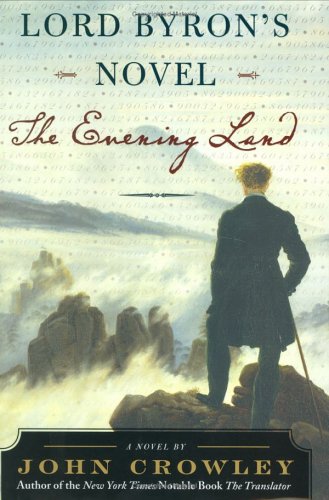
 , John Crowley (2005), I picked as one of my top five books of the first half 2010, and wrote then that I expected it to make it onto my end of the year top five. And so it has. It is a cleverly-plotted historical detective novel, an astonishing piece of literary impersonation, and it is, as you’d expect from Crowley, beautifully written. Admittedly, I’m no expert on Byron – his poetry or his life – but Crowley certainly convinced me. After the disappointment that was
  , this is Crowley on top form.
 , DG Compton (1974). While I’ve read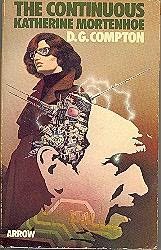

 , DH Lawrence (1928). My father was a big fan of DH Lawrence and often tried to persuade me to read his books. But it was only this year that I picked one up… and was immediately captivated. I’ve since bought an omnibus of two novels and three novellas, a short story collection and a poetry collection (from charity shops, of course). I plan to read more. There’s little I need to say about
  , Jacques Piccard and Robert S Dietz (1961)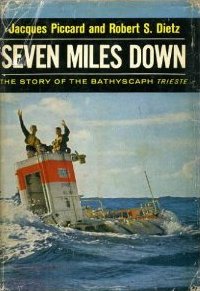
 , China Miéville (multi-award winner with fascinating premise; my review
  , David Howarth (a biography of ibn Saud; sort of like
  without the worms…);
  , Piers Bizony (the best of the books celebrating the 40th anniversary of Apollo 11; my review
  , Adam Roberts (loved the first half, but not so keen on the second);
  , Iain M Banks (a new Culture novel; enough said).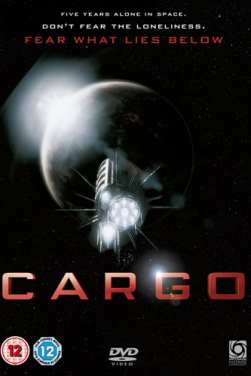
 , dir. Ivan Engler & Ralph Etter (2009). I know some people weren’t as impressed with this film as I was, but I thought it the best sf film of the year. It should have been on the Hugo Award shortlist. Okay, so it borrows heavily from other well-known sf films – or, perhaps, more charitably: it deploys tropes originally used in other well-known sf films. But it uses them cleverly, and they are all germane to the plot. The special effects and production design are also notably good. I reviewed Cargo for the Zone
  , dir. Babak Payami (2001), was, I think, the first Iranian film I’d ever watched, an
 , one of my favourite films, so perhaps I was predisposed to like it. It made my halfway through the year list, and confidently remained in place for the end of year top five. In it, a young woman travels around a remote island off the coast of Iran, trying to persuade people to vote in the upcoming election. She’s accompanied by a laconic soldier who has seen it all before. It’s a very funny film.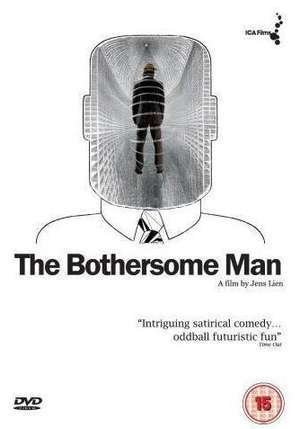
 , dir. Jens Lien (2006), is another film that made the halfway through the year list. It’s also funny. A man commits suicide and finds himself in a city in which everything is bland and comfortable and washed-out. Everybody is nice to him, but no one seems to care about anything. While there may be something utopian in this, it’s also clearly hellish. Or, at the very least, purgatorial. So he tries to escape. His first attempt, a re-enactment of his suicide, is hilarious. Eventually, he thinks he may have found a route out. But, of course, films such as this can never end happily. It’s not Hollywood, after all.
 , dir. Al Reinert (1989). I watched a number of documentaries about the Apollo

 . But the former just pips the latter. Fred MacMurray plays a toy company owner who tries to inject some excitement into his solidly middle-class life when he is visited by ex-employee Barbara Stanwyck, now independent, successful and glamorous . MacMurray’s family has become a prison, and he is desperate for release. But it is not to be. The film’s final scene, after Stanwyck has turned him down, as he leaves for work and his kids wish him well through the banisters of the staircase… That final shot of MacMurray seen through those bars is a perfect illustration of why I rate Sirk’s films so highly.
 (Michael Haneke remains one of the most interesting directors currently making films),
  (with Michael Hordern in the title role; the best of the six BBC adaptations of Shakespeare’s plays I watched during 2010),
  (has been praised by many; while good, I often found its heavy-handed 1960s sexism and racism hard to take);
  (grim, yet gripping and blackly humorous, film from Finland).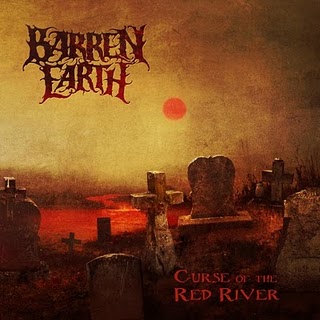
 , Barren Earth (2010), is the debut album by a Finnish metal supergroup side-project, featuring members of Amorphis, Moonsorrow and Kreator. The music is heavy doom/death metal with 1970s proggy bits – sort of like Opeth, but heavier (if that’s possible), and with strange, almost hippy-ish acoustic sections (there’s a flute in there somewhere, for example). It’s also quite brilliant. This one went on the top five the first time I listened to it. It’s about time they toured the UK. (
 , The Man-Eating Tree (2010), is another Finnish supergroup, as it contains the drummer from

 , Dark Tranquillity (2010), is the latest album by a band that has been a favourite of mine for many years. I’d describe it as a return to form, except they’ve never been off-form. Nonetheless, I was impressed when I heard the first track they released from the album (see
  , Fornost Arnor (2009). I saw an ad for this in Zero Tolerance magazine, and

 , Orphaned Land (2010), was a long-awaited album. Orphaned Land’s last release, the excellent
  , appeared in 2004, and they’ve been promising this follow-up ever since. It finally arrived this year, and it was worth the wait. I saw Orphaned Land live this year for the first time too, with Amorphis and Ghost Brigade, and they were easily the best act of the night. (
 , John Brunner (1976), is a fix-up of three novellas from 1953, 1958 and 1965. They’re juvenilia and it shows. For a start, it’s “enslaved”, not “slavered”. Gah. And despite being set in a post-collapse galactic empire, everyone talks like comedy barbarians. Brunner admits in an included essay that the novellas were partly inspired by a desire to invent a workable swords & spaceships universe – ie, interstellar travel but each world possessing no more than Dark Ages tech (although a helicopter does make an appearance). The mention of mutants and telepathic powers, however, in no way explains the magic powers which feature in one of the novellas. Aldiss did it much better in
  and
and  .
. , DG Compton (1980), I wrote about
  , Pierre Boulle (1963), was terrible. The film is a great deal better. Although originally published in France in 1963, this book reads like it was written forty years earlier. And, annoyingly, the author (or perhaps the translator of the Penguin edition I read) refers to chimpanzees, gorillas and orangutans throughout as “monkeys”. That’s in spite the book’s title. Gah. The story opens with a couple in a spaceship finding a message in a bottle floating in space – which is too dumb a concept to be taken seriously, as paper simply wouldn’t survive in space. The message is the story of Ulysse Mérou, who lands on an inhabitable planet in the Betelgeuse system and is captured by intelligent apes. He’s an unpleasant narrator, the swapping of humans for apes and vice versa is painfully obvious a conceit, and the details of the apes’ world don’t really add up. Avoid.
 , John Fowles (1963). Perhaps when reading an author’s oeuvre, you should start with their debut novel. I didn’t. The first novel I read by Fowles was
  , and I thought it was excellent. When I later read
  , I was even more impressed.
  , Sebastian Faulks (1989), is Faulks’ second novel. The eponymous character is a young woman of mysterious background who takes a waitress job at the titular hotel in France during the early 1930s. She immediately falls in love with wealthy lawyer Charles Hartmann. The two have an affair, and she tells him her secret. This changes his view of her, and so he breaks off the relationship…
  , Jean-Pierre Pécau (2010), is a graphic novel. Back in the Stone Age, four youths were each gifted with a powerful magic rune – the shield, sword, chalice and lance. These four Archons were immortal, and have battled throughout human history for supremacy. When one’s plan backfired during the early years of the Holy Roman Empire, it created William of Lecce, an evil immortal, who has subsequently been responsible for all the wars and tribulations since. There’s a good idea at the heart of this graphic novel, and the historical periods are handled well. But a lot seems unexplained, and it’s easy to get confused. This first volume covers from the Stone Age to the First World War, with episodes set in Ancient Egypt, the reign of Frederick I, the Great Fire of London, and Napoleonic France. I’ll be picking up Volume 2 when that becomes available.
 , Bernard Newman (1950), I read to review for Interzone.
 , dir. Tony Scott (2006), is one of those high-concept thrillers Hollywood likes to rip bleeding from the oeuvre of Philip K Dick. Except this one isn’t based on anything by PKD. A bomb explodes on a ferry in New Orleans, killing everyone aboard. Denzel Washington investigates, and is seconded to a super-secret taskforce which has access to… a time portal. They can see back in time, to the very moment of the explosion. There’s some guff about wormholes and Einstein-Rosen Bridges, but this is Hollywood so it’s not very plausible. It all ends up with Washington getting sent back in time to rescue a woman who might hold a clue to the bomber’s identity. Entertaining, but it’s best not to think about it too hard.
 , dir. Grant Heslov (2009), surprised me. I was expecting some stupid gung-ho thriller related to the title, but it turned out to be a funny and slightly offbeat comedy. The book on which it was based is actually non-fiction. Yes, the US military really did train soldiers in telepathy and telekinesis. Not to mention lots of other weird hippy-type crap. Not that they were successful. At least, not in the real world. In this movie, it’s left open. George Clooney is good, Spacey plays a nasty piece of work convincingly, but Ewan McGregor seems a bit out of place. A fun film.
 , dir. Douglas Sirk (1947), is an early thriller by the master of melodrama. It’s set in London, but made in the US with a US cast. Which makes for an odd viewing experience as the accents are variable. Lucille Ball plays an American, however. She gets embroiled in the hunt for a serial killer when Scotland Yard ask her to act as bait. There are several Sirk touches in the film, but it’s not a patch on his later stuff. It’s too light-hearted to really pass as noir, and a bit too bizarre in places as well; and some of the faux Hitchcockian staging sits at odds with the more conventionally-filmed interior scenes. One for fans.
 , dir. Kyle Newman (2008), I reviewed for VideoVista
  , dir. Robert Schwentke (2009), I watched because I’ll probably never get around to reading the book. And, to be honest, I couldn’t see what all the fuss was about. Man stalks woman through time, right from when she was really young. It struck me as a bit unhealthy. Meh.
 , dir. Dimitriy Kiselev & Aleksandr Voytinskiy (2009), I reviewed for VideoVista
  , dir. Guy Ritchie (2009), entertained me more than I expected. I don’t have much time for Ritchie’s films, but a few people had told me
  , dir. Anthony Asquith (1950), I reviewed for VideoVista
  , dir. Patrice Chéreau (1994). They were a nasty lot those French royals in the 16th century. We might piss and moan about our current government dumping on the population from a great height, but at least they haven’t manufactured a massacre just to keep themselves in power. That’s what the mother of King Charles IX did in France in 1572. Since he was Catholic, and she didn’t want the Protestants to gain the throne, she had a bunch of them killed, which in turn sparked off a wave of mob violence. As many as 30,000 might have died (estimates vary). The title character is the sister of King Charles IX, who is married off to Henri, King of Navarre (a separate kingdom in the Pyrenees), who is Protestant. This is allegedly to placate the French Protestants, but it doesn’t go very well. Henri is imprisoned, and forced to convert to Catholicism. He eventually escapes, with the help of his wife. But not before King Charles IX’s mother tries to poison him, but inadvertently poisons her son, the king. When he dies, his brother takes the throne. But then he dies too, and Henri ends up as King of France. So he got the last laugh, after all. You couldn’t make this sort of stuff up. If you put it in a fantasy novel, readers would say it was too implausible. This film adaptation is noted for its excellence, and it’s easy to see why. Although sixteenth century France seems a bit minimalist and flat, and there are lots of meaningful glances between members of the cast. And it’s a long film. But it’s definitely worth seeing.
 (1985), is the original BBC television series, not the inferior Hollywood remake. I thought I’d seen this before, perhaps when it was originally broadcast. But apparently not. Bob Peck plays a Yorkshire policeman, whose activist daughter is shot by an assassin on his doorstep. It turns out it’s all to do with Northmoor, a nearby nuclear waste facility based in an old mine. Peck’s character was a bit odd, even kissing one suspect in order to get him to confess, and later trying a similar trick on the assassin. Also bonkers was Joe Don Baker’s CIA agent, who helps Peck to crack the case because it’s in the interest of the US to blow the lid on the secret British plutonium project and the sale of Northmoor to a US billionaire. I can see why the series has become a cult favourite – it’s not the straightforward thriller a summary of its plot might suggest. It’s a little odd, but compelling viewing nonetheless. And the ending is completely mad.
 , dir. Robert Shaye (2007), is a genre film which seems to have slipped beneath a lot of people’s radars. It’s based on a short story by Lewis Padgett (AKA husband and wife Henry Kuttner and CL Moore). Basically, the future is in trouble, so they send kids’ toys back into the distant past in the hope of educating a child to send them what they need. A brother and sister, aged six and twelve, who live in Seattle in the present day find the toys. And they make the kids smarter. And also provide some good sfx. While this is a family film, I think it’s concept is a little too high for its target audience. It’s done well, but it tries too hard to get its central conceit across and comes close to losing its viewers in parts. Entertaining, but, well, perhaps the filmmakers shouldn’t have thought about it too hard.
 , dir. Bertrand Tavernier (1980), I wrote about
  , dir. William Cameron Menzies (1936) – there’s not much you can say about this. It’s an astonishing piece of cinema, especially given when it was made.
 , dir. Val Guest (1955) – Quatermass had a powerful impact on British sf, so one of the three films featuring him deserves to make this list.
 , dir. Val Guest (1961) – not only a disaster film, caused by testing nuclear weapons, but also a post-apocalypse film. The shots of empty cities remain creepy even today.
 , dir. Nathan H Juran (1964) – the recent Gatiss adaptation on BBC4 was entertaining, but there’s a bonkers charm to Lionel Jeffries’ portrayal of Professor Cavor.
 , dir. Gordon Flemyng (1966) – back when Daleks were cool, they drilled a hole to the centre of the Earth so they could replace it with an engine and turn the whole planet into a spaceship. And they did it in Britain. Until Bernard Cribbins stopped them. With a bit of help from Dr Who.
 , dir. François Truffaut (1966). The book is rubbish, but the film is excellent. Casting Julie Christie in two roles was inspired. And the monorail is really cool too.
 , dir. Bernard Knowles (1966) – an Anglo-German production, set in Germany, in which a scientist, well, he freezes himself. But his wife is murdered while he is frozen, and he’s the chief suspect. It sounds daft, but it works.
 , dir. Freddie Francis (1967) – and the plot of this one seems even dafter: meteorites land throughout the UK and take over people, who subsequently build an armed camp in southern England. This is so they can send rockets to the Moon, launched from underneath a lake, to help repair the alien spaceship marooned there.
 , dir. Stanley Kubrick (1968) – Kubrick may have been an American but this film was as British as you can get – from Anthony Burgess’s source novel through to the cast and crew.
 , dir. Robert Parrish (1969) – Gerry Anderson’s only live-action feature film, although some of the cast were as wooden as his puppets. The central conceit – a copy of the Earth on the other side of the Sun, where everything is reversed – is complete nonsense, but all those Meddings model shots make up for it.
 , dir. Stanley Kubrick (1971) – Kubrick gets two films on this list because
  , dir. Nicolas Roeg (1976) – Bowie was perfectly cast. Any film that can say that deserves to be on this list.
 , dir. Mike Hodges (1980) – it’s like a panto. In space. With Brian Blessed. Three reasons why it belongs on this list.
 , dir. Peter Hyams (1981) – there’s not much that’s British about
  set on a moon of Jupiter (although without Grace Kelly). This was actually a British production, however.
 , dir. Michael Radford (1984) – qualifies in the same way
  , dir. Terry Gilliam (1985) – could be
  , dir. Peter Hewitt (1997) – it’s about the Many Worlds Hypothesis… Well, sort of. It’s a romance, a fluffy version of Kieslowski’s
  , in which catching a train or not causes the story to split into two separate narratives.
 , dir. Danny Boyle (2002) – zombies that can run. Enough said.
 , dir. Michael Winterbottom (2003) – is one of those films which seems to inhabit a near-future which already exists. It also asks some difficult questions about biotechnology.
 , dir. Duncan Jones (2009) – I wrote about this
  (but then Reynolds has written a story name-checking Elton John, so perhaps not…). The characters in ‘Thousandth Night’ are better differentiated than they are in
  , Leonard Daventry (1965), is another of my British SF Masterworks, and I reviewed it
  , Jacques Piccard & Robert S Dietz (1962), I wrote about
  , Wilfred Burchett & Anthony Purdy (1962), I will be reviewing on my
  , dir. François Ozon (2000). I like Ozon’s films, but this one dragged a bit. Charlotte Rampling and her husband go on holiday to their seaside chalet. They head down to the beach, she settles down with a book, and he goes for a swim. And doesn’t come back. She calls the life guards, but there’s no sign of him. Eventually, they decide he must have drowned. She heads back to Paris and tries to get on with her life. But she refuses to admit that her husband is dead. Even when the police ask her to identify a body washed up on the beach, she claims it is not her husband’s though it plainly is. Meanwhile, her friends try to match-make, and she enters into a relationship with another man. Throughout this time, at home she hallucinates that her husband is alive and well. She tells him what she’s been up to, including the man she is seeing… I like the idea at the core of the story, but I suspect it’s not strong enough for a 94-minute film.
 , dir. David Hugh Jones (1982), is another of the BBC’s adaptations of Shakespeare’s plays, this one starring Richard Griffiths as Falstaff, and Prunella Scales as one of the eponymous wives. Not one of the Bard’s better ones, I thought; more like an Elizabethan Carry On film than anything else. Some of the jokes I’m sure I’ve seen in other plays, and the characters were just broad stereotypes. Griffiths didn’t seem quite big enough a presence as Falstaff, and the ending was completely bonkers. Falstaff tries to get it on with two of the wives, but they reject his advances. One of the husbands mistakenly believes Falstaff has succeeded and so pretends to be a secret admirer of his own wife needing Falstaff’s help to enter into an affair with her. It’s the usual mistaken/hidden identity Shakespearean thing. Oh, and there’s a daughter who loves one person, but her father wants her to marry someone else, and her mother wants her to marry yet another man. Once everything is sorted out, the good burghers of Windsor decide to have their revenge on the fat letcher, and trick him into meeting in a nearby wood at midnight. Where they’ve arranged for the local kids to dress up as fairies and sing and dance about him. And, of course, Falstaff thinks they’re real fairies…
 , dir. Brad Watson (2009), I reviewed for VideoVista
  , dir. Douglas Sirk (1955), was a rewatch, and remains a favourite film. It is almost note-perfect throughout. Jane Wyman plays an upper-middle class widow with two grown-up children. Rock Hudson is the man who comes round to trim her trees. They get talking, and subsequently fall in love. But all Wyman’s friends, and her two kids, frown on her relationship with the bohemian gardener.
  , dir. Gabe Ibáñez (2009), I reviewed for VideoVista
  , dir. Jorge Blanco, Javier and Marcos Martínez (2009), is one of a spate of recent genre-ish animated films, aimed at kids, but including something for adults. This one is a reverse of all those 1950s alien invasion B-movies – it’s the humans who invade. Well, human. A lone astronaut lands on the eponymous world, whose alien inhabitants bizarrely resemble those of a 1950s USA. There are some amusing little jokes – a pet which resembles an alien from the Alien franchise, for example – but like all films of this ilk, the clever visuals can’t disguise a story straight from the pro-family values conservative school of Hollywood script-writing.
 , dir. Fritz Lang (1956), I reviewed for VideoVista
  , dir. Christian Alvart (2009), I’d been meaning to get hold of for a while, but after seeing a few ambivalent reviews I decided not to shell out for the DVD. So I rented it instead. And I’m glad I did. Because it’s rubbish. Man wakes on giant spaceship. He’s all alone. Except for the zombie-like creatures. And the few survivors of, well, of something, who have managed to eke out a living. Nothing in this story made any sense whatsoever.
  , dir. Andrea Arnold (2009), is the second feature-length film by the director of
  , which I saw on DVD back in 2007. Teenage Mia lives on a sink estate but dreams of making it as a dancer. She practices daily in an abandoned flat. Her drunken young mother is in a relationship with a security guard at the local DIY superstore (played by Michael Fassbender). This is not one of those films with a well-defined beginning, middle and end, but it’s all the better for it. The cast are mostly excellent, particularly Fassbender and Katie Jarvis as Mia. Not an easy film to watch, but definitely worth seeing.
 , dir. Edward Zwick (2006), I liked more than I thought I would. Hollywood takes on the blood diamond trade, starring Leonardo DiCaprio – nothing there to signal it would be a good film, I’d have thought. But it proved to be a reasonably even-handed take on its subject, and DiCaprio, who seems to be getting better as he gets older, was good in the main role. The obligatory female role, played by Jennifer Connolly, struck me as a bit unnecessary, but Djimon Hounsou, as the man kidnapped by rebels to work in the diamond mine, played a good part.
 (1979). I recently watched an episode of Spooks. I’d never bothered watching it before. Now I understand why. Spooks is the direct opposite of
  (see
(see  too. That should prove a more interesting viewing experience as I’ll be able to compare it to the book.
 , dir. Phil Lord and Chris Miller (2009). Another quirky genre-ish animated family film. This time it’s about male bonding and family ties and, like
  , dir. Sandy Collora (2010), I reviewed for VideoVista
  , dir. John Farrow (1948), I reviewed for VideoVista
  , but I’m not entirely sure why. Rand’s book is risible, but this film is quite watchable.
 , dir. Yong-gyun Kim (2009), I reviewed for VideoVista
  , dir. Hayao Miyazaki (1984), was Studio Ghibli’s first feature-length film, although it was apparently released before the studio was founded. However, it certainly looks like a Ghibli film. It’s set on a post-apocalyptic Earth, which a voiceover by the title character tries to explain, but the explanation doesn’t really make sense, But that’s okay, because it’s the Ghibli visuals which are the film’s main draw. Sometimes the animation seemed a bit jerky, and the story didn’t always add up, but the film was better-paced than many anime films I’ve seen and it had a distinct story-arc from start to finish. Not a bad film – I enjoyed it, although I’ll not be dashing out to buy my own copy.
 , dir. Kathryn Bigelow. (2008). Cor, guess what. US soldiers are trigger-happy idiots. But that’s okay, because war is dehumanising. Hollywood films about war seem to either cast American soldiers as noble heroes or murdering incompetent dolts.
  , dir. Jonathan Mostow (2009), is your usual Hollywood tosh masquerading as science fiction. It embodies a couple of perversions which seem to be part of the so-called American Dream – a) true success for a company means dominating 100% of the market (which requires corrupting the legislature in order to make that legal); and b) any idealistic leader who opposes the successful company must be corrupt. I don’t think this is what neocons mean when they complain about “Hollywood liberals”. The surrogates of the title are near-indestructible robot bodies which people use every day – while they stay at home, safe and sound, operating their robot bodies through VR. Of course, the surrogates are prettified versions of the real people – except for star Bruce Willis’s surrogate, which actually looks quite creepy. Which is weirdly fitting, because the entire concept is creepy. Willis is a FBI agent tasked with investigating the bizarre murders of some surrogates – murders which also kill the surrogates’ operators. Definitely a film to avoid. But you knew that already because Bruce Willis has hair in it.
 , dir. James Edward Olmos (2009), was, well, odd. I like Battlestar Galactica, I even like the hiccup ending they put in because of the writers’ strike; and I like the actual real ending which had so many people annoyed. Which is why I bought
  , dir. Jared Hess (2009), is by the director of
  . It’s about a sf fan and a sf writer. It is also stupid and rubbish. I reviewed it for VideoVista
  , dir. Alvin Rakoff (1978), is another one of the BBC’s Complete Works of Shakespeare adaptations. Like many of Shakespeare’s plays, the story is known by pretty much everyone. Likewise, almost everyone forgets a few details – as I had. Such as the fact that Juliet is only thirteen when she secretly marries Romeo. In this adaptation, the actress playing Juliet, Rebecca Saire, is close to that age – she’s fourteen. And Romeo, who is almost twice her age, snogs her repeatedly. Otherwise… John Gielgud’s plummy tones bookend the story as the chorus, Michael Hordern plays the head of the Capulets well, but both Romeo and Juliet are a bit bland, and Anthony Andrews hams it up shamelessly as Mercutio. Not one of the BBC’s better adaptations.
 , dir. Tom Hooper (2009), I watched because I’d read the book and I wanted to see how it differed. Not much. Although they did tone down the swearing quite a lot. The film also missed out some of the story, especially some of Clough’s early life. But that’s not unexpected. Not being a fan of football, the subject of the film was hardly going to appeal, but I liked the book and that carried over into the film. Michael Sheen managed to turn Clough into a likable bloke, which might have been doing Clough a great disservice but certainly made for an entertaining film.
 , dir. Nacho Vigalondo (2007), is one of those twisty-turny time-travel films like
  but, well, is nowhere near as fiendishly twisty-turny as
  , dir. Peter Docter and Bob Peterson (2009), is the last of the “long forms” (ugh) from the Hugo awards shortlist. As everyone has said, the opening section showing Carl Fredricksen meeting his wife-to-be Ellie, the two of them growing up together, marrying, living to a ripe old age, her death… is superb. That’s not to say the remainder of the film is rubbish – it’s not as strong, but it’s still very good. And if I were voting on the Hugo, I think I’d place
  , and then No Award – as I disliked
  and thought
  so monumentally stupid it should never have been shortlisted. But
  , dir. Jacques Tourneur (1947), is film noir starring Robert Mitchum, and is generally considered one of the greatest of all film noir. I like film noir, but strangely this one didn’t appeal. It wasn’t Mitchum, who I find perfectly watchable; nor Jane Greer, who was good in her role. Perhaps it’s just one of those films you simply don’t connect with. I may have to watch it again some day.
 , dir. Morgan J Freeman (2009), I reviewed for VideoVista
  , dir. Ridley Scott (2008). Once upon a time, I was big fan of Scott’s films. Well, yes, he directed
  and
and  . But then he did
  . And after that he only managed the occasional film which seemed to rise above their story. Plus many that didn’t – I mean,
  ? Anyway, I hadn’t even recognised
  with more guns. Sort of. A perfectly respectable thriller, in other words, and happily not one of the gung-ho Republican thrillers which attempts to justify US foreign policy, torture, rendition or Gitmo. Leonardo DiCaprio plays a CIA Arabist (who speaks Arabic with a terrible accent) in Iraq. His handler, played by Philip Seymour Hoffman, is a fascist prick… and it’s DiCaprio’s attempt to do the job right, as he’s the man on the ground, against Hoffman’s neocon steamroller tactics which drives the plot. The action starts in post-invasion Iraq, but soon moves to Jordan and the hunt for an Al-Qa’eda terrorist cell. Better than I expected.
 and
and  , dir. Scott Derrickson (2008). Well, I’d been warned. This film is bad, they said. I’d seen the trailer and, despite starring Keanu Reeves, it didn’t look like it could be as dreadful as described. But I was wrong and they were right.
  , dir. Mike Nichols (2007). I fail to understand why the US insists on trying to make something heroic out of ill-thought adventurism and blatant interference in other nations’ sovereign affairs. They’d be the first to cry foul if someone did it to them. In
  , dir. Claude Chabron (1995). Nope, still don’t get it. I know Jonathan McAlmont is a big fan of Chabron’s films, but I’ve now seen a couple of them – because Isabelle Huppert stars in them – and I can’t see the appeal. In this one, Huppert is the post-mistress in a small village, and a bit of a rebel. A young woman starts as the housekeeper of a well-to-do family in the village, but the woman is illiterate and goes to great lengths to disguise the fact. Resentment builds up, in part fuelled by Huppert’s character, and it all comes to a violent end. An interesting thriller/drama, and entertaining, but it often feels too clinical in places to really admire.
 , dir. Clint Eastwood (2009). This was a surprise: Eastwood actually playing to his current strengths – i.e., in a role as an septuagenarian hard-ass. The racism in the film is harsh, and Eastwood’s character never quite redeems his bigotry – and it’s difficult to carry a film on an unlikeable protagonist, especially one who makes an effort not to be liked. There’s a weird subtext that it’s characters such as the part Eastwood plays which made the US great – as made concrete by the titular car – which doesn’t strike me as an especially edifying lesson for the history books. Nevertheless,
  , dir. James Cellan Jones (1983), is the third of the BBC’s Shakespeare collection, which I’m steadily working my way through. There were these twin boys, and they had as bonded servants another pair of twins. Except the pairs were separated – boy plus servant – at an early age. One grew up in Ephesus, and the other Syracuse. Both think the other dead. Then the one from Syracuse comes to visit Ephesus on business… It’s an obvious set-up for mistaken identity. Except both men are called Antiphone. And their servants are both called Dromio. And both pairs happen to be wearing exactly the same outfits. At which point, any sane person’s head will explode from an overabundance of implausible coincidences… Michael Kitchen was good as the Antiphones, and Roger Daltrey not too bad as the Dromios. The comedy manages to be both sly and obvious, but some of the language was horribly clunky. Not one of the Bard’s best.
 , dir. Fred Wolf (2008), I added to my rental list after reading somewhere that it was funny and ironic. The review lied. It’s a typical brainless sexist Hollywood comedy. A sorority of losers succeeds by turning themselves into objects of male desire, helped by an ex-Playboy Bunny. Admittedly, Anna Faris as the Playboy Bunny played her mind-numbingly stupid character well, but what’s funny about a stupid Bunny Girl? It’s pandering to stereotypes. But then the entire film did that. Eminently avoidable.
 , dir. John S Robertson (1920), and
  , dir. Robert Wiene (1920), I saw these two silent films in one night in Sheffield Cathedral, with live accompaniment provided by the organist. Not your typical venue for a pair of silent horror films, but never mind. It was an excellent night out, although church pews are bit hard and tend to numb the arse cheeks after a while. Barrymore chews scenery like it’s a seven-course banquet in
  , dir. Howard Hawks (1940), is another classic from some list of top 100 films – but I forget which. The copy I saw was a poor transfer, which was a shame. Dialogue doesn’t come much snappier than this, although the plot descended into farce when the main characters were trapped in the local prison. A very fast film – everything seemed to happen in quick succession. I can see why it’s a classic, and while it’s funny in parts, it all went a bit too farcical for me.
 , dir. Mark Cowen (2005), I reviewed on my Space Books blog
  , dir. Sam Mendes (2008), is an adaptation of the novel by Richard Yates, which I’ve not read. And, in some strange way, this film’s literary origin told against it. The first two acts are optimistic, as Leonardo diCaprio and Kate Winslet marry and set up home, then decide to jack it all in and move to Paris with the kids. But I knew it couldn’t last – books and films of this type never do. And so it proved, as everything started to go horribly wrong. The two leads were excellent, and the film evoked period extremely well. But it’s by no means a cheerful movie, even though it initially tries to represent itself as such.
 , dir. Miklós Jancsó (1967), is another one of those foreign films I stuck on my rental list and can no longer remember why I did so. Happily, whenever I done this it’s always turned out well, and this one was no exception. The red and the white from the title are Russians, and the film is set two years after the October Revolution. Hungarian irregulars support the Reds in their battles with the Whites. This is not a film with a definable story-arc, or any kind of resolution. It’s brutal, but not gory, and was unsurprisingly banned in Russia for not showing the Reds as “heroic” (not that the Whites are heroic, either). Definitely worth seeing.
 , dir. Justin Kerrigan (2008), is an odd film. I reviewed it for VideoVista
  , dir. Roman Polanski (1965), was Polanski’s first English-language film, a psychological horror film set in London and starring Catherine Deneuve. I reviewed it for Videovista
  (1980). I have odd memories of bits and pieces of this programme from when it was first broadcast and, while I knew the general set-up and characters, I don’t think I could have described the plot of any individual episode. Series 3 is a case in point. Two new characters join the crew of the Liberator in this series, and I have quite strong memories of someone living in a spaceship hidden under the sea with a disguised hatch on the beach. Which proves to be the home of Dayna, as introduced in the first episode of this series. One thing I certainly hadn’t forgotten was how cheap Blake’s 7 was, with sets even wobblier than Dr Who’s, alien worlds that bear a remarkable resemblance to parts of the UK, and alien monsters that wouldn’t convince a two-year-old. The central characters are drawn well, Avon and Vila especially – both get some great lines – but the episodes themselves are mostly rubbish. As Blake’s 7 progressed through each season, it grew less plausible and more nonsensical, and some of the episodes in series 3 must have been the nadir. Still, it’s a piece, an important piece, of UK telly sf, was always watchable drama, and there were some good ideas in there every now and again.
 , dir. Sacha Gervasi (2009), I thought would appeal to me, given that I’m a metal-head. It’s a warts-and-all documentary on the titular Canadian heavy metal band who have been going for thirty years. Their fortunes have declined with the years, however – although, unsurprisingly, this film has improved them somewhat.
  in that respect. But it shouldn’t have been. It’s about a working band. They’re not Spinal Tap, and it’s misrepresentation to present them as though they were. Nor does
  , dir. Elijah Moshinsky (1982), is another of the BBC’s Shakespeare adaptations. The thing about Shakespeare is that you already know the story, even if you know nothing about the play. The plot of
  are superior adaptations.
