July felt like a month of molasses – everything seemed a bit of a struggle. I thought I hadn’t read as much as usual, nor written as much. And yet, looking back, I seem to have read as many books as I typically do in a month. Perhaps I wasn’t exactly prolific on the writing-front during the same period – not that I ever am – but I did manage to start and finish a couple of new pieces. Happily, August felt a little better. Although, having said that, I’ve only just started on my Summer Reading Project (see here); and I’d planned to read the first book in July…
Anyway, you know how it goes: books wot I read and films wot I watched since the last post on this wot I wrote.
Books
The Continuous Katherine Mortenhoe, DG Compton (1975), I wrote about here.
Conflicts, edited by Ian Whates (2010), I reviewed for Interzone. A mixed bag: some good ones, but not so good – as I hope my review makes clear.
Hello Summer, Goodbye, Michael G Coney (1975), is Eric Brown’s favourite sf novel – he even managed to sneak it onto the Grauniad’s 1000 novels everyone must read last year. I’m surprised I’d not read this sooner. Coney’s name is not unknown to me, but I seem to have managed to avoid his novels over the years. Yet I vaguely recall having his books recommended to me at cons as much as twenty years ago. I should have read them then, because Hello Summer, Goodbye is good. The world-building is excellent, it’s well-plotted, and the characters are drawn well. It’s set on a world with extreme seasons and human-like people. Drove, a young teenager, and his parents have moved to Pallahaxi, a seaside town, because of the war with a neighbouring nation. The previous year Drove had fallen in love with a town resident, Browneyes, and he’s keen to renew his friendship with her. Which he does. He also learns more about the war, and about his world. Drove is admittedly a bit of a prat, and he matures surprisingly quickly about halfway through the book. But the ending is cleverly done. There’s a sequel, I Remember Pallahaxi, which I wouldn’t mind reading.
The Possibility of an Island, Michel Houellebecq (2005), is the second Houellebecq novel I’ve read and, while the story is different, it’s very much like Atomised. The same concerns – immortality and sex – are there, the same misanthropic and nihilistic tone is there. In this one, Daniel is a French comedian, fêted for his edginess. As he grows older, he finds his libido waning and his ennui waxing. By accident, he gets involved with the Elohimites, your typical nutjob alien-saviours/creators cult/religion. Except the Elohimits are serious about genetically-engineering humanity to be immortal, and have the scientific chops to make a proper job of it. Daniel takes on the role of documenting the Elohimites’ quest for immortality, an important aspect of the stopgap measure they introduce – as indicated by short interspersed chapters by Daniel26 (i.e., the 26th incarnation of Daniel). There’s something about Houellebecq’s writing which carries you through his novels – despite the misery; the unhealthy, and often misogynistic, focus on sex; and the weak sfnal ideas around which he builds his plots, and the unconvincing way he often deploys those ideas. I have Platform on the TBR.
Anna Mercury Volume 1: The Cutter, Warren Ellis & Facundo Percio (2009), and Ignition City Volume 1, Warren Ellis & Gianluca Pagliarani (2010), are a pair of mini-series collected as trade paperbacks. Both are sf. In Anna Mercury Volume 1: The Cutter, the title character is an agent of a secret organisation who travels to alternate Earths. There are apparently nine of these alternate Earths, and they were discovered when the USS Eldridge disappeared in 1943 during the Philadelphia Experiment. The means of travel used by Mercury means she has, effectively, superpowers. In this story, she’s attempting to prevent a war between two powers. The aggressors are the nation where the USS Eldridge arrived, and they’ve reverse-engineered the technology they glimpsed and built a cargo-cult around the ship’s appearance. Ignition City Volume 1 is, I think, the better of the two, although its premise isn’t as interesting, or off-the-wall, as the other one. It’s set in a post-Flash Gordon 1970s, after the Earth has fared badly since defeating Kharg (Ming, in other words). Flash Gordon is named Lightning Bowman, and he’s not heroic anymore. Mary Raven, daughter of another such space hero, has come to Ignition City to learn how her father died. He was murdered in his sleep, probably by Lightning Bowman. But why? There’s a brilliant exchange in this: when Mary meets the Professor Zarkov character and is invited into his house, she says, “… your house smells weird.” He replies, “It smells of SCIENCE.” I hope they do another series of this one. The art in both, by the way, is uniformly very good.
The Alteration, Kingsley Amis (1976). Ten-year-old Hubert Anvil is a chorister, with perhaps the best voice in Christendom, and so the abbot of his school decides he should have a glittering career as a singer. There’s only one thing that needs to be done first: castrate him. In the world of The Alteration, there was no Protestantism and so the Roman Catholic Church “rules” all of Europe. Technology has reached about mid-Victorian levels, although the book is set in 1976. Anvil’s impending “alteration” sets off a chain of events: he meets the pope, runs away from school, is abducted by a Jewish kidnapper who uses ransom money to finance Aliyah, and tries to escape to North America. Amis’ alternate world is cleverly done, there are some excellent sf in-jokes in the story, and the plot canters along at a comfortable pace. The writing’s a bit clumsy in one or two places, and the fact it’s a “satire” is plainly meant to justify the frankly disappointing ending. Still a fun read, though.
The Chimpanzee Complex Vol 3: Civilisation, Richard Marazano & Jean-Michel Ponzio (2010), is the final part of this French graphic novel trilogy, and… Something doesn’t quite add up. Parts one and two both had really cool ideas, but this one feels like it belongs to another story. It’s also a little odd reading a comic which doesn’t use decompression. I think I need to reread all three parts of The Chimpanzee Complex… and then I will write about it here. Maybe.
Starswarm, Brian W Aldiss (1964), is another attempt by Aldiss to do Last and First Men, much like he tried in Galaxies Like Grains of Sand. I like Aldiss’s fiction, and I have a high regard for it, but a month after reading this collection I can remember almost nothing of it.
Veteran, Gavin G Smith (2010). I met Gavin at alt.fiction (see here), and he arranged for me to be sent a review copy of this, his debut novel. My review is up on SFF Chronicles here. It’s not a book I enjoyed reading a great deal – I didn’t like the world, and I’m not a fan of military sf. It’s a polished debut, there’s no doubt about that; but it’s not for me.
The Inward Animal, Terence Tiller (1943), is a collection of Tiller’s poetry. There’s a faint stamp on the cover of this first edition which reads, ‘Burma Educational Bookshop, 549 Merchant Street, Rangoon’, so it’s not only come a long way in time but also in space to reach my bookshelves. The poems are war poems, inasmuch as they attempt what Tiller describes in a foreword as the three parts of a pattern of experience: “a shocked and defensive rebellion; reconciliation must follow; the birth of some mutual thing in which the old and the new, the self and the alien, are combined after war”. Tiller I find a very technical poet, a skilled practitioner of form and imagery, and The Inward Animal shows this more than his other collections. Several of the poems were composed in Cairo, where Tiller taught during World War II and was a member of both the Personal Landscape and Salamander groups.
Smiley’s People, John Le Carré (1980), I read because it was on one of those 1001 Books You Must Read Before You Die lists (but not the Grauniad one). I’ve read a number of Le Carré’s novels over the years but not, apparently, this one. I don’t think I even saw the BBC dramatisation, starring Alec Guinness as Smiley; although I wouldn’t mind doing so (in fact, I think I’ll stick it on the DVD rental list; and Tinker, Tailor, Soldier, Spy too). Anyway, as a novel, Smiley’s People was slow, and seemed to veer strangely from narrative to reportage and back. Le Carré also appeared more interested in Smiley-as-enigma than he did in the actual story. But it had a good sense of place, and the way the plot was slowly revealed was cleverly done.
Roads Not Taken, edited by Gardner Dozois & Stanley Schmidt (1998), is one of those anthologies cobbled together from recycled stories from Asimov’s. This one is themed and the theme is, er, alternate history. The usual suspects are all present and correct: Harry Turtledove, Mike Resnick and, um, Gene Wolfe. I got this book free from readitswapit.co.uk, which is just as well as it’s crap. It takes real skill as an editor to put together an anthology that contains not one single decent story, but they managed it with this one.
The Restoration Game, Ken MacLeod (2010), I enjoyed a lot more than I’d expected to. My review of it can be found at SFF Chronicles here.
Films
Moon , dir. Duncan Jones (2009), is the best film on the Hugo ballot for “Dramatic Presentation, Long Form” (what a horrible mouthful). I wrote about it here.
Surrogates , dir. Jonathan Mostow (2009), is your usual Hollywood tosh masquerading as science fiction. It embodies a couple of perversions which seem to be part of the so-called American Dream – a) true success for a company means dominating 100% of the market (which requires corrupting the legislature in order to make that legal); and b) any idealistic leader who opposes the successful company must be corrupt. I don’t think this is what neocons mean when they complain about “Hollywood liberals”. The surrogates of the title are near-indestructible robot bodies which people use every day – while they stay at home, safe and sound, operating their robot bodies through VR. Of course, the surrogates are prettified versions of the real people – except for star Bruce Willis’s surrogate, which actually looks quite creepy. Which is weirdly fitting, because the entire concept is creepy. Willis is a FBI agent tasked with investigating the bizarre murders of some surrogates – murders which also kill the surrogates’ operators. Definitely a film to avoid. But you knew that already because Bruce Willis has hair in it.
Battlestar Galactica: The Plan , dir. James Edward Olmos (2009), was, well, odd. I like Battlestar Galactica, I even like the hiccup ending they put in because of the writers’ strike; and I like the actual real ending which had so many people annoyed. Which is why I bought Battlestar Galactica: The Plan. It’s a feature-length television movie which tells the story of all four seasons of the television series from the point of view of the Cylons. And chiefly from the point of view of a pair of them played by Dean Stockwell. If you’ve not watched the TV series, you won’t understand this. If you have, you’ll wonder why they thought they needed to make it.
Humanoid Woman, dir. Richard Victorov (1981), was a rewatch, but I decided to write about it here as I hadn’t done so before. It’s an English-dubbed and much-mangled version of a Russian film, Через тернии к звездам (To The Stars By Hard Ways). There’s an official site here in Russian. A starship comes across the wreck of an alien ship. The crew explore the wreck, and find a number of dead humanoid bodies and a single survivor. This section was filmed underwater to simulate zero gravity – which works quite well, but does look weirdly murky. The survivor, Niya, is taken to Earth and invited to stay with a scientist, his family and crap-looking robot. She has lost her memory, but appears to have weird supernatural abilities such as teleportation. She recovers her memory, and remembers that she is from the planet of Dessa, which has suffered a catastrophic ecological collapse due to over-industrialisation. Earth puts together a rescue mission, with Niya, and heads for Dessa. But the Dessans are split into two warring factions, and one manages to control Niya telepathically. She breaks their control, and releases some sort of intelligent foam, which seems to clean up the planet. This is a very strange film, and I’m not entirely sure whether it makes sense. That may be an artefact of being mangled and dubbed for the English-language market, but I suspect the original Russian version was also very odd. A director’s cut with new special effects was apparently released a couple of years ago on DVD by the director’s son. If it was available with English subtitles, I’d seriously consider buying a copy.
Cargo , dir. Ivan Engler & Ralph Etter (2009), I reviewed for The Zone here. It is also the best sf film I have seen for several years, and should have been on the Hugo shortlist.
Gentlemen Broncos , dir. Jared Hess (2009), is by the director of Napoleon Dynamite
 . It’s about a sf fan and a sf writer. It is also stupid and rubbish. I reviewed it for VideoVista here.
Romeo & Juliet , dir. Alvin Rakoff (1978), is another one of the BBC’s Complete Works of Shakespeare adaptations. Like many of Shakespeare’s plays, the story is known by pretty much everyone. Likewise, almost everyone forgets a few details – as I had. Such as the fact that Juliet is only thirteen when she secretly marries Romeo. In this adaptation, the actress playing Juliet, Rebecca Saire, is close to that age – she’s fourteen. And Romeo, who is almost twice her age, snogs her repeatedly. Otherwise… John Gielgud’s plummy tones bookend the story as the chorus, Michael Hordern plays the head of the Capulets well, but both Romeo and Juliet are a bit bland, and Anthony Andrews hams it up shamelessly as Mercutio. Not one of the BBC’s better adaptations.
The Damned United , dir. Tom Hooper (2009), I watched because I’d read the book and I wanted to see how it differed. Not much. Although they did tone down the swearing quite a lot. The film also missed out some of the story, especially some of Clough’s early life. But that’s not unexpected. Not being a fan of football, the subject of the film was hardly going to appeal, but I liked the book and that carried over into the film. Michael Sheen managed to turn Clough into a likable bloke, which might have been doing Clough a great disservice but certainly made for an entertaining film.
Timecrimes , dir. Nacho Vigalondo (2007), is one of those twisty-turny time-travel films like Primer
 but, well, is nowhere near as fiendishly twisty-turny as Primer. Héctor and his wife have just moved into their new house. While the wife heads off to the shops, Héctor relaxes in the garden. But he spots something in the woods up the hill from his house. It’s a young woman undressing. He investigates, finds the young woman seemingly out cold, is attacked by a mysterious figure with its head wrapped in bandages… and runs away to find himself in a laboratory with a strange machine. The scientist present urges him to hide in the machine, which proves to be a time machine, so he travels back in time… and sort of recreates the plot of Heinlein’s ‘By His Bootstraps’… A clever and entertaining film.
Up , dir. Peter Docter and Bob Peterson (2009), is the last of the “long forms” (ugh) from the Hugo awards shortlist. As everyone has said, the opening section showing Carl Fredricksen meeting his wife-to-be Ellie, the two of them growing up together, marrying, living to a ripe old age, her death… is superb. That’s not to say the remainder of the film is rubbish – it’s not as strong, but it’s still very good. And if I were voting on the Hugo, I think I’d place Moon first, followed by Up, Avatar
 , and then No Award – as I disliked District 9
 and thought Star Trek XI
 so monumentally stupid it should never have been shortlisted. But Up… The whole balloon thing is a bit too whimsical, but sort of works. The bird is annoying – as is the fat kid, but only initially as he soon grows on you. The dogs are excellent – the best things in the film, in fact. It’s a fun movie, worth seeing. And it may well win the Hugo, although I suspect not.
Out Of The Past , dir. Jacques Tourneur (1947), is film noir starring Robert Mitchum, and is generally considered one of the greatest of all film noir. I like film noir, but strangely this one didn’t appeal. It wasn’t Mitchum, who I find perfectly watchable; nor Jane Greer, who was good in her role. Perhaps it’s just one of those films you simply don’t connect with. I may have to watch it again some day.
Homecoming , dir. Morgan J Freeman (2009), I reviewed for VideoVista here. No, it’s not that Morgan Freeman. Also, it stars Mischa Barton.
Body Of Lies , dir. Ridley Scott (2008). Once upon a time, I was big fan of Scott’s films. Well, yes, he directed Alien
 and Blade Runner
 . But then he did Legend
 . And after that he only managed the occasional film which seemed to rise above their story. Plus many that didn’t – I mean, G.I. Jane
 ? Anyway, I hadn’t even recognised Body Of Lies as one of his when I sat down to watch it… and discovered it was in the opening credits. It is, essentially, Syriana
 with more guns. Sort of. A perfectly respectable thriller, in other words, and happily not one of the gung-ho Republican thrillers which attempts to justify US foreign policy, torture, rendition or Gitmo. Leonardo DiCaprio plays a CIA Arabist (who speaks Arabic with a terrible accent) in Iraq. His handler, played by Philip Seymour Hoffman, is a fascist prick… and it’s DiCaprio’s attempt to do the job right, as he’s the man on the ground, against Hoffman’s neocon steamroller tactics which drives the plot. The action starts in post-invasion Iraq, but soon moves to Jordan and the hunt for an Al-Qa’eda terrorist cell. Better than I expected.
Mesrine 1: Killer Instinct and Mesrine 2: Public Enemy No. 1, dir. Jean-François Richet (2008), were an odd pair of films. They’re about the eponymous gangster, played extremely well by Vincent Cassel, from his beginnings as a soldier in Algeria to his ignominious end as public enemy number one. The films present his life without moralising, which made for a nice change, but about halfway through they started to turn increasingly less realistic. After fleeing to Canada, Mesrine is arrested and jailed in a high security prison which makes Gitmo look like Disney World. This was during the 1970s. He escapes, and returns to shoot the place up – ostensibly to free the other prisoners, but he fails. He returns to France, continues to rob banks, and is eventually killed in a shoot-out with the police. Mesrine was, apparently, a real person, and the events of the two films are mostly based on true events – despite seeming in places like something out of a Hollywood thriller. These are good films, well-made thrillers, and definitely worth seeing.
The Day The Earth Stood Still , dir. Scott Derrickson (2008). Well, I’d been warned. This film is bad, they said. I’d seen the trailer and, despite starring Keanu Reeves, it didn’t look like it could be as dreadful as described. But I was wrong and they were right. The Day The Earth Stood Still is terrible. Reeves is even more wooden than usual, the plot is stupid, the story doesn’t make much sense, and even the message of the original has been garbled. Avoid.











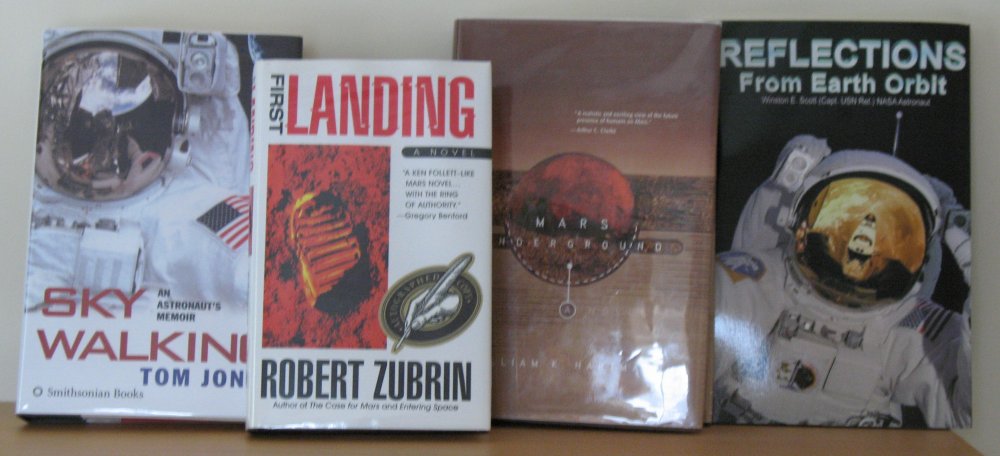
 over Christmas, so I’ll be posting a review of that here soon. But I do have several others from the list to read and write about.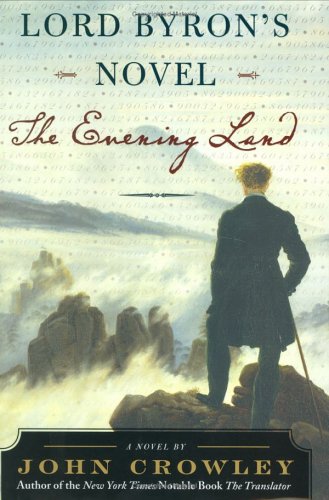
 , John Crowley (2005), I picked as one of my top five books of the first half 2010, and wrote then that I expected it to make it onto my end of the year top five. And so it has. It is a cleverly-plotted historical detective novel, an astonishing piece of literary impersonation, and it is, as you’d expect from Crowley, beautifully written. Admittedly, I’m no expert on Byron – his poetry or his life – but Crowley certainly convinced me. After the disappointment that was
  , this is Crowley on top form.
 , DG Compton (1974). While I’ve read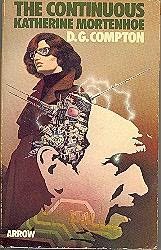

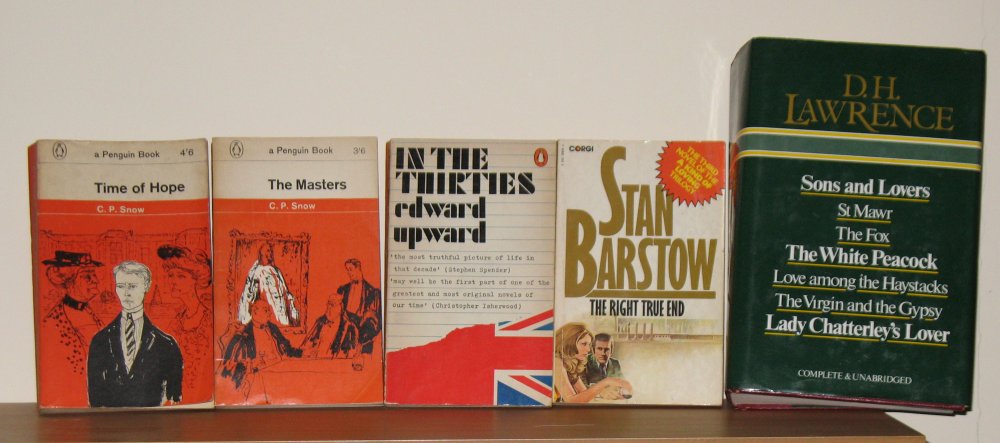
 , DH Lawrence (1928). My father was a big fan of DH Lawrence and often tried to persuade me to read his books. But it was only this year that I picked one up… and was immediately captivated. I’ve since bought an omnibus of two novels and three novellas, a short story collection and a poetry collection (from charity shops, of course). I plan to read more. There’s little I need to say about
  , Jacques Piccard and Robert S Dietz (1961)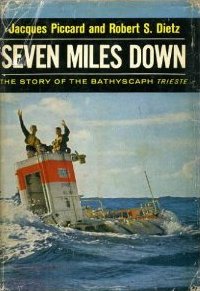
 , David Howarth (a biography of ibn Saud; sort of like
  without the worms…);
  , Piers Bizony (the best of the books celebrating the 40th anniversary of Apollo 11; my review
  , Adam Roberts (loved the first half, but not so keen on the second);
  , Iain M Banks (a new Culture novel; enough said).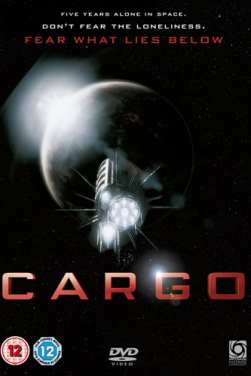
 , dir. Babak Payami (2001), was, I think, the first Iranian film I’d ever watched, an
 , one of my favourite films, so perhaps I was predisposed to like it. It made my halfway through the year list, and confidently remained in place for the end of year top five. In it, a young woman travels around a remote island off the coast of Iran, trying to persuade people to vote in the upcoming election. She’s accompanied by a laconic soldier who has seen it all before. It’s a very funny film.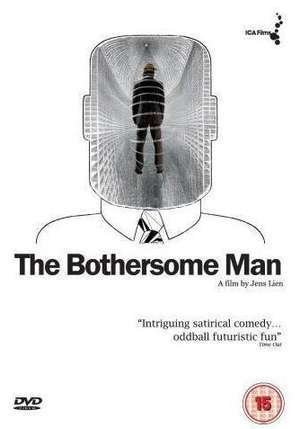
 , dir. Jens Lien (2006), is another film that made the halfway through the year list. It’s also funny. A man commits suicide and finds himself in a city in which everything is bland and comfortable and washed-out. Everybody is nice to him, but no one seems to care about anything. While there may be something utopian in this, it’s also clearly hellish. Or, at the very least, purgatorial. So he tries to escape. His first attempt, a re-enactment of his suicide, is hilarious. Eventually, he thinks he may have found a route out. But, of course, films such as this can never end happily. It’s not Hollywood, after all.
 , dir. Al Reinert (1989). I watched a number of documentaries about the Apollo

 . But the former just pips the latter. Fred MacMurray plays a toy company owner who tries to inject some excitement into his solidly middle-class life when he is visited by ex-employee Barbara Stanwyck, now independent, successful and glamorous . MacMurray’s family has become a prison, and he is desperate for release. But it is not to be. The film’s final scene, after Stanwyck has turned him down, as he leaves for work and his kids wish him well through the banisters of the staircase… That final shot of MacMurray seen through those bars is a perfect illustration of why I rate Sirk’s films so highly.
 (Michael Haneke remains one of the most interesting directors currently making films),
  (with Michael Hordern in the title role; the best of the six BBC adaptations of Shakespeare’s plays I watched during 2010),
  (has been praised by many; while good, I often found its heavy-handed 1960s sexism and racism hard to take);
  (grim, yet gripping and blackly humorous, film from Finland).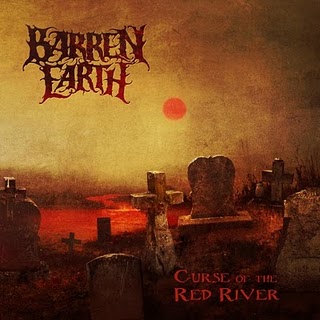
 , Barren Earth (2010), is the debut album by a Finnish metal supergroup side-project, featuring members of Amorphis, Moonsorrow and Kreator. The music is heavy doom/death metal with 1970s proggy bits – sort of like Opeth, but heavier (if that’s possible), and with strange, almost hippy-ish acoustic sections (there’s a flute in there somewhere, for example). It’s also quite brilliant. This one went on the top five the first time I listened to it. It’s about time they toured the UK. (
 , The Man-Eating Tree (2010), is another Finnish supergroup, as it contains the drummer from

 , Dark Tranquillity (2010), is the latest album by a band that has been a favourite of mine for many years. I’d describe it as a return to form, except they’ve never been off-form. Nonetheless, I was impressed when I heard the first track they released from the album (see
  , Fornost Arnor (2009). I saw an ad for this in Zero Tolerance magazine, and

 , Orphaned Land (2010), was a long-awaited album. Orphaned Land’s last release, the excellent
  , appeared in 2004, and they’ve been promising this follow-up ever since. It finally arrived this year, and it was worth the wait. I saw Orphaned Land live this year for the first time too, with Amorphis and Ghost Brigade, and they were easily the best act of the night. (
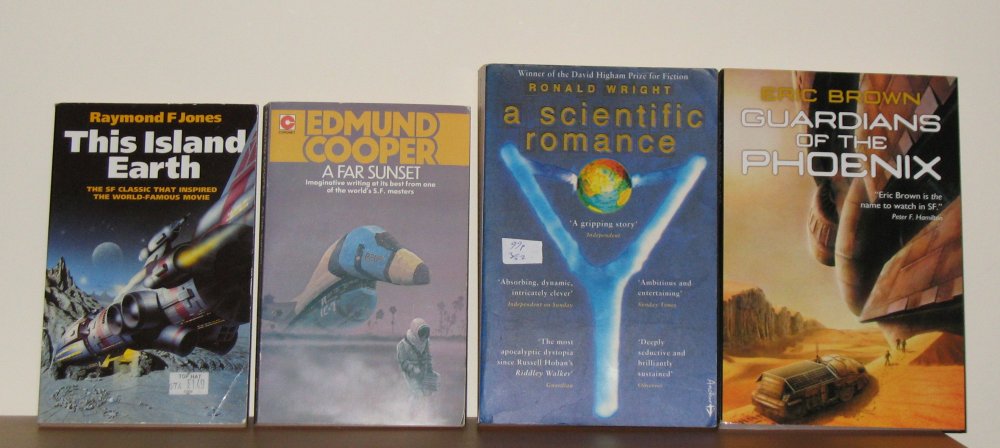
 , John Brunner (1976), is a fix-up of three novellas from 1953, 1958 and 1965. They’re juvenilia and it shows. For a start, it’s “enslaved”, not “slavered”. Gah. And despite being set in a post-collapse galactic empire, everyone talks like comedy barbarians. Brunner admits in an included essay that the novellas were partly inspired by a desire to invent a workable swords & spaceships universe – ie, interstellar travel but each world possessing no more than Dark Ages tech (although a helicopter does make an appearance). The mention of mutants and telepathic powers, however, in no way explains the magic powers which feature in one of the novellas. Aldiss did it much better in
  and
and  .
. , DG Compton (1980), I wrote about
  , Pierre Boulle (1963), was terrible. The film is a great deal better. Although originally published in France in 1963, this book reads like it was written forty years earlier. And, annoyingly, the author (or perhaps the translator of the Penguin edition I read) refers to chimpanzees, gorillas and orangutans throughout as “monkeys”. That’s in spite the book’s title. Gah. The story opens with a couple in a spaceship finding a message in a bottle floating in space – which is too dumb a concept to be taken seriously, as paper simply wouldn’t survive in space. The message is the story of Ulysse Mérou, who lands on an inhabitable planet in the Betelgeuse system and is captured by intelligent apes. He’s an unpleasant narrator, the swapping of humans for apes and vice versa is painfully obvious a conceit, and the details of the apes’ world don’t really add up. Avoid.
 , John Fowles (1963). Perhaps when reading an author’s oeuvre, you should start with their debut novel. I didn’t. The first novel I read by Fowles was
  , and I thought it was excellent. When I later read
  , I was even more impressed.
  , Sebastian Faulks (1989), is Faulks’ second novel. The eponymous character is a young woman of mysterious background who takes a waitress job at the titular hotel in France during the early 1930s. She immediately falls in love with wealthy lawyer Charles Hartmann. The two have an affair, and she tells him her secret. This changes his view of her, and so he breaks off the relationship…
  , Jean-Pierre Pécau (2010), is a graphic novel. Back in the Stone Age, four youths were each gifted with a powerful magic rune – the shield, sword, chalice and lance. These four Archons were immortal, and have battled throughout human history for supremacy. When one’s plan backfired during the early years of the Holy Roman Empire, it created William of Lecce, an evil immortal, who has subsequently been responsible for all the wars and tribulations since. There’s a good idea at the heart of this graphic novel, and the historical periods are handled well. But a lot seems unexplained, and it’s easy to get confused. This first volume covers from the Stone Age to the First World War, with episodes set in Ancient Egypt, the reign of Frederick I, the Great Fire of London, and Napoleonic France. I’ll be picking up Volume 2 when that becomes available.
 , Bernard Newman (1950), I read to review for Interzone.
 , dir. Tony Scott (2006), is one of those high-concept thrillers Hollywood likes to rip bleeding from the oeuvre of Philip K Dick. Except this one isn’t based on anything by PKD. A bomb explodes on a ferry in New Orleans, killing everyone aboard. Denzel Washington investigates, and is seconded to a super-secret taskforce which has access to… a time portal. They can see back in time, to the very moment of the explosion. There’s some guff about wormholes and Einstein-Rosen Bridges, but this is Hollywood so it’s not very plausible. It all ends up with Washington getting sent back in time to rescue a woman who might hold a clue to the bomber’s identity. Entertaining, but it’s best not to think about it too hard.
 , dir. Grant Heslov (2009), surprised me. I was expecting some stupid gung-ho thriller related to the title, but it turned out to be a funny and slightly offbeat comedy. The book on which it was based is actually non-fiction. Yes, the US military really did train soldiers in telepathy and telekinesis. Not to mention lots of other weird hippy-type crap. Not that they were successful. At least, not in the real world. In this movie, it’s left open. George Clooney is good, Spacey plays a nasty piece of work convincingly, but Ewan McGregor seems a bit out of place. A fun film.
 , dir. Douglas Sirk (1947), is an early thriller by the master of melodrama. It’s set in London, but made in the US with a US cast. Which makes for an odd viewing experience as the accents are variable. Lucille Ball plays an American, however. She gets embroiled in the hunt for a serial killer when Scotland Yard ask her to act as bait. There are several Sirk touches in the film, but it’s not a patch on his later stuff. It’s too light-hearted to really pass as noir, and a bit too bizarre in places as well; and some of the faux Hitchcockian staging sits at odds with the more conventionally-filmed interior scenes. One for fans.
 , dir. Kyle Newman (2008), I reviewed for VideoVista
  , dir. Robert Schwentke (2009), I watched because I’ll probably never get around to reading the book. And, to be honest, I couldn’t see what all the fuss was about. Man stalks woman through time, right from when she was really young. It struck me as a bit unhealthy. Meh.
 , dir. Dimitriy Kiselev & Aleksandr Voytinskiy (2009), I reviewed for VideoVista
  , dir. Guy Ritchie (2009), entertained me more than I expected. I don’t have much time for Ritchie’s films, but a few people had told me
  , dir. Anthony Asquith (1950), I reviewed for VideoVista
  , dir. Patrice Chéreau (1994). They were a nasty lot those French royals in the 16th century. We might piss and moan about our current government dumping on the population from a great height, but at least they haven’t manufactured a massacre just to keep themselves in power. That’s what the mother of King Charles IX did in France in 1572. Since he was Catholic, and she didn’t want the Protestants to gain the throne, she had a bunch of them killed, which in turn sparked off a wave of mob violence. As many as 30,000 might have died (estimates vary). The title character is the sister of King Charles IX, who is married off to Henri, King of Navarre (a separate kingdom in the Pyrenees), who is Protestant. This is allegedly to placate the French Protestants, but it doesn’t go very well. Henri is imprisoned, and forced to convert to Catholicism. He eventually escapes, with the help of his wife. But not before King Charles IX’s mother tries to poison him, but inadvertently poisons her son, the king. When he dies, his brother takes the throne. But then he dies too, and Henri ends up as King of France. So he got the last laugh, after all. You couldn’t make this sort of stuff up. If you put it in a fantasy novel, readers would say it was too implausible. This film adaptation is noted for its excellence, and it’s easy to see why. Although sixteenth century France seems a bit minimalist and flat, and there are lots of meaningful glances between members of the cast. And it’s a long film. But it’s definitely worth seeing.
 (1985), is the original BBC television series, not the inferior Hollywood remake. I thought I’d seen this before, perhaps when it was originally broadcast. But apparently not. Bob Peck plays a Yorkshire policeman, whose activist daughter is shot by an assassin on his doorstep. It turns out it’s all to do with Northmoor, a nearby nuclear waste facility based in an old mine. Peck’s character was a bit odd, even kissing one suspect in order to get him to confess, and later trying a similar trick on the assassin. Also bonkers was Joe Don Baker’s CIA agent, who helps Peck to crack the case because it’s in the interest of the US to blow the lid on the secret British plutonium project and the sale of Northmoor to a US billionaire. I can see why the series has become a cult favourite – it’s not the straightforward thriller a summary of its plot might suggest. It’s a little odd, but compelling viewing nonetheless. And the ending is completely mad.
 , dir. Robert Shaye (2007), is a genre film which seems to have slipped beneath a lot of people’s radars. It’s based on a short story by Lewis Padgett (AKA husband and wife Henry Kuttner and CL Moore). Basically, the future is in trouble, so they send kids’ toys back into the distant past in the hope of educating a child to send them what they need. A brother and sister, aged six and twelve, who live in Seattle in the present day find the toys. And they make the kids smarter. And also provide some good sfx. While this is a family film, I think it’s concept is a little too high for its target audience. It’s done well, but it tries too hard to get its central conceit across and comes close to losing its viewers in parts. Entertaining, but, well, perhaps the filmmakers shouldn’t have thought about it too hard.
 , dir. Bertrand Tavernier (1980), I wrote about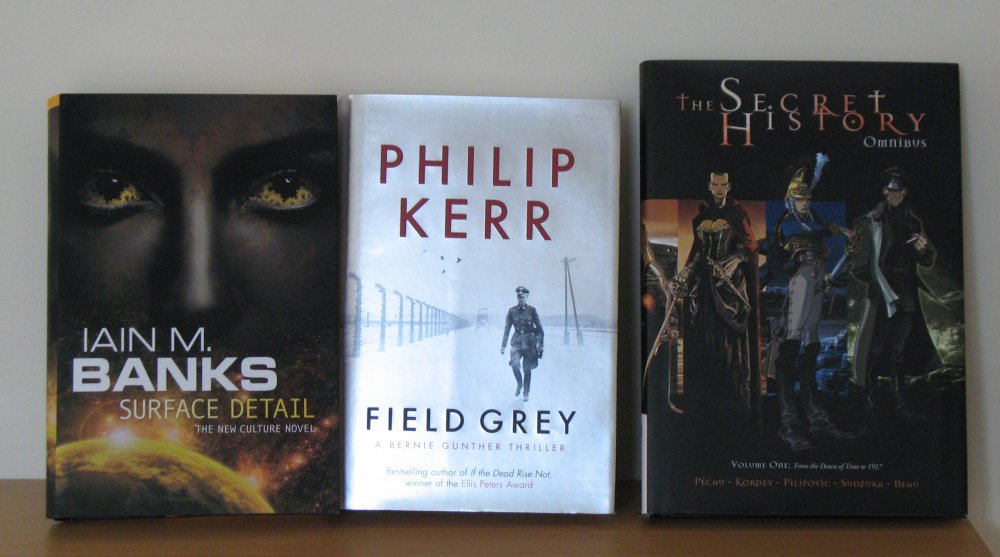
 ; and an omnibus edition of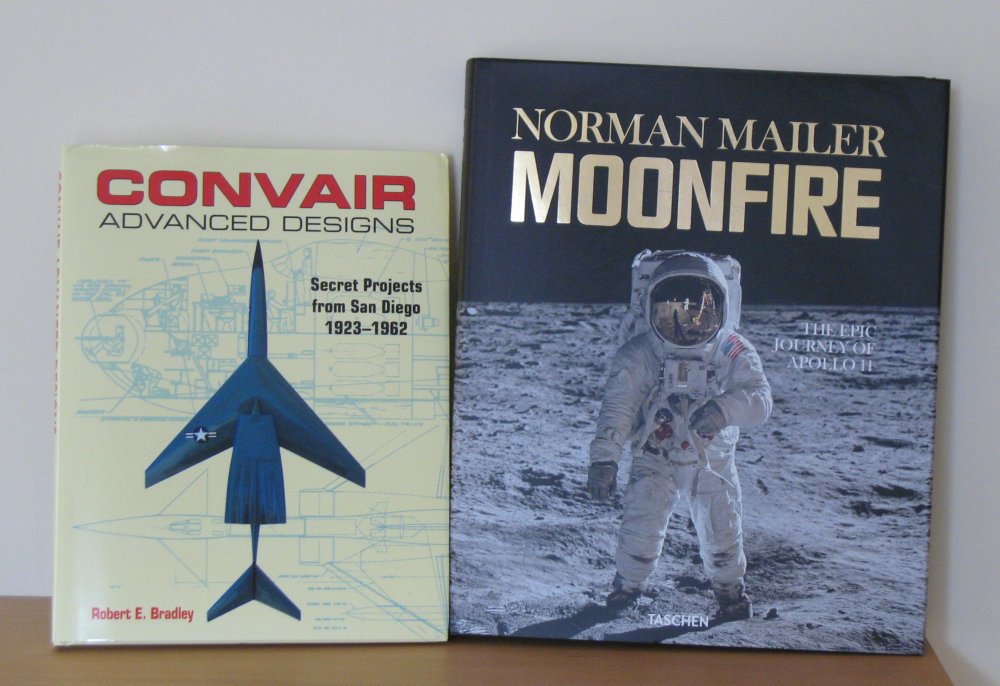
 . It’s about planes. The second,
  , is a re-issue of Norman Mailer’s 1971 book about the Moon landings,
  , but as a coffee-table tome by Taschen, with many, many excellent photographs. There’s a signed limited edition which costs around £600, and a “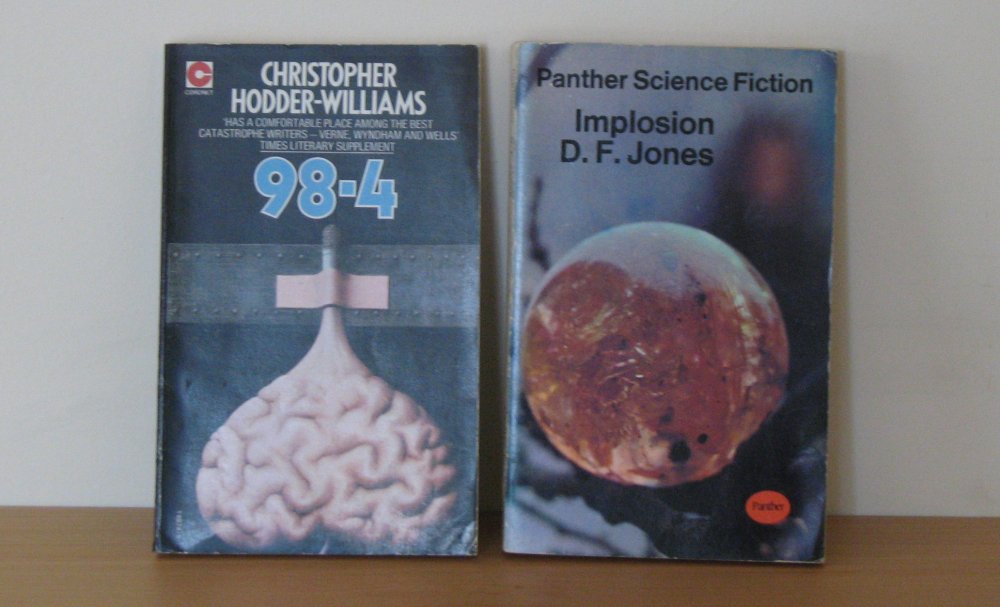
 by DF Jones, and
  (
( (
(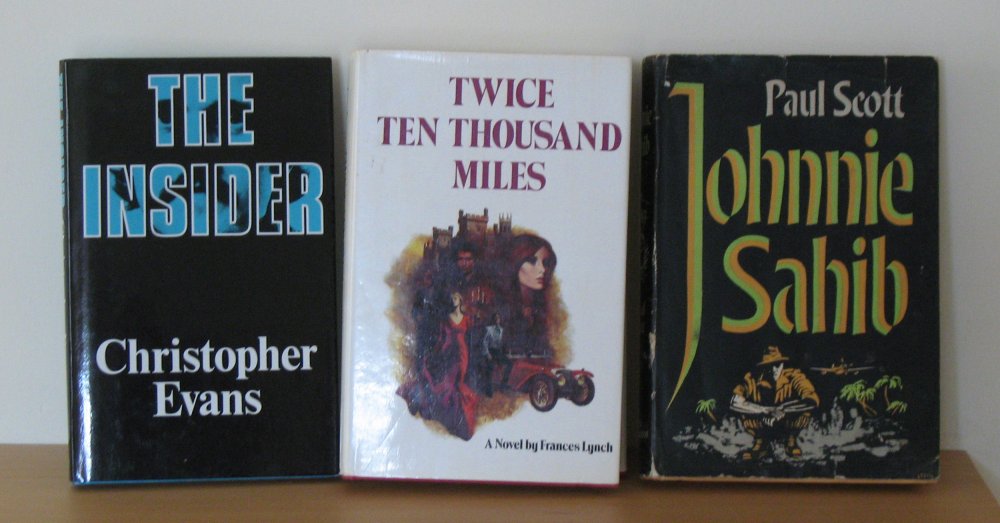
 by Christopher Evans;
  , Paul Scott’s debut novel; and
  by Frances Lynch. Yes, that last one is a
  (but then Reynolds has written a story name-checking Elton John, so perhaps not…). The characters in ‘Thousandth Night’ are better differentiated than they are in
  , Jacques Piccard & Robert S Dietz (1962), I wrote about
  , Wilfred Burchett & Anthony Purdy (1962), I will be reviewing on my
  , dir. François Ozon (2000). I like Ozon’s films, but this one dragged a bit. Charlotte Rampling and her husband go on holiday to their seaside chalet. They head down to the beach, she settles down with a book, and he goes for a swim. And doesn’t come back. She calls the life guards, but there’s no sign of him. Eventually, they decide he must have drowned. She heads back to Paris and tries to get on with her life. But she refuses to admit that her husband is dead. Even when the police ask her to identify a body washed up on the beach, she claims it is not her husband’s though it plainly is. Meanwhile, her friends try to match-make, and she enters into a relationship with another man. Throughout this time, at home she hallucinates that her husband is alive and well. She tells him what she’s been up to, including the man she is seeing… I like the idea at the core of the story, but I suspect it’s not strong enough for a 94-minute film.
 , dir. David Hugh Jones (1982), is another of the BBC’s adaptations of Shakespeare’s plays, this one starring Richard Griffiths as Falstaff, and Prunella Scales as one of the eponymous wives. Not one of the Bard’s better ones, I thought; more like an Elizabethan Carry On film than anything else. Some of the jokes I’m sure I’ve seen in other plays, and the characters were just broad stereotypes. Griffiths didn’t seem quite big enough a presence as Falstaff, and the ending was completely bonkers. Falstaff tries to get it on with two of the wives, but they reject his advances. One of the husbands mistakenly believes Falstaff has succeeded and so pretends to be a secret admirer of his own wife needing Falstaff’s help to enter into an affair with her. It’s the usual mistaken/hidden identity Shakespearean thing. Oh, and there’s a daughter who loves one person, but her father wants her to marry someone else, and her mother wants her to marry yet another man. Once everything is sorted out, the good burghers of Windsor decide to have their revenge on the fat letcher, and trick him into meeting in a nearby wood at midnight. Where they’ve arranged for the local kids to dress up as fairies and sing and dance about him. And, of course, Falstaff thinks they’re real fairies…
 , dir. Brad Watson (2009), I reviewed for VideoVista
  , dir. Douglas Sirk (1955), was a rewatch, and remains a favourite film. It is almost note-perfect throughout. Jane Wyman plays an upper-middle class widow with two grown-up children. Rock Hudson is the man who comes round to trim her trees. They get talking, and subsequently fall in love. But all Wyman’s friends, and her two kids, frown on her relationship with the bohemian gardener.
  , dir. Gabe Ibáñez (2009), I reviewed for VideoVista
  , dir. Jorge Blanco, Javier and Marcos Martínez (2009), is one of a spate of recent genre-ish animated films, aimed at kids, but including something for adults. This one is a reverse of all those 1950s alien invasion B-movies – it’s the humans who invade. Well, human. A lone astronaut lands on the eponymous world, whose alien inhabitants bizarrely resemble those of a 1950s USA. There are some amusing little jokes – a pet which resembles an alien from the Alien franchise, for example – but like all films of this ilk, the clever visuals can’t disguise a story straight from the pro-family values conservative school of Hollywood script-writing.
 , dir. Fritz Lang (1956), I reviewed for VideoVista
  , dir. Christian Alvart (2009), I’d been meaning to get hold of for a while, but after seeing a few ambivalent reviews I decided not to shell out for the DVD. So I rented it instead. And I’m glad I did. Because it’s rubbish. Man wakes on giant spaceship. He’s all alone. Except for the zombie-like creatures. And the few survivors of, well, of something, who have managed to eke out a living. Nothing in this story made any sense whatsoever.
  , dir. Andrea Arnold (2009), is the second feature-length film by the director of
  , which I saw on DVD back in 2007. Teenage Mia lives on a sink estate but dreams of making it as a dancer. She practices daily in an abandoned flat. Her drunken young mother is in a relationship with a security guard at the local DIY superstore (played by Michael Fassbender). This is not one of those films with a well-defined beginning, middle and end, but it’s all the better for it. The cast are mostly excellent, particularly Fassbender and Katie Jarvis as Mia. Not an easy film to watch, but definitely worth seeing.
 , dir. Edward Zwick (2006), I liked more than I thought I would. Hollywood takes on the blood diamond trade, starring Leonardo DiCaprio – nothing there to signal it would be a good film, I’d have thought. But it proved to be a reasonably even-handed take on its subject, and DiCaprio, who seems to be getting better as he gets older, was good in the main role. The obligatory female role, played by Jennifer Connolly, struck me as a bit unnecessary, but Djimon Hounsou, as the man kidnapped by rebels to work in the diamond mine, played a good part.
 (see
(see  too. That should prove a more interesting viewing experience as I’ll be able to compare it to the book.
 , dir. Phil Lord and Chris Miller (2009). Another quirky genre-ish animated family film. This time it’s about male bonding and family ties and, like
  , dir. Sandy Collora (2010), I reviewed for VideoVista
  , dir. John Farrow (1948), I reviewed for VideoVista
  , but I’m not entirely sure why. Rand’s book is risible, but this film is quite watchable.
 , dir. Yong-gyun Kim (2009), I reviewed for VideoVista
  , dir. Hayao Miyazaki (1984), was Studio Ghibli’s first feature-length film, although it was apparently released before the studio was founded. However, it certainly looks like a Ghibli film. It’s set on a post-apocalyptic Earth, which a voiceover by the title character tries to explain, but the explanation doesn’t really make sense, But that’s okay, because it’s the Ghibli visuals which are the film’s main draw. Sometimes the animation seemed a bit jerky, and the story didn’t always add up, but the film was better-paced than many anime films I’ve seen and it had a distinct story-arc from start to finish. Not a bad film – I enjoyed it, although I’ll not be dashing out to buy my own copy.
 , dir. Kathryn Bigelow. (2008). Cor, guess what. US soldiers are trigger-happy idiots. But that’s okay, because war is dehumanising. Hollywood films about war seem to either cast American soldiers as noble heroes or murdering incompetent dolts.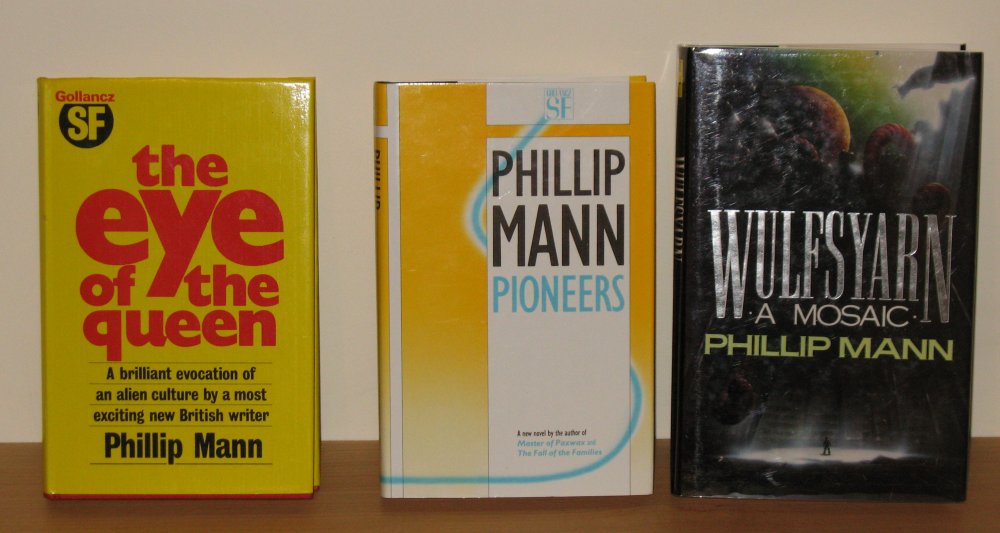
 calls
calls  , Mann’s debut novel, “an accomplished novel of First Contact”. I remember picking up a paperback copy of it in Birmingham in the mid-1980s. First edition hardback copies of it are hard to find, and correspondingly expensive. Fortunately, I recently found one being sold on eBay for a reasonable price.
  , “his best novel to date” according to the
  tells the story of the captain of the Nightgale, a starship in the Mercy fleet which vanished on its maiden voyage, and returned a year later with only its captain aboard.
 and
and  . It’s a space opera, of sorts. There are no giant spaceships, or huge space battles, but it’s set in a galaxy populated by a multitude of alien races, all of which are dominated by humanity. And just waiting to rebel…
 ,
,  ,
,  and
and  . In these, the Roman Empire remained in Britain, there were no Saxon invaders, and the British Isles now consists of Roman garrison towns scattered across a countryside of primordial forests containing communities of Celts. I reviewed the first two books for
  that Mary Shelley’s
  is the first science fiction novel, but I prefer to date the genre to the appearance of Amazing Stories in 1926. So Shelley goes. But it would be criminal to produce a list of British sf masterworks without including one by HG Wells, whose “scientific romances” were certainly an ancestor of sf (and many were reprinted in Amazing Stories, anyway).
 to the Canopus in Argos: Archives quintet, as each of the five books in it are more substantial than my original choice. I’ve added Christopher Evans, Geoff Ryman, Ted Tubb, Mark Adlard, Eric Frank Russell, James White, Colin Kapp and Douglas Adams (bowing to public pressure there). Some of the books may not be masterworks per se – the Kapp series, for example, is more notable for its eponymous Big Dumb Object than it is its prose, characterisation or plot. Tubb, of course, was best known for his 33-book Dumarest series, but I’ve seen several positive mentions of
  , a generation starship story. James White probably wrote better books than the one I’ve chosen, but it’s the only one of his Sector General novels to appear on a any kind of shortlist – the Locus SF Novel Award for 1988 (which was, admittedly, a shortlist of thirty-three…).
 , Rex Gordon (1956) – my review
  , Naomi Mitchison (1962)
 ,
,  ], Lawrence Durrell (1968 – 1970)
 , Arthur Sellings (1970)
 ,
,  ,
,  ] Mark Adlard (1971 – 1975)
 , Barrington Bayley (1973)
 , Michael G Coney (1975) – my review
  ,
,  ,
,  ], Bob Shaw (1975 – 1990)
 , Kingsley Amis (1976)
 ,
,  ,
,  ], Richard Cowper (1978 – 1982) – my review
  , Len Deighton (1978)
 , Robert Holdstock (1981) – my review
  , Tanith Lee (1981)
 ,
,  ,
,  ,
,  ], Colin Kapp (1982 – 1984)
 , Mary Gentle (1983 – 1987)
 , Ian Watson (1983)
 , Christopher Evans (1985)
 , Josephine Saxton (1986)
 ,
,  ,
,  ], Storm Constantine (1987 – 1989)
 , James White (1987)
 , Gwyneth Jones (1988) – my review
  , Brian Stableford (1988)
 , Colin Greenland (1990) – my review
  , Phillip Mann (1990)
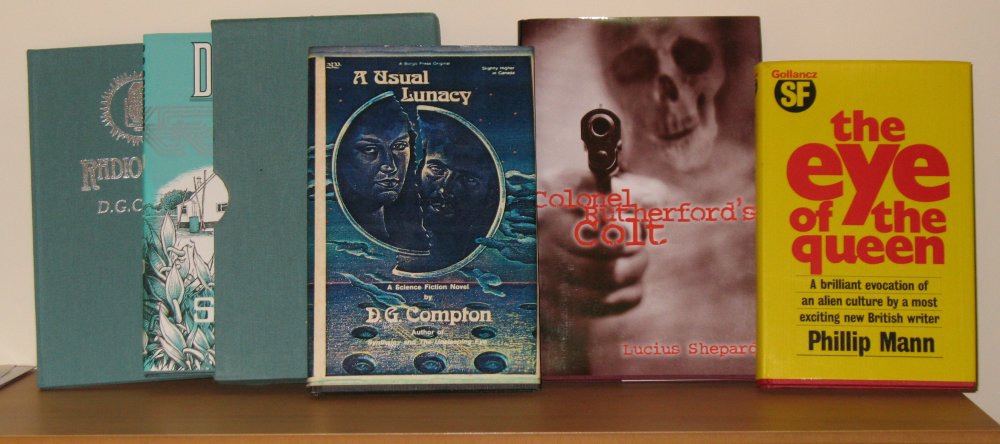


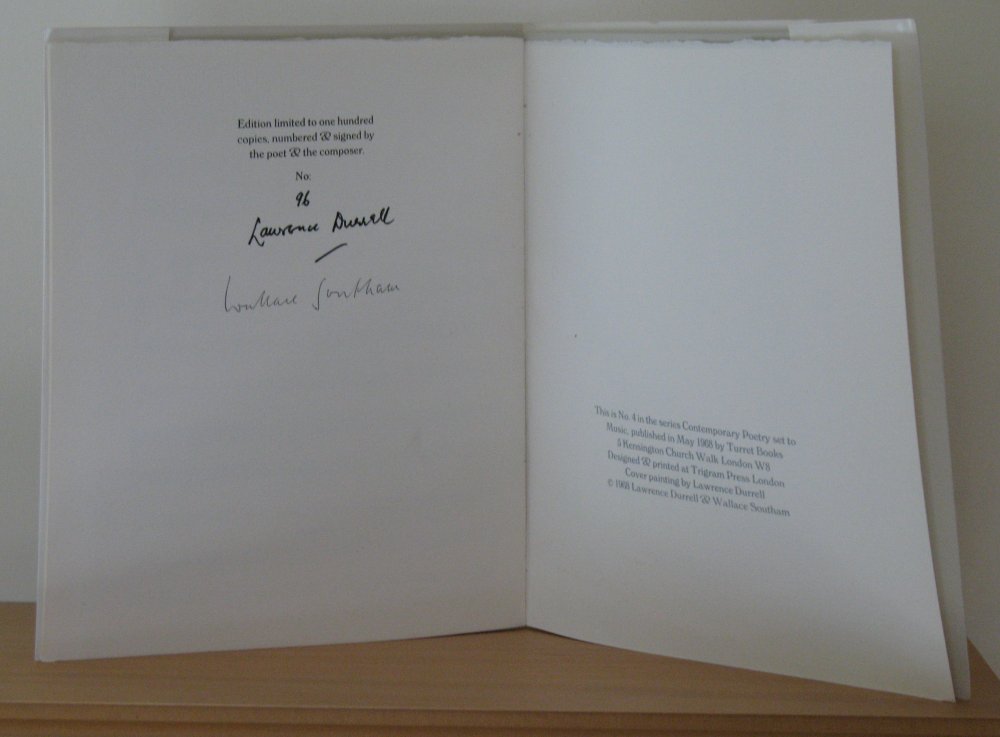
 , a signed and numbered chapbook published in 1968 by Turret Books. It contains the eponymous poem by Lawrence Durrell, and music by Wallace Southam. The pair did two such chapbooks – I’ve had the other one,
  , for a while (see this Lawrence Durrell collection post