Since my last round-up, I have read the following books and watched the following films.
Books:
The Stainless Steel Rat, Harry Harrison (1961), was one for the reading challenge – see here.
Guardians of the Galaxy: Earth Shall Overcome, by a whole bunch of people (2009). Don’t ask me why, but I quite like the Guardians of the Galaxy. For one thing, they’re a purely science-fictional superhero group – a 1,000-year-old astronaut with psychic powers, a soldier from a high-gravity planet, a silica-based man, and a blue barbarian with a “magic” bow. Oh, and there’s the mysterious Starhawk, “One Who Knows”, as well. Sadly, this collection, gathering the GotG’s first appearances is not very good at all. The writing is terrible and the art is perfunctory. Apart from their 1968 debut title, the other stories in Earth Shall Overcome are shared titles with The Thing and Captain America, neither of whom I particularly like. It’s easy to understand why there was a 8-year gap between the group’s first and subsequent appearances.
Kingdom Come, Alex Ross & Mark Waid (1996). I had in the past dismissed DC as less interesting than Marvel – well, it’s hard not to think of its core superheroes as clichés. But Identity Crisis made me reconsider my opinion on DC. And while Justice was a little muddled, Kingdom Come certainly demonstrates that DC has done some interesting things with its core cast. In this one, Superman, Batman, Wonder Woman and various others have all retired, and now a new breed of superhero, one which doesn’t care much about normal humans, has taken over. Things take a turn for the worse, and Superman is persuaded out of retirement. Waid has done a good job of making rounded characters of the stars of DC’s stable, and Ross’s art is, as usual, gorgeous.
Alice in Sunderland, Bryan Talbot (2007), was nominated for the BSFA Award last year but lost out to Ian Macdonald’s Brasyl. It was, I believe, the first graphic novel to ever make the BSFA Award shortlist. And it’s easy to see why. The fact that Alice in Sunderland is a book with pictures on every page seems almost incidental – it’s a discussion of Lewis Carroll’s life, his links to Sunderland, the history of Sunderland, and modern Sunderland’s rich artistic heritage. Excellent stuff.
A Scanner Darkly, Philip K Dick (1977), is No 20 in the SF Masterwork series. I’m not that big a PKD fan. Most of his novels I find not very good and instantly forgettable. Admittedly, he did write one of my favourite short stories, ‘A Little Something For Us Tempunauts’, but the bulk of his output leaves me unimpressed. But this one is good. Perhaps because it’s only peripherally sf. It’s about junkies and junkie culture and junkie paranoia – what little sf there is in it merely enables the story. The absurdities are nicely handled, the characterisation is a cut above most sf novels of the period, and it’s very funny. I also can’t think of anyone else better suited to play Barris than Robert Downey Jr – who did so in the Richard Linklater film. It’s almost as if he’d been born to play the role.
The Memoirs of a Survivor, Doris Lessing (1974), is set in a post-apocalyptic London. The narrator is a middle-aged woman who lives alone in a flat. Then a young girl, Emily, is dumped on her, and the narrator has to look after her. Meanwhile, outside the flat the world slowly falls apart. The narrator watches Emily grow up, watches her as she joins a gang of youths trying to form some sort of Survivors-type community, led by a young man called Gerald (and when did you ever come across a hero called Gerald?). The narrator also discovers that she can explore a dream-like alternate reality which she can see through one wall of her flat. This is not the most… compelling of novels. It’s also peculiarly old-fashioned – not just the name Gerald – but Emily behaves in a fashion better suited to a 1930s novel than a 1970s one. To be honest, it was a bit of a slog.
Starfall, Stephen Baxter (2009), is a new novella from PS Publishing set in Baxter’s Xeelee sequence. This one is set early in the universe’s history – humanity has an interstellar empire but has yet to be subjugated by any alien races. They’ll quite happily subjugate themselves, thank you very much. But the inhabitants of the colonies are not too happy about this, and put together a plan to attack Earth sixty years hence. The nature of the story – fast-forwarding through the decades to the actual attack – means Starfall occasionally reads more like a synopsis than a novella. But Baxter is very good at this stuff, so it all hangs together entertainingly.
Last And First Men, Olaf Stapledon (1931), I read for the LT sf reading group. It’s not a novel per se, more a dry telling of humanity’s future history for the next two billion years. Reading the book, I kept on picturing 1920s visions of the future, as seen in, for example, Fritz Lang’s Metropolis – great mile-high skyscrapers with runways on every tenth floor. Another film the book brought to mind is William Cameron Menzies’ Things To Come. Unfortunately, while the prose successfully depicts the vast scale of the story, it makes for an uninvolving tale. There are bits which would have made really interesting novels, but they’re dealt with in a couple of sentences or a paragraph or two. There really isn’t any other sf novel like Last And First Men, and I’m glad I read it… but it’ll be a while before I try reading it again.
Films:
Ran, dir. Akira Kurosawa (1985), is essentially King Lear in feudal Japan. I know Kurosawa is considered one of the great directors of all time, and I’ve seen several of his films… but I just don’t get it. I don’t find his movies all that engrossing or beautifully shot. I’ll sit and watch them, but I don’t find them as visually stunning as Tarkovsky’s films, or as fiercely intelligent as Ingmar Bergman’s, or as perfectly put together as Kieslowski’s…
Duets, dir. Bruce Paltrow (2000), was a rewatch; and afterwards I wondered why I’d ever bought the DVD in the first place. It’s about karaoke, and stars Huey Lewis, Maria Bello, Gwyneth Paltrow, André Braugher and Paul Giamatti. It’s… inconsequential. They’re all karaoke singers, working their way towards the $5,000 big competition in Omaha, all with stories. It’s a bit like American Idol, but with a plot. And slightly better singers.
The Sentinel, dir. Clark Johnson (2006), is a routine thriller. Michael Douglas plays an ageing Secret Service agent who is set up as the villain of a plot to assassinate the president. So he flees and tries to uncover the plot all by himself. And succeeds. Sigh. It’s a bit like those US crime television programmes – it doesn’t matter if the police are useless because they’ve got attorneys, crime writers, book shop owners, forensic pathologists, private investigators and high school students, among others, to solve crimes. Unlike us Brits, who only have private detectives, the police, and little old ladies…
Twisted, dir. Philip Kaufman (2004), is a not very good thriller. Ashley Judd is a San Francisco homicide inspector. She is assigned to a murder. It turns out she knew the deceased – she enjoys casual sex with strangers, and he was one of her lovers. And so was the next victim. And the victim after that. So she goes from investigating detective to chief suspect. But it’s all a plot to frame her, and the “twist” – the identity of the villain of the piece – comes as no real surprise.
Complicity, dir. Gavin Millar (2000), on the other hand, is a very good thriller. It’s based on the novel of the same name by Iain Banks. This was a rewatch and, unfortunately, it’s one of those films that you can’t really watch more than once. An important part of the plot is the identity of the person who has been killing arms dealers, corrupt politicians, and the like… and if you’ve seen it before (or read the book recently), knowing his identity from the start does spoil things a bit.
Raging Bull, dir. Martin Scorsese (1980). I used to like Scorsese’s Goodfellas and Casino. And then I saw Mean Streets and The Departed and realised he’s been making the same film over and over again. You know the one: foul-mouthed wiseguys, starring Robert De Niro and Joe Pesci. Raging Bull is much the same, although it’s about a boxer – Jake La Motta. The period detail is done well, but it still seems like a film about foul-mouthed wiseguys in boxing gloves.
The Crimson Rivers, dir. Mathieu Kassovitz (2000), I remember being impressed by this when I first watched it. And it is good. Up to a point. And that point is about two-thirds of the way through the film, when the story suddenly makes a jump the viewers can’t follow. There’s a conspiracy driving the plot, and we’re slowly introduced to it… and then suddenly Jean Reno tells us how it all works, despite obviously having had no opportunity to learn that information. According to a featurette on the DVD, the film-makers were aware of this, but decided it was better to leave the viewer confused than slow down the pace of the movie. Yeah right…
The Incredibles, dir. Brad Bird (2004), was another film which impressed me when I first saw it several years ago. And it’s just as good the second time round. Perhaps the pro-family message is a bit heavy-handed, but the jokes are funny and it all looks pretty cool. Especially Syndrome’s secret island base, which seems to include bits and pieces of evil villains’ secret bases from Bond to Flint.
The City Of Ember, dir. Gil Kenan (2008), is a kids’ film based on a YA novel by Jeanne Duprau. Which I’ve never read. The eponymous city is an underground town, built and settled 200 years ago for reasons its inhabitants now no longer remember. In fact, they’ve even forgotten there is a world outside Ember. Happily, the builders thought this might happen and created a locked box to be handed from mayor to mayor. At some point in the future, it would open and explain how to leave Ember for the outside world. But the box has been lost. But then Lina Mayfleet stumbles across the mayor’s theft of the city’s stores, and the lost box – which is now open. With the help of friend Doon Harrow, they escape the city and discover the open air. At one point in the film, the city is attacked by a giant mole. Doon also finds a giant moth. So I kept on expecting Lina and Doon to discover that the Emberites were actually miniaturised humans. Only they’re not. The City Of Ember was mildly entertaining, but the fruitless wait for that other shoe to drop spoiled it for me.
The Piano Teacher (2001) and Time Of The Wolf (2003), dir. Michael Haneke, are two of the films from The Michael Haneke Collection DVD boxed set I bought cheap last month. The Piano Teacher is based on the novel by Elfriede Jelinek and is… quite disturbing. Isabelle Huppert plays the title role, a sexually repressed piano teacher at a Viennese conservatory. A male student falls for her and badgers her into entering into a relationship with him. She eventually acquiesces, but the result is not what he expected. At all. A difficult film to watch. Huppert is astonishing in it. Thankfully, Time Of The Wolf is a less harrowing movie. Although not by much. It’s set after some unspecified holocaust. Not a great deal happens – the film is mostly days in the lives of a group of refugees at some country railway halt. They fight, they argue, they starve, they bargain with passing bandits. There is no hope, no reason for optimism. Cormac McCarthy’s The Road (which I wrote about here) is not dissimilar to it.
W., dir. Oliver Stone (2008), I watched and reviewed for videovista.net.
Fighter, dir. Natasha Arthy (2007), I also watched and reviewed for videovista.net.
Lifeboat, Alfred Hitchcock (1941). I’m a big fan of Hitchcock’s films. I consider him the most consistently entertaining director ever, and Lifeboat is a case in point. It’s WWII, a ship en route to the US across the Atlantic is torpedoed by a U-boat, and a handful of survivors manage to clamber aboard a lifeboat. Also rescued is a crewman from the U-boat, which was destroyed by the ship before it sank. The film is set entirely on that lifeboat, and it’s gripping drama throughout. They don’t, as they say, make them like this anymore.
Femme Fatale, dir. Brian de Palma (2002), was a re-watch. This film was never released in the UK for some reason, so I ended up buying a Region 1 copy off someone on eBay. It’s the sort of twisty-turny thriller de Palma does reasonably well, voyeuristic in places (which de Palma also does), and given a quick coat of European gloss. Rebecca Romijn-Stamos (Mystique from the X-Men films) plays a double-crossing jewel-thief who hides out by stealing another woman’s identity. She returns to Paris years later as the wife of the US ambassador, and Antonio Banderas is the paparazzi who inadvertently blows her cover. Not a routine thriller, but not altogether memorable either.



 , Mary Shelley (1818)
 , HG Wells (1898)
 , Aldous Huxley (1932)
 , George Orwell (1949)
 , John Wyndham (1951)
 , JG Ballard (1973)
 , Douglas Adams (1979)
 , Iain M Banks (1987)
 , M John Harrison (2002)
 , Ian McDonald (2004)
 predates it by nearly three decades, for a start. Ballard was one of several writers – the New Wave – who revolutionised the genre, and
  in 1990. As an indication of this,
  . But crucial?
 is not about Brits in India. There has not been, as far as I’m aware, any sort of post-colonial movement in science fiction, either started by
  , HG Wells (1895)
 , Olaf Stapledon (1930)
 , John Christopher (1956)
 , Michael Moorcock (1968 – 1977)
 , Ian McDonald (1988)
 , Paul J McAuley (1995)
 , Alastair Reynolds (2000)
 , Gwyneth Jones (2001)
 (see
(see  (see
(see 
 film last night. Most reviews I’ve read have said it’s very good. But not all of them – see


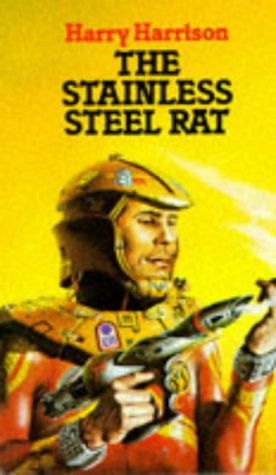
 ? He’s a master thief who’s been co-opted by the Special Corps, the interstellar organisation which catches master thieves. Set a thief to catch a thief. There is something appealing about a hero who not only marches to a different drum but, once made a member of the band, still takes advantage of his new position. Well, perhaps it wouldn’t appeal to schoolyard bullies and the like. But to impressionable young sf fans….
 last month (see
