Only a fool would deny the influence magazine editors Hugo Gernsback, John W Campbell and Michael Moorcock had on science fiction. So to suppose that editors still wield such influence over short form science fiction is not that much of a stretch of the imagination. I put together some pie charts of the contents of the year’s best anthologies for 2011 to test the truth of this. Perhaps it was unsurprising that the biggest markets in terms of readership provided the most stories for the anthologies. Writers will send their best works to where it will earn the most money and be read by the most people. But the editor still has to buy it. It could be arguing they’re just siphoning off the cream of the crop, but that would have to assume their taste plays absolutely no part in their purchasing decision. And that’s unlikely.
So, I put up some numbers, but it wasn’t enough for some people. Who chose to sneer on Twitter at my post. (To be fair, one did then apologise, and we went on to have an interesting discussion on the topic.) One of their criticism was “rotating editors” – but Gardner Dozois has been doing his year’s best anthology for twenty-nine years, Hartwell and Cramer for seventeen years. Sheila Williams has been editing Asimov’s since 2004, and it was Dozois for eighteen years before that; Stanley Schmidt has edited Analog since 1978, and retired only this year. Gordon Van Gelder has been the editor of F&SF since 1997 and its publisher since 2000. Not much rotation there.
David Hartwell, in a comment on my post, raised the point that year’s best anthologies are commercial endeavours. It’s a valid observation. Stephen King, for example, may not have written one of the absolute best stories of the year, but if it’s good enough for inclusion, then putting his name on the cover could help sell a few more copies. Plenty of people have said that year’s best anthologies aren’t really “best”. Fair enough. But it does devalue the term. If something is not the best, is not chosen solely because it is of the best quality, then it’s not, er, the best. Mind you, An Anthology of Good Stories Published In The Previous Year Which [editor’s name] Has Selected For Reasons Of Taste, Quality And Commercial Appeal probably wouldn’t fit on the front of a massmarket paperback.
It seems plain that the single biggest factor affecting genre fiction is the number of units shifted of genre books. Publishers publish books to make money, and if a book of a particular type does well they’ll naturally want to publish books of a similar type. Successful authors become well-known – often it’s their name alone which sells the books (cf the thriller sweatshops of James Patterson and Clive Cussler; or Virginia AndrewsTM). Hugo voters, faced with a ballot of novels they’ve not read, will often as not plump for the one by the author whose name they recognise, or have read and enjoyed in the past. The appeal of those names can carry across to short fiction – though now that shortlisted short fiction is routinely given free to voters (in both the Hugo and BSFA awards), you’d hope their decision would be based solely on the quality of the stories. Big names on the covers of fiction magazines will sell more copies of an issue than the names of unknowns…
Names have weight. Especially in a small group like the science fiction community. How many people have I heard explain Connie Willis’ Hugo win last year as the result of her being “a nice person”? Her book(s) was shortlisted for the award, but she won it. And some people’s writing will be preferred over others. Even by editors. Who have chequebooks, and can make good use of their choices. There have been, and likely will continue to be, magazines who routinely publish work by certain authors to the mystification of everyone – some people might perhaps remember UK small press magazine Dream from the 1980s and an author whose stories appeared in it regularly…
Science fiction is neither monolithic nor homogenous. Nor is the community which both supports it and feeds off it. Sf can be affected by a number of things; some parts can be affected while others are not. Despite being a written genre, it has been changed by individual films, Star Wars being the classic example. Changes in taste in short fiction rarely impact novels, but the reverse is not uncommon. As editors develop the characters of their magazines and so build up “stables” of writers, so they play a part in shaping genre fiction at short lengths. As anthologists turn to the same small number of names to provide reliably entertaining content, so do those names carry greater weight and their style of sf come to be reflected wider in the genre. As publishers rub hands gleefully at the runaway success of an author, so they start looking around for more material to capitalise on that success. And so on.
So no, it’s not stupid to imagine that editors and year’s best anthologies still have influence on science fiction. It’s stupid to imagine they don’t.
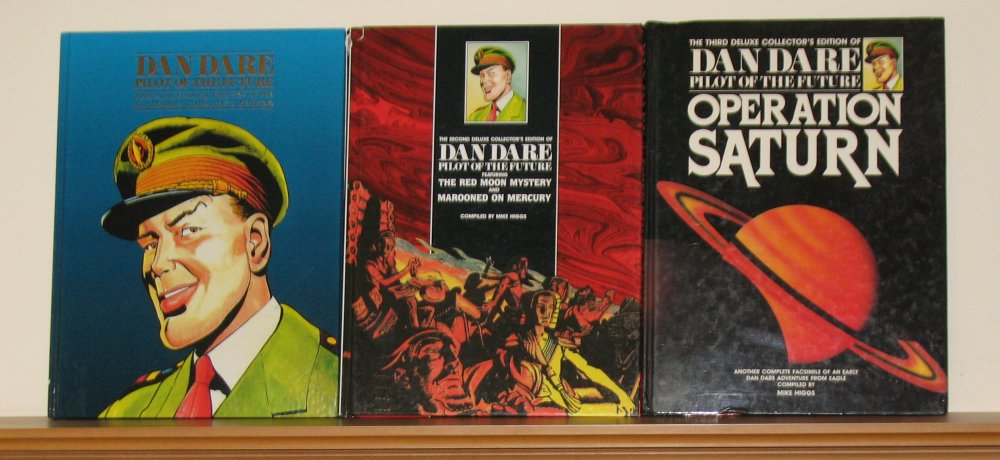
I’m fairly sure my first introduction to Colonel Dan McGregor Dare of Spacefleet was in the early 1970s, when my parents bought me a Dan Dare annual one Christmas. (No, I’m not old enough to remember Eagle, where Dare originally appeared.) The annual contained two stories, ‘The Red Moon Mystery’ and ‘Safari in Space’ – and they’re still my favourite Dare stories. We were living in Oman at the time, but I’m pretty sure they didn’t buy it there. Anyway, I treasured that book for years.
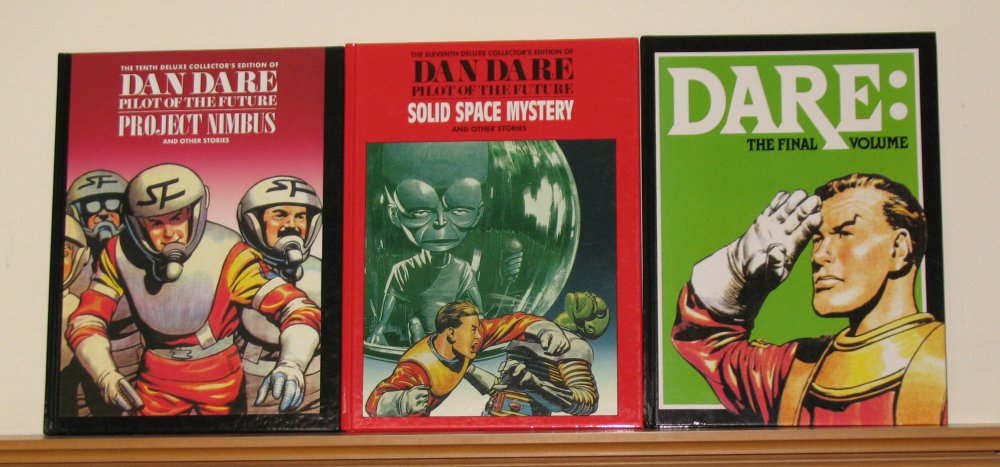
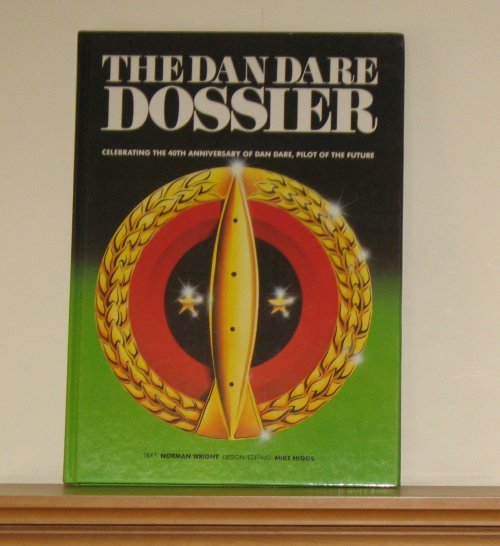
And then, during the early 1990s, I was in London visiting friends, and in a remaindered book shop on Charing Cross Road I found the seventh volume of a series of Dare reprints published by Hawk Books. I bought it, but never saw any of the other volumes in the series. When I returned to the UK to live in 2002, I decided to complete the series. It took me several years, and quite a bit of money, but I eventually did it. The last one I purchased was volume 4 Prisoners of Space in early 2009.
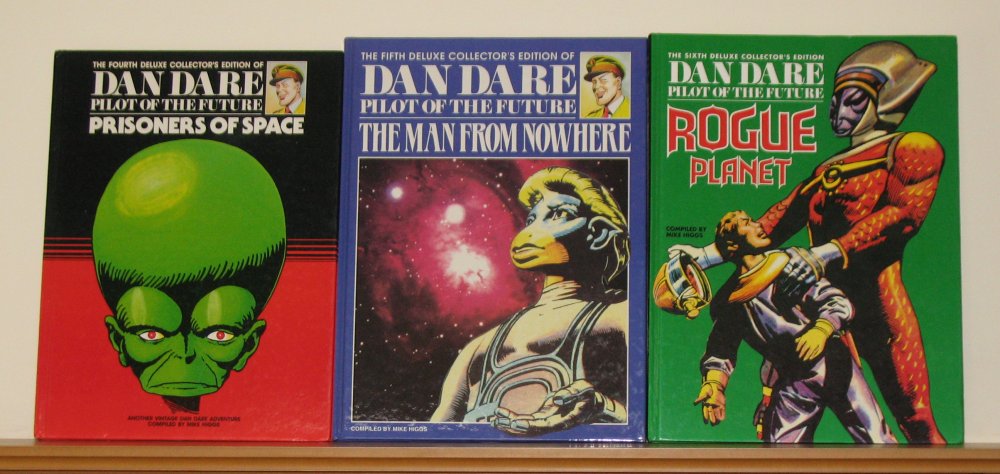
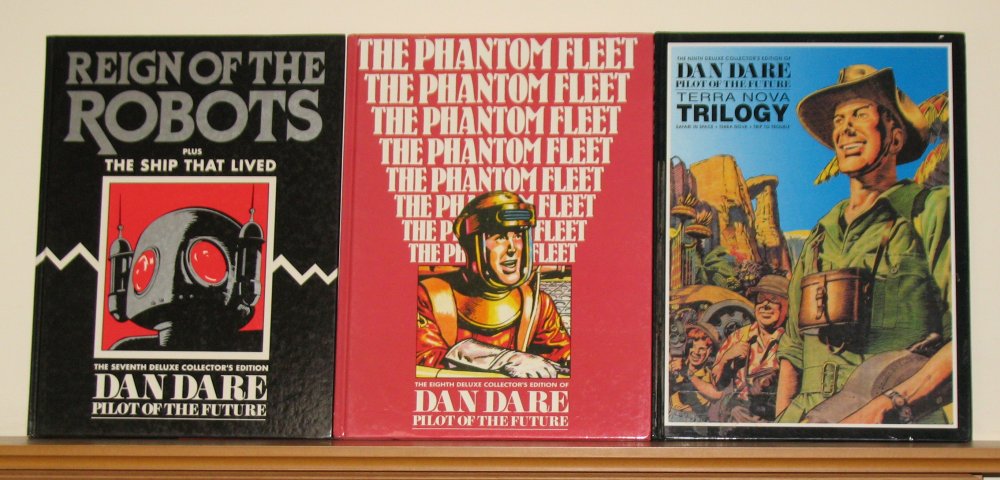
And here’s the full set…
There are actually two editions of the first volume. I have the second edition, the 10th anniversary edition of the original. The Red Moon Mystery, volume 2, is one of Dare’s best stories.
The Man from Nowhere, volume 6, and Rogue Planet, volume 7, is a two-parter and are one of the better stories. While Dare was away helping aliens on their home world in Rogue Planet, the Mekon conquered the Earth using robots – but Reign of the Robots, volume 8, is a bit silly, to be honest. The Terra Nova trilogy, volume 9, is one of my favourites. Since this was the most expensive volume to buy, it must be everybody else’s favourite too. The last three volumes cover stories written and drawn after Hampson handed over the reins and, sadly, neither the design nor the stories are as good as when he was in charge. Back in the day, you could actually buy replica Spacefleet uniforms. In fact, there was a huge amount of merchandising for Dare – everything from button badges to tin spaceship models. All before my time, of course. You often see items available on eBay for silly money. There’s even a novel, Dan Dare, Pilot of the Future by Angus P Allan, published in 1977. The book is illustrated with black and white line-drawings of panels from the comics, but as a novel it’s a bit rubbish.
Dan Dare has been resuscitated a number of times. In 1977, he appeared in the first issue of 2000 AD, and lasted until 1979. The strip has yet to be published as a trade paperback omnibus, which is really annoying. I do have a 2000 AD Dan Dare annual from 1980, but it’s not very good. The Eagle comic was relaunched in 1982, and featured Dan Dare as its flagship strip – but this was a grandson of the original Dan Dare. The new Eagle folded in 1994. In 1990, Grant Morrison scripted a new Dare, set in Thatcherite Britain, which was serialised in the Revolver comic. It was later republished as a trade paperback. In 2008, Virgin comics published a seven-issue Dan Dare mini-series written by Garth Ennis. I have an omnibus of the first three issues but wasn’t impressed. New Dare stories have also appeared in Spaceship Away, a magazine dedicated to Dare, and which has to date published twenty-seven issues. We won’t mention the terrible CGI television series.
Also worth noting is a “biography” written by Daniel Tartarsky, which was published in 2010: Dan Dare, Pilot of the Future: A Biography. Titan Books have also published a series of Dare reprint volumes, which are smaller in size than the Hawk Books versions. They’re also still in print. And it appears that Haynes will be publishing an Owner’s Workshop Manual on Spacefleet Operations in June of 2013. It’s already on my wishlist.
I’ve mentioned these thoughts in passing in other posts, but I decided it was time to put them together and see what happens. I have said in the past that science fiction makes explicit the wonder in the physical universe – see here; yes, with an equation too – but perhaps that’s also true of fantasy. Maybe instead of the horrible “speculative fiction”, or the equally awful “strange fiction”, we should use the term “wondrous fiction”. Though I believe Yes beat me to it.
Unfortunately, “wf” is a pretty naff acronym, especially if you use it as one and not an initialism. Would it be “wif” or “wuf”? “I am a wuf writer.” Ugh. Would bad wondrous fiction be known as “wiffy”? Um, and “wifi” has already been taken. Ah well, perhaps not.
However, it strikes me there are two defining loci for science fiction and fantasy. One is wonder, the other is agency. And while wonder identifies both genres, agency differentiates them:-
fantasy – stories in which agency, or power over the natural world, is given by authorial fiat to things, including human beings, which in the real world do not have such agency or power, or do not exist.
science fiction – stories in which agency, or power over the physical universe, is given by human beings – systematically – to things, including human beings, which in the real world do not have such agency or power, or do not exist.
No doubt everyone will now immediately think of exceptions which disprove these definitions. That seems to be the way this sort of thing works…
The history of science fiction is filled with powerful editors who determined how the genre progressed – in fact science fiction was born in a magazine and would not have existed but for its editor, Hugo Gernsback. After my post on the Hugos, Paul Kincaid’s review of a couple of year’s best anthologies, a discussion of that review on the latest Coode Street Podcast, and a discussion this morning on Twitter, I decided to do a little research.
I have it in my head that the written science fiction we see within the community is a product of a small group of people with much greater than average leverage. Not just the editors of the magazines, who chose what fiction to publish, but the editors of the Big Three magazines – Asimov’s, Analog and F&SF. There are also the editors of the year’s best anthologies, who get to choose each year which stories are the “best”, and so set the variety of sf that will be emulated in later years. And those year’s best editors generally pull from a limited number of sources – the Big Three magazines, especially.
So you get this incestuous and self-perpetuating relationship, in which a handful of sources supply the best stories of the year because only those handful of sources are used to provide stories. And this all feeds into the awards, and thus back into the genre, and so provides it with direction… Except that direction only really appeals to that small group who read the Big Three magazines and vote for the Hugo…
But do the numbers actually back up this scenario? How wide is the net cast by year’s best editors and the awards? Who is really shaping science fiction?
Dozois apparently doesn’t look much further than the Big Three magazines and high-profile anthologies. Which makes this the most purely commercial selection of stories.
Horton’s anthology is fantasy and science fiction, unlike the other two. This may explain why he casts his net much wider than the other two, but it’s still a surprisingly wide spread of venues.
Hartwell & Cramer appear to like tor.com a lot, but they’ve also picked stuff from some very obscure venues. NewCon Press does quite well, and there’s even a story from Irish sf magazine Albedo One. Engineering Infinity has also done well in all three anthologies – in fact, with Eclipse 4 and Life on Mars as well that makes Jonathan Strahan the most successful editor at publishing “year’s best” stories.
However, I have to wonder how much of this is driven by author-name-recognition. Even in the obscure venues, it’s well-known authors who get pulled out – in the Dozois, for example, it’s Alastair Reynolds in Voices from the Past, an ebook-only charity anthology.
The only outlier in the Hugo shortlists is Panverse Three – and that’s a story by Ken Liu, who is plainly a favourite of Hugo voters.
Again, that same Ken Liu story from Panverse Three. The presence of GigaNotoSaurus is a surprise.
It definitely seems as if there is a second tier of magazines after the Big Three – currently it’s only tor.com and Clarkesworld, but perhaps another online magazine will make the jump to Tier 2 in a year or three. Nonetheless, Asimov’s continues to dominate the year’s best anthologies and awards shortlists, as it has done for several decades. F&SF has, I suspect, slipped a little – in the anthologies, though not in the awards – but original print anthologies seemed to do well in 2011. There’s more online fiction than in previous years, but it’s still very much slanted towards print.
The pie charts do suggest that a handful of names have undue influence in science fiction. And the smaller that group, the narrower the range of genre fiction that rises to the top. If sf is becoming more fantastical, more concerned with mining its own tropes rather than doing anything interesting with them, then perhaps it’s because that’s what this group values…
I’d sort of promised myself I wasn’t going to post anything negative here any more, because everyone likes the upbeat, everyone likes the happy. But then I went and spoiled it with a whinge about the Hugo Awards – but then I’ve whinged about them every year since starting this blog. However. Positive, er, stuff. I mean, I’ve read some excellent novels so far this year, I’ve seen some bloody good films, I’ve heard some damn fine albums and even watched some amazing live performances by bands. There’s good stuff there to celebrate. It doesn’t always have to be a total downer.
Except…
So much of the positive shit you see plastered across the Internet is just so brainlessly uncritical. Certainly praise where praise is due – but I see so much of it that’s just plain undeserved. I don’t see myself as a negative person (stop laughing), just a realistic one. Sturgeon’s Law may be glib, asinine and way too easy to overuse / misuse, but it wouldn’t have survived this long if there wasn’t some truth to it. But you’d think it was the 10% that was shit sometimes from the way people carry on…
As a result, it’s easy to over-react and be overly negative. And, sometimes, doing that means the important stuff gets overlooked. It’s good that so many on the Hugo shortlists were not white males. But don’t pat yourself on the back just yet, Hugo nominators; because you also put a stupid April Fool fantasy story on the shortlist.
Having said that, it’s not like I don’t celebrate the good stuff when I encounter it. See, here’s a positive review of Kim Stanley Robinson’s 2312. And here’s an even more positive one of Gwyneth Jones’ The Universe of Things. And here’s a few words about my choices of the best books, films and albums I encountered during the first six months of the year. My tastes are perhaps not entirely mainstream – science fiction! death metal! weird Polish and Hungarian movies! – but I like to think I value quality and can recognise it when I see it (stop laughing).
There is no recipe, no programme of umpteen steps. Changing things takes stick and carrot. And occasionally a bloody great huge cluebat. It doesn’t happen overnight. When, that is, it happens at all. I like to think I’m doing my bit – not just on this blog, or in reviews on SF Mistressworks and Daughters of Prometheus. But in my fiction too. Not that I’ve been entirely successful – I’ve yet to break into any of the big short fiction markets (except for Postscripts). And a common response to my stories is “what happens next?” Er, nothing. It’s finished; the rest is up to you. Anyway, resolution is so bourgeois. Just like quotation marks around speech (small joke there).
I had a point to this post but I can’t for the life of me remember what it was. It wasn’t “be nice”, because being nice to everyone and about everything only devalues it. Nor was it “be negative”, because if the wind changes you’ll be stuck like that and then no one will be your friend. Be honest – that’s certainly important. Yes, above all, be honest. But I think I shall, as my pulled-out-of-thin-air point to this post, use something said by astronaut Gus Grissom, though it later proved to be horribly ironic:
Last Sunday saw Hugo Awards handed out to several people for producing, or so the award would have us believe, the “best” of their category in the previous year. It’s complete nonsense, of course. The Hugos, despite half-hearted changes implemented over the years, are based on a model of fandom which hasn’t existed since the 1960s. What are “fan writers”? What are “fanzines”? Once, the profiles of these might have been high enough in the sf community for worldcon members to know what they are and vote intelligently on them. There’s a reason pro writers are winning the fan writer Hugo now – people know who they are. And despite having a World Wide Web for twenty years, the Hugos still have no idea how to deal with online content.
I’ve never understood why there are Hugos for best dramatic presentation. Television and movies have seperate fandoms and their own set of awards, genre or otherwise. I’ll concede that television show writers are more likely to value a Hugo win than a Hollywood director – but neither use the award in their marketing, or make any mention of it. Besides, the best dramatic presentation -short form award has turned into a best episode of Dr Who award. This year it went to Neil Gaiman for added squee.
The magazine Hugos are completely broken and have been for years. They’ve tried to patch it up, with their ever-mutating definition of semiprozine, but the whole award is based on a concept that hasn’t pertained since the early 1970s. There is no real market of pro genre magazines. There are a tiny handful of titles, with greatly shrunken circulations. But there is a thriving scene of non-pro magazines. Why should the Hugos exclude those venues that don’t pay for submissions? They might still publish excellent fiction. And then there’s the whole print vs online thing. But then, why should a magazine deserve an award? For publishing the best fiction? There are the three short fiction categories for that. To reward the editor for consistently picking the best fiction? There’s an editor – short form Hugo for that. For the magazine’s design? There are no Hugos for design.
Then there’s the short fiction categories. What is the point of the novelette? There’s the short story, and that’s pretty obvious. There’s the novel, likewise an obvious category. And something in between, longer than a short story but not as weighty as a novel: the novella. Back in the day, some novels were as short as novellas – the only distinction was that they were published as if they were novels, as separate paperbacks referred to in their marketing as novels. With the increasing growth in the ebook market, some of these distinctions are beginning to blur anyway. The category is at the discretion of the publisher or self-pubbed author – they’ll decide whether the $1.99 30,000-word story they’ve written is a novel or novella. And I see no reason to ignore their decision.
It doesn’t help that the Hugo Awards claim to be global yet are clearly only American. The worldcon, the membership of which nominates and votes on the awards, takes place in the US four out of every five years, and even when abroad the shortlists are often dominated by American works. Works published globally are eligible for the Hugo (now; it wasn’t always the case), but it means little as the voters are chiefly US-based. Online publication of short fiction has confused matters somewhat – so much so that the BSFA Awards, which are for works published in the UK, have given up insisting on British-only publication for their short fiction category. As for ebook-only publication…
This week also saw the publication of an excellent review of the annual best of science fiction anthologies in the LA Review of Books by Paul Kincaid. See here. Paul makes a number of interesting points, but the chief one is that the genre has become so inward-looking that it’s now more concerned with trope mining than it is with the real world. Sf has locked itself within its own toy box, and is happy to just play with the toys it finds there. The review led to an excellent discussion on Twitter, with Paul, Jonathan McCalmont, Rose Fox, Paul C Smith and myself (there may have been others – we didn’t hashtag the discussion and I’m having trouble finding the tweets).
From what I remember, the chief point made was that sf seems to have lost confidence in the future because it has lost confidence in the present. Certainly there’s very little to celebrate in the present – climate change, climate change denial, rampant neoliberalism, oligarchism, the increasingly anti-science bent of public discourse, etc. – but should we really be celebrating as the best that sf which refuses to acknowledge it? Science fiction has always had a place for escapism, thanks to its pulp origins, but to elevate such stories above those that actually comment on the real world is pure cowardice. But then look at what won the Hugo for best novel this year – Jo Walton’s Among Others, a book whose message appears to be “sf fans are special people”…
I don’t actually agree that sf has chiefly been a tool for commenting on the real world – there’s no way in hell you can fit EE ‘Doc’ Smith’s works into that – but some of the best works of the past were clearly more about the time they were written than they were about the time they were set. Such as Joanna Russ’ The Female Man. And not just the good ones either – cf Robert Heinlein’s The Puppet Masters. It’s often been said there’s a steep learning curve to science fiction, that it’s a difficult mode of fiction to begin reading. Being self-referential only makes it worse, far worse. When literary writers have a go at sf, their efforts often appear old-fashioned, because they’re working from first principles, they’re not basing their works on the genre’s past use of tropes. It also makes their books much more accessible to non-genre readers – Rogers’ The Testament of Jessie Lamb, Ishiguro’s Never Let Me Go, Litt’s Journey into Space, James’ The Children of Men, Jensen’s The Rapture, Mitchell’s Cloud Atlas, etc.
One of the nicest things to appear in a review of Adrift on the Sea of Rains was the comment “while the story is science fiction it is written as if it were not” (see here). True, the novella is not about the future but about an alternate past, but it doesn’t make use of science fictional tropes per se. The Apollo programme was real (although my extension of it is invented, of course); the Bell is a well-known element of Nazi super-science mythology. I’ve positioned the novella as sf because I think of myself as a sf writer – or rather, someone who writes in a sf mode. Perhaps I shouldn’t have done.
In one respect, I’m as guilty as those writers on the Hugo shortlists in that I’m not inventing futures which are about the present. That’s because I’m fascinated by the technological achievements of the mid-twentieth century, so they’ve been appearing more often in my fiction. Not just the Apollo programme, but also the bathyscaphe Trieste‘s descent to Challenger Deep, Project Manhigh, the submersible Ben Franklin‘s 2300 kilometre underwater journey in 1969… Despite the Cold War and Mutually-Assured Destruction, the optimism of those times I find very striking. (See also my The future we used to have posts (snarky captions notwithstanding).) All that invention and engineering was going to make the world a better place. In the US, they believed they had the better toys and so would eventually defeat, or cow into submission, the Soviets. In the USSR, they believed they had the better political system and so would eventually subsume all other nations. Neither was proven correct. But the time and money and effort they spent improving their lot was phenomenal. Better living through engineering. We don’t do that anymore. And so our science fictions reflect that lack. Or rather, they should. Complain that sf is all escapism these days, and readers will respond, “what’s wrong with escapism?” Well, it doesn’t fix anything, for a start. That was one of sf’s characteristics in the past, that it posited thought experiments, that it could show the impact of something – good or bad – happening, that it could inspire people to do things.
Sf can use the past, or alternate versions of it, to discuss the present. Saying “we could have done this” is as valid as saying “why did we do that?”. And, at least, it has the benefit of being more realistic – the Bell, notwithstanding. True, readers would have to be of a certain age to remember the Apollo missions, but at least most people are aware of them and their achievements. (Though not everyone, as indicated by an astonishingly stupid Twitter exchange which did the rounds when Neil Armstrong’s death was announced.)
Sf seems to be not only ignoring the real world of people and politics and economics and society and such, but also the real world of science. It invents universes about which we can flit in a matter of moments. Perhaps it takes hours, weeks or months, but we can reach other stars and other worlds. Which are, of course, habitable – if not already inhabited. The real universe is not like that, of course. There is only one place in the entire universe where we will ever be at home, and we are there now. Even Low Earth Orbit, less than 200 kilometres straight up, is about the most benign environment for humans not on Earth, and we can’t survive there without technological assistance, and not for long even with it. Trips beyond LEO are technologically possible – we did it once, we have the engineering to do it again and go further – but they will never be safe or comfortable or timely. And when we get where we going, will it have been worth the trip?
This is not to say all sf is like this. It’s a wide field, with many books and many writers in it. Two novels this year, for example – Kim Stanley Robinson’s 2312 and Alastair Reynolds’ Blue Remembered Earth – have made a point of treating the universe realistically. Ken MacLeod’s recent novel, Intrusion, and Bruce Sterling’s The Caryatids from a couple of years ago, made a real effort to engage with the world as it might be in the near-future. Kelley Eskridge’s Solitaire and Gwyneth Jones’ Life did something similar. Adam Roberts uses the genre to satirically comment on the present. There are doubtless others…
But then I look at the award winners of recent years… A bloated paean to a theme-park vision of the Blitz… the infamous Mormon whale rape novella… a novella about a man who built a bridge which, for no apparent reason, is written as fantasy… a TV series based on a re-imagining of the War of the Roses…
Sf is broken, it refuses to acknowledge we’re in the twenty-first century – yes, I put my hand up, I’m guilty; but at least I write about the real twentieth century. And then I look around and see that not all science fiction is broken. But the non-broken sf… the various awards seem to be ignoring it.
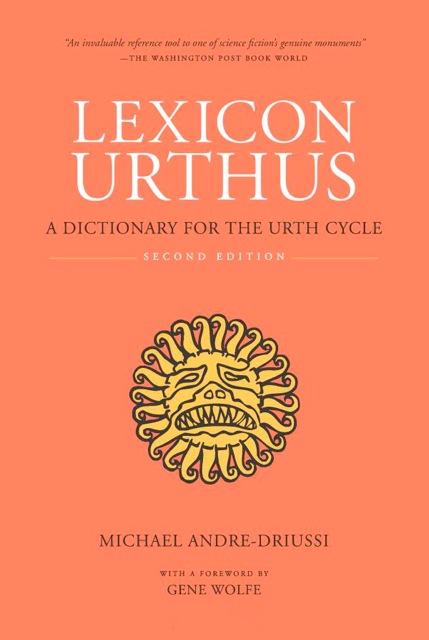
History: A “lexicon” is “the vocabulary used by or known to an individual” (Wiktionary); “Urthus” is a bogus Latin genitive form derived from “Urth” – which is actually a Norse word, and the name of the eldest of the Norns (see Skuld and Verthandi), and not a corruption of “Earth”.
Commentary: the reputation of The Book of the New Sun rests in part on the word-games – the obscure and obscuring vocabulary – used by Wolfe in telling his story. Hidden beneath and within these unfamiliar terms are additional elements of the story. They also add to the flavour of Wolfe’s world-building. Using invented or unfamiliar terms is not a unique achievement, but Wolfe does not provide a glossary – unlike, say, Frank Herbert in Dune. Lexicon Urthus in part fills that role – it is subtitled “A dictionary for the Urth Cycle” – but it is also much more. Words are not simply glossed, but characters’ names are also explained – their origins and any connection between a historical person bearing that name and the character in the book, and a further commentary on each term. There is also a synopsis of all five books, and several maps of varying usefulness.
Some of the terms glossed are not so obscure:
dhow – a native vessel used on the Arabian Sea, generally with a single mast, and of 150 to 200 tons burden; a kind of lateen-rigged trading boat (I chap. 12, 114).
Others certainly are:
Murene – the name of the village on the shore of Lake Diuturna (III, chap. 32, 258).
History: (variant of “muraena”) in early use applied vaguely as the name of a kind of eel mentioned by ancient writers.
Lexicon Urthus‘s usefulness is specific. As is its appeal. It is for those interested in learning more about, and understanding more of, The Book of the New Sun. It is not an analysis of the story – as is, say, Robert Borski’s Solar Labyrinth – but it is a tool to aid in solving the Urth Cycle’s riddles. Its scholarship is impressive – as, one must assume, was Wolfe’s when he wrote The Book of the New Sun. This second edition corrects many of the errors and omissions discovered in the first edition and subsequently published in Errata & Corrigenda chapbooks.
This review originally appeared in Interzone, #219 December 2008.
I saw this meme on David Hebblethwaite’s excellent blog (and he picked it up from The Broke and the Bookish), and I thought: that’s a good idea, my turn now. It Doesn’t Have To Be Right (It Just Has To Sound Plausible) has been running since 2006, originally on blogger.com but on wordpress.com for the past couple of years. Each year, I’ve put together a list of the best five books I’ve read that year – a habit which even predates my blog, as I used to do it for an APA I was in for a good many years. So those best of lists for each year were the obvious place to look for books for this meme.
This list of ten books are not my favourite books of all time, but they are books I liked and admired a great deal during the years 2006 to 2011. They’re also quite indicative of what it is in fiction that I like and admire. They’re in no particular order.
1 Ascent, Jed Mercurio (2007)
This has been a touchstone work for me for a number of years. Mercurio’s highly-detailed prose is something I try for in my own writing, though I do wonder if in Adrift on the Sea of Rains I’ve gone even further than Ascent does. The story of a Soviet pilot leading up to the Korean War and during the years following, Ascent paints a bleak picture of a driven man who, despite numerous setbacks, still ends up playing an important, but secret, role in the USSR’s space programme. Although its central character, Yefgeni Yeremin, is invited to train as a cosmonaut, this is not the cheerful gung-ho can-do-ism normally found in fictional treatments of the Space Race. Ascent is not a science fiction novel, and Mercurio is not a science fiction author (although he did write and produce the science fiction television series Invasion: Earth), but I felt Ascent could be read as sf – and I wrote as much here.
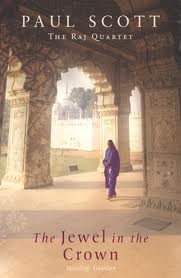
2 The Jewel In The Crown, Paul Scott (1966)
I vaguely recall watching the television adaptation of this when it was broadcast back in the 1980s, though all I can remember is Art Malik, Tim Piggott-Smith and Geraldine James. When I stumbled across all four of the Raj Quartet books in a charity shop for 69p buy-one-get-one-free, I thought they’d be worth a read. And when I got around to reading The Jewel In The Crown I discovered that Paul Scott was precisely the sort of literary writer whose fiction I enjoy a great deal. There is an impressive control of voice on display throughout The Jewel In The Crown, and the collage of testimonies from which it’s put together create an impressively rich and detailed portrait of life in the invented Indian city of Mayapore. After finishing The Jewel In The Crown, I added Scott to the list of authors whose books I collect in first editions (although I’ve yet to find an affordable copy of this book in first edition). I wrote about The Jewel In The Crownhere.
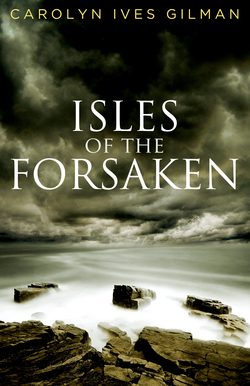
3 Isles of the Forsaken, Carolyn Ives Gilman (2011)
I used to read fantasy quite a lot – not as much as I read science fiction, but it was probably my second choice in terms of reading material. I worked my way through most of Robert Jordan’s Wheel of Time and George RR Martin’s A Song of Ice and Fire, tried the first book of Steve Erikson’s Malazan Books of the Fallen, and ploughed my way through sundry other well-known fantasy novels. And then I completely gave it up – or rather, gave up on it. It was all rubbish. Everything was the same, there had been no real invention in it since the 1970s. It was all magic systems and thinly-disguised role-playing-games’ campaigns. But I knew the name Carolyn Ives Gilman – I’d liked her debut, Halfway Human, which was sf – and the description of Isles of the Forsaken did sound like something out of the ordinary in fantasy terms. And so it proved. There is a scene about two-thirds of the way through the novel where two of the major characters escape imprisonment by the villains. Their route takes them along tunnels and inside the mountain overlooking the city, where they find themselves in some sort of vast otherworldly library built around an apparently bottomless well. It’s an astonishing moment in a fantasy novel that is very much unlike all the other fantasies currently available; and it’s one of only a handful of books in the genre that I consider worth reading. I wrote about it here.
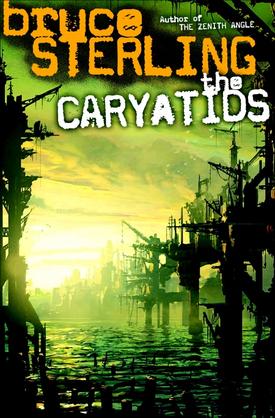
4 The Caryatids, Bruce Sterling (2009)
I’ve been a fan of Sterling’s writing since the 1980s, and have bought each new book by him as it was published. Not all made my top five list for their year of publication as I sometimes felt his propensity to throw out ideas on every page occasionally made uneven reads of his novels. The Caryatids, however, seemed to me like a welcome return to form – more than that, it was one of the first science fiction novels which read like a truly twenty-first century science fiction novel. The world Sterling created in The Caryatids felt like one that was reachable from the present day – or rather, felt like one that was inevitable if nothing was done in the present day to halt things like Climate Change or the collapse of capitalism. I was happy when I was asked to review the book for Interzone, and even more chuffed when I was told I’d also be interviewing Sterling. The interview is in Interzone #221 March-April 2009, and I think it came out quite well. I reprinted the review on my blog here in May of this year. Incidentally, I still don’t understand why there’s been no UK edition of this novel.
5 Spirit, The Princess of Bois Dormant, Gwyneth Jones (2008)
I’ve long maintained that Jones is the finest British writer of science fiction currently being published – although she’s not had a novel published since this one. There have been three collections since 2008, and she continues to write short fiction – and, of course, there are the YA books she writes as Ann Halam… although the latest of those, a sequel to Dr Franklin’s Island, will only be published in the US. Spirit is perhaps the closest Jones has ever come to writing space opera, and the end result is characteristically Jonesian but also seems in part to carry the flavours of several other well-known sf authors, from Samuel R Delany to Iain M Banks. The story is based on that of The Count of Monte Cristo, but the ending recasts Dumas’ tale of revenge as something less vindictive and more redemptive. I wrote about it here but the review’s cake-based conceit wasn’t as effective – or made as much sense – as I’d thought when I wrote it. Oh well, it seemed like a good idea at the time.
6 Carrying the Fire, Michael Collins (1974)
Three years ago was the fortieth anniversary of the Apollo 11 lunar landing, and in order to celebrate it I decided to read the (auto)biographies of the three astronauts involved – Neil Armstrong, Buzz Aldrin and Michael Collins – and review the books on my Space Books blog. I also read and reviewed several other books about the mission. Carrying the Fire not only proved to be the best of the three (auto)biographies, but also the best astronaut autobiography I have read to date. Collins was always characterised as the most introspective and erudite of the three “amiable strangers”, so it’s no real surprise that Carrying the Fire is so readable and so well-written. It also feels far less self-aggrandising than is typically the case for astronaut autobiographies – the nature of the job in those days demanded the sort of people who have big egos. Recently, of course, we lost one of the Apollo 11 crew, Neil Armstrong, on whom the most attention regarding the lunar missions has focused, despite his retreat from public life afterward. My review of Carrying the Fire is here.
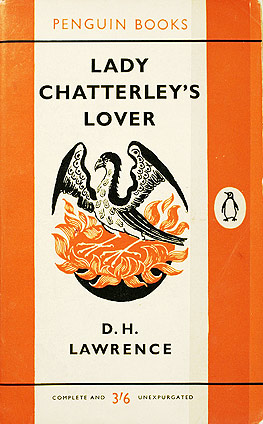
7 Lady Chatterley’s Lover, DH Lawrence (1928)
My father was the DH Lawrence fan in our family. On a trip to the US, he dragged my mother to Taos to see the chapel where Lawrence’s ashes are interred. But, despite a shelf full of books by and about Lawrence in my parents’ house, I’d never tried reading him. And then, for some reason I no longer recall, I decided I ought to have a go. So of course I picked Lawrence’s most famous – and infamous – novel. And I loved it. Like Lawrence, I’m a Nottinghamshire native, and though the Eastwood dialect he writes is much broader than the Mansfield dialect I heard throughout my childhood years, it’s still familiar. So there was an immediate geographical appeal to the book. But when Lawrence was writing about nature and the countryside, his descriptive prose really shone for me (Lawrence Durrell, a favourite writer, is also an excellent writer of descriptive prose). The characters of Mellors and Constance were also drawn much more effectively than I had expected. I so enjoyed Lady Chatterley’s Lover, that on subsequent visits to charity shops I picked up copies of Lawrence’s other books, and now have most of them – and I plan to slowly work my way through them. Incidentally, the best film adaptation I’ve seen so far of the book is Pascale Ferran’s Lady Chatterley. It’s French-language, which is initially odd, but it does seem to capture the book much more effectively than any other adaptation.
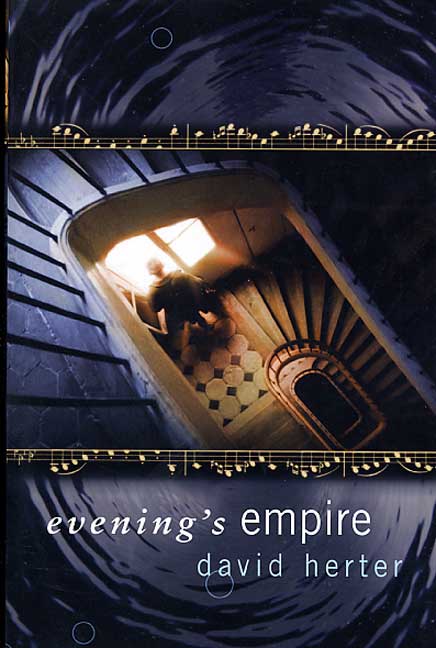
8 Evening’s Empire, David Herter (2002)
There is a trio of books by a writer whose personal views I find odious which riffs on Golden Age tropes and attempts to do something 21st century with them. I read the first two shortly after they were published – and before I knew what the author was like – and couldn’t see what all the fuss was about. They weren’t actually very good. David Herter’s first novel, Ceres Storm, plays similar games with those tropes, but it is beautifully written and very, very good. Of course, Herter remains mostly unknown whereas the previous writer now churns out best-sellers. Such is the way things work. Evening’s Empire was Herter’s second novel, and it is not science fiction. It sat unread on my bookshelves for a decade, and when I finally read it I wondered why it had taken me so long. It starts off as a (John) Crowley-esque fantasy before taking an abrupt left turn into something strange and wonderful. The main character is working on an opera based on Jules Verne, and that in turn inspired me to pick up and read Verne’s two best-known works, Twenty Thousand Leagues Under the Sea and Journey to the Centre of the Earth… but I don’t think I’ll ever really be a Verne fan.
9 Synthajoy, DG Compton (1968)
If Gwyneth Jones is the finest writer of science fiction in the UK currently still writing, then Compton is the finest sf writer in the UK who is no longer writing (and hasn’t been published since a pair of near-future crime novels published in the mid-1990s). He’s perhaps best known for The Continuous Katherine Mortenhoe (1974), which was adapted for cinema by Betrand Tavernier as Death Watch in 1979. Compton started out writing crime novels in the early 1960s, but branched out into sf in 1965 with The Quality of Mercy. British sf of that period was far better-written than its US equivalent, chiefly because it was less orientated toward, or had fewer roots in, pulpish action-adventure. Writers such as Arthur Sellings, Keith Roberts, Rex Gordon, Michael G Coney or Richard Cowper – not to mention the New Wave authors – could write rings round their American contemporaries. Even those who banged out hackwork for US publishers with impressive regularity – Brian Stableford, EC Tubb, Edmund Cooper, Ken Bulmer, etc. – were better prose stylists than the big Hugo winners like Asimov, Heinlein, Herbert or van Vogt. Compton was the best of the lot. His books read like snapshots of the 1960s and 1970s now, but they’re beautifully observed snapshots. They are the embodiment of sf novels set in the near-future that are really about the time they were written. Synthajoy‘s science-fictional content does not especially convince, and its central premise is unlikely to generate sense of wonder… but it’s a wonderfully-written portrait of a woman who is driven to crime by the behaviour of her husband, the inventor of the eponymous psychiatric technique. I wrote about it here.
10 Red Plenty, Francis Spufford (2010)
I think I’ve always had a somewhat utopian bent, and that’s only grown stronger in recent years. Science fiction has its occasional spats over pessimistic versus optimistic stories, and while I can hardly claim that Adrift on the Sea of Rains is optimistic, I have grown increasingly annoyed with the default futures far too much recent sf employs. It’s all grimly corporate and capitalist near-fascist states which only perpetuate the myth of self-actualisation through money, power and material possessions. I’d like to see that change. Yes, I know there are utopian science fictions available, but it’s the default nature of this horrible US-led invented future that I’d like to see disappear. Red Plenty, however, does not depict a communist future, a USSR which outlasted the capitalist West. It’s actual a dramatised history of events during the first half a dozen decades of the USSR. But it’s beautifully done, and it’s easy to see how the soviet system promised so much more than it ended up delivering. It presents the USSR as a dream of utopia. The fact the dream failed should not invalidate the attempt. Read Red Plenty and then tell me the American Dream is the only sustainable future. Who knows, twenty years from now we may be mocking sf novels that don’t depict the USA as a repressive and misogynist theocratic oligarchy…
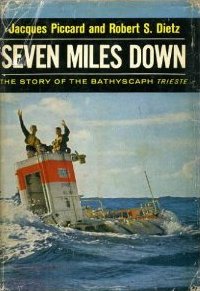
special extra 11th book: Seven Miles Down, Jacques Piccard & Robert S Mietz (1961)
This list is supposed to be ten books – it says so in the title of the post – but I really wanted to include this book… not because it is well-written, or because it’s the best book ever published on its subject. It is, as far as I can discover, the only book published on its subject. And it’s a subject which came to fascinate me when I learnt of it in 2010. That year was the fiftieth anniversary of the first – and until only recently – visit by human beings to the deepest part of the oceans, Challenger Deep in the Mariana Trench. Like the Apollo programme, the descent of the bathyscaphe Trieste was a triumph of brute engineering, and that’s one of the reasons I find it so interesting. It’s also inspired some of my fiction. I wrote about Seven Miles Downhere.
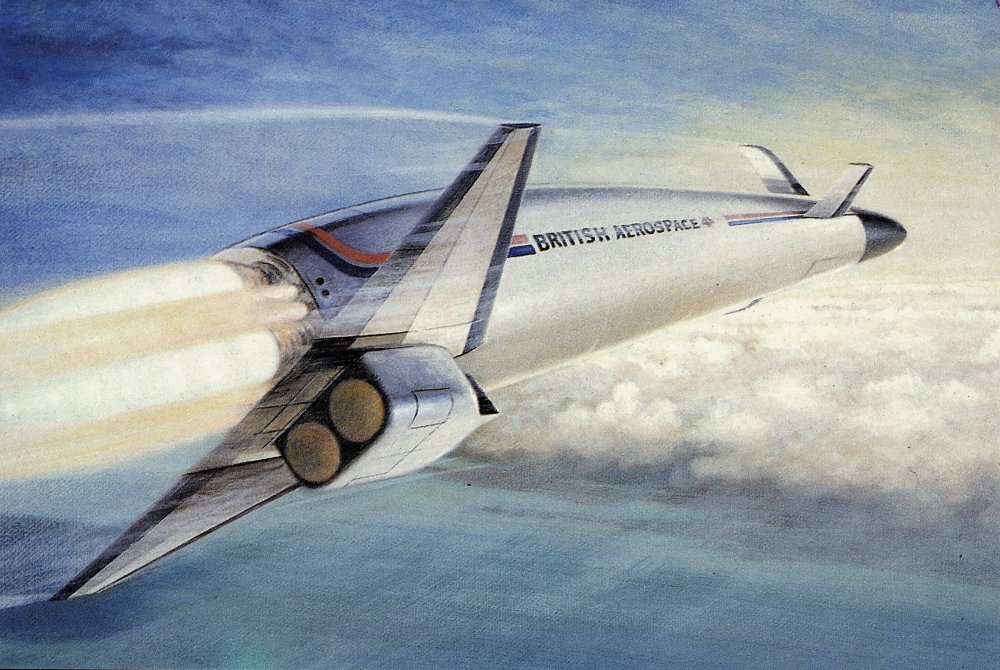
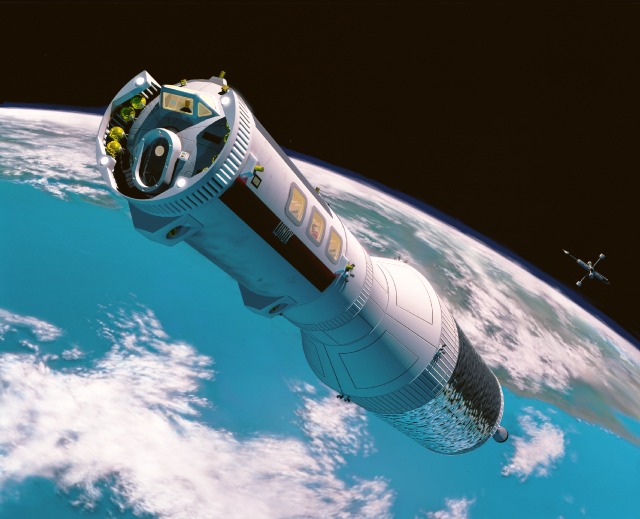
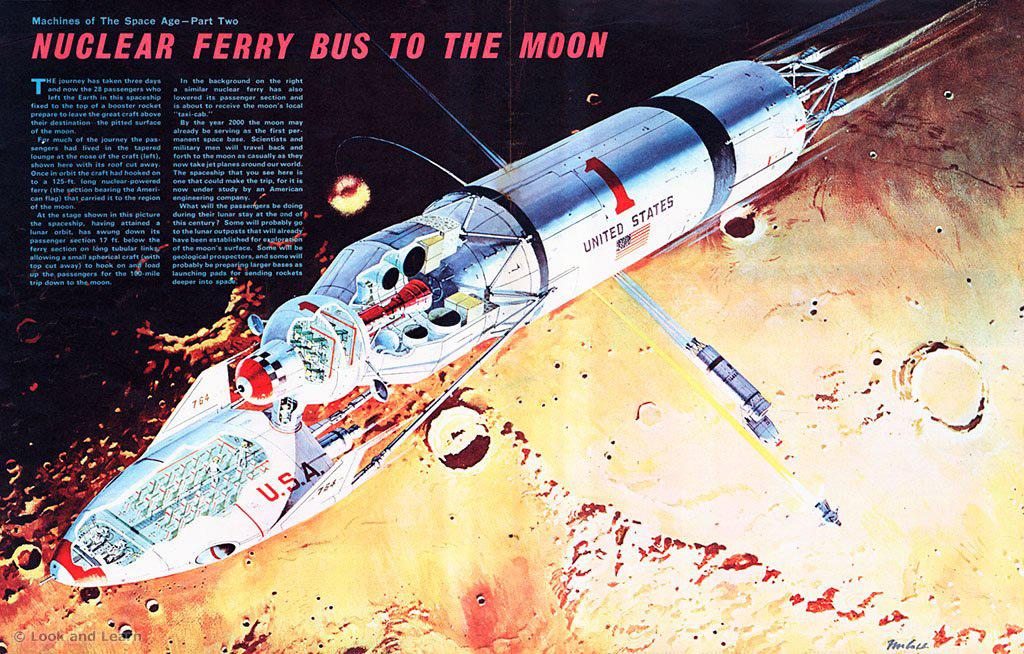
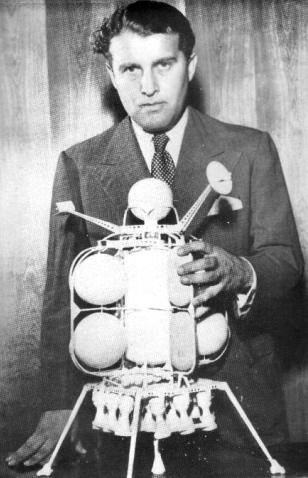
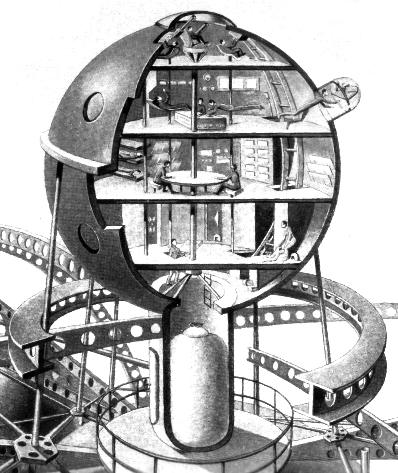
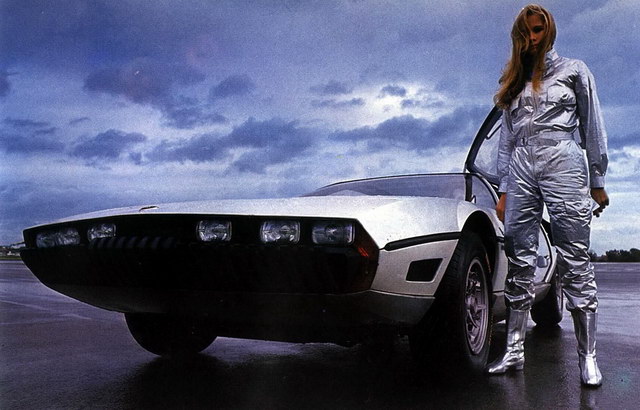
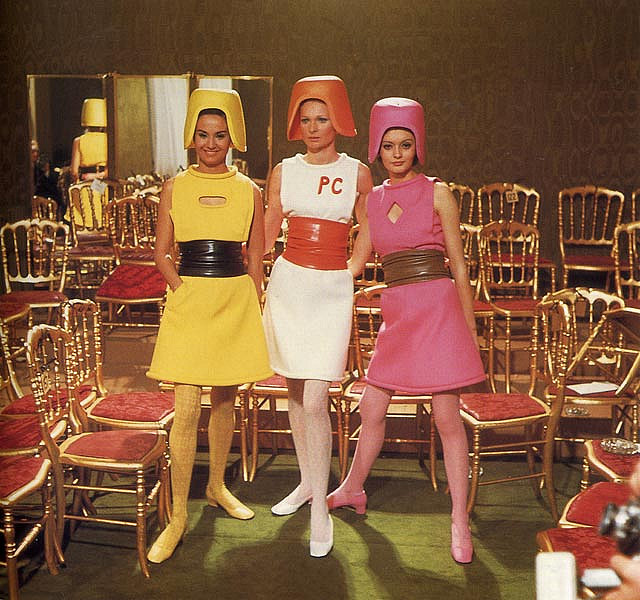
We lost a bit of the future we used to have only a couple of days ago, when Neil Armstrong died following heart surgery. The US space programme of the 1950s and 1960s has always fascinated me because of its optimism for the future. It gave us “Space Age” as a term of approval, and I for one mourn the Space Age we nearly had within our grasp. Here are some photographs to remind us of lost times…
space
British Aerospace HOTOL
NASA space ferry concept
Nuclear-powered ferry to the Moon (from Look and Learn)
Von Braun design for a lunar lander
Cabin detail from von Braun lunar lander
NASA Moon colony, with LRV in foreground
roads
Ford FX Atmos concept car, 1954
Bubble cars
Still the best-looking car ever, the Lamborghini Marzal
Lamborghini Marzal – so futuristic, you have to wear a spacesuit to drive it
Ferrari 512 S Speciale, by Pininfarina
Ferrari 512 S Speciale – could only be driven by people without heads
fashion
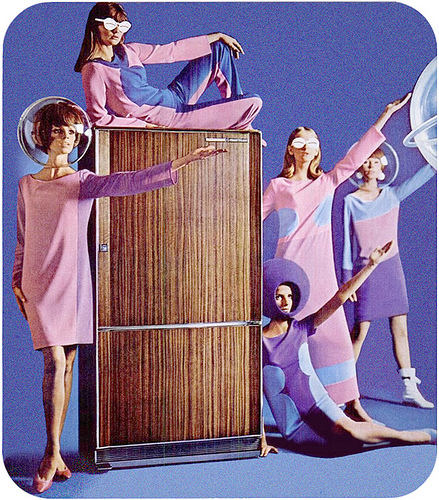
When you wake up in the future, this is what the nurses will look like (Pierre Cardin)
In the future, everyone will wear a bucket on their head because of climate change (Pierre Cardin)
What to wear when the sea levels rise (Nina Ricci)
Even on the Moon, they will need to keep their beer cold (Paco Raban, I think; and Frigidaire)
For when astronauts go hungry (Paco Raban again, I think)
Neil Armstrong can rest easy, knowing the Moon will be kept clean
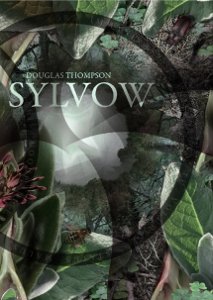
Sylvow, Douglas Thompson
(2010, Eibonvale Press, £6.99, 304pp)
Back in the day, fix-up novels were relatively common in science fiction. Authors would cobble together a bunch of stories, sellotape a framing narrative in place, and pass off the finished product as a novel. In most such books, the joins were sadly obvious. If there’s a term for the reverse – a novel which comprises standalone excerpts that have been published as short stories – I’m not aware of it. Nonetheless, it’s a fair description of Douglas Thompson’s second novel, Sylvow. Eight of the book’s seventeen chapters have previously seen print: in Ambit Magazine, Dream Catcher, and the British Fantasy Society’s New Horizons and Dark Horizons. While those chapters read perfectly well as short stories, they are also very much of the novel.
Sylvow is a story in many parts about a small group of people who all live in the invented city of Sylvow. However, the city, and the lives of its inhabitants, are slowly being invaded by Nature run rampant. Leo disappeared into the deep woods which ring Sylvow years before, and sends irregular letters commenting on, among other things, Nature’s campaign of conquest. His estranged wife Vivienne takes up with Anton, who had a nervous breakdown but was cured by Franco, and now works as a forest ranger. Franco’s wife Claudia is a vet, and she sees at first hand how the animal and insect kingdoms are responding to Nature’s war on humanity and civilisation. Franco meanwhile is having an affair with Veronika, a young Goth patient.
According to the background notes at the rear of the book, the city of Sylvow is a fusion of Glasgow, Osnabrück and Novogrudek. Certainly it seems at times to have a Middle European air, and the novel’s cast all possess names more common in continental Europe than in the British Isles: Franco, Veronika, Claudia, Vittorio, Nikolaus… Yet there are references to very British institutions and cultural artefacts. It gives Sylvow a somewhat unsettled feel – further exacerbated by Thompson’s prose style, which at times reads Ballardian and at others like the work of an East European fantasist. There are a variety of voices in Sylvow, but not all feel entirely suitable. Yet this too seems in keeping with the story Sylvow tells. Its narrative is episodic, and nominally linear, but not everything in the novel makes sense, or is capable of being understood.
Thompson aims high, but does not always hit his target. He is better when focussing on the surreal than he is at the quotidian. When read as a novel of disconnect, of humanity’s failed attempts to understand, or come to an accommodation with, Nature and her needs, Sylvow works very well indeed. Many of the passages set in the forest showcase some lovely writing indeed. As a novel of the relationships between people, Sylvow is perhaps less successful. The easy familiarity between family members, and between friends, often feels forced, as if Thompson were trying for the mannered tone of Mittel-Europa fiction but instead found himself writing the banal dialogue of a transatlantic mainstream novel. Nonetheless, despite the uneven read, despite its occasionally patchy nature, Sylvow is an intriguing blend of genres. With this novel, and his debut Ultrameta, Thompson has certainly shown he is a name to watch. Once he manages to write mainstream with the same facility he writes surrealism and genre, he’s sure to produce something special.
This review originally appeared in Interzone #233, March-April 2011.