It Doesn't Have To Be Right…

… it just has to sound plausible


2 Comments

2013, the best of the year

We’re a couple of weeks away from Christmas and the end of the year, so it’s time to look back with a critical eye over the past twelve-ish months and the words, pictures and sounds I consumed during that period. Because not everything is equal, some have to be best – and they are the following:

BOOKS
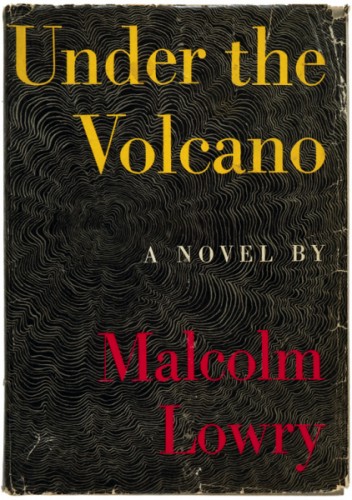
UnderTheVolcano1 Under the Volcano, Malcolm Lowry (1947) A classic of British literature and rightly so. I fell in love with Lowry’s prose after reading ‘Into the Panama’ in his collection Hear Us O Lord from Heaven thy Dwelling Place, although I already had a copy of the novel at the time (I’d picked out the collection, Under the Volcano and Ultramarine from my father’s collection of Penguin paperbacks back in 2010). Anyway, Under the Volcano contains prose to be treasured, though I recommend reading Ultramarine and Lowry’s short fiction first as it is semi-autobiographical and you can pick out the bits he’s used and re-used. This book was also in my Best of the half-year.
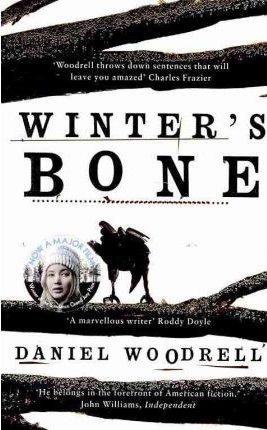
wintersbone2 Winter’s Bone, Daniel Woodrell (2006) I’d bought this because I thought the film was so good and because Woodrell had been recommended to me. But instead of the well-crafted crime novel I was expecting to read, I found a beautifully-written – and surprisingly short – literary novel set in the Ozarks that was perhaps even better than the movie adaptation. I plan to read more by Woodrell. Winter’s Bone was also in my Best of the half-year.
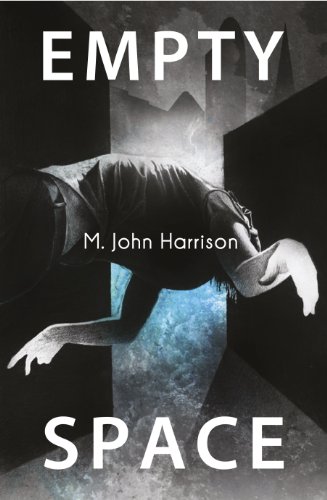
empty3 Empty Space: A Haunting, M John Harrison (2012) The third book in the Kefahuchi Tract trilogy, and I’m pretty damn sure I’ll have to reread all three again some time soon. Although the fulcrum of the story is Anna Waterman and the strange physics which seems to coalesce about her, Empty Space: A Haunting also does something quite strange and wonderful with its deployment of fairly common sf tropes, and I think that’s the real strength of the book – if not of the whole trilogy. And this is another one that was in my Best of the half-year.
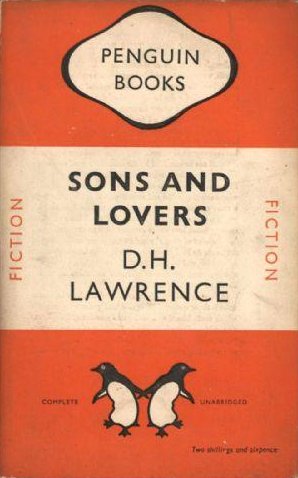
sons4 Sons and Lovers, DH Lawrence (1913) When I looked back over what I’d read during 2013, I was surprised to find I held this book in higher regard than I had previously. And higher than most of the other books I’d read during the year too, of course. At the half-year mark, I’d only given it an honourable mention, but it seems to have lingered and grown in my mind since then. It is perhaps somewhat loosely-structured for modern tastes, but there can be little doubt Lawrence fully deserves his high stature in British literature.

promised_moon5 Promised the Moon, Stephanie Nolan (2003) I did a lot of research for Then Will The Great Ocean Wash Deep Above, and this was the best of the books on the Mercury 13. But even in its own right, it was a fascinating read and, while sympathetic to its topic, it neither tried to exaggerate the Mercury 13’s importance nor make them out to be more astonishing than they already were. If you read one book about the Mercury 13, make it this one.

Honourable mentions: Ancillary Justice, Ann Leckie (2013), an exciting debut that made me remember why I read science fiction; Invisible Cities, Italo Calvino (1972), beautifully-written tall tales presented as Marco Polo’s report to a khan; The Wall Around Eden, Joan Slonczewski (1989), a masterclass in writing accessible sf, this book needs to be back in print; The Day Of The Scorpion, Paul Scott (1968), the second book of the Raj Quartet and another demonstration of his masterful control of voice; The Sweetheart Season, Karen Joy Fowler (1996), funny and charming in equal measure; The Lowest Heaven, edited by Anne C Perry & Jared Shurin (2013), some excellent stories but also a beautifully-produced volume; Sealab, Ben Hellwarth (2012), a fascinating history of the US’s programme to develop an underwater habitat; Cities of Salt, Abdelrahman Munif (1987), a thinly-disguised novelisation of the US oil companies’ entry into Saudi, must get the rest of the trilogy; and Wolfsangel, MD Lachlan (2010), Vikings and werewolves are definitely not my thing but this rang some really interesting changes on what I’d expected to be a routine fantasy, must get the next book in the series…

Oops. Bit of a genre failure there – only one sf novel makes it into my top five, and that was published last year not this; although four genre books do get honourable mentions – two from 2013, one from 2010 and one from 1989. I really must read more recent science fiction. Perhaps I can make that a reading challenge for 2014, to read each new sf novel as I purchase it. And I really must make an effort to read more short fiction in 2014 too.

FILMS
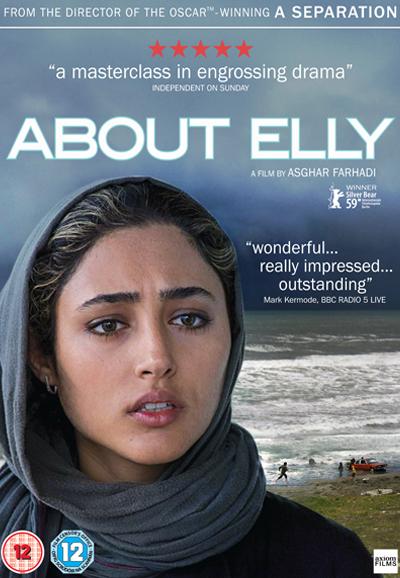
about-elly-dvd1 About Elly, Asghar Farhadi (2009) A group of young professionals from Tehran go to spend the weekend at a villa on the Caspian Sea. One of the wives persuades her daughter’s teacher, Elly, to accompany them (because she wants to match-make between the teacher and her brother, visiting from his home in Germany). Halfway through the weekend, Elly vanishes… and what had started out as a drama about family relationships turns into something very different and unexpected. This film made my Best of the half-year.
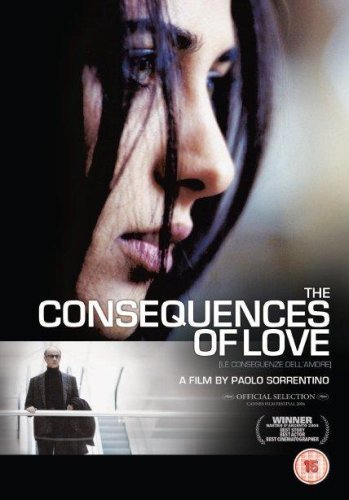
consequences2 The Consequences Of Love, Paolo Sorrentino (2004) The phrase “stylish thriller” could have been coined to describe this film, even if at times – as one critic remarked – it does resemble a car commercial. A man lives alone in a hotel in a small town in Switzerland. Once a week, a suitcase containing several million dollars is dropped off in his hotel room. He drives to a local bank, watches as the money is counted by hand and then deposited in his account. One day, the young woman who works in the hotel bar demands to know why he always ignores her… and everything changes.
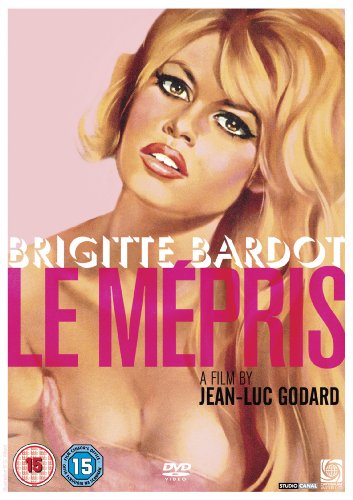
lemepris3 Le Mépris, Jean-Luc Godard (1963) I don’t really like Godard’s films, so the fact I liked this one so much took me completely by surprise. Perhaps it’s because it feels a little Fellini’s if it had been made by Michelangelo Antonioni. I like , I like Antonioni’s films. Perhaps the characters are all drawn a little too broadly – the swaggering American producer, the urbane European director (played by Fritz Lang), the struggling novelist turned screenwriter, and, er, Brigitte Bardot. Another film that made my Best of the half-year.

onlyyesterday_548494 Only Yesterday, Isao Takahata (1991) An animated film from Studio Ghibli which dispenses entirely with whimsy and/or genre trappings. A young woman goes to stay with relatives in the country and reflects on what she wants out of life. The flashback sequences showing her as a young girl are drawn with a more cartoon-like style which contrasts perfectly with the impressively painterly sequences set in the countryside. Without a doubt the best Ghibli I’ve seen to date… and I’ve seen over half of them so far. Once again, a film that made my Best of the half-year.
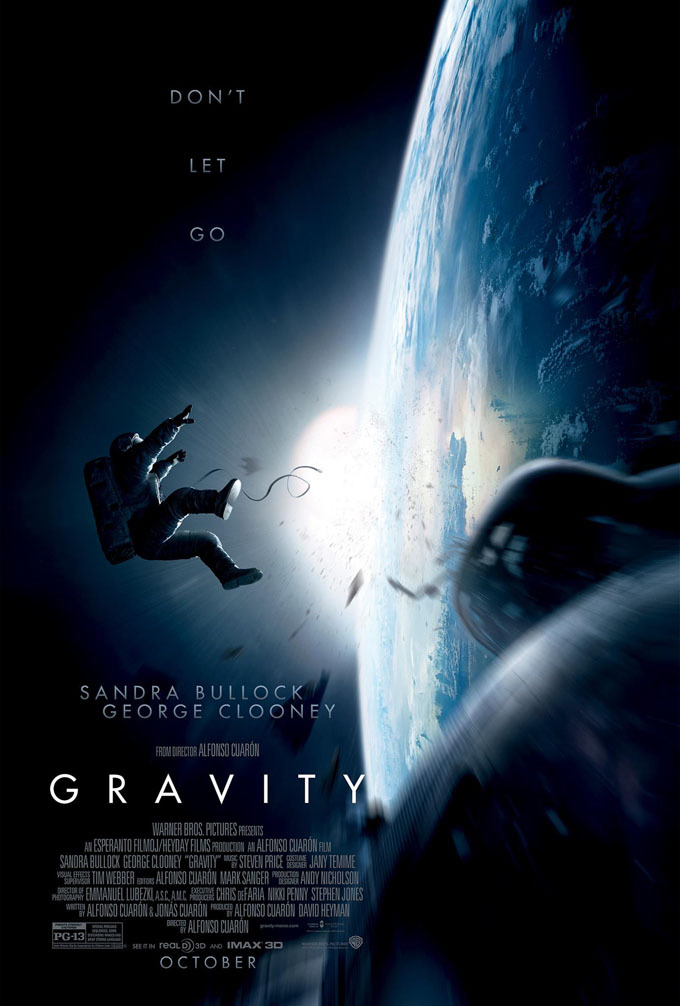
gravity5 Gravity, Alfonso Cuarón (2013) I had to think twice whether or not to put this in my top five. It was the only film I saw at the cinema this year, and I suspect seeing it in IMAX 3D may have coloured my judgement. To be fair, it is visually spectacular. And I loved seeing all that hardware done realistically and accurately on the screen. But. The story is weak, the characters are dismayingly incompetent and super-competent by turns, some of the science has been fudged when it didn’t need to be, and it often feels a little like a missed opportunity more than anything else. Perhaps I’ll feel differently after I’ve seen it on Blu-Ray…

Honourable mentions: She Should Have Gone to the Moon, Ulrike Kubatta (2008), an elegantly-shot documentary on the Mercury 13; Gertrud, Carl Theodor Dreyer (1964), grim and Danish but subtle and powerful; Man With A Movie Camera, Dziga Vertov (1929), astonishing meta-cinema from the beginnings of the medium; Sound of My Voice, Zal Batmanglij (2011), Brit Marling is definitely becoming someone to watch; Love in the Afternoon, Éric Rohmer (1972), the best of Rohmer’s Six Moral Tales; The Confrontation, Miklós Jancsó (1969), more socialist declamatory and posturing as a group of students stage their own revolution; Tears For Sale, Uroš Sotjanović (2008), CGI-heavy Serbian folk-tale, feels a little like Jeunet… but funny and without the annoying whimsy; Ikarie XB-1, Jindřich Polák (1963), a Czech sf film from the 1960s, what’s not to love?; Dear Diary, Nanni Moretti (1993), an entertaining and clever paean to Rome and the Italian islands, and a rueful look at the Italian health service; and The Sun, Aleksandr Sokurov (2005), a poignant and beautifully-played character-study of the Emperor Hirohito in 1945.

This year for a change I’m also naming and shaming the worst films I watched in 2013. They were: The Atomic Submarine, Spencer Gordon Bennet (1959), a typical B-movie of the period with the eponymous underwater vessel finding an alien saucer deep beneath the waves; Cyborg 2: Glass Shadow, Michael Schroeder (1993), an unofficial sequel to the Van Damme vehicle and notable only for being Angelina Jolie’s first starring role; The Girl from Rio, Jésus Franco (1969), Shirley Eaton as Sumuru, leader of the women-only nation of Femina, plans to take over the world, it starts out as a cheap thriller but turns into cheaper titillatory sf; The 25th Reich, Stephen Amis (2012), WWII GIs in Australia find a UFO, go back in time millions of years to when it crashed, then a Nazi spy steals it and ushers in an interplanetary Nazi regime, bad acting and even worse CGI; Battlestar Galactica: Blood and Chrome, Jonas Pate (2012), they took everything that had been good about Battlestar Galactica and removed it, leaving only brainless military characters and CGI battle scenes.

ALBUMS

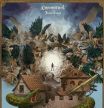
construct1 Construct, Dark Tranquillity (2013) Every time Dark Tranquillity release a new album, it makes my best of the year. I guess I must be a fan then. In truth, they are probably my favourite band and their last half-dozen albums have each been consistently better than the one before. So many bands seem to plateau at some point during their career but DT amazingly just get better and better. This album was on my Best of the half-year.
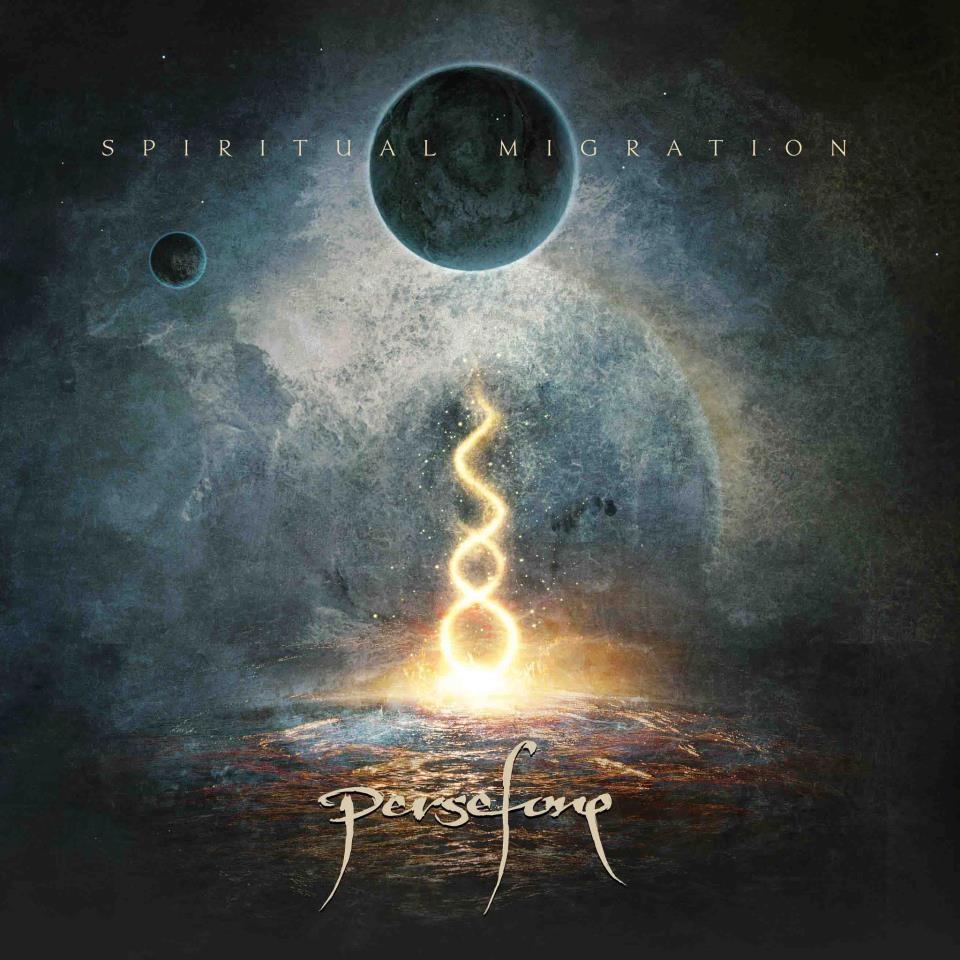
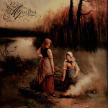
spiritual2 Spiritual Migration, Persefone (2013) Another band who improves with each subsequent album. And they’re good live too – although I’ve only seen them the once (they really should tour the UK again; soon). This is strong progressive death metal, with some excellent guitar playing and a very nice line in piano accompaniment. I didn’t buy this album until the second half of the year, which is why it didn’t appear in the half-year list.
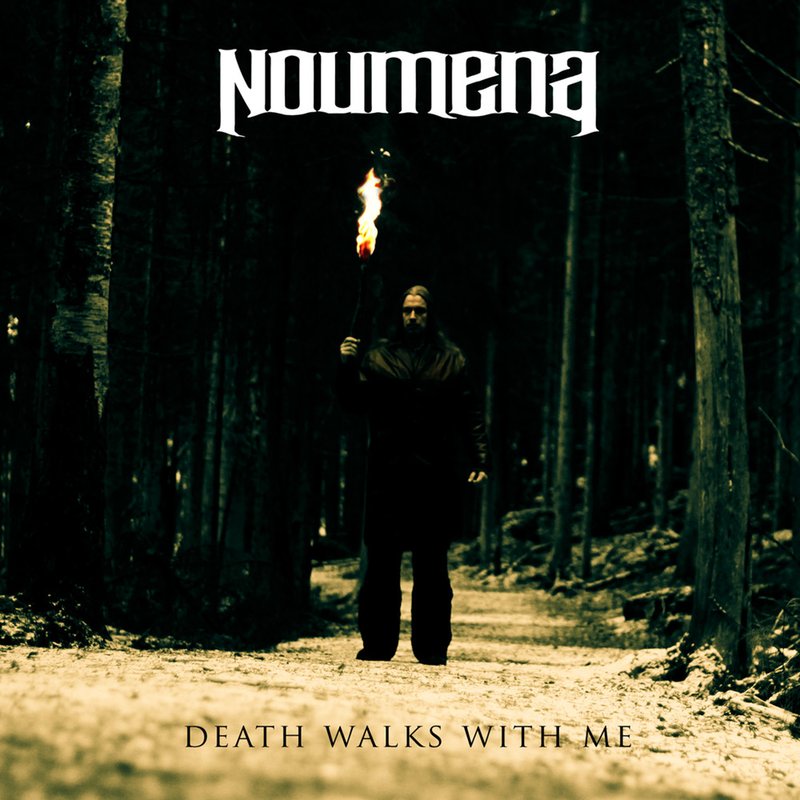
DeathWalks3 Death Walks With Me, Noumena (2013) A new album by a favourite band after far too long a wait, so this was pretty sure to make my top five. Noumena play melodic death/doom metal, an inimitably Finnish genre, but they also use clean vocals, and a female vocalist, quite a bit. One song even features a trumpet solo. I posted the promo video to one track, ‘Sleep’, on my blog here. And the album also made my Best of the Half-Year.
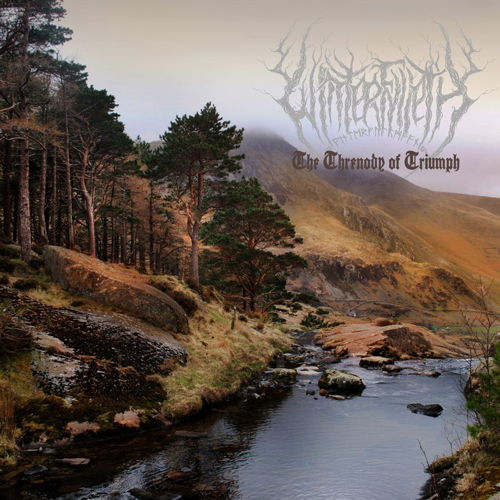
Winterfylleth-The-Threnody-Of-Triumph4 The Threnody Of Triumph, Winterfylleth (2012) I first saw Winterfylleth live before they were signed back in 2008 at the Purple Turtle in Camden at the Day of Unrest (see here), and I’ve seen them a couple of times since. This, their latest album, shows how far they’ve come and amply demonstrates why they’re so good. They call it English heritage black metal, which I think just means they sing about English historical sort of things (the band’s name is Anglo-Saxon for “October”). Another album from my Best of the half-year.

Of-breath-and-bone5 Of Breath And Bone, Be’lakor (2012) On first listen I thought, oh I like this, it deserves to be played loud. And it really does – it’s not just that Be’lakor, an Australian melodic death metal band, have excellent riffs, but also that there’s a lot more going on in their music than just those riffs. The more I listen to Of Breath And Bone, the more I like it – originally I only gave it an honourable mention in my Best of the half-year, but having played the album so much throughout 2013, I think it deserves a promotion.

Honourable mentions: Dustwalker, Fen (2013), shoegazery black metal that works extremely well; Where the End Begins, Mentally Blind (2013), excellent sophomore EP from a Polish death metal band, with an astonishingly good opening track (see here); Unborn and Hollow, Forlorn Chambers (2013), a demo from a Finnish death/doom band, and very very heavy, sort of a bit like a doomy version of Demilich, in fact, but without the vocal fry register singing; Shrine of the New Generation Slaves, Riverside (2013), more polished, er, Polish progginess, a little rockier than the previous album, although one track does include some very melodic “sexamaphone” [sic]; All Is One, Orphaned Land, proggier than previous albums but still with that very distinctive sound of their own, incorporating both Arabic and Hebrew; and Nespithe, Demilich (1993), a classic piece of Finnish death metal history, I picked up a copy of the re-mastered edition at Bloodstock – there’s a special Demilich compilation album, 20th Adversary of Emptiness, due to be released early next year, I’ve already pre-ordered it.

One of the things I really like about metal is that it’s an international genre, and here is the proof – the bands named above hail from Sweden, Andorra, Finland, the UK, Australia, Israel and Poland. There’s also quite a good mix of metal genres, from death to black metal, with a bit of prog thrown in for good measure.

Leave a comment

Double stacked

I promised a book haul post and here it is. Unusually, this month’s haul consists chiefly of research books, and first editions for various collections. Which actually probably makes it a little more expensive than is typical… Oh well.

20130506a

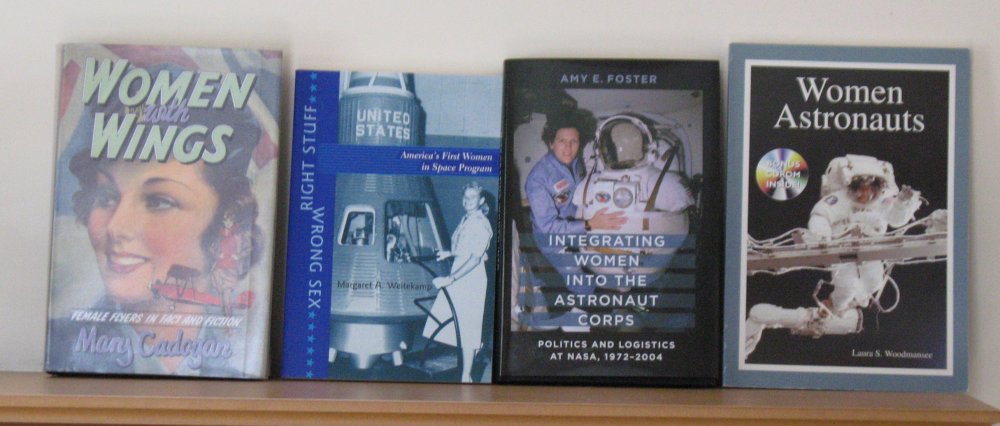
I bought these for research for Apollo Quartet books 3 and 4 – so yes, as promised, the role of women is much increased in the second half of the quartet. These four books – Women with Wings, Right Stuff, Wrong Sex, Integrating Women into the Astronaut Corps and Women Astronauts – only apply to part of the planned stories for the two novellas, however. I guess you’ll have to buy Then Will The Great Ocean Wash Deep Above and All That Outer Space Allows when they’re published to find out precisely how…

20130506b

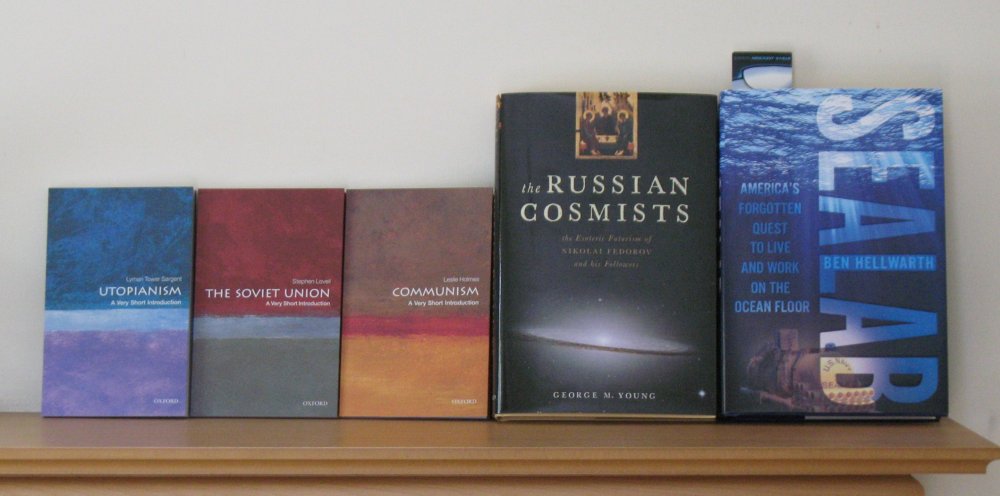
More research. Sort of. Sealab I bought just because it looked interesting. And as the bookmark indicates, I’m about a third of the way into it and it is interesting. Fascinating, even. I may well post about it later. The Very Short Introductions – Utopianism, Communism and The Soviet Union – are quite useful research tools, though they’re obviously only starting points. The Russian Cosmists is for a novel I’m working on. I started the novel the year before last when I had a bash at NaNoWriMo. I managed 15,000 words before giving up, but I recently realised that if I restructured it and took the plot in a different direction, I could end up with something quite interesting.

20130506c

A bunch of genre works. The Dog Stars was shortlisted for the Clark Award this year. I found that copy in a charity shop. The Lowest Heaven is an ARC of the latest anthology from Anne Perry and Jared Shurin. This ARC is just the stories, but the finished product will apparently contain a number of astronomical photographs. It’s due out next month. Seoul Survivors I have to review for Interzone. And The Maker’s Mask is a self-published work I stumbled across on Amazon. From what I’ve read of it so far, it seems quite fun.

20130506d

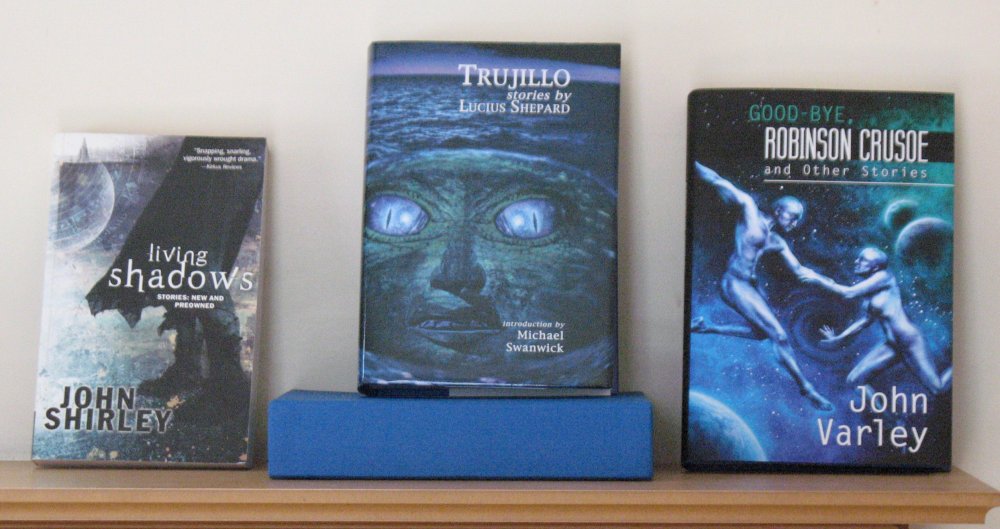
Some signed genre collections. I’ve been a fan of Varley’s fiction since the early 1980’s, so there was no way I was going to miss buying Good-Bye, Robinson Crusoe, even if I have most of its contents in other collections. Trujillo I picked up cheap on eBay. It’s out of print and difficult to find – especially the slipcased edition. I also have the Night Shade Books edition, although this PS Publishing one includes the title novel and some additional short stories. Living Shadows was another cheap eBay purchase.

20130506e

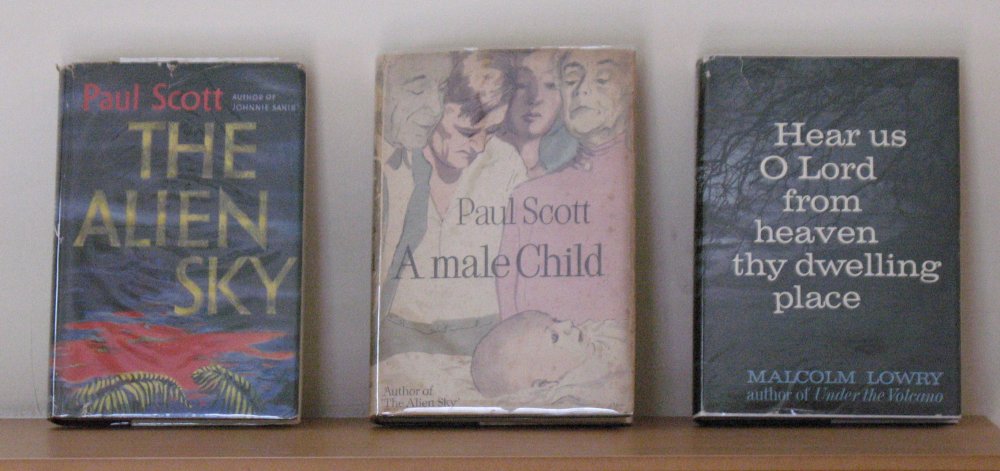
These, er, weren’t cheap. The Alien Sky and A Male Child are first editions of Scott’s first and third novel, from 1953 and 1956. Despite the enduring popularity of The Raj Quartet, Scott’s other works are really difficult to find – especially the early ones. Happily, a Cambridge-based bookshop put some of his books up on eBay recently. So I bought them. Hear Us O Lord from Heaven Thy Dwelling Place is a 1962 first edition of Lowry’s first posthumous collection. It contains ‘Through the Panama’, which is currently one of my favourite pieces of novella-length fiction. It was sold by the same shop as the Scott novels.

20130506f

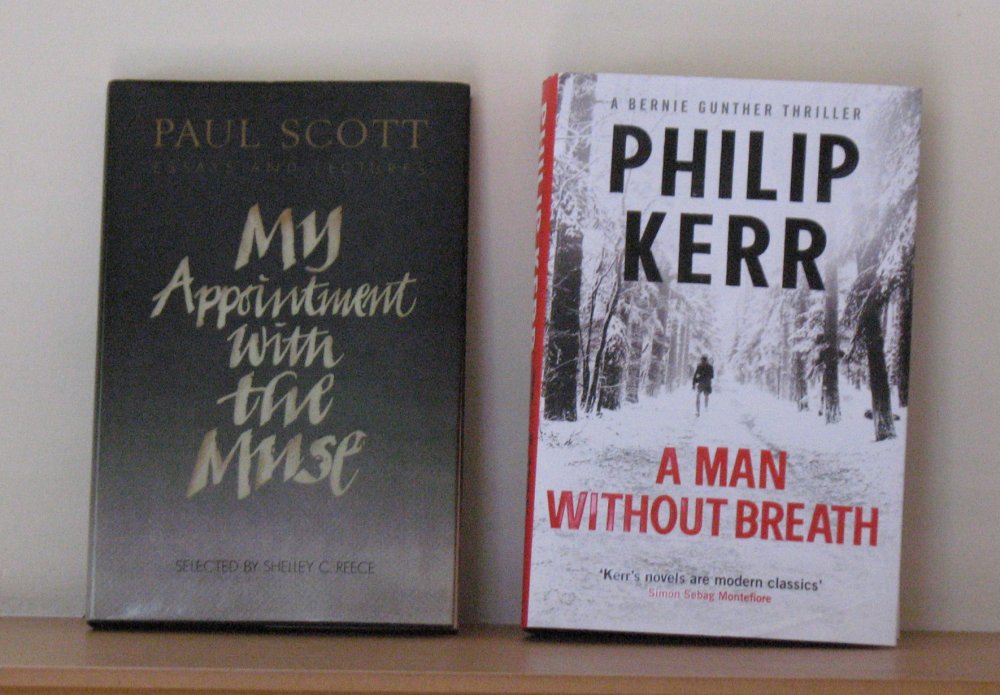
Finally, My Appointment with the Muse is a posthumous collection of Scott’s essays and talks. A Man Without Breath is the ninth and latest in Kerr’s Bernie Gunther series. I only have to read the novel prior to this one, Prague Fatale, and this one and I’m up to date.


Leave a comment

Come what May

A new month, a Bank Holiday weekend, and various doings of recentness in the weird and wacky world of science fiction. First up, of course, is Chris Beckett winning the Arthur C Clarke Award with Dark Eden. A win we can happy with, I think; though it was not my actual favourite on the shortlist. But congratulations to Chris, a genuinely nice guy and an excellent writer. Still, likely there will be much discussion on the win and what it means for science fiction in the UK over the next few weeks. Or perhaps not.

On the topic of not winning, right-wing nutjob Theodore Beale failed to conquer the SFWA and polled only a tenth of the votes of new SFWA president Stephen Gould. I’m not a member of the Science Fiction Writers of America, and have no desire to ever be one but, you know, it’s good to mock fascists, even if their politics are completely risible anyway. Speaking of which, a large number of plainly very stupid people in the UK gave a bunch of seats in local elections to UKIP. This is the party whose candidates believe exercise prevents homosexuality, claim the Jews were responsible for the Holocaust, think it’s funny to photoshop their head onto a photograph of Hitler and some Nazi bigwigs, and give “imitating a pot plant” as a defence for throwing a Nazi salute… One of their candidates has apparently gone to live in Thailand for six months, leaving his (Thai) wife and kids in the UK; and another was forced to resign as a police officer after being caught working as a male escort in full uniform. The clowns are taking over the circus.

Earlier this week, Nook dropped the price of its Simple Touch ereader from £79 to £29. Since I’d spent £130 on four hardback books a couple days before, I decided £29 was cheap enough to order one. Which is where it all went horribly wrong. I placed an order… and moments after getting an email acknowledgement I received a second email saying my credit card had been declined. Because I hadn’t created an account on the website, there was no way I could view or amend my order. I tried contacting Nook support, but they were completely snowed under with, it seemed, queries from other people with the same problem. So I created an account, and ordered another Simple Touch, this time using a debit card. It went through fine. The next day, I get an email saying they’ve fixed the credit card problem, so I can re-order if I want. I don’t want. I already have one heading my way – or so an email tells me. And then I get yet another email, saying it’s out of stock so my order has been cancelled. But the website still says the order’s in progress. So, Nook: big fail there. You win this week’s award for Most Useless Business on the Planet.

Meanwhile, Adam Roberts has been working his way backwards through Banks’ Culture novels. Not reading them back-to-front, obviously, just in reverse order of publication. It perhaps comes as no great surprise to learn that the later novels are not as good as those that preceded it. That is the Way of Commercial Fiction. Go read the reviews – they are insightful and amusing. And they sort of make me want to reread the Culture novels, too. If only the TBR weren’t so damn big…

Fantasy Café’s Women in SF&F month hit a bump in the road recently with a bonkers post about sexism in fantasy – or rather, the poster’s claim that it does not exist. Read the post here, then read an excellent rebuttal here. And on the same topic, here’s a piece from 1982 which demonstrates that thirty years later not a fat lot has changed. Susan Shwartz, incidentally, is the author of one of the few heartland fantasy novels I’m happy to recommend to people, The Grail of Hearts.

One author I constantly recommend people read is Gwyneth Jones. She’s offering her Escape Plans free on Kindle on Monday 6 May and Tuesday 7 May. Go buy it. Best use the link under the title, rather than search for it on Amazon, as their search engine seems to be completely fucked. Here’s my review of it on SF Mistressworks, written back in 2001.

Despite reading for SF Mistressworks, so far this year women writers only account for around 36% of my reading. Which is not to say that reading for SF Mistressworks is a hardship. While Margaret St Clair’s collection might not have been very good, Marta Randall’s novels are certainly much better than most of her contemporaries. And I’ve also had the opportunity to revisit some books I remember with great fondness, such as those by Shariann Lewitt or Susan R Matthews. Perhaps they’ve not always fared especially well on reread, but I’m glad I took the time to do it.

Speaking of books, over the last few days I’ve tweeted photos of some recent arrivals of a bookish nature. I’ll do a proper book haul post in a few days, but let’s just say I now have more research material for Apollo Quartet books three and four, and the Paul Scott and Malcolm Lowry first edition collections have expanded somewhat (which is the £130 of books mentioned earlier). So, of course, I’ve been spending my time reading about… underwater habitats and saturation diving. For another writing project. Current read is Sealab by Ben Hellwarth, which is proving fascinating. The whole idea of living and working on the sea bed appears to have been driven by one man, Captain George F Bond, USN; and who reminds me much of Colonel John Paul Stapp, USAF, of rocket sled fame, and who I wrote about in my story, ‘The Incurable Irony of the Man Who Rode the Rocket Sled’, which should be appearing on The Orphan some time soonish.


2 Comments

Recent readings

I’ve been reading a lot for review recently – not just SF Mistressworks, but also Interzone, Vector, and Daughters of Prometheus. But I do occasionally read for pleasure as well – although the reads don’t always turn out to be pleasurable…

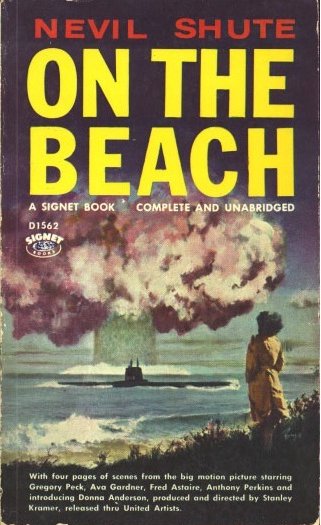
ON THE BEACH,  Nevil ShuteOn The Beach, Nevil Shute (1957), is apparently a classic and is often claimed for science fiction since it depicts a world immediately after a nuclear holocaust. The Albanians started it all off, the Egyptians then attacked NATO, and NATO thought it was the Soviets and so the nations of northern hemisphere wiped each other out in Mutually Assured Destruction. Now the last few humans, in southern Australia, pass the few months remaining to them. A lone US nuclear submarine has survived the destruction of the US and made itself available to the Royal Australian Navy. When a series of signals in Morse code – mostly unintelligible, but occasionally a clear word comes through – is detected coming from the west coast of the US, the USS Scorpion is sent to investigate. Much of the novel describes the Australians coming to terms with their impending doom – nuclear fallout is drifting south across the equator, and no one will survive when it reaches them. The USN captain pretends he still has a family back in New England, the RAN officer aboard the submarine and his wife plan for the future of their young baby, Moira, the young woman who is paired off with the USN captain, drinks and parties a lot and falls in love with the captain, and the scientist who’s tracking the drift of the fallout starts racing fast cars, culminating in a fierce race in which most of the drivers die in crashes. The prose is clunky at best, though Shute draws his characters quite well. It’s easy to see why the book is so well-regarded, though it wasn’t as smooth a read as I’d expected. Happily, it’s better than the film adaption – which starred Gregory Peck as the USN captain, Ava Gardner as Moira (as an Australian with an American accent), and Fred Astaire as the car-racing scientist. You’d think the book would adapt well, but Stanley Kramer managed to make the whole thing extremely dull.

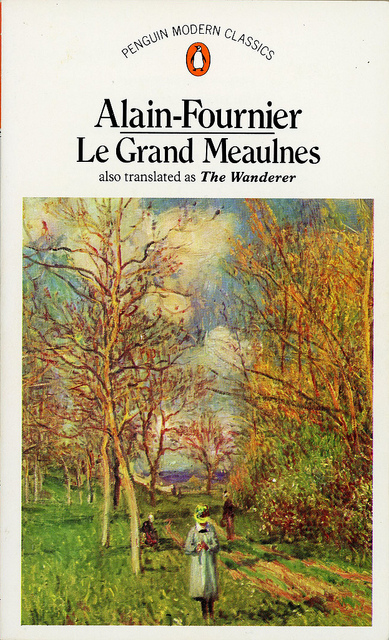
meaulnesLe Grand Meaulnes, Alain-Fournier (1913), was one of my father’s Penguin paperbacks, and I thought it looked interesting enough to be worth a read. It’s framed as the reminiscences of François, who attended a village school in the Sologne run by his father. A new boy appears at the school, Augustin, but he runs away one day and stumbles across a wedding party at a small chateau. He is mistaken for one of the guests, and has a magical time. However, the wedding fails to take place, and Augustin leaves and returns to the school – but he cannot remember the location of the chateau, and desperately wishes to meet the sister of the bridegroom once again as he had fallen in love with her. The “lost domain” drives Augustin – le grand meaulnes of the title – but even when the MC of a travelling circus proves to be the bridegroom from the wedding, he is still no closer to finding the girl of his dreams. Eventually, François stumbles across the location of the chateau, makes friends with the young woman, and informs Augustin of his discovery. But Augustin has been on another quest, and things have changed… There’s a nicely elegiac atmosphere to Le Grand Meaulnes, though that’s hardly surprising in a story which covers both lost childhood and lost love. The writing in the translation I read was very good throughout and while the story was very slow to start, it was worth reading. A classic.

Dark Eden by Chris BeckettDark Eden, Chris Beckett (2012), was shortlisted for the BSFA Award but did not win, and has now been shortlisted for the Arthur C Clarke Award. Set on a rogue planet travelling through, I think, intergalactic space, the novel plays out Cain and Abel among the 500 descendants of a single couple who were marooned there. The story is told by several narrators, in a strangely-random debased English – some words have devolved, but others haven’t. So the various words for local flora and fauna have remained unchanged, but the annual celebration of the landing has become “Any Virsry”. The inhabitants of the planet are also suffering from severe inbreeding, with many of them having deformed feet or severe hairlips. John Redlantern, however, is perfectly normal, although he is a good deal more thoughtful than everyone else. When he realises that the valley in which they live can no longer support further growth, he tries to persuade the elders to sanction a search for more living space. They reject his proposal because they believe they’re to wait for rescuers to appear… as they have been doing for nearly 200 years. Things come to a head, John is exiled and takes with him a small group of teenagers. But then his enemy back in the main colony foments hatred against John and his followers, there’s a clash, and John is forced to take his small colony across the frozen waste which surrounds the valley in search of a new valley in which to live. There’s an almost Biblical inevitability to the story of Dark Eden, and some members of the cast do play their roles with all the thudding predictability of characters from the Old Testament. But where Dark Eden does shine is in its presentation of its old story. The setting is a small work of genius, and beautifully described, and the integration of the characters in the setting is handled with real skill. It’s no surprise Dark Eden has appeared on the shortlists of the UK’s two most-prestigious science fiction awards.

jamiliaJamilia, Chingiz Aïtmatov (1958), I bought for my 2012 world fiction reading challenge, but I never managed to complete the challenge after getting bogged down in both Orham Pamuk’s My Name is Red and Javier Marías’ Your Face Tomorrow 1: Fever and Spear. But Jamilia is a slim work, more of a novella than a novel, so I picked it up one day earlier this month and read it on my way to and from work. It’s blurbed as “the most beautiful love story in the world” and, well, if it isn’t, it comes very close. It’s set in Aïtmatov’s native Kyrgyzstan sometime during the Second world War. The men have all gone off to fight, leaving the women, old men and boys to run the village and bring in the harvest. When Daniyar returns from the fighting, but his family are no longer alive, he is tasked with assisting the narrator’s family – especially transporting the grain by cart to the nearby town, along with the narrator and the narrator’s sister-in-law, Jamilia (whose husband is away fighting). Over several trips, Jamilia and Daniyar fall in love, but their relationship is forbidden as Jamilia is still married. The writing is simple but effective, although the translator has bizarrely mixed up Islamic oaths and Christian ones, which seems a pretty fundamental mistake to me. A fascinating little novella. Worth reading.

emptyEmpty Space, M John Harrison (2012), is the third and final book of Harrison’s Kefahuchi Tract trilogy, the first of which, Light, marked his return to science fiction after many years away. I’m not sure there’s any value in giving a précis of the plot, since in parts it’s wilfully opaque – as it has been throughout the entire the trilogy. Suffice it to say that some of the plot-threads from the preceding two novels do see some sort of resolution in this book. Harrison’s future is dirty and enigmatic, but it is also full of small inventive touches. The prose is like the roiling quantum foam of the strange physics it describes. Though the section set in the very near-future, featuring Anna Waterman, the widow of the physicist Michael Kearney from Light, reads more like the sort of literary fiction in which fantasy is injected sideways into the real world – much like Harrison’s earlier The Course of the Heart and Signs of Life; the narratives set on the worlds bordering the Kefahuchi Tract use the language of science fiction with a facility few genre writers can match. An alien installation, dubbed the Aleph, threads its way through the story, stitching together the various narratives as it manifests the strange physics emanating from the Tract. Strangely, though aliens are frequently mentioned in the book – and the tramp freighter Nova Swing’s cargo consists of mysterious alien “mortsafes” – they are entirely off-stage, or implied to have existed only in the deep past. Not every character is human, but the template of every character certainly is. Having finished Empty Space, but I can see the resolution and how it comes together, but I’m not entirely sure what has been resolved. It’s like the strange physics which informs the story – the effect is visible, the cause is unknowable and the process often seems to follow rules of its own. I think I shall have to reread all three books to get a real handle on it.

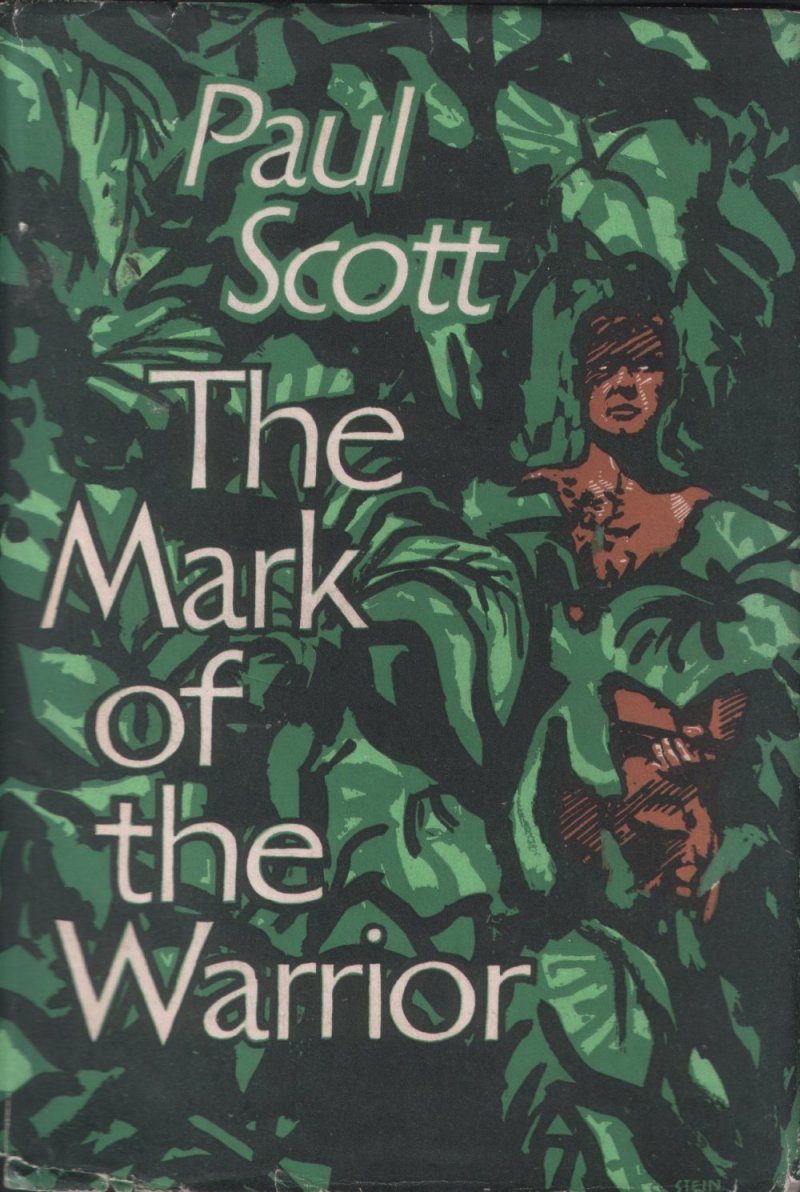
warriorThe Mark of the Warrior, Paul Scott (1958), is likely to remind genre readers of at least two books, even though it is set in India in 1942 and is about officer-cadets being trained for combat in the region. Major Craig is a veteran of the war in Burma – while he made it out of the jungle, as did most of his company, he did lose his second in command, John Ramsay. And now Craig has been assigned to an Officer’s Training School near Pune, as has Ramsay’s younger brother, Bob. Craig sees in Bob Ramsay the same thing he saw in John Ramsay – “the mark of the warrior”, a natural soldiering ability coupled with what are probably sociopathic tendencies. Certainly, young Ramsay proves to be the best cadet at the school – so much so that when the design of a final exercise is made into a cadet competition, Ramsay wins it by presenting a scheme both he and Craig know will prove the only useful one to those destined to fight in the region. Instead of previously setting up combat set-pieces on the nearby plains, Ramsay’s scheme involves an attack on a fortified position in the jungle thirty miles to the north of the school. Those who have read Gordon R Dickson’s Dorsai trilogy are going to find a lot in The Mark of the Warrior which seems familiar, and given that Scott’s novel beat Dickson’s The Genetic General into print by a year, you have to wonder… On the other hand, it’s not all that likely a US sf author would stumble across a novel by a British mid-list literary writer within a year of its publication. Nevertheless, the Dorsai seem to owe a lot to Ramsay. As does Orson Scott Homophobe’s Ender, though not having read that book, I’m not sure how close any resemblance might be. Genre comparisons aside, Scott’s novel is a minor work. It’s well-written, and the characters of Craig and Ramsay are drawn extremely well. I said of Scott’s The Bender when I read it that it would make a good British film, and the same is true of this one. It’s time for adaptation is long past, however; though perhaps the story could be updated to the present day without too much difficulty.


3 Comments

The north face of Mount TBR

Owning books can be more fun than simply reading them. At least that’s what I tell myself when I eye the double-stacked book-shelves and piles of books on the floor of my house. Which is not to say that I plan to keep every one of the books mentioned in these book haul posts. Some of them will go to charity shops once I’ve read them, some of them will go elsewhere. But until I actually start reading more books each month than I buy, the piles are only going to get higher…

20130316a

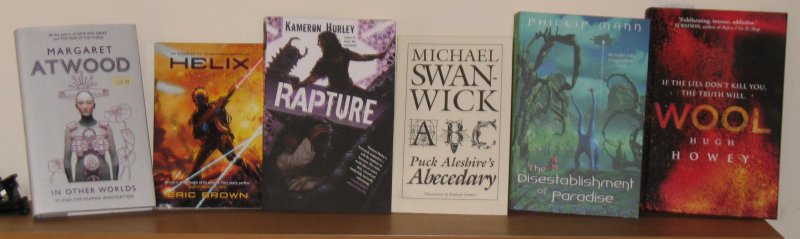
New science fiction: Wool I’m reviewing for Interzone. It has come close to being hurled at the wall a couple of times. The Disestablishment of Paradise is a new book by a favourite author, who hasn’t had anything published for a good many years. I should probably have hung on for the UK edition of Rapture, but I do like my trilogies to all match and I already have the Night Shade editions of the first two books. Puck Aleshire’s Abecedary is a small press chapbook I bought on eBay. Helix Wars was sent me by Eric, and In Other Worlds I picked up for £3.99 in a discount bookshop in Wetherby.

20130316b

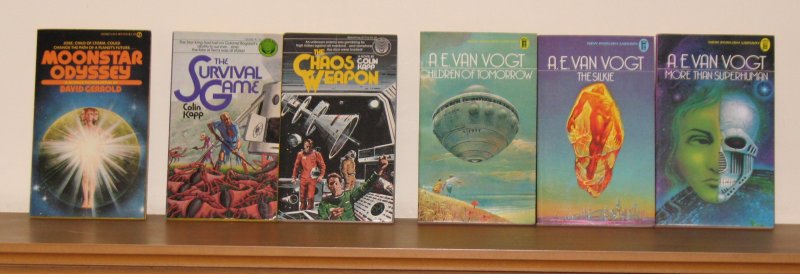
These six paperbacks I bought from Cold Tonnage. I may slag off van Vogt a lot, but some of his books transcend their chaotic bonkersness and I find them weirdly appealling. I don’t know if More Than Superhuman, Children of Tomorrow or The Silkie fit that bill. I guess I’ll find out. Colin Kapp is forgotten and under-rated Brit sf author who, like many of his 1960s and 1970s contemporaries, was chiefly published in the US. The Chaos Weapon and The Survival Game are among the last few of his I didn’t own. And Moonstar Odyssey I’ve been looking for a decent copy of for ages, though I can’t remember exactly why…

20130316c

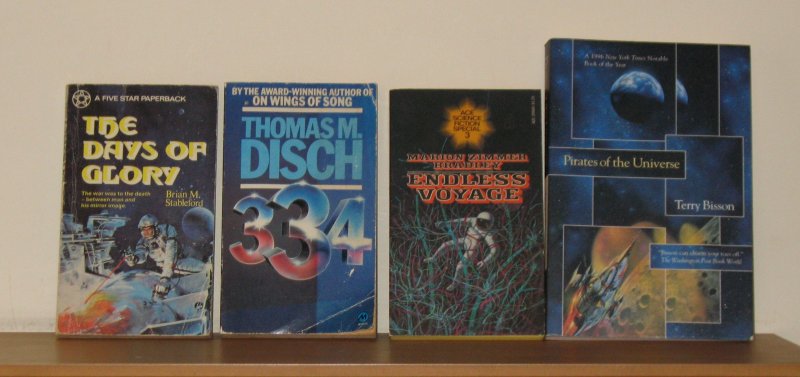
Some secondhand sf. Pirates of the Universe I’ve been after for a while. The last time I bought a copy, I received a refund instead as the book had apparently suffered a “scissors accident” while the buyer was packing it to send. I know nothing about Endless Voyage, but the new Ace special series from the mid-1970s contains some odd books among its eleven titles. I’ve decided to collect them. 334 is a genre classic which I’ve never read, and The Days of Glory is the first book of Stableford’s Dies Irae trilogy. Both the last were charity shop finds.

20130316d

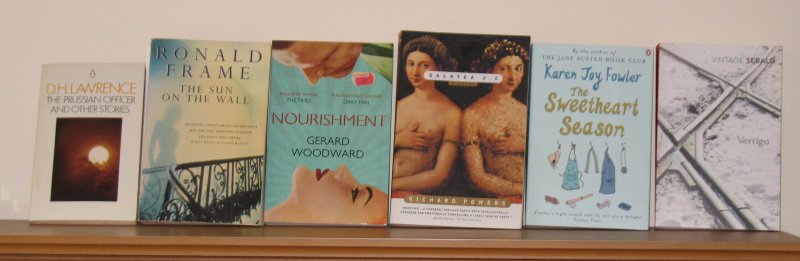
Vertigo was a birthday present, but all the rest were charity shop finds. I enjoyed the The Jane Austen Book Club, so I expect I’ll also enjoy The Sweetheart Season. Fowler’s genre work, of course, is excellent. Galatea 2.2 is literary-but-it’s-really-sf novel, which Powers has apparently done a couple of times. Nourishment is  Woodward’s latest; I enjoyed his first, August (see here). I’ve been meaning to try Ronald Frame’s fiction, but it’s taken me a while to find one of his books. And I’ve not checked The Prussian Officer and Other Stories yet, but I suspect I’ve already about half of its contents. But at least that’s half I’ve not read.

20130316e

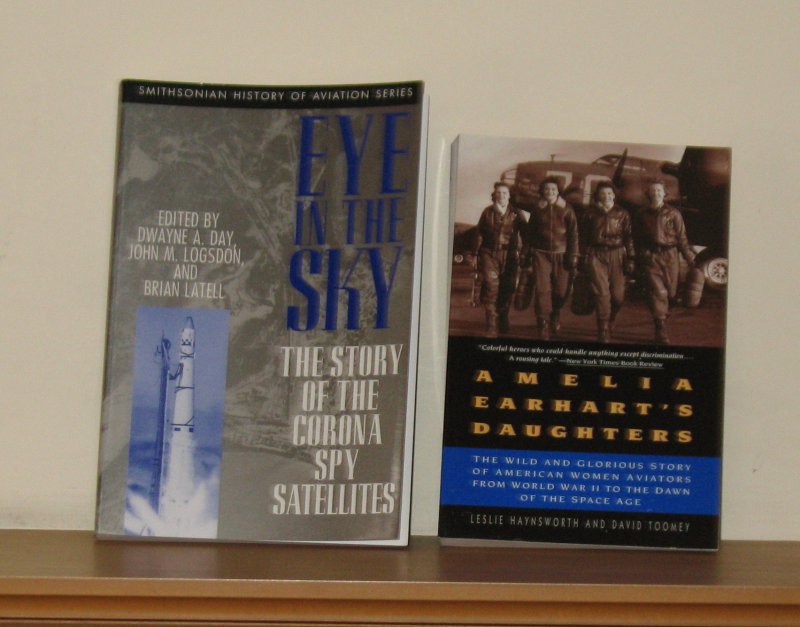
These are research books for the next book of the Apollo Quartet. They might give a clue as to its story.

20130316f

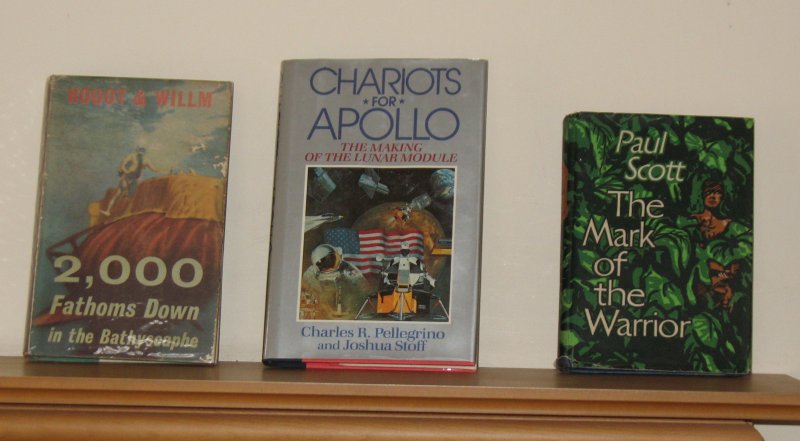
Three books for three collections: The Mark Of The Warrior is a first edition, to go with my other Paul Scott first editions; Chariots for Apollo is for the space books collection; and 2,000 Fathoms Down in the Bathyscape joins my (currently very small) collection of books on bathyscaphes and deep sea exploration.


1 Comment

First haul of the year

Though, strictly speaking, it’s not – some of the books below were brought to me by Santa. But this is certainly the first book haul post of the year. And it’s the usual mix of first edition hardbacks, charity shop finds, literary fiction, science fiction, and books on or about other things all together…

20130126b
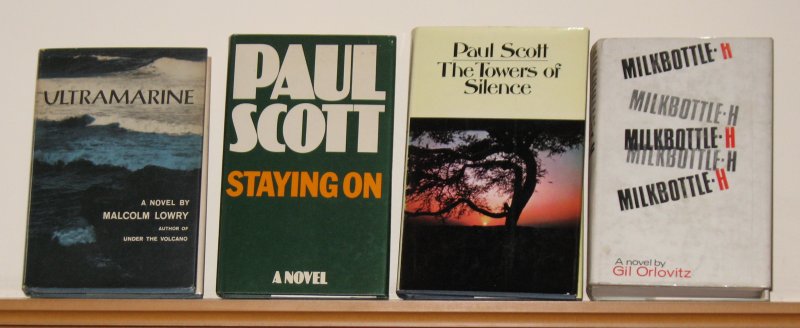
Some literary first editions. I read Ultramarine over Christmas and it is very good indeed. I will read more Lowry. Milkbottle-H was recommended by someone on LibraryThing and this was the only edition of the book I could find. Paul Scott is a favourite writer, and both The Towers Of Silence and Staying On are for the collection.
20130126a
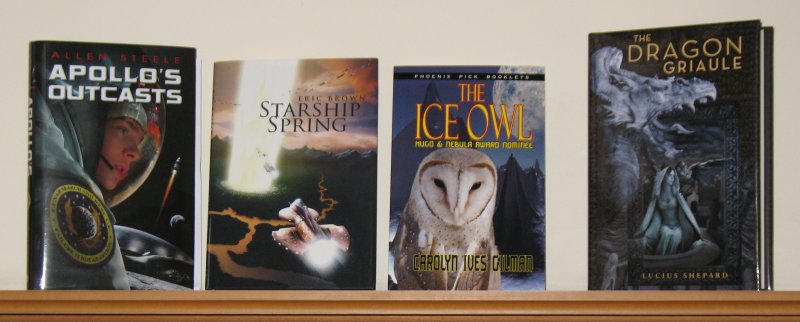
Some genre first editions. Apollo’s Outcasts I’ll be reviewing for Vector. I should know about this sort of stuff, right? Starship Spring is the final book in Eric Brown’s Starship quartet – I bet you can guess the titles of the other three. The Ice Owl is a novella by Carolyn Ives Gilman. I shall be reviewing it for Daughters of Prometheus. The Dragon Griaule is a beautiful-looking collection from Subterranean Press. I have all of its contents as separate novellas… except for the one original to this book. Which they clearly put in so that people like me would buy it.
20130126d
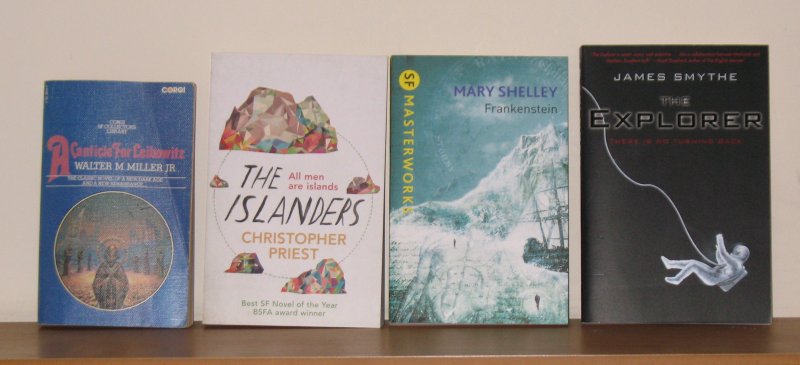
Some genre paperbacks. Unbelievably, I have never read A Canticle For Leibowitz. Good job I found this copy in a charity shop, then. The Islanders was a Christmas present. Frankenstein joins the other SF Masterworks. And The Explorer was sent to me by James Smythe (I swapped it for a copy of Adrift on the Sea of Rains).
20130126c
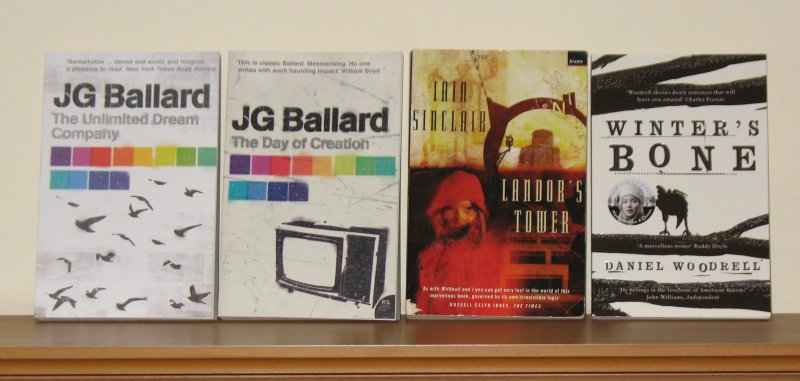
Non-genre paperbacks. Two more of the attractively-packaged Ballard paperbacks, The Unlimited Dream Company and The Day of Creation. That’s all of them now. I’ve been picking up Iain Sinclair novels – this one is Landor’s Tower – when I see them in charity shops, but have yet to actually, er, read them. Winter’s Bone I wanted to read after being very impressed by the film adaptation. Santa gave it to me.
20130126e
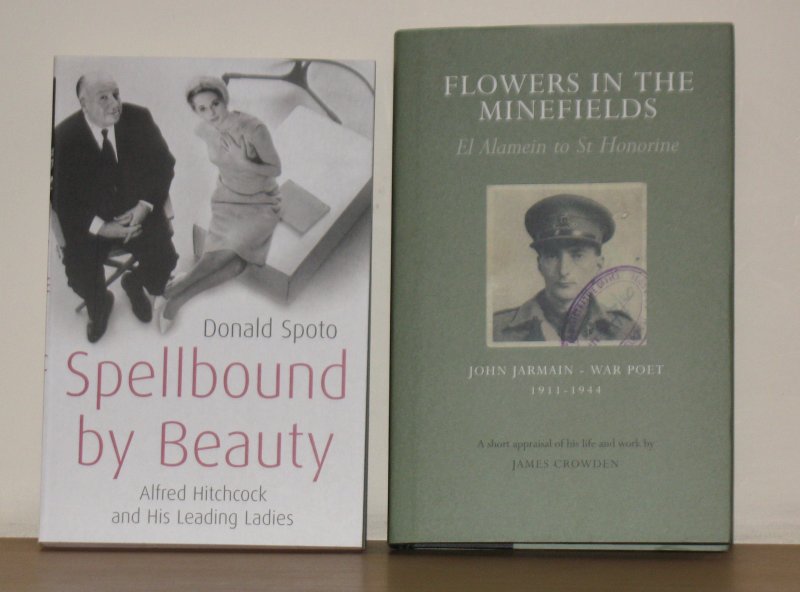
I’ve always rated Hitchcock as a director, so I made an effort to watch The Girl, the TV movie about his relationship with Tippi Hedren during the filming of The Birds and Marnie. It was excellent. Spellbound by Beauty is the book it was based upon. John Jarmain is one of my favourite poets, and Flowers in the Minefields is a collection of his poems and letters, with commentary. It is, I think, the only book about him ever published.20130126f
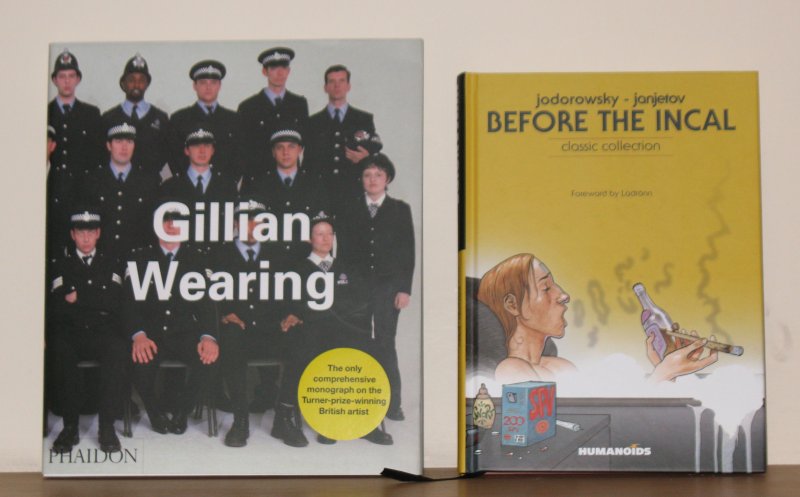
During a visit to Louisiana, a modern art museum in Denmark, over Christmas I saw some photographs by Gillian Wearing, and was sufficiently intrigued to pick up a book about her work. Before The Incal is a prequel bandes dessinée and it is excellent.


3 Comments

Best of the year 2012

It’s that time of year again when I go back through my spreadsheets of books read, films seen and albums bought, and try to decide which are the best five of each. And yes, I do keep spreadsheets of them. I even have one where I record the bands I’ve seen perform live. And no, it’s not weird. It is organised.

Back in June, I did a half-year round-up – see here. Some of the books, films, albums I picked then have made it through to the end of the year, some haven’t. This time, for a change, I’m going to actually order my choices, from best to, er, least-best.

BOOKS
girl_reading1 Girl Reading, Katie Ward (2011)
This is probably the most impressive debut novel I’ve read for a long time. It could almost have been written to appeal directly to me. I like books that do something interesting with structure; it does something interesting with structure. I like books whose prose is immediate and detailed; its prose is immediate (present tense) and detailed. I like books that are broad in subject; it covers a number of different historical periods. And it all makes sense in the end. I’ll certainly be keeping an eye open for further books by Ward. I read this book in the second half of the year, so it didn’t make my half-year best. I wrote more about Girl Reading here.

23122 2312, Kim Stanley Robinson (2012)
This year, I’ve actually read eleven genre novels first published during the twelve months, which I think may be a personal record. Having said that, it’s been a good year for genre fiction for me, as a number of my favourite authors have had books out. Sadly not all of them impressed (The Hydrogen Sonata, I’m looking at you). 2312 was everything I expected it to be and nothing like I’d imagined it would be. The plot is almost incidental, which is just as well as the resolution is feeble at best. But the journey there is definitely worth it. It is a novel, I think, that will linger for many years. Again, I read 2312 during the latter half of the year, so it didn’t make my half-year list. I wrote more about it here.

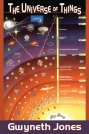
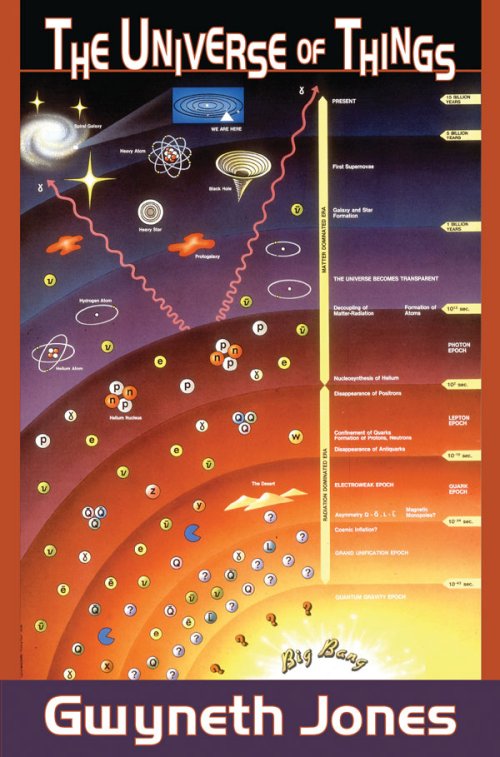
universe-cvr-lr-1003 The Universe of Things, Gwyneth Jones (2011)
Some collections aim for inclusiveness, some collections try for excellence. I’m not sure why Aqueduct Press chose the stories in this collection – it’s by no means all of Jones’ short fiction – but as a representative selection, The Universe of Things does an excellent job. I reviewed it for Daughters of Prometheus here, and I opened my review with the line: “Gwyneth Jones does not write many short stories – forty-one in thirty-seven years – but when she does, by God they’re worth reading.” This book did make my half-year list. Now I just have to read PS Publishing’s larger Jones collection, Grazing the Long Acre

intrusion-ken-macleod4 Intrusion, Ken MacLeod (2012)
The endings of Ken’s last few novels I have not found particularly convincing. It’s that final swerve from near-future high-tech thriller into heartland sf. Though the groundwork is usually carefully done, it too often feels like a leap too far. But not in Intrusion. The world-building here is cleverly done – I love the pastiche of Labour, with its “free and social market” – the thriller plot works like clockwork, and the final step sideways into pure genre slots straight in like the last piece in a jigsaw puzzle. Intrusion is another book I read in the second half of 2012, so it didn’t make my half-year list. I reviewed Intrusion for SFF Chronicles here.

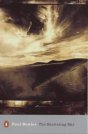
sheltering5 The Sheltering Sky, Paul Bowles (1949)
Curiously, I’d always liked the film adaptation by Bernardo Bertolucci, which inspired me to read the novel, but after finishing the book, I tried rewatching the film and found myself hating it. Mostly it was because the Lyalls, who are creepy and villainous in the novel, had been turned into comic caricatures. A lot had also been left out – though that’s not unusual, given the nature of the medium. The Arabic in the novel used French orthography, which meant I had to translate it twice to work out what it meant. And it looks like four out of the five books in this list I read after June, so the Jones collection is the only one from my half-year list that made it through to the end of the year one.

There are, however, a ton of honourable mentions – it’s turned out to be quite a good year, book-wise. They are: The Bender, Paul Scott (1963), which read like a sophisticated 1960s comedy starring Dirk Bogarde; The Door, Magda Szabó (1987), the best of my world fiction reading challenge (which I really must catch up on and finish); Betrayals, Charles Palliser (1994), a very clever novel built up from several stories, including a fun spoof of Taggart and a brilliant piss-take of Jeffrey Archer; How to Suppress Women’s Writing, Joanna Russ (1983), which should be required reading for all writers and critics; Hear Us O Lord from Heaven Thy Dwelling Place, Malcolm Lowry (1961), which introduced me to the genius that is Lowry; Ison of the Isles, Carolyn Ives Gilman (2012), successfully brings to a close the best fantasy of recent years; Omega, Christopher Evans (2008), a long overdue novel from a favourite writer, and a clever and pleasingly rigorous alternate history / dimension slip work; and Blue Remembered Earth, Alastair Reynolds (2012), the start of a near-future trilogy, which is very good indeed but also stands out because it’s not regressive or dystopian.

FILMS
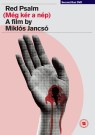
red_psalm1 Red Psalm, Miklós Jancsó (1972)
It’s about the Peasant Uprising in nineteenth-century Hungary, and consists of hippy-ish actors wandering around an declaiming to the camera. Occasionally, they sing folk songs. Then some soldiers arrive and some of the peasants get shot. But they’re not really dead, or injured. Then the landowners turn up and start espousing the virtues of capitalism. But the peasants shout them down. A priest tries to explain the “natural order of things”, but the peasants aren’t having it. Then more soldiers arrive and round up all the peasants. The ending is very clever indeed. It’s a hard film to really describe well, but it’s fascinating and weird and beautifully shot. I wrote about it here.

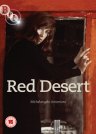
red_desert2 Red Desert, Michelangelo Antonioni (1964)
This was Antonioni’s first film shot in colour and it looks absolutely beautiful. In terms of story, it is much like his earlier masterpieces, L’Avventura, La Notte and L’Eclisse, and, like them, stars Monica Vitti. But also a (weirdly) dubbed Richard Harris. It’s a surprisingly bleak film – although perhaps not “surprisingly”, given that earlier trilogy – but it’s hard not to marvel at the painterly photography and mise-en-scène – who else would have the fruit on a barrow painted in shades of grey in order to fit in with the colouring of the surroundings? I wrote about it here. And I really must write more on my blog about the films I watch.

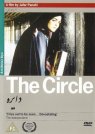
circle3 The Circle, Jafar Panahi (2000)
This is one of those films where one story hands off to another one and so on, and in which there is no real story arc, just a journey through episodes from the lives of the characters. Each of which is a woman living in Tehran, and all of whom have just recently been released from prison. They were not, however, imprisoned for doing things that would be criminal in other nations. As the title indicates, the stories come full circle, and the film’s message is far from happy or pleasing, but there is still room for hope. This film won several awards, though the Iranian authorities were apparently very unhappy with it.

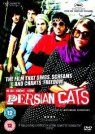
persiancats4 No One Knows About Persian Cats, Bahman Ghobadi (2009)
It’s not about cats, it’s about two musicians in Tehran who have been invited to perform at a music festival in London. But first they need to find some more musicians for their band, and they also need the necessary paperwork to leave Iran. But western-style music, which is what they play, is illegal in Iran, and there’s no way they’ll be able to get the visas they need legally. So they visit all the musicians they know, hoping some of them will be willing to go to London with them, and they also pay a well-known underground figure for the papers they require to travel. It’s an affirming film, but also a deeply depressing one.

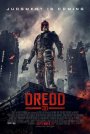
Dredd5 Dredd, Pete Travis (2012)
I was badgered into going to see this at the cinema by Tim Maugham on Twitter. I hadn’t really thought it would appeal to me. Even the fact it was touted as being more faithful to the 2000 AD character didn’t mean I’d like it. Although I grew up reading 2000 AD, Judge Dredd was far from my favourite character, and I’ve not bothered buying any of the omnibus trade paperbacks that are now available. But I went… and was surprised to find it was a bloody good film. It’s sort of like a weird munging together of an art house film and a Dirty Harry film, and strangely the combination works really well. It’s violent and horrible and grim and panders to all the worst qualities in people, but it all makes sense and fits together, and despite its simple plot is cleverly done. I plan to buy the DVD when it is available.

Iranian cinema did well this year for me. Not only did The Circle and No One Knows About Persian Cats make it into my top five, but two more Iranian films get honourable mentions: A Separation, Asghar Fahadi (2011), and The Wind Will Carry Us, Abbas Kiarostami (1999). Kiarostami I rate as one of the most interesting directors currently making films. Other honourable mentions go to: John Carter, Andrew Stanton (2012), which was undeservedly declared a flop, and is a much cleverer and more sophisticated piece of film-making than its intended audience deserved; Monkey Business, Howard Hawks (1952), is perhaps the screwball comedy par excellence; On the Silver Globe, Andrzej Żuławski (1988), is bonkers and unfinished, and yet works really well; there is a type of film I particularly like, but it wasn’t until I saw Sergei Parajanov’s The Colour of Pomegranates that I discovered it was called “poetic cinema”, and his Shadows Of Forgotten Ancestors (1965) is more of the same – weird and beautiful and compelling; and finally, François Ozon’s films are always worth watching and Potiche (2010) is one of his best, a gentle comedy with Catherine Deneuve and Gérard Depardieu in fine form.

ALBUMS
mourningweight1 The Weight Of Oceans, In Mourning (2012)
I saw a review of this album somewhere which made it seem as though I might like it. So I ordered a copy from Finland – which is where the band and the label are from. And I’ve been playing it almost constantly since. It’s Finnish death/doom metal mixed with progressive metal, which makes it the best of both worlds – heavy and intricate, with melodic proggy bits. The Finns, of course, know how to do death/doom better than anyone, but it’s been a surprise in recent years to discover they can do really interesting prog metal just as well – not just In Mourning, but also Barren Earth (see my honourable mentions below).

aquilus2 Griseus, Aquilus (2011)
A friend introduced me to this one. It’s an Australian one-man band, and the music is a weirdly compelling mix of black metal and… orchestral symphonic music. It sounds like the worst kind of mash-up, but it works amazing well. In the wrong hands, I suspect it could prove very bad indeed. Happily, Waldorf (AKA Horace Rosenqvist) knows what he’s doing, and the transitions between the two modes are both seamless and completely in keeping with the atmosphere the album generates. The album is available from Aquilus’s page on bandcamp, so you can give it a listen.

dwellings3 Dwellings, Cormorant (2011)
The same friend also introduced me to this band, who self-released Dwellings. It’s extreme metal, but extreme metal that borrows from a variety of sub-genres. I’ve seen one review which describes them as a mix of Ulver, Opeth, Slough Feg and Mithras, which really is an unholy mix (and two of those bands I count among my favourites). Most of the reviews I’ve seen find it difficult to describe the album, but they’re unanimous in their liking for it. And it’s true, it is very hard to describe – there’s plenty of heavy riffing, some folky interludes, some proggy bits, and it all sort of melds together into a complex whole which is much greater than the sum of its parts. This album is also available from the band’s page on bandcamp, and you can listen to it there. (You’ve probably noticed by now that I’m terrible at writing about music. I can’t dance about architecture either.)

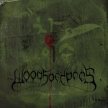
25640_woods_of_ypres_woods_iv_the_green_album4 Woods 4: The Green Album, Woods of Ypres (2009)
Woods of Ypres was a band new to me in 2012. I first heard their final album, Woods 5: Grey Skies & Electric Light, but at Bloodstock I picked up a copy of the preceding album and I think, on balance, I like the earlier one better. The music is a bit like Type O Negative meets black metal, with oboes. Sort of. The opening track ‘Shards of Love’ is, unusually for black metal, about a relationship, and it starts off not like metal at all and then abruptly becomes very metal indeed. An excellent album, with some strong riffs and some nicely quiet reflective moments. (It’s pure coincidence that I chose it as No 4 in my list, incidentally.)

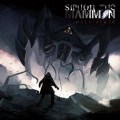
obliterate5 Obliterate EP, Siphon the Mammon (2012)
I have no idea how I stumbled across this Swedish progressive death metal band. It was probably the name that caught my attention. And it is a silly name. But never mind. Anyway, I downloaded the EP from their bandcamp page… and discovered it was bloody good. It’s technical and accomplished, with some excellent riffs and song structures. I particularly like ‘The Construct of Plagues’, which features an excellent bass-line, but the final track ‘End of Time’ is also nicely progressive. And… this is the third album in my top five which is available from the band’s bandcamp page, which surely must say something about the music industry and the relevance of labels… or my taste in music…

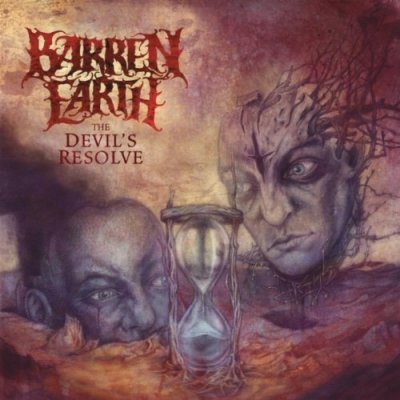
This year’s honourable mentions go to: (Psychoparalysis), for a trio of EPs I bought direct from the band, and which are good strong Finnish progressive death metal; Anathema’s latest, Weather Systems, which I liked much more than the three or four albums which preceded, and they were bloody good live too; Hypnos 69’s Legacy, which I finally got around to buying and was, pleasingly, more of the same (this is good, of course); Barren Earth’s The Devil’s Resolve, which is definitely heavier than their debut album, but still very proggy and weird; A Forest of Stars, which is steampunk meets black metal, and it works surprisingly well (check out this video here); Nostalgia by Gwynbleidd, who, despite the name, are Poles resident in New York, and sound a little like a cross between Opeth and Northern Oak; Headspace, I Am Anonymous, another Damian Wilson prog rock project, but I think I prefer it on balance to Threshold’s new album; and Alcest, another band new to me in 2012, who play shoegazer black metal, which, unfortunately, works much better on an album than it does live.

IN CONCLUSION
And there you have – that was the year that was. On balance, I think it’s been a good year in terms of the literature, cinema and music I have consumed. There’s been some quality stuff, and some very interesting stuff too. Which is not to say there hasn’t been some crap as well, but it seemed less numerous this year. This may be because I chose to ignore what the genre, and popular culture, value and focus more on the sort of stuff that appeals directly to me – I’ve cut down on the number of Hollywood blockbusters I watch, I no longer read as much heartland genre fiction. There’s always a pressure to stay “current”, but the more I watch genre and comment on it, the more I see that it does not value the same things I do. It’s not just “exhaustion”, as identified by Paul Kincaid in his excellent review of two Year’s Best anthologies here, but from my perspective also a parting of the ways in terms of objectives, methods and effects. I want stuff – books, stories, etc – that is fresh and relevant, that does interesting things and says something interesting. I don’t want the usual crap that just blithely and unquestioningly recycles tropes and worldviews, stories about drug dealers on Mars in some USian libertarian near-future, space opera novels in which an analogue of the US gets to replay its military adventures and this time get the result it feels it deserved…

I mentioned in a post last week that I don’t read as much genre short fiction as I feel I should. After all, my views outlined above are taken from the little I’ve read on awards shortlists and in year’s best anthologies. Just because that’s what the genre values doesn’t mean the sort of stuff I value doesn’t exist. I just need to find it. So by including a short fiction best of list in 2013, I’ll be motivated to track down those good stories, to seek out those authors who are writing interesting stories.

All of this, of course, will I hope help with my own writing. I had both a very good year, and a not so good year, in that respect in 2012. Rocket Science, an anthology I edited, and quite obviously the best hard sf anthology of the year, was published in April. As was the first book of my Apollo Quartet, Adrift on the Sea of Rains. The Guardian described Rocket Science as “superb”, which was very pleasing. And Adrift on the Sea of Rains has had a number of very positive reviews see here. Unfortunately, as a result of those two publications, I haven’t been very productive. I spent most of the year after the Eastercon working on the second book of the Apollo Quartet, The Eye With Which The Universe Beholds Itself. Those few who have read it say it’s as good as Adrift on the Sea of Rains, which is a relief. Everyone else will get to find out in January, when it’s published. But I really should have worked on some short fiction as well. I’m not the quickest of writers – I marvel at those people who can bang out a short story in a week – but each story you have published, irrespective of quality, widens your audience a little more, adds a little more weight to your name. And that’s what it’s all about. No matter how good people say Adrift on the Sea of Rains is, I’ve only sold just over 200 copies – add in review copies… and that means perhaps between 250 and 300 people have read it. Some semi-literate self-published fantasy novels available on Kindle sell more copies than that in a week…

But that’s all by the by. This post is about 2012, not 2013. Sadly, I didn’t manage to reread much Durrell to celebrate his centenary. I’ve had The Alexandria Quartet by the side of the bed for about nine months, and I dip into it every now and again, but then I have to put it to one side as I have to read a book for Interzone or SF Mistressworks… Speaking of which, I had to drop to a single review a week on SF Mistressworks, but I still plan to keep it going. During 2012, I read 41 books by women writers, compared to 63 by male writers, which is about 40% of my reading (this doesn’t include graphic novels, non-fiction or anthologies). I also reviewed a handful of books for Daughters of Prometheus, although I haven’t posted one there for several months. (I’ve no plans to drop either responsibility in 2013.) Just over a third of my reading was science fiction, and a quarter was mainstream – so sf is still my genre of choice. Numbers-wise, I’ve not managed as many books as last year – only 146 by the middle of December, whereas last year I’d managed 165 by the end of the year. But I think I’ve read some more substantial books this year, and I did “discover” some excellent writers, such as Malcolm Lowry, Katie Ward and Paul Bowles. It’s a shame I never managed to complete my world fiction reading challenge. I still have half of the books on the TBR, so I will work my way through them, though I may not blog about it.

But, for now, it’s Christmas – bah humbug – in a week. And then the start of 2013 follows a week after that. Here’s hoping that next year is better for everyone, that the good outweighs the bad, and that every surprise is a pleasant one.


6 Comments

The best of the half-year: 2012

It’s halfway through 2012, and it must be shaping up to be one of the wettest years on record in the UK. But that’s okay because my hobbies are chiefly indoor ones – reading books, watching films and listening to music. I occasionally do a bit of writing too. But, since we’re in June, with around six months to go until the end of the year, it’s time to look back and determine what was the best of what I read, watched and heard in 2012. And it goes something like this…

Words
I seem to have read a lot of books that were good without being great; and possibly a larger number of books that weren’t good at all. Picking the best five proved harder than expected, though one or two titles were obvious…

The Universe of Things, Gwyneth Jones (2011). Jones has been my favourite writer for many years, so this collection’s appearance on the top five is no surprise. I had, in fact, read most of the stories in The Universe of Things before (I even published one; sort of), but rereading them only cemented my admiration of them. Jones has not written many stories, but there are no clunkers among them. This collection is an excellent introduction to her fiction. I wrote a review of the book for Daughters of Prometheus.

Omega, Christopher Evans (2008). I’ve long admired Evans’ fiction, but he seemed to stop writing after 1995’s Mortal Remains… until Omega four years ago. I won’t say it was worth the wait, because it’s never good when a writer whose books you enjoy and admire disappears for more than a decade. But certainly Omega is a good book, a clever alternate history dimension-slip thriller partly set in a world where World War II continued on throughout the twentieth century. I wrote about Omega on my blog here.

The Door, Magda Szabó (1987). This year for my reading challenge I decided to read books by non-Anglophone writers I’d never read before. The Door was the second book I read for the challenge, and I really enjoyed it. Unfortunately, the challenge has got a little bogged down of late – I failed to finish March’s book, read April’s book late, and have yet to even start May’s. Anyway, I wrote about The Door on my blog here.

The Bender, Paul Scott (1963). I read the first book of the Raj Quartet for one of my reading challenges, and thought the book was superb. As a result, I added Scott to the list of authors whose books I track down to read. In first edition. The Bender predates the Raj Quartet and is not as weighty as those four books. It’s a very 1960s comedy, but also a beautifully witty one. I wrote about it on my blog here.

Betrayals, Charles Palliser (1994). I’m surprised this book isn’t better known. It’s an amazingly-put-together series of stories which form a much greater story. It opens with a series of Victorian travellers, trapped on a train by snow, who tell each other stories… and then proceeds to unravel and then stitch together the stories told by those travellers. There’s a superb take-down of a cult semiotician, a clever spoof of the Scottish detective programme Taggart, and a brilliant pastiche of Jeffrey Archer. Perhaps the links between the stories aren’t quite strong enough to carry the story-arc, but Betrayals is a very clever, very amusing, and excellent novel.

Honourable mentions go to Eastermodern by Herta Hurnaus, Oscar Niemeyer Houses by Alan Weintraub and Building Brasilia by Marcel Gautherot, which are books of photographs of modernist and brutalist buildings. Niemeyer’s work perfectly encapsulates the future we could have had, and all cities should resemble Brasilia. Also worthy of note are How to Suppress Women’s Writing by Joanna Russ, which every writer and critic should read; Alias Grace, which is probably Margaret Atwood’s best novel; and Hear Us O Lord from Heaven Thy Dwelling Place by Malcolm Lowry, a collection by an author new to me which contains some excellent novellas and some not so interesting short stories.

Pictures
I’ve already visited the cinema twice so far this year, which is something of a record for me. One of the films I saw in IMAX 3D makes it onto my top five; the other one was rubbish, so it doesn’t. The other films I’ve seen were all on DVD – some borrowed, some bought, and some rented.

Red Psalm (Még kér a nép), Miklós Janscó (1972). I bought this after seeing a review of the DVD in Sight & Sound. I wasn’t sure what to expect, but it certainly wasn’t a group of hippie-looking Hungarians wandering around a farm spouting socialist rhetoric and singing folk songs, and then getting shot at by soldiers. I loved it. I wrote about Red Psalm on my blog here.
Red Desert (Il deserto rosso), Michelangelo Antonioni (1964). I’ve admired Antonioni’s films since first seeing L’Avventura several years ago. Red Desert was his first film in colour, and it shows – it’s an amazingly painterly film. Unlike in most films, the characters do not over-shadow their world but are very much a part of it. It creates a distance between viewer and cast, but there’s an immersive quality to the mise en scène which renders that of little importance. Films don’t need viewer analogues – that’s just confining the medium to the simplicity of oral storytelling: films use images just like books use words, and that’s where their focus should lie. I wrote about Red Desert on my blog here.

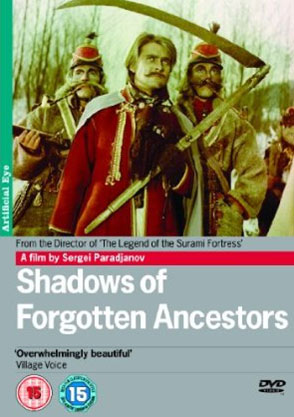
Shadows of Forgotten Ancestors (Тіні забутих предків), Sergei Parajanov (1965). I watched Parajanov’s The Colour of Pomegranates last year. That film is perhaps the zenith of “poetical cinema”, but Shadows of Forgotten Ancestors is definitely a way-station on the climb to it. It is, on the face of it, a simple story of one young man’s trials and tribulations. He is a member of Ukrainian Hutsul culture, and the film is rich with its costumes, music and traditions. Shadows of Forgotten Ancestors is by no means an easy film to watch, however, as it operates on so many levels – but it at least has a coherent plot, which is more than can be said for The Colour of Pomegranates.

On the Silver Globe (Na srebrnym globie), Andrzej Żuławski (1978/1988). If you can imagine a film that out-Tarkovskys Solaris, then you might have some idea of what On the Silver Globe is like. It’s based on a trilogy of novels published in Poland in 1911 by Jerzy Żuławski, which have apparently never been translated into English. On the strength of this film, they should be. It’s probably evident that I’m not a huge fan of traditional Hollywood-style cinema; it often feels to me like a waste of the medium’s potential. And yet films such as Red Psalm and On the Silver Globe, with their declarative dialogue, often feel like they’re only partway to what film could truly be. I like the painterly mise en scène of poetical cinema, but often find the declarative dialogue as clumsy as science fiction’s crude use of exposition. And so it is in On the Silver Globe – characters run around and gurn at the camera, and then speechify on the meaning of life. However, it’s in the story and the imagery that the film really impresses – enough, in fact, to offset the fact the film was never completed – much like Andrzej Munk’s Passenger. The Polish Ministry of Culture closed down the production of On the Silver Globe when the film was only 80% complete. It was ten years before Żuławski returned to it, and then he could only complete it by using stock footage and voice-over for some parts. It works surprisingly well. I plan to write more about On the Silver Globe on this blog.
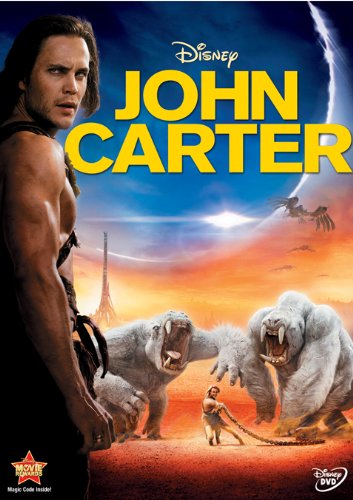
John Carter, Andrew Stanton (2012). John Carter received a mauling at the US box office, so much so it was officially declared a flop by its studio, Disney. Happily, the world outside the US had more discerning taste and went to see the film in sufficient numbers for it to eventually turn a profit. But the profitability of a film is measured solely on its performance at the US box office – which is both dumb and parochial – so it’s unlikely a sequel to John Carter will ever be made. Which is a shame. John Carter was a spectacle, with a clever script that managed to make something twenty-first century of its early twentieth-century source material. It had its flaws – some longeurs, and an inelegant info-dump to explain the plot – but other parts more than made up for it. I wrote more about it on my blog here.

Honourable mentions go to , Federico Fellini (1962), which after seeing La Dolce Vita many years ago and disliking it, I had expected to hate – I didn’t; I loved it. Troll Hunter, André Øvredal (2010), was another deadpan Norwegian spoof and cleverly done, though not quite as good as Norwegian Ninja. The Third Part of the Night, Andrzej Żuławski (1971), was the first Żuławski I saw, and it’s off-the-wall Hitchcockian style appealed to me greatly (as did Andrzej Korzyñski’s superb soundtrack). Went the Day Well?, Cavalcanti (1942), was a surprisingly brutal piece of wartime propaganda in which a German fifth column try to conquer a small English village. It goes badly. The Extraordinary Adventures of Adèle Blanc Sec, Luc Besson (2010), gets a mention as an entertaining adaptation of Jacques Tardi’s bande dessinée, and though it’s completely silly it was great fun. Finally, some quality telly: Twin Peaks (1990 – 1991), which has not dated at all, and is still great entertainment despite being completely bonkers; and Caprica (2010), which promised so much more than it ever got the chance to deliver.

Sounds
I knew from early this year that 2012 was going to be good for music. Perhaps few of my favourite bands are releasing albums, or touring the UK, but I’ve stumbled across some bands new to me that have been on almost constant play on the iPod.

Dwellings, Cormorant (2011). The band self-released this last year and it’s a powerful mélange of half a dozen metal genres. I loved it from the first listen, and even went back and got copies of their earlier two albums.

The Devil’s Resolve, Barren Earth (2012). This is the superband’s second album, and it’s a heavier and yet proggier effort than their first. The riffs are not quite as memorable as they are on The Curse of the Red River, but the lead breaks are much more impressive, and the proggy break-outs even stranger. Opeth’s Heritage proved there was a market for 1970s-inspired weird Scandinavian prog, and Barren Earth have taken that and melded it with Scandinavian death/doom to create a winning combination.

The Weight of Oceans, In Mourning (2012). I saw a review of this and it sounded appealing, so I ordered a copy from a Finnish website. It’s death/doom in that way the Finns do so well, but with added slow modern progginess. It’s not proggy like Barren Earth is proggy, inasmuch its acoustic parts feel more of a piece with the heavy parts. I’ve been playing it constantly since it arrived.

Nostalgia, Gwynbleidd (2009). Another band I came across mention of and who I thought I might like. So I bought the album. And yes, I do like them. Very much. They’re a sort of mix between Opeth and Northern Oak, but also not much like either. There are long sustained death metal parts, interspersed with folky acoustic guitar, and it all hangs together exceedingly well.
Legacy, Hypnos 69 (2010). I’ve been a fan of Hypnos 69 since hearing their The Intrigue of Perception several years ago. I’s taken me a while to get hold of Legacy, chiefly because it was released by a small label in Germany and wasn’t available in the UK. Recently I discovered it was on bandcamp, so I bought it from there. It’s Hypnos 69 doing Hypnos 69-type stuff, and I love it.

Honourable mentions go to Finnish death metallers (Psychoparalysis), who have self-released three excellent EPs; Weather Systems by Anathema (2012), which I much prefer to the previous album; Wood 5: Grey Skies & Electric Light by Woods of Ypres, which is folky black metal that sounds a little like Type O Negative in places  and includes strings and oboe; and finally, All Spawns, a recent compilation of Czech death metal pioneers Apalling Spawn’s two released from the late 1990s (now, if I can only find a copy of the Sparagmos compilation, I’ll be really happy…).


1 Comment

A mountain of words

It’s been a while since my last book haul post – two months, in fact – which goes some way to explaining the number of books which appear in this one. Someone needs to put more hours in the day so I can actually get around to reading some of them…

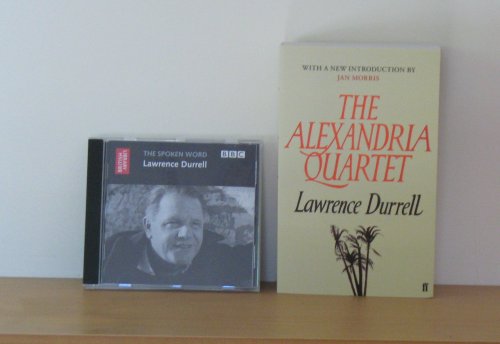
This year, of course, is the Durrell Centenary. So I’ll be rereading The Alexandria Quartet at some point, and I thought I’d buy myself the new paperback edition so I could do so. The CD is a collection of poetry readings, interviews and, er, Durrell singing.

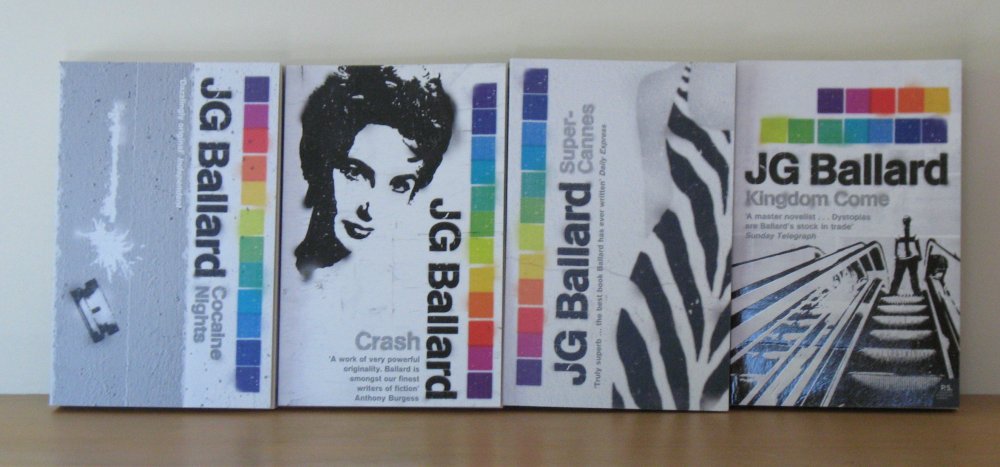
Ballard is not a young man’s writer – not enough shit gets blown up, for a start; and then there’s that cynicism – so while I’ve read many of his stories and books over the years it’s only in the past few I’ve come to really appreciate his fiction. As a result, I’ve been building up a small paperback collection of his books – and they are attractively packaged paperbacks, these 4th Estate ones.

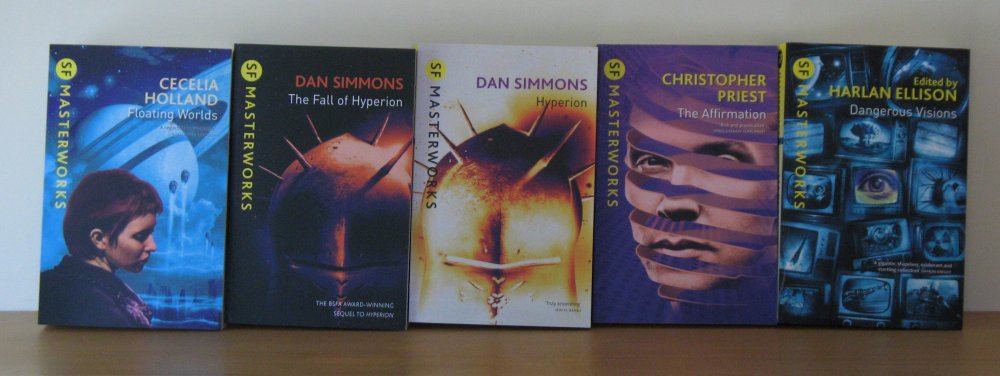
I am not, it has to be said, a particularly big fan of all the titles that have appeared in the SF Masterworks series, and most people don’t spend money on books they know they don’t especially like… but… they make a set. They’re packaged to look the same – or they were until they revamped the entire series. And some of them really are genre classics: Hyperion and The Fall of Hyperion, certainly; and much as I loathe Harlan Ellison and his works, I have to admit Dangerous Visions was an important anthology.

From my trawls through various charity shops some books from the would-like-to-read list. I’ve been working my way through Litt’s alphabetical oeuvre, though none have especially impressed me so far. McCarthy should only be read when you’re feeling unaccountably cheerful and would like to torpedo your good mood. The Satanic Verses is infamous, but I’ve never read it. The Mailer was a swap from readitswapit.co.uk, and I’m  not sure why I bought The Apple.

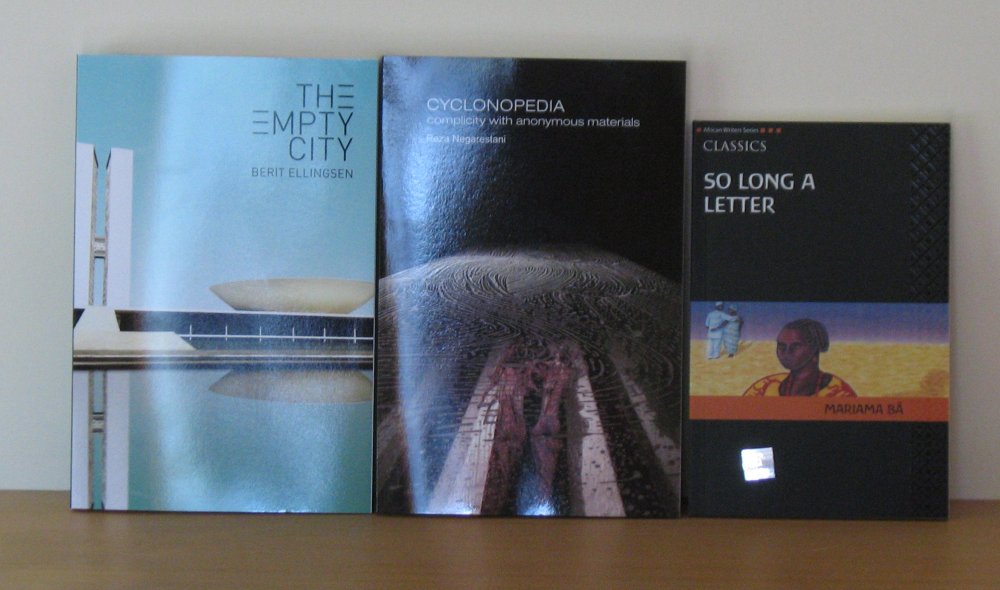
So Long A Letter is May’s book for this year’s reading challenge (see here). Cyclonopedia has been repeatedly recommended by Jonathan McAlmont, and Berit Ellingsen is one of the contributors to Rocket Science (plus, the cover art of The Empty City is the National Congress building in Brasilia – see later).

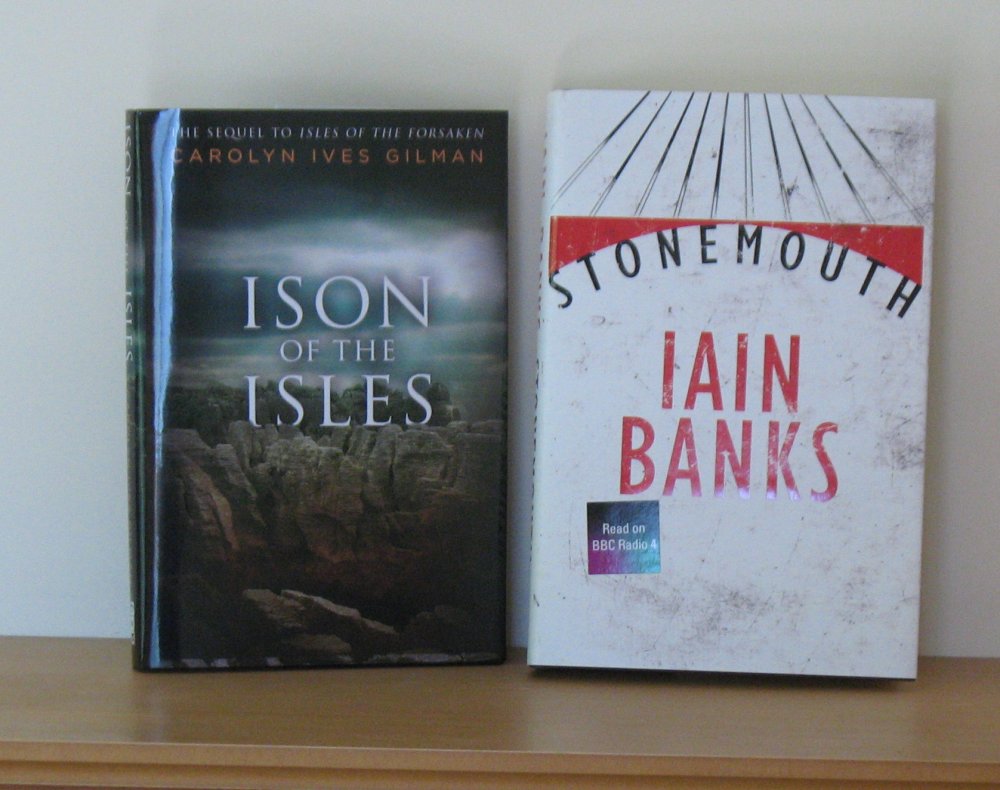
A pair of 2012 hardbacks: I pre-ordered Ison of the Isles as I was so impressed with its preceding volume, Isles of the Forsaken (see here). And Stonemouth is Banks. Enough said.

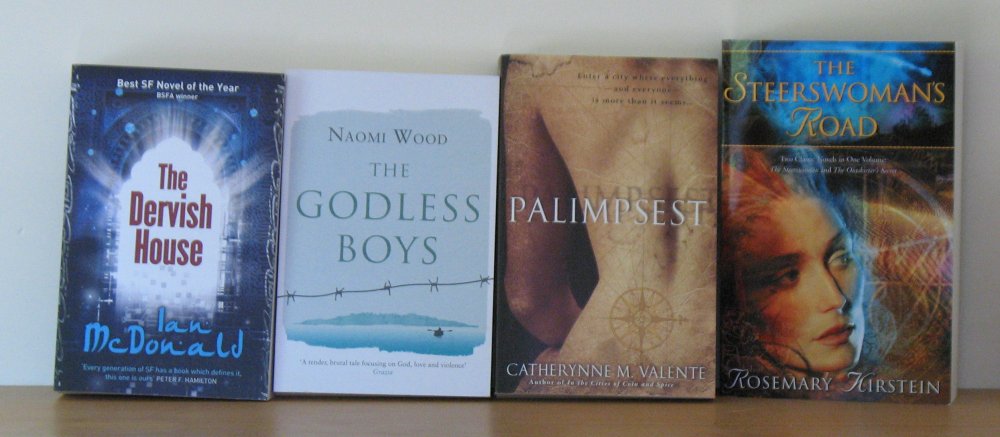
The Steerswoman’s Road is an omnibus of The Steerswoman and The Outskirter’s Secret. I’ve read the first, but not the second. The other three books are ones I want to read. Palimpsest was a charity shop find, The Godless Boys was from Richard Palmer in payment for a copy of Adrift on the Sea of Rains, and The Dervish House was from an unmentionable and unmentionably large online book retailer.

Three genre titles for the collection – both Remaking History and Moon Dogs are signed (and those two authors pretty much describe the two endpoints of the type of sf I like best). The Ice Monkey is really hard to find in hardback but I lucked out.

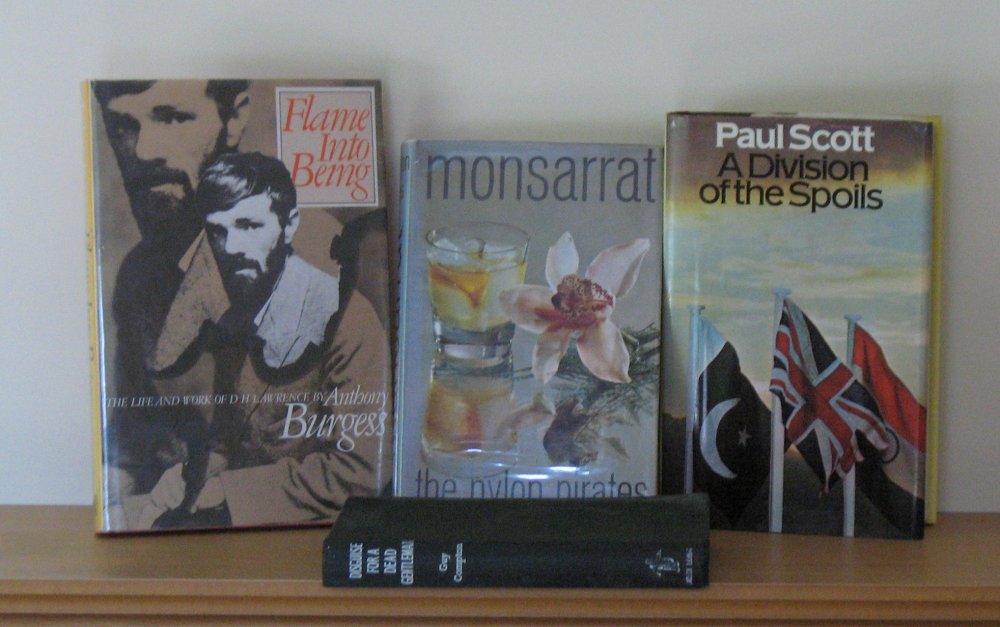
I collect first editions by Anthony Burgess, and I’m interested in the works of DH Lawrence, so Flame into Being neatly covers two of my literary interests. The Nylon Pirates is one of Nicholas Monsarrat’s potboilers – he managed to write potboilers and literary fiction with equal facility if somewhat variable results. A Division of the Spoils is the third book of the Raj Quartet, and Disguise for a Dead Gentleman is DG Compton in his initial guise as a crime writer. I expect good condition first editions of those early “Guy Compton” books are extremely difficult to find, so this tatty one will have to do.

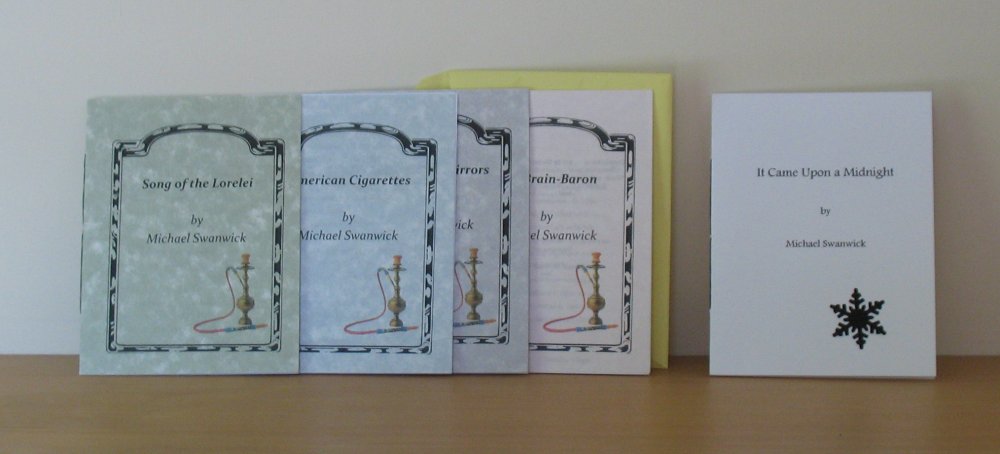
I spotted mention of these chapbooks by Michael Swanwick from Dragonstairs Press somewhere and decided to take a punt on them.

If I ever visit Brazil, it won’t be for the carnival, the beaches, the cocktails, the culture… it’ll be to see the buildings in Brasilia. I love the fact that even unfinished, or badly weathered, they still embody the optimistic future past decades imagined we’d all share. The man chiefly responsible, of course, was Oscar Niemeyer. Eastmodern is more Warsaw Pact architecture, a collection of photographs of modernist buildings in Slovakia, and some of them really are quite skiffy.

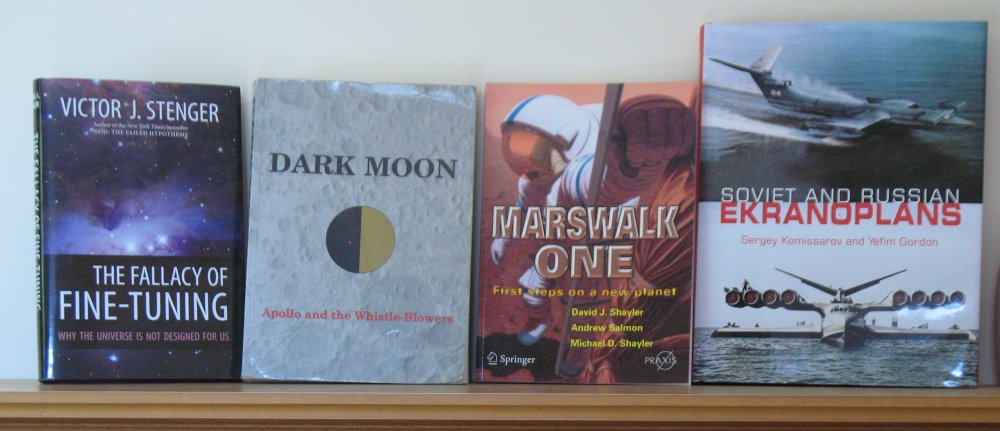
The giant book on ekranoplans was research for a story, honest. Or it will be when I’ve thought of an idea for story which has ekranoplans in it. Well, I managed it for flying boats (see here), so anything’s possible. Besides, if Sebastian Faulks can include one in his 007 novel Devil May Care, why shouldn’t I? Marswalk One is one of several Mars book I now own and which I will use as research while writing the second book of the Apollo Quartet (I got it very cheap on eBay). Dark Moon is one of those fake Moon landing nutjob books, and I thought it might prove entertaining. The Fallacy of Fine-Tuning is also research for Apollo Quartet book 2.


1 Comment

30 words on 30 books

I shamelessly stole this idea from Pornokitsch, who did the same yesterday. Since I’m not doing my readings & watching posts this year, I thought thirty words on the last thirty novels I’ve read might be a good way of mentioning my recent reading. But 30 words is actually harder to do than it looks…

Final Days, Gary Gibson (2011)
Discovery on planet orbiting distant star reached by wormhole suggests future is fixed and immutable. World starts to fall apart. Nice Apollo re-enactment but otherwise not that much stands out.

The Member of the Wedding, Carson McCullers (1946)
Tom Sawyer-ish Frankie daydreams of brother’s wedding. A GI mistakes her age, wants to get frisky. Lovely writing, though it’s hard not to suspect Frankie is wrong in the head.

Like A Sniper Lining Up His Shot, Jacques Tardi (2010)
Graphic novel adaption of French thriller set in the UK. Assassin like father like son. With guns. And gore. Not much more to be said. Tardi is definitely worth reading.

Bodies, Jed Mercurio (2002)
Incompetent doctors get away with murder on the NHS. New houseman is horrified. He learns to work with the system. A favourite writer but it will scare you off hospitals.

City of Pearl, Karen Traviss (2004)
First human colony disappears, rescue mission discovers aliens protecting them. Mix of hard sf and space opera. Nice heroine, not so interesting aliens. Oozes competence without suggesting more. Review here.

The Bender, Paul Scott (1963)
Should have been a film with Dirk Bogarde. 1960s wastrel goes begging for cash and sparks family crisis. Great wit, great writing, and an astonishing postmodern interlude. Recommended. Review here.

Leviathan’s Deep, Jayge Carr (1979)
Freak alien resembles humans. They want to conquer her planet and fall in love with her. She scuppers their plans. Somewhat old-fashioned sf, though protagonist well-drawn. Review on SF Mistressworks.

The Bookman, Lavie Tidhar (2010)
Literary and pulp potage which stripmines steampunk tropes. Orphan adventures, starts cleverly in Victorian Lizard London but loses steam about halfway through before Bond-esque Vernian finish. The first of three.

Omega, Christopher Evans (2008)
Man recovering from terrorist bomb explosion dreams himself into alternate self in a world where WWII never ended. Very cleverly done, alternate world very real, great writing. Recommended. Review here.

Angel At Apogee, SN Lewitt (1987)
Princess pilot, a hot-shot of course, proves to be catalyst which rejoins three sundered races on three separate planets. Interesting debut, though perhaps a little over-egged. Review on SF Mistressworks.

The Fat Years, Chan Koonchung (2009)
China prospers while rest of world in financial crisis. Interesting window on Chinese society, though unsatisfactory as a novel – the plot is explained in a final chapter info-dump. Review here.

The Fall, Albert Camus (1957)
Pompous ex-lawyer monologues at stranger in Amsterdam bar and over several days tells him of his somewhat boring fall from grace. Mercifully short, though there’s some insightful writing in it.

Selected Poems, Lawrence Durrell (1956)
It’s a book of poems. And they were selected. By Lawrence Durrell. He did this several times. Except when he wasn’t collecting his poems for his Collected Poems. More here.

Betrayals, Charles Palliser (1994)
A story told through several stories – including a superb pisstake of Taggart, and a righteous skewering of Jeffrey Archer. Superbly done, though perhaps needed the stories tying together more. Recommended.

Leviathan Wakes, James SA Corey (2011)
Solar system shenanigans as alien virus wreaks havoc for corporate profit. Who needs New Space Opera? Regressive: no diversity, old school sexism, implausible villainy. Mostly right physics. Avoid. Review here.

Native Tongue, Suzette Haden Elgin (1984)
Men repeal rights of women, so they secretly develop women’s language. Interesting linguistics, good female characters, though characterisation of men not so convincing and world-building weak. Review on SF Mistressworks.

This Island Earth, Raymond F Jones (1952)
Manly engineer saves the galaxy by demonstrating good old US engineering know-how. Womanly PhD does his ironing and cooking. Happily they don’t write them like this any more. More here.

The Lady in the Lake, Raymond Chandler (1944)
Mixed-up femme fatales don’t fool Marlowe in hunt for rich man’s missing wife. Not the cunningest murder-mystery plot and Marlowe often gets away with murder. Strong on place and time.

The Door, Magda Szabó (1987)
In Hungary, writer hires housekeeper, who proves to be old school peasant and a right character. Fascinating portrait of housekeeper, thoroughly enjoyed it. Soon to be major film. Review here.

The Unorthodox Engineers, Colin Kapp (1979)
Collection of sf shorts in which lateral thinking engineers solve seemingly intractable problems. Dated, problems not especially unsolvable, nor especially original. Entirely forgettable, in fact. Hard book to find, though.

Journey to the Centre of the Earth, Jules Verne (1864)
Story not as good as Nemo’s though text is more pleasingly detailed. Science horribly dated, of course, and often wrong. Characters bizarrely emphatic – except for phlegmatic Icelandic guide. Historical document.

Arkfall, Carolyn Ives Gilman (2008)
Novella set on human-colonised Europa-like planet with interesting socialist society. Woman and male tourist find themselves on unintended journey after seaquake. Promises more than it delivers but still worth reading.

Kamikaze l’Amour, Richard Kadrey (1995)
Kadrey channels Ballard and Shepard in rock star epiphany in California overrun by Amazonian jungle. Not sure how original was 17 years ago but is not now. After Metrophage, disappointing.

Smart-Aleck Kill, Raymond Chandler (1958)
Collection of four shorts. Simple direct prose, strong on place and time, though plotting something of a direct line and characterisation sketchy. More for noir fans than normal readers, possibly.

Embassytown, China Miéville (2011)
Truthful aliens get hooked on impossible Ambassador’s speech. World falls apart. Narrator teaches aliens to lie and saves planet. Interesting ideas but old-fashioned science fiction. Likely award-winner. Sigh. Review here.

Dr No, Ian Fleming (1958)
Bond in Jamica. Again. Racial stereotype has evil plan to do evil. Bond foils, with help of trusty local. He nearly dies in the process, but he gets girl. Again.

The Incal, Alejandro Jodorowsky & Moebius (1981)
Seminal bande dessinée allegedly cobbled together from failed Dune film project. Light and dark Incal combine to save galaxy from evil Darkness. Completely bonkers. Lovely art. Everyone should own copy.

Alias Grace, Margaret Atwood (1997)
Character study of true life murderess from 1840s. Clevery done – never quite determines innocence or guilt, though very detailed on life and crime. Lovely writing. Possibly Atwood’s best novel. Recommended.

The Planet Dweller, Jane Palmer (1985)
Hot flushes and giant aliens that live inside planets. Cartoon aliens that want to conquer galaxy. Hit and miss comedy, but too fantastical for sf. Review soon on SF Mistressworks.

The Ginger Star, Leigh Brackett (1974)
By-the-numbers swords and planets. Manly hero brought up by animals battles way across barbarian planet to save mentor. Been there, done that. Yawn. Review soon on SF Mistressworks.