It Doesn't Have To Be Right…

… it just has to sound plausible


Leave a comment

Books landing

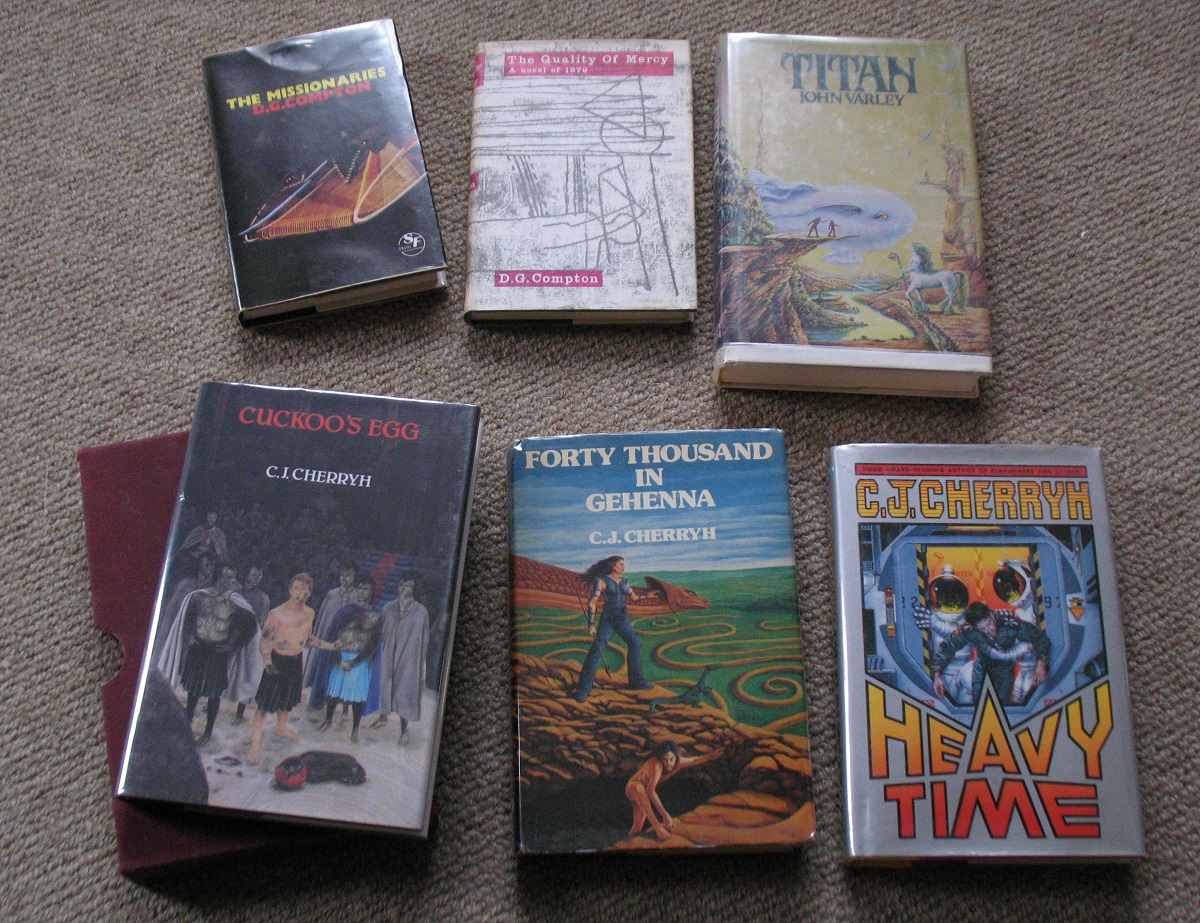
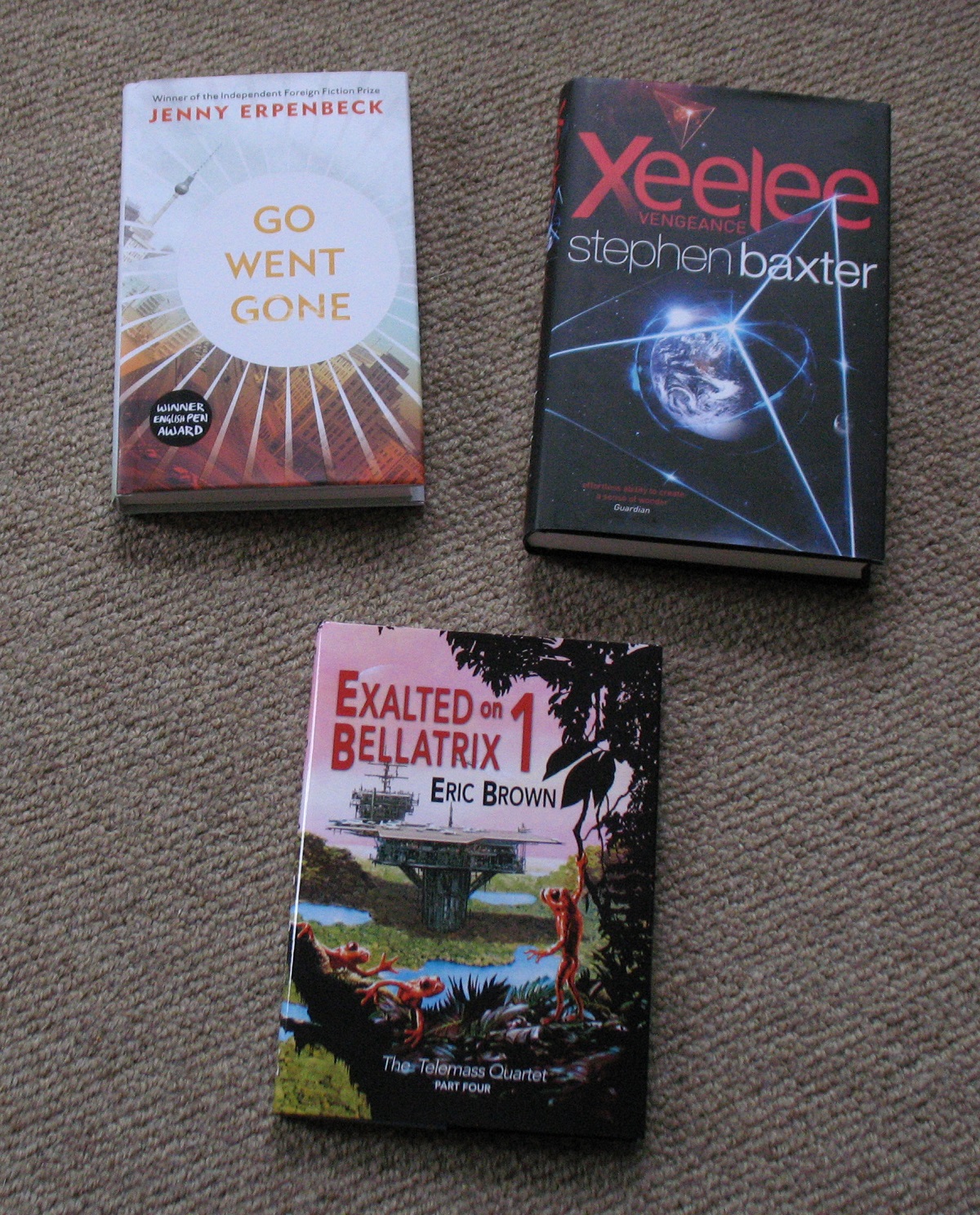
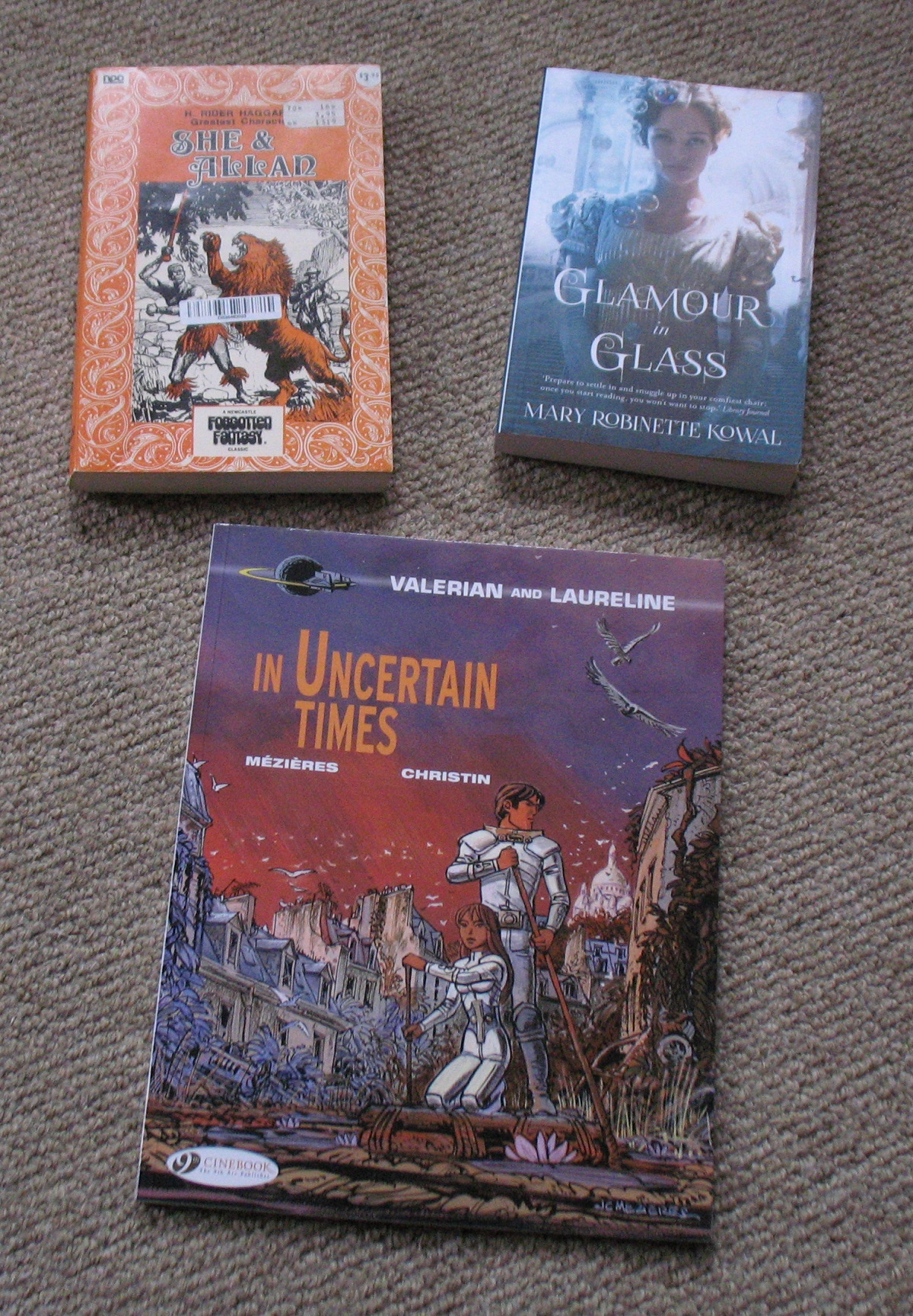
The last few book haul posts I’ve photographed the new books on the landing, hence the title of this post. It’s been a while since the last such post, but then I’ve not bought all that many books in the past couple of months…

Some birthday presents – it was my birthday back in March, and it’s been that long since I last did a book haul post. Patrick Keiller is the man who made the films London, Robinson in Space and Robinson in Ruins. The Possibility of Life’s Survival on the Planet is an accompanying text to Robinson in Ruins, and The View from the Train is a more general meditation by Keiller on his life and career. I’ve become a fan of Green’s writing, and some pretty new omnibus editions of three novels each have jus1t been published, so… Loving, Living, Party Going and Caught, Back, Concluding. He wasn’t very good at titles, was he?

Some recent sf. I’m glad Susan R Matthews is back in print after so long, so kudos to Baen for doing that… although the cover art to Blood Enemies is a bit naff. Her Under Jurisdiction series is recommended. The Memoirist is the fourth book of the first quartet NewCon Press’s new novella series. And New York 2140 is another mighty tome from Kim Stanley Robinson, whose books I’ve always admired, if not always liked.

Some recent crime. Prussian Blue is the latest in the Bernie Gunther series, and there’s at least one more to come, I think. I’ve read the first two Galbraith (ie, JK Rowling) novels, and they’re not great, but my mother lends them to me – she found Career of Evil in a charity shop – and they’re easy to read and entertaining enough.

A bit of a mix. Retribution Falls was on the Clarke shortlist several years ago, although its presence seemed to baffle many. I found this in a charity shop. The Circles of Power is the latest Valerian and Laureline – see here. I was so impressed with Alexievich’s Chernobyl Diary (see here), I bought Second-Hand Time when it was published. And The Ordinary Princess I found in a local charity shop, and bought because I’ve always liked MM Kaye’s historical novels, and even took the trouble to hunt down copies of her crime novel series so I could read them. I hadn’t known she’d written a children’s book.

When I decided to work my way through DH Lawrence’s oeuvre, I started out just picking up whatever books by him I found in charity shops. And then I stumbled across three all with the same design, and discovered Penguin had re-issued most of his works in a uniform paperback design back in the early 1970s. So I had to buy those ones, and only those ones. Like The Trespasser. I now have twenty-four of them, but it’s hard to find out what else is in the series. Some time later, I discovered Heinemann had published a hardback “Phoenix Edition” series of Lawrence’s works in, I think, thirty volumes, from the 1950s to the 1970s. And I’ve been picking those up as well, but they’re much harder to find. Kangaroo popped up on eBay recently (er, no pun intended). I have thirteen of them so far.


3 Comments

Reading diary, #47

My reading slowed badly during March and April, so much so I’m ten books behind on my Goodreads reading challenge, and I picked a total ten less than the year before (which I just managed to reach). Partly it’s because I’ve been so busy at work, I’ve been eating my lunch at my desk, and so not reading during that break. But I’ve also found it harder to continue with the book I’m reading on the weekend. I really do need to pick up my reading pace.

The American Lover, Rose Tremain (2014, UK). Back when I lived in Abu Dhabi, I read several books by Tremain, both novels and collections, and enjoyed them. Since returning to the UK, I’ve not read anything by her, so I thought it time I rectified that and bought her latest collection. And… it was a good move. She’s worth reading. These stories are slight, it has to be said, but good, of a type I like and enjoy, but not exactly memorable. I find Helen Simpson’s short stories have more bite. The stand-out is probably ‘The Jester of Astapovo’, in which a dying Leo Tolstoy, fleeing from his wife, ends up at a nowhere railway stop “120 miles south-east of Moscow, on the Smolensk-Dankovo section of the Ural railroad line”, and spends his last few days there in the house of the station-master (aside, this is, from the use of the horrible Americanism “railroad”). I enjoyed The American Lover enough to decide to carry on working my way through Tremain’s oeuvre.

The Corporation Wars 1: Dissonance, Ken MacLeod (2016, UK). I’ve been buying and reading Ken’s novels since stumbling across a copy of his first novel, The Star Fraction, in Spinneys in Abu Dhabi back in the 1990s. Throughout the years since, he’s published a variety of sf novels, and some I’ve liked a great deal more than others. Some have even been excellent – I still think his Intrusion is one of the best near-future sf novels of the past ten years. The Corporation Wars 1: Dissonance, on the other hand, has a title that really doesn’t appeal – it sounds like “Neoliberals in Spaaaace!” – and if it had been written by anyone other than Ken I’d have given it a wide berth. As it is… I’m unlikely to put it in my top five MacLeod novels. It’s a realistic treatment of robot sentience accidentally being created at a corporate mining site on a moon of Jupiter, and the team of avatars – virtual representations of dead human beings – who fight them. There’s a lot about simulated environments, a familiar topic to readers of Ken’s novels, and some intelligent treatment of the vast distances within the Solar System. But. Well, it never quite caught fire for me. The self-aware robots felt a bit clichéd, and the avatars were no better drawn. This is solid twenty-first century space opera, a bit more to the hard sf end of the spectrum than is usually the case, but I found it a little disappointing.

The Language of Power, Rosemary Kirstein (2004, USA). I forget who recommended the first book in this series, The Steerswoman, but when I came across a copy in a local charity shop, I bought it, later read it… and liked it so much I went and tracked down the remaining Steerswoman books (only the first was ever published in the UK, so I had to buy US editions… and there was such a long gap between books two and three that the first two were re-issued in an omnibus edition.) The Language of Power follows directly on from The Lost Steersman, but none of the books really make much sense unless read in order from The Steerswoman. Rowan is back in the seaport of Donner, trying to make sense of the events recounted in previous book. But her efforts to track down the records of a previous Steerswoman draw unwanted attention from the wizards… but then she stumbles upon Will, the boy genius who was taken on as apprentice by a friendly wizard, and it seems they’re trying to figure out the same things. These books are hugely likeable, and the presentation of science fiction as fantasy is perfectly pitched. It’s not a new idea, by any means – even Robert Jordan used it, for example – but Kirstein’s talent is in presenting understandable science fiction to the reader, not a handful of sf buzzwords or well-worn tropes, in such a way that it’s obvious this is sf to everyone except the characters. Sadly, the story is not yet complete and the recent installments have taken a while to appear. But it’s worth hanging in there, because these books are lots of fun.

Valerian and Laureline 15: The Circles of Power, Jean-Claude Mézières & Pierre Christin (1994, France). Annoyingly, Cinebook have been prompted by the imminent release of Luc Besson’s Valerian film – which looks a bit dodgy as an adaptation, to be honest – to rerelease the Valerian and Laureline books in hardback omnibus editions. Argh. I’ve been buying the paperbacks as they’ve been published in English. And, as is evident in this blog post, I’m currently at volume 15. (Volume 16 will be published in April, but there are, to date, 22 volumes in French, the last published in 2013.) In The Circles of Power, the titular two find themselves on a world in which the city and society are organised into circles with increasing levels of authority and regulation. But something weird is going on in the highest circle, and since they need money to get their ship fixed, they’re forced to investigate. The solution to the mystery comes as no real surprise, but along the way – and this is where, on the strength of the trailer alone, I admit, I think Besson’s adaptation might fail – there is ample opportunity for Christin to display his mordant view of real world society and politics. And I saw nothing of that dry banter in the trailer for Besson’s film. Which is a shame – one of the joys of the Valerian and Laureline bande dessinée series is how it maps onto the its time of writing.
popCult!, David Barnett (2011, UK). I bought this at the Fantasycon before last, so it’s taken me about 18 months to get around to reading it. Which is actually pretty good – I have some books I bought over a decade ago I’ve yet to read. I can’t remember why I bought it, possibly because I know the author, but perhaps also because the blurb mentions a lost Carry On film as central to the plot… and for all their myriad faults I’m a reluctant fan of the Carry On series.  In the event, Carry On, You Old Devil!, the so-called missing film, turned out to be a maguffin. The actual novel is about the writer of the titular work – a non-fiction work on popular culture in the novel – and how he is recruited by the, er, titular underground organisation, which is dedicated to safeguarding popular expressions of mass culture – talent shows, reality television, anything which makes celebrities of nobodies, basically – against a mysterious and semi-immortal enemy. Unfortunately, the protagonist is thoroughly unlikeable, and his allies somewhat too perfect to be true, but there’s some excellent commentary on popular culture buried among the implausible goings-on. It’s a fun novel, but it’s one where the writer was clearly capable of better – and has subsequently proven so. One or two aspects proved uncannily prescience when I was reading it – especially the section where popCult! break into the Palace of Westminster… Worth reading, if you can find a copy.

Darkchild, Sydney J Van Scoyc (1982, USA). Many years ago, I decided I liked Van Scyoc’s novels – I forget which of her novels prompted it – and over a number of years I’ve picked up copies of all her books… and I’ve been very slowly reading them. Darkchild I actually read as the first part of SFBC omnibus edition, Daughters of the Sunstone, which also includes Bluesong and Starsilk. I was afraid I might have gone off Van Scyoc’s writing, but I was happy to find I still like it a lot. There’ll be a review of Darkchild on SF Mistressworks soon.

1001 Books You Must Read Before You Die count: 129


Leave a comment

Moving pictures 2017, #22

Two from the US in this post, although one is an independent film and the other Disney. I’m trying to work my way through the classic Disney films, for reasons that seemed to make sense at the time. To be honest, it’s been quite entertaining – and I’ve been surprised by what I’ve enjoyed…

The Sword in the Stone, Wolfgang Reitherman (1963, USA). I’m pretty sure I read TH White’s novel of the same name when I was a kid, but I don’t think I’ve ever seen the Disney adaptation of it. Until now. And it was… serviceable. Disney was still flying high back in 1963, but I expected more of The Sword in the Stone than it actually delivered. It didn’t help that all the supporting roles were played with a variety of British accents but the role of Arthur sounded like your typical petulant American teenager. Which is, I guess, their target audience. The animation was pretty good, without being flashy, and there were one or two moments which reminded me of Sleeping Beauty (still my favourite Disney)… But it all felt a bit like a bad adaptation – and I’m going on distant memories of the book and, er, being British and the Matter of Britain being a, er, British thing, so that may be totally unfair – and for all the nice bits in the film it kind of ruined it a bit for me. It didn’t feel timeless, in the way Sleeping Beauty or Snow White do, and instead felt like a 1960s adaptation of the source material. That also took liberties with the legend. The animation was mostly lovely, the jokes based on Merlin’s character and crockery handled well… But… It never really quite shone for me. I’m tempted to put it in my top ten of Disney films, but maybe around number seven or eight, although I’m having trouble filling the rest of the ten…

Madeinusa, Claudia Llosa (2006, Peru). I didn’t actually pick this for my rental list, but it’s the second disc in The Milk of Sorrow DVD release and, for whatever reason, LoveFilm sent it me the week after The Milk of Sorrow. I’m still trying to decide if it’s the better film of the two. I certainly liked it more. The title is the name of a young woman in the village of Manayaycuna (which apparently means “the town no one can enter”) and her experiences during the Holy Time festival. During that period – Good Friday to Easter Monday – the villagers believe God cannot see sins. A traveller from Lima arrives and is locked away, but Madeinusa helps him escape in return for taking her to the capital. It doesn’t go as planned, of course. Everyone is using everyone else, and though the villagers of Manayaycuna live miles from anywhere, they’re not the simple yokels they appear to be. Madeinusa’s sister hates her, and actively scuppers her plan to escape. And it all ends badly for everyone concerned. The lives depicted are totally convincing, despite being set in an invented village, and some of the idiocyncracies of the village are so mad they feel like they can only be real. I’m a big fan of dramas that have a documentary feel, and both of Llosa’s films are good at that. After seeing The Milk of Sorrow I wanted to see more by Llosa; after watching Madeinusa, I’m defnitely going to watch more by Llosa. Recommended.

Samaritan Girl, Kim Ki-duk (2004, South Korea). It was David Tallerman who turned me onto Kim Ki-duk, although looking at Ki-duk’s filmography I don’t think all of his films are going to appeal. I certainly thought 3-Iron and Spring, Summer, Autumn, Winter… and Spring very good, but was less taken with The Bow. He’s probably a director whose oeuvre is still worth exploring, however. Samaritan Girl was much like those other films, while at the same time completely different. It matched their seeming lack of narrative, while still following a clear plot. But then Hollywood really doesn’t get narrative, and its stupidly slavish devotion to the three-act structure, or is it the one about rescuing the cat, I forget which story guru is current, is a clear indication of creative bankruptcy. Fortunately, Hollywood is not the be-all and end-all of cinema. The title of Samaritan Girl refers to one of two schoolgirls, who acts as ponce for her friend. The two want to visit Europe and one of the two girls is prostituting herself to pay for the trip. But during a police raid, she jumps from a hotel-room window and later dies from the fall. So the titular girl decides to meet up with all of her friend’s sexual partners and refund their money – after having sex with them. But her father is a police detective, and he accidentally discovers what she is up to, and ends up killing one of her clients… The cover art to the DVD is amongst the most misleading of any DVD cover art I’ve seen. Samaritan Girl is a well-drawn drama about two teenage girls and the desperate lengths they go to… which then turns into a tense thriller as the father of one commits murder. There’s nothing salacious in it. And, er, no nuns. Ki-duk was a good call. I’m not convinced every film Ki-duk will appeal, but the ones I’ve seen so far have been very good.

Wendy and Lucy, Kelly Reichardt (2008, USA). I came across Reichardt’s name on Alternate Ending, an excellent film blog, and though US indie cinema is not my thing, I added some of Reichardt’s films to my rental list because I really need to watch more films by female directors. The title refers to a young woman who is drifting about the US, and her dog. And when she is arrested for vagrancy, her dog is sent to the local pound. And then adopted by a family before Wendy can get herself released. And that’s about it. The film stars Michelle Williams, who has been flavour of the month in US cinema for a year or two now, and to be honest there’s little in the film that really stands out. It’s a well-played drama, and Williams is good without actually shining in the role – but the story is so low-key the film seems sadly lacking in drama for much of its length. I’ll be watching Reichardt because I think her importance to US cinema is under-estimated, but there’s not much in Wendy and Lucy that suggests any promise of greatness. It’s an enjoyable and subtle drama, but not especially memorable.

Austeria, Jerzy Kawalerowicz (1983, Poland). The title is apparently a term used by Polish Jews to refer to an inn. And in this case, it’s toward the end of the WWI, and is chiefly concerned with the Germans fleeing through the area, pursued by the Cossacks. The Jews have already left, but the innkeeper insists on staying on. And… The Hateful Eight, this is not. In a good way. For a start, there’s more than eight people staying in the inn. And there are also lots of Jewish rituals – to such an extant, they actually break the world of the film by presenting a service so much better subscribed, and better resourced, than could possibly be the case. Bits of Austeria had a Tarkovskian feel, in that way Tarkovsky dramatised inevitability, and its acceptance, so well. In other respects, Austeria felt like a typical Polish historical drama – it is, it must be said, easier to judge the verismilitude of UK historical dramas because it is the history I grew up in (well, actually, I didn’t; as I grew up in the Middle East), unlike US historical dramas, because the US doesn’t have a history… which is a long-winded way of saying that Polish history, indeed Middle European history, is mostly a blank to me. Which means I’m going to find a film in such a setting more convincing than someone who is a product of that history. I thought Austeria  made a good fist of its period, but my judgement means little. Kawalerowicz was a name new to me, and I’ve explored Polish cinema, until I watched Pharoah (see here), but he looks to have an interesting oeuvre. Austeria was one of the better films from the Martin Scorsese Presents Masterpieces of Polish Cinema box sets…

Night Train, Jerzy Kawalerowicz (1959, Poland). I’ve no idea how I ended up watching two Kawalerowicz mvoies in a row, I guess it was just the way they came out of the box. And this was a much earlier film too – black-and-white, as well. It’s set entirely aboard a train, as a man argues asbout his compartment and then finds himself involved in a murder. Given the British approach to trains – we invented them, we are now apparently incapable of operating them in a way that works for their passengers – I’m always somewhat bemused by films set on trains in other countries. Yes, we had sleepers in the UK, but that was long before I was born, while many European countries still operate them. But much as I’d like to complain about British trains, and the Tories who created the current railway situation, and the people stupid or racist enough to vote for the Tories, because, let’s face it, if you vote for a party and they get into power and start doing really shit things, and the Tories certainly have, then you are responsible for that, but I’m supposed to be writing about Night Train. Which was Hitchcockian in the sense that De Palma’s film are Hitchcockian – ie, they emulate the master. But Kawalerowicz was clearly frying other fish, and though Night Train has the appearance of a Hitchcockian thriller, and is too straightforward to be any kind of  allegory for Poland’s political situation of the time, it still manages a flavour all its own. Night Train is not a film I’d have sought out on its own merits, but it’s one of the Masterpieces of Polish Cinema so I watched it and I’m glad I did.

1001 Movies You Must See  Before you Die count: 860


2 Comments

Moving pictures 2017, #21

Six films from six different countries, which is quite good… and even the US one is not that embarrassing. Honestly.

Dances with Wolves*, Kevin Costner (1990, USA), Yes, unbelievably, I’d never seen Dances with Wolves. Since it’s on the 1001 Movies You Must See Before You Die list, I’d always planned to watch it, but I had it as low priority on one of my rental lists. But then I found a copy for a quid in a charity shop… I’d been expecting a revisionist Western and, yes, that’s very much what it is… but not precisely in the way I’d expected. Costner plays a monomaniacal Cavalry officer who insists on being assigned to the furthest outpost in US territory. Shortly after settling alone there, he encounters his neighbours, a village of Lakota Indians. He visits them in the interest of peaceful relations, and gradually learns their language. He also marries a Lakota widow. But then the US Army turns up, and decides Costner is a traitor because he has gone “native”. Unfortunately, there is such a mass of cultural material generated by the US in which the Native Americans are painted as villainous savages, and the white Americans as noble pioneers, that it’ll be centuries before the US truly accepts it committed racial genocide on all the cultures which shared the North American continent prior to their arrival. So, really, we shouldn’t be calling these films “revisionist” because they depict the Lakota as actual human beings and the occupying white Americans as vicious scumbags, because that’s probably much closer to the truth than the genre usually reckons. It is also fucking shameful that science fiction bases so many of its narratives on stories of Western pioneers and their so-called courage and fortitude in colonising distant territory, when it was usually their advanced weaponry and duplicity that won the day. Dances with Wolves was not a great film, although it won a huge raft of awards, but it was a lot better than I’d expected it to be. I actually quite enjoyed it.

Ivan’s Childhood, Andrei Tarkovsky (1962, Russia). This was a rewatch, prompted by me upgrading my Tarkovsky DVDs (which went to a good home) to Blu-rays. Ivan’s Childhood was Tarkovsky’s first feature film for a studio. The title refers to a boy who becomes a runner for the Red Army on the Eastern Front during WWII. There’s a scene in the film which captures me every time: Ivan has just arrived at an outpost, and the commanding lieutenant is not sure what to make of him, despite the boy’s claim to importance. At Ivan’s insistence, the officer rings headquarters and is properly humbled. He then offers the boy a hot bath. Evereyone who meets Ivan wants to do right by him, which by their lights means sending him to school and officer training. But he wants to stay at the front, directly contributing to the war effort. To be honest, there’s not much on this Blu-ray release which justifies the upgrade – it’s a bloody good film, if not Tarkovsky’s best, there’s the rest of his oeuvre to compete for that, and to be honest I can’t say it looks better on Blu-ray than on DVD because it’s a fifty-five-year-old film. Upgrading was a no-brainer – Tarkovsky is one of the best directors ever – and if it’s prompted me to rewatch his films (again), then it’s done more than intended. In fact, I now want to watch them again again.

The Milk of Sorrow, Claudia Llosa (2009, Peru). My first film from Peru. And a female director too. (Incidentally, I’ve started tracking the gender of the directors whose films I watch now, but it’s embarrassingly male-heavy at present.) The Milk of Sorrow takes place in an area occupied by indigenous people – Quechua is spoken during the film more than Spanish, in fact – and the title refers to a belief that women who were abused or raped transmit their feelings through their milk to their female children. The film follows a young woman who is accused of suffering from this as she tries to avoid her mother’s fate. I had not come across Llosa before encountering this film – which was pretty much a random Peruvian film picked because I’d never seen a film from that country – but on the strength of The Milk of Sorrow I want to see more by Llosa. (And so I did, as it turns out The Milk of Sorrow was a two-disc set with Llosa’s Madeinusa, which will be covered in a later Moving pictures post). Some films are just good; some films are good and you want other people to watch them. Many of the recent Chinese films I’ve seen fall into that later category. As does The Milk of Sorrow. Highly recommended.

Innocent Sorcerers, Andrzej Wajda (1960, Poland). Another from the second Masterpieces of Polish Cinema box set. I’ve yet to get a handle on Wajda’s output – I really like Man of Marble and Man of Iron, although the latter feels more like a teleplay than a feature film; and the latter is also in the first box set of the Masterpieces of Polish Cinema, which is good as it’s apparently not available in the UK, to go with the Second Run DVD release I have of Man of Marble; but I was not all that taken with his best-known film, Ashes and Diamonds. In other words, I pretty much have to take each Wajda film as I find them. And this one was… fun, in a sort of 1960s black-and-white-jazz-soundtrack sort of way. A bit like a John Cassavetes film but more to my taste. There’s a young doctor with improbably blond hair, and a young man in sunglasses who looks like the protagonist of Ashes and Diamonds, and it’s all very New Wave, but filtered through a very Polish lens. As previously mentioned it’s a lot like Cassavetes’s films but also completely unlike them – it feels more polished for a start, less reliant on ensemble acting, with a bit more Godard in its DNA than Cassavetes was wont to show. The films suffers from unsympathetic characters – but then so do Cassavetes’s films – and very little happens during its 87 minutes. It’s considered an oddity in Wajda’s oeuvre, and it’s easy to understand why. Worth watching, but lacking something that might make it a film worth remembering.

Day for Night*, François Truffaut (1973, France). I had to buy a copy of this as it’s apparently not available for rental from either LoveFilm or Cinema Paradiso. But it turned out to be an excellent film, so never mind. (It was also very cheap.) Truffaut plays a director making a film in the south of France starring a British movie star, played by Jacqueline Bisset. The entire movie is a series of in-jokes about movie-making, and the personalities involved, and it works really well. My attitude to Truffaut’s films is definitely improving. There are some great set-pieces in Day for Night, especially the one with the cat, and the cast are thoroughly convincing in their roles. The alcoholic dowager actress is fun, and the various relationships which develop among the cast and crew are amusing. Apparently, Graham Greene was an admirer of Truffaut and scored himself a walk-on part as an insurance agent. Truffaut, who admired Greene’s writing, only found out later that one of the insurance agents was Greene. As meta-cinema goes, it’s all a bit obvious – and was obvious in 1973, Vertov did it fifty years earlier with Man with a Movie Camera, for example – and some of the jokes were clearly at Hollywood’s expense, but it all seemed so genial, rather than than génial, and Bisset’s depiction of a fragile actress seemed just right for her role in the film and the “film”. My third favourite Truffaut so far.

Suzhou River, Lou Ye (2000, China). Yet more Chinese cinema. I’ve yet to see any evidence to contradict my claim that China currently has one of the strongest cinemas of any nation. Admittedly, I’m seeing the films which get international releases, and not the purely domestic stuff, but China has a stable of amazing directors, active from the mid-1990s onwards, who have produced some of the best films of the past ten or so years. Which is not to say there are not some excellent historical films – I’m a big fan of Spring in a Small Town (1948), and The Goddess (1934) is also very good. Suzhou River is an earlier work, inasmuch as it was released at the turn of the century, and it shows a bit in its MTV-style cutting, but it’s still an excellent film. It also takes an interesting approach to narrative, opening with a voiceover in which the narrator explains how he came to love a young woman who plays a mermaid in a Shanghai bar. It then tells the story of Mardar and Moudan, a courier who ferries a rich man’s daughter about town, before being forced to kidnap her… Years later, Mardar returns to Shanghai, and stumbles across the mermaid, who he thinks is Moudan. There is, as previously mentioned, a few too many MTV-style jump-cuts, but in all other respects this is a very good Sixth Generation movie. I’ve found myself buying several of the Chinese films I’ve watched on rental after seeing them, and I think I’ll be looking for a copy of this one too. (Damn, I just went and bought one on eBay for a tenner.)

1001 Movies You Must See Before You Die count: 860


Leave a comment

The con with no name

Actually, it did have a name, Innominate, but since that means “not named or classified”… The con in question was, of course, 2017’s annual Eastercon, which took place at the Hilton Metropole Hotel at the National Exhibition Centre near Birmingham International Airport over the Easter weekend. Hence, er, the Eastercon. Innominate was the sixty-eighth such to take place, and was actually a rescue bid – the Eastercon was originally supposed to be in Cardiff. The Guests of Honour were Pat Cadigan, Judith Clute and Colin Harris, two of which were at least names known to me.

My first Eastercon was way back in 1990, although I missed several during the mid-1990s, and actually dropped out of fandom when I returned to the UK in 2002 until I was persuaded to attend the Worldcon in Glasgow in 2005. Innominate was my fifteenth Eastercon, and my sixty-first convention; it was also my second visit to the Hilton Metropole Hotel, since the 2011 Eastercon also took place there.

In the past, I’ve tended to turn up to Eastercons around 4 pm on the Friday, but they seem to start earlier these days, and I was actually supposed to be on a panel at 4 pm on the Friday, so I bought a train ticket to get me to Birmingham International by about 1 pm. As it was, the panel was cancelled several days earlier after three of its members pulled out for various reasons. It was on the short fiction categories for this year’s Hugo Awards – not a subject you’d think I’d be a natural fit for, but never mind. Unfortunately, it was cancelled after I’d made an effort to read the nominated short stories. Which I did not like (and I didn’t even bother reading the JCW, as its shiteness was a given). I’d still like to read a couple of novelettes, as there are at least two authors on the shortlist whose fiction I admire, but I can’t say any of the nominated novellas appeal (the irony, from the man who thinks the novelette category should be napalmed).

The Hilton Metropole is a deeply weird hotel. I am pretty sure I had to pass through a mirror to reach my hotel room, which was located some ten minutes’ walk away from the reception and main con bar. It was a very nice room, although the en suite had no door and the shower cubicle resembled a telephone box. The television also had only a dozen or so channels, and I found myself somewhat freaked out on the Saturday morning after watching five minutes of Made in Chelsea as I hadn’t realised such vacuous human beings actually existed.

Anyway, after a typically bad train journey on a CrossCountry train to Birmingham, and then a march through the NEC – which has improved considerably since 2011 – from the station to the hotel, I checked in. And was told I’d reserved four nights. This will prove important later. Since Birmingham is only an hour and bit by train from where I live, I’d planned to travel home on the Monday evening. So, no need to book Monday night. And I’m not sure why I did. But cancelling it was easy – at least, it was a lot easier than accidentally booking a night too few, as I did in Mariehamn at Archipelacon…

In the bar, I met up with Will and Jen… And that’s pretty much how the con went: time spent in the bar, chatting with friends, interspersed with expeditions to the dealers’ room, or trips up to my room. The food was generally good, if expensive. There was a real ale bar serving four ales from Purity, at £5 a pint, which I mostly drank, to the extent I think I’d over-hopped myself by Sunday night.

I spent most of my time with the aforementioned Will and Jen, but also Karen and Ewan, and Andy Knighton. Karen is perhaps better known as KT Davies, the author of, among other titles, the very good Breed, and her mention of a sequel led to a series of suggested titles, from Breed 2: The Breedening to the somewhat dubious Breed 2: Breed Harder to the downright nasty Breed 2: A Good Day to Breed. (Only two of those were mine.)

I also spoke to a number of other people, friends and strangers, many for shorter periods than I’d have liked. I was introduced to Pat Cadigan, who I don’t think I’d ever met before, by Dave Hutchinson, and she immediately started calling me “Sales”, which I think is good. I called Dave’s BSFA Award win for Europe in Winter correct, and it was well-deserved. It was, in fact, a good set of winners all-round.

I spoke to Swedish and Finnish fans, most of whom I knew, and even introduced myself to someone I thought was a new fan (from the UK), only for her to admit she followed me on Twitter. (So it’s not all bots, then. Phew.)

On the Sunday evening, I was on a second panel, Optimism in SF. I mentioned this to Kari Sperring that morning at breakfast and she actually choked on her coffee. In the event, I thought the panel went quite well and I only managed one “… I had a point to make but now I can’t remember what it is”. And if at least one person reads Dhalgren or Jenny Erpenbeck’s The End of Days as a consequence of the panel then job done.

The hotel continued to be weird throughout the weekend. If its mind-bending layout were not enough, one morning I stepped into the lift and there was someone already there despite my room being on the top floor. The lift also start giving me electric shocks whenever I pressed the call button. Which was not fun. On the Saturday night, the most desperate survivors of two boybands, Westlife and Boyzone, apparently performed in the hotel ballroom as Boyzlife… so the hotel was filled thirtysomething women trying desperately hard to recapture their teen salad days. It was a little surreal – even more so than the OAPs who filled the Grand Hotel in Scarborough during last year’s Fantasycon.

I bought a dozen books, which is slightly more than in recent years – the dealers’ room was much better than last year’s – although not all of them were by female sf authors, or indeed on the wants list. In fact, I don’t think any were from the wants list. Ah well.

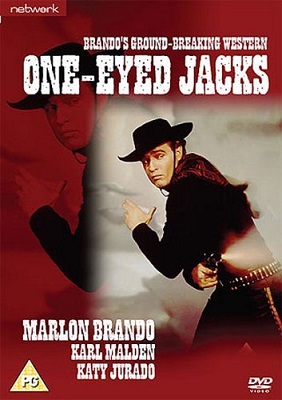
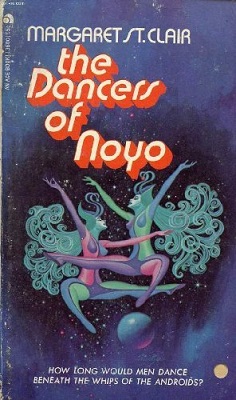
Three for SF Mistressworks. I’ve been after Falcon for a while. I think it’s Bull’s only sf novel. The Killing Thing I bought more for the cover, and because it’s a Kate Wilhelm novel, than because of the story. And I definitely bought The Dancers of Noyo because of the cover, although I’ve read St Clair before.

I’ve seen If Then and The Destructives recommended several times by Nina Allan, so I thought I’d give them a go. The author was apparently at the con, but I never bumped into him – not that I know what he looks like…

Some random old sf. The Undersea Trilogy – an omnibus of three 1950s juveniles, Undersea Quest, Undersea Fleet and Undersea City – is on my list of sf set at the bottom of the ocean. I bought Virgin Planet because I have the Beacon edition of the book (ie, the “spiced up” edition) and I want to compare it to the original. I just liked the cover of Purple-6. And Those Who Can: A Science Fiction Reader looked interesting: it contains stories by a bunch of well-known names, followed by an essay by them on an aspect of writing as it relates to the story. And it’s a surprisingly good bunch of names: not just the usual ones like Silverberg, Pohl, Ellison, Knight, but also Delany, Russ, Wilhelm and Le Guin. I’m currently reading it, as can be seen from the bookmark.

I left the con on Monday morning, after giving breakfast a miss. I’d been up late the night before with some Gollancz authors, and when asked if I was a writer, got to use the line, “Yes, an award-winning one in fact.” All three nights were pretty late, but only the first one was bad as I’d eaten little during the day. Although the food and drink was expensive in the hotel, I still managed to spend roughly as much as I usually do at Eastercons. The journey home was surprisingly good – the train from Birmingham was a CrossCountry one, and the platform was very busy, but I actually managed to get a seat on it. Yes, really. In fact, the carriage I was in didn’t look at all busy, even though CrossCountry had done their usual and only made up the train from four carriages. I was home by lunch-time, and as soon as Oscar saw me he ran into his room and stared pointedly at his empty food bowl. I didn’t get a telling-off this time, however.

Innominate felt more like a relaxacon than other Eastercons I’ve attended. Which was a good thing. There were people I wanted to speak to, but never managed to. There were people I know that I saw across the room but never managed to say hello to. But I enjoyed myself, and I came away from Birmingham with the feeling that UK fandom is still in good health.


2 Comments

Moving pictures 2017, #20

Another good mix of films, and no Hollywood shitbusters to spoil it either.

Pauline at the Beach, Éric Rohmer (1983, France). I think the first Rohmer I ever watched was Triple Agent, and I forget why I’d added it to my rental list. But as I learnt more about his career, so I wanted to watch more of his films. I’ve been steadily working my way through them and have seen a dozen to date – rentals… although I’ve been tempted on occasion to pick up a box set of his various series… but never quite tempted enough. Rohmer’s shtick is to present moral dilemmas as well-observed drama, and then let the viewer make their own call on what went down. It’s a curiously cowardly way of presenting a story, as if Rohmer doesn’t have the courage to comment on the situations he dramatises. But I don’t think that’s actually the case – indeed, it takes courage to present a scenario that is not plainly black or white. Pauline at the Beach, the third of Rohmer’s “Comedies & Proverbs” sextet, is a good example, although I’ve no idea what proverb it’s intended to illustrate. The titular character, a young teenager, is staying with an older cousin at a beach resort. She is present as her cousin bumps into a male friend from a previous summer, and a repeat holiday romance is mooted… but the cousin instead ends up sleeping with an older man who befriends them. Meanwhile, Pauline finds a boyfriend of her own. But one day, while the cousin has had to return to Paris on business, the older man beds a young woman who sells sweets on the beach; and when the cousin returns unexpectedly early, he makes out it was Pauline’s boyfriend who was shagging the sweet-seller. So Pauline falls out with her boyfriend. Later, she learns the truth, but her cousin refuses to believe it, preferring to accept her lover’s version of events. It’s a story that’s told in a deceptively simple way. It’s likely the most emblematic of Rohmer’s oeuvre I’ve seen. As in all his films, the direction is straightforward but effective, but it’s the cast who shine. I plan to eventually work my way through all of Rohmer’s films, and Pauline at the Beach only encouraged me to do so.

Veer Zaara, Yash Chopra (2004, India). To be honest, I’m starting to wonder why Bollywood films are not a routine part of most people’s film-viewing. Especially Brits. Our links with the country go back to Elizabethan times, when we first started exploiting it… and we’ve never really stopped. Exploiting it, that is. But the only people with whom I have conversations about Bollywood films are Indians (although pretty much all of them seem unaware of Bengal’s “parallel cinema”, which I personally have much more time for…). Veer Zaara was a Bollywood film I’d stuck on my rental list because I’d seen it on another list somewhere and… it was fun. It rang a few changes on the story – this time, it was: boy meets girl, boy is imprisoned on trumped-up charge for 22 years, human rights lawyer brings boy and girl back together again… So, not your average rom com plot. A young Pakistani woman takes her grandmother’s ashes back to India to scatter them in the village of her birth, but is involved in a bus accident en route… where she is resuced by an Indian air force helicopter pilot. They fall in love. He goes back with her to Pakistan to meet her family. But her marriage has already been arranged, and her impending husband has powerful contacts in the Paskistani establishment. He arranges for the Indian pilot to be arrested as a spy… Twenty-two years later, a human rights lawyer takes on the pilot’s case. Since he had originally refused to name the woman he loves back then, and still refuses to do so, it makes things difficult. But the lawyer figures it out, and discovers the woman called off the wedding on being told the pilot was dead, and has since devoted her life to running an orphange in his home village back in India. Obviously, this is not the most cheerful of stories, but this is Bollywood so there is singing and dancing. More than that, Veer Zaara is a very nice-looking film, with some excellent, if somewhat enhanced, photography. The plot is pure cheese from start to finish, but that’s hardly unexpected. I can see why it’s counted a classic Bollywood movie. Worth seeing.

The Night of the Shooting Stars*, Paolo & Vittorio Taviani (1982, Italy). So confusing. Although the only UK DVD art I could find calls this The Night of San Lorenzo, it’s best known as The Night of the Shooting Stars, except when it’s known as just Night of the Shooting Stars. And it’s under that last title that it’s mentioned on the 1001 Movies You Must See Before You Die list, and it’s because it’s on the list that I watched it. And… In WWII, a village in Italy is on the retreating Germans’ route, and since they have stated they will destroy everything, the villagers hide in the church. Except some don’t. Instead, they go looking for the liberating US army… I’m not entirely sure what The Night of the Shooting Stars was intended to convey. Bertolucci’s 1900 did a better job of showing the war’s impact on Italian society, Pasolini’s Sálo did a better job of expressing the Germans’ impact on Italian society, and there are no end of war films which show how it all happened, including really bad ones starring Rock Hudson in a 1970s haircut… Taken on its own, The Night of the Shooting Stars is a good film and perfectly watchable. I couldn’t get invested in it, possibly because it seemed to cover well-trod ground – it was not Neorealist, but it was about WWII, for example – and nothing in it seemed to stand out especially. There is a good scene in which one of the characters is killed by a mythical figure, but it was too few and too little to rescue the film. I can understand why some people rate it highly, but for me it didn’t quite make the grade to justify its place on the 1001 Movies You Must See Before You Die list. I’d sooner put another Fellini in its place.

Hélas pour moi, Jean-Luc Godard (1993, France). The more Godard I see, the more Godard I want to own. Truffaut was, I think, a better director, but Godard was the better film-maker. If that makes sense. I mean, I love both Fahrenheit 451 and Mississippi Mermaid, both of which use the language of commercial cinema to present non-commercial films (and neither of which are in collections of his work; bloody typical). And then there’s Tirez le pianiste, which is likely the most definitively New Wave of all the New Wave films… And those are just Truffaut’s films. (Without even mentioning the excellent interview he did with Hitchcock, a director I greatly admire.) But then you look at Godard’s oeuvre and, quite frankly, it’s a mess… Of his films I’ve seen, some are works of genius – Le mépris, 2 or 3 things I know About Her – while others push the boundaries of cinema in interesting new directions – Week End, Détective, Hélas pour moi, Film Socialisme, Goodbye to Language… But he could be enormously self-indulgent – sometimes it worked, as in Film Socialisme – but other times he seemed to let his stars get in the way of his film: both 2 or 3 Things I Know About Her and Made in USA were filmed at the same time (one in the morning, the other in the afternoon), yet I find the former much more successful than the latter. Sadly, as is always the case, little of Godard’s oeuvre is available on DVD in the UK. Hélas pour moi is late Godard, like Film Socialisme, and so is about cinema as much as it is about its story. Which, to be honest, I have no clue what it was. Gerard Depardieu and Laurence Masliah play a married couple, who are involved in some sort of incident in a Swiss village, but other than that, no idea… And yet, I enjoyed this film. It was clearly meta-cinema, something Godard has played with to varying degrees,  but not only was Godard playing with the conventions of cinema but also with the narrative conventions of the story he was telling. I want to watch this again… The only problem is finding a Godard box set that has more films I don’t own than ones I do own… and I don’t own that many. His entire oeuvre should be available, to be honest. Bfi, do your thing, please.

Walkover, Jerzy Skolimowski (1965, Poland). The Masterpieces of Polish Cinema box sets have proven somewhat variable. Some of the films are bona fide classics, and I’m hugely glad I now own decent copies of them. Others I wouldn’t describe as classics but I’m glad I have well-restored copies to rewatch. Some, however, have proven unremarkable and you have to wonder why they were selected for inclusion. Walkover is… a borderline case. It’s a solid drama of the type the Polish do so well, told against a backdrop of socialist industry – another thing the Poles were very good at: presenting socialism in a positive light while also highlighting its failings… The USSR’s version of socialism, that is of course. An unreasoning fear of communism can be blamed for a huge number of really bad, and very damaging, political decisions made between 1950 and 1990… although JFK’s decision to put a human being on the moon by 1969 was not obviously not one of them. Ahem. In Walkover, a young man joins the staff of an industrial plant. and finds himself dragged back into boxing, a sport at which he excelled but which he no longer participates, and this is contrasted with the rise of a female engineer within the plant’s staff. It’s… solid drama. The shiftlessness of the boxer’s life, a result of his academic failures, is contrasted with that of the female engineer. This is socialist propaganda as feature film, and I see nothing wrong with it as it takes the facts of a socialist society and sets a drama in them, unlike Hollywood, which continues to push the American Dream like it weas real thing and actually acheivable. FFS.

Morgan, Luke Scott (2016, UK). I saw mention of this somewhere and stuck it on my rental list, and lo, it arrived, so I watched it one weekend with a bottle of wine at hand. Dynastic film-making at its, er, best: Luke is the son of Ridley. The title refers to a genetically-engineered person – played by a woman but implied to be neuter – who had viciously attacked one of her handlers. A risk assessment consultant is brought in to decide if the project should be canned. There are many references to an earlier project in Stockholm, which resulted in the deaths of several researchers. Morgan tries to keep its cards close to its chest, but the hand it holds is so bloody obvious the effort is totally wasted. Morgan is a genetically-engineered soldier. They built a sociopath and seem surprised when it acts like one. The consultant brought in proves to have expert unarmed combat skills… because it too is a genetically-engineered soldier. That’s like the most obvious reveal ever in sf film. Morgan looks good, and its cast do quite well with a script that clearly recognises it’s one long string of clichés and tries to disguise what it’s actually about. Like Ex Machina, Morgan is Hollywood’s idea of a clever treatment of a difficult sf topic, in which nice visuals can’t hide an entirely trope-bound exploration that illustrates nothing. I seriously do not understand the point in doing that.

1001 Movies You Must see Before You Die count: 858


1 Comment

Moving pictures 2017, #19

Another mix of countries again, sadly ruined by a shit Hollywood sf blockbuster, which, yes, I knew would be shit when I sat down to watch it. Oh well.

Death Walks on High Heels, Luciano Ercoli (1971, Italy). I’ve watched quite a few giallos, after being introduced to the genre when I had to review one for videovista.net several years ago. They’re not a type of film that ever aspired to high art, although both Argento and Bava certainly went overboard on the sets, lighting and camerawork quite often. But most of those I’ve seen have been pretty straightforward low-budget thrillers, with the odd horror element, and plots that are often convoluted to the point of implausibility. It seems almost a defining characteristic that giallos hide who is the real villain of the piece until the end. And that’s exactly what Death Walks on High Heels does. Nicole is an exotic dancer in Paris whose estranged father was an infamous thief. The police inform her he’s been murdered but the proceeds of his last crime, a horde of diamonds, is missing. A man breaks into Nicole’s flat and threatens her with a knife, demanding the location of the missing diamonds. She notices her assailant has piercing blue eyes. Later, she finds blue contact lenses belonging to her sponging boyfriend. She flees Paris in the company of an English businessman she met at a club. He takes her to his holiday cottage in Cornwall (I think) and tells everyone she is his wife (he’s separated from his actual wife but won’t divorce her because she has the money). The boyfriend turns up. Nicole vanishes, and her body turns up later. The police investigate. Ercoli thickens the plot so much, it’s never quite clear what’s going on, and there are at least three different attempts at unmasking the villain. The police are also weird, cracking these odd dry jokes like some sort of dysfunctional comedy duo whenever they’re on screen. I’m not entirely sure what to make of this film – it’s not quite well-made enough to convince, the cast are uniformly bad, and the plot is over-convoluted. It’s a good giallo, but that’s no real indicator of quality. There’s a sequel, Death Walks at Midnight, starring the same cast, which I might try – but this is like a bad quality film done well, if that makes sense.

Between Your Legs, Manuel Gómez Pereira (1999, Spain). I’ve had this for a couple of years but I’ve never written about it before, so I thought it about time I did. It’s a convoluted thriller, whose story is told in a series of flashbacks. Javier Bardem plays a film producer who joins a therapy class of “sex addicts”. Where he meets Victoria Abril, whose evening dog walks had been a cover for sex with strangers. She works at a radio station, and through her Bardem discovers that tapes in which he describes his sexual fantasies have surfaced. Meanwhile, her husband, a police detective, is investigating the murder of a man found in the boot of an abandoned car in a multi-storey car park. The sex tapes are from phone conversations Bardem had with a woman he met at the airport, when they both missed their flight and so would have died when it later crashed. Except, the woman is not a woman… There are several things going on in Between Your Legs, such as Abril’s husband’s suspicion his wife is having an affair, a policeman who killed his wife, but the flashing back and forth never actually gets confusing. And I think that’s what’s most impressive about it, that it keeps the viewer invested in the story, despite its artificial nature, its leaping back and forth in time, and the way those flashbacks lead up to the resolution. The Spanish do good sexual thrillers, and this is one of them.

Early Summer, Yasujiro Ozu (1951, Japan). I think this might be my favourite of Ozu’s films, despite being in black and white and despite pretty much having the same plot as all his other films… Not to mention three generations of a family in one home, a daughter who needs marrying off, and a lot of familiar faces. Norioko, a secretary, lives with her parents and her sister’s family. A visiting uncle reminds the family that Norioko is past the age when she should be married. Her boss proposes a friend as a match, and the family are pleased with him as a potential husband. But Norioko would sooner marry a widowed doctor she knows from her daily commute, even though this means moving from Tokyo to provincial Akita. The family are far from pleased about her choice, but she refuses to change her mind. It struck me while watching Early Summer that it’s an ur-Ozu film – it does all the things Ozu does so well and it does them in a single movie. There are some early landscape shots – and the film finishes with a shot across a field of barley, as referenced in the original Japanese title – that seem so un-Ozo that, perversely, they make the film more Ozu. If that makes sense. The family dynamics, and the beautifully understated characterisation, are pretty much the same as any other Ozu film, although the fact the story revolves around Norioko, far more than any other Ozo films seems to centre on one of its cast, gives Early Summer more for the viewer to invest in. There’s a wonderful scene in which four young women go out for a hen party and discuss the upcoming nuptials, and it feels more like eavesdropping than plot-service. Which is, I guess, the appeal of Ozu’s films: there are no story beats, there is no three-act structure… there is just superlative film-making.

Independence Day: Resurgence, Roland Emmerich (2016, USA). Every now and again, I want to a film I can get pissed while watching, and what better candidate than a Hollywood sf tentpole blockbuster? Especially an unwanted sequel to a twenty-year-old film whose moment passed two months after it was released. Independence Day: Resurgence – I’m pretty sure they meant Regurgence – is actually set twenty years after the events of the first film, with the sons and daughters of the original movie’s heroes as the leads. Except for the non-combat ones, like Brent Spiner, Jeff Goldblum, Bill Pullman, and Goldblum’s dad, that bloke from Taxi. The USA – there are two named Chinese characters in the film, but there don’t appear to be any other nations on Earth; oh, except for a random African one which features for about ten minutes – has reverse-engineered the alien technology and now has a base on the Moon. Which has a giant blaster cannon, just in case the aliens come back. So when a giant spaceship appears, which is nothing like those of the aliens in the original film, the US blows it out of space anyway. Oops. They were the good aliens. Because the bad aliens are back for round two and the good aliens could have helped. Instead, the US has to wheel out all old characters from the first movie. Plus a handful of new ones, most of whom seem more concerned with their relationships with their paper-thin love-interests, plus they’re shit at taking orders anyway, just like every Hollywood military character. Everything that was wrong in the first film is even wronger in this one, and it’s the twenty-first century so a lot of stuff that was acceptable back in the 1990s is pretty much borderline offensive these days. The rest is a mishmash of clichés, hogwash, drivel and machismo bullshit. The special effects may be state of the art, but the storytelling is not. Avoid.

Knights of the Black Cross, Aleksander Ford (1960, Poland). It turns out I’d seen this before, but under the title Knights of the Teutonic Order (which is the title of the Second Run DVD release), although I can’t say I remembered any of the story when I came to watch it this time. It was a huge success in Poland at its time of release – in fact, the Wikipedia entry for the film boasts about the number of people who have seen it. Knights of the Black Cross is certainly an epic movie. It’s set in the late 1300s and is about the frankly evil machinations of the titular order. It clearly demonstrates that there is no one quite as evil as someone who claims to have god on their side – and that’s as true now as it was 600 years ago. A Polish knight finds himself at odds with the order after he rescues a caravan they’re attacking. And it all sort of escalates from there. He threatens the king’s messenger, mistakenly thinking he’s a knight of the order and is sentenced to execution. But the young woman he has fallen for rescues him from the headsman by promising herself in marriage. Meanwhile, her uncle is fighting the order, and ends up captured by them. They also kidnap the knight’s betrothed. Knights of the Black Cross packs a lot into its 166 minutes, and it’s all good stuff. It’s a more melodramatic film than, say, The Valley of the Bees, which also features the Teutonic Order, but is a Czech film – and it makes a good fist of its setting and it’s never dull. Worth seeing.

Eisenstein in Guanajuato, Peter Greenaway (2015, Netherlands). Back in the late 1980s and early 1990s, I used to love Greenaway’s films, perhaps because at that time they were like nothing I’d seen before. But then his star sort of waned and his films became harder to find – the last few have been pretty much financed by the Dutch – but sell-through DVD happily seems to have allowed him to reach a new audience (although I note his films are still somewhat haphazardly available in the UK on DVD or Blu-ray). He also seems to have embraced CGI to a much greater extent than other art house film directors. Like his last two films, Nightwatching and Goltzius and the Pelican Company, Eisenstein in Guanajuato is based on historical fact. Sergei Eisenstein, the director of Battleship Potemkin, Strike, Ivan the Terrible and other Soviet classics, did indeed visit Mexico to make a film in 1930. Greenaway presents Eisenstein as an erudite gay libertine, who takes full advantage of the freedoms offered by Mexico and unavailable in the USSR. Many of the scenes feature declamatory dialogue, often while stalking semi-nude around a single set. The whole is part-lecture, part frankly-implausible drama, but entirely clever and engaging. I hadn’t expected to like Eisenstein in Guanajuato, despite being a fan of Eisenstein’s films, or perhaps because of, but I certainly hadn’t expected Eisenstein in Guanajuato to make me think more favourably of Nightwatching and Goltzius and the Pelican Company, which I now want to watch again. My appreciation of Greenaway’s films may never return to its levels of twenty-plus years ago, but I like his films a whole lot better now than I did five years ago…

1001 Movies You must See Before You Diecount: 857


4 Comments

Moving pictures 2017, #18

I don’t seem to have watched a film from the 1001 Movies You Must See Before You Die list for weeks. But then I have got to the point where, bar a few really populist movies I’m not especially keen on watching (The Lion King, The Sound of Music, etc), the films I’ve yet to see are getting hard to find. I suspect I may never actually watch all 1001 – not that I want to die, either – but if I can get pretty damn close to completion I’ll be happy. And then I’ll move onto a different list…

The Last Man on the Moon, Mark Craig (2014, UK). The title refers to Gene Cernan, the commander of Apollo 17, the last mission to land on the surface of the Moon. Cernan died earlier this year, although this film about him, and sharing a title with his autobiography, was made three years ago. It’s pretty much what you’d expect – talking heads, including Cernan himself, discussing his career prior to NASA, his career at NASA, and his flight to the Moon, intercut with archive film of naval aviators and astronauts. The footage shot on the Moon’s surface is, of course, fantastic, and the nearest anyone will ever get to an actual alien planet this century. (I suppose there might be a commercial, or Chinese, or even Indian, flight to the Moon before 2199, but the way things are going I suspect climate crash will get us all first.) There are a handful of documentaries about the Apollo programme made over the last 45 years, which had theatrical releases, and they’re all very good indeed. Later ones have perhaps featured more talking heads, but then they’ve been more about the people involved than just the achievement itself. Which is hardly surprising, given technological progress since 1972 and the complete lack of political will to contribute to human space exploration. Recommended.

The Man in the Sky, Charles Crichton (1957, UK). I like films whose plots heavily feature aeroplanes, although I much prefer Cold War fighters and bombers than other types of aircraft. The plot summary of The Man in the Sky mentioned a rocket plane, so I bunged it on my rental list and… Well, it’s not really a rocket plane. It’s a Bristol Type 170 Freighter, a late 1940s prop-powered cargo plane, that has had JATO rocket pods attached to give it a much shorter take-off run. Jack Hawkins plays the chief test pilot who takes it up for a demonstration flight for the owner of a freight airline who is planning on buying the plane. The aircraft manufacturer desperately needs the sale, or he will go out of business. So it’s a bit of a downer when one of the engines catches fire during the flight. The crew and passengers parachute to safety, but Hawkins has to figure out how to bring the aircraft down safely because the fire has damaged the ailerons on one wing. It’s all very British Stiff Upper Lip drama, making light of a crisis, etc, and Jack Hawkins plays Jack Hawkins the way he always has done. It’s a mildly entertaining British drama and very much of its time.

Uniform, Diao Yinan (2003, China). This is the second Diao film I’ve watched, after the excellent Black Coal, Thin Ice (see here). A slacker tailor, with an ill father and nagging mother, tries to return a uniform left by a policeman who needed it ironing. But the policeman isn’t home, and a neighbour tells the tailor he was in an accident. On his way back home, the tailor is soaked in a rainstorm, so he swaps his shirt for the policeman’s. And he discovers that people treat him differently when they think he’s a policeman. So he starts doing it more often. And when his father has to go into hospital, but he has no money to pay for it, so he impersonates a policeman and shakes down people for money. He starts seeing a girl who works in a CD shop, but then he discovers she works for an escort agency as well. This is a pretty bleak film – and, to be fair, a lot of the Sixth Generation Chinese directors seem to go for bleak – but it also has that documentary air I find so appealing about recent Chinese films. The protagonist of Uniform is hardly admirable, or even sympathetic – he’s a slacker who turns into a bully. But his situation is certainly sympathetic, and not just unique to twenty-first century China. I’ve said before that China has an especially strong cinema at present, and this film is ample evidence.

Lenny, Bob Fosse (1974, USA). I wanted to see this since the editing of Lenny plays such an important part in Fosse’s semi-autobiographical All That Jazz, a film I really like. I know very little about Lenny Bruce as he was a) American, and b) before my time. Dustin Hoffman plays the title role, and the film follows his career, intercut with excerpts from some of his later stage performances. It’s astonishing how badly he was treated by the authorities – repeatedly arrested for using words like “cocksucker” in his act – but then the hypocrisy and corruption of the US establishment is hardly news. (Of course, the same can be said of the establishment of pretty much every country.) As biopics go, it’s a good one. But biopics are also dependent on the person being covered, and Lenny Bruce wasn’t all that interesting a person. He was a professional arsehole who ran afoul of the establishment, which hardly makes him unique; but the subject of his comedy seemed fresh and necessary, and was also the reason he was targeted. It makes for a good story. The problem is that when this is real, and the heroes are so deeply flawed, it often invalidates the point being made. Lenny Bruce was a knob. He also had important things to say. So what does that say about his message? Very little, sadly. Most of what he complained about is, these days, generally  acknowledged to be true, but no one seems especially interested in changing things. So US society remains sexist and racist, even more so now than when this film was made.

Marriage Italian Style, Vittorio De Sica (1964, Italy). This is the fifth film by De Sica I’ve seen, and I think most of the earlier ones were Italian Neorealist, a film genre of which I’m not a big fan. Marriage Italian Style, however, is very much a 1960s drama, although it opens in the late 1940s. Sophia Loren plays a prostitute frequently visited by successful businessman Marcello Mastroianni, and he eventually sets her up in his own house, ostensibly to look after his ageing mother. But when Mastroianni plans to get married to another woman, Loren feigns a mortal illness and extracts a promise from him to marry her instead. Then she “recovers”. He marries her, she moves her three sons into the house (one of which was fathered by Mastroianni, but she refuses to tell him which). They start shouting at each other. The two leads are experienced actors, and very good ones too, and they play their parts as well as can be expected. Burt none of it actually adds up to much, and the story never really ignites. Sadly, you don’t much care what happens to the marriage. I’m not sure why I stuck this one my rental list, and having now watched it I’m even less sure.

The Class, Ilmar Raag (2007, Estonia). After Georgia in the last Moving pictures post, it’s now the other end of Europe and another country I can cross off the list of nations whose films I’d never previously seen. The Class is set at a high school in an unnamed Estonian town. One boy in the class is consistently bullied, first by a group of jocks but then by pretty much everyone in the class. But then one classmate decides enough is enough, and he fights the bullies. Which makes him a targe0 toot. Which eventually ends up with the two of them walking through the school with guns, shooting those who had bullied them. It is, sadly, these days a somewhat clichéd story – at least in certain parts of the world – Estonia, it has to be said, not being one of them (but the Wikipedia page mentions two school shootings in Finland which quote the film as inspiration). The problem here, of course, is not kids shooting up schools with guns, but bullying. The Class presents a story that feels very European – this could never be mistaken for a Hollywood film – even if the story is one Hollywood has covered several times. It is also an extremely polished piece of work. Pretty much all nations have a film industry, but not all of their output makes it out of their country – and for some, none of it does. I saw something recently about Jia Zhangke, a Chinese director whose films I rate highly, and whose first three films were made without official approval. It was the international film festival circuit at which his movies were shown which helped finance his later films and also persuaded Beijing to give him their approval. And while I realise there’s been a cinema underground as long as cinema has existed – Maya Deren’s Meshes of the Afternoon and Stan Brakhage’s Dog Star Man are evidence of the US’s own underground avant-garde cinema scene – the twenty-first century has made it much easier for the armchair enthusiast to access previously hard-to-find material. While I’ll happily travel to Sweden or Iceland for a science fiction convention, I’ve yet to work up the enthusiasm to travel to London to see a specific film (damn you, Curzon for showing Francofonia only in London).  Which is, I admit, a purely personal fault. But while I can continue to explore the world’s cinema from my armchair, I will do so – rental, if I can, and I’ll buy them if I think them good enough (as I have done). Because I think it’s important to watch films from as many nations as possible.

1001 Movies You Must See Before You Die count: 857


Leave a comment

Apollo Quartet audio books

I’m not sure what happened to March, it seems to have been a lost month for me. Which is a shame as something pretty damn cool happened during it: the Apollo Quartet was published as audio books by Novel Audio. So now you get to hear all those acronyms and technical terms actually spoken, instead of just littering the pages of the four books.

Check them out.

Adrift on the Sea of Rains
Narrated by Jeffrey Schmidt

The Eye With Which The Universe Beholds Itself
Narrated by Jeffrey Schmidt

Then Will The Great Oceans Wash Deep Above
Narrated by Trina Nishimura

All That Outer Space Allows
Narrated by Kathryn Merry


Leave a comment

Moving pictures 2017, #17

The run of Chinese films from LoveFilm is still going, although only one of the two in this post from that country was actually a rental. We also have the re-appearance of Hollywood… although it’s a 1950s Western by a German director. And there’s a British “quota quickie” in there too.

Antareen, Mrinal Sen (1993, India). This is the only other Sen film I can find available on DVD, which is weird as he seems to be held in equal regard in Bengali cinema as both Satyajit Ray and Ritwik Ghatak, but he also seems to have been working much later than Ghatak. But then Ray was the most prolific of the three, and has been championed in the west for years by David Merchant. Neither Ghatak nor Sen had such a champion – in fact, of the two, Ghatak probably has a higher reputation, although only three of his eight films were ever released on DVD outside India. The two Sen films I now own are both part of NFDC’s Cinemas of Indias restoration of Indian movies, and, I think, the only two by Sen in the  their three box sets. Which is a shame. In Antareen, a writer house-sits a friends decrepit old house – well, it’s more like small palace – and one day the telephone rings. He explains to the caller, a woman, that the owner is away, but they continue to chat. She’s in a loveless marriage and desperate to reach out to someone, and he’s lonely on his own in the big house. He sits by the phone, waiting for her to call. They become friends. Then they decide to meet. Sen’s films seem to have a gentler approach to drama than Ray’s. They also seem less stagier, too. Ray’s films feel like they’re often confined to sets, whereas the two movies by Sen I’ve seen are more cinematic. It’s a pity there’s not more available by him – he directed 27 after all, the last in 2002.

Shanghai Dreams, Wang Xiaoshuiao (2005, China). I watched this twice before sending it back to LoveFilm, and I still think it needs another rewatch. The story is simple enough: the government moves a family to a provincial town, but all they can think about is returning to Shanghai. But their new life is never going to take them back. The film focuses on the daughter of the family, who is realistic enough to build a life for herself in the town but can never seem to do anything right in her father’s eyes. He meets with other volunteers who agreed to move to factories set up in provincial towns to ensure the survival of China’s industrial capacity in the event of war and they plot to return to Shanghai. His bitterness makes him aggressive, and he stalks the daughter. Things then go badly wrong for her, which precipitates the family into moving without permission back to Shanghai. After a couple of Chinese films that hadn’t really grabbed me, this one I thought really good – but then Wang was the director of Beijing Bicycle (see here), which I also thought very good. Annoyingly, those two appear to be the only films by him available in the UK – this is getting to be an all too common complaint.

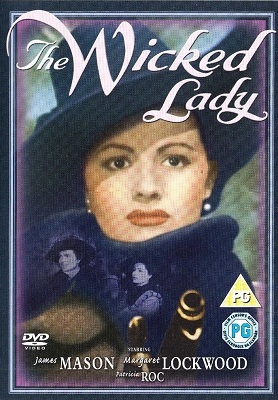
The Seventh Veil, Compton Bennett (1945, UK). I had thought this was on the 1001 Movies You Must See Before You Die list, but that was apparently The Seventh Victim – a B-movie about a Satanist cult – and not this one, which is a great deal better, if overly melodramatic, but nonetheless quite typical of its time. Ann Todd – who I always get confused with Anna Neagle, and, to be honest, I’m not sure which is the better actress – goes to live with controlling uncle James Mason, playing that smooth-talking villain he did so well, who turns her into a world-class concert pianist. And he’s there to ensure she maintains the discipline needed to stay at the top. She, however, has other ideas – like: love, relationships, etc. The title refers to a piece of simplistic psychology used by the film – each mind has seven veils, like Salomé, and the psychiatrist, Herbert Lom, must persuade Todd to drop that last veil if he is to discover why she tried to commit suicide in the later-set framing narrative. (Hint: James Mason.) It’s melodrama with a capital M, and, I suspect, knocked out as a “quota quickie”. The film it reminded me of the most, strangely, was The Ghost and Mrs Muir, which has made a couple of editions of the 1001 Movies you Must See Before You Die list. Todd is probably The Seventh Veil‘s biggest handicap – she has to play her character from schoolgirl to, well, at least half a decade younger than her actual age – and is clearly Todd throughout. But Mason is certainly on top form. It’s almost as if the role were written for him – in fact, it’s a testament to his skill that so many of his roles did seem written for him. Mason deserves a lot more love than he received. He was one of our best actors.

Rancho Notorious, Fritz Lang (1952, USA). I’m trying to work my way through Lang’s entire oeuvre… which sounds like an admirable ambition until you discover how varied his oeuvre was. I mean, is there a typically Lang-ian film? There’s those early German silent films, and they’re all blindingly brilliant. But then he moved to Hollywood and churned out a series of noir films that weren’t all that much better than his rivals, although one or two did shine. And then he ended up with the quite brilliant serial-drama oddities that were The Tiger of Eschnapur and The Indian Tomb. And in between he made… all sorts of stuff. Like this Western, starring Marlene Dietrich. It tries really hard to subvert the form, but decades it feels almost typical of the genre. A man’s bride-to-be is gunned down in a robbery on a general store, and he vows revenge. All he has as a clue is the phrase, “Chuckaluck”. He eventually tracks this down to ex-prostitute Dietrich, who runs a ranch near the Mexican border which she allows outlaws to use as a hideout, for ten percent of their haul. The revengeful widower eventually ends up infiltrating the gang in residence at Dietrich’s, but he doesn’t known which one killed his wife. I think I’ve said before I’m not a fan  of westerns, and the ones that appeal to me are the ones that make a real meal of the landscape… which this one doesn’t. It seems ordinary, and I’d expected better from Lang.

Paper Airplanes, Zhao Liang (2001, China). This is the least satisfying of the three films in this box set, chiefly because it deals with drug addicts, who are, to be frank, not very interesting. On the other hand, this disc also includes three short films which are definitely worth seeing. So, in total, buying the box set was a good move – and now I have to get myself a copy of Behemoth, because Zhao is really very good indeed. In Paper Airplanes, the addicts discuss their addiction, with a surprising lack of self-awareness, but a very informed awareness of what the addiction is doing to them and what its consequences might be. Some of the addicts are in bands, and we see them performing, but if they’re looking for salvation, or even riches,  that way then they’re deluding themselves. Of the three feature-length documentaries in the box set, this is easily the weakest,. Nonetheless, Zhao Liang is a name to watch, and I’ll be keeping an eye out for anything new he produces.

The President, Mohsen Makhmalbaf (2014, Georgia). Despite his stature in Iranian film, Makhmalbaf doesn’t seem to get Western releases to the same extent as other Iranian directors – pretty much the entirety of Abbas Kiarostami’s oeuvre is available in the West, for example, and yet Kiarostami’s Close-up is about a person passing themselves off as Makhmalbaf! Even Makhmalbaf’s most celebrated film, Gabbeh (see here), has never been released in the UK, so I had to buy a US release. So the fact The President is available for rental is a bit of a puzzle… although it’s not really an Iranian film. It’s set in an invented East European/West Asian country, but its cast are Georgian, it was filmed in Georgia, and the Georgian language is used throughout. Which makes it a Georgian film, even if Makhmalbaf is Iranian. I had noted Makhmalbaf’s black sense of humour in other of his films, but it’s in full force in this one. A dictator of an unnamed nation is ousted by rebels, and must flee across the country in disguise, with his young grandson. And… it’s beautifully done. The kid is by turns a charming innocent and a total brat, the dictator is angry, afraid, unrepentant but pragmatic. The final scene in which he is recognised by a group of angry peasants is like something out of a brutal Monty Python. And The President is quite a brutal film in places, and its humour is about the blackest I’ve seen – although not quite as black as the scene in Makhmalbaf’s Kandahar where an army of one-legged men chase after artificial legs thrown from Red Cross helicopters. Recommended.

1001 MoviesYou Must See Before You Die count: 857