… or A Desperate Attempt To Generate Content For This Blog Before People Give Up On It. Well, perhaps not “desperate” – it’s not been that long since I last posted. But my last few posts might have given the erroneous impression that I’ve mostly given up on reading science fiction. I haven’t. And here’s the proof. Sort of.
I have been reading…
The Quincunx of Time , James Blish (1973) – I knew this was an expansion of a short story, but I didn’t know if I’d read the story. So the déjà vu which hit me two pages into the book didn’t come as much of a surprise. I had read the story, ‘Beep’. Unfortunately, as Blish explains in a foreword, he had never intended to expand ‘Beep’, and when he was eventually persuaded to do so he chose to focus on some of the issues raised by the story. He didn’t expand the plot, or the story’s remit. He just deepened the scientific bollocks the various characters explain to each other. It made for a dull and unconvincing – and short – novel. Not one of Blish’s best.
The Facts of Life , Graham Joyce (2002) – I have unjustly neglected Graham in my reading. I thought his first few novels were very good indeed, but sort of stopped buying and reading them for no real reason. I actually interviewed him for a small press magazine when his debut novel, Dreamside
 , was published. Unfortunately, it was on the last day of a convention, and we’d both been drinking until 4 a.m. the night before and were very hungover. I sent Graham a verbatim transcript of the interview. He replied, “I remember it as quite an insightful interview… so who were those two fucking Martians on the tape?” A carefully edited version, which made both of us appear sane and intelligent, later appeared in the magazine. But, The Facts of Life. I decided to buy this because it’s set in Coventry. I went to university there, so I know the city. The Facts of Life is excellent stuff and I have no excuse now for not reading more of Graham’s books. Incidentally, I was little spooked by one chapter in the novel – because it’s set in Coventry it of course features Lady Godiva. Which couldn’t help but remind me of my own encounter with her (see here). Graham’s done that to me before: I had a lucid dream the morning before starting Dreamside, which opens… with someone having a lucid dream.
The Universe Maker , AE van Vogt (1953) – for some reason, an image from this novel has stayed with me throughout the decades since I last read it: a shadow in the shape of a person, and in which you can see stars, appearing in a park and speaking to someone. But I couldn’t remember the context. So I decided to reread the book to remind me. And it is apparently a Shadow, one of an elite which rules a future Earth and the members of which appear to have special powers. So there you go. This novel is, like most of van Vogt’s, completely bonkers. It’s a headlong charge through a number of sf tropes – chief among them time travel – most of which make little sense if you pause to think. And that’s part of its charm. Before you can even scoff, you’re thrown into something new and even more implausible. Now I want to reread van Vogt’s Mission to the Stars
 , which has the giant battleship that splits up into hundreds of little ships when it hits a galactic storm…
House of Suns , Alastair Reynolds (2007) – Reynolds is one of those authors whose books I buy in hardback as soon as they’re published. He’s also one of those authors whose work can sometimes disappoint, but only when compared to his other novels. And so it was with House of Suns. I never quite swallowed the novel’s timeline of millions of years, and the characters seemed a little too contemporary for me to willingly suspend disbelief. But, there were – as usual – some real gosh-wow special effects, some jaw-dropping ideas, and even an occasional nod here and there to other sf books and films. Good stuff.
The Ship That Died of Shame & Other Stories , Nicholas Monsarrat (1959) – I have a soft spot for Monsarrat’s fiction – The Cruel Sea
 is a classic, and his unfinished The Master Mariner
 is one of my favourite non-sf novels. So I continue to seek out and read his books, even though many of his plots have passed their sell-by date. It’s a bit like watching the first season of Alfred Hitchcock Presents
 from the mid-1950s – those twists in the tale have been done so many times you can see them coming a mile off. But they must have been a surprise when they were first used back then. And so it is for some of Monsarrat’s novels and short stories. But I’ll still read him.
I’ve been watching stuff, too. Such as…
The Sacrifice , Andrei Tarkovsky (1986) – Tarkovsky isn’t a science fiction film director, although three of his films were sf. Both Solaris
 and Stalker
 were adaptations of sf novels – by Stanisław Lem and the Strugatsky brothers, respectively. The Sacrifice, on the other hand, is from an original screenplay by Tarkovsky himself. A man living on Gotland, a Baltic island off the coast of Sweden, witnesses the end of the world by nuclear war, and in despair vows to God that he will sacrifice everything he loves if the world is returned to normal. He then – at the urging of a friend and neighbour – sleeps with a female servant, who is a witch. The next morning, it’s as if the nuclear holocaust had never happened. And so the man sets about fulfilling his vow, alienating his loved ones, destroying his possessions, and burning down his house. Like all Tarkovsky films, it’s very slow, with very long takes. But parts are disturbingly intense. The reaction of the man’s wife, for example, to the end of the world is difficult to watch. There are also dream sequences which might not be dream sequences, and a use of colour and black & white film which might help unravel the ambiguous story. I think I prefer Mirror
 more than The Sacrifice, but it’s a more affecting film than some of Tarkovsky’s, and he remains a favourite director.
Star Trek: Deep Space Nine season 2 (1993) – I’d read often enough that DS9 was the best of the Trek franchises, but I’d only ever seen a handful of episodes from the first season. From them it was hard to see it as any better than any of the other franchises. But I decided to give the series a go – prompted by a much-reduced price on Amazon. And discovered that not only was the setting interesting – the planet of Bajor after Cardassian occupationary forces have withdrawn – but I liked the characters. Much more so than the Star Trek: The Next Generation ones. Well, except for Quark the Ferengi. He’s just irritating. Anyway, I finished season 1, and then bought season 2. And I have every intention of working my way through to the end of season 7. Especially since I’m told it gets much better when the Federation go to war against the Dominion….
Indiana Jones and the Kingdom of the Crystal Skull , dir. Steven Spielberg (2008) – it seems a bit pointless to moan about Hollywood remakes of perfectly good films from earlier decades when they’re just as liable to dig up old franchises and add a new vehicle to it. And what a creaking lumbering vehicle it is. Harrison Ford manages to hold his own, despite his advanced years, but the plot in this thing is a horrible mess. It’s as if they chose to throw as many clichés at it as possible in the hope one or two would stick. Unfortunately, it’s not plot coupons which stuck. This film is just an embarrassingly bad sequence of CGI spectacles and stunts held together by a plot which makes no attempt at plausibility. Best avoided.
Aliens Vs Predator 2: Requiem , dir. the Strause brothers (2007) – sadly, my film-viewing could sink even further than a geriatric Indy chasing after a “magnetic” skull which can bizarrely attract non-ferrous materials. It plummetted to this. The directors clearly felt that making the film as dark as possible would hide a multitude of sins. And I don’t mean “dark” as in mood. I mean, “dark” as in filmed at night, “dark” as in having to sit in a pitch-black room in order to actually see what’s on the bloody screen. Which isn’t much more than the title suggests. There’s this Alien, see; and it crash-lands on Earth. And a Predator gets this signal telling it what’s happened. So off it goes to hunt it down. In Ridley Scott’s excellent Alien
 , the eponymous creature was an unstoppable killing machine. In AvP2, teenagers with shotguns slaughter hundreds of them. Which is a bit like revealing Sasquatch as a marmoset. But then, what teenager wants to watch a platoon of elite forces get blatted by a single alien? They’d much rather see themselves in the title role, wreaking mayhem and spraying bullets and killing all those nasty cunningly-externalised fears and neuroses… Avoid this film like you would a, well, an alien.
The DEFA Sci-Fi Collection – I mentioned one of these in a previous posts – Der Schweigende Stern / The Silent Star, dir. Kurt Maetzig (1960). See here. The other two in this boxed set are In the Dust of the Stars / Im Staub der Sterne, dir. Gottfried Kolditz (1976), and Eolomea, dir. Herrmann Zschoche (1972). The first is… plenty weird. A mission from one planet arrives on another. There’s something suspicious going on, but they’re welcomed with a big party. Of course, they soon find out what the actual situation is…. But. The strange 1970s GDR aesthetic is one thing. But the gratuitous – tastefully back-lit, so in silhouette only – nude scene just seems completely, well, gratuitous. And then there’s the party scenes. Disco-dancing East Germans in Spaaaacccceee. Sort of. Eolomea is a much more restrained affair. Some ships have gone missing, and a group of scientists are sent to figure out what happened. It seemed to me a bit of the story went missing somewhere as well. The film’s title makes no sense for the first thirty or so minutes, and is only explained in passing. But never mind. It’s all good post-2001: A Space Odyssey
 1970s sf – none of that silly Western Imperialist space opera thank you very much. There is a fourth DEFA sf film which isn’t included in this collection, Signal: A Space Adventure (1970). I want a copy.
And I have been listening to…
The “double whammy” – I wanted to see Isis, who were performing locally last Sunday night, but no one else wanted to go. Then Stuart said he’d go, if I went to see Johnny Truant at the same venue the following night. The “double whammy”.
Isis were excellent, as usual. They’re another one of those bands you forget how good they are… and then you see them live. I ended up buying one of their CDs from the merchandise stand, and was tempted to buy more. They were ably supported by Torche, who were good in parts.
And then it was Johnny Truant… Who are a bit too hardcore for my taste. This was a much younger crowd than Isis – I could have passed as just about any audience member’s dad. The sound was also very loud. I don’t mind loud – and I’ve been to plenty of loud gigs. But it seems a bit pointless when everything’s turned up so high you can’t actually hear the guitars. Just the bass and blastbeats. The rest is a wall of noise. Mind you, there was a little more banter between songs than the previous night. The only words spoken by Isis were, “This is our last song.” The lead singer of Johnny Truant, however, was cracking jokes – “Our next two songs are ‘Hotel California’ and ‘Tiny Dancer'” – and moaning about eating too many pies. Not to mention the lead singer from support act Blackhole, who climbed down from the stage and performed most of the set from the middle of the dance-floor…
I’ve been working as well, of course. The big fat space opera sequel, assorted short stories (three sold this year so far; go me), and even another poem or two.



 is due in cinemas next year, as are new additions to the
  , and a year later
  . And plans are afoot to remake
  ,
,  , and
, and  .
. by Alejandro Amenábar. Mind you, I wouldn’t call Tarkovsky’s
  by Jean-Luc Godard. All good films, of course. Well, not the Hollywood remakes. They’re not very good, and are best avoided. Stick to the originals.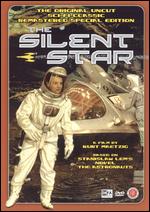
 , dir. Bruce Clark (1981) – it’s plain from the start of this film that Roger
 (and, I suppose, Alastair Reynolds’
  ). The ending comes as a real surprise. James Cameron, incidentally, was a unit director on this film, and responsible for some of the production design.
 , dir. Luc Besson (1983) – an early film by the director of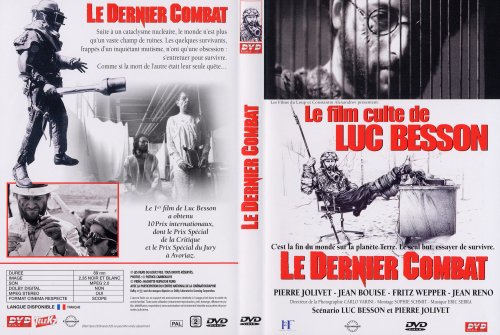
 , dir. Jean-Pierre Jeunet & Marc Caro (1991) – this has been a favourite of mine since I first saw it back in the early 1990s. It’s another French post-apocalypse film. An ex-circus performer moves into an apartment block owned by a butcher. He’s intended to be the residents’ dinner – food is extremely scarce – but the butcher’s daughter falls in love with him and helps him escape. Sort of. There’s a superb set-piece in which one resident tries to commit suicide. And fails. A wonderfully strange film.
 , dir. Wim Wenders (1991) – there’s not much more I can about this film that I haven’t already said
  , dir. Robert LePage (2000) – I vaguely recall buying this because it looked quite interesting. It proved to be a cleverly-done and subtle sf film. The film opens with a murder – a man is found dead, his brain missing. He proves to be only the first such victim. The film shows how the murder came about – it’s all to do with alternate realities. Beautifully shot and acted, the ending perhaps lets the film down, but it’s definitely worth seeing. It’s apparently based on a stage play, which was adapted for the cinema by the author.
 , dir. Mamoru Oshii (2003) – Oshii is better known for anime, but this is a live action film. Shot in Poland. With a Polish cast. It’s one of those films which opens with jaw-dropping visuals, and whose story – while not entirely original – doesn’t let the film down. Some time in the near-future, people are addicted to a VR war game. One player, Ash, hears of a secret level and tries to find it.
 , dir. Byung-chun Min (2003) – this is a Korean film and, like
  are deliberate and overt. And, like
  in it. Plus, of course, some excellent fiction by Jeff Spock, Jason Sanford, Mercurio D Rivera, Aliette de Bodard, Gord Sellar and Alexander Marsh Freed.
 . Like many of the books I chose for my challenge, I knew almost nothing about it. I knew it existed; I’d probably seen mention of it in various places, not to mention catching sight of it on the “classics” shelves in my local Waterstone’s. But I knew nothing about Ford – who he was, what part he played in English literature, or even what was the general reputation of
  … but it’s huge (I also own Anthony Burgess’
  , his study of, although there’s little point in reading about, unless I’ve read Joyce, Joyce, Joyce*).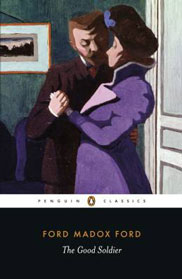
 remains the
  a
a  .
.
