It Doesn't Have To Be Right…

… it just has to sound plausible


12 Comments

Reading Challenge #12 – Stranger in a Strange Land, Robert Heinlein

I first read Stranger in a Strange Land back in my early teens, twenty or more years ago. I think I may have read it more than once during that time. I vaguely recall being aware of the book’s reputation, but not entirely understanding why it had such a reputation – I enjoyed it, but I thought other Heinlein novels were better. My opinion of Heinlein’s oeuvre has changed considerably in the decades since then, and according to my records the last book by him I read was in 1996. And that was a reread of I Will Fear No Evil. Well, yes, I did read Starship Troopers last year, but I didn’t read it for enjoyment, so it doesn’t count – see here.

Throughout my science fiction reading career, Heinlein has never been a favourite sf author, although I’ve read around two dozen of his books, many of them more than once. I also owned around a dozen of them – although I purged my book-shelves of all but a handful early last year.

Which is a long-winded way of saying that, despite its reputation, I had relatively low expectations for this reread of Stranger in a Strange Land. Heinlein’s 1940s somewhat patronising dialogue-heavy prose style no longer appeals to me; his politics certainly don’t appeal. So what to make of the sf novel that, along with Dune (a personal favourite) and The Lord of the Rings (I really should reread it one of these days), was beloved by college students around the world in late 1960s and 1970s?

First, the plot. A mission to Mars comes a cropper, and a second mission sent twenty-five years later finds a single survivor living among the Martians: Valentine Michael Smith, the son of two members of the first mission’s crew. They return him to Earth. Smith is Martian in all but physiology, and he introduces his Martian way of thinking to the people around him. He also proves to have “magical” powers. For a while, he stays with Jubal Harshaw, a cantankerous multi-millionaire, who has opinions on everything. Smith leaves him to see more of the world – well, the USA of the time – and then creates a charismatic church. But society at large – well, the society of the USA of the time – does not want to hear his “message”, and he is torn apart by a mob. His church and message survive in his followers.

So. The good stuff. Stranger in a Strange Land is surprisingly readable. Heinlein’s prose is like beige – it’s not colourful, it doesn’t stand out as either good or bad. Some people think all novels should be written in beige prose. I happen to think that’s a waste of English. Why does the language have such a large lexicon if all you’re going to use are the blandest words in it?

That readability may well be because so much of the book is dialogue. A reader doesn’t need to exercise their imagination as much for dialogue as they do for descriptive prose. Sadly, for a book originally published in 1961, the dialogue in Stranger in a Strange Land sounds like it’s straight from some 1940s screwball rom com. In fact, the whole book reads as though it were written twenty years earlier. Nor is it really science fiction. Michael Valentine Smith may be a survivor from a mission to Mars, but there are sections of the book set among angels in heaven. And Smith’s powers are pretty much magical.

And then there’s the politics… Which is sort of Rand lite. But with sexual liberation and some distinctly dodgy 1950s gender politics. Heinlein, many will tell you, was a proto-feminist – and yet one female character, Jill, in Stranger in a Strange Land says, “Nine times out of ten, if a girl gets raped, it’s partly her fault” (p281). This is after two pages of her ruminating on why she enjoys showing off her body to dirty old men and why it is A Good Thing. As is, apparently, pornographic depictions of women.

Stranger in a Strange Land is also apparently a satire – it says on the back-cover of my 1980 NEL edition: “a searing indictment of Western Civilization”. All I found it in were a few off-the-cuff observations of the sort found in a some channel TV sitcom, and a made-up church that owed more to 1920s carnivals than it did to organised religion. In fact, Smith actually joins a carnival for a while after leaving Harshaw’s mansion – but this is a an old-style carnival, rather than simply a travelling funfair.

Incidentally, I couldn’t find a copy online of my NEL edition’s cover art, hence the current Hodder edition shown above. Still, look at that hyperbole “the Hugo-winning bestseller they wanted to ban”.  It doesn’t say who wanted to ban it – lovers of good literature, perhaps. If it was some religious group – well, don’t forget one such group also wanted to ban Watership Down, a book with a cast of rabbits.

Heinlein’s characterisation never stretched much beyond Competent Man and Perky Female, but in this novel he also manages Dim-Witted Innocent – science fiction’s very own Forrest Gump, if you will. Except Valentine Michael Smith, the Man from Mars, is a Magical Forrest Gump. There are a couple of feeble attempts at passing off his powers as ESP, but I’m not aware of any previously-documented psionic power which makes clothes disappear – telecdysiasism, perhaps? The many mentions of the Martian “Old Ones”, who are “discorporated” members of that race but who still interact with the living, also read more like fantasy than science fiction.

I’d always pegged Heinlein’s later works – the 1970s and onwards – as his Dirty Old Man books, so I was surprised to see he’d actually started on that phase a decade earlier. In 1961, when Stranger in a Strange Land was first published, he was 54, so not really that old, but it’s plain that Jubal Harshaw is Heinlein. Admittedly, Heinlein was known for putting mouthpieces into his fiction, but Harshaw has to be the least subtle of any of them. He’s also, quite frankly, full of crap. He gives a lecture on modern art that is little more than ill-informed opinion. Indeed, some of the “facts” he spouts are anything but. Not to mention that, for all his much-vaunted egalitarianism, he’s nothing more than an old school capitalist patriarch.

Which makes Smith, the Magical Forrest Gump, something even worse. Perhaps in 1961, he might have been seen as something akin to a carnival freak, a “good monster”. But now, he’s more of a Charles Manson / David Koresh type figure – and Smith’s church, with its creed of nudity and group orgies, only makes the resemblance worryingly closer. I personally find little to admire, and much to condemn, in such cults, so a novel celebrating them is unlikely to find much favour with me. To be fair, Heinlein is innocent in that regard, as Stranger in a Strange Land predates both Manson and Koresh, not to mention Jonestown or Heaven’s Gate.

I knew before I opened the cover that reading Stranger in a Strange Land was not going to be fun. That’s one reason why this post is late. But I’d forgotten how downright irritating Jubal Harshaw is, how annoying his Heinlein’s female characters are – and how interchangeable: Harshaw has three “secretaries”, a blonde, a brunette and a black-haired one, but they might as well be the same woman with a few bottles of hair-dye; likewise the other women in the book. I’d also forgotten how stupid the whole concept of “grok” is. Try rereading the book, and substituting “understand” or “comprehend” for “grok”. The book is entirely unchanged.

In the history of science fiction, Robert Heinlein was undoubtedly an important writer, and Stranger in a Strange Land is one of sf’s few break-out books, enjoying success outside the genre. Like Rand’s novels, I suspect Stranger in a Strange Land is also a book read more for its politics and philosophy – it certainly can’t be for its prose, characterisation, or depiction of a near-future USA. And, again like Rand’s novels, there’s not much in there that appeals to me. Nor is it especially timeless. Stranger in a Strange Land reads like a novel of the 1940s, and feels wildly inappropriate in the twenty-first century.

I very much doubt I’ll ever read Stranger in a Strange Land again, but I think I’ll hang onto my copy for the time-being…


7 Comments

My Book-Shelves, A – J

I spent a couple of hours today sorting out my book-shelves – the ones holding the hardbacks, that is. And even then I only got as far the letter “K”. But now at least half the alphabet is correctly shelved. And here they are, the authors A – J:

Chris Amies, Brian Aldiss, AA Attanasio, Iain (M) Banks

Iain (M) Banks, William Barton (& Michael Capobianco), Stephen Baxter

Stephen Baxter, Chris Beckett, Michael Blumlein, Philip Boast

Philip Boast, Leigh Brackett, Keith Brooke, Eric Brown, Simon Brown, Anthony Burgess

Anthony Burgess, Cliff Burns, Richard Calder, CJ Cherryh

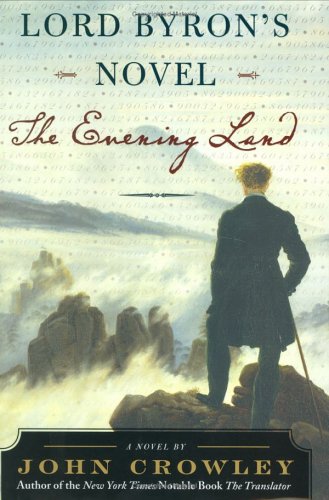
CJ Cherryh, Ted Chiang, John Clute, Mike Cobley, Gary Couzens, John Crowley

John Crowley, Samuel R Delany, Philip K Dick, Thomas M Disch, L Timmel Duchamp, Lawrence Durrell

Lawrence Durrell

Hal Duncan (I know, alphabetically he’s before Durrell), Kelley Eskridge, Christopher Evans, John Fowles, Mary Gentle

Mary Gentle, Gary Gibson, Colin Greenland, Jim Grimsley, Ann Halam, M John Harrison

M John Harrison, Frank Herbert (the Dune books are shelved separately), David Herter, Robert Holdstock, Matthew Hughes

Rhys Hughes, Robert Irwin, Alexander Jablokov, John Jarmain, Paul Jessup, Gwyneth Jones


22 Comments

Science fiction: last bastion of the rational?

In 1930, Hugo Gernsback wrote, “Not only is science fiction an idea of tremendous import, but it is to be an important factor in making the world a better place to live in, through educating the public to the possibilities of science and the influence of science on life which, even today, are not appreciated by the man on the street.”

I’ve never subscribed to the view that science fiction should be didactic or predictive. To me, sf is a literary mode – not a teaching tool, not futurism. Yes, any science in a sf text needs to be accurate and rigorous, but it’s only there to enable the plot.

But.

Given some of the outright bollocks being perpetuated by the right in both the US and UK, I have to wonder if it’s time science fiction should play a didactic role. In the US, the education boards of some states are planning to remove all references to evolution from school textbooks. In the UK, some national newspapers repeatedly publish pieces claiming Anthropogenic Global Warming is nothing more than a conspiracy by a handful of scientists desperate for funding. (And just look at the outright lies perpetrated by far-right web sites such as the Conservapedia.)

Scientific conversation is being swamped by right-wing politics. The right does not believe in the politics of debate, but the politics of exclusion. They’re not presenting an alternative view, they’re telling you that their view is the correct one. Despite all evidence to the contrary. And they insist their view is correct because their view is the one that perpetuates their privilege. The right is oligarchic and its politics exist solely to maintain that oligarchy.

This is reflected to some extent in genre fiction. The rational worldview at the core of science fiction is disappearing from the shelves of book shops. Those shelves are now dominated by fantasy novels. And the politics of fantasy tends to the oligarchic and autocratic – all those empires and kingdoms, all those Peasant Heroes and Dark Lords. Mind you, much space opera and military sf is no different – and in many ways no less rational than fantasy. Perhaps this has been partly driven by media sf, which has been chiefly fantastical since 1977.

I put this down to a confusion over sf tropes. They’re not the be-all and end-all of the genre. They’re not setting. They exist to enable the plot. Incorporate them solely as background, as a pandering to the current desire for immersion in secondary worlds and… well, doesn’t that lead to readers turning their back on this world?

When Geoff Ryman founded the Mundane SF Movement in 2002, I saw it only as a bunch of sf writers throwing the best toys out of science fiction’s pram. When Jetse de Vries called for sf to be optimistic in 2008, I didn’t really understand as, to me, the genre was neither pessimistic nor optimistic.

But it occurred to me recently that these two attempts to change how science fiction thinks about itself are themselves symptomatic of the erosion of the scientific worldview in the public arena. By excluding the more fanciful, the more fantastical, tropes in sf, Mundane SF forces writers and readers to engage with known science and a scientific view of the world. And optimistic fiction, by focusing on “possible roads to a better tomorrow”, acknowledges that situations exist now which require solutions. It forces us to look at those situations, to examine the world and not rely on a two-thousand-year-old fantasy novel, or the opinions of the scientifically-ignorant, for our worldview.

I’m not suggesting all sf writers should immediately start writing their twenty-first versions of Ralph 124C 41+. Nor that all fantasy writers must immediately cease and desist, and write optimistic Mundane sf instead. What I am saying is, that as readers and writers of genre fiction, we should perhaps begin to question how the public perception of our world is formed, and refuse to perpetuate the same lies and inaccuracies. We must examine our world more rigorously, we must examine the worlds we create more rigorously.

I’m horrified by the thought of an entire generation thinking there must be a god because they cannot conceive of any other way for the Earth, or humanity, to have come about. I’m frightened that the nations of this planet will not work together to prevent the climate from crashing because they believe it will never happen. I’m scared that the world is turning into a place in which orthodoxy dominates all media. I don’t want to live in a world in which I am told what to think.

And yes, there have even been a few science fiction novels written about that very situation.


Leave a comment

Rounding off the round-ups

2009 has finished and 2010 has begun. Who knows what the next twelve months will bring? I do know, however, what the last few weeks brought. I may have done my Best of the Year (see here), but my last reading and watchings round-up was back on 8 December (see here). So, here’s a rundown of the books and films I consumed between then and the last day of 2009.

Books
Black Widow: The Sting Of The Widow, by many and various Marvel hacks, including Stan Lee himself (2009). Richard Morgan’s reinvention of Black Widow a couple of years ago (see here) piqued my interest in the character, and so I’ve trawled back through her history. This hardcover “premiere” volume contains some of Black Widow’s earliest appearances – from her origin as a Soviet spy who, for some strange reason, wore a mask, to the black-clad super-athlete with her “widow sting” bracelets. This is far from sophisticated stuff, but Black Widow has had a more interesting history than many Marvel characters.

Resistance, Owen Sheers (2007), was recommended by someone, but unfortunately I’ve forgotten who. Perhaps I just saw a positive review of it somewhere. It’s an interesting spin on an alternate history staple. The Normandy landings fail, the Germans invade Britain, and by 1942 the UK is an occupied country. Resistance is set in a Welsh valley, where a Wehrmacht patrol has been sent on a mission. All of the men in the valley’s scattered farms have left, slunk off into the hills to fight a guerrilla war against the Germans. During the course of a fierce winter, the Welsh wives and German soldiers draw closer together and… Well, that would be telling. A nicely-written novel, although on occasion the prose felt like it wasn’t quite as strong as it needed to be. Worth reading.

Stranger in a Strange Land, Robert A Heinlein (1961). Yes, I know, I still haven’t written about this. Soon. I promise.

Minority Report, Philip K Dick (1987), or Volume Four of the Collected Stories. Which is not to be confused with any other PKD collection which might happen to be titled Minority Report. Still, at least it’s not as confusing as van Vogt’s collections… A couple of gems in this, but a lot of crap too. Strangely, I’d always thought of Dick as something of an outsider, not really a part of sf fandom, but one story in this collection, ‘Waterspider’, has sf writer Poul Anderson as the protagonist. All the same, it’s probably a book for completists only.

Fire Sale, Sara Paretsky (2005). One of the reasons I like Paretsky is because she wears her politics on her sleeve. This novel is no exception – evil Wal-Mart-like corporation treats the South Chicago poor like slaves, and no good comes of it. Perhaps Paretsky painted the wealthy as a bit too evil (and stupid), and the ending was bit too pat, but she always makes good points. I’m surprised no one’s thought to make a TV series of her books – although they did make a film with Kathleen Turner of one of the VI Warshawski novels.

Stone, Adam Roberts (2002), is only the second book I’ve read by Roberts, although on the strength of it I shall certainly read more. The narrator of Stone, Ae, is a rare criminal in a far-future interstellar utopian society. He is broken out of an inescapable prison in order to murder all the inhabitants of a world. But he doesn’t know why. And Roberts does not reveal why until the end of the book. A nicely-paced narrative, with an interesting narrator. There are some good ideas in the book too – fast-space (the Local Bubble, perhaps?), the solitary mode of FTL, the various worlds Ae visits… Not sure about the nostril-sex, though. Or some of the terms in the glossary: “span-ton”? “spik-en-span”?

Collected Poems, Richard Spender (1944). Spender is another World War II poet who didn’t survive the war. He’s less well-known than Bernard Spencer (see here), and probably even more obscure than John Jarmain (see here, here and here). But, well, he’s not very good. There are one or two good poems in this collection, but most of them are pretty forgettable.

Films
The Handmaid’s Tale, dir. Volker Schlöndorff (1990), I watched simply because I’d read and liked the novel (see here). The film is low-budget and it shows, but is nonetheless done well. Perhaps not everything in it was how I’d imagined it – for some reason, I thought the novel took place in a small town rather than a large city – but the world it showed certainly worked. A good film.

Pather Panchali, Styajit Ray (1955), is another film from the Time Out Centenary Top 100 Films. I can’t say I enjoyed it all that much. It was long, didn’t seem to have much plot, and was not very involving. Ah well.

Avatar, dir. James Cameron (2009), I saw at the cinema in 3D. What can you say about this film that’s not already been said? It looked fantastic, although perhaps its visuals owed a little bit too much to the cover art of various albums by Yes. The story, however, was rubbish – old-fashioned, with some cringe-inducing dialogue, racist (only white man can show blue man how to save himself), and in parts completely logic-free. The floating mountains, for example, clearly did so because they contained “unobtainium”. So why not mine them instead of blowing up the Na’vi hometree? And the great “warrior” of Clan Jarhead (i.e., Jake Sully), his best tactic against the attacking corporate forces is… a frontal assault. Against superior weapons. Fortunately, the planet steps in to save them all. Ah well. Avatar is by no means as colossally dumb as Star Trek XI, but a sf film with great visuals and a modicum of intelligence would be nice…

Crossing Over, dir. Wayne Kramer (2009), I watched to review for Videovista. See here.

District 13 – Ultimatum, dir. Patrick Alessandrin (2009), I watched to review for Videovista. See here.

Walled In, dir. Gilles Paquet-Brenner (2009), I watched to review for The Zone. See here.

Quantum of Solace, dir. Marc Forsters (2008), pleasantly surprised me. Its plotting is chaotic, and it looks like it was edited by someone with Attention Deficit Disorder. But it is eminently stylish, and some of the set-pieces are excellent. Bond leaves an astonishing trail of destruction behind him wherever he goes – were Sean Connery, Roger Moore or Pierce Brosnan ever this destructive? The anti-corporate politics were a bit old-fashioned, and the shadowy organisation which drove the plot felt as though most of it had been left on the cutting-room floor. But I liked Quantum of Solace better than Casino Royale.

Impostor, dir. Gary Fleder (2001), is yet another film adaptation of a Philip K Dick. Something about Dick’s fiction seems to appeal to Hollywood – I believe he has had more works adapted than any other sf writer. Admittedly, few of the adaptations much resemble their original source texts. I’ve not read the short story, also called ‘Impostor’, on which this film was based, so I can’t say how successful an adaptation it is. But its story is certainly Dickian. Spencer Olham is a weapons researcher who is fingered as a Centauri walking bomb – the unseen alien Centauri have replaced Olham with a replicant, who thinks he is the real Olham, and who will explode when he meets the Chancellor on a planned visit by her. Olham is arrested by the secret police, but manages to escape. And it’s a straight run from there to the final twist.


1 Comment

Best of the Year Addendum

I’ve already done my best of the year blog post – see here – and picked my top five books, films and albums. But as I write this, I’m listening to an album I really should have listed in my honourable mentions. So I’m going to mention it now.

The album is The End Of The Line and it’s by Necropolis, a British death metal band from the 1990s. Formed from cult Newcastle thrash band Atom God and Oxfordshire death metallers Gomorrah, it’s real Old School NWOBHM-influenced death metal. The End Of The Line is their own only album and also features some guitar-work by Fast Eddie Clarke. In fact, the guitar-playing throughout is bloody impressive (although I’m not sure which is Clarke, and which is band-members Billy Leisegang or Keith More).

And just look at the lovely cover-art.


9 Comments

Make It Real Not Fantasy

Science fiction is apparently dying, or at the very least it will die unless it changes. Mark Charan Newton says that as a commercial literary genre, sf has had the crap beaten out of it by fantasy and now lies bleeding on the floors of book shops around the English-speaking world. Jetse de Vries says he’s not surprised sf is declining because it’s lost its relevance.

Lots of other people disagree.

I can’t deny that written fantasy appears to be in ruder commercial health than written sf. Nor do I think modern science fiction is especially relevant.

But.

These days, sf is more of an entertainment genre, a cross-media genre. And while that’s true, written sf will live on. After all, the vultures have circled overhead before, but it’s still here. For some people, cinematic spectacle, FPSs set in post-apocalyptic wastelands, and spandex-clad loons singing about space unicorns are not enough. They need a regular fix of the pure strain: the written form.

But even as a written genre, sf covers a wide field. The interesting, exciting stuff – the smart stuff – has always been a minority within sf. The populist stuff has always been, well, the most popular. Obviously. All that’s really changed is that much of the populist sf is now media-driven. As sf fans, we like to think that we’re smarter than the average reader – all those Big Ideas, the universe our playground, science… But sf readers are no different to mainstream readers. The majority like escapism, mind candy; they don’t want to think too hard while slurping down their tales of spaceships and robots. They want colourful tales and bright futures. Which just happen to be set in galactic empires or on alien worlds.

It has always been thus.

Which means that sf as a whole has never really been especially relevant. It’s not becoming “increasingly irrelevant” as Jetse would have it, because it’s only a small proportion of the genre which has ever tried to be relevant. Of course, increasing the size of that minority, making more of the genre relevant, is certainly worth doing, and is something I certainly think should be done.

Which is why I feel “Strange Sci-Fi” is a step backwards. Pretending it’s really fantasy, or disguising sf as fantasy, is not doing science fiction any favours. Sf has its own toolbox – why do we need to steal tools from fantasy? It not only obfuscates the story’s genre credentials, it often obfuscates the story itself.

What sf needs to be is real. We need Real SF. Not Mundane SF – there’s no point in throwing out the baby with the bathwater. The genre has a large catalogue of literary devices, from AIs to faster-than-light travel, and I see no reason why they can’t be used to populate the sf landscape. But they’re devices to enable the plot – not background, not setting, not colour.

There’s a lot we know about the universe, there’s undoubtedly a great deal more we don’t know. But that doesn’t mean sf should go backwards and unlearn what we do know. That way lies fantasy. It’s not just the authorial handwaving, or the bollocks science – if we’re calling FTL a literary device, some of either, or both, is going to be necessary. But I’m a firm believer in rigour. It has to be airtight, it has to be turtles all the way down. You don’t see mainstream authors winging it. Well, yes, all right, you do: Dan Brown makes it up as he goes along, and then claims it’s historical fact. But you certainly don’t see writers of literary fiction doing that.

For sf to show that it’s not at death’s door, it needs to up its game. It needs to ditch the dynastic struggles in galactic empires. It needs to boot the giant space crabs into touch. It needs to forget the kindergarten politics and early 19th Century science. There are ways to write about the Now using the tools of sf. The genre needs to take note of the world around it, and then write about it. If it wants to do so in a story set on an alien world, then fine. If the plot requires FTL in order to make a point about the Present, then no problem. The devices are there to be used.

There’s also the writing itself, of course. In this area too, sf covers as wide a range as mainstream fiction – from the top prose stylists to those whose lack of facility with the language is frankly embarrassing. But I think the bar needs to be raised across the entire genre. Likewise, for characterisation and other hallmarks of good writing.

I agree with Jetse that science fiction as a whole needs to become more relevant. I don’t agree that it’s dying, nor do I think making it relevant will necessarily re-invigorate it. But I’d certainly like to see a shiny new science fiction genre in 2010, one that’s healthier, more relevant, better-written, more insightful, and with much more rigour.

One that’s real.

How’s that for a New Year’s resolution?


1 Comment

A Post-Christmas Post

That’s one lot of festivities / commercial frenzy over. Next up, the New Year – a celebration of an entirely arbitrary point in time. Bah humbug.

I saw Avatar on Christmas Eve. It was… a spectacle. The 3D is excellent. The film looks beautiful, if a bit too much like the cover art from a Yes album. But the story is about forty years out of date – in plot and in its somewhat offensive sensibilities – and suffers from some dodgy logic and some even worse dialogue. Nevertheless, it is surprisingly involving for its length and, happily, the screen is not always so busy – as it is in many recent sf films – that you’re overwhelmed. Even more happily, it is not monumentally stupid, as Star Trek XI was. Worth seeing – worth seeing in 3D, in fact.

Christmas Day passed in the usual fashion. I watched the Doctor Who episode – the first of a two-parter to be completed on New Year’s Day. It was the usual mad logic-free rush to extend New Who’s mythology. First, they lathered on the angst – he’s the last of the Timelords. Then he drifts a little towards the Dark Side… But now the Master has been resurrected, so he’s not alone any more, and… oh wait, is that the Timelords? Where did they come from? Admittedly, I’ve never understood the logic behind the destruction of a time-travelling race – because they would be present throughout all history, not to mention aware of their destruction so they could avoid it…

Anyway, I have some good watching and good reading ahead.

I even lucked out on a couple of books for the 2010 Reading Challenge. Just before Christmas, I entered a Harper Voyager twitter competition… and won a mystery book. Which proved to be Magician by Raymond E Feist – one of the fantasy novels I’d selected for my reading challenge. So, ta very much to them. And on Boxing Day in a cut-price book shop, I found a copy of The Blade Itself by Joe Abercrombie for 99p, another book for the challenge.

I’m still working on the final 2009 Reading Challenge post on Robert A Heinlein’s Stranger in a Strange Land. It should be appear shortly.


1 Comment

Being Resolute

So, the year ahead… 2010, another science fictional year. This is a good time to think about my intentions for next year. Not resolutions – they exist to be broken. And not plans – that’s far too… fixed a word. Besides, plans always go wrong. These are things I’d like to do in the coming twelve months.

First up is the 2010 reading challenge. Each month I will read the first book of a modern fantasy series I’ve not read before, and I will write about it on this blog. Should be… interesting. Some I’m quite looking forward to; others I suspect are going to be hard work. See here for the full list of books I’ll be reading.

I also hope to read more mainstream books by selected authors – WG Sebald, for example… Michel Houellebecq… Kazuo Ishiguro… Paul Scott… I have a long list of them, anyway. I’d also like to tackle some of the sf series I have sitting unread on my book-shelves – The Marq’ssan Cycle, L Timmel Duchamp; Bold As Love and its sequels, Gwyneth Jones; Destiny’s Children, Stephen Baxter; Canopus in Argos: Archives, Doris Lessing… Again, I have a list. There are also a lot of other sf novels by assorted authors which I’d like to read. Yup, there’s a list. And I’d like to be a bit more regular in reading and reviewing books for my Space Books blog.

On the writing front, I have several intentions. I’d like to submit at least one short story a month to magazines. I’d also like to finish one story a month, although that may be beyond me. Because I’ll have other projects on the go – specifically, a new novel-length piece; although, I’ve yet to decide which particular one. Of course, I’ll be majorly chuffed if I sell a novel in 2010. I shall certainly do all I can to make that more likely. I’d also like to sell more stories in 2010 than I did in 2009. I can improve my chances of that by writing more and better, and submitting more.

Conventions… Sadly, I’m not going to the Eastercon in Heathrow. I do plan to attend alt.fiction and Fantasycon. I’ll definitely be at the latter – that’s where they’re launching Catastrophia. I’m also considering NewCon5 and Novacon 40. But we shall see…

I shall, as I have for the past couple of years, attempt the gig-a-month. Didn’t quite make it in 2009, and so far 2010 isn’t looking like it’s going to be too good for live music. Having said that, 2009 didn’t start off too auspiciously either, but it did pick up around April / May. There’s always Bloodstock and Damnation, anyway.

I think that’s enough for the time-being. I don’t want to tempt fate too much, and we all know which road is paved with good intentions. Things will happen, or they won’t. As they say in the Arab world, “life is like a cucumber…”


9 Comments

That Was The Year That Was… 2009

Well, 2009 was certainly a year to remember – for both good and bad reasons. Three of my stories were published, and my employer made me redundant. Some of my favourite authors had new books published, and I discovered some authors new to me and who I intend to continue reading. I saw some of my favourite bands in concert – some of them for the first time. And I watched a whole bunch of films – although only two of them at the cinema, and those I didn’t rate all that highly (for the record, they were Star Trek (see here) and Watchmen).

Books
Up to December 20, I’ve read 185 books in 2009 – down on last year’s total of 213. Admittedly, I did read less graphic novels this year (only 36, compared to last year’s 54). I might be getting a bit tired of the form – certainly, I went off a couple of superhero titles I’d previously enjoyed. Having said that, I did discover both Orbital and The Chimpanzee Complex, sf graphic novel series translated from the French and published by Cinebooks. They’re much more to my taste. I also read a number of novels by non-genre authors, more than I had done since leaving the Middle East and being reliant on a subscription library for reading material.

The reading challenge this year proved educational, if not entirely entertaining. I reread books I remembered as good books from my early years as a fan of science fiction. While it gave me a chance to revisit sf novels I see quoted all over the tinterweb as “classics”, it did often seem I was poisoning my childhood memories of those books. Few of them I now remember as fondly as I had done before starting the reading challenge.

My actual reading broke down as 35% science fiction and 14% mainstream – plus assorted other genres. So just over a third of my reading this year was sf – compared to more than half last year. Admittedly at least half a dozen books I read I’ve classified as mainstream, because they were published as such and written by mainstream authors… even though they are sf novels. Books such as Never Let Me Go by Kazuo Ishiguro, Atomised by Michel Houellebecq, and… well, they all got honourable mentions so you can see the titles below.

But on with the actual best books of the year…

The Caryatids, Bruce Sterling (2009). I’d planned on purchasing this but I was sent it to review by Interzone. I also had to interview Sterling. The results can be found in Interzone #221. Suffice it to say, The Caryatids is a return to form after the disappointing The Zenith Angle. In fact, it could be Sterling’s best book yet. There are more ideas in The Caryatids than many sf authors have in their entire career. There’s also a great deal of relevance in it – something many sf authors never manage in any of their novels.

Spirit, or the Princess of Bois Dormant, Gwyneth Jones (2009). I admit I’m a fan of Jones’ writing, so it’s no surprise to find it was one of my best books of the year. It’s a smart literary sf novel cunningly disguised as new space opera. I wrote about it here – and yes, that is a positive review.

The Discovery of Heaven, Harry Mulisch (1992), I read after reviewing the film adaption for VideoVista (see here). A good film adaptation should, I think, encourage you to read the source novel, and that’s what this film did for me. The book proved to be just like the movie, but, well, more. Mulisch is one of the Netherlands’ big three post-war writers, and The Discovery of Heaven is his most popular and successful novel. It’s a long rambling story about the friendship between two men, about religion, about philosophy, about God’s compact with humanity… about a whole bunch of stuff, in fact. It is eminently readable, entertaining and thought-provoking. I lent my copy to a Dutch friend, who loves the book in Dutch but wanted to see how well it read in English.

Carrying the Fire, Michael Collins (1974), was one of the books I read as part of my Apollo 40 celebration on my Space Books blog. I’d been told by several people that Michael Collins’ autobiography was the best of the astronaut (auto)biographies. They were right. Collins’ prose is excellent. An insightful and well-written book. My review of it is here.

Austerlitz, WG Sebald (2001), was my first exposure to Sebald’s fiction, although I’d fancied trying one of his books for a year or so. Written without paragraph breaks, and with dialogue often reported at second or third hand, I’d suspected Austerlitz might be a difficult read. Instead it proved extremely readable, and I was much impressed. I will certainly be seeking out more of Sebald’s work.

Honourable mentions this year go to… Atomised, Michel Houellebecq (well-written but bleak, wasn’t entirely convinced by the epilogue); Never Let Me Go, Kazuo Ishiguro (lovely prose, but a lack of confidence in the deployment of sf tropes); Journey into Space, Toby Litt (again, very nice prose, but somewhat old-fashioned as sf); The Handmaid’s Tale, Margaret Atwood (easily the most confident of the mainstream novels which are really sf that I read this year); The Hidden World, Paul Park (excellent end to a beautifully-written fantasy quartet which confounds genre expectations); Brain Thief, Alexander Jablokov (fine return to print after a ten year absence; tightly-plotted, oddball but likable characters; reviewed for Interzone #226); First on the Moon, the crew of Apollo 11 (has the most authority of any book on the first Lunar landing; review here); Cloud Atlas, David Mitchell (an interesting experiment that didn’t quite gel for me); and The History Man, Malcolm Bradbury (worth reading for the committee scene alone).

Films
In 2009, I watched 240 films, all but two on DVD. Many were rented. Those DVDs I purchased were unlikely to ever appear in this list, as I bought most chiefly crap sf films on eBay for a quid or so. But you probably already knew that from my Reading & Watching round-up posts. After much thought, I decided to expand my top five to six this year, because, well, because six films made the grade. And they are:

All That Heaven Allows, dir. Douglas Sirk (1955). For the last couple of years I’ve been working my way through the Time Out Centenary Top 100 Film List. Some of the titles I expected to find impressive cinema. All That Heaven Allows wasn’t one of them. Rock Hudson and Jane Wyman… Nineteen-fifties US melodrama… Not much there, despite my love of Hitchcock’s films, that’s likely to appeal to me. Or so I thought. So I was somewhat surprised to discover that I loved it. I loved the look of the film, I loved its irony, I loved its subtlety. I loved it so much in fact, I went and bought the Directed by Douglas Sirk boxed set. And most of the films in that set are nearly as good as All That Heaven Allows. Magnificent Obsession and Imitation of Life are close seconds; the rest occupy a respectable third place, although Written on the Wind is Dynasty dialled up to eleven and gets overwhelming after a bit. On the strength of this film, and the boxed set, Sirk has joined my favourite top five directors.

Lady Chatterley, dir. Pascale Ferran (2006). A French adaptation of DH Lawrence’s Lady Chatterley’s Lover. A faithful adaptation. Set in England. But in French. Right. It is not, on the face of it, something you’d expect to work especially well. And for the first half of the film, it does seem a somewhat typical languidly-paced French historical drama – although all the writing in the film, on shop-fronts and so on, in English adds a touch of strangeness. But there is a scene in Lady Chatterley, after Constance’s first sexual encounter with Mellors (Parkin in this film), in which she is walking through the woods, and the noises of the woods, bird-calls, etc, start to intrude, and then orchestral background music begins playing… and it completely transforms the film. You get a very real sense of Constance’s sexual awakening. And Ferran manages to maintain that mood for the rest of the film.

Daratt, dir. Mahamat-Saleh Haroun (2006). I’d enjoyed Haroun’s previous film Abouna, enough to put this one on my rental list. I like world cinema, and while I don’t have any especial preference for one region over another I do have a soft spot for Arabic films. Haroun, however, is Chadian. Which is sort of nearly but not quite Maghrebi. Anyway, Daratt proved to be a better film than Abouna. It’s a slow-burner – sixteen-year-old Atim heads for the capital, N’Djamena, to kill Nassara, the man who murdered his father during the recently-ended civil war. Unable to kill Nassara when he meets him, Atim hides his purpose and accepts a position helping Nassara in his one-man bakery. As he gets to know Nassara, so he finds it harder to take his revenge… A powerful film.

The Yacoubian Building, dir. Marwan Hamed (2006). There are some films you watch because you suspect they will be “good” without actually being very entertaining. I was aware of Alaa Al-Aswani’s novel of the same title, and I had a vague intention to read it one of these days, as I do enjoy Arabic fiction. Which was one of the reasons I rented this film. And… it was not at all what I was expecting. Its story is painted on a much bigger canvas and covers much greater topics than I’d expected – the clash between democracy and Islamism, women’s roles in Egyptian society, homosexuality, government corruption… I’ve seen a few Egyptian films before, and most of them are over-acted, over-played soap operas or comedies. But The Yacoubian Building is well-shot and well-acted. Now I definitely want to read the book.

In the Dust of the Stars, dir. Gottfried Kolditz (1976), is one of four films produced by East German studio DEFA during the 1960s and 1970s. Of the four, three are available in the DEFA Sci-Fi Collection – the earlier Der Schweigende Stern (1960, The Silent Star (AKA First Spaceship on Venus)), Eolomea (1972) and Im Staub der Sterne (AKA In the Dust of the Stars). Another, Signale – Ein Weltraumabenteuer (1970, Signals: A Space Adventure), is not yet available on DVD (I want a copy, of course). A spaceship from Cynro lands on the world of Tem in answer to a call for help. The Temians treat the Cynro crew to a party – which has to be seen to be believed – and insist nothing is wrong. But one of the Cynro cosmonauts is suspicious, and discovers the secret of Tem. The production design is sort of 1970s television sf, but bizarrely different. The plot is more science-fictional than most Hollywood films manage, but it still feels weirdly off-kilter. I thought it was great.

Let The Right One In, dir. Tomas Alfredson (2008). I feel like I ought to have at least one recent film in my top five, but – what a surprise – it’s not a Hollywood film. Since it’s Swedish, I suppose it qualifies as “world cinema”, although it’s actually a horror film and was marketed as such. It’s an adaptation of the novel Låt den rätte komma in by John Ajvide Lindqvist, a vampire novel. I’m not a big fan of vampire films, and especially not of the Anne Rice doomed romantic hero school of vampire rehabilitation. The vampire in Let The Right One In may resemble a twelve-year-old girl, but she’s a scary predator all the same. The film never lets you forget it. The ending is perhaps a bit obvious, but the journey there certainly isn’t.

Honourable mentions? Well, the rest of the Directed by Douglas Sirk boxed set for a start. But also: The Baader-Meinhof Complex (perhaps makes the eponymous group a little too sympathetic, ); WALL-E (great first half, rubbish second half); The Piano Teacher (the best of the films in the The Michael Haneke Collection, although all are excellent); Robinson Crusoe on Mars (makes a surprisingly good fist of the story… for most of its length, anyway); The Sheltering Sky (made me want to read the book; which is now on the TBR pile); and the contents of boxed sets by François Ozon (not to mention the supreme silliness that is his Angel) and Lukas Moodysson.

Albums
A tricky one this. Only a few of my favourite bands had new albums out in 2009. However, I did discover some new bands, so that’s all right. I attended eleven gigs, so I didn’t quite make the gig a month average. I didn’t make it to Bloodstock this year – the line-up didn’t interest me… although at the last minute they went and added half a dozen bands I would have liked to have seen. Ah well. Maybe next year. I did attend one festival, however – Damnation, at the Leeds University Student Union. Where I got to see some great bands – Anathema, Mithras and Akercocke.

But here are the albums:

Imidiwan: Companions, Tinariwen (2009). I’ve liked Tinariwen’s music since seeing them on a documentary about the Desert Festival six or seven years ago. This year I got to see them live for the first time. They were excellent. As is their new album, Imidiwan: Companions. Stand-out track is the heavy bluesy ‘Tenhert’.

As Night Conquers Day, Autumn Leaves (1999). Autumn Leaves, despite their name, are a death metal band. From Denmark. They formed in 1993, but split in 2001 after releasing two albums. As Night Conquers Day is the second of those albums. It’s progressive death metal, but also quite melodic. I’ve been playing it a lot.

Lexicon V, DesolatioN (2007). I’ve had a sample track from DesolatioN’s Lexicon V for a while, but I’d not listened to it much. Then this year I replaced my 4 GB Samsung Yeep with a 120 GB iPod… which meant I could carry my entire MP3 collection about with me. Including that DesolatioN track. And it kept on popping up when I set the iPod on shuffle, and I started to really like it. So I bought the album (from here). And it’s bloody good. It’s a mix of death and progressive metal – as opposed to progressive death metal – and it works really well. It’s been getting lots of plays.

A New Constellation, NahemaH (2009). Unlike their previous album, The Second Philosophy, NahemaH’s A New Constellation was not a “grower”. I was already a fan of their music, so I loved this from the first listen. Great metal soundscapes, with melodies buried in them – predominantly progressive death metal, but there are other genres in there too. Good music to work too, and good music to just lose yourself in as well.

Those Whom The Gods Detest, Nile (2009). Each time Nile bring out a new album, I buy the limited edition. For Annihilation of the Wicked (2005), it was a collectible tin. For Ithyphallic (2007), it was a pyramid some ten inches high. And for this year’s Those Whom The Gods Detest it’s a seventeen-inch-long sarcophagus. Musically, there’s no mistaking Those Whom The Gods Detest as anything but a Nile album, but it also seems a more varied, and yet more coherent, album than the last two. One of my favourite Nile tracks is ‘Wrought’ from their first EP, Festivals of Atonement. Those Whom The Gods Detest reminds me a lot of that track.

Honourable mentions this year: Across The Dark, Insomnium (new album by Finnish death/doom stalwarts; not as good as the preceding Above the Weeping World, but a good album nonetheless); Shin-Ken, Persefone (another excellent concept album, of sorts, by Andorran – yes, from Andorra – progressive death metallers); Anno Domini: High Definition, Riverside (Polish progressive rock band, who get better with each new album); and Metamorphosis, Magenta (a band new to me in 2009, discovered at the Classic Rock Society’s Best of the Year Awards in January – they performed live, and then won Best Band – this is polished modern prog rock).

Finally, I must mention the new project by Jussi Hänninen and Tuomas Tuominen from the disbanded Fall of the Leafe. It’s called Wait, Stone and Sure. They’ve uploaded some demos to their MySpace page here. It’s not as metal as Fall of the Leafe was, but it’s definitely by the same people. I hope they get a recording contract soon and release an album. I’ll even buy the limited edition…


7 Comments

New Host, Not So New Blog

Those of you who followed my blog at its previous address will have noticed that it was down for five days. This is because it was locked by blogger.com on suspicion of being a spam blog. In the civilised world, where people are innocent until prove guilty, the process would have gone something like this: blogger.com’s anti-spam bot flags a blog as a spam blog, a human checks the flagged blog and determines that it is indeed a spam blog or is perhaps a false positive. In the latter case, the blog is left untouched. But no, blogger.com prefer a more direct approach. Lock the blog and wait for the owner to complain. Yup, the blog owner is guilty, and must ask to be investigated in order for their innocence to be determined. They screwed up, and I had to beg them to fix their mistake.

So I have moved to WordPress. And I encourage anyone else on blogger.com to do the same.

As for why my blog was mistakenly locked as a spam blog… No idea. Blogger.com’s definition as a spam blog includes the phrase “…with a large number of links, usually all pointing to a single site.” So it could have been my Amazon associate links. Or it might simply have been that my name is Sales.

At the moment, and probably for the next couple of weeks, I will be moving in here, rearranging the furniture, repainting the rooms, etc… Undoing all of blogger.com’s nasty HTML, adding in all the widgets and links and stuff I had on my old blog… So this blog may change appearance a bit. Not to worry, the content will be just as it was. If that’s a good thing…