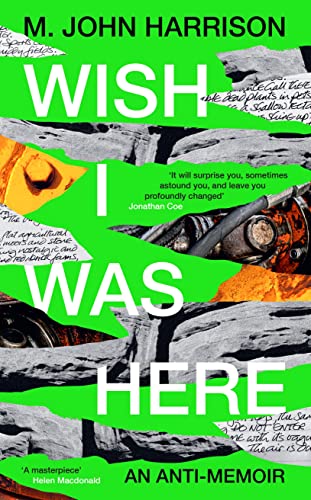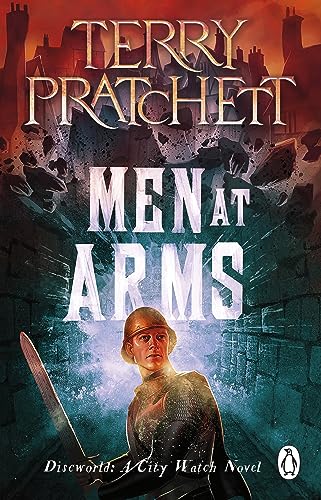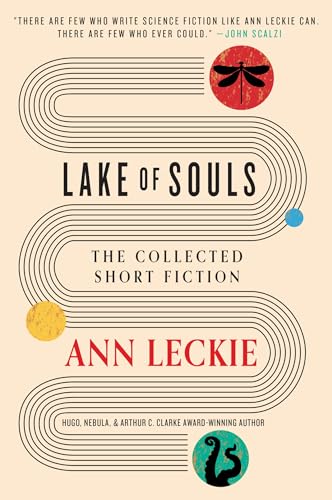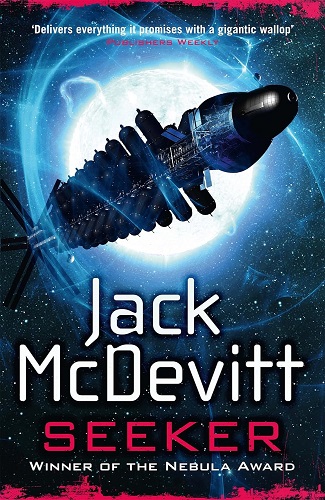
It Doesn't Have To Be Right…

… it just has to sound plausible


1 Comment

2020 – the best of the year

And what a year it’s been.

I refer, of course, to the pandemic. And Brexit. And Trump.

Admittedly, the last didn’t impact me at all. And I was sensible enough to flee the UK before Brexit.

Then there’s Covid… When you look at the low number of deaths in Asian nations, it’s clear no Western nation has handled the pandemic well. While Covid has been the most documented pandemic in history, it’s also been the most politicised. The latter is never going to result in intelligent or useful commentary, especially during a time when so many Western nations are led by populist governments and the press actively lies and misinforms in order to serve its owners’ agendas.

But enough about Covid. I’m profoundly glad I didn’t have to experience it in the UK, but I have many relatives and friends there, so there’s scant relief in that. I deliberately fled the UK because of Brexit, and I do not for one single fucking minute regret that decision. BoJo’s mishandling of Brexit – an appalling decision, in the first place – has made my situation confusing at best, and difficult at worst. Don’t forget: Brexit hasn’t just affected everyone in the UK, but also every UK citizen currently resident, or who owns property, in EU member states. Not to mention all those who operate businesses across what is now the UK-EU border. It is a criminal enterprise, and everyone associated with it belongs in prison. There is no outcome which is better than remaining a member of the EU. And if you believe otherwise, then you are a fucking idiot.

But let’s not talk about 2020… Except, well, this post is all about 2020. Specifically, the books, films and music I enjoyed most during the year. I usually do two of these a year: one in June (see here) and one in December or January. Because, well, things change. Although perhaps not that much. The numbers in square brackets below are that item’s position in my June best of the half-year.

books
1 The League of Extraordinary Gentlemen: Tempest, Alan Moore & Kevin O’Neill (2019, UK) [1]. Moore has spent a lot of time exploring the history of UK comics, and not just in this property, which originally set out to explore early fictional heroes. But here the commentary on UK comic history is explicit, and even though married with the Shakespeare play of the title, it still hangs impressively together and provides a coherent commentary and story. I find Moore a bit hit and miss, although I don’t doubt he’s the smartest writer currently working in comics. This book is the best he’s done for a long time. One day, I must read his prose novels. I’m told they’re difficult…

2 Still, Adam Thorpe (1995, UK) [-]. I stumbled across Thorpe’s debut, Ulverton, by accident several years ago and was impressed. I put him down as a name to look out for when I was browsing charity shops. And subsequently read a couple of books by him. But it wasn’t until reading Still I realised how singular a talent he is. The book is framed as a spoken narrative by a second-tier British film director, who nonetheless is present for many of the great cinematic moments of the twentieth century, or at least knows the names involved. It’s an impressively sustained narrative, and a clear indication that although Thorpe is not a popular writer he has a voice that will continue to impress in decades to come.

3 Joanna Russ, Gwyneth Jones (2019, UK) [2]. Gwyneth Jones is a favourite writer. Joanna Russ is a favourite writer. This is almost a dream pairing. I know Jones is a sharp critic, I’ve read her criticism. But I was not so sure how she would approach Russ’s fiction. Happily, I need not have worried. Jones’s treatment of Russ’s career is factual and sympathetic. And extremely informative. Jones discusses Russ’s stories in relation to her life and career and the general shifts in science fiction occurring at the time. True, her essay on Russ in Imagination/Space does a better job on The Two of Them than this book does, but Joanna Russ is more of a career overview. Good stuff. Especially for fans of Russ.

4 Unholy Land, Lavie Tidhar (2017, Israel) [3]. Tidhar either writes alternative histories of the Jewish people, often involving Hitler, or sometimes only involving Hitler, or novels about superpowers made manifest in actual recent history. And sometimes he writes other types of science fiction. In Unholy Land, the Jews were offered land in central Africa after WWI, and accepted it. They called their country Palestina. A Jewish pulp writer based in Berlin returns to Palestina, and as he explores the country’s capital, and his past, so the history of Palestina, and the story itself, begin to unravel. It’s territory Tidhar has explored before – I’m pretty sure there’s an early short story buried in part of this novel – but Unholy Land is a much more effective treatment. His best yet.

5 The Pursuit of William Abbey, Claire North (2019, UK) [-]. North’s novel may sometimes wander a bit, but she shows an impressive degree of rigour in the treatment of her ideas and clearly puts a great deal of effort into her research. It pays off. Abbey is being chased by a shadow, after failing to save the life of a boy in late 19th-century Natal, and that shadow means he can now hear the truth in what people say. Unless the shadow catches him, in which case someone he loves dies. The British Empire have learnt to make use of people like Abbey, and he is co-opted into the Great Game. The premise is pure fantasy, but it’s treated like science fiction. North does an excellent job on its ramifications, and if the book tends to melodrama in places, it’s also an intelligent commentary on colonialism and imperialism.

Honourable mentions: Bridge 108, Anne Charnock (2020, UK) [5], set in a post-climate change UK where migrants and refugees are indentured labour, it’s technology-driven but smells uncannily like recent political changes; All I Ever Dreamed, Michael Blumlein (2018, USA), excellent collection by a writer I’ve admired for many years, who sadly died in 2019; Sorcerer to the Crown, Zen Cho (2015, Malaysia), Regency fantasy that makes a good fist of its setting but perhaps leaves a few too many bits of the plot unexplained; Skein Island, Aliya Whitely (2019, UK), women-only island retreat keeps one of the Greek fates in check, and so allows men the freedom to be themselves, but then the retreat is destroyed, resulting in a somewhat off-centre literary fantasy; Redemption in Indigo, Karen Lord (2010, Barbados), Senegalese-inspired fantasy that may not be hugely original but has bags of charm; The Green Man’s Silence, Juliet E McKenna (2020, UK), third instalment in an urban fantasy series, and probably the best yet; The Sinister Mystery of the Mesmerizing Girl, Theodora Goss (2019, USA), third and sadly final episode in the adventures of the Athena Club, a group of female Victorian fictional characters, and I like the fact the books are explicitly framed as the written-up adventures of the club, including commentary on the narrative by the characters.

films
1 Blue, Derek Jarman (1993, UK) [1]. It probably says something about the sort of year 2020 has been that my pick for best film is 79 minutes of a single unchanging shot of International Klein Blue accompanied by a voiceover by Nigel Terry. But I could listen to Terry’s voice for hours. And Blue is such a perfect endpoint to Jarman’s remarkable career, an encapsulation of the life of a man who was more than just a film-maker, whose art defined an aesthetic and possibly a country’s cinema (more so than Richard fucking Curtis does). The BFI have released two Blu-ray collections containing all of Jarman’s movies. I urge you to buy both box sets. He made some remarkable films and they’re worth watching.

2 Kaili Blues, Bi Gan (2015, China) [-]. Although this film is not unlike those made by Sixth Generation directors, as far as I know Bi does not belong to that group. Yet Kaili Blues has all the hallmarks – a simple and yet very personal story, told in a a very stripped-back way. The centre of the film is a 41-minute single take, which is not only a remarkable piece of film-making, but also makes extensive use of the stunning Chinese geography in the area. It is a less overtly political film than those made by most Sixth Generation directors, but its commentary remains effective all the same. A man tries to discover the fate of his nephew, and ends up in a village where past, present and future co-exist. But not in an obvious way. A beautiful-looking film.

3 Capernaum, Nadine Labaki (2018, Lebanon) [2]. A young Lebanese boy sues his parents for having him, which is merely the entry to a story of child brides, indentured labour, refugee abuse, and Western imperialism. Everything in Capernaum is true, everything in Capernaum is the consequence of the foreign policies of centre-right and right-wing Western nations, everything in Capernaum should be condemned by anyone with an ounce of humanity. I was surprised I’d not heard of this film, and I’m familiar with Labaki’s previous movies, but given its subject perhaps that’s not so surprising. Capitalism does not work, the current world order is broken. We need more films about its victims. Capernaum is a beautifully-made and important film.

4 The Chant of Jimmie Blacksmith, Fred Schepisi (1978, Australia) [-]. If Capernaum suggests that things might change for the better, The Chant of Jimmie Blacksmith demonstrates they won’t. It’s a heart-breaking movie, set in late nineteenth-century Australia. Which is probably all that needs to be said. Australia’s history of race relations, especially with its indigenous people, has been far from exemplary. Jimmie Blacksmith, who is half-Aboriginal, accidentally kills a white woman after his white wife is persuaded to leave him, and subsequently goes on the run. The film show cases both Australia’s landscape and its systemic racism. The Chant of Jimmie Blacksmith may be set at the turn of the twentieth century, but more than 100 years later it often seems little has improved.

5 Twin Peaks: A Limited Event Series (2017, USA) [4]. I loved Twin Peaks. It started out as a perfect pastiche of US daytime soap operas, before heading off into some very strange territory – which was not entirely unexpected, as I’d followed David Lynch’s career for several years. For all that, the last thing I thought the series needed was a third season, especially one made 27 years after the last season. But… it not only worked, it was brilliant. It recapitulated the strangeness of the original, it advanced the plot, it remained just as fucking strange. It also looked gorgeous. It didn’t answer any of the questions left over from the  original two seasons, but it was clearly never intended to. It was, as the UK branding makes abundantly clear, a “limited event”. I think this may be a good strategy for TV series.

Honourable mentions: Hara-kiri: Death of a Samurai, Miike Takashi (2011, Japan), a remake of a 1960s film about a samurai forced to commit hara-kiri and the man who avenges his death; Run Waiter, Run!, Ladislav Smoljak (1981, Czechia), amusing comedy in which a man supplements his income by posing as a waiter in various restaurants and taking diners’ money, and gets so good at he becomes a folk hero; Sami Blood, Amanda Kernell (2016, Sweden), dramatic treatment of a Sami teenage girl turning her back on her culture, and encountering prejudice and racism as she tries to fit into 1930s mainstream Swedish society; Rift, Erlingur Thoroddsen (2017, Iceland), a man goes to stay with an ex-boyfriend who is holed up in a secluded cabin, but someone has been prowling around the cabin, and then things start to get really strange; Dodsworth, William Wyler (1936, USA), classic Hollywood melodrama of the period, with a razor-sharp script. Heckle, Robbie Moffatt (2013, UK), extremely low-budget UK film, set in Selby, about a woman who shows promise as a comedian; The Gardener, Mohsen Makhmalbaf (2012, Iran), beautifully-shot documentary about the Baha’i religion, especially in regards to a man who tends a Baha’i garden in Israel.

television
I’ve been doing a lot of box-set bingeing this year, so I decided to introduce this category. And, to be fair, the music category has been somewhat moribund these last few years.

Two of the series I watched this year were structured around the Tulsa Massacre of 1921. If it takes nigh on 100 years to comment on these horrible events in our popular culture, then perhaps we need to look again at our popular culture. Drama series about the Windrush scandal are not going to cut it in 2115. Get that shit out now, put it in front of as many people as possible, show them that the Tories are Nazis. Fascists shouldn’t have to storm the Capitol for people to take notice, especially when the evidence is there all along.

But, I digress. Or rant. One or the other. TV is a a more immediate medium than books or films. I suspect it’s also a more demotic medium than cinema or books, and so punches above its weight. It’s a medium that’s interrupted by what’s allegedly called news. Not if you box-set binge or stream, of course. But even so, we’re still at the point where a significant portion of the electorate have trouble accepting anything beyond the terrestrial channels… Which might not be so bad if the terrestrial channels had remained true to their charters, but they plainly have not.

1 Watchmen (2019, USA). I am perhaps in a minority in thinking the ending to the movie adaptation of Watchmen superior to the original comic book ending. And Watchmen, the TV series, was written by Damon Lindelof, best-known for Lost – which, when it wasn’t doing “backstory of the week” wasn’t all that bad, although it clearly wasn’t planned – and Prometheus, which is an appalling piece of writing. And yet, Watchmen is… seriously clever, both fitting within the world built by Moore and Gibbons and also extending it. Watchmen starts with police officers hiding their identities in order to protect themselves from Neo-nazi militias and then folds that into the universe of the graphic novel – which had much to say about fascist violence – before eventually dragging it back, as all things Watchmen-related must do, to Dr Manhattan. Smart television.

2 Lovecraft Country (2020, USA). I’d heard good things about this, but it didn’t sound like it would appeal as I’m not a fan of horror and, let’s face it, Lovecraft was a horrible fucking racist so it would take some fancy footwork to re-imagine him for a twenty-first century audience. Happily, Lovecraft Country sidesteps that problem by only referencing Lovecraft obliquely and – more controversially, for US TV at least – by basing it on black history. The end result is a mini-series that feels complete after two episodes, but still manages to keep the plot going for a further eight episodes. Nigerian/British actress Wunmi Mosaku stands out as Ruby Baptiste, and not just because her character comes across as the most rounded of them all. I didn’t expect to like Lovecraft Country, but I thought it excellent.

3 His Dark Materials (2019 – 2020, UK). An adaptation of Philip Pullman’s trilogy, which I read back in the 1990s – and the first book was adapted for the cinema back in 2007, but no sequels appeared after underwhelming US box office performance and public criticism of the movie from the Catholic Church… But I had fond memories of the books, and occasional rumours of adaptations kept me hopeful we’d see it gain eventually on big or small screen. This British TV adaptation, however, has proven really good – despite not having a $180 million budget – and the second season, which aired this year, is even better than the first.

4 Morden i Sandhamn (2010 – 2020, Sweden) This is a police drama set in a small village in the Stockholm archipelago, about 60 km east of the city centre. It’s all a bit chocolate-box, which is what I call TV designed to showcase the appeal of places, even if the stories involve murder. They are… comfortable. Sufficiently fictional not to upset prospective tourists who like the look of what they see. Like Midsomer Murders, which features murder but nothing so upsetting as brown people. Morden i Sandhamn wins hands-down on the scenery front, and it did have a tendency to reach for cliché at moments of high drama. But it had a likeable cast – that were not exemplary, it must be said – and it took some effort over its plots.

5 Murder Call (1997 – 2000, Australia). A police drama set in Sydney. It is… extraordinarily ordinary. If that makes sense. Its gimmick is that its chief detective, Tessa Vance, would subconsciously solve the case three-quarters of the way into the episode’s 45-minute slot. While the crimes the homicide squad investigated ranged from the banal to the bizarre, it was Vance’s epiphany that pretty much defined each episode. I’ve always had a soft spot for female detectives – my favourite crime writers are Sara Paretsky and Sue Grafton – and I’ve always much preferred police procedural TV series which feature female leads. Murder Call was very much a product of its time, but I quite liked the fact it made its central premise seem entirely reasonable and plausible.

Honourable mentions: Star Trek: Picard (2020, USA), Patrick Stewart is dragged out of dotage for one last mission, and it’s probably the smartest bit of writing set in the Star Trek universe ever put on screen; Scooby Doo! Mystery Incorporated (2010 – 2013, USA), the eleventh incarnation of the series, but the smartest yet, filled with clever references and in-jokes, including spoofs of David Lynch’s work: Beck (1997 – 2018, Sweden), definitive Swedish cop show, entertaining to see how it changed – and the genre changed – over a decade; The Mandalorian (2019 – 2020, USA), Star Wars fanfic TV series, never very convincing but it did have its moments; For All Mankind (2019, USA), alternate Space Race which, unsurprisingly, reminded me a great deal of a quartet of novellas by someone or other…


Leave a comment

Movie roundup 2020, #25

In 2020, I watched 380 films, of which 275 were new to me, 41 I’d seen several times before, and 58 I’d watched once previously. Most were streamed – I no longer subscribe to a DVD rental service (are they a thing in Sweden?); and I bought a grand total of nine Blu-rays (one is a box set) and two DVDs in 2020, not all of which I’ve watched yet. The movies were from 39 different countries, the top five of which by number of films were USA, UK, China, Italy and India. Ninety percent were directed by men, five percent by women, and five percent by more than one person. The most popular decade was the 2010s, followed by the 1970s and 1980s (equal), and then the 1990s.

I also binged on a number of television series – from Sweden, Australia, UK, China, USA and Canada. They were mostly either science fiction or police procedurals/murder-mysteries. I completed Stargate SG-1, Quantum Leap, Unforgettable, Wire in the Blood, and The Professionals. I can’t honestly say any of them were any good.

Eurovision: The Story of Fire Saga, David Dobkin (2020, USA). I didn’t want to watch this film. I don’t think Will Ferrell’s movies are very funny, and, well, Eurovision is a difficult subject to tackle and it means so many different things to so many different people. In the UK, it’s either ignored or celebrated as an excuse for a major piss-up; in Sweden, they have a month-long television contest just to choose who will represent the country. So my expectations were not high. But I’m also a sucker for movies about bands. Ferrell plays a monomaniacal Icelander who is determined to represent his country at Eurovision. Together with his childhood friend, Rachel McAdams, as the band Fire Saga, they submit a demo song to to the Icelandic pre-selection TV show… and are randomly added to the bill after another act is disqualified. But Iceland is pinning all its hopes on a singer (played by a US Pop Idol winner or something). Fire Saga’s TV appearance is a disaster. When all the other contestants are killed when the boat they’re partying on explodes, only Fire Saga are left to represent Iceland… The humour is played completely deadpan throughout. I find Ferrell annoying at the best of times, but there were some good jokes here (and some really bad ones too, of course). The flamboyantly gay Russian contestant was good, seeing Gunvald Larsson in another role was a bit weird, the elves thing was a bit odd at first but gradually improved, and some of other acts were impressively accurate pastiches of the real thing. Overly mawkish in parts, a bit too much moralising, never really laugh-out-loud funny, but better than expected.

Toy Story 4, Josh Cooley (2019, USA). I remember the fuss when the first Toy Story film appeared. True, it was ground-breaking. But did it need a sequel, never mind three sequels? To be fair, all four films have stayed true to the characters and setting. By the time the fourth film hit the screens, the shine had surely rubbed off. The characters and set-up are just too familiar, and it just feels like it’s going through the motions. There are a couple of good jokes, but it’s all very much a formula of its own making. The animation remains impressive, but there’s nothing here that’s, well, exciting or novel. It’ll appeal to fans because it’s all very familiar, but I admit my attention wandered a bit while I was watching it. Meh.

WW84, Patty Jenkins (2020, USA). The general reaction to this sequel has been one of underwhelm. It was a bit meh, but I think a lot of the criticism has been somewhat unfair. Rather than MCU’s bombast, it offers moralising, and yet there’s an immoral act at its core. The film opens with a young Diana competing in some sort of Amazon pentathlon, which she wins, despite being half the age of the other competitors. Quick cut to a shopping mall in 1984, and Wonder Woman foils a jewellery store robbery, but asks all the witnesses to keep her intervention a secret. By day, she works in the Smithsonian, where a colleague, Kristen Wiig, uncovers an ancient artefact with special powers – it makes wishes come true. Wiig wishes she were confident and popular like Diana Prince… and slowly gains Wonder Woman’s powers. Meanwhile, an ineffective con man has also learnt of the artefact, steals it and wishes its powers on himself – so he effectively becomes the artefact. And he uses his new-found power to greatly improve his lot, while inadvertently leaving chaos behind him. (I’ve known managers like that, and they didn’t need magical powers.) Wonder Woman, of course, makes a wish too – that her long-lost love, Steve Trevor, is returned to her. Which he is – in the body of another man. Which is… What happens to the man’s original mind? Where does he go? And replacing that actor with Chris Pine, so the viewer knows the character is now Trevor hides the fact it’s another man. Also, how did a WWI pilot know how to fly a 1980s jet fighter? (The invisible plane thing is silly, but it’s part of the Wonder Woman story, so why not include it?) Like the first Wonder Woman film, WW84 starts well, sags badly in the middle, and then falls apart in the final act. But the most puzzling thing about it is the decision to set it in 1984. I don’t remember anything in the movie specifically tied to that year. And there was certainly no reference to Orwell. Which would have been weird anyway. Nostalgia? No idea. WW84 has likely been dumped on more than it deserves, chiefly because it’s about a female superhero and it was directed by a woman. But I do like the fact the DCU films are very different to the MCU ones, even if the latter are starting to look like some sort of extended Robert Downey Jr vanity project in which he repositions himself as God.

Death to 2020, Al Campbell (2020, USA). A piss-take documentary on last year, focusing mostly on Trump, his mishandling of the pandemic in the US, and the UK’s equally appalling handling of Covid. If you lived through 2020, it does seem like a satirical recap of it is… unnecessary. If anything, a piss-take generally means you have no power to change anything. And we already know that’s not true, as Trump slinks out of the White House and, we fervently hope, off to prison. We can only pray a similar fate is visited on Boris Johnson and his corrupt government, not to mention the fat cats who have profited from the Conservative Party’s corruption. There are, I admit, a couple of laugh-out-loud moments in Death to 2020, and it’s certainly a good deal more true than anything that’s been broadcast or printed by the US and UK press over the past twelve months, or, of course, anything said by either Johnson or Trump. If I thought Death to 2020 would change anything, I’d be the first to praise it. But it won’t. It will make some people feel better about their powerlessness or inaction, but it won’t change minds. In a world in which someone uses the phrase “autonomy of opinion” to justify their irrational disbelief of a verifiable fact, it’s going to take more than a satirical film to overcome the astonishing stupidity of a significant proportion of the populations of the US and the UK.

When Marnie was There, Hiromasa Yonebiyashi (2014, Japan). Studio Ghibli seems to like adapting British children’s literature. There was Diana Wynne Jones, and The Borrowers, and now When Marnie was There, adapted from a 1967 children’s novel by Joan G Robinson, whose name, I must admit, was completely unknown to me. (Wikipedia describes When Marnie was There and later novels as “Young Adult”, but no such category existed then.) A twelve-year-old girl, Anna, goes to stay with country relatives of her foster parents after suffering a bad asthma attack. While exploring the countryside, she meets a precocious girl of the same age who lives in the local manor. Whenever Anna accompanies Marnie to her home. everything appears very old-fashioned, which strangely does not seem to register with Anna. The two become friends and have several minor adventures. But all is not as it seems – although the viewer should have little trouble figuring out what’s going on. Studio Ghibli often have a problem with mawkishness, but When Marnie was There manages – just – to stay the right side of it. I’ll confess I much prefer Ghibli’s less overtly genre films, but this one had that sort of gentle English children’s fantasy I couldn’t help by find appealing. A good film.

Two Weeks in Another Town, Vincente Minnelli (1962, USA). Washed-up and dried-out actor Kirk Douglas is flown out to Rome to work on a film directed by an old friend, Edward G Robinson, a US director whose career is also on the slide. But when Douglas arrives at Cinecittà, he discovers the producer has refused the additional budget for Douglas. Determined to make a go of it, Douglas accepts a lower position supervising the looping of the dialogue. (Most Italian films had the dialogue added in post-production, and, in the case, of non-Italian cast members, their voices were provided by Italian actor.) Confusing matters is the presence of Douglas’s  ex-wife, Cyd Charisse, who is now seen about Rome on the arm of some wealthy industrialist. Things come to a head when Robinson has a heart attack and hospitalised. Douglas volunteers to direct the film, despite having no experience, but does a good job. Robinson accuses him of betrayal. Douglas goes on a bender and nearly kills himself in car crash. The film is pretty much a two-hander – Douglas and Robinson – and they play off each other well. It’s also a very late-1950s to early-1960s drama. The Roman setting gives it an edge, and reminds me a little of Godard’s Le mépris, but this is also a Minnelli film and he was always very good at putting nice pictures up on the screen. A good solid 1960s drama, with an excellent cast.

Valhalla, Fenar Ahmad (2019, Denmark). A poor smallholding in Denmark is  visited one night by Thor and Loki. To feed the family and two gods, Thor slaughters one of his giant goats, but warns the family not to break any of the animals bones… So, of course, Loki tricks the teenage boy of the house into doing just that. And when Thor reanimates the goat the next morning using Mjolnir, the goat is lame. So Thor takes the boy to be a slave in Valhalla. But the daughter hides on the cart and is not discovered until they are halfway across Bifrost. It turns out there is a legend about a “Child of Light”, and it might be the girl – because she can control Fenrir, the giant wolf, currently running wild in Asgard. The two escape Valhalla with the help of an intellectually-challenged jötunn, taken as a slave earlier. Which triggers a war between the gods and the jötnar… Given the story, this is a surprisingly small film. There are no more than half a dozen gods, and slightly more jötnar. The interiors are far from grandiose – in fact, they’re caves. It looks a bit like LARPing, but it actually works as a movie. It’s the complete antithesis of MCU’s bombastic Thor movies, and all the better for it. Worth seeing.

Bilal: A New Breed of Hero, Khurram H Alavi & Ayman Jamal (2015, United Arab Emirates). Because Islam forbids representations of the Prophet Mohamed, films made about the early days of Islam have this weird hole in their centre. And this is certainly true of Bilal, which covers the life of Bilal ibn Rabah, one of the early Sahabah (disciples), who went on to become the religion’s first muezzin. Bilal was born a slave in Makkah, at a time when idolatry was the chief religion in the Arabian Peninsula. Bilal: A New Breed of Hero is hardly historically accurate – and even its opening deviates from the actual history of Bilal ibn Rahman, by showing him being taken as a slave child, rather than being born a slave. In terms of story, the film hits a series of fairly typical beats – rivalry with richest merchant’s arrogant son, taken under the wing of a wise mentor, and a powerful warrior… But then a man appears preaching equality and emancipation, and Bilal becomes one of his followers. Obviously, this is Islam. But it’s never mentioned by name, nor are any of its tenets given. The idol worshippers are painted as venal and deluded, and positioned as the enemy, leading to a war in the third act, but the good guys are a blank because they’re not categorically identified. It’s like The Lord of the Rings without the One Ring. I suspect the real history would be a lot more interesting, but it’s not a well-documented period – or rather, like another extremely popular book, the history has been compiled from a variety of sources, many of which were not writing until a generation or two after they had ended. An interesting film, although not entirely successful.


Leave a comment

Movie roundup 2020, #24

Just working my way through the last few films I watched last year. A very mixed bunch, from all over the world.

Mariam’s Day Off, Arshak Amirbekyan (2017, Armenia). This is apparently the second film I’ve seen by this director, and the first one was also just over an hour long. Mariam is a sex worker, who turns up to her patch one day to find it occupied by an old man. They get talking, and he reveals he has a friend who’s an artist, and would she like to model for him? There is nothing salacious in their discussion, nothing suspicious, so she agrees. And experiences an entirely different world, in which two old men in the arts enjoy each other’s company and treat Mariam with respect and courtesy. The next day, she returns to her patch, and she tells her fellow sex workers she did something different yesterday. Filmed in black and white, with a small cast, and only two locations – the sex workers’ patch, a stretch of fence outside a park; and the artist’s studio. Enjoyed it.

Inferno, Ron Howard (2016, USA). Who remembers Dan Brown, and his series of novels about a “symbologist” (sic), which were not only badly written but also managed to be badly researched? They were best-sellers, big enough in fact to justify a film series. True, the first book to hit the big time, The da Vinci Code, which was not Brown’s first novel, actually prompted the film series, and none of the sequels, or prequels, matched it in sales. But they still made films of them. And, really, it’s easy to like Tom Hanks, who plays the symbologist (sic). He’s a nice guy (and a huge space nut, which I think is great), but his involvement in these films really does make me wonder about him… I forget the plot of Inferno – it was something to do with Dante Alghieri, and I’m all up for popular culture being used as a vector for complex ideas, sort of like Sophie’s Choice. But Brown’s fiction is not that. It’s a dumbing-down of the complex ideas it robs wholesale from other sources. Which it freely mixes with complete fiction and downright distortions of history. And the films are no better. They replace Brown’s lumpen prose with polished visuals. Avoid.

The Third Wife, Ash Mayfair (2018, Vietnam). A fourteen-year-old girl is given in arranged marriage to a man with two wives in nineteenth-century Vietnam. Her status in the family depends on her providing her husband with a son. She is soon pregnant, but unfortunately gives birth to a daughter. Meanwhile, the second wife is having an affair with the son of the first wife. And when he is married off in turn, he reuses to accept his new child bride and she commits suicide. Meanwhile, the fourteen-year-old wife contemplates poisoning her daughter… I recognise this is real historical practice, but why turn it into drama? While sex trafficking and child brides still exists in some parts of the world, the former much more so than the latter, The Third Wife is an historical movie. It evokes its period impressively, at least to my untutored eye, but I’m not sure how its story maps onto the present day, and without that I don’t understand what the point of the film was. I mean, it’s not entertainment. This is no brainless popcorn action flick. It’s a commentary-free period drama.

Slave Widow, Mamoru Watanabe (1967, Japan). This is a “pink film”, which is a term used in Japanese cinema for films that contain sexual content. The title is… a pretty good summary of the plot, although the film is more of a domestic drama than anything salacious. A businessman dies unexpectedly, and it transpires his business was failing and he was massively in debt. His largest creditor offers to cover the debts if his widow will stay on in their house and sexual service the creditor when he desires. But the creditor’s eldest son, who is in training to take over the business, falls in love with the widow. It’s presented in a very mundane style, almost like Yasujiro Ozu, although without his eye for detail or elegiac quality. But the trap in which the widow is caught is laid out clearly, and she eventually takes the only way out. A  bit slow in places, and a bit obvious in others, but better than expected, or its title might suggest.

Rift, Erlingur Thoroddsen (2017, Iceland). A man receives a fraught telephone call from an ex-boyfriend who has retired to a remote cottage and, scared the ex-boyfriend might be thinking of taking life, he goes to see him. Something weird is definitely going on – a strange figure haunts the exterior of the cabin, one of the neighbours has been behaving oddly, and something peculiar happens in a nearby rift, a fissure no more than a metre or so deep, when they visit it. Any Icelandic film and your eye is mostly on the scenery, because it’s so distinctive and bizarre, and Rift scores pretty highly in that respect. But despite being a two-hander film, Rift also does a really good job of maintaining the suspense and fear throughout its 111-minute length. The ending is somewhat ambiguous, although unexpected. Worth seeing.

The Conversation, Francis Ford Coppola (1974, USA). Gene Hackman plays an expert surveillance expert who slowly discovers that a conversation he recorded of a woman and her lover doesn’t mean quite what he thought it did. Much is made of the fact Hackman’s character is generally considered the best in his field, although he despises self-promotion – as demonstrated by his reactions during a local surveillance tech expo and his treatment of a rival whose reputation rests more on promotion than results. There are a few inconsistencies – Hackman’s growing paranoia is fed by his privacy in his apartment being breached, but there’s nothing in the story to justify or explain those breaches. Hackman has taken precautions, and they’re not trivial precautions. The Conversation is generally recognised to be a classic New Hollywood thriller, and it’s easy to understand why. It’s slow and takes its time to reveal its twist, but it also makes a character out of Hackman’s surveillance expert, rather than just the usual stereotype or archetype you get in most thriller films. Recommended.

Tam Cam: the Untold Story, Ngo Thanh Van (2016, Vietnam). It’s astonishing how much the early parts of this story resemble that of Cinderella, although the Vietnamese predates the French version by, I believe, several centuries. It’s also considerably more gruesome. A prince encounters a young village woman while riding back to his palace. He thinks little of it, but then the king dies, he takes the throne, is persuaded he needs to find a wife. So he invites all the unmarried women in the kingdom, high-born and low-born, to a ball. The young village woman, Tam, has two stepsisters and an evil stepmother (played by the director), and they conspire to prevent from attending. But with the help of a fairy godfather-type, well, fairy, she makes it to the ball, charms the prince, loses her shoe and so on. But then the stepmother kills Tam, and one of the stepsisters, Cam, takes her place. And tries to poison the king. But Tam reincarnates as a bird and saves the king from the poisoning attempt. Cam kills the bird and eats it. Tam reincarnates as two trees. Cam chops down the two trees and burns them. But the ashes are blown away on the wind and where they settle a golden apple tree grows. An old woman takes an apple from the tree home, and it turns into Tam. The king passes by, meets Tam, and the two are back together. Not part of the original legend, as far as I can discover, is a subplot about a demon who has disguised himself as human and acts as chancellor to the new king. He’s done a deal with a neighbouring state, so they invade and the demon gets the throne. So the king is off fighting a war, which he loses, and then his best friend turns on him and tries to kill him… Tam Cam: the Untold Story gets through a lot of story in 116 minutes, and in laces it feels more like fantasy than Vietnamese legend.


4 Comments

Movie roundup 2020, #23

I polished off Lovecraft Country. So, that’s two TV series I watched in 2020 that were partly based around the Tulsa Massacre of 1921. Which is when a bunch of white people, with the approval of the local authorities, attacked and maimed and killed many of the black residents of the city. If the massacre is not required teaching in US schools, it damn well should be. And yes, British schools should teach kids the UK didn’t stop paying compensation to slave owners for the loss of their slaves until 2015, FFS. Not to forget the Windrush deportations, or Theresa May’s “hostile environment”. For all the Labour Party’s antisemitism, and I have little respect these days for the Labour Party, its crimes pale in comparison to those of the Conservative Party.

I gave up on Dark Matter after a season. It started to get interesting – six crew members of a starship awake with no memories, and then discover they were a crack mercenary team, but now they’re no longer interested in a career of death and destruction. But then the series threw it all away, and went for the usual US science fiction fascist future (although the programme is Canadian). It didn’t help the crew of the Raza were allegedly the bestest evah, but seemed to be completely useless most of the time. I think the final straw was when they were all captured but only turned the tables because a member of the team they’d all thought dead turned out to be impossible to kill.  Most people would consider this shit writing, Dark Matter seemed to think it was okay. So I stopped watching.

Despite my move to Sweden two years ago, I’m still mostly consuming English-language culture. Yet most of my favourite directors are not English, nor American; nor are many of my favourite writers. But neither are they Swedish. (I like Bergman’s films a great deal, but none are really “favourites”. And, let’s face it, he’s the international art house face of Swedish cinema, when in fact there are tons more Swedish directors, many of whom never see their films released in the English-language market.) I definitely need to watch more Swedish films. I should make it a New Year’s resolution or something.

But, for the time-being, here are the usual suspects… I still have a couple more of these posts before I’ve finished documenting last year’s viewing, by the way.

Greyhound, Aaron Schneider (2020, USA). This is based on a WW2 novel by CS Forester, about the captain of a US destroyer on escort duty for an Atlantic convoy, and which I note is apparently titled, according to a near-monopolistic online retailer, “Greyhound: Discover the gripping naval thriller behind the major motion picture starring Tom Hanks”, and not The Good Shepherd, its actual real title. It’s almost as if the film came first. I’m surprised they even bothered to mention the author’s name. (To be fair, it’s not the retailer’s fault, it’s publishers doing their shit data thing again. Cue rant on marketing making data shit making search engines useless making marketing less effective.) Anyway, WW2 convoy leaves the US in 1942, led by a US destroyer, USS Keeling, captained by Tom Hanks, and heads for the UK, as part of the US’s vital – although it took them a few years to get actively involved – response to Hitler’s depredations in Europe. The UK likes to think it won WW2. This is not true. The US likes to think it won WW2. This is also not true. (They also like to think they won WW1, which is definitely not true – Germany won WW1 for the Allies, although “won” is probably the wrong word.) The USSR won WW2. Pretty comprehensively. And with the highest death toll of any nation. Which means that celebrating individual – or even group – acts of bravery from WW2 seems disingenuous at best. World War 2 was not won by individual acts of bravery. Or indeed by masterful strategies by state leaders. We are long past the time when celebrating anything about WW2 except the fact it was a victory over a fascist state that tried to commit genocide has any kind of social currency. I think the Second World War should be renamed the Global War Against Fascism, because far too many gammons and right-wingers celebrate it and use it to defend their politics when they’re the actual enemy. Greyhound, sadly, is entirely forgettable. Hanks’s character is some sort of weird Christian martinet, but for all his prayers he still has a really shit voyage across the Atlantic. The movie is a bit of a CGI-fest, which is why Dunkirk is much better, and also Dunkirk offers no commentary – but I can’t blame Greyhound for the latter as it’s more likely from the source material, a novel written less than a decade after WW2 finished, by a man who spent the entire war in the US, well away from the front lines, writing propaganda designed to encourage the Americans to get involved.

Tenet, Cristopher Nolan (2020, UK). I’ve seen it argued Nolan is not a director of films but of events. So much so, he threw his dummy out the pram when the pandemic prevented him putting on a full-on state-of-the-art cinematic premiere for Tenet. My response to Nolan’s films has been mixed – Memento was brilliant, but doesn’t survive subsequent viewings with anything like the same impact; the Batman films are just plain fascist; Inception was rubbish; Interstellar was two good films welded together into one bad one; Dunkirk, I actually love unreservedly… In Tenet, we have… a film that could be all that Nolan has been working toward and so quite genius…. Or a movie that doesn’t really work and only demonstrates all of Nolan’s faults as a film-maker. I’m not sure which. Though the film tries to disguise it, the plot is quite simple. It handles its central premise with impressive aplomb and rigour; but resorts to cliché for pretty much everything else. A CIA agent is dragged into a war between the present and the future, because the future has discovered how to make people live backward through time. And they’re attempting to destroy the world in 2020 to prevent their future world from being destroyed. No, I didn’t get that either. Grandfather Paradox-safe, this film is not. There is a maguffin, invented by some rogue genius, which when put together will wipe out the present. And a Russian oligarch who is actively trying to assemble the carefully hidden parts of that maguffin because he’s dying of cancer anyway. So you have a film in which some of the cast are moving forward in time and some are moving backward, and sometimes it’s the same people, and they’re interacting, and it all comes to a head with a big battle which incorporates a “temporal pincer movement”, and it’s not making much sense anymore because if platoon A joined at the start of the battle and moved forward in time, but platoon B joined at the end and moved backward in time, then when platoon A arrives what they see has already happened, so there goes your free will. And anyway future people would have had to travel backwards in time for hundreds of years to arrive in 2020 and drop off the tech and get the plot started, and that’s not easy as they can’t breathe the air and, wait, how did they manage to live for hundreds of years? Tenet is an impressive movie, but it is not a movie for science fiction fans, which, I suppose, is equally true of all Nolan’s other films. It will probably still win a Hugo, anyway. Because the Hugos are shit. Dunkirk is a great film, the highlight to date of Nolan’s career. Tenet, however, is perhaps the biggest production Nolan has filmed. One day, great big production will meet great big film and we will see the apotheosis of Nolan’s career. But Tenet is not it.

The H-Man, Ishiro Honda (1958, Japan). This film, disappointingly, had a single special effect, which was directly related to its eponymous monster, and was… making people dissolve. I’m reminded of one of Samuel R Delany’s comments on science fiction, and how groundbreaking was the sentence, “The door dilated”, in Robert A Heinlein’s Beyond This Horizon, and I’m chiefly reminded because Delany himself used the sentence, “The door deliquesced”, in Stars in My Pocket Like Grains of Sand. Of course, it’s not doors that deliquesce in The H-Man but human beings. It seems initially to be linked to a drugs ring, but the police investigation soon stumbles across a “dissolving monster” in the sewers, but it turns out there are several such monsters, all of whom were created by an H-bomb test. The end result is a police procedural where the villain is a blue gloop that dissolves people. It’s not one of Honda’s best because it’s light on special effects and model work. But it does feel very much like a commercial late-1950s Japanese film.

Viy 2: Journey to China, Oleg Stepchenko (2019, Russia). This film has been marketed in the UK as The Iron Mask, starring Jackie Chan, Arnold Schwarzenegger and Charles Dance. All of which is wrong. First, it’s the sequel to Viy (AKA Forbidden Kingdom) – a Russian remake of classic 1967 Soviet horror movie, Viy, which is definitely worth seeing (the original, that is) – starring Jason Flemyng, who often seemed out of his depth. Viy 2: Journey to China is the sequel to the remake, and again features Flemyng, but is a Russo-Chinese production and its chief stars are Yuri Kolokolnikov and Helen Yao. Flemyng arrives in Moscow and is promptly arrested after pointing out that Tsar Peter the Great is not the Tsar Peter the Great he had met previously. He is eventually released and allowed to set off east, accompanied by a “boy” he befriended in prison. The boy is really the lost princess of a Chinese kingdom with a dragon. But the kingdom is now ruled by a witch, who wears a mask so she resembles the lost princess, and is supported by three “magical” beings. But, as Flemyng proves, with Kolokolnikov’s help (he’s the real Peter the Great, by the way)  – and Flemyng’s English wife, who has travelled east to help him – the magic is all science, and the dragon is fake, except not everything is science, like the real dragon the princess wakens in the final magical battle with the witch for the kingdom. The end result is a fantasy that doesn’t make much sense, has a couple of neat ideas, but pretty much zero connection to either the original Viy or Forbidden Kingdom. The sections starring Chan and Schwarzenegger feel like an entirely different film, and when the movie finally does discover its story, it turns into a CGI-fest that looks like it was based on a third-hand account of a wu xia film. One to miss.

Ana, mon amour, Călin Peter Netzer (2017, Romania). A man enters into a relationship with a student – not one of his own students – and is instrumental in bolstering her self-esteem to the point where, after they’ve married and had a child, she’s the bread winner and he’s a house-husband. Their relationship is a clear progression from him being the controlling influence to her being in charge. And given that she apparently suffers from anxiety, and is in therapy for it, I suppose the role reversal is even more ironic… Unfortunately, the film was non-linear, and while the male lead’s receding hairline was helpful in tracking when in the couple’s chronology a scene took place, it wasn’t enough. The end result is sort of compelling, but also sort of confusing. As a chronological narrative, it might have worked better, but have been more banal. It felt like the non-chronological narrative didn’t work in the film’s favour, but the film’s story wasn’t strong enough to carry a chronological narrative. Disappointing.

Outerworld, Philip Cook (1987, USA). There are films you add to your Amazon Prime wishlist, possibly while drunk, which you can think of no good reason why you might have added them. And Outerworld, AKA Beyond the Rising Moon (WTF does that even mean?), a 1980s low-budget sf move from the US is… a good example. To be fair to the film-makers, they were committed to their production – this is an incredibly1980s sf film and a great number of them were made in the 1980s. An alien spaceship lands on a deserted planet, and there is a race to claim it. A cyborg assassin and some random 1980s sci-fi guy team up to get there first and claim the alien ship for their employers. This is a terrible film, but it had this weird charm – not that “so bad, it’s good” thing, just so perfectly an embodiment of cheap 1980s science fiction sensibilities and aesthetics. Its low-budget cyberpunk represents cyberpunk better than any critically-acclaimed work does. It is, I recognise, a minority view, but cyberpunk’s worst works are more emblematic of the subgenre than its best. And its best aren’t even cyberpunk, really.

The Assassins, Zhao Linshan (2012, China). Back in 200 AD, while Europe was ruled by the Roman Empire, various parts of China were fighting each other for control of, well, each other. The Assassins is set at the end of the Han dynasty, when a warlord became the de facto head of the empire. His control of the throne is repeatedly challenged. To be fair, this is an entertaining, if overblown, film, but the rabbit hole it sends you down regarding Chinese history is way more entertaining. Cao Cao, played by Chow Yun-fat, is a general who proves so successful at defending the lands of Emperor Xian, he is granted the position of vassal king. But no one believes he’s content with that title, or they think they can use him as part of their own plans to take the throne. This is cut-throat stuff. It’s a typical big-budget Chinese historical movie of the early twenty-first century… a lot of money up there on the screen, a story that flips back and forth so many times the viewer has no real idea what’s going on – but blame Chinese history for that – and some quality acting from quality actors. Good stuff.

Lethal Weapon 1 – 4, Richard Donner (1987 – 1998, USA). A couple of months ago, I worked my way through all of the Die Hard films, which I’d seen before over the years – so why not do the same for the Lethal Weapon movies? Of which there were four, rather than five. But which were released, for the initial instalments, pretty much around the same time, late 1980s to late 1990s. In its favour, the Lethal Weapon franchise went for a simple naming convention: numbers. Like Die Hard, it was a franchise structured around its central character – two, in this case, Martin Riggs, a borderline nutcase, played by Mel Gibson, and Roger Murtaugh, Danny Glover, who is weeks away from retirement. The first film was intended as a comedy, because what isn’t funny about a white nutjob repeatedly endangering a veteran black colleague? But there was real chemistry between the two leads, even though Gibson is absolutely terrible in the first film, and that, and the receipts, clearly persuaded Hollywood that sequels were worth producing. The stories are irrelevant – much like the Die Hard films – as it’s all about the relationship between the two. But, what this film series makes plain, and which has been true, if unacknowledged, of Hollywood films for decades is that the two leads create the story of the film. It is the actions of Riggs and Murtaugh that generate the plots of the Lethal Weapon movies – and if not their direct actions, at least consequences of their actions in previous films. Much like Die Hard. Until I rewatched these, I admit it had never occurred to me, but: their stories are defined by what the lead characters do wrong. The only link between the movies is a shared history of failure by the lead characters. Partly that’s because the story paradigm of the time required lead characters to experience jeopardy in order to generate drama, but in retrospect it’s hard to understand how we swallowed stories about incompetents who still managed to win out in the end. And then the incompetent end up in charge, and there’s no “win” in sight, and you start to wonder if a socially responsible media might not be a good thing…

Somersault, Cate Shortland (2004, Australia). A teenage girl seduces her mother’s new boyfriend and, afraid of how her mother will react, flees and heads for the “Australian Alps”, a place I’d not known existed. She gets a job in a shop at a petrol station, and lives in the flat that used to belong to the local motel owner’s son. She ends up up in a relationship with the guy from Avatar, who is the son of a local farmer. And it all plays like an ingenue in a closed society, with the wrong boyfriend, but what is conveniently sidelined for much of the movie is that the girl is fifteen years old. So the film is actually one long drawn-out rape. I get the point the director was trying to make, and the lead role was taken by an Australian pop star who was much older than fifteen, and she does really well in the role… but I don’t think it would have ruined the story to make the girl a few years older. This is a good film, but it treads a fine line and I’m not entirely it does so successfully.


2 Comments

Movie roundup 2020, #22

I ran out of TV series to box-set binge – well, TV series that interest me – and it occurred to me my Amazon Prime watchlist had reached three figures and I really should watch some of the movies on it… So I did. Not always with welcome results. But some of them turned out to be fun and/or interesting…

There were, however, a few TV series in among the movies. The BBC’s His Dark Materials continues to impress – I hope the BBC sorts out its political reporting soon, it’s a fucking disgrace. The Mandalorian is basically fan-fiction, and if I had any investment in the universe I’d probably be annoyed at the way it cherrypicks some parts of the canon and runs roughshod over others. Lovecraft Country was a pleasant surprise – good, but… seriously, how can you watch that and think the USA was ever great? No one said the UK wasn’t racist, but Brits never put burning crosses on people’s lawns. And I’m reminded of stories from WWII when UK villagers welcomed black American servicemen into their pubs, and even fought white US servicemen and MPs who tried to stop that. I spot anyone wearing a “MAGA” hat and all I see is someone wearing a “I am a massive racist” hat.

Moving quickly on… The “roundup” format seems to have failed, as I always write more than the intended sentence or two on the films I watch. I think I shall revert to my previous format next year.

Arianna, Carlo Lavagna (2015, Italy). A young woman in her late teens is troubled by her lack of menstruation. When on a summer holiday with her family, she experiences sex for the first time and she finds it too painful to consummate. She tries to find out why from her parents, but their claim it is a result of a childhood hernia are unconvincing. A doctor persuades her to access her records at the hospital where she was initially treated for the hernia, which she does through a subterfuge. It’s hardly a spoiler to reveal what she discovers. She was born intersex, and her parents unilaterally decided to surgically transition her to female. By the end of the film, she admits she has yet to discover her gender but she feels she should have been given the choice. JK Rowling might like you to think gender is synonymous with sex, there are only two sexes, and everything else is post-millennial nonsense. But she’s wrong on every count – about sex, about gender, and about the expression of gender. Recently, a BBC dimwit clumsily compared her infamous TERF blog post to Enoch Powell’s infamous “rivers of blood” speech, and I’m fine with that – she’s proven herself just as intolerant and hateful as he ever did.

Run, Waiter, Run!, Ladislav Smoljak (1981, Czechia). The title in Czech is classic, Vrchni, prchni! Most languages only dream of such alliteration! The owner of a not entirely successful bookshop is mistaken for a waiter while popping into a restaurant for a bottle of wine while dressed for a party. He then decides to supplement his income by impersonating a waiter, visiting restaurants and taking money from customers who assume he actually works there. He even becomes notorious and has to disguise himself. This is a black comedy in the finest Middle European tradition, but it is also surprisingly funny. The protagonist is no paragon – he’s not only prospering from his fraud, but he’s also happily cheating on his wife. I really enjoyed it. Definitely worth seeing.

Warning from Space, Koji Shima (1956, Japan). I’m not sure on the exact term for these sorts of films. Tokusatsu, I believe, refers to live-action film or television that relies heavily on special effects, but most properties I’ve seen labelled as such the special effects have been focussed on the heroes. Warning from Space is the first Japanese sf film to be produced in colour, which only makes its characteristic weirdness, well, colourful. Aliens debate how to warn Earth of an imminent collision with a rogue planet, only for the usual paranoia and misunderstandings to jeopardise their efforts, before everything finally comes right in the end. Classic stuff. This is more the expression of an aesthetic than it is the telling of a coherent story, and it’s an aesthetic I have come to love. (Bizarrely, the Blu-ray edition I bought is apparently no longer available – more Brexit nonsense?)

Battle in Outer Space, Ishiro Honda (1959, Japan). And here is perhaps the perfect exponent of that aesthetic. Honda is best-known for his Gojira films, of which there were many, but he pioneered an expression of tokusatsu cinema which spread widely and continues to this day. The plots are mostly nonsense – as is this one – but, like Gerry Anderson and his productions, it’s all about the look and feel, and the models and concepts. I think this is the movie where they needed to film a rocket launch, but didn’t have enough room, so they dug a hole in the floor of the studio and were later fined for the damage. This is great stuff – absolute bonkers, resolutely science-fictional, often more representational than its Western peers, and while not entirely coherent as a story, more coherent as a genre, to an extent unmatched in the West until the rise of MCU and SWEU.

The Mystery of DB Cooper, John Dower (2020, USA). I have a sort of personal connection to this, although it is extremely tenuous. Back in 2015, I wrote an editorial for Interzone about the Hugo Awards and the Sad Puppies. This resulted in my favourite Amazon review of anything I have ever written: “Starts off with long winded political diatribe in the slanted style of the basest 9/11 Truther, you can almost feel the spittle from the editor’s shouting as he hammers at the keyboard, surrounded by vintage Soviet propaganda posters and little shrines to Trotsky and Marx.” The review was apparently by DB Cooper. Of course, the real culprit was some moronic puppy (they’re not very bright… Well, they are right-wingers, so it goes with ideology), but it did introduce me to the whole myth of DB Cooper, the only unsolved air hijacking in US history. Which this documentary sort of attempts to solve. In 1971, a man using the name DB Cooper hijacked an internal US flight, demanded $200,000 and parachuted out of the aircraft with the money somewhere in Washington state. He was never caught, nor the money found. Over the years, four people have claimed responsibility or been identified as responsible. This film covers the details of all four’s claims, without actually explaining which is the most likely culprit. Mildly interesting stuff – certainly an education in how different air travel, particularly internal US air travel, was at that time, and how easy the crime was, not to mention the incompetence of the FBI. But this is not even a footnote in history, and any claim it’s US mythology is giving it far more importance than it deserves… which is no doubt why it’s popular among the intellectually-challenged right-wing.

Mortal, André Øvredal (20202, Norway). An odd film that does some interesting thing but is chiefly notable for looking extremely pretty while doing very little. A young man from the US visits Norway to look up ancestors. He is involved in a fire in a northern farm, and then blamed for the deaths of whose who died in it. An incident brings him to the attention of a local police chief, who arrests him. A local psychologist interviews him, and is horrified by what she discovers – he can apparently cause fires and electric shocks. But she helps him escape – from a vengeful and thinly-drawn US government agent – and eventually leads him to discover who he really is. Thor’s sons, apparently, settled down on a farm after Ragnarok, and kept with them all the knowledge of the Æsir, and guess who the American is descended from… Not a bad film. It made a good fist of its premise, provided an interesting twist in the end, and included some gorgeous cinematography of Norwegian scenery. Worth seeing.

Enola Holmes, Harry Bradbeer (2020, USA). This is pretty much a star vehicle for UK actress Millie Bobby Brown, who appears to be some kind of wunderkind (she’s sixteen), has won awards, been deemed one of the world’s 100 most influential people by Time magazine, and appointed as a UNICEF goodwill ambassador. Excellent stuff; more power to her. The film is based on a YA series of six books by Nancy Springer, a US fantasy author with a long career, some of whose books I’ve read, although I only remember Larque on the Wing, an urban fantasy in which a fortysomething woman is transformed into a young gay man. Anyway, Enola Holmes is the young sister of, yes, you guessed it, Sherlock and Mycroft. But the film is set before the brothers became really famous. Their mother disappears, and Enola sets off to learn her fate. It’s all very jolly, and the breaking of the fourth wall works well, but Enola seems a bit shit as a heroine and has to be constantly rescued, which does sort of undermine the whole empowering message. I’d have preferred Enola to have been a more effective character and the story to rely less – when it remembers its story, that is – on the teenage aristocratic drip whose single vote (yes, really) could change Britain for the better or bring it closer to Gammonland, that mythical country in which ignorant bald-headed white men consider themselves the superior of all except over-privileged and over-educated nincompoop gentry, which of course is not reciprocated, and everyone else thinks of the two groups as first against the wall should the revolution ever come. Bit harsh perhaps for a piece of Edwardian-set YA fluff, but Millie Bobby Brown needs better vehicles than this.

Sorry We Missed You, Ken Loach (2019, UK). No one expects a Ken Loach to be cheerful, but this one was grimmer than many I’ve seen. Perhaps because it’s set in Tory Britain. No, wait… A Mancunian, living in the north-east with wife (a carer) and two teenage kids, takes a job as a delivery driver for a courier. The courier industry comes in for a lot of stick in the UK, and if this film is any indication it needs to be burned to the ground and rebuilt from scratch. It is as bad as Uber. And Uber are scum. The company in the film does not employ drivers, it offers franchises to people who own vans. Which means the company has no obligations to its “employees”. As is abundantly made clear in this film. Everyone who defended the business model used by the delivery company was basically trotting out the same shit peddled by the SS. True, this is a movie – but it’s not that different to many people’s reality in the UK. Like the zero-hours contracts and corruption of the welfare state in I, Daniel Blake, Sorry We Missed You is a heart-breaking and rage-inducing drama-documentary based on the rentier class’s exploitation – of the “white van man”, in this instance. It needs to stop. And those who profit from it should be prosecuted. Do not watch this film unless you’re in a good mood. Because you won’t be when you finish it. And, sadly, going out and taking a baseball to your local capitalist is frowned upon by the law.

Woke Up Like This, John Elbert Ferrer (2017, Philippines). I commented on Facebook while watching this that body swap comedies have yet to produce a good movie, and while there may be a handful of borderline examples, this one from the Philippines pretty much proves the point. It takes the genre’s most obvious example – a basketball player and a top model swap bodies. I forget the mechanism. And to be honest, I forget what life lessons either of them were meant to learn. The comedy mostly lies in them trying to come to terms with their new identity. And, er, that’s it. Yes, they become better people as a result, but it’s a bit much expecting such a drastic transformation not to cause change when the words, “You’re being a fucking arsehole”, should be equally effective. Although, to be fair, not as comedic. I’m aware Pinoy – in terms of cinema – is pretty much lowest common denominator film-making, and few Filipino films make it west – but the country has produced some excellent movies and nurtured some excellent directors. Sadly, Woke Up Like This belongs in neither category. A substandard comedy that Hollywood only manages to beat because it has better production values.

Sam, Nicholas Brooks (2017, USA). And here’s a variation on the same story, and this is, I think, its third cinematic outing. A misogynist wakes up as a woman and learns life lessons. There was a play called Goodbye Charlie, which first appeared in 1959, and adapted for the cinema by Vincente Minelli in 1964 under the same title, and which I like quite a bit (it has a good cast), and later remade as Switch in 1991, which I do not like so much at all. Unfortunately, Sam is much much worse than either of those. An ad exec, who is is a throwback to the 1970s, meets Stacy Keach in a mysterious curio shop while staggering home drunk from a stag party, is fed some strange tea… and wakes up the following morning as a woman. The story runs on well-oiled rails, so well-oiled that nothing is surprising or dramatic except the misogyny in the first two acts of this, a twenty-first century film. People are not like that any more, except perhaps in weird backward pockets of the US or UK, so the entire story fails because it’s less believable than The Last Jedi. It doesn’t help the production is cheap, the cast nobodies, and the humour at least three decades out of date. Nicholas Brooks is the son of Mel Brooks. It seems trickle-down theory is just as much bullshit with talent as it is in economics.


2 Comments

Reading diary 2020, #15

I feel like I’ve been reading a lot recently, and then I look at a list of what I’ve read recently and it doesn’t seem like very many books at all. There are some I’ve read which I don’t bother writing about, typically Heyer rereads, but during these dark Scandinavian winters I’d expected to be reading more than I am. Oh well.

Speaking of Heyer… I’m a little embarrassed at my choice of comfort reading. I find the books fun, but there’s so much wrong with them. The whole thing about “Quality”- which they really aren’t – being better than everyone else and not subject to the laws of the land to the same degree, and their marrying only in the same sector of society, which is why we have royalty with six fingers on each hand who drool all the time, not to mention the current UK government, who can’t muster a single working brain cell between the lot of them. Heyer is not political, but the society she depicts, and appears to promote, is vile. The women are always young, and the men a decade or more older. The plots are entertaining, and I won’t deny they’re reasonably accurate in their historical depictions, nor indeed that stories set among common folk would never fit the plots she devises – but we are better people than this and it feels like I’ve abandoned my principles a little because I read and enjoy these books.

The Big Sleep, Raymond Chandler (1939, USA). I’m not sure if I’ve read this book before. I know I’ve seen the film several times. Which meant some details were familiar but some weren’t and I couldn’t work out if I remembered them from the movie. The Big Sleep is Chandler’s first novel and its plot is as convoluted as any of the later ones, if not more so. Marlowe is hired to investigate a blackmail demand received by a wealthy retired general, but there proves to be more to the case. The general’s youngest daughter has been photographed nude, and the husband of the older daughter disappeared some weeks before and the general is keen to learn his whereabouts. The relationship between Marlowe and the older daughter generates sparks in the novel, but apparently Bogart and Bacall were much more so during the film shoot so they recut the movie to forefront their relationship at the expense of the plot. There are apparently two cuts of the film, one more faithful to the book, the other more of a Bogart-Bacall star vehicle. I’ve no idea which I’ve seen, the latter I suspect. The book at least has the canonical plot, and while it’s not Chandler’s best, it does demonstrate his style was pretty much fully formed from the start. It does not read like a novel written by someone finding their way.

Still, Adam Thorpe (1995, UK). This is the fourth book by Thorpe I’ve read, and I’ve decided he’s possibly a great unacclaimed, and perhaps even collectable, writer. He has received some acclaim, but I’m pretty sure he’s much better than a great many writers who have been more lauded. But this is not unusual. Thorpe’s first novel, Ulverton, is remarkable, a gallop through the history of the eponymous village in numerous impressively-rendered voices. His short story collection, Shifts, I found more impressive in the variety of its voices than its stories. Hodd was a fascinating and clever take on the Robin Hood legend. And then we come to Still. Which is his second novel. (The bibliography on Wikpedia is a mess, as usual, giving his US publisher when he’s British and was first published in the UK… as usual). Still is an impressive achievement, a verbal narrative by a film director, a not entirely successful or famous one,  which maintains its voice for all 320 of its pages. Richard Thornby knows all the greats in mid-twentieth century Hollywood, and witnessed a great many of its events. The entire novel is told as if Thornby is doing a podcast, or something, about his career, which makes the title a joke on the book’s contents. It’s pretty clear from what I’ve read so far that Thorpe’s strength is his ability to do voices, but he is so much better at it than most other contemporary writers I can name. For me, voice is an important element of prose, tied in with rigour and verisimilitude, that lifts one work of fiction above another. Thorpe’s books are difficult reads and I’ve been slow to appreciate precisely how good he is, but my appreciation of his works has definitely increased in the last few years.

World Engines: Creator, Stephen Baxter (2020, UK). The sequel to, of course, World Engines: Destroyer. Baxter, I’ve found, is good at starting series, but not so good at continuing them. And this duology suffers from the same problem. Having said that, the first book did feel like an off-cut from another project… Reid Malenfant, or rather, a Reid Malenfant, is defrosted in the twenty-third century after an unexpected SOS from his ex-wife sent from Phobos. Except she vanished centuries before. It turns out Phobos is some sort of portal to alternate universes. Malenfant and crew meet up with a spaceship from a triumphant British Empire – it’s not all ripe gammon, however, as Baxter does indeed critique colonialism, although it’s a very middle-class English take – and, anyway, they bounce through several universes, puzzle out the secret of the portal and… it’s a bit, well, weak. Baxter, as usual, fluffs the dismount. The final third of World Engines: Creator is pretty much entirely exposition, and it doesn’t really tally up with the preceding plot. There are plenty of good ideas in here, more than most sf writers can manage in an entire career, but Baxter fluffs half of them, and pulls his trilogy back into a duology with an info-dump. Having said all that, this is Baxter as Baxter does – if you know, and like, his work, you’ll get exactly what you expect; if you’re looking for a more rounded exploration of the ideas its presents, this is not the author for you.

Son of Man, Robert Silverberg (1971, USA). I fancied reading something old school, saw this mentioned somewhere and it sounded intriguing, and it was very cheap. I wish I’d never bothered. A man contemporary to the time of writing wake sup in the far future, and has various encounters – most of which are sexual, although, to be fair, there is a lot of genderfluidity – with denizens of that age and earlier. The Time Machine this is not. In parts, it reads like a writing exercise, Silverberg using his thesaurus with a vengeance, albeit not abusing it as Fanthorpe did; but, all the same, it’s still a novel desperately in search of a story. I can’t decide if the book reads like a novel written to fulfil a contract or a book written as an experiment in style and content. The fact it fails so dismally on the latter suggests the former, but then it was published in 1971, so perhaps it was intended as a literary experiment. Still, no matter how you look at it, Son of Man is an historical document that’s best forgotten. Much as I admire SF Gateway for making older works of science fiction available, there are some that are perhaps better not re-issued, and this would be one of them.

The Green Man’s Silence, Juliet E McKenna (2020, UK). This is the third book in a series which hadn’t been planned. The first book, The Green Man’s Heir, was, I believe, a one-off, but proved so successful McKenna dug out an old project and rewrote it to provide a sequel, The Green Man’s Foe. Which did equally well. And with good reason. These are fun, well-crafted urban fantasy novels, more Mythago Wood than fang-banger, which is a decided advantage. In this novel, written from scratch as part of the series – and I’m not alone in hoping there are more – has narrator Dan Mackmain, son of a dryad, in the Fens, preventing a nasty piece of work from using John Dee’s crystal ball, as used by Edward Kelley, for nefarious – and, it has to be said, petty – purposes, which unfortunately are having an adverse effect on the various folklore creatures of the Fens. So not only do we have local English mythology, and Mackmain’s life as revealed in earlier instalments, but also John Dee and his alchemy. It’s a clever mix, and it works extremely well. I thought this a much better book than the preceding volume, and its combination of modern life, English folklore and Elizabethan occultism worked perfectly. Given The Green Man’s Foe was nominated for awards, then this one deserves to win them.


Leave a comment

Movie roundup 2020, #21

I found season 18 of Law & Order: Special Victims Unit on Amazon Prime… and had forgotten how grim and depressing it was. And how its dialogue was written so explicitly to make a specific point. True, it made many important points – for example, New York apparently doesn’t consider “sex under false pretences” as rape, unlike civilised countries, or at least it didn’t in 2016. But forcing characters to say or do things that appear out of character purely in service to a point gets really annoying after a while.

I did try watching Welcome to Sweden, a sitcom by and starring Greg Poehler, brother of Amy Poehler (no idea who the fuck she is), based partly on his own personal experiences. Basically, accountant to celebs in US jacks in job and moves to Sweden to be with Swedish girlfriend. Before the first episode had even finished, it had hit all the major clichés. It was sort of interesting watching a bi-lingual series and following both languages, but the comedy was so bad and the treatment of Swedish culture so cack-handed, it was embarrassing. Avoid.

Films…

Portrait of a Soldier, Marianna Bukowski (2015, UK). A documentary about female soldiers in Warsaw during WWII. It’s mostly an interview with one of those soldiers, interspersed with actual footage from the Warsaw Uprising. The stories are grim and brutal, but this was WWII and the Nazis, and nothing is going to change as long as popular culture valourises the dangerous values used by sociopaths to motivate angry, and not very bright, young men who define their existence using toxic masculinity criteria. I sympathise with the Poles, and this film is an important historical document. But, given current world events, you sometimes wonder if making bad history disappear from the record might not be a bad strategy after all.

Kaili Blues, Bi Gan (2015, China). I don’t know the name Bi Gan, and this film was, until I’d watched it, completely unknown to me, but I’m pretty sure Bi is a Sixth Generation film-maker. Kaili Blues has all the hallmarks. But I can’t find anything to suggest Bi has any link to the Sixth Generation, but then I can’t find much about Bi. At least not on the English-language internet. I like Chinese films, both the commercial ones and the art house stuff, but little information about them makes it west, unless the director is a film festival darling, like Jia Zhangke. Kaili Blues is notable for one third of it being a single take. Apparently, they blew the entire budget on that shot, and then had to scrabble for cash to complete the film. The whole single-take thing has caused a bit of a fuss recently. 1917 garnered much praise for being (apparently) a single-, or double-take movie, but the take(s) was put together in post-production. There are actual single-take films out here, the first of which was Sokurov’s Russian Ark, but also Sebastian Schipper’s Victoria, so why celebrate a fake single-take film when real ones exist? Oh wait, 1917 is a Hollywood film… Anyway, Kaili Blues contains a 41-minute long take, out of 113 minutes, and it’s hugely effective. All the more so because the story is so small scale. An excellent film. Worth seeing.

Battalion, Dmitry Meskhiev (2015, Russia). The battalion in question is the First Battalion of Death, which is not my first choice of a name for a battalion, but is notable for being the first female-only battalion in the Red Army. The film opens with it being formed and women from numerous walks of life volunteering to serve it. It’s clear it’s not taken seriously, but it proves its worth. But it’s not until the battalion reaches the front that things get really, well, scary. There’s already a battalion of (male) soldiers there, but they’ve decided not to fight anymore. They’re sitting it out, and they resent the women soldiers actually fighting. Which all comes to a head when the Germans attack. The women’s battalion suffers great losses but manages to beat back the German advance. The men sit it out. Like most Russian historical films, the story takes liberties with history – the founder of the First Battalion of Death, Maria Bochkareva, has not always been a Soviet hero, and her profile has risen and fallen depending who was in power. She strikes me as a genuine female hero, even if her politics were not always in line with the regime. (Which is not to say than indefensible politics are, well, defensible.)  A good film, slickly-made, if not an entirely accurate depiction of the events it, er, depicts, but still much closer than any Hollywood would likely get.

Chinese Zodiac, Jackie Chan (2012, China). I wrote in an earlier blog post that Bleeding Steel was the worst Jackie Chan film I’d seen, but this one must come a close second. It’s actually a sequel to Armour of God II, but only loosely. Chan plays a treasure hunter who works with a team to recover stolen Chinese artefacts. Several group of people are after bronze heads depicting various Chinese years – this bit wasn’t entirely clear as Hong Kong films are never good at exposition. Anyway, Chan leads an expedition to a remote island where a pirate disappeared centuries before, allegedly in possession of several of the heads. The expedition runs into a bunch of pirates, and thugs from an antiquity counterfeiting ring – who are behind the entire plot, it seems – and it’s at their secret factory where the countdown place. The film is an odd mix of its prequels and James Bond, without being as good as either of them. There are some entertaining fight scenes, but the plot all feels a bit well-oiled and reliant more on cliché than anything else. Watchable, but this is from the bottom end of Chan’s oeuvre.

The Chant of Jimmie Blacksmith*, Fred Schepisi (1978, Australia). A difficult film to find, and then it suddenly appears on Amazon Prime. That happens sometimes. It’s a shame it took so long for this one. The title character is an Indigenous Australian, and abused by white people as he tries to make a living. He puts up fences but is not paid for his work. This is in late nineteenth-century Australia. When they were actually more racist than they are now. If that is possible. Jimmy marries a white woman, and they have a baby. But then their employers encourage the wife to leave him and seek a distant service position. When he learns of this, he complains and his attempt at retribution goes badly wrong and he murders all the white women. So he goes on the run. With a half-borther and a mate. The film covers the pursuit. It’s an excellent film, and makes an excellent fist of its premise. Not that it changed anything. Forty years later and indigenous Australians are probably no better off, at least in terms of popular perception. Recommended.

The Spy Gone North, Yoon Jong-bin (2018, South Korea). This is apparently based on a true story, although given the details it’s a little hard to believe. A military officer is persuaded to go undercover in North Korea. But first he has to torpedo his career, because who would believe a serving military officer had suddenly turned into a sleazy salesman for a cross-border trading company? Er, not me? He does this by becoming an alcoholic, and borrowing money from his friends and family and not paying it back. And then he manages to worm his way into the confidences of an official high up in the North Korean government. I hadn’t realised how much each Korea depended on trade from the other. I had, foolishly perhaps, imagined their trade links were greater with their allies. But, of course, Brexit. People assume the UK can simply trade with nations independent of the EU, when more than half of the UK’s trade is with the EU. But then Brexiteers are stupid. Or venal. Or both. Probably the last. The food, medicine and service shortages resulting from Brexit will entirely be on them. Anyone brags about supporting Brexit, it’s okay to punch them. They’re probably racists and Nazis, anyway. The Spy Gone North, however, is a good Korean thriller, and sheds surprising light on the relationship between the two countries. Noirth Korea may well be what post-Brexit UK will look like. After the famines, that is.

The Curse of the Werewolf, Terence Fisher (1961, UK). Another classic Hammer film. Despite their low budgets, Hammer really did produce some good stuff. Apparently, the story was originally set in Paris, but a Spanish-set film planned by Hammer was dropped when the BBFC objected to the script, so they decided to re-use the sets and re-wrote The Curse of the Werewolf and set it in Spain. Oliver Reed, in his first starring role, plays a young man who turns into a werewolf every full moon and kills people. And, er, that’s it. Other than his adoptive father having to kill him using a silver bullet. The setting may be a bit odd, but the story hits all the usual tropes. Reed over-acts, as usual, but he’s supported by a solid cast, including Warren Mitchell and Peter Sallis, and an uncredited appearance by Desmond Llewelyn. Hammer made good films. They’re very much historical documents – but for the time they were made, even with their low budgets, they were still good stuff. Respect them.

Cannonball, Paul Bartel (1976, USA). The title may be a clue to this film’s story. I think this was the first to be based on the illegal across-America road race, and it was, of course, a Roger Corman movie. David Carradine plays a race-car driver out on bail who decides his best route to a new career is to compete in the Trans-America Gran Prix, despite the fact the race is illegal and it would break his parole. But never mind: he’s the good guy. And there are several bad guys. Who each get their just deserts. This is cheap but slightly prescient film-making, inasmuch as it was the first of a series of films, which arguably became a genre (ie, Fast and Furious). It’s New World Pictures in all the ways that name implies. Cheap. Borderline original. Semi-convincing action sequences. Slightly subversive in small ways. But, overall, what feels like a cheap copy of a much slicker film… which actually was made later. New World Pictures did a lot of good stuff. Respect them, too.

The Other Side of Sunday, Berit Nesheim (1996, Norway). This was described as a “black comedy”, but even for a black comedy there wasn’t much in the way of laughs. The teenage daughter of a village priest, in 1950s Norway, does not subscribe to her father’s strict religious worldview, which manifests as arguments and a cynical voice-over. Coming-of-age films like this are ten-a-penny, and this one is only notable for not being some weird variety of fringe American Christianity. The copy I watched looked like it had been transferred from a VHS tape, with subtitles burned in. Can’t recommend it, but I’m glad I watched it.

Sami Blood, Amanda Kernell (2016, Sweden). The Sami are the people who live in the north of Sweden, Norway and Finland and, like most indigenous people, have been mistreated throughout their history. This film, based partly on the life of the director’s grandmother, makes explicit the racism directed at the Sami by the Swedes. The film opens in the present day with an old woman driven north by her son for the funeral of her younger sister, who, it is revealed, was Sami. But the old woman refuses to admit she speaks Sami. The film then flashes back to the 1930s, and the two sisters are sent to a  school for Sami children. Elle-Marja is drawn to the Swedes in the area, especially after sneaking into a dance given by the local Swedes for some visiting young soldiers, where she lies and gives her name as Christina (her teacher’s name). She meets a boy who lives in Uppsala, but is told she can’t go there to study because Sami can’t handle education. So she runs away. The film makes explicit the treatment of the Sami – the systemic racism, the treatment of them as “protected aborigines”, almost a subspecies to some, their exclusion from mainstream Swedish culture, the ambivalence of young Swedes to them, a combination of tolerance and Othering… An excellent movie, about an important topic. Racism is, any shape or form, intolerable – and I use that word deliberately. Being tolerant does not mean tolerating intolerance.

L.O.R.D.: Legend of Ravaging Dynasties, Guo Jingming (2016, China). This was fun. Annoyingly, it was the first in what appears to be, at least, a two-part series, and the second part wasn’t available. So I’ve no idea how the story concludes. To tell the truth, I didn’t have much idea what the story actually was as I watched the film, but then the last ten minutes are basically the characters explaining to each other what just went down. Which is helpful. Although not an especially good narrative technique. Anyway, there’s a fantasy land, which Wikipedia calls the “Aslan Empire”, even though that name has already been taken, and I don’t recall seeing it in the subtitles of the version of the film I saw. And it has “dukes” (subtitles) or “noble lords” (Wikipedia), who each have unique magical abilities. They were given these by some sort of gods. The young barman at an inn narrowly escapes death when one of the dukes attacks, and is subsequently conscripted as apprentice by another duke. And it’s all to do with a duke who turned himself into an island in order to imprison the most powerful duke… but it turns out the gods are actually criminals from another world… I think… But there’s lots of weird fight scenes, some real uncanny valley CGI, and two hours of world-building that makes no sense until all is explained in the final act. Fun. But not a well-constructed film.


Leave a comment

Movie roundup 2020, #20

Have slowed down recently on the box-set bingeing. Chiefly from a failure to find anything interesting. Just finished Scooby Doo! Mystery Incorporated, and the story arc took a swerve in the second season, so no criminals dressing up as monsters only to be unmasked by those “meddling kids”, but an actual supernatural plot about an evil interdimensional being imprisoned beneath Crystal Cove. Still lots of excellent jokes, and you’ve got to love a series that throws in the Red Room from Twin Peaks, not to mention spoofing David Lynch’s Dune for the opening of the final episode…

Borat Subsequent Moviefilm, Jason Woliner (2020, USA). Did Borat really need a sequel? That could be said of many movies. It got one anyway. And it’s very much a movie of its time. It’s a direct attack on Trump’s mishandling – or lack of handling – of Covid-19 in the US, although it makes sure to hit several other targets along the way, such as the US’s rampant racism. And this last leads to one of the film’s best scenes, which I think went viral earlier in the year, when Borat disguises himself and raps about the “Wuhan flu” to an appreciative audience of white supremacists. On the one hand, I think this film is too much about a specific moment in time to remain great comedy; on the other, when you attack targets who are just too fucking stupid to understand why they should be the targets of satire in the first place, it sort of undermines the satire. I thought Borat Subsequent Moviefilm a better film than Grimsby, but I think its best-by date is fast approaching.

Jab Jab Phool Khile, Suraj Prakesh (1965, India). A Bollywood classic, in which the daughter of a rich industrialist rents a houseboat in Kashmir (my parents did it once, it’s a real thing), and the boat’s owner, a simple villager, falls in love with her… And the plot does the usual Bollywood thing. Her father won’t accept the villager as his daughter’s suitor, so the villager makes himself over, but then the daughter doesn’t like him as much… This was one of those Bollywood films where a lot of the outdoor scenes were shot on a soundstage, much like Hollywood used to do back in the day, and there’s a weird almost super natural appearance to some of the scenery. Good musical numbers, too. This is classic Bollywood, with all that phrase entails. Worth seeing.

Madame Bovary, Claude Chabrol (1991, France). The perfect novel, it’s said, and adapted numerous times. I really should read it (seconds after writing this I bought the ebook for 99p; I guess I’ll be reading it, after all). I’m not sure how many adaptations I’ve seen, but this one stars Isabelle Huppert, which is a definite plus, even if it’s directed by Chabrol, who I find a bit hit and miss. The pleasure comes not from seeing how Chabrol interpreted the novel, but from watching Huppert at work. The title character wants a life better than she would normally have, and maniputates the local doctor into marrying her. But this isn’t enough for her, and she has affairs with men of higher social standing, spends all her husband’s money trying to maintain the lifestyle she wants but he cannot afford, and eventually comes a cropper. It all comes out and she commits suicide to avoid the shame. It’s strong stuff and it’s easy to see why it’s resonated for so long – the original novel was published in 1857, yet, strangely, the majority of adaptations have been period dramas. Anyway, a relatively unexciting adaptation but for the presence of Huppert.

Emma, Autumn de Wilde (2020, UK). Austen has been adapted for cinema and television numerous times – even more times than Madame Bovary, probably – but I’m going to go out on a limb and guess Emma is probably her most adapted novel, not Pride and Prejudice. I’m probably wrong. Emma is a match-maker, and not a very good one, despite one success. She upsets everyone and has to be defended by local eligible bachelor, Mr Knightley, and of course they end up falling in love. It’s the least subtle of Austen’s plots, but perhaps the most subtle of her social commentaries. The problem is, Regency social commentary means very little to a twenty-first century audience. Emma has to be some form of spectacle, or it’s nothing. Happily, de Wilde has resisted that reading, and produced a film that stays faithful to the book and still manages to explain its social conventions. Unfortunately, in the process the director decided to make Regency England, well, bright. Or, rather, well-lit. The interiors of the houses in the film are so bright, it’s unnatural. They have better lighting than twenty-first century homes. It sort of spoils the attempt to produce an accurately-set Regency film. Oh well.

New Rose Hotel, Abel Ferrara (1998, USA). Gibson’s fiction has produced remarkably few cinema adaptations, which is ironic give that his career is a consequence of an attempt to promote his first novel, Neuromancer, in Hollywood so someone would make a film of it. Which they never did. And given the books he writes now, that’s probably just as well. ‘New Rose Hotel’, however, was a short story, and this film adaptation – difficult to find for many, many years – is over twenty years old. And it shows. It’s a two-hander, with Christopher Walken and Willem Defoe, and a lot of the plot is told to the viewer, and, to be honest, the plot is horribly early 1980s. It’s not just the whole cyberpunk thing – bearing zero relevance to geopolitics in the decades since the story was published – but that the plot is basically two grifters using a woman to entice a valuable employee to move to a competitor. That it’s all double- and triple-crosses doesn’t hide the fact these are 1950s sexual politics. I can’t say I’m surprised it’s taken so long for this film to surface.

Meet Him and Die, Franco Prosperi (1976, Italy). Another poliziottesco, and fairly typical of the genre. A cop goes undercover in a prison, and gains the trust of an imprisoned mob boss. They escape, and go on the run, while the mob boss tries to put together a new pipeline to import drugs into Italy. But the cop is not in it for justice, but to revenge the death of his mother, killed by one of the mob boss’s henchmen. It gets a bit tricky toward the end, when Elka Sommer is introduced as the secretary of a major player but later turns out to be the secret boss behind it all. A solid thriller but, like most poliziotteschi, it makes up for in enthusiasm, and a studied coolness, what it lacks in production values or plot rigour.

Sudden Fear, David Miller (1952, USA). A typical black and white Hollywood noir. Joan Crawford is a wealthy heiress and a successful playwright. After firing Jack Palance from the lead in her most recent Broadway play, she bumps into him on the train during her return trip to San Francisco. They fall in love, she marries him. But then an old girlfriend of Palance’s turns up, and he learns Crawford is going to leave all her money to a charitable foundation… The final unfolding of the plot on Crawford, and how it actually goes down, is cleverly done. A good example of its type – well-plotted, and Crawford is always worth watching.

Raiders of the Lost Ark (1981, USA), Indiana Jones and the Temple of Doom (1984, USA), Indiana Jones and the Last Crusade (1989, USA) and Indiana Jones and the Kingdom of the Crystal Skull, Steven Spielberg (2008, USA). The first film is reckoned a Hollywood classic, and the last a classic case of a franchise gone bad. Watching these films back to back, some after not seeing them for decades, I noticed several things: how much Raiders of the Last Ark was a rip-off of a Bond film, how racist was Indiana Jones and the Temple of Doom, that Indiana Jones and the Last Crusade seemed more interested in its stars than its weak plot, and that Indiana Jones and the Kingdom of the Crystal Skull had no way of recovering after Indy survived an atom bomb, and being blown several miles, in a fucking fridge. There’s more, of course. Raiders of the Lost Ark, for all its plaudits, shows a contempt toward rigour and plausibility that became the Hollywood modus operandi. Bombs in space are just the latest example. When film-makers and film studios hold the intelligence of their audiences in such contempt, how can anyone admire their films? I should not have to reduce my IQ to single digits in order to enjoy a film. That’s not entertainment, that’s slavery. And in Raiders of the Lost Ark, we can see an early example of the rot setting in. Michael Cimino’s Heaven’s Gate famously killed New Hollywood, but it was the arrogance and contempt of Lucas and Spielberg that created the Hollywood we know today. They might well love movies, and film as a medium, but they certainly don’t feel the same toward their audiences. It shows.

A Midsummer Night’s Dream, Peter Hall (1968, UK). Flaubert and Austen are nowhere near Shakespeare when it comes to adaptations. Strange to think he was pretty much forgotten for 200 years after his death. He certainly isn’t now. He’s almost a shibboleth of high culture. Which is complete fucking nonsense as his plays were not aimed at the intellectual and cultural elite of his day. This much we know. A Midsummer’s Night Dream is one of his better-known plays, even if its details are not so well-known. This film version is only the second cinema adaptation of the play, but was received so poorly it was only broadcast on TV in the US. To a British viewer, it’s notable chiefly for its cast. But it does do that bizarrely British thing, familiar to fans of Ken Russell (I am one), in which stately homes stand in for fantastical castles and such. That, and a touch of Peter Greenaway in parts. And, bizarrely, Peter Watkins’s Privilege. Oh, and Derek Jarman. And 1960s/1970s BBC. It’s a good example of a type of English culture which feels entirely foreign to me and which I find fascinating – classical, unconsciously amateurish, convinced of its own unmerited, er, merit, and bearing no resemblance to the culture of the UK I actually know. It’s English art, and all the purer to me because it’s not the “English” I know.

Synecdoche, New York, Charlie Kaufman (2008, USA). A man wins a valuable arts grant and decides to stage a play in which people live out their lives as if they were, well, living out their lives. So he builds a giant soundstage, and hires a bunch of actors to play people. Then he hires people to play the parts of the crew who are staging the play. Including himself, the director. And that’s only part of this somewhat unclassifiable movie. Kaufman clearly felt his premise wasn’t enough for a feature-length film – memo to Kaufman: it is – so he had to embellish it. The playwright’s marriage collapses, his wife moves to Berlin, and his daughter grows up to be a tattooed porn star. He suffers from inexplicable neurological problems. He has an affair with a woman whose house is permanently on fire. It’s like Kaufman didn’t believe in the strength of his concept. So he bolstered it with jokes. Not very funny jokes, or not very subtle metaphors. Kept as a high-concept film, this would have worked better. Kaufman gilded the lily, to the lily’s cost.

Fist of Fury, Lo Wei (1972, China). This is the film that made Bruce Lee a star although there’s little in it to justify that. He fought well, but he was a terrible actor – and that’s the biggest take-way from this film. That, and the racism of the Japanese to the Chinese. Reviews complained about the film’s anti-Japanese element, but it seems entirely justified given the time and place it was set. Lee returns to his kung fu school only to discover his beloved teacher has died. And a local Japanese school are causing problems. He beats them up, yes, all of them, which only increases tensions. It’s unlikely this film paints an accurate historical portrait of the period, but it’s probably not far off the reality. And while I recognise the film-makers wanted the audience to sympathise with Lee’s character, you’d have to be pretty heartless not to, and a complete fascist to think he was in the wrong. This is by no means a great film – the fight choreography may be good, but the acting is terrible, the sets are cheap, and the story is heavily weighted toward the Chinese. I’m not convinced it’s a classic worth seeing, but chiefly because I think the US fetishes Lee to an undeserved extent.


1 Comment

Reading diary 2020, #14

There has been an entirely predictable second wave here in Uppsala. It wasn’t predictable simply because the rest of Europe is suffering a second wave, but predictable because Uppsala is a ghost town during the summer and now all the students are back. The same has happened to university cities in the UK. The majority of the new cases reported here by the Akademiska Sjukhus have been students. As a result, slightly tighter restrictions have been imposed, which means my employers have closed the office and I’m once again working from home. And it looks like that might now be until the New Year, given a recent ban by the government – and this is an actual law, not advice from Folkhälsomyndigheten (people’s health authority) – of public gatherings of more than eight people.

Personally, I prefer working in an office. It creates a better separation of work and, well, not-work. Which, understandably, means that that when I work from home, not-work suffers. Such as writing blog posts. I spend all day on the sofa doing database things, so once I sign off from the company VPN I prefer to do stuff that doesn’t require creativity – in other words, reading, or watching films. Also, spending all day on the sofa is not good for my back.

But on with the relatively recent reads…

The Dollmaker, Nina Allan (2019, UK). Of the handful of genre writers to gain attention in the UK in the past decade, Nina Allan is certainly one of the better ones. At a prose level, she’s an excellent writer, but I’ve never been quite convinced by the way she puts her stories together. They’re very clever, and they make smart use of genre conventions while, at the same time, exploring or even subverting those same conventions. But, to my mind, at times, it all feels a bit forced. Allan’s writing is driven by effect, rather than allowing effect to be a consequence of story. Which is not to say it doesn’t result in a good read. But when the two finally align, Allan will produce something really notable. For the time-being, we have only the merely good. The Dollmaker is less overtly genre than other Allan works, if not explicitly not genre. The title refers to a man of short stature who is an expert on dolls and makes them for a living. He is corresponding with a fellow doll collector currently resident in sanatorium on Bodmin Moor. He decides to visit her unannounced, despite not being entirely sure about her situation. She sends him a short story collection by a Polish writer and doll-maker she has been researching. He reads the collection as he travels south, and the stories he reads are reproduced in The Dollmaker. Which is, I think, where The Dollmaker begins to unravel. Two of the writer’s stories were previously published by Allan (in 2010 and 2012), which explicitly means there’s little or no literary ventriloquism happening here. And I think there needs to be when a writer is as centred as this one in a novel.

Streets of Paris, Streets of Murder Vol 2, Jacques Tardi & Jean-Patrick Manchette (2020, France). This volume includes ‘Like a Sniper Lining Up his Shot’ and ‘Run Like Crazy, Run Like Hell’, both of which I already own as Fantagraphics graphic novels, so I’m somewhat mystified by the need for this book. True, they’re excellent stories… but they’d already been published. Equally annoying, Fantagraphics have now released both Streets of Paris, Streets of Murder volumes in a boxed set. So, Streets of Paris, Streets of Murder Vol 2 is of limited value if you’ve been following Fantagraphic’s publication of Tardi’s works. Otherwise, it’s a good intro to his work. Well, their work, as it’s explicitly Tardi’s adaptations of Manchette’s novels. I’m not familiar with the novels, but if the stories here are any indication they’re pretty brutal. And Tardi’s art can border on gruesome in places. This is not the noir of Nouvelle Vague films. Recommended.

The Hour of the Thin Ox, Colin Greenland (1987, UK). I’ve been a fan of Greenland’s writing for many years, especially the Plenty books and Harm’s Way. He was very active throughout the 1980s and 1990s, as a critic, an editor of Interzone, and a writer, but his last published novel was Finding Helen in 2002. Which is a shame. The Hour of the Thin Ox is one of three literary fantasies, the Daybreak trilogy, he published in the 1980s. I don’t actually recall if they’re set in the same universe – I suspect yes, if only because they’re lumped together as a trilogy. Anyway, in The Hour of the Thin Ox, the heir to a wealthy merchant family in Bryland finds her fortunes so diminished she ends up joining the army to fight the empire invading the countries to the north. This is not a novel that would really pass muster in 2020. It’s well written, but there’s an uncomfortable thread of orientalism running throughout the story, with its emphasis on the Far-East-inspired Escalans and their drive to expand and assimilate other nations and cultures. The second half of the novel takes place in a jungle region, partly conquered by the Escalans, but they’re in the process of killing off its indigenes. The Brylander now leads a small guerrilla group against the Escalan invaders. And, of course, the indigenes are neither as savage nor as primitive as the Escalans insist. The story seemed like it was going somewhere with its jungle warfare plot, but other than a big set-piece, it more or less petered out. A novel that felt like it was part of a larger series and not a complete instalment, despite being well written with some effective world-building.

All I Ever Dreamed, Michael Blumlein (2018, USA). A Locus review by Gary K Wolfe claims this is a collection of all of Blumlein’s fiction, which is not true. If anything, it’s a collection of his less obviously genre short fiction, although most of it was actually previously published in genre venues. It does indeed contain some of the stories also in What The Doctor Ordered (2013, USA), but with four additional ones – ‘Bloom’, ‘Y(ou)r Q(ua)ntifi(e)d S(el)f’, ‘Success’ and ‘Choose Poison, Choose Life’, but they appeared in Interzone, F&SF and Asimov’s SF, and ‘Y(ou)r Q(ua)ntifi(e)d S(el)f’ is original to this collection. Blumlein has been a favourite writer for many years, and I’ve championed his works whenever I could, but we lost him last year to cancer, and I can only be grateful he was held in high enough regard that pretty much all of his short fiction output has been collected over the years. His novels, however, are mostly out of print, and have been for a long time. The stories in All I Ever Dreamed are not heartland sf, and one or two hew closer to dark fantasy than science fiction. The three novellas are probably the strongest works. ‘The Roberts’ is available separately from Tachyon Publications, and is typical of Blumlein’s work: dense, intense and set somewhere at the intersection of science and technology and human relationships. ‘Success’, on other hand, does not use science and technology to fix a relationship, but to comment on it. The third novel sees three women, all named for flowers, each involved with a man, for better or for worse, on a desert island. There’s almost no obvious genre content, but the way the three narratives reflect on each other is cleverly done. Blumlein was a singular talent in science fiction, and there were, and are, few genre writers of his generation who matched his level of thoughtful rigour.

We, Yevgeny Zamyatin (1924, Russia). This book was written between 1920 and 1921 but not published until 1924 – in English. The USSR authorities may have seen it as a commentary on themselves. I wonder why. To be fair, it’s hardly subtle. But this is the 1920s, and science fiction didn’t do subtle in those days. The idea of a unifying state state can hardly be said to be Zamyatin’s invention – insects beat him to it, for one thing – but certainly We influenced a number of later works, and even arguably created an entire subgenre. The problem with said subgenre, however, is that it magnifies the fears and sensibilities of the writer, without actually making any kind of cohesive argument either for or against the society described in the book. David Karp’s One is a good example: most Americans will read it as a dystopia, most Europeans with read it as a utopia. We‘s United State is a state regimented to the nth degree, to such an extent the plot is pretty much narrator D-503 discovering he has a “soul” and the changes in perspective and sensibility that wreaks on him. It’s triggered by his relationship with a woman who clearly is not a typical state drone, and even on occasion dresses up in “old-fashioned” clothing like dresses. Unfortunately, the book is all a bit over-wrought, with excessive use of ellipses, and references to “ancient times” that are clearly the time of writing, as if there were no history between the novel’s present and the 1920s. I can see how it’s a seminal and influential work, but it’s not an enjoyable read and I’d sooner stick to works without such fevered prose. Most certainly an historical document, and important in that respect, but don’t read it for pleasure.


Leave a comment

Movie roundup 2020, #19

I’ve continued to binge-watch Unforgettable, but I’ve no idea why. The series was cancelled after its first series, and that was probably unfair, but after the network changed their mind the producers retooled the series for the second season… which saw the two leads move to New York’s “Major Crimes Section” and investigate crimes which jumped the shark ever higher each episode. They’re no longer solving murders, they’re now chasing special forces-trained international assassins – and beating them in a fist-fight! – or ripping off the plot of Die Hard and assorted other movies. Not to mention all the bollocks about hacking and computers. And the complete disregard for actual police procedure. Each episode turned into an exercise in spotting what the makers had got completely wrong. Unforgettable clearly didn’t spend money on its scripts, or even its wardrobe, as lead Poppy Montgomery seemed to wear the same pair of Louboutins in every episode requiring her to get dressed up…

I then moved onto Vikings, which has proven slightly better, despite a tendency toward pantomime villains in its early episodes. And Scooby-Doo! Mystery Incorporated, a reboot of the series from 2010, which was bigger on self-referential humour than it was on rigour. A running joke is the villains’ avoidance of the phrase “meddling kids”. But some of the jokes are cool, and it’s neat how it deconstructs itself each episode.

Incidentally, I renamed my film posts “Movie roundup” this year because I planned to write only a few sentences about each film I watched. But I seem to have ended up writing similar-length reviews to previous years’ “Moving Pictures” posts. Oh well…

Dangerous Ishhq, Vikram Bhatt (2012, India). You know all Bollywood plots are just variations on “boy meets girl, boy loses girl, boy wins girl back”, right? Some of the variations are frankly bonkers, but some are actually quite clever, like this one, although they may not seem like it at first. For a start, in Dangerous Ishhq it’s gender-flipped. And it’s a timeslip romance. Sort of. Sanjana is all set to start a modelling career in Paris, but decides instead to stay and marry her boyfriend, Rohan. But he’s kidnapped by masked thugs, who demand an enormous ransom. Sanjana starts experiencing flashbacks… to an earlier life, during partition in 1947. And her boyfriend back then is Rohan (with another name). With the help of clues from her flashback, and the police inspector in charge of the case, she tries to rescue her boyfriend and uncover the identity of the kidnapper. After the 1947 flashback, she experiences one set in the 1700s, in which a similar story plays out – she and her lover are separated by a third man, who kills them both. And finally, a third flashback all the way back in the fourteenth century which explains what’s going on. I really enjoyed this. The production values were good, the historical sections were interesting, and while it all felt a bit plotting by coupons, it hung together entertainingly. Critics, however, apparently hated it. Ah well.

Salt and Fire, Werner Herzog (2016, Germany). A Herzog film is a Herzog film, and if you don’t go into one having a good idea of what to expect – no matter what the story or subject matter – then why are you watching it? In Salt and Fire, three UN scientists investigating an ecological disaster in South America are kidnapped – and it turns out the kidnapper is the CEO of the consortium responsible for the disaster. He maroons the chief scientist with two near-blind Andean boys on a rock outcrop in the middle of Salar de Uyuni, a toxic salt flat. Herzog has the actors play their roles flat, and their dialogue is stilted at best – Herzog reportedly wrote the screenplay in five days; it shows – but the cinematography is as good as you would expect. The characters have a tendency to lecture each other, and some of the plot reverses are delivered as expositional dialogue, which is a bit cringe-worthy. But there’s a strangeness to the story that is typical Herzog, and its swerve off-piste in the final act results in a beautiful piece of cinema. Critics were not impressed. It’s too clumsy in its first act to be a good Herzog film, but it gets a lot better as it progresses, and finishes up in an interesting place. Worth seeing.

The Railway Children, Lionel Jeffries (1970, UK). This is a piece of my childhood. It’s a film I remember seeing as a kid, possibly more than once, although I’ve no idea where or when – Dubai Country Club, possibly? the mid-1970s? – and some parts of which I’ve not forgotten in all the years since. But much of it, apparently, I had forgotten. It’s based on a 1906 novel by E Nesbitt, in which the three children of a man arrested for treason – that was something I had bizarrely forgotten – move to film-land’s version of Yorkshire, in which Bernard Cribbins, a Lancashire man famous for playing Londoners, proves a friendly local contact. The three kids spend a lot of time watching the local railway, and it’s all very innocent – until they manage to prevent a train from derailing and are lauded as heroes. A bit different from the time I sat in a train from Manchester Airport that was delayed for 60 minutes because of kids playing on the tracks… It’s all very “chocolate box” and most Tories probably think England should be like that again, and even for Edwardian fiction this is closer to Narnia than England. The film is a piece of my childhood, and it’s a good film, but it’s an historical document and no longer relevant.

And God Created Woman, Roger Vadim (1988, USA). This is not a remake of Vadim’s 1956 French film of the same title – the only thing the two movies share is the title. The first famously launched Brigitte Bardot’s career; this 1980s movie is, well, embarrassingly 1980s. And pretty bad. Rebecca De Mornay plays a convict who escapes, is offered a lift in a passing limo, which it turns out is carrying a gubernatorial (I love that word; we don’t have it British English because we don’t have governors) candidate, who persuades Mornay to break back into prison, and he’ll speak up for her at her parole hearing. And that’s what happens: de Mornay is released, marries a local builder, has an affair with the governor, is promoted as a success in the new governor’s rehabilitation programme, screws it up, has an arrest warrant sworn out on her, but gate-crashes the governor’s ball, or something, and sings a very 1980s song and everybody lives happily ever after. I did not have a high opinion of Vadim’s films – Barbarella is a guilty pleasure – and this one did nothing to dispel that opinion. Avoid.

Eddie the Eagle, Dexter Fletcher (2016, UK). Eddie the Eagle is possibly a more accurate representation of the English character than any person, real or fictional, the gammons admire. Michael ‘Eddie’ Edwards was determined from an early age to be an Olympiad despite being unqualified to be one. The film implies he was dropped from the Winter Olympic skiing team because he was the wrong class – which is entirely plausible – but his attempts at ski jumping are… Well, he was shit at it. Happily, that was not a barrier to his Olympian dreams. He found a sympathetic trainer – this part of the film was, I believe, completely fictional – and eventually made the jumps he needed to qualify – this part was entirely factual, as was the UK’s Olympic committee’s attempts to prevent him from competing. On the one hand, I rue the rule introduced after Eddie the Eagle which prevents his like from ever competing again – the Olympics are, after all, allegedly “amateur”, but the IOC is actually even more corrupt than FIFA, which is an achievement – but on the other hand, I can understand the need to set a minimum standard for competitors. On balance, my sympathies are with Edwards. The IOC is notoriously corrupt, so I won’t take their word for anything.

Kanarie, Christiaan Olwagen (2018, South Africa). Sometimes, hunting around on Amazon Prime for non-US movies throws up some some odd films that you might never have watched otherwise. And certainly a gay coming-of-age film set in an army choir of conscripts in early 1980s South Africa is not something I’d have normally watched. I’m not entirely sure what I got from watching this one. Everything seemed so horrible. Other than the central handful, the characters were mean – and the officers were completely intolerant and racist. The music was pleasant, if somewhat more religious than I preferred. Later, the film drifted into drag… Drag is pretty much mainstream these days – it might not appear in many Hollywood blockbusters, but it has huge media conventions and touring shows, and some of the bigger stars are international celebrities. So the whole drag-as-affirmation trope never quite convinces given its current media profile.

Conquest, Lucio Fulci (1983, Italy). There were a shedload of low-budget sword & sorcery films released in the early 1980s, but this one usually gets missed off the list. Perhaps because it was directed by Fulci, who is known primarily for gialli and responsible for several “video nasties”. As a fantasy film… it’s pretty much a failure. It’s in love with its monsters, and it shows. A naif with a magic bow travels to a fog-shrouded land and falls foul of an evil masked sorceress. He’s joined by a nomadic warrior – the actual hero of the film – and the story then follows the usual beats. The plot is a staple, and the characters are equally clichéd, but some of the production design is slightly off-the-wall and that’s a little interesting. Worth seeing – for fans of Fulci, or fans of 1980s sword & sorcery movies.

La Terra Trema, Luchino Visconti (1948, Italy). One of my favourite films is Ritwik Ghatak’s A River Called Titas (1973, India), and while Visconti’s La Terra Trema, The Earth Trembles, covers similar material I found it a less interesting film. Which is not to say it’s not good. It’s about the fishing families of a small Sicilian village, and it’s told in a semi-documentary style, with voice-over, although it does have a dramatic plot. Much like A River Called Titas (although that has no voice-over). But La Terra Trema is very much an Italian neorealist movie, and in terms of presentation echoes them in all respects. It’s entirely in Sicilian, which would certainly have meant something to an Italian audience, but seems almost incidental to an non-Italophone audience. The cinematography is really quite beautiful, but if Italian neorealism did one thing really well it was beautifully photograph the damage caused by WWII on Italian towns and cities. Which is a shame… up until the point when you realise the Italians were the enemy. As an example of Italian neorealism, La Terra Trema is probably a defining one. Visconti went on to make historical dramas – very good ones, it must be said – and other directors made films  closer to the Neorealist ideal. But La Terra Trema feels like it embodies more of the genre than similar films. Perhaps it’s too long, perhaps it’s not dramatic enough. But on reflection I feel I may have under-rated it. Nonetheless, worth seeing.