It Doesn't Have To Be Right…

… it just has to sound plausible


2 Comments

Ten Books I Own That None Of My Friends Own…

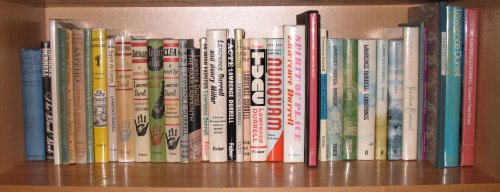
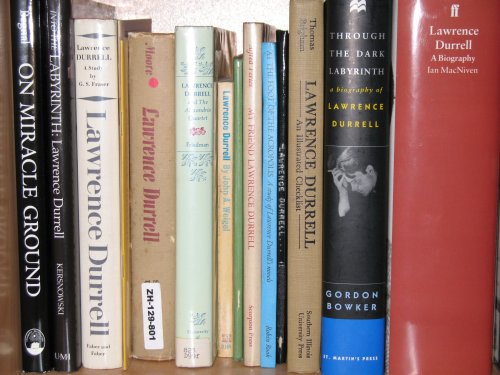
… or, Yet Another Blog Meme. I saw this on Kev’s The Arcane Model. Basically, list ten books you own that none of your friends also own. I’m guessing here, of course, although with some confidence…

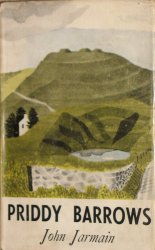
Priddy Barrows, John Jarmain (1944)
Jarmain was killed during World War II. This is his only novel. I reviewed it here. A collection of his poetry was also published posthumously, and I own that too. Both books were difficult to find.

Middle East Anthology of Prose and Verse, edited by John Waller and Erik de Mauny (1946)
The title says it all: this is an anthology of prose and poems by people stationed in Egypt during World War II – both the Oasis and the Personal Landscape groups – including GS Fraser, Sidney Keyes, Lawrence Durrell, John Jarmain, John Pudney, Olivia Manning, Herbert Howarth, Bernard Spencer, and many others.

Zero and Asylum in the Snow, Lawrence Durrell (1947)
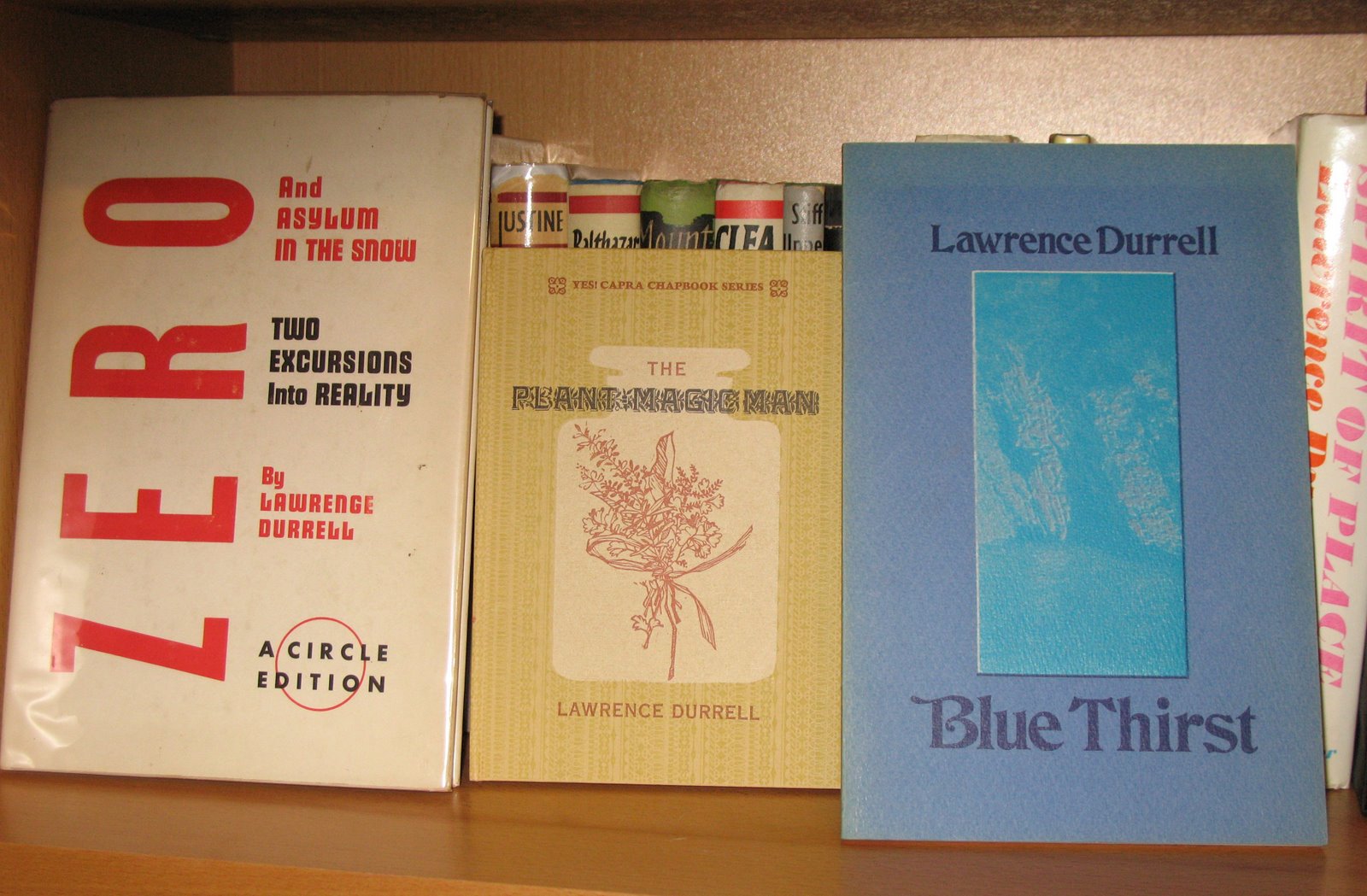
I own a few small press chapbooks by Durrell, but I picked this one as representative of them. Zero and Asylum in the Snow was originally privately printed on Rhodes by Durrell himself, but this edition was produced a year later by Circle Editions in California.

The Life and Works of Jahiz, edited by Charles Pellat (1969)
After reading Robert Irwin’s The Penguin Anthology of Classical Arabic Literature, I decided to learn more about the subject. Abu Uthman Amr ibn Bahr al-Kinani al-Fuqaimi al-Basri, or Al Jahiz, was born in Basra around 781 AD, and wrote a number of books, such as Kitab al-Hayawan (Book of Animals), Kitab al-Bayan wa al-Tabyin (Book of Eloquence and Demonstration), Kitab Moufakharat al-Jawari wa al-Ghilman (Book of Dithyramb of Concubines and Ephebes) and Risalat Mufakharat al-Sudan ‘ala al-Bidan (Superiority Of The Blacks To The Whites).

Collected Poems, Bernard Spencer (1981)
Another World War II poet, like Jarmain; and also, with Lawrence Durrell, a co-founder of the Personal Landscape group of poets and writers in Egypt during World War II. Spencer was not very prolific and died relatively young, but he was generally considered to have been capable of greatness.

Yellow Matter, William Barton (1993)
A short story published as a small press chapbook and, I think, Barton’s only small press offering. Barton has not had a novel published since 1999’s When We Were Real, but he continues to write short fiction. It’s about time someone put together a collection of his stories.

Wingless Flight: The Lifting Body Story, R Dale Reed (1997)
I have several space-related books which I doubt my friends own. This is one of the more obscure ones. It’s about, well, lifting bodies – those strange-looking aircraft, one of which crashes so spectacularly in the opening credits of The Six Million Dollar Man television series.

Dune: Fremen Justice, Brian Herbert & Kevin J Anderson (2001)
After the Dune House prequel trilogy was published, small press Wormhole Books published two short stories by Herbert Jr and Anderson as limited edition hardbacks. I bought both (this one and Dune: Hunting Harkonnens). They’re actually not very good. Neither are the Dune House books for that matter.

Swedish Death Metal, Daniel Ekeroth (2006)
Some of my friends do listen to death metal, but I don’t believe any of them own books on the subject. This one is only available through Ekeroth’s MySpace page.

Dreams of a Nation, Hamid Dabashi (2007)
One of my favourite films is Divine Intervention by Palestinian director Elia Suleiman. After watching a few other recent films by Palestinian directors, I decided to read up on the subject, and found a cheap copy of this book.

Now someone just has to prove me wrong…


7 Comments

New Sun – Old SF?

Over the past couple of weeks, I’ve been rereading Gene Wolfe’s The Book of the New Sun as part of a group read on LibraryThing. I first (and last) read the tetrology back in the mid-1980s.

It’s been an interesting experience.

The Book of the New Sun comprises four novels – The Shadow of the Torturer, The Claw of the Conciliator, The Sword of the Lictor and The Citadel of the Autarch – all published between 1981 and 1983; and a later sequel, The Urth of the New Sun, published in 1988. The Shadow of the Torturer won the World Fantasy Award in 1981, and The Claw of the Conciliator won the Nebula Award in 1981. All five books were nominated for the Nebula, and The Claw of the Conciliator, The Sword of the Lictor and The Urth of the New Sun were all shortlisted for the Hugo Award. There are also at least three critical analyses of The Book of the New Sun: Lexicon Urthus, Solar Labyrinth and Shadows of the New Sun. The first four books have also been published as two omnibus editions in the Fantasy Masterworks series.

In other words, this is a very highly regarded series of sf novels.

When I first read The Book of the New Sun, I think I was vaguely aware of its reputation. I didn’t, however, know that the story contained a large number of riddles and puzzles – such as the identity of protagonist Severian’s mother. I do now. In fact, I also own copies of Michael Andre-Druissi’s Lexicon Urthus and Robert Borski’s Solar Labyrinth. The first is a dictionary and compendium of characters, places, and unfamiliar terms from The Book of the New Sun; the second is an analysis of the story’s various puzzles. Neither are necessary to enjoy the five books – they’re for those interested in learning more about them.

Even though it had been a couple of decades since I’d last read The Book of the New Sun, I’d not forgotten its plot. I had forgotten many of the details, however. Severian is a torturer, a member of the Seekers for Truth and Penitence guild, and lives in the Citadel in the city of Nessus. When a noble lady from the Autarch’s palace, the House Absolute, is sent to the guild for “excruciation”, Severian is tasked with looking after her. He falls in love with her and, expressly against his training and the wishes of his guild, provides her with a knife which she uses to kill herself. The guild masters decide not to expel him from the guild, but instead send him to the northern city of Thrax to become that city’s lictor (i.e., prison warden and executioner). En route, he has several adventures and meets many people. In Thrax, he once again fails his guild – the archon asks him to kill a woman whose serial adultery has become an embarrassment to her husband, a prosperous noble; but Severian instead aids her escape. So he flees further north, experiencing further adventures… before becoming the Autarch himself. The Book of the New Sun is phrased as his memoirs, written years afterwards from his eidetic memory while he is Autarch.

The above is only a very brief outline of the plot. I’ve glossed over much of it – the “adventures”, his meetings with the rebellious Volidarus, his time with the Autarch’s army fighting the invading Ascians – all of which are important to Severian’s growth, his eventual assumption of the autarchy, and the many riddles in the story.

Regular readers of this blog will remember my recent post on “classic” science fiction, Don’t Look Back in Awe. While The Book of the New Sun is only twenty-seven years old, it’s still considered a classic of the genre. Some even consider it one of the best science fiction novels ever written. I was surprised, on this reread, to actually find that, well, to find that I didn’t like it very much. Perhaps I shouldn’t have been surprised, since I’ve always been conflicted about Wolfe – I have a high regard for his novels, but at the same time I hate his short fiction. And yes, that includes this year’s Hugo Award nominated novella, ‘Memorare’.

I should add that I didn’t like The Book of the New Sun because it’s a classic. I still think it’s a very good book. But. One of its defining characteristics is its use of archaic, obsolete and arcane words for various objects and concepts, the conceit being that Wolfe is “translating” the manuscript and uses such words because Severian does. So there are no swords mentioned in The Book of the New Sun, there are hangers and falchions and spadroons (among others). The fauna includes merychip, hesperorn and arctother. Ships are caiques or feluccas or xebecs. While this does give a feeling of exoticism and great antiquity to the story, it also felt in many places intrusive. But perhaps that was because some of the vocabulary was not obscure to me. I know what a dhow is (well, I did live in the Middle East). I know what cuir boli is (I spent my teen years playing Dungeons & Dragons). The words felt obfuscatory rather than clever.

There’s also an uncomfortable thread of misogyny running throughout the four books. Severian is a torturer, which immediately calls his morality into question. But almost all of his victims are women. When he eventually arrives at Baldander’s laboratory, he writes,

“… I saw what remained of a young woman who might have been a sister of Pia’s lying beneath a shimmering bell jat. Her abdomen had been opened with a sharp blade and certain of her viscera removed and positioned around her body… Her eyes opened as I passed…”

Later, he adds,

“I was acutely conscious, as I spoke, of the eviscerated woman mumbling beneath her glass somewhere behind me, a thing that would not have bothered the torturer Severian in the least.”

This, we are meant to realise, means Severian has grown, become a more moral person. Yes, Severian is a product of his (invented) world, and must be true to it if the fiction is to have any rigour. But that shouldn’t prevent a reader questioning the writer’s artistic decisions when creating that world.

The Book of the New Sun is a very clever book. It can’t, however, be read as an example of a less convoluted high fantasy narrative, which its outward appearance might initially suggest. This is not A Song of Ice and Fire or The Malazan Book of the Fallen by another name. It’s a book which requires full engagement by the reader – it’s all, or nothing. It’s not a book to be read lightly.

All of which is not, to me, a bad thing. But I came away from this reread not liking The Book of the New Sun for several reasons. The intrusive vocabulary. The misogyny. The seemingly random leaps in internal chronology. The fact that some of the plot elements seemed to exist only in order to present a puzzle.

Do I think The Book of the New Sun is a classic? Yes. But I suspect decades from now that Wolfe’s The Fifth Head of Cerberus is the one that will still be seen as a classic, but The Book of the New Sun won’t.


4 Comments

Catching Up With The Challenge

I’ve been a bit crap the last couple of months with my 2008 Reading Challenge. It seemed like a really good idea when I started it: each month, read a book by a classic author I’d never read before. Sadly, it’s proving a bit of a chore. I gave up on Hemingway. Woolf was definitely not to my taste. Five months in, and the best I could say was, I’d like to read more of Anthony Powell’s A Dance to the Music of Time.

And two months and two books later…

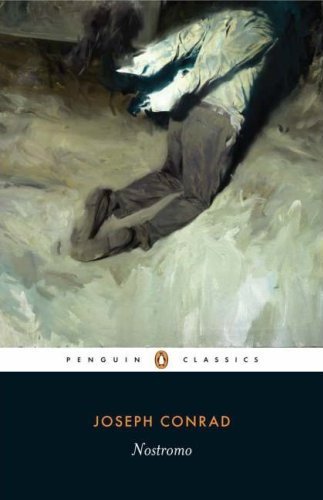
Well, June’s book was Joseph Conrad’s Nostromo. I wanted to like this. I know a lot of people who think it’s very good indeed. But I found it hard-going. I took it with me on a business trip to Stuttgart in early June. Plenty of opportunity for uninterrupted reading, I thought. I also took John Fowles’ The French Lieutenant’s Woman with me. I like Fowles’ writing a great deal, but I hadn’t expected to like The French Lieutenant’s Woman so much that I’d polish it off in three days.

And then I started Nostromo

Nostromo is set in the invented Central American country of Costaguana, and chiefly in the town of Sulaco in that country. The book’s title is the name of the town’s capataz de los cargadores, the leader of its gang of stevedores. Believed by all to be incorruptible, he is asked to hide the San Tomé mine’s silver from bandits and warlords taking advantage of a struggle for the presidency. Naturally, Nostromo proves less reliable than people had thought…

I didn’t actually finish Nostromo. I got bogged down somewhere in the middle and, after one too many looks of longing at the unread books on my shelves, put it down and turned to something new. It’s not that I didn’t appreciate what I’d read – Conrad clearly deserved his reputation. But after The French Lieutenant’s Woman, Nostromo‘s old-fashioned, more discursive and less focused prose failed to capture and keep my attention.

However, I plan to give Conrad a second chance – if not Nostromo, then perhaps one of his shorter novels.

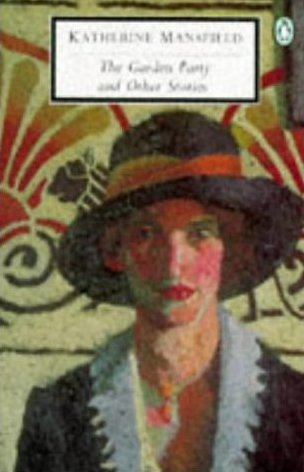
July’s challenge book was The Garden Party & Other Stories by Katherine Mansfield. This was a much easier read than Nostromo, but ultimately just as disappointing. Mansfield, according to Wikipedia, is “widely considered one of the best short story writers of her period”. To me, the contents of the collection I read were more vignettes than stories. Well-written vignettes, I have to admit, but entirely plot-less. Perhaps it’s my genre background, but I expect a story to be more than a description of an incident, or series of incidents. It has to go somewhere. It has a plot. It has a resolution – or, at the very least, implies a resolution. None of Mansfield’s stories do this.

In the title story, a well-to-do family are planning a large garden party. A young working-class man who lives in a nearby cottage is run over and dies on the day of the party. One of the daughters of the family throwing the party wonders if it they should cancel it in sympathy. In ‘The Voyage’, Fennella and her grandmother take the ferry across Cook Strait. And, er, that’s it. ‘Marriage à la Mode’ describes a man returning to his wife for the weekend, and his dislike of her sycophantic friends and how they have changed her.

Mansfield had a nice turn of phrase, although some of descriptive imagery she used is no longer as fresh as it once was. Her characterisation was also sharp. And, I suppose, the fact that she wrote chiefly about life in New Zealand (despite living in England at the time) adds an interesting patina of strangeness to her fiction. But. She’s neither comic (cf PG Wodehouse or EF Benson) nor plot-driven (cf Agatha Christie) and, no matter how crass this is, I can’t help thinking that fiction from the 1920s ought to be one or the other.

I’m not so daft I really believe this, and I’d like to read something that proves me wrong. Anthony Powell’s A Question of Upbringing doesn’t count – it’s set in the 1920s but was published in 1951. But there are other writers I could try from the period. I might just do that.

For August, however, I’ve already picked out My Family & Other Animals by Gerald Durrell, brother of Lawrence Durrell, my favourite writer.


5 Comments

20 British SF Novels You Should Read

It seems to be the season to exhort people to read books, or watch films, from some list of what-appear-to-be-randomly-chosen titles. So, move on over up there on the bandwagon, I’m climbing aboard.

But.

Most of the lists floating about the tinterweb are, let’s face it, a bit Americocentric. Here are twenty science fiction novels by British authors you should read.

Take Back Plenty, Colin Greenland
Tabitha Jute is the captain of a space barge, and when she agrees to ferry a cabaret act, Contraband, from Mars to the alien space station Plenty, things go from bad to… well, to crashing her space barge on Venus. A seminal post-modern space opera, and a personal favourite (see here).

Use of Weapons, Iain M Banks
Cheradenine Zakalwe was an operative for Special Circumstances. While the drone Diziet Sma tries to persuade him to come out of retirement for one last job, a second narrative recounts Zakalwe’s career in reverse chronological order… leading to one of the most memorable revelations in science fiction. Probably the best of Banks’ Culture novels.

A Clockwork Orange, Anthony Burgess
Alex loves a bit of the old ultra-violence, but the authorities aren’t so keen on it. One such incident gets a bit out of hand, and Alex is arrested, tried and convicted. While in jail, he volunteers for a brainwashing experiment, designed to remove his urge for violence. A novel that’s famous for several reasons – its story, its invented language Nadsat, Stanley Kubrick’s film adaptation, and Kubrick banning his own film from being shown in the UK…

Ash: A Secret History, Mary Gentle
In an alternate past in which the mediaeval nation of Burgundy did not disappear, female mercenary captain Ash is battling against invading Visigoths from North Africa. Meanwhile, a present-day academic is researching the biography of the fictional Ash… only to discover his own world slowly changing to be more like hers.

Life, Gwyneth Jones
Anna Senoz is a genetics researcher, and this is her, well, her life. And her career. SFSite said of Life: “You can stop reading right now and go out and buy the book. Otherwise, you’ll have to endure yet another one of these diatribes about how science fiction doesn’t get any respect from the literary mainstream. Because you can’t read this book and not reflect on the fact that had this been written by, say, Margaret Atwood, Life would be receiving more of the widespread attention it deserves.”

Light, M John Harrison
Back in 1975, Harrison reinvented space opera with The Centauri Device. Twenty-seven years later, he did it again with Light. Physicist and serial killer Michael Kearney is haunted by the Shrander. He is also on the verge of breakthrough in theoretical physics which will allow humanity to spread into space… and so populate the edges of the Kefahuchi Tract, a region of space that obeys no known laws of physics. Which is where, in 2400 AD, K-ship captain Seria Mau Genlicher and ex-space pilot Ed Chianese now live.

Absolution Gap, Alastair Reynolds
This is one of those novels which has three separate narratives which seem to have no connection to each other. But, of course, they’re linked. The world of Ararat has found itself dragged into a war between humanity and the Inhibitors. Rashmika Els is looking for her brother, who has joined one of the “cathedrals” which perpetually travel across the face of the frozen moon, Hela. And the crew of the lighthugger Gnostic Ascension are desperately searching for something to improve their fortunes… Of Reynolds’ Revelation Space novels, this one shows the strangeness of his universe best.

Behold the Man, Michael Moorcock
Karl Glogauer travels back in time from Britain in 1970 to Judea in 28 AD. He is obsessed with meeting Jesus Christ… except the Jesus he meets is not the one described in the Bible. Britain in 1970 was a grim place, but Biblical Judea is little better. At least Glogauer finds the fate he was seeking, although it’s perhaps not the one he expected to find.

The Drowned World, JG Ballard
If we don’t get global warming sorted out soon, this might well turn not to be science fiction. Ballard’s second novel, and deservedly in the SF Masterworks series.

The Separation, Christopher Priest
The Second World War ended in 1941. Except it didn’t. It’s all because of identical twins Joe and Jack Sawyer. After competing in the 1936 Olympics, they fall out. One becomes a RAF bomber pilot, while the other is a conscientious objector. Priest rings the variations on their two lives, and the consequences of one or the other, or both, dying.

Somewhere East of Life, Brian W Aldiss
Someone has stolen ten years of Roy Burnell’s memories, and so he wanders about Central Asia hunting for the magic bullet which will restore them. This is one of those near-future sf novels which, now that its future has passed, bears an uncanny resemblance to mainstream fiction. And yet it’s still sf.

The Time Machine, HG Wells
A man invents a time machine and travels to the future. To the year 802,701 AD, in fact. But you probably knew that already.

The Time Ships, Stephen Baxter
This is the authorised sequel to The Time Machine – and in it the publication of Wells’ novel has changed the future. The Time Traveller can no longer rescue Weena from the Morlocks. So he goes back in time to prevent his earlier self from inventing the time machine. Only that changes the future yet again… Baxter manages to pull a happy ending out of his story, but you’ll have to read the novel to find out how.

1984, George Orwell
Some say this isn’t science fiction. I say that just because some governments are using techniques described in the book – left-wing doubleplusungood, right wing doubleplusgood; Christianity doubleplusgood, atheism doubleplusungood – that doesn’t mean 1984 isn’t science fiction. The UK might as well be Airstrip One, anyway. And not even George Orwell would have dared invent Gitmo and “extraordinary rendition” for his novel.

Pavane, Keith Roberts
Queen Elizabeth I was assassinated in 1588, and England remains Catholic. The stories in this fix-up novel are set in a 1968 following on from this, but it’s not a 1968 we’d recognise. Pavane is still one of the best alternate history novels ever written, and Keith Roberts deserves to be better known than he is.

The Road to Corlay, Richard Cowper
A thousand years in the future, the ice-caps have melted and the UK is now a series of small islands (it’s that global warming thing again). Modern technology has been mostly forgotten, and a Church Militant rules everything. But the prophesied White Bird of Dawning could break their rule. It all depends on Tom, whose pipe-playing has the power to stir minds. While this novel may sound like fantasy, it’s very definitely science fiction. It’s also very English.

Chronocules, DG Compton
This novel has one of the all-time great opening sentences: “About twenty years before this story begins—give or take a few years, the Simmons s.b. effect being untried and seriously (not that it mattered) inaccurate—the desolate silence on Penheniot Village, at the top of Penheniot Pill which is a creek off the small harbour of St. Kinnow in the county of Cornwall, was shattered by the practised farting of young Roses Varco.” But then it was originally published under the title Hot Wireless Sets, Aspirin Tablets, the Sandpaper sides of used Matchboxes, and something that might have been Castor Oil, so what do you expect?

Silver Screen, Justina Robson
Anjuli O’Connell is a psychologist working with the Artificial Intelligence 901. Just before his death, a colleague filed a petition with the World Court to emancipate the AI, but the company which built and owns it is resisting. Not many debut novels are shortlisted for the Arthur C Clarke Award, but Silver Screen was. And it also appeared on the shortlist for the BSFA Award.

Oracle, Ian Watson
A Roman centurion is dragged forward to the present day by an experiment and finds himself in, of all places, Milton Keynes (that’s the town with the concrete cows). He’s picked up by a British researcher… But then the security services get involved. And so do the IRA. And the book heads smartly into thriller territory.

The Star Fraction, Ken MacLeod
This was MacLeod’s debut novel, and takes place in a balkanised UK. Revolution is in the air, and three very different characters find themselves involved. And behind it all is the mysterious Star Fraction. And the rogue AI, the Watchmaker. An astonishing debut from MacLeod.

Now go and read them.

(Before you all start spluttering about various books I’ve missed off the list, I picked titles which are either set (mostly) in the UK, or at some point in the future at which nation states are irrelevant. So no Black Man or Brasyl. Or Rendezvous with Rama. They’re also books I’ve both read and enjoyed. So no John Wyndham (never read him). Nevertheless, I’ve probably missed an entire county’s worth of UK authors who deserve mention. If you can think of any, then feel free to name them in a comment.)


2 Comments

2008 Reading Challenge – May

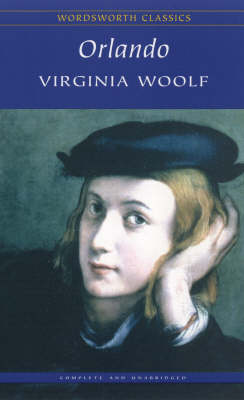
I’ve had Virginia Woolf’s Orlando on my book-shelves for a number of years, but had never got around to reading it. I forget why I even bought it. It was cheap, I know that much: there’s a Dh 10/- sticker on the back (ten Dirhams, the currency of the UAE; at the time I was living there, that would be about £1.65).

I also have the DVD of Sally Potter’s film, starring Tilda Swinton. And it’s a good film – looks fantastic, although the story meanders a bit.

So the book immediately went on the list when I decided to read a classic author each month of 2008. And now I’ve read it…

Orlando is a young noble in Elizabethan England. He is a favourite of Queen Elizabeth, writes volumes of execrable poetry, and has an affair with a Muscovite princess. The affair ends badly, and so Orlando wangles a position as Ambassador Extraordinary to the Sultan’s Court in Istanbul. Several years later, he is promoted to Duke and made a member of the Order of Bath. Shortly afterwards, he falls into a sleep from which none can wake him for a week. While he sleeps, the Janissaries revolt. When Orlando wakes, he is now a woman.

After spending some time with Anatolian gypsies, Orlando returns to England. She then lives through the centuries following until the publication of the book: “Thursday, the eleventh of October, Nineteen hundred and Twenty Eight” (the last words of the novel).

Orlando is written as a biography, with frequent authorial interjections – at one point, even declaring the date on which a passage was written – “…for the poet has a butcher’s face and the butcher a poet’s; nature, who delights in muddle and mystery, so that even now (the first of November 1927) we know not why we go upstairs…”; or commenting on the prose itself: “…who has so much to answer for besides the perhaps unwieldy length of this sentence…” The words “biography” and “story” are used throughout, explaining that Orlando is as much a commentary on Orlando’s life as it is a telling of it.

Unfortunately, Orlando is a paragon – loved by all who meet him; his legs “the shapliest legs that any Nobleman has ever stood upright upon”; his house the greatest in England, with 365 rooms and 15 acres of parkland… We are told this repeatedly. Woolf makes no effort to make her protagonist or her story plausible. Orlando’s central change of sex is left completely unexplained – and barely remarked upon by those who knew him before.

Orlando reads like a paean to its subject. It tells a story, yes, but it’s not really a novel. Woolf’s close friend and lover Vita Sackville-West was the inspiration for Orlando, and the book reads like an open and frank love letter to her. In places, the author’s heart is far too visible on her sleeve.

In one respect, reading Orlando proved an interesting exercise. It’s a fantasy, and it was published ninety years ago. Given the current form of fantasy, especially high fantasy (or sword & sorcery, as it’s sometimes known), comparisons between such novels and Woolf’s were almost inevitable. The current trend is for immersion, a narrative that drags the reader into the world of the story and keeps them there. And the world must be internally consistent in order for that to occur. Whereas Orlando does no such thing. The story is told to the reader, no effort is made to entice the reader into living the story in their imagination. Woolf is quite clearly writing Orlando in 1928, and often makes reference to items and knowledge that would have been unknown to her protagonist – “The thought struck him like a bullet”, for example. It’s an entirely different reading experience to that of, say, Robert Jordan’s Wheel of Time (quality of writing aside).

Personally, I prefer rigour and internal consistency in my fiction. Especially in regard to an invented world, or a story which cannot rely on the real world to provide consistency. Woolf’s authorial interventions I found intrusive. This might have been acceptable if they were witty – like Jane Austen, for example – but in Orlando, they were just fawning. Orlando was too good, too improbable, a hero/heroine, and quickly became boring. Orlando is, well, fanciful tosh.

So, another classic fails to make the grade. While I admitted back in February that I might give Hemingway another go some time, I very much doubt I’ll be doing the same to Virginia Woolf. Orlando is, according to Wikipedia, “generally considered one of Woolf’s most accessible novels”. Not to mention its importance to English literature. But I just can’t see it.

I’ve all ready picked out Nostromo by Joseph Conrad for next month. Let’s hope I like that one better.

(Incidentally, for those who want to try Orlando for themselves, here’s an online copy.)


2 Comments

Overlooked Classics – Part 2

Here is the second lot of sf novels which, I believe, shouldn’t be forgotten. I chose these books – and the preceding five – as much because they, and their authors, are obscure as I did because I like the novels. Most authors, even well-known ones, have some title buried in their back-catalogue which deserves better recognition. And some novels which are obscure today were much-lauded on publication. I’ve tried to avoid such books. The five titles below were, and still are, “overlooked”…

Blueprint For A Prophet (1997)
Carl Gibeily
I forget where I picked this book up. Given that I have the hardback edition, I suspect it was in some publishers’ clearance shop. Why I bought it… Well, the author was unknown to me, and the book wasn’t published as science fiction… It must have been the story. But I’m glad I did buy it and read it. Blueprint For A Prophet is set in Lebanon (Gibeily is Lebanese) and describes the rise of a fundamentalist prophet who knits together the Arab states into a powerful Muslim federation. But it’s not just about that, because one character is a theoretical physicist whose experiments could change history… Blueprint For A Prophet is one of those sf novels written by a non-sf writer which succeeds as science fiction.

The War for Eternity (1983)
Christopher Rowley
“Classic” is not a word usually associated with Christopher Rowley’s novels. His prose is usually little better than competent. But his debut novel is much better. The War for Eternity is set on the world of Fenrille, which contains a single continent ringing its equator, and is the source of a longevity drug. The drug is harvested from insectoid creatures native to Fenrille, but only certain people are permitted by them to do the harvesting. It’s a similar idea to that in CJ Cherryh’s Serpent’s Reach, although that’s the only similarity between the two books. In The War for Eternity, forces from Earth attempt to seize control of Fenrille, but are fought off by the colonists. The story also takes a final bizarre twist at the end. Rowley went on to write a further three novels set in the same universe – The Black Ship, The Founder and To a Highland Nation.

Cortez on Jupiter (1990)
Ernest Hogan
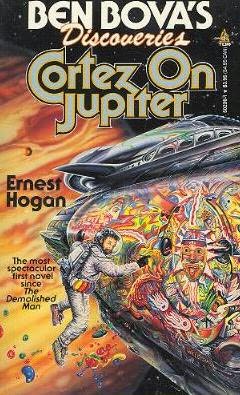
According to the cover of this novel, Cortez on Jupiter is “the most spectacular first novel since The Demolished Man. The Encyclopedia of Science Fiction described Hogan as “a figure of interest for the 1990s”. Unfortunately, he had one more novel published, High Aztec (1992), and then dropped out of sight. Which is a shame. Cortez on Jupiter is an early post-cyberpunk novel about a graffiti artists who ends up making humanity’s first contact with the sentient inhabitants of Jupiter. The flamboyant prose throws off ideas on every page, and the story is a rush from start to finish.

The Krugg Syndrome (1988)
Angus McAllister
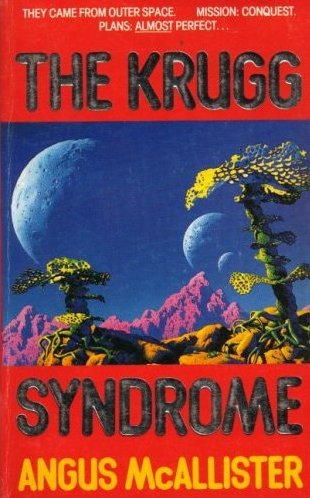
This has to be one of the most mis-marketed books ever. From the cover, you’d expect something from the heartland of the genre, featuring strange expeditions to alien worlds. Instead, what you get is a comedy set in Glasgow in which a law clerk thinks he is an alien. Arthur Montrose is convinced he is a Krugg, one of a race of telepathic alien trees who are bent on conquering Earth. Unfortunately, he’s lost his telepathic powers and can no longer contact his home world… The Krugg Syndrome is a diary of Arthur’s experiences on Earth, the people he meets, his encounters with alcohol and sex, and his increasing inability to fulfill his Krugg mission…


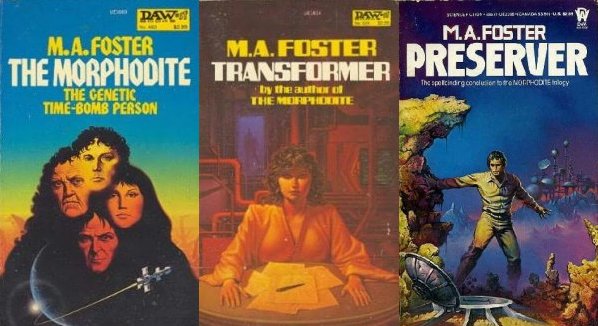
The Morphodite trilogy (1981 – 1985)
MA Foster
The Morphodite is an artificially created humanoid with the ability to change its appearance, with each transformation changing sex and appearing younger. However, the Morphodite’s real talent lies in spotting a society’s fracture points – i.e., places where the ramifications of one small action can spiral out until they bring down the society. In the first book in the series, The Morphodite, the eponymous character is created in The Mask Factory on the world of Oerlikon, escapes, and promptly wreaks its revenge. In Transformer, the authorities have tracked down the Morphodite and send assassins to kill it. The Morphodite learns that it was originally a woman from offworld. Now knowing its original identity, it leaves Oerlikon for the world of Teragon. Preserver is set on that world many years later. A young man, who works as a thug/assassin for hire, learns when his lover is kidnapped that he is the Morphodite. He then uses his powers to destroy Teragon’s society. There’s something very Vancian about Foster’s prose in these novels, although the central premise and its treatment is not in the slightest bit like Jack Vance. The three books were re-issued in an omnibus edition as The Transformer Trilogy.

Part one of “Overlooked Classics” is here.


8 Comments

Overlooked Classics?

Inspired by this post, I decided to have a go at producing my own list of ten sf novels which don’t really deserve to be forgotten. They’re hardly lost classics – in fact, most of the following I bought remaindered. But that doesn’t necessarily mean they’re bad. Good books get remaindered too. Nor does it mean, as a friend once insisted, that they’re faulty because they’re full of spelling mistakes. Books get remaindered because they didn’t sell.

The science fiction novels below were never going to win awards or redefine the genre. But they are entertaining reads, by no means ordinary, and certainly worth picking up if you see them in some second-hand or charity shop.

The Broken Worlds (1986)
Raymond Harris
Harris had three books published, and then vanished. This is his first. It’s a space opera, set after the fall of a galactic empire. The Martians, immortal warriors, are trying to recreate the empire. Caught up in this are cabaret artist Attanio Hwin and the mysterious woman Sringlë. As space operas go, The Broken Worlds is more colourful than most. While Harris doesn’t try to give his universe depth by slapping on some pseudo-historical patina, he still manages to present a series of worlds which are unique and interesting. EC Tubb did something similar with his Dumarest series, but that was unremittingly grim. The Broken Worlds is fun – The Encyclopedia of Science Fiction even calls it “an attractive picaresque adventure”. Harris’ other two novels are Shadows of the White Sun, which is better than The Broken Worlds but not as much fun, and The Schizogenic Man, which is perhaps the least interesting of the three.

The Children of Anthi (1985)
Jay D Blakeney
Blakeney is a pseudonym of romance writer Deborah A Chester, who is also known under the name Sean Dalton for her YA sf series Operation StarHawks. The Children of Anthi is a richly-detailed space opera, in which scout Omari crashes on the world of Ruantl and is taken hostage by the world’s inhabitants. The story takes place on a single planet, but Blakeney has clearly spent a lot of time mapping out its society and customs. In places, it’s almost Herbert-esque, and fans of Dune will probably find something to enjoy in this novel. There is a sequel, Requiem for Anthi (1990), which is also worth tracking down.

Dancer of the Sixth (1993)
Michelle Shirey Crean
As far as I’m aware, Crean has never had another novel published. Which is a shame, because Dancer of the Sixth is a pretty good read. It’s military sf, but it’s from that strange sub-set which feature female heroines, usually pilots. In this instance, the pilot is called Dancer, and she’s not a pilot anymore. Now she’s a member of the Sixth Service, military intelligence, and her past has been wiped and she conditioned to forget it. Until one day a fighter crash-lands on the planet where Dancer is stationed, and the pilot proves to be… someone masquerading as Dancer. So the real Dancer takes her place to find out what’s going on.

Cageworld (1982 – 1984)
Colin Kapp
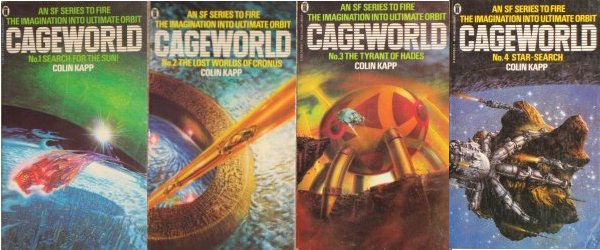
This is a cheat as it’s a series of four books: Search for the Sun!, The Lost Worlds of Cronus, The Tyrant of Hades and Star-Search. The series features one of the most impressive Big Dumb Objects in sf – the entire Solar system has been encased in a concentric series of Dyson Spheres. Embedded in each Sphere are holes, and in these holes are Earth-like planets. People live both on these planets and the outer surface of the spheres. It’s all completely implausible of course, but that doesn’t matter. The series opens on the Mars-shell. The fabulously wealthy and mysterious Land-a has recruited Master of Assassins Maq Ancor, Space Illusionist Cherry, and Sine Anura, Mistress of the Erotic, to travel in towards the Sun in a specially built space-ship, Shellback. Contact with the shells’ controlling AI, Zeus, has been lost and they must discover why. In the subsequent novels, the same three travel outwards from Mars-shell, seeking to determine why emigration outwards has halted. Baroque and a great deal of fun.

Frostworld and Dreamfire (1977)
John Morressy
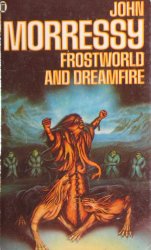
Morressy wrote a series of sf novels set in a future interstellar federation called the Sternverein. This is the best of them. (The worst, The Mansions of Space, should be avoided.) Unusually for such space operas – and it’s the only one of Morressy’s series that is like this – Frostworld and Dreamfire is told from the viewpoint of an alien. Hult is the last of the Onhla, a race of primitive humanoid hunters who live on the frozen face of the planet Hragellon. He sets out on a quest to discover the world where legend claims other Onhla settled ages past. The Encyclopedia of Science Fiction describes the novel as “a strongly constructed and occasionally rousing epic of a metamorphic humanoid’s search”. Also worth seeking out is Morressy’s Del Whitby trilogy, also set in the Sternverein – Starbrat, Nail Down the Stars and Under A Calculating Star.

Part two of this post – another five “overlooked classics” – to follow soon.


2 Comments

Breeding Always Shows

For April’s entry in my 2008 Reading Challenge to try each month a classic author I’ve never read before, I picked A Question of Upbringing by Anthony Powell. It’s actually the first book in the 12-volume series A Dance to the Music of Time, and was first published in 1951.

In his 99 Novels: The Best in English Since 1939, Anthony Burgess describes A Question of Upbringing as “a work we may not always like, but we cannot ignore it”. That’s hardly a ringing endorsement, but the fact that he’s named it as one of the ninety-nine says much. Even the most cursory of googles will throw up plenty of approving reviews. Time magazine even included it in its 100 Best English-language Novels from 1923 to 2005. A Dance to the Music of Time is clearly a highly-regarded series of novels.

A Question of Upbringing opens with its narrator, Nick Jenkins, in his final year at Eton. It is 1921. Jenkins describes several incidents which took place that year, and serve to introduce the characters who will reappear throughout the series: Charles Stringham, Peter Templer and Kenneth Widmerpool. After finishing at Eton, Jenkins visits with Stringham, and then spends a few days with Templer. He next goes to stay in France, ostensibly to improve his French, before taking a place at Oxford. There he meets up with Stringham once again, and joins Professor Sillery’s coterie of possible future movers and shakers. The novels ends with a car crash: Templer on a visit drives his car into a ditch while carrying Jenkins, Stringham and some others as passengers.

As plots go, not much happens in A Question of Upbringing. Admittedly, it’s a relatively thin novel – 223 pages in my Fontana paperback edition – and it is only the first of twelve books. It’s an introduction, chiefly to the characters. Powell’s prose, in fact, focuses on the people, often at the expense of everything else. There are no sweeping passages of landscape painting as you’d find in Lawrence Durrell, or even John Jarmain. Jenkins analyses everyone he meets, and every action or utterance they make. It’s as if you’re standing before a large painting, armed with a magnifying glass and peering through it with your face no more than inches from the canvas. There is no clue to the “big picture” in A Question of Upbringing (which seems slightly weird, when compared to modern-day blockbuster high fantasy series).

The period in which the novel is set also invites unfair comparisons with PG Wodehouse or EF Benson. But A Question of Upbringing is no comedy of manners. The cast might all be upper-class twits – as Burgess points out, “Powell cannot take the lower classes seriously” – but Powell does draw his characters with a sharp eye, and he takes them very seriously.

The writing throughout is mannered, but very good. There is some strangely old-fashioned grammar – a tendency to run on sentences using colons, for example; but it doesn’t impede reading. Burgess’ pyrotechnics might be memorable, as are Durrell’s lyrical purple passages; but Powell is not so flamboyant. There are some striking images – A Question of Upbringing opens with a description of snow falling on a workmen’s brazier, which effectively sets the motif for the entire twelve-volume sequence.

I enjoyed and appreciated A Question of Upbringing. Which makes it the first success of this year’s reading challenge. While I’ve no plans to dash out and buy the other eleven books, should I see them in some second-hand book shop or charity shop: then yes, I will buy them and read them.

Besides, I’ve a feeling A Dance to the Music of Time improves a great deal as more of the big picture is revealed…


1 Comment

Swing, clang!, shuffle, swing, clang!, shuffle, swing, ow!

Between 1993 and 2002, I was a member of a long-running sf APA called Acnestis. Each month, we’d write a couple of sides on genre-related subjects, make 30 copies, and then send those copies to the administrator. Who would then send out a parcel containing one copy of each member’s contribution to everyone. Today, I was hunting through some of my contributions to Acnestis, and stumbled across this review of George RR Martin‘s A Game of Thrones from 2001. Enjoy…

There is little in A Game of Thrones that can be counted as truly original. The setting is stock high fantasy: a mix and match of Dark Ages peasantry and Camelot-style pageantry. There are, fortunately, no elves, dwarves, gnomes or (gag) hobbits. But there are dragons (although they only appear near the end), and lots of mediaeval hack-and-slash swordsmanship.

Where A Game of Thrones may be traditional high fantasy in terms of setting, it’s not in terms of structure. Unlike the Wheel of Time, Martin does not use the “hero’s journey” template but builds up his story from a number of narrative strands, only some of which actually intersect.

First, there are the various members of the Stark family, lords of the Northern wastes. Lord Eddard Stark, head of the family, is a rigid, honourable man, traditional in his views, and a good friend of King Robert Baratheon. The king has been outmanoeuvred increasingly often by his wife, Cersei, and her family, the Lannisters. When his advisor dies, King Robert turns to Stark to take over the position and bring his reign back on track. This, of course, upsets the Lannisters. Stark moves to the capital, King’s Landing, to take up his duties. There is much politicking and corruption, and, well… any more would constitute a spoiler.

Jon Snow is Stark’s bastard son and, while he is acknowledged as fruit of Stark’s loins, he can never inherit the family title or possessions. So he joins the Night Watch, a Foreign Legion-type organisation which guards the Wall far to the north. Winter is coming (seasons appear to last several years in the world of A Song of Ice and Fire), and mysterious, probably magical in origin, creatures are attacking the Wall and threatening to invade.

The other members of Stark’s family include: Bran, who is crippled after overhearing something he shouldn’t and who looks set to develop powers of some kind which could help later in the story; Robb, the heir, who takes over when his father heads south to the capital; Sansa, the eldest daughter, betrothed to King Robert’s son (who is spoilt and cruel, and takes after his mother, Cersei); and Arya, Stark’s other daughter, who is something of a tomboy and more interested in sword-fighting than courtly intrigue and pomp and circumstance.

On another continent, Daenerys, last of the Targaryen dynasty, the previous rulers of Baratheon’s kingdom until he had overthrown them, has been married to Khal Drogo, lord of a Mongol-type horde. Her brother, who is a real nasty piece of work, is hoping the khal will provide him with an army to take back the throne “stolen” by Baratheon.

The novel alternates chapters between these (and a few more) characters, and all of them in some way affect the story-arc and the novel’s resolution. Despite the size of the cast-list (and Martin includes a sizeable dramatis personae at the back of the book; and, of course, a map at the front), it’s easy to keep track of the major characters. (I had to keep on referring to the dramatis personae for some of the minor characters, however.)

This technique of multiple viewpoint-narratives is one that’s commonly used in techno-thrillers, which is itself a best-selling genre. It’s also better-suited to the complex political nature of Martin’s story than the traditional hero’s journey structure would be. This, however, doesn’t really explain the book’s appeal.

It’s either the setting, or the story. The story owes more to dynastic historical or semi-historical fiction than it does to high fantasy. There’s no Quest, no object which can save or destroy the world, no army of darkness, nor even some vast prophesied change which must be helped or avoided. In that respect, A Game of Thrones is really quasi-historical fiction. There’s little in the way of derring-do, or real heroics, and certainly no one person upon whose shoulders the fate of the world rests…

Which means, I suppose, that high fantasy must sell more because of its setting than any other factor. The question is, is it the details of the particular world, or the mere existence of the particular world, which appeals? Will any old mediaeval land do, or is it the differences between the fantasy land and the historical model? There is, as I said earlier, little that’s all that original in A Game of Thrones. The cities, villages and castles are straight from the Dark Ages. The combat, arms and armour are straight from the Matter of Britain…

Which raises an interesting point. In many high fantasy series (and A Song of Ice and Fire is one), both hack-and-slash sword-fighting exists alongside thrust-and-parry. Historically, in the West, one developed from the other; the two techniques did not really exist alongside each other. During the Middle Ages, swords were big, heavy, often required two hands, and had cutting edges. They were, effectively, sharp-edged clubs. You swung them, as hard as you could, at your opponent. If you were strong, skilled, or lucky, you inflicted a wound. By the reign of Elizabeth I, sword-fighting had become cut-and-thrust, the mode perhaps most familiar from “swashbuckler” movies. Swords could cut, but they could also wound or kill with the pointy bit at the end. The cutting-edges gradually disappeared over time (because a blade without cutting-edges was stronger), until during the Renaissance sword-fighting focused almost exclusively on the pointy end—i.e., the rapier (a corruption, via the French, of the Spanish espada de ropera, or “town / dress sword”).

In A Game of Thrones, the noble male characters wear full-plate armour, often ornately decorated (and, judging by Martin’s descriptions, some of them probably have to be seen to be believed…). It is very difficult to kill someone in full-plate with a rapier. The blade simply isn’t up to piercing it. You’d have to find a weak spot (inside the elbow, for example), and hope you manage to hit it before you get brained with a mace or morning-star. Plus, of course, rapier sword-fighting requires you to be light on your feet—difficult when you’re weighed down with a suit made out of sheet metal. So, two knights in full-plate who want to cause damage have little choice but to swing at each other with hefty swords with cutting-edges (a great sword, bastard sword, sword-and-a-half, or something similar). Personal combat would be pretty much fixed in this mode.

And the mode used in personal combat would carry across into group combat or battles. Peasants, of course, would not have swords—swords are, after all, expensive, and certainly cost more to replace than your average peasant. No, the peasants have sharpened sticks. Put a bit of steel on the end and you have a pike (or put a short curved blade on the end, and the peasant’s weapon becomes doubly useful: he can chop up your enemies or reap the harvest with it). Alternatively, give your peasant lots of small pointed sticks, and a bow, and he becomes an archer, a “long distance” weapon.

Presumably Martin wanted to give his ersatz Dark Ages world some colour, and so threw in Arthurian pageantry. Which happened to go well with the social system he had set up. But, Arthurian pageantry demands full-plate and bastard swords; full-plate and bastard swords do not lead to exciting fight scenes—swing, clang!, shuffle, swing, clang!, shuffle, swing, ow!, shuffle, etc. The swashbuckling style of sword-fighting is exciting. So he threw that in as well…

Perhaps it’s this element of mix and match that lends high fantasy its appeal. It is, to some extent, the romance of the Middle Ages, without all the nasty stuff—squalor, rape, pillaging, disease, short lives, etc. The nearest high fantasy gets to this is in the combat, which is only one minor aspect of the period lifestyle. And so writers of high fantasy pick out all the romantic imagery of the Middle Ages, suggesting a low-maintenance lifestyle of well-earned hardship (never comfort), little responsibility and a level of self-actualisation that’s keyed to bringing in a good harvest. But you can’t have serfs without liege-lords and, it has to be said, there’s something equally attractive about the life of luxury led by the nobility: little or no fruitless work (that’s all done by the peasants), no decisions made by others, a very direct responsibility for lifestyle maintenance (everyone gets what they deserve), and all conflicts or problems are purely personal and can be resolved at the personal level (even in battle).

It’s all very well grinning with pride at a job well done, and looking forward to a hearty dinner of cheese and ale, as your sons bring in the bountiful harvest. But let’s not forget that your liege-lord could choose that very moment to come riding down onto your (clean, of course) hovel and rape your wife and daughters for a bit of sport. And there’s nothing you can do about it. In high fantasy, only villains of the darkest stripe would do such a thing, and their serfs are evil by association, so they deserve it.

It is, when you dig deep enough, American Rationalism that’s informing the various worlds of high fantasy best-sellers. Rewards are earned, never a function of position. Unless you’re a villain… in which case, you get your just desserts, anyway. One man can indeed change a world. Except, of course, he doesn’t. He leaves it exactly as he found it. The hero is there to maintain the status quo.

If there is a lesson here, it’s that a best-selling genre novel should boast: a) a world in which individuals can have a very real impact; b) said impact has to be earned through hard work and steadfastness; c) said impact is welcomed by all; d) the danger is always immediate and personal, as are the rewards; and e) there should be lots of colour.

A Game of Thrones, it goes without saying, features all of the above. As does Robert Jordan’s Wheel of Time series. The actual writing itself is immaterial. It need only be immediate. Themes and motifs only get in the way. Which might explain the merely competent writing that seems a given of high fantasy.

A Song of Ice and Fire is actually better-written than most of its ilk—although the line on page two, “A cold wind was blowing out of the North, and it made the trees rustle like living things”, initially seems to suggest otherwise (a Thoggism, if ever I saw one). Martin’s use of language may not be perfect, but his command of narrative structure is far superior to that of best-selling authors such as Robert Jordan, or David Weber. The prose is uniformly tight, without the extended introspective passages beloved of lesser writers. The dialogue is natural, and remains true to the characters uttering it. For those reasons alone, A Game of Thrones is a superior example of its type. Add in Martin’s departure from the standard template, and you have another reason for appreciating the novel in and of itself. But when you include the world he has built, the very sub-genre he is working in, well… you have a best-seller. Of course.