It Doesn't Have To Be Right…

… it just has to sound plausible


6 Comments

Reading Challenge #8 – The Left Hand of Darkness, Ursula K Le Guin

Le Guin is an author who grows as you grow. You can read and admire her at thirteen, and you can read and admire her at forty-three. As I have done. Because I think it must be around thirty years since I last read The Left Hand of Darkness. I’d never really felt the need to reread it because I knew the story. It’s one of those novels whose plot and characters have entered science fiction common knowledge – we all know about it even if we’ve not read it.

Which is a shame. Because it’s definitely worth reading, and certainly stands up to rereading.

The book is set in Le Guin’s Ekumen, a loose mystical/economic interstellar polity of eighty-odd human planets with the world of Hain at its centre. Earth was seeded by the Hainish. The Left Hand of Darkness is set on Gethen, also known as Winter, which has just been invited to join.

The Gethenians have no space travel and, strangely – and uniquely among the humans of the Ekumen – they are hermaphrodites. For three weeks of every month they are effectively neuter, but for a week they are in heat, or “kemmer”. And the gender they take during kemmer depends entirely on those around them.

The Left Hand of Darkness is essentially a character study of a Gethenian called Estraven. He is the royal contact of Genly Ai, the Ekumen’s lone Envoy to the world. And it is through Ai’s, er, eyes that we come to know Estraven and, by extension, the people of Gethen. The novel is essentially world-building, and it’s a fascinating society Le Guin has created – a result of both the Gethenians’ sexuality and the planet’s harsh near-Arctic climate.

The plot of The Left Hand of Darkness is considerably less complex than the world itself. Estraven falls from favour and is banished from Karhide. The king’s new adviser is not interested in joining the Ekumen, only in provoking a war with the neighbouring police state of Orgoreyn. Ai visits Orgoreyn, hoping to have more luck with its “commensals”. He meets the exiled Estraven, who warns him that no one is interested in the Ekumen, only in using the Envoy to improve their own political fortunes. When those machinations fail, Ai is arrested and shipped off to a “Voluntary Farm”, where he is continually drugged and interrogated. There is an ongoing discussion amongst the Gethenians regarding Ai’s true nature – is he what he claims to be, or just the perpetrator of an elaborate hoax? This is purely Gethenian speculation; for the reader, Ai’s nature is never in doubt.

Estraven rescues Ai from the farm, and the two trek across the northern ice shield to return to Karhide. Since the commensals had claimed Ai had died of a virulent fever, his miraculous return should be enough to provoke the king of Karhide into inviting the Ekumen ambassadors to Gethen.

The story is told by Ai, who begins the novel with the line:

I’ll make my report as if I told a story, for I was taught as a child on my homeworld that Truth is a matter of the imagination.

Ai’s narrative is interspersed with excerpts from the journal of Estraven. And between the two they cover the entire period between Estraven’s exile from Karhide and the landing of the ship containing the Ekumen ambassadors. The focus remains firmly on the two narrators.

Since the Gethenians are neuter for 75% of the time, and can be either gender when in kemmer, their society is essentially single-gendered. So The Left Hand of Darkness is as much a book about gender-roles as it is an exploration of an alien Other. And, while it was first published in 1969, perhaps in order to better contrast Gethenian society with the reader’s, Le Guin seems every now and again to drop into gender stereotypes – especially for women, since Ai is male and Estraven is neither. But that’s a minor quibble.

The Left Hand of Darkness is Gethen. And Gethen is one of the best-realised worlds in science fiction. I’d last read this book years ago, but had since then reread The Dispossessed… and decided the latter was the better of the two. But having now read The Left Hand of Darkness once again, I find I’m not sure. There’s no doubt they’re the best two of Le Guin’s Hainish novels – which makes them amongst the best the genre has produced – but I suspect I’ll never decide which is best and which is second-best.

Unlike the other books I’ve reread for this year’s challenge, The Left Hand of Darkness did not disappoint. In fact, it did the opposite – I like it even more than I thought I did. I will definitely be reading it again one day. I might even add it to the bottom of my favourite novels list…


3 Comments

Reading Challenge #7 – Jack of Eagles, James Blish

This month’s book was somewhat delayed as I’ve been focusing on reading and writing about books related to Apollo 11 for my celebration of the 40th anniversary of the lunar landing. You can find those reviews on my Space Books blog here.

But on with the reading challenge…. My edition of James Blish’s Jack of Eagles is a 1977 Arrow paperback with cover art by Chris Foss. I suspect it was bought for me some time around then. So I must have been twelve or thirteen when I first read it. I actually have a number of Blish novels from that period – all with Foss cover art – as he was one of my favourite sf authors at the time. Which made rereading Jack of Eagles an interesting exercise.

The novel is about Danny Caiden, a young man who develops psychic powers – precognition, telepathy, teleportation, telekinesis, etc. – and subsequently becomes embroiled in a secret war between two groups of powerful psychics, one of which is bent on taking over the world. With the help of a parapsychology professor at a local university, Caiden learns how to control his new-found powers… but it is only when he comes into conflict with the Brotherhood In Psi that he discovers he is the most powerful psi ever.

There’s a definite sense of time and place to Jack of Eagles. It was expanded from a 1949 novelette, ‘Let the Finder Beware’, and with its mention of the GI Bill and other details, it’s clearly set a few years after the end of World War 2. The book is also, like much of Blish’s fiction, well written. But. And this is a problem I had with his The Quincunx of Time when I read it at the end of last year. That too had originally been a short story – which I’d read – but Blish had not chosen to expand the plot, or provide more details of the setting. Instead, he’d used the greater wordcount to waffle on about the bogus science and philosophy which underpinned the book’s central idea – a faster-than-light communication device which allowed people to pick up signals from the future.

And I suspect the same thing happened in Jack of Eagles. The first half of the novel is a relatively straightforward action story – Caiden loses his job, and seeks to learn more about his burgeoning powers by visiting various “experts”. But there’s a long section in which the parapsychologist, Dr Todd, tries to explain the scientific basis of Caiden’s powers, referencing some mangled form of quantum mechanics and the Many Worlds Hypothesis. It’s pointless, implausible guff, and it slows down the story to a crawl.

Later, during Caiden’s battle with the Brotherhood, he escapes by travelling into alternative futures – explained once again by the bogus science of earlier. Each of the futures he visits is interesting, but Blish spends far too long trying to explaining the how of it and his explanations ring false and spoil the atmosphere.

I can’t remember what it is about Blish’s stories and novels that appealed to me when I was in my early teens. Rereading them now, thirty years later, it’s plain that Blish was a good writer. But he seems to have this bad tendency to pad out his novels with implausibly bogus science and philosophy. He should have just finessed it. The explanations interrupt the pace of the narrative and add little or nothing to the story. They probably seemed impressive to a naive thirteen-year-old. Perhaps that was the attraction of Blish’s novels. That and the Chris Foss cover art, of course.

I’m tempted to try reading or rereading a Blish novel that wasn’t expanded from a shorter piece, just to see if it’s the expansion process which led to him padding out the story with scientific bollocks. Perhaps he didn’t do that for stories which were originally planned to be novel-length. The only difficulty is finding such a novel in his oeuvre.

Jack of Eagles was certainly better than the other books I’ve read for this challenge. I’m not entirely sure what it is about the book which originally appealed to me all those years ago, but I doubt I’d have become a fan if I’d read it at my current age. All the same, I still think Blish is a pretty good sf writer, and I won’t be purging my shelves of his books…


22 Comments

Reading Challenge #6 – Second Stage Lensman, EE ‘Doc’ Smith

I don’t know who to be more embarrassed for: myself, for liking this book when I was young; or the genre, for continuing to revere the series and its author. Because, let’s face it, Second Stage Lensman is not a novel we should be holding up as indicative of the genre. A person who has a low opinion of science fiction is only going to have it confirmed by this book.

Second Stage Lensman is the fifth book in EE ‘Doc’ Smith’s well-known Lensman series. Which was shortlisted for the Hugo Award for Best all-Time Series in 1966 (it lost out to Asimov’s Foundation series). Second Stage Lensman was originally published in Astounding Stories between November 1941 and February 1942. In book form, it was not published until 1953.

It hasn’t aged well.

The hero of Second Stage Lensman is Kimball Kinnison. He is a member of the Earth-based Galactic Patrol, and the Lensman of the novel’s title. (Incidentally, it’s not “Earth” in these books, nor “Terra”. For reasons best known to himself, Smith uses “Tellus”.) A Lensman is someone who carries a Lens, a biological jewel created by the noble, but aloof, Arisians. A Lens gives its wearer great psionic powers, such as telepathy and “perception” (a form of clairvoyance). The corps of Lensmen are one of the weapons the Arisians have created in their ages-long war against the evil Eddorians.

Second Stage Lensman opens with a foreword, describing in broad strokes the events of the earlier four books. Since the story-arc of the series covers the Arisian vs Eddorian war, there’s a lot to get through. The novel then dives straight into the story, following immediately on from the events of the preceding book, Grey Lensman. In fact, Second Stage Lensman opens with a vast space battle in the Solar system between the forces of Tellus and those of the Eddorian conspiracy. This conspiracy is called Boskone, and the Galactic Patrol had thought it destroyed. Second Stage Lensman follows Kinnison as he works his way up another branch to its leaders.

The books of the series are framed as historical documents written by Smith. He refers to himself throughout as “your historian”, at one point writing “your historian is supremely proud that he was the first person other than a Lensman to be allowed to study a great deal of this priceless data”. Despite this conceit, there’s very little rigour to the narrative – the focus pulls in and out with dizzying speed, events not witnessed by the cast are dropped omnisciently into the story, and there are even assorted lecturettes: one chapter opens with, “This is perhaps as good a place as any to glance in passing at the fashion in which the planet Lonabar was brought under the aegis of Civilization“. At one point, Smith writes “… the appallingly horrible sensations of inter-dimensional acceleration. For that sensation is, literally, indescribable”. And then promptly goes on to describe it.

Far worse than this is the novel’s outright sexism. All women – with the exception of Kinnison’s fiancée Clarissa McDougall, the product of a millennia-long breeding programme – are beautiful and brainless. They frequently admit to being unable to “think”. Certainly none, except McDougall of course, are capable of becoming Lensmen. She is given a Lens, despite her protestations that as a woman she has less brains and willpower than a man. Even the alien Lensmen are male. When Kinnison’s investigations lead him to a planet with an entirely female population of humans, they are, of course, all beautiful. And all naked. And they despise men.

Then there’s the dialogue…. The frequent “as you know” moments are perhaps forgivable. But since most of the speech is written in a cringingly-dated slang, it makes it difficult to take the story at all seriously. It’s not just that Smith uses his invented “QX” in place of “okay”, but lines such as, “Save it!” he ordered. “Jet back, angel-face, before you blow a fuse.”

Of course, Kinnison is an absolute paragon. Not to mention a genius. And the most powerful Lensman in all the galaxies. His colleagues are no slouches either. One, Nadrek of Palain, a non-oxygen-breathing alien from a frigid world, often describes himself as “cowardly”, but it’s put forward as something admirable in his case.

There’s very little invention displayed in the book. The various worlds chiefly resemble early Twentieth Century USA but for one or two futuristic details. There are spaceships, of course – ranging from tiny “speedsters” to huge “super-dreadnoughts”. All use an “inertialess” space drive for interstellar, and inter-galactic, travel. However, Smith describes everything that is not inertialess as “inert”, which is not what that word means. He also has a computer working for weeks on plotting courses for all the ships in a fleet, and a communications centre comprising a “million-plug board”.

So why are these books still revered nearly seventy years after they were first published? They’re badly written, the attitudes in them are offensive, they show very little rigour in voice or narrative or world-building, and they’re wildly implausible. But people still read them. Why?

When they were first published in Amazing Stories and Astounding Stories, each new installment introduced a greater and more powerful threat. The story expanded as it progressed. I can understand the appeal of that. Not to mention opening a story with a space battle between fleets containing millions of ships each. It’s the sheer ever-expanding scale of it all. But scale alone is not sense of wonder, and it’s a mistake to confuse the two. In fact, scale can work against sense of wonder – make everything simply too big and it either loses its wonder or becomes implausible. There’s a fine line to be walked between disbelief and wonder. Using planets as mobile fortresses is sense of wonder. A fleet comprising over a million ships is too much to be entirely plausible (where did all the people to crew the ships come from? how long did it take to build the ships?).

I can, sort of, understand why a cast of paragons battling pantomime villains might also appeal to an unsophisticated reader. But. The genre has moved on since then, it has progressed. And the likes of EE ‘Doc’ Smith’s novels are now embarrassments. They are perhaps indicative of the genre at a particular point in time – the 1940s – but they’re not science fiction classics and they are not typical of science fiction as it now is.

Some sf novels remain historical documents, of interest only to historians. Second Stage Lensman is one such sf novel.


7 Comments

Reading Challenge #5 – The Stainless Steel Rat, Harry Harrison

I don’t know why I thought the books on my reading challenge for this year could ever be considered sf classics. They’re not. They’re just sf novels I really enjoyed as a young teenager. So it shouldn’t really come as a surprise to me that this challenge is turning out to be little more than me poisoning the well of my own early years as a science fiction fan. I’m older now and a more discerning reader. And these books I’ve been reading, which have sat on my book-shelves for nearly thirty years… well, they’re proving to be not very good at all. I can sort of understand why I liked them as a kid, but that doesn’t make them good books.

After all, what kid can resist a character like Slippery Jim diGriz in Harry Harrison’s The Stainless Steel Rat? He’s a master thief who’s been co-opted by the Special Corps, the interstellar organisation which catches master thieves. Set a thief to catch a thief. There is something appealing about a hero who not only marches to a different drum but, once made a member of the band, still takes advantage of his new position. Well, perhaps it wouldn’t appeal to schoolyard bullies and the like. But to impressionable young sf fans….

So it’s a shame that The Stainless Steel Rat fails on so many other levels. The genre is so much more rigorous now than it was back in the 1960s. DiGriz’s universe is pretty much the West of the mid-20th Century with added spaceships and robots. All the characters smoke like chimneys, computers use punched cards, records are made on paper and stored in filing cabinets, cameras use film…. There’s almost no invention on display. Harrison has just wheeled out a couple of sf tropes in order to call his book science fiction.

After all, diGriz could have been caught by some secret branch of Interpol. And the plot of The Stainless Steel Rat could be easily translated into present day (as was). The story goes something like this:

During a bank robbery, diGriz is captured and recruited by the Special Corps. Chafing to escape from his training, he trawls through the Corps’ records and discovers that someone is building a banned battleship, cunningly disguised as a giant freighter, on a backwater world of the federation. DiGriz is tasked to discover who the ship-builder is. It transpires that all those on the world involved in the construction is an innocent dupe, except one man and his female assistant. But they manage to escape in the battleship before diGriz can stop them. So diGriz sets off in pursuit….

Instead of a space battleship, make that some sort of missile destroyer or something, and you could pretty much tell the same story set in 1961 or 2009. So why bother to make it science fiction? There’s no central idea, there’s no exploration of a central idea.

As if that weren’t bad enough, the gender politics in the book appear to resemble 1921 more than 1961. The villainess of the piece is Angelina, a beautiful psychopath. The reason for her psychopathy, it is explained, is that she was originally ugly:

To be a man and ugly is bad enough. What must it feel like to be a woman? How do you live when mirrors are your enemies and people turn away rather than look at you? (p 138)

The horror of it: an ugly woman. Clearly it’s enough to twist the most stable of minds. And yet, throughout the book, both diGriz and Angelina frequently change their appearance. Sometimes it’s merely disguise; other times it requires surgery. Which suggests such techniques are relatively common. So why was Angelina ugly long enough for it to trigger her psychopathic tendencies?

It’s a silly quibble because Harrison’s stated explanation for Angelina’s murderous nature is offensive tosh. And to add further insult, Angelina is now beautiful but still has to work through men – cf the mention of “female assistant” above. The same happens later in the book – diGriz’s universe is clearly a man’s universe, and women only get to play secretaries, wives, whores and manipulative mistresses.

Oh, and did I mention that diGriz falls in love with Angelina? Because she’s beautiful, intelligent and a “stainless steel rat” like himself. Never mind the fact that she kills people for no reason at all, she’s gorgeous and clever…. If there’s an argument for sf being a young boy’s genre, then The Stainless Steel Rat provides plenty of ammunition.

After reading Alan Dean Foster’s The Tar-Aiym Krang last month (see here), I wondered why I’d bother hanging on for so long to the five Pip & Flinx books I own. But The Stainless Steel Rat is much worse. And I own seven of the books from the series. They’ll be going on eBay, then.

Incidentally, Harry Harrison was this year made the SFWA’s “Damon Knight Grand Master”.


4 Comments

Reading Challenge #4 – The Tar-Aiym Krang, Alan Dean Foster

The Tar-Aiym Krang is hardly classic sf by anyone’s definition. But I vaguely recall enjoying it and its three sequels when I read them back in my late teens. And it was unlikely I’d ever get around to trying them again unless I bunged the first book on a reading challenge list. The same, of course, was also true for Vance’s Star King… and that pretty much cured me of wanting to reread the rest of the series (see here).

So, The Tar-Aiym Krang. First published in 1972, this was Foster’s first novel as well as the first book in his popular Flinx & Pip series of, at present, fourteen novels. Flinx is an orphaned young man of (mostly) good character, but dubious morals and profession, in the city of Drallar on the world of Moth; Pip is his minidrag, a flying poisonous reptile. Flinx is also a little bit telepathic, and Pip is empathic.

Flinx stumbles across a mugging and is forced to intervene when Pip attacks one of the muggers. Both the victim and the two muggers end up dead, and Flinx finds a map clutched in the victim’s fist. He takes it. Shortly afterwards he agrees to guide a human and a thranx, Tse-Mallory and Truzenzuzex, around Drallar, and is present when they visit the home of wealthy merchant, Malaika. Tse-Mallory and Truzenzuzex want Malaika to finance an expedition to recover a legendary alien artefact. The Tar-Aiym had once ruled part of the galaxy some 500,000 years earlier. And then abruptly disappeared. Legend had it they’d met a race who blocked their expansion, and the biological weapon they developed to destroy this race backfired and wiped out themselves as well. However, the Tar-Aiym were also working on another project, the Krang, which is either a weapon or a musical instrument. No one knows. It could be both, like a bagpipe….

The Tar-Aiym Krang is a straightforward quest. Flinx joins Tse-Mallory, Truzenzuzex, Malaika and assorted spear-carriers on their hunt for the Krang. They have adventures. Unfortunately, it’s crude stuff. The writing tries for flavour but fails. The characters in Draller talk in some sort of cod-historical accent which just looks silly. When Flinx is onboard Malaika’s ship, he helpfully asks questions on everything from space travel to galactic history, resulting in great info-dumps of background. The characterisation relies on stereotype – Flinx is every artful dodger who has ever appeared in fiction, and a little bit too good to be plausible. The other characters are… roles. To be fair, this was a first novel and it’s thirty-seven years old, but it certainly compares unfavourably with first sf novels of the twenty-first century.

I said earlier that I had vague memories of enjoying The Tar-Aiym Krang and its three sequels – Orphan Star, The End of the Matter and Bloodhype. I also have on my book-shelves Flinx in Flux, a later sequel written when Foster returned to Flinx & Pip eleven years after The End of the Matter. (Bloodhype was actually written second, although its story is chronologically last of the four.) I seem to recall not being very impressed with it. Certainly I never bothered trying the nine other books in the series….

Ah well, another book I fondly remember proves not to be not very good without the rose-tinted spectacles of nostalgia. Looks like I’ll be taking The Tar-Aiym Krang and its sequels off my books-shelves.


1 Comment

Pure Space Opera – Seeds of Earth by Michael Cobley

I wanted to avoid reviewing books by friends on this blog because, well, it might cost me too much in beers if I ever ran into them at a con… Then I thought, what the hell. It’s not like my friends are crap writers. So I have implemented a policy change. And the first book to benefit from this is:

Seeds of Earth by Michael Cobley.

This is the first novel of a space opera trilogy called Humanity’s Fire. I’d read in several reviews that the book was slow to start but picked up about halfway through. I’d interpreted this to mean there was a steep learning curve. It’s not uncommon in space opera. The author has to lay out their universe and it’s usually a big universe.

But those reviews were quite correct. Cobley’s universe is perhaps not that large – although he’s certainly thrown everything he can think of into it. Seeds of Earth is very much heartland space opera – in fact, it sits right on the bullseye. While this does mean there’s a lot of set-up to plough through – including a somewhat excessive use of italicised alien vocabulary – it’s not just that which accounts for the initial slow pace. However, once the villains appear on the scene the story shifts into high gear, and the book becomes a real page-turner.

Having said that, I suspect Cobley has slightly over-egged his universe. While there are definitely some interesting ideas in there – a hyperspace consisting of strata of dead universes, for example – I personally prefer stories which aren’t so inclusive and which are a little more adventurous with sf tropes.

Which is not to say Seeds of Earth is a bad book. On the contrary, it’s very good. It’s well-constructed and well-written. It’s a pure hit of the purest space opera.

So go read it.

I’m looking forward to the sequel.


6 Comments

Reading Challenge #3 – Star King, Jack Vance

Ringworld and Rendezvous With Rama could certainly be considered classics of science fiction. And Jack Vance is certainly a classic sf author, and has written a couple of classic sf novels. But Star King is not one of them. However, Vance has always been a singular voice in sf, and I’ve always liked his books. So sticking one of his titles on the list for my 2009 Reading Challenge was a no-brainer. And I decided to choose one I’d not read for many years – for a couple of decades, even.

Star King is the first book of the Demon Princes quintet. The series’ story follows Kirth Gersen as he wreaks his revenge on five interstellar criminals who were responsible for enslaving his town when he was a child. Each novel details his revenge on one of the criminals. The first criminal is Attel Malagate the Woe, a member of an alien race known as Star Kings.

Star Kings are actually humanoid amphibians, but appear entirely human. They are also intensely competitive and driven to excel. The fact that Malagate is a member of this race does help Gersen eventually identify him…

Gersen has been brought to be an instrument of revenge by his grandfather. He has all the necessary skills, and is especially effective at unarmed combat. His grandfather dies and leaves him with a single name, a pirate captain he recognised who was present when the town was enslaved. In a flashback, Gersen visits the pirate, tortures him until he gives up the names of the five criminals – the demon princes of the series’ title – and then kills him.

While meditating on this information at Smade’s Tavern on Smade’s World, Gersen meets Lugo Teehalt, a locator who has discovered an Edenic world ripe for settlement. However, Teehalt has learnt that his sponsor is Malagate, and he doesn’t want to hand over the location of the world to the criminal. Teehalt is then murdered by three other guests of the tavern – who admit they work for Malagate. They take Gersen’s ship, assuming it is Teehalt’s.

Gersen finds Teehalt’s ship, and there are enough clues in it to indicate that Malagate is one of three administrators at Sea Province University on the world of Alphanor… But which one?

I read Star King in a day. There’s not much in it. My edition, the 1988 Grafton paperback, has only 208 pages. And even then, there’s not that much plot. Gersen fortuitously meets Teehalt. Gersen stumbles on a clue to Malagate’s real identity. Gersen puts into effect plan to identify Malagate. Plan works – albeit with one or two minor hurdles to overcome.

Vance has fleshed this out by having Gersen questioning everything he learns and everything he does. It makes the story somewhat… conditional. It’s bad enough that the plot starts with a coincidence, but the continual second-guessing only makes it seem as if Gersen is being driven by the plot rather than vice versa. Even the resolution relies on events Gersen could not have foreseen or planned for. He has his plan, yes; but the final clues which reveal which of the three administrators is Malagate are not part of it.

Still, this is a novel by Jack Vance. And you read his books as much for his voice as for the story. In that respect, Star King does not disappoint. It might be a thin work, but it could never be mistaken for another writer’s novel. Perhaps it’s more lightweight than I’d remembered, but it’s still a fun read. There are worse ways to kill a couple of hours, and certainly worse books available in any book shop.

I’m tempted to read the other four books of the Demon Princes series, but… the to-be-read pile is big enough already. Another day perhaps.


12 Comments

Beyond the Bounds of Vengeance – Spirit by Gwyneth Jones

To date, Gwyneth Jones has appeared on the Arthur C Clarke Award short list six times, and won it once – for Bold As Love in 2002. Only Stephen Baxter has been nominated more times, and he has yet to win the award. If Jones’ 2004 novel Life had been published in the UK, I suspect it too would have been short-listed – it did, after all, win the Philip K Dick Award for that year. As David Soyka wrote in his review of the book on on sfsite.com:

Simply, put, Life is one of the best things Jones has written. You can stop reading right now and go out and buy the book. Otherwise, you’ll have to endure yet another one of these diatribes about how science fiction doesn’t get any respect from the literary mainstream. Because you can’t read this book and not reflect on the fact that had this been written by, say, Margaret Atwood, Life would be receiving more of the widespread attention it deserves.

In other words, Gwyneth Jones is probably one of the best British science fiction writers currently being published. So a new novel by her is certain to be one worth reading. Spirit; or the Princess of Bois Dormant is her latest. It was published at the end of December 2008.

The plot of Spirit is based on that of The Count of Monte Cristo, but it shares its universe with the Aleutian trilogy of White Queen, North Wind and Phoenix Café. The universe has also featured in a number of Jones’ short stories, including ‘Saving Tiamaat’ in The New Space Opera (it can be read here); and ‘The Tomb Wife’, which has just been shortlisted for this year’s Nebula Award (it can be read here).

The shape of Dumas’ story is well-known: Dantès is falsely accused of treason, sentenced to life imprisonment in the Chateau d’If, befriended by a fellow prisoner who teaches him all manner of useful skills and knowledge, escapes, sets himself up in society using treasure whose location was given to him by his friend in prison… and subsequently has his revenge on those who conspired to send him to prison in the first place.

And Spirit does, in broad aspect, follow this. The novel’s protagonist is also unjustly imprisoned for twenty years, is educated while in prison, escapes and uses the “fortune” she was bequeathed by her mentor inside to… Not revenge, but neither is it justice. Call it a “balancing”.

Of course, Spirit is space opera – new space opera, in fact. The conspiracy which puts Dantès in prison was historical and reasonably well-known by readers. The conspiracy underlying Spirit is wholly invented; the world in which Spirit takes place is wholly invented. Which means the narrative of Jones’ protagonist – Gwibiwr; quickly shortened to Bibi – must begin much earlier than that of Dantès. It must give her origin, in fact. And the conspiracy which results in Bibi’s imprisonment must also be set up. It is not until halfway through Spirit that Bibi is actually sent to prison. This is not a criticism – Spirit is not about Bibi’s revenge, it is about Bibi. She is “the Princess of Bois Dormant”.

In the Aleutian trilogy, aliens arrived on Earth and precipitated a crisis. This led to the Gender Wars and, eventually, a World Republic. In Spirit, Jones has expanded this universe into an interstellar Hegemony of five worlds, ruled from a space station in the Kuiper Belt called Speranza. Each of the five worlds is the home of an “alien” race, although there is sufficient biological commonality between the various races to suggest Earth as a common home world in the ancient past. This is known as “having your cake and eating it”. A major theme of the Aleutian trilogy was colonialism, and Earth was the colonised; but in Spirit the humans – or “Blues”, as Earth is known as the Blue Planet – are the colonisers. The Hegemony also allows Jones to spread her commentary on gender and gender roles across societies that are very much other.

And there is plenty of cake to eat in Spirit. Not a Black Forest gateau or the like, not some fancy confection covered whipped cream and chocolate shavings. But a strong English fruitcake, steeped in brandy. Perhaps that’s too silly a conceit. Certainly Spirit contains plenty to chew on, not just the themes carried over from the Aleutian trilogy.

Admittedly, those themes strongly season the book, making Spirit very much a thematic sequel to Phoenix Café. But there are other ingredients: the opening section, in which Bibi grows up in semi-feudal Baykonur, has a flavour of Frank Herbert’s Dune. The sudden decamp to Speranza, and the explanation of the workings of the Hegemony’s interstellar transit network, contains pieces of Frederik Pohl’s Gateway. When Bibi is on Sigurt’s World as part of a diplomatic mission, and it all goes horribly wrong, Spirit tastes almost Banksian. And there’s a soupçon of Samuel Delany in the section set on Ki/An.

Also present are small nuggets of Jones’ earlier works: Escape Plans – the distributed systems of that book have become virtual, or 4-Space; and Kairos – travel via Buonarotti transit-pod mimics in some respects the effects of that novel’s eponymous drug.

All this is mixed in with The Count of Monte Cristo. And layered with new space opera as a mode of science fiction.

It makes for a rich and complex story; a story which, no matter how well stirred, can sometimes overwhelm the palate. As each new flavour or tang rises to the surface, so the focus of the story shifts. Bibi is not always there. At one point, for example, the story breaks away from her, simply so we can experience her ex-boyfriend laying another brick in the conspiracy which will condemn her. And in the final section of the book, the Princess of Bois Dormant has taken Bibi’s place entirely.

It is in fact that last section where Spirit becomes less the dish of its ingredients. Dumas serves this dish cold, but Jones is less focused on revenge. The Princess of Bois Dormant sets out to redress the wrongs done to her, but also to right the wrongs done to those who suffered because of her. Chief among the latter is her son, a prince of Sigurt’s World. This leads to an odd detour, following the prince’s holiday on Ki/An, his trip into the marshes, and his kidnap. Later on Speranza, the prince and his companion help rescue a pair of young women from the Traditionalist roles their family intend them to play. Both women are the daughters of Bibi’s enemies. Those enemies, of course, get their compeuppance, although Bibi seems to have little to do with it. One has a stroke, another is killed while trying to escape. It all seems a bit… incidental.

Not everything in Spirit works. I don’t understand Jones’ decision to pepper the names of the natives of Sigurt’s World with apostrophes, such as her alien prince D”ffyd. If it’s a joke, it soon wears thin. The many references to the French Revolution also seem to add little – despite the novel’s template, The Count of Monte Cristo; despite the novel’s title, Spirit, also referring to the Princess’s Aleutian transit-pod, Spirit of Eighty-Nine (1789, that is). And speaking of French… Sleeping Beauty in French is known as La Belle au Bois Dormant. Perhaps my French isn’t as good as it should be, but I thought the dormant (sleeping) referred to the belle (beauty) and not the bois (wood). La Princesse au Bois Dormant makes much more sense. And is especially ironic as the Interplanetary Prison Moon of Fenmu is a rocky inhospitable place, and Bibi spends twenty years there underground…

Spirit is an excellent novel. I’d have expected no less of Gwyneth Jones. I fully expect it to appear in my best novels of the year list for 2009. However, I suspect Spirit will not be on the short list for the Arthur C Clarke Award next year. It is too rich and complex a novel, and the Clarke seems to prefer works of a much stronger and more distinctive flavour. But I do think it will be on the BSFA Award short list – literate sf novels by British authors do well with the BSFA Award. And so they should.

Incidentally, 2009 should prove a good year for Jones. Spirit may have been published right at the end of 2008, but due during 2009 are a short-fiction collection from PS Publishing, Grazing the Long Acre; and a “Conversation Piece”, The Buonarotti Quartet, and a non-fiction collection, Imagination/Space, both from Aqueduct Press.

(Ah well. The cake-thing seemed like a good idea at the time. But never mind…)


Leave a comment

This Blog and Books…

When I started this blog back in November 2006, it was never intended to be a review blog. I still don’t plan for it to become one. I already review books for Interzone, and I’ve no desire to write a review of every book I read.

But. I have posted book reviews here. There are my annual reading challenges, of course. Others are of books I really like, or books I think are important. One or two have been reviews I wrote years ago, and I’ve posted them here because I thought people might like to read them. I might dig out some more of them.

And I’ll continue to do that. I’m currently working on a post on Gwyneth Jones’ latest novel, Spirit; or the Princess of Bois Dormant. Next month I’m going to work my way through L Timmel Duchamp’s Marq’ssan Cycle, and I’ll be writing about those – a single post on all five books, rather than one per book, I think. I’d like to do the same for Doris Lessing’s Canopus in Argos Archives, but that’ll have to wait until much later in the year.

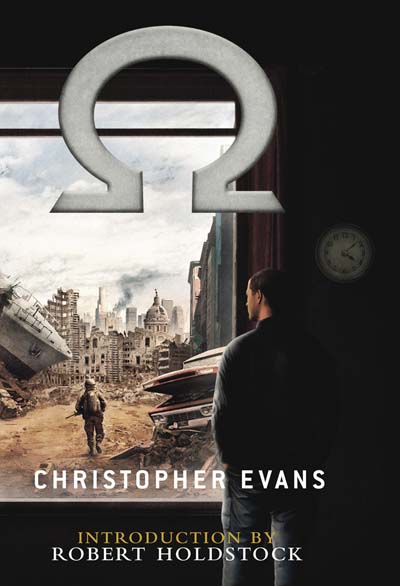
Christopher Evans’ Omega will likely be worth a post, as will Lewis Shiner’s Black & White. Then there’s Lawrence Durrell’s second novel, Panic Spring, originally published under the name Charles Norden. And, from the sublime to the, er, slightly ridiculous, there’s Child of Earth by EC Tubb, the recently published 33rd and perhaps final book in the long-running Dumarest Saga.

I’d also like to write about the Beacon Books I’ve managed to collect – but I read during my commute to work and, given their cover art, I’d be too embarrassed to read them on the tram. But we’ll see.

And, of course, whatever other books I read which inspire to me write something about them.

As a reminder, here are the books I’ve written about on this blog to date, in alphabetical order by author. It doesn’t include my annual reading challenge posts. Click on the title to go to the review.


10 Comments

2009 Reading Challenge #2 – Rendezvous with Rama, Arthur C Clarke

There’s a fitting synchronicity to my choice of Rendezvous With Rama by Arthur C Clarke as the second book of my 2009 Reading Challenge. Like Larry Niven’s Ringworld, it is a book that’s dominated by a Big Dumb Object. It also won both the Hugo and Nebula Awards for Best Novel, and is in the SF Masterworks series. So, another highly-regarded science fiction novel. In fact, it’s probably considered Clarke’s best novel, and he’s one of the “Big Three” of the genre, with Robert Heinlein and Isaac Asimov.

The plot of Rendezvous With Rama is not complicated. In 2131 AD, an object – named Rama by Spaceguard – is detected entering the Solar system. It is determined to be artificial, and the nearest spaceship is sent to investigate. The crew of Endeavour discover that Rama is an alien artefact, a cylinder fifty kilometres long and sixteen kilometres in diameter. Its interior is hollow, and it is roatating fast enough to provide gravity on its inside surface. Endeavour‘s crew explores Rama as it travels through the inner Solar system towards the Sun. They find no clues to its makers or origin. In fact, it is deserted but for a wide variety of “biots”, or biological machines. Eventually, the explorers abandon Rama, and the artefact uses the Sun to boost itself on a path out of the Solar system. End of story.

In other words, very little actually happens in the book. There is no explanation, no resolution. Rama is presented as a puzzle, but there is no solution. It is alien.

Rendezvous With Rama is a strange book in many ways. Not just the complete lack of narrative closure, or the way it resolutely fails to answer the questions it poses. It is also a book which has aged both gracefully and badly.

The framing narrative, which introduces the world of the future and then describes the deliberations of the committee overseeing the exploration of Rama, reads as though it’s taking place in the 1950s. Even in 1972, it must have seem dated. In 2009, of course, it reads even more out-of-date: for example, “when he was able to get computer time to process the results” (page 14). In 1972, perhaps, when mainframes were prevalent, this might have seemed plausible. But the novel is set in 2131. One hundred and fifty nine years later. One hundred and twenty-two years in our future.

The main narrative details the exploration by Commander Norton, captain of Endeavour, and his crew. The emphasis is on Rama itself, which helps distance the novel from its time of writing. The characters are also so bland they could be from any age. Admittedly, it’s also very Anglophonic Americo- and Euro-centric – far more so than any vision of the future written now would be. But their concerns are immediate, direct and almost entirely related to the story, so nothing especially jars.

However, like Ringworld, Rendezvous With Rama is over-shadowed by its eponymous BDO. It’s Rama that stays with you. There’s not much in the way of plot, anyway. And the characters aren’t remotely memorable.

But.

Should a science fiction novel be remembered for its furniture or for its story? Both Ringworld and Rendezvous With Rama have been lauded, and are held in high esteem, for the invented artefacts their casts discover and/or explore. Not for their story, or their writing, or indeed any of their characters. It’s little wonder the genre is held in low regard, when the fans themselves apply such reductive appreciation to the works they deem “classics”. After all, Dickens’ Great Expectations is not notable for Miss Havisham’s ruined mansion.

Rendezvous With Rama is an odd book. There’s a timelessness to its story, but its narrative firmly dates it. Its refusal to explain itself makes it more interesting than, by rights, it actually should be. If science fiction were only about “sense of wonder”, then Rendezvous With Rama succeeds as a science fiction novel. But it has not aged as gracefully as memory might insist it has. It’s the product of an imagined world, which in turn created imaginary worlds, which never really existed. And that tells against it.

In the final analysis, Rendezvous With Rama is, I suppose, another partial success. I’m glad I reread it. I may do so again one day. While it’s certainly not a very good novel, I’m beginning to wonder if it’s a good science fiction novel and if “good science fiction novel” means it doesn’t have to be a “good novel”…