It seems my last Reading diary post upset a few people. I’m not in the slightest bit bothered, of course, because those people are the selfsame ones whose opinions I said I didn’t care about and, er, it’s that which has upset them.
But back to the books. This post includes another Clarke Award nominee. I’m not sure if I’ll read the others. Two I would certainly like to, but there’s something about ebooks… well, I’m reluctant to buy them when they’re priced the same as the paperback edition. I mean, at least you get an object for that money with the paperback. As yet, the three nominees I’ve yet to read have not been on offer on Kindle. I may bite the bullet at some point, but when there’s so much else to read I’m not in a rush.
Meanwhile, I’ve been doing quite a bit of comfort reading – mostly Georgette Heyer, er, when they’re available for 99p on Kindle; although I’m also enjoying novels by Alice Chetwynd Ley – which I don’t bother writing about here. Of the books I have written about below… One was a reread by a favourite writer, although I’ve no idea when I originally read it. One was by another favourite writer, but I found it bitter and disappointing. One is, as mentioned earlier, a Clarke nominee. One was by a writer I’d been meaning to read for many years but had never quite got around to (one of their novels looked interesting, but reviews were lukewarm). And one is another instalment in a series I’ve enjoyed, although I found this one a little disappointing.
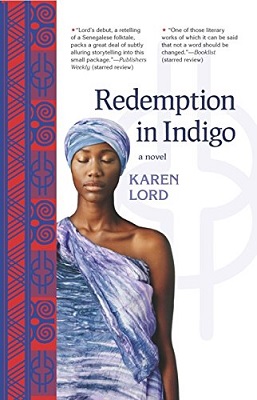 Redemption in Indigo, Karen Lord (2010, Barbados). This was a freebie, or rather a “BONUS BOOK!”, as a strip of paper tucked into the book informed me. I’d ordered a copy of And Go Like This by John Crowley from Small Beer Press (this was not the John Crowley first edition I accidentally ordered twice, by the way), and they included Redemption in Indigo free of charge. All of which is incidental. I was pleasantly surprised by Redemption in Indigo, although to be fair it has had mostly positive reviews. It’s not my favourite type of story – it is, in fact one I generally avoid. The book is structured as a tale told about a woman in a Senegalese-inspired fantasy world who leaves her husband, is gifted with the power of chaos, learns some important lessons at the hands of the god who previously held that power – as does he, of course – before giving the power back and finding contentment. The story is overtly told, and the identity of the narrator is part of the world-building. There’s nothing especially remarkable about either the story or the world-building. While the prose harkens back to older styles of story-telling, it’s a mode that’s been used quite a lot in fantasy fiction. Fortunately, Redemption in Indigo succeeds because it has bags of charm. Its story is not always nice – horrible things happen – but it feels pleasant, and it makes for an enjoyable read. This is a nice book, despite its plot, and the genre needs more of them.
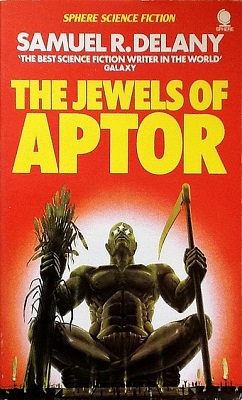 The Jewels of Aptor, Samuel R Delany (1962, USA). I know I’ve read this before – I’ve certainly had the Sphere paperback edition pictured for several decades – so it was probably back in the late 1970s or early 1980s. And having now reread The Jewels of Aptor, nothing pinged any memories. Oh well. A poet and a sailor sign aboard an expedition to rescue the Goddess Argo’s sister from Aptor, a distant continent of horrors and monsters. They are joined by a four-armed boy who is telepathic. Once Geo and Orson and Snake have explored some of Aptor, it’s clear the continent was once technological and suffered an unspecified “atomic” disaster. Quite how this exists alongside a mediaeval style civilisation on Leptor, which is where Geo, Orson and the Goddess Argo are from, is never explained. Perversely, if the book has a flaw, it’s that it has too many explanations. Whenever something happens, Geo and Orson speculate on what it might mean, or what is being planned. Most of the time they’re wrong; most of the time, it reads more like the author is trying to figure out the plot. But for a work by a nineteen-year-old, this is a better novel than by some current authors twice Delany’s age when he wrote it. Yes, it’s an early work, and the plotting is a bit hit and miss, but the beginnings of the language are there, as is the singular approach to the genre. When I think about what Delany has written over the years… He was a genre stalwart and award winner but has since moved out to the edges of genre, and yet has continued to be one of the real innovators in science fiction, both as a writer and a critic, and more people in genre should pay attention to him.
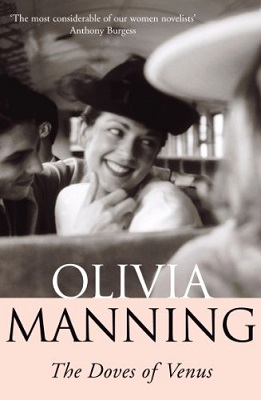 The Doves of Venus, Olivia Manning (1955, UK). I’ve been a fan of Manning’s writing since reading her The Balkan Trilogy and The Levant Trilogy (they were adapted for television as Fortunes of War). Manning spent World War II outside the UK after her husband was first posted to Romania… followed by Greece, Egypt and Palestine. She then returned to England, where she remained until she died in 1980. And The Doves of Venus is clearly written by someone who had tasted better and now found the UK miserable and close-minded. I can sympathise. The book is set in the 1950s but is partly based on Manning’s own life in London during the 1930s. An eighteen-year-old young woman tries to make her own way in London. She meets a man, much older, whose wife has left him, and enters into an affair. Her lover’s wife comes back. She makes friends with a woman at work and they visit the friend’s rich uncle in the country. And so a small group of people sort of circle about each other, meeting up unexpectedly, some living hand-to-mouth, but others rich but parsimonious… and I suppose part of the problem with this novel is that its cast is too small for its story, and the way they keep on bumping into each other seems wildly implausible in a city the size of London. The protagonist, Elsie, is well-drawn and refreshingly independent, especially so given the period (and this was written in the 1950s too), although she’s woefully naive when it comes to her lover (albeit not entirely implausibly). But the 1930s casts a shadow over The Doves of Venus its purported setting can’t overcome. I’ve read other novels set in London during the 1930s, set in the same group of people to which Manning belonged, such as Lawrence Durrell’s Pied Piper of Lovers (1935), and it bears more resemblance to The Doves of Venus than, say, many of the films I’ve watched that were set, and made, in 1950s Britain. There’s also that bitter air to the novel, the feeling of constraint and close-mindedness, that is hard to get past. Manning’s books apparently received mixed reviews on release, with The Balkan Trilogy and The Levant Trilogy generally highly regarded and other books less so. I think she has an oeuvre worth exploring, even if it is variable, and the aforementioned trilogies certainly giver her a huge amount of credit. One for fans.
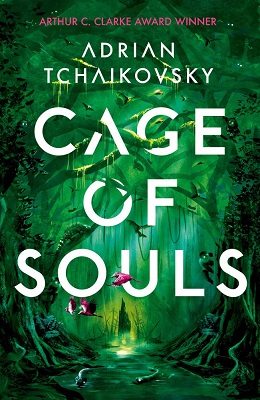 Cage of Souls, Adrian Tchaikovsky (2019, UK). I’ve now read half of this year’s Clarke Award shortlist. And… oh dear. One nominee is a space opera du jour, also nominated for the Hugo and Nebula (which it did not win), and spends more time on world-building and its protagonist’s love life than it does on plot or ideas. Another is a near-future B-movie, poorly-written hackwork filled with recycled tropes. And now, Cage of Souls… Tchaikovsky is scarily prolific, banging out novels in a range of genres and subgenres with inhuman rapidity. He previously won the Clarke in 2016 for Children of Time, and the BSFA Award this year for its sequel, Children of Ruin. I’ve read the first, but not the second. His other books have been fantasy or steampunk. Cage of Souls is, at least, quite well-written – certainly above average for the genre, but not really stand-out prose – but unfortunately it also reads like a novel Robert Silverberg could have written in the 1970s. It is bizarrely old-fashioned. It is set during the final days of Earth, when only a single city, Shadrapar, remains. So who the stranger in the line, “How can I describe to you, a stranger who will never know it, the place of my birth?”, is something of a mystery. The characters have mostly contemporary names, and are pretty much exclusively European. There are very few women in the cast, and they’re chiefly defined by their attractiveness. The words “man” and “mankind” are used to refer to humanity. And the plot assumes that after hundreds of thousands of years of civilisation, humanity will have regressed to something like late nineteenth-century USA, or, er, early twenty-first century USA. The narrator is sent to the Island, a prison located in the middle of distant swamp, where the inmates are treated worse than slaves, and could be killed by the guards for no reason – the Marshal even murders one of each new intake of prisoners simply to prove that he’s a hard bastard. I honestly thought we’d got this sort of nonsense out of our system. Yes, there’s all those self-published mil sf and space operas, but who takes them seriously? Except recently there have been announcements about new space operas by established writers, and it’s the same tired old genocide in space shit. Is it the times? The US and UK are currently led by half-witted corrupt incompetents who make Nero look “strong and stable”, and both have dismally failed to contain the pandemic, with catastrophic consequences… So the genre starts churning out mindless genocidal crap as some sort of antidote? Seriously? Sf is, I admit, a US mode of fiction, but we are under no obligation to accept uncritically its specifically American tenets. Having said that, it wasn’t until two thirds into this novel I realised Tchaikovsky was riffing off Gene Wolfe’s The Book of the New Sun, and while I have to applaud the ambition – and my feelings toward Wolfe’s fiction are conflicted – the comparison does Cage of Souls few favours. I looked at the full submissions list for the Clarke Award and it took me no more than five minutes to find a dozen books more interesting than those on the actual shortlist. I’ve not read much Tchaikovsky but I’d consider him a safe pair of hands – and he did win the BSFA Award this year – but I have to wonder why Cage of Souls was picked for the shortlist because it doesn’t feel at all like twenty-first century science fiction.
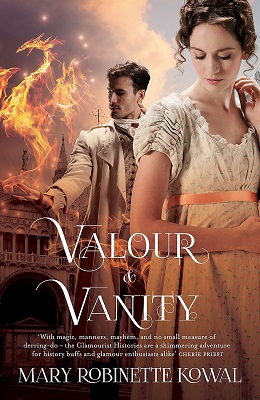 Valour and Vanity, Mary Robinette Kowal (2014, USA). This is the fourth book in a, to date, five book series about a married pair of “glamourists” in the early eighteenth century. Or, in other words, Austen with magic. Or maybe Heyer. Except… while the husband’s patron is the Prince Regent, the tone doesn’t really match Heyer’s Regency novels. On the other hand, they’re lighter, and more overtly romantic, and less wittier, than Austen. Still, they’re fun. In this instalment, David and Jane Vincent are visiting Italy, chiefly to work with Venetian glassmakers. Their ship is attacked by corsairs while travelling from Trieste to Venice, but it all turns out to have been part of a scam to steal the pair’s secret of invisibility. Kowal manages a mostly English feel to her prose, although the level of emotion is obviously aimed at a contemporary US audience rather than a British one (and certainly not a UK audience of Austen’s or Heyer’s times). However, something about Valour and Vanity never quite gelled for me. Perhaps it was the fawning depiction of Byron, or the excessive interiority, or the overly-complicated convolutions of the plot, or the flatness of the supporting cast. Having said that, to get to book four before delivering a duff instalment is a notable achievement. I’m obviously going to pick up the final book, and I hope more will appear.