It Doesn't Have To Be Right…

… it just has to sound plausible


5 Comments

Moving pictures, #9

Yet more films wot I have watched of late. This brings the moving pictures posts pretty much up to date, so I won’t need to spam my blog with them quite so much from now on. Although I’m still watching rather a lot of movies, due to a lack of anything interesting on terrestrial or cable television. Perhaps I should turn the damn thing off some evenings and read a book or something…

aharddatsnightA Hard Day’s Night*, Richard Lester (1964, UK). I think I must have seen this, perhaps back in the 1970s or something, because it seems an unlikely film to have missed. Having said that, I could remember almost nothing about it – and even now, a couple of weeks after watching it, I’m having trouble recalling the actual plot. Not, it has to be said, that there was much of one. The Fab Four travel to London with Paul McCartney’s grandfather (played by Wilfred Brambell), their manager and their road manager. The band are due to perform on a television programme. It was pretty clear the cast had fun making the film, and there was definitely a manic energy to it – but Lennon’s snidery palled quite quickly, a couple of long-running jokes ran too long, and the music was, well, frankly not that great.

dulwaleDilwale Dulhania le Jayenge*, Aditya Chopra (1995, India). This one was a surprise. I’ve seen bits and pieces of Bollywood films over the years, but I don’t think I’ve sat all the way through one. Nonetheless, I thought I knew what to expect and I suspected watching this film was going to be a chore… but I really enjoyed it, it was actually really good. Wastrel son of a wealthy NRI in London decides to go Interrailing before joining the family firm. Meanwhile, eldest daughter of a hard-working NRI who manages a petrol station will soon be married to the son of her father’s best friend back in Kashmir… so she too decides to go Interrailing first. The two bump into each other as they travel about Europe, fall in love, with much singing and dancing and comedy. Afterwards, she has to go to Kashmir for the wedding, there’s no getting out of it, but he follows and tries to win over her family (the two pretend not to know each other). A smart well-made rom com, with some fun song and dance routines, a well-handled plot and a pair of likeable leads. If you fancy trying a Bollywood film, put this one at the top of your list.

thesunThe Sun, Aleksandr Sokurov (2005, Russia). This is the second of Sokurov’s quartet of films about men in power, and the subject of it is Emperor Shōwa of Japan. (While we in the West know him as Emperor Hirohito, that was his personal name and he’s now actually referred to using his posthumous name, Shōwa.) The Sun concerns the days immediately following Japan’s surrender and the emperor’s meetings with General MacArthur. Apparently, the film caused a bit of a fuss on release, perhaps because it suggests the emperor is almost an innocent, a mild-mannered educated man who tinkers with marine biology and lives in a hermetically-sealed world in which he is considered divine by all about him. That is, until he meets MacArthur. It’s considered likely he was actually a war criminal, and very much responsible for Japan’s conduct of the war – but he seemed to escape justice. Sokurov, however, is not concerned with the truth, or as in Moloch, an historically accurate portrayal. The Imperial Palace depicted in The Sun, for example, is simply a large 1920s villa and bears no resemblance to the actual Tokyo Imperial Palace. The film depicts the emperor’s descent from divine to human – not an actual change, of course, but a matter of perception. I’m not convinced it’s as successful as Moloch, perhaps because it follows a more considered approach, which tends to flatten the story’s affect, whereas Moloch‘s manic infantilism suited its topic perfectly. I still want to know why Taurus isn’t available in an English-language edition, however.

satansbrewSatan’s Brew, Rainer Werner Fassbinder (1976, Germany). Not the most successful Fassbinder film I’ve seen so far. A previously-successful poet, now suffering from writer’s block, shoots his mistress, and then sort of runs around manically, demanding sex from Ingrid Caven, who is married someone else, visiting his own wife and intellectually disabled brother? brother-in-law?, and charging around various places demanding money. The Wikipedia plot summary, which is not very long, concludes with, “Some more obscure things happen but in the end everyone is back on stage”. Which is as good a way of describing it as any. The contents of this Fassbinder box set have been somewhat variable, but I’m glad I’ve seen the films.

bela_tarr_collectionWerckmeister Harmonies, Béla Tarr (2000, Hungary). I’ve yet to decide what to make of Tarr’s films. That they’re slow, with very long takes, and filmed in stark black-and-white, and that sort of film-making appeal to me far more than the frenetic jump-cuts of your present-day Hollywood tentpole franchise movies. (But I also like Technicolor movies, too.) Tarr’s films are also allusive, which again is something I appreciate, in both film and literature. But I think what’s preventing me from really falling for this movie, or the other Tarr I have seen, The Man from London, is that there’s something very play-like about the way they’re put together. And for some reason the mismatch between theatrical presentation and cinematic technique never quite  works for me. In Werckmeister Harmonies, a travelling circus, whose chief attraction is a stuffed whale, appears in a Hungarian town, and triggers a wave of violence. I’m going to have to watch this film again, I think, as while some bits of it seemed to work really well, the allegorical skeleton on which the plot was hung didn’t articulate quite as well for me as it was likely intended to. But at least I bought the box set, so I can rewatch the films at my leisure. Incidentally, I also bought mysql a copy of Sátántangó, so I’ll be able to watch all seven hours of that at my leisure…

foxFox and his Friends*, Rainer Werner Fassbinder (1975, Germany). A young gay man, played by Fassbinder himself, is obsessed with winning the lottery. Which he does, shortly after entering into a relationship with an older man, an antiques dealer. When the antique dealer’s friends discover that the oick they’re looking down their nose at is worth half a million DMs, they set about swindling him out of his money, seducing him and persuading him to pay their way out of their financial difficulties. Which he happily does, wrongly impugning more than just mercenary motives to their treatment of him. Prior to receiving this Fassbinder box set for Christmas, I had never seen one of his films. And I’ve now seen seven (of the eight films in the box set), and there have been some good ones and some not so good ones. I’ve yet to decide whether I want to explore more of Fassbinder’s oeuvre – and he made a lot of films – probably because so many of the contemporary ones seem very similar in tone and presentation. Perhaps I just watched too many of his films in too short a period – like the time I watched three seasons of The X-Files back-to-back, three or four episodes a night, and could hardly sleep afterwards I felt so paranoid…

dawnofdeadDawn of the Dead*, George A Romero (1978, USA). No, I’ve never actually seen this before, and no, I probably would never have bothered if it hadn’t been on the 1001 Movies You Must See Before You Die list (and how many films on the list have I said that about?), and I’ve never been a fan of zombies, a trope that’s been used intelligently perhaps a handful of times since it first appeared. And, to be brutally honest, this isn’t one of them. Something has caused the dead of the US to rise as flesh-eating zombies – your basic zombie trope, in other words – and a group of people escape various encounters with them, including an extended sequence set in a shopping mall. The film was made of the cheap, and looks it; and the some of the special effects, while gruesome, look cheap and stagey. Apparently, I watched a director’s cut but there’s some confusion over which particular one. All I remember is that it was long, and while there was plenty of action there wasn’t much plot. I’ll admit I’m not a fan of horror films – I’m far too squeamish – and I can perhaps understand how Dawn of the Dead might be seen as a “classic”… But there wasn’t a fat lot there to appeal to me, and I’m happy to just cross it off the list.

1001 Movies You Must See Before You Die count: 582


10 Comments

I haz the award sad

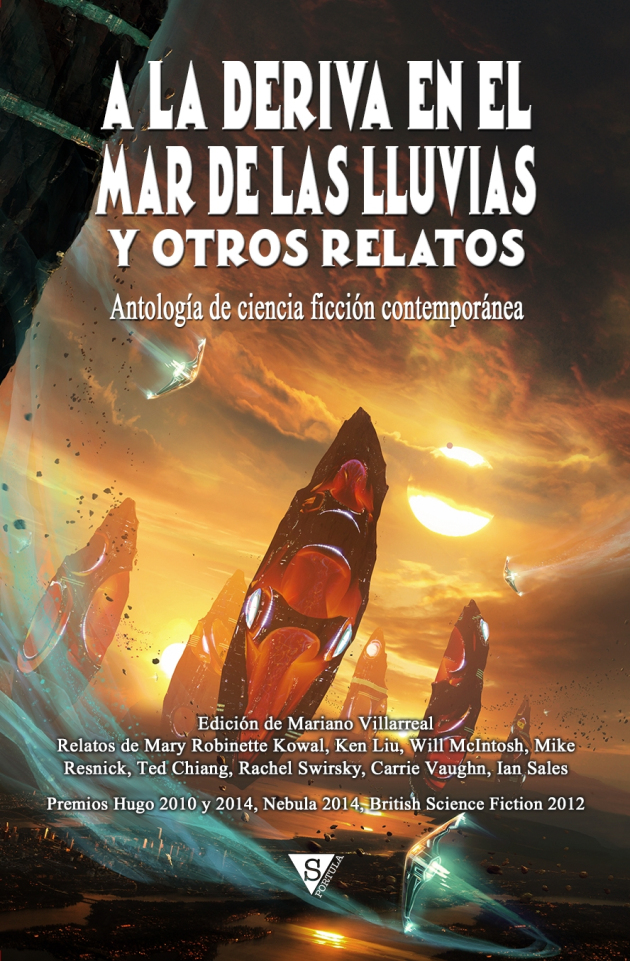
Back in 2012, I self-published a science fiction novella, Adrift on the Sea of Rains. I had expected it to disappear without trace, so I was surprised and delighted when it was nominated for the BSFA Award. And it won!

Wow.

AQ2_2nd_edn_coverAdrift on the Sea of Rains was the first book of the Apollo Quartet, it said so on the cover. The second novella of the quartet, The Eye With Which The Universe Beholds Itself, was actually published a couple of months before Adrift on the Sea of Rains won the BSFA Award. Some people liked it better than the first novella. The third novella, Then Will The Great Ocean Wash Deep Above, was published in November 2013. Like the other two books, it received some really good reviews. Even Adam Roberts, an extremely sharp and insightful critic, wrote of Then Will The Great Ocean Wash Deep Above, “excellence is here”.

A number of people I knew online told me they were nominating The Eye With Which The Universe Beholds Itself or Then Will The Great Ocean Wash Deep Above, or both, for the Hugo. I did myself too (in hindsight, not the smartest thing I could have done).

Then the Hugo shortlists were announced. I wasn’t on any of them. I was disappointed.

But what I did not do was go home and start up a Sad Ian campaign to get myself nominated the following year. Oh, I wouldn’t have framed it as a “get Ian nominated for the Hugo” campaign. I’d have said there weren’t enough self-published works getting nominated: Sad Indies. Or perhaps I’d have complained there weren’t enough Brits on the shortlists, despite the Worldcon taking place in the UK that year: Sad Brits.

AQ3_2nd_edn_coverAnd then I would have got a bunch of people who like my fiction, or believed my lies, and persuaded them to nominate me and a few other random members of my clique. But I’d have made sure everyone knew it wasn’t about me or my inability to get nominated. It’s about indie writers! Or, it’s about Brit writers! And if the stats didn’t back up my position, well, I’d just lie, or point fingers at someone popular I could recast as the villain of the piece.

I spent half an hour this morning tallying up the gender balance of the Hugo Award fiction categories since 1959. It doesn’t make for pretty reading. In 1962, 1965, 1966, 1967 and 1971 zero women were nominated. Typically the percentage hovered around 85% male to 15% female, although in 1992, male writers were in the minority for the first time (48% male, 52% female). In 2010, things started to change. The percentage of women on the shortlists doubled to 39%. And in 2011, 2012 and 2013, women outnumbered men.

hugomf

But then the Sad Larries happened. And last year, the percentage dropped to 62% male and 38% female. And this year, they managed to drop it even further to 80% male and 20% female. And yet they claim they ran their slate to increase diversity! On what planet does more white men on the shortlists than before mean increased diversity?

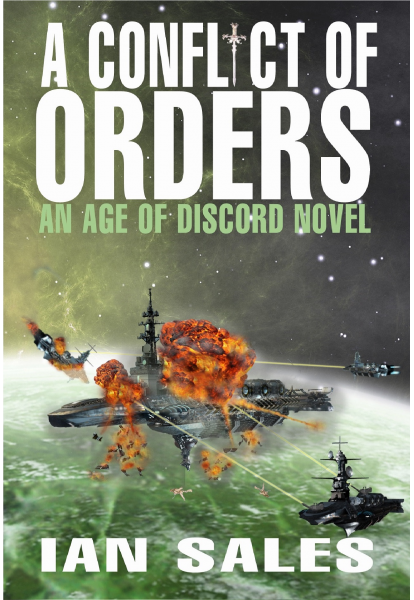
Screen Shot 2014-10-08 at 3.46.35 PMThis year, I have three novels published – the final book of the Apollo Quartet, All That Outer Space Allows, from Whippleshield Books; and the first two volumes my space opera trilogy An Age of Discord, A Prospect of War in July and A Conflict of Orders in October (the final book, A Want of Reason, will appear next year). I don’t want to be sad next year because none of them were nominated.

VOTE FOR SAD IAN!

A VOTE FOR SAD IAN IS A VOTE FOR MORE IAN!*

(* For the record, I’m taking the piss. You know, just in case certain people decide to use this post as more ammunition for their sealioning.)


6 Comments

Reading diary, #5

So far this year I’ve read 37 books, which, judging by previous years, should see me read 150 books by the end of the year. This is just as well as I’ve joined the 150 books reading challenge on GoodReads, although it’s currently telling me I’m 2 books behind schedule. Oh well.

sacrificeSacrifice on Spica III, Eric Brown (2014). This is the second of Brown’s Telemass quartet, published by PS Publishing, and set in the same universe as some of his earlier fiction, such as the Starship Seasons quartet (see here). Retired Dutch police officer Hendrick is trying to track down his ex-wife, who has stolen their terminally ill but in medical stasis daughter, and their trail leads him to the titular planet. Spica III has a highly eccentric orbit and is due to go into five years of severe winter – so severe all travel to and from the planet will be suspended. Hendrick has to find his wife and daughter before that happens. En route, he runs into an old colleague, who explains he is hunting for his superior officer’s estranged wife, who is wanted for murder. Hendrick remembers the wife, he had an affair with her years before, and he doubts she’s guilty, but he agrees to help. The plot of Sacrifice on Spica III concerns that investigation, not Hendrick’s wife and daughter. It includes a typical Brown touch, a death cult whose members commit suicide by entering a sort of liquidizer, which then squirts them up into the air and their liquid remains freeze instantly in Spica III’s sub-zero climate. It’s pretty gruesome. Otherwise, a polished piece, although it does seem to depend a little too much on coincidence, back-shadowing and serendipity.

shortnovels2St Mawr, DH Lawrence (1925). The title is the name of a horse, bought by American heiress Lou for her husband, Australian and baronial heir, Rico. But this is DH Lawrence, so a horse is not just a horse of course of course. After a stay in London, with much riding in Hyde Park, the couple decamp with Lou’s acerbic mother to the wilds of Wales, where Rico seems to be more interested in a female friend who lives nearby. When St Mawr, who is very spirited, throws Rico, he ends up bed-ridden, and Lou decides she’s had enough. She follows her mother to London, and then across the Atlantic to the US. Where she eventually buys a run-down ranch somewhere in New Mexico. There are also a pair of grooms, a taciturn Welshman who came with St Mawr, and the mother’s, who is a Native American. In between the manly charms of the grooms, and the metaphor galloping through the text, Lawrence seems to have forgotten his plot. Still, it’s a lot more disciplined than, say, Sons and Lovers, although that’s much the better novel.

ancillaryswordAncillary Sword, Ann Leckie (2014). This won the BSFA Award last weekend, and I’ll admit to being disappointed. There were better books on the shortlist, and it’s likely this sequel was trading on the massive success of its predecessor. Now I liked Ancillary Justice and I liked this book too. But where the first felt like a much-needed return to progressive space opera, something that had been sadly lacking for several years, Ancillary Sword doesn’t so much feel like more of the same as it does a fellow traveller on previously-trod ground. And if Ancillary Justice let out a slight whiff of Susan R Matthews’ novels, Ancillary Sword reeks of it. This is no bad thing – I’m a big fan of Matthews’ books, and it’s a crying shame she was dropped by her publisher more than ten years ago (and her second publisher went under after publishing just one of her books). But Ancillary Sword… Breq has been given command of a warship and sent to a planetary system that appears to have been cut off. There she discovers inequality and near-slavery, not to mention some nasty little conspiracies, which she resolves. The main plot of the trilogy – the war between the two factions of Anaander Miaanai – is pretty much parked to one side for the bulk of the story. Which also introduces a fresh mystery toward the end. If this is going to be a trilogy, I can’t honestly see any shape to it, and two-thirds of the way in you’d expect one to be visible.

girlsofriyadhGirls of Riyadh, Rajaa Alsanea (2007). This was apparently a bit of a phenomenon when it was published, a Sex & the City take on Saudi society by a young Saudi woman studying in the US. It’s a shame then that it’s all a bit juvenile. It’s presented as a serial told via email by the author, who prefaces each chapter with an email “answering” some of the responses she’s received to the previous chapter. The story itself is about four young women – Lamees, Michelle, Gamrah and Sadeem. Gamrah marries Rashid, and travels with him to the US, where he is studying. But he seems more interested in a prior US girlfriend, and Gamrah finds it hard to cope with life in the West. She returns to Riyadh, pregnant. Sadeem falls in love, arrangements are made, contracts exchanged, but a couple of days before the ceremony she succumbs to his blandishments and lets him take it too far… so he divorces her. Michelle falls for a young man from a good family, but his mother won’t hear of her son marrying beneath him, so he breaks it off. And Lamees is a bit of wild thing, making friends with Shi’ites, visiting chat rooms, and getting arrested for meeting a young man in a café. And other things happen too. While it shows the appalling treatment of women in Saudi well, and I realise English is not the writer’s first language, but it is the translator’s, this could really have done with a lot of a polish. The novel is structured to look like the titillating adventures of an amateur writer, and the prose reads like it was written by an amateur too.

strangebodiesStrange Bodies, Marcel Theroux (2013). Theroux’s 2009 novel Far North was shortlisted for the Clarke Award, so I read it… and I wasn’t much impressed. So I’m not sure what possessed me to give Strange Bodies a go – yes, people recommended it, and the premise sounded interesting, but… Anyway, I’m glad I did. If the plot doesn’t quite match the striking opening, the journey to the end is at least a damn sight better than you’d get from a typical genre novel. A man who apparently died a couple of years before, and in fact in no way resembles the dead man, contacts an old friend, who is persuaded of his claimed identity. Later she finds a thumb drive, containing the document which forms the bulk of the novel – which proves to be the history of a man, a Samuel Johnson scholar, who was asked by a media mogul to authenticate some letters and finds himself caught up in a secret Soviet experiment based on the Common Task (I’ve read up on Fedorov for a WIP, so I knew exactly what this referred to). The scientific scaffolding for the central premise was a little hard to swallow, but all the stuff wrapped around it was very good indeed. I thought the Johnson scholarship very clever, and the way Theroux handled the premise good. Despite my feelings about Far North, I am, much like several other people, surprised this never made any award shortlists.


9 Comments

Cyberpunk film challenge

Shaun Duke challenged me on Twitter to name “5 great cyberpunk movies that most people have never heard of” and while no great fan of cyberpunk – books or films – I decided to take up the challenge. Although, to be fair, I can’t in all honesty describe any of the following films as “great”… And their categorisation as cyberpunk might be a bit wobbly too. But I’m pretty confident Shaun hasn’t heard of them…

The Ugliest Woman In The World, Miguel Bardem (1999, Spain). Aka La mujer más fea del mundo. A near-future thriller, but set in a world which would be familiar to cyberpunk fans. A young woman undergoes experimental gene therapy, which makes her beautiful, she then murders a contestant in a beauty pageant in order to take her place… and then proceeds to kill the other contestants. It’s not a cyberpunk plot, true enough, but the technology used by the detective sort of qualifies.

avalonAvalon, Mamoru Oshii (2001, Japan/Poland). In a sepia-tinted Poland, a woman jacks into VR to play a combat game, and which rumour has it contains a special level. Which she eventually reaches. The look of this film is absolutely gorgeous – not just the parts set in the “real world”, but also those in the VR combat game. It’s one of my favourite movies.

Natural City, Byung-chun Min (2003, South Korea). It’s been a while since I last watched this – I lent my copy to a friend and never saw it again. I remember it as being a polished sf film set some sixty years in the future, with visuals reminiscent of Blade Runner but a way more action-packed story.

renaissanceRenaissance, Christian Volckman (2006, France/UK). A black-and-white animated film which was definitely going for a noir look, although the story and Paris of 2054 is pure cyberpunk. A genius young scientist is kidnapped and a hard-boiled police captain looks into the matter for the scientist’s corporate masters.

Black Heaven, Gilles Marchand (2010, France) AKA L’autre mond. A young man obsesses over a young woman, and discovers she is a frequent visitor to an on-line VR world. So he buys himself a copy of the game, and goes hunting for her. A reasonably stylish French thriller sadly let down by somewhat clunky CGI for the VR world.

I did think of a few more films, even though Shaun only asked for five. While Demonlover, Olivier Assayas (2002, France), probably qualifies – and Assayas has made many good films – the copy I bought proved to have Italian audio and Italian subtitles… so I’ve not seen it. Until The End Of The World, Wim Wenders (1991, Germany), AKA Bis ans Ende der Welt, is a film I like a lot but it may be stretching a point to describe it as cyberpunk. But back when it was released, the near-future it depicted was pretty cyberpunk-ish. As for Memory Run, Allan A Goldstein (1995, Canada), its corporate-controlled world probably qualifies as cyberpunk, even if its plot doesn’t (it’s apparently loosely based on Jean Stine’s novel of sex-change judicial punishment, Season Of The Witch).

So, Shaun, how did I do?


3 Comments

Moving pictures, #8

The Blu-ray was starting to crackle and fill the screen with static when you ejected a disc, and its remote control was seriously irritating me with its bad design and hard-to-figure-out-what-button-was-what; and the old stereo was just sitting there doing nothing since only the DVD-player had been plugged into it… So I had a bit of a clear-out. I bought myself a new Blu-ray player, one that can play all regions of DVD and Blu-ray, from mrmdvd.com, and chucked everything else away. I also bought myself a soundbar, but it turned out my 18-month-old television didn’t have the necessary new-fangled output for it, so I had to cancel the order. Gah. Backward compatibility FTW. Not. Anyway, the corner of the living-room now looks a lot tidier, the new player works very well indeed, and, of course, I’ve watched my Criterion Blu-ray of All That Heaven Allows*…

europa_europaEuropa Europa*, Agnieszka Holland (1990, Germany). A Jewish boy is captured by Soviets while escaping Germany, grows up in a Soviet orphanage, but is then captured by Nazis – and pretends to be an Aryan German. It’s based on a true story, and protagonist Jupp (AKA Solomon Perel, AKA Josef Peters) first acts as translator to front-line Wehrmacht troops, but is then sent to a Hitler Youth school. Where he falls for an Aryan mädchen, a dubbed Julie Delpy… except she wants a child for Hitler but Jupp can’t let her see his todger because he’s circumcised and that’ll reveal him as a Jew. This is all based on a true story – in fact, the real Jupp appears as himself in an epilogue set in Israel in the year of filming. But I never quite felt the film got across the fear Jupp must have been feeling as he masqueraded as a Hitler Youth. The hate, not to mention the rejection, of his position was there, and some of the lengths Jupp went to in order to disguise his race, not to mention his reasons for doing so, were certainly horrific. This is an excellent film, and if it fails occasionally in the implementation, it’s still a story that demands to be told. Definitely worth seeing.

shock_aweAntichrist, Lars von Trier (2009, Denmark). I’m really not sure what to make of von Trier’s films. There was much to admire in Antichrist, for example – including a scene supposedly imagined during therapy that was pure Sokurov – but it’s always like 4 and 5 makes 10. Admittedly, the final credits revealed Antichrist was dedicated to Tarkovsky, which made some of it understandable (including that Sokurov-ish scene), but some of von Trier’s signature touches seemed to work much better than others. A couple lose their child, and the husband – Willem Dafoe – persuades the wife – Charlotte Gainsbourg – that they must go to an isolated cabin in the woods. Then it all goes a bit strange. In von Trier’s favour is that his films bear, if not demand, re-watchings. There are elements in this one, for example, which don’t initially seem to make sense. But there’re also those which plummet toward the schlocky, which other von Trier films have suffered from. After so much metaphorical and allegorical payload, the film turns into art house horror, and it does tend to undo what’s go before. It’s not that von Trier does not have the courage of his convictions – if there’s one thing this film does not lack throughout its length, it’s conviction – but it often feels like he does’t have enough confidence in his allusiveness, or feels a need to shock the viewer as if whatever judgement a film may receive will depend entirely on that shock value. When you look at earlier films, such as Europa, the shocking end felt of a piece with the story, and if it seemed melodramatic it was at least in keeping with the movie’s aesthetic. But in Antichrist, the horror doesn’t quite blend… and I can’t decide if that’s a deliberate provocation or an unintended artefact. I suppose the fact I can’t tell at least demonstrates von Trier’s importance as a director…

Lisa-And-The-Devil-blu-rayLisa and the Devil, Mario Bava (1973, Italy). I have enjoyed the odd Mario Bava in the past, and I do like the fact they’re very much movies of their time and not particularly gory… so I bunged a few on the rental list, and one of them dropped through the letter box. Also, of course, Elke Sommer. While Lisa and the Devil had its moments, and a story that actually wasn’t too bad, this was pretty cheap entertainment and not a film that’s worth watching more than the once. A tourist lost in Toledo stumbles across an antiques shop in which a creepy-looking Telly Savalas is buying an item. Later, having failed to find her friends, she accepts a lift from a couple in a limousine. The car breaks down outside a creepy-looking mansion… and the butler there proves to be Telly Savalas. It’s all something to do with an aristocratic family, a dark secret, and a demon or something. Apparently, the film was recut to resemble The Exorcist in the US and bombed because… everyone thought it was a rip-off of The Exorcist. Duh. More for fans of Bava or bad 1970s horror, I suspect.

daysofheavenDays Of Heaven*, Terrence Malick (1978, USA). I really wanted to like this, Malick is a very visual director and this is one of those not-very-commercial-successful Hollywood film where the auteur seems to win out over the usual crass Hollywood product. There’s also a (mostly) good cast too. But it really didn’t work. It felt like substandard DH Lawrence transposed to 1920s Texas, and the lovely cinematography was not enough to save it. Richard Gere and Brooke Adams move to Texas from Chicago in 1916, and find work with a local farmer. He falls for Adams, so Gere persuades her to marry him so the two of them can live the good life at the farmer’s expense. It ends badly. Duh. This is a film rightly praised for its cinematography, but the story was slow and uninvolving, and even in 1978 Gere might make a good lead in a rom com but he didn’t have the chops for something as serious as this (unlike Same Shepard, who played the farmer). Disappointing.

masculinMasculin Féminin*, Jean-Luc Godard (1966, France). I have mixed feelings about Alphaville and I absolutely adore Le Mépris, but I can’t really say I’ve seen anything else by Godard that I’ve liked. Including this one. The problem with a lot of Nouvelle Vague cinema is that its characters are self-absorbed to a point that makes them unsympathetic and dull to watch. (The same is also true of a some of Rohmer’s earlier films.) As for plot, well, that’s just bourgeois. (I jest, as I actually agree that plot is over-rated.) Anyway, Masculin Féminin is a series of discussions, monologues, diatribes and pontificating by a young man who enters into a relationship with a young woman, and her two flat-mates, who does not share his tastes or politics. I vaguely recall there being lots of polo-neck jumpers and arguments in corridors. It was all a bit yawn.

bela_tarr_collectionThe Man from London, Béla Tarr (2007, Hungary). After watching on rental thirty minutes of Barr’s Sátántangó in which nothing happened, I decided I ought to buy one of his films in order to give him a fair go – and from what I’d read, his style of film-making was likely to appeal. So I bought The Béla Tarr Collection box set, which contains three of his films, and this was the first of them I watched, coincidentally with a friend who was also new to Tarr’s movies. It made for an interesting experience. The story of The Man from London is apparently taken from a Simenon story, and it was a while before we nailed down the setting. But the movie also proved a welcome antidote to most Hollywood films, in that the pacing was leisurely, if not glacial, the cinematography was lovely, it was black and white, and the only way to watch was to patiently let it slowly unfold. It was a little off-putting to have one of the actors dubbed by a Fox brother – they have way too distinctive voices – but given the stately progress of the story it actually seemed to fit really well. I’m told some of Tarr’s films are real exercises in endurance, but this was an excellent introduction to his oeuvre. And I still have two more films to watch in the box set…

planete_sauavageLa Planète Sauvage*, René Laloux (1973, France). A highly-regarded science fiction animated film that happens to be on the 1001 Movies You Must See Before You Die list… so why not buy a copy? On Blu-ray? So I did. And, well… I was expecting weird, the cover of the Blu-ray alone is enough to prime a viewer for weird. And, it has to be said, I do like me some weird in my cinema. But while it struck me that the story of La Planète Sauvage was fairly routine, and something you might find in a bande dessinée or Polish sf story… the animated design by Roland Topor definitely qualified as strange. On an alien world, giant blue aliens – like the one on the Blu-ray cover – keep humans as pets, though there are many “feral” humans about. A baby human is adopted as one such pet by a young alien girl, but somehow manages to follow the electronic teaching she receives and so becomes educated. He later escapes and meets up with a group of feral humans, and persuades them to fight against the aliens… As allegories go, this is pretty in-your-face, and the idea of using sf to hide what you really want to say and make it palatable was past its sell-by date in 1973. But La Planète Sauvage still presents a unique vision, and is worth seeing for that (even if some of the short films included on the Blu-ray are a bit too much Métal Hurlant, and so less interesting).  Nonetheless, worth watching.

baron_bloodBaron Blood, Mario Bava (1972, Germany/Italy). Another 1970s Bava horror film that, er, stars Elke Sommer. A young American man with a toothsome smile visits relatives in Austria, where he learns about a castle which used to belong to an ancestor, called, er, Baron Blood. Sommer plays an archaeologist investigating the castle’s history while it is being refurbished. She and young American man, while acting about, read out a curse inflicted on Baron Blood, and then read out the words meant to lift the curse. So the baron comes back from wherever he was… and after killing a few people ends up as Joseph Cotton in a wheelchair. This is pretty much standard 1970s Euro horror fare, and if it isn’t, it certainly fits my idea of what it might be. It was kind of fun, but even for Bava it was pretty weak.

shock_aweMelancholia, Lars von Trier (2011, Denmark). You know where science fiction literalises metaphors? Now imagine that depression was a giant planet on a collision course with Earth… Von Trier has said that the story of Melancholia was inspired by his discovery that people with depression remain calmer during crises than people not suffering depression. Which revelation actually leads to three readings of the film. As your actual science fiction, it’s nonsense – the near approach of the rogue planet Melancholia, and its effects on the Earth, are not in the slightest bit scientifically accurate. As genre, it’s hard to imagine a literalised metaphor more in your face than a giant planet about crash into the Earth. However, seen as a study of Kirsten Dunst’s character, in the face of the collision with Melancholia… The first time I watched the film, I took the first reading, despite the fact the story is mostly about Dunst’s wedding, subsequent breakdown and recovery with her sister’s family (also the hosts of the wedding and reception). And the planet Melancholia crashes through the story like a giant implausible thing of implausibility. It all looks absolutely gorgeous, of course, but your suspension of disbelief is in sore need of a hook to hang it on. However, a combinations of readings two and three a) renders it a much more interesting film, and b) allows you to appreciate the lovely cinematography for what it is. I thought Melancholia much better on this rewatch than I had the first time I saw it. I still need to work out what von Trier is doing with his films, but he’s certainly one of the more interesting directors currently making movies.

1001 Movies To See Before You Die count: 577

* For the record, the colours are gorgeous, but the picture is so precise it appears slightly grainy, and the shadows and dark areas tend to block out a little. And I really need to get a soundbar or something. Oh, and the film itself is still brilliant.


2 Comments

Moving pictures, #7

More catching up on my viewing. Despite the death of the DVD-player, and a few hiccups from the Blu-ray player, I’ve still managed to watch around two films a night for the past few weeks. Actually, quite a few of the ones mentioned below are rewatches…

elegy_voyageElegy of a Voyage, Aleksandr Sokurov (2001, Russia). It should be obvious by now I’m a complete Sokurov fanboi, but it’s films like Elegy of a Voyage I admire most from his oeuvre. The imdb plot summary is is a model of unhelpfulness: “From a misty night into the dark exposition rooms of a museum to ponder philosophically at paintings by Pieter Jansz Saenredam, Hercules Pieterszoon Seghers, Hendrikus van de Sande Bakhuyzen, Andreas Schelfhout, Vincent van Gogh, Pieter Bruegel, Charles Henri Joseph Leickert” – and quite possibly misinformation (I also think they mean “exhibition” and not “exposition”, but never mind.) . Because while Elegy of a Voyage – a documentary, with a voice-over by Sokurov himself – does indeed describe a voyage from a Russian city to a German city and then onto a museum where, among other paintings, the narrator muses on Bruegel’s ‘The “Little” Tower of Babel’, there’s so much more to the film than that. It is, as you’d expect from Sokurov, beautifully photographed, and some of the cinematography is quite breathtaking. The voice-over is also both literate and philosophical – if watching Ingmar Bergman is like watching literary fiction adapted for the cinema, watching Sokurov is like watching the cinematic equivalent of literary fiction. I think this is another film that hovers between ten to twenty in my list of favourite films – which gives Sokurov three spots in my top twenty… And yet many of his films are still not available with English subtitles. I think the BFI should do something about that. They did an excellent job with Carl Theodor Dreyer’s films, so why not for Aleksandr Sokurov’s?

savingprivateryanSaving Private Ryan*, Steven Spielberg (1998, USA). I’d never actually seen this, and being a Spielberg film I probably would never have bothered… but it’s on the 1001 Movies You Must See Before You Die list, and it’s actually held in reasonably high regard… So when I saw a copy in a charity shop for 99p, I bought it. And, to be fair, if I were going to put together a top ten list of WWII films only – and I’m not much of a fan of WWII films – then, yes, I think I’d put Saving Private Ryan in that top ten. The opening scenes depicting the Normandy landings are worth the price of entry alone. The story which follows, in which Tom Hanks tries to find the eponymous private because his three brothers have been killed in combat (in different theatres) and he needs to be shipped home before he enjoys the same fate and leaves the Ryan family with no male heirs… is both faintly ridiculous and a bit dull. Worse than that, however, is the film’s suggestion that WWII was fought entirely by the US. The Germans and Japanese are mentioned as the enemy, but watching this film you’d never know the Allies included a whole raft of nations beside the USA, many of which had been fighting the Nazis for several years before the Americans deigned to get involved. I firmly believe if you teach people lies, they’ll start to treat them like the truth – and Hollywood is one of the greatest liars on the planet. For all its strengths as a war film, it’s astonishing how Saving Private Ryan manages to incorporate something that might offend or upset every other nationality on the planet.

alexandra-lst062587Alexandra, Aleksandr Sokurov (2007, Russia). This was a rewatch – I think I originally watched it on a rental, but having started building up my own collection of Sokurov DVDs, I rewatched it. The title refers to the grandmother of a Russian army officer currently stationed in Chechnya. She goes to visit him, travelling by troop train, and stays in his camp. He, however, is sent away on a mission shortly after her arrival, so she has to look after herself. She wanders about the camp, making friends with the soldiers – they’re all conscripts – and even visits the local market… where she meets some of the local Chechens, and strikes up an acquaintance with a local woman of her own age. Alexandra comments on the Russian invasion of Chechnya simply by documenting it. You see the conscripts in the camp, and it’s clear they don’t really understand what they’re doing; you see the damage the war has wrought on the town. And there’s the commentary of the grandson of Alexandra, who has to maintain discipline using violence (in an incident he explains to his grandmother). Yet what Sokurov depicts is the aftermath and cost of war – the soldiers are innocents, the Chechnyans have survived in spite of the war, Alexandra’s grandson treats his military service like a job… Sokurov apparently is not a believer in plot: “If the film is based on the principle of the story, the narrative, it is not art.” This probably explains my love of his work.

spacebattleship2dSpace Battleship Yamato, Takashi Yamazaki (2010, Japan). This is a live action version of a long-running anime property and, while I’ve been aware of the anime version, anime’s not really my thing so I’ve not made an effort to watch it. But the cover art to the live action version’s DVD sort of appealed to me (I like battleships), so I picked up a copy to watch. And… Well, it starts out like Battlestar Galactica and finishes up like Starship Troopers. The surface of the Earth has been rendered uninhabitable during a war with aliens, but when the hero stumbles across a beacon from crashed alien spaceship it proves to include blueprints for a new intergalactic drive, a powerful weapon, and a set of coordinates in another galaxy. So they fit the Yamato with the drive and a “wave gun” and send it off to the Andromeda Galaxy where, according to the beacon, there is a world which has the technology to return the Earth to its previous state, before it became a radiation-blasted wasteland. It’s not enough that the first two-thirds feel like Battlestar Galactica distilled down until it’s no more than a string of clichés, stereotypes and archetypes, the film then turns into the sort of Vietnam War in Spaaace film, with a bit of Iwo Jima thrown in, as typified by Starship Troopers and Aliens. There’s a vague hand-wave in the direction of a twist, when it transpires the good aliens are just another facet of the bad aliens… but it’s too little too late. The viewer’s brain has already been pummelled into mush by the constant battering of clichés. The CGI is very pretty, though.

52-pickup52 Pick-up, John Frankenheimer (1986, USA). A charity shop find this one, which I bought as I have soft spot for bad 1970s and early 1980s thrillers. Except this one turned out to be okay, if a little sweary and with somewhat too much gratuitous nudity. Roy Scheider plays a successful businessman – he owns a foundry which makes some special patented alloy for NASA. He has an affair, but is then blackmailed by three hooded men (the young woman proves to have been in on it). Initially, Scheider plays ball, but then he decides to get his own back on the blackmailers – he tracks them down, one by one, and confronts them. But this doesn’t go well. In that respect, the plot is almost text-book. The NASA connection adds a little flavour, and wife Ann-Margret’s incipient political career is a nice touch; but in most other respects this is a standard victim-turns-tables thriller, and Hollywood churned out an uncountable number of those during the 1970s and early 1980s. There must have been something in the water at the time…

molochMoloch, Aleksandr Sokurov (1999, Russia). From what I’ve read, Sokurov’s Mother and Son (1997) was extremely well received (and it is indeed excellent), but Sokurov’s following film, Moloch, completely flummoxed his admirers. And it’s easy to see why. It’s not just that its subject is Hitler, but also its deliberate flouting of historical record. The Berghof of Moloch is not the airy Bavarian chalet of history but a Gothic mountain-top castle. But it’s the ahistoricity of Moloch which makes it more interesting. It’s not, like Downfall, an attempt at an accurate record of an incident during WWII, it’s more of an allegory told using Hitler’s relationship with Eva Braun. He visits Eva at the Berghof, with the Goebbels and Martin Borman. There are several dinners, Hitler watches some newsreels, and even pretends to conduct an orchestra shown on a film. The party go for a picnic – and here the cinematography resembles the paintings of Caspar David Friedrich and the like, and though the party act about like children – there’s a very infantile cast to much of their behaviour throughout the film – it makes for an affecting juxtaposition against the scenery. (Which is only made more so when Hitler goes for a shit among the rocks.) Moloch is plainly a more ambitious film than Mother and Son, and it has a lot more going on under the surface. The visuals are not so striking, and the casting of the Berghof as some sort of castle from a cheap horror film is initially off-putting. But as the film progresses and Sokurov’s take on Hitler is built up layer by layer, so Moloch becomes a stronger film than Mother and Son (although it is never as emotionally affecting as that earlier film). Sokurov made three movies about men and power – the first was Moloch, the third was The Sun (2004), about Emperor Hirohito. The second, Taurus (2001), was about Lenin… and it has never been made available in an edition with English subtitles. Argh.

mortal_instrumentsThe Mortal Instruments: City of Bones, Harald Zwart (2013, USA). I started watching this thinking it was Divergent, another derivative but highly successful YA property adapted for film, which explains my initial confusion, not to mention my complete puzzlement, as to why the studio would open the DVD with an extended trailer for the film of the DVD… To make it clear, there is nothing odd about opening a DVD of The Mortal Instruments: City of Bones with an extended trailer for Divergent, but there is – as I thought was the case – in opening a DVD of Divergent with an extended trailer for Divergent. Anyway, The Mortal Instruments: City of Bones… Young woman witnesses mother attacked by demon, and subsequently falls in with Goth type at some Goth type night club. This really was shite, badly acted, badly scripted, and it managed to hit every cliché in the genre, with an astonishing lack of charm. I ended up taking the piss out of the film on Twitter as I watched it because actually watching it was making my brain hurt.

harold_lloydThe Kid Brother*, Ted Wilde (1927, USA). I’m pretty sure I’ve seen the Harold Lloyd which features that iconic image of him hanging from the clock-face – as shown on the DVD cover left – but I’ve seen nothing else by him. This one is on the 1001 Movies You Must See Before You Die list, which is why I rented it. Lloyd plays the youngest son of a sheriff, a real man’s man, with a pair of older manly brothers. Lloyd is ineffectual, clumsy, and usually gets it wrong. He’s mucking about at home and pretending to be sheriff, when a travelling fair passes by. Taken with the fair’s dancing girl, he gives them permission to set up in the town. But his father, the real sheriff, is not impressed and tells Lloyd he must go and tell the fair to pack up and leave. In the ensuing chaos, thieves from the fair steal the money the town has collected to build a dam, and which was being held for safe-keeping at the sheriff’s house. Lloyd decides to prove himself – and win the girl – by retrieving the money… It may be a pretty well-worn story, but you don’t watch Harold Lloyd for insights or human truths, you watch it for the slapstick. And there’s plenty of excellent slapstick in The Kid Brother. Worth seeing.

element_of_crimeEpidemic, Lars von Trier (1987, Denmark). The second film in the E-Trilogy set, but the last one I watched – chiefly because the plot summary didn’t much appeal. It is, like the other films in the set, somewhat experimental in form. It documents a pair of scriptwriters’ attempt to make a film titled The Policeman and the Whore (one of the scriptwriters is von Trier himself), but instead decide to write a script about an outbreak of a plague-like disease. And then real life starts to mimic their script, as people are taken ill in an actual epidemic. Then it all goes a bit weird. I’m in no doubt that von Trier is an important film-maker (strange that Denmark, such a small country, should have produced two: Dreyer and von Trier; but the UK has, er, Hitchock, the Archers*…), but I find many of his films problematic. I like the black box theatre of Dogville, but the story eventually descends into misogynism and OTT violence. Melancholia looked beautiful but was wildly implausible. Breaking the Waves only succeeded because its cast managed to make their roles seem believable. I like that von Trier pushes the boundaries of cinema, I admire him for it, and he is clearly superb technically, but I also think his choice of material never quite fits. There is, for me, something a little bit off about each of von Trier’s films, but I’ve yet to decide if that is a weakness or a strength.

1001 Movies You Must See Before You Die count: 573

* I’m being disingenous, of course. The UK has produced a number of important directors, although who would appear on that list is no doubt debatable. But given Denmark’s 5 million population, you’d expect the UK to have, proportionally, at least two dozen important directors… and I don’t think that’s the case.


3 Comments

Reading diary, #4

I need to catch up on documenting my reading, before this blog turns into a movie blog. So even though most of the books I’ve read recently have been for review elsewhere, I’m posting this. (And also, I promised the Hook Quartet to a friend and I want to get my thoughts on it written down before I mail the books to him.)

The Bridge, Pamela Frankau (1957). I read this as part of my informal project to read some postwar British women writers and I wrote about it here.

flowersFlowers in the Minefield, John Jarmain (2012). I forget where I stumbled across John Jarmain’s poetry – it was probably through his connection to the Cairo poets during WWII (Lawrence Durrell was also one, and the group are mentioned in Olivia Manning’s The Levant Trilogy). Wherever it was, I liked the samples I read enough to hunt down a copy of his posthumous collection, Poems – Jarmain was killed in 1944 – and even a copy of his one novel, Priddy Barrows, which I wrote about here. While Flowers in the Minefield claims to offer more than just Jarmain’s poetry – which is reason enough to buy it, of course – the ancillary material is not up to much. There’s a brief biography, and a few reminiscences by people who knew him. But the poems are the real content, and they’re as good now as they were in 1945 when they first saw print. Jarmain is not as well known, nor was he as prolific, as Keith Douglas, but I find his poetry better-tuned to my tastes. It was, in fact, Jarmain who led me to explore WWII poetry – where previously I had read only WWI poetry, and then mostly that by Wilfred Owen – and I now own several volumes on the topic. Recommended.

secret-history-omnibus-volume-3-9781608864423_hrThe Secret History Omnibus Volume 1, Volume 2 and Volume 3, Jean-Pierre Pécau and Igor Kordey (2005 – 2010, trans. 2010 – 2014). Back in prehistory, twin sisters Reka and Aker, and their brothers Dyo and Erlin, are each given a rune by the tribe’s shaman to safeguard the runes from an attack by a tribe of… Neanderthals? The Secret History follows the four, who are now immortal, through human history, their various struggles, between themselves and against others, and their attempts to direct human history toward their own ends. During the fourteenth century, William of Lecce is born, and proves to have similar powers… and becomes their enemy (although Dyo occasionally fights on his side). Later, the  mythical city of Kor, located either in the Empty Quarter or another dimension, begins to influence human affairs. Pécau has done an extremely clever job of tying his story of secret magical combat by immortals into real history, but unfortunately the story skips about so much it’s often hard to figure out the actual narrative. This is not helped by Archaia’s decision to only translate and publish The Secret History and not the two pendant bandes dessinées, Arcanes majeur and Arcanes. They’re also some way behind – Volume 3, published last year, covers albums 15 to 20, but the series is actually currently up to 32. (Volume 3 was a recent purchase, incidentally, but I had to reread 1 and 2 before tackling it.) I suppose if I’m going to keep on reading bandes dessinées there’s little point in doing so in English – I should get the original French editions instead. Anyway, for all its faults I like The Secret History and plan to keep on reading it.
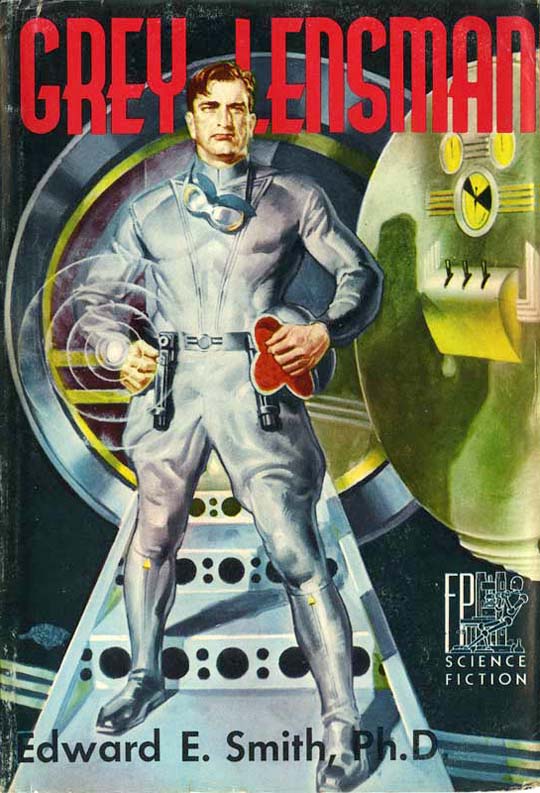
hook4Hook: Virility Gene, Tully Zetford (1975). I suspect Bulmer was hoping he’d be able to churn these out forever – the book is dedicated to Ted Tubb’s Dumarest, and that series managed 31 novels before DAW stopped buying them (and then only because Donald A Wollheim passed away). Fortunately for us, Virility Gene was the last we saw of Ryder Hook, and the novel’s open ending will remain forever open. Deciding which is the worst of the Hook quartet is a difficult call, but this one is possibly the frontrunner. Hook, and friends Shaeel and Karg, are travelling on a liner when they become embroiled in a plot to find the semi-mythical world where the Virility Gene can be found. It all goes a bit wrong, and Hook comes to in a lifepod, accompanied by Brett, an alien, and a dwindling supply of, er, supplies. Fortunately, they’re rescued in time. Hook gets a message to Shaeel – who gives “ver” destination as… Shyle, the planet where the Virility Gene is harvested (Shaeel is a Hermaphrodite, with pronouns to suit). On Shyle, there are lots of prospectors, but no one seems to know how or where the Virility Gene is harvested or manufactured or what – and the native Shylao guard the secret zealously. Zetford doesn’t even reveal what the Virility Gene actually is until around page 69 (of a 111pp novel). Apparently it’s an extremely potent aphrodisiac. Or something. Anyway, after various adventures, Hook finds himself in the secret compound where the Virility Gene is bought and sold to wealthy buyers. The point of Hook is that he’s a prototype Boosted Man, although he fell out with the programme and is now hunted by them (and the Boosted Men are a thoroughly bad lot). While Hook’s various implants (detectors, stuff to eavesdrop on comms, etc) work all the time, his super-strength and super-speed are only activated when he’s in the vicinity of an actual Boosted Man. But this time, his powers are, er, boosted to a degree he has never before experienced. He also meets a woman and it’s love at first sight between the two… And you can see where this is going, can’t you? Yup, to THE END… with Hook chasing after the love of his life, a Boosted Woman, and a story arc never to be resolved. And I almost forgot to mention the two inept thugs who set upon Hook called… Line and Synker (and from the description they promise to be regular characters); or indeed one of Synker’s lines of dialogue, which gives a pretty accurate flavour of the book’s prose – read it and weep:

“Oxymoron, Line! He’s only an eczema-sniffing spirochaete sap! You should be able to rubberise him before your first tutorial!”

The Long Way to a Small, Angry Planet, Becky Chambers (2014). I read this for review for Strange Horizons. It’s been getting quite a bit of press this, a self-published novel which has been shortlisted for the Kitschies and has also been picked up by Hodder. Of course, self-published works on genre awards shortlists are not exactly a new thing. I seem to vaguely recall one winning the BSFA Award a couple of years ago…

Chanur’s Homecoming, CJ Cherryh (1986). The final book of the original Chanur saga – the actual final book, Chanur’s Legacy, didn’t appear until 1992. I read this for SF Mistressworks. A review will appear there in a week or two.


1 Comment

The Bridge, Pamela Frankau

All too often, male authors are praised for their depiction of female characters, even though female writers often write male characters – especially in science fiction, in which it seems nearly 80% of protagonists are men. (And there are women sf authors whose most famous creations are male characters.) Yet no one praises female writers for their depiction of men. So let’s get that out of the way first – Pamela Frankau’s The Bridge (1957) is about a man called David Nielson, and he is drawn sensitively and plausibly.

thebridge

Pamela Frankau was published between 1927 and 1968. Her first novel, Marriage of Harlequin, saw print when she was only nineteen. She also seems to have led a somewhat… complicated life. She apparently had a long, and I’m assuming, public affair with a married man, the poet Humbert Wolfe, which ended with his death in 1940. She served in the ATS during World War II, where she had a lesbian affair with a fellow officer. After the war, she married an American Navy officer and decamped with him to the US. They divorced in 1951, and she returned to the UK and picked up her writing career, and proved even more successful than before. During the mid-1950s, she entered in a long relationship with theatre director Margaret Webster. Frankau died of cancer in 1967. Wikipedia lists 37 books by her, including three collections, an autobiography, and several works that appear to be non-fiction. Her best known novel is A Wreath For The Enemy (1954), which is still in print – it, The Winged Horse (1953) and The Willow Cabin (1949) are still available in Virago Modern Classics editions.

The novel opens with a man on a bridge. He doesn’t know where the bridge is, how he got there, what he’s doing there, or even who he is. It’s explained to him that he will witness a series of events, because there is something he must either learn or decide. The first such event takes place in 1913. A young boy in Cornwall is friends with the sons of a holidaying family. But when one of the sons decides the two of them should go swimming on their own – to prove they have courage after the holidaying father mocked them for not going into a rough seas- one of the boys slips on the rocks and is injured. The other boy, the one who lives in Cornwall, with his mother, Aunt Rachel, is David. And though he heard his friend scream as he fell, he ignored it.

In 1929, David is now living in London. He meets a young America woman, Linda, and invites her back to his digs. Aunt Rachel, who also lives in London, comes calling while David is trying to charm Linda. So he pretends to be out. The story skips ahead to 1939. David and Linda are now married, and live on a farm with Ricky and Madeleine. David is a reasonably successful writer and playwright (as is Ricky). After a trip into London, David stops off in the local pub to unwind, and gets into an argument with the racist barman. Then, after the war, in 1950, David and Linda, and their teenage daughter Anne, are living in southern France, in a cottage they owned before WWII. One night David wins big at roulette. A couple of days later, Anne is killed in a car crash. David and Linda move to California, where, in 1955, both teach at university. But Linda is cold and distant with David, and he has not written anything since Anne died. Linda walks out on him, and he runs away to rural New England, and begins writing again. Linda finds herself in New York, is “cured” by some sort of self-help guru and goes to work with him. She is supported by Ricky, who has divorced Madeleine, and is now a very rich and successful author.  In 1956, David and Linda begin to circle back toward each other… but it does not end well.

Interspersed between these various excerpts from David’s life (some are written from Linda’s point of view, but the story is mostly David’s) are more scenes set on the bridge. It quickly becomes clear it is a sort of limbo, and that David must do something if he is to “move on”. Although these scenes provide the novel’s title, and a framework of sorts, they actually get in the way of what is a readable, engaging and well-written story about David Nielson, his life, marriage and career. There’s some very nice writing in the book, and although a little slow to start, the story does draw the reader in. One of the novel’s strengths is that it’s never quite clear where it’s going, or what it’s actually about. If anything, the scenes on the bridge tend to obscure this aspect of the story, hinting either that some moral is waiting to be revealed or that the whole thing is just one long shaggy allegory. In point of fact, it’s neither, and the bridge scenes serve only to underscore one particular element of the story before and after – when there’s actually lots more worth noting in those sections.

Prior to embarking on this “project”, I’d never heard of Pamela Frankau. These days, she’s all but forgotten, despite having three books still in print (they’re dated 2008, so you’re unlikely to find them in your local Waterstone’s, however). But then I did embark on this project to find writers new to me. When I started The Bridge, I didn’t find it all that impressive, but it slowly won me over. David and Linda Nielson are both well-drawn characters, and if some of the details ring a little false (that self-help guru, for example), there’s still much to like in the book. I’m glad I read it and, yes, I think I’ll track down something else by Frankau to read.


4 Comments

Moving pictures, #6

I’m trying to get caught up on these, since I’ve been watching so many films recently – all that bloody sportsing on television. Damn sportsing. Have never understood its appeal.

murderMurder, My Sweet*, Edward Dmytryk (1944, USA). Despite the title, this is pretty much a faithful adaptation of Raymond Chandler’s Farewell, My Lovely. Dick Powell plays Marlowe and he doesn’t look quite rumpled enough to pull it off. Apparently, the studio changed the title from that of the book because they thought audiences might otherwise think it was a musical. Um, yes. The only other adaptation stars Robert Mitchum as Marlowe, and I seem to remember that being a better version than this. Incidentally, I have a lot of time for Chandler’s fiction – and yes, I’ve read this one – but I’ve found most of the movie adaptations disappointing in some way, even the Humph ones.

largo-winchLargo Winch, Jérôme Salle (2008, France). This is what we used to call a “Euro-thriller” – ie, lots of different locations around the world, very glossy production design, plenty of action… and a plot that doesn’t make much sense. It’s adapted from a bande dessinée by Philippe Francq and Jean van Hamme (the latter, incidentally, has written several of the Blake and Mortimer bandes dessinées). The title character is an orphan secretly adopted by billionaire Nerio Winch. Some twenty-eight years later, Nerio is murdered and it triggers a fight for control of his Hong Kong-based company. Largo, meanwhile, has been bumming around the world. He’s arrested in Brazil but manages to escape, and heads to Hong Kong, where he declares himself to the board of directors. Some of them, however, don’t believe him. Handily, Nerio invested his stocks in some sort of bearer bonds, which he then hid. If Largo presents these to the board, then the company is his. Of course, the same is true if anyone else does. And the rival for Largo’s position turns out to be his adoptive brother. Plus there’s a shady rival who wants to buy the Winch corporation… and Largo makes a deal with him to secure his position. It’s all very cosmopolitan, with lots of action and exotic locales, and a plot that sort of lurches about in search of a coherent narrative. But it was also reasonably entertaining, and it didn’t take a pair of steel toe-capped boots to your intelligence, as Hollywood is wont to do.

umbrellasThe Umbrellas Of Cherbourg*, Jacques Demy (1964, France). I really liked Demy’s Lola, and despite knowing that this was a musical – even more, the dialogue is sung throughout – I sort of thought I might like this too. But I didn’t. Oh, it’s French and it’s 1960s and it looks mostly lovely and Catherine Deneuve is eminently watchable in one of the lead roles, but… Maybe it was because I’d watched Les Misérables only a week or so before, but the sung dialogue turned irritating quite quickly, and though the visuals were often quite eye-catching, I sort of lost interest. I think it deserves a rewatch, and given how much I liked Demy’s Lola, there’s a Demy DVD collection that looks quite tempting… except it’s bloody expensive. I shall stick some more Demy on the rental list, and see how I get on with them.

esisensteinAlexander Nevsky, Sergei Eisenstein (1938, USSR). I seem to have ended up with quite a few Eisenstein films, despite not being especially a fan. Several years ago, The Guardian gave away a free DVD each weekend – remember when newspapers used to do that? – and one of them was Eisenstein’s Battleship Potemkin. Which is considered a classic of cinema. And I picked up a copy of Stachka (AKA Strike) because it was on the 1001 Movies You Must See Before You Die list… and now I have a box set containing Alexander Nevsky and Ivan the Terrible parts 1 and 2. (It’s volume 2, and volume 1 appears to almost impossible to find. Argh.) Anyway, Alexander Nevsky… It’s about the eponymous prince, who led the Russians of Novgorod to victory against the Teutonic Knights at the Battle of the Ice (which takes place on a frozen lake). It’s a good solid historical epic, with a few more personal story arcs thrown in, but I couldn’t help comparing it to Tarkovsky’s Andrei Rublev, and it didn’t wear the comparison especially well. Worth seeing, but I’m a little puzzled by the extremely high regard in which it’s held.

fearoffearFear Of Fear, Rainer Werner Fassbinder (1975, Germany). This was a made-for-tv film, and having now seen three or four Fassbinder films I don’t think I could have mistaken it for anything but a Fassbinder film. Fassbinder regular Margit Carstensen plays a housewife who becomes addicted to Valium and alcohol following a series of increasingly stronger anxiety attacks. Her husband’s family, who live in the same apartment block, treat her as though she’s not good enough, which only worsens her condition. Eventually, she is committed, whereupon she seemingly recovers. A good, solid family drama, without much that struck me as essentially Fassbinder; but I enjoyed it and I thought Carstensen was especially good in the lead.

jour-de-feteJour de fête, Jacques Tati (1949, France). I have now seen all of Tati’s feature films, and of course I left his first until last. In this one he plays a postman in rural France and the film is a series of set-pieces in which first Tati does his usual round, and then, in the second half, he tries to introduce “American” methods in order to deliver letters faster. There are some excellent gags – in that respect, Jour de fête scores higher than Mon Oncle or Playtime, although it does not have the visual genius of those films – but a number of the set-pieces were recycled from the short L’école des facteurs (1947). Anyway, the Tati box set was an excellent buy, and despite never having watched any Tati before August last year, I can now happily call myself a fan.

giantGiant*, George Stevens (1956, USA). This is one of those films I always thought I’d seen but when I came to watch it very little of it actually proved familiar. It’s the sort of nonsense dynastic family saga the US – and especially Hollywood – likes to tell itself is proper art… especially when it involves oil. It’s not, of course, It’s not even melodrama. They try to throw in some social commentary – in this particular case, a Texan rancher turned oilman (Rock Hudson) discovers all his fellow whites are racist after his son marries a Latina woman. This, of course, comes as no particular surprise to, well, the rest of the planet. Hudson I could watch all night, and I do like films from the fifties, but this was long and not very inventive and all a bit thuddingly obvious from the start. James Dean was a bit rubbish in it, and not at all convincing – but then he’s another actor, like Brando, whose reputation mystifies me.

unbelievableThe Unbelievable Truth*, Hal Hartley (1989, USA). There are several Hal Hartley films in the 1001 Movies You Must See Before You Die list, and I’m not sure why. There are more interesting independent directors – such as John Waters, or John Sayles – but I guess the list-makers are fans of Hartley’s movies. I can’t say I am. I’ve seen two now, and they’ve both been pretty forgettable, certainly not something that’s worthy of the 1001 list. In this one, a man returns home after years in prison for manslaughter. He takes up with a local girl, while rumours after his “crime” grow ever wilder, but his putative girlfriend goes off to be a model in New York. There’s a family crisis, and relationship difficulties and… yawn. Not very interesting.

1001 Movies You Must See Before You Die count: 571


11 Comments

Ten space operas, not your usual suspects

Writer Gareth Powell posted a list of Top Ten Essential Space Operas earlier this week, and since I like posting me some lists of books (and I have a space opera all of my own due out in July from Tickety Boo Press), I thought I would put together a list of ten space operas myself. But not “essential” ones, or even “top ten” or “best”. Just ten space operas you won’t usually find in lists of space operas. And which, yes, I do also happen to think are pretty good.

A few notes before the list. Much as I admire books like Light, Against A Dark Background (or any Banks, but that would be my choice) and Ancillary Justice, as picks they’re just too obvious. And when it comes to the definition of space opera, I wanted to choose books that no one could argue with – so, stories that stretched across several worlds, near-magical technology, alien races, the galaxy at stake, etc, etc…

In chronological order:

judgment_night1 Judgment Night, CL Moore (1952). Those were the days, when alien hordes descended on imperial capitals and the only thing preventing the sacking of the empire was the hawk-like princess, and she’s not going compromise with anyone, no matter if the imperial forces are out-numbered and out-gunned. I reviewed this short novel for SF Mistressworks, and though it sounds about as cheesy as space opera can possibly get, the character of Princess Juille is actually surprisingly well-drawn and interestingly played. And the Ancients are pretty neat too. My review is here.

2 Empire Star, Samuel R Delany (1966). I first read this as one half of a double with Delany’s The Ballad of Beta-2, and I’m pretty sure it was during a family holiday in Paris in the very early 1980s. I loved the Moebius Loop narrative, and the rich language. These days I think Dhalgren is Delany’s best piece of work, but this short novel runs it a close second.

Valerian-Vol-3-Cover3 Valérian and Laureline, Pierre Christin and Jean-Claude Mézières (1967 – present). Valérian, Agent Spatio-Temporel, and his partner Laureline, have been operating as troubleshooters for the Terran Galactic Empire since their first appearance in Pilote magazine through, to date, twenty-two bandes dessinées. Four were translated into English back in the 1980s, which is how I stumbled across the galaxy- and time-hopping pair. Happily, Cinebook began publishing the series in English a few years ago – they’re now up to volume 8.

4 The Children of Anthi and Requiem for Anthi, Jay D Blakeney (1985 – 1990). I bought these in a remainder book shop in Abu Dhabi back in the mid-1990s, and I’ve always liked the strange alien world Blakeney created in Anthi. The two books are a bit wobbly in places, while in other places she does tend to dial everything up to eleven. The protagonist is also a bit of wet blanket at times, but it all hangs together quite cleverly. I reviewed both books on SF Mistressworks here and here.

5 Master of Paxwax and The Fall of the Families, Phillip Mann (1986 – 1987). I’ve been a fan of Mann’s fiction since reading his debut, The Eye of the Queen, back in the late 1980s. I really must reread his books – especially these two, The Story of the Gardener, as I remember them being a smart and literate space opera – and sadly that’s not a pair of adjectives you normally associate with space opera.

take_back_plenty6 Take Back Plenty, Colin Greenland (1990). Iain M Banks is chiefly credited with kicking off New British Space Opera, but I’ve always considered this a seminal work – even if no one else bothered to pastiche old pulp space opera in the same fashion as Greenland. I remember the buzz when the book came out, and happily it is now in the SF Masterworks series. Take Back Plenty spawned a pair of belated sequels, Seasons of Plenty (1995) and Mother of Plenty (1998). I reviewed Take Back Plenty here.

7 An Exchange of Hostages, Prisoner of Conscience and Hour of Judgement, Susan R Matthews (1997 – 1999). Matthews’ Jurisdiction novels probably bend the definition of space opera furthest from true on this list. Yes, they’re set in an interstellar polity – it’s a lexocracy, ruled by judges – and there’s plenty of drama and conflict… But Andrej Kosciusko is a torturer for the Bench, and the stories are relatively small scale. They are also very, very good. I reviewed the first of the trilogy on SF Mistressworks here.

The_Prodigal_Sun8 The Prodigal Sun, The Dying Light and A Dark Imbalance, Sean Williams & Shane Dix (1999 – 2001). In many respects, these are the dictionary definition of space opera – plots and counter-plots, a sophisticated starship piloted by a cyborg mind, aliens, galactic war, a heroine who must transport an AI across a turbulent galaxy… Williams and Dix deploy every space opera trope in the Milky Way, but they do it in service to an action-packed fun read that’s about as emblematic of space operas as you can get.

9 The Risen Empire and The Killing of Worlds, Scott Westerfeld (2003). I think I read the first of these books as an ARC, but I forget where I picked it up. I liked it so much, I bought both books in hardback. They were published in the UK as a single volume, with the same title as the first book. Unlike many of the other books on this list, the Succession duology rings a few changes on the space opera template – the aristocracy are all dead, for a start. The two books are also quite deceptive in terms of scale – they feel widescreen, but are actually quite focused.

spirit10 Spirit, or the Princess of Bois Dormant, Gwyneth Jones (2008). Who knew the sequel to the Aleutian novels, a superior first contact trilogy, would be a space opera? Based roughly on the story of The Count of Monte Cristo? But given that the action in Spirit takes place on three different worlds, two of which are alien, as well as in a space station shared by all the races in the story, the book certainly qualifies as space opera. I wrote about Spirit here.

The list said ten, so I had to draw a line after that number. But there were a a few I’d liked to have included but they didn’t quite make the cut. Such as Angel At Apogee, SN Lewitt; Search for the Sun!, The Lost Worlds of Cronus, The Tyrant of Hades and Star Search, Colin Kapp; The Snow Queen, Joan D Vinge; or even the Coyote Jones series, Suzette Haden Elgin.

Some people may spot there are a couple of obvious choices not mentioned in this post – such as Peter F Hamilton or James SA Corey – and that’s because, well, I don’t think they’re very good. Nonetheless, I’ve probably missed off some space operas I ought to have mentioned… so feel free to make suggestions. However, if you find yourself about to suggest a list of ten books by male writers only, or indeed by white male US authors only, you probably need to go away and rethink your list – or maybe even reconsider the books you’re reading…

ETA: A redditor pointed out that the most recent book mentioned in my list is from 2008. Given that I wanted the list to show a reasonable spread across the decades, this is not unexpected. Nor did I want to post just another list of the shiny new. This doesn’t mean my knowledge of space opera stops at 2008, however. I can recommend both Mike Cobley’s Humanity’s Fire trilogy (2009 – 2011) and Gary Gibson’s Shoal Sequence (2007 – 2013). I tried the first book of Rachel Bach’s Paradox trilogy (2013 – 2014), but didn’t rate it. I did rate Kameron Hurley’s Bel Dame Apocrypha (2011 – 2012), but I wouldn’t classify it as space opera. I mentioned Ann Leckie in the opening paragraphs of this post. I wouldn’t use Kevin J Anderson’s books as toilet paper, never mind suggest people read them; and I don’t really consider Alistair Reynolds’ novels as space opera (no, not even House of Suns), though I do think they’re very good. As for the bazillions of space operas self-published every month on Kindle… Since almost all of them are derivative and badly-written, I see no good reason to keep up with them.