It has just been pointed out to me that one of the writers on my sf mistressworks meme list isn’t actually, er, female. I forget where I got the name from, but I should have realised straight away – because if Francis Leslie Ashton was female, “her” name would be Frances Lesley Ashton. There aren’t many names in English which differ in spelling by gender, but Ashton has two of them… and I still failed to spot it. Oops. So thanks to Dave Post of Worlds without End for pointing it out.
Because the meme list has already spread, I won’t bother posting a corrected list, merely updating the original one. At some point, I hope a consensus meme list might be generated and, if so, the makers might take note of Ashton’s gender.
Meanwhile, I’m still working on putting together a list of 21st century women sf writers… and I’ll make sure they are all actually women.
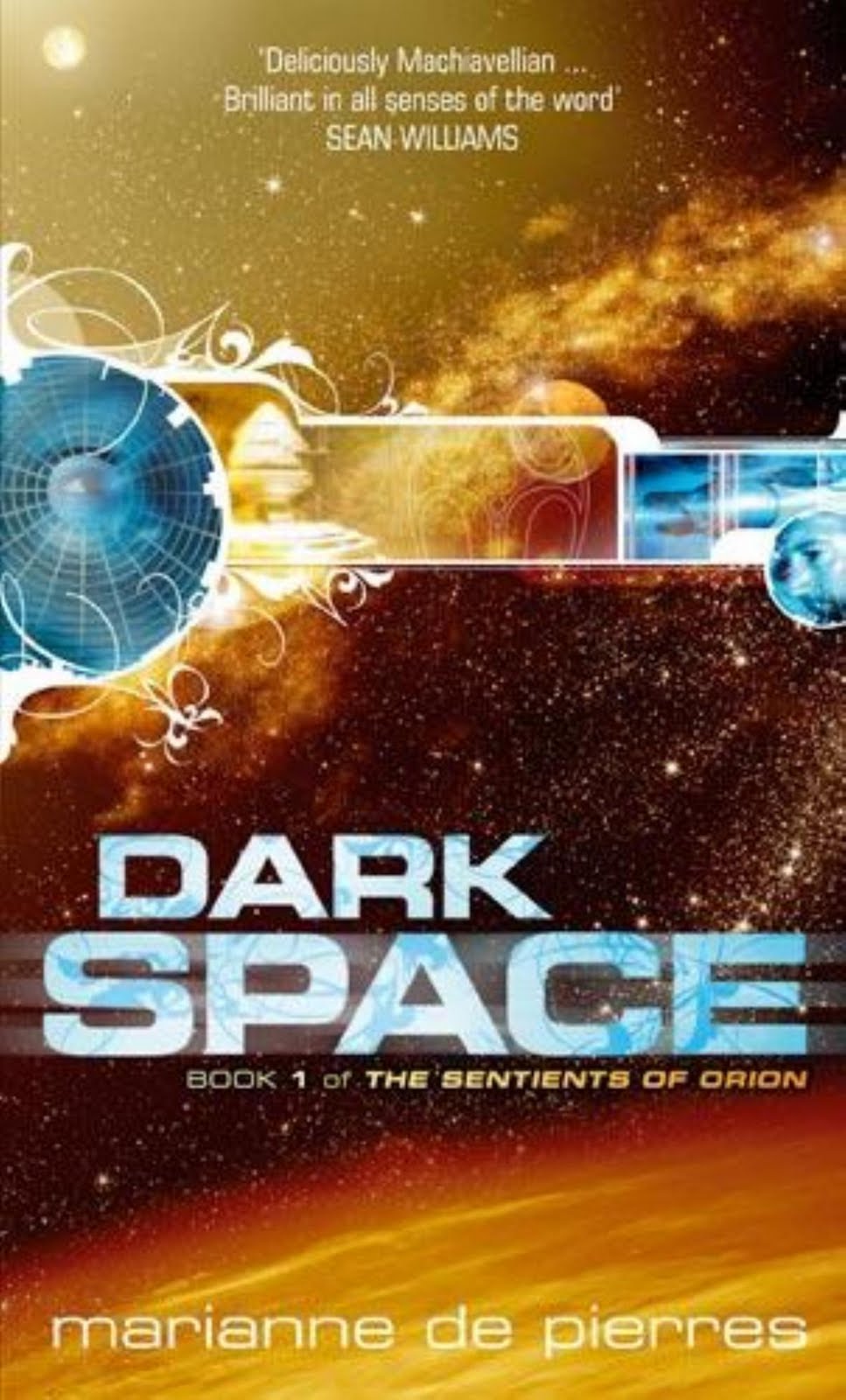
Marianne de Pierries is one of several Australian authors published in the UK by Orbit. Her first book, Nylon Angel, the first of the Parrish Plessis cyberpunk trilogy, was published in 2004. Dark Space is the first book of her second series, The Sentients of Orion. It is space opera.
A lone mineral scout with less-than-appealing personal habits accidentally discovers a huge and mysterious alien which lives in the vacuum of space, and which appears to have near-divine powers – he dies, and it resurrects him. His discovery makes him rich, and an industry springs up around Sole, as the alien entity is named, in which applicants to “godhead” have their brain chemistry altered by it. Tekton, a “humanesque” from the planet Lostol, is one such applicant. He has politicked his way to Belle-Monde, the artificial world where candidates for godhead are tested.
Meanwhile, on the planet Araldis (with its unfortunate likeness to the name of brand of glue), Baronessa Mira Fedor has just learnt that she is not to be First Pilot. The heir apparent, Principe Trinder Pellegrino, is, even though he does not have the Inborn Talent which allows him to interface with the world’s sentient organic starship, Insignia. But on Araldis, the men are in charge, and the women are good for nothing but being wives or mistresses. Araldisian society is also strictly hierarchical, with a nobility, a hereditary servant class, and peasant miners. The world’s wealth is derived from its minerals. Its climate is hot and arid. Its culture is Italianate.
Mira runs away. Trinder offends his father by flirting with his new mistress, and is subsequently banished to a Carabiniere outpost in a remote town. And then someone invades the planet, sabotaging foodstocks and the mines, and loosing Saqr, rapacious barely-sentient aliens. Both Trin and Mira survive; they are the last of the nobility. With the help of Rast, a mercenary hired by Araldis’s ruler, Mira must take Insignia to the Orion League of Sentients to beg for help to repel the invasion. Dark Space ends with the launch of Insignia.
There is no “dark space” in this novel. In fact, the first line of the book is, “Dark space is not really dark”. Given that the phrase “dark space” is not common, in science or science fiction, it seems an odd choice for a title. Nor does the prologue into which that opening line leads instill confidence – it is crude exposition, cast as the testimony of Sole’s discoverer, a thoroughly unlikeable rogue.
Happily, the narrative set on Araldis is much better. Mira is an engaging protagonist, and the planet and its culture is interesting. However, the Italianised vocabulary is over-used. I can understand its use for titles, perhaps even for objects unique to the culture such as clothing. But I see no good reason why babies are referred to throughout as bambina and bambino, why children are called ragazza and ragazzo. It’s entirely unnecessary.
Tekton’s narrative is less satisfying. He dominates it and he is not at all sympathetic. He is arrogant and self-centred. His race display their naked bodies in much the same way as people on this planet display their wealth. But then Tekton is pretty much characteristic of all the male cast of Dark Space. I’m all for redressing the gender balance in genre fiction. But to me that means writing strong female characters, writing stories that pass the Bechdel Test. It doesn’t mean populating a story with male characters who are entirely shits. Even Trinder, the male protagonist of Dark Space, is far from sympathetic – and his relationship with Mira is symptomatic of his attitude. Of course, the culture of Araldis is chiefly to blame for the unlikeability of the men… except not all of the men are Araldisian. Tekton isn’t. The rogue who discovered Sole isn’t.
Perhaps I shouldn’t complain. After all, male genre writers of the past and present have treated their female characters as badly, or worse, since the days of Amazing Stories. But the correct response to an imbalance is balance, not a swing in the completely opposite direction.
Yet, despite all this, I actually enjoyed reading Dark Space. I have books two and three of the quartet, and will likely read them too. While I can rue de Pierres’ ham-fisted characterisation of her male cast, her clunky info-dumping, her bizarre choice of vocabulary to render into cod-Italian… none of these actually spoiled my enjoyment of the book.
So, not as successful a read as Rosemary Kirstein’s The Steerswoman, nor as interesting a novel as Liz Williams’ Winterstrike – but definitely a more enjoyable read than the latter.
I must not buy so many books. I must not buy so many books. I must not buy so many books. I tell myself this every day, but it doesn’t seem to work.
See:
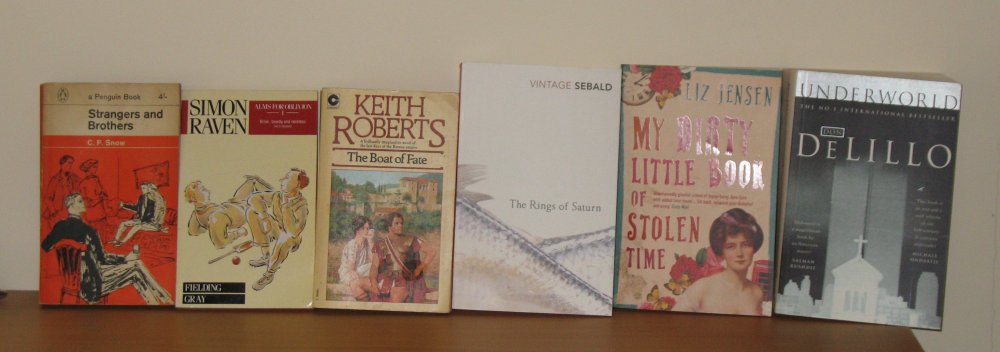
Some mainstream fiction. Strangers and Brothers, CP Snow, the second book of the series of the same name (although the first written). I read the first, Time of Hope, a couple of weeks ago and enjoyed it. Fielding Gray, Simon Raven, the first book of his Alms for Oblivion series, which I was told is similar to Snow’s. The Boat of Fate, an historical novel by Keith Roberts, an excellent sf writer best-known for SF Masterwork Pavane. The Rings Of Saturn, WG Sebald, a writer I admire much. My Dirty Little Book of Stolen Time, Liz Jensen – a charity shop find, which I picked up because I enjoyed her The Rapture (my review here). And Underworld, also a charity shop find, because I’ve been meaning to read some Don DeLillo for ages.
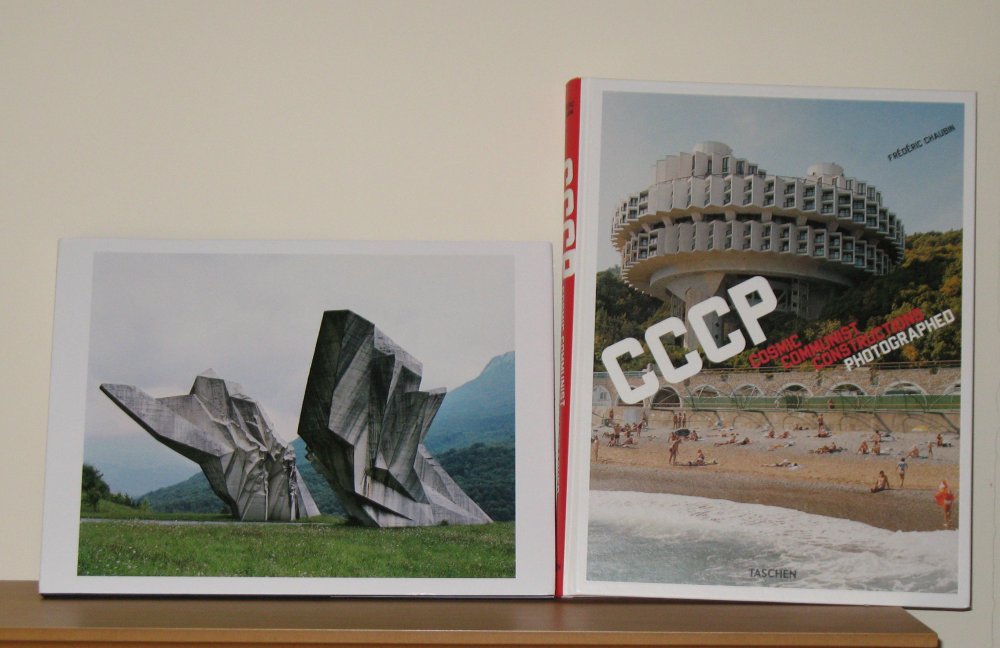
Finally, a pair of coffee-table books. Spomenik, Jan Kempenaers, is the book of his photographic exhibition. The title refers to WWII monuments in the former Yugoslavia. Many have been destroyed, or left to fall into ruin, but Kempenaers’ book contains photos of twenty-two of the best-preserved ones. Strange, but quite beautiful, stuff. CCCP: Cosmic Communist Constructions Photographed, Frédéric Chaubin, is a ginormous book of photographs of many gloriously modernist buildings from the former USSR. Also strange, but quite beautiful, stuff.
Here’s yet more pictures and photos from around the internet. This is how we could be living now, instead of watching powerlessly as our scumbag Tory government robs us and stuffs the proceeds into the pockets of the filthy rich. The twentieth century, despite – or perhaps because of – two world wars, seems like it may have been a great social experiment; and we’re rapidly returning to the good old days of inequity, inequality, rampant greed and systemic abuse of privilege. Last century, they reached the peak of the world’s tallest mountain for the first time; they put twelve men on the Moon; they visited the deepest part of the ocean, where the pressure is seven tons per square inch…
This century we can’t even agree to save our own dying planet.
So let’s look at some nice pictures of where we could have been instead.
buildings
Oscar Niemeyer's University of Constantine, Algeria, 1968
Oscar Niemeyer's Cathedral of Brasilia
data centres
An IBM mainframe
IBM 360 mainframe, 1964
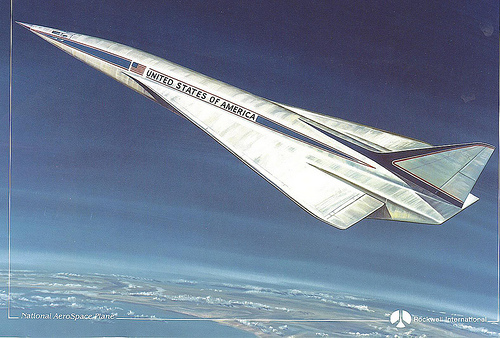
spaceplanes
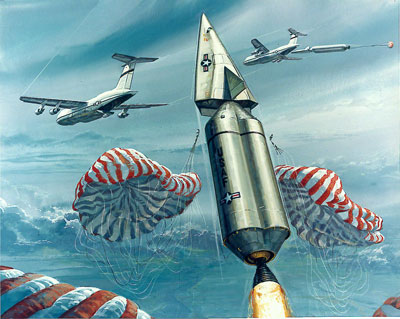
Air launch is the way forward
Rockwell X-30 spaceplane
houses of the future
Alison and Peter Smithson in their House of the Future at the "This is Tomorrow" exhibition, 1956
Vacation House of the Future c. 1957, James R. Powers
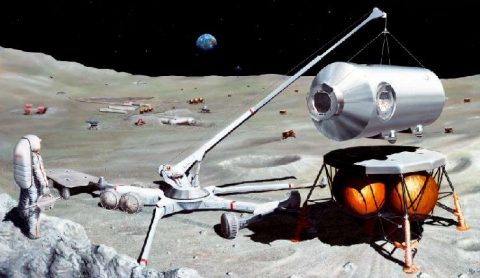
moonbases
Credit: NASA
(This, incidentally, is as near I plan to get to escapism with my science fiction…)
The meme has been out there now for a week, and a number of people have picked up on it. This is excellent. There have also been a few comments about the books which appear on the list. So here’s something of an apologia…
Yes, there are many authors I should have included but missed – Kit Reed, for example; or Wilhelmina Baird. Mea culpa. There are also a few I have read but didn’t feel were strong enough to appear on the list. Plus many who have written more, and better, books this century than last (in several cases, it’s only their debut novel which sneaks into the tail end of the twentieth century). In fact, it’s likely a few names will even appear on both the sf mistressworks list and the 21st century sf mistressworks list…
There are a couple of books which shouldn’t be on the list, as well. Jirel of Joiry, which I’ve not read myself, is apparently fantasy, not sf. The year given is the year it first appeared in book form, according to isfdb.org. Orlando… well, the central device is fantasy inasmuch as it’s unexplained and unexplainable. But the story feels more sfnal than fantastic. Ash: A Secret History is certainly science fiction, and was even shortlisted for the Arthur C Clarke Award.
In several cases, I perhaps didn’t pick the best-known or most highly-regarded book by an author, but instead chose one that I’d read myself. For example, Alison Sinclair’s Cavalcade was shortlisted for the Arthur C Clarke Award in 1999, but I’ve only read her Legacies. On the other hand, while I prefer Le Guin’s The Left Hand of Darkness to The Dispossessed, I think the latter is a more interesting novel.
This, I hope, helps explain some of the (seemingly) odd choices in the list. But at least the meme is getting out there, at least people are spreading it across the internet. It’s changing as it spreads, but I’m perfectly happy with that. It should evolve – it was, after all, put together partly from my own taste in science fiction (and my ignorance regarding some of the authors and titles).
During the mid to late 1980s, The Women’s Press published a line of feminist science fiction novels by women writers. The books all boasted the same cover design: a grey border and spine, and distinctive cover-art. The books were a mixture of new works and older classic books. I remember the books quite well, and bought several of them. While I was researching my SF Mistressworks meme, I was reminded of The Women’s Press novels and it occurred to me that their list too made for a good meme.
So let’s do it again. Bold if you’ve read it, italics if you own it but haven’t read it. Obviously, it doesn’t have to be The Women’s Press edition, but bonus marks if it is…
As far as I can determine, this is the full list:
1. Kindred, Octavia Butler
2. Walk to the End of the World and Motherlines, Suzy McKee Charnas
3. The New Gulliver: Or The Adventures of Lemuel Gulliver, Jr. in Capovolta, Ésme Dodderidge
4. Machine Sex and Other Stories, Candas Jane Dorsey
5. Native Tongue, Suzette Haden Elgin
6. The Judas Rose, Suzette Haden Elgin
7. The Incomer, Margaret Elphinstone
8. Carmen Dog, Carol Emshwiller
9. The Fires of Bride: A Novel, Ellen Galford
10. The Wanderground, Sally Miller Gearhart
11. Herland, Charlotte Perkins Gilman
12. Despatches from the Frontiers of the Female Mind, Jen Green & Sarah LeFanu
13. The Godmothers, Sandi Hall
14. Women as Demons, Tanith Lee
15. The Book of the Night, Rhoda Lerman
16. Evolution Annie and Other Stories, Rosaleen Love
17. The Total Devotion Machine, Rosaleen Love
18. The Revolution of Saint Jone, Lorna Mitchell
19. Memoirs of a Spacewoman, Naomi Mitchison
20. The Mothers of Maya Diip, Suniti Namjoshi
21. Planet Dweller, Jane Palmer
22. The Watcher, Jane Palmer
23. Woman on the Edge of Time, Marge Piercy
24. Star Rider, Doris Piserchia
25. Extra(Ordinary) People, Joanna Russ
26. The Adventures of Alyx, Joanna Russ
27. The Female Man, Joanna Russ
28. The Hidden Side of the Moon, Joanna Russ
29. The Two of Them, Joanna Russ
30. We Who Are About To…, Joanna Russ
31. Queen of the States, Josephine Saxton
32. Travails of Jane Saint and Other Stories, Josephine Saxton
33. I, Vampire, Jody Scott
34. Passing for Human, Jody Scott
35. A Door Into Ocean, Joan Slonczewski
36. Correspondence, Sue Thomas
37. A Spaceship Built of Stone and Other Stories, Lisa Tuttle
38. Across the Acheron, Monique Wittig
Oh, well – I’ve not done so well on this one, although there are a number of titles I plan to read (as soon as I pick up copies).
Oops. Been a while since the last one of these, so this is going to be a bit of a marathon listing. You know how it goes…
Books American Adulterer, Jed Mercurio (2009). I thought Mercurio’s Ascent was excellent when I read it several years ago, and was much impressed by his intense, meticulously-researched prose. Admittedly, I was initially drawn to Ascent because of its subject – Russian fighter pilot becomes cosmonaut on secret mission – but even so I resolved to keep an eye open for anything else by Mercurio… And so I did. His third novel (his first, Bodies, is on the TBR) couldn’t be more different in subject. It’s a retelling of John F Kennedy’s presidency, couched as a medical report and focusing on his addiction to sex. JFK is often referred to throughout as “the subject”, and the prose dwells a great deal on his poor health. As in Ascent, Mercurio writes with impressive authority – I’m no expert on JFK, but I believed every word in American Adulterer. Mercurio is definitely a writer I’m watching.
People of the Book, Geraldine Brooks (2008), was lent to me by my mother. The book of the title is a haggadah, a Jewish religious text used during Passover. In this somewhat melodramatic novel, a haggadah from the fourteenth century is uncovered in Sarajevo just after the collapse of Yugoslavia (the haggadah is apparently a real one). This particular one is unusual because it is illustrated, something which was previously unknown for such documents in Moorish Spain. An Australian manuscript restorer who specialises in haggadah travels to Sarajevo to verify and restore the document. She finds various bits of, well, stuff, in its binding. These spark off chapters describing, in reverse chronological order, the history of the book – the Balkans during WWII, Vienna, and so on back to Spain. Meanwhile, the restorer is having mother issues. An interesting novel for what it said about the haggadah, but the story wrapped around it was too much of a soap opera.
A Far Sunset, Edmund Cooper (1967), I read for my ongoing series on British SF Masterworks, and I wrote about it here.
Empress Of Outer Space, A Bertram Chandler (1965), is the first in the “Empress Irene” series by Chandler. It’s also a very short novel, one half of an Ace double. Oh, and it’s crap. Empress Irene has just put down a rebellion by a Navy captain who has set himself up as a demigod on a primitive world, when her yacht is stolen. So she commandeers a cruiser and hares off after it with a crew of seven. The narrator is her captain. They track the ship to a world, land, and captain and empress become trapped in a carpet of moss which emits an hallucinogen. They undergo a series of dream-like “adventures” conflated from 007, Shakespeare and ERB’s Barsoom, before eventually escaping. There’s much room here for commentary, but Chandler’s clanking prose treads all over it with a leaden foot. Eminently avoidable. Which is what I should have done…
To Open the Sky, Robert Silverberg (1967), has not aged especially gracefully, though it has a neat idea at its core. A new religion, Vorsterism, which seems pretty secular despite its creed, promises its followers real biological immortality (courtesy of a well-funded research programme which has yet to bear fruit). A glossed-over schism creates the Harmonists, who become not-so-friendly rivals and whose focus instead is human ESP. Because Noel Vorst, founder of Vorsterism, believes that the only way for humanity to survive is to settle the stars. And that can only be done using teleportation by immortal humans. The Vorsters control Earth, but the Harmonists control Venus, and there’s a bit of cunning plottery to heal the rift and so “open the sky”. Not one of Silverberg’s best, but not one of his worst either.
The League of Extraordinary Gentlemen: Black Dossier, Alan Moore & Kevin O’Neill (2007). There’s an interesting process at work in Moore’s comics and graphic novels in which he slowly disappears up his own backside. He’s always been a very referential writer, but this one takes it to an extreme. The series conceit, understandably, references all manner of other writers’ works – well, the characters are all well-known fictional characters. And there are even more references in The League of Extraordinary Gentlemen: Black Dossier. Plus, who else but Moore would print a section of a book in 3D, and include a pair of cardboard-cutout 3D glasses for the reader? Not to mention a Jeeves & Wooster / Lovecraft pastiche. The League of Extraordinary Gentlemen: Black Dossier is great fun. It’s a sort of reference module/interim work in the League of Extraordinary Gentlemen universe, partly explaining the strange change in the story universe which resulted in The League of Extraordinary Gentlemen – Century: 1910 from The League of Extraordinary Gentlemen Book 2. Good, if sometimes baffling, stuff.
Oasis: The Middle East Anthology of Poetry from the Forces, edited by Almendro, Victor Selwyn & David Burk (1943), is the first of the Salamander anthologies of, well, poetry from those serving in the forces during World War 2. Good condition copies of this 64-page chapbook are hard to find, but I managed it (and yes, I have Return to Oasis and From Oasis into Italy, the other two Salamander anthologies). Oasis: The Middle East Anthology of Poetry from the Forces is, unsurprisingly, a mixed bag. Some known names provide some good stuff, but there are less successful poems by others. Given that the Salamander people were stationed in Cairo, many of the poems feature the desert, Egypt, or Cairo itself. Not all of the poems are war poems – in fact, there’s a quite a spread of subjects.
Winterstrike, Liz Williams (2008), was the second book of this year’s women in sf reading challenge. I wrote about it here.
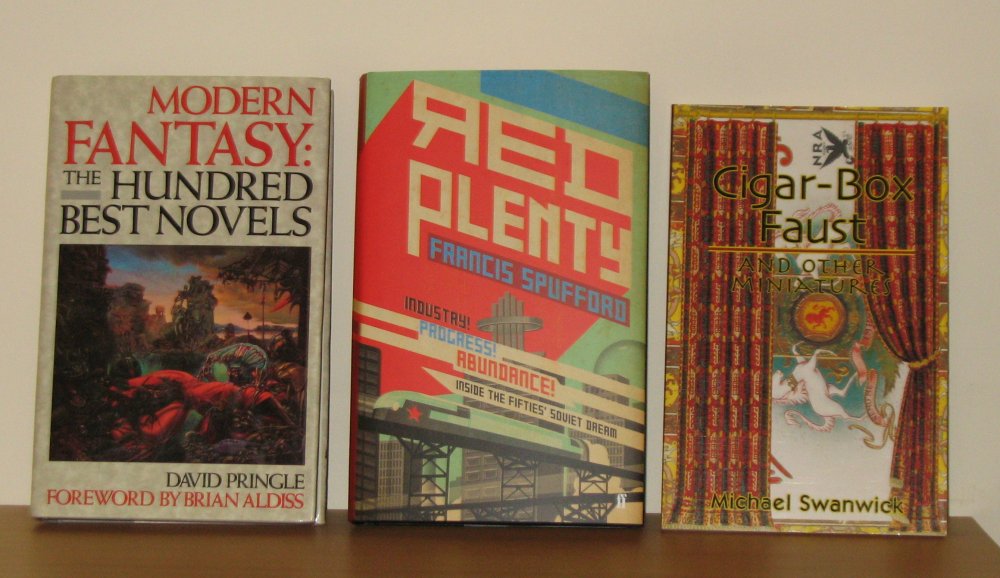
Science Fiction: The 100 Best Novels, David Pringle (1985), does exactly what it says on the tin. Except for that “best”, of course. Pringle explains his choices in a lengthy introduction, and freely admits that some of his picks are not actually very good, nor does he like them very much. But he considered them important so he included them. He also points out that sf as a whole is not an especially well-written genre. I would guess about 70% of the books mentioned I’d classify as rubbish, and their stature within the genre is, to me, no good reason to hold them up as “best”. Um, there’s an idea for a project: my own choice of 100 best novels, posted here one a day…
Stretto, L Timmel Duchamp (2008), is the fifth and final in Duchamp’s Marq’ssan Cycle. I plan to write about the entire quintet in more detail at some point. Certainly they are amongst the most political science fiction novels I have ever read. They are also very good.
Nocturnes, Kazuo Ishiguro (2009), is a collection of five stories featuring Ishiguro’s trademark self-deluded, and never entirely likeable, narrators. The five stories all feature music in some fashion, and are set variously in Venice, London, Malvern Hills and Los Angeles. Like most of his fiction, the story-arc seems to dribble and die rather than actually concluding, but the writing is very good throughout. I suppose if you wanted an introduction to Ishiguro’s writing, this collection would be a good place to start.
An Artist of the Floating World, Kazuo Ishiguro (1986), was Ishiguro’s second novel and an improvement on his first, A Pale View of Hills. The book is set in Japan in 1948 and 1949, and the titular artist, about to marry off his twenty-six-year-old daughter, reflects over the events in his life before and during the war. Something he did may cause the marriage negotiations to fail (as they had done once before), but as usual Ishiguro doesn’t say what and only circles around the topic. In fact, An Artist of the Floating World is even more discursive than other books by Ishiguro I’ve read. The narrator is, typically, self-deluded – and, in this case, hugely self-important too. The book would have been much improved by a resolution.
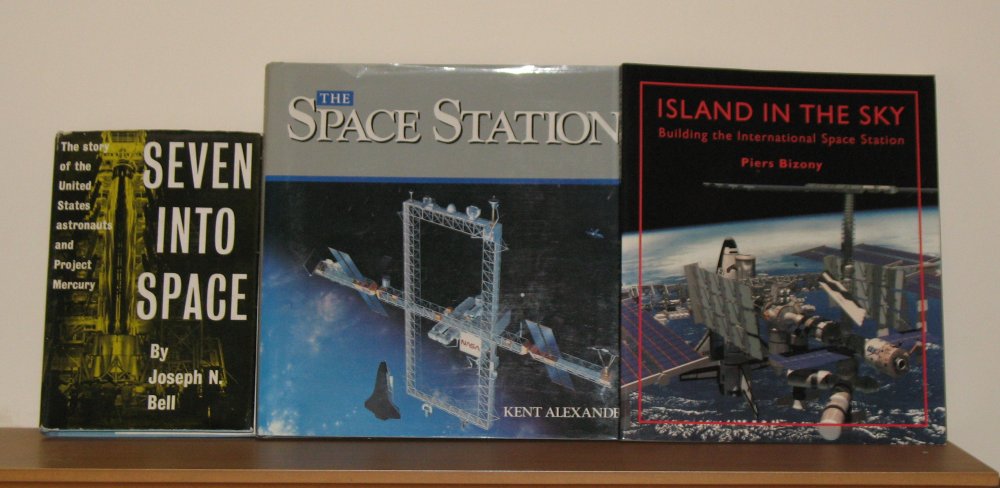
Voices from the Moon, Andrew Chaikin (2009), is a glossy coffee-table book published during Apollo 11’s fortieth anniversary. I reviewed it on my Space Books blog here.
Son of Heaven, David Wingrove (2011), is the first book, and a prequel of sorts, to the newly-relaunched, re-written and revamped Chung Kuo series. What was eight volumes is now twenty. And by the looks of it Corvus are doing an impressive job on these new editions. I read the book, and interviewed the author, for Interzone.
The Voyage of the Dawn Treader, CS Lewis (1952), is the third book of the Chronicles of Narnia. The third book as written, that is; but the fifth following internal chronology. I’m way too old for these books, which is probably why I find them so annoyingly patronising; but I’d like to think I’d have felt the same if I’d read them when I was eight or nine. This one is at least better then the previous two, and has a bit more of a plot. Lucy and Edmund, plus horrible cousin Eustace, fall into a painting and find themselves aboard the titular ship with Prince Caspian. He’s heading east for the edge of the world to find seven missing lords and, perhaps, Aslan’s Land. They have adventures en route, and Eustace learns how to be a nice chap. What little charm these books possess has aged badly, but Lewis certainly proves he can stick the knife into his “muggles” so much more effectively than Rowling ever managed: “They were very up-to-date and advanced people. They were vegetarian, non-smokers and teetotallers and wore a special kind of underclothes.” Best line in the entire book, and it’s in the opening paragraph…
The Adventures of Blake & Mortimer: The Sarcophagi of the Sixth Continent, Part 1, Yves Sente & André Juillard (2011). I don’t normally include graphic novels in these lists because they’re such quick reads. But this one is worth mentioning: the characters of Blake and Mortimer were invented by Belgian Edgar P Jacobs in the 1946 and first appeared in Hergé’s Tintin magazine. Blake is a captain in MI5 and Mortimer is a nuclear physicist, and together they’ve had numerous semi-science-fictional adventures. Sente and Juillard have, since the millennium, been adding to Jacobs’ series, and they’re doing an excellent job. Sente’s scripts are very much grounded in the period in which the stories take place – the 1950s – and real-world events are cleverly used. In this one, it’s India’s struggle for independence which drives the plot. The books still have a tendency to fill the frames with dialogue, and often use text boxes to describe what’s obvious from the art; but I much prefer these new stories to Jacobs’ originals.
The Best of Kim Stanley Robinson (2010) does exactly what it says on the cover. The stories were selected, and the collection edited, by Jonathan Strahan, but KSR himself provides an afterword giving brief notes on each of the included pieces. The first three – ‘Venice Drowned’, ‘Ridge Running’ and ‘Before I Wake’ – are not especially strong, but ‘Black Air’ and ‘The Lucky Strike’ then demonstrate only too well why KSR is such a bloody good writer. There’s a sf baseball story, and I’ll never understand the appeal of the game or of writing about it. The remaining contents are strong, with some better than others. The final story, ‘The Timpanist of the Berlin Philharmonic, 1942’, is original to the collection. I wasn’t entirely sure why it was genre… which is, I suppose, one of the reasons KSR’s fiction appeals so much. Definitely a collection which belongs on the book-shelves of any self-respecting sf fan.
Time of Hope, CP Snow (1949), is the first book, internal chronology-wise, in Snow’s 11-volume Strangers and Brothers series. Lewis Elliott is the son of a bankrupt in an unnamed provincial Midlands town during the early 1920s. After leaving school with good exam results, he becomes a local government clerk in the education department. But he dreams of better things. After making friends with George Passant, a qualified lawyer working as a legal assistant in one of the town’s practices, Eliot decides that the law is the career for him – but not as a solicitor, as a barrister. He crams for the Bar examinations, passes them, uses contacts to get himself into an Inn, and so progresses his career. Meanwhile, he’s fallen in love with – and eventually marries – the neurotic but beautiful Sheila Knight. He also develops “pernicious anaemia” and is very ill for a while. But when this is re-diagnosed as “secondary anaemia”, he seems to miraculously recover – probably the only false note in the novel. Snow draws deep psychological portraits of his characters – it’s all told from Elliott’s point of view, but he’s a deeply analytical person. I enjoyed this a lot more than I expected. I certainly plan to track down the remaining ten volumes and read them.
Films Tell No-One, Guillaume Canet (2006), is a French adaptation of a novel by US writer Harlan Coben. Which pretty much explains why this film didn’t work. It’s not a French film. It feels like a US film played by a French-speaking cast. As a thriller, it’s not bad, but that dissonance between expectation and implementation made for an unsatisfactory viewing experience.
Fringe season 2 (2009), continues the 21st century “X-Files” as, in this season, the mythology is deepened as Olivia visits the alternate world at war with our world, and more of her background – and Walter’s experiments – are revealed. Walter’s ex-partner and semi-nemesis, Bell (played by creaking Leonard Nimoy), also features prominently, popping up in several episodes to explain what it is that’s actually going on. Fringe remains gripping telly, and I’ll be picking up season 3 when it hits DVD.
Julius Caesar, dir. Herbert Wise (1979), is the seventh of Shakespeare’s plays I’ve now seen. After watching it, I jokingly posted to a forum that it was a rip-off as Caesar dies halfway through. But then, of course, it’s not so much about Caesar himself as it is the plot which removes him and the power vacuum he leaves behind. Charles Gray played a somewhat effete title role, but the supporting cast were uniformly good. It’s a very manly men type of play – you’d expect the theatre to reek of sweat and blood if you saw it live. I must admit, from the ones I’ve seen so far, Shakespeare’s tragedies have been better than his comedies. Perhaps the comedy simply hasn’t travelled across the centuries, but tragedy is timeless. Still, Julius Caesar is a strong play and worth seeing.
The Racket, dir. John Cromwell (1951), is a somewhat preachy near-noir film I reviewed for VideoVista here.
Splice, dir. Vincenzo Natali (2009), is a remake of any one of the numerous Frankenstein movies that have been made over the decades. Sort of. Two research scientists create an artificial lifeform – they’re trying to create an artificial lifeform that can manufacture pharmaceuticals – but this latest one they’ve added some human DNA to the mix. It grows up – very quickly – into a strange-looking young woman (she certainly wouldn’t pass unnoticed on a busy street). But it all goes horribly wrong when male scientist cannot resist the monster’s charms, but is unfortunately caught in the act of boinking her by his wife, the other scientist. The monster then goes berserk. A cleverly-done film, but it never really struck me as quite as clever as it thought it was. It’s more like Frankenstein as if no one had ever written it before and it had been newly-thought-up in the twenty-first century. But since Mary Shelley got there first in 1818, the commentary all feels a bit obvious and old-hat. Worth watching, nonetheless.
Water Drops On Burning Rocks, dir. François Ozon (2000), is actually based on an unfilmed script by Rainer Werner Fassbinder (I really must watch some of his films some day). It’s not an easy film to describe… A middle-aged man arrives home with a twenty-year-old man, who becomes his live-in lover. Everything goes swimmingly for a while, but then the relationship begins to pall. When the older man is away on business, the younger man’s ex-fiancée turns up. This causes ructions, which are further exacerbated when the transsexual ex-girlfriend of the older man arrives. There’s a scene in the film, remarked on by all the critics, in which the four characters dance to a horrible piece of German pop. It is… astonishing. And while it may not sound like much, it’s worth the price of admission alone. Water Drops On Burning Rocks is one of those odd films that pulls you in and refuses to let go.
Love’s Labour’s Lost, dir. Elijah Moshinsky (1985), makes it eight. I’m sorely tempted to buy myself a copy of The BBC TV Shakespeare Collection boxed set, so I’ll have all of the plays on DVD. Except if I did that I’d probably never get around to watching them. But because I rent them, I feel obligated not to send them back unwatched (and it’d be a waste of money too). So perhaps for the time-being I’ll keep on doing that. Anyway, Love’s Labour’s Lost is a comedy, and not an especially good one. although set in the Kingdom of Navarre, which existed from 824 to 1620, but the cast all wear eighteenth-century dress. The king and his men friends have decided to swear off all pleasures and devote themselves to scholarly study for seven years. This means no women. Which does not go down well. Unfortunately, along comes a princess of France on a diplomatic mission, and she’s unhappy at being told she cannot stay in the palace but must camp in a field outside it. So, of course, the men fall in love with the women, there’s some mistaken-identity comedy, a very strange play-within-a-play, and, strangely, an ending which defers the real ending for “a year and a day”. An odd play, and not the most enjoyable of those I’ve watched. According to Wikipedia, it’s often assumed that the play was written for student lawyers, which probably explains it.
Choose, dir. Marcus Graves (2010), is a low-budget thriller I reviewed for VideoVista here.
Millennium season 1 (1997), was Chris Carter’s new project after The X-Files. Frank Black (Lance Henriksen) is an ex-FBI profiler with a gift: he can see what the killer saw. Unfortunately, this led him into a nervous breakdown and early retirement. So he moves back to his hometown of Seattle, and is recruited by the Millennium Group, who consult with the police on difficult murder cases. The series is as much about the mysterious agenda of the Millennium Group as it is about Black and his gift, or his relationship with his wife and young daughter (who may also have the same talent). While the IT in the series dates it, Millennium actually holds up really well. Except for those dial-up modems and CRTs, it could have been made last year. Despite being high-quality television, the programme only lasted three seasons. Happily, I have the Seasons 1-3 boxed set. (Bizarrely, search for “Millennium” on Amazon, and it doesn’t return the Seasons 1-3 boxed set. But search for “Millenium” and it does – despite the title clearly have two “n”s. Stupid search engine.)
The Innocents, dir. Jack Clayton (1961), is an adaptation of Henry James’ The Turn of the Screw, starring Deborah Kerr as the governess who is terrorised by her two strange charges. This is on a list of Top 100 British Films I found somewhere online but, to be honest, I found it a bit dull. Kerr may have been good in her role, but any film in which the lead character spends most of her time running around with a look of horror on her face – with no apparent agency, in other words – is not going to keep my interest. Perhaps I’d have enjoyed it more if I’d read the book.
Star Trek The Next Generation season 3 (1989), was actually the last full season on ST: TNG I’d seen. When I lived in the UAE, Star TV, Murdoch’s satellite channel for India, and the middle and Far Easts, bought the programme. They broadcast season one. The following year, they broadcast season one followed by season two. And the year after… You can probably guess. Star TV’s English-language channel then turned Hindi (and Baywatch in Hindi is actually better), and the new English-language channel was subscription only. So, as a result I’ve only seen scattered episodes of ST: TNG season 4 to 7. To be honest, I’d forgotten most of the episodes from season 3, although the few stand-outs I remembered were from this season. Especially ‘Yesterday’s Enterprise’, which is still a good piece of science fiction telly. Other episodes are less successful, but at least the season is a damn sight better than season two was.
Ajami, dir. Scandar Copti and Yaron Shani (2009), is an excellent Israeli film I review for VideoVista here.
If…., dir. Lindsay Anderson (1968), is another film from the Top 100 British Films list. I thought I’d actually seen this before, but on watching it discovered I never had. I’d just lived it. Sort of. I went to a public school not unlike the one in the film – but more than a decade later so many things had changed. Certainly the whole way of life was familiar to me, and I thought Anderson captured it well. The ending… well, perhaps it was shocking in 1968, but it all seems a bit meh these days. Perhaps it’s been copied so many times, it’s lost its power. A good film, with some very strange bits in it, and worth watching.
Bad Lieutenant – Port Of Call New Orleans, dir. Werner Herzog (2009), is one of those films that almost defies criticism. Certainly Nicolas Cage in the title role defies any kind of commentary. He plays his character as a bucket of twitches and tics topped by a bad toupee. And yet it bizarrely seems to suit the film. The plot is a bog-standard thriller, with little to recommend it. But there is one scene that’s worth the price of admission alone, where Cage’s character says of a man he has just shot dead, “His soul’s still dancing”, while a doppelgänger of the dead man breakdances behind the corpse. Genius. I knew going in that a Herzog thriller was not going to be an ordinary thriller, but even then Herzog confounded my expectations and made it a Herzog film in ways I had not considered. Which was pretty foolish of me in the first place – this is, after all, the director who made a film with a cast who were all under hypnosis…
Pushing on with the Women in SF theme, I decided to have a go at a full-on meme-type list. And here it is…
A few things to bear in mind about the titles listed below: science fiction only, no fantasy; and no YA or children’s works. One work per author, because I wanted breadth (otherwise I’d have filled it up with my favourite authors). Arbitrary end date of 2000 – which will be addressed by a subsequent list of 21st Century SF Mistressworks. Some authors who have had more books published post-2000, I’ve missed off. I’ve used my own taste in novels, awards shortlists, recommendations by various folk, and some judicious online research to generate the list. I can’t guarantee I’ve picked a writer’s best book, or indeed that any of the books on the list that I’ve not read myself are in any way “classic”.
For trilogies or series, I’ve listed the first book but put the trilogy/series name in square brackets afterwards. Asterisked titles are in Gollancz’s SF Masterworks series. And if the Masterworks series is allowed an anthology, so am I: hence the inclusion of Despatches from the Frontiers of the Female Mind. I’ve also sneakily included one or two collections, for those writers best known for their short fiction.
The list is in order of year of publication.
You know how it works: bold those you’ve read, italicise those you own but have not read. (If you’ve read the entire named series, you can even emboldenize that as well.)
1 *Frankenstein, Mary Shelley (1818)
2 Herland, Charlotte Perkins Gilman (1915)
3 Orlando, Virginia Woolf (1928)
4 Lest Ye Die, Cicely Hamilton (1928)
5 Swastika Night, Katherine Burdekin (1937) 6 Wrong Side of the Moon, Francis Leslie Ashton (1951)
7 The Sword of Rhiannon, Leigh Brackett (1953)
8 Pilgrimage: The Book of the People, Zenna Henderson (1961)
9 Memoirs of a Spacewoman, Naomi Mitchison (1962)
10 Witch World, Andre Norton (1963)
11 Sunburst, Phyllis Gotlieb (1964)
12 Jirel of Joiry, CL Moore (1969)
13 Heroes and Villains, Angela Carter (1969)
14 Ten Thousand Light Years From Home, James Tiptree Jr (1973)
15 *The Dispossessed, Ursula K Le Guin (1974)
16 Walk to the End of the World, Suzy McKee Charnas (1974)
17 *The Female Man, Joanna Russ (1975)
18 Missing Man, Katherine MacLean (1975)
19 *Arslan, MJ Engh (1976)
20 *Floating Worlds, Cecelia Holland (1976)
21 *Where Late the Sweet Birds Sang, Kate Wilhelm (1976)
22 Islands, Marta Randall (1976)
23 Dreamsnake, Vonda N McIntyre (1978)
24 False Dawn, Chelsea Quinn Yarbro (1978)
25 Shikasta [Canopus in Argos: Archives], Doris Lessing (1979)
26 Kindred, Octavia Butler (1979)
27 Benefits, Zoe Fairbairns (1979)
28 The Snow Queen, Joan D Vinge (1980)
29 The Silent City, Élisabeth Vonarburg (1981)
30 The Silver Metal Lover, Tanith Lee (1981)
31 The Many-Coloured Land [Saga of the Exiles], Julian May (1981)
32 Darkchild [Daughters of the Sunstone], Sydney J van Scyoc (1982)
33 The Crystal Singer, Anne McCaffrey (1982)
34 Native Tongue, Suzette Haden Elgin (1984)
35 The Handmaid’s Tale, Margaret Atwood (1985)
36 Jerusalem Fire, RM Meluch (1985)
37 Children of Anthi, Jay D Blakeney (1985)
38 The Dream Years, Lisa Goldstein (1985)
39 Despatches from the Frontiers of the Female Mind, Sarah Lefanu & Jen Green (1985)
40 Queen of the States, Josephine Saxton (1986)
41 The Wave and the Flame [Lear’s Daughters], Marjorie Bradley Kellogg (1986)
42 The Journal of Nicholas the American, Leigh Kennedy (1986)
43 A Door into Ocean, Joan Slonczewski (1986)
44 Angel at Apogee, SN Lewitt (1987)
45 In Conquest Born, CS Friedman (1987)
46 Pennterra, Judith Moffett (1987)
47 Kairos, Gwyneth Jones (1988)
48 Cyteen , CJ Cherryh (1988)
49 Unquenchable Fire, Rachel Pollack (1988)
50 The City, Not Long After, Pat Murphy (1988)
51 The Steerswoman [Steerswoman series], Rosemary Kirstein (1989)
52 The Third Eagle, RA MacAvoy (1989)
53 *Grass, Sheri S Tepper (1989)
54 Heritage of Flight, Susan Shwartz (1989)
55 Falcon, Emma Bull (1989)
56 The Archivist, Gill Alderman (1989)
57 Winterlong [Winterlong trilogy], Elizabeth Hand (1990)
58 A Gift Upon the Shore, MK Wren (1990)
59 Red Spider, White Web, Misha (1990)
60 Polar City Blues, Katharine Kerr (1990)
61 Body of Glass (AKA He, She and It), Marge Piercy (1991)
62 Sarah Canary, Karen Joy Fowler (1991)
63 Beggars in Spain [Sleepless trilogy], Nancy Kress (1991)
64 A Woman of the Iron People, Eleanor Arnason (1991)
65 Hermetech, Storm Constantine (1991)
66 China Mountain Zhang, Maureen F McHugh (1992)
67 Fools, Pat Cadigan (1992)
68 Correspondence, Sue Thomas (1992)
69 Lost Futures, Lisa Tuttle (1992)
70 Doomsday Book, Connie Willis (1992)
71 Ammonite, Nicola Griffith (1993)
72 The Holder of the World, Bharati Mukherjee (1993)
73 Queen City Jazz, Kathleen Ann Goonan (1994)
74 Happy Policeman, Patricia Anthony (1994)
75 Shadow Man, Melissa Scott (1995)
76 Legacies, Alison Sinclair (1995)
77 Primary Inversion [Skolian Saga], Catherine Asaro (1995)
78 Alien Influences, Kristine Kathryn Rusch (1995)
79 The Sparrow, Mary Doria Russell (1996)
80 Memory [Vorkosigan series], Lois McMaster Bujold (1996)
81 Remnant Population, Elizabeth Moon (1996)
82 Looking for the Mahdi, N Lee Wood (1996)
83 An Exchange of Hostages [Jurisdiction series], Susan R Matthews (1997)
84 Fool’s War, Sarah Zettel (1997)
85 Black Wine, Candas Jane Dorsey (1997)
86 Halfway Human, Carolyn Ives Gilman (1998)
87 Vast, Linda Nagata (1998)
88 Hand of Prophecy, Severna Park (1998)
89 Brown Girl in the Ring, Nalo Hopkinson (1998)
90 Dreaming in Smoke, Tricia Sullivan (1999)
91 Ash: A Secret History, Mary Gentle (2000)
I wanted 100 titles, but couldn’t quite manage it. So feel free to suggest books that belong on the list (given the criteria outlined above).
Thanks to Kev McVeigh, Athena Andreadis, John Stevens, and others for suggestions.
EDIT: as I should have realised from the name, Francis Lesley Ashton is apparently not female.
Since 2011 is becoming the Year of Women in SF (and so it should)… and my reading challenge for the twelve months involves reading a dozen sf novels by women writers… and various other websites and blogs have been posting on the topic since the beginning of the year… and today people were throwing around on twitter some suggested titles by female authors for Gollancz’s SF Masterworks series using the hashtag #SFMistressworks… I thought it was time for another leap onto the bandwagon. SF Mistressworks is an excellent term, I feel, to describe classics of the genre by female writers. And here are some of my suggestions. Most I’ve read, but some I’m going by others’ comments. Some are obscure but, I think, deserve to be better known. I have not included any of the titles by female writers already in the SF Masterworks series, although, of course, they deserve to be on a list such as this.
In no particular order…
Canopus in Argos: Archives, Doris Lessing
If they can include the Helliconia trilogy as one humungous paperback in the SF Masterworks series, why not this quintet?
The Handmaid’s Tale, Margaret Atwood
This is pretty much the definitive theocratic US dystopia novel.
Kairos or Life, Gwyneth Jones
Or perhaps even White Queen or Bold As Love (which won the Arthur C Clarke Award). Certainly she deserves to be on the list. The only difficulty is picking which book (or books, of course).
The Children of Anthi and Requiem for Anthi, Jay D Blakeney
Blakeney was a pen-name of Deborah Chester, who chiefly wrote YA sf novels under the name Sean Dalton. These two are actually pretty good space operas.
Halfway Human, Carolyn Ives Gilman
I remember this as one of those rare sf novels, like Le Guin’s The Left Hand of Darkness, which uses the genre to comment intelligently and interestingly on gender.
Jerusalem Fire or Sovereign, RM Meluch
A pair of accomplished space operas. I’ll have to reread them, but one or the other, I suspect, would find an audience if reprinted.
Daughters of the Sunstone, Sydney J van Scyoc
Van Scyoc has long been one of my favourite authors, and the trilogy collected in this SFBC omnibus edition is perhaps her best work.
The Silent City, Élisabeth Vonarburg
I’ve only read Vonarburg’s Dreams of the Sea – which I thought very good – but this is probably her most successful English-language novel.
Angel at Apogee, SN Lewitt
Another favourite author who, I think, deserves to be on a list like this. Angel at Apogee was her debut novel and I still have a soft spot for it. Some of her later books were a bit too derivative to count as possible classics, but her last few were original and interesting.
Her Smoke Rose Up Forever, James Tiptree Jr
Because she certainly belongs on this list, but her strength lay in her short fiction. As long as the collection contains ‘And I Awoke and Found Me Here on the Cold Hill’s Side’, I’ll be happy.
I have no doubt missed off lots and lots and lots of suitable books. Suggest me some in the comments, then.
Edit: now with new added meme-type stuff! See The sf mistressworks meme list of 91 titles by women sf writers.
I look at the above photograph and I feel the sense of wonder I should be getting from science fiction. That picture is the surface of Mercury, as taken by MESSENGER, a space probe. That’s about ninety-two million kilometres from Earth (averaging out the distance between the two). A robotic spacecraft slightly smaller than a Mini, and weighing less than half a tonne, has spent the last six and a half years travelling from Earth to Mercury, and on 18 March will go into orbit about the planet nearest to the Sun.
Too much sf seems to treat the universe like a giant backyard. Characters hop into spaceships and zip off to some other star. But those distances are vast. MESSENGER took six and a half years to reach Mercury (admittedly it didn’t take a direct route). Even less than a century ago, other parts of this world were great distances away. In the 1930s, flying to Australia would take a fortnight. In the decades since, the world, as they say, has grown smaller. And science fiction has, in a manner of speaking, applied the same transformation to the universe – but more perhaps in terms of time and history rather than distance. Early space operas had starships flitting about the galaxy, without giving any real indication of scale. But it’s only with the advent of new space opera (it’s not worth capitalising it anymore, I think) that history has been folded into this shortening – near-immortal characters, or alien races who first came to prominence billions of years ago… Perhaps in the genre’s early days the distances involved were mostly unknown, and so unimaginable, that the minds of writers and readers simply skipped across their surface. Now we have a better understanding and so have compressed the lightyears and megaparsecs into something conceptually manageable, and have in turn colonised the millions and billions of years stretching back to the Big Bang and forward to the heat death of the universe…
And yet there’s little need to. There are wonders a-plenty in the universe, some of them so mind-boggling your mind ends up doing that skipping-across-the-surface thing. This morning, for example, I learnt that the red hypergiant VY Canis Majoris “could swallow our sun eight billion times over”. That’s absolutely enormous. Then there are the galactic filaments, which are simply so huge your mind core-dumps at the numbers concerned. But. Scale is not sense of wonder, and a lot of sf confuses the two. VY Canis Major may be enormously huge – but it’s also a star. Like the one up in the sky. Just much bigger. Or, to choose an example from a seventy-year-old space opera (see here): using planets as mobile fortresses is sense of wonder; a fleet of over a million starships is not. A photograph of the surface of Mercury, a planet in our Solar system, is sense of wonder; a galactic empire where planets are no more than a day or two of travel apart is not.
You might well think from what I’ve written in the past on this blog – and from the fact that I also have a blog dedicated to books about space – that my subgenre of choice is hard sf. But it isn’t. Chiefly because most hard sf is appallingly written. By “hard sf”, I don’t mean science fiction that is true to known science, but rather sf that features the “hard” sciences – physics, chemistry, cosmology, etc. Unfortunately, it’s a subgenre mostly written by scientists. And it shows. For instance, I really like the idea of Ben Bova’s Grand Tour novels – a series of novels set during the exploration and colonisation the Solar system – but I find them unreadable. Which is not to say all hard sf exhibits clanking prose, cardboard characters and an anal-retentive focus on science and technology. There are a number of hard sf writers whose stories and novels I appreciate and enjoy: Stephen Baxter, Paul J McAuley, Geoffrey A Landis, G David Nordley, immediately spring to mind. I also have David G Hartwell and Kathryn Cramer’s The Hard SF Renaissance on the TBR, but I’m expecting it to infuriate more than it entertains.
Of all the subgenres of sf, I probably read space opera more than any other. Some of my favourite sf authors write new space opera, and as a mode of genre writing I suspect it offers the largest canvas and has the biggest toolbox. But it also occupies a well-worn rut, and few books or authors seem capable of breaking, or willing to break, out of it. Its politics are often juvenile, its psychology rudimentary, and its plots little more than privilege wet dreams or revenge fantasies. Science and technology is replaced with toys festooned with flashing lights. It makes few concessions to reality and less to plausibility. It has confused scale with sense of wonder. The universe has become merely a backdrop of stars and not a source of wonder. It tells thrilling wonder tales, but they might as well take place anywhere – in Fantasyland, or some period from human history, or some corner of the world hidden from progress… What’s the point in making the stories space opera? What’s the point in using the universe and all its wonders as a setting? That’s confusing the furniture with the genre’s characteristics.
Perhaps space opera needs to take a long hard look at Mercury.









 , Doris Lessing
 trilogy as one humungous paperback in the SF Masterworks series, why not this quintet?
 , Margaret Atwood
 , Mary Gentle
 or
or  , Gwyneth Jones
 or
or  (which won the Arthur C Clarke Award). Certainly she deserves to be on the list. The only difficulty is picking which book (or books, of course).
 and
and  , Jay D Blakeney
 , Carolyn Ives Gilman
 , which uses the genre to comment intelligently and interestingly on gender.
 or
or  , RM Meluch
 , Sydney J van Scyoc
 or
or  or
or  , CJ Cherryh
 , Mary Doria Russell
 , Suzette Haden Elgin
 , Naomi Mitchison
 , Élisabeth Vonarburg
 , Suzy McKee Charnas
 , SN Lewitt
 , James Tiptree Jr
 on the TBR, but I’m expecting it to infuriate more than it entertains.
