It Doesn't Have To Be Right…

… it just has to sound plausible


1 Comment

Festive activities

Christmas is over for another year, and life can now return to what passes for normal. Once again, I was in Denmark for the festivities, but this year it was wet and windy rather than the usual deep snow. There was a lot of eating involved, and a lot of walking. The day after Boxing Day, we went to see David Fincher’s The Girl with the Dragon Tattoo at the cinema (English with Danish subtitles, fortunately). Though I’ve not read the book, I have seen the Swedish version of the film. To be honest, I’m not sure which of the two versions is the better.

The flight back from Denmark was… interesting. On the approach to Manchester Airport, the plane was thrown around by turbulence and we almost touched down… before the captain decided to abort and up we went for another go around. Fortunately, the second attempt was much smoother and we landed in one piece. I first flew in 1968 and I’ve flown at least once a year since, and that was the first time I’ve ever been in an aircraft that took more than one attempt to land. Having said that, I’ve never been a big fan of air travel – and less so these days than I used to be. All that “security theatre” is just unnecessary palaver – how many terrorists has it actually caught? We certainly know it failed to catch two bombers… And while airlines seem to want us to believe that air travel has become easier and more convenient, the reverse is actually true. Also, budget airlines appear to hold their customers in complete contempt. They ask you to queue at the boarding-gate for an hour but don’t provide anywhere to sit. Aircraft are not buses – and given all the hoops passengers are forced to jump through before boarding at present, they never will be. The entire industry needs over-hauling.

Santa brought me some books and some DVDs: William Tenn’s Of Men and Monsters and Tariq Ali’s Shadows Of The Pomegranate Tree, the first book of the Islam Quintet; and Twin Peaks: Definitive Gold Box Edition, Fringe Season 3 and Caprica Season 1 Volume 2. I read the two books before returning to the UK. Of Men and Monsters was better than I expected, though I’m in two minds whether it belongs in the SF Masterwork series. Shadows Of The Pomegranate Tree is set in Moorish Spain in 1500 CE, and chronicles the Spanish Catholics’ campaign to wipe out Islam and its practitioners on the peninsula. It’s strong stuff, though Ali’s frequently inelegant prose didn’t do the book any favours. I’ll probably read the rest of the Quintet at some point, but I’m not going to dash out and buy them immediately.

I’ll also read a number of books during the holiday – in fact, I was averaging one a day. The books were Engleby, Sebastian Faulks (2007), which was a definite improvement on the longeur-packed On Green Dolphin Street. A working-class scholar at Oxford University fancies a female student from afar, but one day she disappears and is never found. It’s not difficult to work out what happened to her, though it’s hard to tell if Faulks thought the reveal was an actual plot twist. The final third of the book is a character-study of the narrator, which not only means Engleby is not a murder-mystery novel but also means it’s unsatisfactory as either murder-mystery or literary fiction.

The Manual of Detection, Jedediah Berry (2009), I remember seeing an approving review of in the Guardian by Michael Moorcock when the book was published. As a result, I’ve kept an eye open for a copy in charity shops ever since. It is… an odd beast. The story seems better-suited to a comic or graphic novel and, as a result, doesn’t work all that well as prose. A clerk for the Agency, a huge detective agency which seems to be the most important company in a 1950s-style city, is promoted to detective when the detective whose reports he files disappears. He soon ends up out of his depth in some weird conspiracy between the Agency and a villain based in a carnival, and it’s all to do with the way the Agency actually operates. The missing detective is called Travis S Sivart, but nothing is actually made of the fact that the name is a palindrome. It makes you wonder why the author bothered.

Black Swan Green, David Mitchell (2006), is Mitchell’s fourth novel, and is told entirely in the voice of a thirteen-year-old boy living in the eponymous Worcestershire village in 1982. He’s being bullied at school, his parents’ marriage is on the rocks, and an act of petty revenge leads to a tragedy. Everything in the book struck me as a little clichéd, but perhaps that’s because I remember the early eighties quite well. Mitchell handles his narrator’s voice with skill and it’s a very readable story, but it all felt a bit soap-opera-ish in places. It’s not as successful as Cloud Atlas, though it is better than his first two novels, Ghostwritten and number9dream.

Of course, in the weeks leading up to Christmas the postie was also busy. Since my last book haul post, the following books have landed on the mat:
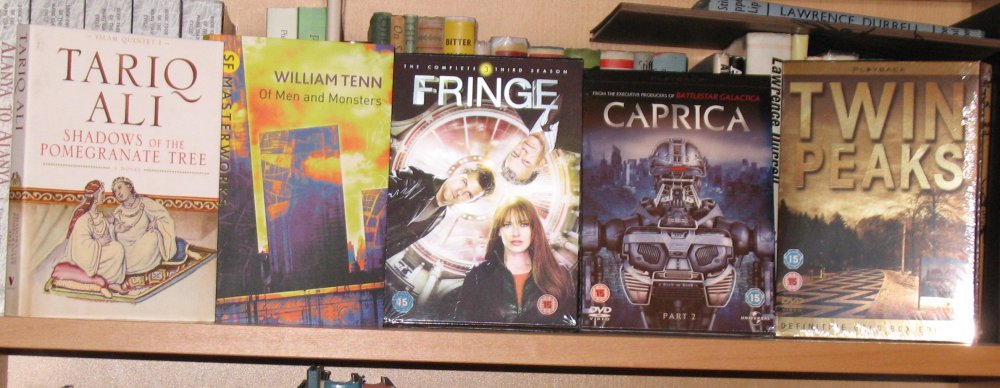
These are the aforementioned Christmas goodies.
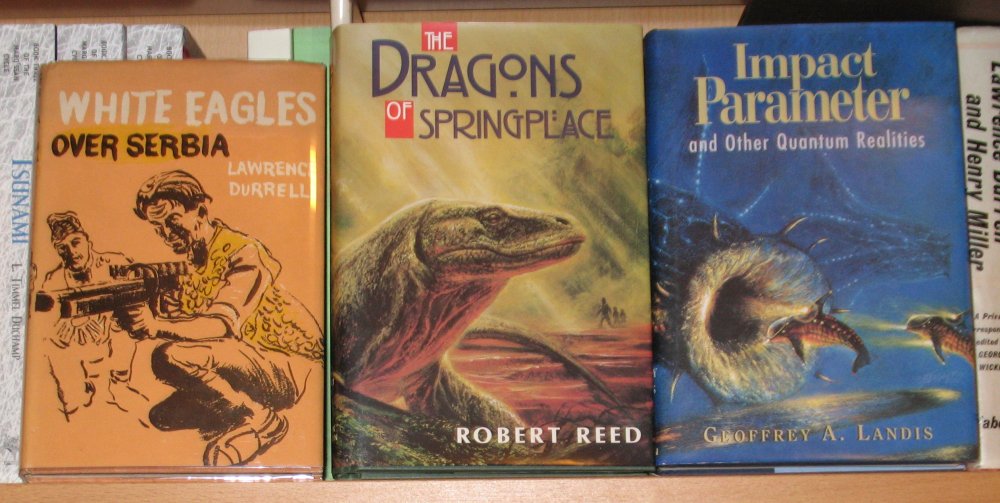
Some first editions: White Eagle Over Serbia is for the Lawrence Durrell collection. The Dragons of Springplace and Impact Parameter I bought in the recent Golden Gryphon 50% off sale.
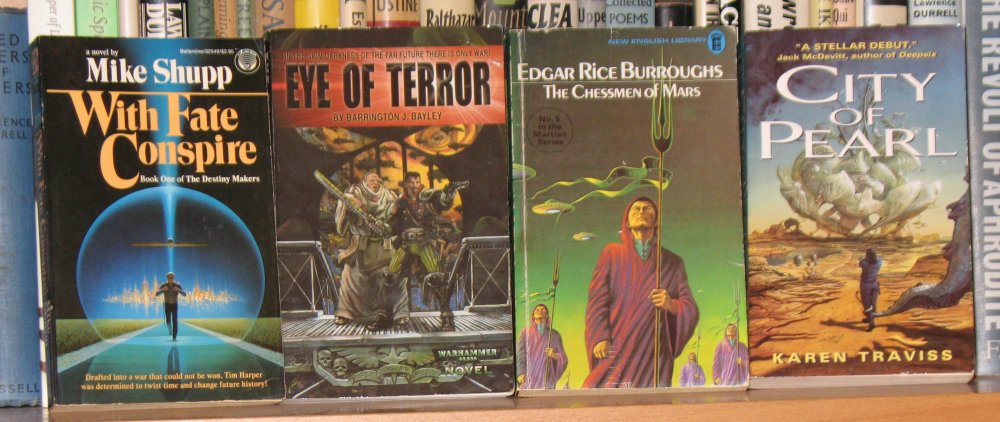
A few sf paperbacks. I used to correspond with Mike Shupp, and I’ve always wanted to read his Destiny Makers quintet, but it’s taken me a while to find decent copies. Now that I have the first book in the series, With Fate Conspire, I can make a start, although I still need to find a copy of the third book, Soldier of Another Fortune. Eye of Terror is Barrington Bayley’s only Warhammer 40K novel, and by all accounts is especially mad – even for him. The Chessmen of Mars almost completes my set of 1970s NEL editions of the John Carter books – because, of course, I have to have a set that all looks the same, and the ones I already had were NEL paperbacks from the 1970s. City of Pearl is November’s belated read for the reading challenge. I doubt I’ll read it before the end of the year, but never mind.
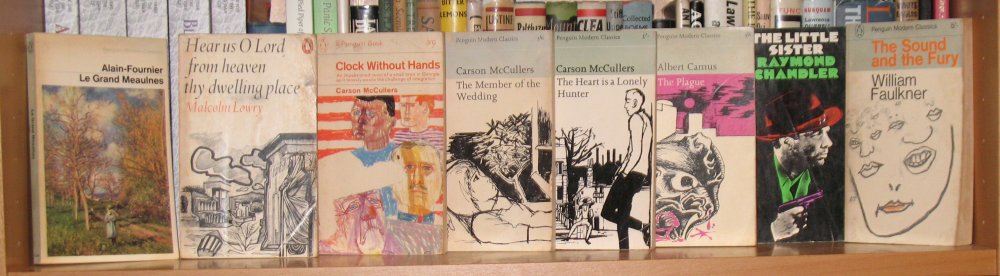
My father owned quite a large collection of Penguin paperbacks. I found an invoice in one, and discovered that he’d actually ordered them direct from the publisher. This was back in the mid-1960s. Though he read and admired all the Penguin books he bought, for the past few decades his reading had mostly been thrillers. Some of his books I want to read myself so I’ve started bringing them home a few at a time, and so… Le Grand Meaulnes, Alain-Fournier; Hear Us O Lord from Heaven Thy Dwelling Place, a short story collection by Malcolm Lowry; Clock Without Hands, The Member of the Wedding and The Heart is a Lonely Hunter, all by Carson McCullers; Albert Camus’ The Plague; Raymond Chandler’s The Little Sister; and The Sound And The Fury by William Faulkner.
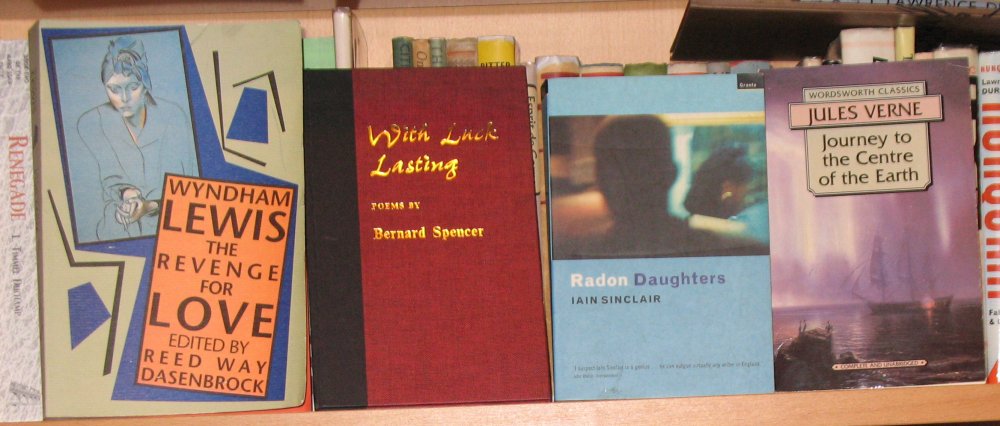
The Revenge for Love and Radon Daughters I found in charity shops. Journey to the Centre of the Earth was a swap from readitswapit.co.uk. With Luck Lasting is Bernard Spencer’s second poetry collection, and while it’s an ex-library book it’s in excellent condition and doesn’t appear to have ever been booked out.
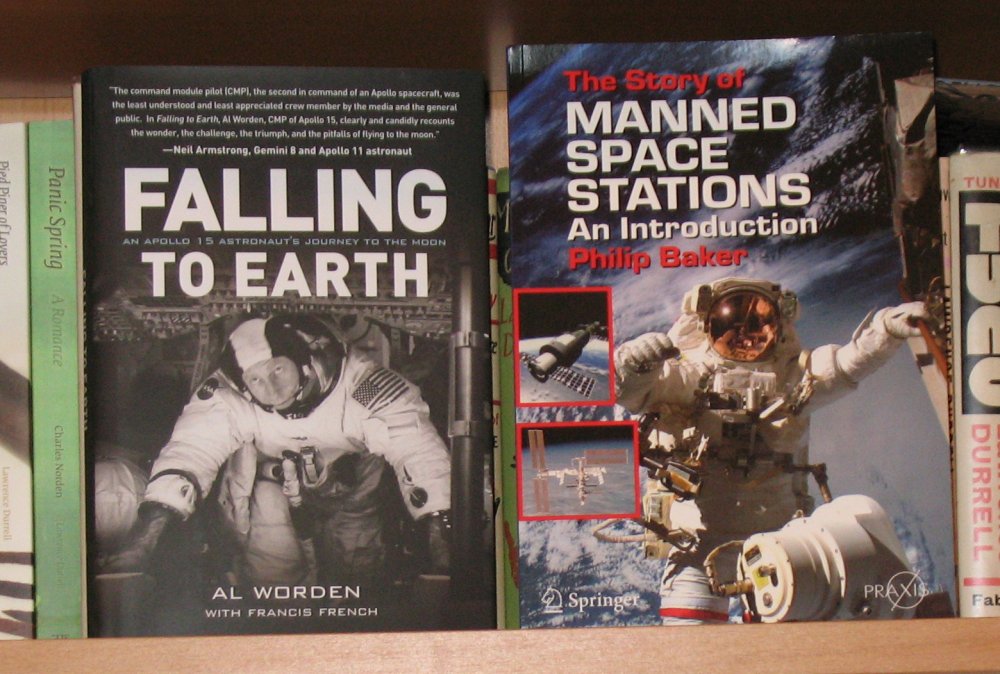
Finally, two books for the space books collection. Falling to Earth is the autobiography of Apollo 15 astronaut Al Worden. It’s signed. The Story of Manned Space Stations was ridiculously cheap on eBay – about £3.50 compared to £18.99 on Amazon.
1 Comment

The shelf that groaned

It’s been over a month since my last book haul post, but if I leave it any longer, it’ll take me an entire weekend to photograph my purchases. So herewith approximately five to six weeks worth of slippery “bid”, “buy it now” and “place order” buttons, and the results thereof.

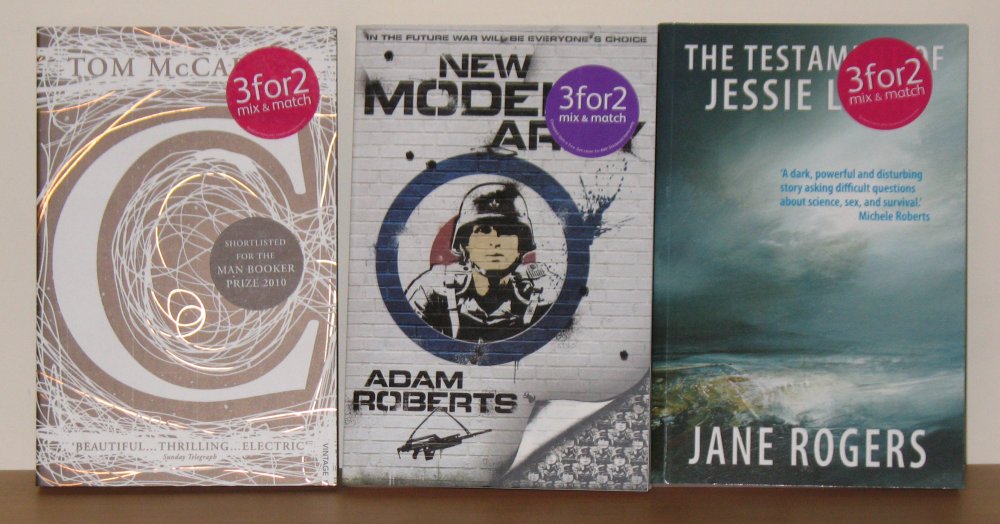
Some time this month, we say goodbye to Waterstone’s 3-for-2 offer, so I felt obliged to go out and have one last go on it. C I’m told is very, very good; I haven’t quite found the right way to read Adam Roberts yet, but I’m reliably informed New Model Army is very good; and The Testament of Jessie Lamb is a literary-but-it’s-really-sf novel and was on this year’s Booker long list.

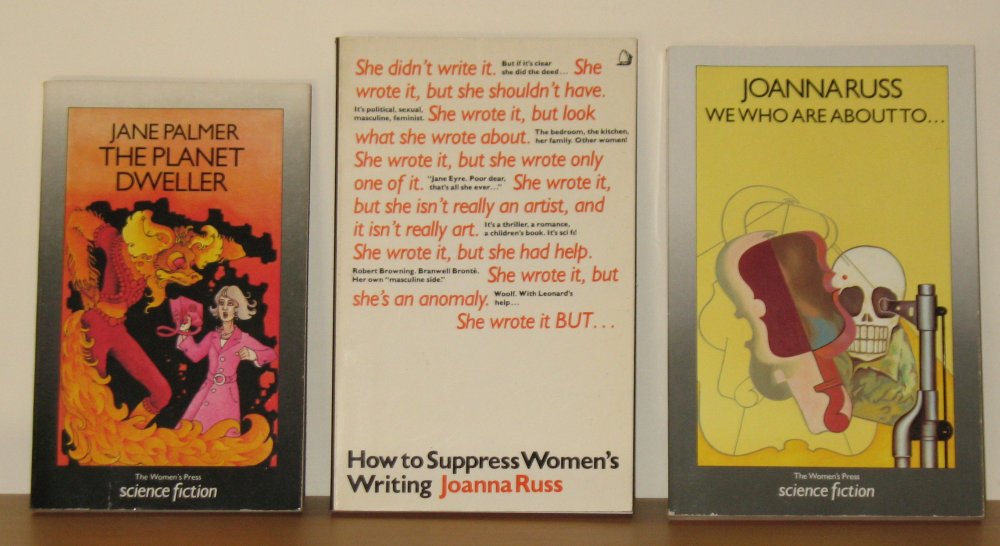
A trio for the SF Mistressworks collection: The Planet Dweller, We Who Are About To…, and How To Suppress Women’s Writing.

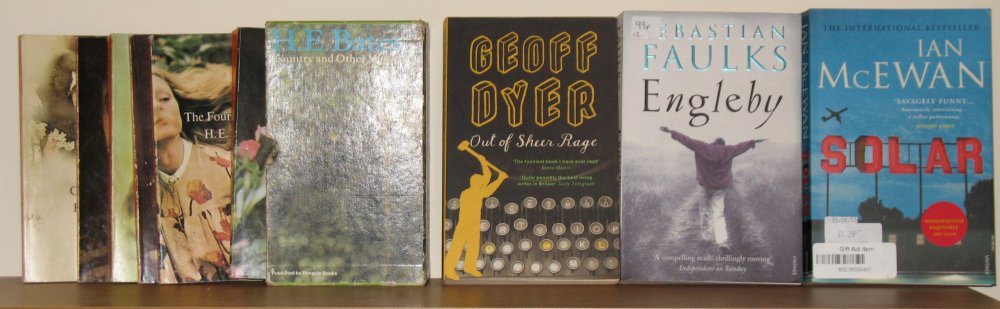
Some charity shop finds. I went off McEwan after Saturday, but I might as well give Solar a go. Engleby is the only Faulks I’ve not got, but I really need to get cracking on reading them. Out of Sheer Rage is about DH Lawrence – sort of – and I’ve heard it’s good. The HE Bates boxed set was a surprise find. It contains: Fair Stood the Wind for France, Dulcima, Seven by Five, The Four Beauties, The Wild Cherry Tree and The Triple Echo.

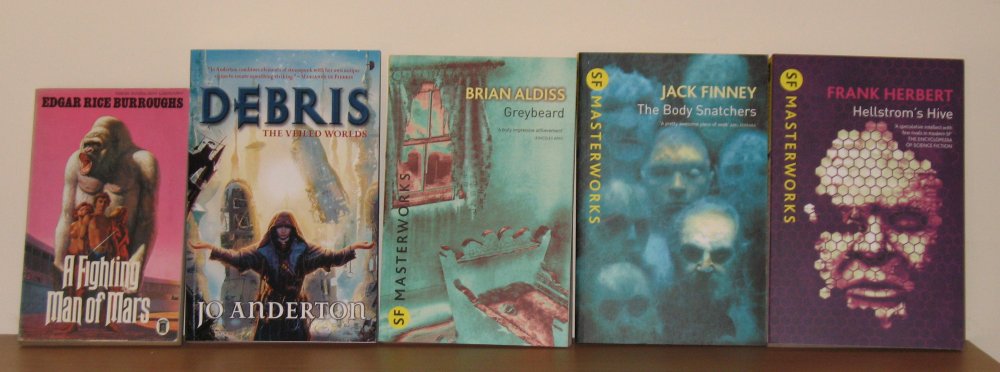
Some science fiction, which I do of course still read every now and again. Three SF Masterworks: Greybeard and The Body Snatchers I’ve never read; Hellstrom’s Hive I’m looking forward to rereading. Debris I have to review for Interzone. A Fighting Man of Mars… well, I’m looking forward to the film due out later this year – I may even go to see it at the cinema. The books I’m less keen on, but never mind.

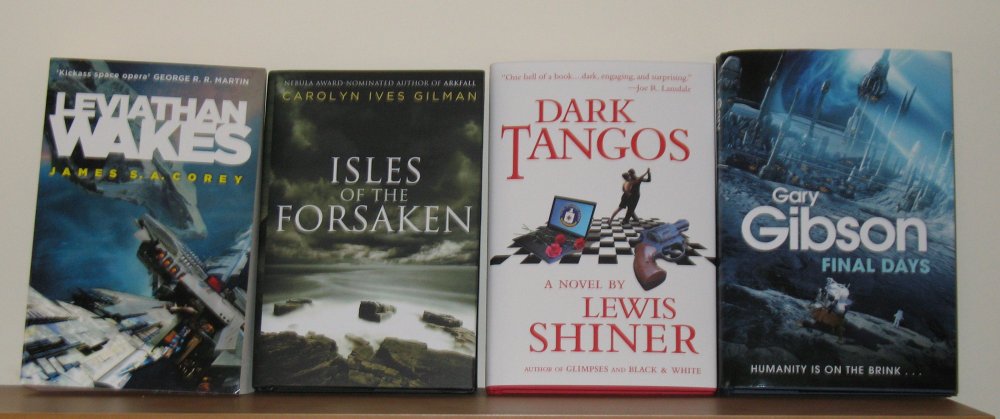
First editions: Final Days and Leviathan Wakes are both science fiction (much thanks to Gary for the former, and Sharon for the latter). Isles of the Forsaken is fantasy – and yes, that’s the signed, numbered edition. Dark Tangos is, well, it’s by Lewis Shiner. And it’s also the signed edition.

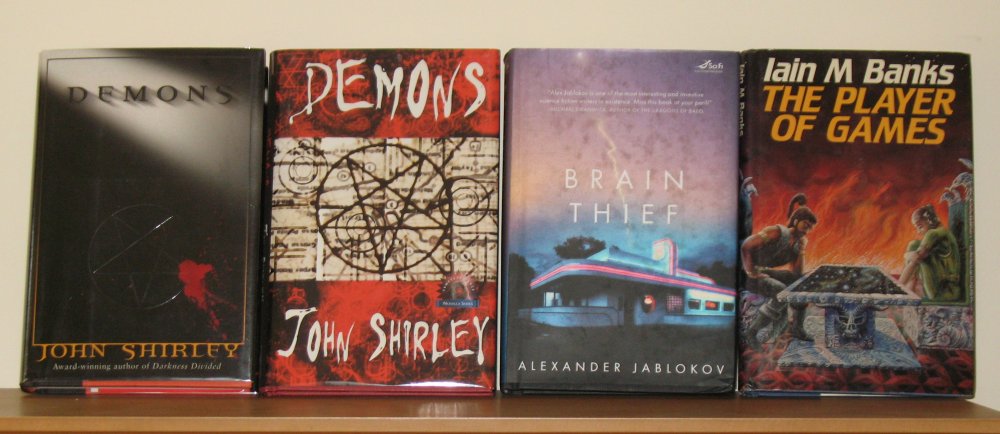
First editions for the collection. Yes, that really is Demons by John Shirley and, er, Demons by John Shirley. The one with the red cover is a novella from Cemetery Dance, and the other is a novel, of which the novella forms the first half. Both are signed. As is Brain Thief, which I reviewed for Interzone last year (but was only sent an ARC). The Player of Games is hard to find for a reasonable price in first edition, but I managed it.

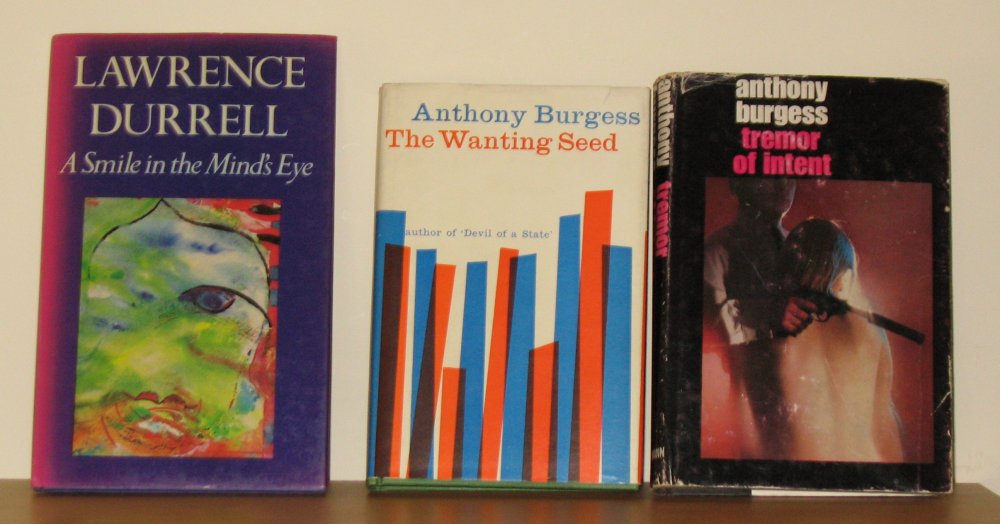
A Smile in the Mind’s Eye is signed and goes on the shelves dedicated to Lawrence Durrell and his works. The Wanting Seed and Tremor of Intent are difficult to find in first edition.

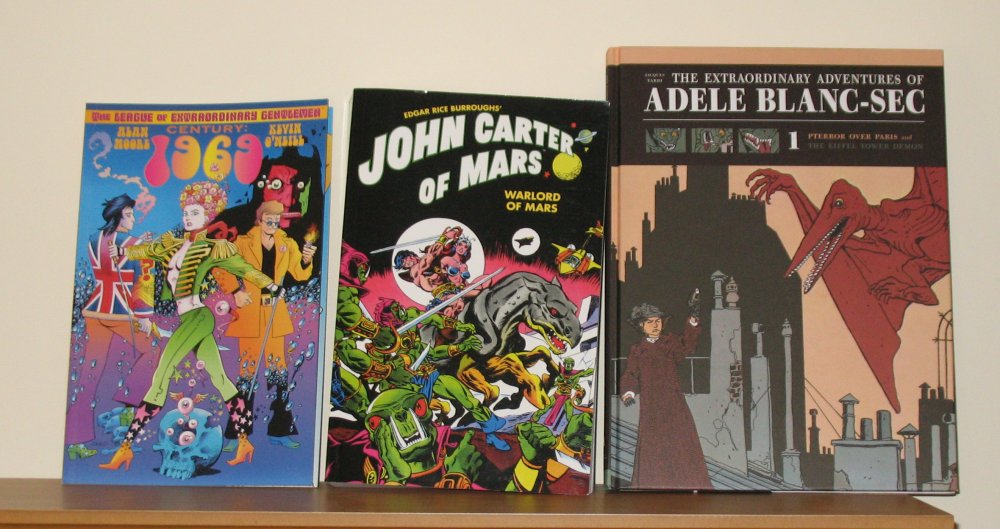
Graphic novels: the latest in The League of Extraordinary Gentlemen, the fab and groovy Century 1969. I have fond memories of Marvel’s John Carter of Mars comic from the 1970s, and a few years ago tracked down all 28 issues and three “king size” annuals. But a trade paperback is so much more convenient – except the artwork in it is black and white, and not colour as in the original comics. The Extraordinary Adventures of Adéle Blank-Sec 1 I bought after enjoying Tardi’s The Arctic Marauder.

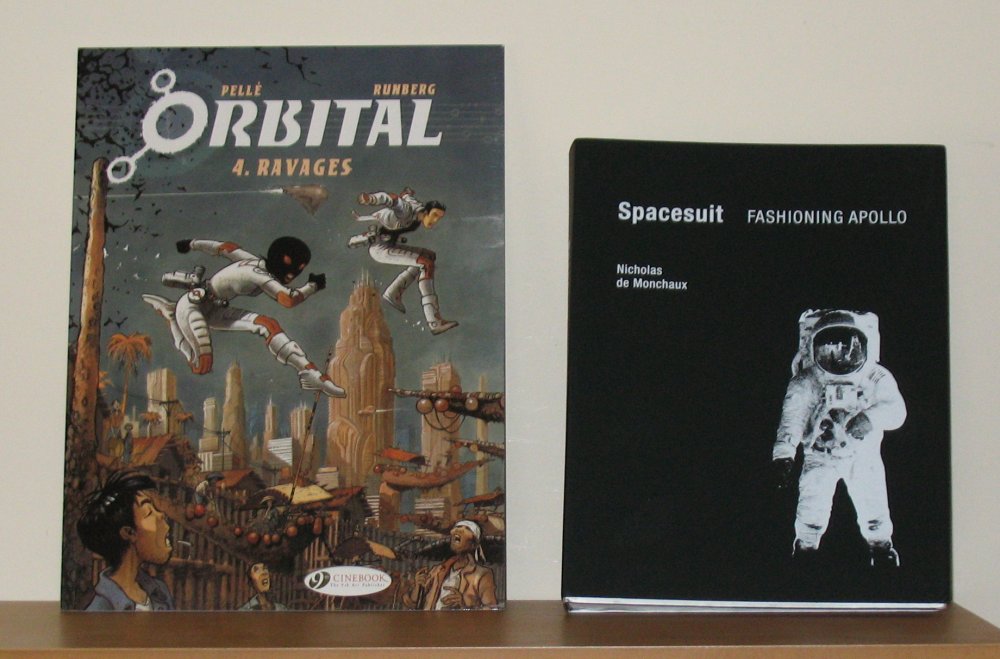
Finally, Ravages, the last, I think, of the Orbital graphic novels, and a book about, er spacesuits titled Spacesuit: Fashioning Apollo. I don’t know what the cover of the latter is made from but it has a similar texture to rubber matting and is quite strange.


Leave a comment

Shelf stackers

I didn’t think I’d bought that many books since my last book haul post back in early June, but when I came to take photos of my recent purchases… Well, there you go. It appears I have bought rather a lot. No wonder my postie just cards me and runs away.


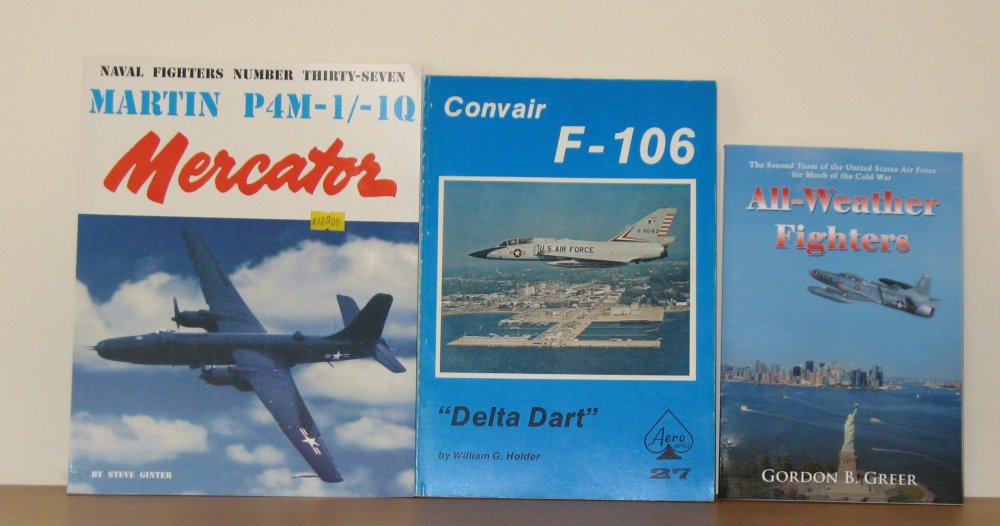
Some aeroplane books to start. I have two or three of Steve Ginter’s Naval Fighter Aircraft series now, but only for the aircraft I actually find interesting, like the Martin P4M-1/-1Q Mercator. The books are well put-together, with lots of photographs and information. Convair F-106 “Delta Dart” and All-Weather Fighters were bought chiefly for research for my moon base novella.


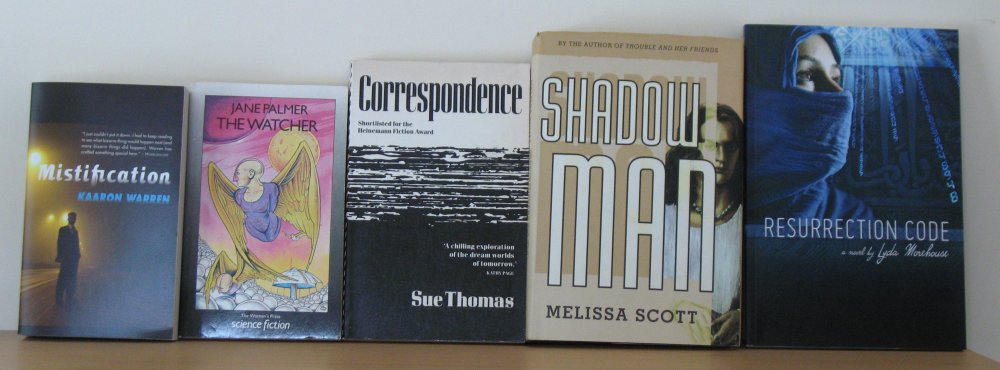
Some sf novels by women writers. Kaaron Warren’s Mistification is one of the few books I kept from the big box of Angry Robot releases I won in the alt.fiction raffle. Jane Palmer’s The Watcher goes with the other Women’s Press sf novels I own, as does Sue Thomas’s Correspondence. Melissa Scott’s Shadow Man is for the 2011 Reading Challenge, and Lyda Morehouse’s Resurrection Code I think was recommended to me by Amazon after I bought Kameron Hurley’s God’s War. I’ll be writing about it here soon.


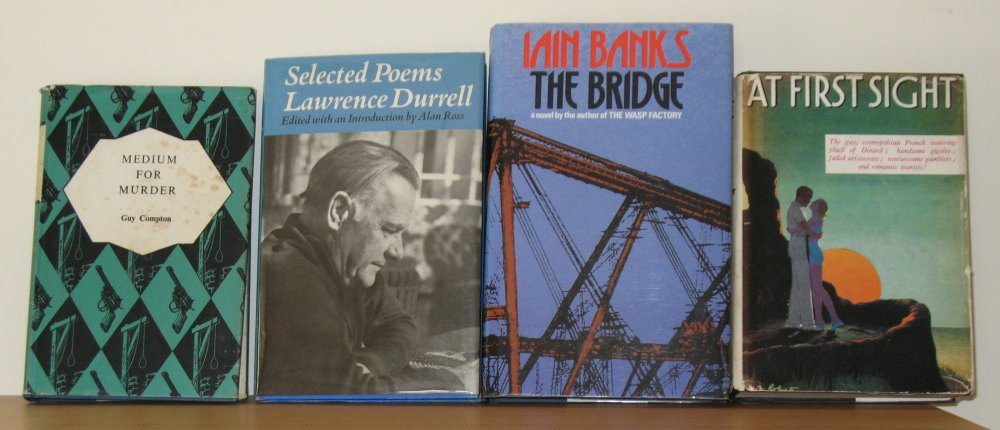
Some first editions – well, okay, Medium For Murder by Guy Compton, AKA DG Compton, is actually a Mystery Book Guild edition. Selected Poems is signed; as is At First Sight, Nicholas Monsarrat’s second novel, from 1935. Both were lucky eBay finds. First editions of The Bridge are typically expensive, but I managed to find one for a reasonable price.


Three for the Watson collection (see here) from Andy Richards’ Cold Tonnage.


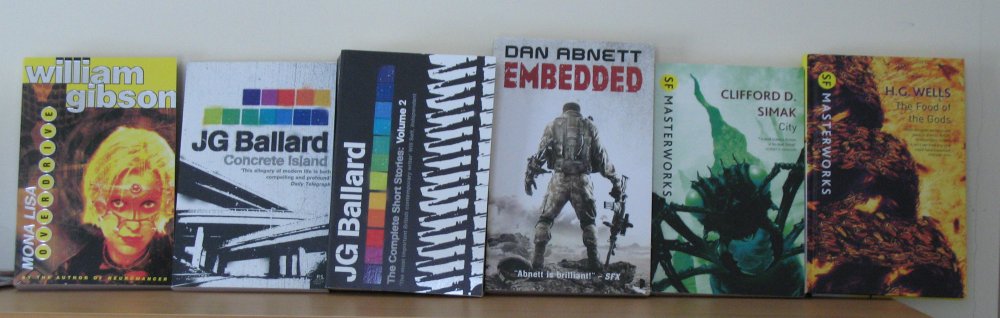
Some sf paperbacks. I read Gibson’s Sprawl trilogy years ago, but never owned copies. Now I have all three books, I’ll be giving it a reread sometime. I’ve also been picking up Ballard’s books, as I find them far more appealing now than I used to. Embedded is another book from the alt.fiction raffle prize. And finally, two from the relaunched SF Masterworks series – I’m fairly sure I read Simak’s City many, many, many years ago (I was a big Simak fan in my mid-teens); I know I’ve certainly not read Wells’s The Food of the Gods.


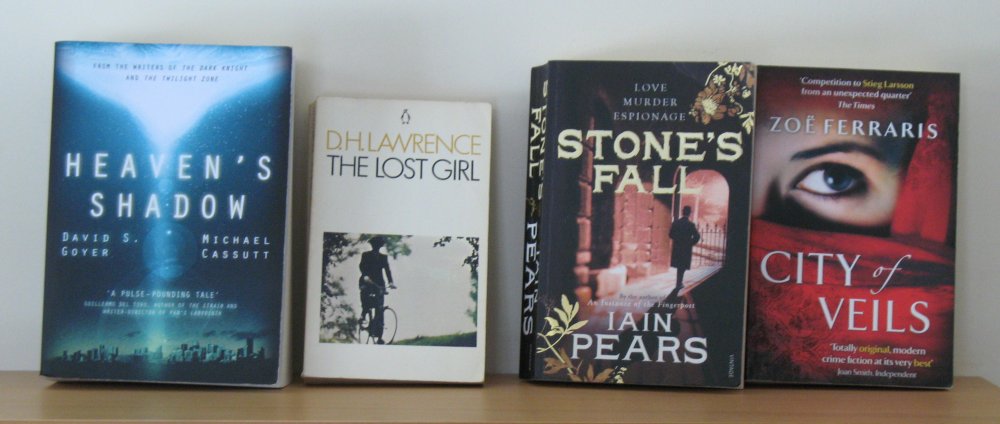
Heaven’s Shadow I swapped for my Interzone review copy of Daniel H Wilson’s Robopocalypse with Robert Grant of Sci-Fi London (ta, Robert). I want to read Heaven’s Shadow because it features near-future space exploration; I expect to hate it because it’s a mega-hyped techno-thriller type sf novel. DH Lawrence’s The Lost Girl and Iain Pears’ Stone’s Fall are both charity shop finds. City of Veils is the second of Zoë Ferraris’ crime novels set in Saudi Arabia. I’ve already read it and thought it much better than her first novel, The Night of the Mi’raj.


Some first editions. I have about a dozen of Pulphouse Author’s Choice Monthly mini-collections, and am trying to complete the set. But only the signed, numbered editions. I’ll have to read Newton’s City of Ruin before I tackle the third book in the series, The Book of Transformations. I read American Adulterer earlier this year and liked it enough to buy a cheap copy of the hardback.


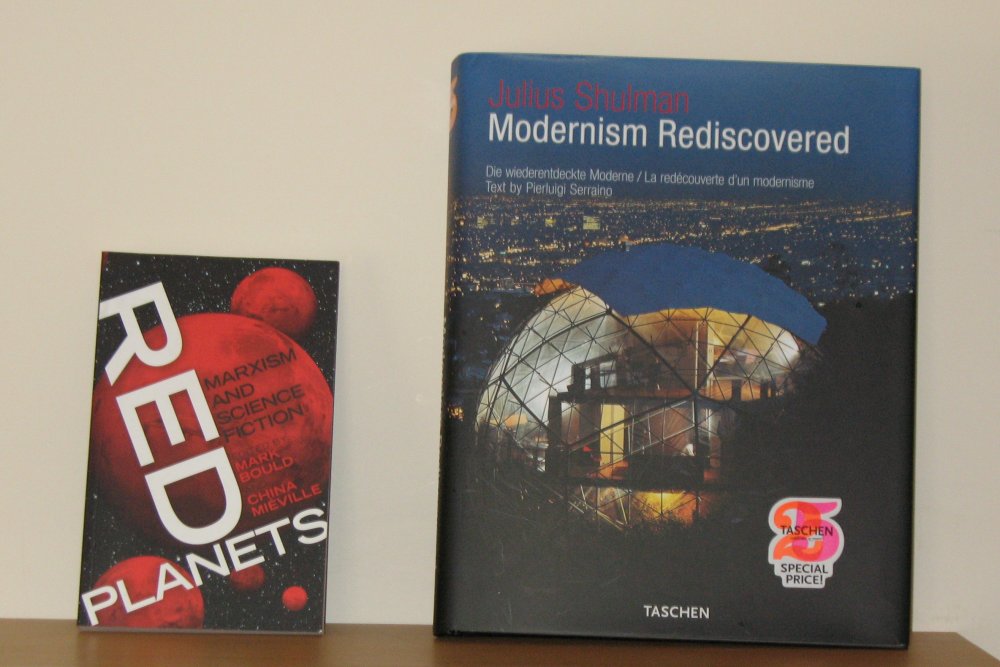
I didn’t know Modernism Rediscovered was going to be so bloody big when I ordered it from Amazon. It was only about £13 (and I put part of a voucher toward it as well). It’s an abridged edition of the three-volume set, which costs… £200. Contains lots of lovely photos of California Modernist houses. Red Planets I’m looking forward to reading. I really should read more criticism, and this looks like an interesting set of essays.


12 Comments

Ten Greatest Authors

I can’t even remotely pretend the ten authors in this list are the “greatest” in any commonly-accepted sense. They’re not all favourites, but they’re certainly the authors whose writing I admire the most. Still, it’s a list. Everyone likes lists.

In no particular order…

  1. Lawrence Durrell – I love the way he uses the English language. At a sentence level, I think he writes the best prose of any writer I’ve ever read. The Alexandria Quartet is required reading.
  2. Anthony Burgess – because fiction should be clever – although, to be honest, Burgess was occasionally too clever for his own good. Once described as a great writer who never wrote a great novel… except Earthly Powers is a great novel.
  3. John Fowles – the sheer readability of his prose disguises the depth and insight of his fiction. The French Lieutenant’s Woman is one of the great works of post-war British literature.
  4. DH Lawrence – I came late to Lawrence, but I immediately fell in love with his prose – the level of detail, the insight, the poetry…
  5. John Crowley – the Ægypt Sequence remains one of the best works of American literature from the second half of the twentieth century. Often it seems the height of hubris to claim Crowley as a genre writer.
  6. M John Harrison – the finest British prose stylist who self-identifies as a genre fiction writer. Light is a touchstone work of science fiction.
  7. Paul Park – the finest American prose stylist who self-identifies as a genre fiction writer. His books are less challenging than M John Harrison’s, but they also make more original use of genre tropes.
  8. Gwyneth Jones – her prose is an order of magnitude better than is typical for science fiction; and her science fiction is an order of magnitude more sophisticated than is typical for the genre.
  9. WG Sebald – because he’s such a resolutely interesting writer in the way he frames and presents narratives.
  10. Kim Stanley Robinson – the most thoughtful science fiction writer of his generation, and extremely readable with it. The Mars trilogy is a touchstone work of science fiction.

Honourable mentions: Mary Gentle, Paul Scott, Joseph Conrad, Frank Herbert, Margaret Atwood, Kazuo Ishiguro.

Also: my Ten Greatest Film Directors post.


3 Comments

A Booktastic Haul

It’s been a while since I last did one of these, so here’s a nice photograph of the books which have arrived at my humble abode over the past week or so:

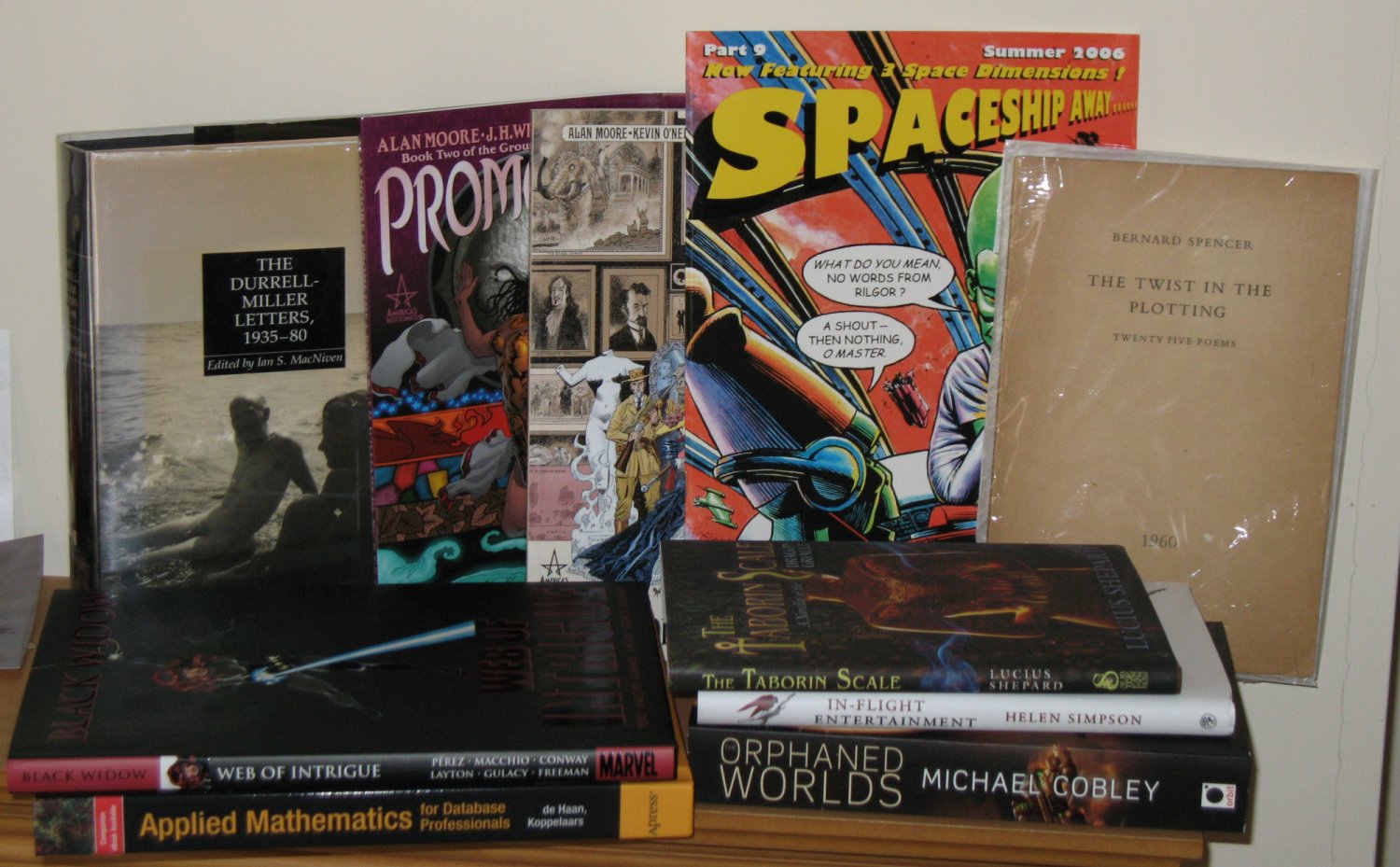
Quite a mixed bag. There’s the second of Mike Cobley’s Humanity’s Fire space opera trilogy, The Orphaned Worlds (and no, they don’t orbit Barnardo’s Star…); a new collection from one of my favourite short story writers, Helen Simpson, In-flight Entertainment; and a signed edition of Lucius Shepard’s latest Dragon Griaule novella, The Taborin Scale, from the excellent Subterranean Press (the novella is already sold out). There’s a bunch of graphic novels – two by Alan Moore: The League of Extraordinary Gentlemen (I had Volume 2, but had never read Volume 1), and Promethea Book 2. Plus the latest of the Black Widow collections from Marvel, Web of Intrigue; and a back-issue of Spaceship Away!, a magazine dedicated to Dan Dare. The huge book to the left is The Durrell-Miller Letters 1935-80, edited by Ian S MacNiven. That’s Lawrence Durrell and Henry Miller. And yes, Miller appears to be naked on the cover. To the right is The Twist in the Plotting, a rare numbered chapbook of twenty-five poems by Bernard Spencer, published in 1960 by the University of Reading. Lastly, there’s a book for work: Applied Mathematics for Database Professionals, which I plan to read when I’m having trouble sleeping…

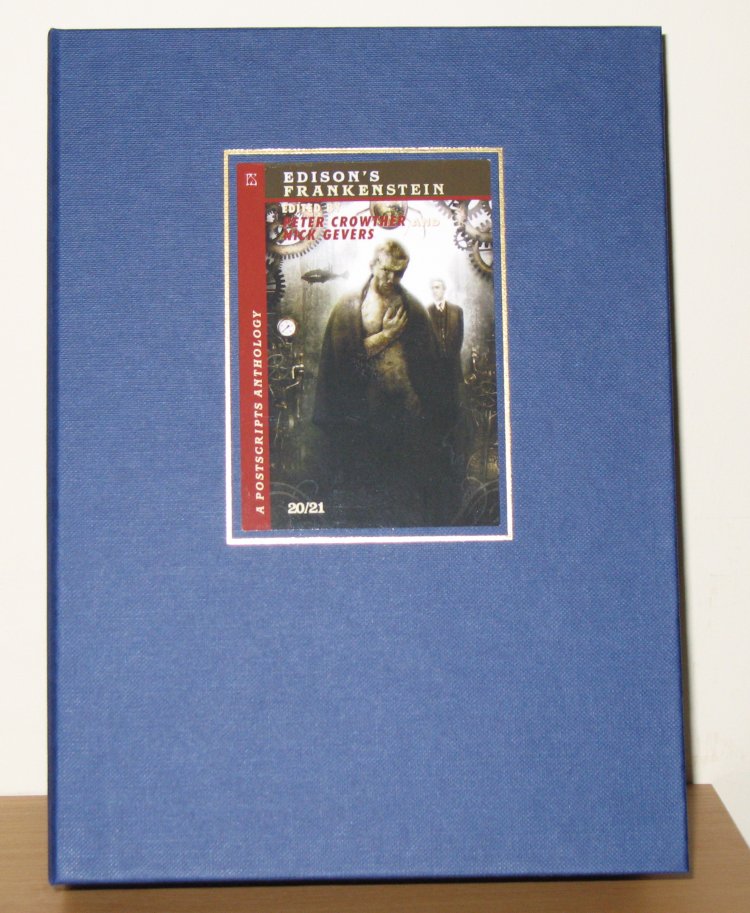
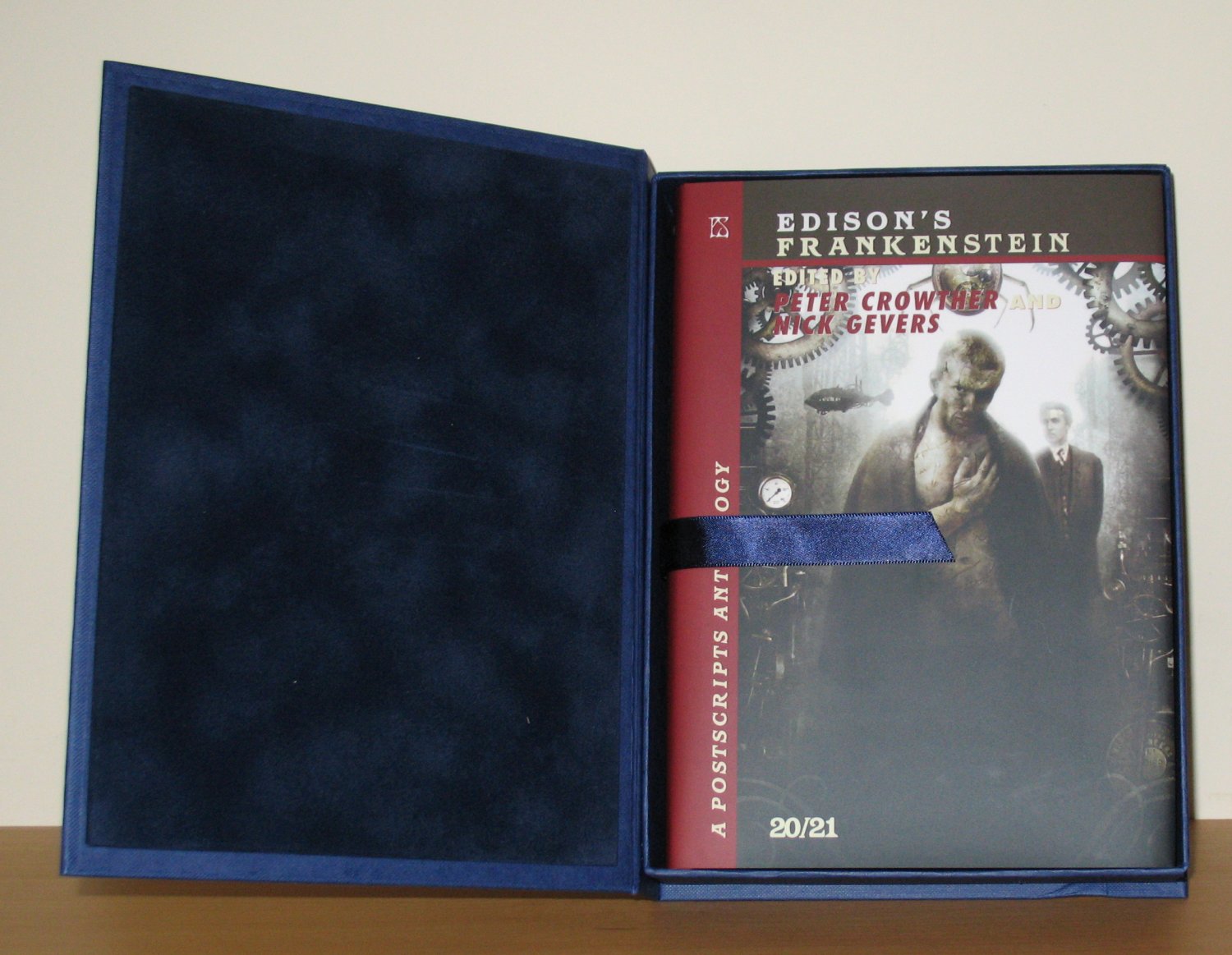
Something else arrived a few weeks ago, so I thought I’d include it in this post because, well, because it’s damn cool. It’s the signed limited edition of Postscripts 20/21 ‘Edison’s Frankenstein’. It comes in a nice slipcase:

… which looks like this inside:

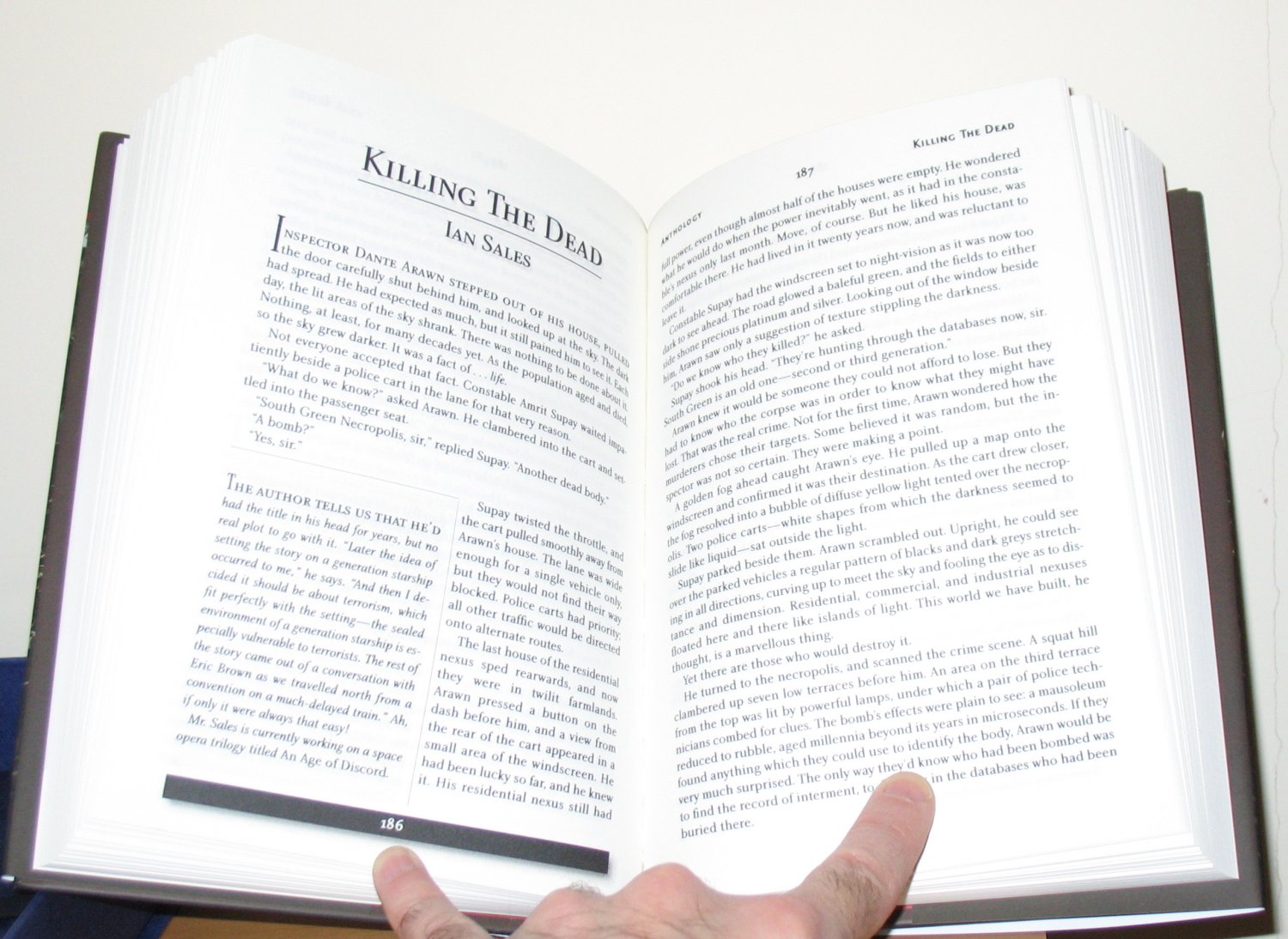
And here’s my story, ‘Killing the Dead’:

The first few paragraphs go like this:

Inspector Dante Arawn stepped out of his house, pulled the door carefully shut behind him, and looked up at the sky. The dark had spread. He had expected as much, but it still pained him to see it. Each day, the lit areas of the sky shrank. There was nothing to be done about it. Nothing, at least, for many decades yet. As the population aged and died, so the sky grew darker. It was a fact of… life.

Not everyone accepted that fact. Constable Amrit Supay waited impatiently beside a police cart in the lane for that very reason.

“What do we know?” asked Arawn. He clambered into the cart and settled into the passenger seat.

“South Green Necropolis, sir,” replied Supay. “Another dead body.”

“A bomb?”

“Yes, sir.”