It Doesn't Have To Be Right…

… it just has to sound plausible


2 Comments

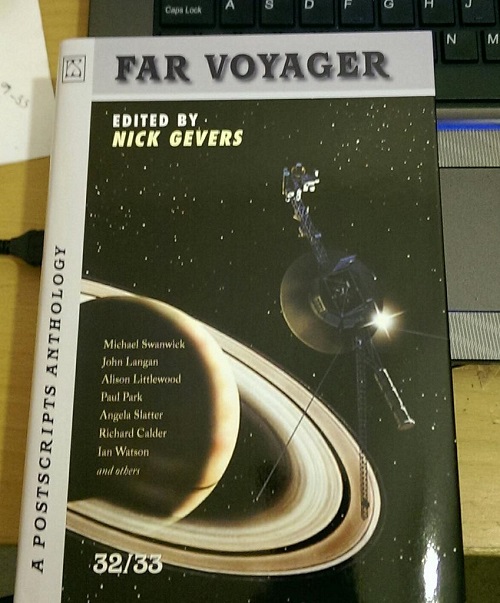
Postscripts Far Voyager

My contributor copy of Postscripts 32/33 Far Voyager landed with a thud on my mat this weekend. I’m especially pleased about this one, because my story provided the anthology’s title. (I didn’t get named on the cover, though.) ‘Far Voyager’ is another of my alt space stories, based around the premise that one of the Voyager probes was manned. There are a few clues to the identity of the astronaut, although he’s not actually named.

ps3233

Also in the anthology are many excellent writers, including Paul Park, Ian Watson, Michael Swanwick, Alison Littlewood, Richard Calder and Angela Slatter.


17 Comments

Welcome to An Age of Discord

What is this, I hear you cry. A space opera? But, Ian, you write hard sf, literary hard sf, the sort of hard sf that needs two pages of bibliography! How can you write a space opera?

Well, it sort of happened like this…

I first started work on A Prospect of War back when I was living in the UAE. I’d previously completed two novels, neither of which were especially good. One was a sort of Dickensian space opera, and the other a first contact novel with a time-slipped narrative. But after working my way through the first seven books of Robert Jordan’s Wheel of Time, and failing to understand why they had proven so successful, I decided to write a space opera trilogy which used the structure of an epic fantasy. It took several goes before I was happy with the universe I was building (early versions probably owed a little too much to science fiction role-playing games such as Traveller).

So, I would have a “peasant hero”, a young man of common birth who proved to have some magical ability which resulted in him leading the forces of good against an attempt by a “dark lord” to overthrow the existing ruling dynasty. But I wasn’t quite ready to throw magic into my space opera. In fact, what I wanted was a relatively low-tech civilisation that had managed to build an interstellar empire using only a limited number of pieces of handwavey technology. I didn’t want it all shiny high tech because I needed to justify the rigidly-enforced social classes. You need those class barriers in place for a peasant hero to break through (and to provide yet more jeopardy to justify his eventual victory). And I wanted an atmosphere of fading grandeur and deep history.

I invented a world which reached an early industrial level of technology, and promptly discovered three satellites in orbit. A space race led to one nation – the most socially conservative and repressive of those on the world – getting into space first… where the astronauts found three ancient wrecked starships. And from them they reverse-engineered: a Faster-Than-Light drive, a cheap energy generator, anti-gravity, a powerful directed-energy ships’ weapon, and a force-curtain. (They actually had a little surreptitious help… but that’s a story for another day.) These five things gave that nation first the planet, and then an interstellar empire.

But my story would be set millennia later, after the empire had declined and a new empire, catalysed by a successful war against another interstellar polity, had been carved out of it. The dark lord would be only the latest leader of a conspiracy which has been harbouring a grudge since the defeat of the old empire…

This was getting bloody complicated. I took some time out from writing to do some world-building… and eventually ended up with a couple of hundred MB of spreadsheets, documents and text files giving details on everything from the imperial government to its military to naming conventions to ancient history. I even built a wiki, with the eventual aim of either publishing it online or in book-form as an encyclopaedia.

A generic space opera image from a wallpaper web site

A generic space opera image from a wallpaper web site

Then it was back to writing the story… which never quite went as planned. This was partly because I’d been too clever for my own good. For reasons which now escape me, I decided that FTL travel entailed journeys measured in weeks, but in the real universe the length of time the journey took was longer, on a logarithmic scale. So a journey which for a ship’s passengers might take a week would see them arrive eight days after their departure; for two weeks, it would be seventeen days… and so on. Since I decided to use four main viewpoint characters, and I’d have them travelling about on different journeys… I had to create a giant spreadsheet in order to keep the chronology straight. It was a major headache.

And that epic fantasy template I’d planned on using… that was getting completely bent out of shape too. I had my four protagonists meeting and then separating and then meeting again, just so I could get them all into position for the end of the first novel. To make matters worse, every time I reached for a space opera or epic fantasy trope to incorporate, it would never quite fit, so I had to either rip it apart or subvert it.

Anyway, I eventually finished the first book, after many years of writing and polishing. It was good enough for John Jarrold to take me on as a client. I started work on the second book of the trilogy. This was a mistake. If you can’t sell the first book of a series, what’s the point of writing the second book? A few years passed. I wrote a few treatments for novels, but no one bit. I wrote Adrift on the Sea of Rains. It won the BSFA Award. I discovered I much preferred writing the sort of literary sf that requires lots of research. I wrote the remaining books of the Apollo Quartet (well, was working on the fourth book). Then a small press – Tickety Boo Press – asked to see my space opera. What to do? I’m not writing that sort of science fiction any more. Won’t its appearance confuse readers who have come to expect the likes of the Apollo Quartet from me?

Decision time.

Now, I still stand by A Prospect of War and A Conflict of Orders. I think they’re good work. And now actually seems like the right time for them to appear. Publishing has changed, the sf market has changed, space opera has changed. Which doesn’t mean I don’t intend to do a little wrangling before they see the light of day. At 200,000 words, A Prospect of War could do with being made a little tighter and punchier. And I changed some background details when I wrote A Conflict of Orders, so I need to retcon them in A Prospect of War. A Conflict of Orders’ 170,000 words will also receive some rewriting. And I’ll finally get around to writing A Want of Reason – which will please some friends, who have been demanding I write it for years.

Space opera is a more commercial, and commercially successful, subgenre than literary hard sf. If An Age of Discord sells well, and encourages people to buy the Apollo Quartet, then it’s all win. There are space operas currently available on Kindle – badly-written and derivative ones – which sell several thousand copies a month. In three years, I’ve sold 1,300 copies of Adrift on the Sea of Rains. Granted, novellas don’t sell as well novels, but all the same…

An Age of Discord does not mean I’ve permanently decamped to space opera. I still have a number of hard sf projects planned, both at novella and novel length. But I see no reason why I can’t write big fat space operas and literary hard sf. But we shall see how well the trilogy does. Perhaps people will hate it, perhaps no one will buy it. Perhaps its time has not come, after all…


27 Comments

Space opera trilogy to be published

The news is out… Tickety Boo Press have picked up my space opera trilogy, An Age of Discord, to be published in 2015 and 2016. The three books are A Prospect of War, A Conflict of Orders and A Want of Reason, and they’re sort of a steampunkish widescreen baroque space opera sort of thing. The official press release (see here) describes the general story as…

Those who don’t know history are doomed to repeat it, but those who ignore history do so at their peril. The Empire was born in civil war and now, 1,300 years later, a fresh civil war is brewing. But who is the mysterious “Serpent” who threatens the Imperial Throne? And what can the renegade naval officer known only as the Admiral, and her single battlecruiser, do to combat him? Casimir Ormuz, a young man of low birth, may be the key. Whoever controls him is most likely to win—but he is determined to be his own master.

And then the historical origin of the Serpent’s conspiracy abruptly intrudes into the present… And the civil war becomes a battle for the Empire’s survival.

Set in a colourful and richly-detailed universe, An Age of Discord tells an epic story of derring-do and intrigue, while subverting space opera sensibilities and traditions.

… which is all a bit vague and tantalising-y. As all good blurbs should be.

acoo

I wrote a back-cover blurb for the first novel, and while it may or may not appear on the actual book when it’s published, here it is to give a flavour of the trilogy:

Lieutenant-Commander Rizbeka demar Rinharte is lieutenant of intelligence aboard Vengeful, a renegade battlecruiser commanded by the mysterious Admiral.

Sliva demar Finesz is an inspector in the Office of the Procurator Imperial, and involved in investigating a conspiracy to overthrow the Emperor Willim IX.

Murily Plessant is captain of the data-freighter Divine Providence. She is also an agent of a secret order dedicated to protecting the Empire against the clandestine machinations of its internal enemies.

Although all three women do not know it, they are fighting the same enemy.

Vital to this fight is the young man Casimir Ormuz, a member of Divine Providence’s crew.

Only Plessant and her secret order know the role Ormuz will play… and even then he is far more pivotal than they realise.

Did I mention that the plot is really complicated? There’s wheels-within-wheels and sword-fights and space battles and no space opera cliché is left unmangled by the Sales treatment…

Oops. Forgot to mention. A Prospect of War will be launched at Edge-Lit 4 in Derby on 11 July this year.

PS: An Age of Discord will feature quote marks for dialogue.


22 Comments

On awards eligibility posts

It’s that time of year again when the blogosphere is suddenly full of awards eligibility posts. Some people consider them useful and some people think they’re a bad thing. I used to believe there was something a little bit off about them, and I put that down to being, well, British. Blowing your own trumpet and all that. Bad form, you know. But my opinion on them has hardened of late. Having seen what a mockery the Hugo Awards were last year – which is not to say they haven’t been for many, many years – but in 2014 I was more than just an observer on the sidelines…

In 2014, I joined the Worldcon, which allowed me nominate works for the award. I took my vote seriously. I read novels I believed might be award-worthy, so I could put together a reasonably well-informed ballot. But the way everything worked out only brought home to me quite how corrupt is the culture surrounding the Hugos. And part of that culture is the awards eligibility post.

So why are they bad?

For one thing, awards are not about authors – they’re about what readers think of individual works. When an author enters a conversation about their book, they skew the conversation. We’ve all seen it happen. It usually result in authors bullying fans. When an author does the same with awards, they skew the awards.

It’s not a level playing-field. If Author A lists the eligible works they had published in 2014 and a couple of thousand people see that list, and Author B does the same but hundreds of thousands of people see their list… and if 0.01% of those people then nominate a work, guess who’s more likely to appear on the shortlist? Popular vote awards are by definition a popularity contest, so to make it acceptable for those with the loudest voices to shout across the room just makes a mockery of the whole thing.

Awards are fan spaces. Authors should not invade fan spaces. This is not to say that authors are not fans themselves. And there’s no reason why they shouldn’t behave as fans in fan spaces. But an awards eligibility post is an author-thing not a fan-thing. (This leaves posts where authors recommend others’ works in something of a grey area. Big Name Authors have Big Loud Voices, and their endorsement can still skew an award.)

Authors get no say in how their works should be received, and that includes whether it is deserving of an award. (Whatever they might think privately, of course.)

If fans are serious about voting for awards, then they should make an effort to stay informed. They shouldn’t nominate works because they were reminded of that work’s existence by its author. You don’t nominate on a fucking whim. Yes, the field is large, and it’s easy to miss something worthy of an award. But voters have a responsibility to make an informed vote, and while no one expects them to have 100% information – those days are long past – just waiting for their favourite author to provide a list for them to choose from is just plain irresponsible.

And, needing to be reminded of something you consider one of the best pieces of fiction of the year? Seriously? It’s so good, you’ve completely forgotten it a few months later? Awards, as a general rule, are supposed to go to the “best” of something – the Hugo Awards actually include that word in their title. You’d imagine a work which is the best to appear during a year would at least be memorable.

(The above, of course, applies to the nomination process. The actual voting usually settles things out. No matter how bad the shortlist, voters usually pick the right one – as they did last year. But the more shit the shortlist, the more the probability of an unworthy winner approaches one.)

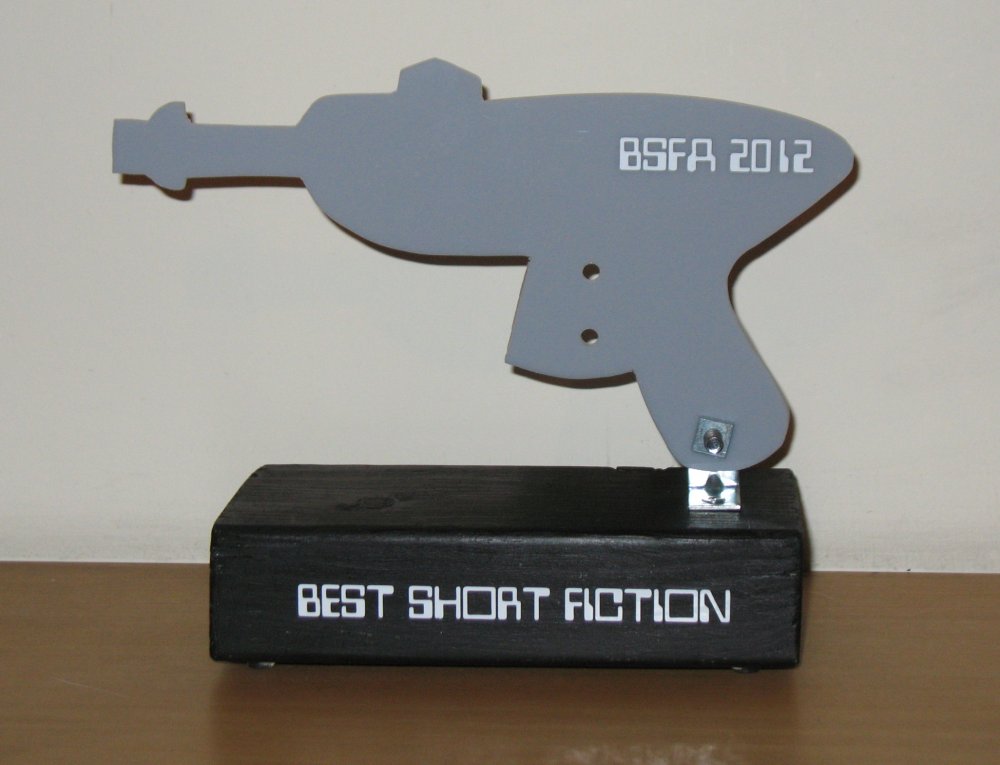
bsfa2012

We’re currently in the middle of the BSFA Award nominating period – it closes on 31 January. This year, they’ve changed the rules. Now, we only get four nominations per category, instead of an unlimited number. It’s going to make for a very interesting award. Will the shortlists skew to popularity much more than they have done in the past? Or will they do the opposite… and end up with such a wide spread of nominations that only a handful are required for a work to be shortlisted? I guess we will find out in the months to come…


7 Comments

The Race, Nina Allan

I first came across Allan’s fiction in Interzone, and while her stories always struck me as well-written, there was a vagueness to some of the details in them which never quite rung true for me. ‘Flying in the Face of God’, which was shortlisted for the BSFA Award in 2010, is a case in point. The relationship between the two central characters is handled beautifully, but the story is also about a space programme for which one of them has been selected. And something about that space programme felt unconvincing. A recent reread of the story in the collection Microcosms did not change my mind.

Of course, many people will say I’m missing the point of the story – or rather, by focusing on that one aspect, I’m missing what the story is about. And that’s almost certainly true. But a story is more than the sum of its parts, and a failure in one of those parts can throw the whole out of balance. It’s entirely subjective, of course – I can admire a story like ‘Flying in the Face of God’, without thinking it as good as everyone else seems to. And one thing I do admire about the story is Allan’s facility at creating worlds slightly off-kilter from ours, ones just strange enough to unsettle without seeming completely unfamiliar. Which brings us to The Race, her first piece of novel-length fiction.

the_race_cover_spacewitch-150x212

The Race comprises four novellas, titled ‘Jenna’, ‘Christy’, ‘Alex’ and ‘Maree’ after their narrators. Jenna lives in Sapphire, a town on the edge of Romney Marsh, in a future that is plainly not our own. Her brother, Del, manages a dog track, where smartdogs are raced by “runners”, people with an empathic connection to the smartdogs mediated by implants. ‘Jenna’ is essentially a family history and an exploration of Jenna’s small world (we learn very little of the world outside Sapphire). Jenna becomes a maker of handmade gauntlets for the runners, and Del gets married and has a baby girl. A few years later, the girl is kidnapped, and it transpires Del was involved with drug dealers and owes them money for a missing shipment.

Christy, on the other hand, lives in our world. Her father and brother run a house clearance firm. ‘Christy’ focuses on Christy’s relationship with her brother, Derek, and his girlfriends. First Monica, and then Lin. Derek is a thug and a nasty piece of work. After he sexually assaults Christy, she leaves for London and university. She becomes a writer, and ‘Jenna’ is revealed as one of her stories. It is during one visit home that she meets Lin, who Derek tells her he will marry. But then Lin disappears, and Christy fears her brother may have murdered her.

Alex is the ex-boyfriend of Lin, and a journalist based in London. He is contacted by Christy – several years have passed since the central events of ‘Christy’ – who asks him to come and visit her in her home in Hastings. She asks him about Lin, and he describes an incident when Derek assaulted him because Lin had come to talk over her fears about Derek. Alex also reveals that Lin is alive and well, as he saw her in the street several years later but she blanked him.

The final novella is set in an alternate UK. Maree is an orphan and an empath, and she leaves her home in Scotland to cross the Atlantic to work on a secret project in Thalia (which seems to be a country in South America). This world also has smartdogs and shares some elements with that of ‘Jenna’ – in fact, it may be the same one but the narrow focus of ‘Jenna’ concealed the parts in ‘Maree’ that are invented. And the invention in the novella is… odd. Some places – London, Inverness – have the same names as real places; others do not – Lilyat (Lisbon?), Bonita (Buenos Aires?), Kontessa… And then there are the whales. Much of ‘Maree’ takes place aboard a ship crossing the Atlantic. This is considered a hazardous journey as convoys of whales sink ships when they come across them. And chief among the whales is the “baer-whale”, which is bigger than most ships. Maree discovers during the journey, from a fellow passenger who admits he is a private detective who had been hired to find her, that she is Del’s missing daughter from ‘Jenna’, and that she wasn’t kidnapped because of the drugs but because she is a natural empath. In other words, she doesn’t need an implant. This also means she is gifted at acquiring languages. The secret project she is joining is trying to translate alien messages from outer space.

The things that are good about The Race are the things that Allan is good at. The mosaic structure plays to her strengths in that it allows for a tight focus over a relatively short wordcout. However, it also reveals a weakness: the links between the novellas are not quite strong enough to hold the novel together. Take the murder which appears in ‘Christy’ and ‘Alex’. Christy is afraid her brother killed Lin, but the truth is revealed in passing by Alex. Which makes the resolution of it, and the relief Christy must feel, completely secondhand, robbing it of any emotional impact. It’s not central to either novella, of course, but it feels like one of those details which never quite rings true. Which is not to say that every detail rings false. One of Allan’s strengths as a writer is the off-focus lens she shines on the worlds of her stories, and she does this by changing some details, such as the names of places, so that everything feels slightly off-kilter, and by keeping the relationships between the characters firmly at the centre of the narrative and the plot beats somewhere to the side. This is something that is more obvious in The Race than other works because each of the novellas exists at the edges of the preceding one.

The writing throughout is, unsurprisingly, very good, and the characters are drawn extremely well – although if Jenna, Christy and Maree seem a little similar that’s an artefact of the structure, I suspect. As is the novel’s lack of, well, plot. The two science-fictional novellas wrap the real world ones, when you’d expect the reverse to be the case; but Christy’s life – since ‘Alex’ too is about that – doesn’t really provide a key to ‘Jenna’ and ‘Maree’. The mystery which exercises Christy for years does sort of map onto the disappearance of Jenna’s brother’s daughter. And Maree does end up with a completely new life, much as Alex reveals Lin to have. Even then, revealing what happened to Del’s daughter doesn’t really resolve anything, as ‘Maree’ only catapults her into a new, and unsolved, mystery. I’m also not really sure what role the dog racing plays, or why it provides the title, since it only appears in ‘Jenna’, which is Christy’s creation anyway.

The end result is, I think, one of 2014’s more interesting genre novels, and certainly proves Allan is a writer to watch. I’m not convinced The Race is wholly successful, but it’s definitely a worthy attempt. If it doesn’t quite match another 2014 genre mosaic novel, Paul Park’s All Those Vanished Engines, that’s probably because Park goes full-on metafictional, and Allan sort of nibbles at the edges and never quite commits. Or perhaps it’s just that Allan’s form of metafiction is less overt – it lives within her stories rather than providing the stories’ building-blocks. Having said all that, I won’t be surprised if The Race appears on one or two shortlists next year.


20 Comments

My 10 works for inclusion in the SF Masterwork series

This is something Joachim Boaz (see here) and some other bloggers did yesterday, and I was then challenged by Joachim on Twitter to produce my own list. Ten books I think Gollancz should add to their SF Masterwork series. There are a number of “rules”, to be followed at your own discretion: one book per author; no books by an author currently in the series; and a goodly number of years between publication and 2014 – I chose twenty years, so a publication of date of 1994 or older. Of course, this list totally ignores any rights issues that might prevent Gollancz from including the books.

So, in chronological order of publication…

detective_houseThe House That Stood Still, AE van Vogt (1950) I’m surprised there’s no van Vogt in the SF Masterwork series – he was, after all, hugely popular for many decades. Admittedly, most of his books are complete tosh, and he was second only to Philip K Dick in making shit up as he went along (and there is, of course, at lot of Dick in the series). But I still rate The House That Stood Still (AKA The Undercover Aliens). I once described it as “if Philip Marlowe and Flash Gordon had a baby, it would look like this book”, and I stand by that description.

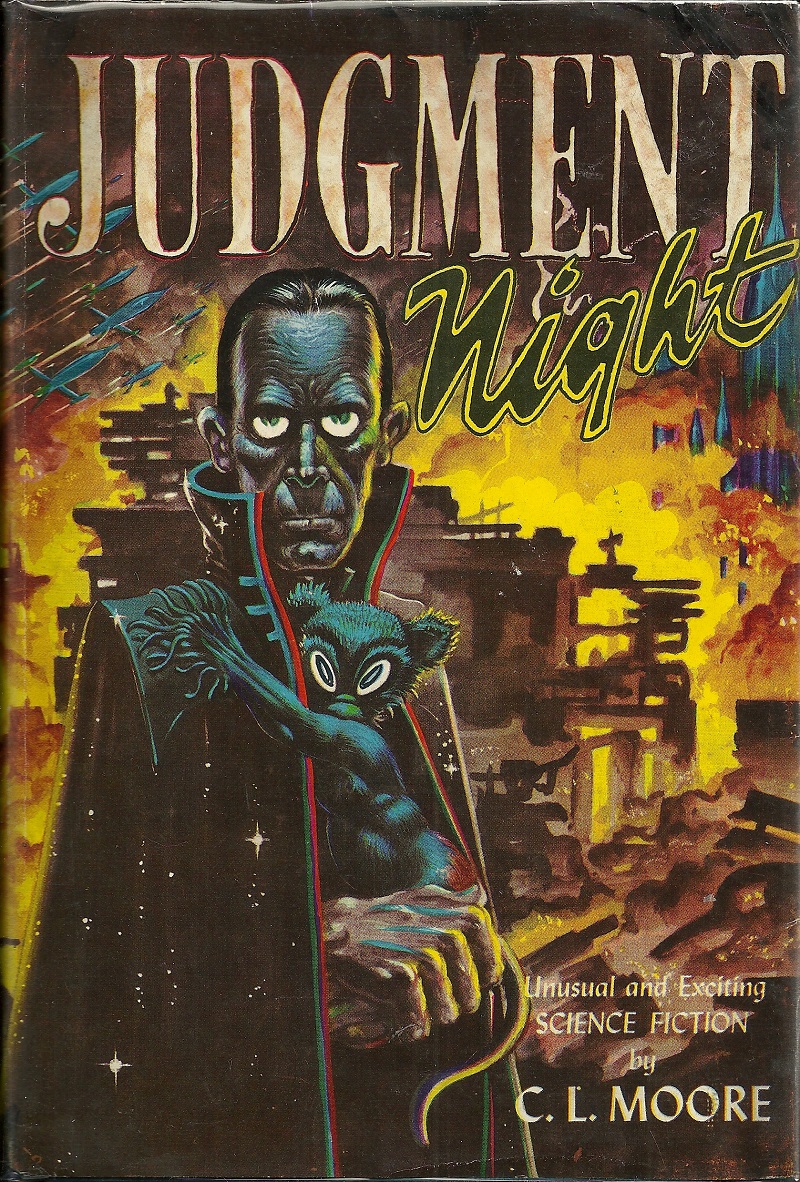
Judgment-NightJudgment Night, CL Moore (1952) I will admit I wasn’t expecting much of this short novel when I read it – a typical piece of Planet Stories space opera nonsense, I thought. But it proved to be a lot more interesting than I’d expected. The plot is relatively straightforward, but the characterisation of the protagonist, the warlike Princess Juille, is clever, and there are some really interesting ideas in the world-building. It’s a very short novel, however, only 156 pages in its first paperback publication; so perhaps it ought to be bundled with another of Moore’s novels, or a Northwest Smith novella, or something. I reviewed Judgment Night on SF Mistressworks here.

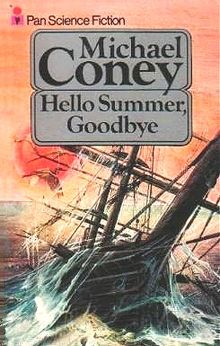
HelloSummerGoodbye_CoverHello Summer, Goodbye, Michael G Coney (1975) There are few sf novels written from the viewpoint of the alien, and among them even fewer in which humans never appear. Hello Summer, Goodbye is an elegiac coming-of-age novel set on an alien world with an entirely alien cast and an alien culture. And it works really well. It’s also a lovely piece of writing. I’m actually surprised this hasn’t appeared in the series yet. There is a sequel, I Remember Pallahaxi, which I’ve not read.

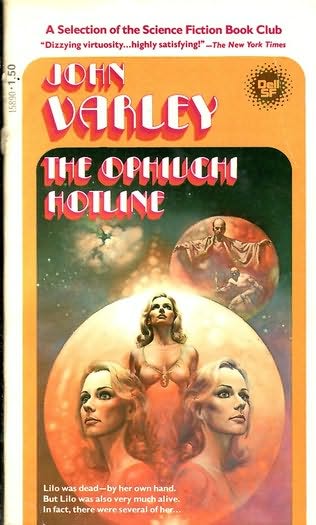
ophiuchiThe Ophiuchi Hotline, John Varley (1977) Varley’s Eight Worlds – in which the mysterious Invaders threw humanity off the Earth, so we now eke out an existence on various moons – is one of sf’s more memorable middle-distance futures, and while he explored it to better effect in numerous stories, The Ophiuchi Hotline is the first of three novels set in that universe. It’s also the best of them. The ending throws away an entire novel’s worth of ideas in a single paragraph, but the journey to that point is strange and wonderful.

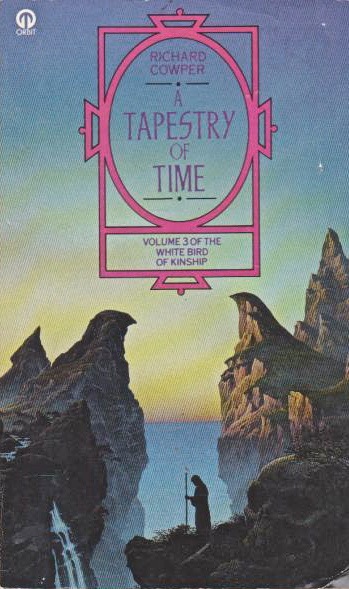
Cowper- A Tapestry of TimeThe White Bird of Kinship, Richard Cowper (1978 – 1982) This one is a bit of a cheat as it’s an omnibus of three short novels – The Road to Corlay (1978), A Dream of Kinship (1981) and A Tapestry of Time (1982). There’s also a novella, ‘Piper at the Gates of Dawn’, which inspired the novels, so perhaps we should throw that in as well. The story is set in a UK after water levels have risen so the country now comprises many small islands. It is very British sf. The SF Gateway has published the four in an omnibus, but it belongs in the SF Masterwork series too.

SerpentsReachSFBCHCbyKenBarrSerpent’s Reach, CJ Cherryh (1980) I’m guessing rights issues have prevented Cherryh from appearing in the SF Masterwork series so far. Because given her stature in the genre during the 1980s, she certainly qualifies for inclusion. Of course, there is then the question of which book to include… My favourite is Angel with the Sword, but it’s not her best. Downbelow Station and Cyteen are worthy contenders, but I plumped for Serpent’s Reach because its plot is closer to heartland science fiction.

queenofstatesQueen of the States, Josephine Saxton (1986) There are lots of books in the SF Masterwork series which never got within sniffing distance of an award, so why ignore one that appeared on two shortlists during its year of publication? Queen of the States was shortlisted for both the BSFA Award and the Clarke Award in 1987 – it lost out to The Ragged Astronauts, Bob Shaw, and The Handmaid’s Tale, Margaret Atwood, respectively. Queen of the States is also a great novel. I reviewed it for SF Mistressworks here.

wallaroundedenThe Wall Around Eden, Joan Slonczewski (1986) I picked up this book and read it just so I could review it on SF Mistressworks – see here. I knew very little about it or the author, so I was somewhat surprised to discover it was a masterclass example of accessible science fiction. It is one of the best-constructed sf novels I have come across, and I’m surprised it’s long out of print. It needs to be introduced to a new audience. As soon as possible.

kairosKairos, Gwyneth Jones (1988) This is one of my favourite sf novels and appears pretty much on every “top” or “classic” science fiction list I put together. It’s set in a Thatcherite near-future of its time of writing which, of course, now makes it alternate history – but it captures the fears and anxieties of that period with clinical precision. And it’s beautifully-written. In many ways, Kairos prefigures Jones’s Bold As Love sequence in that it remakes the political landscape of the UK using people outside mainstream culture as catalysts. Sf authors don’t write enough of this sort of science fiction.

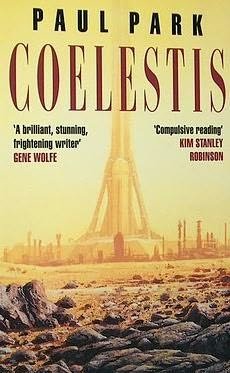
coelestisCoelestis, Paul Park (1993) Another favourite science fiction novel and mainstay of the various “best” sf lists I put together on this blog every so often. An intelligent commentary on postcolonialism – a subject not often explored in sf, which seems to prefer rehashing First World colonialist imperatives of earlier, and less enlightened, centuries – Coelestis then goes on to deconstruct the colonial identity of one of its protagonists. An important book that deserves to be back in print.

There were a further two books I would have liked to include in my list of ten, but since both authors already had entries in the SF Masterwork series I ruled them ineligible. And one was a bit of a cheat, anyway. They were Synthajoy, DG Compton (1968), which I think is actually a better book than The Continuous Katherine Mortenhoe (Compton’s only entry in the SF Masterwork series), though it reads a little more dated than that book; and The Collected Joanna Russ, because Russ is an author who deserves to have all her fiction collected together into big career-defining collection, and the SF Masterwork series is the perfect venue for that.

ETA: The other bloggers giving their own choices for inclusion in the SF Masterwork series are: the aforementioned Joachim Boaz at Science Fiction and Other Suspect Ruminations, 2theD at Potpourri of Science Fiction, Admiral Ironbombs at Battered, Tattered, Yellowed & Creased, Jesse at Speculiction and From Couch to Moon at, er, From Couch to Moon.


19 Comments

Books to look forward to in 2015

2014 was a pretty good year for new releases, and saw new fiction by some of my favourite authors. It looks like 2015 might be the same. Here are the books I’m particularly looking forward to next year. I’ve put them alphabetically by author rather than by month of release as the latter can – and often does – change.

Poems, Iain Banks. I think the title pretty much says it all.

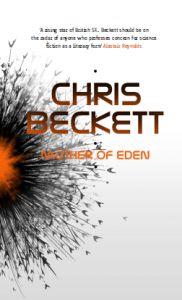
Mother-of-Eden-cover-182x300Mother of Eden, Chris Beckett. The follow-up to the Clarke Award-winning Dark Eden.

Dark Orbit, Carolyn Ives Gilman. A murder-mystery set during the exploration of a new planet and a possible first contact. “Intellectually daring, brilliantly imagined, strongly felt. This one’s a winner,” according to Ursula K Le Guin. I’m especially looking forward to this one as I thought Gilman’s Isles of the Forsaken and Ison of the Isles very good indeed.

A Song for Europe, Dave Hutchinson. The sequel to the excellent Europe in Autumn. There’s no information online at present for this book, but as far as I’m aware it’s due out next year.

The Buried Giant, Kazuo Ishiguro. Set in post-Roman Britain, a couple set out to find their missing son.

touchTouch, Claire North. I’ve not read anything by North, but the premise to this sounds appealing: a person who can switch bodies just by touching. I’m pretty sure sf has covered similar ground before, but this one does sound really good.

Other Stories, Paul Park. I’m not sure when this’ll be out (it has yet to appear on the PS Publishing website), but a collection by one of my favourite writers is a cert for my wishlist.

Arcadia, Iain Pears. I’ve really liked Pears historical novels, and although this one opens in 1962 it apparently also features a future dystopia. Should be interesting.

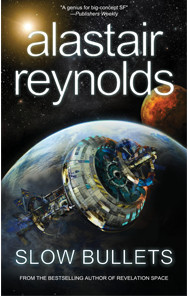
SlowBulletsPoseidon’s Wake and Slow Bullets, Alastair Reynolds. The first is the final book in the Poseidon’s Children trilogy; the second is a small press novella from Tachyon Press.

Aurora, Kim Stanley Robinson. A generation starship story, set at the point at which the ship approaches its destination.

The Glorious Angels, Justina Robson. I heard Justina read an excerpt from this at the York pub meet in November. “On a world where science and magic are hard to tell apart a stranger arrives in a remote town with news of political turmoil to come.”

The Woman in the Green Coat, Katie Ward. A novel about suffragette Lady Constance Georgina Bulwer-Lytton. I loved Ward’s debut Girl Reading, so I’m expecting to love this too. It certainly sounds fascinating.

Anything I’ve missed? Yes, I know there’s the final book of the Imperial Radch trilogy due next year, and no doubt a number of fantasy novels – de Bodard, for example; possibly the second book of the Worldbreaker Saga from Hurley. But while I may or may not give them a go, I have very little interest in epic fantasy. There may also be one or two debuts which create a bit of a buzz, and which I might be persuaded to read. But is there anything not mentioned here which I really should make a note of?


8 Comments

Hollywood does near-future science fiction

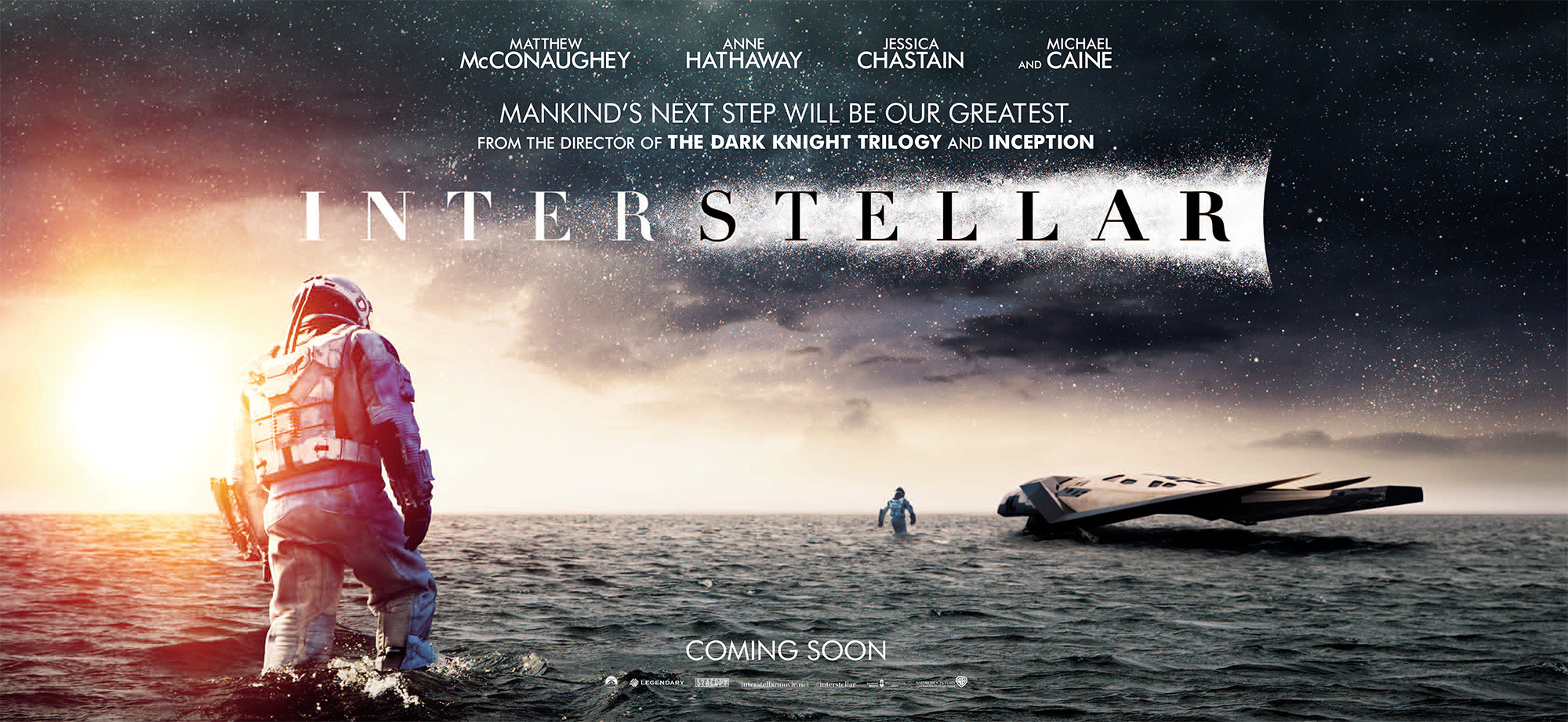
So I went to see Christopher Nolan’s Interstellar, which some have been saying is the best sf film ever made. But, of course, they always say that about a new film, probably because they’re just shills for the Hollywood marketing machine. But if you wait a bit – or a week, as I did – then a few more honest voices begin to appear… And they gave mixed reviews. Thing is, just because Hollywood decides to have a go at near-future sf, just as they had a go at a space movie last year, there’s no need to scream about how good it is… Having said that, I’ve now seen the trailer for the Wachowskis’ Jupiter Ascending twice and it looks proper awful.

interstellar

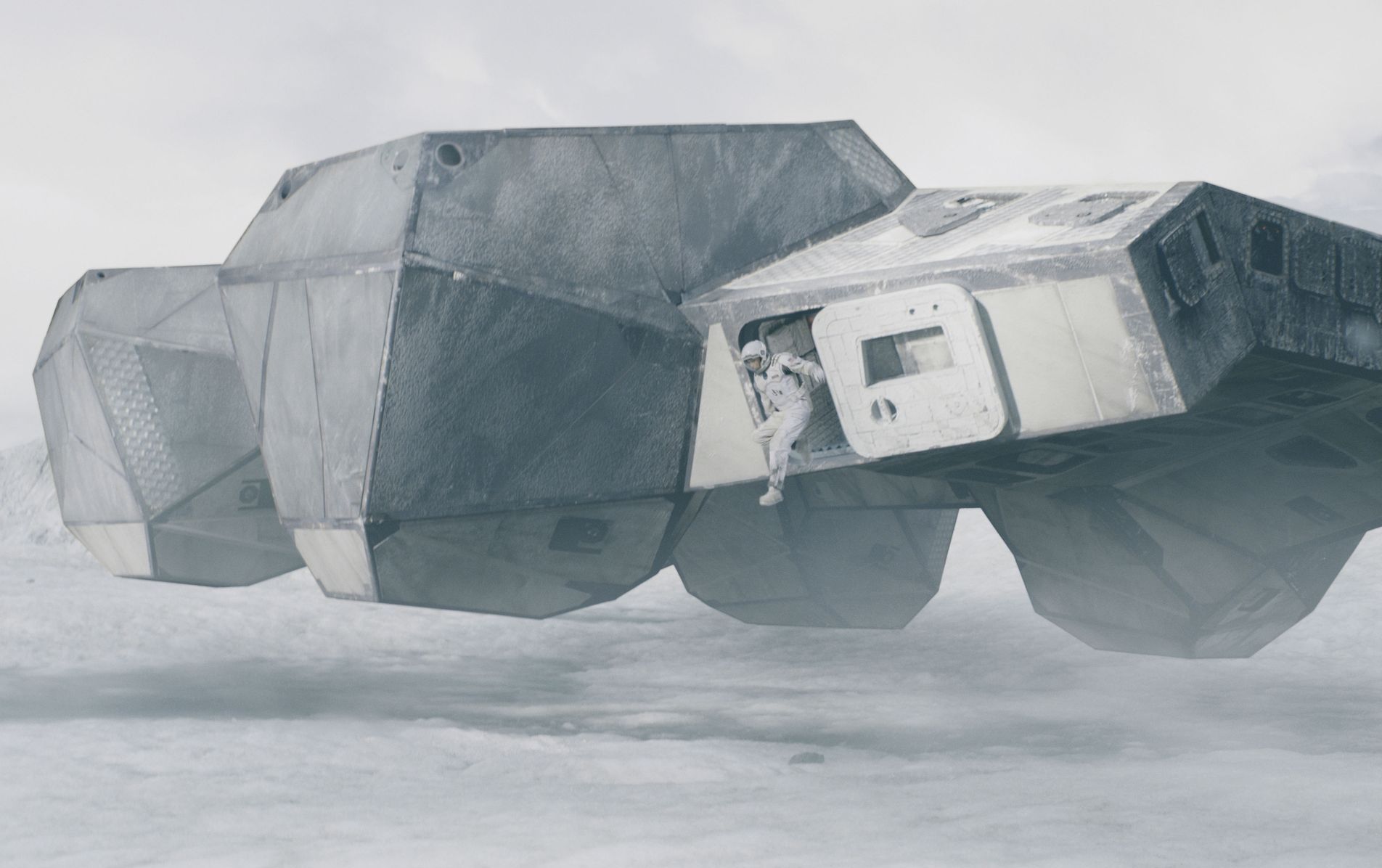
But Interstellar. It is supposed to be a rigorous and accurate vision of interstellar space travel – handwavy vastly superior aliens who create the wormhole notwithstanding. Matthew McConaughey plays NASA test pilot turned farmer Coop, since a global famine has resulted in anything remotely scientific being shut down. As one person puts it, “We’re a caretaker generation, we don’t need engineers, we need farmers”. Except the farming on display is some sort of pastiche of early twentieth century farming, with a small wooden house in the middle of a sea of maize. There are no equipment sheds, no garages, no silos, no storage. Just a house. And even though various events in the film take place at different times of the year, the maize is always just about ready to be harvested – in fact, it is being harvested by robot combine harvesters on a number of different occasions. Makes you wonder why there’s a famine if they can grow maize so quickly 365 days a year…

A “ghost” in the bedroom of Coop’s ten-year-old daughter, Murphy, causes books to fly off the shelf, but Murph works out there is a pattern to it. It proves to be binary, a set of coordinates. Murph, incidentally, was named for Murphy’s Law, “What can happen, will happen”. Except that’s wrong – Murphy’s Law, as popularised by John Paul Stapp, is “anything that can go wrong, will go wrong”. This is not the only little “joke” in Interstellar. At a parent-teacher meeting, Coop is told the Apollo missions were faked in order to bankrupt the USSR, which they did successfully. No mention of the arms race. Or the fact the Apollo missions ended twenty years before the USSR economy crashed. Or that by the second decade of the twenty-first century, the Russian space programme was the only one flying human-rated spacecraft.

Anyway, the coordinates lead Coop and Murph to a secret NASA facility, where kindly professor Brand, Michael Caine, helpfully explains the whole plot. I should note that it’s taken an hour to get to this point – Interstellar is a film in which very little happens for the first third. Thirty years earlier, NASA discovered a wormhole near Saturn, which leads to twelve habitable worlds in another galaxy. Ten years ago, they sent a crew of twelve to explore three of those worlds. Now they want to send a supply mission. And Coop just happens to have test-piloted the spacecraft they’re readying for the mission. So even though he has literally just walked in out of the fields, he’s the best man for the job. Murph doesn’t want him to go, because she thinks he won’t come back. Coop, of course, hates farming and immediately signs up. Also on the mission is Brand’s daughter, played by Anne Hathaway, and two spear carriers, Wes Bentley and David Gyasi. Oh, and a pair of AI robots that look like tourist information kiosks.

endurance

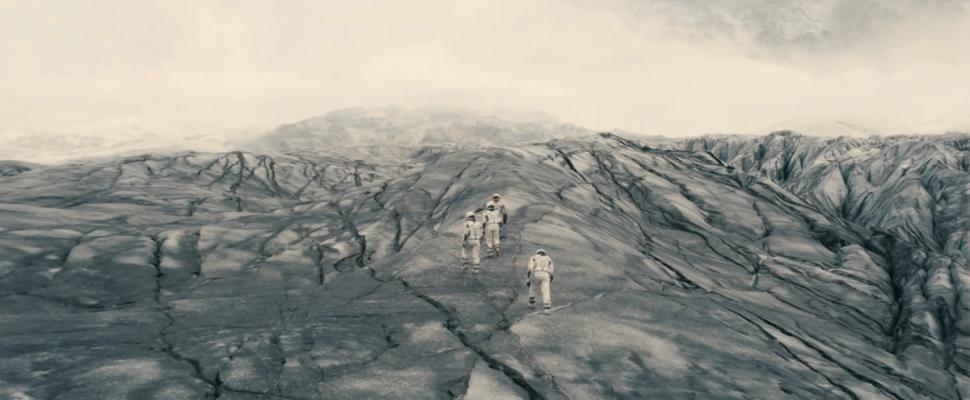
The spacecraft launches, rendezvouses with the Endurance, NASA’s last remaining interplanetary spacecraft, which has been parked in orbit. The crew go into hibernation for the two-year trip to Saturn – in a room which is apparently tiled like a bathroom, something I’d have thought too expensive weight-wise for a spacecraft. The shuttle craft too was unfeasibly large – not to mention a strange and not very aerodynamic shape. At Saturn, the crew wake up, the Endurance enters the wormhole (cue demonstration of how a wormhole works with a folded piece of paper; sigh). On the other side, they discover a planetary system orbiting a supermassive black hole, with three habitable worlds. The previous mission sent teams to all three of these planets. One world orbits inside the event horizon of the black hole, so that time dilation means seven years will pass for every hour spent on its surface. Which is just… WTF. Any such planet would have long been swallowed by the black hole, and radiation would fry everything on it anyway. The planet proves to be completely covered in about half a metre of water, and the previous mission did not survive an encounter with a giant wave – and, in fact, Coop’s mission only just makes it out alive. But they do stay far too long on the planet, and when they return to the Endurance, twenty-three years have passed. The chief effect of this, of course, has been to estrange Coop even more from his daughter… who is now Brand Sr’s protegé and helping him to complete the equations which will marry the theory of relativity with quantum mechanics and somehow or other lift a giant concrete spacestation built on the ground into orbit.

Since water planet was a bust, and it took so long for them to learn this, the Endurance only has enough fuel remaining to visit one of the other two worlds. Brand Jr admits she is in love with the leader of one of the missions – leading to a cringe-worthy monologue in which she declares “love is the only thing which transcends time and space”. But Coop over-rules her and they head for the other world instead. Where they find Dr Mann, Matt Damon. On a world of frozen clouds. Which is just as silly as it sounds – although it does look quite impressive…

interstellar_clouds

Damon admits that Brand Sr solved his equations years before and there is no solution possible without “quantum data” from inside a black hole. So the supply mission is actually a blind – the real plan is to seed the most suitable of the three worlds with the frozen gametes carried aboard Endurance. But ice-cloud world isn’t really fit for colonisation. Cue fisticuffs between Coop and Mann. Coop loses, and is in danger of asphyxiating in the ammonia-heavy atmosphere. Fortunately, he finds the doodad from his helmet that Mann removed which allows him to radio Brand Jr for help. Why he has a little thing on his helmet for long-range comms makes no sense. Brand Jr jumps into the lander and flies to his rescue. Despite Coop and Mann only spending about ten minutes walking away from the base, it takes the lander over five minutes to fly to where Coop is. Mann meanwhile steals the shuttle and heads for the Endurance.

But Coop remotely locks the Endurance, and Mann tries a manual docking but cocks it up – destroying himself and part of the Endurance. Which spins away. So Coop pilots the lander manually into a docking with the Endurance by rotating the lander to match. I’m not sure why he and Brand Jr were shown spinning with their heads pulled to the sides when it had already been established that their seats pivot so their heads would in fact have been toward the centre of rotation. Unfortunately, they’re now too close to the supermassive black hole, and the Endurance on its own can’t pull free. It needs the engines on the lander and the remaining shuttle too. But because plot reasons those spacecraft have to be piloted manually. One is taken by the surviving robot and the other by Coop. Both manfully sacrifice themselves so Brand Jr can head for her lover and take him the frozen gametes to found a new human race. However, the robot is going to try and get the “quantum data” from inside the black hole and transmit it out, so who knows? Maybe Murph will be able to solve Brand Sr’s equations after all…

I’m not entirely sure what to make of Interstellar. The world-building is terrible, despite its claim of scientific accuracy science is sacrificed to drama numerous times, as is plausibility, and its central message about love is the sort of puerile twaddle that Hollywood all too often mistakes for metaphysics. There are some neat ideas, and on several occasions the plot took turns I wasn’t expecting. Although the spacecraft look weird, the film-makers have made a serious attempt at presenting technology that looks plausible and fit for purpose.

lander

But the pacing of the film is awful – that first third is apparently an entirely separate movie that Nolan bolted onto the front of his… and it shows. Some of the concepts are simplified to the extent they come across as handwavy nonsense. And the ending is a complete let down. Part of the problem is, I think, that the movie bounces from the personal to the bigger picture without any kind of logic or pattern. I suspect it’s an attempt to humanise the big concepts, but it doesn’t work. It just shows how badly shored-up they are by the world of the story. In parts, Interstellar also feels like too much was crammed in, so much that it no longer knows where its focus lies. Clearly it’s meant to be Murph’s story, as we see her entire life through the eyes of her father, Coop. But Coop spends the most time on-screen, as if he were the star of an adventure film. The two stories don’t quite fit – you can certainly have a short linear narrative looping in and out of an episodic story spread over decades, it’s an interesting narrative structure; but for it work you need something to anchor the crossover points. Interstellar tries for this – but the ones that make emotional sense are too few and so Murph’s narrative ends up having to fill in too much story in between breaks from Coop’s adventures. It makes for a third act that is badly unbalanced… which is one reason why the ending has so little impact.

I like that Nolan made an attempt at a serious near-future sf film. And visually, Interstellar is quite impressive. But it’s certainly not the greatest sf film ever made – nowhere close to it, in fact. I’m reluctant to even classify it as a “superior” sf film, as scoring highly on visuals is hardly difficult these days. It has some interesting ideas, but it handles them badly, throws in a helping of philosophical twaddle, and badly mangles what could have been a clever narrative structure. Disappointing.


8 Comments

All Those Vanished Engines, Paul Park

I’ve been a fan of Park’s fiction since first reading Coelestis (1993), a copy of which I bought in 1994 in a book shop I used to frequent when I lived in Abu Dhabi. It has been a favourite genre novel ever since. Over the years since, I’ve tracked down copies of his other books – first editions, natch – and read them. So when I learnt he had a new novel due, six years after the fourth and final book of the Princess of Roumania quartet, The Hidden World (2008), well, I was pretty excited. I discovered the book actually comprised three linked novellas, one of which had originally appeared in F&SF in January 2010 under the title ‘Ghost Doing the Orange Dance’, but had then been revised and published by PS Publishing in January 2013 under the same title. I’d read the PS version early in 2014, and even nominated it for a Hugo. There was also a short story, which shared the title of the new novel, that had originally been commissioned to accompany a sound installation by Stephen Vitiello at the Massachusetts Museum of Contemporary Art in September 2011.

all-those-vanished-engines-paul-park-base-art-co

Clearly, All Those Vanished Engines the novel was going to be something of a fix-up. And if Ghosts Doing the Orange Dance was any indication, it was also going to meta-fictional. Fix-ups fell out of favour several decades ago, but they were very popular during science fiction’s first few decades. AE van Vogt’s entire novel output, for example, is arguably comprised of fix-up novels. But as both the market for short genre fiction and genre novels has changed, so fix-ups have become increasingly rare. But All Those Vanished Engines is actually not much like a fix-up novel. Nor is it like another well-known science fiction novel comprised of three linked novellas, Gene Wolfe’s The Fifth Head of Cerberus (1972). Or indeed much like another sf novel of three novellas, Kim Stanley Robinson’s Icehenge (1984). Chiefly because All Those Vanished Engines is not much like a novel as such.

All Those Vanished Engines opens with the line,” Maybe the first part of the story would be called The Bracelet, or else Bracelets would turn out to be the better name”. In point of fact, we already know it is called ‘Bracelets’ – the title is given on the preceding page. The bracelet which supplies the title for Paulina’s story is comprised of “intertwining strands”. Which is a not only a fair description of ‘Bracelets’ the novella, but also the novel as a whole. And the use of the name Paulina is also telling. Not only is it a female version of the author’s name, Paul, but Park used it himself as a pen-name on a Forgotten Realms tie-in novel for Wizards of the Coast, The Rose of Sarifal, as by Paulina Claiborne and published in May 2012. The writing of The Rose of Sarifal also features in All Those Vanished Engines‘ second novella.

Paulina lives in an alternate 1881, and she is writing a story set in 1967 – “Paulina had a habit of slipping away into an invented world over which she might pretend to have control” –  in a form of fractured English, featuring a boy called Matthew. As Paulina’s story progresses, her world and Matthew’s world begin to intertwine, so much so that Paulina’s own life’takes on the form of the sort of story she is imagining for Matthew. An assassin gatecrashes the United Daughters of the Confederacy’s Mardi Gras ball and kills many of those present. Paulina is rescued by her cousin, Colonel Adolphus Claiborne, CSA, who reveals she is the daughter of the Yankee empress, and the assassin, Lizzie, is her clone, and that he plans to use Paulina in an assassination plot against the empress. But Paulina escapes, meets up with Matthew, and the two end up hiding from an invasion of Wellesian Martians… By two-thirds of the way through ‘Bracelets’, the two narratives – Paulina’s real adventures, and her invented ones – have become so entangled, we’re no longer sure if the protagonist is Paulina or Matthew. The world of the story seems to have changed to accommodate Paulina’s inventions; she has lost control of her invented world.

The second novella is titled ‘Three Visits to a Nursing Home’, and it opens with the line: “This is how the second part begins…” There then follows the text of the short story from the MASS MoCA sound installation. After that is an explanation of the origin of the short story, in which Park himself describes how he met Vitiello and offered him “a list of rhetorical devices, from which he chose onomatopoeia and, to a lesser extent, strategic repetition”. (This is clearly a joke – the story is to accompany a sound installation, after all.) At the opening of the exhibit, Park meets a woman who tells him that the subject of his story is still alive, and living in a nursing home. She also reveals that she was a student of Park’s late mother, and likely met Park when he was a teenager. Park goes on to write The Rose of Sarifal for Wizards of the Coast, and to first take, and then teach, creative writing at a local college. In his class is a woman called Traci, who is writing a novel which Park realises is a thinly-disguised version of Traci’s relationship with Park’s mother, which echoes Constance’s relationship mentioned earlier. In Traci’s book, Park himself is called Matthew. Park discusses her novel with her, making suggestions regarding technique that he himself is using in the narrative of All Those Vanished Engines.

The sound installation is real, The Rose of Sarifal is an actual published Forgotten Realms novel, Park does indeed teach writing, albeit science fiction (at Williams College, Williamstown, Massachusetts, according to Wikipedia). Some of the biographical details of Park’s life – a mother who was a published literary professor, a partner whose mother was born in Bucharest, an autistic sister – may also be true, although which is which cannot be determined without further extra-textual knowledge (in a 2000 interview on infinity plus, for example, Park mentions that his mother taught literature). But then the three poles of ‘Three Visits to a Nursing Home’ are entirely extra-textural – the sound installation, The Rose of Sarifal, and Park’s own life. Just as Paulina and Matthew’s lives are intertwined in ‘Bracelets’, so are Paul’s and Matthew’s in this novella – and again, in both narratives, one world is presented as fictional (Paulina’s “invented world”, Traci’s novel), while the other is the first-order fictional narrative of the novel we are reading, which contains sufficient actuality to nail it into place in the real world.

The final novella is ‘Ghosts Doing the Orange Dance’, and the title is a reference to a painting which Park, the narrator, believes represents his grandfather’s encounter with extraterrestrials. The story itself is about Park’s family, his parents and grandparents, and their ancestors (the PS Publishing edition helpfully includes a family tree). It opens with a potted history, and the telling admission that “every memoirist and every historian should begin by reminding their readers that the mere act of writing something down … involves a clear betrayal of the truth”, which echoes the opening to Ursula K Le Guin’s The Left Hand Of Darkness (1969): “I’ll make my report as if I told a story, for I was taught as a child on my homeworld that Truth is a matter of the imagination” (Park’s novel, Coelestis, it is worth noting, covers broadly similar ground, both conceptually and in terms of the physical journey by the two main characters, to The Left Hand Of Darkness).

As Park discusses his family’s history, so he reveals more of his own circumstances – and they do not entirely match those given in ‘Three Visits to a Nursing Home’. In this novella, for example, Park takes a class in writing meta-fiction, his partner is different, his sister is called Katy not Elly, and the novel from Park’s real-world oeuvre he makes mention of is A Princess of Roumania (2005). As the story progresses, it is slowly revealed that this is not the world we know, but a near-future dystopia, which ends with an invasion by the dead in a chilling link back to the first novella of the novel. Park spends much of his time untangling the lives of his ancestors, chiefly to understand the meaning behind the titular painting. But he also spends a lot of time in Second Life, a real-world online virtual world – which, in this novella, forms the overtly fictional world, much as Matthew’s and Traci’s do in the earlier two novellas.

There are so many references to Park’s actual oeuvre in All Those Vanished Engines – not just obvious ones, clearly linked in the text to earlier novels; but also characters named for characters in other of his novels. Then there is Park’s own life, and the mirror images of it which are presented in two of the three novellas. As Dire Straits famously sang, “Two men say they’re Jesus / One of them must be wrong”. Except both Parks in All Those Vanished Engines are plainly not the real Park. They are as much a fiction as the invented worlds, as much a fiction as the presentation of the act of creating those invented worlds.

To describe All Those Vanished Engines as “meta-fiction” feels like labelling any random novel as “a work of fiction”. It misses the extent and – to steal a phrase from Frank Zappa – the “interconnectedness of all things” within the three novellas. However, what makes this novel even more astonishing is that it seems likely it was not originally conceived as a whole. Park has taken elements of his own recent history and knitted them into a work of fiction on the nature of fiction and the act of creating it. The end result is as much about writing genre fiction as it is about the history of the Parks and Claibornes back to 1664. The writing, as you would expect from Park, is lucid, often elegant, and a pleasure to read. All Those Vanished Engines is one of the best genre novels I have read this year, if not for several years. But its very nature means it is unlikely to noticed by the various genre awards (although perhaps the Nebula will shortlist it).

I am myself extremely fond of re-engineering narrative structures in fiction; and of, well, I suppose “pile-driving” is perhaps the best description, the foundations of a story into the real world. I like that everything in a work of genre fiction can be Googled, that the elements used within a story have this extra dimension provided by the real world, a richness that cannot be contained within the pages of a short story, novella or novel. All Those Vanished Engines does both of these, but it also takes it a step further – some of those piles stretch down into Park’s own novels, giving a bedrock of actual published fiction on which the stories in All Those Vanished Engines securely rest. This is a novel which can be reread, and in which a fresh read will always find something new – because as your knowledge of Park in the real world grows, perhaps by reading some of his other novels, so too will that knowledge enrich your reading of All Those Vanished Engines.

And that’s quite a remarkable achievement.



Leave a comment

Serendipity strikes again

Sometimes, when you’re working on a piece of fiction, and you’re wondering perhaps if this marvellous plan you have in your head and you’re trying to get down is a) achievable and b) not going to result in ridicule from all those who will read it… Sometimes, when you’re in that space, an artistic decision turns out to be just so right, you can’t help but feel it really is going to work after all. This has happened for all of the Apollo Quartet… and today I had my moment of serendipity for the fourth book, All That Outer Space Allows.

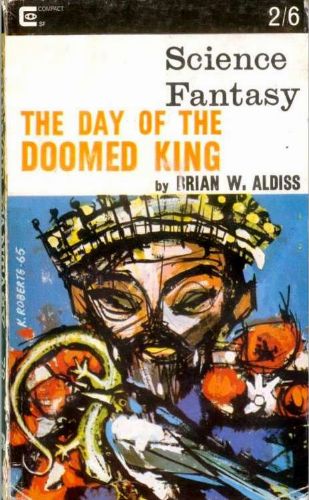
The protagonist of the story – it will be a short novel rather than a novella, around 50,000 to 60,000 words – is a science fiction writer, and she is married to a test pilot who is selected by NASA for the Apollo programme. For one scene, I needed the names of some women sf writers who had had stories published in 1965. One of the names I picked was Josephine Saxton – her debut, ‘The Wall’, appeared in the November 1965 issue of Science Fantasy. I wanted my protagonist to say something about the story after reading it, but I didn’t have a copy. Fortunately, it was collected in The Power of Time and I found a copy of the book on eBay. So I bought it…

sfnov1965

The collection arrived the following day, I read ‘The Wall’… and discovered its central metaphor fitted in perfectly with the general shape of All That Outer Space Allows.

I love it when that happens.

On the other hand… I remember sitting in the Bijoux Bar in the Raddison Edwardian Hotel, Heathrow, the day after the launch of Adrift on the Sea of Rains, and describing to Maureen Kincaid Speller the plot of All That Outer Space Allows. Yes, even back in April 2012, I knew what it was about and what the title would be. But now I’m about a quarter of the way into writing it, and it’s shaping up somewhat differently to that original plan. For a start, it’s proving to more about science fiction, and the history of science fiction, than I had intended. It’s also going to be more of a work of imagination than the preceding three books, chiefly because I can find no direct documentation I can use to help me evoke the time and place. For example, I can tell you the average temperature on 1 April 1966 in Lancaster, California, was 66.8°F, but I’ve found only a handful of photos online of the city taken during that year. And, of course, astronauts wives are not as well documented as the astronauts themselves. I’m having to do my research by reading between the lines…

But if it was easy, I wouldn’t do it. Would I?