It Doesn't Have To Be Right…

… it just has to sound plausible


1 Comment

A weight of words

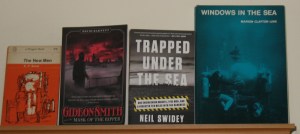
With Fantasycon and a quite successful trawl of the local charity shops, there’s a few more books than usual joining the collection. Here they are:

2015-11-07 13.47.58

After finding books seven and eight of CP Snow’s Strangers and Brothers in a charity shop, I needed to get a copy of book six, The New Men. This one I bought from eBay. As I did Windows in the Sea, which is signed (although since all the copies I found on eBay, on either side of the Atlantic, were signed, I suspect that means little). Gideon Smith and the Mask of the Ripper I won in the raffle at the recent SFSF Social. And I stumbled across the topic of Trapped Under the Sea somewhere online and it sounded fascinating – so I bought the book.

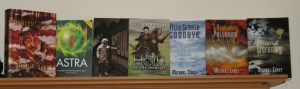
2015-11-07 13.47.03

My Fantasycon purchases. Sunburnt Faces and Astra were both freebies. There were a number of books free for convention members to take, but most were epic fantasy. I did, however, persuade several people to pick up copies of David Herter’s excellent One Who Disappeared (which I already owned). I’d been meaning to buy I Remember Pallahaxi for a while after reading Hello Summer, Goodbye several years ago. In the end, I decided to get all three Coney books published by PS Publishing’s Drugstore Indian Press. Flower of Godonwy is a DIP original. I flicked through Rave and Let Die and was pleasantly surprised to see I was in it – or rather, a review of my Then Will The Great Ocean Wash Deep Above (in point of fact, the second edition paperback of my novella uses a quote from Adam’s review on the front cover). The Heir To The North is Steve Poore’s novel, and he’s someone I’ve known for many years. I first saw chapters from this back when I was a member of the local sf and fantasy writers’ group. When Dave Barnett described the plot of popCult! at a local SFSF Social, I knew I’d have to pick up a copy. So I did.

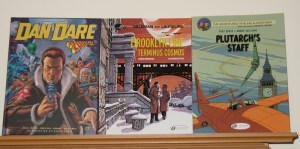
2015-11-07 11.42.33

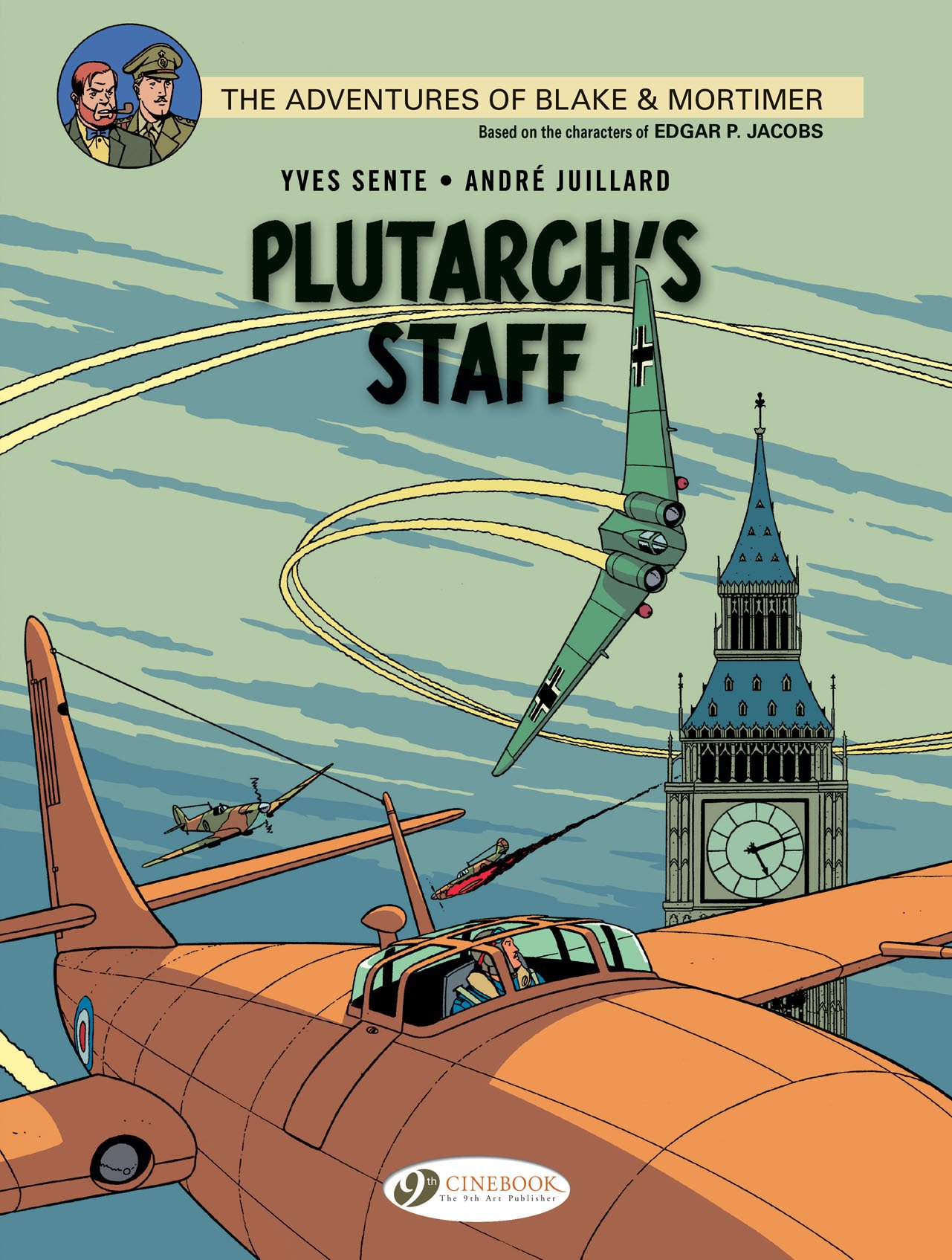
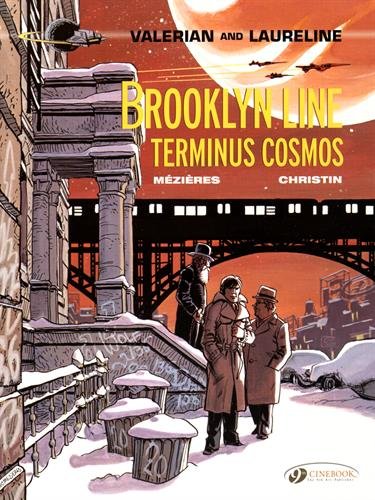
Some graphic novels: I’ve been waiting for ages for 2000 AD to publish their run of Dan Dare – I remember bits and pieces of it from reading it back in the 1970s and 1980s – and now, finally, we have Dan Dare: The 2000AD Years Vol 1. I’ve been buying The Adventures of Blake and Mortimer since the Cinebook editions first appeared (after stumbling across a volume of an earlier attempt to publish them in English, about twenty years ago in Abu Dhabi). The series is now up to number 21 with Plutarch’s Staff. Valerian and Laureline I also stumbled across in Abu Dhabi – again a handful of volumes from the series were published in English. I then started reading it in French, but Cinebook started publishing English translations a few years ago, and it’s now up to volume 10, Brooklyn Line, Terminus Cosmos.

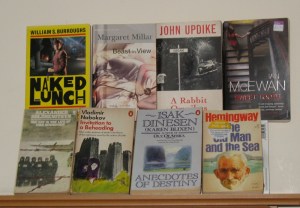
2015-11-07 11.41.11

I had a bimble about the local charity shops recently, and someone seems to have got rid of a bunch of classic literature. Result. I still have Sokurov’s Dialogues With Solzhenitsyn to watch, but I thought I might try reading him first – so I was chuffed to find a copy of One Day in the Life of Ivan Denisovich. I once tried reading For Whom The Bell Tolls but gave up halfway in; perhaps I’ll have more luck with The Old Man and the Sea (it is, at least, short). I keep an eye open for Nabokov’s books, but Invitation to a Beheading is apparently a Russian novel from the 1930s not published in English until 1959 (and not translated by Nabokov either). After watching Out Of Africa recently, I thought I might give Blixen a go, and promptly found Anecdotes of Destiny in a charity shop. Whenever I see books in the Crime Masterworks series, I buy them, irrespective of condition, as I just want to read them. Margaret Millar’s Beast In View is one I’ve not seen before. I’ve seen the film of Naked Lunch, but the only Burroughs I’ve read is The Soft Machine. Updike’s three Rabbit books are on the 1001 Books You Must Read Before You list, so A Rabbit Omnibus was an economical find. And I’ve read most of McEwan’s books, although nothing since the disappointing Saturday – but I do have Solar on the TBR… and now Sweet Tooth


4 Comments

Reading diary, #16

It’s pretty much a done thing by now that 2015 is the year of watching movies rather than reading books. And there’s a resolution for next year – make 2016 the year of reading books. Instead of slapping another DVD in the player of an evening, pick up a book instead. I have so many books I want to read, and since you can’t just take a pill and so magically be in a state of having read them, it takes an investment of hours and often days to get from first page to last. I need to invest that time – 15 minutes each way on my daily commute, and 45 minutes to an hour last thing at night, isn’t really enough.

Meanwhile, I continue to make lists… of books to read, books to buy, books read, books bought… and while on the purchasing side, the fun is often in the hunt for a decent copy of a title, or the surprise find in a charity shop, the damn things do exist to be actually read. And here are a few wot I have done so of late:
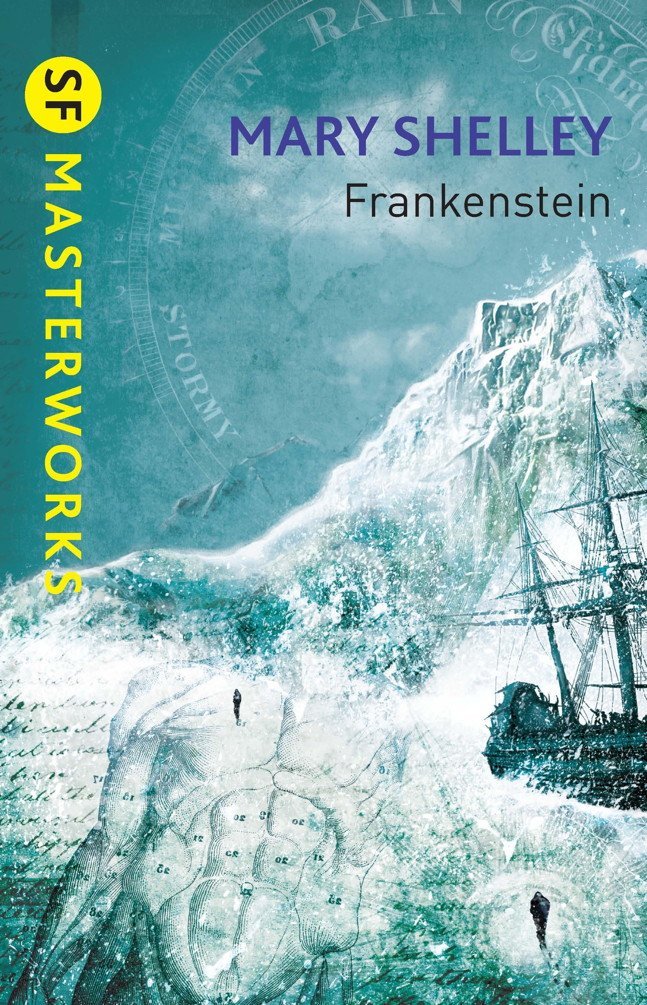
01_frankensteinFrankenstein*, Mary Shelley (1818). All these years and unbelievably I’d never actually read Frankenstein. I thought I knew the story, of course – who doesn’t? But that was from the films, and all they’ve done is lifted the central premise of Shelley’s novel and built their own interpretations of it out of that. I read Brian Aldiss’s Frankenstein Unbound many years ago, and from that I was aware part of Frankenstein took place at the North Pole. But there was plenty – the bulk of the book, in fact – I knew little or nothing about. Like the fact it’s structured as a series of nested first-person narratives, opening with letters from an arctic explorer who rescues a man from the ice. That man proves to be Victor Frankenstein who, once recovered, proceeds to tell his story – how he worked himself into a breakdown at university, building a creature from parts (none of which are named, nor their origin specified), and which promptly escapes. And then Frankenstein completely forgets about his eight-foot-tall monster for a year, and is only reminded of it when his youngest sister is murdered and a beloved family servant is accused of the murder. He then meets the monster, which tells its story… the murder was an accident, but it feels Frankenstein owes it and must make it a mate. So Frankenstein heads off to London, and then north to the Orkneys, but after making a start on a female monster, he suffers a change of heart… so the monster murders his best friend and Frankenstein is arrested for it… Frankenstein is a lot richer a story than film adaptations have led me to believe, but it’s also – and likely this is a product of the time – less rigourous than expected. The entire Frankenstein narrative, we are supposed to believe, is being told to Walton, and yet reads like, well, like a novel. The same is true of the monster’s narrative, especially the part when he spies on the cottagers (not what you are thinking: it is from spying on a family in a cottage he learns to speak French, and to read and write it). Not to mention actual correspondence from Elizabeth, Frankenstein’s childhood sweetheart, embedded in Frankenstein’s narrative. The prose reads somewhat overwrought to modern eyes, everything dialled up to eleven – Frankenstein doesn’t have friends, he has soulmates he loves deeply. The lack of narrative rigour also takes some getting used to. But the hardest part is untangling all the subsequent versions of the story knocking about in your head in order to fit in the original source text.
plutarchs_staffThe Adventures of Blake & Mortimer 21: Plutarch’s Staff, Yves Sente & André Juillard (2014). Only two more and the series is complete. Well, there’s two more left that were originally penned by series creator Edgar P Jacobs, but who knows how many more the Jacobs Studio will produce. But since I like the series, that wouldn’t, of course, be a problem. And I actually like the non-Jacobs titles more than the Jacobs ones. Chiefly because they’re more modern, although set in the past, and a good deal cleverer. This one is set during WWII, and details how Blake and Mortimer came to be friends and colleagues. They had met before – in The Oath of the Five Lords (see here) – but had then gone their separate ways. As Plutarch’s Staff opens, Blake is a RAF squadron leader flying Seafires for the Fleet Air Arm, and Mortimer is working at a secret research establishment in a Scottish glen hidden beneath an artificially-generated cloud. But Jacobs’s more-than-problematical villains, the Yellow Empire, are waiting in the wings, ready to pounce once WWII has ended. Although they’re not above helping things along. Sente and Juillard drag in quite a bit of history – including a visit to Bletchley Park – and manage to cleverly slot Jacobs’s weird alternate history into our history. Good stuff.
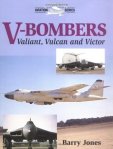
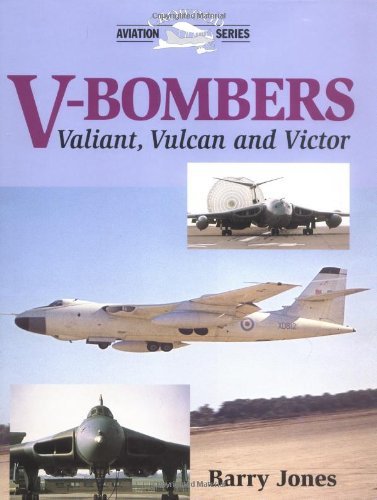
v_bombersV Bombers: Valiant, Vulcan and Victor, Barry Jones (2001). Back in the 1950s and 1960s, Britain’s nuclear deterrent was controlled by the Royal Air Force. We had the Bomb, and it would be delivered by an aeroplane. Then the Americans and Russians started building ballistic missiles, and Duncan Sandys’ infamouse White Paper was published, declaring that the UK no longer needed jet aircraft as it would all be missiles from then on. As a result, the Royal Navy wrested control of Britain’s nuclear deterrent, with its Polaris missile submarines. And here we are, more than half a century later, no one has dropped a nuclear bomb in anger since 1945, and the UK is currently preparing to spend billions to upgrade its Trident missiles because… Er, I’m not sure why because. Are we supposed to believe no one will take us seriously as a nation if we don’t have nuclear weapons? Does the bomb prevent us from being invaded? Invaded by who? Anyway, fifty years ago, during the Cold War, there was a known enemy, and the word “deterrent” had a real and palpable meaning. The British aircraft industry was in a really strong position coming out of WWII, with a huge number of firms, all at the cutting edge of aeronautical technology. Back then, the government could put out a tender for a new bomber or fighter and several British firms could compete for it. And the end result would be a world-beater. Unlike now, when we just buy some hugely expensive US aircraft that doesn’t work properly. The V-Bombers – so-called because the first, a stop-gap aircraft built by Vickers, was named the Valiant in a competion among company staff – were three jet bombers explicitly designed to carry nuclear weapons. And iconic-looking planes they were too. Then it turned out anti-aircraft missiles could reach the altitude at which they flew, so they ended up being used as low-level bombers. But they weren’t designed for that and it shortened their operational lives. The Valiant was retired pretty quickly (although it did drop a couple of test nuclear bombs), but the Victor and Vulcan went on to serve as tanker aircraft. Vulcans were also used in the longest bombing run in history, flying from the UK to bomb Port Stanley during the Falklands War. Anyway, this is a pretty good history of all three, although it focuses mostly on their design, testing and introduction into service.
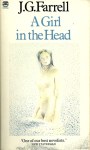
a_girl_in_the_headA Girl in the Head, JG Farrell (1967). I like British postwar fiction, but there’s one particular type of story I’m not a fan of: the comic male midlife crisis novel. So guess what JG Farrell’s third novel is. Boris Slattery claims to be a Polish count, but he’s improverished, ends up in the invented seaside town of Maidenhair Bay, where he marries Flower Dongeon, whose house he now shares with his brother-in-law, father-in-law and her grandparents. He works as a maitre d’ in local restaurant, is friends with a Spanish boy who is staying with the family, and has sex with the underage daughter of the local stationmaster. And then the Swedish Inez comes to stay, and he begins to obsess over her. The story is told as first person, but there are interludes about Boris’s arrival in the town which he tells referring to himself in the third person. There are also some pages of typographical trickery, for no good reason that I could see. Despite being a comic male midlife crisis novel, there are things to like in A Girl in the Head, and plenty to admire. The comedy is very low-key and handled deftly. Farrell’s prose is excellent, and surprisingly insightful for the type of novel. In which respects, I guess, that makes it one of the better books of its type. Although, admittedly, Farrell is always worth a read.
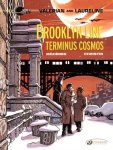
brooklynValerian and Laureline 10: Brooklyn Station, Terminus Cosmos, Jean-Claude Mézières & Pierre Christin (1981). This is the second installment of the two-parter begun with Châtelet Station, Destination Cassiopiae (see here). There have been a series of strange manifestations in 1980s Paris, and so Valerian has been sent back in time to investigate. Laureline, meanwhile, is off to Cassiopiae to figure out what triggered it all. The first part of this series managed an impressively noir-ish air, and juxtaposing that with Laureline’s space opera narrative worked really well. But one of the things it managed well was a sense of mystery, and this second part dispels that because it, well, it resolves the mystery. In the 1980s, this leads to a meeting in Brooklyn between the heads of the two corporations driving the plot; and in the future, Laureline tracks down the two scavengers who inadvertently kicked off everything when they stole four religious symbols. The Valerian and Laureline series has always been among the smartest of bandes dessinée, and while the art is wonderfully glib and matter-of-fact, it’s the facility with genre displayed in the stories which is the series’ real charm. These are very, very good, and if you’re not reading them – why not?
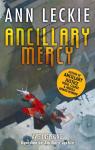
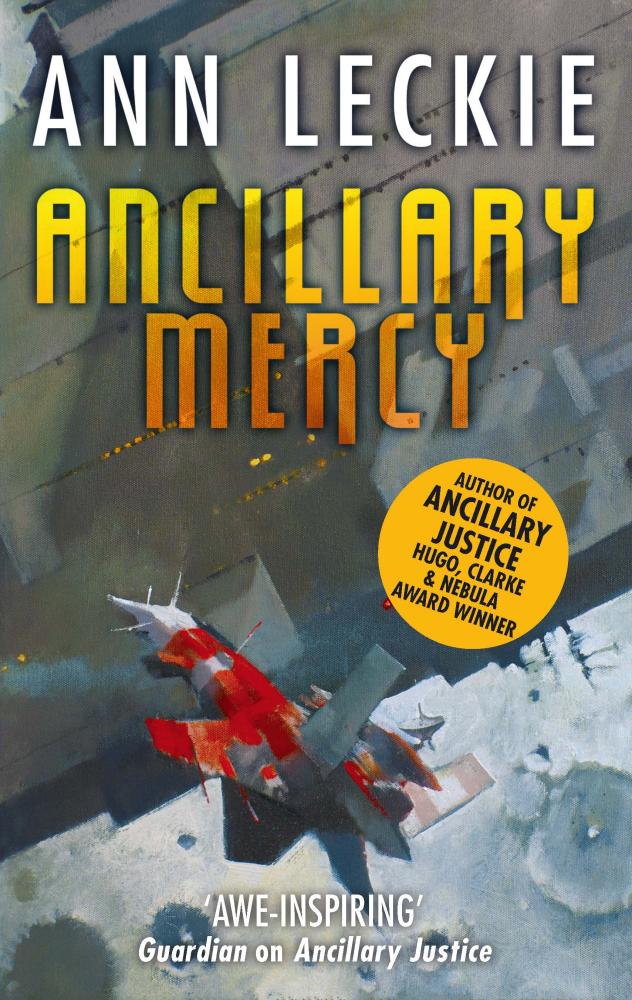
ancillary-mercy-coverAncillary Mercy, Ann Leckie (2015). And so one of the most-lauded science fiction trilogies of the last couple of years, if not of all time, draws to a close. Was it worth the accolades it accrued? Did it deserve all those awards? Of course, as is always the case, much of it comes down to timing. Harry Potter became a global phenomenon because it appeared at just the right time. And certainly the timing was right when Ancillary Justice was published. Space opera was stuck in a rut, if not actively regressing – and Ancillary Justice was something different. Something visibly different. That thing with the default female pronoun, for example. Which doesn’t quite make sense in its professed use, but is certainly striking enough to generate buzz. Using “she” does not mean the Radch language is ungendered, nor does it mean female is used as the default gender. It’s a writerly trick, and a pretty effective one, but it makes little sense in terms of world-building. As for the plot… I wondered where the trilogy’s story arc was going after Ancillary Sword seemed to get stuck down a side-plot. Only it seems the side-plot is the actual plot of the trilogy and Ancillary Justice was pretty much prologue. And yet, despite all that, Leckie pulls a resolution out of left-field, to leave things not only neat and tidy but also with a giant jumping off point for any future novels. Ancillary Mercy is also a very talky novel, and a lot of the prose is spent on analysing people’s emotional states, little of which actually advances plot or world-building. These are interesting novels, and reasonably good ones, but I’ll be disappointed if this final book is all over award shortlists next year. Still worth reading though.
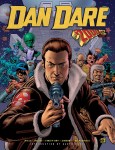
dan_dare_1Dan Dare: The 2000 AD Years Volume 1, Pat Mills, Massimo Belardinelli, Gerry Finley-Day & Dave Gibbons (2015). I remember bits and pieces of these from back in the late 1970s, although it wasn’t until a year or two later that I actually subscribed to the comic. But from the bits I did read, I seemed to remember it being quite good. I was wrong there. Reading the stories from start to finish in one volume really does show how bad they were. The art was often good, despite the limitations of the pulp printing process, but the scripts are uniformly awful. Admittedly, a lot of the Hampson Dare stories were pretty bad – and 2000 AD’s version bears no comparison with the Eagle original – but at least Hampson never had Dare say things like, “He’s stronger than a super-nova sun!” Nor did he rip off sf novels, like the one story in this volume which is pretty much Lem’s Solaris. Every time I buy one of these 2000 AD reprint omnibuses, I end up poisoning a little more of my childhood. Nostalgia only works from a distance, it does not hold up to scrutiny. Which is ironic, given that over half of the West’s various entertainment industries seem to be geared towards delivering nostalgia. But hey, there are all those people with rose-coloured lenses grafted onto their eyeballs and they’ll happily shell out for the latest cultural trigger to remind them of their lost childhood (as their bodies slowly fall to pieces and bits of it stop working as well as memory once insisted they did). Which obvs includes, er, me. As I’ve grown up I’ve developed powers of discrimination, and it’s not a superpower, it’s a consequence of maturity and age. And I wish a few more people would exercise that power. And yet, and yet… we are slaves to our lost youth, and I know damn well I’ll be buying volume 2 of Dan Dare’s 2000 AD years when it’s published, even though I know full well it’ll be shit. Because that’s an acceptable price to pay when your mortality weighs heavier on you with each passing day and those golden years of childhood come to be seen as more than just time spent in bodies that simply worked but also in minds that saw everything with uncritical wonder – and this has got a bit maudlin, so I’d probably best stop wittering on.

1001 Books You Must Read Before You Die count: 118


Leave a comment

Reading diary, #15

Still not reading as much as I’d like – I’m currently seven books behind on the 150 book challenge, according to goodreads.com – but it’s not a bad spread in this post… Incidentally, I’m still alternative genders in my fiction reading, and it currently stands at 37% women writers, 33% men.

palefirePale Fire*, Vladimir Nabokov (1962). Though I’ve seen Kubrick’s Lolita, and Nabokov is hardly a name unfamiliar to me, I’d never actually read any of his books. So I’m always on the look-out for copies of his novels in charity days. Except he doesn’t seem to be an author whose books are discarded much. But I did find Pale Fire – in Harrogate, no less – so of course I snapped it up. The back-cover copy makes quite a meal of descrbing Pale Fire as “an extraordinary, uncategorizable book”, which might well have been true in 1962 but feels a bit like over-selling in the twenty-first century. The story is told in the form of an introduction to a narrative poem, then the poem itself, and followed by copious (more than copious) notes on the poem. The author of the introduction and notes is not the author of the poem, but claims to have been the poet’s closest friend in the year leading up to his murder. Two things occurred to me as I read the book: a) the poem is actually complete doggerel, and b) the narrative voice reminded me throughout of Adam Roberts’s prose (there’s a particular line, “The crickets cricked”, which felt like it could have come from any random Roberts story). Threaded throughout the notes is the commentator’s own history, which involves some sort of Mittel-Europa principality whose monarchy was violently overthrown. The Appalachian academia and the Ruritanian adventure make for interesting bedfellows, and the prissy prose fitted the story extremely well. I liked it a lot and I plan to read more Nabokov.

spyuzSoyuz: Owners’ Workshop Manual, David Baker (2014). Sadly, this is not an owners’ workshop manual for Soyuz spacecraft in the same form as the owners’ workshop manuals Haynes has been publishing for various cars for decades. It won’t teach you how to change a leaky valve or an oxygen tank. If your Soyuz breaks down in orbit, even if you have a copy of this book with you, you’re still pretty much fucked. It is, however, a pretty comprehensive look at Russian crewed spacecraft, from Vostok through Voskhod and the various iterations of Soyuz, in pretty impressive factual detail. I found it all fascinating, but I suspect the book will also prove to be a useful reference for any future stories I might write involving Soyuz space craft. There are similar Haynes manuals for Gemini, Space Shuttle, Lunar Rover and, er, Millennium Falcon.

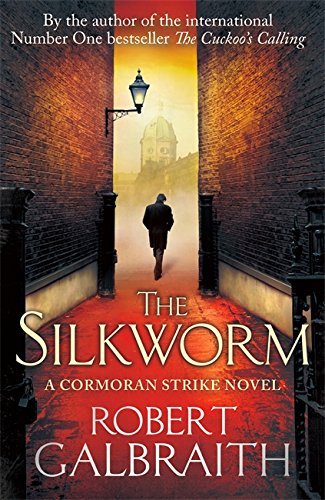
silkwormThe Silkworm, Robert Galbraith (2014). I wasn’t that impressed with Rowling’s first pseudonymous crime novel, The Cuckoo’s Calling, nor, as far as I remember, was anyone else. The book sold modestly, and received a handful of good reviews – which is pretty much what you would expect from a debut crime novel. Strange then, that the back cover of her second Galbraith novel, The Silkworm, boasts quotes about The Cuckoo’s Calling such as “One of the most unique and compelling detectives I’ve come across in years” and “One of the best crime novels I have ever read”… Which suggests crime fiction must be in dire straits, or Rowling’s name really does affect how people – even reviewers in newspapers – judge books. I thought The Cuckoo’s Calling somewhat padded, but The Silkworm at least feels like its the right length. It’s also about the publishing industry, something you’d imagine Rowling would know about since she is, after all, a best-selling author. The actual crime investigated by Cormoran Strike, however, seems more like something from an episode of CSI. A woman hires Strike to find her missing novelist husband, Owen Quine. He’s done it before, but his agent usually tracks him down quite quickly. But this time Quine seems to have really vanished. Making matters worse is the fact his new book is libellous (shades of Burgess’s The Worm & the Ring) and more or less unpublishable. It doesn’t Strike long to find Quine – or rather, his body. And his corpse has been mutilated in a manner which links back to his manuscript. There’s nothing startlingly original here – the plot moves on well-oiled wheels, the characters teeter on the brink of caricature but Galbraith manages to rein them in, and the prose is smooth and readable without being too literary for a crime novel or too commercial for those who prefer their crime novels to have some ambition. The novelists at the centre of the plot were all literary enfants terribles, and though mostly well-respected now their novels as described don’t much read like twenty-first century British literary fiction. Oh, and the title is a reference to Quine’s unpublishable novel, Bombyx Mori, which title only seems to exist because it justifies a particularly gruesome murder.

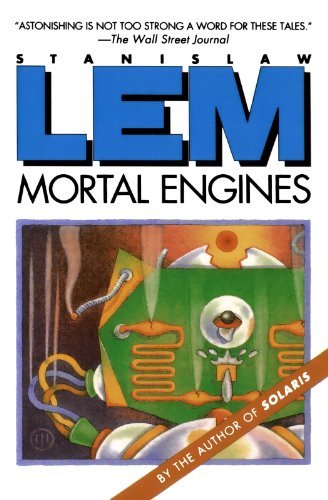
mortal_enginesMortal Engines, Stanisław Lem (1977). I somehow got it into my head I needed to read more Lem, but I suspect I like the idea of Lem more than I like the fiction of Lem. Which is not to say this collection of short stories is bad. But I can’t say I agree with the person who collated the collection, Michael Kandel, who loves Lem’s “robot fables” so much he chose to bring them all together into one book. Because while they’re clever little fairy tales, with one or two clever puns, they do get a bit wearying en masse. Happily, the book is rounded off with an Ijon Tichy story, a Pilot Pirx story, and one which is completely unrelated to the others in the book but is still about robots. This is not the best sf collection in the world, and even Lem’s snide bleakness can’t hide the datedness of some of the stories. I suspect this one might end up as a raffle prize at one of the pub meets some time next year…

The Monitor, the Miners and the Shree, Lee Killough (1980). That’s a pretty awful title for a book that’s actually not that bad. Not as enjoyable as A Voice Out of Ramah (see here), but certainly not awful. A review to appear soon on SF Mistressworks.

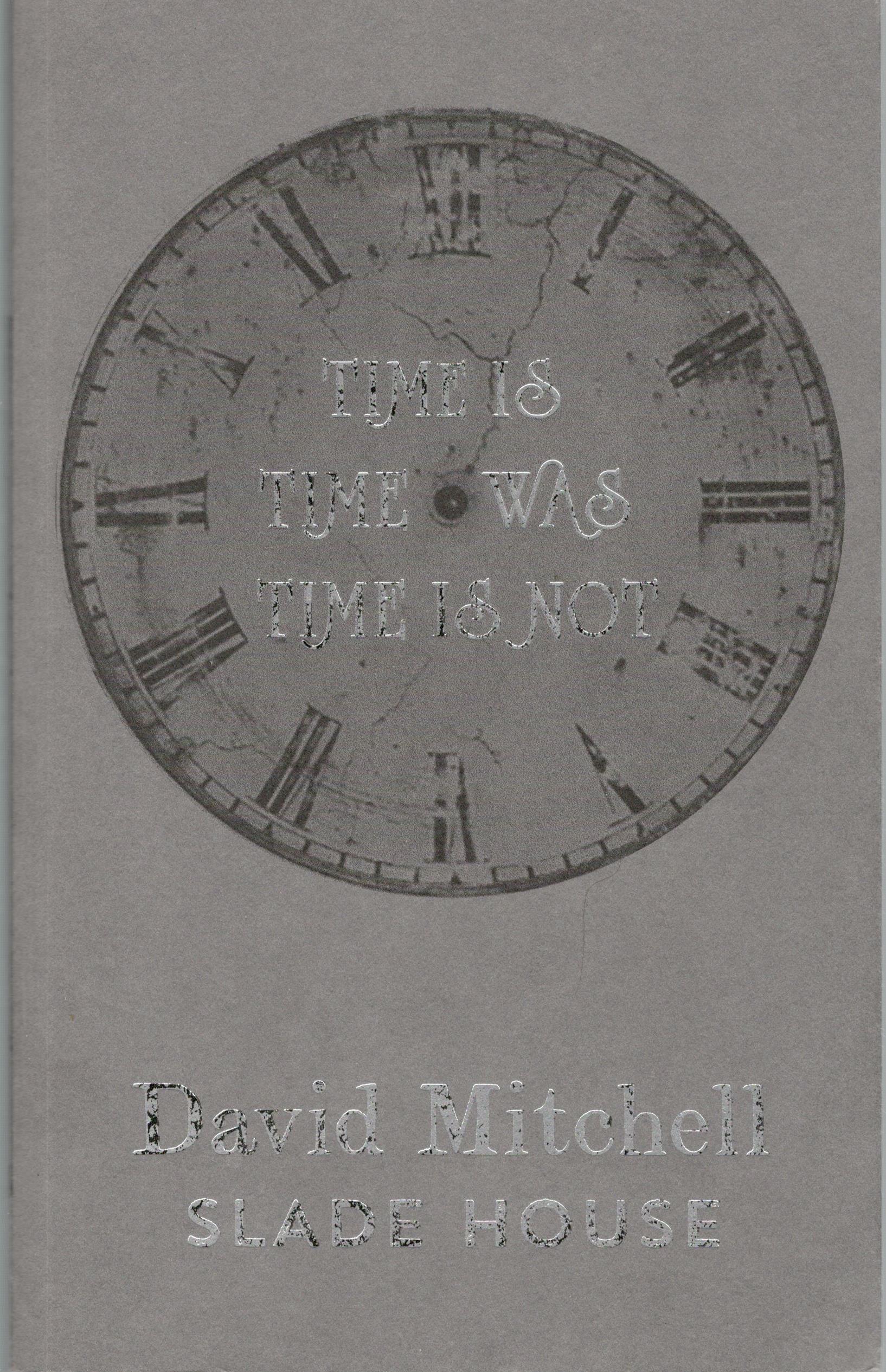
slade_houseSlade House, David Mitchell (2015). I was sent an ARC of this by Interzone to review (they also wanted to send me a copy of The Bone Clocks, but I’d already bought one – using a voucher given to me by my employer as a reward for five years of service). Overall, I don’t think Slade House is as successful as The Bone Clocks, and that’s not just a consequence of its significantly shorter length. Mitchell’s trademark ventriloquism is in fine, er, voice, but the fifth of its six sections is almost pure exposition, some of the tropes are a bit cheesy, and the whole thing doesn’t add anything of note to the mythology of The Bone Clocks. Which is not to say it’s a bad book – Mitchell is a fine writer and always worth reading – but it is a little disappointing after last year’s epic.

1001 Books You Must Read Before You Die count: 117


Leave a comment

We’re gonna need a bigger bookcase

I’ve been mostly good this year, and not bought as many books as in previous years. This does the mean the TBR is slowly getting whittled down… although I still reckon I have about a decade’s worth of reading on it.

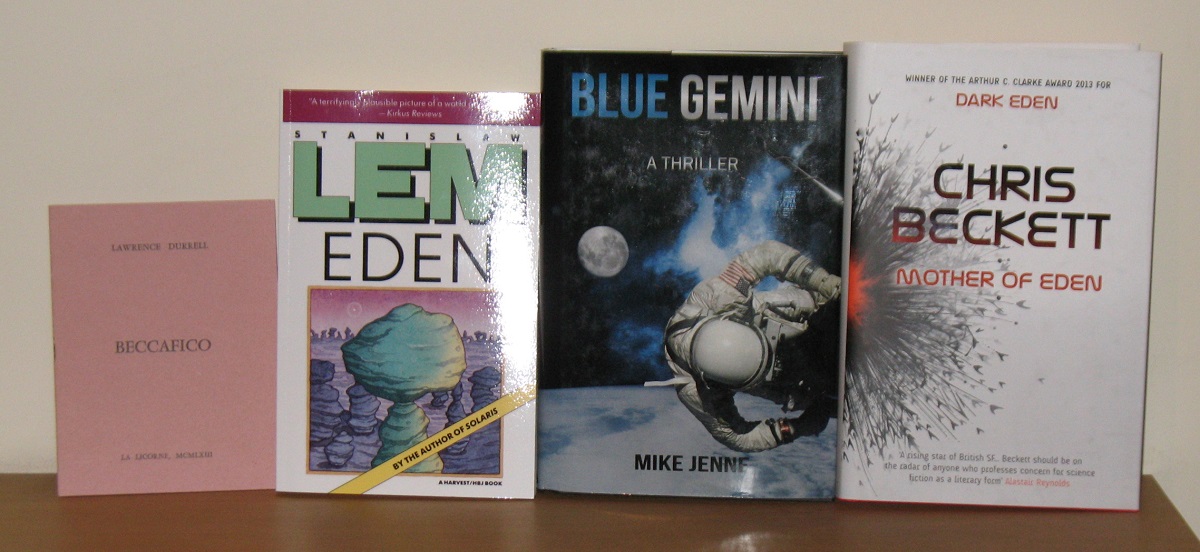
2015-10-12 17.19.07

Dark Eden, of course, won the Arthur C Clarke Award back in 2013. Mother of Eden (2015) is the sequel. Eden (1959) is a reprint, rather than a first edition, but given its title, I couldn’t not mention it alongside the Beckett. Blue Gemini (2015) is a thriller based on an extended Gemini space programme, so its premise alone appeals. We shall see whether its story does. The small pamphlet, Beccafico, is actually a signed and numbered (I have #87 of 150) chapbook by Lawrence Durrell, published in 1968, and was a lucky eBay find.

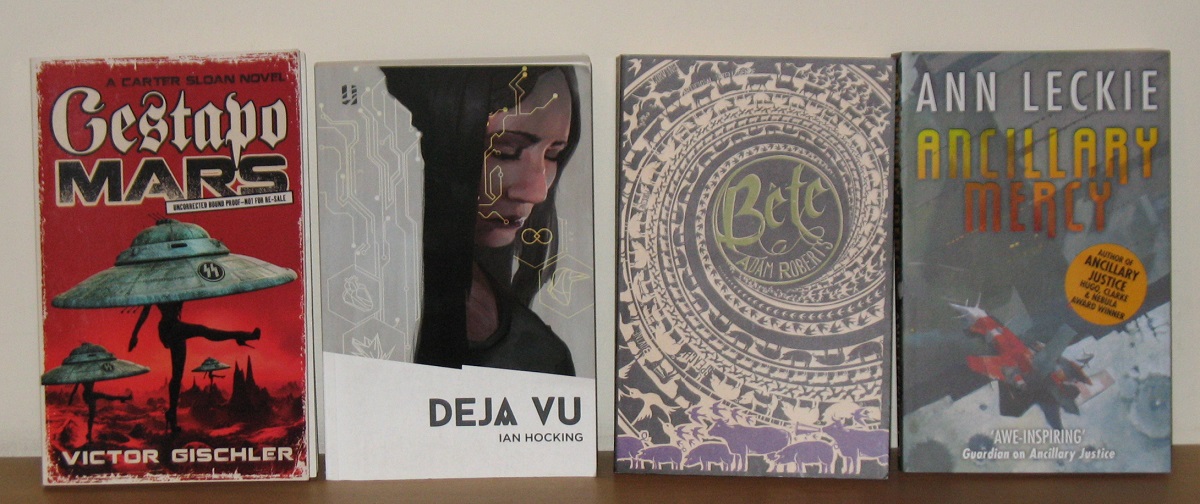
2015-10-12 17.21.55

Déjà Vu (2014), Bête (2014) and Gestapo Mars (2015) I won in the raffle at the recent York pub meet. Ancillary Mercy (2015) I bought because I’ve read the previous two books, and given that the second book, Ancillary Sword, contributed very little to the shape of the trilogy, I’m intrigued to see how Leckie manages to pull it all together.

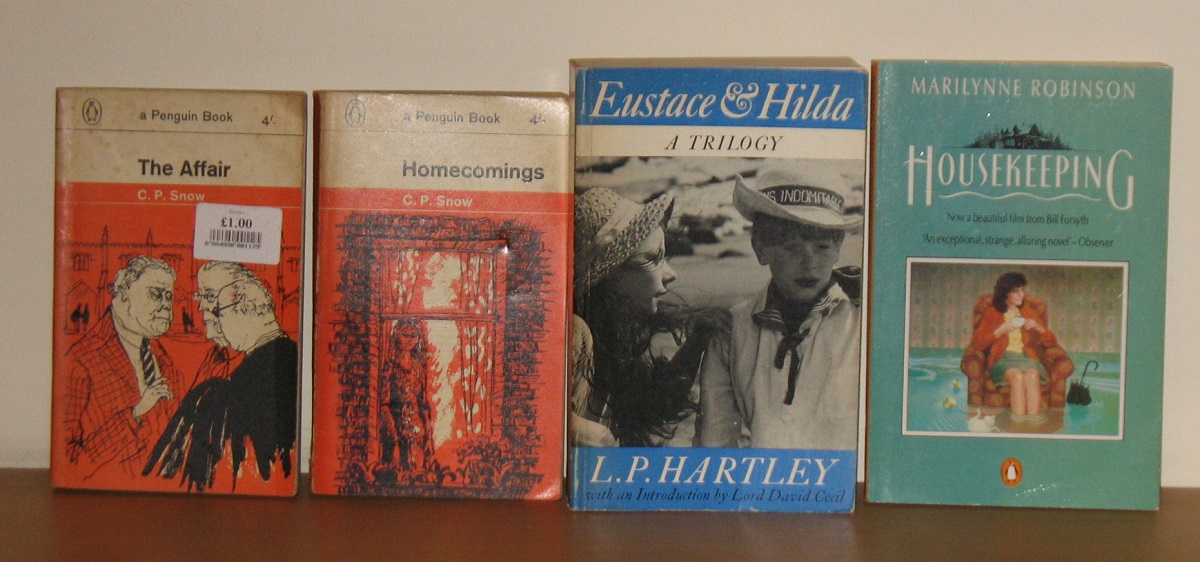
2015-10-12 17.23.29

A few charity shop finds. I’m a big fan of Marilynne Robinson’s fiction, but I’d never read her first, Housekeeping (1980) (I have her other three novels as signed first editions). Apparently, it was made into a film. Eustace & Hilda (1958) just looked like it might appeal, and since they didn’t have his Fly Fishing… Actually, it’s an omnibus edition of The Shrimp and the Anemone (1944), The Sixth Heaven (1946) and Eustace and Hilda (1947). And I’ve been picking up CP Snow’s Strangers and Brothers series when I find them, but only the 1960s Penguin editions seen here in Homecomings (1956) and The Affair (1959) with the orange and white design. I have seven of the eleven books so far (I’ve read the first two).

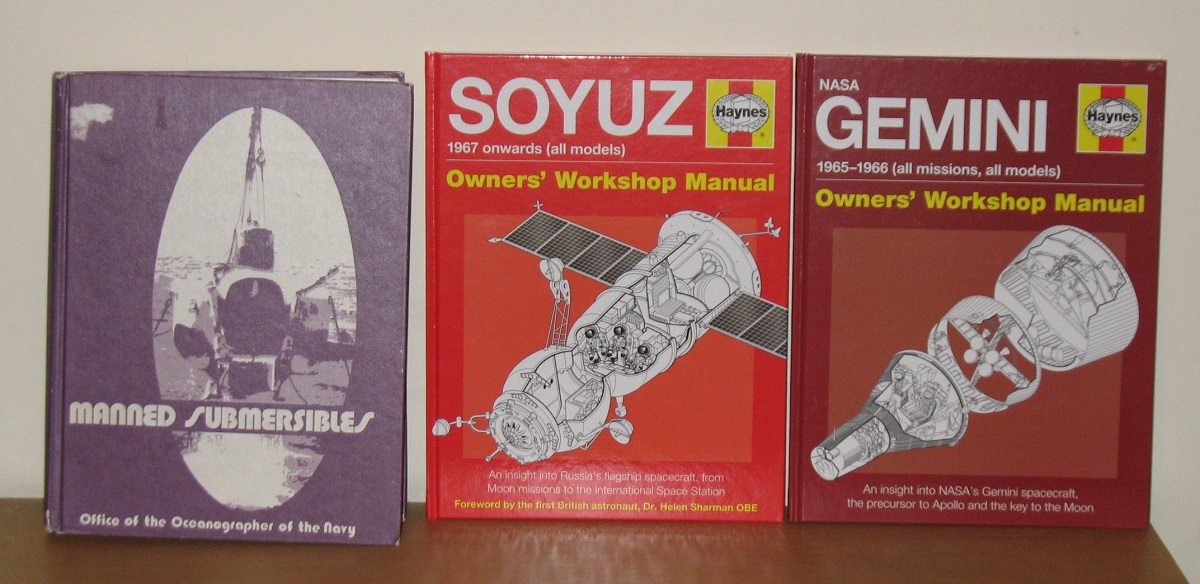
2015-10-12 17.25.23

Haynes have been branching out from car manuals for a few years, not just books about real spacecraft, such as Soyuz and Gemini as here, but also fictional ones – not to mention aircraft, ships, submarines and even tanks. The books don’t actually show you how to repair, say, a Soyuz, should you find yourself drifting helplessly in orbit in one, but they do present good solid and factual coverage of their topic. Manned Submersibles (1976) was an eBay find, and covers exactly what its title claims.


2 Comments

Reading diary, #14

In an effort to increase my reading, I’ve decided to spend an hour reading without distractions as soon as I get home from work. Previously, I’d either be straight onto the computer, making dinner, or watching telly. I’m still chipping slowly away at the TBR, but there are so many books on it I want to read. I’d also like to tackle some weightier books, without spending a whole month on a single novel. I’ve averaged around 150 books a year for the past five or six years, but that’s been steadily dropping from a high of around 220 back in the late 1990s. But that was when I was in Abu Dhabi, where the telly was shit and I had no internet connection at home…

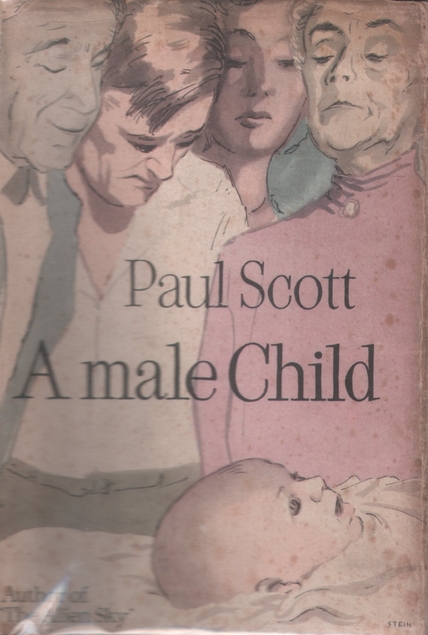
malechildA Male Child, Paul Scott (1956). Scott’s Raj Quartet is an astonishing set of novels and, for good reason, considered a classic of postwar British literature. I loved and admired it so much, I started collecting Scott’s other novels – not an easy task as only the Raj Quartet, and its sequel, Staying On, remain in print. But I managed it. And… The Raj Quartet is definitely a high-water mark in his writing career. Which is not to say his other books are bad. They’re just… not as interesting. I can see how for their time they might be a little out-of-the-ordinary, but from the twenty-first century I suspect the differences are too slight to stand out. A Male Child is set in 1947, just after the war has finished. The narrator, Ian Canning, has returned to the UK after service in India. During the war, he caught a tropical disease and has suffered from ill health ever since. He doesn’t have much of a career – he was a publisher’s reader before the war, and he tries to pick this up again. Then he bumps into Alan Hurst, a fellow officer and friend from India, who suggests the narrator writes a biography of HUrst’s aunt, a popular writer during the 1910s and 1920s. To this end, he suggests Canning comes to live with him and his mother – given Canning’s flat was sublet to a friend while he was in India and said friend is reluctant to vacate, it seems a good idea. He’s given the bedroom of Hurst’s younger brother, killed during the War, and idolised by their mother, in a large house that once belonged to the family but has now been broken up into flats. The plot is basically Canning trying to come to terms with civilian life and his illness, while caught up in a somewhat uncomfortable family situation. It’s a nice, well-observed piece of prose, with some lovely writing. But there’s little in it to stand out.

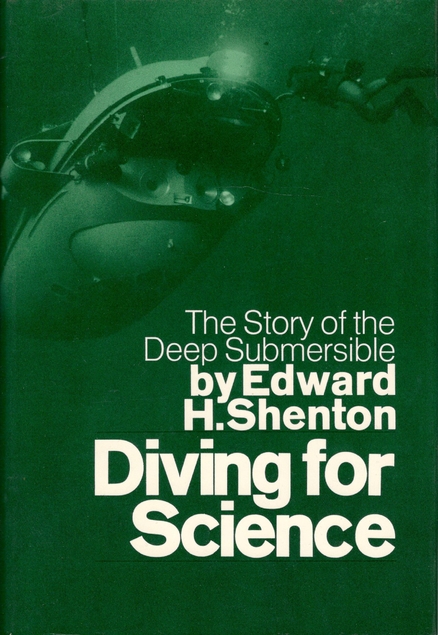
divingDiving for Science, Edward H Shenton (1972). The subtitle to this book does a pretty good job of describing its contents: “The Story of the Deep Submersible”. It’s a potted history, and a rough guide to the workings, of research submersibles, chiefly those which descend to around 2,000 feet or deeper. Some of the more interesting incidents in which submersibles have been involved – Trieste’s descent to Challenger Deep, the sinking and recovery of DSV Alvin, the hunt for the USS Thresher, the recovery of a lost USAF atom bomb off the coast of Spain, the Ben Franklin two-thousand mile underwater journey – are mentioned, but in no great detail. There’s a chapter on how submersibles function, and another on their legal certification. An appendix lists details for every submersible built up to that point. The book does point out that by 1970, their use was beginning to wane, and many had been mothballed – chiefly because they’re expensive to build and run, and cheaper options were available. These days, of course, ROVs and AUVs are more often used than actual submersibles and, except for James Cameron’s Deepsea Challenger and four bathyscaphes built and operated by China (there’s very little info about these online), the handful of deep-diving submersibles currently operating are generally limited to 20,000 feet (6,000 metres). Despite being more than forty years old, this is still a useful book.

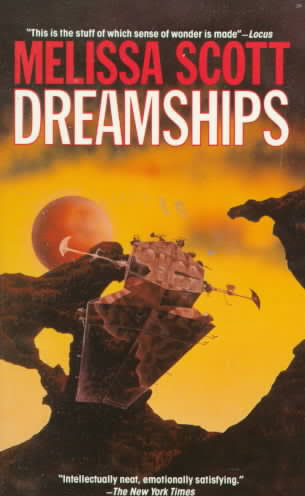
dreamshipsDreamships, Melissa Scott (1992). I’ve always suspected that if I’d come across Scott’s novels in the 1980s I’d have probably started following her career. Admittedly, this is only the third novel by her I’ve read, but I did really like the previous two, Shadow Man and The Kindly Ones. But Scott’s books were not easy to find in the UK back then – only her Silence Leigh trilogy and The Kindly Ones appear to have been published here. Having said all that, Dreamships was a little disappointing. Anyway, a review of it will be appearing soon on SF Mistressworks.

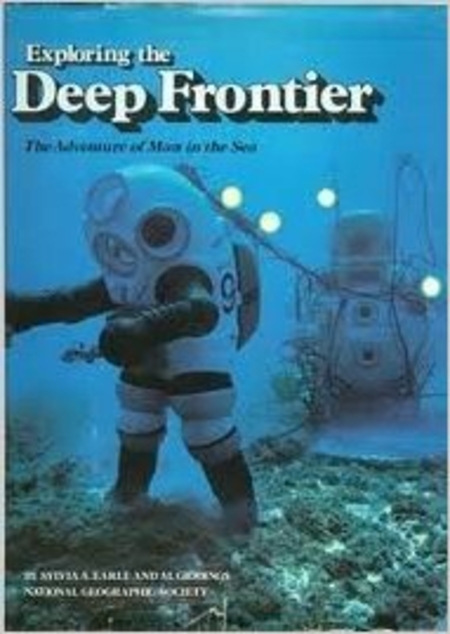
exploring_deepExploring the Deep Frontier, Sylvia A Earle & Al Giddings (1980). I don’t normally bother to mention coffee table books, especially ones published by National Geographic (not that I own many of them, in fact I think this is the only one). But Exploring the Deep Frontier is a pretty good run-through of underwater exploration – the history and the state-of-the-art as of 1980 – and, unsurprisingly, contains a number of especially nice photographs. That’s Earle there on the cover in a JIM suit. She also leads an all-female team in the Tekton underwater habitat, rides in a submersible, and dives in various places around the world. She provides the text of the book, which switches between her own first-person experiences, and a quick history of underwater exploration. Giddings is the photographer. A pretty book. It’s just a shame my copy is so tatty (an eBay purchase, natch), but given it’s 36 years old I suppose that’s understandable. It’s also sadly disappointing that Exploring the Deep Frontier is subtitled “The Adventure of Man in the Sea” when the author is a woman and the bulk of the text covers her adventures.

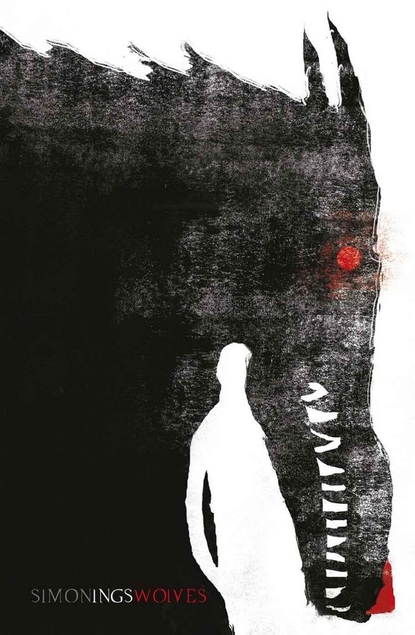
wolvesWolves, Simon Ings (2014). I missed reading this earlier in the year even though it was shortisted for the BSFA Award. (It lost out to the disappointing Ancillary Sword.) I’d actually read five of the eight shortlisted books, but had I read Wolves when I filled in my ballot I might well have made it my first choice. I’m surprised it didn’t make it the Clarke. Anyway, the narrator works for a start-up which is developing Augmented Reality – a combination of Google Glasses, Heads-Up Displays and VR – which is bought out by a media mogul. Much of the novel, however, covers the narrator’s past, when he grew up in a hotel used chiefly as a hospice for blinded soldiers, who were fitted with a form of seeing-eye technology by his inventor father. His mother suffered from mental health problems, and would often disappear often to some Greenham Common-type protest camp for weeks at a time. One day, he finds her body in the boot of his father’s car. She has committed suicide. Too scared to tell his father, he disposes of the body himself. It is never found. The mystery of her “disappearance” is one of the narrative threads in Wolves. Another describes the slow collapse of country (I may be misremembering, but I don’t think its setting is categorically stated). And then there’s the identity of the mogul, who proves to be one of his father’s patients all those years ago. The plot is perhaps a little confused in places, but the writing is excellent, the dark surreal tone extremely well done, and, like Marcel Theroux’s Strange Bodies, I’m surprised this book didn’t generate more of a fuss when it was published. But then, like Theroux’s novel, it’s not the sort of book that fits in with the genre’s current narrative…

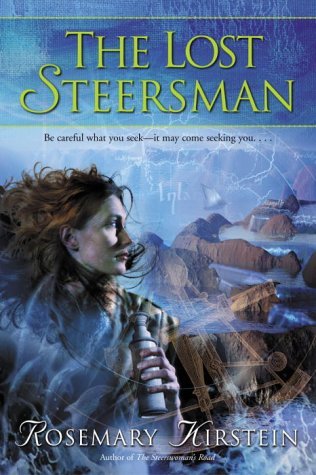
steersmanThe Lost Steersman, Rosemary Kirstein (2003). I stumbled across the first book of this series, The Steerswoman, in a charity shop several years ago and bought it because I vaguely recalled someone telling me it was good. I really liked it – and said so in my review on SF Mistressworks (here). I liked the sequel, The Outskirter’s Secret, even more (see here). So it’s fair to say I had high expectations of The Lost Steersman. And… it sort of almost nearly met them. Rowan is now in the port town of Alemeth after leaving the Outskirts. There’s a Steerswomen’s Annex there, so she hopes to consult its thousands of volumes for more clues about Routine Bioform Clearance, the spell which opens up new lands to the east and so allowing for human expansion, but which appears to have stopped and is being misused by the evil wizard Slado. But the Alemeth steerswoman has died and has left the Annex in a right state, so Rowan has to get it all sorted out. And then demons, creatures from the Outskirts, begin to attack the town… Although couched in the language of fantasy, this is clearly science fiction, and Kirstein cleverly reveals more of the ecology of the world as Rowan investigates. Unfortunately, the first half of the novel is slow and a bit dull, and things only begin to get really interesting when Rowan sails south looking for Slado’s hidden fortress. She doesn’t find it – but what she does find tells the reader more about the world than it tells Rowan. They’re good books, these. The paperbacks are long out of print, but they’re still available as ebooks. Worth getting.

1001 Books You Must Read Before You Die count: 116


7 Comments

Epic space opera, book two…

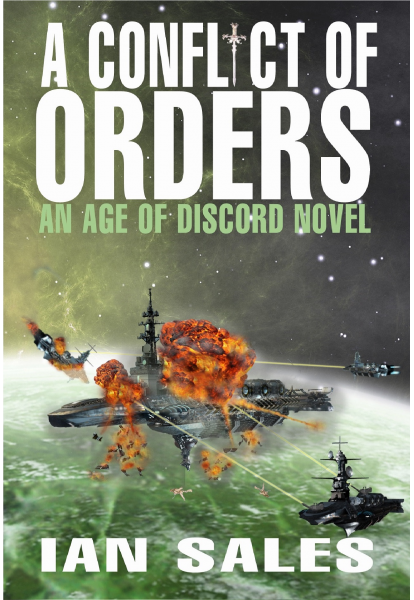
The second book of An Age of Discord, my space opera trilogy is now available as an ebook. It’s titled A Conflict of Orders, and follows directly on from A Prospect of War. It can be purchased from Amazon UK and Amazon US (and all the other Amazons too, of course), or the signed limited hardback can be pre-ordered here from Tickety Boo Press’s website. The hardback will be published on 30 October, but you get to download a free book edition in a file format of your choice while you’re waiting for it to appear.

The blurb for A Conflict of Orders goes like this:

Casimir Ormuz and the Admiral, at the head of the biggest fleet the Empire has seen since its founding, are on their way to Geneza to meet the forces of the Serpent.

On Shuto, capital world of the Empire, the Serpent has begun his siege of the Imperial Palace.

Ormuz and the Admiral must win their battle on Geneza, and then travel to Shuto to save the Emperor, to save the Empire. But winning the fight and lifting the siege are only the beginning. Still complicating matters is the millennia-long conspiracy which seems to be driving the Serpent’s rebellion.

So who is the real villain?

And when it all ends, who will be sitting on the Imperial Throne?

ACOO

We went for a green theme for the cover of this book – each of the three will be distinguished by colour – and included a sword in the title to make clear that this space opera is not military sf, nor indeed your usual type of space opera.

The third book, A Want of Reason, is going to take a while longer to appear. Publication is scheduled for March 2016, but if I can get it all done and dusted early enough then it might be a little before then – but not by that much, I suspect. Hopefully it will be worth the wait.


1 Comment

The rain in Spain falls mainly on the Moon

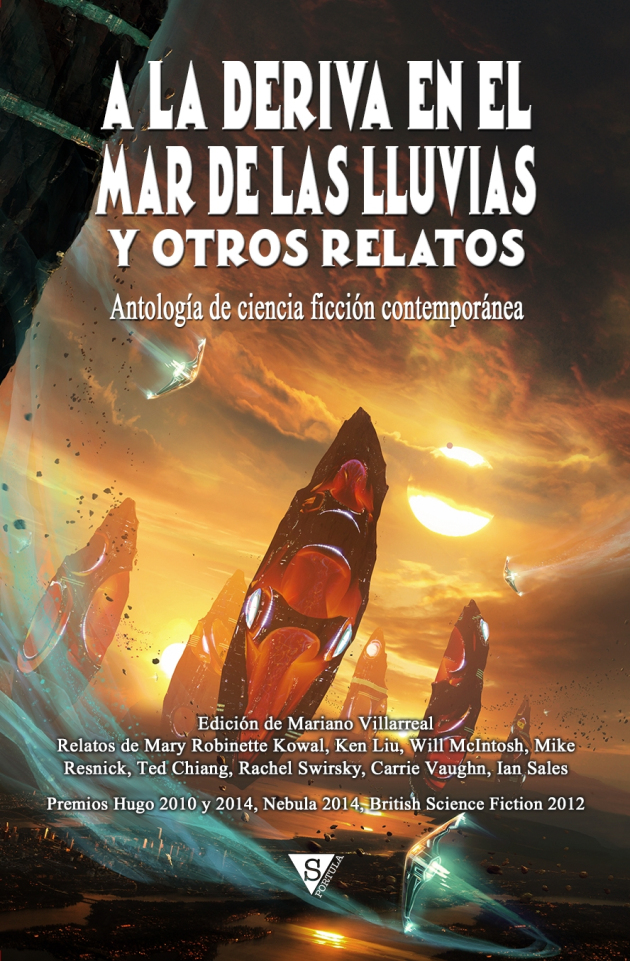
Next month sees the publication in Spain of the second volume in the Nova Fantástica series of anthologies edited by Mariano Villarreal. This volume is titled A la deriva en el Mar de las Lluvias y otros relatos, and the linguistically talented among you will have spotted that the title translates as Adrift on the Sea of Rains and Other Stories. My novella, translated by Diego de los Santos, is only one among several award winners and nominees in a star-studded table of contents. Just looking at it makes me come over all unnecessary:

1 ‘La señora astronauta de Marte’ (The Lady Astronaut of Mars), Mary Robinette Kowal
2 ‘Algoritmos para el amor’ (The Algorithms for Love), Ken Liu
3 ‘Frigonovia’ (Bridesicle), Will McIntosh
4 ‘Regreso a casa’ (The Homecoming), Mike Resnick
5 ‘La verdad de los hechos, la verdad del corazón’ (The Truth of Fact, the Truth of Feeling), Ted Chiang
6 ‘Si fueras un dinosario, amor mío’ (If You Were a Dinosaur, my love), Rachel Swirsky
7 ‘La Amaryllis’ (Amaryllis), Carrie Vaughn
8 ‘A la deriva en el mar de las Lluvias’ (Adrift on the Sea of Rains), Ian Sales
aladerivaenmarlluvias-ok

More details (in Spanish) can be found here, and the anthology can be pre-ordered on Amazon (Spain here and US here). Of course, Adrift on the Sea of Rains is still available in English – as are the other three books of the Apollo Quartet: The Eye With Which The Universe Beholds Itself, Then Will The Great Ocean Wash Deep Above and All That Outer Space Allows (the titles link to Amazon, but you can also buy them from the Whippleshield Books website here).


Leave a comment

Reading diary, #13

More books read. Not as many as I’d like. Especially when I see the size of the TBR…

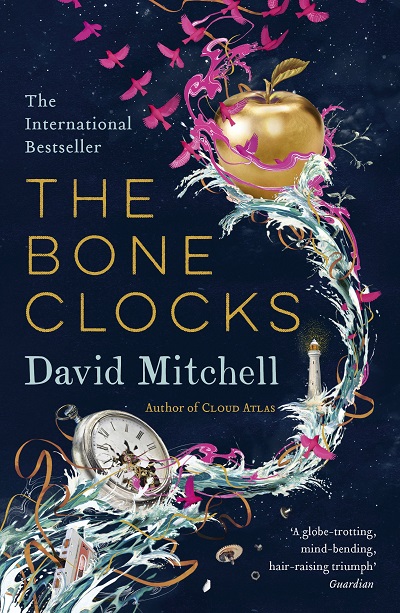
bone_clocksThe Bone Clocks, David Mitchell (2014). According to my records, I read Cloud Atlas back in April 2009, likely as a result of recommendations by friends and acquaintances. I thought the novel good, but it didn’t quite gel for me. I then worked my way through Mitchell’s oeuvre – number9dream, Ghostwritten, Black Swan Green and The Thousand Autumns of Jacob de Zoet – over the following three years. Last year, The Bone Clocks was published… Initial noises were good, but then a few dissenting voices appeared… What was clear, however, was that it was structured as a series of linked novellas and that it moved deeper into genre territory as it progressed. I was, I admit, expecting a novel not unlike Cloud Atlas, one that had many impressive pieces but together left me feeling a little disappointed. Happily, this wasn’t the case at all. True, you wait for a book about conspiracies of body-hopping immortals and three come along at once – there are elements of The Bone Clocks that are reminiscent of Claire North’s Touch and of Marcel Theoux’s Strange Bodies – although for secret wars masterminded by hidden groups, you might as well go all the way back to EE ‘Doc’ Smith’s Arisians and Eddorians. The Bone Clocks follows Holly Sykes from her teen years in southern England, when she runs away from home, through to a post-apocalyptic Ireland some thirty years from now. Along the way, other voices occasionally take over the narrative, such as egocentric author Crispin Hershey (based on Martin Amis?), a well-handled pastiche although it reminds me of Charles Palliser’s brilliant piss-take of Jeffrey Archer in Betrayals; and even one of the immortals, who is, at that time, occupying the body of a black Canadian psychologist. The two factions at war are the Horologists, who are serial reincarnators and seem to have arisen naturally among humans; and the Anchorites of the Chapel of the Dusk of the Blind Cathar, who are able to “decant” souls in order to extend their own lives. Holly becomes inadvertently involved with these two groups, partly because one of the immortals reincarnates in her younger brother, partly because the Horologists prevent her from being groomed to be “decanted”, and partly because she has a brief fling with Hugo Lamb, who is recruited by the Anchorites. Holly is a great character and Mitchell handles her brilliantly. Some of the other elements I found less successful – the Anchorites reminded me a little of the baddies in the bande dessinée L’Histoire secrète by Jean-Pierre Pécau (both have chief villains with no eyes); and the post-apocalypse scenario hewed somewhat too closely to the common template. Much has also been made of those characters which have appeared in other Mitchell novels and stories, but this is hardly unique nor does it add much to this novel. Nonetheless, a very good book, and I’m looking forward to reading Slade House.

The Tomorrow People, Judith Merril (1960). This is another book I bought at Archipelacon in Finland. I reviewed it for SF Mistressworks here. To be honest, the cover art is probably the best thing about it.

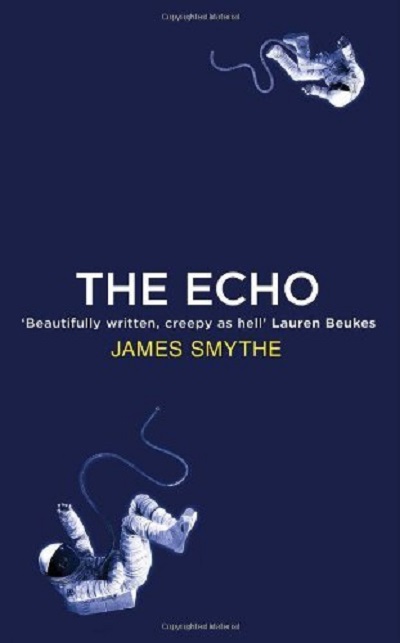
the_echoThe Echo, James Smythe (2014). Twenty years after the disastrous mission to interstellar space described in The Explorer, a pair of Swedish twins organise a second mission. This flight’s purpose is to investigate the “anomaly”, a “blackness of space” thought to be the cause of the loss of the previous mission. This new spacecraft, Lära, however, is not as “Hollywood” as the previous one, it’s smaller and much more compactly designed (although it still has room between the outer hull and the walls of the inner chambers for a member of the crew to hide). One of the twins, Mira, is leader of the expedition aboard the spacecraft, the other twin, Tomas, remains on Earth at mission control. The Echo is told entirely from Mira’s point of view, and this is stuff Smythe does really well. I’m still not convinced by his spacecraft (it’s unlikely, for example the twins would have had to invent a thruster system as all present-day spacecraft have used reaction control systems for close manoeuvring for decades) – or indeed some of the science in the book – but there’s an increasing level of creepiness as the novel progresses and that’s where the novel shines. It’s not just the anomaly itself – the title of the book pretty much signals what the crew of the Lära find when they arrive at it – but Mira himself and his thoughts and relationship with his twin brother, and the way he deals with the deaths of Lära’s crew. I think I could have done with a little more verisimilitude, something that nailed down the tech and science, but that’s a personal preference (and, to be fair, no one is selling The Echo on its scientific credentials, unlike the not-as-scientifically-correct-as-advertised The Martian (and that’s a completely unfair comparison anyway, because Smythe is a very good writer and Weir is a shit writer)). The Explorer and The Echo form the first half of the Anomaly Quartet, and I’m very much intrigued to see what the next two books will do.

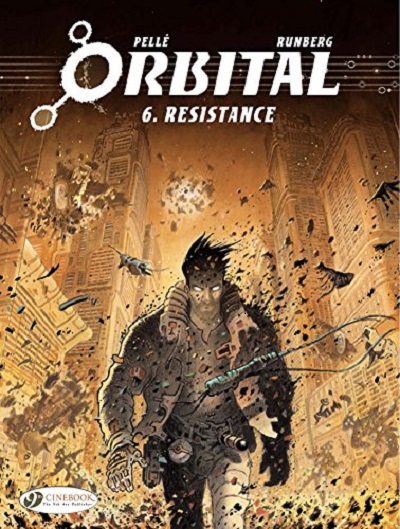
orbital6Orbital 6: Resistance, Serge Pellé & Sylvain Runberg (2015). Cinebook have been publishing bandes dessinée in English-language editions now for a decade, and while a number of their titles have in the past appeared intermittently in English – Valérian et Laureline, Lucky Luke, the Adventures of Blake and Mortimer, Yoko Tsuno – there are now extended runs of these comics in English published by Cinebook. The Adventures of Blake and Mortimer, for example, currently stands at twenty of twenty-three volumes, Valerian and Laureline at nine of twenty-two… Orbital, however, is one of the several series published by Cinebook which had previously never seen publication in English. It’s a space opera, in which Earth has joined a federation of planets but xenophobic feeling runs high, and Earth is likely to either secede, revolt or just harbour terrorists. There are, of course, a number of alien factions, all with their own agenda. Orbital follows the careers of a diplomatic troubleshooting team comprising a human and a sandjarr (the alien race which defeated Earth). By this sixth volume in the series, everything’s got a bit pear-shaped, and the human member of the pair has developed weird powers and… The artwork is good, the story works, and the background interesting. As a novel this wouldn’t be bad, as a bande dessinée it’s pretty good.

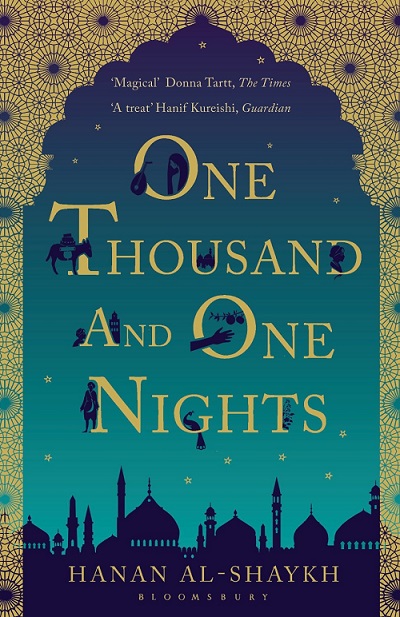
1001nightsOne Thousand and One Nights, Hanan Al-Shaykh (2011). Everybody knows about the Alf Layla wa Layla, how a king would marry a young woman each day and then have her executed the following morning, until Scheherazade asks to marry him and then spends the night telling stories but ending on a cliff-hanger – so he keeps her alive to find out how the story ends. Most people probably also know some of the 1001 Nights’ more popular stories, such as Ali Baba and the Forty Thieves. I actually have a copy of the Penguin Classic edition of Tales from the Thousand and One Nights, although I’ve yet to read it. I am, however, a fan of Al-Shaykh’s novels, ever since reading Only in London back in 2002. I believe Al-Shaykh’s version of the One Thousand and One Nights – and it’s only the first few stories of the first volume – started life as a play, but happily it doesn’t read like a play. One thing I hadn’t known until I read this book was how… bawdy the stories are. And how inter-nested. While Scheherazade opens the book, the story she tells contains characters who tell stories which contain characters who tell stories… I enjoyed this a lot more than I expected to. There are that many levels of framing narratives it can get a little confusing, but the individual tales are amusing and well-told. Recommended.

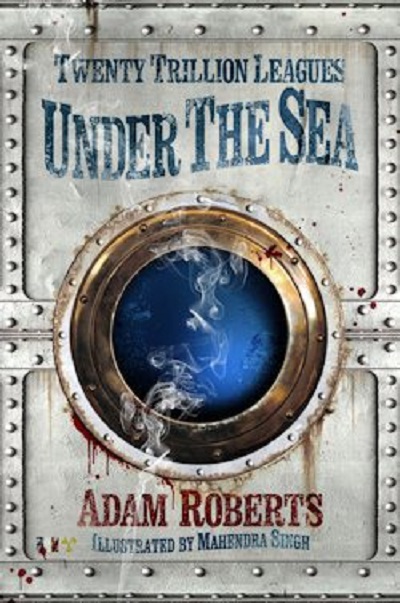
twentytrillionleaguesTwenty Trillion Leagues Under the Sea, Adam Roberts (2014). Roberts is a very clever man, and a thoroughly nice chap. But for some reason I’ve never quite connected with his novels. The closest I’ve managed to date was Jack Glass, although I did really like the first half of Yellow Blue Tibia – but, I hasten to add, I’ve not read every novel he’s written, and I still have a few on the TBR. However, I do admire and enjoy his short fiction. Unfortunately, Twenty Trillion Leagues Under the Sea is a novel. A very nicely illustrated novel, too. In 1958, France’s first nuclear-powered submarine, Le Plongeur, is on its sea trials when something goes wrong during a dive, and the submarine continues to descend… to an impossible depth, tens of thousands of kilometres. The meagre crew aboard speculate on their predicament, there are small mutinies, and many mysteries. I very much liked this story – I have in fact written something similar myself in short story form – but felt Twenty Trillion Leagues Under the Sea was marred by too many things that were just plain wrong. Not only does the novel claim nine thousand metres is “nearly a full kilometre”, or that titanium is stronger than steel, or that no part of the sea-bed is deeper than 10,000 metres (Challenger Deep is nearly 11,000 metres, as recorded by a 1951 survey), but a French naval officer would have known of the Trieste, given that the French Navy bought August Piccard’s earlier bathyscaphe FNRS-2 in 1950 (and operated it under the name FNRS-3, even setting a new depth record of 4,050 metres in 1954)… Besides all that, the novel repeatedly confuses metres and kilometres. Le Plongeur sinks at one metre a second, so attaining a depth of 90,000 km in three days is impossible. Ninety thousand metres, yes. But not ninety thousand kilometres. But not only does the prose repeatedly refer to this figure, it also compares it to the diameter of the Earth. There are other small details, like a hatch that open inwards, and so the pressure of the water would be continually acting to force it open; or an airlock on the keel of the submarine; or even a nuclear reactor directly driving the propeller (that’s not how nuclear-powered submarines work – the reactor generates heat, which powers a turbine, which turns the propellor shaft). These slips (also, a character briefly possessing two left hands), which should have been picked up by an editor, aside, Twenty Trillion Leagues Under the Sea is a typical Roberts piece. There’s a reason Le Plongeur is where it is, and even a sort of scientific explanation for the presence of so much water. There are some odd bits, like carnivorous fish which don’t appear to have an ecosystem to support them, before the submarine and its remaining crew reach their (unbeknownst to most of them) planned destination and the, er, whole point of the book. Given the novel’s title, the identity of the person they meet there should come as no surprise. The reason for the journey relies on a somewhat stretched scientific analogy, but it’s easy enough to swallow. In fact, for a tall tale, and it is very much a tall tale, Twenty Trillion Leagues Under the Sea is very easy to swallow. Perhaps it feels a bit over-long in places, but the cast of (mostly) grotesques are amusing and well-written, and the final pay-off is worth the long descent. Oh, and the illustrations, by Mahendra Singh, are very good.

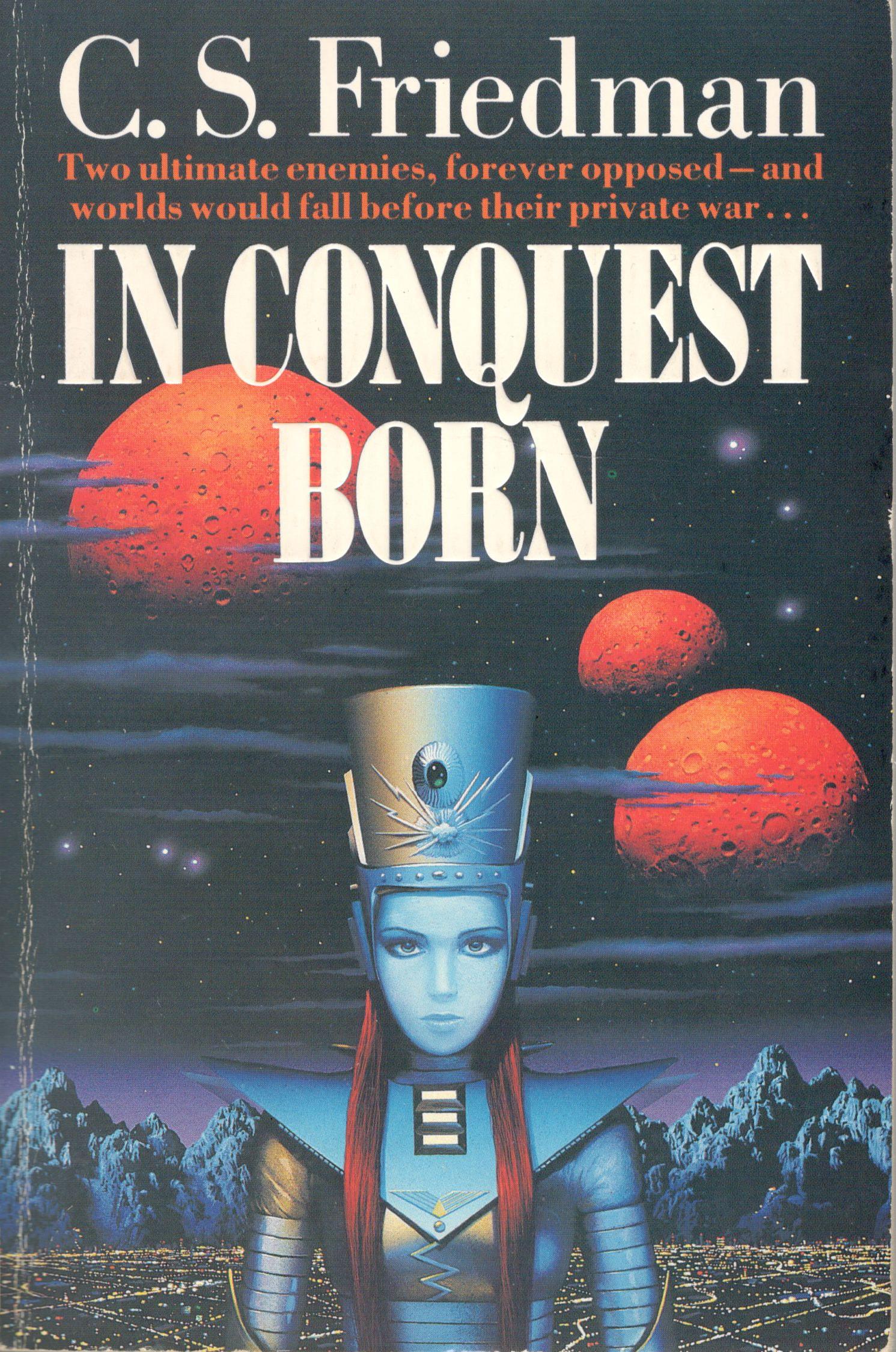
in_conquest_bornIn Conquest Born, CS Friedman (1986). I bought this recently to review as it was on the SF Mistressworks list but we had yet to write about it. Mid-eighties space opera, I thought, should be okay. Seems to be well-regarded. But I do wonder how many of its unchallenged assumptions are still acceptable in the twenty-first century. A review will appear on SF Mistressworks soon.

1001 Books You Must Read Before You Die count: 116


6 Comments

Tomes immemorial

I was really good in August, and bought only two books during the entire month. So, of course, I went a little berserk this month – and we’re barely a week into it! Ah well.

2015-09-06 13.40.16

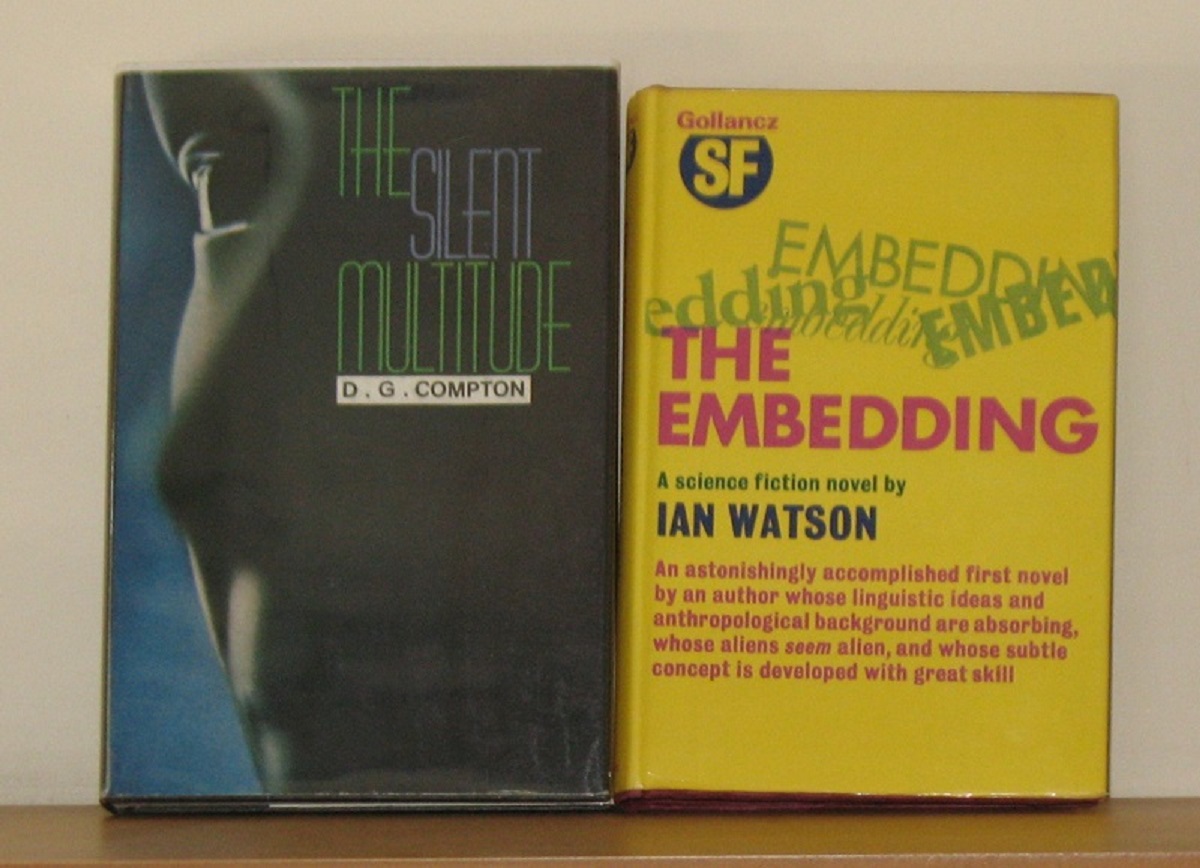
Some first editions for the collection. I have rather a lot of Ian Watson first editions, many of them signed, but a copy of his first novel, The Embedding, had always eluded me. I found this one for a reasonable price on eBay. Which is where I also found this first edition of DG Compton’s The Silent Multitude, although it was a good deal more expensive than the Watson. Worth it, though.

2015-09-06 13.41.04

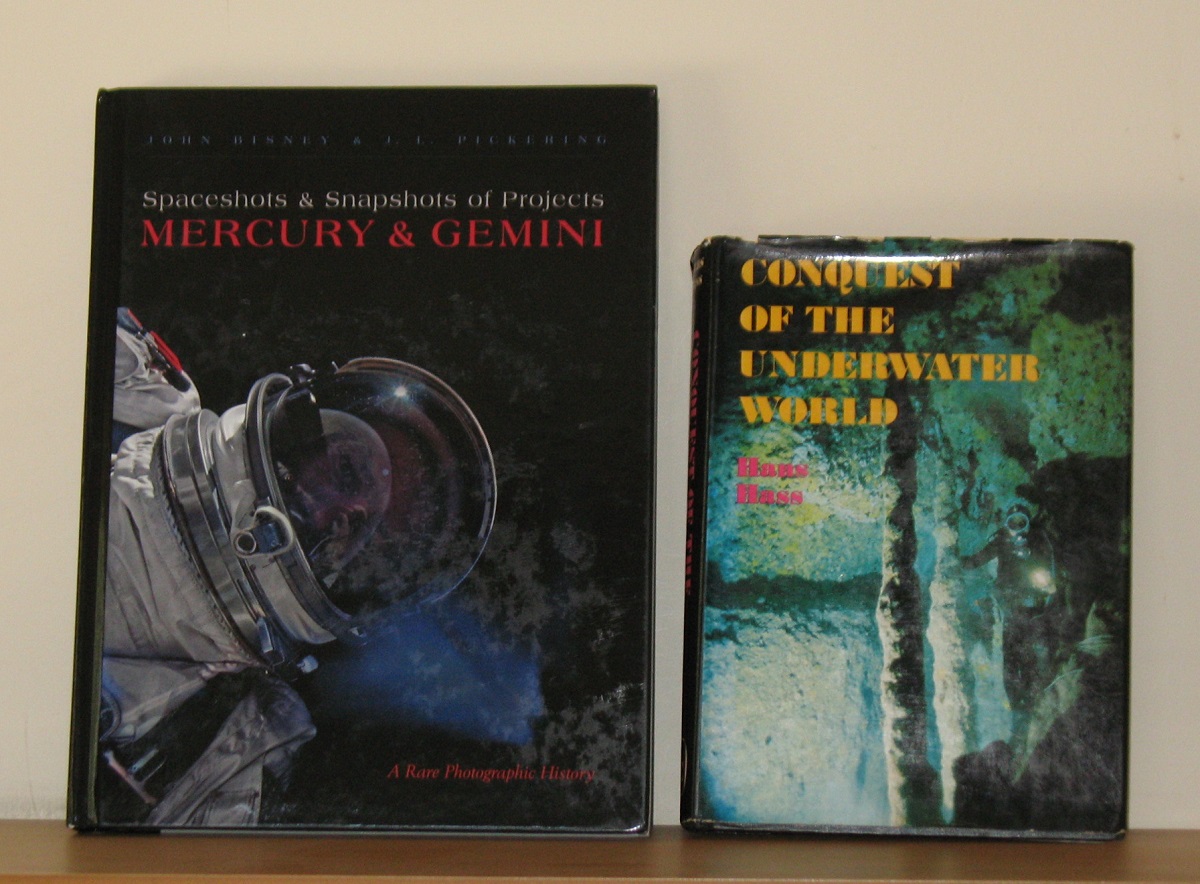
One each for the space books and the deep sea books collections. The title of Spaceshots & Snapshots of Projects Mercury & Gemini pretty much describes the contents. A companion volume on Apollo will be published later this month. It’s on the wishlist. Conquest of the Underwater World I found cheap on eBay. It seems mostly to cover underwater archaeology, and I’m more interested in much deeper exploration. Never mind.

2015-09-06 13.42.16

Some proper literature: In Ballast to the White Sea is a lost novel by Lowry, believed to have perished in a fire, but decades after his death it was discovered his first wife had a typescript. Selected Letters is another volume in the DH Lawrence white Penguin series, which brings my total up to twenty-two (of, I think, twenty-seven). Given these editions all date from the 1970s, finding good condition copies is quite an achievement. Not sure where I saw My Fair Ladies mentioned, but it looked like an interesting read so I bunged it on an Amazon order. The subtitle pretty much explains the topic, “Female robots, androids and other artificial Eves”.

2015-09-06 13.43.32

Here’s some recent “genre” novels. Kari Sperring’s The Grass King’s Concubine I’ve been meaning to pick up for ages, and now I’ve finally got around to it. It says “fantasy” on the spine, so it’s definitely genre. The Book of Strange New Things was shortlisted for the Clarke Award earlier this year, but it wasn’t published as category sf. I read Faber’s Under The Skin shortly after it appeared and didn’t like it one bit. I also have several Faber novels sitting on the TBR. I expect this one to be a difficult read. Annihilation is the first book of the Southern Reach trilogy, which mystifyingly seemed to miss out on quite a lot of award shortlists this year. I’ve tried VanderMeer’s fiction before and not got on with it, so we’ll see how this ones goes. Finally, the latest volume in a space opera bande dessinée, Orbital 6: Resistance, and it’s clearly one long story but I think I’m following it. They’re short, so I could always go back and read the preceding five books…

2015-09-06 13.44.26

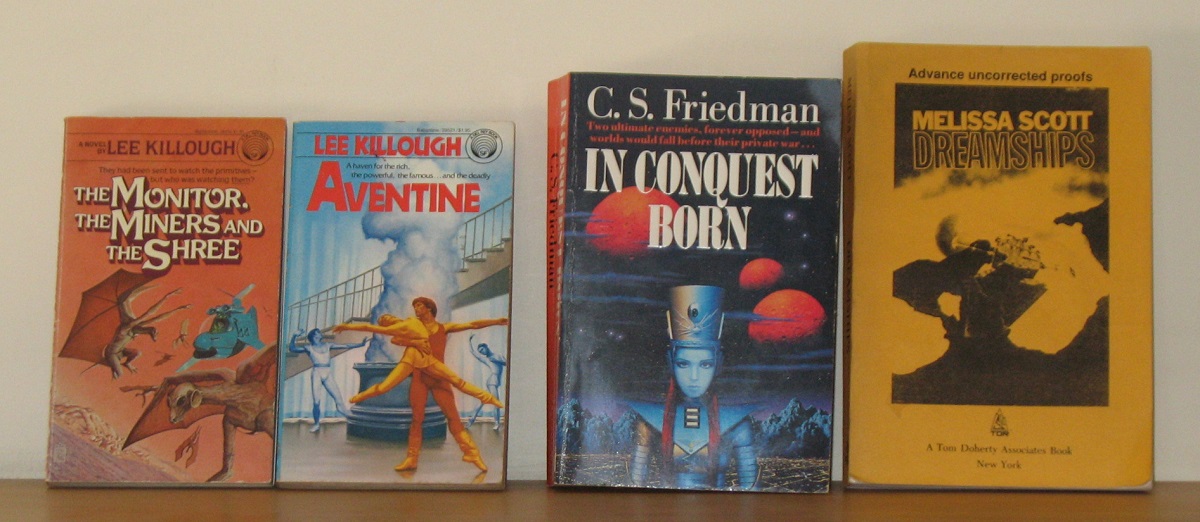
And here are some books for SF Mistressworks. In Conquest Born is on the actual SF Mistressworks list, but no review of it has yet to appear, so I thought I’d read the book myself. I’ve liked Scott’s two previous novels I’ve read – and it’s a shame I didn’t discover her back in the 1980s as I suspect she would have become a favourite writer – and I saw Dreamships going very cheap on eBay… except it turned out to be an ARC and not the described hardback. I have contacted the seller. I bought Killough’s A Voice Out of Ramah at Archipelacon, read it in Helsinki Airport while waiting for my connecting flight to Manchester, and reviewed it on SF Mistressworks (see here). I liked it a lot, so I thought it worth trying something else by her – and I found these two, Aventine, a linked collection, and the bizarrely-titled, The Monitor, the Miners and the Shree.


3 Comments

Reading diary, #12

Recent reads. I think I need to up my game, I don’t seem to be reading at my previous speeds. Admittedly, quite a bit of my reading has been somewhat heavier than is usual…

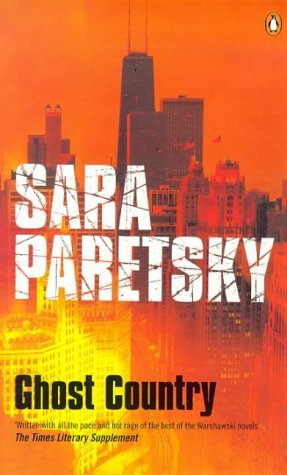
ghost_countryGhost Country, Sara Paretsky (1998). One of Paretsky’s two non-Warshawski novels, although this one is set in present-day Chicago like the VI books. There’s a world-famous opera singer, who is an alcoholic and slowly losing her grip on reality. Her career is already in the toilet. There’s a doctor who wants to practice psychiatry at a prestigious Chicago hospital, but the highly-respected consultant in charge of the department is more concerned with cutting costs so would sooner give patients drugs. There’s the granddaughter of the cost-cutting consultant, who can’t compete with her older sister, a high-flying lawyer, and runs away from home. And there’s a homeless woman who thinks the rusty water leaking from a broken pipe inside the outside wall of a top hotel’s garage is the blood of Mary, and she worships at a small shrine she has built there. Their stories all, of course, interact, and Paretsky uses them to deliver a stinging indictment of US private healthcare, hypocritical middle-class Christians, and the move to a more right-wing neocon Christian society. None of the men in the novel, with the exception of the psychiatrist, are sympathetic; but neither are they unconvincing. This is not a book to read if you’re looking for mind candy or comfort reading – it will make you angry. True, everyone gets what they deserve, and though the story is bleak the ending isn’t; but it’s still a very angry novel. Worth reading, nonetheless.

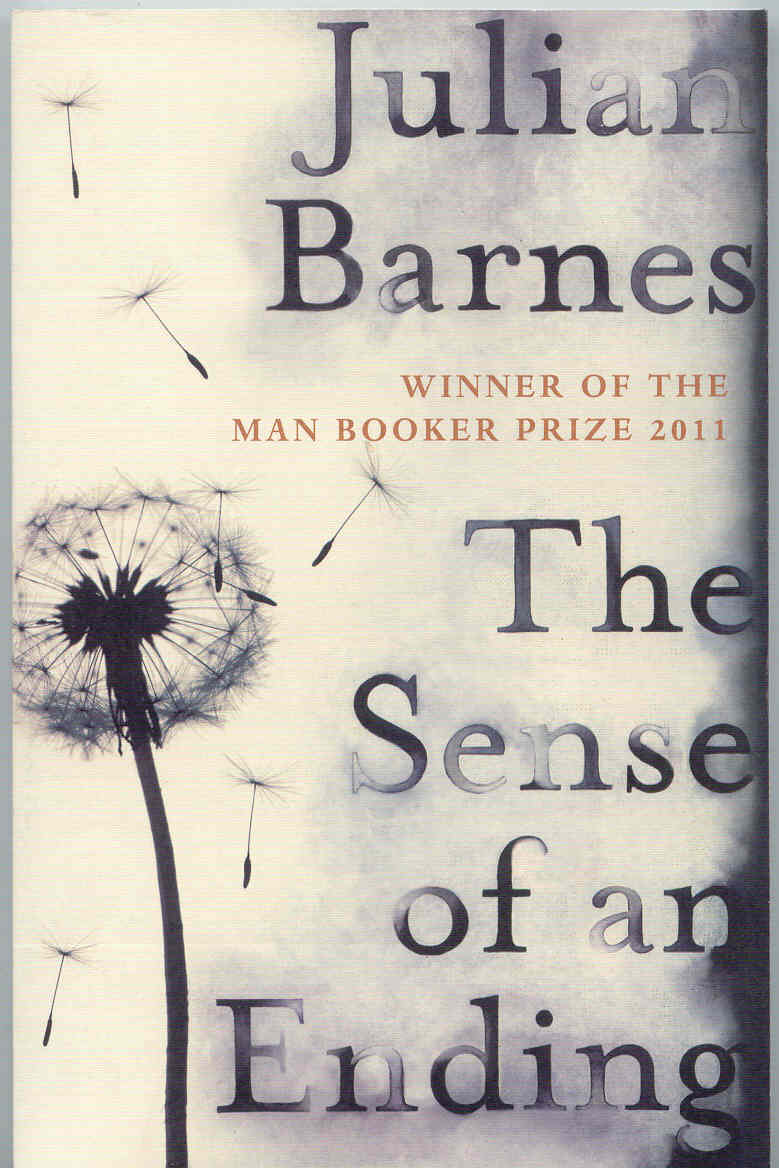
The-Sense-of-an-EndingThe Sense of an Ending*, Julian Barnes (2011). Three lads at school in the 1960s are joined by a fourth, a clever outsider called Adrian. The first half of The Sense of an Ending describes those halcyon days, as narrated by one of the three, Tony. After school, the four go their separate ways – Adrian to Cambridge, Tony to Bristol uni. At Bristol, Tony meets a young woman, Veronica, and the two enter into a relationship. She invites him home one weekend to meet her parents. But Veronica is, to put it mildly, hard-going, and Tony and her split. He later hears that Veronica has taken up with Adrian. Tony writes the pair of them a shitty letter. Some months later, Adrian commits suicide. The novel then jumps forward forty years to the present day. A solicitor contacts Tony – who is divorced but on good terms with his ex-wife, and has a grown-up daughter – and tells him he has been left £500 by Veronica’s mother. Also bequeathed to him is Adrian’s diary. But the solicitor does not have this as it’s currently in the possession of Veronica, who is reluctant to give it up. So Tony embarks on a campaign of flattery, cajolery and stubborn persistence, via email, in order get the diary from Veronica. She is enigmatic, arrogant and clearly contemptuous of Tony – repeatedly telling him he “doesn’t get it”. Through Veronica, he meets a group of mentally-disabled people, and then over the course of several weeks insinuates himself into their world… and so discovers that one of them is Veronica’s brother and Adrian’s son. The end. Throughout the second half of The Sense of an Ending, Tony is sneered at by Veronica for not getting something he could never have known about. That he figures it out in the end still makes Veronica’s actions senseless and completely undermines the plot. The Sense of an Ending won the Man Booker in 2011, but to be honest I can’t see why. It reads like a more polished Iain Banks novel, and while it’s good, the doggedness of its narrator and Veronica’s behaviour are not well-grounded, which makes it all feel a bit unsupported plot-wise.

Chanur’s Legacy, CJ Cherryh (1992). I read this to review on SF Mistressworks. It’s the final book of the Compact Space quintet, and its story is more of a pendant to the plot of the earlier four books that it is a continuation or closure. Still, I liked it – see here.

all_that_heaven_allowsAll That Heaven Allows, Edna Lee & Harry Lee (1952). The novel from which my favourite film was adapted – and it wasn’t easy to find a copy. Initially, the film seems to follow the novel quite faithfully: Cary’s friend cries off from a lunch engagement, so Cary invites Ron Kirby, the man maintaining her garden, to join her instead. Later, Cary accompanies Harvey to the country club for a dinner party, and there one of her late husband’s friends makes a drunken attempt to kiss her. Cary’s two grown-up kids, Ned and Kay, are pretty much the same in both book and film. Ned is a stuffed-shirt, a Princeton conservative who will no doubt grow up become an arsehole; Kay is more nuanced in the novel, her head still full of juvenile sociology and politics, but sympathetic to her mother’s situation. Ron, however, is more or less a cipher in the novel. He doesn’t have Rock Hudson’s easy charm, and it’s not altogether obvious what Cary sees in him. One thing the novel does show, however, is how cleverly the party scene in the film introduces Ron’s bohemian friends and lifestyle. There is no mention of Walden or Thoreau in the book. And the old mill building Ron restores to make a home for Cary and himself is in the book an old barn. All That Heaven Allows, although it made a great film, is not great literature. It’s by no means pulp fiction, nor some tawdry May-December romance novel; but I’m not really surprised it’s vanished into obscurity and that copies are extremely hard to find. Ignore the book, watch the film.

1001 Books You Must Read Before You Die count: 116