It Doesn't Have To Be Right…

… it just has to sound plausible


3 Comments

Best of the year 2012

It’s that time of year again when I go back through my spreadsheets of books read, films seen and albums bought, and try to decide which are the best five of each. And yes, I do keep spreadsheets of them. I even have one where I record the bands I’ve seen perform live. And no, it’s not weird. It is organised.

Back in June, I did a half-year round-up – see here. Some of the books, films, albums I picked then have made it through to the end of the year, some haven’t. This time, for a change, I’m going to actually order my choices, from best to, er, least-best.

BOOKS
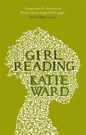
girl_reading1 Girl Reading, Katie Ward (2011)
This is probably the most impressive debut novel I’ve read for a long time. It could almost have been written to appeal directly to me. I like books that do something interesting with structure; it does something interesting with structure. I like books whose prose is immediate and detailed; its prose is immediate (present tense) and detailed. I like books that are broad in subject; it covers a number of different historical periods. And it all makes sense in the end. I’ll certainly be keeping an eye open for further books by Ward. I read this book in the second half of the year, so it didn’t make my half-year best. I wrote more about Girl Reading here.
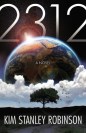
23122 2312, Kim Stanley Robinson (2012)
This year, I’ve actually read eleven genre novels first published during the twelve months, which I think may be a personal record. Having said that, it’s been a good year for genre fiction for me, as a number of my favourite authors have had books out. Sadly not all of them impressed (The Hydrogen Sonata, I’m looking at you). 2312 was everything I expected it to be and nothing like I’d imagined it would be. The plot is almost incidental, which is just as well as the resolution is feeble at best. But the journey there is definitely worth it. It is a novel, I think, that will linger for many years. Again, I read 2312 during the latter half of the year, so it didn’t make my half-year list. I wrote more about it here.
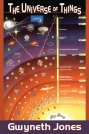
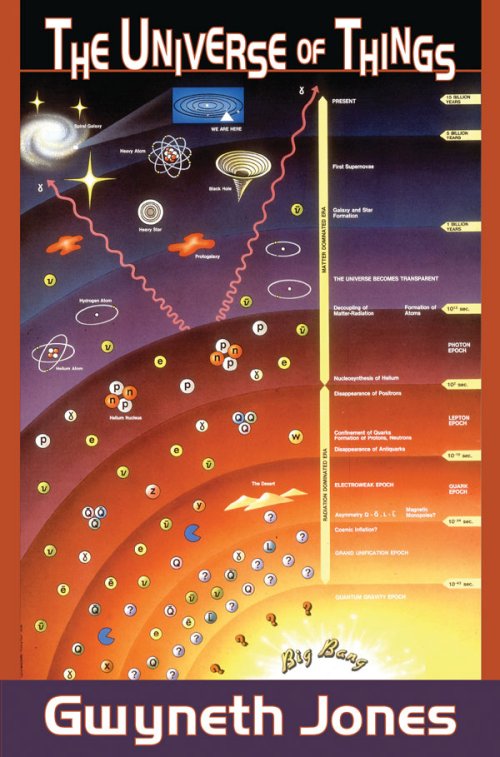
universe-cvr-lr-1003 The Universe of Things, Gwyneth Jones (2011)
Some collections aim for inclusiveness, some collections try for excellence. I’m not sure why Aqueduct Press chose the stories in this collection – it’s by no means all of Jones’ short fiction – but as a representative selection, The Universe of Things does an excellent job. I reviewed it for Daughters of Prometheus here, and I opened my review with the line: “Gwyneth Jones does not write many short stories – forty-one in thirty-seven years – but when she does, by God they’re worth reading.” This book did make my half-year list. Now I just have to read PS Publishing’s larger Jones collection, Grazing the Long Acre

intrusion-ken-macleod4 Intrusion, Ken MacLeod (2012)
The endings of Ken’s last few novels I have not found particularly convincing. It’s that final swerve from near-future high-tech thriller into heartland sf. Though the groundwork is usually carefully done, it too often feels like a leap too far. But not in Intrusion. The world-building here is cleverly done – I love the pastiche of Labour, with its “free and social market” – the thriller plot works like clockwork, and the final step sideways into pure genre slots straight in like the last piece in a jigsaw puzzle. Intrusion is another book I read in the second half of 2012, so it didn’t make my half-year list. I reviewed Intrusion for SFF Chronicles here.
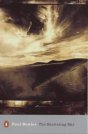
sheltering5 The Sheltering Sky, Paul Bowles (1949)
Curiously, I’d always liked the film adaptation by Bernardo Bertolucci, which inspired me to read the novel, but after finishing the book, I tried rewatching the film and found myself hating it. Mostly it was because the Lyalls, who are creepy and villainous in the novel, had been turned into comic caricatures. A lot had also been left out – though that’s not unusual, given the nature of the medium. The Arabic in the novel used French orthography, which meant I had to translate it twice to work out what it meant. And it looks like four out of the five books in this list I read after June, so the Jones collection is the only one from my half-year list that made it through to the end of the year one.

There are, however, a ton of honourable mentions – it’s turned out to be quite a good year, book-wise. They are: The Bender, Paul Scott (1963), which read like a sophisticated 1960s comedy starring Dirk Bogarde; The Door, Magda Szabó (1987), the best of my world fiction reading challenge (which I really must catch up on and finish); Betrayals, Charles Palliser (1994), a very clever novel built up from several stories, including a fun spoof of Taggart and a brilliant piss-take of Jeffrey Archer; How to Suppress Women’s Writing, Joanna Russ (1983), which should be required reading for all writers and critics; Hear Us O Lord from Heaven Thy Dwelling Place, Malcolm Lowry (1961), which introduced me to the genius that is Lowry; Ison of the Isles, Carolyn Ives Gilman (2012), successfully brings to a close the best fantasy of recent years; Omega, Christopher Evans (2008), a long overdue novel from a favourite writer, and a clever and pleasingly rigorous alternate history / dimension slip work; and Blue Remembered Earth, Alastair Reynolds (2012), the start of a near-future trilogy, which is very good indeed but also stands out because it’s not regressive or dystopian.

FILMS
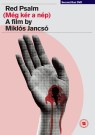
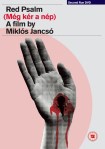
red_psalm1 Red Psalm, Miklós Jancsó (1972)
It’s about the Peasant Uprising in nineteenth-century Hungary, and consists of hippy-ish actors wandering around an declaiming to the camera. Occasionally, they sing folk songs. Then some soldiers arrive and some of the peasants get shot. But they’re not really dead, or injured. Then the landowners turn up and start espousing the virtues of capitalism. But the peasants shout them down. A priest tries to explain the “natural order of things”, but the peasants aren’t having it. Then more soldiers arrive and round up all the peasants. The ending is very clever indeed. It’s a hard film to really describe well, but it’s fascinating and weird and beautifully shot. I wrote about it here.
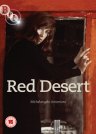
red_desert2 Red Desert, Michelangelo Antonioni (1964)
This was Antonioni’s first film shot in colour and it looks absolutely beautiful. In terms of story, it is much like his earlier masterpieces, L’Avventura, La Notte and L’Eclisse, and, like them, stars Monica Vitti. But also a (weirdly) dubbed Richard Harris. It’s a surprisingly bleak film – although perhaps not “surprisingly”, given that earlier trilogy – but it’s hard not to marvel at the painterly photography and mise-en-scène – who else would have the fruit on a barrow painted in shades of grey in order to fit in with the colouring of the surroundings? I wrote about it here. And I really must write more on my blog about the films I watch.
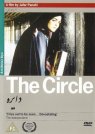
circle3 The Circle, Jafar Panahi (2000)
This is one of those films where one story hands off to another one and so on, and in which there is no real story arc, just a journey through episodes from the lives of the characters. Each of which is a woman living in Tehran, and all of whom have just recently been released from prison. They were not, however, imprisoned for doing things that would be criminal in other nations. As the title indicates, the stories come full circle, and the film’s message is far from happy or pleasing, but there is still room for hope. This film won several awards, though the Iranian authorities were apparently very unhappy with it.
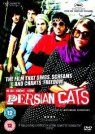
persiancats4 No One Knows About Persian Cats, Bahman Ghobadi (2009)
It’s not about cats, it’s about two musicians in Tehran who have been invited to perform at a music festival in London. But first they need to find some more musicians for their band, and they also need the necessary paperwork to leave Iran. But western-style music, which is what they play, is illegal in Iran, and there’s no way they’ll be able to get the visas they need legally. So they visit all the musicians they know, hoping some of them will be willing to go to London with them, and they also pay a well-known underground figure for the papers they require to travel. It’s an affirming film, but also a deeply depressing one.
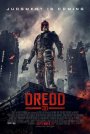
Dredd5 Dredd, Pete Travis (2012)
I was badgered into going to see this at the cinema by Tim Maugham on Twitter. I hadn’t really thought it would appeal to me. Even the fact it was touted as being more faithful to the 2000 AD character didn’t mean I’d like it. Although I grew up reading 2000 AD, Judge Dredd was far from my favourite character, and I’ve not bothered buying any of the omnibus trade paperbacks that are now available. But I went… and was surprised to find it was a bloody good film. It’s sort of like a weird munging together of an art house film and a Dirty Harry film, and strangely the combination works really well. It’s violent and horrible and grim and panders to all the worst qualities in people, but it all makes sense and fits together, and despite its simple plot is cleverly done. I plan to buy the DVD when it is available.

Iranian cinema did well this year for me. Not only did The Circle and No One Knows About Persian Cats make it into my top five, but two more Iranian films get honourable mentions: A Separation, Asghar Fahadi (2011), and The Wind Will Carry Us, Abbas Kiarostami (1999). Kiarostami I rate as one of the most interesting directors currently making films. Other honourable mentions go to: John Carter, Andrew Stanton (2012), which was undeservedly declared a flop, and is a much cleverer and more sophisticated piece of film-making than its intended audience deserved; Monkey Business, Howard Hawks (1952), is perhaps the screwball comedy par excellence; On the Silver Globe, Andrzej Żuławski (1988), is bonkers and unfinished, and yet works really well; there is a type of film I particularly like, but it wasn’t until I saw Sergei Parajanov’s The Colour of Pomegranates that I discovered it was called “poetic cinema”, and his Shadows Of Forgotten Ancestors (1965) is more of the same – weird and beautiful and compelling; and finally, François Ozon’s films are always worth watching and Potiche (2010) is one of his best, a gentle comedy with Catherine Deneuve and Gérard Depardieu in fine form.

ALBUMS
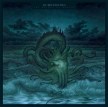
mourningweight1 The Weight Of Oceans, In Mourning (2012)
I saw a review of this album somewhere which made it seem as though I might like it. So I ordered a copy from Finland – which is where the band and the label are from. And I’ve been playing it almost constantly since. It’s Finnish death/doom metal mixed with progressive metal, which makes it the best of both worlds – heavy and intricate, with melodic proggy bits. The Finns, of course, know how to do death/doom better than anyone, but it’s been a surprise in recent years to discover they can do really interesting prog metal just as well – not just In Mourning, but also Barren Earth (see my honourable mentions below).
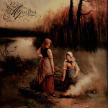
aquilus2 Griseus, Aquilus (2011)
A friend introduced me to this one. It’s an Australian one-man band, and the music is a weirdly compelling mix of black metal and… orchestral symphonic music. It sounds like the worst kind of mash-up, but it works amazing well. In the wrong hands, I suspect it could prove very bad indeed. Happily, Waldorf (AKA Horace Rosenqvist) knows what he’s doing, and the transitions between the two modes are both seamless and completely in keeping with the atmosphere the album generates. The album is available from Aquilus’s page on bandcamp, so you can give it a listen.
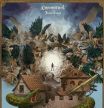
dwellings3 Dwellings, Cormorant (2011)
The same friend also introduced me to this band, who self-released Dwellings. It’s extreme metal, but extreme metal that borrows from a variety of sub-genres. I’ve seen one review which describes them as a mix of Ulver, Opeth, Slough Feg and Mithras, which really is an unholy mix (and two of those bands I count among my favourites). Most of the reviews I’ve seen find it difficult to describe the album, but they’re unanimous in their liking for it. And it’s true, it is very hard to describe – there’s plenty of heavy riffing, some folky interludes, some proggy bits, and it all sort of melds together into a complex whole which is much greater than the sum of its parts. This album is also available from the band’s page on bandcamp, and you can listen to it there. (You’ve probably noticed by now that I’m terrible at writing about music. I can’t dance about architecture either.)
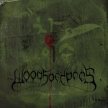
25640_woods_of_ypres_woods_iv_the_green_album4 Woods 4: The Green Album, Woods of Ypres (2009)
Woods of Ypres was a band new to me in 2012. I first heard their final album, Woods 5: Grey Skies & Electric Light, but at Bloodstock I picked up a copy of the preceding album and I think, on balance, I like the earlier one better. The music is a bit like Type O Negative meets black metal, with oboes. Sort of. The opening track ‘Shards of Love’ is, unusually for black metal, about a relationship, and it starts off not like metal at all and then abruptly becomes very metal indeed. An excellent album, with some strong riffs and some nicely quiet reflective moments. (It’s pure coincidence that I chose it as No 4 in my list, incidentally.)
obliterate5 Obliterate EP, Siphon the Mammon (2012)
I have no idea how I stumbled across this Swedish progressive death metal band. It was probably the name that caught my attention. And it is a silly name. But never mind. Anyway, I downloaded the EP from their bandcamp page… and discovered it was bloody good. It’s technical and accomplished, with some excellent riffs and song structures. I particularly like ‘The Construct of Plagues’, which features an excellent bass-line, but the final track ‘End of Time’ is also nicely progressive. And… this is the third album in my top five which is available from the band’s bandcamp page, which surely must say something about the music industry and the relevance of labels… or my taste in music…

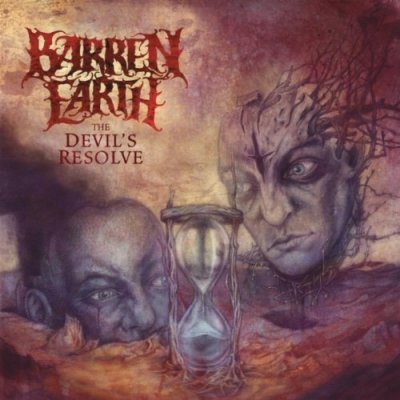
This year’s honourable mentions go to: (Psychoparalysis), for a trio of EPs I bought direct from the band, and which are good strong Finnish progressive death metal; Anathema’s latest, Weather Systems, which I liked much more than the three or four albums which preceded, and they were bloody good live too; Hypnos 69’s Legacy, which I finally got around to buying and was, pleasingly, more of the same (this is good, of course); Barren Earth’s The Devil’s Resolve, which is definitely heavier than their debut album, but still very proggy and weird; A Forest of Stars, which is steampunk meets black metal, and it works surprisingly well (check out this video here); Nostalgia by Gwynbleidd, who, despite the name, are Poles resident in New York, and sound a little like a cross between Opeth and Northern Oak; Headspace, I Am Anonymous, another Damian Wilson prog rock project, but I think I prefer it on balance to Threshold’s new album; and Alcest, another band new to me in 2012, who play shoegazer black metal, which, unfortunately, works much better on an album than it does live.

IN CONCLUSION
And there you have – that was the year that was. On balance, I think it’s been a good year in terms of the literature, cinema and music I have consumed. There’s been some quality stuff, and some very interesting stuff too. Which is not to say there hasn’t been some crap as well, but it seemed less numerous this year. This may be because I chose to ignore what the genre, and popular culture, value and focus more on the sort of stuff that appeals directly to me – I’ve cut down on the number of Hollywood blockbusters I watch, I no longer read as much heartland genre fiction. There’s always a pressure to stay “current”, but the more I watch genre and comment on it, the more I see that it does not value the same things I do. It’s not just “exhaustion”, as identified by Paul Kincaid in his excellent review of two Year’s Best anthologies here, but from my perspective also a parting of the ways in terms of objectives, methods and effects. I want stuff – books, stories, etc – that is fresh and relevant, that does interesting things and says something interesting. I don’t want the usual crap that just blithely and unquestioningly recycles tropes and worldviews, stories about drug dealers on Mars in some USian libertarian near-future, space opera novels in which an analogue of the US gets to replay its military adventures and this time get the result it feels it deserved…

I mentioned in a post last week that I don’t read as much genre short fiction as I feel I should. After all, my views outlined above are taken from the little I’ve read on awards shortlists and in year’s best anthologies. Just because that’s what the genre values doesn’t mean the sort of stuff I value doesn’t exist. I just need to find it. So by including a short fiction best of list in 2013, I’ll be motivated to track down those good stories, to seek out those authors who are writing interesting stories.

All of this, of course, will I hope help with my own writing. I had both a very good year, and a not so good year, in that respect in 2012. Rocket Science, an anthology I edited, and quite obviously the best hard sf anthology of the year, was published in April. As was the first book of my Apollo Quartet, Adrift on the Sea of Rains. The Guardian described Rocket Science as “superb”, which was very pleasing. And Adrift on the Sea of Rains has had a number of very positive reviews see here. Unfortunately, as a result of those two publications, I haven’t been very productive. I spent most of the year after the Eastercon working on the second book of the Apollo Quartet, The Eye With Which The Universe Beholds Itself. Those few who have read it say it’s as good as Adrift on the Sea of Rains, which is a relief. Everyone else will get to find out in January, when it’s published. But I really should have worked on some short fiction as well. I’m not the quickest of writers – I marvel at those people who can bang out a short story in a week – but each story you have published, irrespective of quality, widens your audience a little more, adds a little more weight to your name. And that’s what it’s all about. No matter how good people say Adrift on the Sea of Rains is, I’ve only sold just over 200 copies – add in review copies… and that means perhaps between 250 and 300 people have read it. Some semi-literate self-published fantasy novels available on Kindle sell more copies than that in a week…

But that’s all by the by. This post is about 2012, not 2013. Sadly, I didn’t manage to reread much Durrell to celebrate his centenary. I’ve had The Alexandria Quartet by the side of the bed for about nine months, and I dip into it every now and again, but then I have to put it to one side as I have to read a book for Interzone or SF Mistressworks… Speaking of which, I had to drop to a single review a week on SF Mistressworks, but I still plan to keep it going. During 2012, I read 41 books by women writers, compared to 63 by male writers, which is about 40% of my reading (this doesn’t include graphic novels, non-fiction or anthologies). I also reviewed a handful of books for Daughters of Prometheus, although I haven’t posted one there for several months. (I’ve no plans to drop either responsibility in 2013.) Just over a third of my reading was science fiction, and a quarter was mainstream – so sf is still my genre of choice. Numbers-wise, I’ve not managed as many books as last year – only 146 by the middle of December, whereas last year I’d managed 165 by the end of the year. But I think I’ve read some more substantial books this year, and I did “discover” some excellent writers, such as Malcolm Lowry, Katie Ward and Paul Bowles. It’s a shame I never managed to complete my world fiction reading challenge. I still have half of the books on the TBR, so I will work my way through them, though I may not blog about it.

But, for now, it’s Christmas – bah humbug – in a week. And then the start of 2013 follows a week after that. Here’s hoping that next year is better for everyone, that the good outweighs the bad, and that every surprise is a pleasant one.
6 Comments

The best of the half-year: 2012

It’s halfway through 2012, and it must be shaping up to be one of the wettest years on record in the UK. But that’s okay because my hobbies are chiefly indoor ones – reading books, watching films and listening to music. I occasionally do a bit of writing too. But, since we’re in June, with around six months to go until the end of the year, it’s time to look back and determine what was the best of what I read, watched and heard in 2012. And it goes something like this…

Words
I seem to have read a lot of books that were good without being great; and possibly a larger number of books that weren’t good at all. Picking the best five proved harder than expected, though one or two titles were obvious…

The Universe of Things, Gwyneth Jones (2011). Jones has been my favourite writer for many years, so this collection’s appearance on the top five is no surprise. I had, in fact, read most of the stories in The Universe of Things before (I even published one; sort of), but rereading them only cemented my admiration of them. Jones has not written many stories, but there are no clunkers among them. This collection is an excellent introduction to her fiction. I wrote a review of the book for Daughters of Prometheus.

Omega, Christopher Evans (2008). I’ve long admired Evans’ fiction, but he seemed to stop writing after 1995’s Mortal Remains… until Omega four years ago. I won’t say it was worth the wait, because it’s never good when a writer whose books you enjoy and admire disappears for more than a decade. But certainly Omega is a good book, a clever alternate history dimension-slip thriller partly set in a world where World War II continued on throughout the twentieth century. I wrote about Omega on my blog here.
The Door, Magda Szabó (1987). This year for my reading challenge I decided to read books by non-Anglophone writers I’d never read before. The Door was the second book I read for the challenge, and I really enjoyed it. Unfortunately, the challenge has got a little bogged down of late – I failed to finish March’s book, read April’s book late, and have yet to even start May’s. Anyway, I wrote about The Door on my blog here.

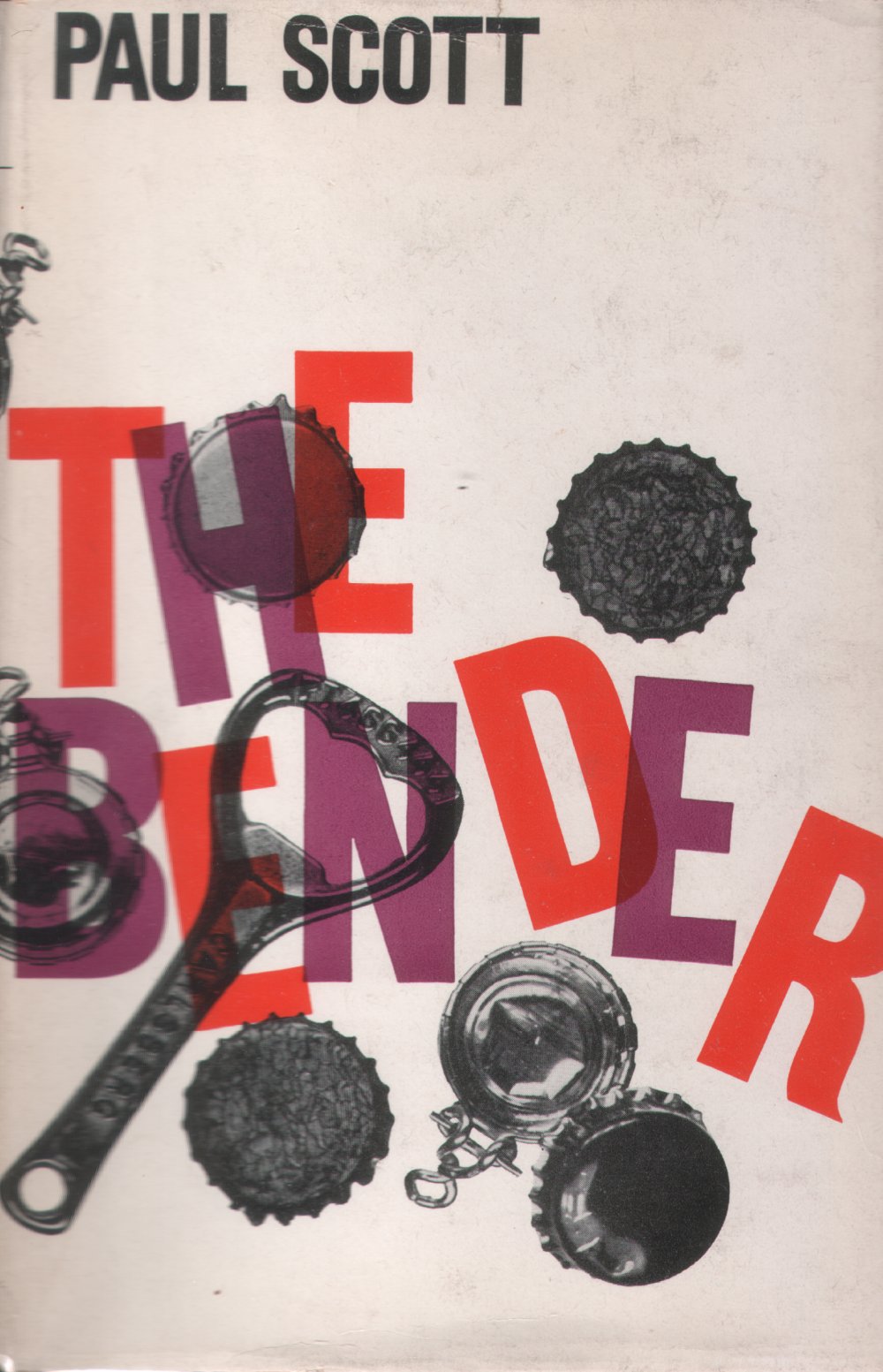
The Bender, Paul Scott (1963). I read the first book of the Raj Quartet for one of my reading challenges, and thought the book was superb. As a result, I added Scott to the list of authors whose books I track down to read. In first edition. The Bender predates the Raj Quartet and is not as weighty as those four books. It’s a very 1960s comedy, but also a beautifully witty one. I wrote about it on my blog here.

Betrayals, Charles Palliser (1994). I’m surprised this book isn’t better known. It’s an amazingly-put-together series of stories which form a much greater story. It opens with a series of Victorian travellers, trapped on a train by snow, who tell each other stories… and then proceeds to unravel and then stitch together the stories told by those travellers. There’s a superb take-down of a cult semiotician, a clever spoof of the Scottish detective programme Taggart, and a brilliant pastiche of Jeffrey Archer. Perhaps the links between the stories aren’t quite strong enough to carry the story-arc, but Betrayals is a very clever, very amusing, and excellent novel.

Honourable mentions go to Eastermodern by Herta Hurnaus, Oscar Niemeyer Houses by Alan Weintraub and Building Brasilia by Marcel Gautherot, which are books of photographs of modernist and brutalist buildings. Niemeyer’s work perfectly encapsulates the future we could have had, and all cities should resemble Brasilia. Also worthy of note are How to Suppress Women’s Writing by Joanna Russ, which every writer and critic should read; Alias Grace, which is probably Margaret Atwood’s best novel; and Hear Us O Lord from Heaven Thy Dwelling Place by Malcolm Lowry, a collection by an author new to me which contains some excellent novellas and some not so interesting short stories.

Pictures
I’ve already visited the cinema twice so far this year, which is something of a record for me. One of the films I saw in IMAX 3D makes it onto my top five; the other one was rubbish, so it doesn’t. The other films I’ve seen were all on DVD – some borrowed, some bought, and some rented.

Red Psalm (Még kér a nép), Miklós Janscó (1972). I bought this after seeing a review of the DVD in Sight & Sound. I wasn’t sure what to expect, but it certainly wasn’t a group of hippie-looking Hungarians wandering around a farm spouting socialist rhetoric and singing folk songs, and then getting shot at by soldiers. I loved it. I wrote about Red Psalm on my blog here.
Red Desert (Il deserto rosso), Michelangelo Antonioni (1964). I’ve admired Antonioni’s films since first seeing L’Avventura several years ago. Red Desert was his first film in colour, and it shows – it’s an amazingly painterly film. Unlike in most films, the characters do not over-shadow their world but are very much a part of it. It creates a distance between viewer and cast, but there’s an immersive quality to the mise en scène which renders that of little importance. Films don’t need viewer analogues – that’s just confining the medium to the simplicity of oral storytelling: films use images just like books use words, and that’s where their focus should lie. I wrote about Red Desert on my blog here.

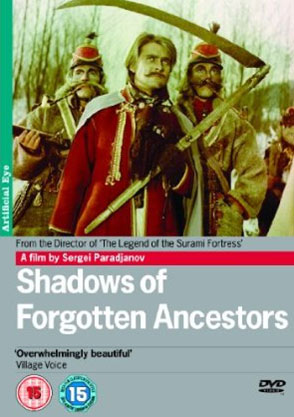
Shadows of Forgotten Ancestors (Тіні забутих предків), Sergei Parajanov (1965). I watched Parajanov’s The Colour of Pomegranates last year. That film is perhaps the zenith of “poetical cinema”, but Shadows of Forgotten Ancestors is definitely a way-station on the climb to it. It is, on the face of it, a simple story of one young man’s trials and tribulations. He is a member of Ukrainian Hutsul culture, and the film is rich with its costumes, music and traditions. Shadows of Forgotten Ancestors is by no means an easy film to watch, however, as it operates on so many levels – but it at least has a coherent plot, which is more than can be said for The Colour of Pomegranates.

On the Silver Globe (Na srebrnym globie), Andrzej Żuławski (1978/1988). If you can imagine a film that out-Tarkovskys Solaris, then you might have some idea of what On the Silver Globe is like. It’s based on a trilogy of novels published in Poland in 1911 by Jerzy Żuławski, which have apparently never been translated into English. On the strength of this film, they should be. It’s probably evident that I’m not a huge fan of traditional Hollywood-style cinema; it often feels to me like a waste of the medium’s potential. And yet films such as Red Psalm and On the Silver Globe, with their declarative dialogue, often feel like they’re only partway to what film could truly be. I like the painterly mise en scène of poetical cinema, but often find the declarative dialogue as clumsy as science fiction’s crude use of exposition. And so it is in On the Silver Globe – characters run around and gurn at the camera, and then speechify on the meaning of life. However, it’s in the story and the imagery that the film really impresses – enough, in fact, to offset the fact the film was never completed – much like Andrzej Munk’s Passenger. The Polish Ministry of Culture closed down the production of On the Silver Globe when the film was only 80% complete. It was ten years before Żuławski returned to it, and then he could only complete it by using stock footage and voice-over for some parts. It works surprisingly well. I plan to write more about On the Silver Globe on this blog.
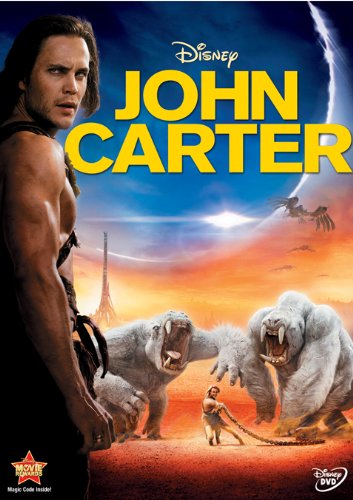
John Carter, Andrew Stanton (2012). John Carter received a mauling at the US box office, so much so it was officially declared a flop by its studio, Disney. Happily, the world outside the US had more discerning taste and went to see the film in sufficient numbers for it to eventually turn a profit. But the profitability of a film is measured solely on its performance at the US box office – which is both dumb and parochial – so it’s unlikely a sequel to John Carter will ever be made. Which is a shame. John Carter was a spectacle, with a clever script that managed to make something twenty-first century of its early twentieth-century source material. It had its flaws – some longeurs, and an inelegant info-dump to explain the plot – but other parts more than made up for it. I wrote more about it on my blog here.

Honourable mentions go to , Federico Fellini (1962), which after seeing La Dolce Vita many years ago and disliking it, I had expected to hate – I didn’t; I loved it. Troll Hunter, André Øvredal (2010), was another deadpan Norwegian spoof and cleverly done, though not quite as good as Norwegian Ninja. The Third Part of the Night, Andrzej Żuławski (1971), was the first Żuławski I saw, and it’s off-the-wall Hitchcockian style appealed to me greatly (as did Andrzej Korzyñski’s superb soundtrack). Went the Day Well?, Cavalcanti (1942), was a surprisingly brutal piece of wartime propaganda in which a German fifth column try to conquer a small English village. It goes badly. The Extraordinary Adventures of Adèle Blanc Sec, Luc Besson (2010), gets a mention as an entertaining adaptation of Jacques Tardi’s bande dessinée, and though it’s completely silly it was great fun. Finally, some quality telly: Twin Peaks (1990 – 1991), which has not dated at all, and is still great entertainment despite being completely bonkers; and Caprica (2010), which promised so much more than it ever got the chance to deliver.

Sounds
I knew from early this year that 2012 was going to be good for music. Perhaps few of my favourite bands are releasing albums, or touring the UK, but I’ve stumbled across some bands new to me that have been on almost constant play on the iPod.

Dwellings, Cormorant (2011). The band self-released this last year and it’s a powerful mélange of half a dozen metal genres. I loved it from the first listen, and even went back and got copies of their earlier two albums.

The Devil’s Resolve, Barren Earth (2012). This is the superband’s second album, and it’s a heavier and yet proggier effort than their first. The riffs are not quite as memorable as they are on The Curse of the Red River, but the lead breaks are much more impressive, and the proggy break-outs even stranger. Opeth’s Heritage proved there was a market for 1970s-inspired weird Scandinavian prog, and Barren Earth have taken that and melded it with Scandinavian death/doom to create a winning combination.

The Weight of Oceans, In Mourning (2012). I saw a review of this and it sounded appealing, so I ordered a copy from a Finnish website. It’s death/doom in that way the Finns do so well, but with added slow modern progginess. It’s not proggy like Barren Earth is proggy, inasmuch its acoustic parts feel more of a piece with the heavy parts. I’ve been playing it constantly since it arrived.

Nostalgia, Gwynbleidd (2009). Another band I came across mention of and who I thought I might like. So I bought the album. And yes, I do like them. Very much. They’re a sort of mix between Opeth and Northern Oak, but also not much like either. There are long sustained death metal parts, interspersed with folky acoustic guitar, and it all hangs together exceedingly well.
Legacy, Hypnos 69 (2010). I’ve been a fan of Hypnos 69 since hearing their The Intrigue of Perception several years ago. I’s taken me a while to get hold of Legacy, chiefly because it was released by a small label in Germany and wasn’t available in the UK. Recently I discovered it was on bandcamp, so I bought it from there. It’s Hypnos 69 doing Hypnos 69-type stuff, and I love it.

Honourable mentions go to Finnish death metallers (Psychoparalysis), who have self-released three excellent EPs; Weather Systems by Anathema (2012), which I much prefer to the previous album; Wood 5: Grey Skies & Electric Light by Woods of Ypres, which is folky black metal that sounds a little like Type O Negative in places  and includes strings and oboe; and finally, All Spawns, a recent compilation of Czech death metal pioneers Apalling Spawn’s two released from the late 1990s (now, if I can only find a copy of the Sparagmos compilation, I’ll be really happy…).


2 Comments

Best of the year 2011

I was going to leave this until January, but everyone else is doing them now. And, let’s face it, there’s only a handful of days left until the end of the year and they’ll be filled with various consumerist festivities. So…

Books
As of 15 December, I had read 156 books in 2011, which I suspect will mean a total on 31 December of slightly less than last year’s 178 books. But then I probably wrote more this year than I did in 2010. Of my reading, 4% were anthologies, and 12% non-fiction… which means of the remainder that 28% were books by women writers and 56% by male writers. I still need to work on that. Genre-wise, 44% was science fiction, 16% was mainstream, 8% was fantasy, and 16% were graphic novels.

Of those 156 books, I have picked six which were, for me, the best I read during the twelve months. They are:


Evening’s Empire, David Herter (2002), should come as little surprise as I raved about when I read it back in April. Initially a Crowlesque fantasy, it takes a peculiar turn halfway through which makes it something weird and wonderful all of its own.

Synthajoy, DG Compton (1968), is another work by an author who continues to astonish me with each novel of his I read. This one has the most beautifully-handled non-linear narrative I’ve come across in fiction, not to mention one of the best-drawn female protagonists in science fiction. I honestly don’t know if this book is better than The Continuous Katherine Mortenhoe or merely just as excellent. I wrote about it here.

CCCP: Cosmic Communist Constructions Photographed, Frédéric Chaubin (2011), suffers under a somewhat forced title, but who cares. Because it contains loads of photographs of amazing Modernist buildings from the former Soviet Union and its satellites. Not all of the buildings still exist, and many of them have weathered the years badly. But there they are, captured in all their glory in this book.

Voices from the Moon, Andrew Chaikin (2009), was published to celebrate the fortieth anniversary of the Apollo 11 Moon Landing, and of all the books published at that time this one is perhaps the best-looking. Chaikin went through the many thousands of photographs take by, and of, the Apollo astronauts, and picked out ones that had rarely been seen before. And then he married those photographs with the words of the astronauts themselves – taken from interviews, transcriptions, etc.

Red Plenty, Francis Spufford (2010), was a book I read under a misapprehension. Though it was shortlisted for the BSFA Award for Non-Fiction, many complained it was partly fictional – inasmuch as it told its story using a cast of real and invented people in a threaded narrative. However, I’d mistakenly understood that Red Plenty not only covered the years of the Soviet Union’s existence but also extrapolated it into an alternate present in which the Soviet system had succeeded. That would the be the “sf” part of the BSFA Award, you see. Not so. But never mind, I still loved it.

Isles of the Forsaken, Carolyn Ives Gilman (2011), I pre-ordered because I’d thought Gilman’s 1998 novel, Halfway Human, very good, and because a write-up of the plot sounded as though it would appeal. And so it did. A fantasy, but not in the traditional epic/heroic mould. I wrote about it here.

Honorable Mentions:
There are a number of these this year, more so than usual. First, Kameron Hurley’s God’s War and Infidel, a very strong debut with some very interesting elements, and some that didn’t quite work for me (see here and here). Eric Brown’s Wellsian The Kings of Eternity is his strongest work for a number of years, and he deserves to be read more than he is. Women of Wonder: The Contemporary Years is an excellent anthology that does exactly what it says on the tin and introduced me to several authors I’m determined to read more (see here and here). Solitaire by Kelley Eskridge (see here) and Zoo City by Lauren Beukes (see here) were the best two novels from my challenge to read twelve books during the year by female science fiction writers. Stretto was an excellent end to L Timmel Duchamp’s Marq’ssan Cycle, and Jed Mercurio’s American Adulterer managed to make fascinating a topic in which I have zero interest, John F Kennedy’s presidency. Finally, a pair of rereads are worthy of mentions: The Female Man by Joanna Russ and Icehenge by Kim Stanley Robinson.

Films
By 15 December, I had watched 183 films. That’s including seasons of television series watched on DVD. Twenty-seven of them I reviewed for VideoVista.net and The Zone. Only one I saw at the cinema: Apollo 18. I’m not a huge fan of science fiction film or television, though I will happily watch them. This may well explain my choices for my top six of the year:


Moolaadé, Ousmane Sembène (2004), is Senegalese director Sembène’s ninth feature-length film, and the first one by him I’ve seen. It is set in a small village in Burkina Faso, and revolves around the refusal of three girls to undergo the traditional female genital mutilation. They are protected by the wife of one of the village’s important men, who herself refused to let her own daughter undergo the same disgusting procedure. This leads to a revolt by the village’s womenfolk, but it ends badly.

Mammoth, Lukas Moodysson (2009). I very much liked Moodysson’s earlier films Show Me Love (Fucking Åmål), Together (Tillsammans) and Lilya 4-Ever, but thought the experimental Container was pretty much unwatchable. Mammoth, however, is not only a welcome return to form, it is a superb indictment of the West’s exploitation of the East. Judging by some of the comments the film has generated, I may the only person to see it in that light. Ah well. Gael Garciá Bernal is astonishingly good in the male lead role – and that’s in a cast that is uniformly excellent.

Norwegian Ninja, Thomas Cappelan Malling (2010), is a Norwegian spoof. The title may have been a bit of a giveaway there. It posits an alternate 1980s in which Norwegian traitor Arne Treholt was not a spy for the Soviets but the head of a secret royal force of ninjas. As a spoof of late 1970s / early 1980s action films, Norwegian Ninja is pitch-perfect, but it is its use of real-life footage, and the way it neatly twists real history, that turns it in to a work of genius. I reviewed it for VideoVista here.

Winter’s Bone, Debra Granik (2010), was not a film I expected to appeal to me: a noir-ish thriller set among the hillbillies of the Ozarks. I not only enjoyed it, I thought it very very good indeed. It takes place in a world peopled by some of the scariest people I’ve seen depicted on celluloid. And they’re not scary because they’re psychopaths or sociopaths, they’re scary because they need to be to survive in that culture.

Underground, Emir Kusturica (1995), was recommended to me, and it was a good call. A black comedy following the fortunes of a pair of rogues during WWII in Belgrade and the years after under Tito. One rises high in the post-war government, while the other remains hidden in his cellar, convinced the war is still going.

The Time That Remains, Elia Suleiman (2009), is the most recent film by a favourite director, so its appearance here should not be a surprise. It’s perhaps less comic than Divine Intervention, but neither does go all bizarre and surreal towards the end. A series of autobiographical vignettes, it builds a narrative of the Israeli occupation of Palestine, and the lives of the Palestinians under Israeli rule. Some parts of it are a delight.

Honorable Mentions:
No science fiction films, I’m afraid. Instead: Israeli thriller, Ajami, set in the titular district of Jaffa; The Wedding Song, which is set during the Nazi occupation of Tunisia in World War II and follows the friendship of two female friends, one Jewish and one Arabic; the BBC’s adaptation of Much Ado About Nothing from 1984, starring Cherie Lunghi and Robert Lindsay, and the best of the Bard’s plays I watched during the year; The Secret in their Eyes, a clever thriller from Argentina, which beat Ajami to the Oscar for Best Foreign Film in 2010; and finally, Michael Haneke’s The Seventh Continent, which is one of the most unsettling films I’ve ever watched.

Albums
I didn’t think 2011 was shaping up to be a good year for music, but that all changed during the second half of the year. I think that might have happened in previous years too. I bought a reasonable number of new albums and old albums. The best of those are:

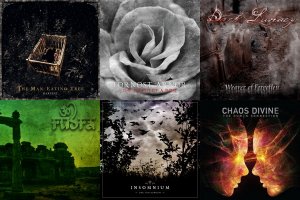
Harvest, The Man-Eating Tree (2011), is the band’s second album, and it’s a more commercial and slightly heavier-sounding offering. And Tuomas Tuominen still has one of the best and most distinctive voices in metal. I suspect The Man-Eating Tree are going to be the new Sentenced. Certainly when you think of Finnish metal, it’s The Man-Eating Tree you should be thinking of,  and not Lordi.

The Death of a Rose, Fornost Arnor (2011), is this UK band’s second album and, like their first, was also self-released. Some have said it’s the album Opeth should have made this year. Certainly it borrows the Swedes’ trademark mix of crunching yet intricate death metal and accomplished acoustic parts. It’s very much an album to lose yourself in, and I’m already looking forward to the band’s next offering.

Weaver of Forgotten, Dark Lunacy (2010), was annoyingly expensive as it was also self-released. But in Italy. (And I see now it’s much cheaper. Gah.) It is… epic. There’s no other word for it. It’s melodic death metal, but of a sort to fill vast spaces. I thought Dark Lunacy’s previous album, The Diarist, was excellent, but Weaver of Forgotten is an order of magnitude better.

Brahmavidya : Immortal I, Rudra (2011), is the third of a trilogy of albums, including Brahmavidya : Primordial I and Brahmavidya : Trascendental I. The band are from Singapore, but sing in – I believe – Sanskrit as well as English. It’s three blokes making death metal, but singing about their mythology. Rudra were one of this year’s discoveries, and I now have the T-shirt.

One for Sorrow, Insomnium (2011). Apparently, the only people who don’t like Insomnium are those who’ve never heard them. Each album finds them more polished and technically accomplished than the last, and it continues to astonish me they’re not better known. Insomnium are the dictionary definition of Finnish death/doom metal.

The Human Connection, Chaos Divine (2011), is one of those albums that blows you away with the first track… but then can never quite scale those heights again. Opener ‘One Door’ is a blinding song, and if the rest can’t compare, that doesn’t mean they’re not good. This is a proggier effort than the band’s first album, and it’s the better for it. Chaos Divine is a band you can tell will improve with each new album.

Honorable Mentions:
I’m sorry, I have to do it: Heritage. I’m giving Opeth’s latest album an honourable mention because, though it took numerous listens before it grew on me, it does contains flashes of brilliance. It’s totally prog, of course, with nary a growl to be heard, and that has to be disappointing… but as a warped vision of old school prog, Heritage is worth its mention. However, Of Death by Byfrost, The Light In Which We All Burn by Laethora and Psychogenocide by Nervecell all get mentions because they’re good albums which are very much in keeping with their bands’ sounds. Byfrost I first heard at Bloodstock, and I enjoyed their set so much I wanted the album. Nervecell are from Dubai and, while I was aware of them before, I saw them this year supporting Morbid Angel and they were excellent. Laethora is just Laethora. Finally, Sowberry Hagan by Ultraphallus deserves a special honourable mention for being a fraction away from sheer noise, yet still remaining powerful and heavy and an excellent listen.


2 Comments

Too many words, too little time

I promised yesterday I’d put up a post showing the books I bought at Novacon, and so here it is. Also included are those books purchased since the last book haul post. Embarrassingly, it’s more than I thought it was. Oh well. Time to learn to speed-read…


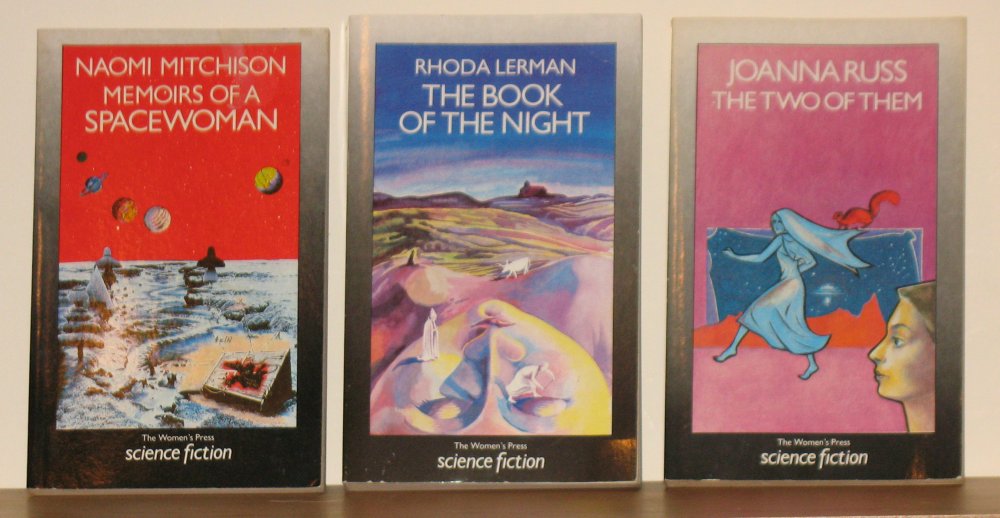
Three Women’s Press sf titles from Novacon – as mentioned in my previous post: Memoirs of a Spacewoman, Naomi Mitchison; The Book of the Night, Rhoda Lerman; and The Two of Them, Joanna Russ. Expect reviews to appear at some point on SF Mistressworks.


More from Novacon – and, er, a Moore from Novacon: Judgment Night by CL Moore. Also for SF Mistressworks. Critical Threshold and The City of the Sun are the second and fourth books of Brian Stableford’s Daedalus Mission sextet. Now I need to find copies of the other four…


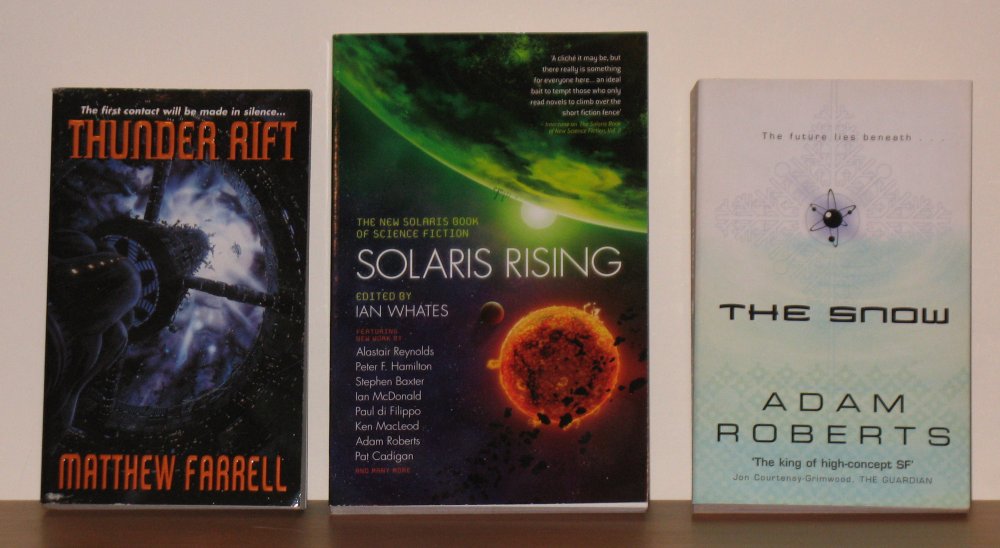
More recent books from Novacon. And you can’t get more recenter than the brand new Solaris Rising collection. The Matthew Farrell of Thunder Rift is actually sf author Stephen Leigh, and the Adam Roberts of The Snow is actually top parodist A.R.R.R Roberts.


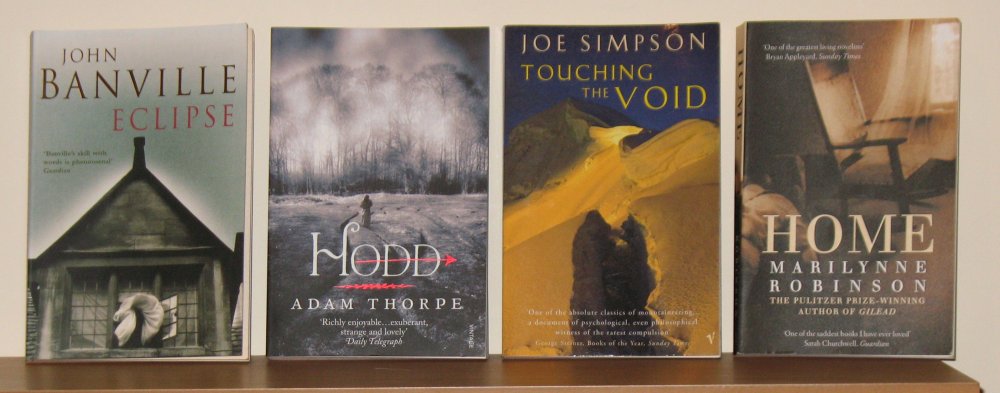
Some charity shop finds. Marilynne Robinson’s Home I’ve been keen to read after being impressed by her Gilead. Not sure why I picked up Touching The Void – possibly because it’s on the World Book Night list. Adam Thorpe is an excellent writer and his Hodd is a retelling of the Robin Hood legend. John Banville I’m not especially keen on, but I thought I’d give his Eclipse a go.


Some sf (-ish) novels from Harewood House’s second-hand book shop. Jayge Carr’s Leviathan’s Deep I’ve been after ever since I read her story in Women of Wonder: the Contemporary Years (see here). It will be reviewed for SF Mistressworks. The Raw Shark Texts was a Clarke Award finalist in 2008, but lost out to Richard Morgan’s Black Man. The Manual of Detection by Jebediah Berry I’ve been on the look-out for ever since seeing an approving review of it by Michael Moorcock.


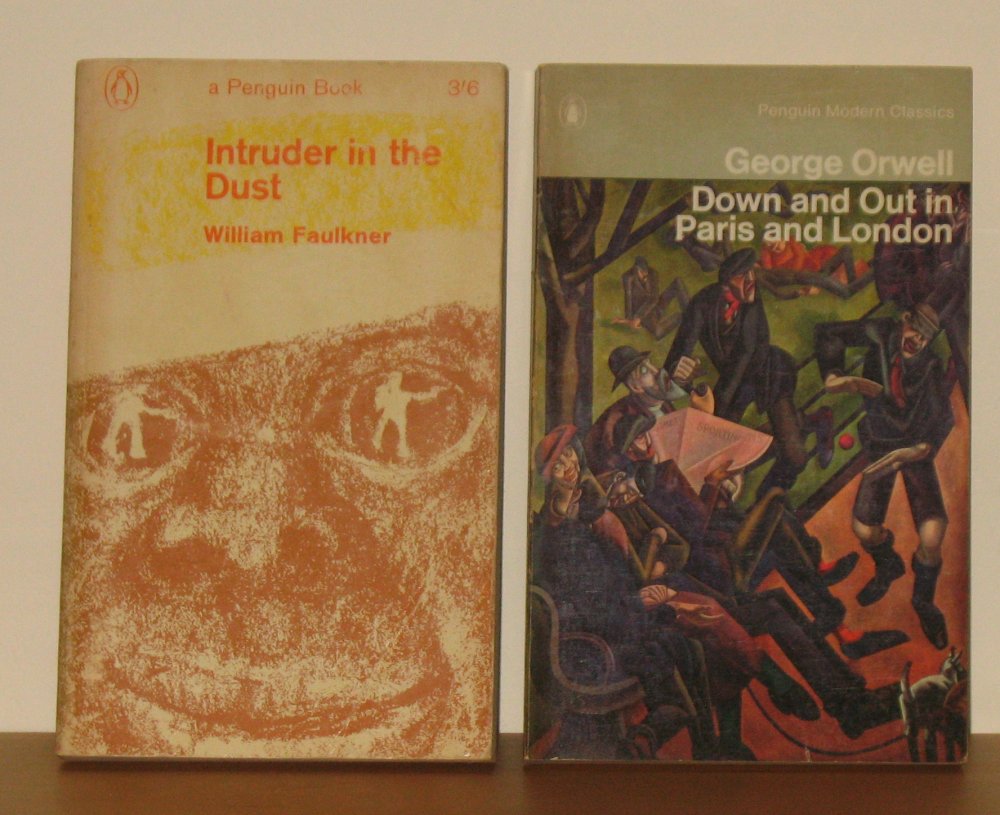
A pair of paperbacks from my father’s Penguin collection. Never read any Faulkner, so Intruder In The Dust should be interesting. And the only Orwells I’ve read are Animal Farm and Nineteen Eighty-four, so Down and Out in Paris and London should also be interesting.


Some new books. Songs of the Dying Earth I have to review for Interzone. I’m about a third of the way through it. The Ascendant Stars is the third and final part of Mike Cobley’s jam-packed space opera trilogy. Prague Fatale is the eight novel featuring German detective Bernie Gunther. I’m guessing it’s set in the Czech Republic…


The Electric Crocodile first edition is for the collection. Anthony Burgess: A Bibliography is to assist with the collection.


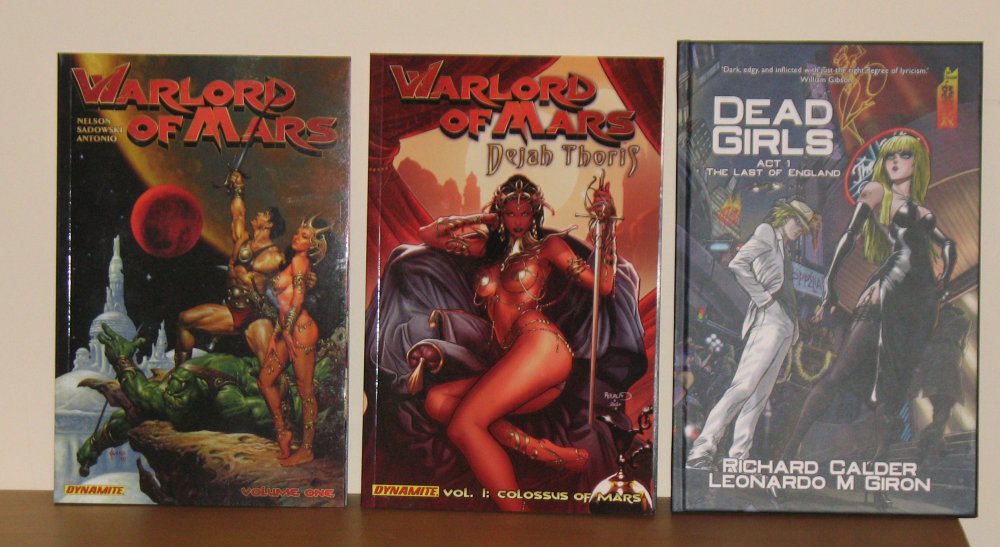
Some sf graphic novels. I finally got round to buying a copy of Dead Girls, the first part of the graphic novel adaptation of the novel of the same title. It’s very good. Dejah Thoris: Colossus of Mars is an original story set in Edgar Rice Burrough’s Barsoom, featuring John Carter’s improbably bosomed wife and set long before he appeared stark naked on the Red Planet. It’s actually quite good – keeps to the spirit of the books, gives Dejah Thoris very much a starring role with agency, and has some lovely artwork. Warlord of Mars, an adaptation of ERB’s A Princess of Mars, is less successful. The art is a little variable, and ERB’s prose was never very good. But then the idea of ERB’s Barsoom novels was always better than their implementations.


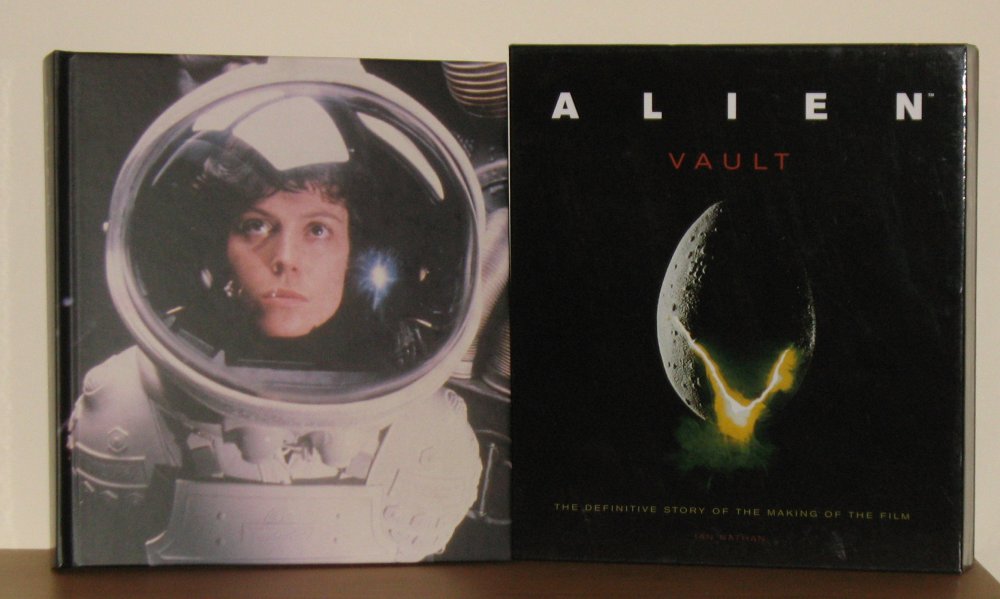
Finally, a book about Ridley Scott’s Alien. It’s full of lots of fanboi goodies, like behind-the-scenes photographs, production design sketches, fold-out plans of the Nostromo, and all that sort of stuff. Cool.


1 Comment

The shelf that groaned

It’s been over a month since my last book haul post, but if I leave it any longer, it’ll take me an entire weekend to photograph my purchases. So herewith approximately five to six weeks worth of slippery “bid”, “buy it now” and “place order” buttons, and the results thereof.

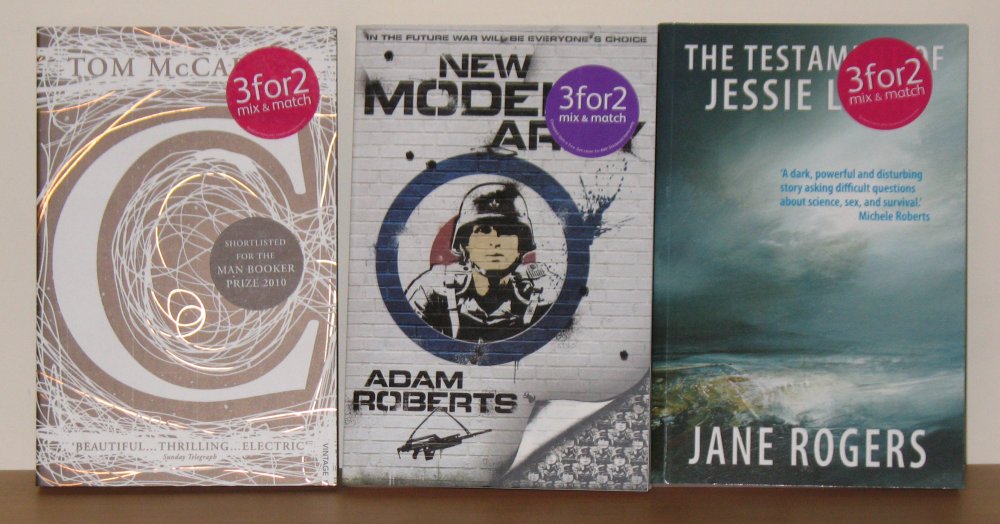
Some time this month, we say goodbye to Waterstone’s 3-for-2 offer, so I felt obliged to go out and have one last go on it. C I’m told is very, very good; I haven’t quite found the right way to read Adam Roberts yet, but I’m reliably informed New Model Army is very good; and The Testament of Jessie Lamb is a literary-but-it’s-really-sf novel and was on this year’s Booker long list.

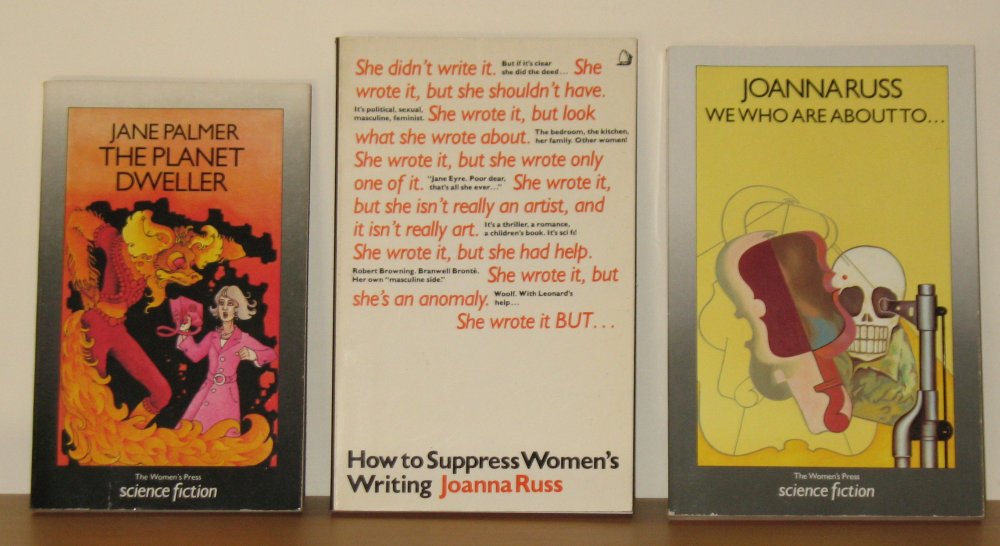
A trio for the SF Mistressworks collection: The Planet Dweller, We Who Are About To…, and How To Suppress Women’s Writing.

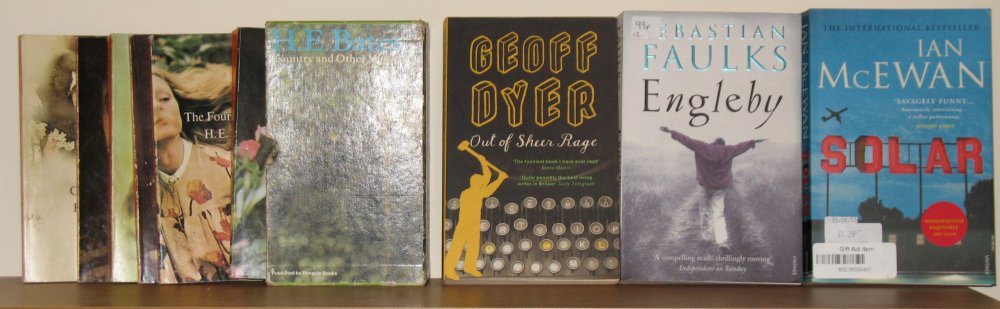
Some charity shop finds. I went off McEwan after Saturday, but I might as well give Solar a go. Engleby is the only Faulks I’ve not got, but I really need to get cracking on reading them. Out of Sheer Rage is about DH Lawrence – sort of – and I’ve heard it’s good. The HE Bates boxed set was a surprise find. It contains: Fair Stood the Wind for France, Dulcima, Seven by Five, The Four Beauties, The Wild Cherry Tree and The Triple Echo.

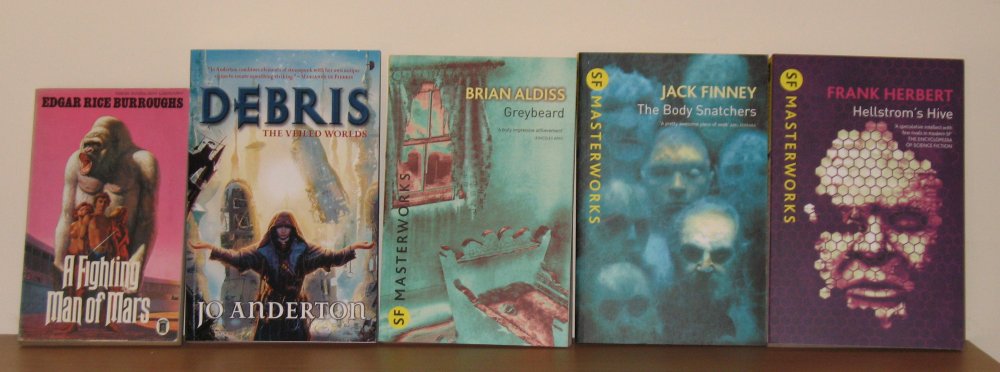
Some science fiction, which I do of course still read every now and again. Three SF Masterworks: Greybeard and The Body Snatchers I’ve never read; Hellstrom’s Hive I’m looking forward to rereading. Debris I have to review for Interzone. A Fighting Man of Mars… well, I’m looking forward to the film due out later this year – I may even go to see it at the cinema. The books I’m less keen on, but never mind.

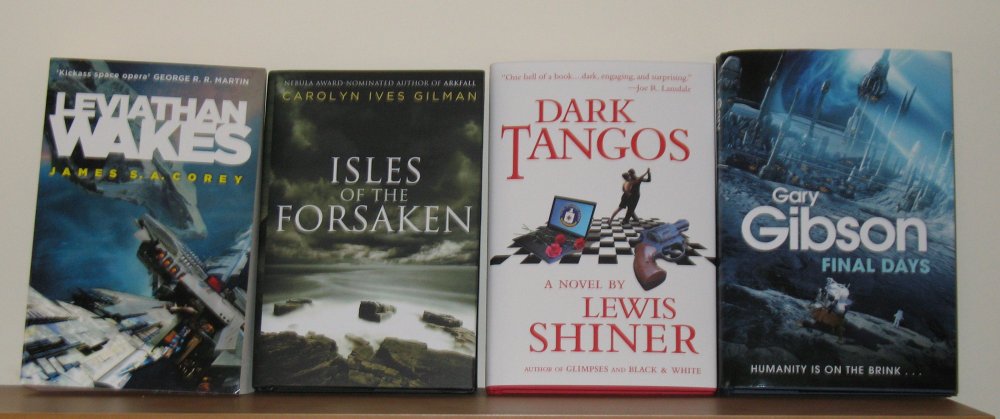
First editions: Final Days and Leviathan Wakes are both science fiction (much thanks to Gary for the former, and Sharon for the latter). Isles of the Forsaken is fantasy – and yes, that’s the signed, numbered edition. Dark Tangos is, well, it’s by Lewis Shiner. And it’s also the signed edition.

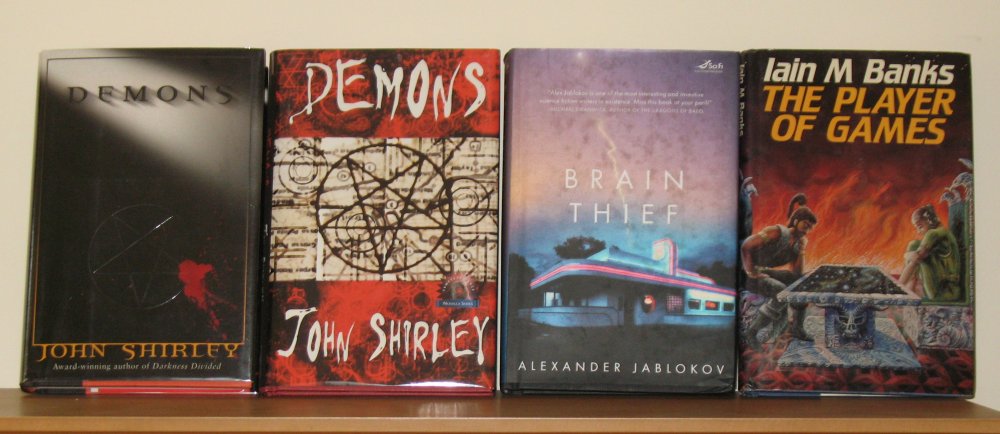
First editions for the collection. Yes, that really is Demons by John Shirley and, er, Demons by John Shirley. The one with the red cover is a novella from Cemetery Dance, and the other is a novel, of which the novella forms the first half. Both are signed. As is Brain Thief, which I reviewed for Interzone last year (but was only sent an ARC). The Player of Games is hard to find for a reasonable price in first edition, but I managed it.

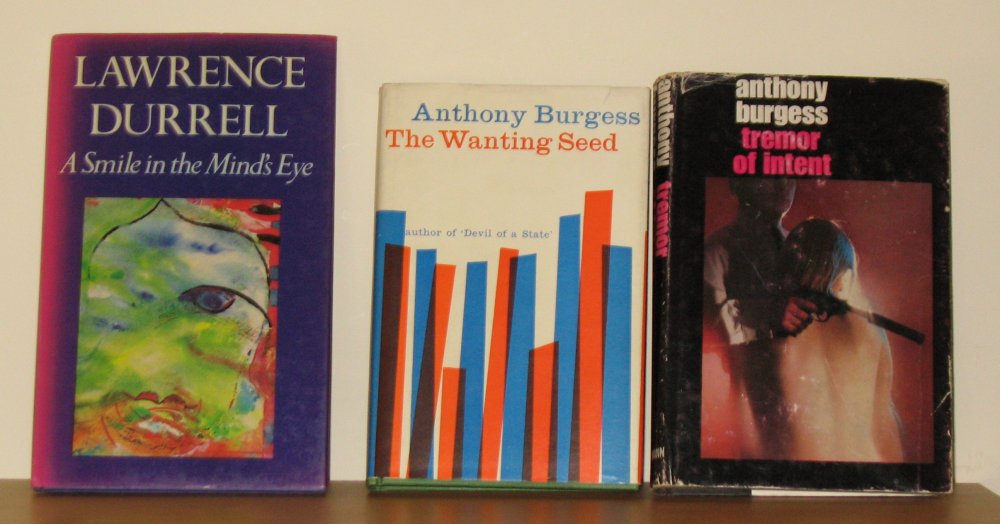
A Smile in the Mind’s Eye is signed and goes on the shelves dedicated to Lawrence Durrell and his works. The Wanting Seed and Tremor of Intent are difficult to find in first edition.

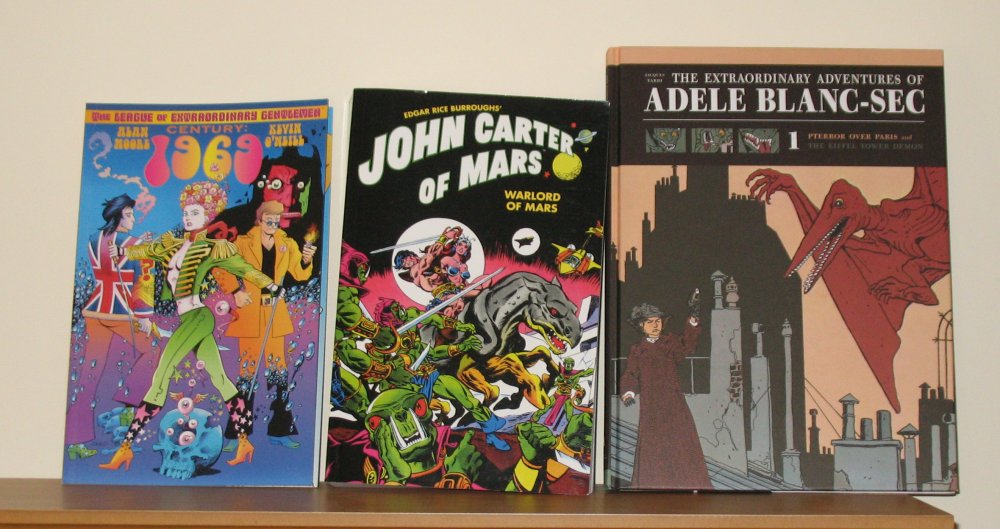
Graphic novels: the latest in The League of Extraordinary Gentlemen, the fab and groovy Century 1969. I have fond memories of Marvel’s John Carter of Mars comic from the 1970s, and a few years ago tracked down all 28 issues and three “king size” annuals. But a trade paperback is so much more convenient – except the artwork in it is black and white, and not colour as in the original comics. The Extraordinary Adventures of Adéle Blank-Sec 1 I bought after enjoying Tardi’s The Arctic Marauder.

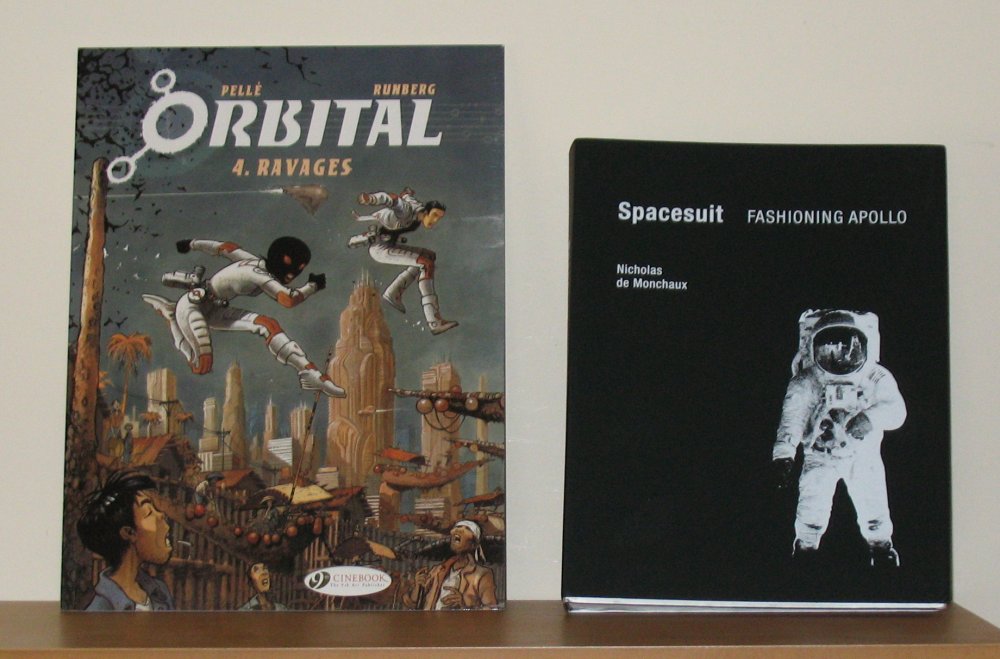
Finally, Ravages, the last, I think, of the Orbital graphic novels, and a book about, er spacesuits titled Spacesuit: Fashioning Apollo. I don’t know what the cover of the latter is made from but it has a similar texture to rubber matting and is quite strange.