I took this meme from David Hebblethwaite’s Follow the Thread blog, and he says he found it Story in a Teacup. It’s fifty-five questions about your reading. I think some of my answers are pretty much the same as David’s…
1 Favourite childhood book? I started out in sf reading Dr Who novelisations, but I can remember virtually nothing about them now. I don’t recall any specific books that I loved prior to that. I just read voraciously.
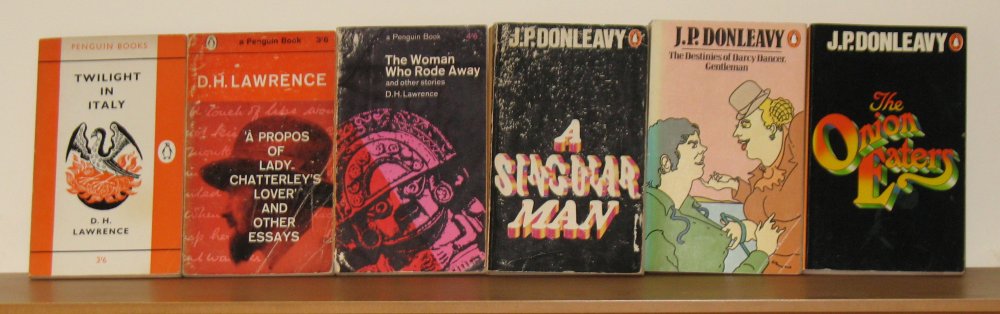
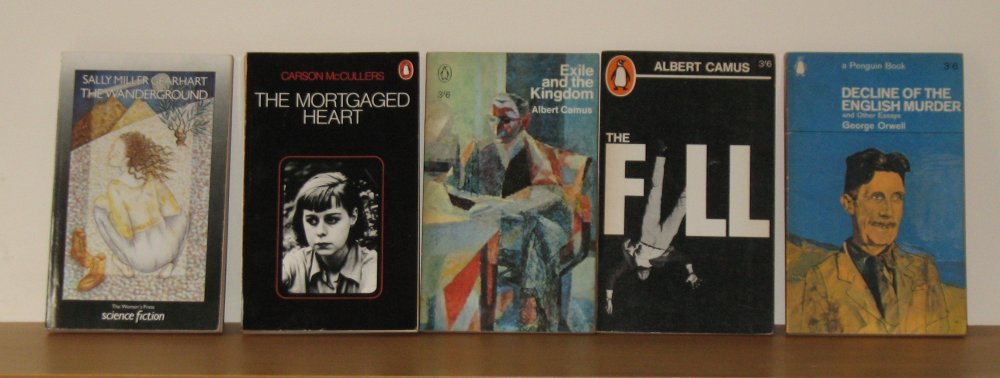
2 What are you reading right now? Finished ‘A Propos of Lady Chatterley’s Lover’ and other Essays by DH Lawrence on the weekend; and then started The Wanderground by Sally Miller Gearhart, which I’m reading for SF Mistressworks.
3 What books do you have on request at the library? I don’t use the library.
4 Bad book habit? Buying more books than I can read, and starting books when I haven’t finished the current read.
5 What do you currently have checked out at the library? I don’t use the library.
6 Do you have an e-reader? Nope.
7 Do you prefer to read one book at a time, or several at once? I prefer to read serially, but sometimes – often – I end up reading several books in parallel.
8 Have your reading habits changed since starting a blog? Yes. Since starting SF Mistressworks, and contributing to Daughters of Prometheus, I read far more fiction by women writers. I’ve also used this blog to challenge myself to read books I wouldn’t normally read – see this year’s world fiction reading challenge here.
9 Least favourite book you read this year (so far)? The Girl with the Dragon Tattoo, Stieg Larsson.
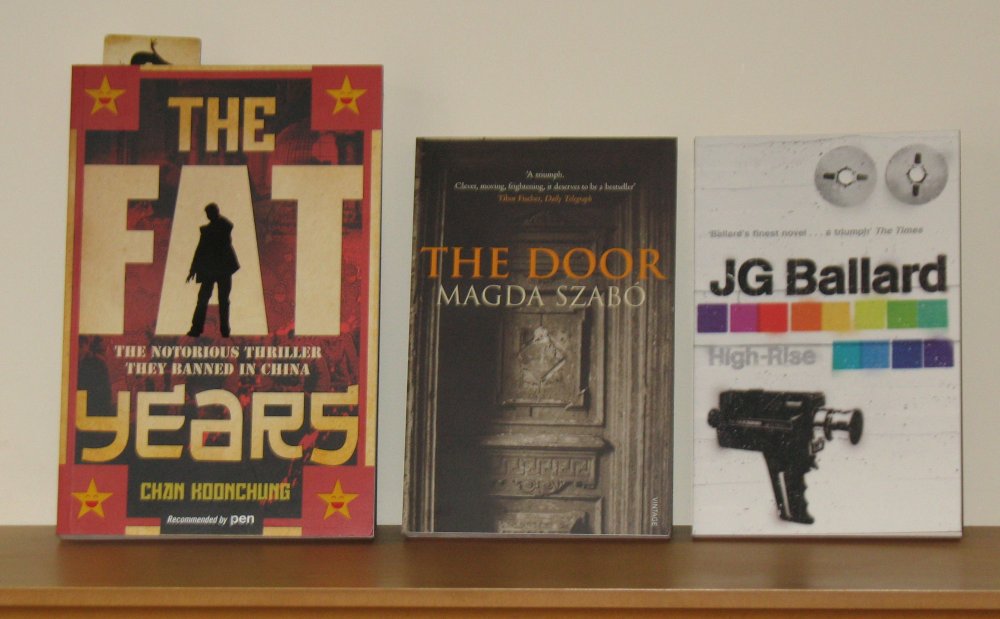
10 Favourite book you’ve read this year? Either The Universe of Things, Gwyneth Jones; Omega, Christopher Evans; or The Door, Magda Szabó.
11 How often do you read out of your comfort zone? Regularly.
12 What is your reading comfort zone? Science fiction and/or literary fiction. Also non-fiction about space exploration.
13 Can you read on the bus? Yes. I commute to work on a tram and read on it every day.
14 Favourite place to read? I usually read for 30 minutes to an hour in bed every night.
15 What is your policy on book lending? For my collectible books, never. Others, I’m happy to give away – and visitors have occasionally left with piles of paperbacks.
16 Do you ever dog-ear books? Never.
17 Do you ever write in the margins of your books? Never. But I will probably buy an ereader of some description soon because it’ll allow me to annotate what I’m reading.
18 Not even with text books? Nope.
19 What is your favourite language to read in? English.
20 What makes you love a book? Beautiful prose, it says something important, engaging characters, interesting structure… rigour, beauty, insight and depth.
21 What will inspire you to recommend a book? I’m happy to recommend books I both enjoy and admire; and often do.
22 Favourite genre? Science fiction.
23 Genre you rarely read (but wish you did)? I’ve read just about every genre there is, but… The genres I don’t read I generally have no intention of reading. Like urban fantasy.
24 Favourite biography? Carrying the Fire by Michael Collins.
25 Have you ever read a self-help book? No. I’ve no intention of ever doing so.
26 Favourite cookbook? I don’t have one. I prefer eating to cooking.
27 Most inspirational book you’ve read this year (fiction or non-fiction)? I don’t think of books as “inspirational”, or read ones that describe themselves as such.
28 Favorite reading snack? I don’t usually eat while I’m reading.
29 Name a case in which hype ruined your reading experience. Probably The Quantum Thief by Hannu Rajaniemi. It was good, but not as good as I’d expected it to be.
30 How often do you agree with critics about a book? Depends on the critic, obviously. But quite often. Award shortlists, on the other hand…
31 How do you feel about giving bad/negative reviews? Not giving a negative review to a bad book is dishonest. And dishonest reviews are next to useless.
32 If you could read in a foreign language, which language would you choose? I’ve tried reading in French, German and Arabic, and I’d like to improve my facility in those languages. But I also quite like the idea of being able to read Russian classic literature in Russian.
33 Most intimidating book you’ve ever read? In terms of sheer size, probably Ash: A Secret History by Mary Gentle. It proved to be excellent.
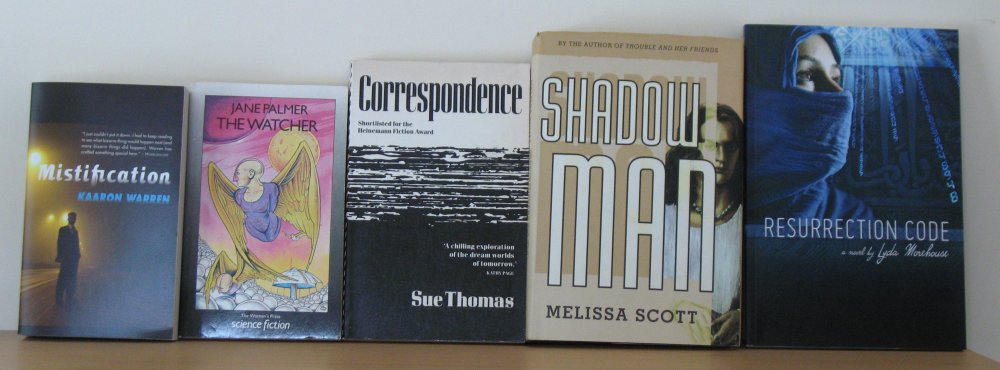
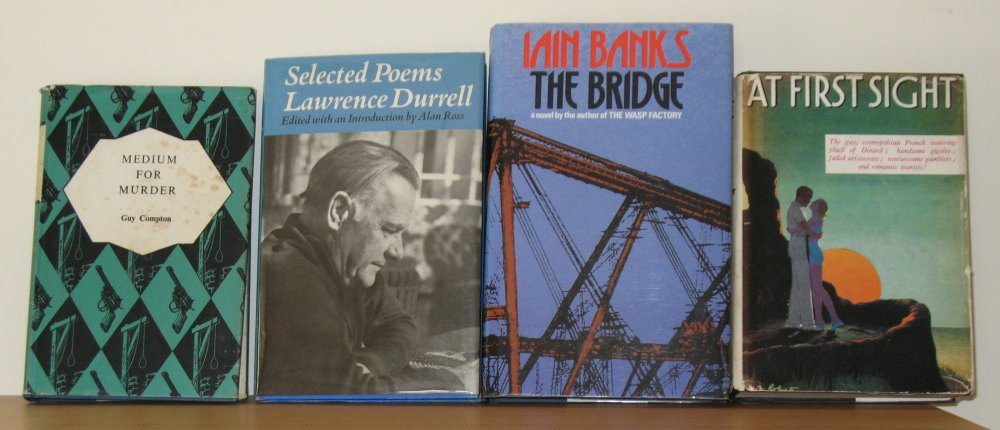
34 Most intimidating book you’re too nervous to begin? Possibly House Of Leaves by Mark Z Danielewski. Ian McNiven’s biography of Lawrence Durrell is also intimidatingly big, especially in hardback.
35 Favourite poet? Bernard Spencer or John Jarmain.
36 How many books do you usually have checked out of the library at any given time? I don’t use the library. When I lived in the UAE, I was a member of a subscription library and would generally take out four books every fortnight.
37 How often have you returned books to the library unread? In the UAE, I did it a couple of times. One such book was… The Alexandria Quartet by Lawrence Durrell. I later bought a copy and read it, and subsequently became a huge fan of his writing.
38 Favourite fictional character? I don’t know. There are characters I admire as writerly creations; there are characters who are little more than placeholders for the reader. I prefer the former.
39 Favourite fictional villain? See above.
40 Books I’m most likely to bring on vacation? Big fat ones that require sustained bouts of reading, such as I’ll enjoy on a plane flight or long train journey.
41 The longest I’ve gone without reading. A week, maybe slightly longer.
42 Name a book that you could/would not finish. Most recently, The Windup Girl by Paolo Bacigalupi.
43 What distracts you easily when you’re reading? The television, the internet, the cat…
44 Favourite film adaptation of a novel? It used to be The Right Stuff, but after a recent rewatch I found myself disappointed by the film. Now it would be Fahrenheit 451 – though I love the film but hate the book. Irony in action…
45 Most disappointing film adaptation? The Sylvia Kristal adaptation of DH Lawrence’s Lady Chatterley’s Lover? It’s a bad film and it’s an adaptation. But the same could be said for a lot of sf adaptations… I don’t really know. I rate David Lynch’s Dune as a flawed masterpiece (and I’d have paid good money to see Alejandro Jodorowski’s film of the book had it been made). And Paul Verhoeven’s Starship Troopers is vastly superior to the book…
46 The most money I’ve ever spent in the bookstore at one time? No idea. I’ve spent around £100 on a single order at Amazon a number of times. The most money I’ve spent on a single book is $500, for a first edition of Pied Piper of Lovers, Lawrence Durrell’s first novel. See here.
47 How often do you skim a book before reading it? Very rarely.
48 What would cause you to stop reading a book halfway through? Blatant racism and/or sexism. Offensive sensibilities. Eye-stabbingly bad prose. An inability to plot. Despicable characters.
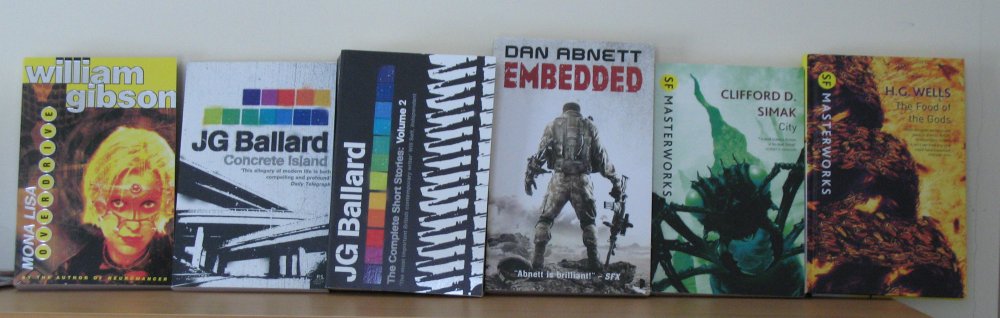
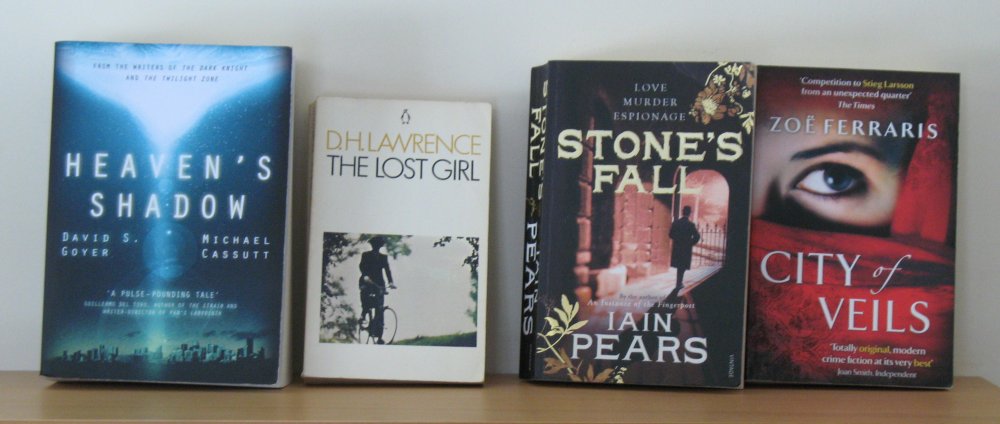
49. Do you like to keep your books organized? Yes, though the collection is getting a little bit out of hand…
50 Do you prefer to keep books or give them away once you’ve read them? Depends. Collectibles I keep. Likewise books that were hard to find. Others I get rid of as soon as I’ve read them. I’ve also purged my book shelves several times – for example, I saw no good reason to keep the Stainless Steel Rat novels I originally bought back in the early 1980s…
51 Are there any books you’ve been avoiding? Urban fantasy novels. Anything with zombies in it. Many of the books that have appeared on recent Hugo Award shortlists…
52 Name a book that made you angry. Leviathan Wakes by James SA Corey. See my review here.
53 A book you didn’t expect to like but did? Lady Chatterley’s Lover, DH Lawrence. My father was a big fan of Lawrence’s writing, but I never bothered trying any of his books. And this despite Lawrence Durrell being a big admirer of Lawrence. But after watching Pascale Ferran’s excellent adaptation, Lady Chatterley, in 2009, I decided to have a go at the book. And loved it. After my father died, I promised myself I would read all of Lawrence’s fiction, and recently finished The White Peacock. Structurally it’s a bit odd, but there’s some lovely prose in it. And it is sort of “local” fiction for me as I was born in Nottinghamshire. I am now becoming a bit of a Lawrence fan.
54 A book that you expected to like but didn’t? Bodies by Jed Mercurio. I loved his Ascent, and thought American Adulterer very good indeed. But Bodies was just too gruesome for me.
55 Favourite guilt-free, pleasure reading? Georgette Heyer, probably.
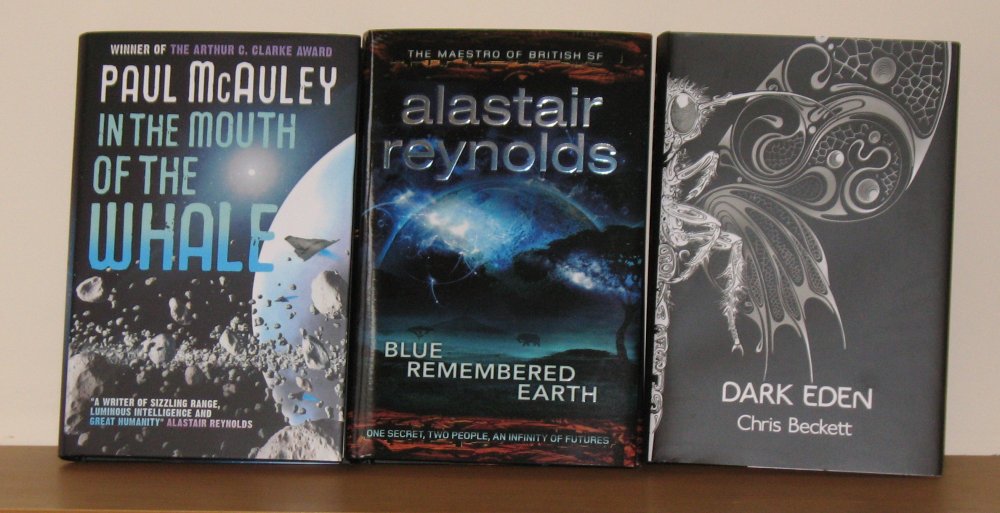
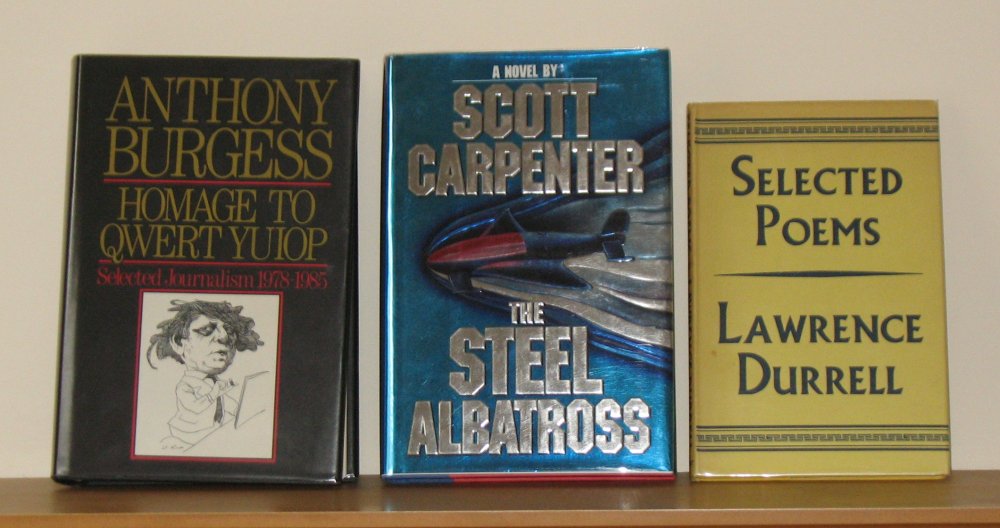
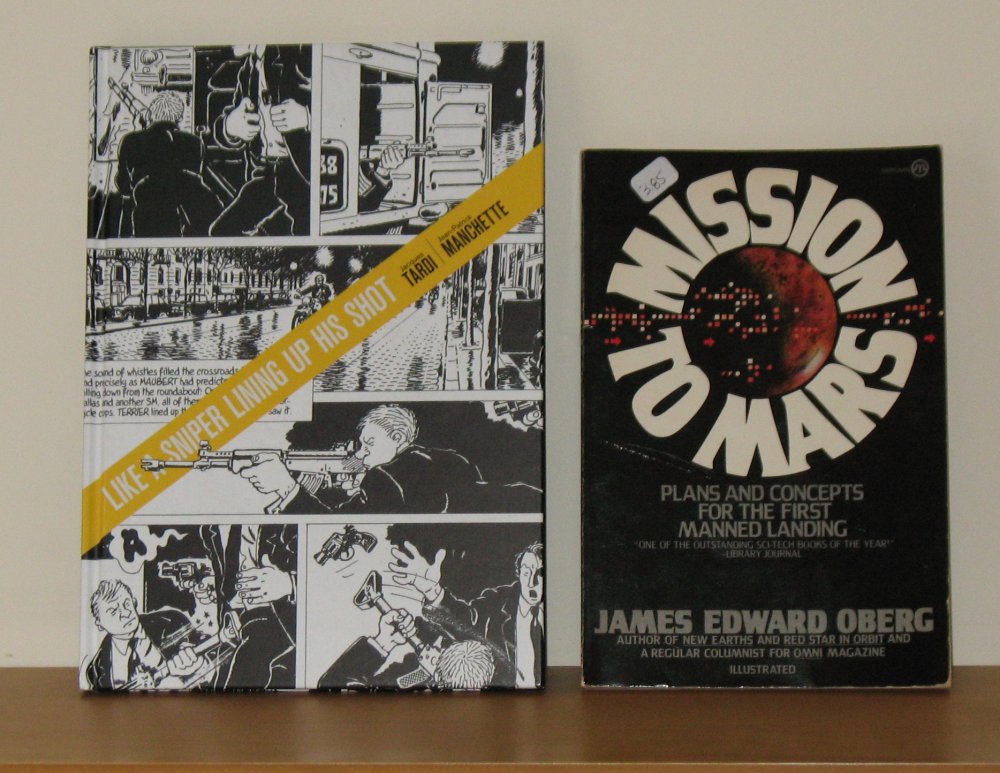


 , dir. Al Reinert (1989). I should really do a proper review of this for my
  too, which I also own). In fact, I think I will. So keep an eye open there for it.
 , dir. David Fincher (2008), was one of those films remarked on more on for a technical achievement than for anything else. Mind you, it was enough to see it nominated at the 2009 Oscars for Best Picture, Best Director, Best Actor, Best Supporting Actress, Best Adapted Screenplay, Best Original Score, Best Sound Mixing, Best Art Direction, Best Cinematography, Best Makeup, Best Costume, Best Film Editing and Best Visual Effects. It won Best Art Direction, Best Makeup and Best Visual Effects. Because, well, that’s all that’s really remarkable about
  – you know, a life story in which someone learns a series of life lessons of the type which are found in fortune cookies or self-help books with asinine titles. The film looked really good, and the getting-younger-while-getting-older effect was cleverly done. Which is no doubt why it took the Oscars it did.
 ,
,  ,
,  ,
,  , dir. various hands (2001 – 2005). I read the first book many years ago and thought it remarkably ordinary. But I’d never seen the films. Despite the fact they’ve been on telly zillions of times. So I bagged cheap copies off eBay, and sat and watched them and… they’re not very good, are they? In those first two, the acting is definitely poor. The game of Quidditch makes no sense; nor does it feel like the sort of game that would be played at a public school. Things gets introduced into the world, with no back-story, just when they appear in the plot, which itself is nothing wildly original. Yes, the third film,
  , dir. Oliver Assayas (2008), is the fifth film by Assayas I’ve seen and, I think, the best one so far. It’s a French family drama. Two brothers and a sister – one brother lives in Paris, the other in Shanghai, and the sister in New York – meet up each summer. But then their mother dies, and circumstances preclude any future annual get-togethers, so they must pack up their mother’s house and the childhood memories they have of the place. A well-acted, well-scripted ensemble piece. Recommended.
 , dir. Ron Krauss (2003). James spader must be a science fiction fan. How else to explain all the crap sf films he appears in? He can’t be that desperate for work. In this one, an alien object is found under the ice in Antarctica, and taken to a corporate research facility on the continent. Spader, a cryptologist who used to work for SETI, is sent to investigate. But there’s an alien creature inside the object, and it breaks out and infects everyone with an alien virus which causes death in a matter of seconds. They should have titled the film Alien Rip-Off as there’s nothing original about the story. Best avoided.
 , dir. Gavin Hood (2009). So, after watching the three X-Men films, you thought you knew how Wolverine became like he is? Wrong. The title sequence to
  , dir. Mark Sandrich (1936), is another one from one of those Top 100 Films lists – although I forget which list. Fred Astaire really was an odd-looking bloke. His head is a peculiar shape. And he had a horribly insipid singing voice. But, as was famously said, he “can dance a little”. This is arguably his best film which, to be honest, doesn’t say a great deal for his other films (and he made thirty-one). In
  , dir. Gerry O’Hara (1967), I watched for a review for VideoVista.
 , dir. Guy Green (1968), I watched again after finishing the book (see above). Michael Caine has described the film as the worst he ever worked on because no one knew what it was about. Fowles wrote the screenplay himself, and he made changes to the story. Changing Alison, an Australian, into Anne, who is French, was, I imagine, necessary after Anna Karina was cast in the part. Other alterations were more substantial. The twins June and Judy (AKA Rose and Lily) have become a single person (played by Candice Bergen). Many of the games Conchis plays on Urfe have been cut – there simply wasn’t room for them, I assume – although the main ones are there. But the entire final section of the book, in which Urfe returns to the UK and tries to discover Conchis’ true identity has been completely cut. Having read the book, the film is an unsatisfactory adaptation, but it’s hard to imagine how Fowles could have adapted it anyway. Fowles appears in the film, incidentally – during the opening credits, he’s the deckhand who says, “Phraxos” to Michael Caine.
 , dir. Christophe Honoré (2004), is another Isabelle Huppert film and is based on a 1966 novel by Georges Bataille of the same title. A young man, fresh out of Catholic school, visits his parents on Gran Canaria. His father, who he hates, dies in an accident shortly afterwards, and the young man is introduced to a life of sex and depravity – the Canary Islands night-life, in other words – by his mother. I really didn’t like this film. Thoroughly unlikeable characters doing unlikeable things, with a narcissistic self-regard which in no way makes their antics entertaining. It might make for a good novel, but it doesn’t make for a good film. Mind you, I wouldn’t have thought anyone could make an entertaining film out of Houellebecq’s
  It Doesn't Have To Be Right...