It Doesn't Have To Be Right…

… it just has to sound plausible


Leave a comment

Longer reviews

For the past few years, I’ve been writing longish reviews of books on Medium. I plan to keep that going, but I should probably post a link here when a new review goes up there. As happened last night, a review of John Scalzi’s Redshirts (2012, USA). You can find it here.

I’ve been posting reviews on Medium since May 2021, so there are quite a few. Feel free to check them out.


Leave a comment

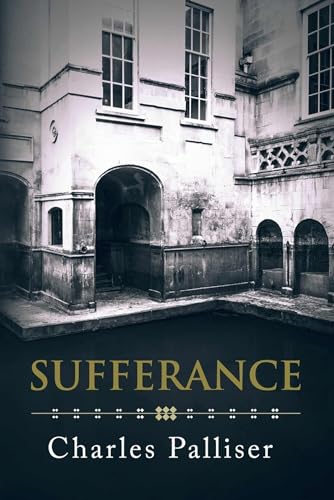
Sufferance, Charles Palliser

I’ve been a fan of Palliser’s novels since reading his debut, The Quincunx (1989, UK), a complex Dickensian novel about an orphan and the mysteries surrounding his birth back in the 1990s. Betrayals (1993, UK) features a pitch-perfect pastiche of the TV series McTaggart and a borderline litigious spoof of author Jeffrey Archer (allegedly based on fact). Sufferance (2024, UK) is the first book from Palliser since Rustication (2013, UK), and it’s perhaps the most obvious book he’s written to date.

In terms of length, it’s probably closer to a novelette, or perhaps a sf novel from the 1960s. It’s set in an unnamed country after it has been occupied by unnamed enemy forces – or rather, the western half of the country has been annexed, but the eastern half, where the story takes place, has chosen to collaborate. While Palliser names no names, we’re clearly in some analogue of World War 2 France.

A well-meaning man has taken in a schoolfriend of his youngest daughter, whose rich parents were trapped in the western half of the country when it was overrun. His motives are not entirely altruistic – he hopes for a better-paying job from the daughter’s father – but the girl’s family are members of a “community” whose rights and privileges are slowly taken away as the novel progresses. To the extent, in fact, their property and wealth is confiscated, they’re forced to live in a ghetto, and later are “relocated” to camps outside the city…

All of which makes looking after the girl ever more difficult. Initially, lies to neighbours are enough, but when rationing is introduced the lack of papers becomes a problem. Eventually, they have to hide the girl in the attic. Throughout all this, the girl is arrogant, ungrateful and manipulative. The title is clearly intended to refer to both the city under the collaborationist regime and the danger to the family brought on by the girl’s presence in their apartment (and, also, the behaviour of the girl to the family).

It’s hardly subtle. Pallier’s prose distances the reader from events – there are no names, the countries and period are not mentioned – but the narrative remains sympathetic to the narrator, even though his motives are chiefly self-serving. He hopes to be rewarded, but he’s also sensitive to the evolving situation regarding the community. And he’s powerless to prevent his family from suffering as the regime slowly collapses from corruption, greed and fear.

It’s all very inexorable, as no doubt it felt in the 1940s. Palliser manages to evoke sympathy in a narrator who does bad things out of greed, but soon finds himself doing worse simply in order to survive. Of course, he’s implicitly questioning the reader: what would you do to survive in the same situation? How long would you hold onto your principles? Should the laws still be obeyed, even when they’re plainly immoral?

After all, the family hiding Anne Frank was breaking the law; anyone who told the Gestapo about her would have been considered law-abiding.


Leave a comment

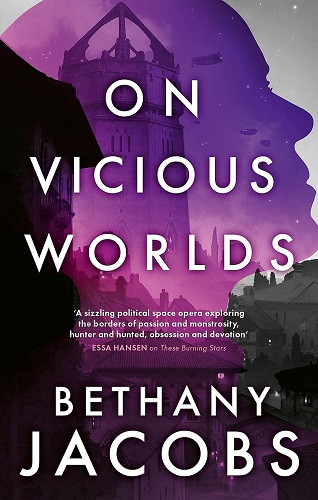
On Vicious Worlds, Bethany Jacobs

The second book of the Kindom trilogy, begun with These Burning Stars (2023, USA; see my review on Medium here). There’s a thing called Middle Book Syndrome which often affects trilogies. The first book does all the heavy-lifting for the world-building and kick-starts the plot; the final book is all about the climax for the story. So the middle one often consists of little more than re-arranging pieces on the board to set up the end-game. Jacobs makes a brave stab at avoiding the syndrome… and almost succeeds. 

Six and Chono are with the Jeveni in their ice-planet colony, reached by a stargate which has been locked against Kindom forces. But all is not well. Those non-Jeveni who were dragged along when the Jeveni escaped have been subject to, occasionally violent, prejudice. There has been a series of suspicious deaths – initially framed as suicides, but soon identified as murders – of Jeveni law enforcement officers. And there is another hacker, potentially better than Ironway, who’s been breaking important colony infrastructure. §

The identity of this hacker – called “the avatar”, but avatar of what? that’s not how you use the word – is one of the puzzles around which On Vicious Worlds (2024, USA) is structured, much as Six’s fate was in the first book. Unfortunately, it’s not as interesting; and the reveal is nowhere near as shocking, or indeed as credible.

Chono and Six return to the Kindom. Where they discover the Jeveni left behind have been forced to work in camps manufacturing vital fuel sevite – because apparently no one else in the Kindom can do it. There also seems to be some sort of power struggle going on between the three arms of the Kindom government – security, secretariat, and clergy. The secretaries seize power. They attempt to arrest Chono – who has become some sort of folk hero, although it never feels well-grounded – and Six. There’s a big fire-fight. Cue cliff-hanger ending.

They’re fun these books. Perhaps a little too Warhammer 40K, somewhat too brutal and heavy-handed; and in places it’s almost as if they’d looked to Banks’s Culture novels for inspiration and then borrowed the very things his novels were arguing against. The world-building is paper-thin in places, more so here than in The Burning Stars, and I’ve yet to be convinced some of the real-world inspirations were wise choices. The plotting is nicely convoluted, but still relentless, the action scenes well-choreographed, and there are more than enough intriguing hooks and callbacks.

If space opera had alignments, the Kindom trilogy would be chaotic evil – and Yoon Ha Lee’s Hexarchate trilogy possibly lawful evil. Given the choice, I’d sooner not read evil novels. Something lawful good, like Ann Leckie’s Radch novels, is more to my taste; or even chaotic good, such as the aforementioned Culture. But if I had to read a chaotic evil space opera trilogy, Jacobs’s trilogy would be the one.


Leave a comment

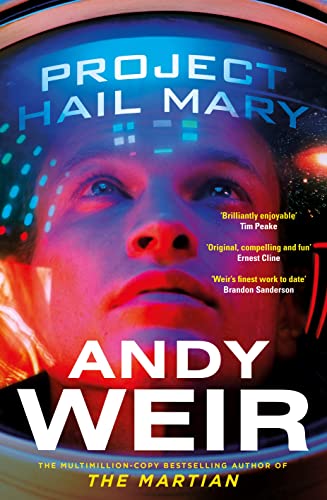
Project Hail Mary, Andy Weir

For a novel explicitly constructed as an old Analog-style puzzle story, there are four puzzles in Project Hail Mary (2021, USA) which the novel does not attempt to solve: why did I buy it, why did I read it, why was it published, and why has it been successful? I can possibly answer the first two – it was cheap, 99p in fact; and, I am an idiot. But the last two will forever remain a mystery.

Weir, of course, is best-known for The Martian (2014, USA), a surprise best-seller, originally self-published, which was then turned into a movie by Ridley Scott. The Martian is not a good book – a first-person narrative written by an unlikeable narrator, and written in the first-person for all the wrong reasons. It sold itself on its science, which is, unfortunately, not as accurate as it claimed.

Project Hail Mary is Weir’s third novel, following Artemis (2017, USA), which I have not read. In Project Hail Mary, a man wakes up aboard a spacecraft in another planetary system, with no memory of who he is or why he is there, or indeed where he is. Through chronological flashbacks, he learns he is one of three astronauts – the other two did not survive hibernation during the trip – sent to Tau Ceti. A microscopic creature has begun feeding on the Sun, and this threatens life on Earth. Tau Ceti is also infested with the microbes, called “astrophages”, but it is not losing luminance. An international project is put together to send a ship to Tau Ceti to discover why, and possibly send back a means to kill the microbes.

The microbes’ biology means they can convert mass to energy and back with no loss, making them a perfect fuel, allowing the ship to reach near light-speed. Soon after awakening, the narrator is hailed by an alien ship. It too has a single surviving crew. The alien is a rock-skinned spider-like creature which lives in a hyperbaric ammonia atmosphere. So, of course, the narrator names it Rocky. The two learn to communicate, and together discover why Tau Ceit’s astrophages have not destroyed the star.

The narrator is a high school science teacher. He was a physicist, but he published a paper on extraterrestrial life which saw him drummed out of the scientific community. Somehow or other, he ends up as an expert on the astrophage. Which is why he’s sent to Tau Ceti. He mentions repeatedly that he’s a good and well-loved teacher, which seems completely plausible as he thinks like a teenager.

Because he’s a high school science teacher, everything he encounters is solvable using high school maths. Which Weir explains in detail. All the technology, the sophisticated computers, aboard the spaceship, and yet every problem he encounters can be solved using schoolboy mathematics. It gets old very very quickly.

The astrophage is, I admit, quite ingenious, but it seems extremely unlikely to have evolved – in fact, I kept on expecting to read it was engineered. But no. Every other idea in the novel springs from the astrophage’s biology. The characters are drawn with the broadest of strokes; and while the cast is international, it’s only the handful of Russians and Chinese who don’t come across as Americans.

Many years ago, there was an international best-selling novel which taught its reader about the history of philosophy. Sophie’s World (1991, Norway) by Jostein Gaarder. I seem to remember reading it. Project Hail Mary reads like an attempt to do the same for high school maths, by showing how useful it is when, for example, trying to rendezvous with an alien spaceship, work out how not to poison yourself in an ammonia atmosphere, or even accidentally blow up the entire Earth while experimenting on microbes which are capable of total mass-energy conversion. Handy to know.

A novel that sets a low bar and all too often barks its shins on that bar. Avoid, unless you’re a masochist, or, like me, an idiot.


1 Comment

The Planet Buyer, Cordwainer Smith

Shortlisted for the Hugo Award in 1965. I suspect Smith is better-regarded these days than he was when he was writing. According to sfadb.com, he had only two Hugo nominations: a short story in 1956, and this novel (incorrectly given on the site as Norstrilia); and a Nebula nomination for a novella in 1966, the first year of the award. Norstrilia (1975, USA), by the way, is actually an expansion of The Planet Buyer (1964, USA) and its sequel, The Underpeople (1968, USA), and while I say “sequel”, it would not be entirely accurate to say The Planet Buyer is a complete novel – it even says as much in its Epilogue and Coda:

… the reason why this chronicle ends now is that the players have made the moves that will determine the outcome.

So, a somewhat baffling choice for an award for “best novel”.

Those familiar with Smith’s work will find everything they expect in The Planet Buyer. It opens on the world of Old North Australia – tellingly at one point given as Old North America, which makes more sense of the “north” – the richest planet in the galaxy, thanks to the immortality drug, stroon, which is harvested from giant mutated sheep. In order to maintain their simple dinkum cobber life-style, everything imported onto Norstrilia is charged 20,000,000% import duty. Even so, the Nortstrilians are stupidly wealthy, even more so than those moronic US-based techbros who seem determined to make humanity extinct. Rod McBan is one of the richest Norstrilians, although he has yet to come into his majority. A childhood enemy is out to get him, so he consults a secret AI he happens to have lying around, which tells him he should leave Norstrilia for Old Earth. But only after buying Old Earth. And can the AI please have permission to use Rod’s riches to manipulate the stroon futures market until he has enough money to buy Earth, please?

Rod is then smuggled to Old Earth by a Lord of the Instrumentality sympathetic to Rod’s problems (which, to be honest, seem somewhat weak sauce to drive such a momentous plot). He is disguised as a cat-man, one of the Underpeople, to keep him safe, and accompanied by C’Mell, a cat-woman who appears in other stories by Smith. There is discussion of the economic consequences for Old Earth of Rod’s ownership of the planet. There’s a reference to some prophecy or other. Rod arrives at Old Earth.

End of book.

I’ve enjoyed Smith’s stories when I’ve read them – and I read one of his collections only last November – and the Instrumentality, and Old Earth, make for an interesting setting. Smith’s prose style works more often than it doesn’t. But. Norstrilia is a somewhat dull place, and its inhabitants are not very engaging; and, unfortunately, The Planet Buyer spends much of its length on that world. I expect – I’m hoping – The Underpeople, which continues the story, is better (although it wasn’t nominated for the Hugo; go figure).

Not a book worth seeking out, given it’s only the first half of the later-published Norstrilia. Even then, I’d recommend Smith’s Instrumentality short stories, available in a number of collections, before Norstrilia or its two constituent novels.


1 Comment

Cat Karina, Michael G Coney

The late Eric Brown, a friend of many years, was a big fan of Coney’s fiction, but for some reason Coney was one of those authors I never seemed to pick up. The first was Hello Summer, Goodbye (1975, UK) about fifteen years ago, and I thought it quite good – and later I picked up and read Charisma (1975, UK). But stopped there. I’ve read more in the last few years, and found his Amorph trilogy of Mirror Image (1972, UK), Syzygy (1973, UK) and Brontomek! (1976, UK) good examples of a type of expatriate English science fiction of the 1970s which I find strangely appealing.

Cat Karina (1982, UK) is not that. It’s set in the far distant future, the Greataway, on an Earth populated by races that have been genetically melded with assorted animals, and in which technology is anathema – in fact, even fire is banned. The novel is explicitly framed as the telling of a legend, so much so it inserts commentary on later distortions and interpretations of the story. Also in the narrative are alternative timelines, happentracks, predicated on decisions made by Karina and others which might affect the future, or Ifalong.

There’s a prophecy, but it’s really a millennia-long plan to bring about the birth of someone who can free Starquin, “the greatest person the Earth has ever known”, who was imprisoned millennia earlier, and it involves the title character, who is a Specialist, a human with animal genes, and a felina, meaning the animal genes are from jaguars. Karina lives in a village on the sailway line, a wooden monorail with wind-powered sailcars. One section of the track is too steep for wind-power, so the sailcars must be hauled up to the summit. By teams of felinos. The chief cargo on the sailway is tortugas, a highly-prized fruit grown in the mountains on heavily-guarded farms.

A handmaiden of the Dedo, a part of the Starquin’s body “in human form”, whatever that is, tries to manipulate Karina so she follows the prophecy, but Karina has a mind of her own… The main story follows the preparations for an annual sailcar race to deliver the season’s first tortugas to the coast, and the plan to use a sailcar built using forbidden technology – ie, metal. Which could mean there will no longer be a need for gangs of felinos. Which prompts a revolution, with the Specialists overthrowing the True Humans.

There is little, to be honest, all that original about the plot of Cat Karina – it runs on rails as well-greased as those of the sailway. And, it must be said, the novel does a great deal of heavy-lifting when it comes to filling in the back-history of the universe (there’s a later trilogy set in the same universe), but it does so with some smart neologisms and an impressive economy. I don’t think Cat Karina privileges world-building over story, a common fault in science fiction and fantasy, but its world-building is certainly more original and accomplished than its story. Karina is an engaging hero and well-characterised, and it never feels like she’s being pushed and prodded by the plot, even though the narrative often details other happentracks. There’s some nice invention in parts, the secret of the tortugas, for example, an important plot-point, unlike the secret of the tumps (huge torpid meat animals), which is not.

Cat Karina is a well-crafted novel, and a good example of its particular type. To be honest, I much prefer Coney’s near-future sf, but for fans of sf set so far in the future it might as well be fantasy, Cat Karina (and, I expect, the trilogy which followed it) is a good read.


Leave a comment

Little Fuzzy, H Beam Piper

Another allegedly classic sf novel, which was nominated for the Hugo in 1963. Dick’s The Man in the High Castle (1962, USA) won that year, and was easily the best of the shortlisted novels. Little Fuzzy (1962, USA), on the other hand, is slight, not in the least bit plausible, and opens from a position of such comprehensive US hegemony its story is pretty much unrecoverable.

The title refers to the indigenous race on Zarathustra, waist-high cute-looking furry creatures with an average intelligence comparable to that of small children. Humans have been on the world for several decades before the first “Fuzzy” appears, and the corporation which owns the planet quickly realises that a native race invalidates their ownership of the world and all its resources. So they play dirty in an effort to prove the Fuzzies either non-existent or not intelligent. A situation which comes to a head when a company bigwig stamps on a Fuzzy, killing it, and a company bodyguard is shot and killed in self-defence.

Like a lot of American sf of the period, this is resolved by people coming together, homespun legal wizardry, a general distrust of the government (and governing corporation), and a handful of native backwoods cunning from several of the cast. While the local governor is corrupt, the local Navy base is packed to the gills with upright honest officers and personnel. The corrupt mayor is a cliché, but so too is the valorisation of military probity – at least in 1962, before the Vietnam War. There are entire Hollywood movies from the 1930s through to the 1950s which use any one of those tropes on which to hang a plot. And each one is as hokey as the next. 

If anything, Little Fuzzy multiplies the hokiness. It’s a novel with far more mouthpiece characters than it needs or the reader deserves. The Fuzzies may be intelligent enough to determine their own destiny, but the humans on their side seem to treat them chiefly as precocious pets. There are many arguments to be made about the European invasion of continental North America, but this novel doesn’t even come within spitting distance of them. It’s the colonisers defending the colonised against the colonisers’ own kind, for reasons that are best not examined too deeply.


Leave a comment

Hotel du Lac, Anita Brookner

Apparently a surprise winner of the Booker Prize back in 1984. Ballard’s Empire of the Sun (1984, UK) was the favourite, although Lodge’s Small World (1984, UK) or Barnes’s Flaubert’s Parrot (1984, UK), the only other books on the shortlist I’ve read, would have been a better winner than Hotel du Lac (1984, UK). It’s not that Brookner’s novel is bad – it’s nicely written, with some sharp insights. But. It’s set at the time of writing but reads like it takes place in the 1950s or 1960s. It’s horribly old-fashioned.

Edith Hope is a single woman in her late thirties, who writes “women’s fiction” under a pseudonym, reasonably successfully. She has a lover, a married man, and lives alone. She accepts an offer of marriage from a man, but jilts him at the altar (well, outside the registry office). Her friends, upset with her, arrange for her to spend a week or two at the titular hotel in Switzerland. It’s the end of the season, and there are only a handful of other guests: Mrs Pusey and her daughter, Jennifer; La Comtesse de Bonneuil, a caricature of a early twentieth-century European grandmother, and Monica, an anorexic (although this is never said) and beautiful minor aristocrat. A group of men stay at the hotel, among them Mr Neville, the well-off owner of an electronics company, in his fifties, smug and successful. He later proposes to Edith – marriage, but a partnership predicated on comfort and position, not love.

Throughout her stay, Edith writes long letters to her lover back in London, but does not send them. Various little scenes are enacted, Edith learns more about her fellow guests, their back-stories and their personalities. Mrs Pusey is quickly revealed as selfish and mistaken in her level of consequence. Her daughter, who is the same age as Edith, is little more than an accessory. Monica is a snob and dismissive, but surprisingly friendly. Madam de Bonneuil is deaf and a figure of (gentle) fun.

It’s all very smooth, and Edith is an engaging, if overly introspective, protagonist. But it’s all so horribly outdated. Neville takes Edith on a boat-trip across the lake, and wears a deerstalker hat. In 1984? Seriously? Edith wears gloves to her aborted wedding. Women rarely wore gloves to church – or registry offices – in the 1970s, never mind the 1980s. The women are dismissive of feminism, and define themselves in relation to the men in their lives, or who were once in their lives, or all men in general. This is not the early 1980s I remember.

If Hotel du Lac had been written and presented as historical fiction, it might have read better. Having said that, even then it wouldn’t have deserved to win the Booker.


8 Comments

An exaggeration

As Mark Twain said regarding his published death – and after four years I’m tempted to bring this blog back to life. I’d become dissatisfied with posting 100-word rants about the books I’d read and the films I’d seen, so I felt I needed to walk away. And I was annoyed at the unwanted changes WordPress had made to its editor.

But the habit dies hard – the habit of reviewing, that is; although I suppose the habit of ranting is equally enduring. Soon after shuttering this blog, I started posting longer, actual proper, reviews of books on Medium – see here – and a year or two later, I began posting shorter book reviews on Facebook. It occurred to me recently I might as well post the latter here as well. I’ll continue to post them on Facebook and LibraryThing, but I’ll leave the longer reviews to Medium… And I may well branch out here and post more than just book reviews. But no rants.

Hopefully, posting reviews here will generate conversations much as it has done on Facebook – although not just among friends. Social media these days is a cesspit – actual posts by friends are in the minority on your Facebook timeline, Xitter is a shit-filled bearpit populated by fascist morons, and Bluesky started off well but is now pretty much doom-scrolling…

Maybe it’s time for a second lease of life for the blogosphere. We shall see. Or not.


Leave a comment

The Bone Clocks and Slade House, David Mitchell

Despite being shortlisted twice for the Booker Prize, David Mitchell’s novels are not like most other literary fiction novels for two reasons: first, characters from one book often appear in other books; and secondly, many of his novels feature genre tropes and situations. In his debut, Ghostwritten (1999), one of the narrators proves to be a disembodied spirit who can move from body. Cloud Atlas (2004), has two of its six sections set in the future: one a near-future dystopian Korea, the other a post-apocalyptic Hawaii. While it’s not unusual for literary fiction authors to visit genre shores, Mitchell has shown a greater appreciation of, and a better facility with, gene tropes than most of his peers. But then he is a fan and has publicly said as much. And in The Bone Clocks, and its pendant novel, Slade House, he has for the first time told an actual genre story, albeit in the language of literary fiction.

The Bone Clocks is structured as six novellas, most of which are told from the point of view of Holly Sykes. The novel opens in 1984, Holly is a teenager, grief-stricken at the recent death of her younger brother. She decides to run away from home, and makes it halfway across Kent before running afoul of the story’s villains. These villains harken back to earlier novels by Mitchell, particularly The Thousand Autumns of Jacob de Zoet (2010). That novel introduced the idea of secret immortals amongst us, and it is a war between two such groups which forms the backbone of The Bone Clocks. (You wait for a novel about secret immortals, and three come along at once: as well as The Bone Clocks, 2014 also saw the publication of Claire North’s The First Fifteen Lives of Harry August, while Kate Atkinson’s Life After Life appeared in 2013.) The Horologists are body-hopping serial reincarnators. Their enemies, however, the Anchorites of the Chapel of the Dusk of the Blind Cathar, “decant” souls in order to extend their lives. The process is fatal to the decanted souls. Over the course of The Bone Clocks Holly has a number of run-ins with the Anchorites, beginning with that trip across Kent as a fifteen-year-old, and finishing in a post-Crash Ireland in 2043.

Unlike Cloud Atlas, the six sections of The Bone Clocks are not nested, but follow on chronologically one from the other. Like that earlier novel, however, they also display an excellent control of voice. The Bone Clocks is Holly Sykes’s story and she’s an engaging and convincing character. Having said that, the Anchorites are a bit pantomime, enfant terrible literateur Crispin Hershey initially reads too much like a pastiche of a well-known UK author but soon rounds out, and the immortal Marinus never quite convinces. But these are minor gripes. The Bone Clocks handles its settings with impressive assurance and, more than any other of Mitchell’s novels, this is an insightful book.

Mitchell has said he intended each section of the novel to be a different genre – such as, 1980s social realism, war reportage, fantasy and dystopia, among others. It’s a given most of the really interesting genre fiction is being written in the area where genres meet, and Mitchell makes good use of the interfaces – the sudden irruption of fantasy into Holly’s adventures in Thatcherite Britain creates a shockingly effective introduction of The Bone Clocks’ underlying fantastical plot. In fact, those sections featuring this violent introduction of genre into literary fiction actually work better than those sections which are pure genre. Perhaps it’s a consequence of expectation; perhaps it’s simply the stark contrast between the two modes.

Slade House, on the other hand, makes no secret of its melding of genre and non-genre, although it tries to wrongfoot the reader by presenting its genre elements as “dream-like”. If the novel were a film or television series, it would be called a “spin-off”. Less than half the size of The Bone Clocks, Slade House echoes that novel’s multi-part structure – each set at nine-year intervals from 1979 to 2015 – but takes place entirely in and around the eponymous residence. Each section is told from the point of view of a different person. The eponymous house is home to Norah and Jonah Grayer who, while not associated with The Bone Clocks’ Anchorites, have been using a similar method to extend their lives. Slade House’s narrators are the pairs’ victims.

In each section, the narrator investigates Slade Alley (for a variety of reasons), discovers a small iron door – an interdimensional “Aperture” – which gives entry to Slade House’s grounds, is initially taken in by the illusion woven by the Grayer twins… and is then consumed by them. This act is usually presaged by the sight of a portrait of the narrator at the end of a line of portraits on the main staircase – which is, to be honest, a somewhat cheesy horror film cliché. Slade House presents enough detail to invoke the year in which each section is set, but given that Slade House itself is timeless, this makes for an odd disconnect, often making the detail feel superfluous. Nor is it helped by the last but one section – 2006 – consisting chiefly of a history lesson of Norah and Jonah Grayer, and an explanation of the workings of the house and its grounds. It comes as no surprise to learn that the final section, set in 2015, is about the defeat of the Grayer twins – after the explanation, where else could the narrative go?

Fans of Mitchell’s fiction will have fun spotting characters from other of his novels, a number of which make an appearance in Slade House (as indeed do several in The Bone Clocks). I’ve yet to be convinced this actually adds value, given that the “shared universe” in which all of Mitchell’s novels are set is not a shared universe as the term is understood in genre fiction, but a much less rigorous use of the technique. In other words, they feel more like “Easter eggs” than a structural part of each book’s universe.

Unlike some genre fans, I have no problem with literary fiction authors “dabbling” (not my choice of word) in science fiction and fantasy. On the contrary, the more the merrier – and the lack of knowledge of genre traditions and history can actually prove an advantage to a writer. True, the results often feel a little old-fashioned to veteran readers of genre fiction, and a lack of confidence in deploying genre tropes can lead to unnecessary and clumsy exposition… David Mitchell, however, is a genre fan, he knows what he’s doing. And it shows.

Mitchell also knows what he’s doing when it comes to non-genre fiction. Genre writers make few concessions to their readers – they assume they know how to parse their stories and how genre tropes operate. They also trust their readers to understand the need for exposition. But there’s a limit. Up to this point, the writer needs to explain; and no further. Literary writers usually miscalculate this point and feel a need to explain those things which genre readers either already know about or are happy to take on trust. Likely this is because such writers are not entirely confident with how genre stories and tropes work, and they’re also unsure their readers will understand.

It’s clear Mitchell trusts his readers, both non-genre and genre – evident not only from his oeuvre, but also from his level of success. We need more writers like him. Both inside and outside the genre.

This review originally appeared in Interzone #261, November-December 2015.