It Doesn't Have To Be Right…

… it just has to sound plausible


6 Comments

Science fiction traces

I firmly believe that a reading diet of only genre fiction is bad for you. It’s the equivalent of trying to live off junk food. For a writer, it’s even worse, perhaps even dangerous – certainly, it’s detrimental to their career. I used to break up my consumption of genre with modern literary fiction novels, though I’ve increasingly found I much prefer postwar fiction, especially British – Lawrence Durrell, Malcolm Lowry, Paul Scott, and the like. But I do still read some of the better-known modern literary fiction authors, even if their novels have proven somewhat samey in recent years.

One of those literary fiction novelists is Sebastian Faulks. I recently finished his Human Traces (2005), which is about the early years of psychiatry. Sort of. It begins in 1876, with the introduction as boys of its two main characters, Jacques Rebière in France and Thomas Midwinter in England. The two meet when in their early twenties, become great friends, qualify in medicine, and open a sanatorium in southern Austria. Later, the two disagree over the direction the nascent science of psychiatry should take, beginning a feud which only ends after the First World War.
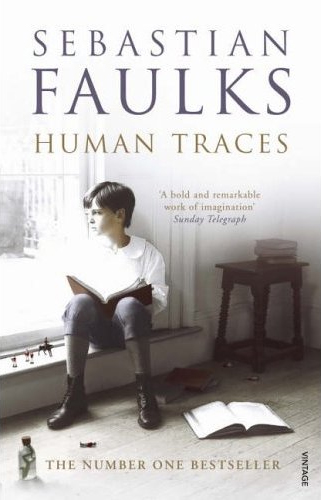
Human Traces is historical fiction. Its characters are invented but a number of real historical figures make appearances. It is about a variety of mental conditions, their historical diagnoses, and what we now know them to be. (Most asylums in the nineteenth century, for example, were filled with syphilis victims.) But Human Traces also contains at its core a very science-fictional idea.

Some three-quarters of the way through the book, Midwinter proposes a theory to explain why some people hear voices. It is his theory that psychosis is inextricably linked to self-awareness, and that it is the advent of self-awareness which created human beings. Early humans, he contends, heard voices as a matter of routine. In a speech given at his sanatorium, he outlines his theory:

… of how man, after he had learned language, had been able to conjure instructive voices in his head; and of how, after the invention of writing and under the influence of huge population upheavals, the ability to summon such voices had become rarer. (p 497)

This theory had been inspired by a number of things – not the least of which was Midwinter himself hearing voices when younger – but it was on an expedition to Africa that it began to gel:

But how could men without consciousness – a modern sense of time, and cause and other people – have done this? Picture your shepherd far away in the hills with no sense that he is a man, no idea of time in which he can visualise himself and his situation… How does he know he must keep tending his sheep? Why does he not forget what he is meant to do – as an ape would forget? Because under the anxiety of solitude, under the pressure of fear, he releases chemicals in his brain that cause not sweating palms, or racing heart, though perhaps those as well – but the voiced instructions of his king. He hallucinates a voice that tells him what to do. (p 450)

Midwinter contents that language was not a development of self-awareness, that self-awareness did not lead to civilisation; but that language and civilisation both came into being before humanity had consciousness. It was only the development of writing which led to self-awareness. He references a number of mythologies in proof – the Ancient Greeks in conversation with their gods, God speaking to Abraham in the Bible, and so on…

It’s not a conceit which sits well as the core of a realist novel. Nor is it one which really stands up all that well to scrutiny. It’s an interesting idea, certainly, but perhaps better suited to the sort of thought experiment for which science fiction is best suited. We know that writing developed in Mesopotamia around 8000 BCE. It has been estimated that Abraham lived around 1800 BCE, and the Greek pantheon has been traced back to sixth century BCE Greece. So writing had been around for several millennia before the examples Midwinter gives to demonstrate his thesis. And for those thousands of years, if his theory is correct, humanity had not been wholly self-aware…

It doesn’t really work. The weight of history stands against it. However, it would make for an interesting creation myth for a fantasy novel; or, perhaps, first contact could be the trigger from one state to the other for an alien race in a science fiction novel. Aliens of differing degrees, or variable degrees, of self-awareness have been used in sf before – in Peter Watt’s Blindsight, the aliens are not conscious; in the GDW role-playing game 2300AD, one of the alien races increased their intelligence from normally very low levels as their fight/flight reaction.

Having said all that, there’s perhaps an interesting idea to explore at the intersection of Midwinter’s theory and the City Burners. Between 1200 and 1150 BCE, the Late Bronze Age civilisations around the Eastern Mediterranean collapsed. From what little documentary evidence that has been found, raiders from the sea – known as the Sea Peoples or the City Burners – invaded a number of city-states and destroyed them, propelling civilisation back to illiteracy. Imagine if those Sea Peoples had been Midwinter’s unconscious humans, driven by the voices in their heads to destroy those civilisations who, through the widespread use of writing, could no longer hear the voices…

There’s a novel in there somewhere, if someone wants to write it.

4 Comments

Lovely Lowryness

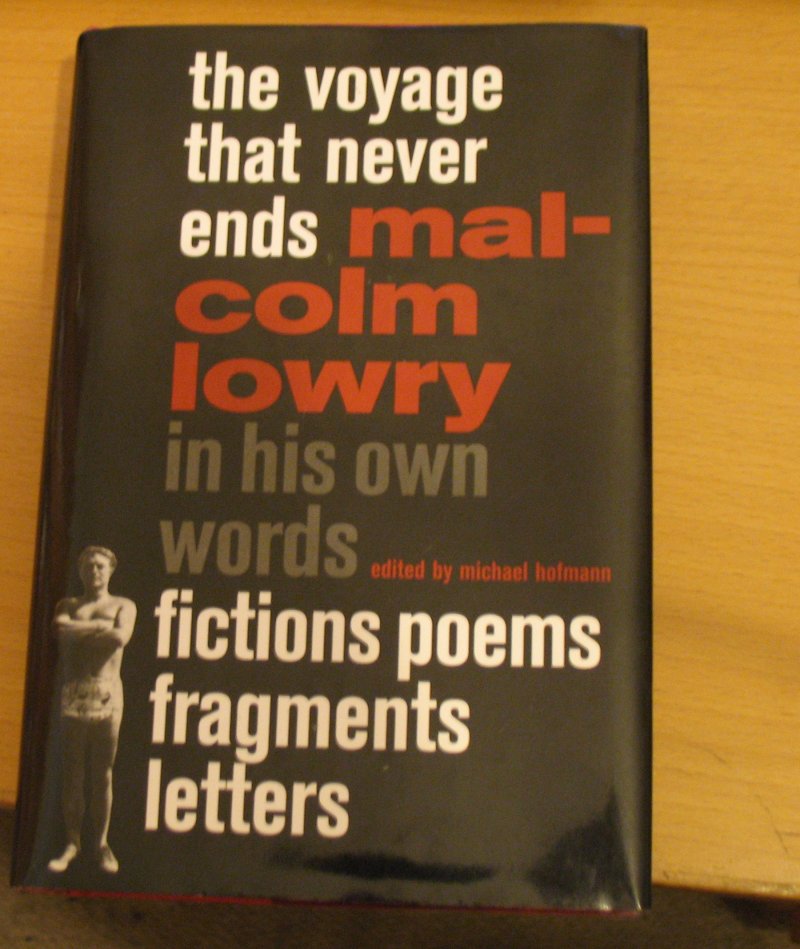
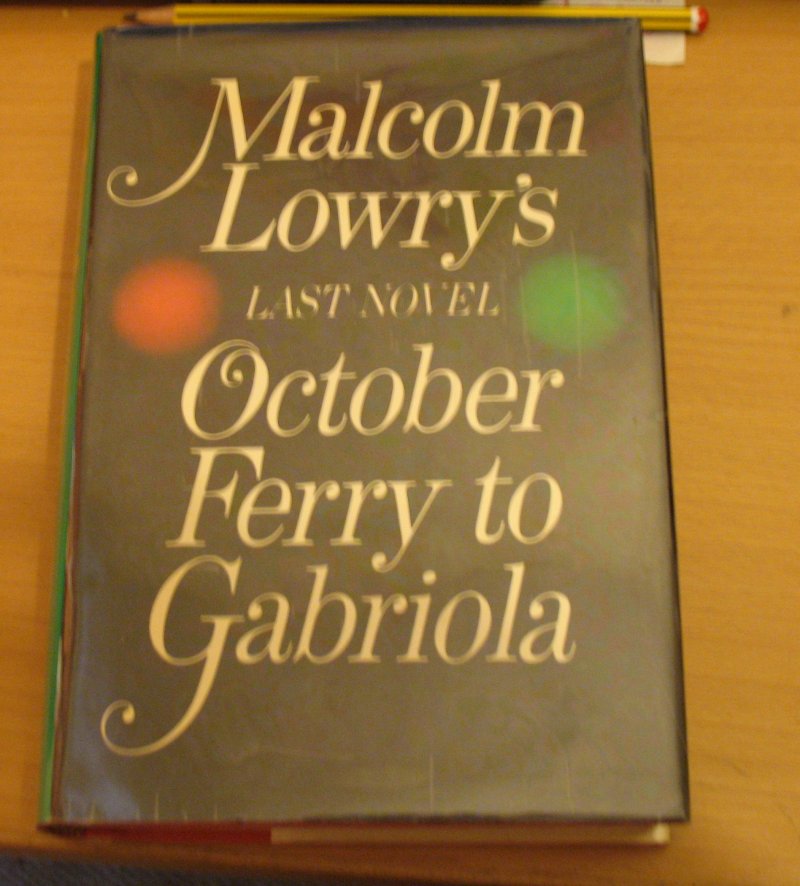
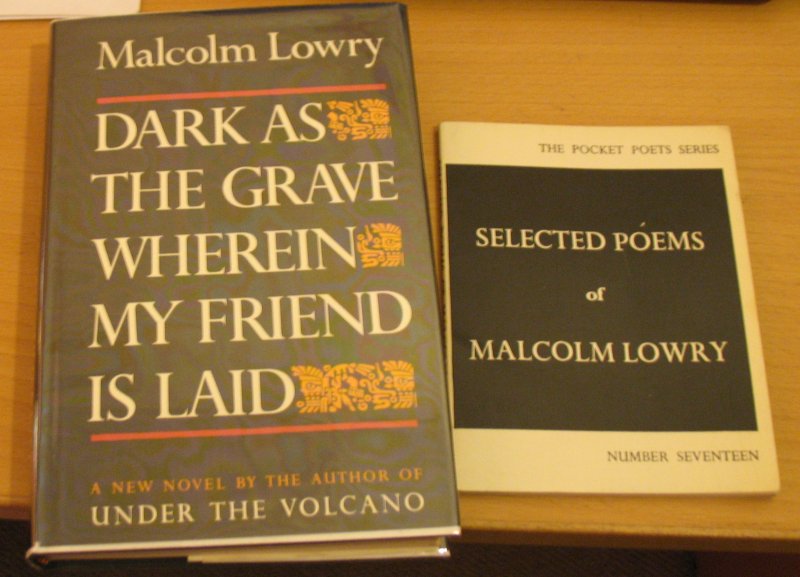
I mentioned a week or so ago that a new author had joined my collectibles list: Malcolm Lowry. After finishing his Hear Us O Lord from Heaven Thy Dwelling Place, I was immediately a fan and went onto abebooks.co.uk to hunt down first editions. And here are the first ones I’ve bought:

Lowry died in 1957 and only saw two of his books published – his debut Ultramarine and the novel for which he is famous, Under the Volcano. He left behind a number of manuscripts and hundreds of poems, which his wife and others edited and then arranged to be published.

Ultramarine (1933)
Under the Volcano (1947)
Hear Us O Lord from Heaven Thy Dwelling Place (1961)
Selected Poems of Malcolm Lowry (1962)
Lunar Caustic (1968)
Dark as the Grave Wherein My Friend is Laid (1968)
October Ferry to Gabriola (1970)
The Collected Poetry of Malcolm Lowry (1992)
The Voyage That Never Ends: Fictions, Poems, Fragments, Letters (2007)

As well as the four first editions in the photographs, I also have Lowry’s first three books as battered Penguin paperbacks from the 1960s. Much as I’d like a first edition of Under the Volcano, they cost upwards of £700, so they’re a bit out of my range…


2 Comments

The numbers game: addenda

Colum’s comment on my previous post, The numbers game, prompted me to wonder how quickly I’ve placed stories – ie, how many submissions has it taken for each story I’ve written before I’ve sold it. So I went back to my trusty spreadsheet, wrangled some numbers and produced this neat little bar chart:

A couple of the stories I sold to the first place I submitted them were written specifically for anthologies. The ones which took seven or eight goes are the older stories… which does suggest I’m getting better at this lark.

Having said all that, I’ve yet to sell stories to any of the big venues, such as Interzone, Strange Horizons, Clarkesworld, or the Big Three US paper mags (though I’m not especially bothered about submitting to the last).


3 Comments

The numbers game

I was thinking yesterday about how much I hate writing first drafts. I much prefer rewriting. Once I’ve got the bones of the story down on paper, I have something to shape – and it’s that process I enjoy doing. And this got me thinking about how many stories I’ve started but never finished. So I went digging through my various spreadsheets and lists of submissions, and I managed to cobble some numbers together…

started finished submitted published
flash 5 4 3 2
novel 8 5 5 0
novella 8 1 0 1
poem 21 21 8 1
short story 40 34 23 19

This may make me look quite prolific, but I’m a complete dilettante compared to some people I know. There are those who have submitted in one year more stories than I’ve ever actually finished. These numbers incidentally are mostly for the past few years. I did write and submit some short stories during the early 1990s, but my records from then are patchy so I’ve not included them. I spent much of that decade focusing on writing novels – which landed me an agent in 2005. It was only in 2008 that I started seriously writing and submitting short fiction, and year or so after that I tried my hand at poetry.

I seem to be much better at starting novellas than I am at finishing them – the only completed one is Adrift on the Sea of Rains, which I published through Whippleshield Books. Most of my poems I’ve posted on sferse, but I’ve only tried submitting a handful (without much success, it has to be said). And, while I’ve finished five novels, I’ve only submitted two complete ones to my agent; the remaining three were proposals. The above figures do not include the short stories, novellas or novels I plan at some point to have a go at but presently have nothing more than a one-line description in my ideas book.

The past six to nine months I’ve been focusing on Rocket Science, Adrift on the Sea of Rains and The Eye With Which The Universe Beholds Itself, so I’ve not had much chance to write any new short stories, or even finish off any of those I’d previously started. I really need to get back into that. So, of course, only a couple of days ago I had a good idea for a novel and I want to get some of that down on paper…


2 Comments

Meme 101

Meme! I got this from Andrew Wheeler who got it from James Nicoll who got it from Martine Wisse, who took it from Science Fiction: The 101 Best Novels 1985-2010 by Damien Broderick and Paul di Filippo.

Bold if you own it, italics if you’ve read it, strikethrough if you think it doesn’t belong on this list…

The Handmaid’s Tale, Margaret Atwood (1985)
Ender’s Game, Orson Scott Card (1985)
Radio Free Albemuth, Philip K Dick (1985)
Always Coming Home, Ursula K Le Guin (1985)
This Is the Way the World Ends, James Morrow (1985)
Galápagos, Kurt Vonnegut (1985)
The Falling Woman, Pat Murphy (1986)
The Shore of Women, Pamela Sargent (1986)
A Door Into Ocean, Joan Slonczewski (1986)
Soldiers of Paradise, Paul Park (1987) (an excellent novel, but Coelestis is better)
Life During Wartime, Lucius Shepard (1987)
The Sea and Summer, George Turner (1987)
Cyteen, CJ Cherryh (1988)
Neverness, David Zindell (1988)
The Steerswoman, Rosemary Kirstein (1989)
Grass, Sheri S Tepper (1989)
Use of Weapons, Iain M Banks (1990)
Queen of Angels, Greg Bear (1990)
Barrayar, Lois McMaster Bujold (1991)
Synners , Pat Cadigan (1991)
Sarah Canary, Karen Joy Fowler (1991)
White Queen, Gwyneth Jones (1991)
Eternal Light, Paul McAuley (1991)
Stations of the Tide, Michael Swanwick (1991)
Timelike Infinity, Stephen Baxter (1992)
Dead Girls, Richard Calder (1992)
Jumper, Steven Gould (1992)
China Mountain Zhang, Maureen F McHugh (1992)
Red Mars, Kim Stanley Robinson (1992)
A Fire Upon the Deep, Vernor Vinge (1992)
Aristoi, Walter Jon Williams (1992)
Doomsday Book, Connie Willis (1992)
Parable of the Sower, Octavia Butler (1993)
Ammonite, Nicola Griffith (1993)
Chimera, Mary Rosenblum (1993)
Nightside the Long Sun, Gene Wolfe (1993)
Brittle Innings, Michael Bishop (1994)
Permutation City, Greg Egan (1994)
Blood, Michael Moorcock (1994)
Mother of Storms, John Barnes (1995)
Sailing Bright Eternity, Gregory Benford (1995)
Galatea 2.2, Richard Powers (1995)
The Diamond Age, Neal Stephenson (1995)
The Transmigration of Souls, William Barton (1996)
The Fortunate Fall, Raphael Carter (1996)
The Sparrow/Children of God, Mary Doria Russell (1996/1998)
Holy Fire, Bruce Sterling (1996)
Night Lamp, Jack Vance (1996) (really? This is not very good)
In the Garden of Iden, Kage Baker (1997)
Forever Peace, Joe Haldeman (1997)
Glimmering, Elizabeth Hand (1997)
As She Climbed Across the Table, Jonathan Lethem (1997)
The Cassini Division, Ken MacLeod (1998)
Bloom, Wil McCarthy (1998)
Vast, Linda Nagata (1998)
The Golden Globe, John Varley (1998)
Headlong, Simon Ings (1999)
Cave of Stars, George Zebrowski (1999)
Genesis, Poul Anderson (2000)
Super-Cannes, JG Ballard (2000)
Under the Skin, Michel Faber (2000) (I really disliked this)
Perdido Street Station, China Miéville (2000)
Distance Haze, Jamil Nasir (2000)
Revelation Space trilogy, Alastair Reynolds (2000)
Salt, Adam Roberts (2000) (not his best, by a long shot)
Ventus, Karl Schroeder (2001)
The Cassandra Complex, Brian Stableford (2001)
Light, M John Harrison (2002)
Altered Carbon, Richard Morgan (2002)
The Separation, Christopher Priest (2002)
The Golden Age, John C Wright (2002)
The Time Traveler’s Wife, Audrey Niffenegger (2003)
Natural History, Justina Robson (2003)
The Labyrinth Key/Spears of God, Howard V Hendrix (2004/2006)
River of Gods, Ian McDonald (2004)
The Plot Against America, Philip Roth (2004)
Never Let Me Go, Kazuo Ishiguro (2005)
The House of Storms, Ian R MacLeod (2005)
Counting Heads, David Marusek (2005)
Air (Or, Have Not Have), Geoff Ryman (2005)
Accelerando, Charles Stross (2005)
Spin, Robert Charles Wilson (2005)
My Dirty Little Book of Stolen Time, Liz Jensen (2006) (The Rapture may be better)
The Road, Cormac McCarthy (2006)
Temeraire /His Majesty’s Dragon, Naomi Novik (2006)
Blindsight, Peter Watts (2006)
HARM, Brian Aldiss (2007)
The Yiddish Policemen’s Union, Michael Chabon (2007)
The Secret City,Carol Emshwiller (2007)
In War Times, Kathleen Ann Goonan (2007)
Postsingular, Rudy Rucker (2007)
Shadow of the Scorpion, Neal Asher (2008)
The Hunger Games trilogy, Suzanne Collins (2008-2010)
Little Brother, Cory Doctorow (2008)
The Alchemy of Stone, Ekaterina Sedia (2008)
The Windup Girl, Paolo Bacigalupi (2009)
Steal Across the Sky, Nancy Kress (2009)
Boneshaker, Cherie Priest (2009)
Zoo City, Lauren Beukes (2010)
Zero History, William Gibson (2010)
The Quantum Thief, Hannu Rajaniemi (2010)

I make that 51 read, 33 owned, and 5 owned but not yet read. Not a bad showing. There are some good books on the list, but some feel as if they were picked because they were by a writer they wanted on the list and it was the only title published after 1985. There are certainly a few I don’t think belong on the list – and not just the ones I’ve struck through. Boneshaker, surely, is steampunk, not sf (are we still claiming steampunk is part of sf? do we really want to?). And the Noviks? Fantasy, yes? Also, the Collins trilogy is YA – the only YA on the list, I think.

It’s axiomatic that any such list will be questionable to some extent, though I do think this one is better than most. For one thing, it actually features books I’ve not read but would like to. There are also 32 women on the list, which is more than lists of this sort manage (though it could probably do better).


11 Comments

The future we used to have, part 11

There is apparently some neoliberal sporting festival about to take place in London in a couple of weeks – featuring events such as ethnic profiling, merchant scheme monopoly, remove the non-sponsor logo, the all-day traffic jam, spot the celeb in the VIP lane, and other such twenty-first century pursuits in Tory Britain. But since that is all a) boring, b) unethical, c) dull, and d) offensive, how about looking at some photos of cool retro-futuristic (sort of) things instead?

land

Buick Century Cruiser, 1969

Oldsmobile Golden Rocket concept car, 1956

Ford Seattle-ite, 1962

Pininfarina X, 1960

sea

SRN3 hovercraft

DSV-2 Alvin

DSV-4 Sea Cliff

air

Supermarine Type 508

Republic XF-103

BAC Lightning (and Tupolev Tu-95 ‘Bear’)

home

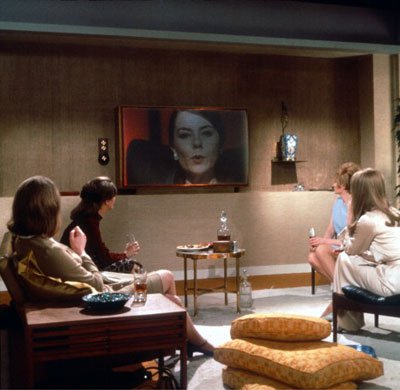
from Fahrenheit 451 (great film, rubbish book)

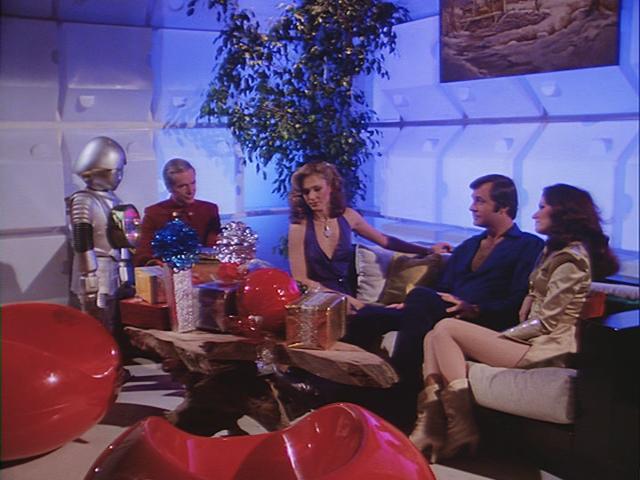
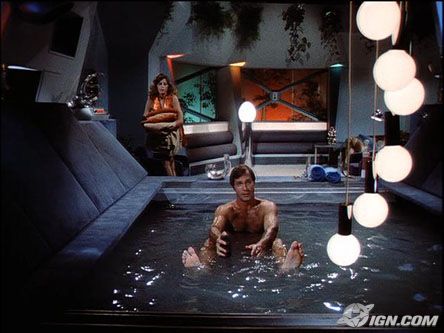
from Buck Rogers in the 25th Century

from Buck Rogers in the 25th Century


1 Comment

Postcard from the edge-lit

Once upon a time there was a one-day genre convention at the Assembly Rooms in Derby. Then it moved across the square to the Quad, a cinema complex. Then it stretched to two days. Then it moved cities to Leicester.

And left behind in the Quad a little baby convention called Edge-Lit.

Edge-Lit is pretty much what alt.fiction was back when it was a one-day convention in the Quad. It followed a similar format: two programme streams, workshops and readings; and, of course, the venue was as before. I’m not an especially big fan of the Quad, although its city-centre location is certainly convenient. But the bar/café gets extremely noisy, and there’s two flights of stairs between the bar and the programme items. Still, it’s almost a local con for me – thirty minutes on the train – and it’s a good chance to catch up with people I don’t see very often.

The trip to Derby was uneventful. On arriving at the Quad, I’d forgotten the annoyingly stupid checking-in procedure – you have to get your ticket – bought online – from the ticket desk, and then go upstairs and register with the convention. You’d think they’d have the two together. The first friendly face I spotted was Roy Gray, master of the Interzone desk in the dealers’ room. So I dumped two-dozen copies of Adrift on the Sea of Rains on him to sell, also said hello to Terry Martin of Murky Depths, and then headed down to the bar. Where I ran into Rocket Science contributor Colum Paget and Steve Poore, a member of the writing group I used to belong to.

I spent the rest of the day in the bar, with occasional trips up to the dealers’ room. This is not unusual behaviour for me at a convention. I did make one programme item: “Have the Limits of SF become blurred?”, with Jaine Fenn, Justina Robson and John Jarrold. Though the talk was interesting I don’t recall it reaching a conclusion. I also attended the raffle. I’d bought some tickets, but Roy also gave me his. The last time he did that, I won several prizes – and, on that occasion, since he’d left I kept them for myself. This time I won nothing. Sarah Pinborough and Lee Harris emceed, and Sarah was on fine form, with her self-censor firmly in off-mode.

I bought a pair of books – Carmen Dog by Carol Emshwiller (The Women’s Press edition, of course), and Wolfsangel by MD Lachlan, which Mark then signed for me (I suspect Mark has the worst signature of any author I’ve met). I wanted to buy a copy of Principles Of Angels so Jaine could sign it, but there were none to be had in the dealers’ room.

I can’t remember every conversation I had, though I do recall that some of the topics were pretty weighty, particularly a discussion with Colum on, among other things, the rambutan as emblematic of exotification in The Windup Girl. I also ran into someone I’d corresponded with many many years ago – he used to edit a magazine called Sierra Heaven, which published a story by me; you can find it here. It’s always good to catch up with people.

I’d liked to have stayed for the quiz at 9 pm, but I had a train to catch. As it was, I didn’t get home until 10:30. I was quite looking forward to a kebab as I’d had nothing to eat but a plate of chips all day. But the kebab shop was shut. At 10:30 on a Saturday night. I’ve no idea how that place makes money – it’s usually empty and the portions are extremely generous. So I made myself egg and chips, watched a bit of Download 2012 on telly and thought myself fortunate I wasn’t there (and it’s not like I actually like most of the bands performing there anyway).

And that was Edge-Lit.


3 Comments

It only takes one book

I have only a small number of literary heroes, but in all cases my admiration of them – and my decision to collect their oeuvre – was sparked by a single book. With Lawrence Durrell, for example, it was The Alexandria Quartet, his most famous work. Likewise for Paul Scott, after I read The Jewel In The Crown, the first part of the Raj Quartet, also his most famous work. But for the latest author to join this august company, it was not their best-known work I read. It was in fact a posthumous collection. And, to be honest, the first story in it did not bode well at all. But I persevered, and the second story, a novella, proved to be very very good indeed. And pretty soon I was hooked.

The book was Hear Us O Lord from Heaven Thy Dwelling Place, and the author was Malcolm Lowry. I knew of Lowry, of course; though previously I had never read anything by him. But I’d picked out the aforementioned collection, Ultramarine and Under the Volcano from my father’s Penguin paperbacks collection to read. I have subsequently ordered more Lowry books. Lowry only saw two novels published during his lifetime – which will at least make collecting signed editions easier… When he died, he left behind a number of manuscripts which were edited by his wife and subsequently published. He also left behind several hundred poems. Here’s one of them. It’s from Selected Poems of Malcolm Lowry, published in 1962 and number seventeen in City Lights Books’ The Pocket Poets Series.

Venus
And, when you go – much as a meteor,
Or as this swaying, incandescent car,
Which, like lost love, leaves lightnings in its wake,
(And me, an aspen with its Christ in mind,
Whose wood remembers once it made a cross,
So trembles ever since in wind, or no wind)
But most like Venus, with our black desire
Which blinds me now, your light a horned curve
First; then, circling, a whitely flaming disc,
Not distance, but your phase, removes the mask –
Until you burn the brightest of all stars –
Pray then in your most brilliant lonely hour
That, reunited, we may learn forever
To keep the sun between ourselves and love.


1 Comment

Wunderbar

Back in December last year, Anarchy Books published an ebook-only anthology, Vivisepulture. It contains twenty-two “weird tales of twisted imagination”, including one by me titled ‘Wunderwaffe’. When editor (and author) Andy Remic had asked me for a story for an anthology of “bizarro” fiction, I’d known straight away what I wanted to write about: Nazi flying saucers. I was aware of Iron Sky – I had in fact seen an advance trailer for it – but I’d been fascinated by the whole Nazi secret science mythology for a number of years. (This had led me to attempt reading WA Harbinson’s Projekt Saucer series, but I gave up after the second book as they really are quite appallingly written.)

In the event, the story I sent Andy Remic only mentioned Nazi flying saucers in passing and focused more on the Bell, a strange Nazi secret science device I was also using in Adrift on the Sea of Rains. A few reviews of Vivisepulture appeared online, one or two of which praised my story.

Recently, a twitter conversation prompted me to send Lavie Tidhar a PDF of ‘Wunderwaffe’ for him to read. But he is – and he freely admits it – somewhat dilatory at reading ebooks. So I cobbled together a little chapbook of the story, printed it off and sent to him.

And he’s gone and reviewed it – see here. (I can also recommend Lavie’s ‘A Lexicon of Steam Literature of the Third Reich’.)

I’ve produced twelve copies of the Wunderwaffe chapbook, so there are eleven remaining. I’m tempted to put them up on the Whippleshield Books website for sale. I’m also tempted to make chapbooks of one or two other stories I’ve written – perhaps ‘Dancing the Skies’ from The Monster Book for Girls; or ‘In the Face of Disaster’ from Catastrophia. A good idea? I quite like the concept of “cottage industry” short fiction chapbooks, though I recognise it’s by no means a new idea. I’m even considering doing something similar under the Whippleshield Books imprint for short stories which meet the guidelines.


Leave a comment

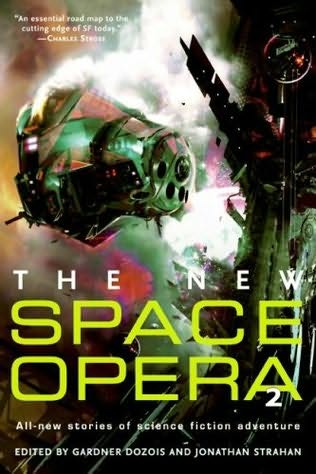
The New Space Opera 2, Gardner Dozois and Jonathan Strahan

The New Space Opera 2, Gardner Dozois and Jonathan Strahan, eds.
(2009 Eos, $15.99, 544pp)

When Wilson Tucker coined the term “space opera” in 1941 to refer to “the hacky, grinding, stinking, outworn space-ship yarn”, he can’t have imagined the sub-genre would still be going strong sixty-nine years later. Or indeed that it would be considered one of the more successful forms of science fiction. That’s not to say that the “outworn space-ship yarn” no longer exists. There are plenty of examples of it being published in the twenty-first century. Some of them are even space opera.

According David G Hartwell and Kathryn Cramer in The Space Opera Renaissance (2006), space opera never went away and merely evolved over the decades into the form we now call New Space Opera. Which is, of course, to completely ignore the British re-invigoration of the sub-genre in the 1980s and 1990s. Before there was New Space Opera, there was New British Space Opera. Of the nineteen authors in The New Space Opera 2, only three are British. Since this anthology is a successor volume and its publisher is American, this is not unexpected. Likewise the fact that eleven of the authors are from the US, with only three Canadians and two Australians. Science fiction is a US-dominated genre.

But is space opera?

It is, if you extend its definition to include some of the stories in The New Space Opera 2. Because from this anthology, the only possible conclusion is that the new space opera has not only morphed back into the old space opera, but it has also expanded to include a great deal more of science fiction. How else to explain the stories by Kristine Kathryn Rusch or Elizabeth Moon in The New Space Opera 2? Both are the sort of sf CJ Cherryh was churning out by the yard in the 1980s. Or Mike Resnick’s spoof tale, which may riff off Tucker’s original definition, but seems to miss the point of new space opera. While John Scalzi’s ‘The Tale of the Wicked’ may be space opera, inasmuch as it features spaceships, AIs and humanity at war with an alien race, it has neither the vigour, scale, nor inventiveness of new space opera. And Bill Willingham’s ‘Fearless Space Pirates of the Outer Rings’ is pure pulp sf, although its ending does drag it into the twenty-first century.

Perhaps this is the way of things. A new movement injects vigour into a moribund genre, and is then subsumed by it. Which is not to say that science fiction was entirely moribund, nor that it has been wholly re-invigorated. There is still a whiff of corruption from some areas of sf.

Happily, The New Space Opera 2 is mostly a good read. With contents provided by, as the back-cover blurb has it, “some of the most beloved names in science fiction”, the stories are readable and mostly entertaining. But naming any anthology after a movement – however arguable its definition – is a hostage to fortune. There are some good stories in The New Space Opera 2. There is some new space opera in The New Space Opera 2. There is even a small overlap between those two groups. But there are a number of pages which do not belong in either group.

The New Space Opera 2 scores best at presenting a snapshot of science fiction in 2009. It is not an all-inclusive snapshot – for that, one of the many “best of the year” anthologies is needed. The New Space Opera 2‘s contents lean in a specific direction. But the good stories in it show what’s been good in sf during the past couple of years – those stories, for example, by Robert Charles Wilson, John Barnes, John Kessel, John Meaney, Justina Robson, Sean Williams and Bruce Sterling. No anthology will ever be perfect, no matter how “beloved” its contributors. The New Space Opera 2 improves its chances with its titular theme. For most readers it will have a higher than average hit-rate. But as part two of a manifesto for new space opera, its title does it few favours.

This review originally appeared in Interzone #226, January-February 2010.