Last month, Neil Williamson was bemoaning his lack of productivity in short fiction on his blog, so I proposed a friendly competition to motivate him and myself. For each story we completed and submitted we would score one point. (Resubmissions didn’t count.) And for each story we sold or placed, we would earn another point. The one with the least points at the end of the year would buy the winner a slap-up meal in Glasgow at the 2014 Eastercon.
At the moment, I’m in the lead. With three points. I finished and submitted a story, ‘The Incurable Irony of the Man who Rode the Rocket Sled’, to Rustblind and Silverbright, an anthology of railway-themed genre stories edited by David Rix and to be published by Eibonvale Press, but… Rocket sleds ran on rails, yes, but I knew the link to the theme was tenuous. And so it proved. Which proved a bit of a problem, as I didn’t think the story was really sellable. It’s a mixture of fiction and non-fiction, has no plot, is only really genre if seen in a certain light, and is far more literary than most genre venues are comfortable with. Happily, The Orphan has taken it for their next issue. And I see from the contents of previous issues that it’s in excellent company.
‘The Last Men in the Moon’, however, is more overtly science fiction, but it’s also quite literary. I really must get that t-shirt printed up: “too literary for genre fiction, too genre for literary fiction”. (Joke.) Happily, literary serial anthology The Fiction Desk has taken it – my second sale to them after ‘Faith’ in The Maginot Line last year. ‘The Last Men in the Moon’ is a bit of a piss-take of sf, and it’s a bit of a deconstruction of the hoary old alien invasion / conquest of the earth trope, and I also get to flatten Sheffield in it.
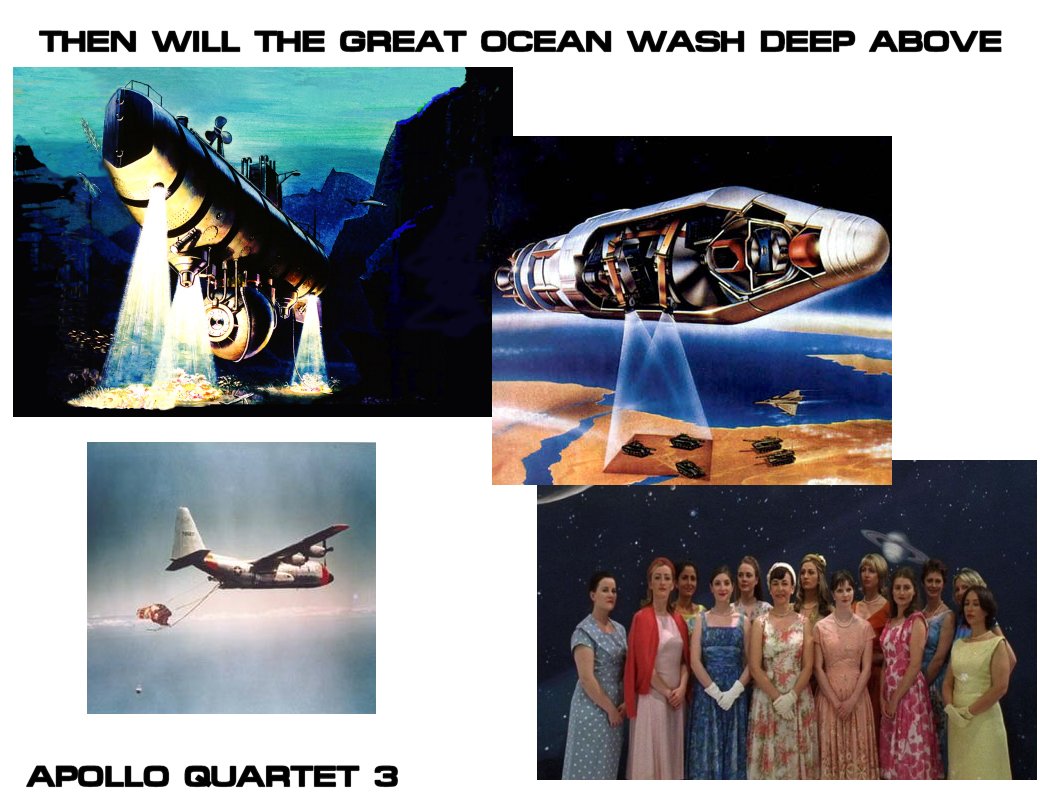
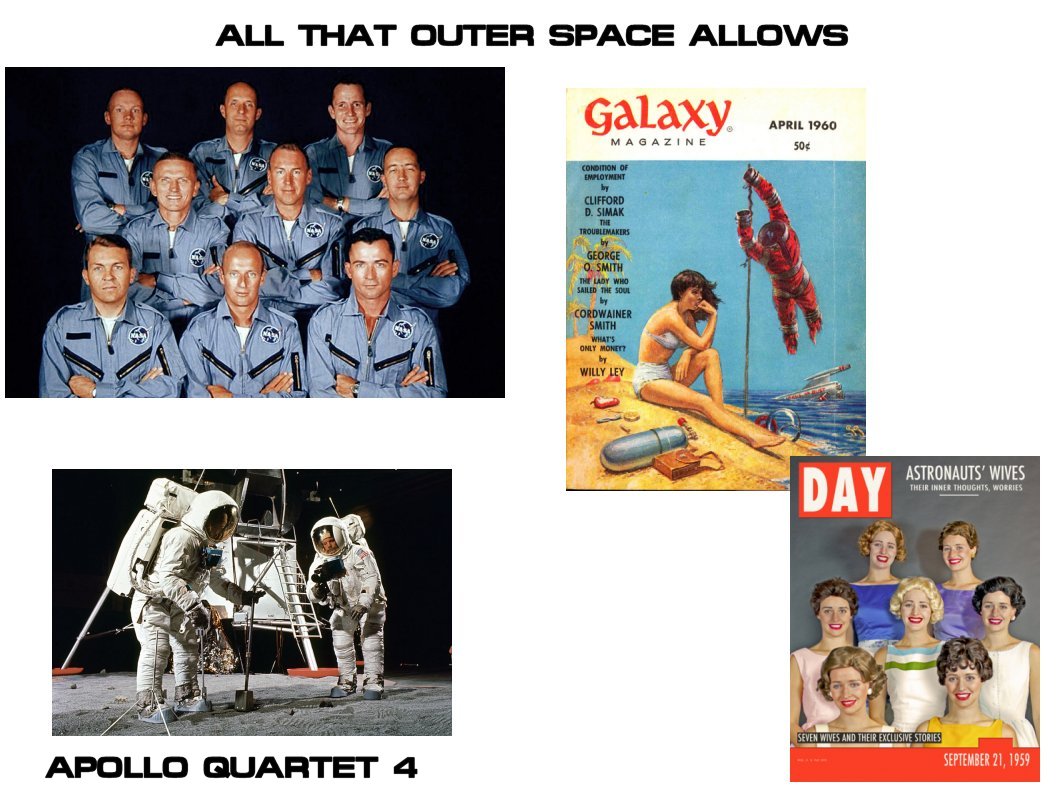
I describe myself as a science fiction writer, but I’m starting to wonder if what I write really qualifies as sf. But the Apollo Quartet!, you cry. Except, as someone said to me recently, “I’m just waiting for someone to twig that the Apollo Quartet is not hard SF”. And it’s sort of true. The novellas are set in the past, they’re about real space hardware, and the central tropes to date are handwavy things like the Bell and a FTL drive I don’t bother to explain. And then I look at my last few stories to see print and… ‘Faith’ features real named astronauts but inexplicable irrational woo-woo things happen to them (it’s available free here). ‘The Way The World Works’ is set in an alternate 1984 and the ending is in no way science fiction. ‘Wunderwaffe’ is a Nazi / Metropolis / alternate history / time travel mashup, and probably deserves a genre all its own. ‘Dancing the Skies’ is just pure fantasy, with flying monsters and Spitfires. On the other hand, ‘Words Beyond the Veil’ is heartland hard sf, even if it does quote from the lyrics of a death metal album (you can read it here).
I think I write with a sf sensibility, even if what I write isn’t always science fiction. What I read is reflected in my writing, and I read a mix of science fiction and literary fiction. But I admire the prose of the latter more, and so try to emulate that. However, when I try to write straight-down-the-middle sf, I find I can’t do it. It feels… too arbitrary, too ungrounded. It’s not anchored to the real world. Even my fantasies have to be grounded in the real world – Spitfires and Wellingtons and the ATA in ‘Dancing the Skies’, for example.
Or perhaps I write with a literary fiction sensibility, which is why my sf usually turns out to be weak sf. It has been mooted that some of the most interesting science fiction being written these days is being written outside the genre. There are certainly literary fiction novels which use genre tropes that I consider better than most genre novels, like The Road or Girl Reading or Never Let Me Go. I used to think such books felt old-fashioned because their writers didn’t know how to deploy their tropes, didn’t have the experience of practiced sf authors in doing so, but what those literary authors have actually done is make the tropes more accessible.
And that I think is a problem with a lot of modern sf – it’s too abstruse, too much the product of, and for, a private members’ club. I complained, for example, that Leviathan Wakes was regressive, a throwback to the hegemonic space operas of the 1970s, but how many people actually care about that, or know enough about sf and its history to realise it? A small group within the small group that is the readers and fans of science fiction. Which makes me wonder what a space opera written by a literary fiction writer would look like. Not one of Banks’ Culture novels, there’s far too much pure genre in them. Is such a story possible? It would be a wonderful experiment, I think.
I’ve a feeling science fiction as a genre is no longer as willing to experiment as it once was. It’s settled into a happy rut, a happy series of ruts, in which expectation plays a large part – as it does in so much of twenty-first century life. This is a century defined by the management of expectation. Yes, there is stuff that challenges those expectations, but it’s way out on the long tail. And we’re happy with that because it can’t destabilise the centre from there. And yet everything that has destabilised science fiction in the past has made it a stronger, better genre – the New Wave, Cyberpunk, New Space Opera. Even if it did eventually get co-opted by the establishment as it became a core fixture.
It is time, I think, to repudiate science fiction’s core values. We need a New New Wave.
 It Doesn't Have To Be Right...