I’ve been binge-watching box sets mostly for the past few weeks, hence the gap between the last Movie roundup post and this one. That’s seven seasons of Beck – which I watched partly to improve my Swedish… so, of course, they go and introduce a Norwegian as a major character in series 6… Plus two seasons of Alias – and no, I’ve no idea why I’m watching it. It’s a series that jumps the shark every episode. But that’s JJ Abrams for you. And a rewatch of Farscape, which is holding up pretty well.
Grimsby, Louis Leterrier (2016, UK). Every Sacha Baron Cohen movie seems to have an infamous scene. It’s almost as if his films are designed around them. If you need to ask what the scene is in this film, then you really don’t want to know. It’s ostensibly a spy thriller, with Cohen as an intellectually-challenged football hooligan from Grimsby and Mark Strong his urbane super-spy brother – who is framed for for assassination and has to turn to his brother for help. There are some funny moments, but far too many cringe-inducing ones.
Dhoom 2, Sanjay Gadhvi (2006, India). The first film was relatively low budget, but did so well Bollywood put more money into its sequel. Most of that money seems to have gone into CGI. In this sequel, the police inspector and his ex-bike dealer buddy are hot on the trail of a mysterious thief who robs high profile targets. But then a copycat turns up and, of course, it’s a gorgeous woman, so they partner up and… Whatever charm the first might have possessed has been lost under a desperate attempt to look cool. Even the item numbers are cringe-worthy. True, jumping the shark is just part of Bollywood’s cinematic language, but in Dhoom 2 it reaches heights even home audiences probably found hard to swallow.
Dhoom 3, Vijay Krishna Acarya (2013, India). In Bollywood, big budget movies like to show their budget on screen by… filming in locations such as New York and London. Even if setting the story there doesn’t make sense. Like this one. A bank forecloses on an Indian circus based in New York. Many years later, the son of the owner uses his background to pull a string of daring robberies. Somehow, the Indian police inspector and his dodgy bike dealer mate are brought in to catch the bad guy. The plot completely rips off The Prestige, but what’s most notable is that the lead actor looks like a Vulcan (see below) but behaves completely illogically. To be fair, this trilogy are fun, but you’ve need to go into them knowing what to expect.
Dracula: Dead and Loving It, Mel Brooks (1995, USA). Leslie Nielsen in the Naked Gun films is funny. Mel Brooks’s Blazing Saddles is funny. But Brooks directing Nielsen in Dracula: Dead and Loving It is… not funny. It’s pretty much Stoker’s story but with… I hesitate to use the word “jokes” as that would imply they might make you laugh. A desperately unfunny comedy. One to avoid.
Dragon Lord, Jackie Chan (1982, China). This is one of Chan’s period kung fu action/comedies and, to be honest, I prefer his modern films to his period pieces. Nominally a sequel to The Young Master, it has Chan as the wastrel son of local gentry, who gets into scrapes and, well, things happen. Some comic sequences, some fights, and a very thin plot. One for fans.
Boy, Taika Watiti (2010, New Zealand). This was Waititi’s second feature film, although apparently it was a project he worked on for many years before his debut feature film. An eleven year old boy’s father – played by Waititi himself – turns up after being released from prison, with two mates. They’re there to try and find cash they buried after their last robbery. But the boy wants to reconnect with his father and see if the reality matches the fantasy he has come to believe. This film is all about the boy’s voice, and it works perfectly. The humour is that slightly absurd humour Waititi does so well, the cast are mostly okay, although Boy, played by James Rolleston, is excellent, and Waititi and his two henchmen put in good turns. Definitely worth seeing.
With or Without You, Michael Winterbottom (1999, UK). Christopher Eccleston and Derval Kirwan are trying to have a kid but failing, when a French penpal of hers turns up for a visit. She doesn’t like her job, he regrets giving up his position in the RUC to join her dad’s firm, the French guy is easygoing and affable, and the sexual tension between the three is so manufactured you could could cut it with a butter knife. Eccleston manages a passable Belfast accent – to my ear, at least, although actual Norn Irish people might disagree (but at least it’s not Irish – and yes, I can tell the difference between the two). But for all that, it seems a bit 1980s for a 1999 film, although I’ve a feeling it’s actually set then but I can’t actually remember (the song the title references was a hit in 1987). Winterbottom made Code 46, a film which spectacularly failed to make sense of its premise or the world in which it was set. This earlier work is entirely forgettable.
Dodsworth, William Wyler (1936, USA). The title refers to a retired industrialist who takes his wife on a tour of Europe. But she wants more than retirement, she wants a life he is not prepared to give – because she’s afraid that his retirement will age her. Dodsworth is on the 1001 Movies You Must See Before You Die list, and while that list is over-burdened with US movies, many of which actually aren’t that good, this one definitely deserves its place. It’s not that Walter Huston or Ruth Chatterton shine in the lead roles. Or that there’s some nice modernist design set design in the early part of the film, and the direction is good, with shots that are well framed and well blocked. It’s the script… it really is excellent, with some real insight and lines that show real understanding and development of character. Definitely worth seeing.
Latitude Zero, Ishiro Honda (1969, Japan). If you know the name Honda, you’ll have a pretty good idea what this film is like. And yet it’s not as batshit crazy as most of his work. Three men in a bathysphere are rescued by a mysterious submarine when an underwater volcano eruption breaks their umbilical. It turns out their rescuers are from a secret undersea city at latitude zero, peopled by scientists who the world believes to have died or vanished. And their actual rescuer is over two hundred years old. The secret scientific elite who secretly scientifically rule the world, or ignore the world, is hardly a new trope in science fiction, but I’ve not seen it used so overtly in a sf movie since, well, the last adaptation of a Jules Verne novel. There are monsters, of course – well, men, actually usually women, in monster suits – and they look just as risible as in Honda’s other films. But the submarines look sort of cool, and the undersea city looks pretty neat too. And there’s a cool twist at the end.
When you look at the Hugo Award fiction category nominees of the last few years, it seems like the same names keep on cropping up. Only an idiot would deny the Hugo nominees are more diverse than they were twenty years ago, but shouldn’t that mean the award now selects from a wider pool of authors? You’d assume so, given the existence of the internet. True, in recent years, the short fiction categories have been dominated by fiction published on tor.com or Clarkesworld; but in the 1980s and 1990s, the short fiction categories were dominated by fiction published in Analog, Asimov’s and F&SF.
Has anything really changed? I decided to have a look. (I was bored last weekend, obviously.)
There’s little point in comparing the representation of gender, race, nationality, etc, of nominees over the decades, as the awards are clearly far more inclusive. I was interested only in the number of writers considered by Hugo Award voters.
I split the Hugo Awards into three cohorts: early years (1953 to 1970), middle years (1971 to 2000), and present day (2001 to 2020). They’re unevenly-sized cohorts – the 1950s is not a full decade and we don’t have all the nominees for the early awards; in the 1970s, the novelette category was dropped for several years, and… 17 years (no award in 1954), 30 years and 20 years… But the split works when you consider the various cultural movements in sf and sf fandom.
big fish in a small pond
In total, over 67 years, 397 authors have been nominated for a Hugo fiction award – on average, five each in novel, novella, novelette and short story. For 1,256 nominations… 397 is a surprisingly low number. It gets even weirder when you look at how many times individual authors have been nominated. Almost half of those 397 have only a single nomination. Among the others…
The most-nominated author is Mike Resnick, with 30 nominations. The top ten looks like this:
1
Mike Resnick
30
1989 – 2012
2
Connie Willis
24
1980 – 2011
3
Robert Silverberg
23
1968 – 1990
4
Michael Swanwick
22
1986 – 2009
5
Ursula K Le Guin
20
1970 – 2003
6
Larry Niven
19
1967 – 1990
7
Harlan Ellison
18
1966 – 1994
8
George RR Martin
17
1980 – 2012
9=
Poul Anderson
15
1959 – 1990
9=
Orson Scott Card
15
1979 – 1992
9=
Kim Stanley Robinson
15
1983 – 2018
9=
Charles Stross
15
2002 – 2014
The years are first nomination to last nomination. The writers’ careers typically lasted much longer.
That’s a lot of old white men. Interestingly, the only author nominated in all three cohorts is Ursula K Le Guin, who had nominations dating from 1970 to 2003.
Among authors who have been nominated only since the turn of the century, the highest number of nominations is for Charles Stross, who managed 15 nominations in 12 years. Seanan McGuire, who has had 13 in just eight years, will likely end up beating his record.
Digging into the Hugo Award nominations for each year, it was surprising how often authors achieve multiple nominations in the same year. Seanan McGuire managed four in 2013, as did Michael Swanwick in 2003. (John C Wright also had four in 2015, but that was entirely due to Sad Puppy bloc voting.)
In early years, it was even more prevalent, with several authors appearing three times across all the fiction shortlists. John Varley even managed an unbroken six-year run, from 1977 to 1982, of two nominations per year.
The one thing the numbers do show clearly is that authors “have their day”. They will be nominated for half a dozen years on the trot, and then disappear. Some pop up a few years later, but most don’t. In some cases, it’s because their career has ended – either retirement or death – but others continue to be published but are never nominated, perhaps because they’re out of fashion or their fans no longer vote for the Hugo. Everything, as they say, shall pass.
But I set off down this rabbit hole to understand if the size of the pool of writers nominated for the Hugo Awards has changed. Overall, 49% of nominees are “one-hit wonders” (a statistic slightly thrown out by the Sad Puppy campaigns of 2014 and 2015), and 16% have had only two nominations.
And when you look at the one-hit wonders, it’s clear present-day voters read much wider: from 1953 to 1970, 51% of nominees appeared only once; from 1971 to 2000, 44% of nominees appeared only once; and from 2001 to 2020, fully 57% of nominees appeared only once (without the Sad Puppies, it would probably be a couple of percentage points lower, but still better than earlier cohorts). I had not expected that. The second cohort, 1971 to 2000, also shows more authors being repeatedly nominated. There were indeed some authors very popular among Hugo voters during this period, such as Connie Willis and Ursula Le Guin, but also Silverberg, Resnick, Varley, Niven and Card. (Lois McMaster Bujold’s success stretched across two cohorts, so she doesn’t score so highly here.)
debut or established?
One other question occurred to me. Present day Hugo voters, it seems to me, like debut novels. Certainly, the industry has changed and debut novels are pushed much harder than they used to be, sometimes even more so than new works by established authors. The whole concept of “building a career” has gone, killed by the need for a quick profit. Best-selling series of the past, like the Wheel of Time or Malazan Books of the Fallen, took several volumes to build up to best-seller levels. That wouldn’t happen now. Instead, we get instant best-sellers, like the Kingkiller Chronicles, followed by a decade-long wait for a sequel. If this is meant to be an improvement, it’s hard to understand how.
But, Hugo nominations can at least show – for best novel, specifically – which nominated novels over the years were debut novels. Popular perception – based on changes in the industry – suggest this is a recent phenomenon. So I went through every best novel shortlist, marking off those which were debuts – as in, the first book the author had published, also including collections. It’s a little difficult to be sure for the first cohort, since novels were often serialised in magazines, and it wasn’t always the serialised version that was nominated but a later hardcover/paperback release, and sometimes even both versions – ‘Dune World’, for example, was nominated two years before Dune, which was a joint-winner in 1966.
The results were… interesting.
I’d have expected a few more debuts in this cohort, given the genre was relatively young. But magazines had been serialising novels from the very beginning, so most well-known authors likely had plenty of novel-length works under their belts by 1953.
There’s considerable overlap between the earlier cohort and this one, and it takes a good fifteen years to fade away. (Perhaps I should have defined my cohorts differently – 1953 to 1965, 1966 to 1985, 1986 to 2015, and 2016 to 2020?) Aside from a blip in the early 1980s, debut novels were not that popular, appearing in only seven of the years. Interestingly, one of the two debuts on the 1985 shortlist was Neuromancer by William Gibson; the other was Emergence by David R Palmer, a fix-up of two novellas nominated for the Hugo in previous years. Palmer published one more novel and then vanished.
Again, there’s overlap from the preceding cohort, and it too takes around fifteen years to fade away. But debuts are also clearly more popular, appearing on the shortlists of eleven of the twenty years, and even making up half of the shortlist in 2020. On the other hand, the one debut novel on the 2004 shortlist was Charles Stross’s Singularity Sky – and he was then nominated each year for further five years. The debut novels nominated in 2011, 2012, 2013 and 2014 were by, respectively, NK Jemisin, James SA Corey (technically not a debut as one of the two authors who write under that name had been previously published), Saladin Ahmed (who has published no novels since), and Ann Leckie. At least two novels I’d thought were debuts – by Paolo Bacigalupi and Yoon Ha Lee – proved not to be, as both had published collections earlier.
in conclusion…
While recent years have seen several authors nominated multiple times, or for several years on the trot, it’s to a lesser degree than was the case in the decades before the turn of the millennium. So it may seem like the same names keep on appearing, but it was much worse in the past. On the other hand, it’s true debut novels are now more prevalent on the Best Novel shortlist than they were previously. I suspect this is a result of both social media and changes in the industry. Sf fandom has always been tribal – does anyone seriously believe Mike Resnick was the absolute best genre author of the 1990s and 2000s? – although I wouldn’t be surprised if a number of writers in twentieth-century Hugo Award shortlists owed their many nominations to logrolling…
Tribalism still plays a major role, of course, with lists of eligible works posted by influential authors, fans basically providing unpaid marketing for their favourites, and authors branding themselves as personalities separate from their novels (rather than “the death of the author”, it’s privileging the author over the work). But this is the world in which the Hugo Award now operates, and it too will likely change over the next decade or two.
additional findings
The most popular middle initial for Hugo nominees is apparently “M”.
The author with the most works published before their first Hugo nomination is Kevin J Anderson, with over one hundred novels or collections. A number of authors had published at least twenty books before their first nomination – Jim Butcher, Neil Gaiman, Frederik Pohl, Bob Shaw, Sheri S Tepper, Philip José Farmer, Michael Bishop, Robert Silverberg, Andre Norton and John Brunner.
The longest unbroken run for best novel nominations is Charles Stross, with six years. Orson Scott Card managed five years in a row.
Only Robert Silverberg has managed more than one novel on the shortlist – two in 1972 (A Time of Changes and The World Inside) and two in 1973 (The Book of Skulls and Dying Inside). He was obviously very popular then. Of course, there was also Blackout and All Clear by Connie Willis, which were published as two books, but the Hugo administrator decided to combine their votes, so giving Willis a win in 2011. As I remember, it was not a popular decision.
Only three people have been nominated for a Hugo posthumously for novel-length works. Both Edgar Rice Burroughs (died 1950) and EE Doc Smith (died 1965) were nominated for Best All-Time Series in 1966. Robert Jordan (died 2007) was, with Brandon Sanderson, nominated for Best Novel for The Wheel of Time series. And no, I can’t remember how they managed to swing that, either.
Just the one US film, and it’s Netflix. And it was rubbish. Although it seems to have its fans, and I seriously worry about criticism in the genre these days. Otherwise some Jackie Chan, some Shaw Brothers, and some Bollywood.
The Protector, James Glickenhaus (1985, China). Chan tried to break into the US market several times – one has to wonder why he bothered – but most of his attempts didn’t go well. Like this one. A lot of it was re-shot by Chan as he was dissatisfied with Glickenhaus’s work. I think I saw Chan’s cut. Certainly there’s a change in tone from the bad early 1980s New York to later scenes set in Hong Kong. Chan plays one of a pair of cops on bodyguard duty at a fashion show (and this is the 1980s!), when a prominent businessman’s daughter is kidnapped by armed gangsters. Because drugs. And a falling out between each end of a New York – Hong Kong drugs pipeline. So Chan and partner (Danny Aiello) head off to HK to find the missing woman. The final fight scene, on a shipyard crane, is somewhat OTT.
Disorder, Olivier Assayas (1986, France). I’m a big fan of Assayas’s films, hence my purchase of a Blu-ray of two of his early works, Disorder (1986) and Winter’s Child (1989). A group of musicians break into a music shop and accidentally kill someone. Then they get on with their lives. I tweeted while watching this that you could tell the French band in the film were “edgy” because they were singing in English. Other than that, it was all very low-key and a bit meh.
Dhoom, Sanjay Gadhvi (2004, India). The title means “blast”, and I suppose the film was just that, in one narrow sense of the word. A group of thieves on high-powered motorbikes have been robbing banks in Mumbai. With great success. A police inspector enlists the help of a dodgy motorbike dealer, and his friends, in catching the thieves. It’s all very glossy, and a bit silly, and I was never really convinced the high-speed chases were, well, high-speed. But there’s some good comedy in it, and the use of slo-mo in the action sequences is gloriously over the top. There are apparently two sequels.
The 14 Amazons, Cheng Gang & Charles Tung (1972, China). Historic martial arts epic from the Shaw Brothers, in which the family of a general killed in battle, plus an army of volunteers, set off to defeat the enemy. Fans of present-day historical epics will probably find this one disappointing. It was made before the days of CGI, and the Shaw Brothers were never ones to spend lavishly on sets or location shooting. Meh.
Golmaal: Fun Unlimited, Rohit Shetty (2006, India). A friend recommended Golmaal and I put it on my watch list, but it disappeared before I got to watch it – explain to me why streaming is a good thing, again? – but having watched this film I have to wonder if it’s the one he meant. Anyway, four friends run numerous small scams until the only one of them that’s at university… is booted out of university. They move into the house of an old blind couple, and two of them pretend to be the couple’s grandson – one playing the body, the other providing the voice (don’t ask) – because of some treasure or something. But the “treasure” turns out to be the ashes of the grandson, who the old man already knew was dead. Except a gangster hid some diamonds in the ashes and he wants the diamonds back… It’s all completely daft but quite funny.
Deewana, Raj Kanwar (1992, India). This film has to be seen to be believed. It’s basically Dynasty dialled up to 13. At least. Rich popular singer visits small country town and falls in love with a young woman who is one of his fans. His nephew, who wants the singer’s fortune, sexually assaults the new bride. The uncle sends men to kill the singer, which they do, although the nephew is killed in the attempt. Young widow and her mother move to another city. They are run over by the wastrel son of a wealthy industrialist. The son falls in love with the young widow. But then the singer turns up, because it seems he wasn’t dead after all (although since he was shot at point blank range and then fell off a cliff, I suppose it was an easy mistake to make). But the singer is happy to let his wife stay with the wastrel, and the two guys fight off the uncle’s goons in an epic battle. Absolutely bonkers. Even for Bollywood.
Police Story, Jackie Chan (1985, China). I was pretty sure I’d seen this before but when I looked I could find no record of it. So I assume I saw some of it, but not all. Chan made it partly in response to his dissatisfaction with The Protector, and while it’s a little more realistic it’s still not entirely believable. Especially the court scenes. The villain gets off far too easily, and the police are far too quick to believe the worst of Chan’s character. For all that Police Story is said to be one of Chan’s best movies, some of the others I’ve seen were, I thought, better. Worth seeing, nonetheless.
The Old Guard, Gina Prince-Bythewood (2020, USA). This has has had a lot of positive press, which is not unexpected for a new genre property from Netflix. Unfortunately, it’s based on a comic that has borrowed far too much from French bandes dessinées and presents a US-privileged worldview despite being allegedly global. True, every country’s art privileges its home nation, but no one outside the US believes the US has a fucking clue what it’s doing. Anyway, the head of a UK pharmaceutical company learns of the existence of four immortals, who have sort of done various good but secret things for centuries, and he wants whatever it is that means they can’t die. So he sets up a complicated plan to capture them, one which results in a death toll over the course of the film of several hundred people. CEOs do this all the time, of course – extraordinary rendition, kidnap, torture, mass murder… No, wait. That’s US presidents. The whole thing was complete bobbins from start to finish, and high production values can’t disguise a story that’s morally repugnant. Avoid.
It seems my last Reading diary post upset a few people. I’m not in the slightest bit bothered, of course, because those people are the selfsame ones whose opinions I said I didn’t care about and, er, it’s that which has upset them.
But back to the books. This post includes another Clarke Award nominee. I’m not sure if I’ll read the others. Two I would certainly like to, but there’s something about ebooks… well, I’m reluctant to buy them when they’re priced the same as the paperback edition. I mean, at least you get an object for that money with the paperback. As yet, the three nominees I’ve yet to read have not been on offer on Kindle. I may bite the bullet at some point, but when there’s so much else to read I’m not in a rush.
Meanwhile, I’ve been doing quite a bit of comfort reading – mostly Georgette Heyer, er, when they’re available for 99p on Kindle; although I’m also enjoying novels by Alice Chetwynd Ley – which I don’t bother writing about here. Of the books I have written about below… One was a reread by a favourite writer, although I’ve no idea when I originally read it. One was by another favourite writer, but I found it bitter and disappointing. One is, as mentioned earlier, a Clarke nominee. One was by a writer I’d been meaning to read for many years but had never quite got around to (one of their novels looked interesting, but reviews were lukewarm). And one is another instalment in a series I’ve enjoyed, although I found this one a little disappointing.
Redemption in Indigo, Karen Lord (2010, Barbados). This was a freebie, or rather a “BONUS BOOK!”, as a strip of paper tucked into the book informed me. I’d ordered a copy of And Go Like This by John Crowley from Small Beer Press (this was not the John Crowley first edition I accidentally ordered twice, by the way), and they included Redemption in Indigo free of charge. All of which is incidental. I was pleasantly surprised by Redemption in Indigo, although to be fair it has had mostly positive reviews. It’s not my favourite type of story – it is, in fact one I generally avoid. The book is structured as a tale told about a woman in a Senegalese-inspired fantasy world who leaves her husband, is gifted with the power of chaos, learns some important lessons at the hands of the god who previously held that power – as does he, of course – before giving the power back and finding contentment. The story is overtly told, and the identity of the narrator is part of the world-building. There’s nothing especially remarkable about either the story or the world-building. While the prose harkens back to older styles of story-telling, it’s a mode that’s been used quite a lot in fantasy fiction. Fortunately, Redemption in Indigo succeeds because it has bags of charm. Its story is not always nice – horrible things happen – but it feels pleasant, and it makes for an enjoyable read. This is a nice book, despite its plot, and the genre needs more of them.
The Jewels of Aptor, Samuel R Delany (1962, USA). I know I’ve read this before – I’ve certainly had the Sphere paperback edition pictured for several decades – so it was probably back in the late 1970s or early 1980s. And having now reread The Jewels of Aptor, nothing pinged any memories. Oh well. A poet and a sailor sign aboard an expedition to rescue the Goddess Argo’s sister from Aptor, a distant continent of horrors and monsters. They are joined by a four-armed boy who is telepathic. Once Geo and Orson and Snake have explored some of Aptor, it’s clear the continent was once technological and suffered an unspecified “atomic” disaster. Quite how this exists alongside a mediaeval style civilisation on Leptor, which is where Geo, Orson and the Goddess Argo are from, is never explained. Perversely, if the book has a flaw, it’s that it has too many explanations. Whenever something happens, Geo and Orson speculate on what it might mean, or what is being planned. Most of the time they’re wrong; most of the time, it reads more like the author is trying to figure out the plot. But for a work by a nineteen-year-old, this is a better novel than by some current authors twice Delany’s age when he wrote it. Yes, it’s an early work, and the plotting is a bit hit and miss, but the beginnings of the language are there, as is the singular approach to the genre. When I think about what Delany has written over the years… He was a genre stalwart and award winner but has since moved out to the edges of genre, and yet has continued to be one of the real innovators in science fiction, both as a writer and a critic, and more people in genre should pay attention to him.
The Doves of Venus, Olivia Manning (1955, UK). I’ve been a fan of Manning’s writing since reading her The Balkan Trilogy and The Levant Trilogy (they were adapted for television as Fortunes of War). Manning spent World War II outside the UK after her husband was first posted to Romania… followed by Greece, Egypt and Palestine. She then returned to England, where she remained until she died in 1980. And The Doves of Venus is clearly written by someone who had tasted better and now found the UK miserable and close-minded. I can sympathise. The book is set in the 1950s but is partly based on Manning’s own life in London during the 1930s. An eighteen-year-old young woman tries to make her own way in London. She meets a man, much older, whose wife has left him, and enters into an affair. Her lover’s wife comes back. She makes friends with a woman at work and they visit the friend’s rich uncle in the country. And so a small group of people sort of circle about each other, meeting up unexpectedly, some living hand-to-mouth, but others rich but parsimonious… and I suppose part of the problem with this novel is that its cast is too small for its story, and the way they keep on bumping into each other seems wildly implausible in a city the size of London. The protagonist, Elsie, is well-drawn and refreshingly independent, especially so given the period (and this was written in the 1950s too), although she’s woefully naive when it comes to her lover (albeit not entirely implausibly). But the 1930s casts a shadow over The Doves of Venus its purported setting can’t overcome. I’ve read other novels set in London during the 1930s, set in the same group of people to which Manning belonged, such as Lawrence Durrell’s Pied Piper of Lovers (1935), and it bears more resemblance to The Doves of Venus than, say, many of the films I’ve watched that were set, and made, in 1950s Britain. There’s also that bitter air to the novel, the feeling of constraint and close-mindedness, that is hard to get past. Manning’s books apparently received mixed reviews on release, with The Balkan Trilogy and The Levant Trilogy generally highly regarded and other books less so. I think she has an oeuvre worth exploring, even if it is variable, and the aforementioned trilogies certainly giver her a huge amount of credit. One for fans.
Cage of Souls, Adrian Tchaikovsky (2019, UK). I’ve now read half of this year’s Clarke Award shortlist. And… oh dear. One nominee is a space opera du jour, also nominated for the Hugo and Nebula (which it did not win), and spends more time on world-building and its protagonist’s love life than it does on plot or ideas. Another is a near-future B-movie, poorly-written hackwork filled with recycled tropes. And now, Cage of Souls… Tchaikovsky is scarily prolific, banging out novels in a range of genres and subgenres with inhuman rapidity. He previously won the Clarke in 2016 for Children of Time, and the BSFA Award this year for its sequel, Children of Ruin. I’ve read the first, but not the second. His other books have been fantasy or steampunk. Cage of Souls is, at least, quite well-written – certainly above average for the genre, but not really stand-out prose – but unfortunately it also reads like a novel Robert Silverberg could have written in the 1970s. It is bizarrely old-fashioned. It is set during the final days of Earth, when only a single city, Shadrapar, remains. So who the stranger in the line, “How can I describe to you, a stranger who will never know it, the place of my birth?”, is something of a mystery. The characters have mostly contemporary names, and are pretty much exclusively European. There are very few women in the cast, and they’re chiefly defined by their attractiveness. The words “man” and “mankind” are used to refer to humanity. And the plot assumes that after hundreds of thousands of years of civilisation, humanity will have regressed to something like late nineteenth-century USA, or, er, early twenty-first century USA. The narrator is sent to the Island, a prison located in the middle of distant swamp, where the inmates are treated worse than slaves, and could be killed by the guards for no reason – the Marshal even murders one of each new intake of prisoners simply to prove that he’s a hard bastard. I honestly thought we’d got this sort of nonsense out of our system. Yes, there’s all those self-published mil sf and space operas, but who takes them seriously? Except recently there have been announcements about new space operas by established writers, and it’s the same tired old genocide in space shit. Is it the times? The US and UK are currently led by half-witted corrupt incompetents who make Nero look “strong and stable”, and both have dismally failed to contain the pandemic, with catastrophic consequences… So the genre starts churning out mindless genocidal crap as some sort of antidote? Seriously? Sf is, I admit, a US mode of fiction, but we are under no obligation to accept uncritically its specifically American tenets. Having said that, it wasn’t until two thirds into this novel I realised Tchaikovsky was riffing off Gene Wolfe’s The Book of the New Sun, and while I have to applaud the ambition – and my feelings toward Wolfe’s fiction are conflicted – the comparison does Cage of Souls few favours. I looked at the full submissions list for the Clarke Award and it took me no more than five minutes to find a dozen books more interesting than those on the actual shortlist. I’ve not read much Tchaikovsky but I’d consider him a safe pair of hands – and he did win the BSFA Award this year – but I have to wonder why Cage of Souls was picked for the shortlist because it doesn’t feel at all like twenty-first century science fiction.
Valour and Vanity, Mary Robinette Kowal (2014, USA). This is the fourth book in a, to date, five book series about a married pair of “glamourists” in the early eighteenth century. Or, in other words, Austen with magic. Or maybe Heyer. Except… while the husband’s patron is the Prince Regent, the tone doesn’t really match Heyer’s Regency novels. On the other hand, they’re lighter, and more overtly romantic, and less wittier, than Austen. Still, they’re fun. In this instalment, David and Jane Vincent are visiting Italy, chiefly to work with Venetian glassmakers. Their ship is attacked by corsairs while travelling from Trieste to Venice, but it all turns out to have been part of a scam to steal the pair’s secret of invisibility. Kowal manages a mostly English feel to her prose, although the level of emotion is obviously aimed at a contemporary US audience rather than a British one (and certainly not a UK audience of Austen’s or Heyer’s times). However, something about Valour and Vanity never quite gelled for me. Perhaps it was the fawning depiction of Byron, or the excessive interiority, or the overly-complicated convolutions of the plot, or the flatness of the supporting cast. Having said that, to get to book four before delivering a duff instalment is a notable achievement. I’m obviously going to pick up the final book, and I hope more will appear.
Oops, a couple of Hollywood films sneaked in – even worse, one is a new Disney film. (Old Disney films are allowed, by the way.) To be fair, I’d assumed the film was Irish, given the mega-selling property from which it was adapted is Irish – but apparently not. The other is by the nearest thing Hollywood has to an actual auteur, although I’ve always found his films unconvincing. Otherwise, your usual international mixture.
Artemis Fowl, Kenneth Branagh (2020, USA). Nope, didn’t get it. Fairy land is real and lies deep in the earth, but they have magic – so why do they need high tech? Which they have, much higher than us poor surface folk. The title character is the eleven-year-old son of a man who shares the same name, and apparently both are criminal geniuses. So we are told. But not shown. Then there was something about fairies and dwarfs and trolls and a powerful weapon that wasn’t a weapon, and none of it made the slightest bit of fucking sense, and it was clear Branagh had reached for the visuals in every scene, but it wasn’t enough to give the material any kind of sense or character. I’ve heard mixed reports about the books, but everyone has said the film is bad. Hard to disagree.
Dragon Fist, Lo Wei (1979, China). Very early Jackie Chan film in which he is a student of a kung fu master who is killed in a grudge match, then Chan later stumbles across the killer, whose clan is in conflict with a nasty evil clan, and discovers the killer has reformed so much so he even cut off one of his legs. It’s a bit silly, yes, and the showdown where the villain’s brainiac henchman explains his plan is even sillier. But there are some excellent fights, and the generally strong story line keeps things simple. One for fans, I think, though.
Dragons Forever, Sammo Hung & Corey Yuen (1988, China). Jackie Chan plays a lawyer hired to prevent a fishery from closing down a chemical plant after complaints of pollution, except the chemical plant is really a drugs plant and Chan falls in love with the environmentalist helping the fishery… A film mostly notable for being very 1980s, until you realise that Chan’s associates, Sammo Hung and Yuen Biao, have an entire comedic routine going on between the two of them that nearly derails the film. Also, Chan’s climactic fight with Benny Urquidez has to be one of his best, if not the most physical the two ever performed – and, to my mind, better than the one in Wheels on Meals. A must for Chan fans.
The Kinsman, Doris Ariole (2018, Nigeria). Nollywood is the third biggest cinema on the planet after Indian (Bollywood + Tollywood + Kollywood, etc) cinema and Hollywood, but its output is not easy to find. In some respects, this is a good thing – most Nollywood films are really, really bad. But occasionally it throws up some gems. While “gem” may be far too strong a word for The Kinsman, I did enjoy it, for all its clichéd story and amateur performances. Widow and nubile daughter return to Lagos, and presume on an acquaintance of her late husband to, first, get the daughter a job, and, second, match-make between the two. But the acquaintance, Mr B, is more than double the age of the daughter, and reluctant to get romantic. Add in a pair of female sidekicks, one of whom is deaf and uses sign language throughout, and you have a rom com that ended up more interesting than the usual fare. I enjoyed it, and I didn’t expect to.
Jaane Bhi Do Yaaro, Kundan Shah (1983, India). There are not many Bollywood films inspired by Michelangelo Antonioni movies – in fact, this might be the only one. Two unlucky owners of a photographic studio/shop find themselves embroiled in a corruption conspiracy when they accidentally photograph a wealthy developer murdering a corrupt municipal commissioner. But this is Bollywood, so a lot of the film is an extended joke on keeping the commissioner’s corpse out of the hands of the bad guys. It’s all very Bollywood and very 1980s, with pantomime villains and luckless heroes. The end sequence, in which the heroes and villains take over a theatre production of the Mahabharata is considered a classic of Bollywood comedy, and rightly so. It’s brilliantly done, and it’s worth seeing the film for it alone.
The Legend of Rita, Volker Schöndorff (2000, Germany). Of all the nations on this planet, Germany has probably interrogated the violence of its recent past the most. Admittedly, it did significant damage to Europe during the 1930s and 1940s, but it has taken responsibility for those crimes in an intelligent and moral way. Which is more than can be said for other European nation. One of the consequences of the position Germany found itself in after WWII resulted in a forty-year campaign of terrorism, which Germany has addressed many times in film. (This is not to say Germany is a complete paragon – it has yet to address the quiet rehabilitation of Nazis which took place in the years following WWII.) The Legend of Rita is based on a true story of a terrorist who escaped to East Germany and was protected by the Stasi. But it all came to an end after reunification…
Gantz, Shinsuke Sato (2011, Japan). Two young men are hit by a subway train and awake to find themselves in an apartment with a giant black ball, which tells them they must kill aliens to earn points. The film is then structured as their encounters with various aliens. But they also have their own lives to navigate – and while I’ve seen reviews of this film complain about the characters development, it strikes me as overly harsh given the situation itself is never really explained. True, Gantz drags quite a lot in places – in far too many encounters, the characters seem completely clueless and stand around waiting to be killed, when the film has already shown what needs to be done. But it’s a neat idea and it’s handled well, and if there are any problems, it’s in the pacing.
Four Weddings and a Funeral, Mike Newell (1994, UK). This is on the 1001 Movies you Must See Before You Die list and while I’d definitely seen it many years before, I didn’t have a date against it. So when it popped up on Amazon Prime, I decided to watch it. I’d forgotten how much I despise Hooray Henries, and their collaborationists, such as Richard Curtis. Hugh Grant’s character is clearly living off overdrafts – the minimum spend for Andie MacDowell’s wedding present is £1000 and he asks what is available for £50. The cars he drives are cheap clunkers. But he has rich friends. And he is posh as fuck. This is all as representative of 1990s UK as Downton Abbey is of the UK at any time. True, John Hanna’s reading of Auden’s ‘Funeral Blues’ still moves, but that’s due to the poem, not the film or actor. I fucking despise “chocolate box England” movies, and Four Weddings and a Funeral was among the first of them. Burn it, burn it to hell.
A Hidden Life, Terrence Malick (2019, USA). If you make a film in which a person is arrested and condemned to death for not doing what his country and society want him to do… who is the villain? Given that this film is set in Austria during the late 1940s, a sensible person would say: the Nazis. Except Malick doesn’t show the Nazis doing anything bad. True, there’s no such thing as a good Nazi – but if you don’t make their evil explicit, then you’re helping rehabilitate them And we know people are stupid enough in this day and age to defend the Nazis. While those sort of people are unlikely to watch a Malick film, anything involving Nazis should not be morally neutral. Three hours of fucking dull ambiguity does no one any favours. There is, it must be said, some lovely photography in A Hidden Life. There is also a lot that is unconvincing. And the most unconvincing thing is Malick’s commitment to his premise. Still, this is hardly surprising – Malick’s films have generally been visually strong but intellectually weak. A Hidden Life feels like Malick’s attempt to make The White Ribbon, while completely missing the point of Haneke’s film…
Just the one US movie this time, and that’s from nearly thirty years ago. To be honest, I had a feeling I’d seen Demolition Man before, but having now watched it I’m still not sure – and I generally have a really good memory for movies…
These Movie roundup posts – and their precursors, the Moving pictures posts – don’t seem to be as popular as my book reviews, but I think it’s important to demonstrate to Anglophone readers there are shitloads of really good films out there that are tons better that the latest glib and simplistic Hollywood blockbuster. Put a bit of intelligence into your movie watching and you will find they can be as intellectually and artistically rewarding as books.
Bacurau, Kleber Mendonça Filho (2019, Brazil). Not entirely sure what to make of this one. It’s Brazilian. But it stars Udo Kier. It’s supposedly set in the near-future, but I don’t recall much that signalled as much. A remote village begins to fall apart after the death of the matriarch, and random strangers turn up and kill people. It probably deserves a second watch, but I didn’t get much out of it – and I’ve seen a number of Brazilian films.
Demolition Man, Marco Brambilla (1993, USA). Risible near-future action from Hollywood, in which Wesley Snipes overplays a violent criminal defrosted in a utopian California in 2032 but has been secretly programmed to sabotage the utopia in order to turn it into a dictatorship. Unfortunately, the authorities defrost his historical enemy, Sylvester Stallone, to catch him and Stallone demonstrates the freedom to starve is worth more than utopia, and he’ll kill to prove it. The whole thing plays like an advert for Reaganomics. No thanks. A story based on a bullshit argument from the rich people who have the most to gain from it. Avoid.
Tiger on the Beat, Lau Kar Leung (1988, China). Hong Kong cop duo action comedy, with Chow Yun-fat as a lazy and ineffectual police officer teamed up with by-the-book go-getter Conan Lee. Takes a while to get going, but there’s some good comedy, and the final fight scene with chainsaws has to be seen to be believed.
Tokyo Raiders, Jingle Ma (2000, China). This was apparently the last film ever released on laser disc, although there were many films released in that format that have never made it to DVD or Blu-ray. With the success of streaming, recent years have seen DVD/Blu-ray labels turn boutique and specialise in collectible and cult films. Which I applaud. A man misses his wedding, and the bride-to-be teams up with an interior decorator who is owed money (yes, really), and they head to Tokyo to track down the missing man’s business partner, who is apparently wanted by gangsters, and there’s a private detective with three female sidekicks, and the story goes round in so many circles it’s astonishing it makes some sort of sense at the end. Worth seeing.
The Sister of Ursula, Enzo Miloni (1978, Italy). Another giallo. Two sisters visit a seaside hotel, indulge in much nudity, while a mysterious killer stalks and kills the female guests. A review on imdb probably describes it best: “spends too much time on the rumpy-pumpy and not enough on the stabby-stabby”.
The Monkey King: Havoc in Heaven’s Palace, Soi Cheang (2014, China). I tweeted while watching this that it seemed to be some unholy mashup of Avatar and Cats. And, a week later, that’s pretty much all I can remember. Monkey is a common and popular figure in Chinese mythology, and variations of him have worked their way into Western culture. I admit I know little about him, so my view of this film is pretty much based entirely on the visuals. Which were… weird. I think the film was shot entirely in green screen, with CGI backgrounds, and to be honest I lost track a bit of whose side Monkey was on, with demons fighting angels but the demons acting like they’re the good guys. All very strange.
A Better Tomorrow I & II, John Woo (1986 and 1987, China). I’ve been aware of Woo’s influence on Hong Kong cinema since first seeing Hard Boiled back in the mid-1990s, and Chow Yun-fat’s popularity as an action star, but it’s only after watching several 1980s Woo movies on the trot recently that I’ve come to appreciate precisely how much he changed Hong Kong, and then world, action cinema. In A Better Tomorrow, the brother of an enforcer for a gangster joins the police, but then their father is killed in a bungled attempt to kidnap him to put pressure on the enforcer after a fall-out with a Taiwanese gang. The enforcer gives himself up after a drug deal gone wrong and spends three years in prison. When he gets out he wants to go straight but everyone else is determined otherwise. A good solid thriller. The sequel is more of the same, but in New York. Chow Yun-fat’s character, who died in the first film, was so popular he was resurrected as his twin brother in the second. While both movies are knotty thrillers, the fight scenes, particularly in the second, weren’t as good as some I’ve seen in other films. But it’s weird seeing how Woo “Americanised” Hong Kong thrillers so effectively that later HK thrillers would be remade by Hollywood…
Bahu Begum, Mohammed Sadiq (1967, India). A classic Bollywood film – and there are a surprising number of them available free to watch on Amazon Prime – set in Lucknow, which was apparently a popular setting. A woman falls in love with one man but is married off to another, not realising until the ceremony it’s a different man. Um, that sounds a bit dumb but it makes sense in the film. I was surprised to see Johnny Walker playing a serious role, as most of the Bollywood films I’ve seen him in he plays comic characters.
Andaz Apna Apna, Rajkumar Santoshi (1994, India). This film was apparently so successful it’s become a cultural phenomenon. Certainly, if its humour were any broader, it would rival the Indian Ocean. An heiress from London visits India to find a husband. Two wastrels decide to win her hand and end up in competition. Complicating matters is the fact the heiress’s assistant is really the heiress, but somehow or other one of the wastrels transfer his affections to her. This is definitely one of the funniest films I’ve seen for along time, despite being such a hackneyed plot.
I was briefly tempted to review all six books on the Arthur C Clarke Award shortlist, as announced in mid-June, given there’s been a tradition of commentary throughout the award’s history. Of course, there is no guarantee I’d finish reading the books by the time the winner is announced in September. Once upon a time, the Clarke Award used to generate interesting, if occasionally controversial, shortlists. While you might not have agreed with every book nominated, the shortlist generally included books otherwise unknown that were worth reading. But things seem to have slipped these last few years. Not just the presence of Sea of Rust on the shortlist in 2018, which was quite frankly hackwork… I mean, when you remember bad nominees of the past, such as Greg Bear’s Hull Zero Three in 2012, it was at least a novel in conversation with the genre, and Bear is an accomplished craftsman… Some of the more recent nominees, unfortunately, can claim neither.
The Clarke commentary no longer takes place. An attempt to reinvigorate it several years ago with a shadow jury was loudly condemned by US fans who plainly didn’t understand what a shadow jury is and equally plainly hadn’t bothered to find out. Despite all claims to the contrary, fandom is not a community. Once upon a time, it was an emergent phenomenon of the stories’ existence. Now it’s just a part of the marketing machine, and, happily for the publishers, it costs them nothing. Five stars means less than one star. Giving a book five stars just makes you a fucking mug. And everything is dominated by the US, a nation which seems congenitally incapable of recognising that other countries exist and they do things differently there (yes, I know, that’s a time-based reference, not geographic one; but never mind). True, science fiction is an American mode of fiction, and the single largest market for its creations, so its dominance is hardly surprising. But us non-USians, while we may appreciate the genre output of the US – the stories, the novels, the films, the TV series – we don’t actually give a shit about what US fans think. Science fiction fandom is not one giant global family. It never has been. And it never should be. Vive la différence.
All but one of the books below were nominated for genre awards. One won. Deservedly, I must admit. ‘The Ballad of Beta-2’ was on the Nebula novella shortlist in 1966 (the award’s first shortlist), but lost to joint winners ‘He Who Shapes’ and ‘The Saliva Tree’. Space Opera was nominated for the Hugo in 2019. The Pleasant Profession of Robert A Heinlein won the BSFA Award in 2020. The Last Astronaut has been nominated for the 2020 Clarke Award shortlist. And Borne was on the 2018 Clarke Award shortlist. Strandloper is non-genre, and was not, as far as I can discover, nominated for any awards. You’d expect some top-drawer reading out of that bunch of accolades. A shame, then, to find it wasn’t the case.
The Ballad of Beta-2 & Empire Star, Samuel R Delany (1965/1966, USA). I’m pretty sure I first read this on a family holiday in Paris in the early 1980s. I have a memory of buying Delany’s collection, Driftglass (the Panther/Granada paperback edition), from an English-language bookshop in Paris, chiefly because I’d taken the 1977 Sphere paperback of The Ballad of Beta-2 & Empire Star with me to read during the holiday. While both ‘The Ballad of Beta-2’ and ‘Empire Star’ had stayed with me during the nearly forty years since, ‘Empire Star’ more than ‘The Ballad of Beta-2’, it must be said, I’d never bothered to reread them. Until now. And this despite being a big fan of Delany’s fiction and non-fiction. True, some of his output is hugely dated. But some of his output is brilliant precisely because it is dated. The two novellas here have aged extremely well, and while the clever Moebius-strip narrative of ‘Empire Star’ I’d remembered pretty much accurately over the last four decades, I’d forgotten how good was ‘The Ballad of Beta-2’. An anthropology student is sent to study the eponymous song, the only original piece of art created by the Star Folk, the degenerate survivors of a convoy of generation starships, who were beaten to the rest of the galaxy by progress. The story behind the song is pretty much handed to the student on a plate, but it’s an interesting story, and not at all what the reader would have expected. ‘Empire Star’ has a simple plot: Comet Jo, a plyasil farmhand in a “simplex” asteroid-based community finds a crystallised Tritovian and is told to take it to Empire Star to deliver a message. And that’s what he does. Along the way he meets people who have previously interacted with him at different points in their lives, and learns about the Lll, the only enslaved people in the galaxy and the galaxy’s greatest builders, and the war fought over them and their emancipation. I’ve long considered ‘Empire Star’ one of my favourite novellas – I reread it early this century, I seem to remember – and on this reread, my admiration of it remains undiminished. Read both of these novellas, they’re worth it. But definitely read ‘Empire Star’.
Strandloper Alan Garner (1996, UK). This was inspired by the real life story of William Buckley, a giant of a man – between 6ft 5 inches and 6ft 7 inches, apparently – and an ex-soldier, who at the turn of the nineteenth century was transported to Australia for 14 years for carrying a bolt of cloth he maintained he had not known was stolen (British justice – the envy of the world, eh?). Shortly after arrival in what is now Australia, he learnt the penal colony was being moved to Van Diemen’s Land (Tasmania), and escaped. He was taken in by the Wathaurong People and spent thirty years living among them. The protagonist of Strandloper – also called William Buckley – is transported for “lopping” the local squire’s oaks, and sedition – the latter based on a piece of paper, a “tract”, containing passages from the Bible, chosen by the squire’s son, the semi-literate Buckley had been using to practice his writing. Buckley survives passage to Australia and, like his namesake, escapes and lives among one of the local peoples. Strandloper is a disconcerting read. There is no clear sense of time running through the narrative. The dialogue is given in local dialect, and for the first section consists mostly of local nonsense words used in songs and pagan practices. The end result is a short book, only 200 pages, which packs quite a punch. I’m reminded of Golding’s Rites of Passage, although that may simply be because they share an historical period. Yet now I think about it, both novels have an impressive immediacy, in Golding’s case generated by the use of journal entries as the narrative… and the fact Garner manages it using a (relatively) straightforward omniscient POV narrative is probably the greater achievement. Previously, I had only read Garner’s children books, and enjoyed them, and a Young Adult I found less satisfying. But Strandloper is good, and persuades me to hunt down more of his adult fiction.
Space Opera, Cathrynne M Valente (2018, USA). This was nominated for the Hugo Award in 2019. Its genesis is simple, and explained by the author in an afterword. A US genre author discovered the Eurovision Song Contest and was much taken with it. A fellow author persuaded them to use it in a science fiction novel. There are many reasons why this is a bad idea. The US does not compete in Eurovision. People in the US have no idea what Eurovision means… and it means different things to different countries. In the UK, it is considered somewhat risible, with a side-order of resentment. In Sweden, there is a month-long televised Melodifest merely to pick the song to represent the country. Valente decided to appropriate Eurovision for a US audience and base it all on The Hitch-hiker’s Guide to the Galaxy. She failed. Not only are the references a weird mishmash of UK and US that make no sense, embedding UK cultural elements in US cultural movements, but the whole thing is a litany of megaviolence and genocide from start to finish… While Eurovision was indeed created to help rebuild links between the war-torn nations of Europe after WWII, it does not celebrate the death and destruction which occurred between 1939 and 1945. Nor does it boast of the weaponry, tactics or bodycounts of the various competing nations. Valente also chose to model her prose on The Hitch-hiker’s Guide to the Galaxy. I am not, I admit, a great fan of Adams’s novels, although I’ve read them and, when I was young, enjoyed them. But Adam’s books at least contained ideas and riffed off them. Valente’s does not. Adams’s jokes were carefully set up, and then left quickly behind, to crop up again when least expected. Valente belabours her jokes, sometimes with almost Fanthorpe levels of repetition. You end up skipping pages, trying to find the narrative. To be fair, I tried reading a Valente novel once before, Palimpsest, and ended up throwing it against the wall because it was so overwritten. And I admire Lawrence Durrell’s prose! I managed to finish Space Opera, but it was a slog. I can only recommend people avoid it. Especially if they’re fans of Eurovision.
The Pleasant Profession of Robert A Heinlein, Farah Mendlesohn (2019, UK). Reading this proved interesting after reading Gwyneth Jones’s Joanna Russ a couple of months ago. Chiefly because I have read many of the books written by both subjects. However, where Jones’s Joanna Russ persuaded me to reread Russ’s oeuvre, The Pleasant Profession of Robert A Heinlein does not do the same for Heinlein. But for a different reason. When I read Joanna Russ, I felt as though I’d missed important points in in Russ’s fiction. When I read The Pleasant Profession of Robert A Heinlein, Mendlesohn’s criticism opened up his books for me in interesting ways but didn’t substantially change what I remembered of them from my own readings. Admittedly, I read the books several decades ago, but Mendlesohn’s argument didn’t strike me as sufficient grounds to track down copies of the books and reread them (I binned most of my Heinlein paperbacks years ago). Don’t get me wrong, The Pleasant Profession of Robert A Heinlein is a fascinating read in its own right, and an informative study of Heinlein’s fiction. It is a worthy winner of the BSFA Award (even though one of the other nominees contains a critical essay on my Apollo Quartet…). I’m not entirely convinced by some elements of Mendlesohn’s analysis – for example, Mendlesohn fails to point out that Wyoming pretty much vanishes from the narrative of The Moon is a Harsh Mistress once she’s married (she becomes a hairdresser); I also thought the novel’s code-switching was cack-handed at best. The Moon is a Harsh Mistress I read a few years ago for the first time, so it’s relatively fresh for me. Other books, as mentioned above, I read back in the 1970s and 1980s, and I think the only one I’ve subsequently reread was Stranger in a Strange Land ten years ago. And now I’m starting to persuade myself perhaps I should try rereading them… Perhaps that’s the difference between The Pleasant Profession of Robert A Heinlein and Joanna Russ. The latter inspired me to read and reread Russ more urgently than the former did for Heinlein. Nevertheless, both critical works are definitely worth reading.
The Last Astronaut, David Wellington (2019, USA). Hmm, near-future novel about a mission to an asteroid that has just entered the Solar System. But this is several decades from now and the US space programme is dead, so they have to drag an astronaut out of retirement. This sounds right up my street… There’s a follow-up to Oumuamua thirty-five years from now, but this one is considerably bigger. Unfortunately, the US doesn’t have a space programme after their Mars mission ended in tragedy. But they cobble together a mission, crewed by 1) the geek who discovered the asteroid and realised it as was decelerating, b) a young xenobiologist, c) a Space Force pilot of the X-37 drone (that’s the same one being flown now, by the way), and d) the ex-astronaut captain of the Mars mission with all her baggage. But they’re overtaken en route by a corporate mission – who describe NASA as “the enemy” – and then spend very little time analysing the asteroid before following the corporate team inside. In a tweet, I characterised this book as being “a mashup of Rendezvous with Rama and Prometheus, with none of the sense of wonder of the first and all of the baffling stupidity of the second.” To be honest, I was being generous. The central premise of The Last Astronaut is that the asteroid is a space-based life-form, whose life-cycle requires it to crash on habitable planets in order to breed. Which makes not the slightest bit of sense. How did they evolve if they required Earth-like worlds in order to reproduce? And, apparently, the asteroid creature rapidly generates interior flora in order to feed its rapacious young… except, where does it get the energy from to grow that flora? Not to mention the asteroid creature’s ability to accelerate rapidly using solar sails. This is a sf novel written by someone who has done a little bit of research but not actually applied any intelligence to their premise. It doesn’t help the prose is the sort of bland simplistic prose of techno-thrillers, the characterisation is single-note throughout, and the Mars mission commander is repeatedly labelled a murderer throughout the book despite doing the only thing possible to save the Mars mission. Wellington has tried to update his presentation by including “interview” excerpts of the main cast (although some, I think, seem to have taken place after their deaths), and adding an “excerpt from author’s foreword to the 2057 edition” by David Wellington. I read The Last Astronaut in mounting disbelief – its complete failure to present a believable near-future, its reliance on present-day tech, its pantomime corporate villains, its hokey premise, its weirdly small cast for the story it told, its complete lack of originality… How it ended up on the shortlist of a major genre award is a fucking mystery.
Borne, Jeff VanderMeer (2018, USA). I don’t get it. I read Annihilation and, okay, Ballard did it first and Ballard did it better, but I thought Annihilation quite good, and VanderMeer is one of the good guys and his Wonderbook is a damn sight more useful as a writing tool than 99% of the how-to-write books out there. But reading Borne, I’m reminded of The Book of Phoenix and the Binti novellas by Nnedi Okorafor, both of which read like they were written by a teenager, but Okorafor has a PhD in English, and if you know that much about writing fiction, why would you deliberately write something bad? And Borne – which, it must be said, has been highly praised – did not seem to me to be very good at all. There’s this post-apocalyptic city, and a five-storey flying bear, yes, really, and a woman called Rachel who finds some sort of biotech creature which grows and grows and can imitate all manner of things. None of this makes the slightest bit of sense, nor gives you any reason to continue reading. It doesn’t help that the prose is so lazily written, such as the narrator witnessing an invisible person make a gesture, or crashed helicopters having “wings crumpled”. I read Borne and I didn’t see any reason to get invested in the story. It felt like a half-a-dozen pet images on endless recycle. I thought Annihilation was good but didn’t bother with the sequels. Borne is apparently the first in a trilogy but I definitely won’t be bothering with the sequels.
No US films, as promised in my last Movie roundup post.
The Five Deadly Venoms, Chang Cheh (1978, China). The title refers to five masked kung fu masters, who each base their style on one of Chinese folklore’s poisonous creatures – the centipede, the snake, the scorpion, the lizard and the toad. A pupil has to figure out the identity of the masters before they join up and rob the clan of its riches. Unfortunately, the two good masters are easy to spot – although film drags out the identity of one them long past time – and the two evil ones are even more obvious. The fifth is not revealed right until the very end, and it doesn’t really come as much of a surprise. An odd film – a treasure hunt but it all takes place on three sets, and the fighting is so mannered it’s just not that exciting. I’m surprised this is considered a classic, to be honest.
The Killer, John Woo (1989, China). Whenever I see this film on best of lists, I have a feeling I’ve seen it. But I can’t actually remember the story. Nor have I recorded it on my list of films I’ve watched. And now I’ve watched it… and I still think I might have seen it before but I’m not sure. Anyway, it’s very very 1980s. Chow Yun Fat plays a hitman who’s had enough. He promises to do one last job, during which he accidentally blinds a nightclub singer while returning fire with one of his target’s goons. He feels sorry for her, and later starts seeing her romantically. She, of course, doesn’t know who he is. You can probably guess the rest.
Adventures of a Plumber’s Mate, Stanley Long (1978, UK). The third and final film in the series, with Christopher Neil still as the lead, but this time he’s a, well, a plumber’s mate. Actually, he seems to be an actual plumber, who works under contract for a plumbing company run by Stephen Lewis, you know, that bloke from On the Buses who used to say, “I’ll get you, Butler!”. Neil is asked to replace the toilet seat in a well-off woman’s house, which leads to the expected sexual shenanigans. However, it turns out her husband has just been released from prison after serving time for a gold robbery. The proceeds were never found. Neil sells the toilet-seat to a junk shop. He thinks it’s brass. It’s the gold from the robbery, of course, melted down into a toilet seat. Comedy ensues. Not great films by any means, but this was probably the best of three, perhaps because it had the most coherent plot.
Wheels on Meals, Sammo Hung (1984, China). And speaking of very 1980s films, here’s another one with Jackie Chan. He and Yuan Biao operate a food van in Barcelona. They become involved with a young woman who proves to be a pickpocket. But there are men after her, and not because of her light fingers. It turns out she’s the heir to a large fortune and the next in line wants her gone. This is easily one of the best Jackie Chan films, with an excellent car chase, and a final fight, against Benny Urquidez, which is generally considered Chan’s best.
Balgandharva, Ravi Jadhav (2011, India). In the nineteenth century in India – or perhaps only parts of India – women were banned from the stage, much as in Elizabethan England. The title refers to one such male actress who became hugely successful. Unfortunately, it went to his head and he insisted on ever bigger spectacles and eventually ended up broke. But his career greatly influenced Bollywood (although it’s Marathi cinema and not Bollywood which made this film). Not a bad film, although the actor playing the lead had a disconcerting resemblance to Leonardo DiCaprio.
High Hopes, Mike Leigh (1988, UK). It’s Thatcher’s Britain and a working-class couple in Camden have to deal with his aged mother, who lives in the only council house in a gentrified street, and whose neighbours are Hooray Henries, and a self-centred social-climbing sister who’s married to a used-car salesman. The central couple, and the mother, are well-drawn, but the rest of the cast are caricatures. Still worth seeing, though.
The Bad Education Movie, Elliot Hegarty (2015, UK). Jake Whitehall plays a teacher who has never grown up, tells stories about his salad days at public school, and takes his class on inappropriate school trips. His latest plan to take them Las Vegas is scuppered by the school, and he has to take them to Cornwall instead. Where Whitehall inadvertently hooks up with the “Cornwall Liberation Army”, who then occupy a local tourist spot castle. The humour is a bit hit and miss, and a lot of it is comedy of shame with Whitehall the butt of the joke. The film has its moments, but it’s hard to really like a film that paints everyone outside London as some sort of intellectually-challenged yokel. Those sort of jokes weren’t funny in the 1970s, and they really haven’t aged well.
In Love with Alma Cogan, Tony Britten (2011, UK). Roger Lloyd-Pack plays the manager of Cromer’s pier-end theatre, which is losing money and the Council are threatening to sell off. The reason it’s losing money is because Lloyd-Pack has kept ticket prices low so the townsfolk can afford them. And it’s the low-key battle between the two that forms the plot of the film. The title refers to a tribute act hired to boost ticket sales at the theatre and, to be honest, while the I know the name Alma Cogan I have no real who she was. So I’m not really sure what this film’s intended audience was – because the story seemed quite contemporary, but anyone who remembers Alma Cogan is going to 70+…
Tracker, Ian Sharp (2011, New Zealand). Shortly after the Boer War, a Boer arrives in New Zealand, hoping to begin a new life. But then a Maori is accused of murder and goes on the run, and the Boer is asked by the local garrison commander, who knew him from the war, to track the runaway. (The Maori is innocent, of course.) The Boer, played by Ray Winstone, eventually captures the Maori, played by Temuera Morrison, and they earn each other’s respect. Some lovely landscape cinematography, solid turns by both Winstone and Morrison, and yet another story that shows the British Empire as it really was.
Five Fingers for Marseilles, Michael Matthews (2017, South Africa). Marseilles is a shanty town in South Africa. A teenager, one of a group of five friends, shoots and kills three police officers who are demanding protection money from the local stores. He runs away. Many years later, he returns, after spending time in prison, and discovers the town has grown, one of his friends is now mayor, and a mysterious gangster now runs everything. It’s all framed explicitly as a Western, although the setting bears no resemblance to the Wild West. An excellent film.
2020 has certainly been a year for the history books. True, more people died in the early decades of last century, but that did result in actually intelligent people being in charge for a while. But then old habits kicked back in and the British once again mistook privilege for intelligence and the US once again mistook the possession of wealth for intelligence, and so both countries now have the worst and most inept governments in living memory.
As if that weren’t enough, there’s the pandemic. I’ve spent most of this year so far cooped up indoors. And all my holidays plans – conventions in Stockholm and the Åland Islands – were cancelled; and ones later this year – in Reykjavík and Copenhagen – may also come to naught. You would think that working from home and not socialising would mean I’ve spent the last six months readings tons of books and watching shitloads of films. Sadly, no. Which has made this best of the half year both easier and harder – easier because there’s less to choose from; harder because there were no real stand-outs, just an even split between good and bad. But here goes, anyway…
books
To date, I’ve read 49 books, of which ten were rereads. Female authors accounted for 43%, and male authors for 47%. The remainder were graphic novels and non-fiction. Half were by British authors, a third by US authors, and the rest from Sweden, New Zealand, Israel, France, Belgium and Canada. The oldest book I read was first published in 1923, and the most recent was published this year. The best five books read in 2020 so far are…
1The League of Extraordinary Gentlemen: The Tempest, Alan Moore & Kevin O’Neill (2019, UK). From a relatively easy to understand premise – a group of “superheroes” taken from late Victorian/early Edwardian fiction – this extended series has turned increasingly metafictional as it has progressed. And every piece of British fiction sooner or later references Shakespeare. And if you’re going to do that, and you’re genre, why not go for the big one, The Tempest? (It’d be King Lear for other genres, I suspect; but A Comedy of Errors for, er, comedy.) This latest installment of The League of Gentleman doesn’t just up the metafictional states, it also functions as a history of UK comics. I can understand the motives behind this – and I’m well aware it’s something Moore has tackled many times in other properties – but certainly the breadth of British comics doesn’t seem so well-known – US comics: superhero comics … UK comics: everything from the Bash Street Kids to Dan Dare to Judge Dredd to Susan of St Bride’s to Lord Peter Flint…
2Joanna Russ, Gwyneth Jones (2019, UK). I’ve been a fan of Russ’s fiction for many years, and a fan of Jones’s writing for considerably longer, and in hindsight the two have a great deal in common. The science fiction of both is intensely feminist, although in Russ’s fiction it feels more combative – but claiming that’s a consequence of its time is too easy an answer, because while Russ may have been earlier, the war is far from over, even 65 years after the publication of Russ’s first story in 1955. Jones provides an overview of Russ’s life, and then discusses her fiction, both short and long. This book does what all good books of its type should do: it makes you want to go back and revisit the subject’s works. I finished Joanna Russ wanting to reread Russ’s stories and novels. Job done.
3Unholy Land, Lavie Tidhar (2018, Israel). Tidhar has spent a lot of time exploring alternative Israels and, sadly, history has given him plenty of plausible alternatives to explore. In Unholy Land, the Jews are offered land in Uganda by the British – which really sort of happened – and they accept the offer and call it Palestine. But Tidhar can never tell a straight alternative history, there has to be some sort of spin. In Unholy Land, a science fiction author returns to this Palestine, except he’s not from that reality, and his presence changes things. For all that this is not new territory for Tidhar, it’s good stuff. I’m also pretty sure one of the stories written by the sf author in the novel is the first sf story by Tidhar I ever read.
4Metropolis, Philip Kerr (2019, UK). It’s not just sentimentality that earns this novel its spot in this top five – it’s the last of the Bernie Gunther books, as Kerr died the year before it was published – but as the last book in what has been an excellent series, and one of the better entries in that series, it definitely earns a place. Yes, there is a link with Lang’s film, but it’s pretty tenuous (Gunther is interviewed by Thea von Harbou, Lang’s scriptwriter and wife, and suggests the plot which becomes M). Metropolis covers Gunther’s career in its very early years, specifically an investigation into two serial killers, one who kills prostitutes and one who kills WWI veterans, and it’s excellent stuff. If you’ve not read these books, you really should give them a go.
5Bridge 108, Anne Charnock (2020, UK). This is previously-mined territory for Charnock as Bridge 108 is set in the same universe as A Calculated Life and The Enclave. In fact, the opening chapters of the novel were previously published as The Enclave. Charnock presents a future UK suffering from both climate change and the migrant crisis, but also a world split into haves and have-nots where the distinguishing item is a brain chip allowing direct access to, well, something probably not unlike the internet – but without the trolls and fake news and shitstorm social media. Bridge 108 is a bit like Law and Order – a format I’ve used myself – as the story is carried forward from one character to the next. Science fiction which interrogates our world is becoming increasingly rare – indeed, science fiction which interrogates its own world seems on the wane – so we should value such novels when they do appear.
Honourable mentions:The Green Man’s Foe, Juliet E McKenna (2019, UK), a trunk novel rewritten as a sequel to The Green Man’s Heir, and while it’s a bit, er, bitty, it’s a fun read and a good instalment in a series that deserves to continue; The Real-Town Murders, Adam Roberts (2017, UK), the Hitchcock connection, to be honest, is a bit of a red herring, as is the crime which opens the story, but this is a typically Robertsian exploration of political conflict between two worlds, in this case the real and the virtual, which on reflection seems particularly British; A City Made of Words, Paul Park (2019, USA), a short collection of metafictional pieces by an author who probably writes the best prose of any US genre writer currently being published; The Sinister Mystery of the Mesmerizing Girl, Theodora Goss (2019, USA), the third and, sadly, final, volume in the adventures of the Athena Club, a female-only group of fictional characters from Victorian literature, and, while it doesn’t celebrate the metafictions it explores, this trilogy is pleasingly metafictional; Beneath the World, a Sea, Chris Beckett (2019, UK), Ballard meets Greene in strange adventures in an alien zone in South America, which succeeds because it’s on strong on atmosphere and appropriately vague on rigour; Shardik, Richard Adams (1974, UK), after rabbits Adams turned to secondary-world fantasy, and managed something that is more literary than is common for the genre, even if it wasn’t published as genre per se, but is just as grim and bleak.
films
I bought a dozen Blu-rays with me when I moved here and I’ve still not watched them all. Admittedly, one is 17.5 hours long, so it may be a while yet before the shrinkwrap comes off that one. I’ve not watched any Swedish TV this year, but then I was never a fan of Midsomer Murders. But I have been binge-watching several sf TV series. After finishing off Stargate SG-1, I moved onto Quantum Leap. And there was a season of Space: 1999 in there somewhere as well- and that definitely didn’t match my fond memories of it. There were also some newer series, such as Watchmen, Avenue 5 and For All Mankind, of assorted quality. And then there were the films…
This year, I’ve seen 198 films, so slightly up on last year. Two-thirds were new to me. A third were from the US, slightly less than a third from the UK, and the rest from Argentina, Australia, Belgium, Brazil, Canada, Chile, China (including Hong Kong), Denmark, Estonia, Finland, France, Germany, Greece, India, Iran, Israel, Italy, Japan, Lebanon, Morocco, New Zealand, Norway, Russia (including the USSR), South Africa, South Korea and Sweden. China, India and Italy were the top three among those – that’s a lot of Jackie Chan and Shaw Bros movies, Bollywood films and gialli. The best films – and one “limited event series” – I watched in 2020 so far are…
1Blue, Derek Jarman (1993, UK). I remember watching some of this back in the 1990s – I’m pretty sure I did, although I left the UK in March 1994 and it was broadcast on Channel 4 in September 1993, which would have been my only chance to see it… So perhaps I didn’t it. I certainly knew of it. And at that time I likely thought it hugely self-indulgent – 79 minutes of a single shot of International Klein Blue? But I’ve now watched it several times, and I find it an extremely moving film. Plus, I could listen to Nigel Terry’s voice for weeks.
2Capernaum, Nadine Labaki (2018, Lebanon). I’m surprised I’d not come across this film sooner. It won the Jury Prize at Cannes, and the name Labaki is not unknown to me. Admittedly, it’s getting harder and harder to find the sort of films I like these days. New releases on streaming services seem to dominate social media, and Amazon’s search engine is notoriously useless. And I no longer subscribe to either LoveFilm (which is defunct anyway) or Cinema Paradiso, which was one way of finding new films that might interest me… Fortunately, I stumbled across Capernaum on Amazon Prime, a film about how the West has comprehensively fucked up the Near East, as told through the story of a twelve-year-old Lebanese boy who stabs a man who buys his eleven-year-old sister as his wife (and she dies in childbirth), and the boy wants to sue his parents for having him. This is harrowing stuff, and a film that should certainly be better known.
3In Order of Disappearance, Hans Petter Moland (2014, Norway). Skarsgård plays a taciturn Swede living in Norway who has just been made Man of the Year of his small town. Then his son is found dead of an overdose, except Skarsgård is convinced he never touched drugs. (He was actually murdered by a drug dealer.) Skarsgård investigates and works his way up the drug cartel hierarchy, killing off each person he finds, and inadvertently kicking off a gang war between the Norwegian drug dealers and a gang of Serbian drug dealers. This is the blackest of comedies and it’s perfectly pitched. The head of the Norwegian gang, a pony-tailed Vegan, is an excellent comedic character. Bizarrely, some of the characters spoke Swedish, some Danish, and the rest Norwegian. Which resulted in a somewhat weird viewing experience.
4Twin Peaks: A Limited Event Series (2017, USA). I’ve been a fan of Twin Peaks since it was first broadcast on British TV. The one thing I never thought it needed was a third season. And, to be honest, I’ve sort of gone off David Lynch’s movies. So expectations were mixed when I started watching Twin Peaks: A Limited Event Series, as it was branded in the UK. And… The second season of Twin Peaks ended in a very strange place, and this third season takes that and runs with it. It’s almost impossible to summarise or make sense of the plot. Most of the original cast return, including several who had retired, but especially notable in this season was the cinematic quality of camerawork. The original two seasons of Twin Peaks were television soap opera, and both looked and felt like a – somewhat bizarre, admittedly – television soap opera. But the third season often looks and feels like a string of arthouse films. There’s that famous theme tune, and lots of familiar faces, but watching Twin Peaks: A Limited Event Series is a bit like watching the entire oeuvre of an alternate world David Lynch.
5Gloria, Sebastián Lelio (2013, Chile). A middle-aged divorcee decides she has spent long enough on the shelf, and begins to enjoy a social life. She meets a man of the same age, and they start seeing each other. But he’s still tied to his kids, and he can’t let them go and enjoy their relationship. Middle-aged women are not a common subject of movies – and particularly not, you would have thought, in South America – so such films should be treasured when they do appear. It helps that Gloria is so good. It’s mostly a one-hander, but Paulina García is excellent in the title role (and won a Golden Bear for it). Again, like the other two non-Anglophone movies above, this was a lucky find. I’m glad I found it.
Honourable mentions:Enter the Fat Dragon, Kenji Tanagaki & Wong Jing (2020, China), highly entertaining kung fu action/comedy that starts in Hong Kong then moves to Tokyo; Thale, Aleksander Nordaas (2012, Norway), two nobodies who clean up after deaths get more than they bargain for when they discover a hulder, a Scandinavian forest satyr, in a dead man’s bunker; Hara-kiri: Death of a Samurai, Miike Takashi (2011, Japan), a remake of a 1960s film about a samurai forced to commit hara-kiri and the man who avenges his death; Ali Zaoua: Prince of the Streets, Nabil Ayouch (2000, Morocco), a movie with an amateur cast of Moroccan kids who decide to give one of their own a fitting funeral after he dies in a senseless gang fight.
albums
No albums, I’m afraid. I’ve spent most of the last six months listening to playlists on Spotify. Some I created myself, some myself and colleagues put together, and others I found on Spotify. If I had the time, I could probably pick five best songs I’ve stumbled across in 2020, but that would be a monumental task and I don’t track the music I listen to like I do the films I watch and the books I read. But perhaps by the end of the year, I may have found some albums new to me in 2020 worthy of a top five.
Trans women are women (and trans men are men and trans nonbinary are nonbinary and so on)
Gammons are the real snowflakes
History will survive quite well without statues
I shouldn’t need to document my politics as I mention it in pretty much every film and book review I’ve written on this blog.
I may not be an especially useful ally as I haven’t been on any demonstrations or contributed to any campaigns, and these days my “activism” seems to mostly comprise arguing with ignorant gammons on Facebook and Twitter and then getting blocked by them. But since I was a teenager I’ve sought out books and films which offer a perspective different to that of my own lived experience. And I’d encourage others to do the same. Your education in these matters is on you.
Look shit up before you start getting offended. It’s the twenty-first century, you have the interwebs, you have no excuse for not doing so. Just watch out for those bots and trolls and British newspapers…

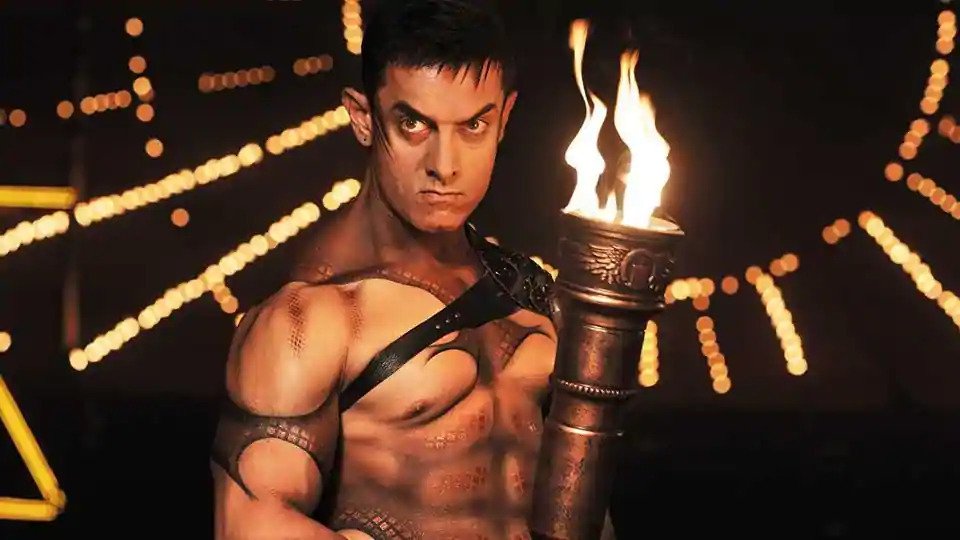
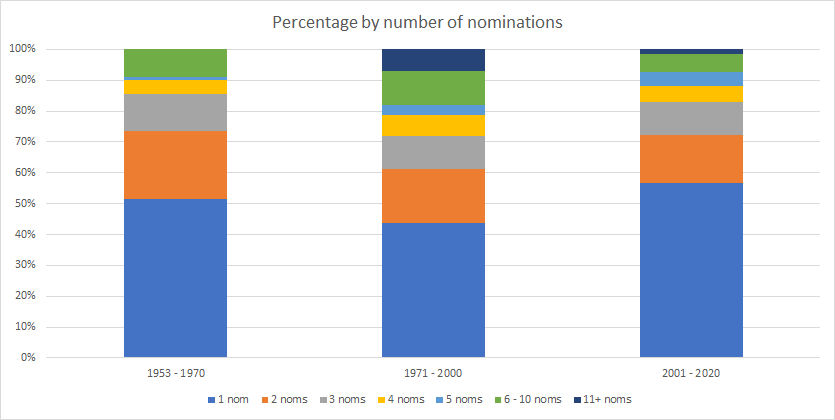
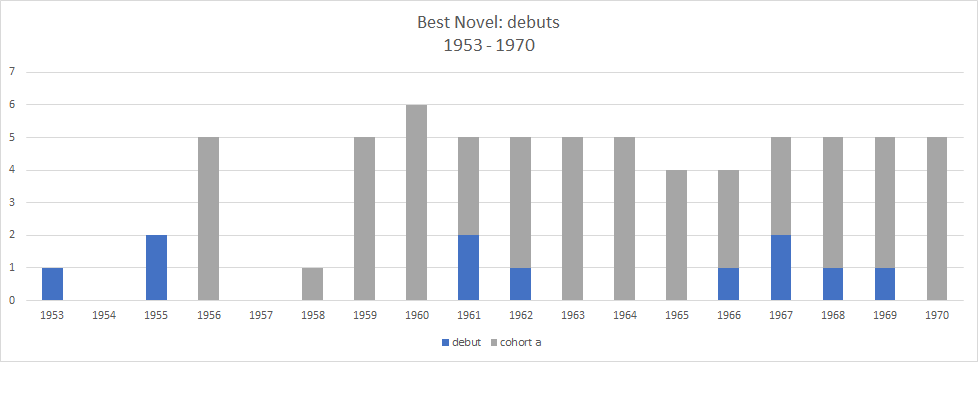
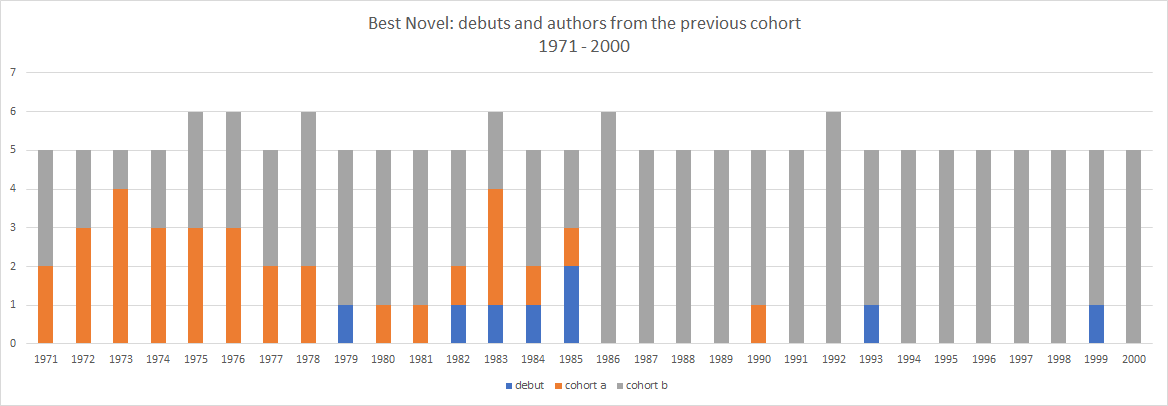
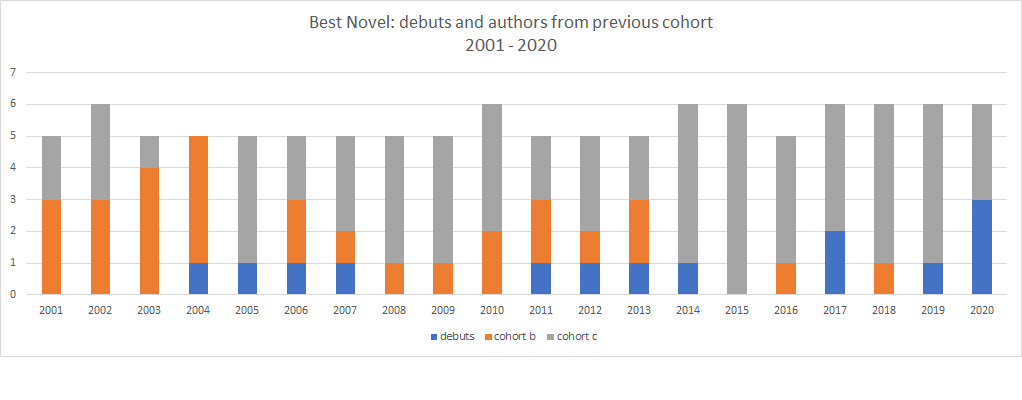
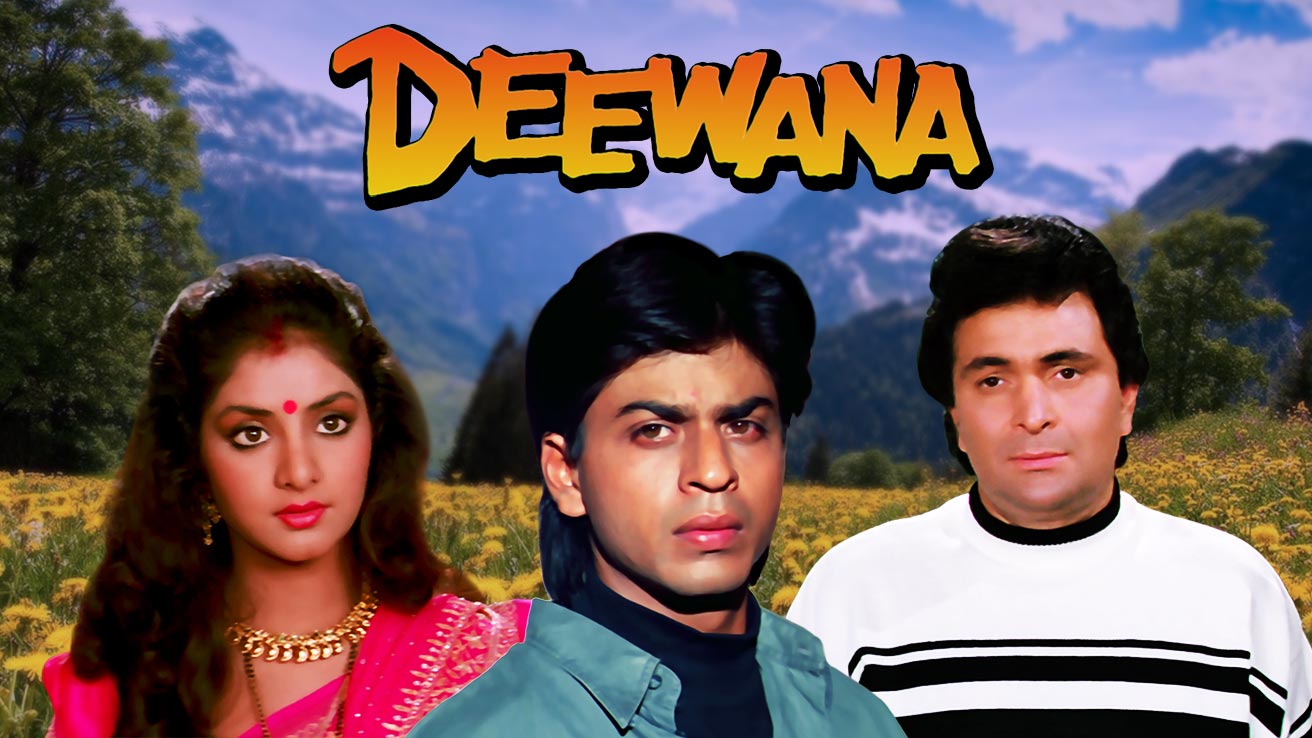
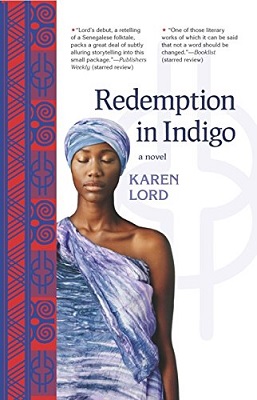
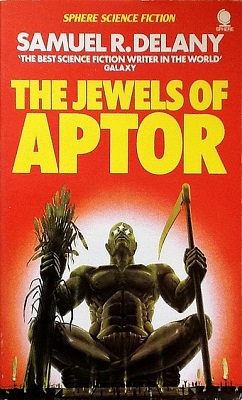
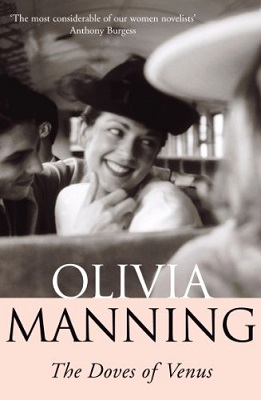
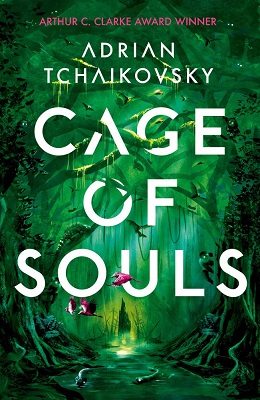
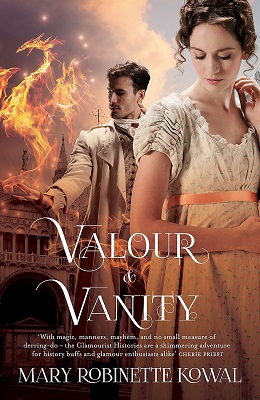

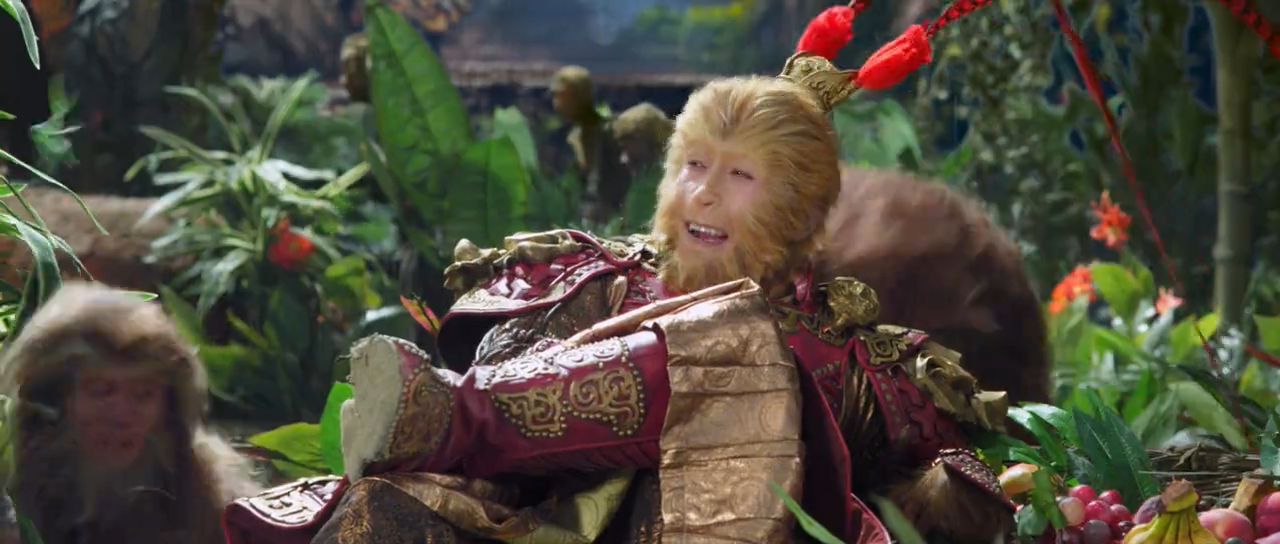

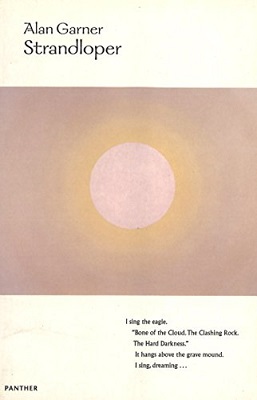
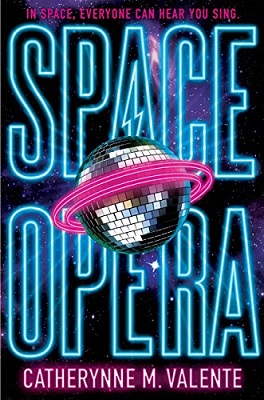

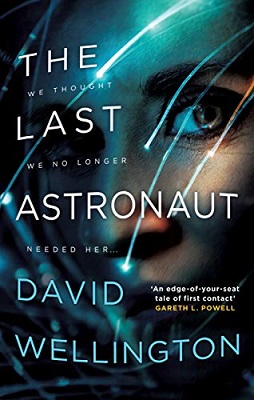

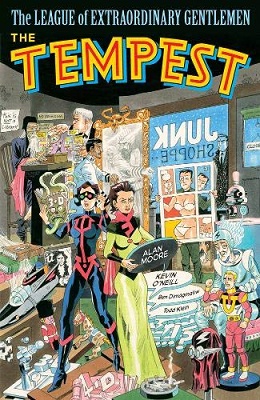
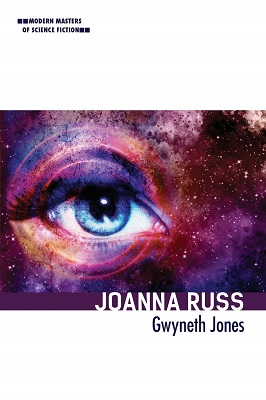
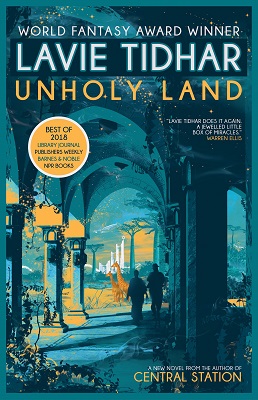
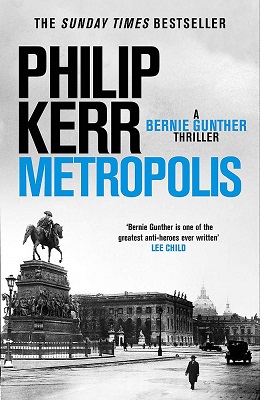
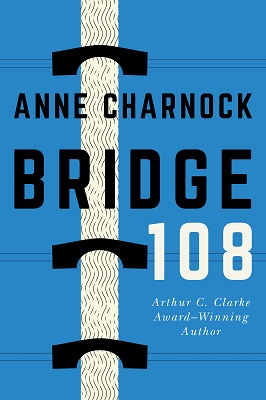

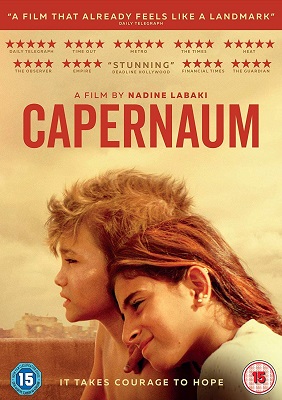
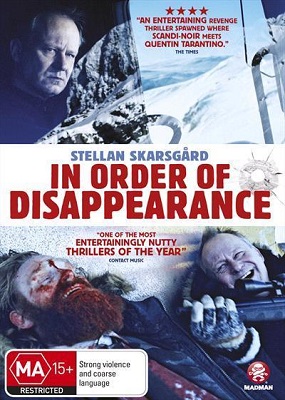
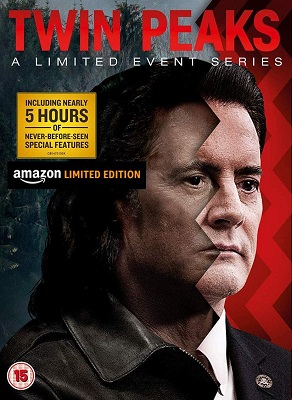
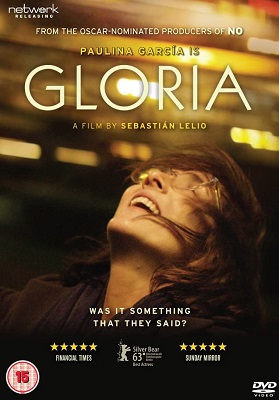
 It Doesn't Have To Be Right...